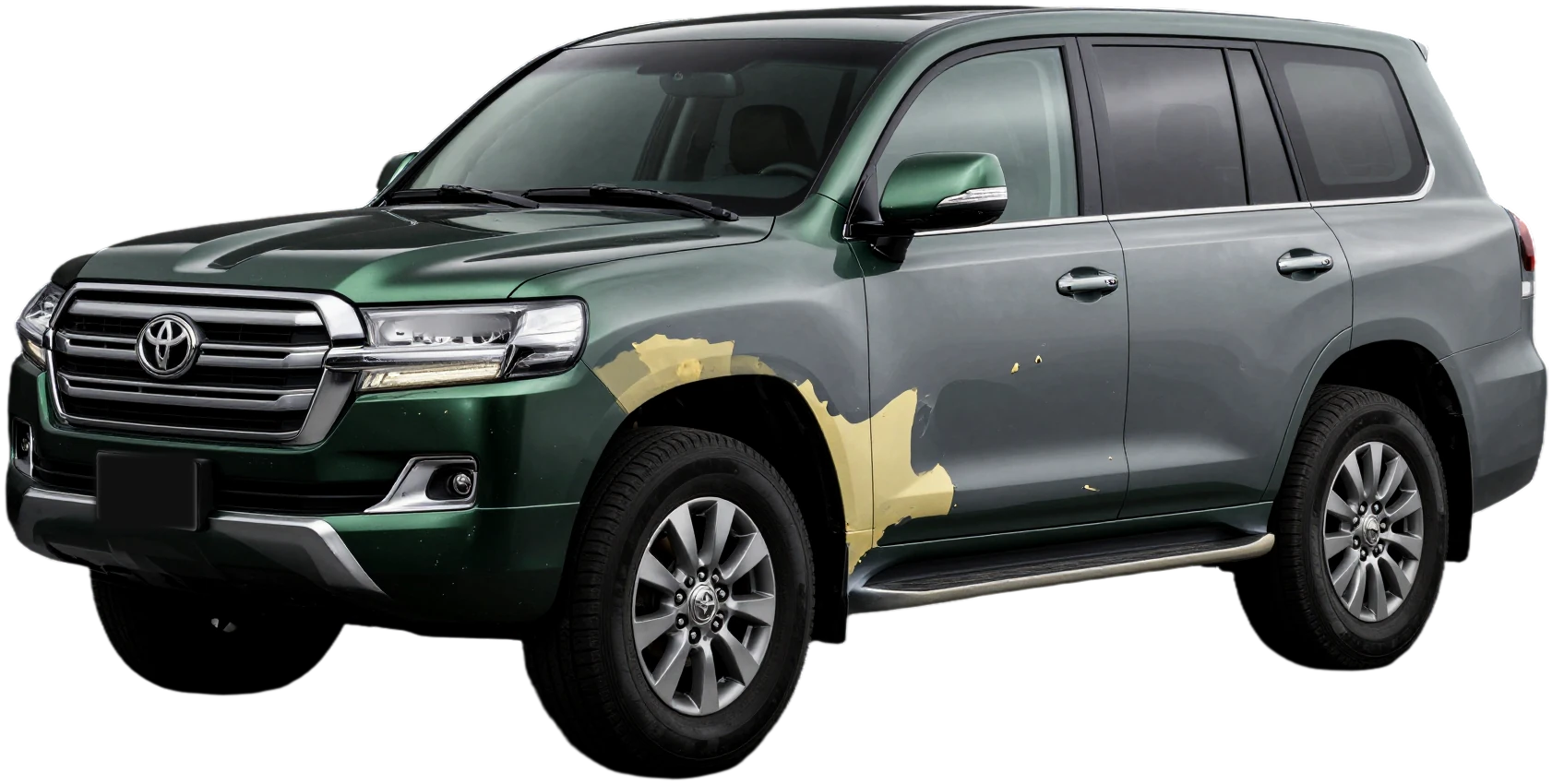
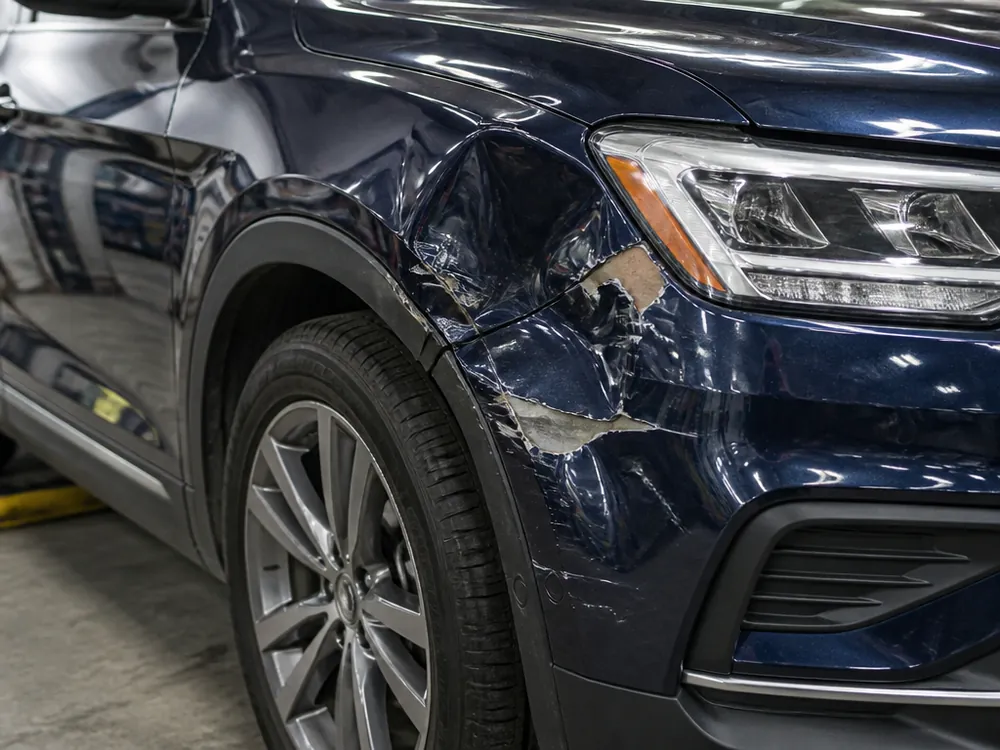
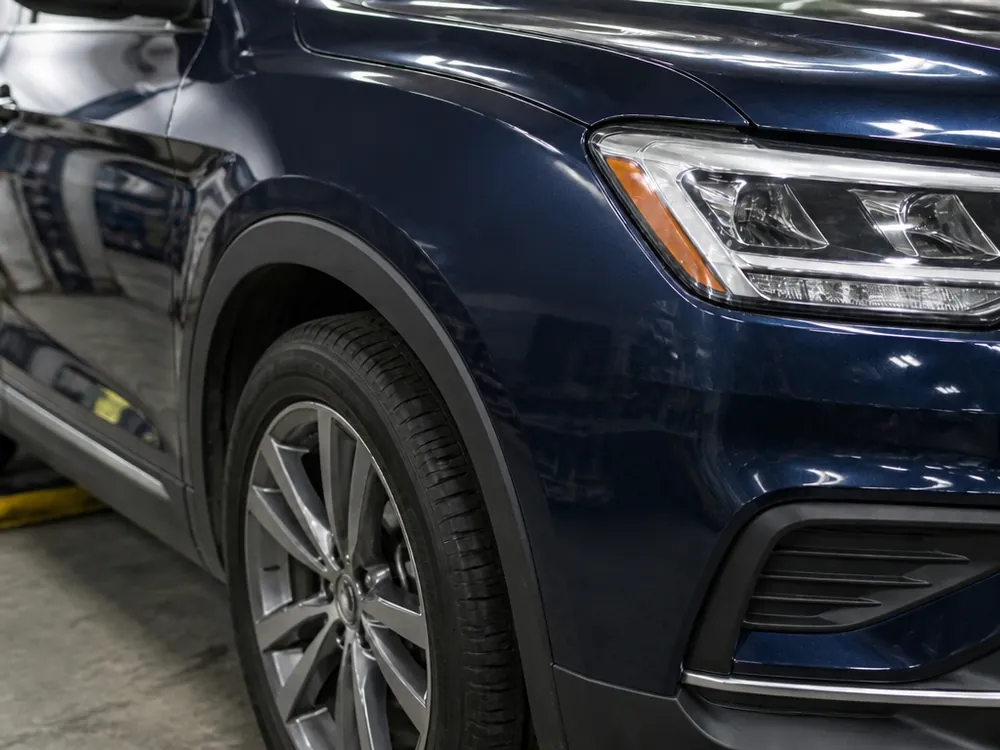
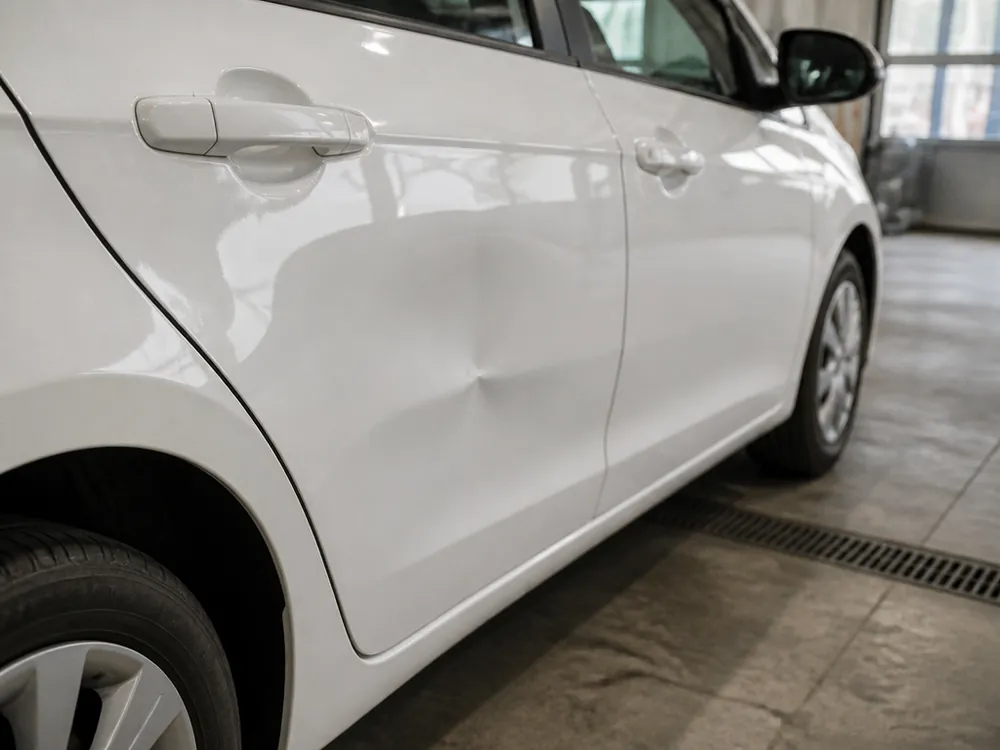
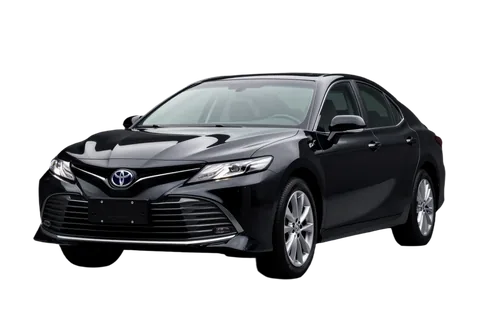
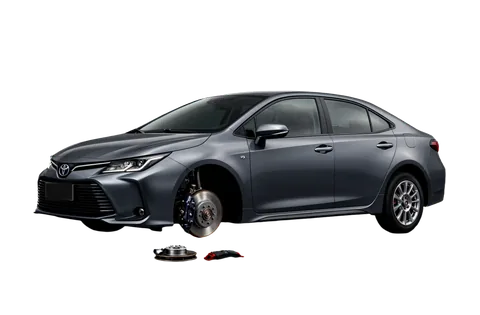
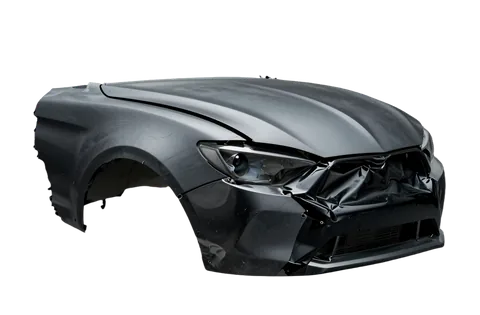
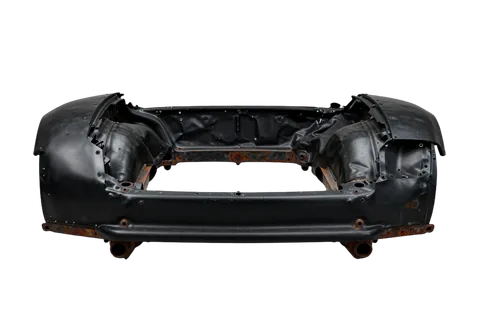
We will restore your Toyota's factory geometry and color after an accident, chips, or corrosion. We work with all popular models — from Camry to Land Cruiser, and match paint by code. 24-month warranty on all types of body work, free inspection on the day you apply.
We will provide an exact price after a free inspection. The final estimate includes materials and labor, with no hidden fees. Warranty periods — see the page «Warranty»
06
Advantages of Toyota body repair at CARGID
Warranty.
Every promise — backed by a number or a document: work order, photos, removed parts.
24MO
warranty on labor — the term is stated in the work order.
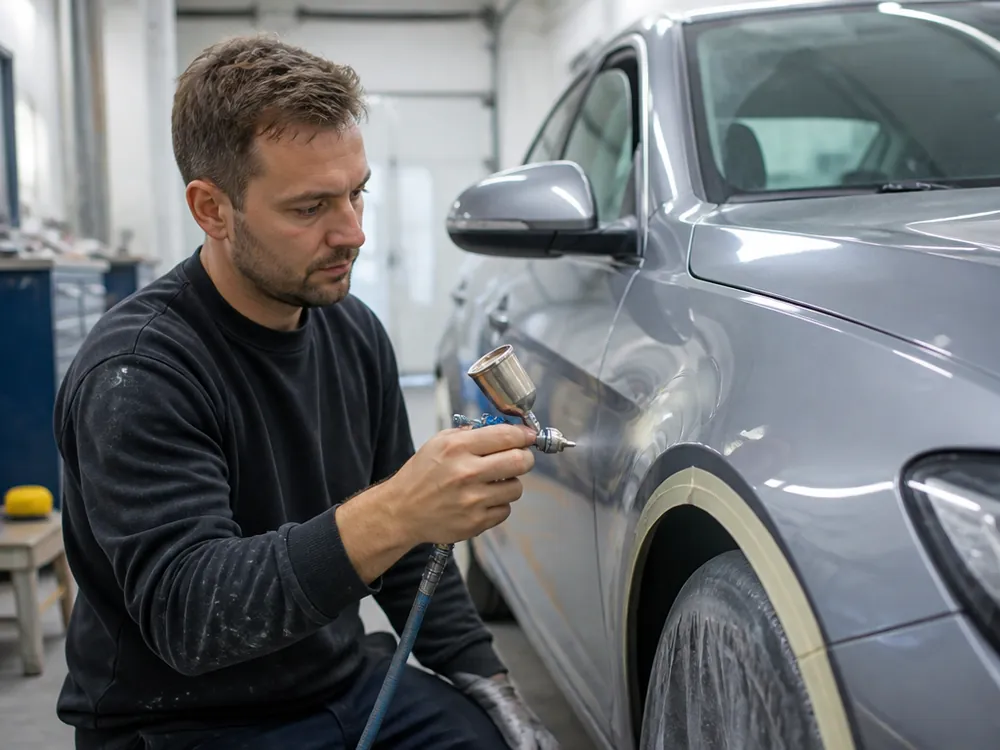
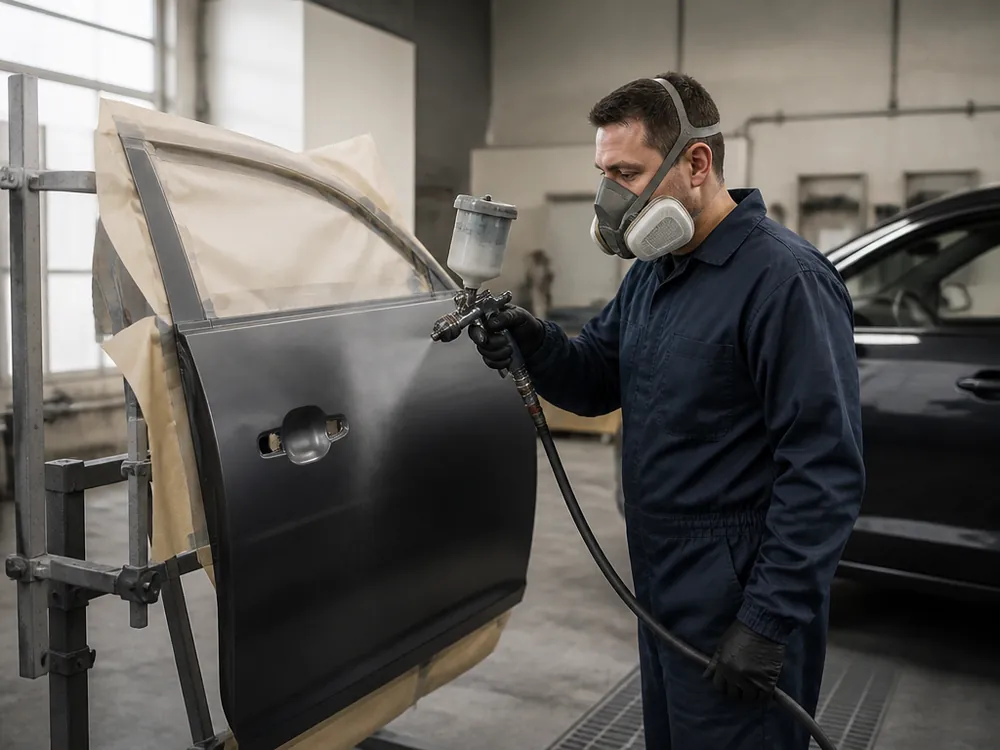
Fender painting
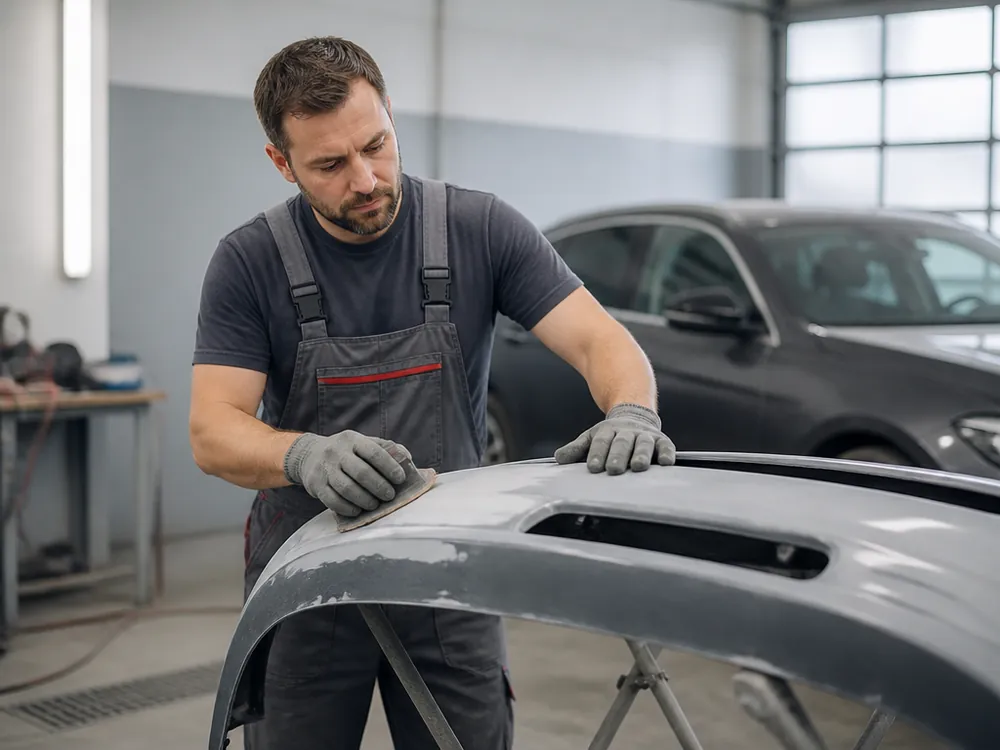
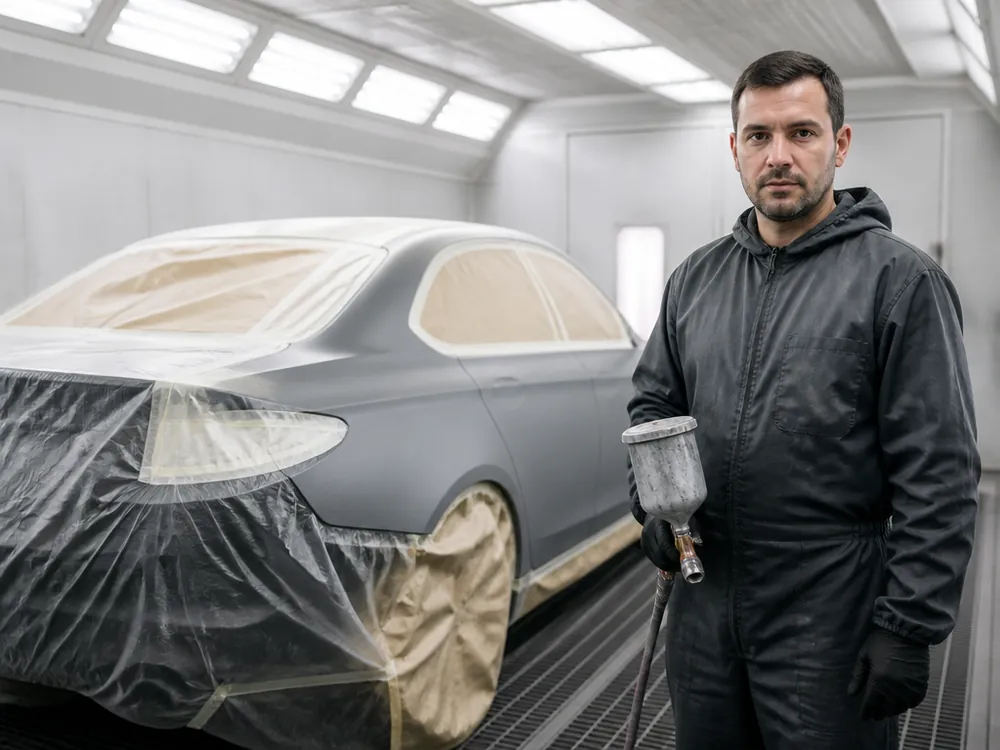
Body geometry
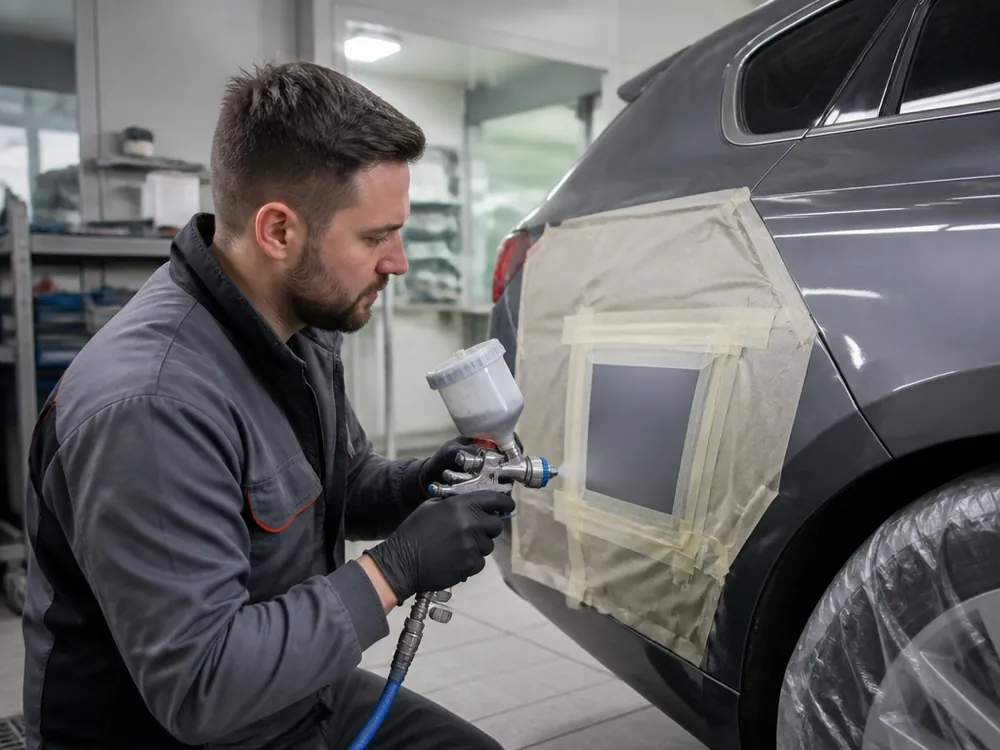
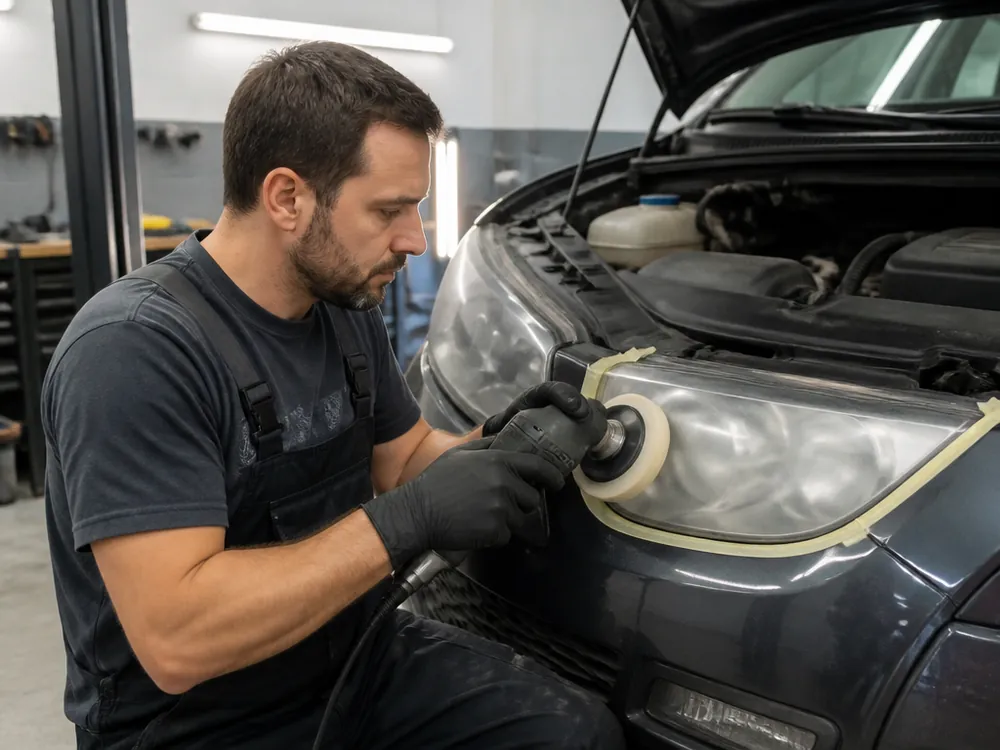
Polishing
01
Disassembly and Color Matching
We remove the bumper, headlights, handles — paint doesn't go on masking tape. We match the color by the fuel door and check on a test spray, otherwise the color will be off.
02
3 Layers of Clear Coat
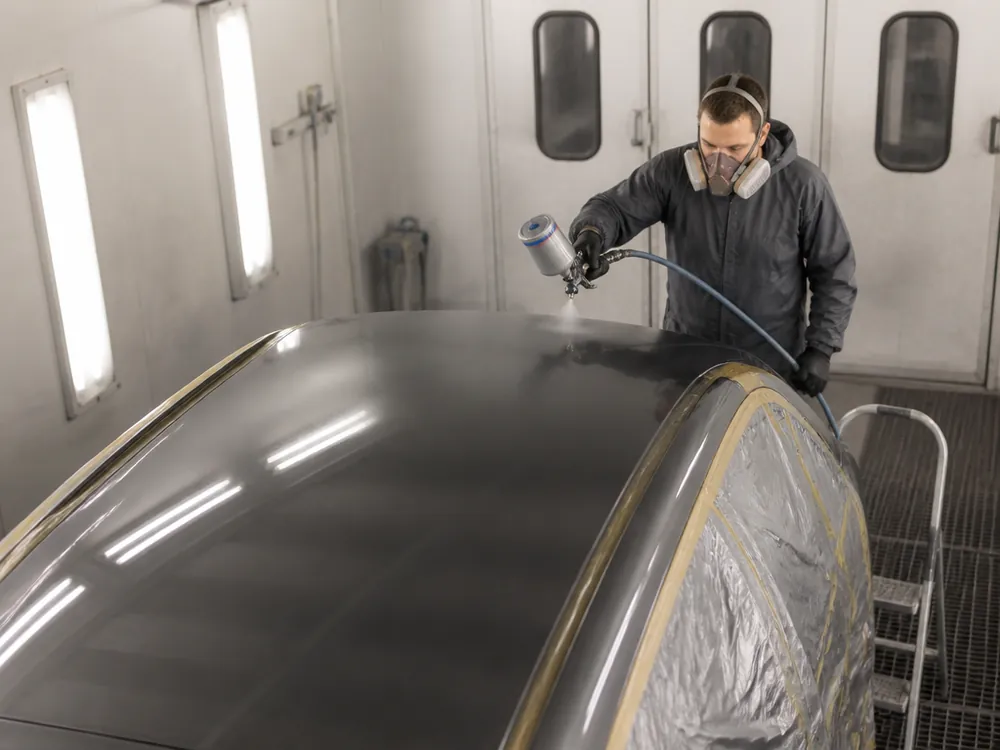
Paint, then three layers of clear coat with interlayer drying. One layer doesn't give depth and is afraid of washing — it leaves marks.
03
Painting in 2 Days
Spot painting of a fender or door — two days, full with disassembly — up to five. Can't be earlier: the clear coat gains strength, otherwise fingerprints will remain.
04
24-month Warranty
We cover the clear coat for a year: dullness, orange peel, peeling along the edge. If you come with a defect, we repaint the area again.
07
Stages of Toyota body repair in Almaty
Steps.
We explain how body restoration proceeds: from request to vehicle delivery.
01
Inspection and Damage Assessment
You submit a request on the website or by phone, and we select a convenient time for inspection. The technician assesses the damage, prepares an estimate, and records the body condition before work begins.
request on WhatsApp
02
Ordering Parts
We agree on the repair cost, timeline, and details. You make a prepayment — and we start the process. We order original or high-quality equivalent parts for your Toyota and wait for delivery.
inspection and diagnostics
03
Disassembly and Straightening
We remove damaged elements, straighten the metal, or install new panels.
estimate before work starts
04
Welding Work
If necessary, we perform spot welding and prime the prepared surfaces.
work to factory procedure
05
Painting and Polishing
We apply color-matched paint, dry it in the chamber, and polish to a factory shine.
result check
06
Assembly and Delivery
We assemble the car, check the quality, and hand over the vehicle with a warranty on the work.
CARGID does Toyota body repair in Almaty with a damage inspection and a written estimate before any work starts. We match the color to the fuel door and check it on a spray-out card, lay three coats of clear, and do local fender or door painting in two days. The warranty on body work and painting is 24 months, and the terms are fixed in the work order.
Toyota Body Weak Spots and What Gets Repaired Most Often
Toyota comes to us more often than any other brand, and the models show which panels take damage first. Here's what Camry, Corolla and crossover owners should keep an eye on.
Common Damage on Camry and Corolla
Bumper painting: the front and rear panels take the first hit when parking, so the bumper is the most frequent job in the shop.
Fender painting: on the Corolla the arches and edges suffer from gravel and road chemicals, on the business-class sedan from contact in a parking lot.
Hood painting: on the Camry the panel needs careful straightening, the metal is softer than steel and won't take rough pulling.
Camry repair: we look at the hood, fenders and bumper most often, doors and sills less so.
Toyota body repair with us almost always starts with inspecting the panel, not with buying a new part.
Aluminum hood: it can't be pulled like steel — it's straightened differently and isn't always repairable, sometimes it's easier to replace.
How Damage Differs on Crossovers and Land Cruiser
Crossovers and Land Cruiser put more load on the body, so after an impact it's often not just the bolt-on panels that suffer but also the structural elements and the geometry of the openings. On the RAV4 and Hilux, side contact hits the sills and pillars first, while on the Land Cruiser the body mass and frame carry the impact energy further — the gaps around the whole door perimeter need checking. We check gap evenness and opening diagonals, not just the condition of the panel being replaced. Land Cruiser and Hilux owners often come in after off-roading: chips, dents on the sills and skid plates, bumper damage from rocks. If a door starts closing with effort after an accident or a gap becomes uneven, that's a reason to check the geometry, not just swap the panel.
How to Tell the Body Shifted After an Impact
Telling a dented bumper from shifted geometry by eye is hard. Here's what the damage inspection involves and how we check geometry once the car has already been repaired.
What the Damage Inspection Covers and Being There in Person
Body inspection: the service advisor checks the panels, gaps, mounts and hidden cavities where the impact travels from the bumper.
Written estimate: before work starts you get a list of damage and the scope of repair, including Camry restoration for typical side impacts.
Client approval: we start only once you've approved the estimate and chosen the parts.
Being there for the inspection: you can come and it's worth it — you see which panels are damaged and which can be repaired instead of replaced on your Toyota.
Photo report: we capture the key stages on camera so there's something to compare the result against at pickup.
How We Check Geometry and Why Wheel Alignment Matters
We finish body work with a wheel alignment check on a 3D alignment stand — the stand shows whether the impact threw off the geometry. The stand sits in the shop next to six lifts, the measurement takes minutes and gives numbers for each wheel instead of a guess by eye. If the angles are out of spec, we look for the cause: a shifted frame rail, a bent strut or control arm. A shift of a fraction of a degree after a side collision is more common than deformation you can see. We always finish Toyota body repair in Almaty with this check, because alignment is worth doing even on a body that looks straight: a deviation speeds up tire wear and changes how the car behaves on the highway — it starts pulling to one side at speed. Book the check right after the repair, while the suspension hasn't picked up its own wear and the stand's numbers read clearly.
Why the Painting Process Is Exactly This Way
The shade drifts, the clear doesn't hold, sanding marks stay on the panel — almost always the cause is a broken process. Here's why we do it this way instead of faster.
How We Match the Color to the Fuel Door and Check It on a Spray-Out
We remove the bumper, lights and handles, match the color to the fuel door and check the shade on a spray-out card — otherwise the mix lands on masking tape and the tone drifts. The fuel door gives an accurate base: it shows how the pigment has faded over the years. The body code names the factory variant but doesn't account for fading, so a single number from the catalog isn't enough. We dry the test panel and compare it to the part under different lighting — under the booth lamps and outside. Masking tape along the edge leaves a visible shade line once removed, so we take off the trim and moldings completely. The body number gives a base, but over the years the paint on the car fades, so the color match is checked on a spray-out, not just by the number. This approach matters just as much for Camry body repair as for any other model: an exact color match is half the result.
Why We Lay Three Coats of Clear and How Long It Takes
Three passes: after the paint we apply the protective coat in three layers with a flash-off between them — the thickness is what gives the shade its depth.
Why not one: a single coat won't hold up to car washes, it picks up brush marks and fine scratches.
Flash-off between coats: between passes the coat sets in the booth, otherwise the next layer runs.
Local painting: we finish a fender or door in two days — with prep, application and drying.
Full paint with disassembly: the whole body with the openings takes longer, because each panel is removed and painted separately.
Why not in a day: the finish coat gains strength gradually, and early reassembly leaves marks on the surface.
Types of Painting and How They Differ
Toyota painting types and turnaround times
Type of painting
What it covers
Turnaround
Local
part of a panel or one panel
2 days
Bumper painting
bumper with removal
2 days
Full paint with disassembly
the whole body and openings
up to 5 days
Raptor
protective coating on a panel
depends on the scope of work
Parts — OEM, Aftermarket or the Client's Own
The choice between OEM, aftermarket and your own part is up to the owner. Here's how the options differ and which parts matter to sort out before work starts.
Can You Bring Your Own Parts and What to Choose
Your own parts: bring the part in ahead of time — the service advisor will check it against the damaged panel before disassembly.
OEM: a factory part matches the body geometry, so it fits the gaps without adjustment.
Aftermarket: a quality non-OEM part differs in price from OEM, but the metal thickness and fasteners are worth checking on a test fit.
Used part: chosen when a new one is discontinued or the wait is long; we assess its condition before painting.
Old parts: we show and hand the removed panels to the client so it's clear exactly what was replaced.
How the choice of part affects the repair and warranty
OEM and quality aftermarket parts are predictable in fit and metal thickness, while a used part may need extra adjustment to the gaps. Before painting we test-fit the panel in place: we check the joints with the fender, door and hood, and the gaps around the lights and body lines. If the metal is thin or the fasteners don't line up, the technician reports it before primer goes on — so the panel can still be swapped before painting. With us, the choice of parts stays with the client, and we record the timeline and warranty terms in the work order and the completion certificate at handover. A part brought in by the client is not covered by warranty — worth keeping in mind if the part is used or of unknown origin. So before buying your own part, ask the service advisor for the part number and required geometry: that way you won't bring in a panel that won't fit the gaps.
What the 24-month warranty on Toyota body repair actually covers
Our body repair and painting warranty is 24 months, but it has limits. Here's what work is protected, which situations fall outside our obligations, and how the terms are documented. Below are the boundaries of the warranty.
Scope of the warranty and where it's written down
24-month term: covers repair, painting, rustproofing, protective film and ceramic coating — the full list of work types is set out in the warranty table.
Documents: we write the term and conditions into the work order and the completion certificate at handover, and the owner keeps the copies.
Warranty inspection: if the repair result worries you, come in and show us — the inspection for such a request is free.
What we check: color match, clear coat adhesion, absence of orange peel and runs, and the quality of panel assembly.
Warranty exclusions and what to do about a defect
Accident after repair: a second impact, parking scratches and any new damage are not a warranty case.
Third-party involvement: if another shop repainted or polished the body, the obligations don't apply to that area.
Normal wear of consumables: pads, wipers, fluids and other consumables are not covered by warranty.
Client's part: the supplier is responsible for the part you brought in, while the warranty on our work remains.
What to do about a defect: don't polish or touch up on your own — that erases the traces and complicates the case review; show the car to the service advisor.
How to check quality at handover and care for the paint afterward
Accepting the car and the first weeks of use affect how long the paint lasts. Here's what to look at during handover and how to care for the body so you don't have to go back to the painter. Below is a short checklist.
What to look at when you pick up the car
Test drive: before handover we check the car on the road — that's how you see if the steering pulls or there are any squeaks.
Photo report: we take photos at the key stages of repair, and the client sees what was under the removed panels.
Gaps: check that the lines between the door, fender and hood are even — they should match the factory ones.
Shade: look at the panel in the sun and in the shade; color reads differently in the light — that's how you check the tone match.
Old parts: we show and hand over the removed panels so it's clear exactly what was replaced.
Warranty: we write the term and conditions into the work order and the certificate at handover.
How to care for the body after painting
In the first weeks, it's best to avoid aggressive washing and polishing — the clear coat continues to gain strength after handover, so fresh paint stays softer for the first month than after a couple of months. Stiff brushes and abrasives leave scratches on such a layer that can't be removed later without repainting, and a high-pressure contact wash can lift the edge at the joint between parts. In the first month, prefer washing without high pressure and stiff brushes, and apply wax or ceramic coating when the paint has fully cured — the technician will tell you the exact timing at handover. After a month, inspect the part: orange peel, dull spots or peeling along the edge are a reason to come in for warranty diagnostics, which is free.
Toyota body repair essentials
Body repair comes down to four decisions: assessing the damage correctly, matching the color precisely, choosing the parts, and understanding the scope of the warranty obligations. Below is a short summary of each point.
Weak spots depend on the model: on the Camry and Corolla the bumper, fender and hood suffer most often, while on crossovers and the Land Cruiser it's the structural elements and body geometry.
Inspection and alignment stand: checking the wheel alignment angles shows whether only the bumper is dented or the structural elements shifted after the impact. The stand gives numbers instead of a visual guess.
Color matching by the fuel door with a spray-out: that's the check that gives a precise color match, and durability comes from three coats of clear with intercoat flash-off.
The owner chooses the parts: OEM, aftermarket or your own part — the client decides, but the shop's obligations don't cover a part they brought in.
24-month obligations: cover the work performed and the parts installed, except for an accident after repair, third-party involvement and normal wear of consumables.
10
Frequently asked questions about Toyota body repair in Almaty
Questions.
Price, timeframes, warranty, payment — 10 questions asked most often.
10
Didn't find an answer?
Message us on WhatsApp — a service advisor will reply within 5 minutes.
The price of Toyota body repair in Almaty depends on the complexity of the damage, the need to replace parts and their originality, as well as the volume of work. For example, a local repair of a scratch with painting of an element will cost from 10 000 tenge, repair of a dent without painting — from 10 500 tenge. Replacing a fender with painting — from 50 000 tenge, and a full restoration after a serious accident (with replacement of several elements, straightening, painting) can cost from 300 000 to 1 000 000 tenge and more. We prepare an exact estimate after inspecting the car so that you know all the costs before work begins.
The time depends on the extent of damage and the workshop's workload. Local repair (painting one element, removing a scratch) takes from 1 to 3 days. Medium-complexity repair (fender replacement, door repair) — from 3 to 7 days. Full restoration of a car after an accident can take from 2 to 4 weeks. We always give exact timeframes after diagnostics and coordinate them with you. If original spare parts are needed, waiting for them may add a few days to the timeline, but we promptly resolve supply issues.
Yes, all types of body repair and painting at our service come with a 24-month warranty. The warranty covers the quality of the work performed, absence of paint peeling, corrosion in repair areas, as well as correct color matching. If defects occur due to our fault during the warranty period, we eliminate them free of charge. It is important to follow the care recommendations for painted surfaces to maintain the warranty.
An appointment is recommended, as the body shop is usually busy. You can book by phone or through our website, choosing a convenient time. We will reserve a spot for you and prepare the necessary materials. If you need urgent repair, call us — we may find a slot in the coming days. On the appointment day, come to the service, we will conduct an inspection and free diagnostics.
Yes, during Toyota body repair, the use of customer's parts and materials is allowed. However, we assess their suitability: original body panels and manufacturer-recommended painting materials provide predictable results; non-original ones may require additional fitting. The timeframes depend on the volume of work and the condition of the parts, and the cost is calculated based on labor for repair and painting, taking into account the need to modify the brought elements.
If after repair you find defects (poor painting, incorrect geometry, squeaks, etc.), notify us immediately. During the warranty period, we will eliminate all defects caused by our fault free of charge. We value our reputation, so we always meet clients halfway. If there is a disputed situation, we will conduct an independent examination and fix the problem, usually on the day you come in (complex repairs take up to 3 working days). The main thing is not to try to fix it yourself to avoid making it worse.
Local repair is the elimination of point damage (scratches, chips, small dents) with painting of a separate element. Polishing, if the clear coat is not damaged, will cost less. Full repair is restoration after serious accidents, when straightening, welding, replacement of several parts and painting of the entire car or large areas are required. If repair is under OSAGO, we work with insurance companies, but it is important to know that the quality of repair under OSAGO may depend on insurance limits. We offer all options and will help you choose the optimal one in terms of price and quality.
After painting, for 30 days avoid high-pressure washing, active chemicals, and wax polishing. Hand washing with a soft sponge and neutral shampoo is recommended. During this time, the paint finally dries and gains hardness. Do not park the car under direct sunlight for long periods and do not scratch the surface. Follow our recommendations to maintain the warranty and keep the color perfect. After a month, you can polish to strengthen the protective layer.
Payment for Toyota body repair is made in cash, by bank card, or by bank transfer; staged payment is possible as work is performed. The final amount depends on the volume of repair, the number of elements to be painted, and the selected materials. After inspecting the car, we draw up an estimate that lists all items and the payment procedure.
Yes, you can leave the car at our service during the repair. We have a guarded parking lot, and we are responsible for the safety of your car. After the work is completed, we will contact you so you can pick up the car. Handover of keys and documents by act is possible. We can also provide a replacement car (for an additional fee) if the repair takes more than a few days. Everything is discussed individually.
11
What clients say about our Toyota body repair
Reviews.
We collect ratings on the website and on maps — we hide nothing.
4.8
872 reviews on the website 1 900+ ratings in total
Alexey
Camry
Came in with a broken bumper on a Camry, thought I'd have to replace the whole thing. The technicians suggested repairing it, saved almost half. They did it in three days as promised. Price 52 000 tenge, excellent quality. Thank you!
Dmitry
RAV4
RAV4 after an accident with side damage, really wanted to keep the factory paint. In the end they pulled out the door, painted locally. You can't see at all where the damage was. Booked an inspection, the technician explained everything, gave a 24-month warranty. I recommend.
Zhanar
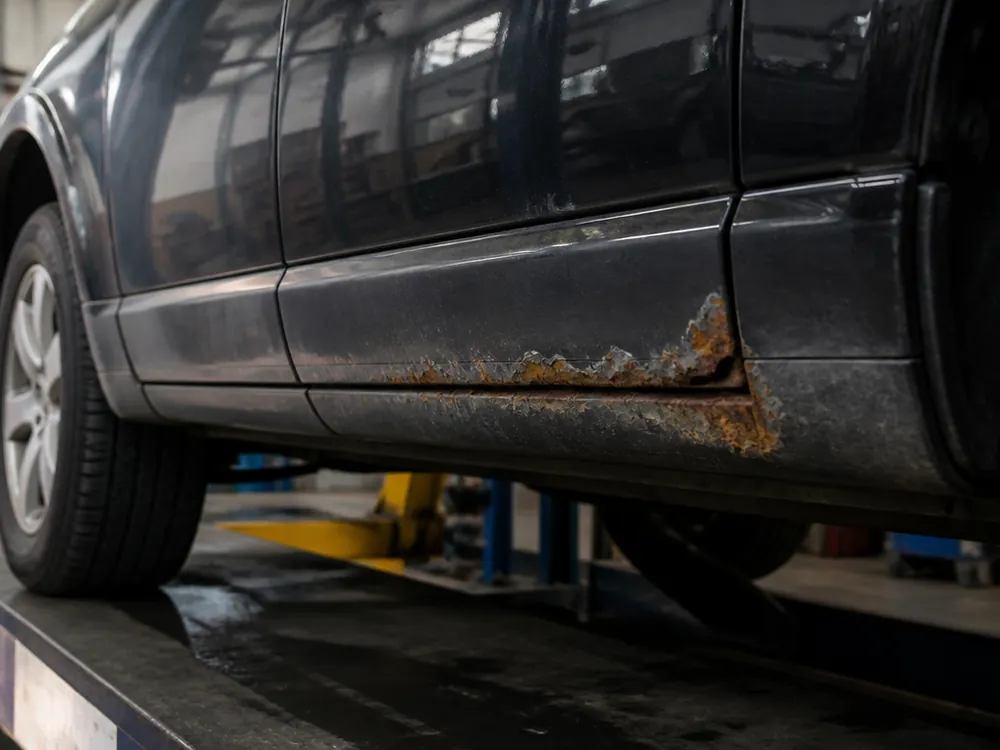
Bought a used Corolla, wanted to remove corrosion on the sills before it got worse. They did everything quickly, cleaned, treated, painted. Picked it up after 3 days. Price 96 000, a bit pricey, but now it's like new. Thanks to the technicians!
Irina
Had a minor accident, had to replace the fender on my Toyota. Spent a long time looking for a service where they work carefully. Here they did everything in 4 days, matched the paint perfectly. Special thanks for the consultation on care after painting.
Ruslan
Rav4 was in small accident, rear door dented. The guys quickly straightened everything, painted neatly. The price is normal 78 000, deadlines on time. Completely satisfied.
Olga
Land Cruiser
I regretted not coming here right away. At another place they ruined the hood of my Land Cruiser, had to redo it. At CARGID they fixed everything as if nothing had happened. The price was 180 000 tenge, but they did it perfectly. Thanks for your patience!
Arman
Prado
Almaty, Toyota Prado, rear arch damaged. Speed, quality, accuracy. Truly, I was pleased with the quality of work. I searched for a long time, now I only come here. I recommend!
Svetlana
Pleasantly surprised by the approach. On my Highlander the hood was covered in chips from gravel. They did polishing, local painting, touched up the chips. It turned out great! Paid 64 000, time 2 days. I will recommend to my friends.
Timur
Camry
Camry, a dent on the rear fender without paint damage. The technician suggested removing the dent without painting, for only 45 000 and 2 hours. Saved both time and money. The guys are great, you can see they know their stuff.