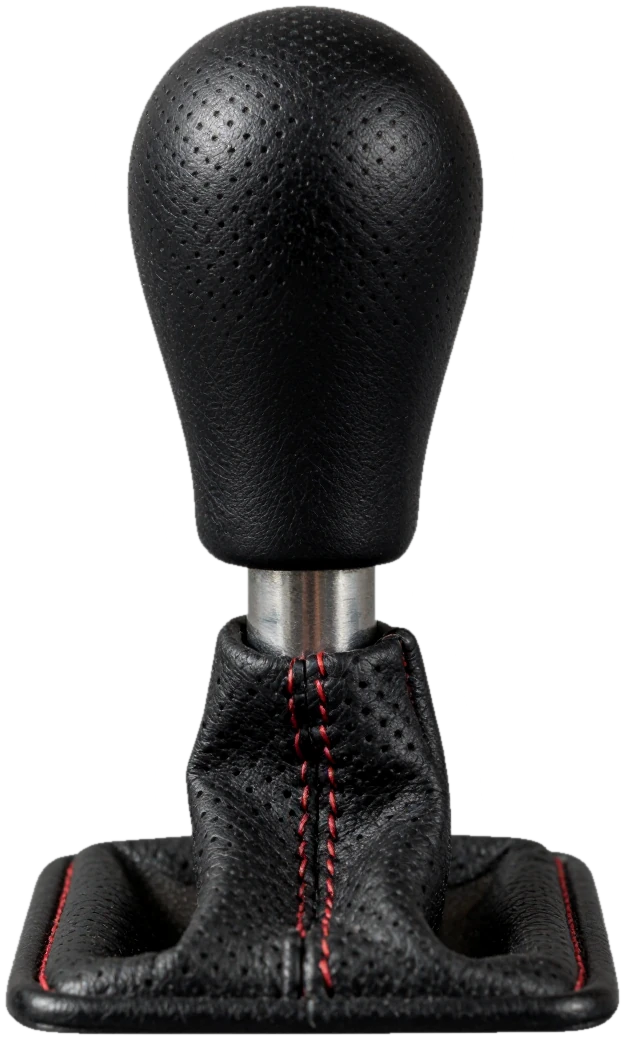
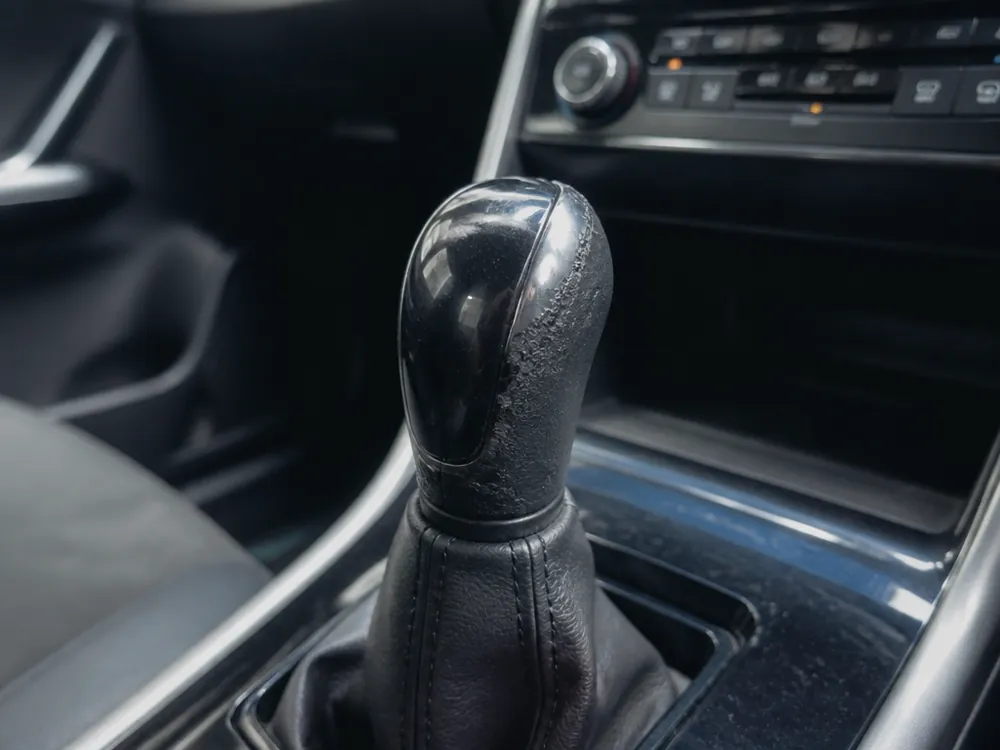
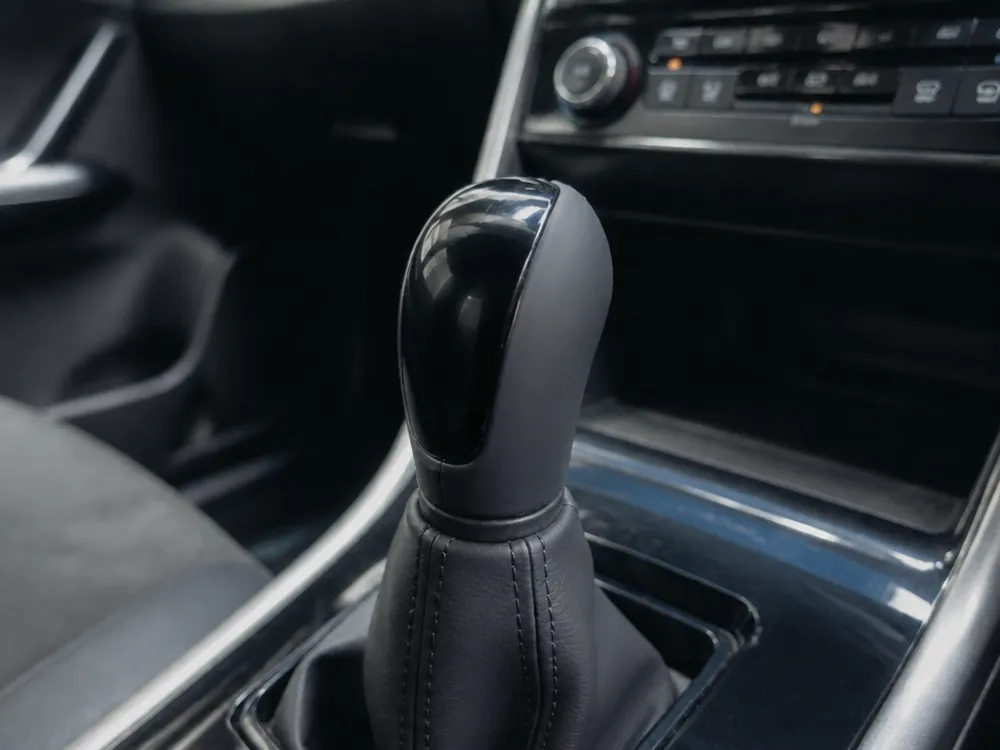
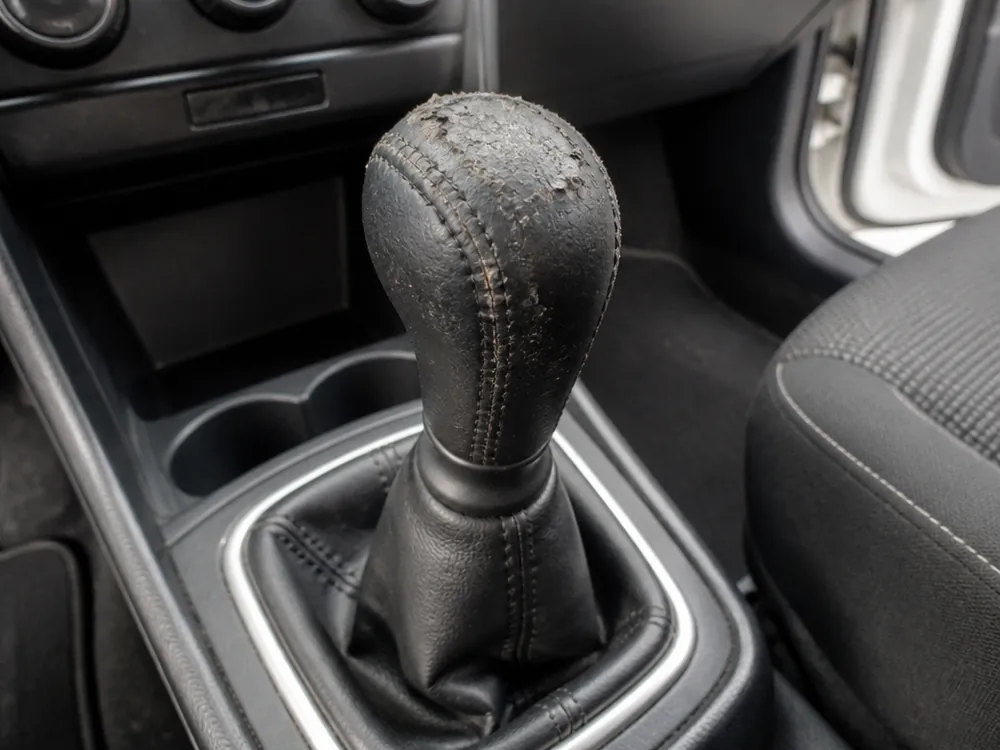
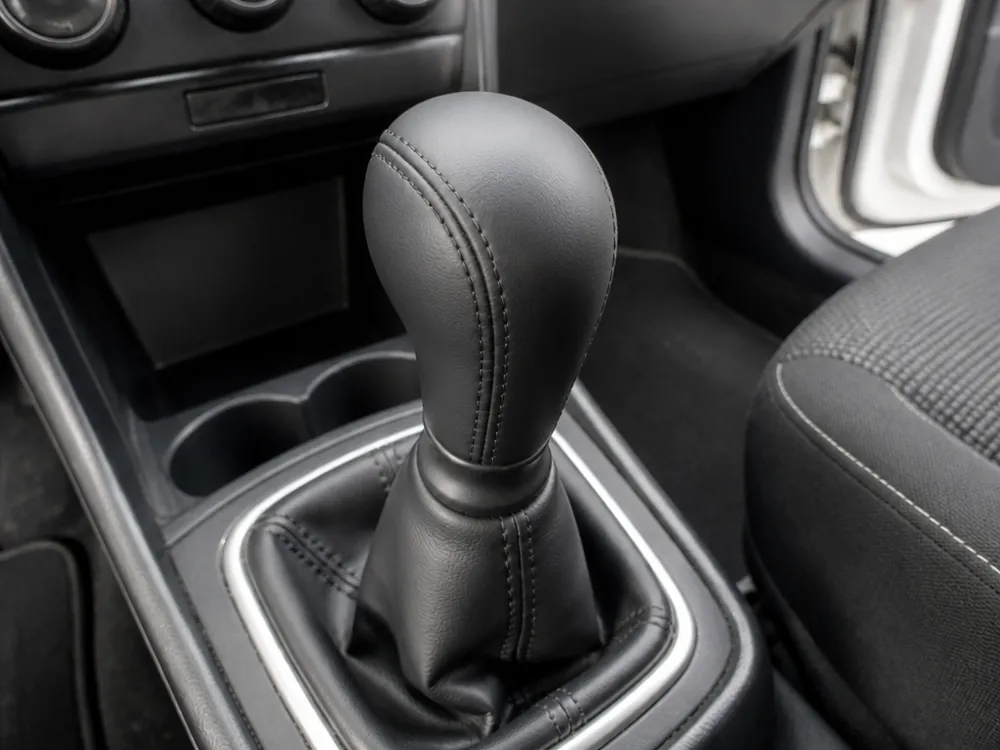
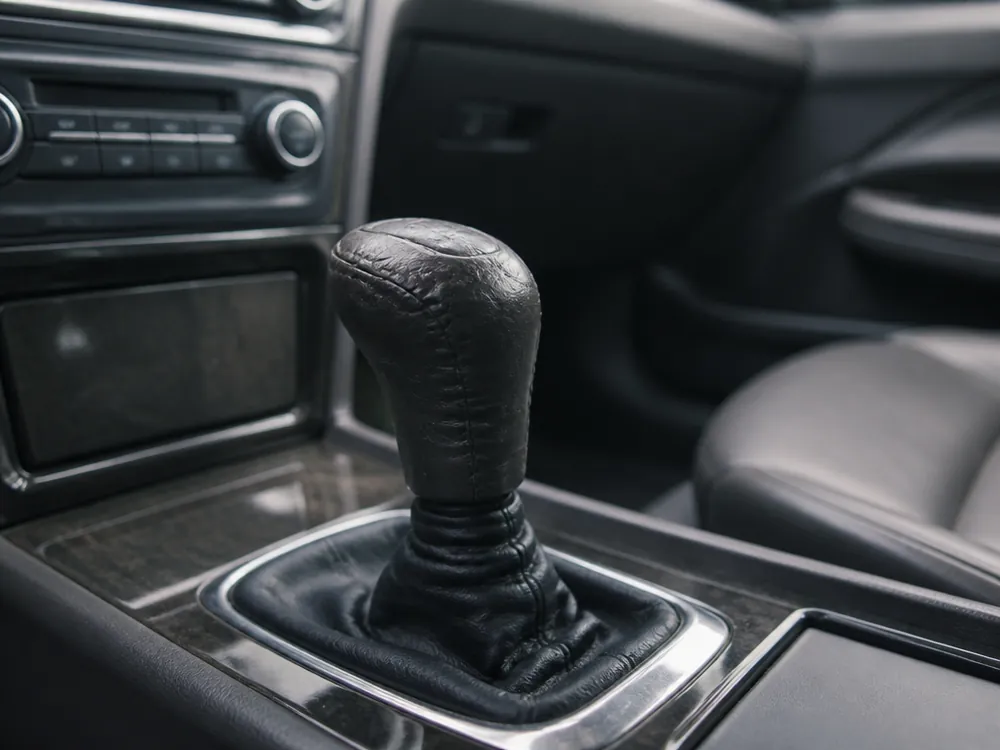
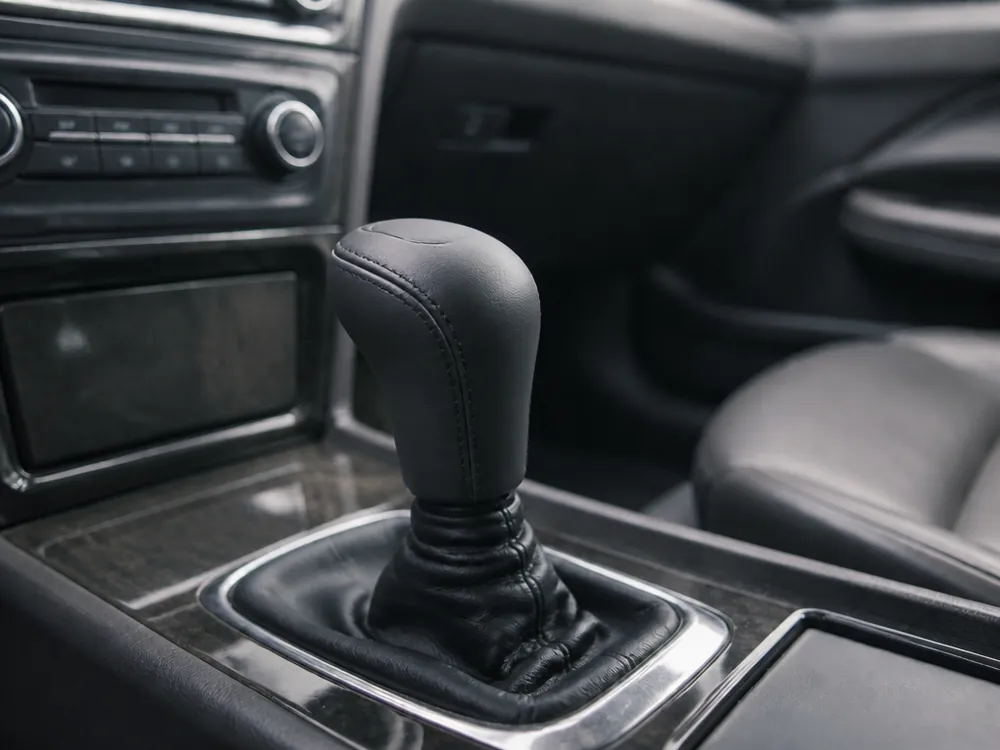
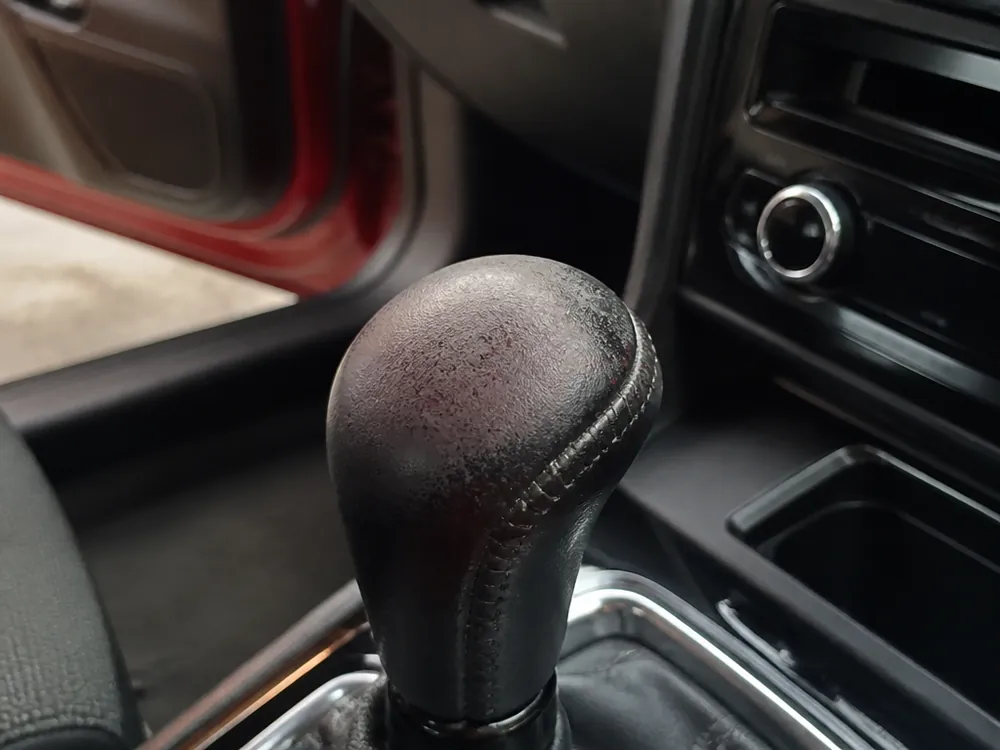
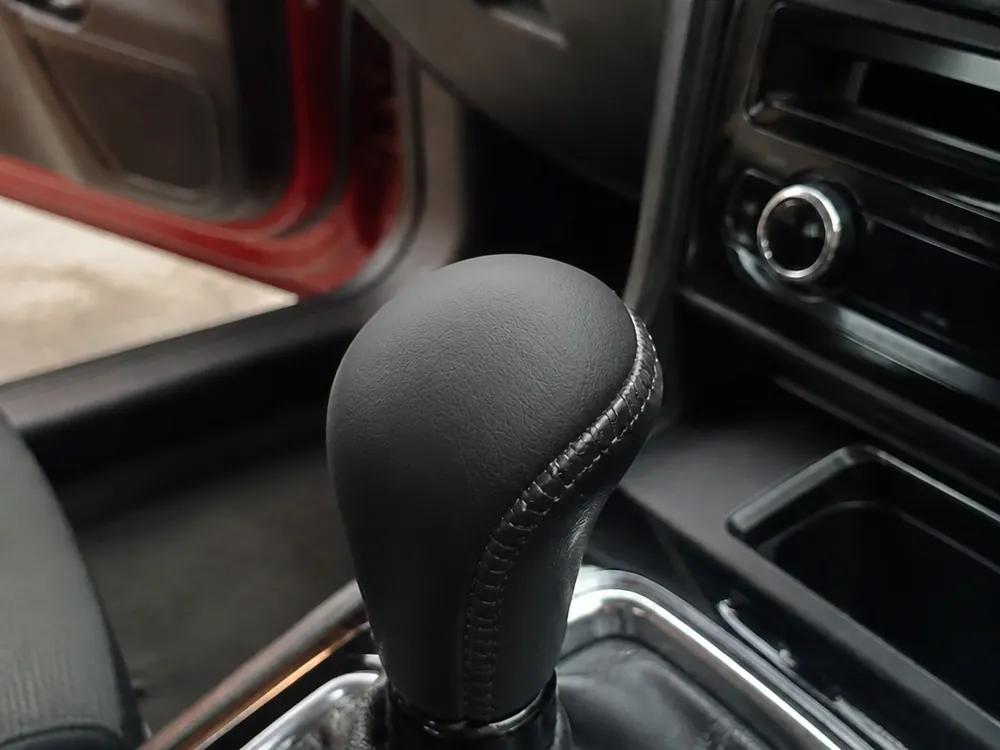
The gear shift knob is the most touched part of the interior: your palm lands on it every time you shift. Let's break down the signs that it's time to reupholster it and what delaying can lead to.
What Happens If You Put Off Reupholstery
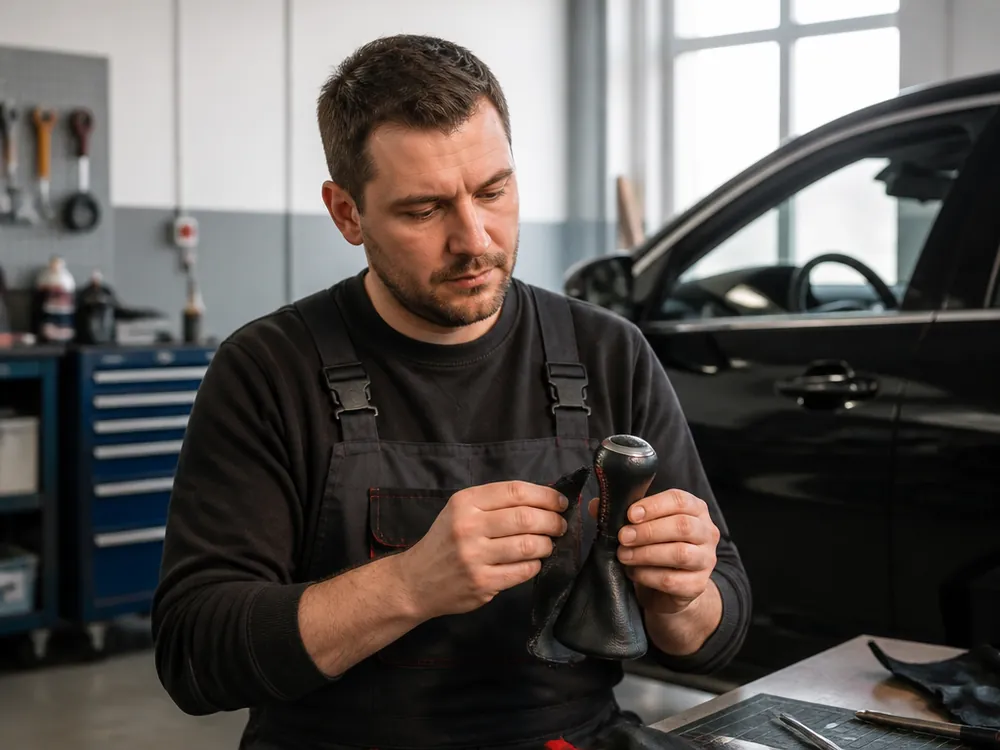
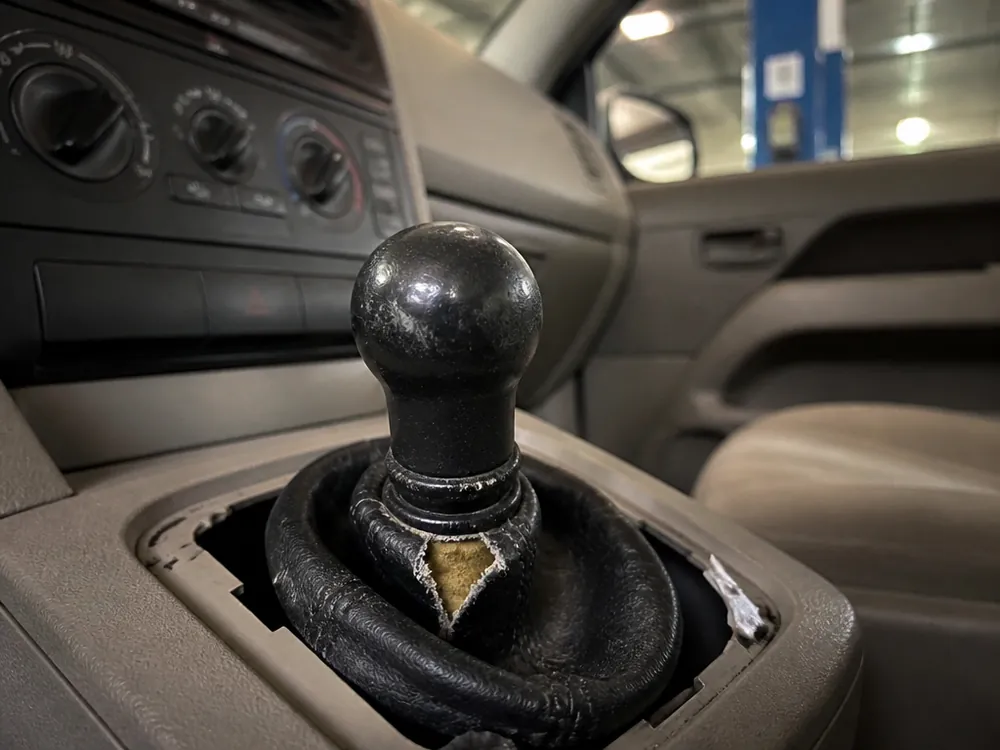
If you wait, the wear spreads to the frame and seals, and the knob starts slipping in your hand, making precise shifting harder. The damaged top layer crumbles under your fingers and gets into the seam and clips; disassembling a complex knob with a button or heating later takes more time because the fasteners have to be cleaned of the crumbled material. A chipped base on a bend eventually exposes the plastic, and then the new leather no longer sits on a smooth surface but on a loose one. Refreshing the part while it's still intact in shape is easier than restoring the frame's geometry. In summer, wear speeds up: sweat and sun soften the top layer faster than winter use. A practical tip: check for wear on the bends and near the seams in advance, before the crumbled material gets inside the mechanism and adds work during disassembly.
How Long a Reupholstered Knob Lasts with Daily Driving
Our refreshed knobs last for years with daily driving because the material fits the pattern and doesn't bunch up on the bends. We build the pattern from the removed original knob; the template follows its shape, so the leather isn't stretched unevenly and doesn't pull away when you turn. Service life depends more on the material and care than on mileage: genuine leather in heat needs conditioning and protection from drying out, Alcantara doesn't like oily hand creams and picks up lint faster, and synthetic leather holds its shape but is sensitive to abrasives. We provide a 12-month warranty on this work and record the term in the work order. For daily driving, I recommend wiping the part with a dry microfiber cloth once a week; this noticeably delays the time when reupholstery is needed again.
Which Material to Choose for Leather Gear Shift Knob Reupholstery
The gear shift knob is the most touched part of the interior, so the material for it is chosen with sweat, sun, and palm friction in mind, not just what looks better. Below we break down how the options differ in practice.
How Leather, Synthetic Leather, and Alcantara Differ on a Gear Shift Knob
comparison of three materials by grip and care| Material | How it behaves in contact | Care |
|---|
| Genuine leather | Holds grip, breaks in to your palm | Leather cream once a season |
|---|
| Synthetic leather | Smooth, slips more in heat | Wipe with a damp cloth |
|---|
| Alcantara | Textured, doesn't slip in heat | Brush cleaning, no harsh agents |
|---|
| Combination | Leather on the sides, fabric in the center | Treat each material separately |
|---|
Which Material Doesn't Slip in Heat
We recommend Alcantara or perforated leather if your hand sweats and the knob gets slippery in the heat. Alcantara is a suede-like material with a textured surface: your palm grips the nap, so you don't have to squeeze hard even after a long drive. Perforation works differently — the holes let moisture escape from the surface, so the leather stays dry in rush-hour traffic on Makataeva. Smooth synthetic leather acts like plastic in the heat: your hand slides across the surface and the driver grips the lever harder than necessary. On models with a short-throw lever, where you shift with your fingers rather than your whole palm, the difference is especially noticeable. The technician picks the texture to match your driving style — the nap holds better for an active driver than smooth leather, while perforation is enough for a calm one.
Can you combine materials and add stitching
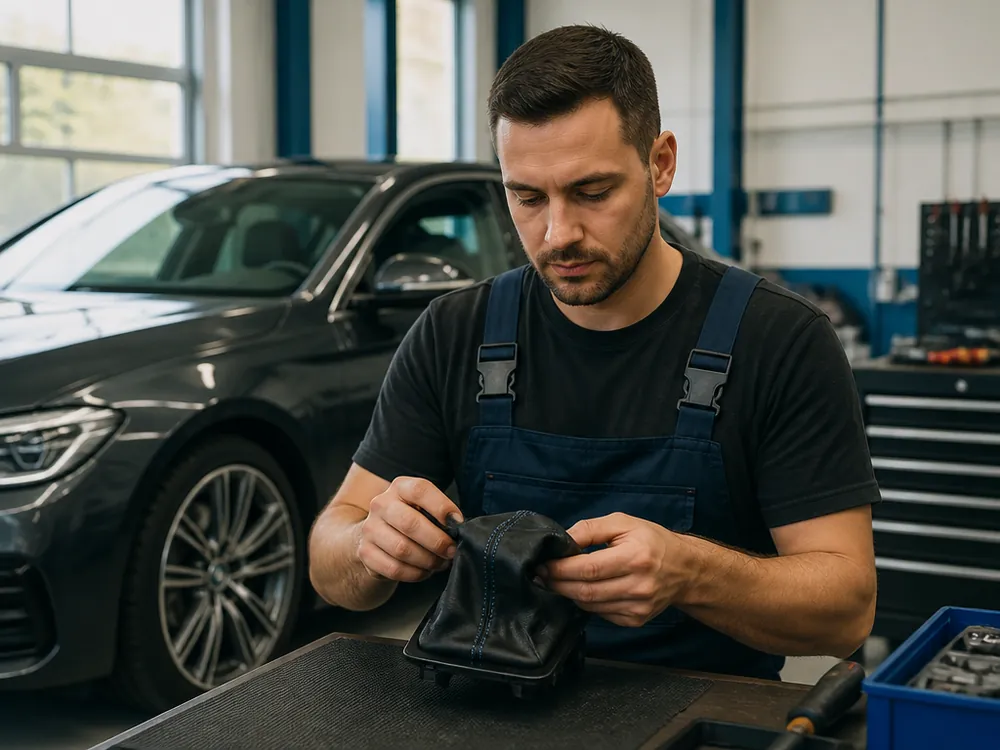
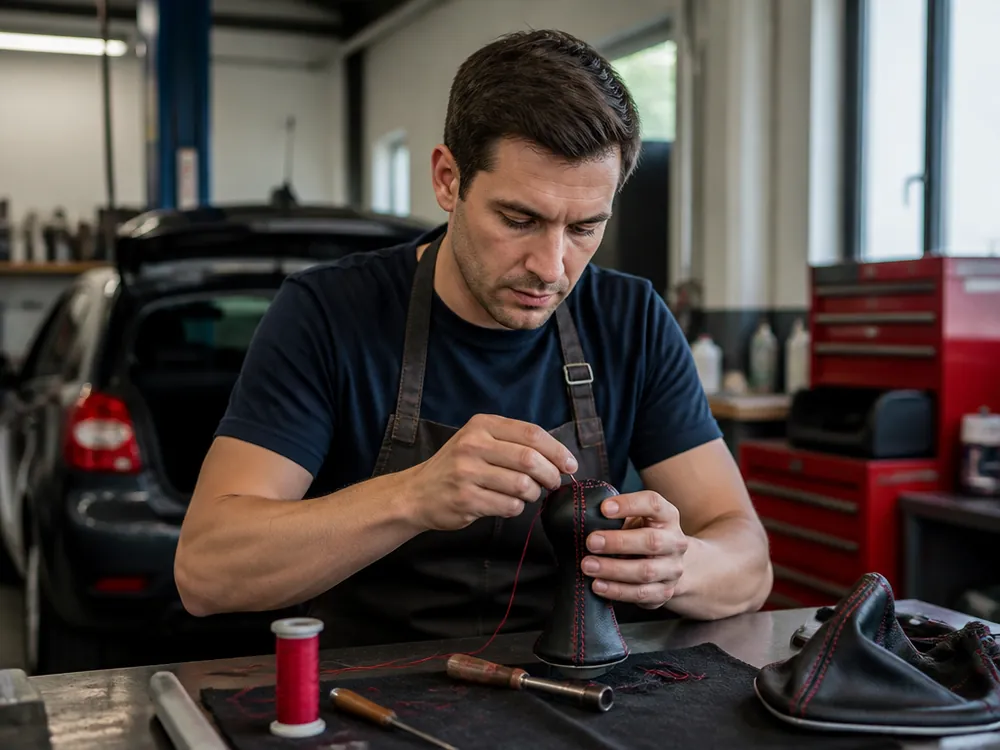
We reupholster with combined materials and stitching, running the seam at a 3 mm pitch along the marked line. Combining means leather on the sides of the knob and Alcantara or perforation in the center where your palm rests: each area gets the material suited to its load. The stitching can be contrasting — orange thread on black leather — or color-matched if you want a more subdued look. Contrasting thread forgives minor cutting irregularities, while color-matched thread highlights any flaw in the seam, so we mark everything out in advance, before stitching. A complex knob with a button is disassembled by its clips and screws, and the original fasteners stay in place — the mechanism works after reupholstery just as it did before.
How leather gear shift knob reupholstery works
The work starts from the removed knob, not by eye: first the part on the bench, then the pattern and the seam. Below are the steps, how we handle complex designs, and vehicle handover.
Why a pattern from the removed knob and a 3 mm seam
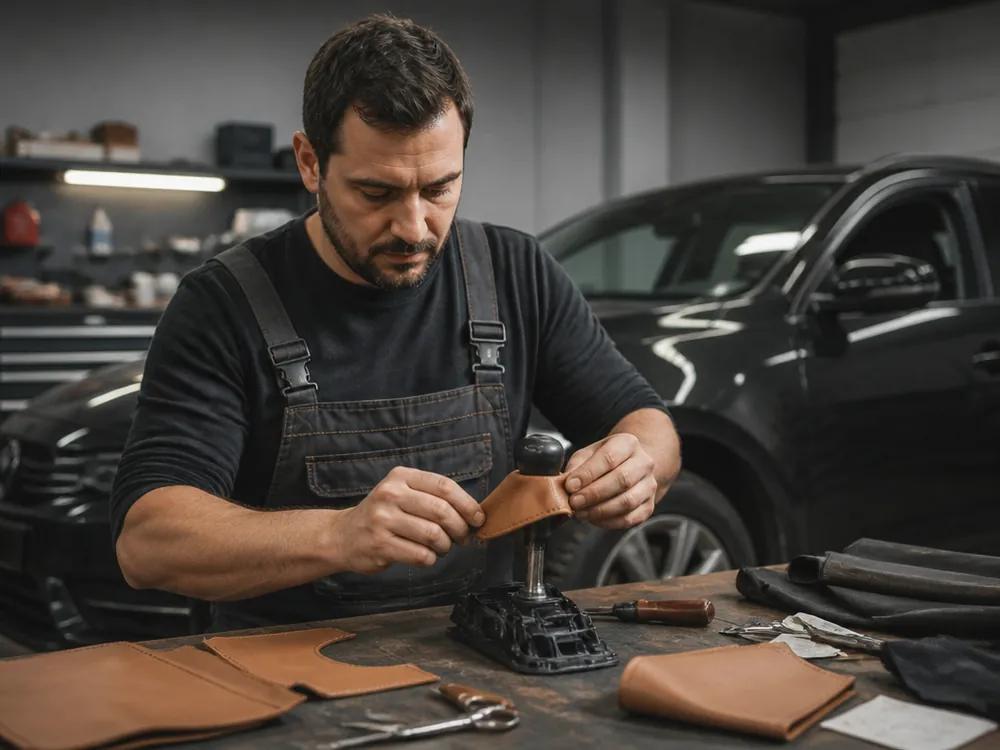
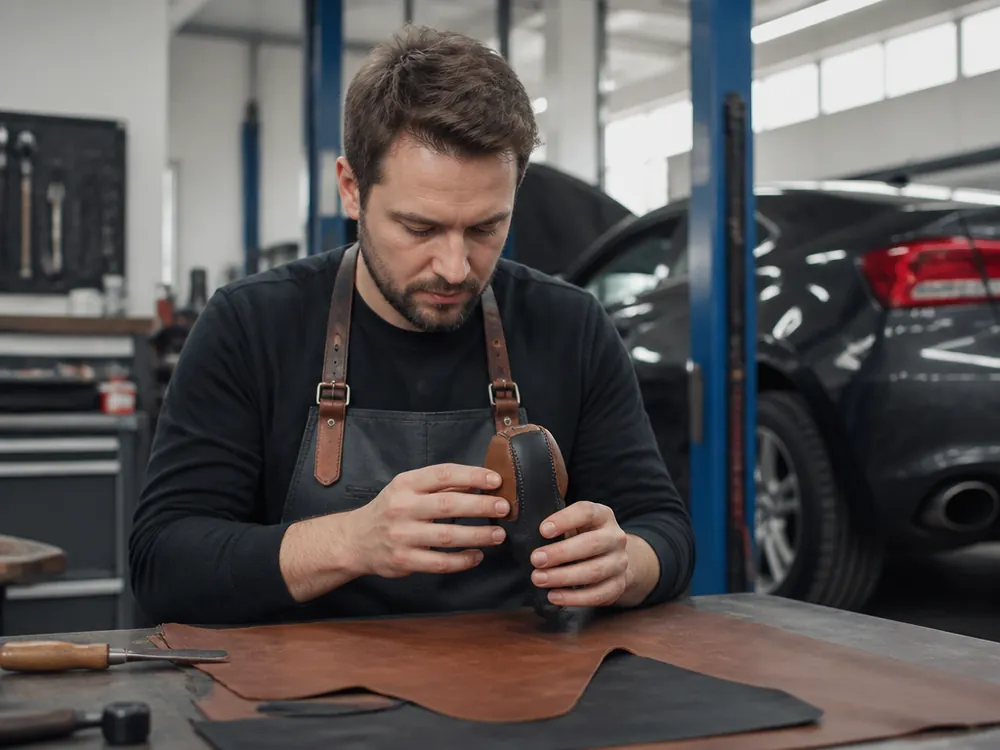
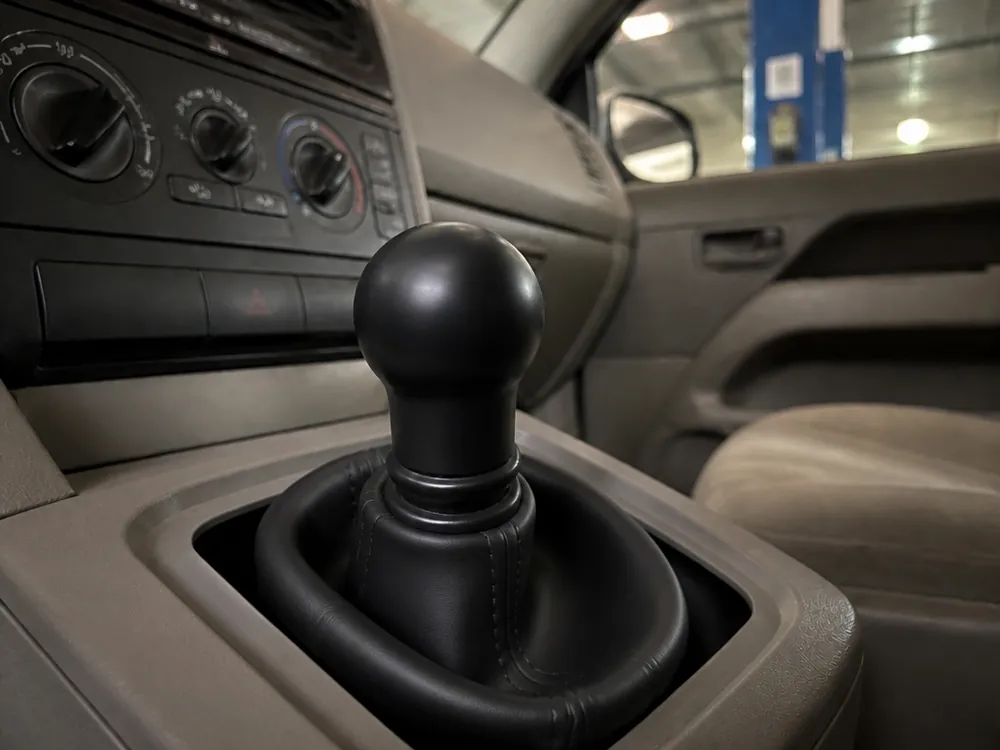
We remove the knob and make a pattern from the original part, so the leather fits without wrinkles and doesn't bunch up on the curves. Leather gear shift knob reupholstery in Almaty starts with removal: the technician lays the part on the bench, traces the outline and transfers it to the material with a seam allowance. We run the stitch along a pre-marked line at a 3 mm pitch — even along the whole length, without drifting on the curves. Genuine leather, synthetic leather and Alcantara stretch differently, so we adjust the pattern for each material separately. Without a pattern, the material is stretched in place and ripples on the curves; the pattern sets the shape in advance, and the 3 mm seam along the marked line holds the knob's geometry. This approach gives a smooth material fit without wrinkles or distortion.
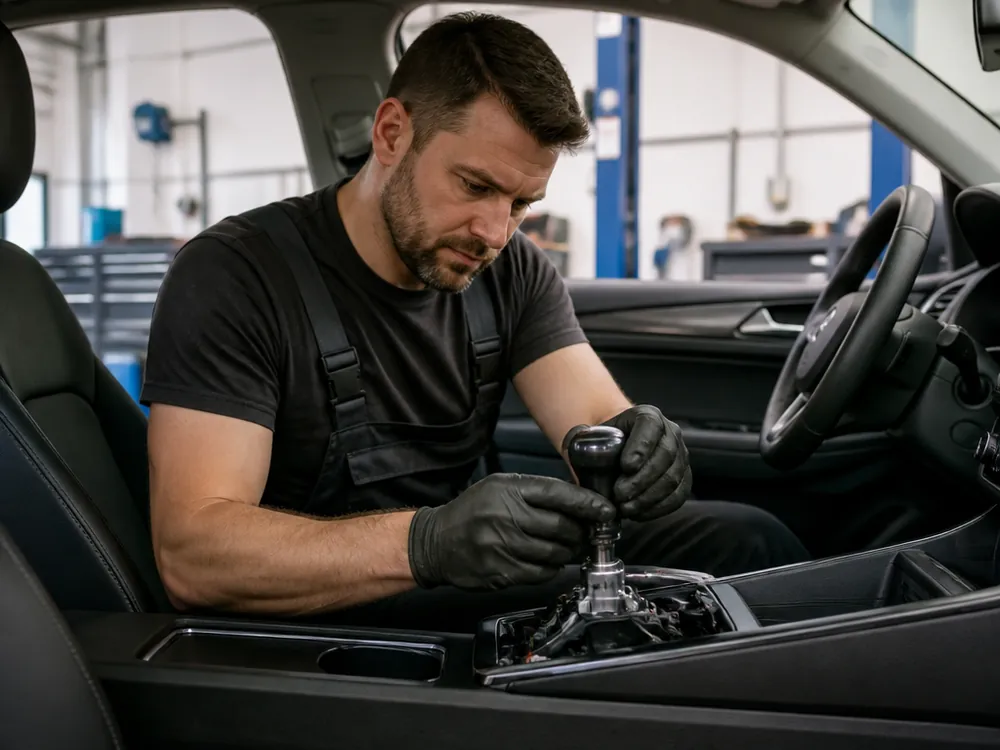
What we do with a knob that has a button, heating or a complex mount
- Button: we disassemble by the clips, leave the contacts alone and keep them working after reassembly.
- Heating: we keep the heating element in place and lay the leather over it without pinching the wire.
- Fasteners: we keep the original clips and screws, and don't cut or drill out the frame.
- Seals: a brittle or hardened seal is replaced with a new one rather than trimmed to size.
- Complex mount: gear shift knob reupholstery with a non-standard fit involves test-fitting in place after assembly.
How long the work takes and how handover goes
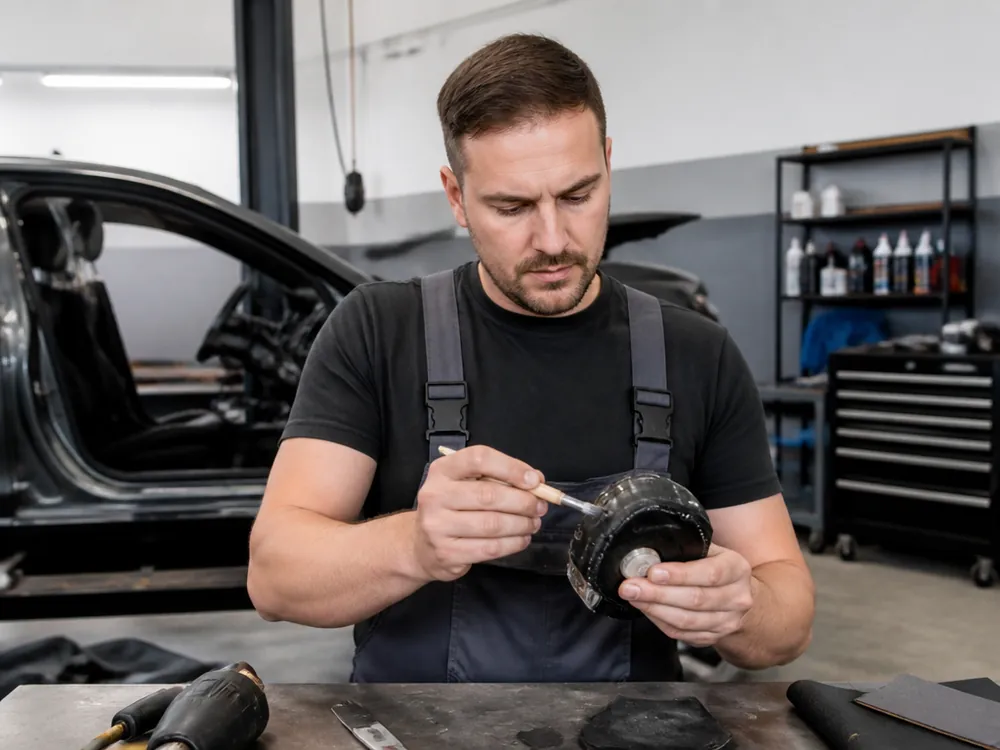
First the service advisor inspects the knob and prepares a written estimate; work starts only after the client agrees. Leather reupholstery of the shift lever is done under a work order: the advisor records the condition of the mechanism before disassembly, the material and the scope of work, and we take photos at key stages — you can see the part removed, the pattern fitted and the knob reassembled. Before handover we do a test drive: we check that gears engage as precisely as before reupholstery and the mechanism doesn't stick. The timeline and warranty terms are written into the work order and the completion certificate when you pick up the car. If a question about the seam or leather fit comes up after the repair, diagnosis for a warranty case is free.
Your own leather and the warranty on leather shift lever reupholstery
We cover whether you can bring your own leather for shift lever reupholstery, exactly what the 12-month warranty covers, and which cases it doesn't.
Can you bring your own leather
Yes, we work with the client's leather, but the warranty on such work doesn't cover the material itself. The client chooses what we install: OEM, aftermarket or their own materials — the same applies to parts for other jobs. We accept the client's material as a piece of the required size and check it for elasticity before cutting. The thickness and stretch of the client's material may not match the pattern taken from the original knob — in that case the technician will warn you in advance, before the knife touches the material. Thin leather conforms more smoothly to the knob's curves, while dense leather holds its shape longer but wraps the button less well. Your own leather saves on material, but the risk of rework due to a mismatch with the pattern falls on the owner — check the sample together with the technician before cutting.
What the 12-month warranty covers and what it doesn't
- Workmanship on our side: we redo the seam, the material fit to the pattern and any peeling free of charge within 12 months.
- Installed parts: the knob mount and seals we installed during reupholstery are also covered.
- Accident after repair: damage from a collision remains the owner's responsibility.
- Third-party involvement: if another technician disassembled or re-stitched the knob, the terms no longer apply.
- Normal wear and client's material: consumables and leather brought by the owner are not covered by the warranty.
What to do in a warranty case
Diagnosis for a warranty case is free with us — the technician inspects the knob and decides what to do. If the problem is the seam or peeling, we redo it under warranty free of charge: we remove the part, check the fit against the pattern and re-stitch along the marked line. If the mechanism was damaged by third parties, we show you the cause and offer a separate repair — that case is no longer covered by warranty. At handover we specifically check the bend areas, where peeling shows up more often than on the seam itself. Bring the car during working hours, daily from 09:00 to 20:00 — the advisor will log the request and pass the part to the technician. Book ahead to arrive without waiting and get an inspection on the day you come in.
Where to get reupholstery in Almaty
Choosing a shop comes down to one thing: do they work from a pattern here, or stretch the cover in place. Below is what to look for when choosing and how booking works with us.
How to choose a place that reupholsters from a pattern, not by eye
- Do they remove the knob: a technician who works from a pattern removes the part first rather than trimming the cover right on the lever.
- Is the seam marked out: an even stitch starts with a line drawn before cutting; without marking, the seam drifts on the curve.
- Will they show the pattern: ask them to explain how the leather will fit on the curves and the button — the pattern shows this in advance.
- Will they keep the mount intact: ask whether they disassemble the mechanism by its clips or cut the fasteners to save time.
- Are they ready to show the seam before cutting: a technician working from a pattern will explain how the stitch will lie on the curves and won't hide the markings.
How booking and vehicle intake work
Your car is received by the service advisor, who manages the work order through to handover. We're open daily 09:00–20:00, seven days a week, by appointment — no waiting in line. Intake starts with an inspection of the knob: we check the condition of the upholstery, the button, the heating and the mounting, then estimate the scope of work. Next you get a written estimate, and work starts only after you approve it — so there are no surprises on the bill. We take photo reports at key stages, and before handover we do a test drive: we check how the knob sits in your hand and whether the seam interferes with gear shifting. We record the turnaround time and warranty terms in the work order and the completion certificate at handover. If a question comes up about the seam or how the material fits after reupholstery, diagnosis for a warranty case is free — the technician will inspect the knob and tell you what to do next.
Why CARGID
We've been repairing cars in Almaty for 12 years, 9,000+ vehicles have been through our shop, and we give a 12-month warranty on reupholstery in the work order. The knob is reupholstered by technicians with 9–18 years of experience, not an outside contractor — we're responsible for the seam and the fit of the upholstery, not a third party. Our shop has 6 lifts and dealer-level scanners for 40+ makes, so we also check the button and heating electrics if your knob has them. The service advisor manages the order from inspection to handover, and we show you the old parts and give them back to you. In my view, that's exactly what sets apart a shop where the knob is made from a template from one where the upholstery was just stretched over the lever.
What to know before gear knob reupholstery
Here's the key stuff to keep in mind before reupholstering your gear shift knob: from choosing the material to the warranty terms on the work performed.
- Signs of wear: scuffs, creases and loose stitching on the knob are a signal it's time to refresh the upholstery before the mechanism gets damaged.
- Material for the job: leather holds its shape and doesn't slip, synthetic leather is easier to care for, and Alcantara feels nicer in the heat.
- Pattern from the removed part: the template is taken from the original knob, so the upholstery fits without wrinkles and doesn't bunch up on the curves.
- 3 mm stitching along the markings: a straight line along the whole length lasts longer than a stitch that wanders off on a turn.
- 12-month warranty: the term and conditions are recorded in the work order, and diagnosis for a warranty case is free.