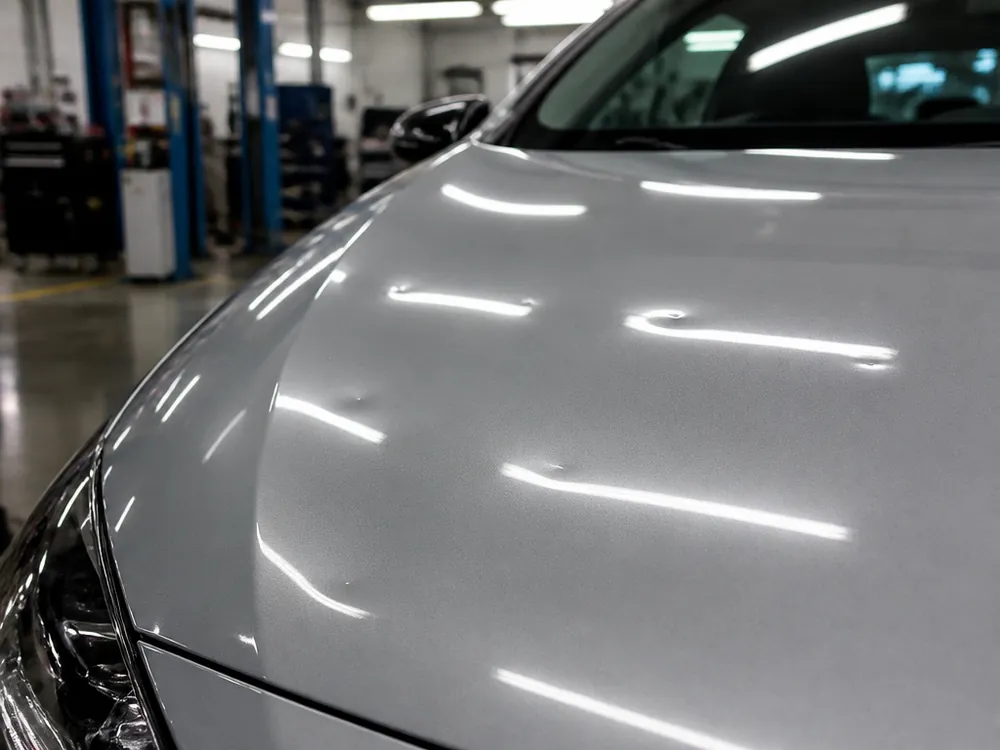
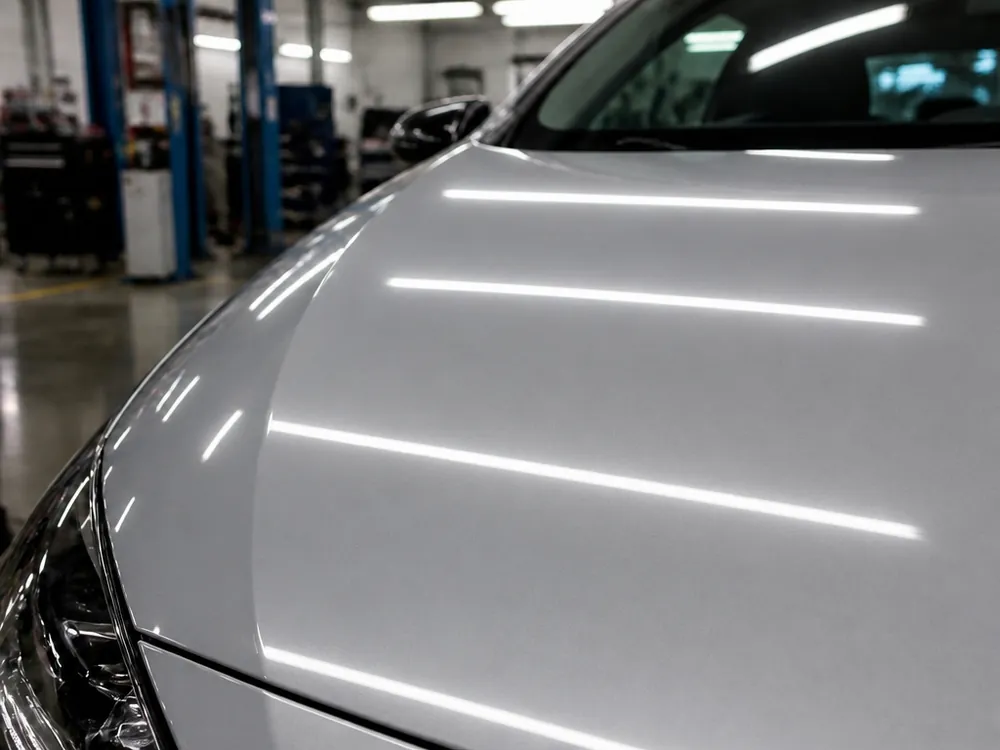
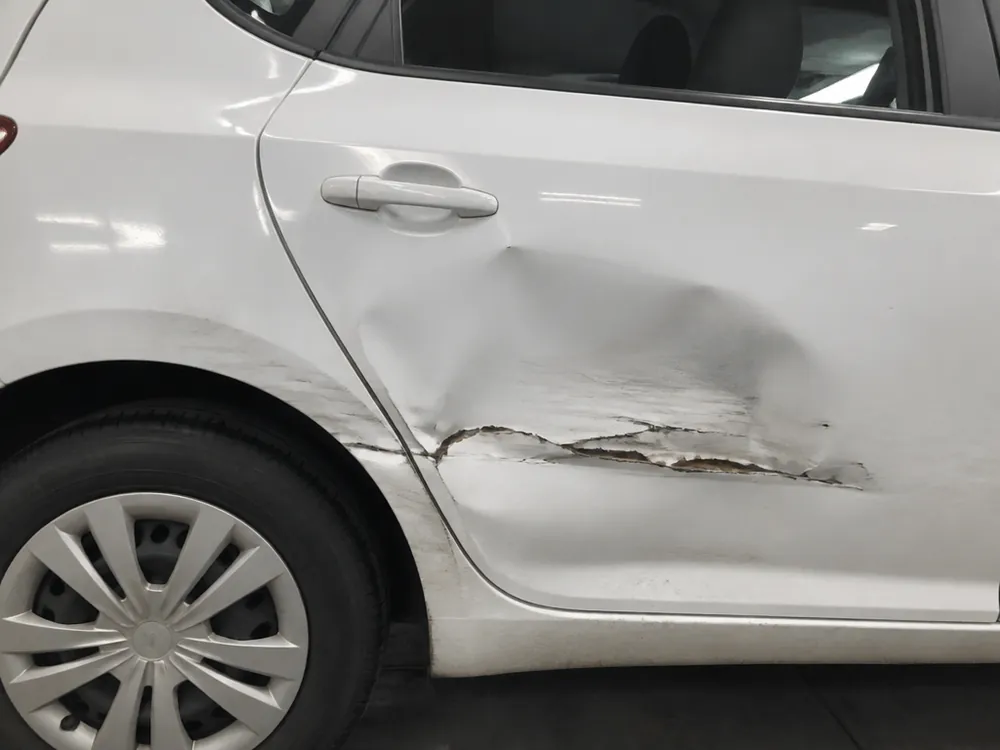
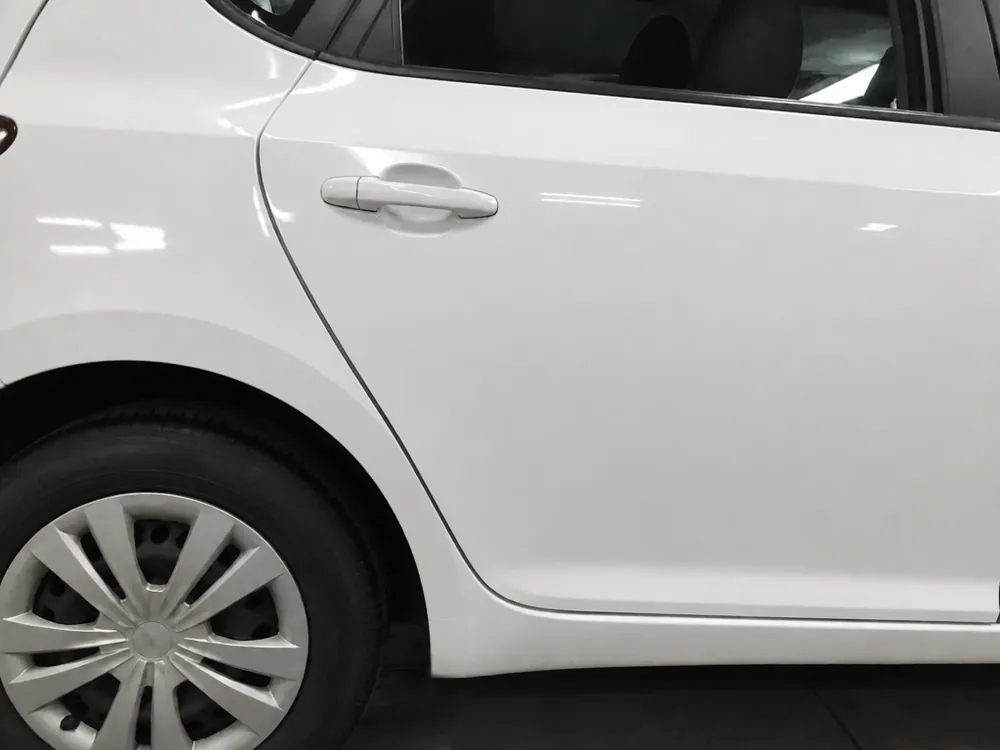
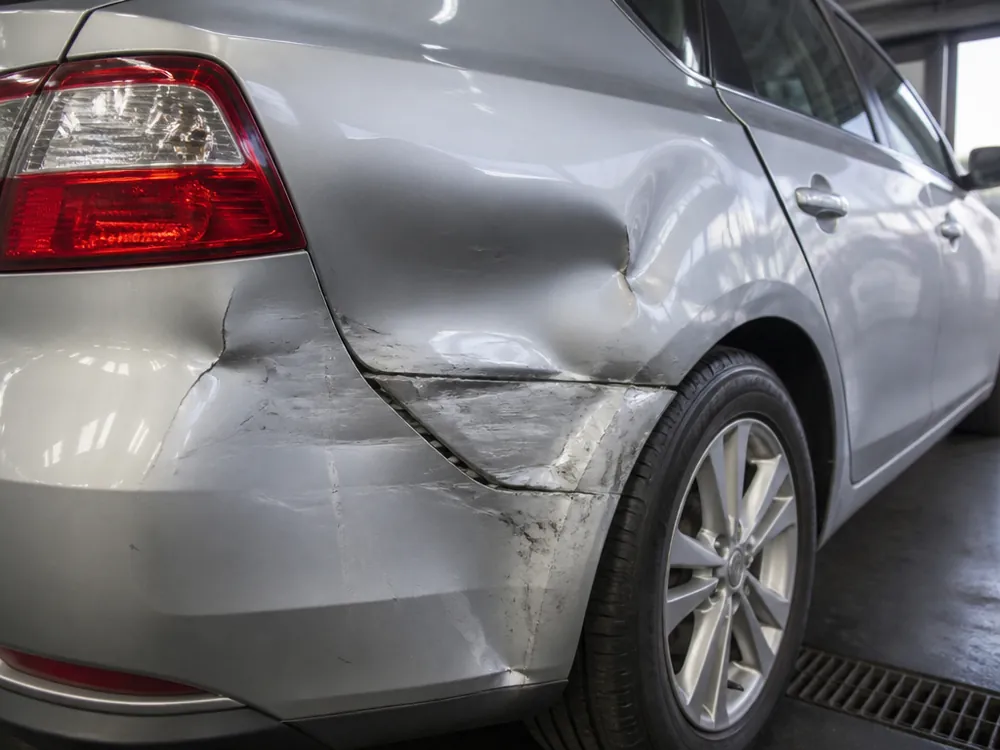
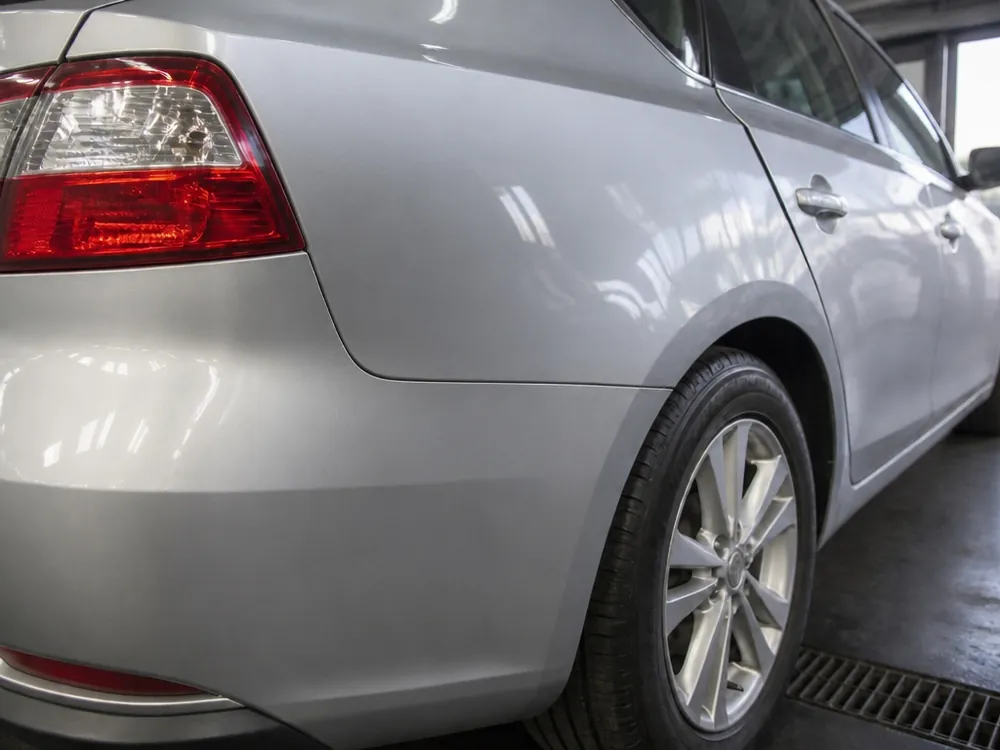
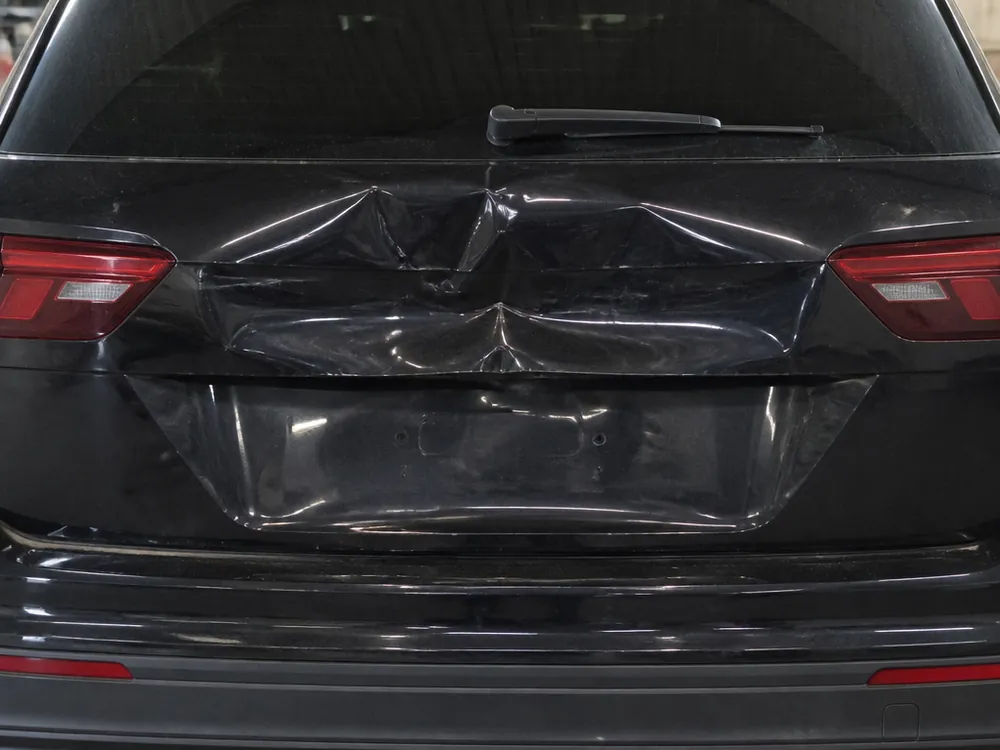
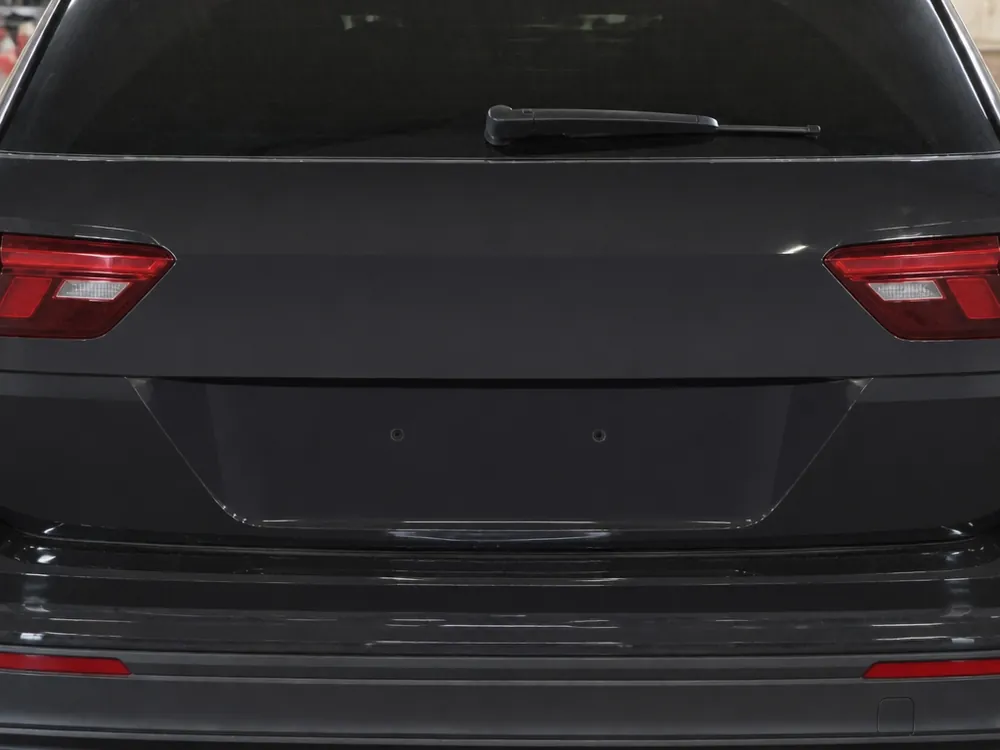
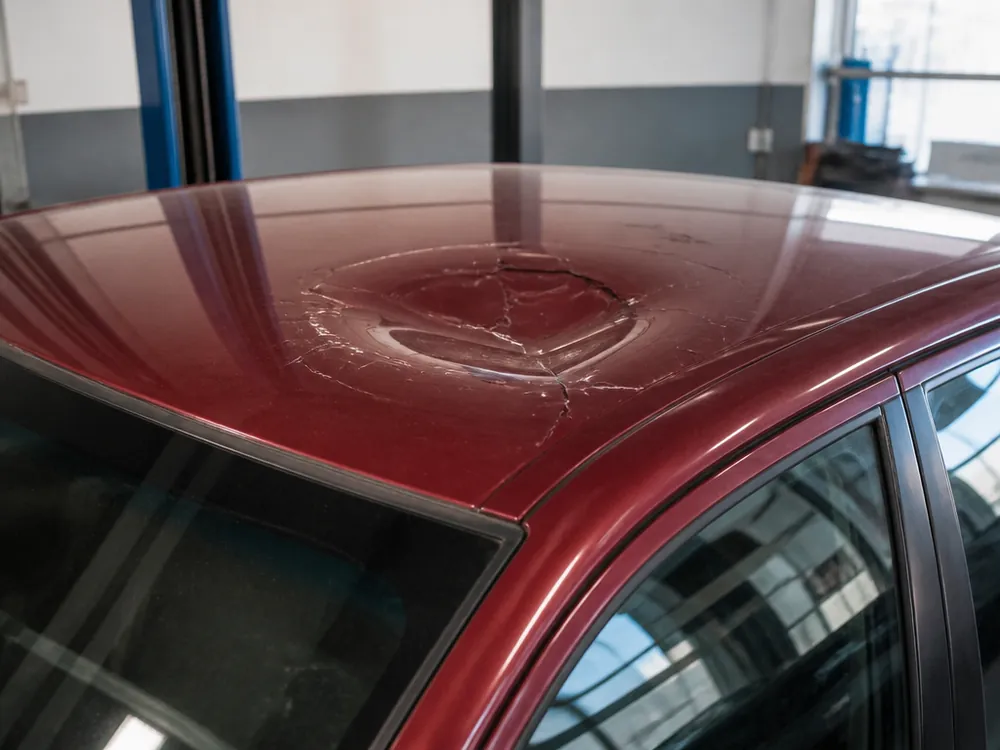
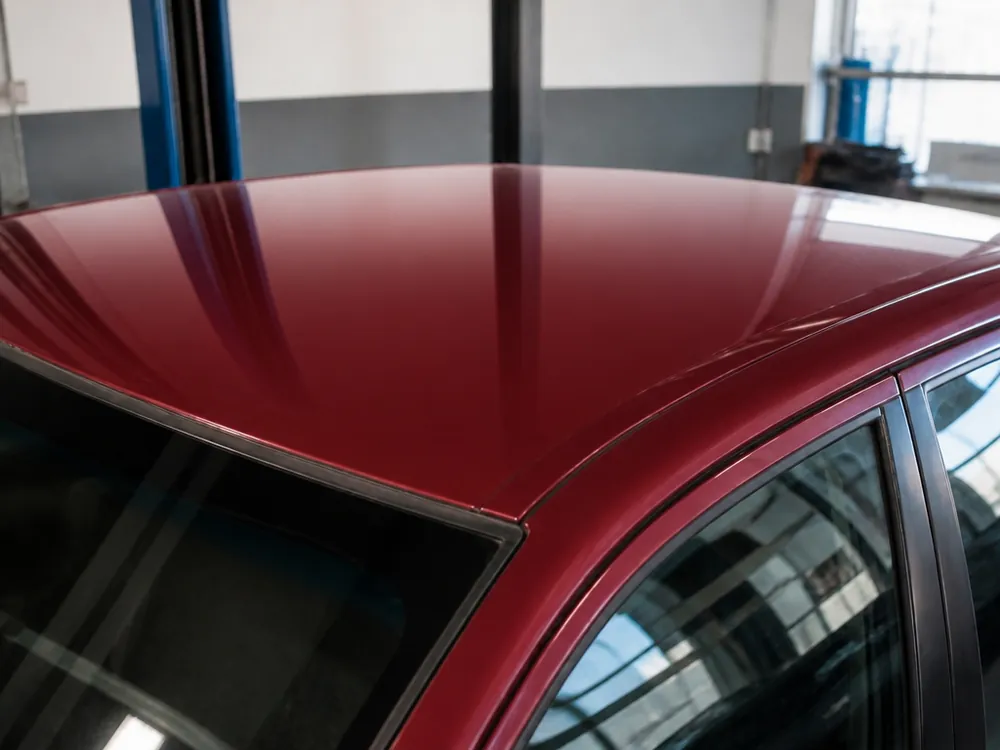
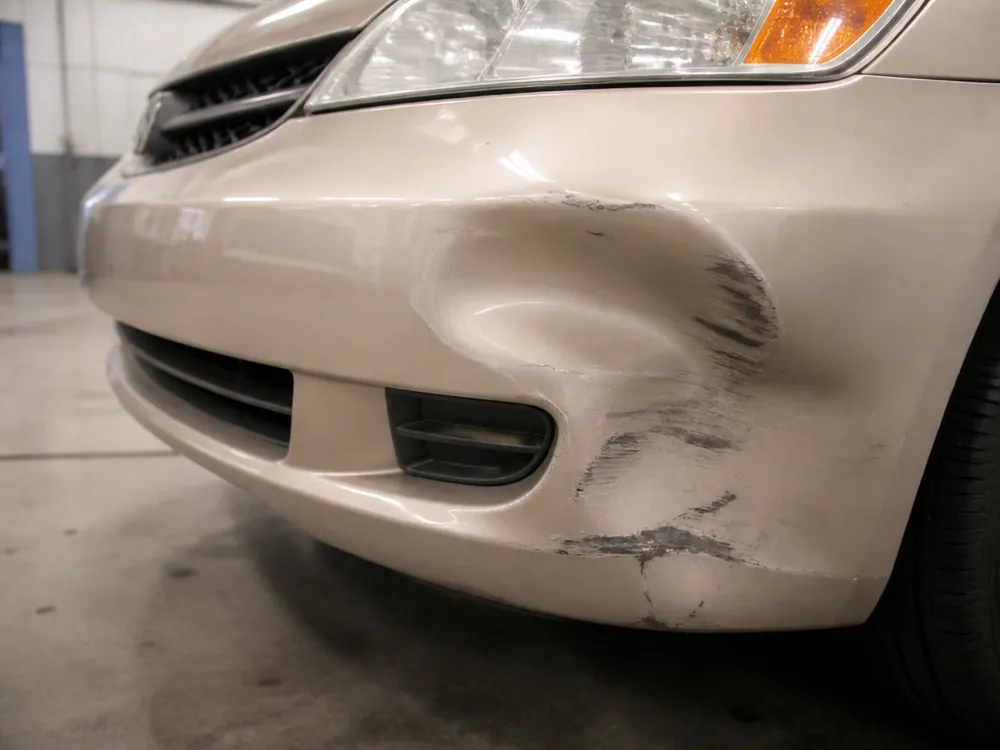
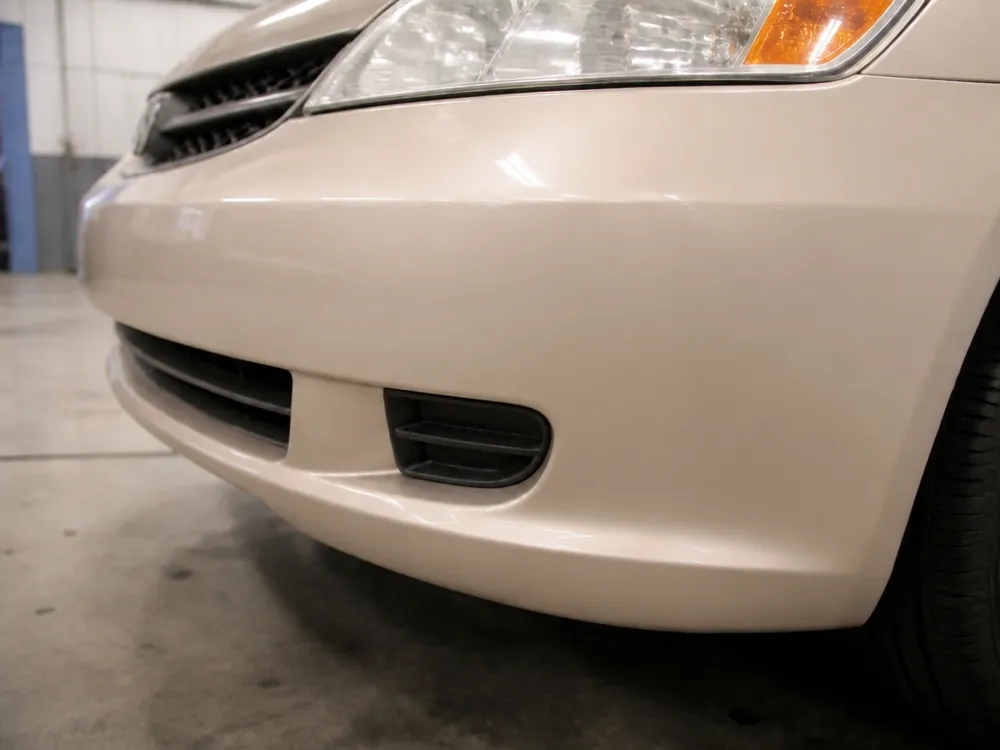
The main fear of an owner is to arrive and hear "this can only be painted." The applicability of the method is decided by the condition of the metal and paint, and we check this during diagnostics before the estimate.
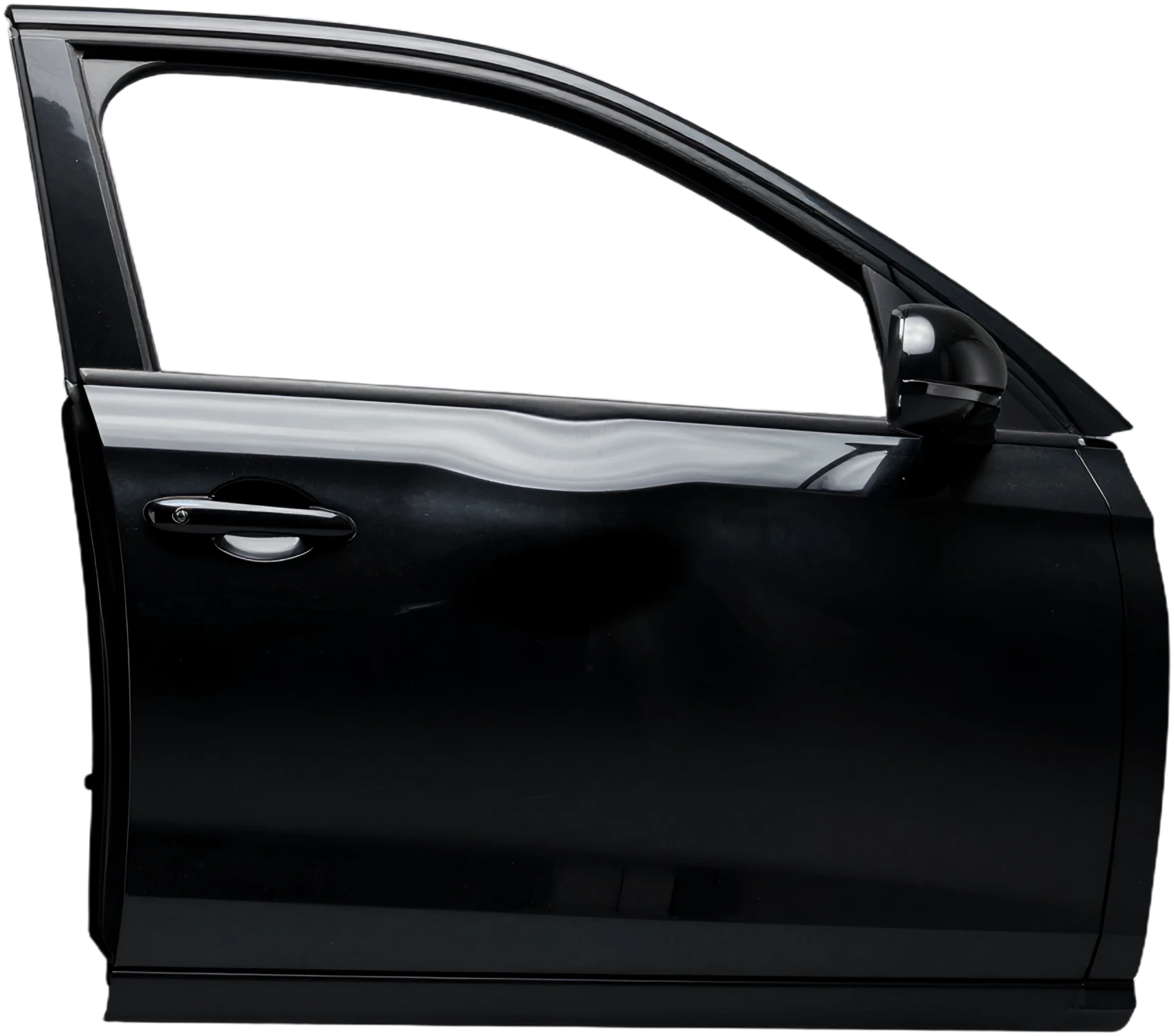
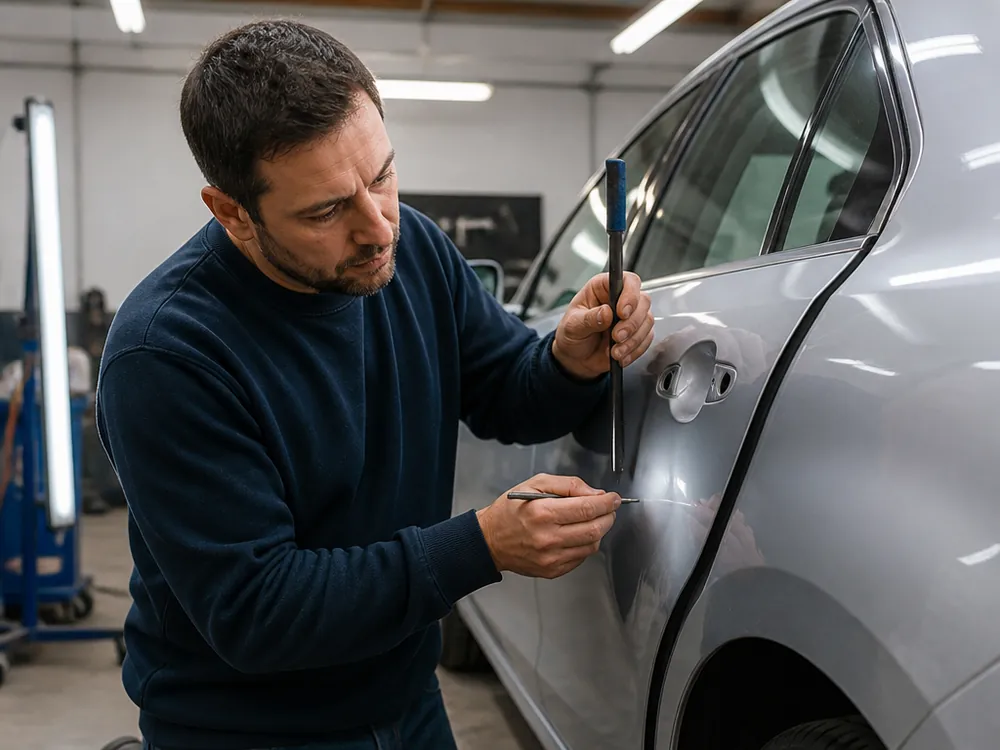
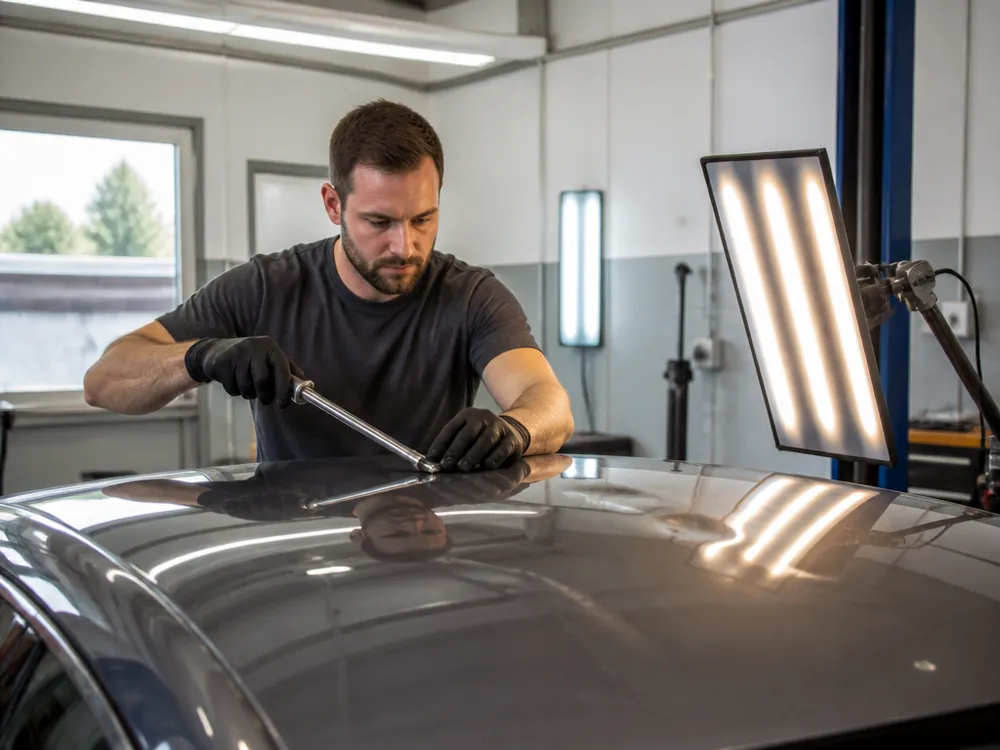
We take panels with intact factory paint — from a small dent up to 15 mm to medium and large on a fender, if the surface is not stretched and the paint is not cracked. In our work we look at three things: the depth of deformation, the tension around it, and the condition of the clear coat on the bend. According to the experience of technicians with 8–17 years of service, the cleanest results come from fresh dents without sharp edges — there the part still holds its shape and returns predictably. Paintless dent removal in Almaty at our shop starts with inspecting the panel under a lamp and measuring with a thickness gauge: this shows whether it has been worked on before. The sooner you bring the car after a dent, the greater the chance of avoiding painting — fresh deformation straightens easier than an old one.
When you can't do without painting
- Sharp crease: the surface is broken along a line, the clear coat is torn — a rod can't bring such an edge back, preparation and panel painting are needed.
- Severely stretched area: a "bubble" has formed around the dent, the strength margin is gone — pulling will create a wave visible in the reflection.
- Edges and stiffening ribs: there the part is under tension and thin, local straightening tears the paint almost immediately.
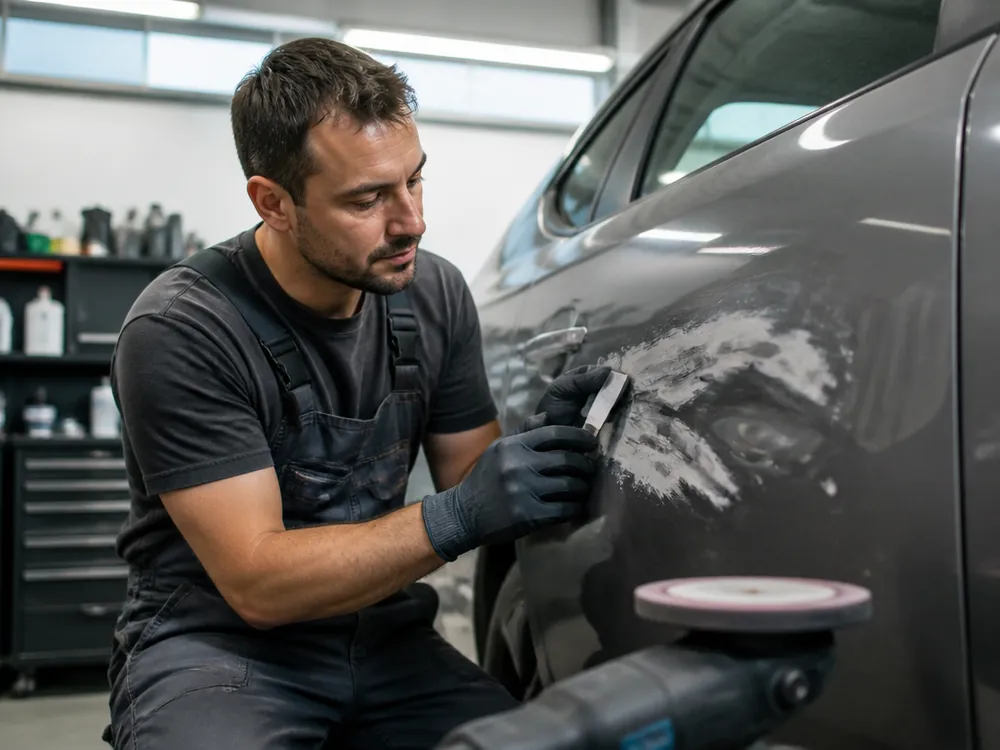
- Body filler or previous repaint: under the filler layer, the rod loosens the old repair — you can't straighten a dent on the body here without losing that layer.
- Cracks and chips along the edge: the paint no longer holds, and straightening will expand the damage instead of repairing it.
What to do if a small trace remains after work
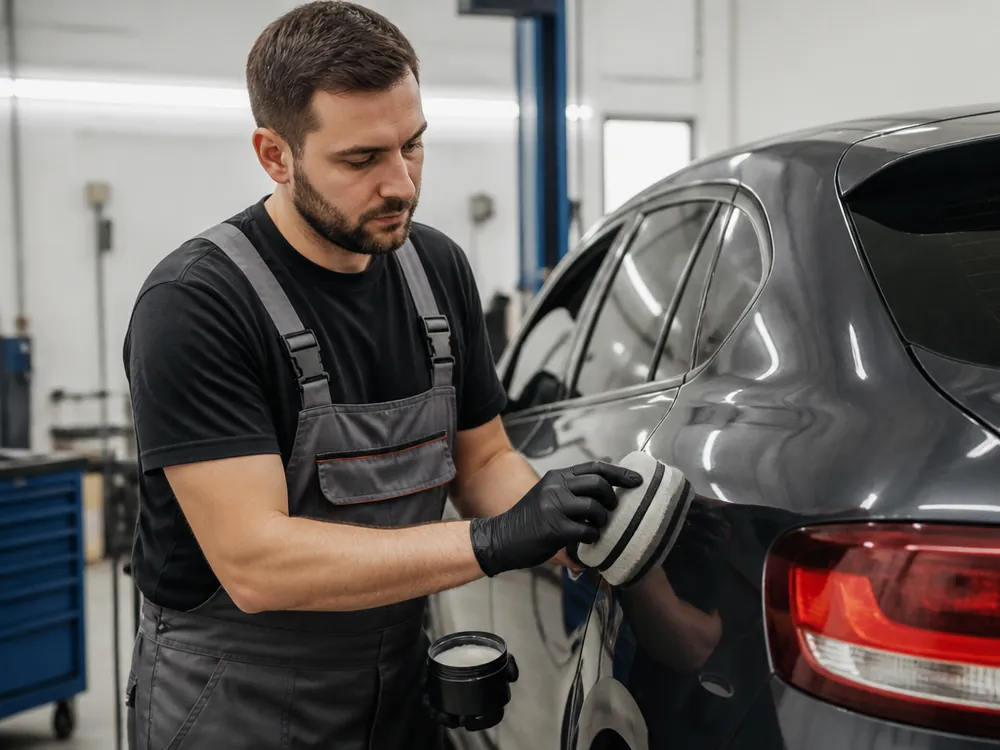
After straightening, we leave a minimal trace only where the surface was stretched, and we mention this in the estimate — final paint treatment is done in the same work order. The trace is visible on the gloss at an angle and almost invisible from a couple of meters away: this is the limit of the method's capabilities, not a technician's oversight. If it bothers you, it is covered by paint treatment or polishing the area, not by a full repaint of the panel — the factory coating remains on most of the part. Before handover, the service advisor shows the result under a lamp and explains exactly what remains. A small trace at the stretch point is not a defect; if it is wider than expected, it is fixed under the warranty that we record in the work order.
How paintless dent removal from the back of the panel is done
We explain what happens to the metal from inside the panel, how it is returned to its original shape, and why the factory coating remains untouched.
What the technician does from the back of the panel
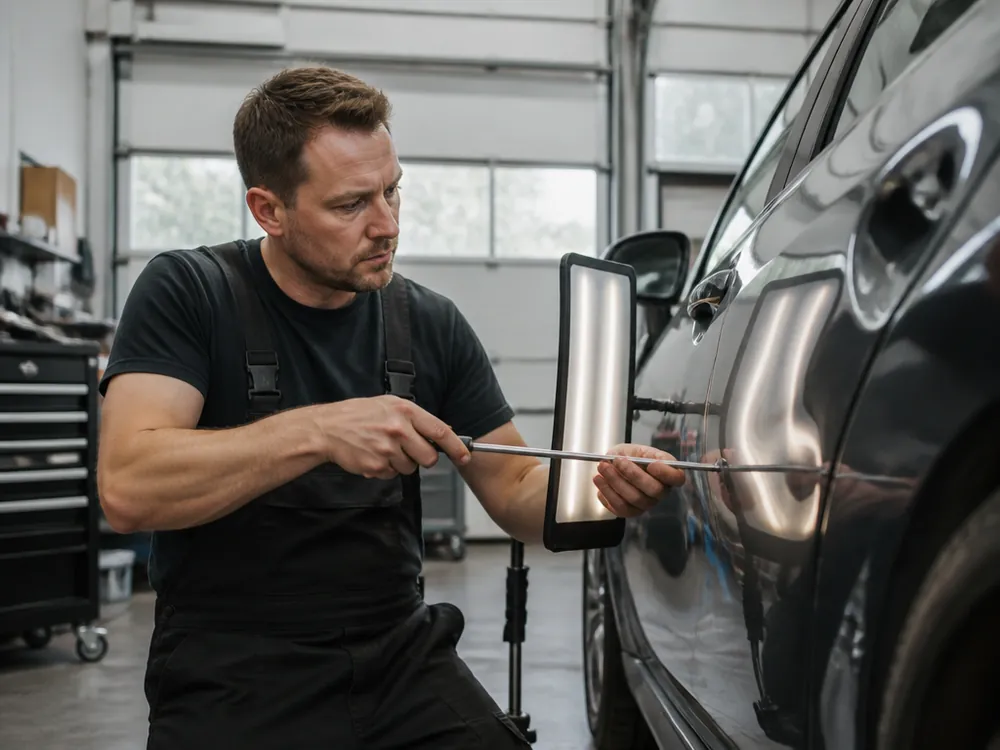
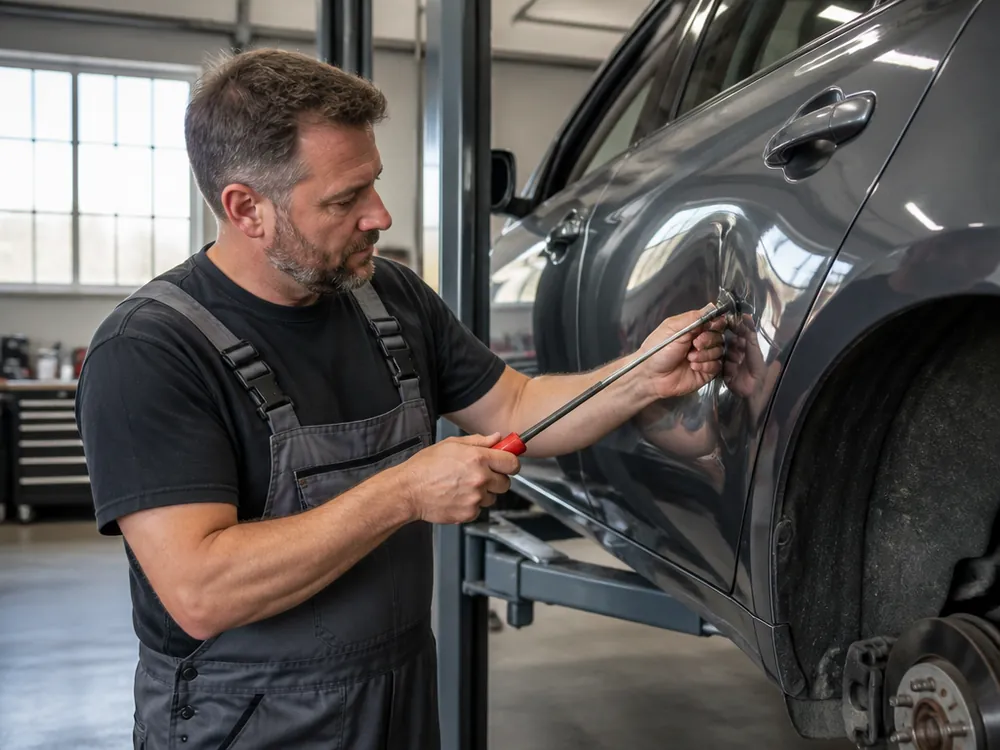
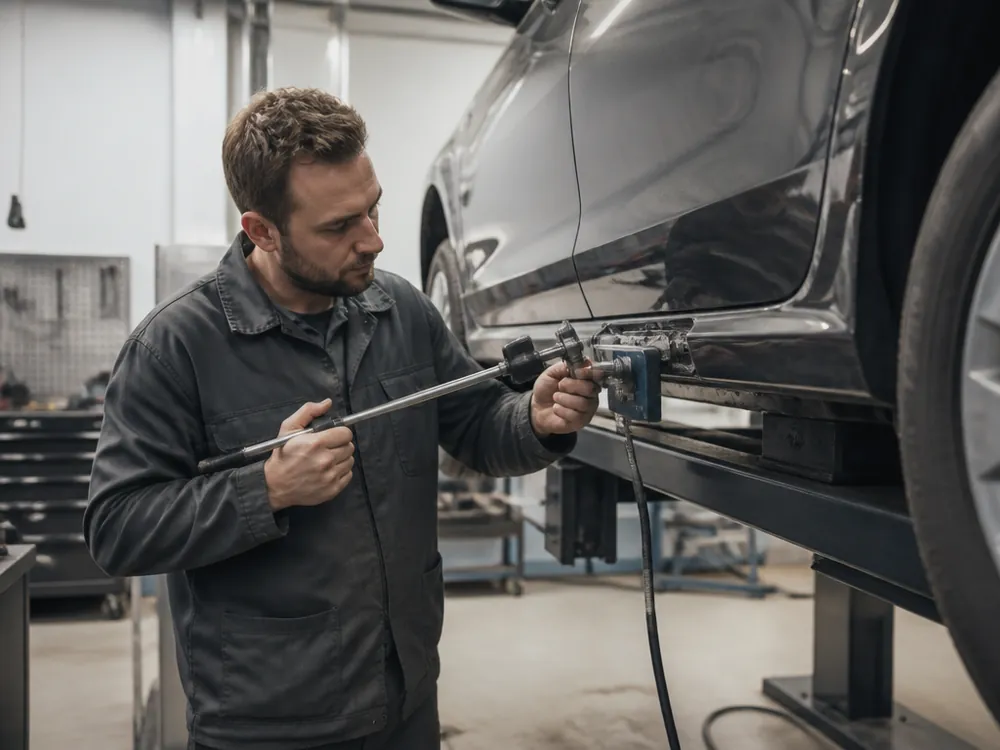
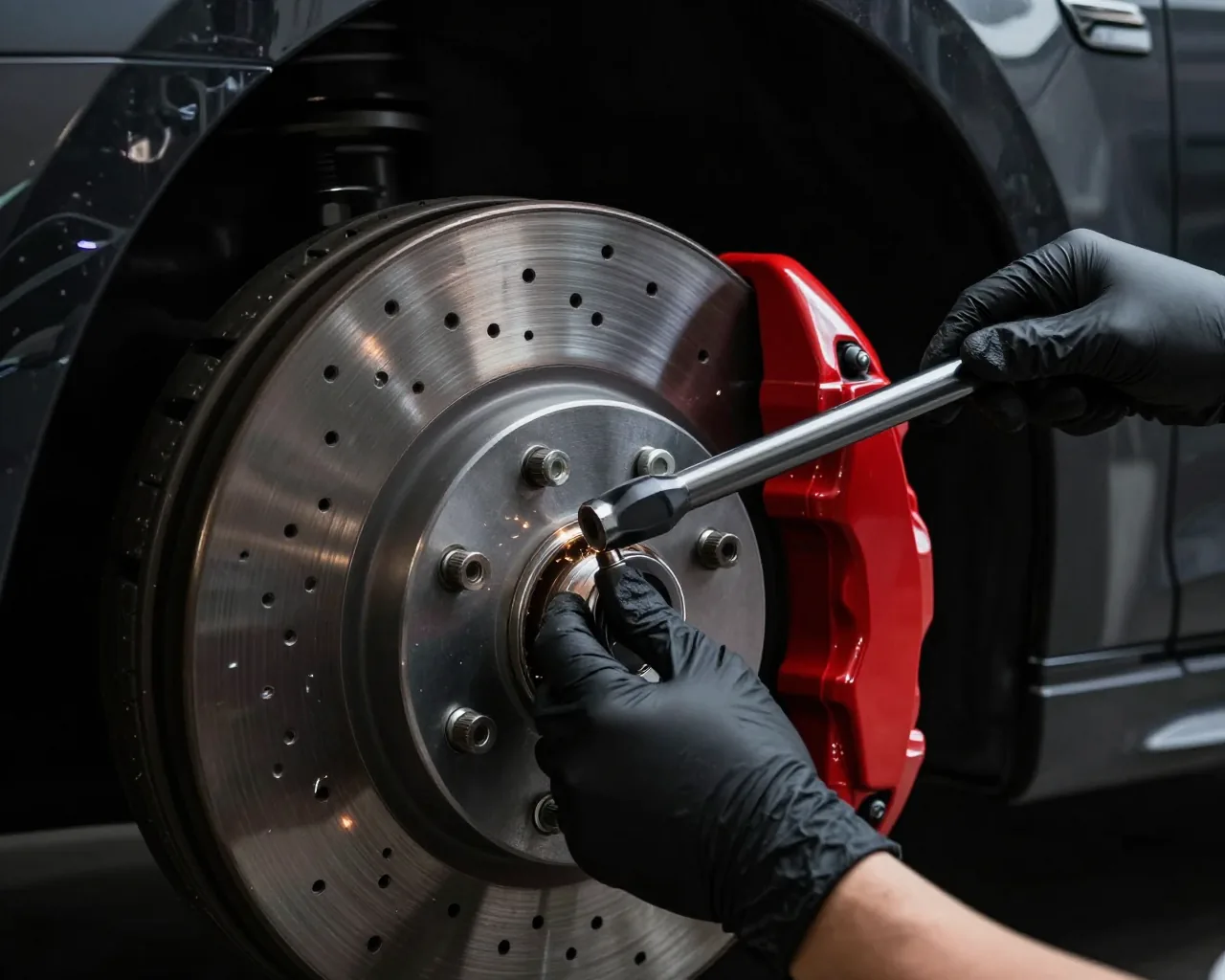
Our specialist inserts a rod behind the panel and precisely pushes the metal from the inside out, returning it to its original shape without hitting the front side. PDR technology is based on access to the back side: through standard openings in the frame, tools of different lengths and curves are guided, pressed against a specific area, and short presses lift the dent. The direction and force of each movement are checked against the front side — by the light reflection you can see where the metal has not yet reached the desired line and where it is already overpulled. Pressure is distributed over the area, not hit at one point: this way the metal returns smoothly, and no reverse bump appears next to the dent. On aluminum and thin panels, the press force is reduced — metal stretches differently than steel and requires a softer rod stroke.
Why the panel is heated and gaps are checked
We heat the panel so the paint stays elastic, and after each stage we check the gaps — this way the paint doesn't crack and the geometry doesn't shift. Heating is done with a heat gun and thermometer: the clear coat becomes softer and stretches with the metal instead of cracking along the dent contour. Gradual pulling goes in small steps, between which we return to the gaps at the joints with neighboring elements — if the panel has shifted, this is visible in the evenness of the gaps. Overheating is more dangerous than underheating: at excessive temperature the clear coat becomes cloudy, so heating is done gradually and with control, not "by eye." On factory paint without repair traces, this mode works predictably, and on a repainted area, heating is always more careful.
Do you need to disassemble the door or panel
Most often we remove only the trim or a local element to give the rod access to the back side, and we don't remove the panel itself. In our shop, body work is handled by our own body technician: he checks in advance where the reinforcement and wiring run so as not to touch them with the tool. The less disassembly, the lower the risk of damaging clips and the wire harness — so access is found through standard technological openings, not through full door disassembly. This approach saves time and keeps factory fasteners in place, and after work the trim goes back without play or squeaks. Separately, we check that the window regulator cables and lock rods are not pinched: their accidental displacement later causes rattling on bumps, so after assembly the door is opened and closed several times, listening for any unusual sounds.
Thickness gauge and complex panels (aluminum, hard-to-reach places)
Before work, it's important to understand what layer of paint the metal is under and what panel we're dealing with — this determines both the tool and the applicability of the method.
Why we measure paint thickness at 3 points
We measure paint thickness with a gauge at three points on the panel to see where repair has already been done and under what layer it's safe to work with a rod. Factory coating and repaint give different thicknesses, and the difference in measurements shows the area of previous repair before the rod even touches the metal. On a repainted panel, the layer may be several times thicker than factory, and pulling such an area blindly risks cracking the clear coat or lifting the filler. Therefore, measurement is the first step, before disassembly and heating: the technician marks the boundaries of safe work and only then picks up the tool. In our practice, the thickness gauge has more than once saved a panel from unnecessary intervention — sometimes it's simpler and more honest to refuse PDR than to ruin a repaint. If the layer is uneven, we show the measurements to the client and explain what will happen to the coating during the process.
How we work with aluminum and hard-to-reach places
We straighten aluminum panels and dents in hard-to-reach spots with dedicated technicians — aluminum is softer and needs a different amount of force, and for hidden areas we pick tools based on access. Aluminum holds its shape worse after being stretched, so we pull it in smaller steps and check gaps more often than on steel. For hidden areas — behind a reinforcement, at the edge of the glass, in a pillar — we have a set of levers in different lengths and bends: short ones for tight spots, long ones with a curved tip for working around inner ribs. Sometimes access only opens up after removing the trim or a headlight, and we build that into the diagnosis up front. We treat aluminum more carefully: it stretches more readily but is also easier to overpull, so we check the surface step by step. If a panel is bonded or made of composite, PDR may not be the right fit — and we tell you that honestly before any work starts.
What dent work we do
dent categories and rough time per panel| Type of work | What we do | Rough time |
|---|
| Small dent up to 15 mm | Push it out with a lever from the back side | A couple of hours |
|---|
| Medium dent without painting | Heat, gradual pulling, gap checks | Up to four hours |
|---|
| Large dent on a fender | Work across the area with geometry checks | Up to four hours |
|---|
| Deep dent with paint damage | Straightening and paint repair | Up to four hours |
|---|
| Dent in a hard-to-reach spot | Tool selection based on access | Based on diagnosis |
|---|
| Dents on aluminum | Small steps, frequent gap checks | Based on diagnosis |
|---|
| Hail dents | A series of panels across the body | Based on volume |
|---|
Time per panel and what affects it
Clients want to know how long the car will be in the shop. Here we break down what goes into the time for one body panel and why hail dents are counted on a different basis.
How long one panel takes
We do a small dent in a couple of hours and a medium one in up to four: that's how long heating, gradual pulling and gap checks take. One panel takes CARGID technicians from two to four hours — the range depends on the size of the damage and the type of metal. Heating relieves the internal stress in the steel, then a lever through the access holes brings the metal back to its original shape, and the gaps along the edges are checked on every pass — otherwise the surface will warp. Time grows not with the size of the dent but with the stiffness of the metal and access to the back side: a panel with easy access goes faster than a large one. In my view, it's more honest to give a range in hours right away than to promise "half an hour" and then keep the car for a day.
How we estimate time for hail dents
After hail, we count not one panel but the whole volume: we do several body panels in sequence, and the total time depends on how many there are. The hood, roof, fenders and doors are done one after another, so the total is the sum of hours for each area, not a single number. With widespread damage, it's better to first diagnose the whole body and put together a written estimate by panel than to take them one at a time. We take photos at the key stages so the owner can see exactly what was straightened and in what order. Hail hits horizontal surfaces densely and randomly — there can be several dozen such spots on a roof, and each one needs its own pass with a lever, so you can't judge the volume by eye.
Warranty, paperwork and why PDR beats painting
The fear of "what if the dent comes back in a month" is settled by a document, not a promise. Here we explain exactly what we put in writing and why keeping the factory finish is money in your pocket when you sell.
What warranty you get and where it's written
We give a 24-month warranty on body repair and record the term and conditions in the work order and the completion certificate when you pick up the car. The same term applies to painting, rustproofing and ceramic coating, while an oil change or suspension work comes with a 6-month warranty — each type of work has its own figure, and the service advisor tells you before the repair starts. The warranty covers the work performed and the parts installed, but not an accident after the repair, interference by third parties, normal wear of consumables, or a part the client brought in. That's why the conditions go in a document, not "by word of mouth": in a dispute you come with the certificate, not with a retelling of the conversation. Diagnosis for a warranty case is free with us — first we look at what happened and why, and only then discuss who pays for the work.
Why PDR is better value than painting for the owner
PDR preserves the factory paint, so the car doesn't lose value from a repaint, and the repair takes hours instead of days in the paint booth. When you sell, a paint thickness gauge shows the paint layer on a panel: whether it's factory or applied again — the buyer and the appraiser see it right away, and a repaint reads as a sign of repair. The preserved finish stays a selling point for the car's price, and the panel itself needs no prep, no drying and no polishing afterward — that saves both time and money. In my view, the benefit isn't just the turnaround: a car with untouched factory paint sells for more than the same model with a repainted door or fender. Ceramic coating or paint protection film goes on more evenly over original paint than over freshly painted metal that's still off-gassing solvent.
How to choose a shop so they don't repaint when they don't have to
- Thickness gauge check: the technician measures the paint at several points before work — that shows where it's already been repaired and under what layer it's safe to pull.
- Written estimate: the scope of work and timeline are put on paper before the start, not said out loud after the panel is taken apart.
- Warranty in a document: the term and conditions are written into the work order and certificate, not left to the advisor's word.
- Diagnosis before repair: first the inspection and measurements, then the decision — otherwise you'll never know whether there was any chance of avoiding painting at all.
- Photo report by stage: before-and-after shots show exactly what was straightened and which part of the panel was touched.
Where PDR works and when painting is needed
Here's the main stuff to keep in mind before getting a dent fixed — from where the method works and where it doesn't to turnaround time and the warranty on body work.
- Where the method works: PDR works when the paint is intact and the metal isn't stretched; sharp creases and body filler mean it's a job for painting.
- How it works: the metal is pushed back out with a rod from behind the panel, and heat plus gap checks keep the paint intact.
- Checking before we start: a paint thickness gauge at 3 points shows any past repair and how deep it's safe to work.
- Tricky panels: aluminum and hard-to-reach spots need their own techniques, not a one-size-fits-all approach.
- Turnaround and warranty: 2–4 hours per panel, and the body repair warranty is 24 months, written into the work order.