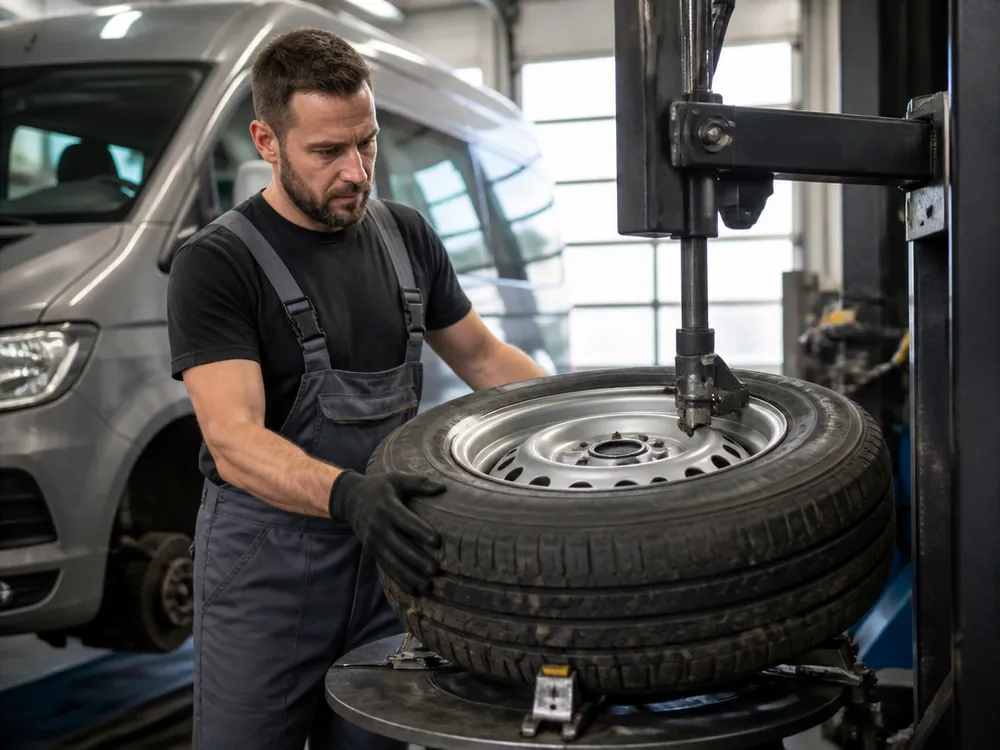
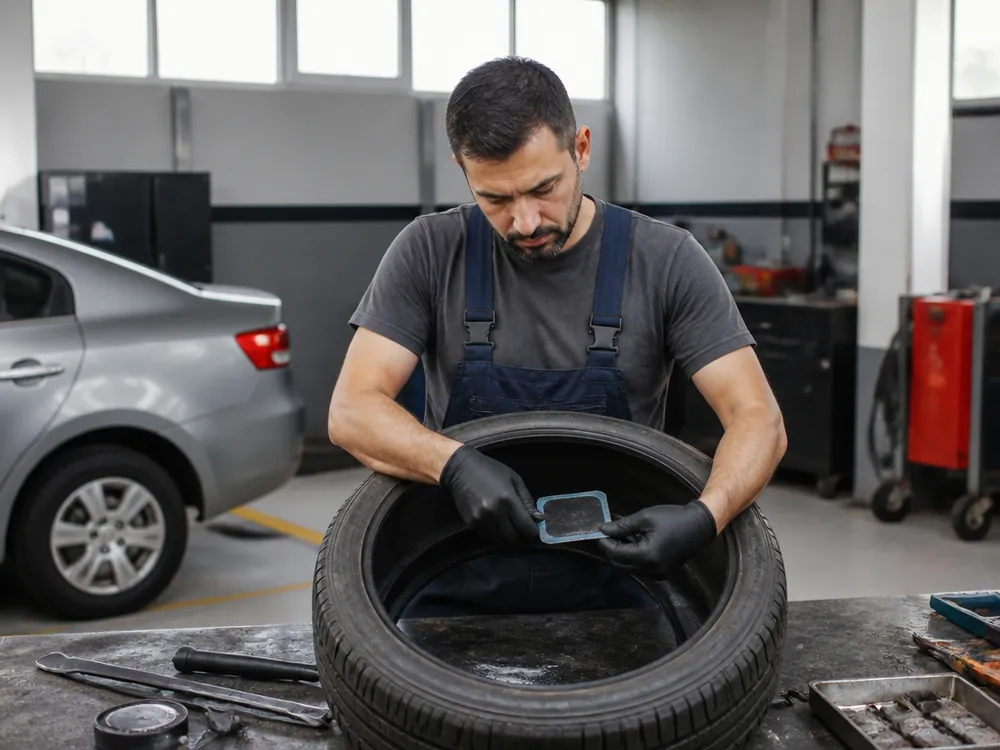
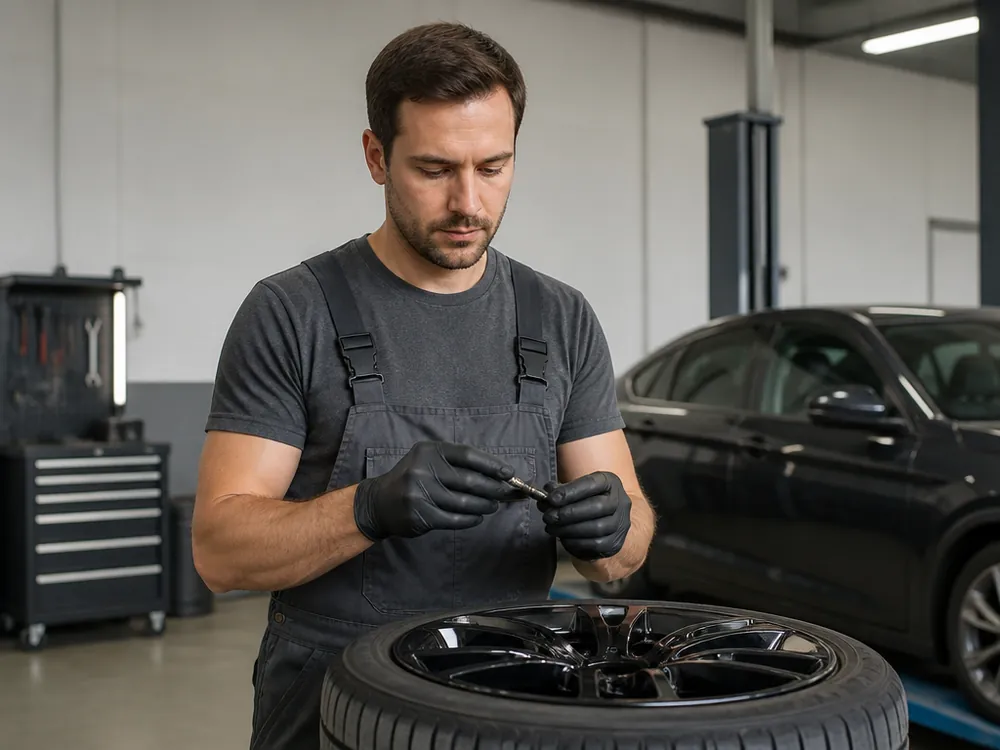
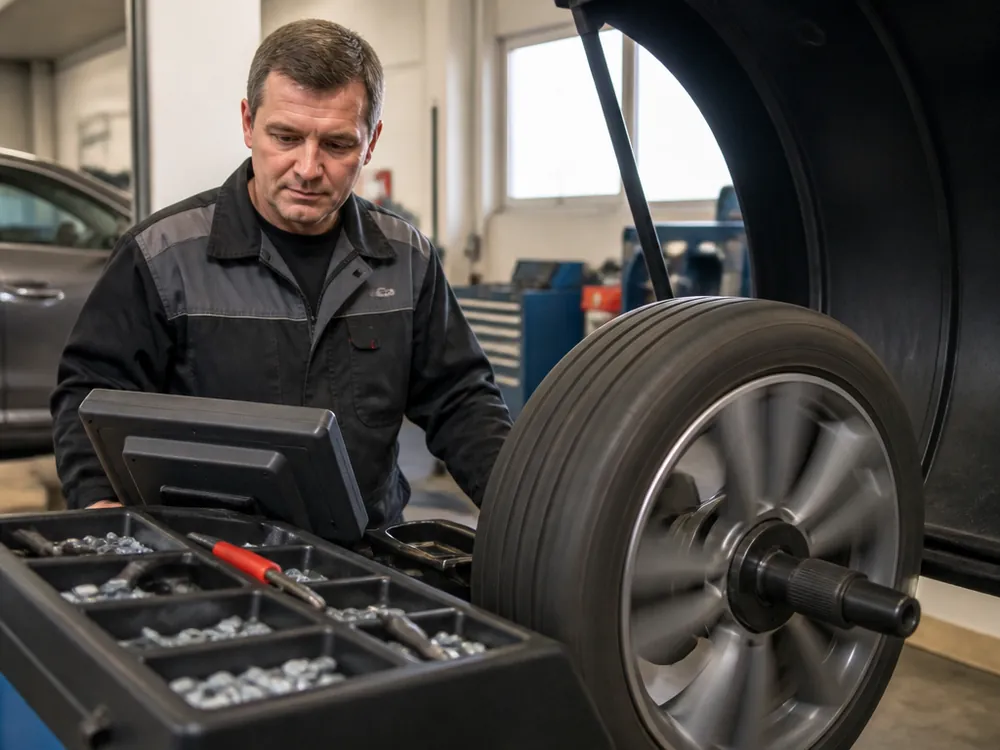
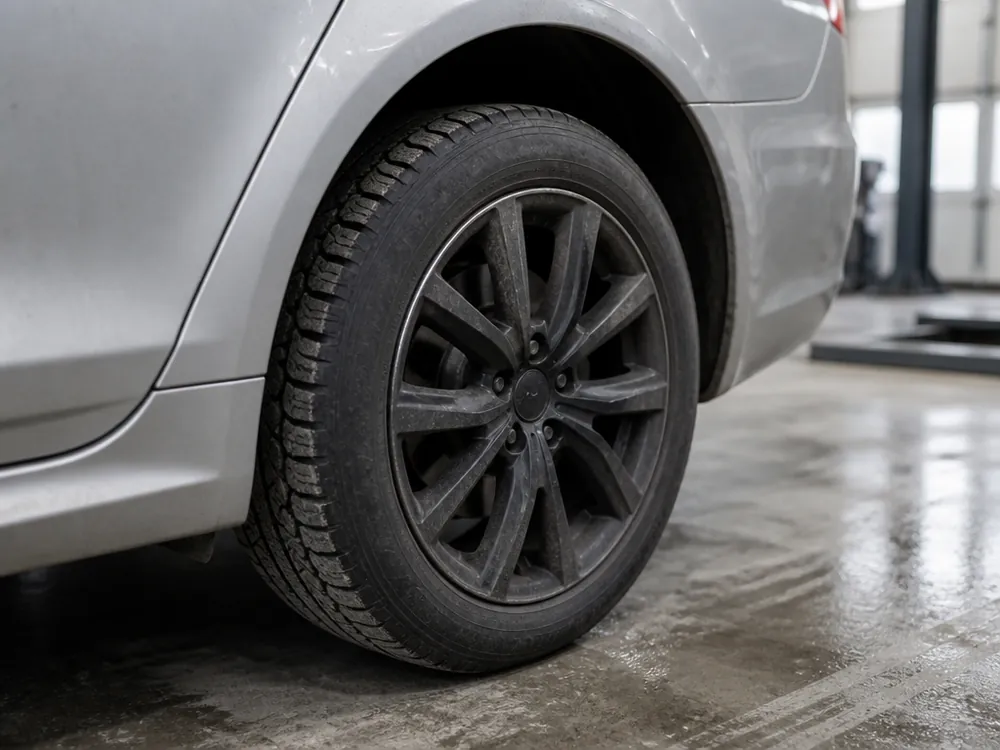
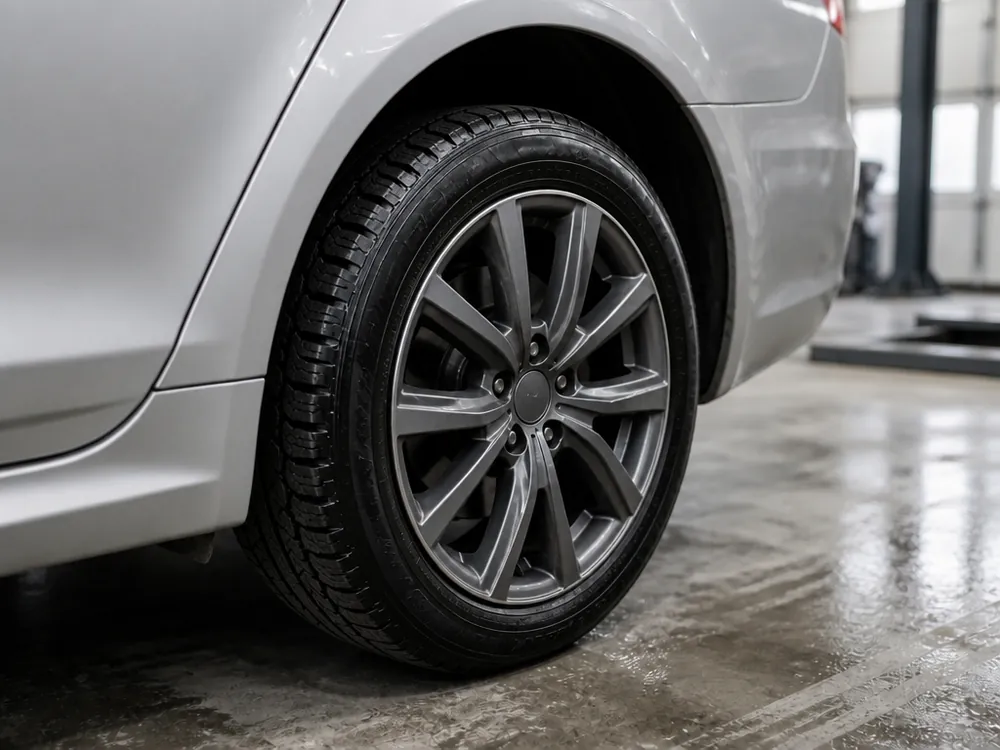
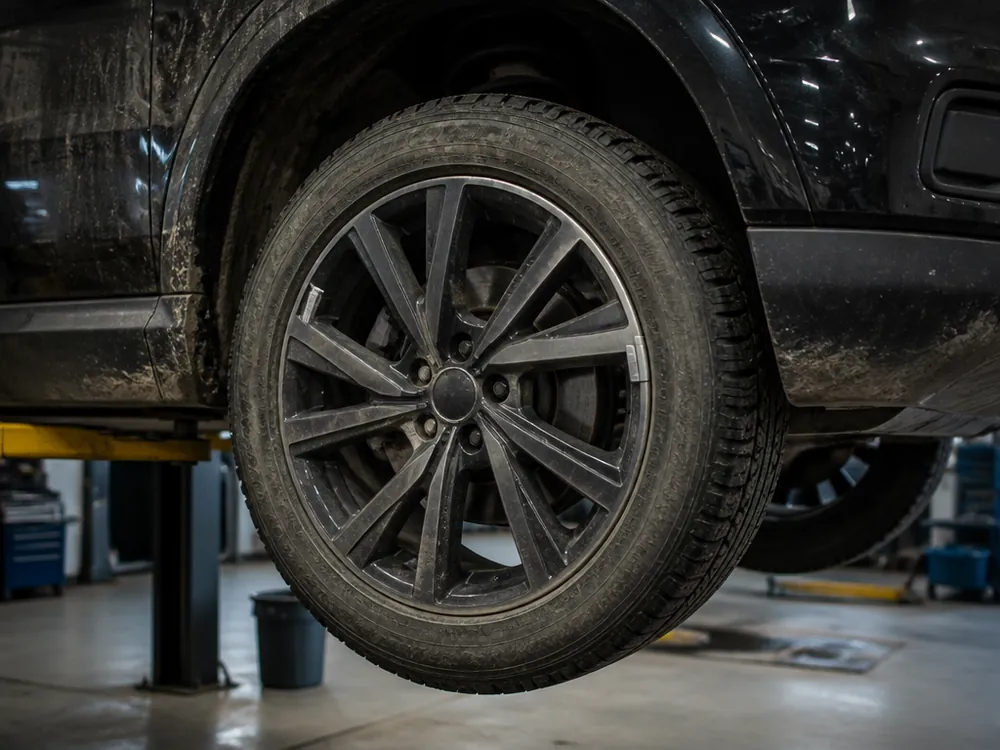
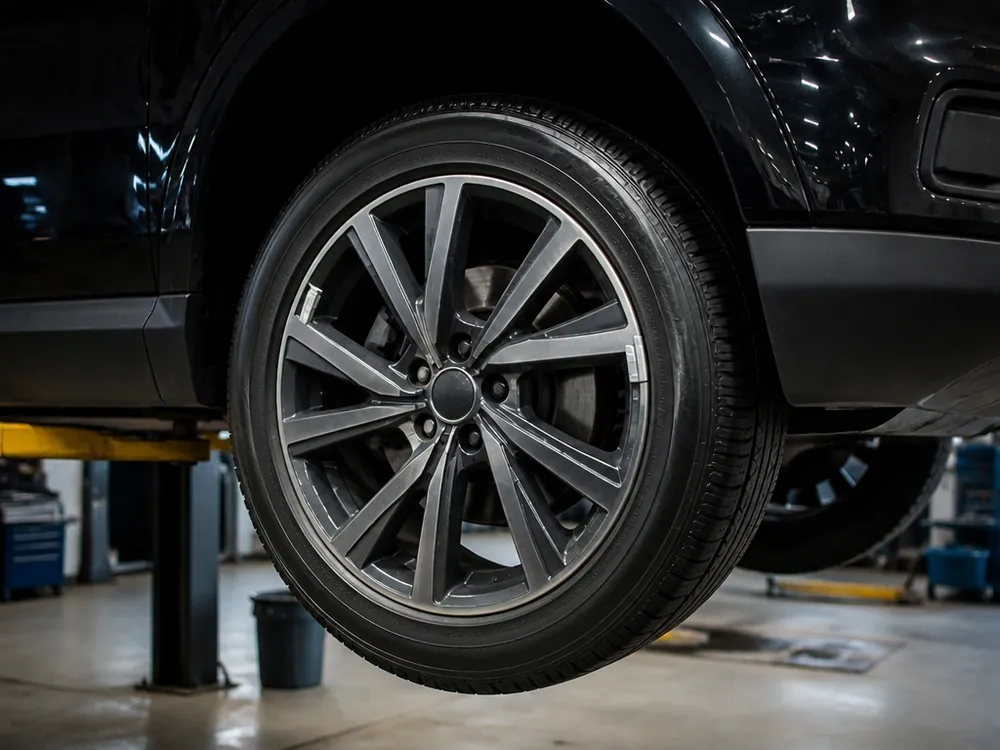
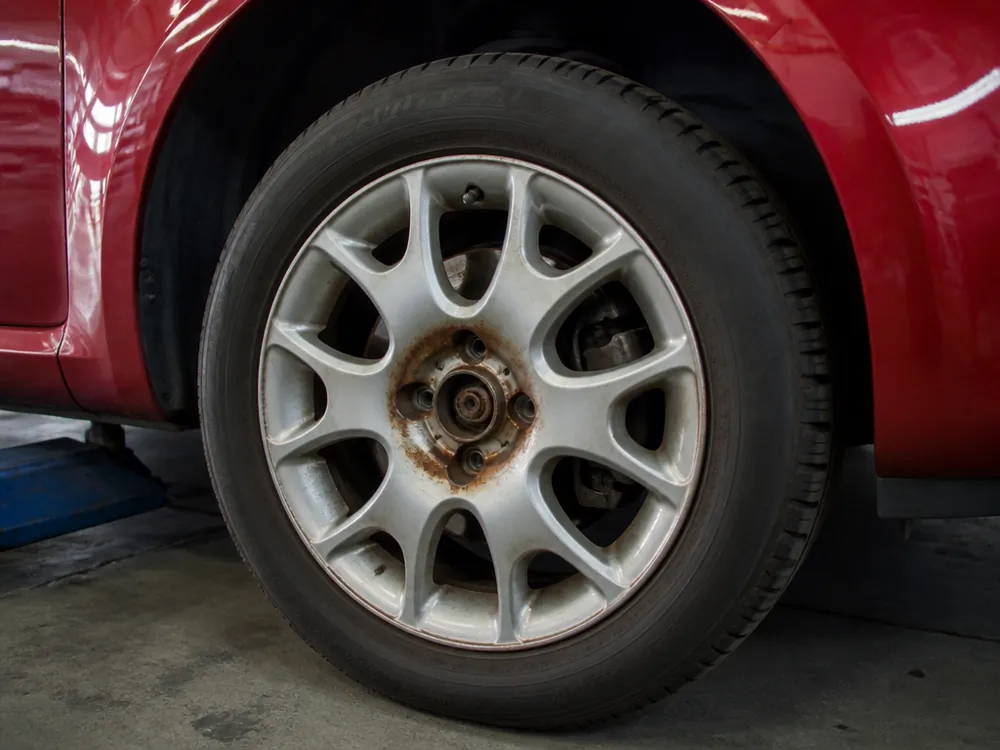
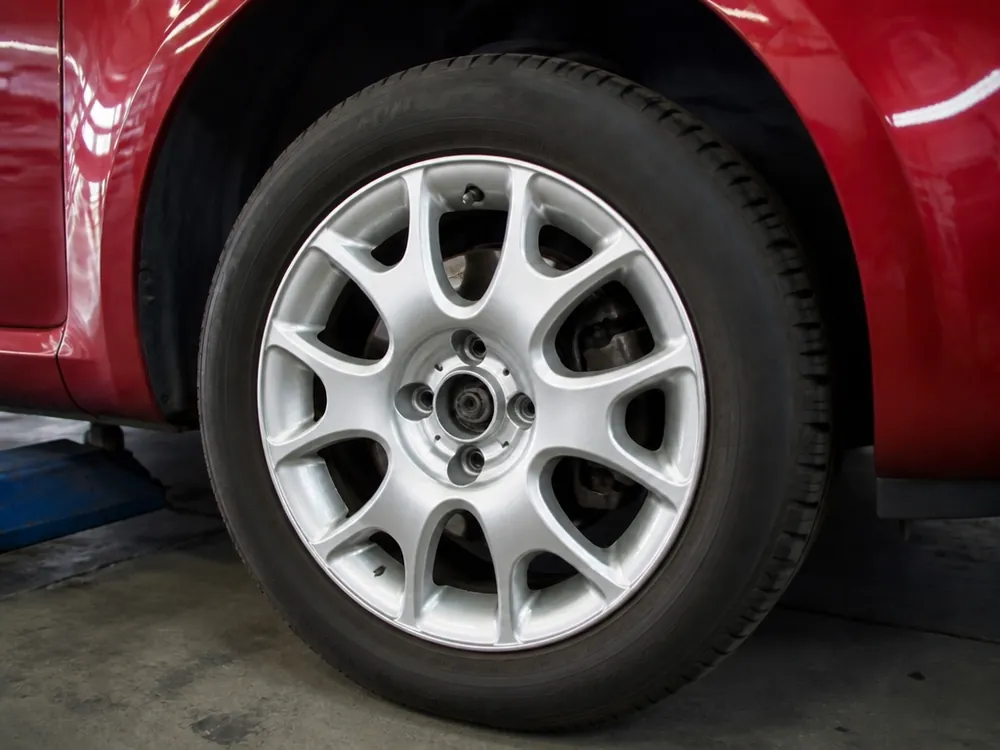
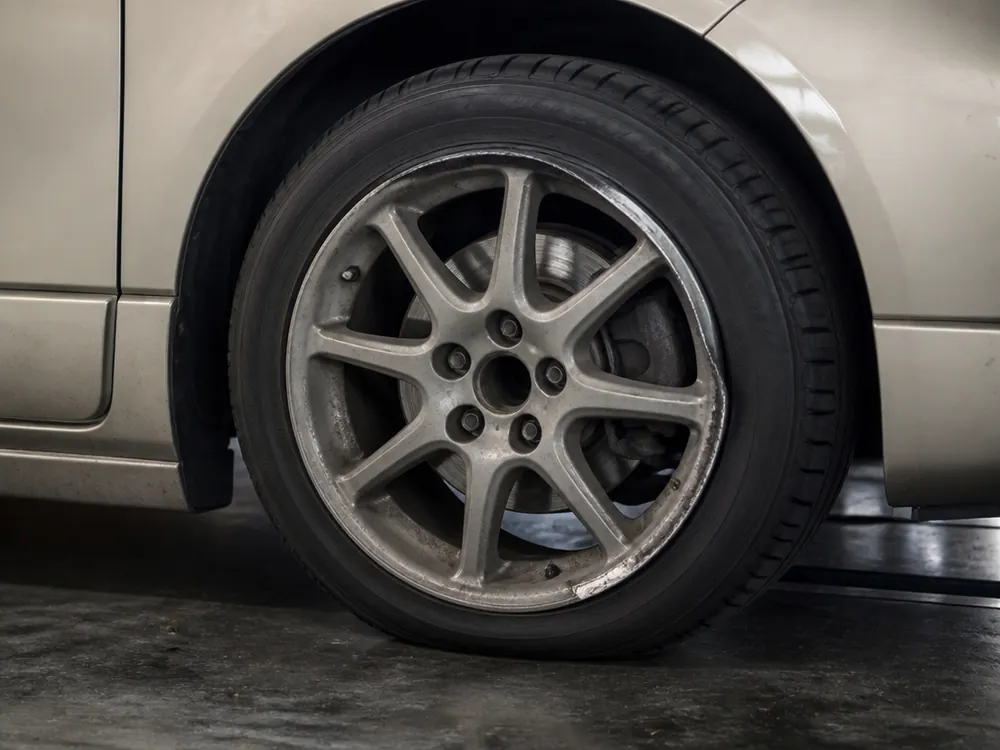
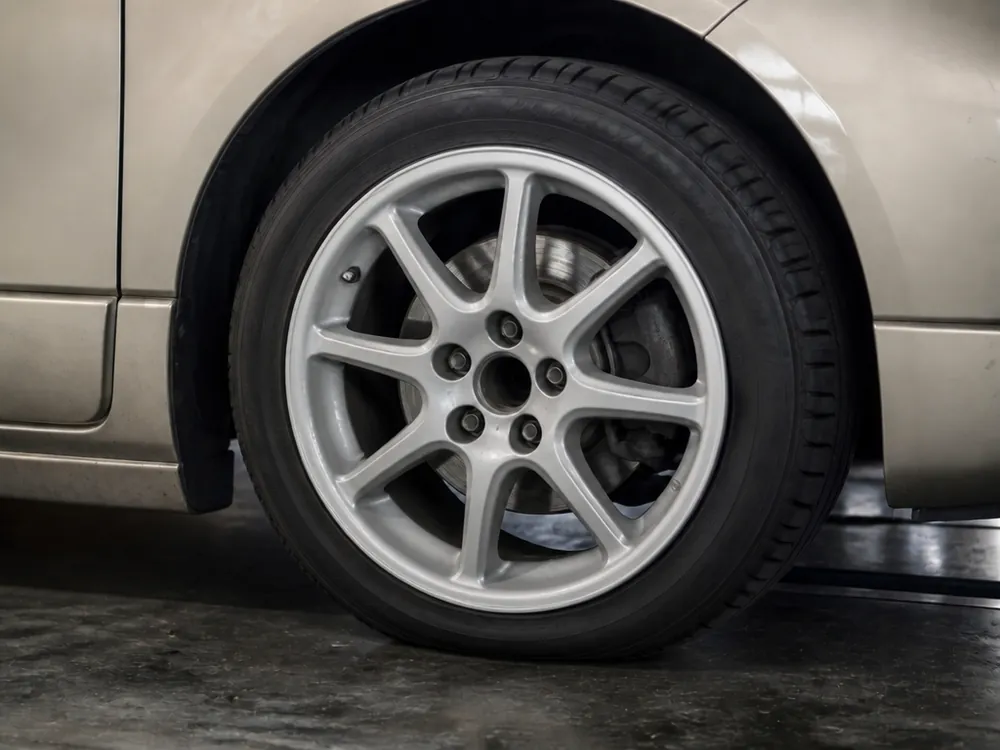
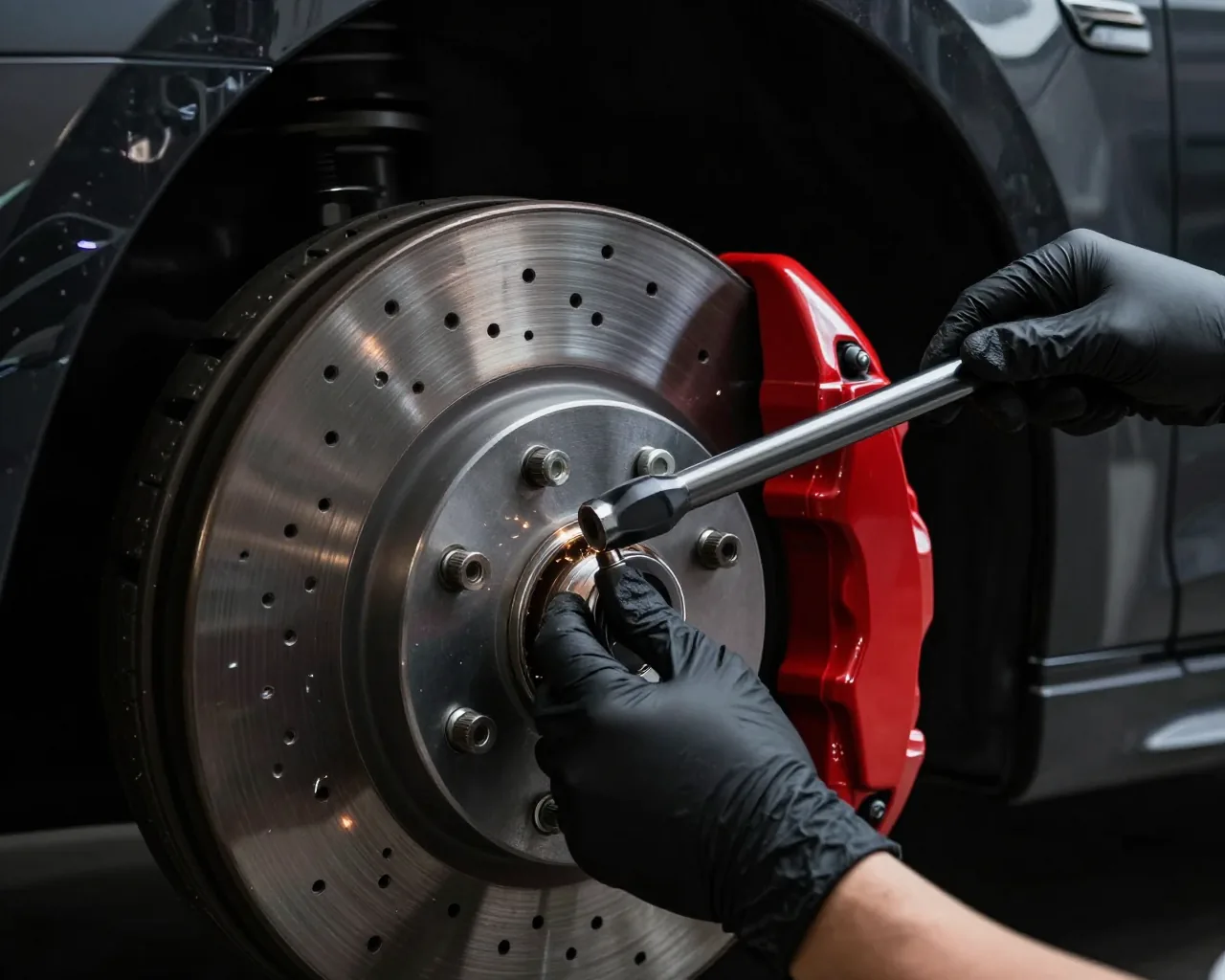
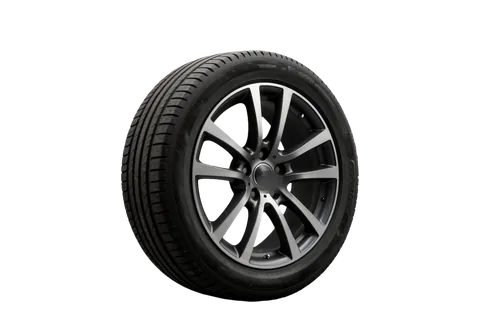
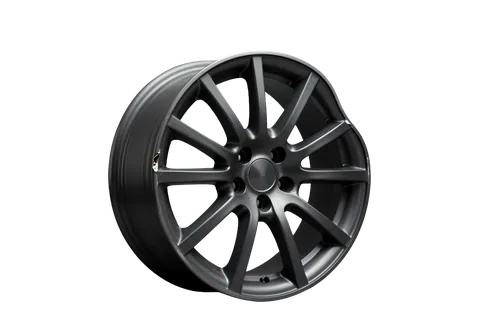
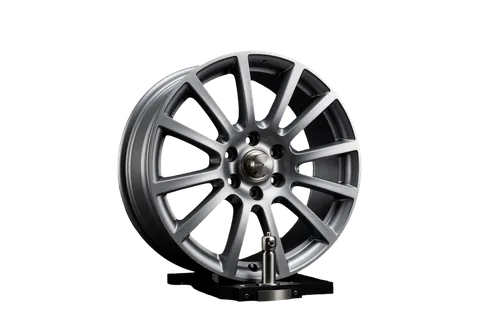
Tire remounting — replacing the tire on the wheel while maintaining airtightness. We use a professional machine, do not damage the wheel or the tire. We check bead seating and inflate to the required pressure. Fast and careful, warranty on work.
Accurate prices for tire remounting for passenger cars, SUVs, and minivans. We work quickly and carefully.
Service
Duration
Warranty
Price
Inspection of tire and wheel before remounting
15 minutes
6 mo
Free
Remounting of passenger tire R13-R14 (removal/installation)
30–40 minutes
6 mo
2 500 ₸
Remounting of passenger tire R15-R16
30–40 minutes
6 mo
3 000 ₸
Remounting of tire R17
40–50 minutes
6 mo
3 500 ₸
Remounting of tire R18
40–50 minutes
6 mo
4 000 ₸
Remounting of tire R19 and above
1–1.5 hours
6 mo
5 000 ₸
Remounting of tires for SUVs and crossovers (R16-R18)
45–60 minutes
6 mo
4 000 ₸
Remounting of tires for minivans and commercial vehicles
1–1.5 hours
6 mo
6 000 ₸
Remounting with side cut repair (1 tire)
1–1.5 hours
6 mo
7 000 ₸
Remounting with installation of pressure sensors
1–1.5 hours
6 mo
5 500 ₸
Remounting with balancing (package)
1–2 hours
6 mo
3 500 ₸
Urgent remounting (within 1 hour)
1 hour
6 mo
5 000 ₸
On-site remounting (within the city, 1 wheel)
1–2 hours
6 mo
8 000 ₸
Remounting with valve replacement
30–40 minutes
6 mo
3 000 ₸
Remounting with sealant treatment of beads
40–50 minutes
6 mo
3 500 ₸
Prices are per one wheel. Complex cases (low-profile tires, damaged wheels) are assessed individually. When ordering 4 wheels — 10% discount. Warranty periods — see the page «Warranty»
06
Why Choose Tire Remounting at CARGID
Warranty.
Every promise — backed by a number or a document: work order, photos, removed parts.
6MO
warranty on labor — the term is stated in the work order.
Balancing on the machine
We work with R13–R22
Warranty on work
01
Machine Balancing
After remounting, we balance on a machine with accuracy up to 1 g. Without this, vibration on the steering wheel will appear at 100 km/h.
02
Side Cut — 3-Layer Seam
We clean, glue a patch, cord, and sealant. It holds without a bulge and does not leak at 2.5 atm.
03
R19 and Above — No Rush
Low profile requires careful mounting to avoid bending the bead. We work without impacts or levers.
04
6-month Work Warranty
If a leak appears along our seam or bead after remounting, we will redo it for free. Sensors and valve cores are also covered.
07
How we perform tire remounting
Steps.
We explain step by step what happens to your wheels at our service.
01
Wheel Inspection
You submit a request on the website or by phone, and we find a convenient time for your visit. The technician inspects the tires and wheels, records their condition, and checks pressure and wear.
request on WhatsApp
02
Wheel Removal
We lift the car on a lift, remove all four wheels, and label them.
inspection and diagnostics
03
Tire Dismounting
On a tire changing machine, we carefully unseat the tire from the wheel.
estimate before work starts
04
Replacement/Repair
If necessary, we replace the rubber, install a tube, or repair a puncture or bulge.
work to factory procedure
05
Mounting and Balancing
We mount the tire on the wheel, inflate it, and balance the wheel on the machine.
result check
06
Installation on the Car
We put the wheels back in place and tighten the bolts with a torque wrench. We check the pressure, perform a final torque check, and hand the car over to the customer.
Tire remounting in Almaty at CARGID means removing the tire from the wheel and mounting it back with inspection, bead seating control, and balancing to within 1 g. We work with R13–R22, low-profile tires, SUVs, minivans, tires with pressure sensors, and sidewall cuts. 6-month warranty; terms and conditions are in the work order.
What tire remounting is and when it's needed instead of a wheel swap
Remounting is work on the tire and wheel itself, not swapping a ready set. Let's break down three terms — then it'll be clear what the owner pays for and when each procedure is appropriate.
How remounting differs from tire service and a wheel swap
Remounting is removing the tire from the wheel and mounting it back or onto another wheel, while a wheel swap is changing a ready set of wheels, and tire service is the general name for work on a wheel. The difference is visible in whether the rubber is separated from the steel or alloy wheel: when changing seasons, the set is simply taken off the car and another is installed, and the tire stays on its wheel. Tire service combines both scenarios plus balancing, straightening, and inflation. A wheel swap doesn't require removing the tire from the wheel if the owner has a second ready set. The service in Almaty is needed when the tire itself or the wheel is changed, or the bead is damaged and needs repair. If you have two sets on wheels, no dismounting is required — changing wheels is enough; bead work appears when the tire itself or the wheel is changed.
When it's time to remount, not just inflate
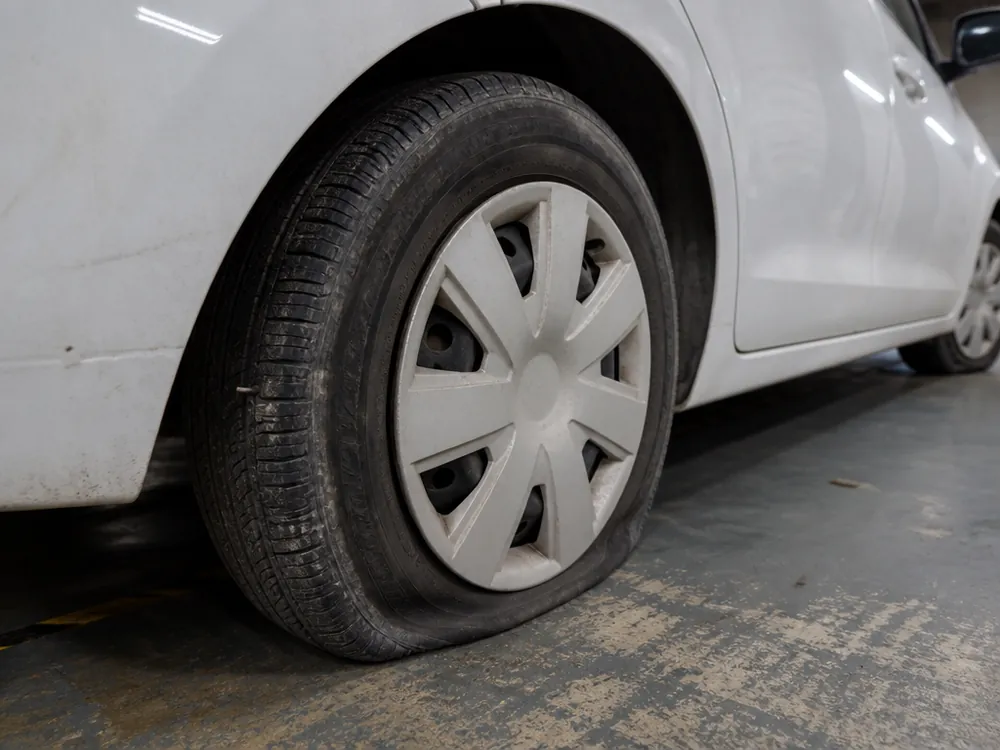
Leaking at the bead: pressure drops within a day or two, and inspection shows air escaping along the tire-to-wheel seating line.
Vibration appeared: the steering wheel or body shakes at speed even though the weights are in place — the bead may have seated unevenly after an impact.
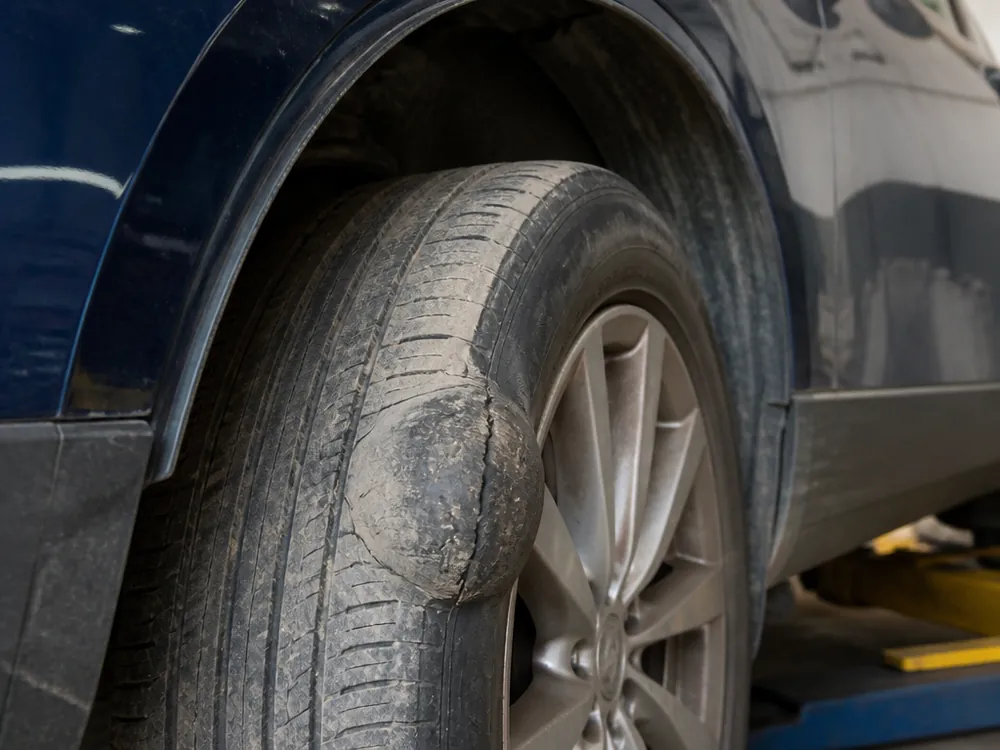
Bead damaged: sidewall cut, pinch, or bulge — repair first, then mount back.
Wheels being changed: tires are moved from steel to alloy wheels or vice versa — impossible without dismounting the bead.
Inflation doesn't hold: if the wheel keeps pressure for a day or longer after inflation, the cause isn't the bead, and remounting won't help — diagnostics are needed.
Wheel remounting or wheel swap — which to choose in your case
when a wheel swap is needed and when remounting
Situation
What we do
Why
Two sets on wheels
Wheel swap
The tire is not removed from the wheel
Tires moved to other wheels
Remounting
Bead dismounting and mounting required
Tire leaks at the bead
Remounting with sealant treatment
We restore bead seating
Bead damaged, cut present
Remounting with repair
Repair first, then mount
Pressure just dropped
Inflate and find the cause
Remounting not required
How tire changes are done at our service center
We show the full cycle from inspection to test drive — so you can see what the specialist is responsible for and why vibration at speed appears without balancing.
What's included in remounting besides removal and installation
Tire and wheel inspection: we check the bead, tread, and seating area for cracks and bends before dismounting.
Dismounting and mounting: we remove the tire on the machine and put it back without impacts or levers to avoid pinching the bead.
Bead seating control: we inflate the wheel and check that the bead seats evenly around the circumference without misalignment.
Balancing on the machine: we bring it to 1 g accuracy, otherwise the steering wheel will start shaking at 100 km/h.
Tightening with a torque wrench: we tighten the wheel bolts to the correct torque so the wheel doesn't warp.
Test drive before handover: we drive and check for absence of vibration and unusual noises.
Why the steering wheel shakes at speed without balancing
During wheel remounting, we balance each wheel on the machine to within 1 g — without this, vibration at the steering wheel appears already at 100 km/h. The machine shows where the rim lacks mass, and the specialist attaches weights opposite the heavy zone. Even a new tire from the factory has unevenness around the circumference, and during mounting it shifts relative to the wheel — that's why balancing is needed every time the tire is removed, not just during seasonal changes. If vibration remains after weights, the cause is usually not the wheel but hub play or suspension — then chassis diagnostics are needed, not a repeat procedure. On our lifts, play can be checked in a couple of minutes.
Do you need an alignment after remounting
The procedure itself doesn't change wheel alignment angles, so alignment isn't always needed — only if you installed wheels with a different offset or the suspension was worked on. When the wheel returns to its original place, toe remains the same: offset and wheel diameter didn't change, and the control arms weren't touched. It's another matter if the car pulls to the side or the steering wheel is crooked — then checking is mandatory. Checking angles is easier than catching uneven wear of new tires a season later: we have a 3D stand for this, and the service advisor at intake will tell you if a check is needed in your case. He'll also inspect the tread for wear spots and, if necessary, schedule an adjustment at an available bay.
Complex cases — low-profile R19+, SUVs, minivans
Different wheels require different approaches: low-profile tires don't tolerate haste, off-road tires need forceful seating, and commercial tires don't forgive careless balancing. We show how working with a passenger car tire differs from mounting R19+, an SUV, and a minivan.
R19 and above without damaging the alloy wheel
We mount low-profile R19 and larger wheels without hammering or tire irons — the bead doesn't get pinched and the alloy wheel doesn't get scratched. These wheels go on a tire changer built for large diameters: the clamping arm secures the wheel by the inner lip, and the mounting head follows the edge without touching the face. Tires with a high speed rating and a short sidewall seat with force, and here the technician's experience matters, not speed. Remounting tires in Almaty for this diameter takes a separate skill: the slightest tilt of the head leaves a mark on the edge — you can see it on a polished surface, and only weeks later it shows up as slow leaks. A mounting mistake on a wheel like this doesn't show right away but a season later — as microcracks at the edge and gradual pressure loss; so care matters more than haste here.
SUVs and crossovers R16–R18 with reinforced sidewalls
SUV and crossover tires R16–R18 with reinforced sidewalls are stiffer than regular ones, so mounting takes longer — the rubber needs careful seating, not brute force. The reinforced sidewall is harder for the mounting head to handle, and the technician works the edge gradually so as not to damage the carcass. These wheels often come in with dirt and sand on the bead seat — we clean it before mounting, otherwise the sealant goes on unevenly. Reinforced tires seat worse if underinflated, so after mounting we check the bead seating and pressure separately, not just inflate the wheel. On a heavy tread, an imbalance of a few dozen grams is felt more than on a passenger car wheel — so we balance on a machine accurate to 1 g.
Van and commercial vehicle tires
wheel types and post-mounting checks
Wheel type
Mounting specifics
What we check after
Passenger car R13–R16
Standard cycle
Bead seating, balancing
R17–R18
Medium profile
Torque, pressure
R19 and larger
Low profile, no tire irons
Edge for pinching, wheel for scratches
SUV R16–R18
Reinforced sidewall
Bead seating, pressure
Van, commercial
Oversized, heavy
Balancing uniformity
Sidewall cuts, bead leaks and pressure sensors
A cut and a bead leak almost always mean the tire has to come off the wheel. We explain what can really be saved and what can't, and how to do it without damaging the sensor.
Can a tire with a sidewall cut be saved
We repair a sidewall cut with a three-layer stitch: we clean the damage, glue a patch, and restore the cord and sealant. After this repair the tire holds without a bulge and doesn't leak at 2.5 atm. The method also works on nearly new rubber that's a shame to throw away over one cut on the side — and that happens more often than you'd think. What matters more: it's not the size of the cut that decides, but the condition of the cord around it. If the threads are torn over a long stretch, the patch holds worse, and it's more honest to say so before the repair than after. So before work, the technician dismounts the wheel, inspects it from the inside, and shows the customer where the weak spot is. The warranty on remounting with sidewall cut repair is 6 months; the term and conditions are recorded in the work order.
Tire leaks at the bead — remount or repair
If air escapes at the bead, most often a remount with bead sealant treatment and reseating fixes it. Repair is only needed when the bead itself or the cord is damaged. A bead leak is easy to confuse with a valve problem, so we start with an inspection and valve core check, not by pulling the tire right away. There's also a third scenario: the tire seated unevenly on the wheel after a previous mounting, and then it's enough to remove it, clean the bead seat, and reinstall. Sealant treatment in this case closes the microgaps the air was escaping through. Our practice shows: of the wheels brought in with a bead leak complaint, most just need a remount, not a new tire. At the end we check the bead seating and pressure.
Pressure sensors and valve cores during remounting
We remount wheels with pressure sensors while keeping the sensor intact, and replace valve cores if needed — that's a separate line item in the work. The sensor breaks not during tire mounting but from careless removal from the wheel, so on wheels with TPMS the technician first inspects the sensor seat and then takes on the bead. This order saves the customer a sensor replacement, which costs more than the remount itself. The valve core cracks over time and starts leaking — if it's old, we replace it right away while the wheel is dismounted, so we don't have to come back to it in a month. Then we check the sensor's readability with a scanner and the pressure transmission. Inspecting the tire and wheel before remounting is included in the work, so hidden defects are visible before mounting.
Timing, booking and a 6-month warranty
Before booking, the car owner usually asks three things: how long it will take, whether they'll have to wait in line, and what we'll do if a problem comes up after the work. Here's how timing, booking and warranty work with us.
How long it takes to remount four wheels
We remount a standard set of four wheels in one visit, and complex cases — low profile, reinforced sidewall, pressure sensors — take longer because mounting is done without rushing. Balancing on the machine adds a few minutes per wheel: we check accuracy to 1 g on all four. We're open daily from 09:00 to 20:00, no days off; a service advisor takes in the car and manages the work order through to handover. You can come without booking, but in peak season the flow spikes sharply and waiting eats up time you already have little of. Booking a time slot removes that risk — you arrive at your slot and the lift is already free.
What the 6-month warranty covers and what it doesn't
We give a 6-month warranty on the work performed; the term and conditions are recorded in the work order and the handover report when the car is released, and we diagnose warranty cases free of charge. It covers the work and the parts we installed: if the bead leaks or the wheel shakes after mounting, we redo it at our own expense, and we're responsible for the valve cores, sealant and pressure sensors we installed. However, the warranty doesn't cover an accident after repair, third-party interference, natural wear of consumables, or a part the customer brought in — a hit to the wheel changes the wheel's geometry, and a repeat mounting elsewhere voids our obligations. So we record the condition of the tire and wheel in the work order before starting work.
Can I bring my own tires and wheels
We treat your own tires and wheels the same way we treat any others, but the warranty on the work doesn't cover the part the customer brings in. Before mounting your tire, the technician inspects it and records its condition in the work order — so both sides can see what condition the tire arrived in. Inspecting the tire and wheel before mounting is part of the job: we check the bead, the cord, traces of old patches, and the condition of the wheel. If you bring in your own tire with a sidewall cut, we discuss the repair separately and also record it in the work order. We show you the old parts and hand them over to the customer — so you can see which components were replaced. Our warranty covers the work and our parts — keep that in mind when planning a visit with your own set.
Tire Remounting Key Rules
Here's a short set of rules that most often decide the outcome of a remount — from choosing between a wheel swap and a full remount to getting the warranty down on paper.
A remount is not a wheel swap. If you have a second set on wheels, there's no need to take the tire off — just swap the whole wheel.
Balancing is mandatory. Without it, you get steering wheel vibration at 100 km/h, and suspension wear builds up unnoticed.
Complex wheels need care. Low profile R19+, reinforced SUV sidewalls, and tire pressure sensors don't tolerate rushing or impacts.
A cut and a bead leak are not a death sentence. A 3-layer stitch, a patch, cord, and sealant restore the tire's airtightness without a bulge.
The warranty must be on paper. The term and conditions are recorded in the work order and the acceptance report, not left as words.
10
Frequently asked questions about tire re-mounting in Almaty
Questions.
Price, timeframes, warranty, payment — 10 questions asked most often.
10
Didn't find an answer?
Message us on WhatsApp — a service advisor will reply within 5 minutes.
The cost of re-mounting one passenger car tire starts at 2,500 tenge. The price includes wheel removal, tire removal from the rim, inspection, installation of the new tire, balancing, and assembly. For SUVs and crossovers the price is higher — from 3,500 tenge, as the tires are heavier and take more time. The price is affected by the rim diameter, tire type (R16, R17, R18, etc.), and the presence of pressure sensors. We will give you the exact cost after inspection, usually within 3-5 minutes.
Standard re-mounting of 4 passenger car wheels takes 40–60 minutes. We work without queues, by appointment, so the process is faster. If the wheels are complex (with RunFlat, low-profile, with sensors), the time may increase up to 1.5 hours. Come at a convenient time, and we will try to finish within the minimum time without sacrificing quality.
Yes, we provide a 6-month warranty on all re-mounting work. If within this period problems with balancing arise, steering wheel vibration or speed vibration appears — we will re-balance for free. The warranty covers the quality of work performed, but not damage to tires or rims caused by the client (for example, hitting a pothole). All work is recorded in the work order.
An appointment is desirable but not mandatory. We accept walk-ins, but during peak seasons (spring/autumn) there may be queues. To save your time, we recommend calling 1-2 hours in advance and booking a convenient time. With an appointment, we serve immediately, without waiting. If you arrive without an appointment, the technician will assess the scope of work and tell you the expected time. Usually the wait is no more than 15-20 minutes.
Of course, you can. Re-mounting implies mounting your tires on your rims. If you bring new tires, we will first inspect them for damage during transportation. If you want to move tires from one set of rims to another, that is also possible, at the same cost. Using your own materials is the best option, as you have full control over quality. Exact prices are in the price list on this page.
If defects are found within the warranty period (6 months), we will fix the problems free of charge: re-balance, tighten fasteners, check pressure. If upon acceptance you notice scratches on the rims or tire damage — tell the technician immediately, before signing the documents. We are always interested in quality work, so if a mistake was made, we correct it immediately. A refund is possible only in cases where correction is impossible, but these are rare situations.
Re-mounting is a special case of tire service, where the tire is removed and installed on the same rim, or on another. Re-mounting includes: removing the wheel from the car, removing the tire from the rim, inspecting the rim and tire for damage, installing the tire, inflating, balancing, assembling and installing back. Tire service is a broader term that may include puncture repair, patching, vulcanization. With us, re-mounting is always accompanied by balancing — this is a mandatory procedure to avoid steering wheel vibration.
In the first 100-200 km, break in the tires: avoid sharp maneuvers and high speed. Then check the pressure — it may have slightly changed. Regularly (once a month) check the pressure of cold tires and inflate to the norm specified in the car manual or on the sticker in the door jamb. After re-mounting, we set the pressure according to your recommendations, usually 2.2-2.4 atmospheres for passenger cars. Also, once every 2 months — a visual inspection for cuts and bulges. If you notice anything wrong — come in, we will check for free.
Payment is accepted in cash, by bank card, and by transfer. For re-mounting, it is convenient when the work is done upon completion: first we remove and re-mount the tire on the rim, then you pay at the end. The payment method does not affect the cost or time — it depends on the wheel diameter and tire type (regular or RunFlat).
Yes, we accept them, but before starting work the technician will assess the condition of the tire to avoid property damage. If the tire has cuts, bulges, or cord damage, we will warn you: we will do the re-mounting, but we will not guarantee safety. Such tires may burst during inflation. If the damage is serious, we recommend replacing the tire. In any case, the decision is yours — we work carefully. If hidden defects are revealed during work, we will stop and discuss options.
11
What drivers say about our tire remounting
Reviews.
We collect ratings on the website and on maps — we hide nothing.
4.8
872 reviews on the website 1 900+ ratings in total
Aigerim
Rio
Had my KIA Rio tires re-mounted before a trip to Astana. Picked up a nail, was afraid I'd have to buy a new tire. The guys quickly found the puncture, patched it, and balanced it. All for 5,000 tenge and 30 minutes. Thanks, now I feel confident on the road!
Timur
Came in about a bulge on the sidewall. Thought they'd push a new tire on me, but the technician said we could try to repair it. In the end they did, the bulge was gone, and I've been driving for a month now. The price pleasantly surprised me — 4,500 tenge. I recommend this service.
Elena
Came to switch from summer to winter tires. Thought it would take about two hours, but they finished in 40 minutes. Did everything carefully and performed balancing. Special thanks for pointing out that my summer tires were already bald — now I'll know. The price — 9,000 tenge, reasonable.
Miras
I drive a GAZelle and constantly have tire issues. This time one tire was losing air. Turned out to be a nail. They removed it, patched it, and put it back in half an hour. Charged 3,500 tenge, which is cheap for a GAZelle. They work fast, no queues. I recommend!
Olga
My husband couldn't remove the wheel from our Mazda; it was stuck tight. We brought it to the service, the guys removed it, cleaned the hub, and installed a new tire (we happened to have one). Now the wheels come off easily. Paid 12,000 for everything, I think it's fair.
Dmitry
Hit a pothole and bent the rim. At CARGID they not only repaired the rim but also re-mounted the tire. The balancing is perfect, the vibration is gone. Done in a day, which is convenient. Price 8,500 tenge — cheaper than a new rim. Very satisfied!
Sәule
Came to change winter tires. The guys worked quickly and with quality. They did the balancing and explained everything. The price is very affordable — 9,000 tenge. Now I'll only come here. Thanks!
Nikolay
I drive an Audi A6. In winter I needed to change tires. The guys did the job quickly and with quality. They balanced and checked the spare. Everything cost 10,000 tenge, done fast. I like it!
Viktor
Re-mounted the wheels on a Chevrolet Niva. At first I thought the wheel bearing would need replacing, but it turned out to be the rim. At CARGID they calculated everything, did the balancing, and installed them back. Charged little, everything is great. I recommend!