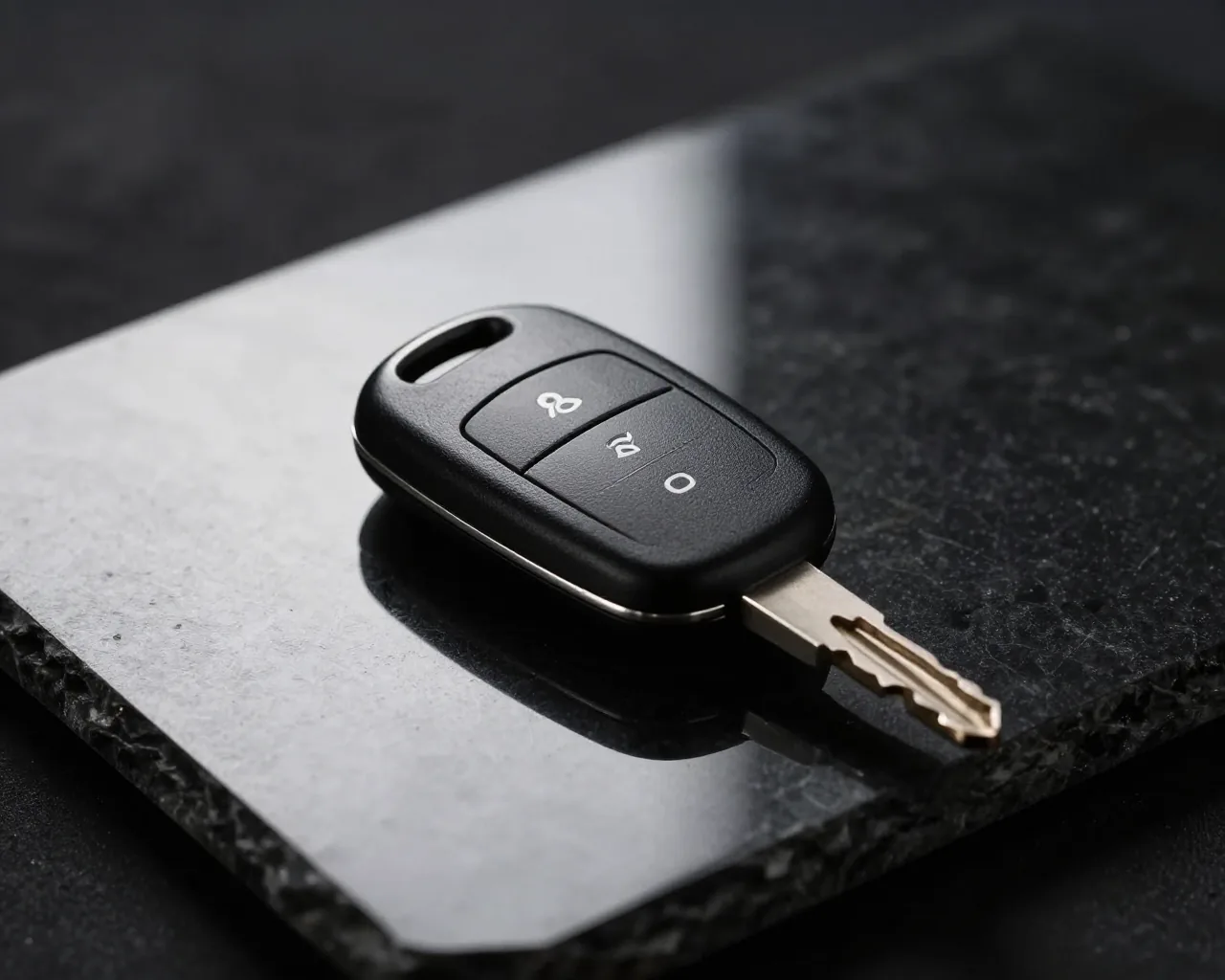
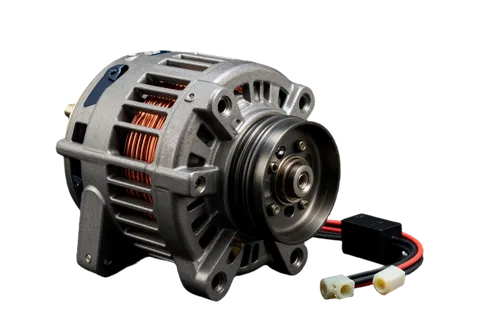
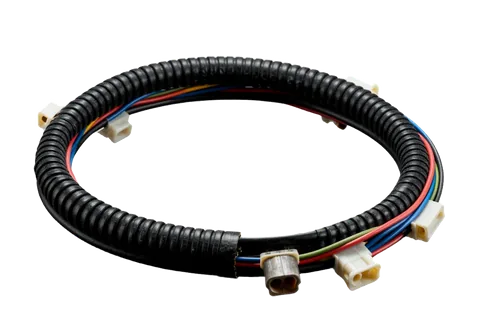
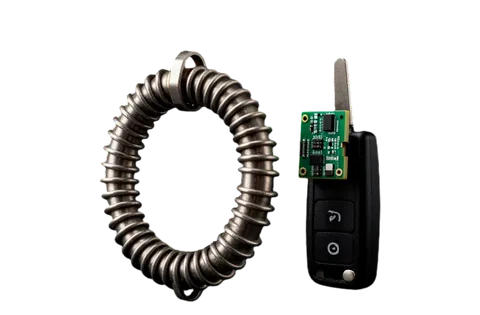
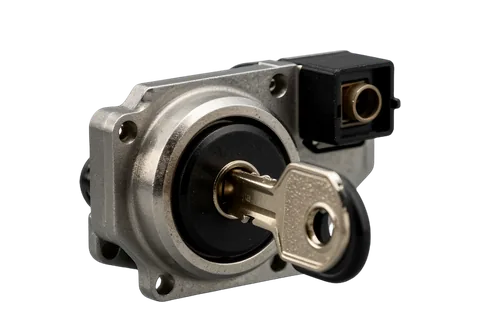
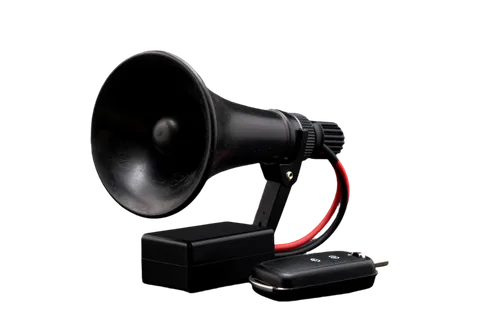
The way the locks behave usually shows which part of the system to look at. One silent door and all locks failing at once point to completely different components, and it's worth noticing that before you even come to the shop.
Why the driver's door fails most often
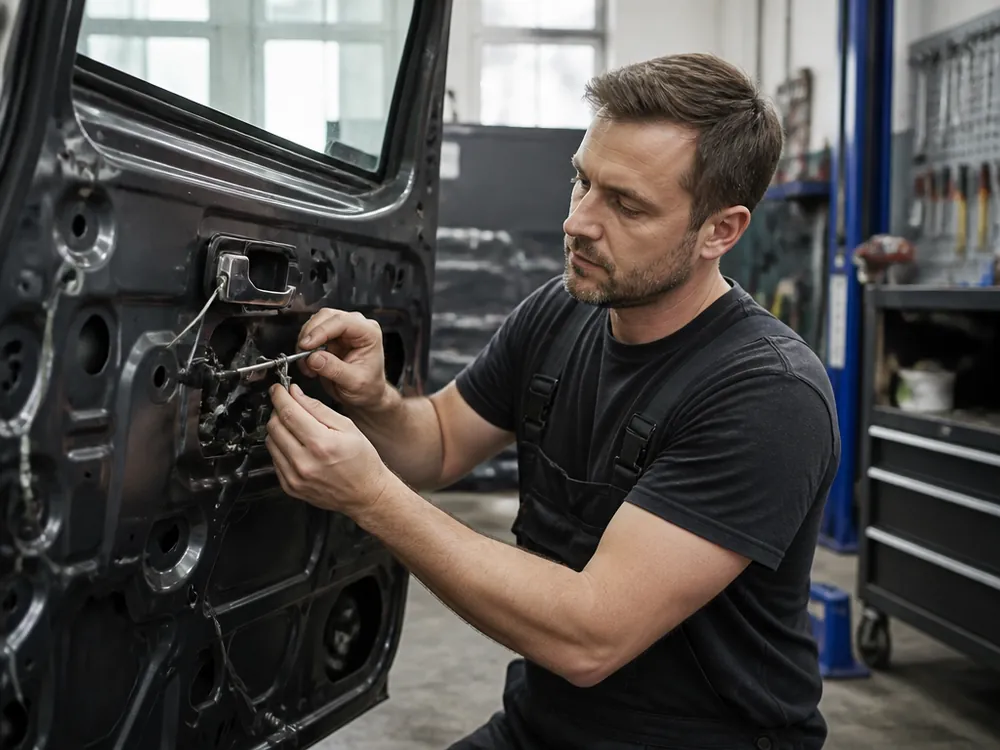
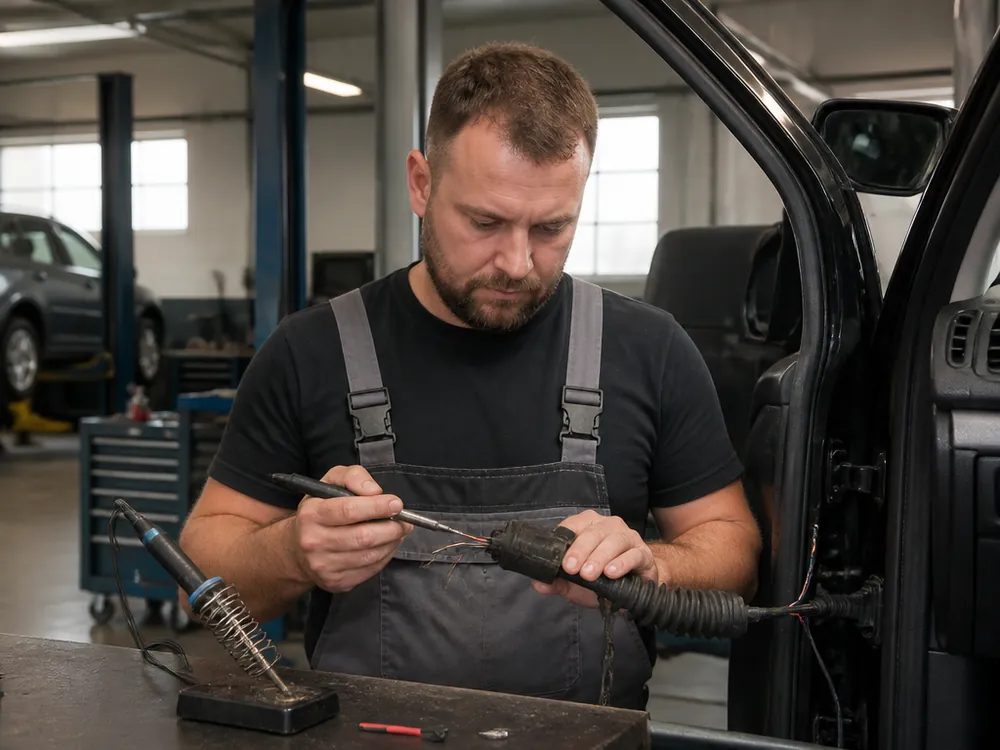
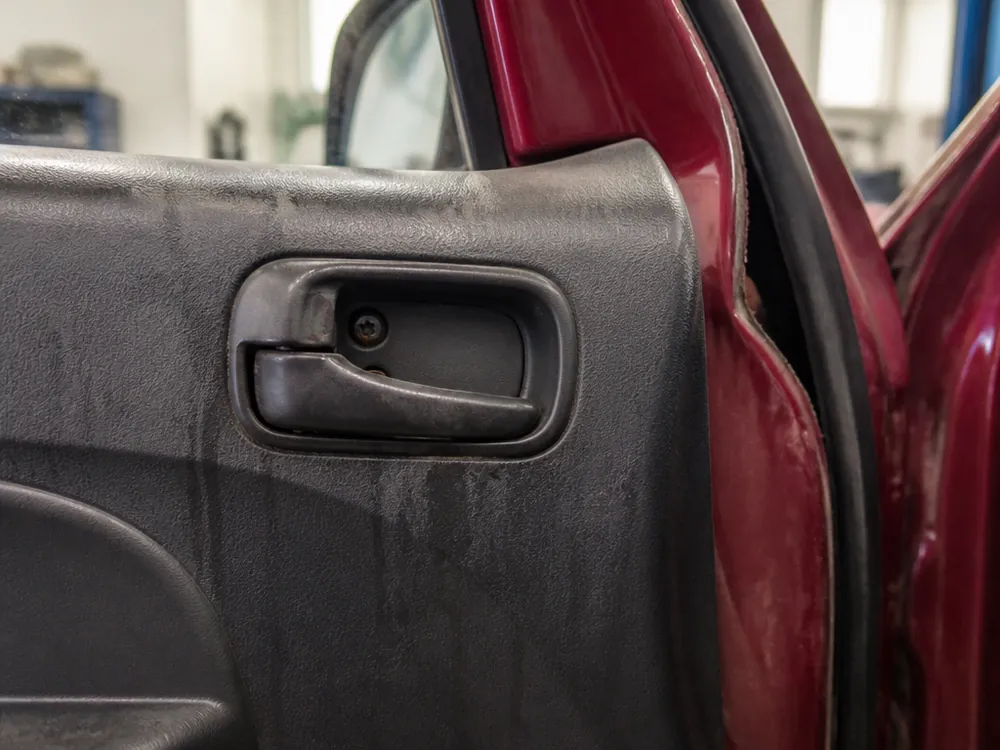
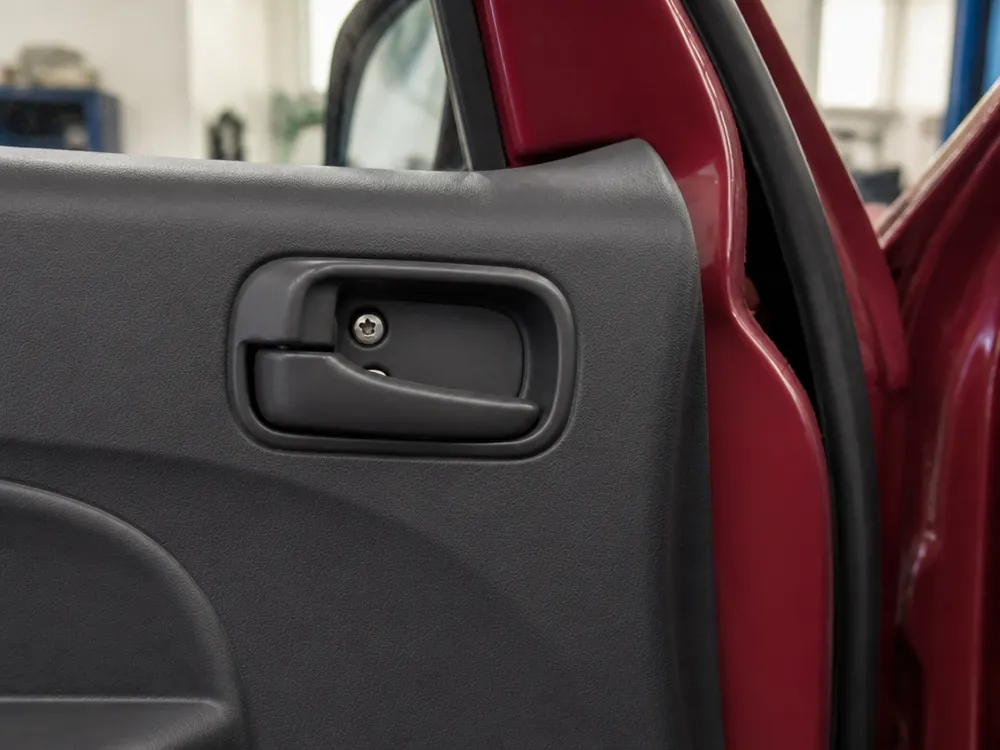
The driver's door is opened and closed far more often than the others, so everything in it wears out first. The wiring harness runs from the body into the door through the rubber boot and bends at the same spot every time the door opens. Over time the copper strands inside the insulation break, and the contact cuts in and out: the lock works every other time or only at a certain door position. The driver's door lock mechanism also gets more cycles, so its actuator ages sooner. There's another thing too: on many cars this is the door with the lock button and the door switch that tell the module the state of the whole system. So when one driver's door fails, we start the check with the boot and the connector, not with buying a new actuator. A break in the boot often shows up together with other faults: the window regulator, mirror and door light, which are fed through the same harness, stop working.
What the owner can check
- Key fob battery: if the locks open with the key and the interior button but not from the remote, replace the fob battery first.
- Second key: if the spare fob opens the car without a problem, the main remote is at fault, not the receiver in the system.
- Interior button: if the lock button works but the fob doesn't, the module and actuators are most likely fine.
- Fuse: find the central locking fuse using the diagram in the manual and inspect it; if it's blown, replace it with one of the same rating.
- Actuator sound: listen when you press the button; a buzz with no lock movement points to the mechanics, complete silence to power or wiring.
Electric and pneumatic central locking
The design of the system determines which components the car even has and where to look for the fault. Most cars have electric actuators; some older models use a pneumatic system with its own compressor and a network of tubes.
How the electric system works
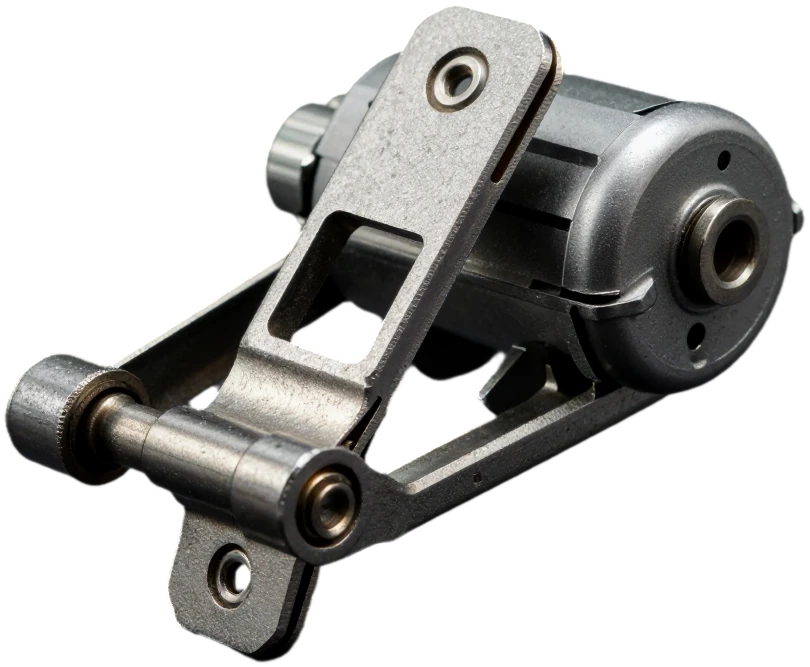
A command from the fob, the key or the interior button goes to the central locking control module, and on many cars to the body control module. The module sends power to the actuators in all the doors, and on many cars also to the trunk and fuel filler door. Inside the actuator is a small electric motor with a plastic gearbox: it moves the lock mechanism through a rod or directly. On modern cars the actuator, lock and switches are often combined into a single module that is fitted into the door as a whole. The switches tell the module whether the door is closed and what position the lock is in, so a faulty switch can make the system unlock the doors right after locking. Slow or hesitant operation is most often down to a worn gearbox, thickened grease in the mechanism or low voltage in the circuit. A weak battery shows itself the same way: on a winter morning the actuators move sluggishly, and after a drive they're lively again.
Pneumatics on older Mercedes and Audi
On a number of older-generation Mercedes-Benz, Audi and Volkswagen models, locking is handled not by small motors but by diaphragm pneumatic elements. A compressor, usually hidden in the trunk or under the rear seat, creates pressure and vacuum for them, and plastic tubes run to the doors. This system works quietly and smoothly but is sensitive to leaks: if a tube cracks or a diaphragm in a door tears, the compressor runs longer than usual and still doesn't pull the locks shut. Our central locking compressor repair doesn't start with taking the pump apart but with checking the tightness of the whole line section by section. The auto electrician disconnects the door branches one at a time and watches where the pressure is lost. If the compressor runs for a long time after a command and the locks respond sluggishly, there's almost certainly a leak. Pressing the fob button over and over in that situation isn't a good idea: the pump overheats and shuts off on its protection.
What fails in the compressor and lines
- Pump motor: over the years the brushes and commutator wear, the compressor starts every other time and doesn't reach the required output.
- Pump valves and diaphragms: the rubber hardens and cracks, the pump hums but the pressure and vacuum in the system come out weak.
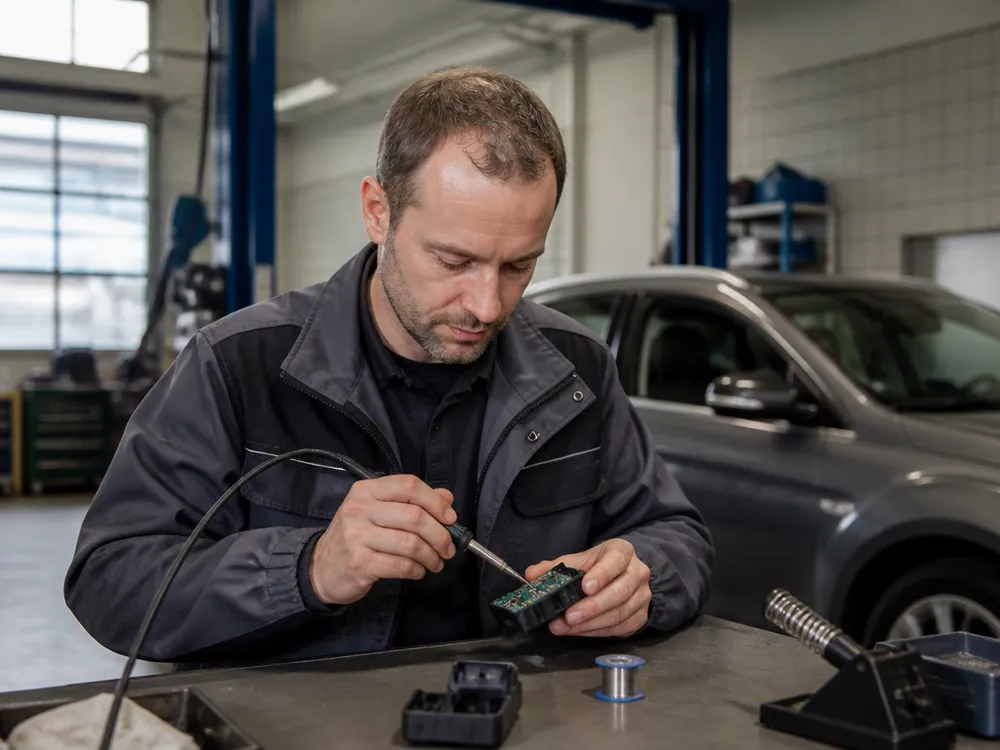
- Board inside the housing: moisture in the trunk corrodes the traces and contacts; we resolder and restore such a board on the bench.
- Tubes and connectors: the plastic becomes brittle over time, and cracks most often appear at bends and where the tube passes into the door.
- Door pneumatic elements: a torn diaphragm in one pneumatic element releases the pressure of the whole system, and then all the locks suffer at once.
How we start central locking repair
The order of checks decides whether the real cause is found or a part is swapped blindly. We follow the system the same way the command travels through it, from the remote to the mechanism in the door.
Diagnostics along the chain from fob to actuator
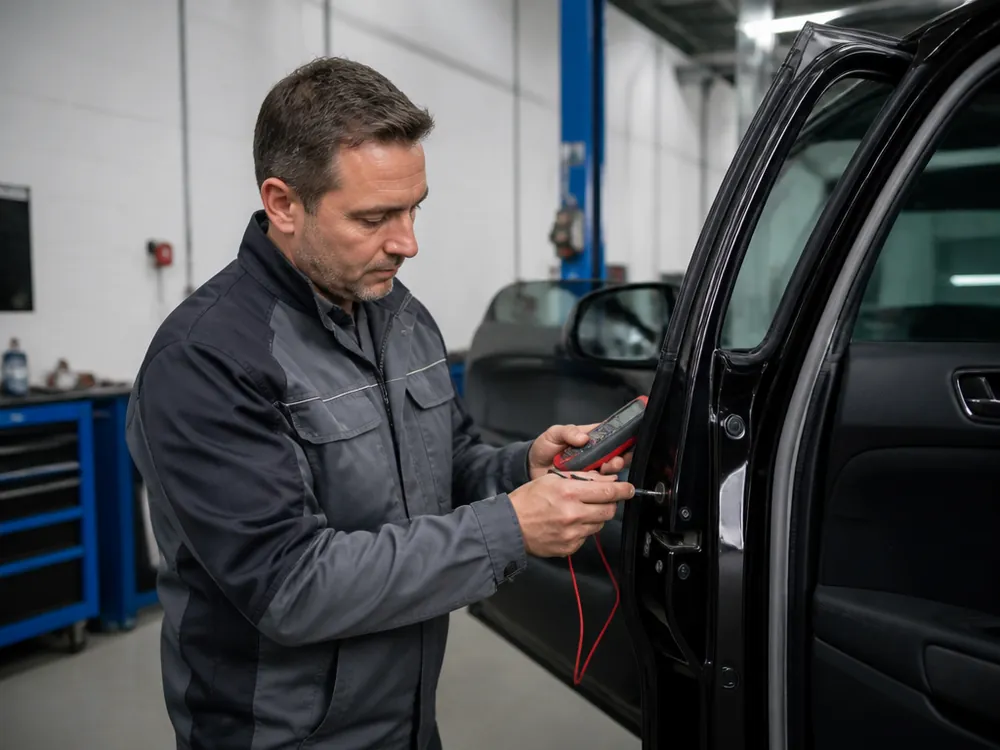
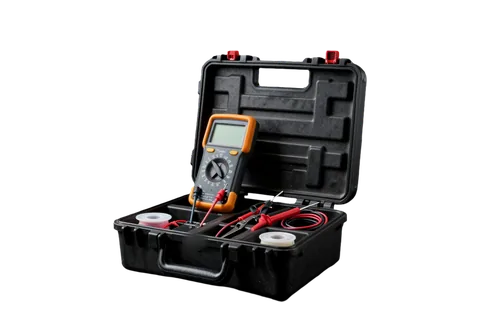
Our central locking repair in Almaty starts with diagnostics, not with ordering a part. We check the system along the path of the command: first the fob and the interior button, then the power and fuses, and after that the control module. With a dealer scanner — we have them for 40+ brands — we read the body control module faults and look at live data: does it see the button presses and the switch signals. Then we use a multimeter to check whether voltage reaches the actuator connector in the right door at the moment of the command. If there's power but the lock doesn't move, the mechanics or the actuator itself are at fault; if there's no power, we look for a break in the boot or a faulty module. Tell the service advisor when the problem appeared and what was done to the car before that, for example an alarm being installed: this often saves search time. A fault that only appears in frost, heat or after a car wash is also important to describe, because at the service lot it may not show up.
What we check in the door and in the system
Sequence of checks by the auto electrician| Component | What we check | With what |
|---|
| Fob and buttons | Sending the command, signal reception by the module | Scanner, second key |
|---|
| Fuses and relays | Integrity, circuit power | Multimeter |
|---|
| Control module | Faults, response to commands, output signals | Dealer scanner |
|---|
| Harness in the boot | Integrity of the strands at the bend, connector corrosion | Continuity test while opening |
|---|
| Door actuator | Voltage at the connector, travel, motor sound | Multimeter, inspection under the trim |
|---|
| Switches | Door and lock position signal | Scanner live data |
|---|
| Mechanism and rods | Free play, contamination, looseness | Manual check without the actuator |
|---|
Estimate before disassembly and a photo report
The service advisor takes in your car and handles the work order all the way through to pickup, so you deal with one person for everything. After diagnostics, they explain which component has failed and why, and give you a written estimate. We remove door trim for the repair and start work only after you agree, so there are no surprises about the scope at the end. We photograph the key stages, so you can see the condition of the actuator, connector or wiring harness before and after. We show you the old parts and hand them back to you, so it's clear what was actually replaced. This matters especially if the lock was already repaired somewhere else and the problem came back: from the photos and the removed parts it's easy to tell whether the cause was fixed back then or only the symptom, for example a new actuator fitted onto a corroded connector. Your car is handled by our own auto electrician with at least seven years of experience.
Repair or replacement of central locking components
Not every part of the system is worth repairing, and not every part needs replacing right away. The decision depends on how the component is built, the type of wear, and what the check on your car shows.
When an actuator is repaired and when it's replaced
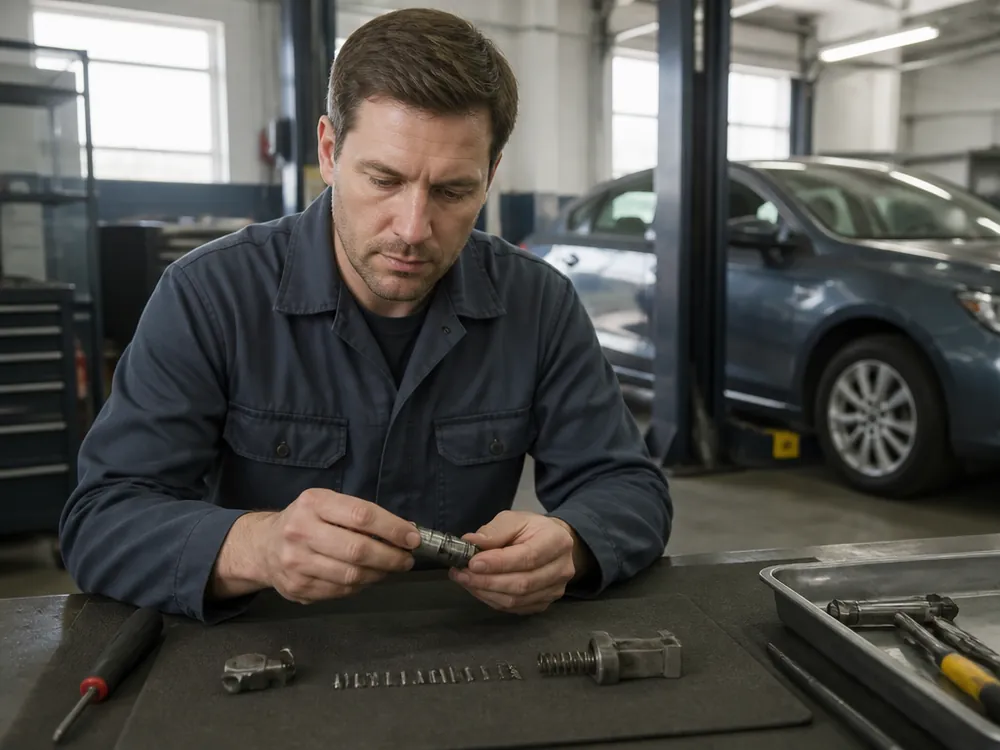
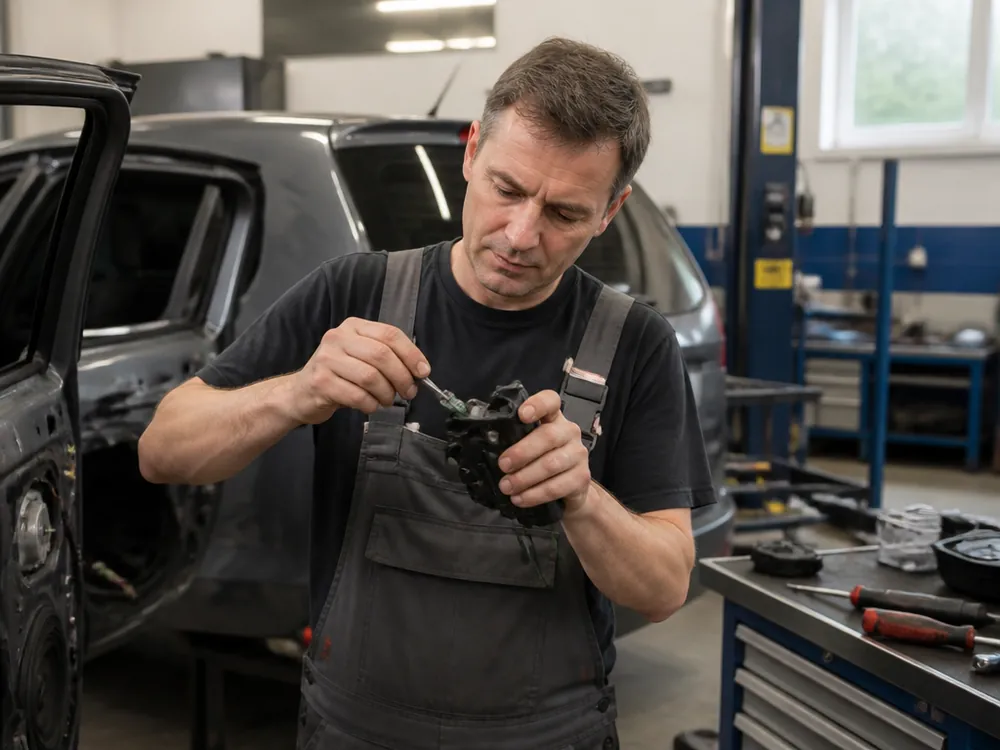
An actuator in a separate, serviceable housing can often be restored. A typical failure is a worn plastic gear: the motor whirs but the lock doesn't move. If the motor itself is fine, we replace the gear, clean and lubricate the gearbox, and the actuator works again. If the motor itself is worn or the housing is cracked, repair no longer makes sense. On many modern cars the actuator is built into the lock module together with the mechanism and position switches, and the housing is sealed and not serviceable. In that case, replacing the central locking actuator means replacing the whole module, otherwise it loses its seal once opened and fails again quickly. We decide what to do only after removing the trim and checking the motor for current draw and travel, and we explain the choice to you before work begins. We hand the old actuator back to you along with the car. If only the linkage is faulty and the motor and gear are fine, we don't touch the actuator at all.
Work options and what they achieve
Main work on the locking system| Work | When it's needed | Result |
|---|
| Restoring the harness in the door boot | Broken wires at the bend | Power and signals flow without interruption |
|---|
| Actuator repair | Worn gear, motor is fine | The actuator moves the lock again |
|---|
| Actuator or module replacement | Sealed housing, worn motor | The door locks from every command |
|---|
| Linkage repair or replacement | Linkage popped off or broke | The lock works from the button and the key |
|---|
| Cleaning or replacing a position switch | The module misreads the door position | The locks don't unlock by themselves |
|---|
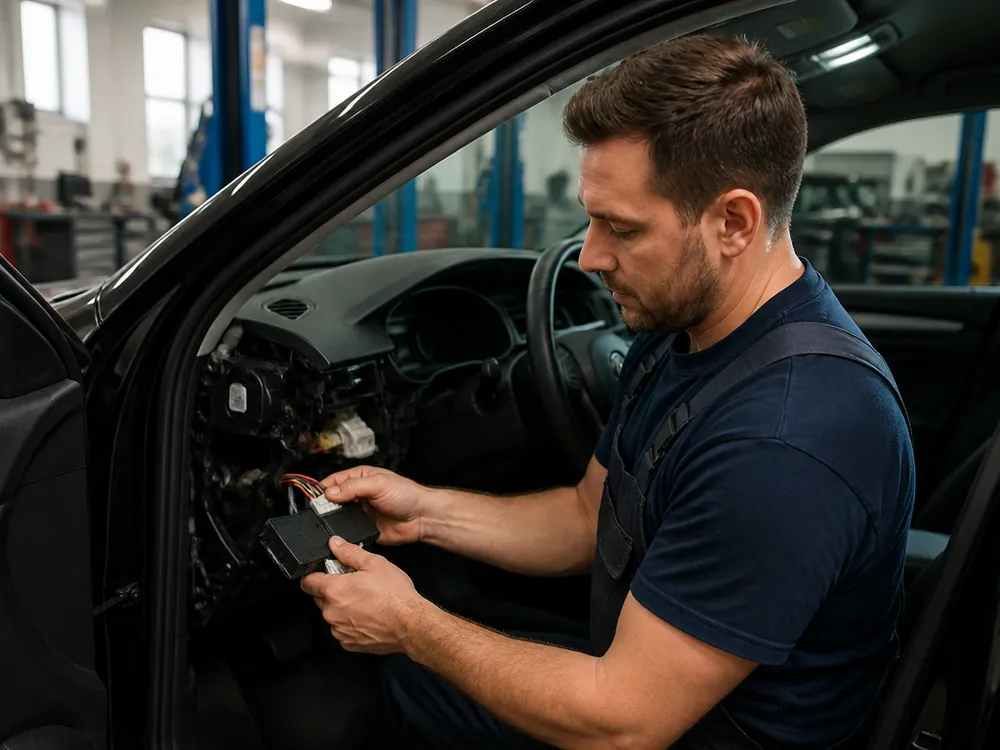
| Restoring or replacing the module | Burned relay, damaged circuit board | All locks respond to the key fob |
|---|
OEM, aftermarket or your own part
You decide which part goes in: OEM, aftermarket, or a part you brought yourself. We explain the difference on the specific component. An OEM lock module matches exactly in connector, mounting and position switch logic. A good aftermarket part works too, but inexpensive actuators sometimes have a weaker motor or a differently shaped rod, and then the linkage has to be adjusted. Before installation we check the part number and connector, and we test the new part by connecting it before the door is reassembled. We install a part you brought without any problem, but you should know in advance: the warranty on the work still applies, but the warranty does not cover the part itself if you brought it. If you're unsure, get diagnostics first and only then buy the part by the exact number. That way you won't have to return the wrong actuator and wait for a new delivery.
Warranty and lock care after the work
How long the system lasts after repair depends both on the technician's work and on your habits as the owner. Below is what we put in the documents, and what's worth keeping in mind every day so the actuators and wiring last a long time.
What the warranty covers
- Term: CARGID gives a 12-month warranty on electrical work, which includes the door locking system.
- Documents: the warranty term and conditions are recorded in the work order and the completion certificate you receive when you pick up the car.
- What's covered: the warranty applies to the work performed and the parts we installed, such as a new actuator or a restored harness.
- What's not covered: an accident after the repair, interference by third parties, normal wear of consumables, and a part the customer brought themselves.
- Repeat failure: diagnostics for a warranty case is free; don't take the door apart yourself before your visit, or you may lose the warranty.
- Check at pickup: before pickup we check all doors from the key fob, the key and the interior button, and take the car for a test drive.
Owner mistakes that kill actuators
- Handle when unlocking: if you pull the handle right as the lock engages, the actuator pushes against a loaded mechanism and the gear wears faster.
- Clogged door drains: water collects at the bottom, gets onto the connector and actuator, and in winter the lock mechanism freezes.
- Twisted wire splices when installing an alarm: wires joined with a twist corrode and heat up, which leads to false triggers and breaks a few months later.
- Using the wrong lubricant: penetrating spray inside the actuator washes out the gearbox's factory grease; the lock mechanism needs a suitable grease.
- Putting up with slow response: a sluggish actuator often keeps working for a long time but fails at an inconvenient moment, so don't put off a check.
How to get through winter without failures
In winter the central locking usually fails not because of electrics but because of water. After a car wash it stays in the lock mechanism and the seals, freezes overnight, and in the morning the actuator simply can't move the latch that's gripped by ice. The motor runs at its limit and the plastic gear wears faster. So after a wash in freezing weather, it helps to open and close the car several times while the mechanism is still warm and let the water drain. Treat the seals with silicone grease so the door doesn't freeze to the frame. Don't thaw the lock with boiling water: water gets inside again and freezes even harder. If the actuator only stops coping in the cold and works fine in summer, that's already a sign of wear or thickened grease, and it's worth showing the car to a technician before the next cold snap.
Troubleshooting central locking issues
The central locking system seems simple, but first one link fails, then another. A few rules help you find the cause fast and avoid paying for extra parts.
- The symptom points to the unit: one door failing is usually down to its actuator and wiring harness, while all doors failing points to power, the module or the key fob.
- Start with the simple checks: the fob battery, the spare key, the interior button and the fuse rule out half the possible causes.
- Pneumatics don't like leaks: a long hum from the compressor after a command points to a cracked tube or a torn diaphragm in the door.
- The actuator isn't always replaced: a serviceable housing with a worn gear is rebuilt, while a sealed lock module is replaced as a whole.
- Habits make it last longer: don't pull the handle while unlocking, keep the drains clean and never join wires with twists.