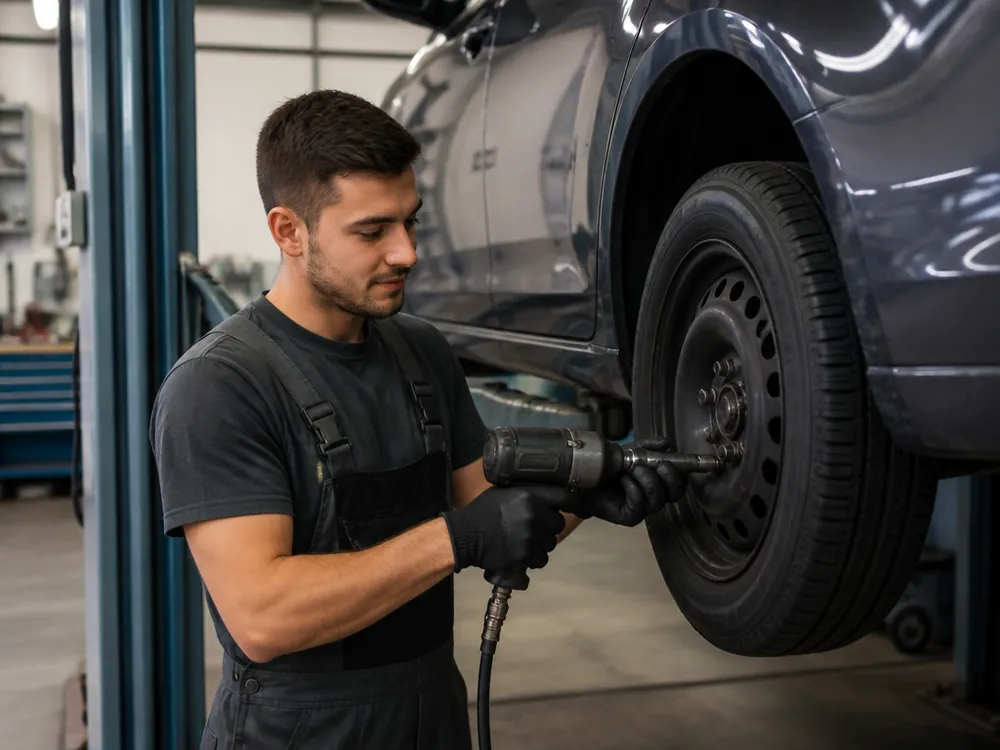
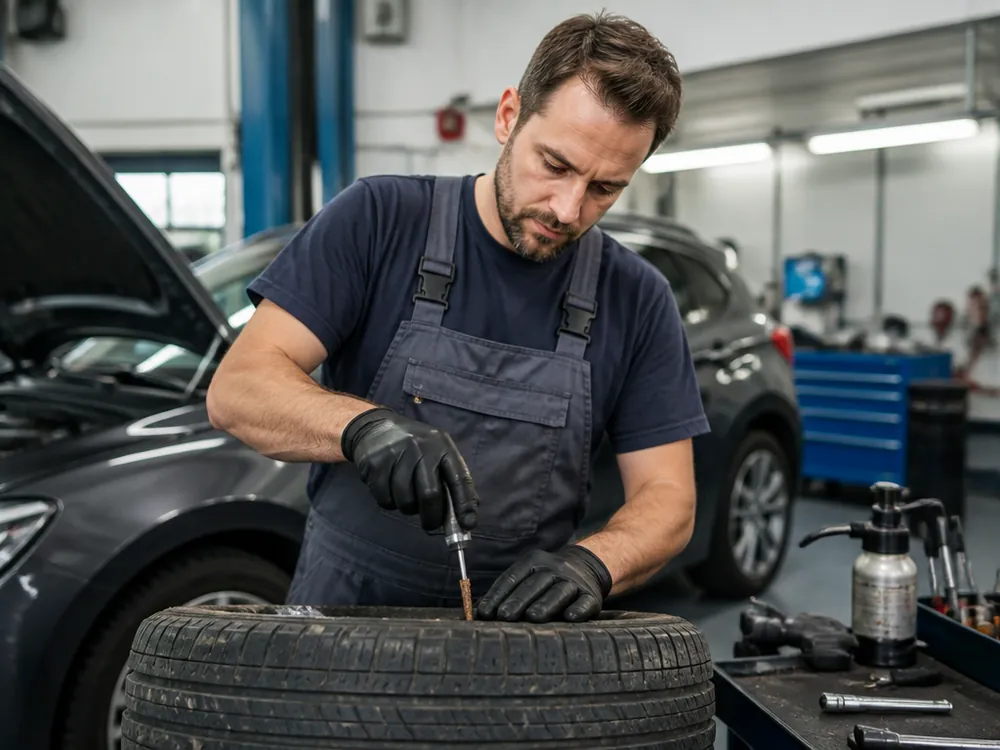
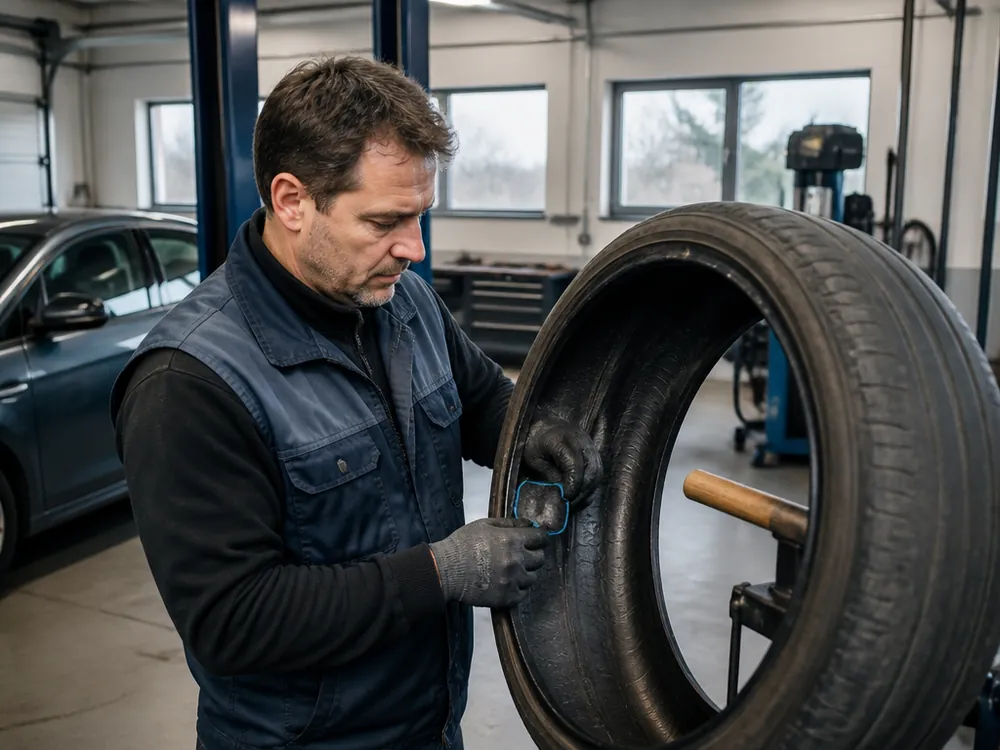
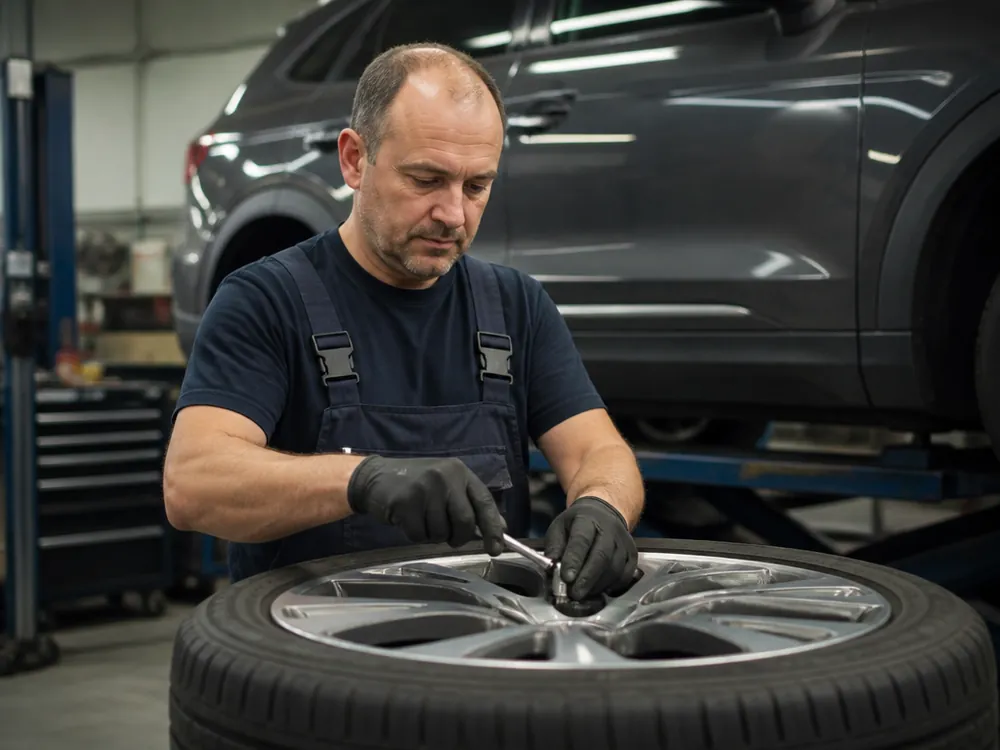
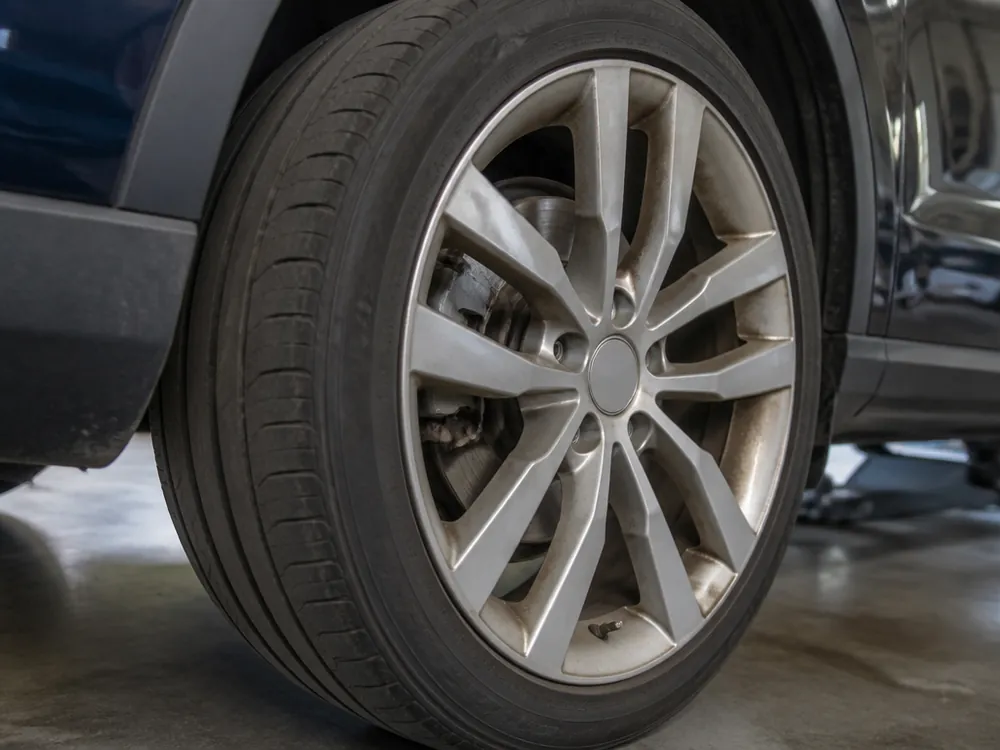
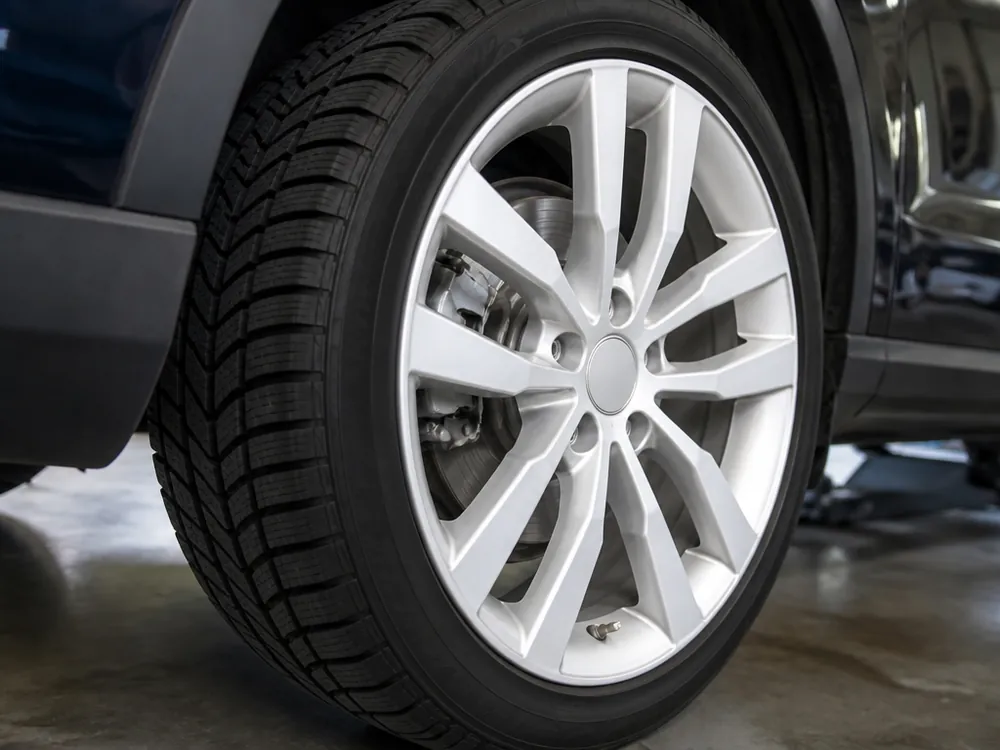
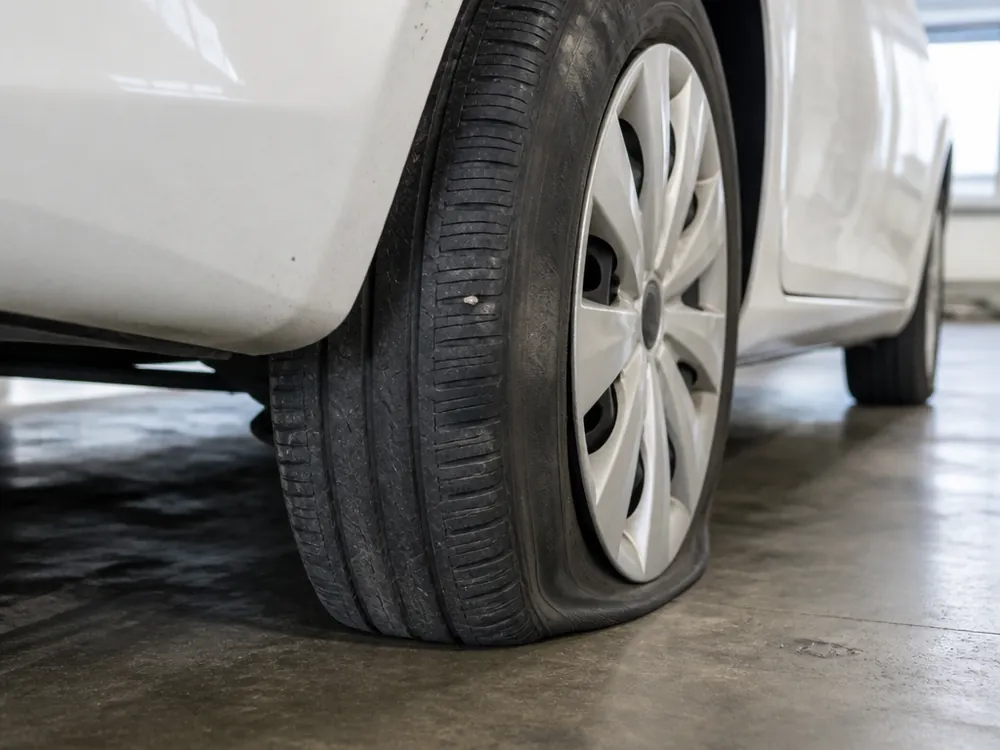
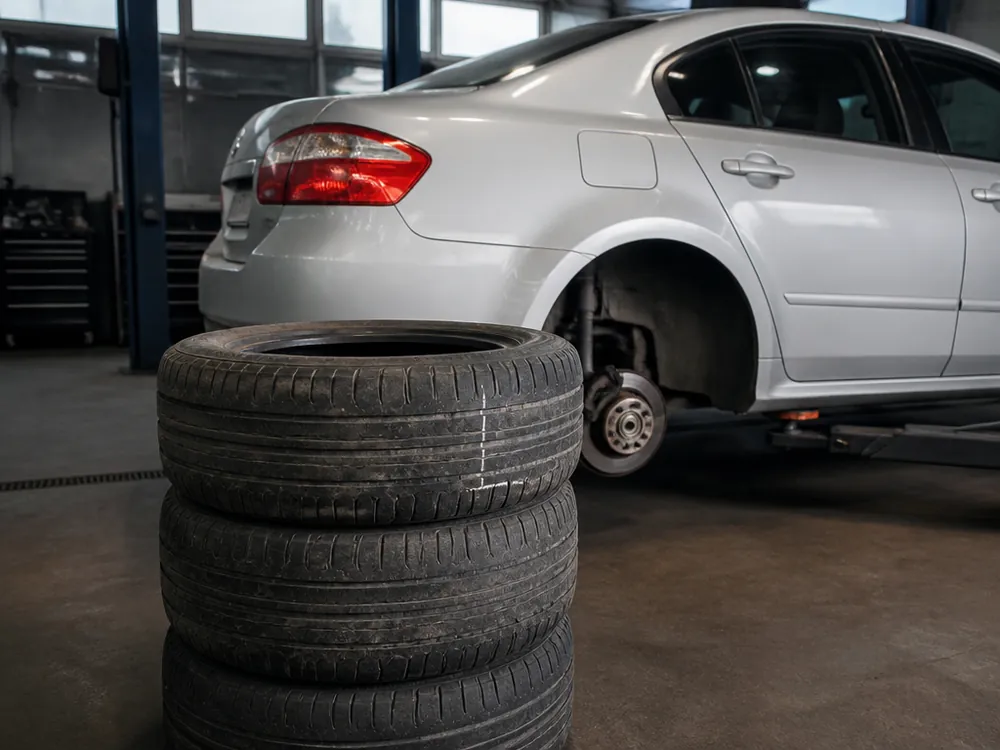
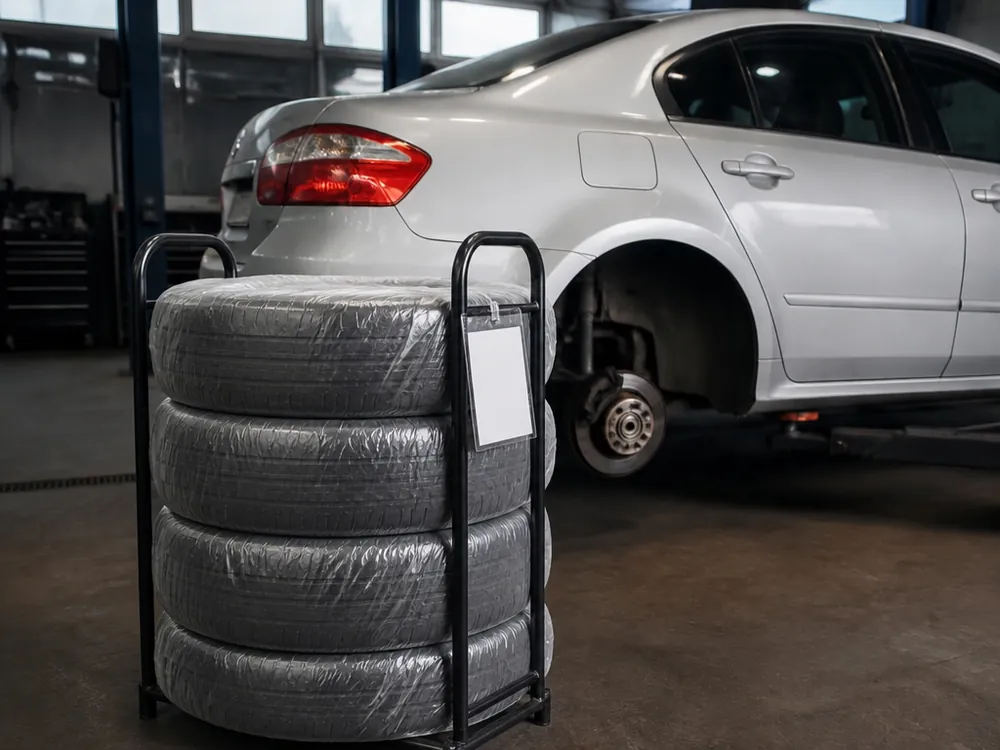
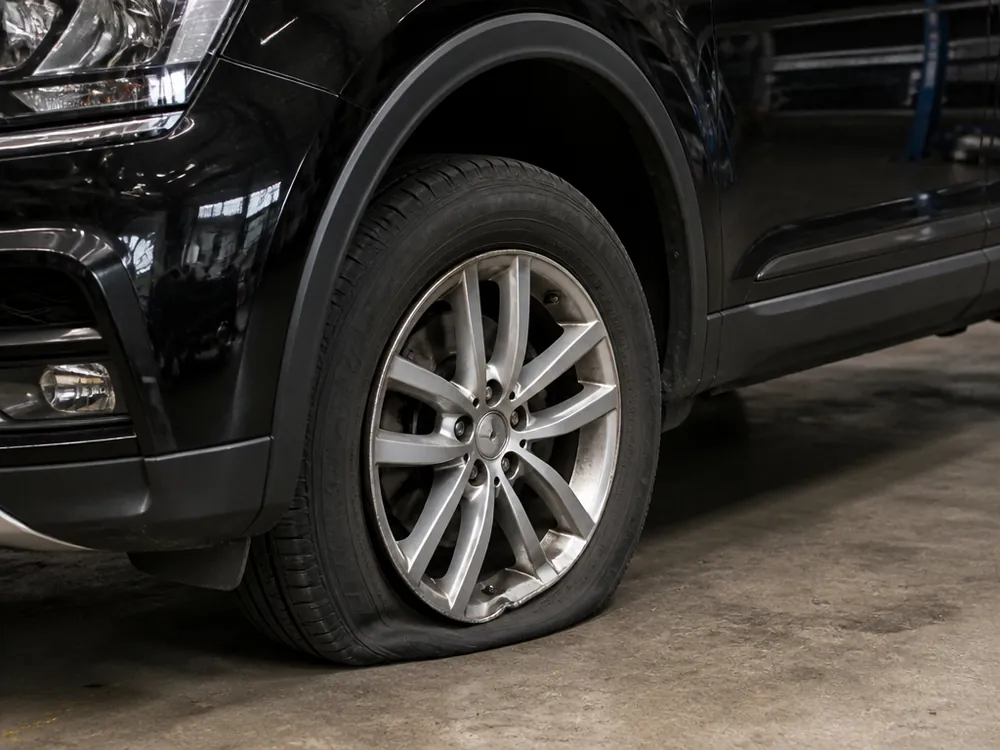
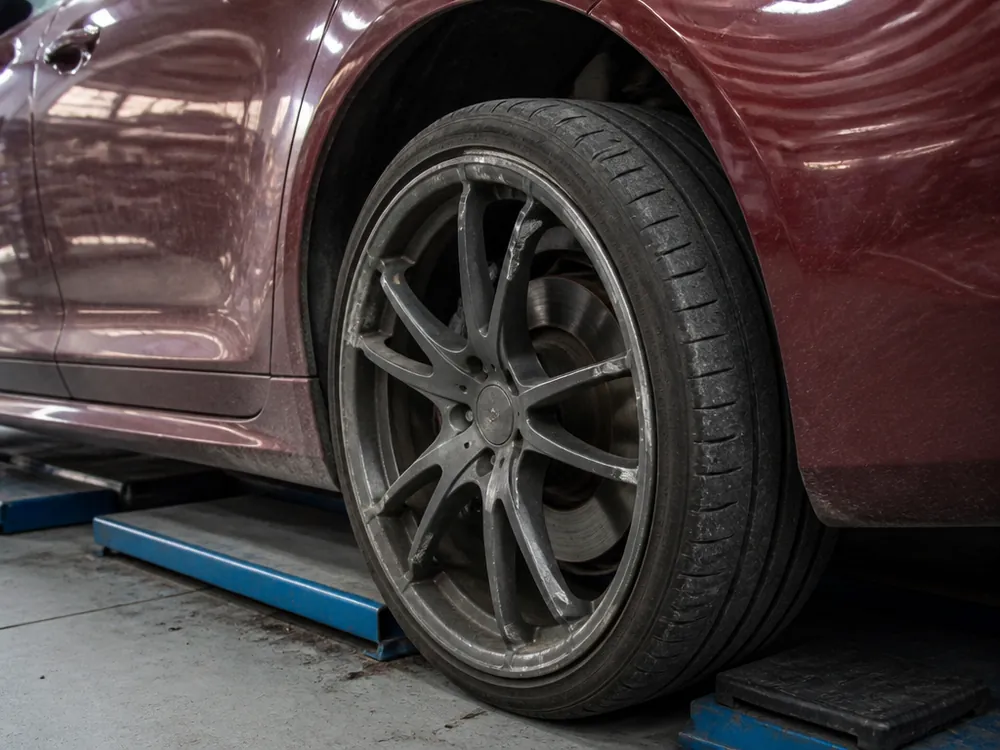
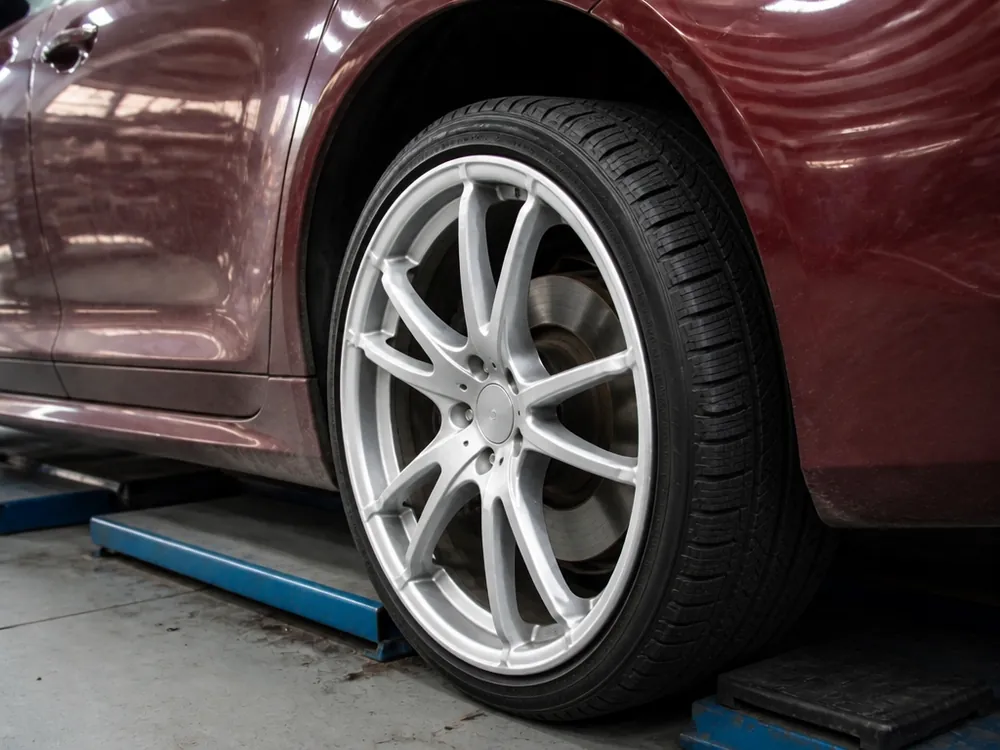
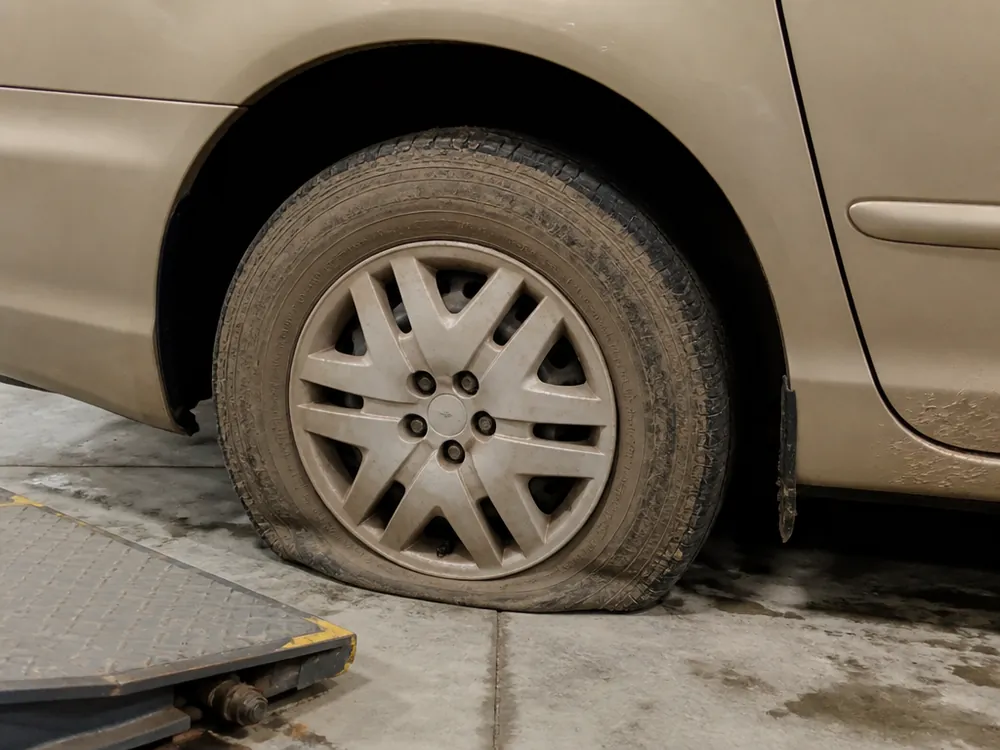
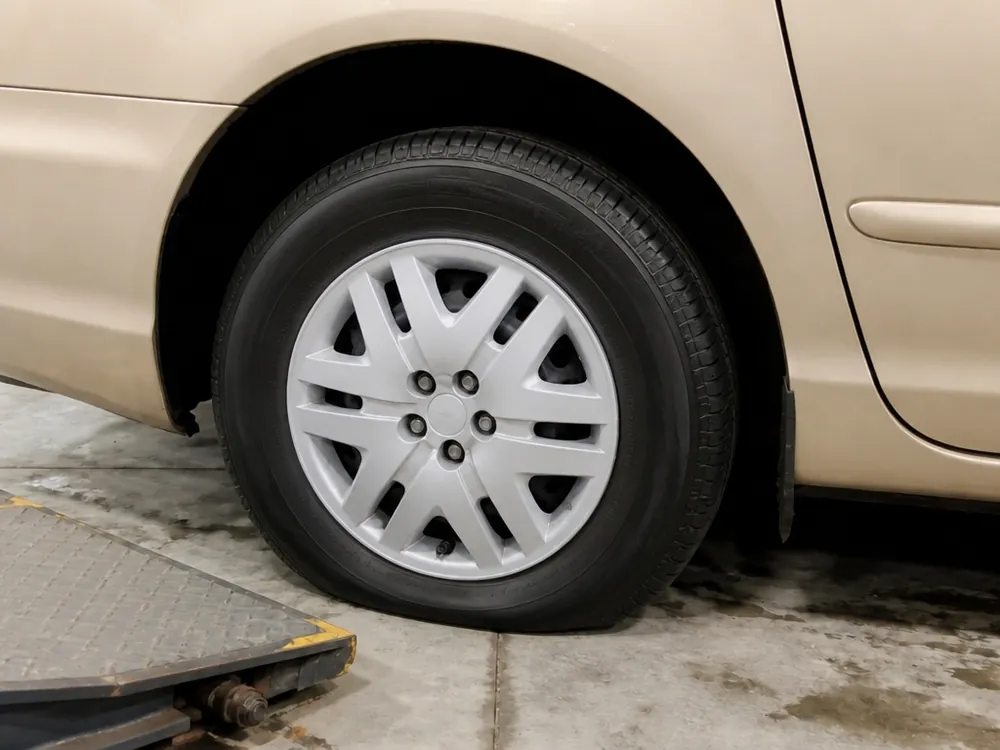
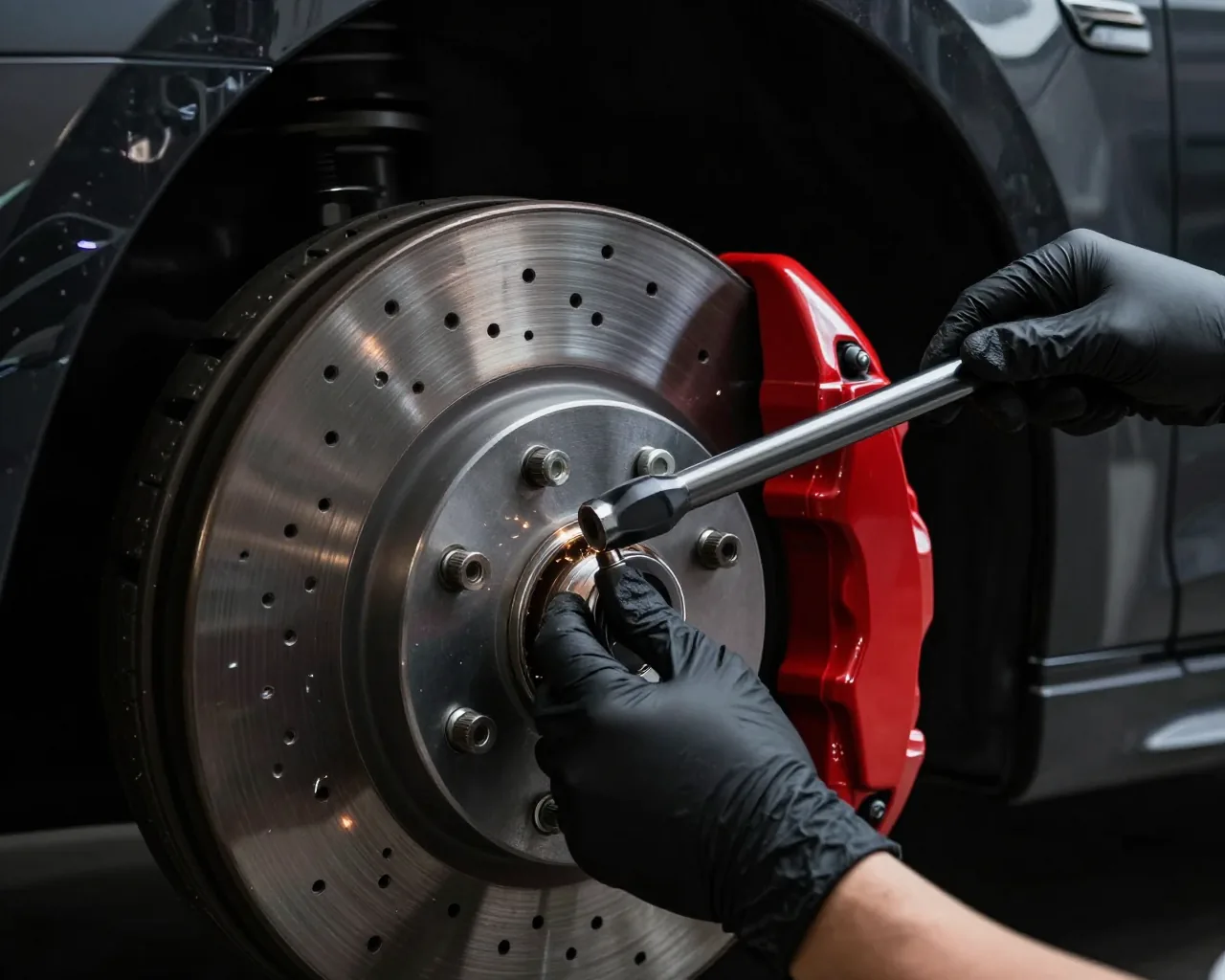
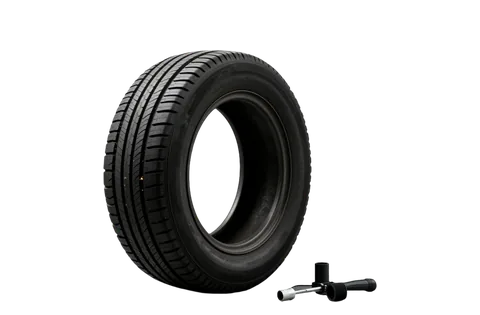
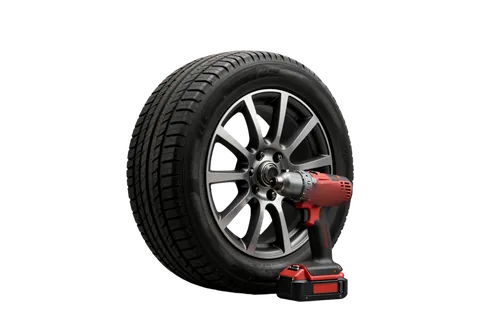
We remove, install, balance and repair wheels of passenger cars, SUVs and trucks. We work fast and carefully, using modern equipment and quality consumables. We provide a warranty on all work, prices from 1500 tenge.
Exact price list for all types of tire services for passenger cars, SUVs, and commercial vehicles.
Service
Duration
Warranty
Price
Removing/installing a wheel (1 pc.)
15–20 min
6 mo
from 500 ₸
Tire removal from rim (1 pc.)
15–20 min
6 mo
from 1 500 ₸
Tire mounting on rim (1 pc.)
15–20 min
6 mo
from 1 500 ₸
Wheel balancing (1 pc.)
20–30 min
6 mo
from 2 000 ₸
Seasonal tire change (set of 4 pcs.)
1–1.5 hours
6 mo
from 8 500 ₸
Puncture repair with plug (1 pc.)
30–40 min
6 mo
from 3 000 ₸
Sidewall cut repair (1 pc.)
1–2 hours
6 mo
from 5 000 ₸
Installing a tube in a tire (1 pc.)
30–40 min
6 mo
from 2 500 ₸
Valve replacement (1 pc.)
15–20 min
6 mo
from 1 000 ₸
Rim straightening R13-R16 (1 pc.)
1–2 hours
6 mo
from 4 000 ₸
Alloy rim straightening R17-R18 (1 pc.)
2–3 hours
6 mo
from 7 000 ₸
Rim painting (1 pc.)
from 1 day
6 mo
from 5 000 ₸
SUV/crossover tire service (set)
1–1.5 hours
6 mo
from 12 000 ₸
Commercial vehicle tire service (set)
1.5–2 hours
6 mo
from 18 000 ₸
Emergency tire service (on-site visit)
30–60 min
6 mo
from 10 000 ₸
Mobile tire service (Almaty and suburbs)
1–2 hours
6 mo
from 15 000 ₸
Tire storage (season, comprehensive)
by agreement
6 mo
from 12 000 ₸
Diagnostics of tires and rims
20–30 min
6 mo
from 2 000 ₸
Prices are for standard passenger cars. Final cost depends on rim diameter, tire type (RunFlat, etc.) and complexity of work. Please confirm the exact price when booking. Warranty periods — see the page «Warranty»
06
Why people choose CARGID for tire service
Warranty.
Every promise — backed by a number or a document: work order, photos, removed parts.
6MO
warranty on labor — the term is stated in the work order.
Truck tire service
Rim rolling
Vulcanization
01
Truck wheels — on the stand
Wheels from 12 to 22.5 inches are rolled on a machine with a force of 1200 kg. You cannot seat such a tire evenly by hand — the bead seats with a skew.
02
3 layers on a sidewall cut
We clean the sidewall cut, install a mushroom patch, and vulcanize at 145 °C. The seam holds pressure and does not leak along the edge.
03
Rim straightening by runout
We perform straightening on hydraulics with runout measurement by indicator up to 0.3 mm. After rolling, the rim seats on the hub without wobble.
04
Balancing up to 30 kg
We weigh and balance a truck wheel assembly on a machine up to 30 kg, weight tolerance — 5 grams. Vibration on the steering wheel and accelerated hub wear are excluded.
07
How wheel service works in Almaty
Steps.
From request to handover — 6 simple steps that take no more than an hour.
01
Drive onto the bay
Call or write on WhatsApp, tell us the car make and tire type — we will find a convenient time. Arrive at the appointed time, the technician will accept the car and check the wheel parameters.
request on WhatsApp
02
Wheel inspection
We check tires and rims for damage, wear, remaining tread, and date of manufacture.
inspection and diagnostics
03
Removal and washing
We remove the wheels, unscrew the bolts, wash the rims and tires before balancing and mounting.
estimate before work starts
04
Mounting and inflation
We install tires on rims, inflate to the required pressure, check leak tightness.
work to factory procedure
05
Balancing
We balance each wheel on the machine to remove vibration and extend suspension life.
result check
06
Installation on the car
We put the wheels back, tighten the bolts with a torque wrench, check the pressure. We check the quality of work together with you, you pay in any convenient way and leave.
CARGID provides tire service in Almaty for passenger cars, crossovers, SUVs, commercial vehicles and truck wheels up to 22.5 inches. First, the service advisor inspects the tires and rims, then we balance with a 5 g tolerance and torque the bolts with a torque wrench. A 6-month warranty is recorded in the work order and the completion certificate.
When to come in for tire service and how to skip the line
Tire service in Almaty comes in seasonal waves, and at peak times the difference between "stopped by on the way" and "booked ahead" is hours of waiting. Here's when to come in and what booking gets you.
When to switch tires and why you shouldn't wait for the first frost
You switch to winter tires when the average daily temperature stays below +7 °C, and back to summer tires when it stays consistently above that mark. Summer tires stiffen in the cold: grip on wet asphalt drops before the driver feels it, and braking distance grows at just +5 °C. Switching back doesn't like to be rushed either — winter compound at +15 °C heats up and wears faster than summer rubber, and studs fly out on warm pavement within a couple hundred kilometers. Many people wait for the first ice, and then the tire change turns into hours of standing at the shop gate. In season, the peak hits the first two weeks after the cold snap, and that's when the line grows fastest, so booking a week before the forecast cold snap saves more time than you'd think. Passenger car tire service is especially busy on those days, and picking your appointment time in advance saves you from the morning crush at the gate.
What booking gets you in practice and how our hours work
Hours: we're open daily from 09:00 to 20:00, seven days a week, including Saturday and Sunday.
No line: with a booking, your car is taken in at the scheduled time, not in the order people show up at the gate.
Your own advisor: the service advisor takes in the car and handles the work order all the way to handover.
End-to-end control: one person is responsible for the inspection, the work and the final check before the keys go back.
Planning your day: a precise appointment time lets you come in at lunch or after work without losing half a day.
How long a full set takes and what affects the timing
A set of four wheels on a passenger car is done in a single visit, and the exact time depends on the diameter, the profile and the condition of the fasteners. A low-profile tire seats on the machine more slowly, seized bolts need penetrating oil and careful work with a wrench, and an alloy rim with a bent lip adds time for straightening. Removing and installing the wheel, dismounting and mounting the tire, balancing each wheel — it all runs in one chain across four wheels, and a delay on one wheel pushes back the whole set. If the wheels are already mounted on rims, the job goes faster than mounting a tire onto a rim, and a second set on rims saves time every season and lets you switch tires in one visit without breaking down the wheels.
How the work goes and what the technician actually checks
Tire service isn't just taking a wheel off and putting it back on. Here's what's included in the job, how the technician inspects the tires and how the fasteners are torqued.
What the technician checks during the tire and rim inspection
Tread depth: we measure the depth at the center and edges — uneven wear points to misaligned toe.
Production date: we read the DOT marking on the sidewall to determine the tire's real age, not how it looks.
Sidewall cuts and bulges: we feel along the sidewall and look for bulges — a tire with a bulge can't be repaired.
Rim runout: we spin the wheel on the machine and check whether it's still out of round after a curb hit.
Valve and valve core: we check for cracks and test for leaks — an old valve leaks and lets you down in the cold.
Tire and rim condition check: we record the inspection results in the work order before any work starts.
What the work on a full set includes
Removal and installation: we loosen the fasteners, take the wheel off the hub and put it back after service.
Dismounting the tire from the rim: bead breaking without hitting the flange — we don't damage the sealant or the bead seat.
Mounting the tire on the rim: seating the bead with an even check around the whole circumference, no skewing.
Balancing: we pick weights based on the machine readings until the imbalance reads zero on both planes of the wheel.
Torque wrench tightening: we set the final torque with a torque wrench to the manufacturer's spec, not with an impact gun.
Seasonal tire change: a set of four goes through all the steps in sequence plus a pressure check.
How the work differs by vehicle type
differences in work by vehicle type and equipment
Vehicle type
What we account for
Equipment
Passenger car
standard profile, fasteners
balancing machine
Crossover
wheel weight, low profile
heavy-duty equipment
SUV
large diameter, tread
heavy-duty equipment
Commercial vehicle
load, stiff sidewall
1200 kg stand
Puncture and sidewall cut repair
A puncture in the tread and a cut on the sidewall are different kinds of damage with different repair methods. Here's when a tire can be saved and when it's time to replace it.
How a plug differs from a mushroom patch
Plug: pushed into the tread puncture and works like a stopper, sealing the channel from the inside out without taking the wheel apart.
Combination patch: covers the damage from the inside, the stem goes through the channel, and the cap is glued to the sealing layer.
Vulcanization at 145 °C: the repair insert is hot-vulcanized, so the seam becomes part of the tire instead of a patch on top.
Tread: a plug holds reliably here because this zone works under compression and barely flexes as the tire rolls.
Sidewall: constantly flexes, and a plug isn't built for those loads — the edge starts leaking over time.
Sidewall cut: repaired only with a combination patch and vulcanization; plugs are never used in the sidewall.
When a sidewall cut can be repaired and when the tire needs replacing
Cut down to the cord: if only the top rubber layer is damaged, a combination patch with vulcanization restores the seal and the tire keeps going.
Cord intact: the carcass threads are undamaged — that's the main condition for us to take on this job.
Bead seat area: damage at the edge where the tire seats on the rim can't be repaired — an insert won't hold pressure there.
Cord affected: if the threads or several carcass layers are damaged, the tire gets replaced — no repair will bring the strength back.
Temporary effect: even when the seam holds pressure, a damaged carcass loses strength and is dangerous at speed.
Technician's call: before any work we inspect the damage, check the depth and condition of the threads, and only then tell you whether it's a repair or a replacement.
How long a repair lasts and how we check it
A vulcanized insert holds pressure for the life of the tire, and we check the seam for leaks before handing the wheel back. We install a combination patch with buffing and heating at 145 °C, then after it cools we inflate the wheel and dunk it in a water bath — bubbles show whether the edge is leaking. This kind of repair doesn't replace a scheduled tire change, but it gets the tire back in service until the season changes. We take photos of the key steps and show the customer the removed tire. If the wheel loses air after the repair, the diagnostic for the warranty case is free: the technician rechecks the seam and the bead seat instead of just topping up the air. The warranty on tire service is 6 months, and the term and conditions are written into the work order when the car is handed over. In my view, the water-bath check takes a couple of minutes, but that's exactly what separates a proper repair from just adding air.
Vibration, balancing and wheel straightening
Vibration in the steering wheel or body doesn't always mean you need balancing. Here's how to tell an imbalance from a bent rim, knocked-out alignment and worn suspension.
Why the steering wheel vibrates and how to tell the causes apart
Wheel imbalance: shaking at 70–100 km/h that gets worse as you speed up — a weight fell off or the tire seated crooked on the rim.
Rim runout: the wheel shakes when braking or at low speed — the rim is bent after a pothole and needs to be measured with a dial gauge.
Knocked-out alignment: the car pulls to one side, tires wear along the edge — we check the geometry on a 3D stand.
Suspension wear: knocking and vibration over bumps — a wheel bearing or ball joint, and tire service won't fix it.
Tire seated crooked: the bead sat unevenly during manual mounting — we reseat it on the machine with bead-seat control.
Loose bolts: the wheel is tightened unevenly — we torque it with a torque wrench in the correct sequence.
How often to balance and what the 5 g tolerance means
We balance at every tire change and after any wheel repair, and we add weights according to the machine's readings until the imbalance is fully gone. On the machine the wheel spins up to working speed, and the technician sees where mass is missing: the weight is stuck to the rim opposite the heavy spot. Even a small residual imbalance is felt through the steering wheel at speed and works against the bearing. Even a small excess at 80 km/h turns into hub vibration and faster tread wear at the contact patch. At our shop, wheels on crossovers and passenger cars go through the procedure at every tire change, not just when there's a complaint about vibration. Persistent imbalance eventually destroys the hub assembly — it's cheaper to catch it on the machine than to replace the bearing.
When a rim can be straightened and when it needs replacing
A rim can be straightened if the runout is brought down to 0.3 mm with hydraulics, while cracks, tears and deformation of the seat are grounds for replacement. We straighten on a hydraulic stand with dial-gauge measurements before and after rolling: the technician sees how many millimeters came out and whether anything is left to straighten. Cast wheels R17–R18 bend more often than steel ones on Almaty potholes, but they also straighten more readily — the metal holds its shape after rolling. If the rim doesn't seat evenly on the hub, there's no point pulling further: a crooked seat will cause vibration and tear the tire bead. We show the old part and give it to the customer so it's clear what was replaced. Before straightening, the technician always checks the rim for cracks and tears: if the metal is damaged, rolling will only hide the defect and the wheel will misbehave at speed. That's why we make the "straighten or replace" call after measuring runout with a dial gauge, not by looks.
Truck, commercial and mobile tire service
Truck wheels and the mobile format are two different jobs with different capabilities. Here's what gets done where: some work is done on site, and some requires a machine and a lift in the shop.
Why a truck wheel can't be seated evenly by hand
We mount wheels from 12 to 22.5 inches on a machine with 1200 kg of force, because you can't seat a tire that size evenly by hand. A truck tire's bead is stiff, the bead ring is massive, and one hit with a tire iron isn't enough: you need even pressure around the whole circumference. On the machine the bead goes into the rim flange all the way around at once, without crooked seating or pinching the tube. Our shop handles both commercial vehicles and crossovers — each type has its own tooling and its own hub adapters. With manual seating the bead sits crooked and the wheel starts to shake even at low speed, which is why we only take truck wheels on the machine.
What's actually done on site and what's shop-only
what gets done where
Job
On site
Shop only
Removing and installing a wheel
yes
yes
Puncture repair with a plug
yes
yes
Inflating and checking pressure
yes
yes
Balancing
no
yes
Rim straightening
no
yes
Vulcanizing a sidewall cut
no
yes
Mounting a tire on the machine
no
yes
Who the mobile format suits and how it works
Mobile service works when the car won't drive or a wheel needs changing on the spot, and the coverage area is Almaty and the suburbs. An urgent call-out saves the day in two situations: a tire went flat on the road and you can't make it to the shop under your own power, or the wheels need swapping on a car that's sitting in a parking lot or a courtyard. The technician arrives with his own jack, lug wrench and repair kit, removes the wheel, plugs a simple puncture with a string and inflates to working pressure. Balancing and straightening can't be done on site — that takes a stand. A call-out is handy for emergencies, but a planned seasonal swap of the whole set is cheaper to do at the shop: there's a tire machine, a balancing stand and a chance to check alignment right away.
Tire fitting warranty and what to do if something goes wrong
A warranty on work only means something when its terms are written down. Here's exactly what the warranty covers and what to do when a problem shows up after service.
What the warranty is and where it's recorded
We give a 6-month warranty on the work performed and write the term and conditions into the work order and the completion certificate when the car is handed over. The document stays with the client, and if there's a dispute the service advisor pulls up the work order by number instead of reconstructing the history from memory. The term is the same for a seasonal tire swap, a string puncture repair, wheel straightening and a valve replacement — the work counts as one category. The warranty covers the work performed and the parts installed, but not an accident after the repair, interference by third parties or normal wear of consumables. When the client brings the part, we're not responsible for how it behaves — that's spelled out on a separate line. In my view, it's the paper that settles half the arguments: the terms and warranty period are always written in the work order and the completion certificate.
What to do when a tire loses air or a bolt comes loose
Call and book: come to us — diagnostics for a warranty case is free, and the service advisor will book you into the next open slot.
Fastener check: a loose bolt usually means stretched threads or a worn stud rather than a bad tightening, so we check the studs instead of just re-torquing.
No self-tightening: tightening it yourself changes the picture and makes it harder to figure out why it came loose.
Bead seating: we check how the tire seated on the wheel and whether there's any misalignment or leak along the edge.
Outcome of the case: a warranty redo is free, and a non-warranty one we tear down on the lift and show you the cause.
How we check the work before handover
Test drive: the technician does a lap and listens for any leftover vibration at speed or the steering pulling to one side.
Photo report: the photos show the bead seating, the tightening torque and the balance weights, so you can see the scope of work.
Old parts: we show you the removed valves, tubes and weights and hand them over to the client.
Pressure: we set it per the placard on the door pillar, not by eye.
Check on the move: a test drive catches what you can't see on the lift, so the client picks up a car already checked on the road.
Seasonal Tire Change: What to Check
Here's the main stuff to keep in mind before and after a seasonal tire change — from timing the swap to checking the work.
Timing the swap: plan the set change before the hard frosts, and book ahead during peak season — the queue eats up time.
Inspection before work: check the remaining tread, the tire's production date and the condition of the wheels — these three things define the scope of work.
Sidewall cut: repaired with a mushroom patch and vulcanization at 145 °C, while cord damage means the tire needs replacing.
Steering wheel vibration: check three causes in order — balancing, wheel runout with a dial gauge and alignment.
Warranty: the terms and period are recorded in the work order and the completion certificate when the car is handed over.
10
Frequently asked questions about tire service in Almaty
Questions.
Price, timeframes, warranty, payment — 10 questions asked most often.
10
Didn't find an answer?
Message us on WhatsApp — a service advisor will reply within 5 minutes.
The cost depends on the wheel diameter and type of work. A basic replacement of a set of 4 wheels (removal, mounting, balancing) costs from 8,500 to 15,000 tenge for passenger cars (R13-R16). Additional charges apply for: removal of old tires — 1,000 tg/wheel, puncture repair — from 3,000 tg, separate balancing — 1,500 tg/wheel. We will give you the exact cost after inspection, and it is fixed before work begins. Exact prices are in the price list on this page.
A standard replacement of a set of 4 wheels with balancing takes 40-60 minutes. If a side cut repair or complex repair is needed — up to 2 hours. During the season (October-November, March-April), the time may increase due to queues, but with an appointment we strictly keep to the time. Our service advisor gives exact timing when accepting the car.
Yes, we provide a 30-day warranty on all types of tire service work. If within this period a problem related to our work occurs (for example, a wheel loses air due to poor sealing or bolts come loose), we will fix it free of charge. The warranty does not cover damage caused by external factors (puncture, cut, accident) or tires or rims that had defects before our work.
We recommend booking in advance, especially during the season. Booking guarantees that you will be served at a convenient time without waiting. You can book by phone or via WhatsApp. Off-season (summer and winter on weekdays) often has free slots, so you can come without an appointment. But to be safe, it's better to call an hour or two before arriving.
Yes, you can bring your own tires and rims. We work with any materials, as long as they are the right size and without critical damage. If you only need to mount tires on your own rims, that is the simplest option. You can also bring your own balancing weights, but we usually use standard ones — that is already included in the price. Your own fasteners (bolts, nuts) are welcome if you have non-standard rims. Please note: storage of your tires, if you leave them with us, is charged from 1,000 tg/wheel per month.
If you notice a problem after our tire service, call us immediately. During the warranty period (30 days), we will check and fix it free of charge. Most often vibration occurs due to incorrect balancing or dirt on the rim — we will remove it and rebalance. If a wheel loses air, we check the sealing of the beads and the valve. If the problem is caused by our fault — we will fix it free of charge; if by external impact (puncture) — we will offer repair at the warranty price.
We perform a full range: seasonal tire replacement (tire changing), wheel balancing (static, dynamic), puncture repair (plug, patch), side cut repair (hot vulcanization), rim straightening, installation and replacement of valves, including for tubeless tires. We also offer mobile tire service (within the city) — cost from 15,000 tenge. We separately distinguish tire service for passenger cars, crossovers, SUVs, and commercial vehicles.
After installation, we recommend not exceeding 80-100 km/h for the first 100-200 km so the tires 'break in'. Check the pressure every 2 weeks and before a long trip — the norm is indicated in the car manual or on the door sticker. After 500-1,000 km, retighten the bolts (you can come to us free of charge). Avoid sudden maneuvers and hitting potholes — this will protect against damage. We also advise balancing every 10,000 km or when vibration appears.
You can pay for tire service in cash or by card on site after the work is done. When servicing a set of four wheels, payment is made as a single sum. Cashless payment and payment by invoice are possible for organizations by prior arrangement.
Yes, we run seasonal promotions: for example, when replacing all 4 wheels — a 10% discount on balancing, and for regular customers there is a cumulative discount card. Follow our social media or ask the administrator. Also, when replacing tires and balancing 4 wheels at the same time on weekdays, you can get an additional 5% discount.
11
What drivers say about our tire fitting
Reviews.
We collect ratings on the website and on maps — we hide nothing.
4.8
872 reviews on the website 1 900+ ratings in total
Aigerim
Toyota Camry
I had my Toyota Camry's tires changed here before winter. They took me without an appointment, did everything in an hour, and even checked the pressure. 16,000 is not expensive. Thank you!
Sergey
I punctured a tire at work and dropped by CARGID. They quickly found the nail, patched it with a plug, and balanced it. The price is reasonable, 4,500. Now I only go to them.
Dmitriy
Sportage
Changed tires on Kia Sportage. Everything was fast and high-quality, especially liked that they showed the wear on the old tires. 15,000 tenge for everything. I recommend.
Aliya
I dropped off my summer tires for storage, they accepted them properly, packed them, and attached a tag. I picked them up in spring — like new. It's nice that the service takes care of things.
Yerlan
There was vibration on the steering wheel, I thought it was the suspension. But it turned out to be a bent rim. The straightening cost 12,000, but the vibration disappeared instantly. Thanks to the master for explaining.
Tanya
CX-5
Swapped from summer to winter tires on Mazda CX-5. Everything was done in 40 minutes, no queue. Balancing included. 17,000 tenge, fine.
Ivan
I stopped by to change summer tires on Chevrolet Cruze. They checked the tire pressure and tightened the bolts. Fast and without unnecessary questions. The price is 14,500, as agreed.
Aidana
In winter I changed the wheels, they did it very quickly, the balancing is good. The price is affordable — 15,000 tenge. Thank you, I'll come back next time!
Maksim
I spent a long time choosing where to change tires, glad I ended up here. They charged 20,000 for a set from R19 to R18, but did everything carefully and didn't scratch the rims. I recommend.