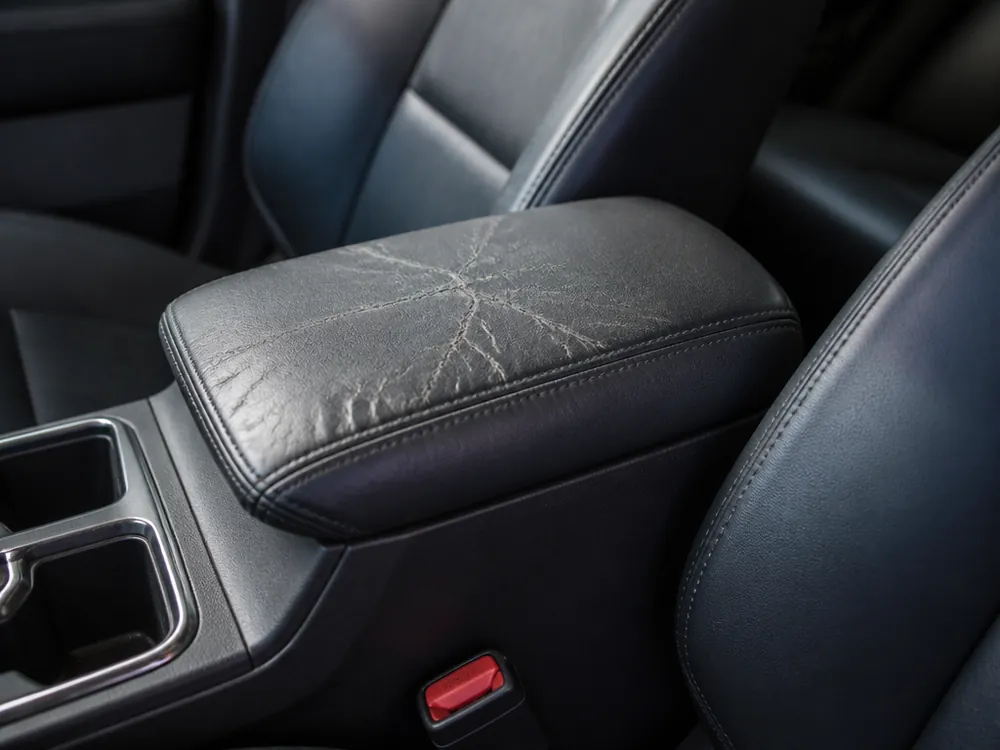
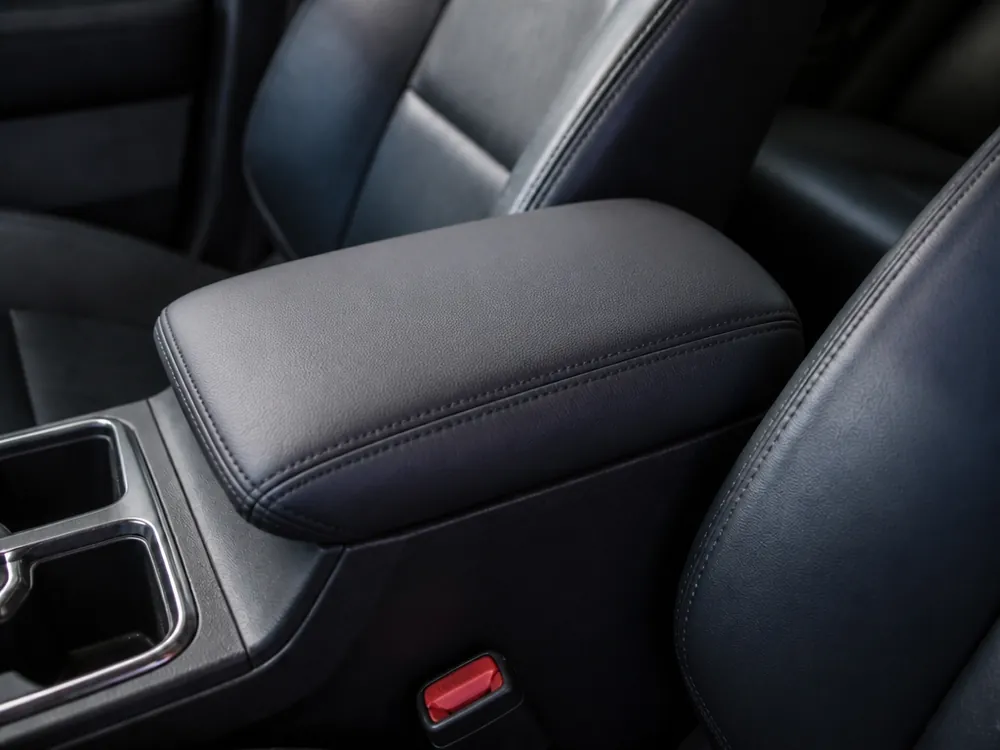
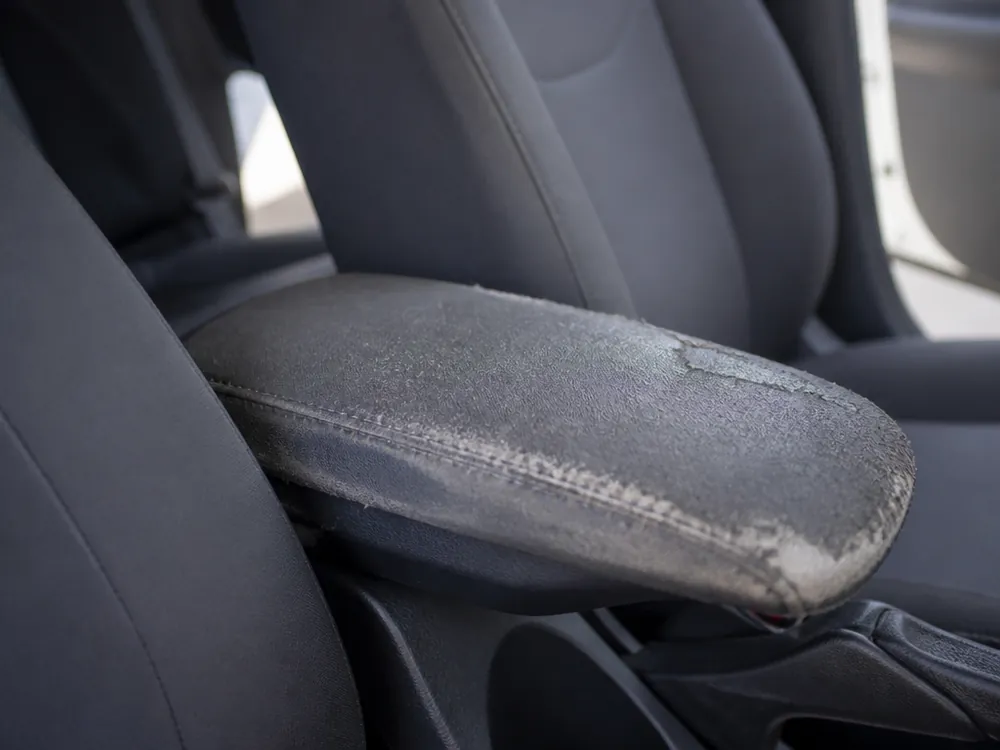
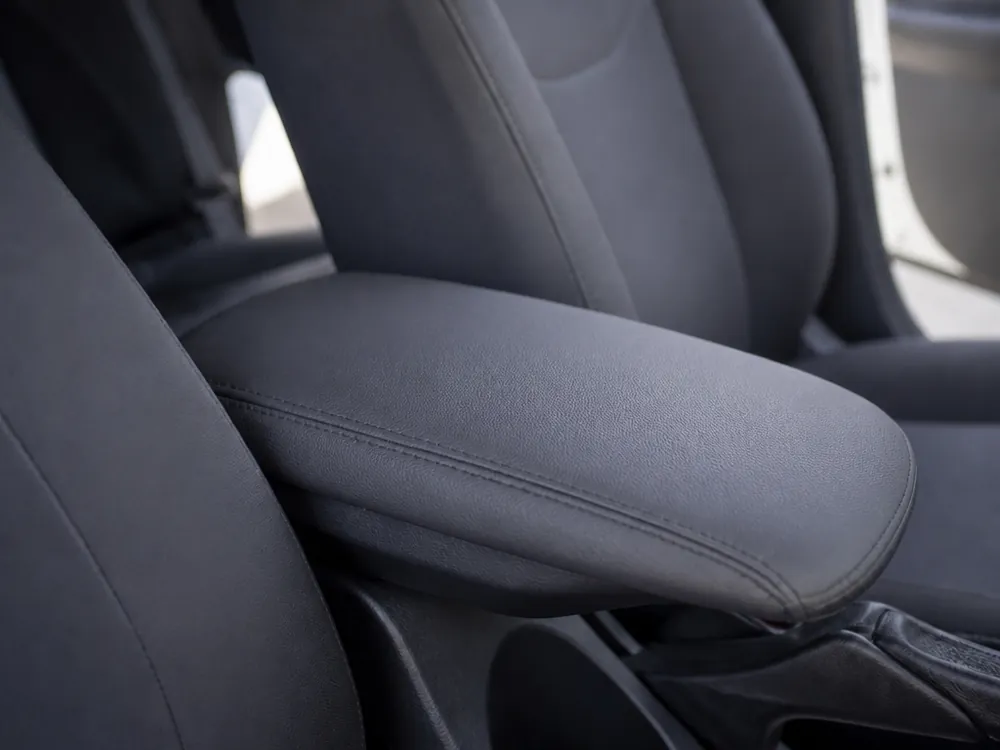
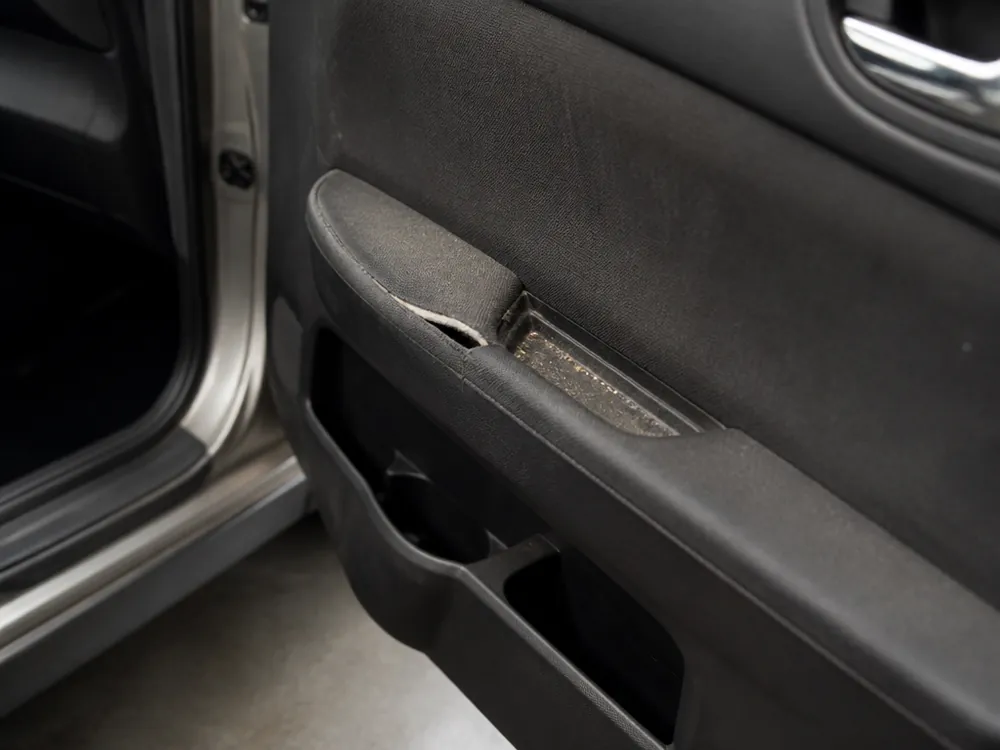
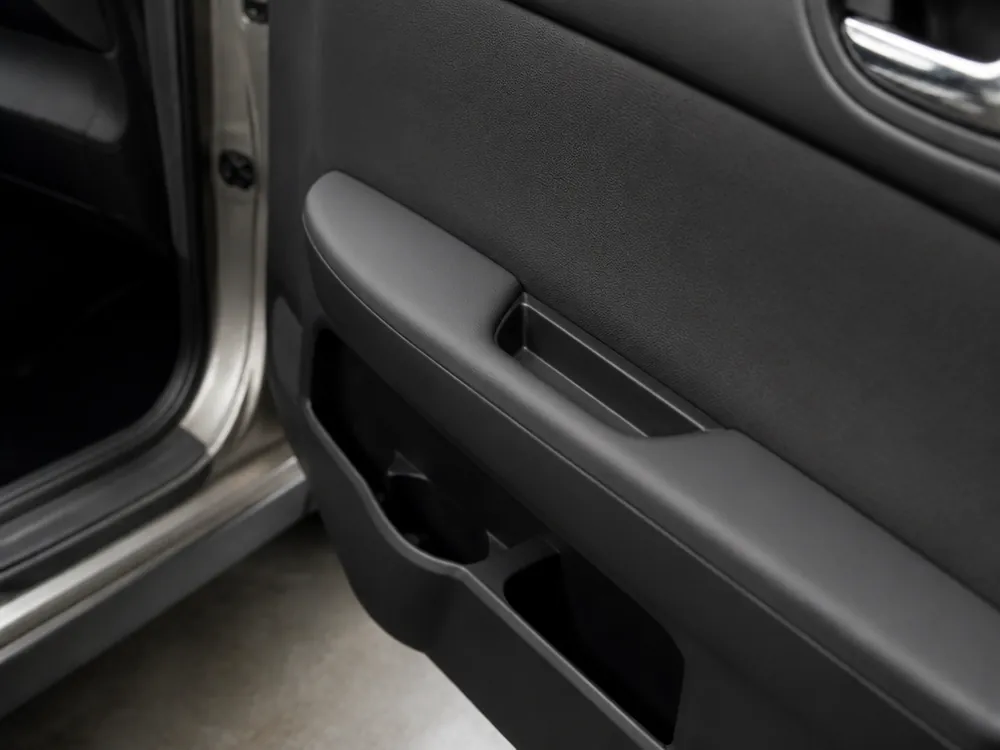
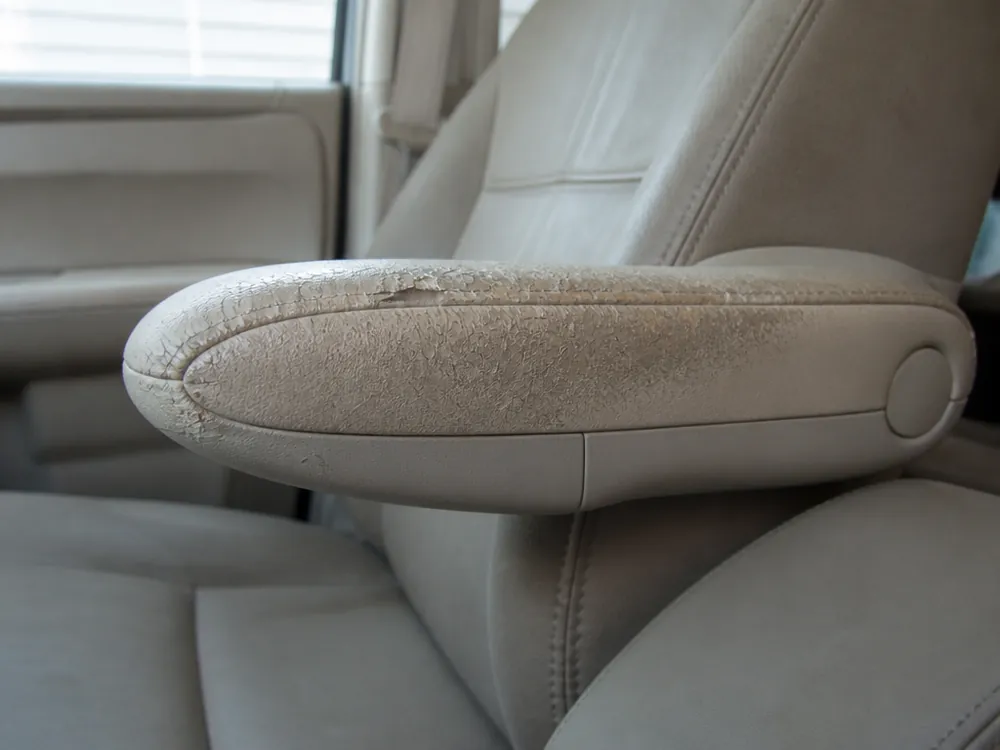
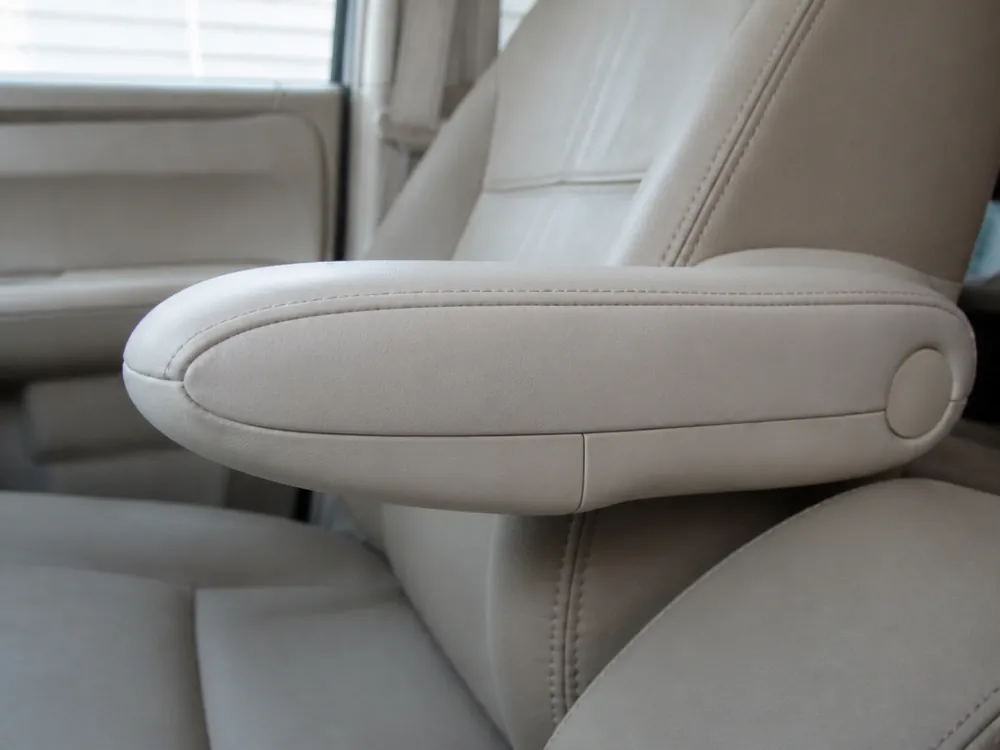
Timeline is the first question after choosing the material. Let's break down what makes up the 48 hours and why trying to finish in a couple of hours leads to peeling upholstery.
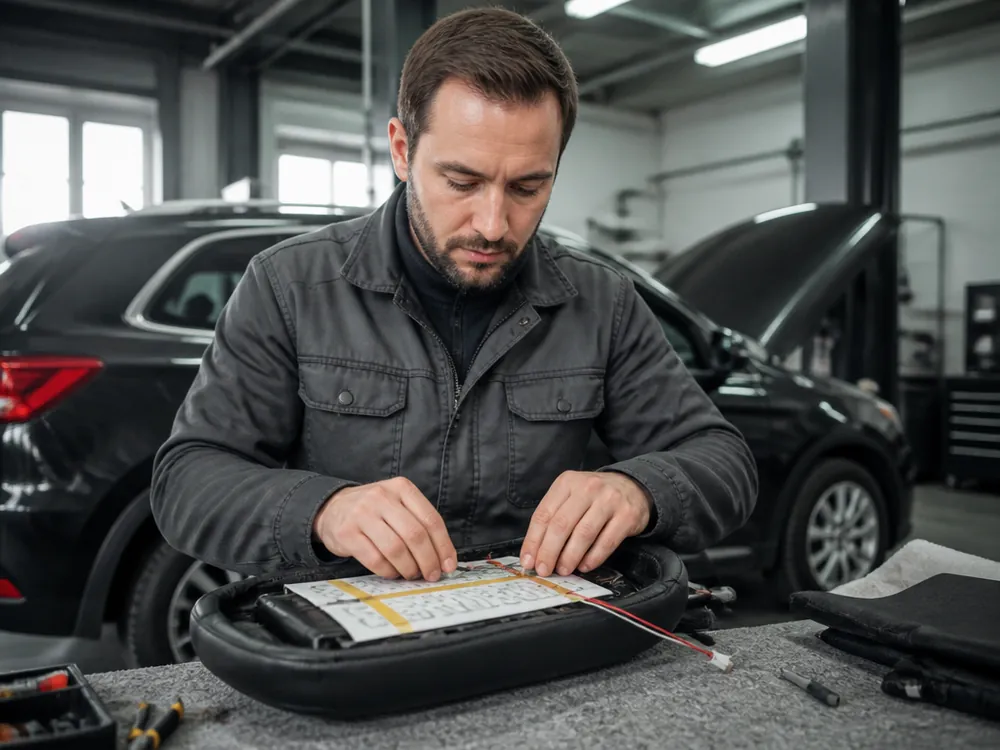
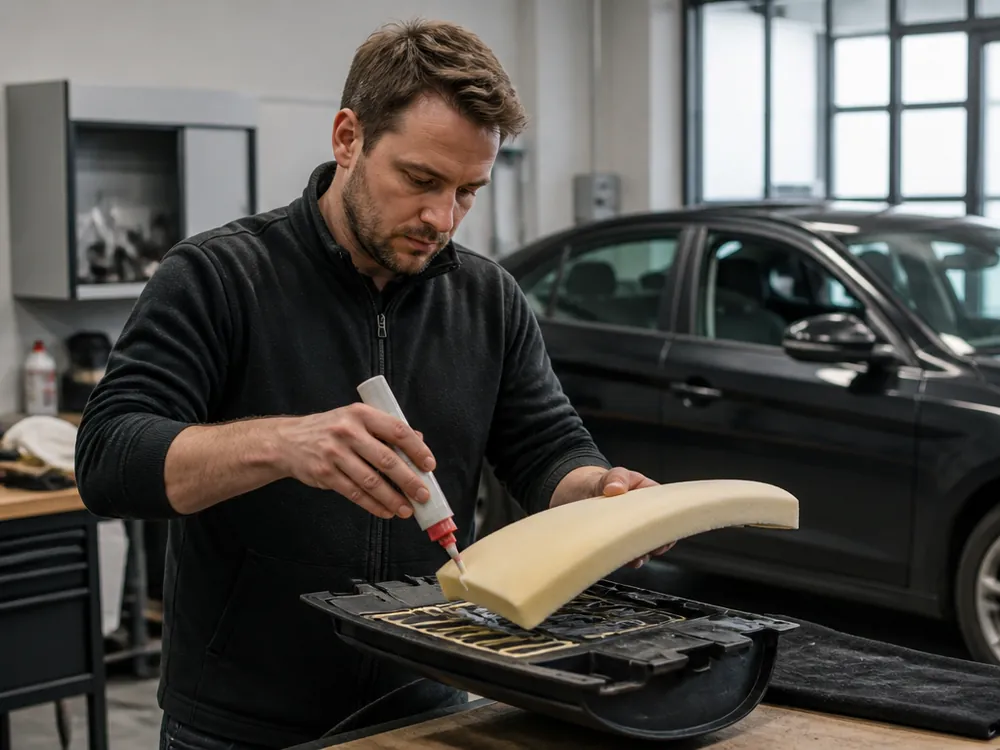
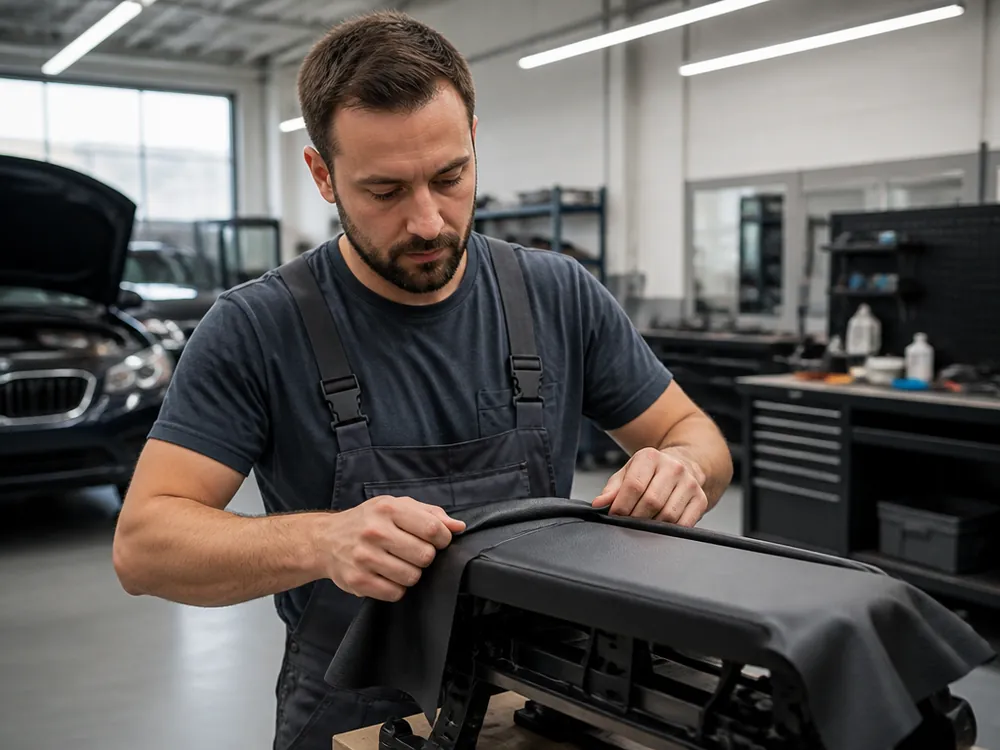
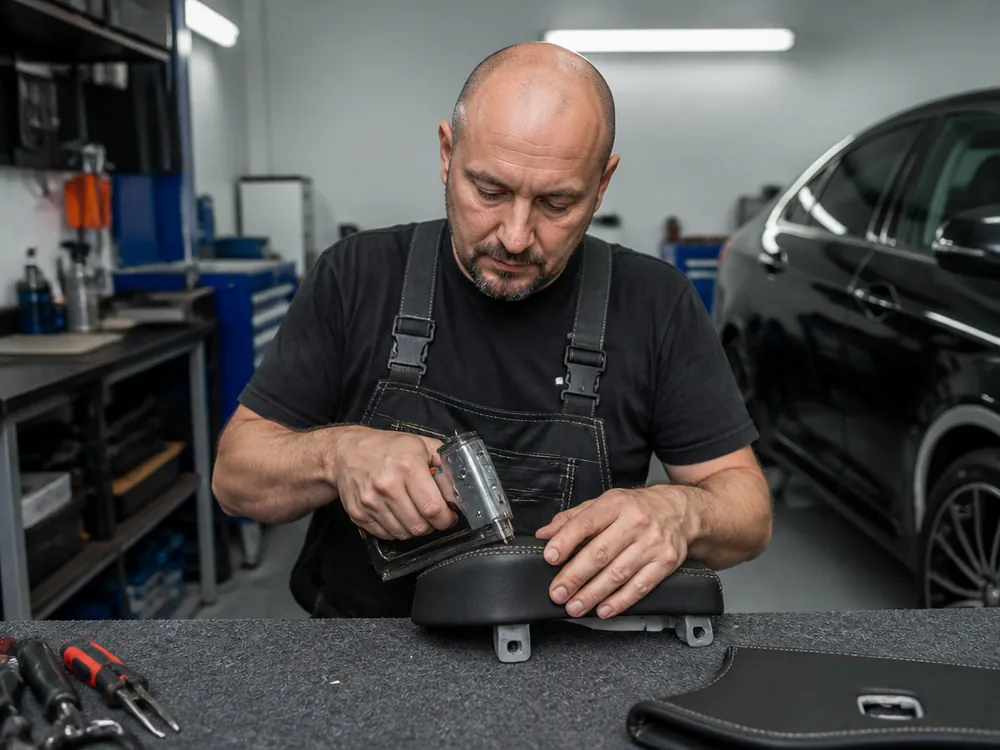
Our car armrest upholstery in Almaty takes 2 days because the timeline includes disassembly, cutting, stretching, and adhesive drying. First, the technician removes the part and dismantles the old upholstery, cleaning the frame from adhesive and foam residue, then checks the fasteners and the geometry of the base. The new material is cut according to the removed pattern — with an allowance for stitching and fitting on curves, and on complex radii the pattern is adjusted on site. Stretching and fixing take a few hours, but the main time is spent on adhesive polymerization under load: the upholstery must set over the entire area, including the ends and side inserts. If drying is shortened, the adhesive doesn't polymerize and the upholstery peels off at the edges within a few weeks — saving hours turns into rework.
Can you reupholster the armrest without removing it from the car
We remove the armrest from the car: only on a removed part can you clean the frame, lay the filler, and stretch the upholstery without wrinkles. The work involves the top surface, side inserts, and ends — on an installed part there is no proper access to them, the material stretches unevenly and wrinkles at the corners. Reupholstering the top directly on the car covers only the top surface, while the edges remain with the old material. Partial on-car reupholstery gives access only to the top, so the side inserts and ends remain with the old material and are the first to crack. On a removed part, the technician works with each radius separately: heats the material, stretches it along the curve, and fixes the adhesive over the entire area. This way the upholstery fits without wrinkles at the corners, and the seam lies exactly along the frame line.
What extends the timeline beyond 2 days
- Armrest with a storage box and buttons: we disassemble carefully to avoid damaging the wiring and latches — plus time for reassembly and testing.
- Armrest with electric drive: after reupholstery we check the motor and contacts, adding a diagnostic step.
- Frame repair: we restore cracked or bent fasteners before stretching, otherwise the upholstery will fit crooked.
- Non-standard shape: parts with unusual geometry require an individual pattern and on-site fitting.
- Filler replacement: if the foam has sagged, we lay new layers and let them settle before final fixing.
- Client's own material: we check elasticity and thickness before cutting to avoid redoing the stretch.
Which material for car armrest upholstery to choose for Almaty's climate
Heat and ultraviolet in Almaty accelerate upholstery wear: the top layer cracks and fades faster than it wears from elbows. Therefore, the material is chosen not by a catalog picture but by operating conditions and driving patterns.
Eco-leather, Alcantara, and genuine leather compared
upholstery comparison by durability, feel, and care| Material | UV and moisture resistance | Feel | Care |
|---|
| Eco-leather | high | dense, smooth | wet wipe |
|---|
| Alcantara | medium | soft, velvety | brush, no water |
|---|
| Genuine leather | medium | warm, natural | leather conditioner |
|---|
| Carpet | low | fuzzy | dry cleaning |
|---|
What to choose for taxi and heavy use
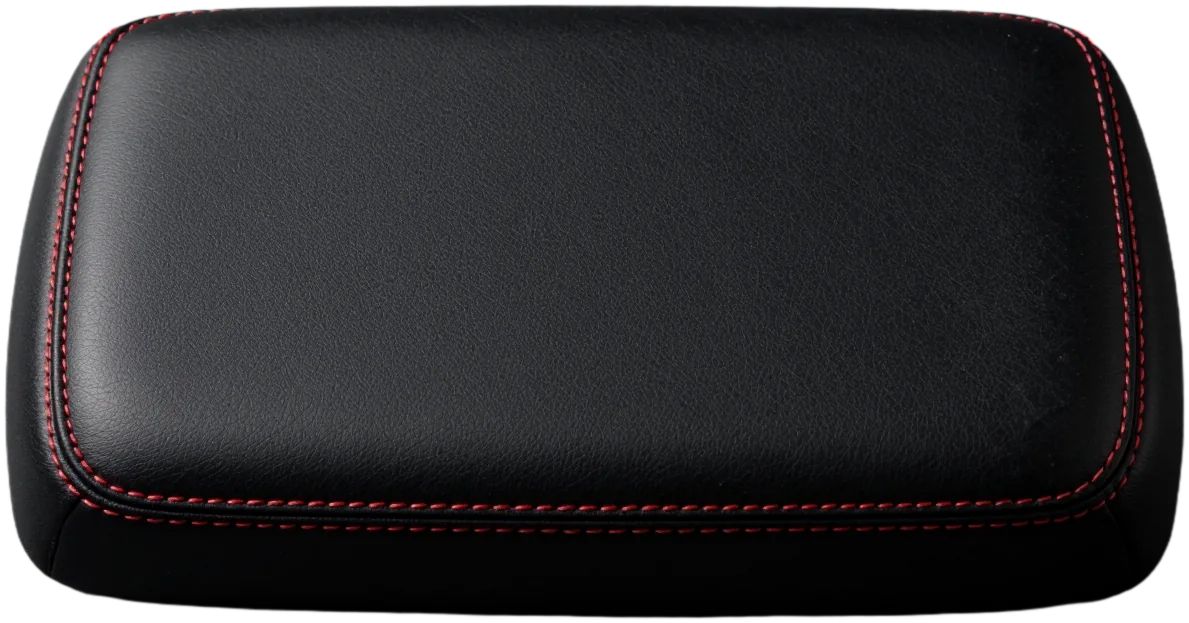
For taxi we recommend eco-leather: it withstands frequent entries, wet hands, and sun, and can be wiped clean in a minute. During a shift, the front armrest gets dozens of touches, and the dense polymer layer handles friction better than fuzzy fabrics. We make car armrest upholstery in Almaty with such use in mind: we run a double seam with 4 threads at 3 mm pitch so the threads don't stretch or break under friction, and we put three layers of foam under the upholstery — 10, 20, and 30 mm. The arm doesn't sink, and the part holds its shape for years even with daily city driving. Alcantara in a taxi gets clogged with lint faster and then is hard to clean: a brush pulls dirt from deep in the fiber, but restoring the original look is not always possible, so it is more often chosen for personal cars with careful use.
How to match material to the color of a faded interior
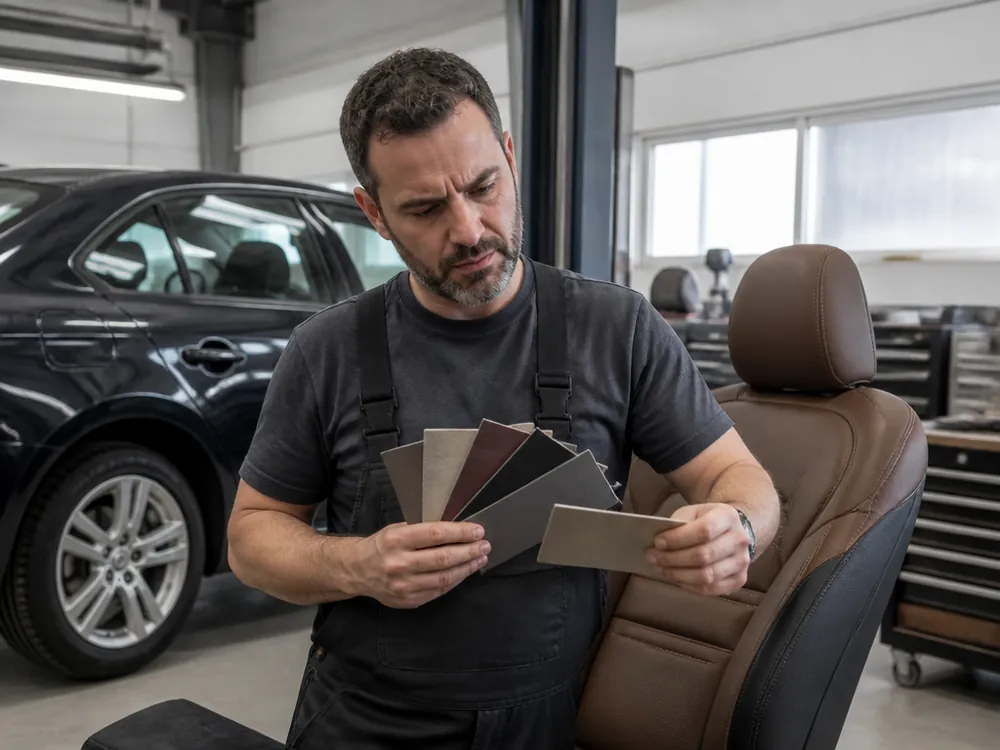
We match the upholstery to the interior color using samples, and if the interior has faded, we focus on the shade under the seat cushion where the color has been preserved. Such an area doesn't get direct sun, so it shows the original beige or gray tone. We do color matching after the client applies the sample to several parts in daylight — under an artificial lamp in the shop the tone seems half a shade darker. Another reference is the inner side of the door side insert, protected from UV: there the color stays closer to factory. New material matched to a faded interior will still look darker next to old parts — sometimes it's more honest to reupholster neighboring elements than to chase an exact match with a faded surface.
What the 12-month warranty on car armrest upholstery covers
A warranty is only useful when it's clear in advance what it covers. Let's define the boundary between the work, the material, and the part the client brought.
What the upholstery warranty includes
We give a 12-month warranty on armrest upholstery and record the term and conditions in the work order and the completion certificate when you pick up the car. The coverage applies to the work performed and the parts installed: stitching, upholstery fit, foam replacement, frame repair. Leather armrest upholstery is included in the list of works covered by this warranty. If a seam comes apart or the upholstery peels off due to our fault, we diagnose the warranty case free of charge — the technician opens the area, checks the adhesive layer and the stitching, and names the cause. A double seam with a 3 mm pitch and three layers of foam of different densities — 10, 20 and 30 mm — are designed for years of elbow friction, so in our practice an early tear always means either a material defect or a technology violation. Keep the certificate in the glovebox: when you contact us about the warranty, just give the work order number and we will pull up the service history for your car.
What is not covered by warranty
- Accident after repair: an impact or contact with a hard object deforms the frame, and the upholstery suffers as a consequence of the accident.
- Third-party intervention: an attempt to glue or stitch it yourself or at another shop voids the warranty for that case.
- Normal wear of consumables: elbow scuffs and sun fading are not a seam coming apart but normal surface wear.
- Customer's part: material you bring is guaranteed only for the quality of installation, not for the properties of the material itself.
- Borderline case: if you are unsure which category the damage falls into, show it to the technician before any independent action.
What to do if a seam comes apart
If a seam comes apart, we accept the part under warranty, perform a free diagnosis and determine the cause — stitching defect or mechanical damage. We sew the 4-thread stitching with a double seam with a 3 mm pitch, and the threads do not stretch under friction, so a tear along the seam line almost always indicates a thread defect or a tension violation during sewing. The technician removes the armrest, inspects the adhesive layer and the filler, and compares with the photo report of the work stages. As a result, we either re-sew the area under warranty or explain what caused it and offer a repair. Do not glue a seam that has come apart yourself: traces of glue make it difficult to assess the cause and may void the warranty. Book a convenient time — we accept daily from 09:00 to 20:00, by appointment without waiting.
Broken and custom armrests and car armrest upholstery
A cracked frame or sagging filler changes the order of work: first the base is restored, then the soft layer is laid, and only then the upholstery is stretched. Here is why upholstery always comes last.
Why frame first, then filler, then upholstery
We follow the sequence frame, filler, upholstery: upholstering a cracked frame is pointless because the new material will repeat the deformation. Repairing the base includes reinforcement and welding cracks — without this step, play returns and the fabric is stretched with a skew. Then comes the soft layer: foam plates are laid on the restored base, and only then does the armrest reupholstery cover the structure. Moreover, the order does not change for parts with a storage box: first we check the embedded mounts and fasteners, then the geometry, then the cushioning. In my opinion, skipping reinforcement is the main reason why the seam on some services goes wavy after just a couple of months. Welding takes part of those 48 hours that the whole cycle takes, and it cannot be postponed: redoing costs more than doing it right the first time.
How to tell it's time to replace the filler
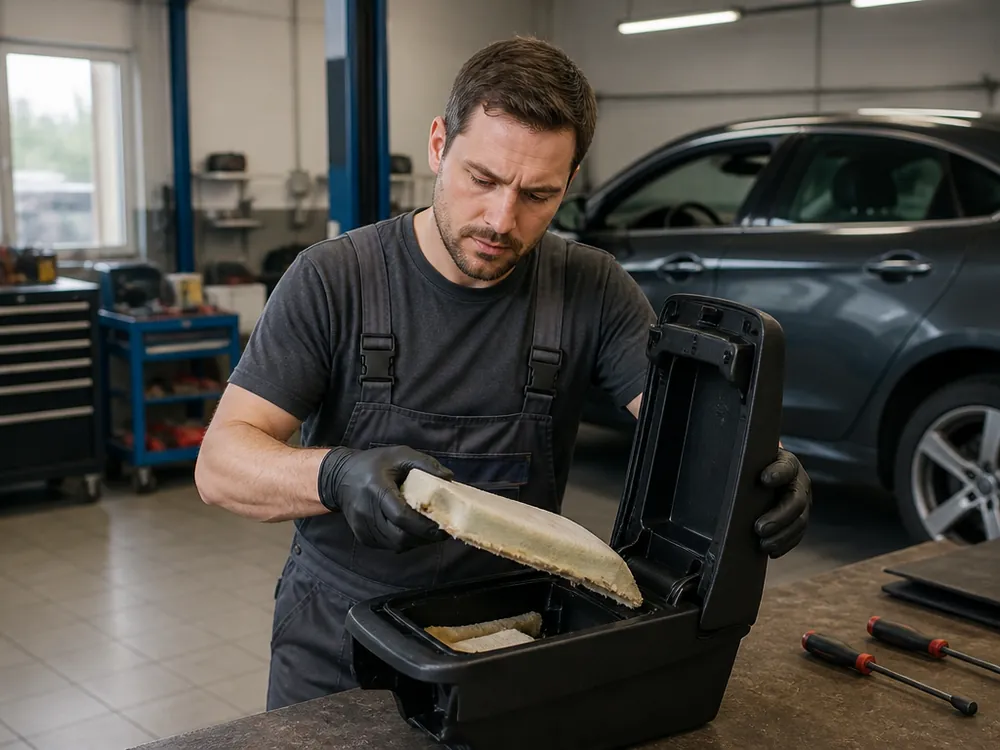
The soft layer needs replacing if your hand sinks in, the cover holds wrinkles, or the part presses on your elbow in traffic. Another sign is that after pressing, a dent remains that does not recover within a few seconds. We lay three plates of different densities — foam 10, 20 and 30 mm — so the armrest upholstery holds its shape for years and does not sag under the elbow. Replacement goes together with reupholstery: disassembling the unit twice is not cost-effective, and old foam under fresh material settles faster. In our practice, most often people ask to refresh the cushioning on high-mileage cars — by that time the top layer has lost its elasticity, even though the part looks intact. Check the soft layer before ordering material: if it has sagged, reupholstering in leather without replacement will only emphasize the unevenness.
Which armrests are considered custom
- With a storage box and buttons: wiring and connectors are hidden inside, so we disassemble carefully and label each plug.
- With power drive: we remove the lift mechanism and motor separately to avoid stripping the gears during stretching.
- With a cracked frame: cracks along the stiffening ribs require reinforcement, otherwise the unit will come apart again under load.
- With non-standard fasteners: we check the embedded mounts and brackets from previous repairs for play and restore the fit if necessary.
- Non-standard shape: parts with an elbow extension or hand recess require a separate pattern, not a ready-made template.
Upgrades and your own material for car armrest upholstery
An armrest can not only be restored but also upgraded to your liking. Here is what improvements we make, how safe the heating is, and what happens to the warranty when the customer brings their own material.
Heating, soft layer and 4-thread stitching
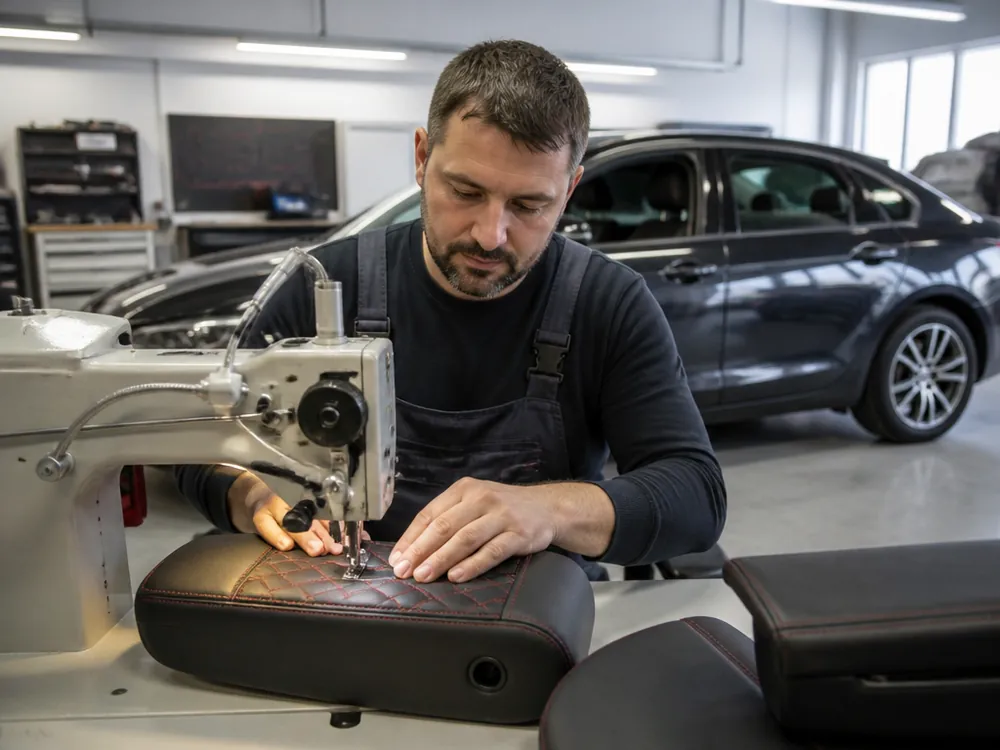
We install upholstery with heating and a soft layer, and also perform reupholstery with 4-thread stitching — a double seam with a 3 mm pitch. We build the soft layer from three layers of foam of different densities — 10, 20 and 30 mm: your hand does not sink into the hard frame, and the upholstery holds its shape for years. Installing trim to match the interior color and reupholstering the side inserts covers scuffs on the edges when the top is still intact. The 4-thread stitching is not decoration for decoration's sake: the thread does not stretch or break under friction, so the stitched seam is noticeable not only visually but also by how long it lasts on the driver's elbow after hundreds of thousands of touches.
Is armrest heating safe
Armrest heating is safe when the heating element is laid through a separate protected line, not directly to the vehicle's electrical system. We disassemble the console, check the power and connection points, select the wire gauge for the element's current, and install a fuse in the circuit — so the heated installation does not overload the factory wiring and does not interfere with other interior consumers. We place the heating element between the layers of filler so it does not contact the frame and is not pressed by the elbow. The service advisor records the connection diagram in the work order, and we take a photo report of the key stages of disassembly and installation. Before handover, we check the heating in all modes — if the button or relay works unstable, we replace them before delivering the car.
Can I bring my own material
We work with customer-supplied material, but the upholstery warranty does not cover a part brought in by the customer — only the work performed. Your own material needs extra for cutting and foam backing: an armrest takes more fabric than the part's area suggests, because some is used up on the turn-ins and seam fitting. When the thickness or stretch doesn't suit the frame, the technician will say so before work starts — thin stretched leather will go wavy, and overly dense material won't follow the radius. We cut the part, back it with padding and sew it on our own machine, and the choice stays with the customer: OEM, aftermarket or your own cut. From the technicians' experience, it's worth bringing the cut with extra for turn-ins and seam fitting — running short of fabric at a turn-in stops the job at the worst possible moment.
What affects armrest upholstery result
Here's the main things that affect the result of armrest upholstery: timelines, material choice, warranty boundaries and the order of work when the frame is damaged.
- Timeline and glue curing: 48 hours for disassembly, reupholstery and glue polymerization — one continuous cycle, curing can't be shortened or the upholstery lifts.
- Material for the conditions: for taxis and constant sun, synthetic leather is more practical; Alcantara is softer but needs regular care.
- 12-month warranty: covers the work and the parts we install, but not the customer's part or natural wear of consumables.
- Order when damaged: frame first, then padding, then upholstery — upholstering a cracked frame makes no sense.
- Upgrades as improvements: heating, a soft layer and 4-thread stitching add comfort, not just cover a defect.