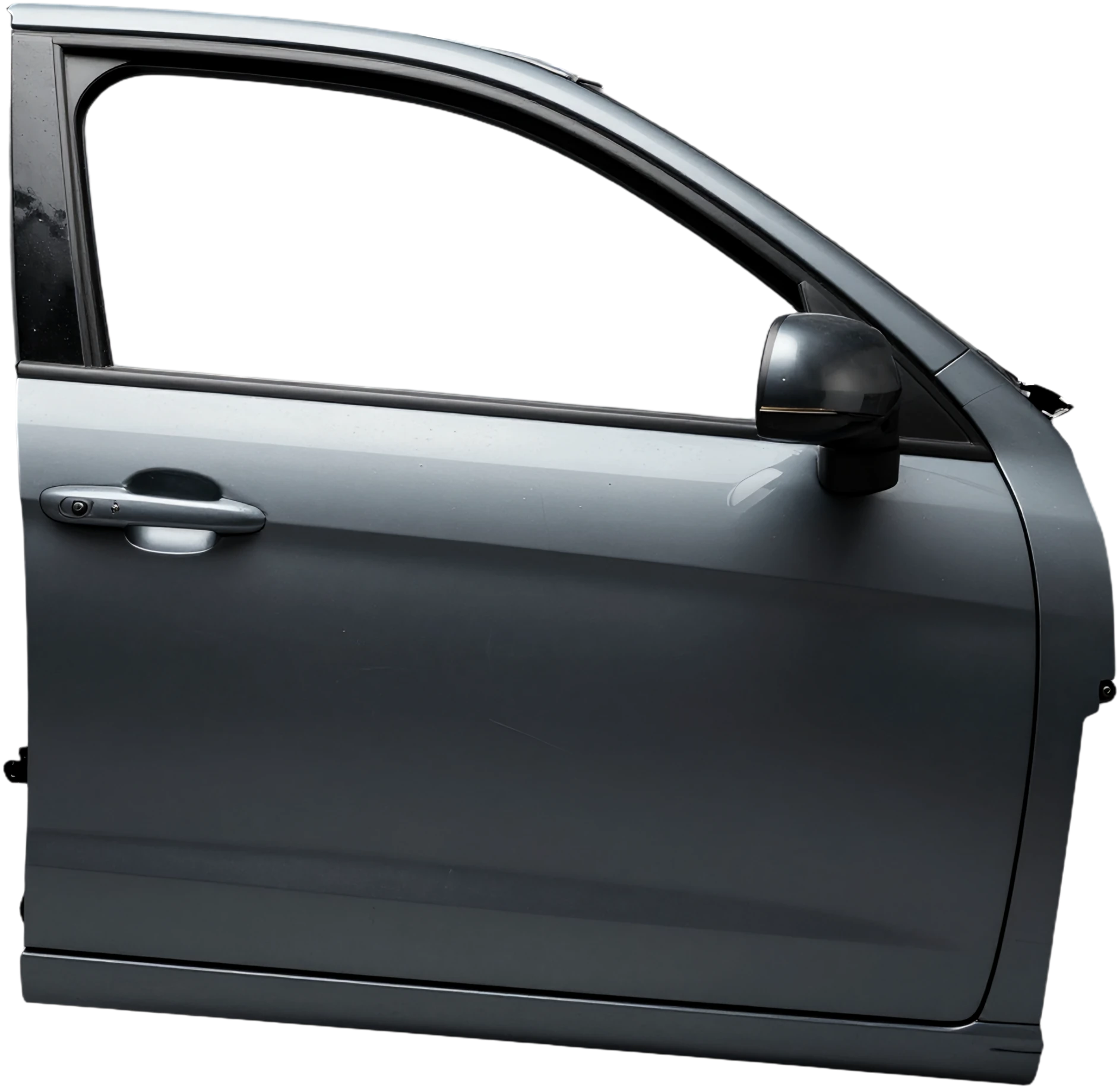
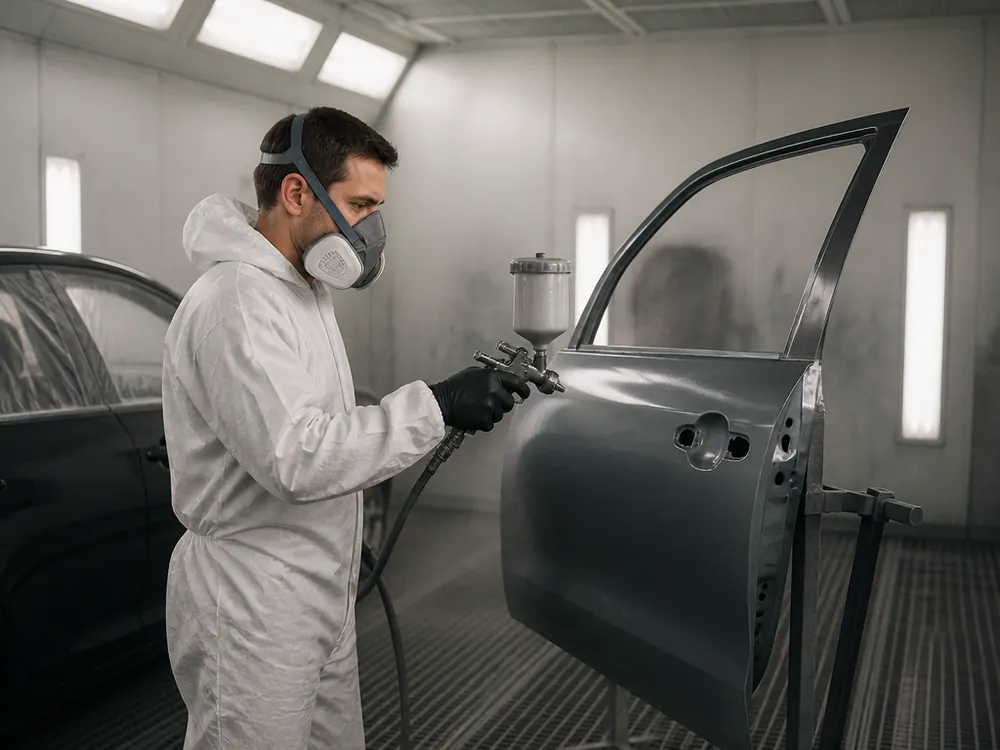
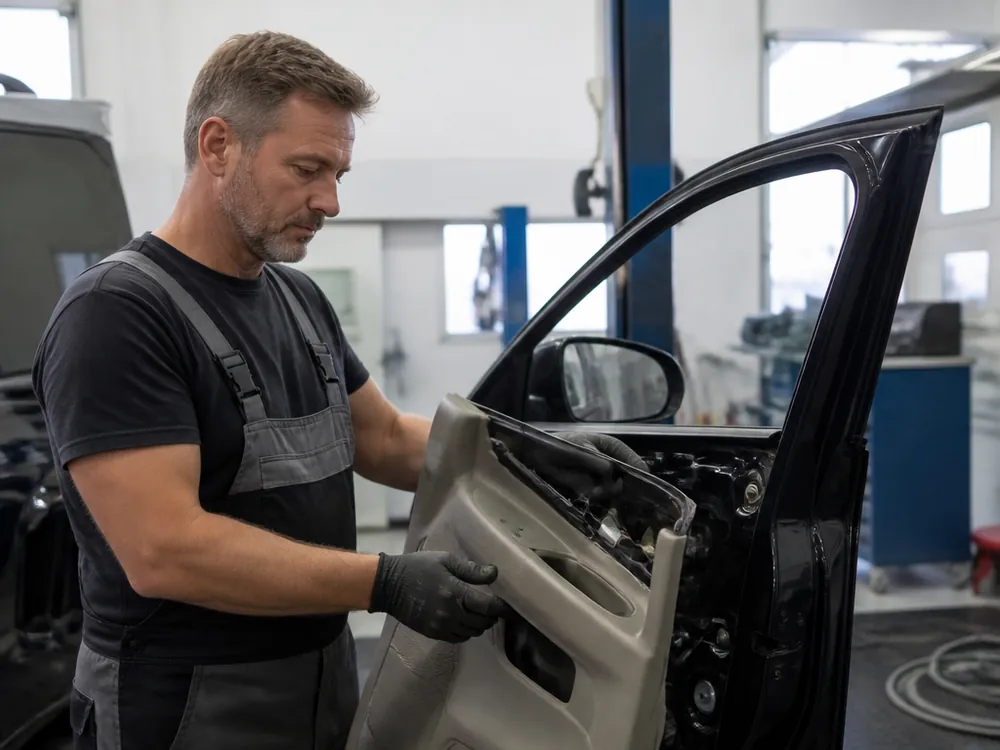
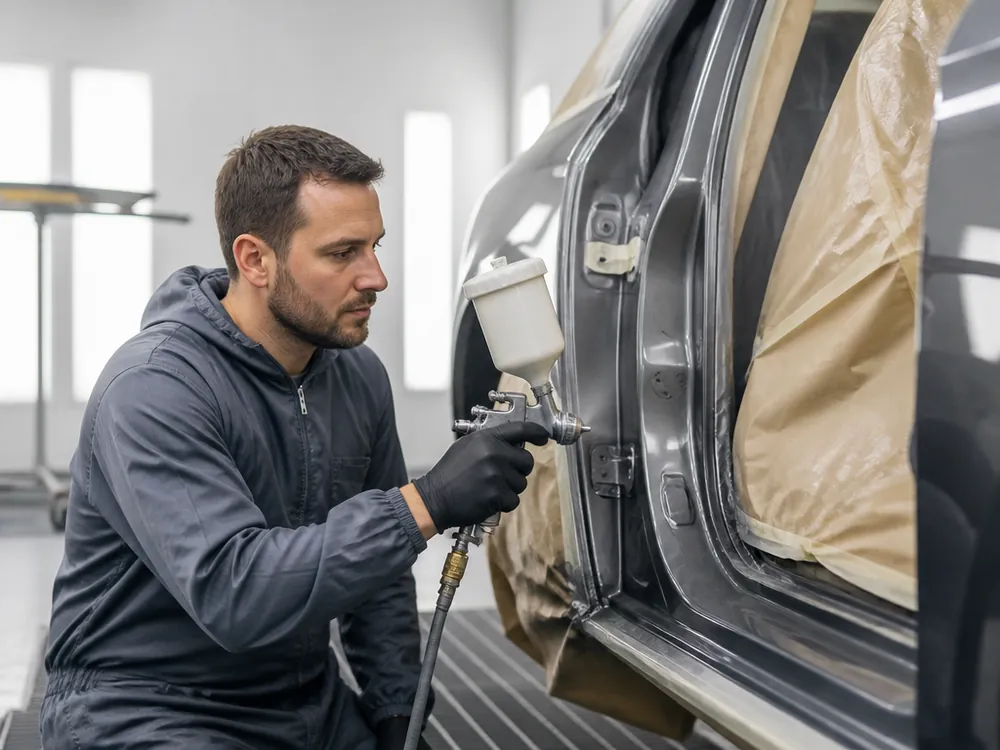
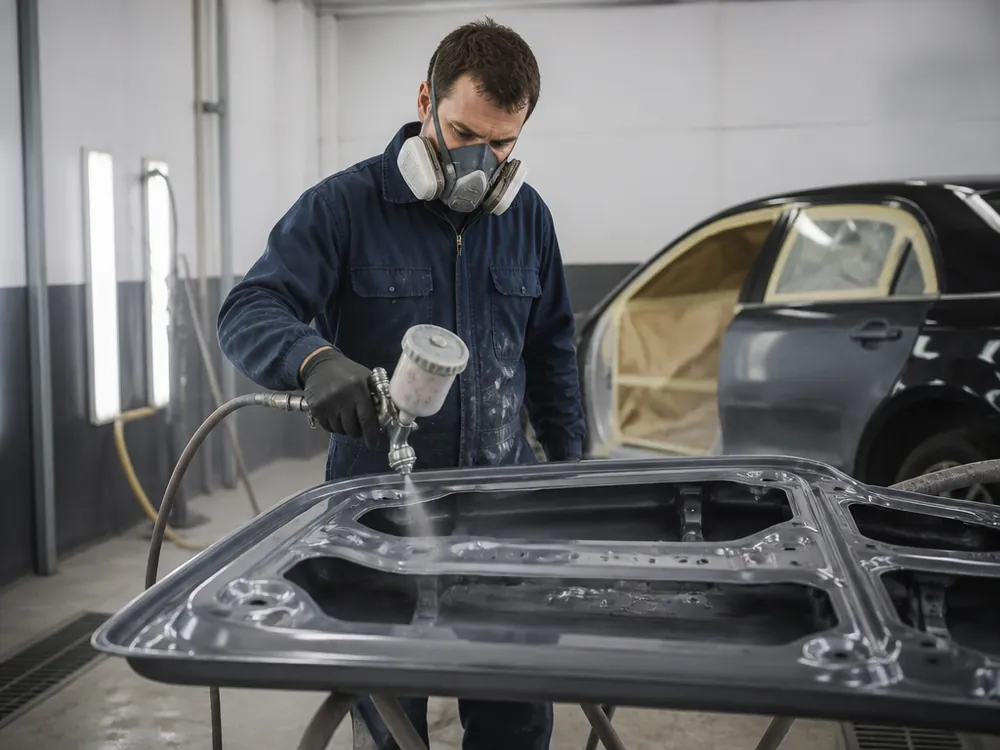
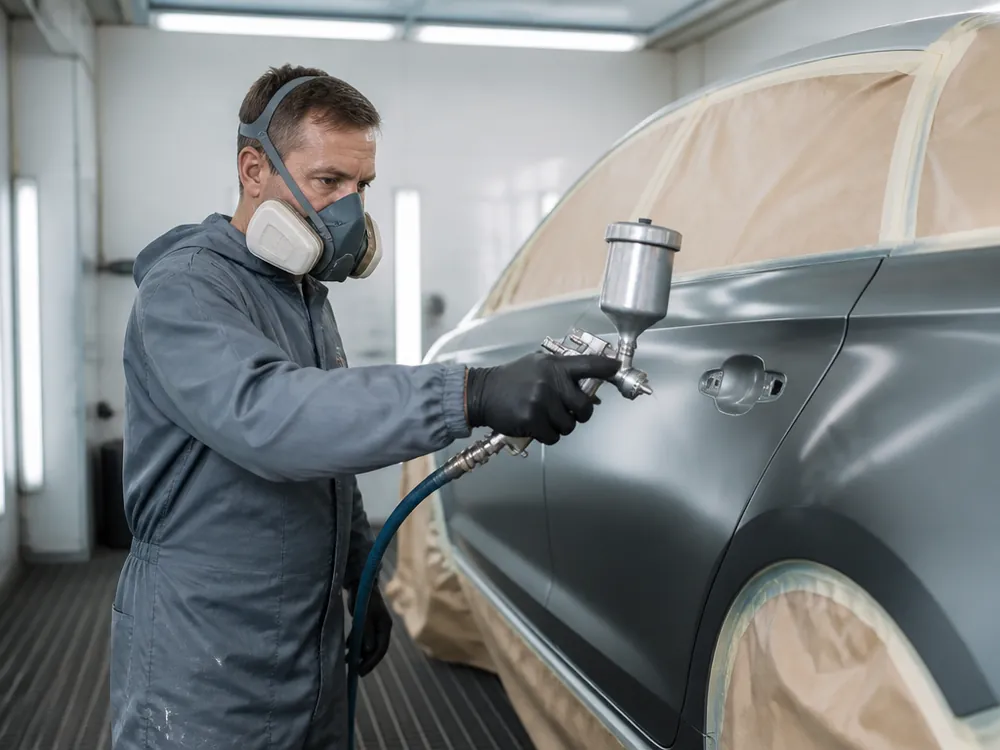
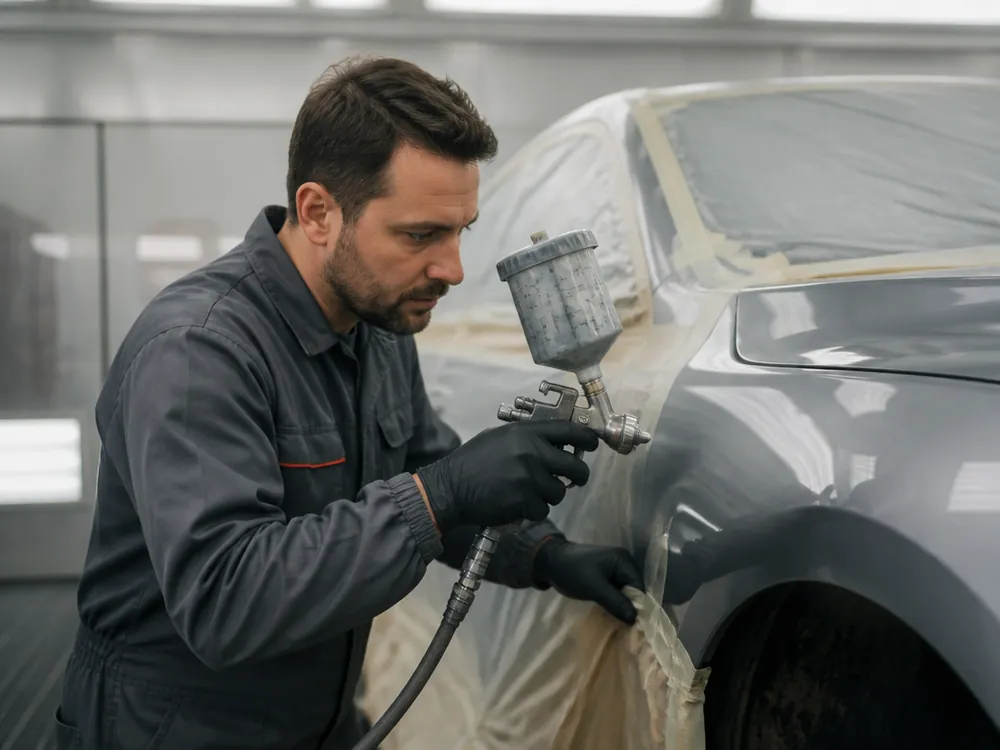
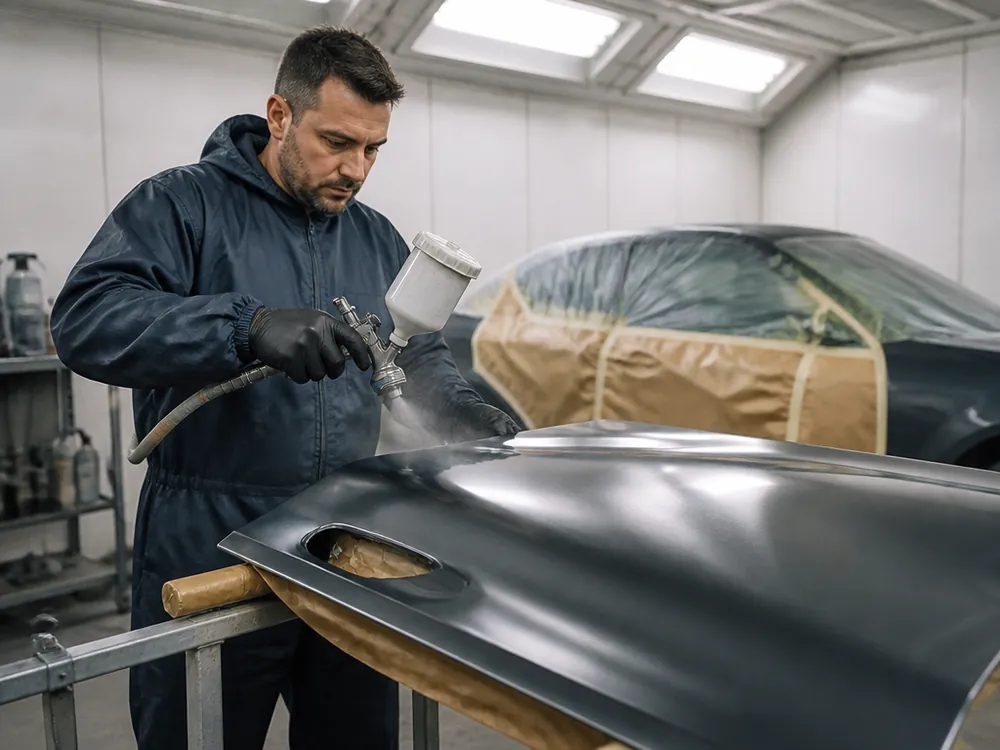
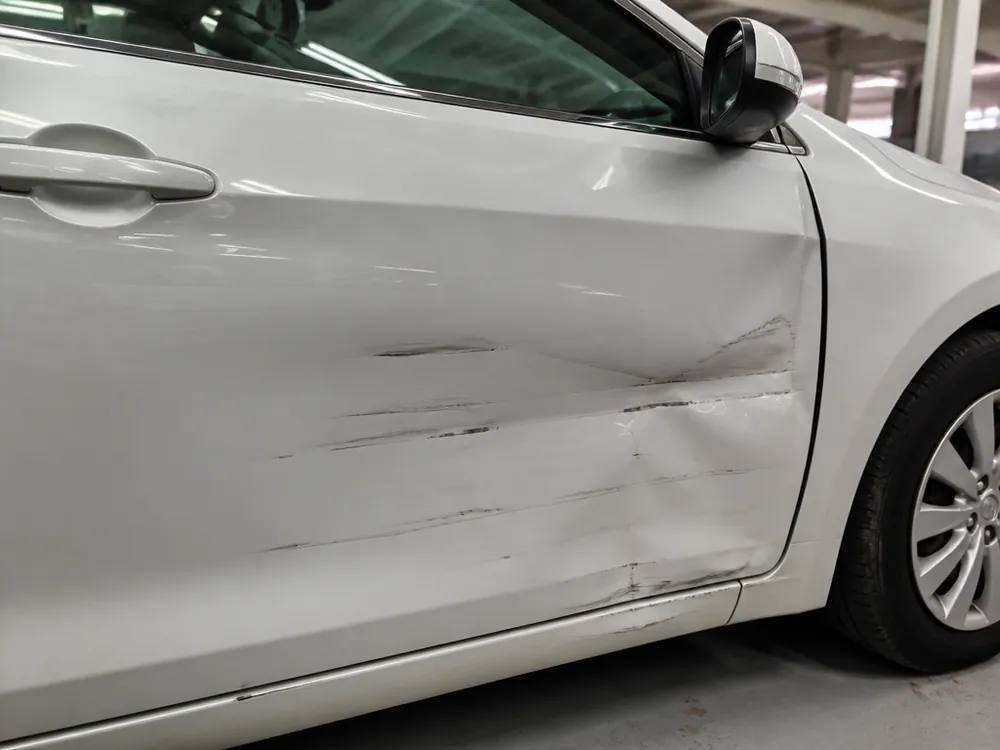
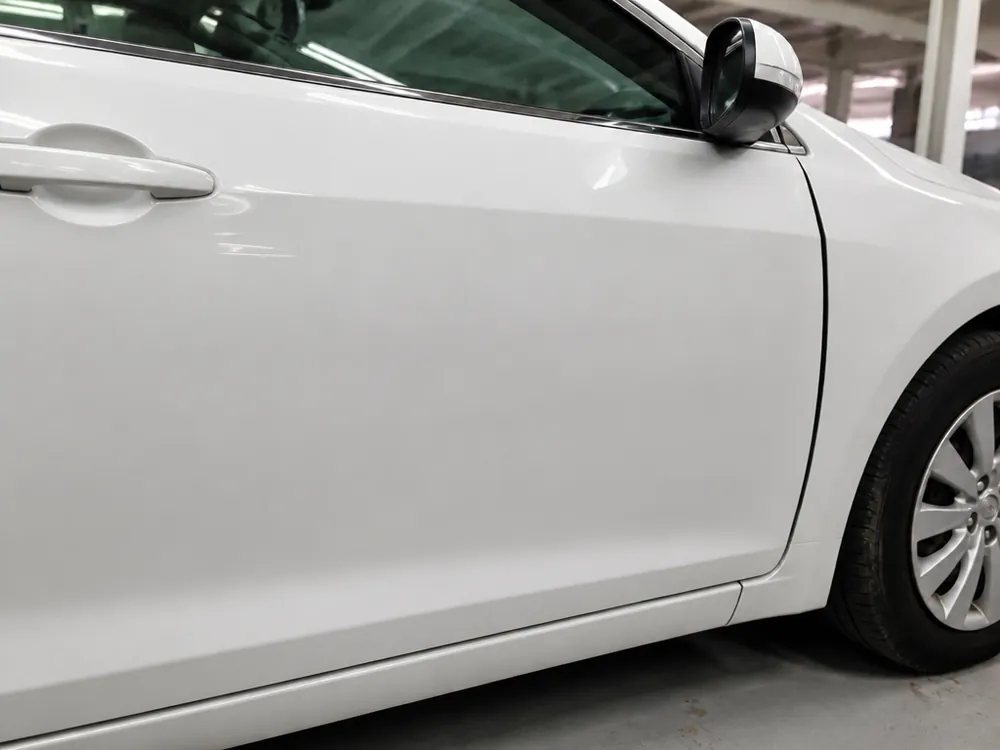
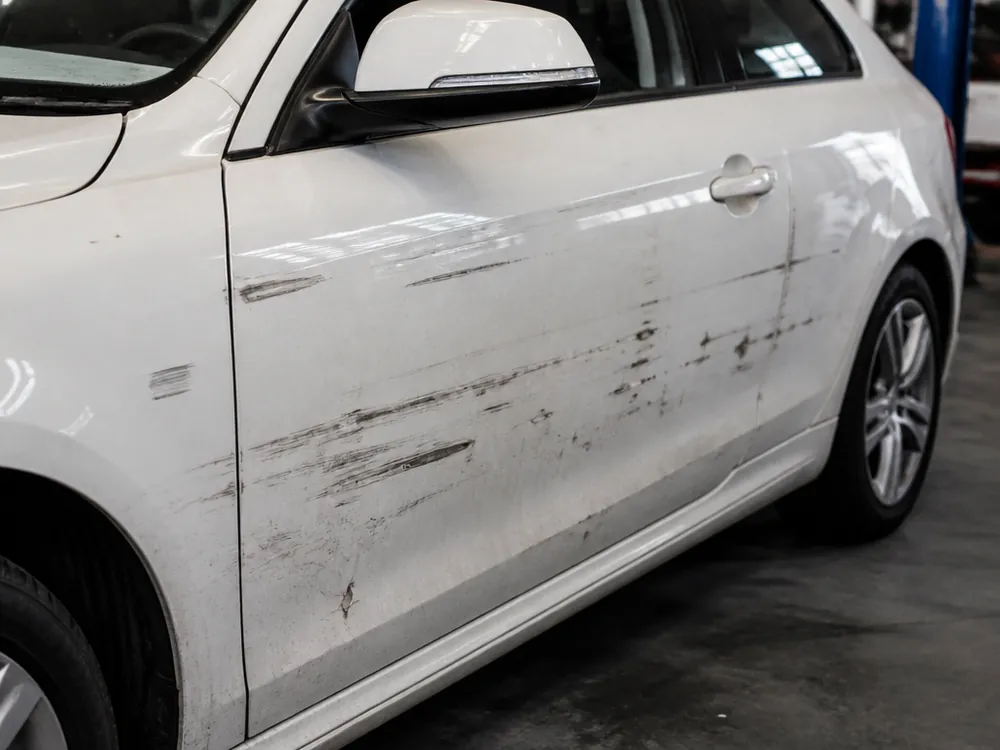
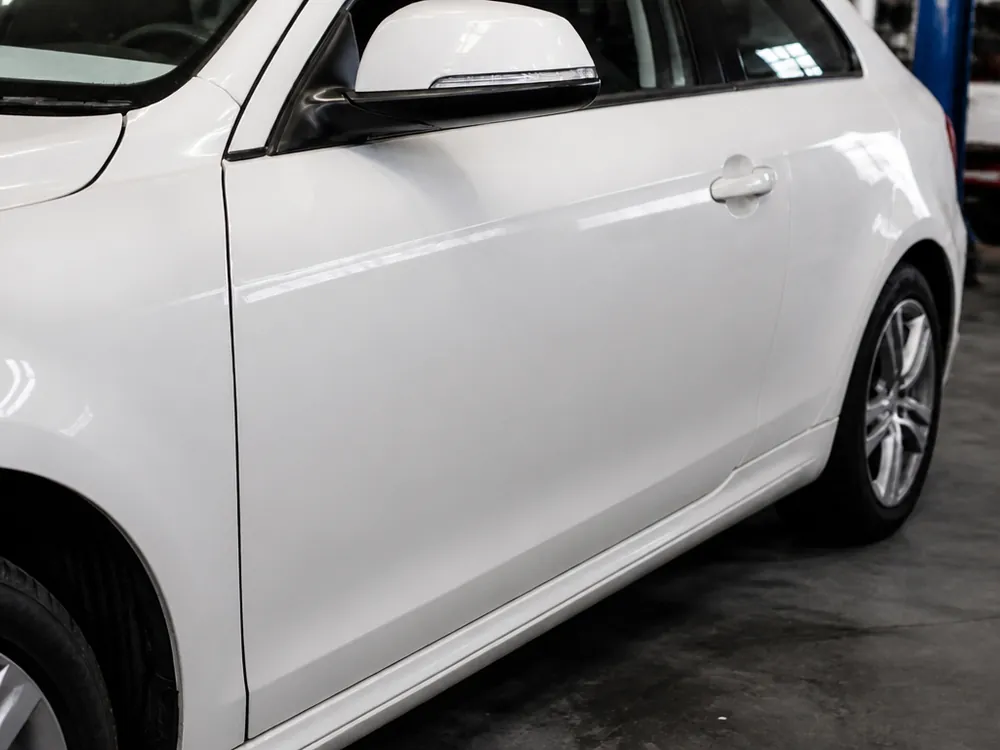
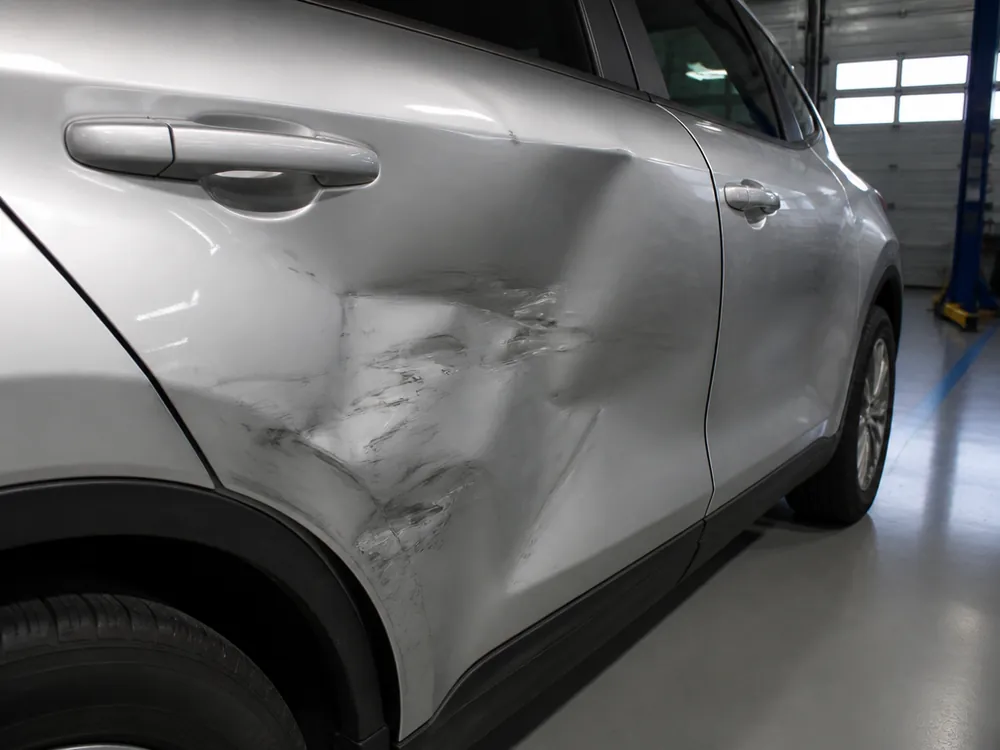
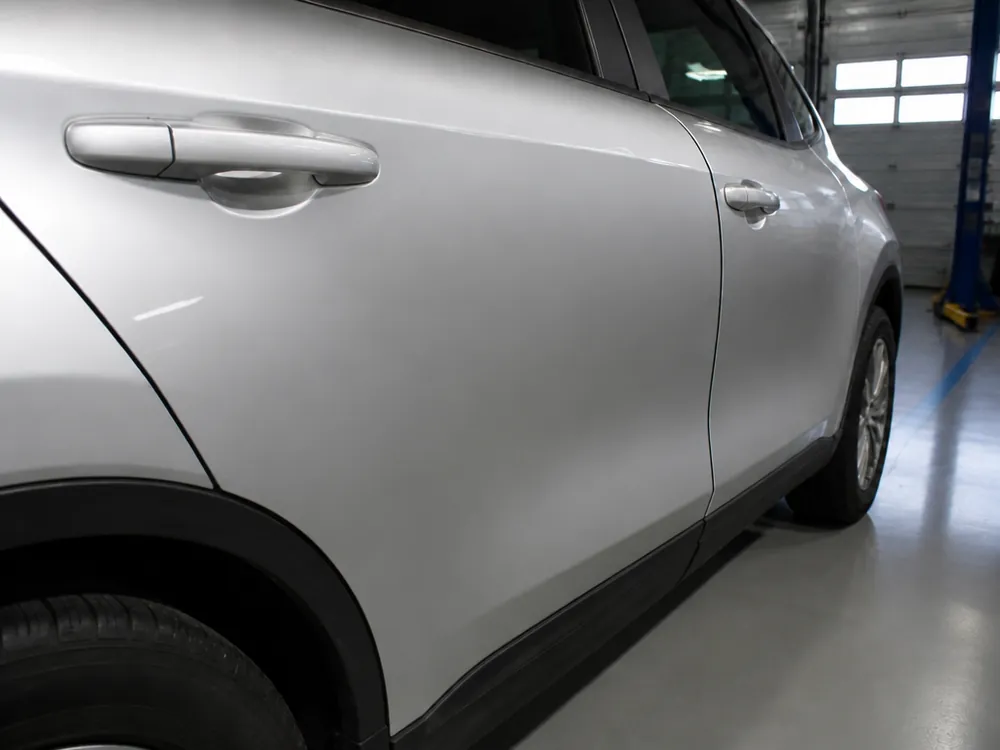
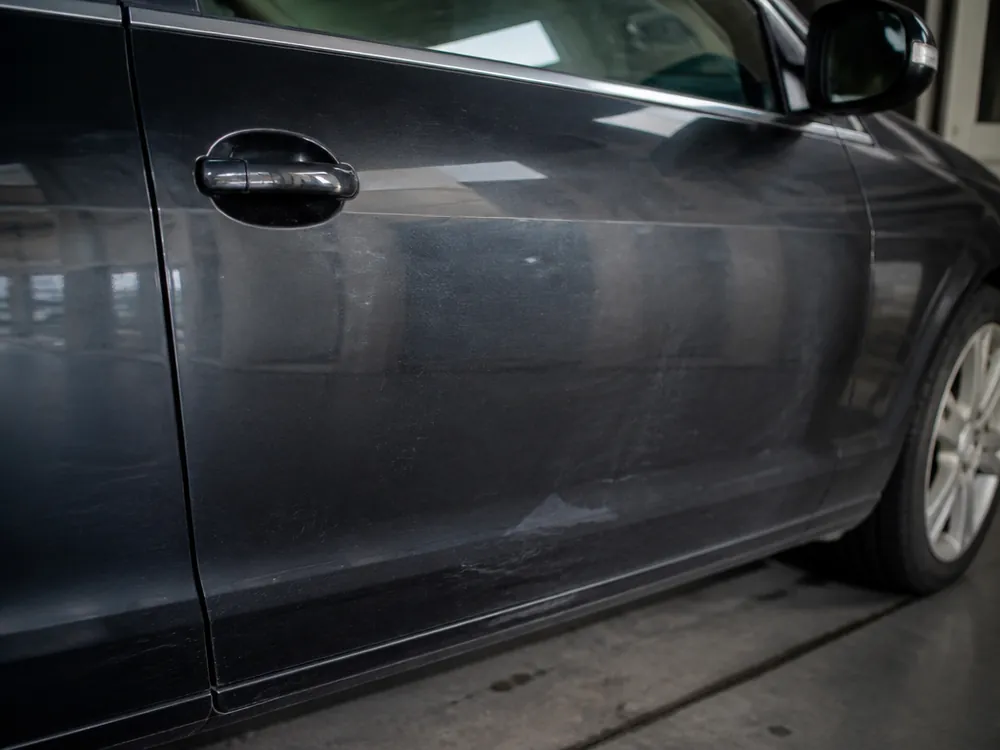
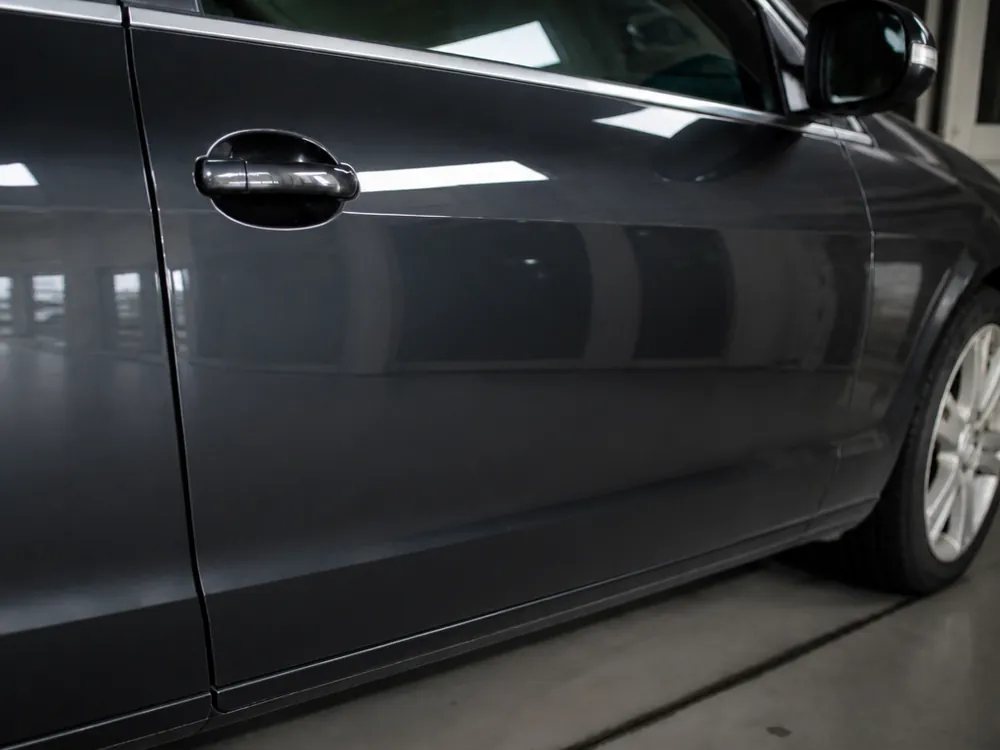
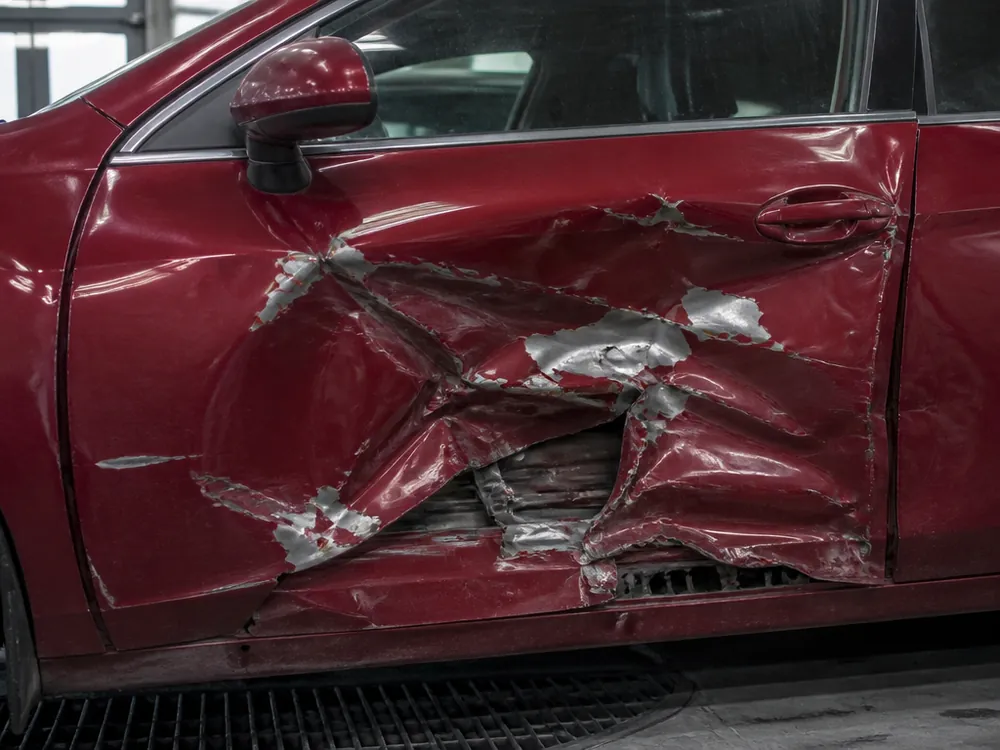
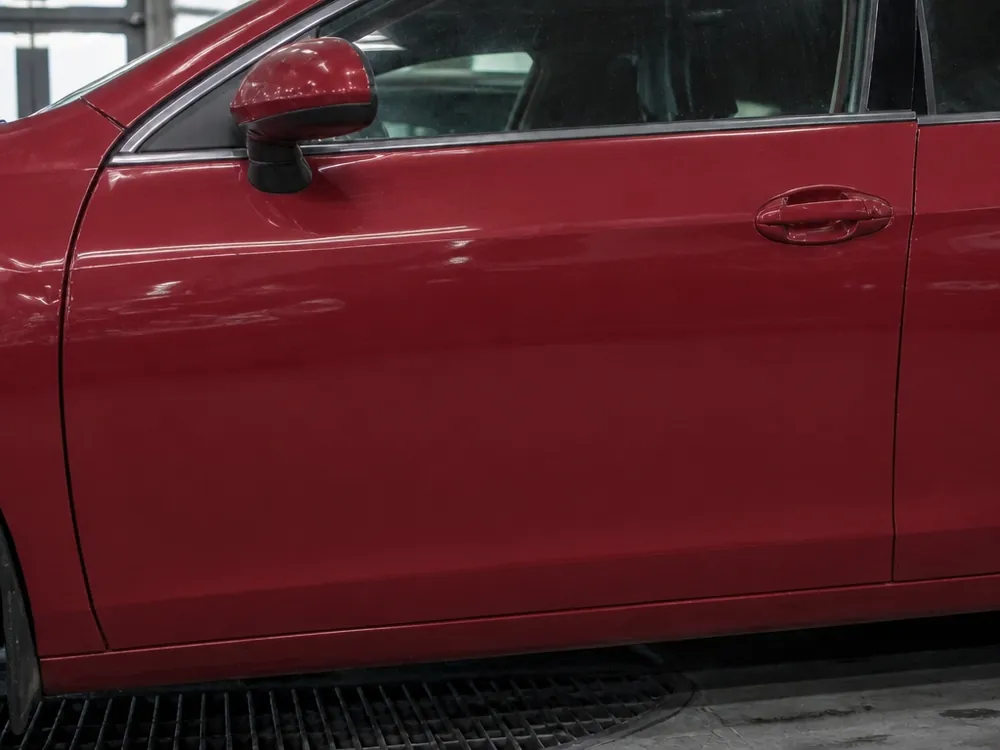
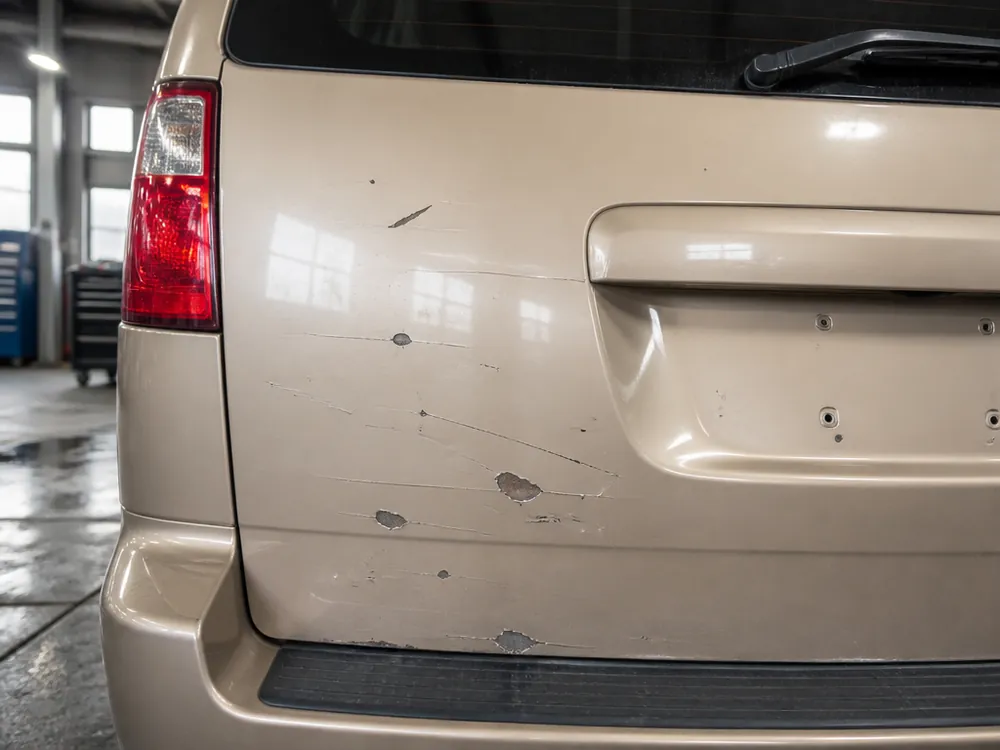
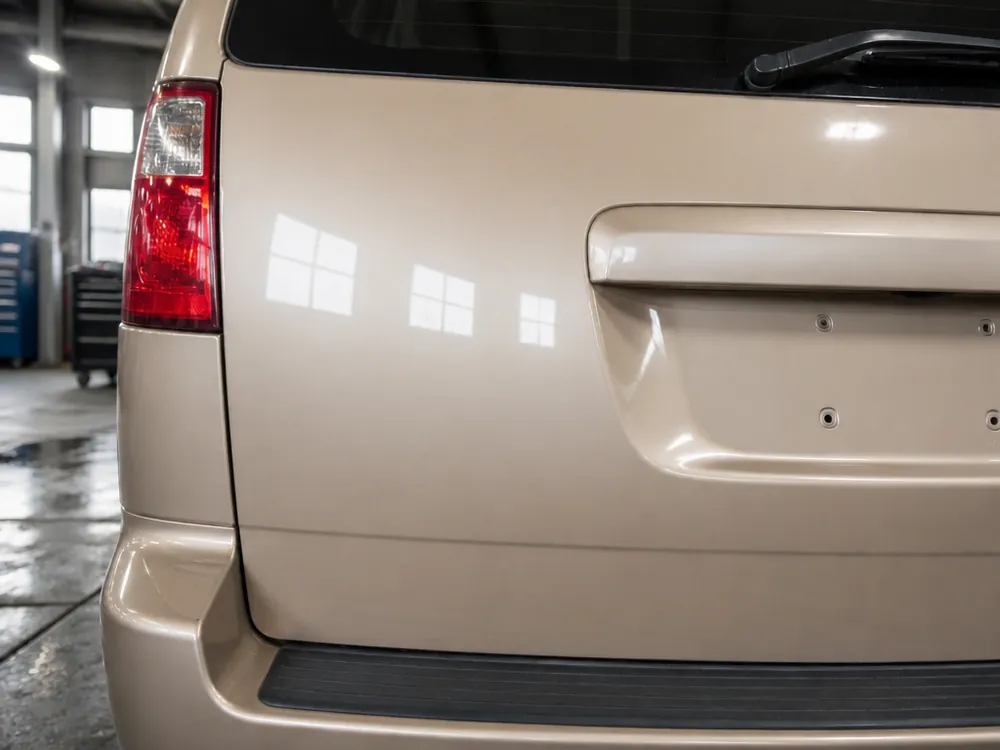
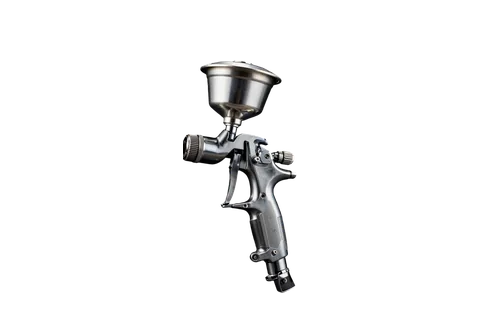
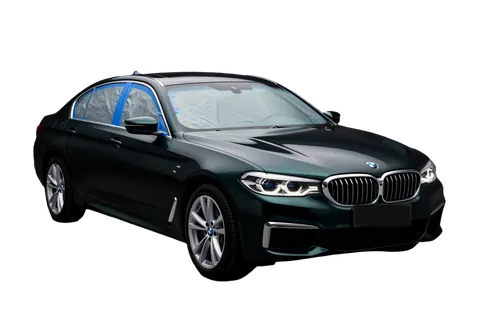
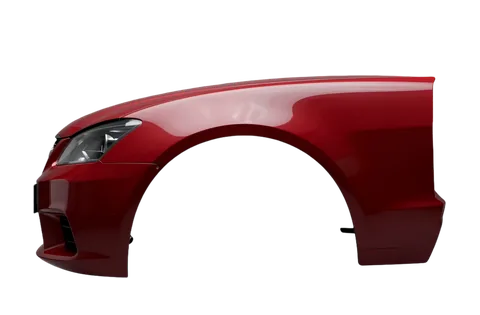
We carefully paint your car door and match the color so the boundary is invisible. We remove scratches, chips and corrosion. Price from 25,000 ₸, warranty on work of 24 months.
Door painting with blending into adjacent elements
2–3 days
24 mo
from 55 000 ₸
Dent removal with door painting
2–4 days
24 mo
from 91 000 ₸
Door painting after replacing a body element
2–3 days
24 mo
from 60 000 ₸
Urgent door painting (within 24 hours)
1 day
24 mo
from 75 000 ₸
Mobile door painting with a portable camera
half a day
24 mo
from 50 000 ₸
Door painting with additional anti-gravel coating
2–3 days
24 mo
from 60 000 ₸
Polishing fresh paint after painting (for metallic)
3–4 hours
24 mo
from 8 000 ₸
Door painting and seal replacement (extra work)
3–4 days
24 mo
from 65 000 ₸
Door top edge painting (when painting the whole door)
1–2 days
24 mo
from 30 000 ₸
Painting in a complex color (pearl/three-layer)
3–4 days
24 mo
from 85 000 ₸
The exact cost depends on the condition of the door, the type of paint, and the need for additional work. Mobile painting may have limitations due to weather conditions. Warranty periods — see the page «Warranty»
06
Why choose car door painting at CARGID
Warranty.
Every promise — backed by a number or a document: work order, photos, removed parts.
24MO
warranty on labor — the term is stated in the work order.
Color matching in 95%
24-month warranty
No drips
01
Repaint with door disassembly
We remove the handle, moldings, glass and seals instead of painting over masking tape. The door edge and ends are fully covered with clear coat, the seam does not turn white.
02
Repaint with blending
We apply a blend over the base and clear coat to the adjacent part, blurring the boundary with solvent. The shade matches across the entire surface, not as a spot at the seam.
03
Drying at 60°C
We dry the door in the booth at 60°C, not in the sun. After a day, you can wash and drive, the coating does not shrink or become sticky.
04
24-month warranty
We are responsible for adhesion and color for two years: swelling, peeling and color mismatch caused by us are repainted at our expense.
07
Body repair in Almaty in 6 steps
Steps.
We explain how a turnkey door body repair goes — from request to vehicle delivery.
01
Inspection and estimate
You submit a request on the website or by phone, we clarify the details and book you for a convenient time. The service advisor inspects the door damage, determines the scope of work and the exact painting cost.
request on WhatsApp
02
Price approval
We fix the estimate, agree on the timeline and sign a contract for the work.
inspection and diagnostics
03
Surface preparation
We degrease the door, sand off the old paint and prime the damaged area.
estimate before work starts
04
Color matching and paint application
The colorist matches the color by VIN, we apply the paint in several layers in the booth.
work to factory procedure
05
Polishing and drying
After painting, we polish for gloss and dry in the booth for durability.
result check
06
Vehicle delivery
We check color evenness, absence of runs and defects under different lighting conditions. We hand over the car with a work warranty, show the result and give care recommendations.
Car door painting at CARGID in Almaty means taking the door apart, having a colorist match the paint by VIN code, blending into the neighboring panel when needed, and curing in a paint booth at 60 °C. You can wash and drive the car the next day. We give a 24-month warranty on the paint job and write it into the work order.
When car door painting is needed and when polishing is enough
The scope of work on a door depends on the depth of the damage. Some defects live only in the clear coat, others have already exposed the primer or metal, and you can tell them apart even before visiting the shop—you just need good light.
Which defects polishing removes without painting
Polishing removes a thin layer of clear coat and only eliminates what hasn't gone deeper: wash-induced spider webs, dull marks from branches, scuffs from clothing near the handle. You can easily check the depth of a scratch with your fingernail—if it doesn't catch and the line disappears on a wet surface, the defect is in the clear coat. A white or gray line indicates exposed primer, while metal shine or reddish residue indicates exposed metal, and then the car door will need to be painted partially or completely. Resin and bird droppings stains sometimes also come off with polishing if the clear coat isn't eaten through. A separate risk is repeated polishing of the same spot: on edges and ribs the clear coat is thin and can easily be rubbed through to the base. Chips on the lower edge of the door cannot be fixed by polishing at all: moisture gets under them, and corrosion spreads unnoticed under the paint until a bubble forms.
Door damage and what we do about it
The depth of the defect determines the scope of work
What you see on the door
Depth of damage
What we do
Spider webs and dull marks
Clear coat only
Polish without painting
Scratch catches a fingernail, white line
Clear coat and base coat down to primer
Primer, base coat, and clear coat on the panel
Scratch with metal shine
All layers down to metal
Sanding, primer, panel painting
Dent without paint cracks
Metal, coating intact
Dent repair, painting based on inspection
Dent with paint cracks
Metal and all layers
Dent repair, body filler, full painting
Bubbles and reddish streaks at the bottom
Corrosion under the coating
Sanding to metal, primer, painting
Color mismatch after previous repair
Previous repaint
Repainting with blending into the adjacent panel
Why a car door differs in color after painting
Color mismatch is the main fear when painting a single panel. It appears even with a correctly matched paint code, and it's useful to understand the reasons in advance, before discussing the estimate.
Where color mismatch comes from even with the correct paint code
The paint code on the factory plate sets the formula but not the exact shade of a specific car. Batches of the same code at the factory differ from each other, and the body coating fades over years in the sun—a fresh door next to such a fender looks foreign. Metallics are more complex: aluminum particles in the base coat lay differently depending on pressure, distance, and the number of passes of the spray gun, so the same mixture looks lighter or darker at an angle. Pearlescent adds a layer with an effect, and its density also changes the color. Why are silver and white pearlescent cars considered the most finicky? On them, the slightest difference in particle lay is immediately noticeable. Hence the rule: a request to paint strictly by code without comparing with adjacent panels almost always results in a difference on metallics.
How a colorist matches the door color
Car door painting in Almaty at CARGID starts with the color specialist: he matches the color by VIN code, not by eye. Using the VIN, the color specialist finds the car's factory color and builds a formula from it, then adjusts it to the actual body — faded clear coat and batch variations require correction. We start work only after a written estimate and the client's approval, so we discuss whether a blend is needed before painting, not after. We take photo reports at key stages, showing the prep and every layer. A tip from our practice: judge the result not under shop lights but in daylight and at a sharp angle — metallics and pearls show the difference exactly that way.
When a blend onto the adjacent panel is needed
Metallics and pearls: on such finishes, if needed, we blend the base and clear onto the fender or the second door so the shade matches.
Faded body: if the adjacent panels have faded, a fresh panel without a blend will stand out as a patch, while blending the base onto the fender evens out the boundary.
Solid enamel without effects: on a simple color, a blend is needed less often; we decide after color matching and comparing with the body.
Blend boundary: we fade the base inside the adjacent panel and apply clear over the whole panel, so the color seam is invisible.
What to decide in advance: a blend increases the scope of work, so we settle the question at the estimate stage, not after painting.
Door disassembly or masking with tape before painting
Door preparation affects the result no less than the paint itself. Removable parts can be taken off or taped over, and the difference between these approaches shows up not on delivery day but after a few seasons.
What we remove from the door before painting
Handle: we remove it so the base and clear lay evenly underneath, without a step along the contour and an unpainted patch of the old color.
Moldings and trims: we take them off; otherwise a clear coat boundary remains around them, which darkens and collects dirt over time.
Glass: we remove it to paint the upper edge of the door and avoid overspray on the glass, its seal, and guides.
Seals: we remove them completely, so the ends and edges of the door are fully covered with clear, and the rubber stays clean.
Bottom line for the owner: at CARGID we paint the door with disassembly, not by taping it off, and at pickup you just need to open it slightly and look at the ends.
What taping off a door for painting leads to
Masking tape saves time on disassembly but leaves a line on the door where the clear coat breaks. On that line the layer is thinner, the edge forms a step, and that's where peeling starts over time: pressure washing and temperature swings lift the edge. Clear that seeped under the tape edge tears off with it and leaves a jagged edge that then has to be sanded by hand. Under the seals and handle, the old coating of a different shade remains, noticeable every time you open the door. Overspray on the seal rubber looks like a gray film, and the molding, around which the clear was applied, reveals an unpainted strip after removal. It's easy to check if the door was previously painted with tape: lift the edge of the seal or look under the handle — the color boundary and the clear coat step will give away the previous work. Such a panel is repainted with full disassembly, otherwise the defect will repeat on the new layer.
Layers and drying when painting a car door
The door coating consists of several layers with different jobs. How they were applied and dried determines when you can wash the car and how long the color lasts.
What the door coating consists of
The role of each layer and typical defects
Layer
Why it's needed
What a mistake leads to
How to notice
Body filler
Levels the metal after straightening
A thick layer sinks and cracks
Waves and the outline of the patch under the clear
Primer
Adhesion and isolation of the metal
Peeling, sanding scratches show through
Thin stripes in the light at an angle
Base
Color and metallic effect
Patches, stripes, off-shade
Cloudiness on metallics
Clear
Gloss and protection of the base
Orange peel, runs, clouding
Uneven reflection of lamps
Polishing
Removes dust nibs and fine orange peel
Dust particles remain in the clear
Dots on your palm if you run your hand over it
Booth drying and the first day after painting
Drying determines whether the clear will be hard or stay soft. Two-component primer and clear cure through a chemical reaction with the hardener, and heat speeds it up, so our car door painting finishes with drying in the paint booth at 60 °C, not outdoors. The booth keeps dust off the fresh layer, and even temperature keeps it from settling and staying sticky. Outdoors, dust and insects get into the clear, and the day-night temperature swing dries the layer unevenly. After booth drying you can wash the car and drive the next day. Polishing is done on cured clear: on soft clear the pad picks up dust and leaves marks. For the first while, we advise not scrubbing the panel with a hard brush and not aiming the pressure washer at the seam with the neighboring panel — the edge of fresh clear is the most vulnerable spot there.
Warranty and pickup after car door painting
The last stage is handing over the car. Here it's important to inspect the door with your own eyes, without rushing, and to understand which defects the warranty covers and which remain the owner's responsibility.
What the painting warranty covers
Term: we give a 24-month warranty on painting; the term and conditions are recorded in the work order and the completion certificate on the day of delivery.
What we fix: blistering, peeling, and off-shade caused by our fault are repainted at our expense after the door is inspected by a technician.
Diagnostics: inspection for a warranty case is free, so it's better to show a bubble or spot on the clear right away rather than wait.
What's not covered: damage after an accident that occurred after the repair and third-party interference are not covered by the warranty.
Tip: keep the work order and certificate with your car documents so the terms are at hand in case of a warranty claim.
How to inspect a painted door on delivery day
Before handover, the car goes through a test drive, and the service advisor who handled the work order answers questions about the stages and the photo report. It's best to inspect the door in daylight: stand at a sharp angle to the panel and look along it — that's how you spot orange peel, runs, dust in the clear coat and the blend line. Then compare the color with the fender and the neighboring door, first from a couple of steps away, then up close. Open the door: the ends and edges should be painted, the seals should sit evenly, and the handle and moldings should be straight with no misalignment. Check how the window moves, since it was removed during disassembly, and how the lock closes. A single dust particle in the clear coat is usually removed with a spot polish rather than a repaint, so it's worth asking about it right away. It's easier to sort out any issues on the spot together with us, so don't rush to sign the acceptance form until you've walked around the car.
Car door painting checklist
Painting a single panel works out when the scope of work, color, prep and drying are planned in advance. Below is a short checklist of what to check before the work starts and after it's done.
Depth of damage: a scratch your fingernail doesn't catch often polishes out, while a white line or exposed metal calls for painting.
Color: matching by VIN and checking against neighboring panels matters more than the code on the plate, and for metallic and pearl colors the blend is discussed in advance.
Prep: removing the handle, moldings, window and seals protects against a clear coat step, overspray on the rubber and unpainted ends.
Drying: booth drying gives a hard clear coat, and it's worth asking the technician about washing and care rules for the first weeks on pickup day.
Acceptance: inspecting in daylight at an angle and a warranty written into the documents cover most of the painting risks.
10
Frequently asked questions about car door painting in Almaty
Questions.
Price, timeframes, warranty, payment — 10 questions asked most often.
10
Didn't find an answer?
Message us on WhatsApp — a service advisor will reply within 5 minutes.
The cost of painting one door at CARGID depends on the condition of the surface, the size of the door and the type of paint coating. On average, the price starts from 35,000 tenge for basic painting without complex defects. If there are dents or damage requiring straightening and puttying, the price can increase to 91,000 tenge. The exact amount can be named after inspection by a painter — the estimate is free. The price includes materials, labor, preparation and a chamber with the correct temperature regime.
On average, painting one door takes from 2 to 4 working days. If only local painting is required without serious damage, the term can be 1–2 days. If there are dents, corrosion or complex transitions, the time increases to 4–5 days due to the need for multi-layer application and complete drying. We always agree on exact deadlines after diagnostics.
Yes, we provide a 24-month warranty on the paint coating. It is valid provided that you do not violate the operating rules (do not wash with aggressive agents, do not scratch mechanically, do not get into accidents). During the warranty period, we free of charge eliminate any defects that arose through our fault: bubbles, peeling, flaking, clouding. We back the warranty with a contract and receipt.
Appointment is desirable: for door painting, color matching and preparation take time, so the car is accepted at an agreed time. If the door is removed from the car, the term is usually from one to three days depending on the volume of preparation and drying. The exact date of acceptance and issue is named by the master after inspecting the door and determining the color.
Yes, you can bring your own materials, but we are not responsible for their quality and the result. In that case, the warranty on the paint coating is void. We recommend using proven materials that we purchase from distributors (Sikkens, Standox, Mobis). This guarantees color match and durability of the coating. If you still insist, we will perform the work with your materials, but we will warn you about possible risks.
If during the warranty period you find defects such as drips, orange peel, color difference or peeling of the coating, just come to us. After inspection, if the defect is confirmed and not caused by external factors, we will repaint the door free of charge. If the problem arose immediately after issue, we recommend not to delay and contact us within the first 3–5 days — it is easier to establish the causes. We consider all claims by written or oral request.
Local painting — we apply paint only to the damaged area of the door with color matching. This is a fast and budget option (from 15,000 tenge), but on close inspection a slight boundary is possible. Full door painting — the entire part is painted completely, which gives an ideal color without transitions, but it is more expensive (from 35,000). The blending option — paint is applied to the door and extends to adjacent elements (fender, pillar) to hide the transition. Suitable for metallics and complex shades. The price is calculated individually. We always recommend the optimal option for your car.
After painting, the door must not be washed for 7–10 days — this is the time for the varnish to fully dry. Use only hand washing with a soft sponge and neutral shampoo, without brushes. High-pressure car wash can be used no earlier than after 2 weeks. Polishing is not recommended in the first month. Avoid bitumen and wax products, as they can react. After a month, you can cover the door with a protective polish. We provide a memo upon issue.
Payment is accepted in cash and by transfer, card payment is possible at the service. The cost of door painting depends on the area of damage, the need for dent repair and puttying, the complexity of color matching and the type of paint. The final amount is agreed before the start of work, after inspecting the door and determining the scope of preparation.
No, you don't need to bring anything. We remove the door if necessary and perform all work at the service. The only condition is that the car must be clean (preferably not freshly washed, so there is no bitumen). If there are any defects, it is better to warn in advance. Also take with you the car documents and a power of attorney if the car is not yours. We take photos of damage before and after for reporting.
11
What clients say about our car door painting
Reviews.
We collect ratings on the website and on maps — we hide nothing.
4.8
872 reviews on the website 1 900+ ratings in total
Alexey
Toyota Camry
I got into a minor accident in my Toyota Camry, damaged the right front door. Came to CARGID on a friend's advice, they quickly assessed and scheduled me. Painted in 4 days, the color matched perfectly, you can't even tell there was a repair. The price was pleasing — 450,000 tenge, other places asked for more. Thanks, I'll be back!
Dmitry
I searched for a long time for a place to paint the door on my BMW 3 Series with quality, chose based on reviews. I was satisfied! The door was all scratched and chipped, the masters cleaned everything, treated and painted. The color is indistinguishable from the factory. Returned in 3 days, the total was 280,000 tenge. Excellent service, I recommend!
Saltanat
Sportage
They hit the rear door in a parking lot, a dent and scratches remained on the Kia Sportage. I brought it to the service, the master estimated the repair at 190,000 tenge, said it would take 2 days. They did it even a bit earlier! The door was straightened, painted, the color is spot on. Very neat. Thanks for the good work!
Ivan
On the Mercedes E-Class there were circular scratches on the door after a careless car wash. I signed up for painting, but the master advised polishing and local repair. They did it in one day, the door became like a mirror! I paid 120,000 tenge. Very pleased that they didn't force me to paint the whole door.
Anara
My Volkswagen Passat got a side impact, the door had to be replaced. At CARGID they found a door, painted and installed it in 4 days. Everything is clear, the color matched, the window regulator works. The total was 320,000 tenge, which turned out to be more profitable than other places. I recommend, professionals work there!
Artur
On the Lexus RX the rear door was all scratched and had rust spots. At the service they removed the corrosion, treated with anti-corrosion and painted. In 3 days the car is ready! Price 210,000 tenge, the color is perfect. Special thanks for the care recommendations. Now the door is like new!
Aigul
They painted the door on my Toyota Corolla. There were chips and scratches, I chose this service by price and timeframe. The result exceeded expectations — no visible boundaries. Returned in 2 days, the total was 150,000 tenge. Very polite masters, explained everything. Thanks, now only to you!
Daniyar
I got carried away with a minor thing but damaged the door on the sedan. I went to CARGID, they did everything in 1 day, painted the door and polished it. The color is indistinguishable, the price is 100,000 tenge. People, I recommend, masters of their craft!
Elena
BMW X5
I got into an accident, hit the side, also damaged the rear door on the BMW X5. At the service everything was done promptly, in 5 days the door was replaced and painted. Very neat, the color is perfect, the total was 520,000 tenge, but it was worth it. Thanks for your work!