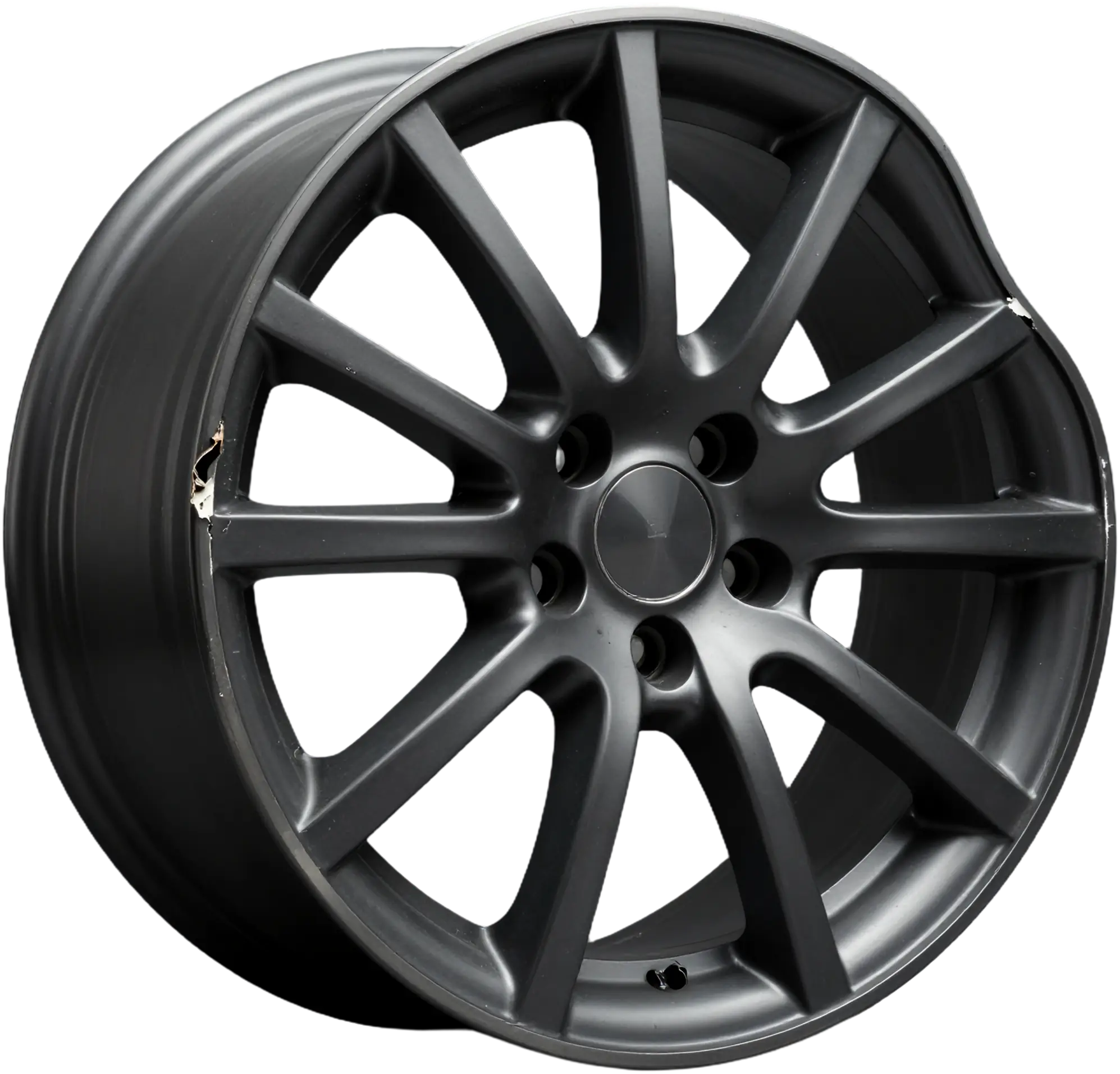
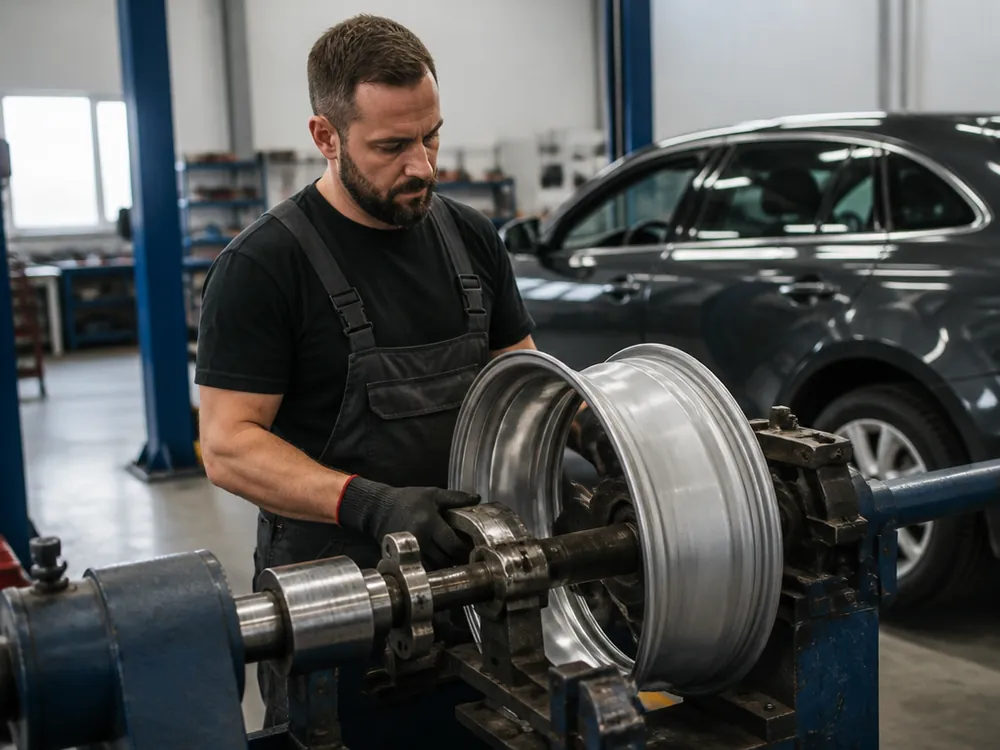
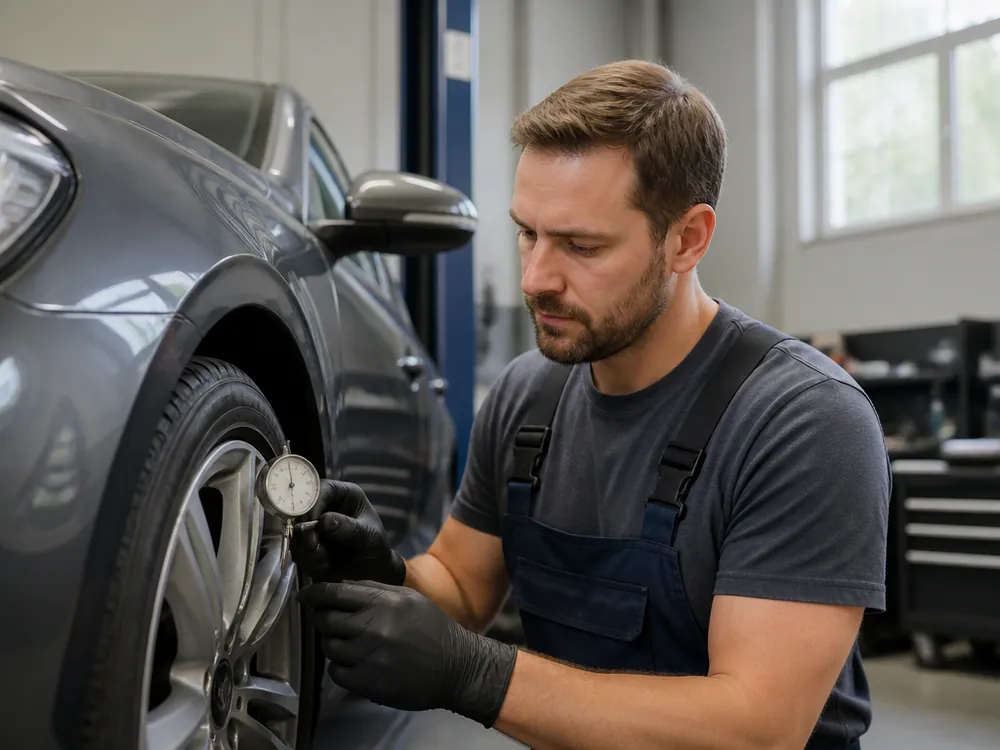
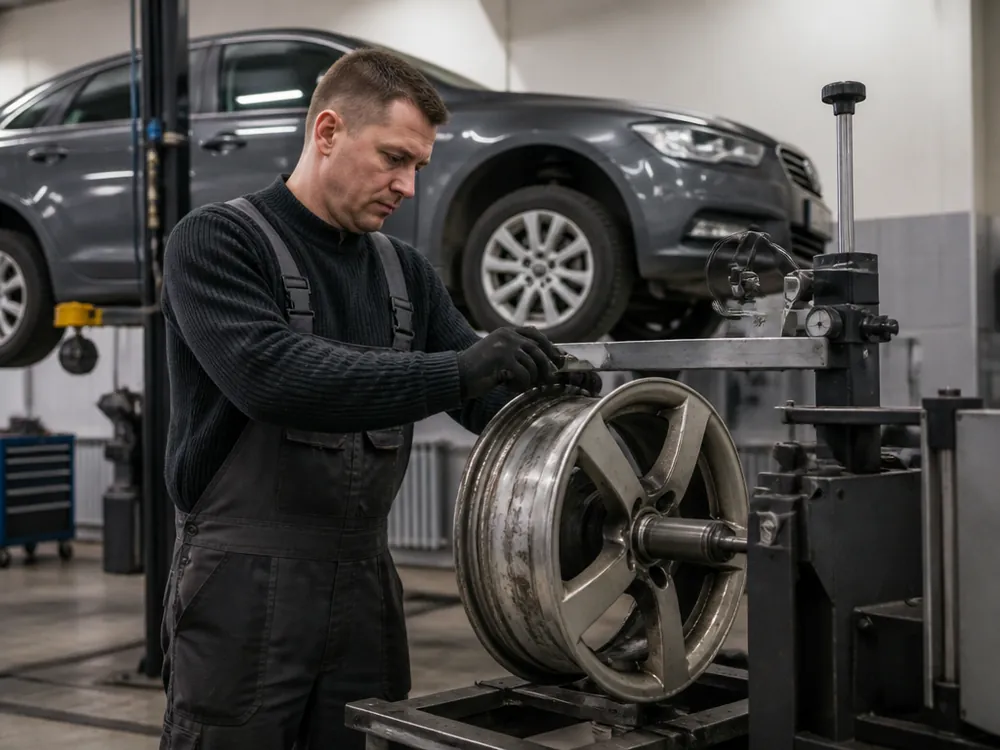
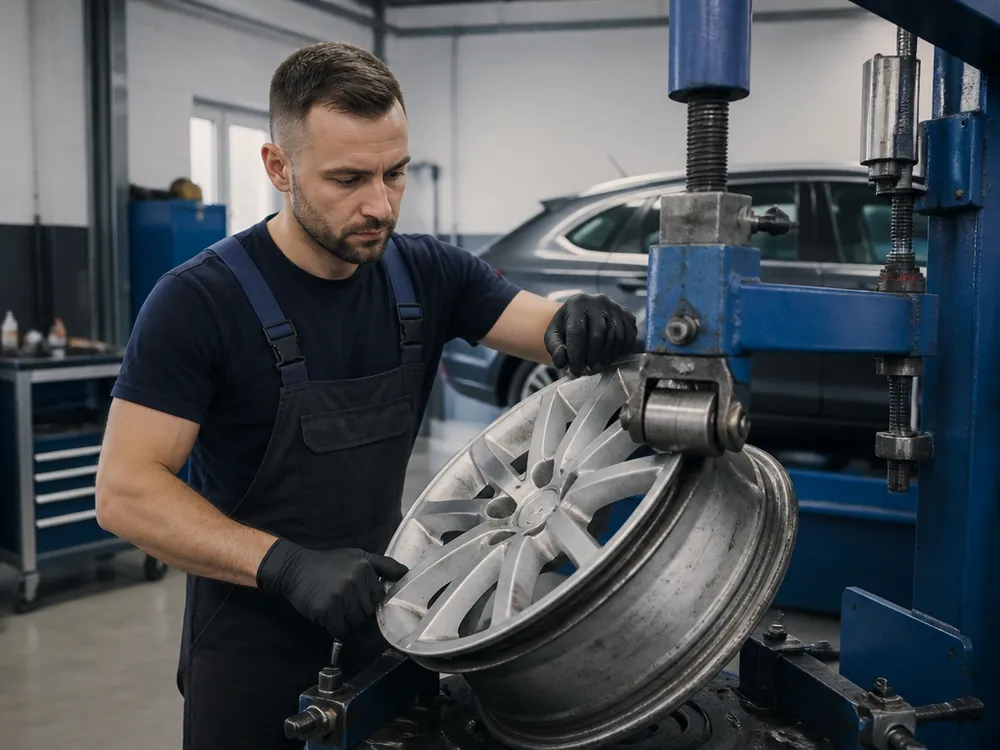
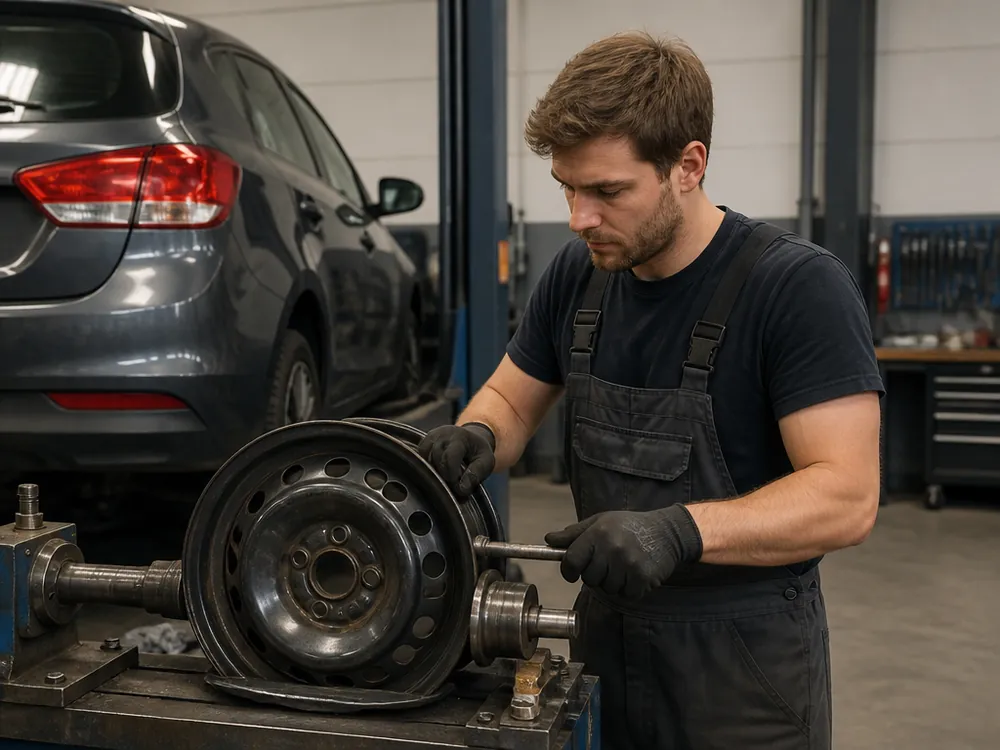
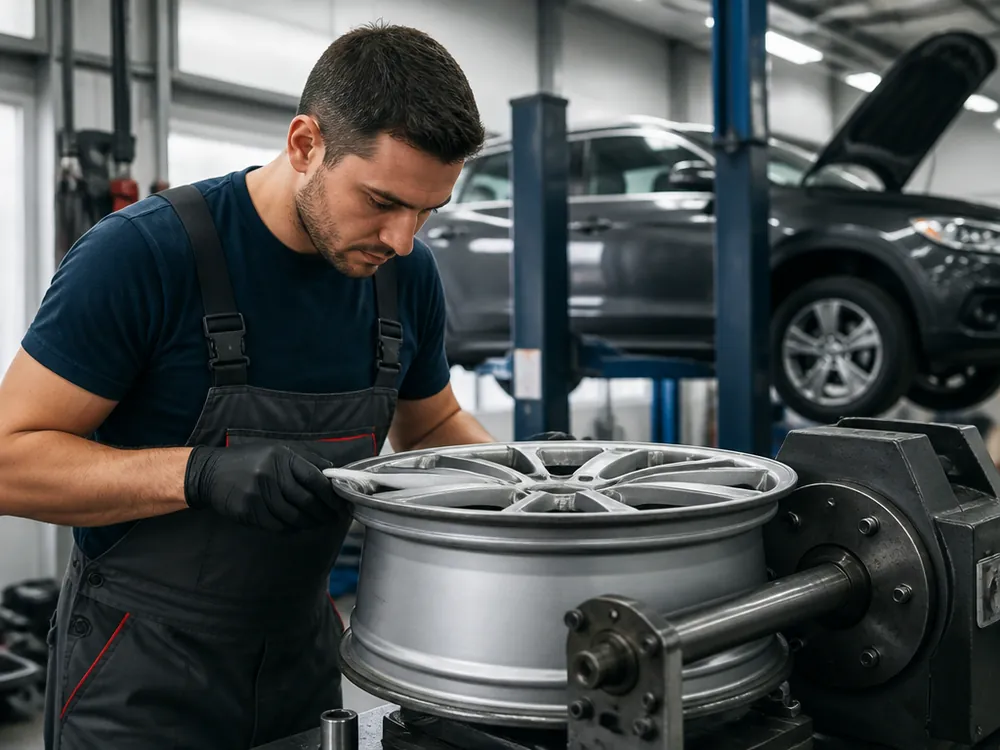
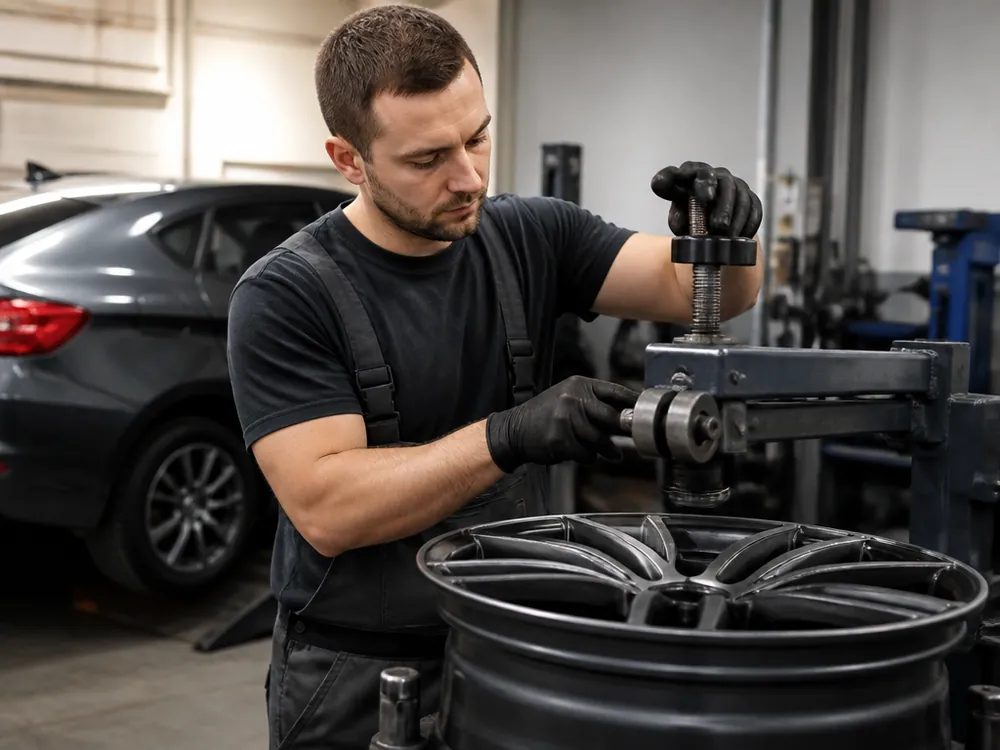
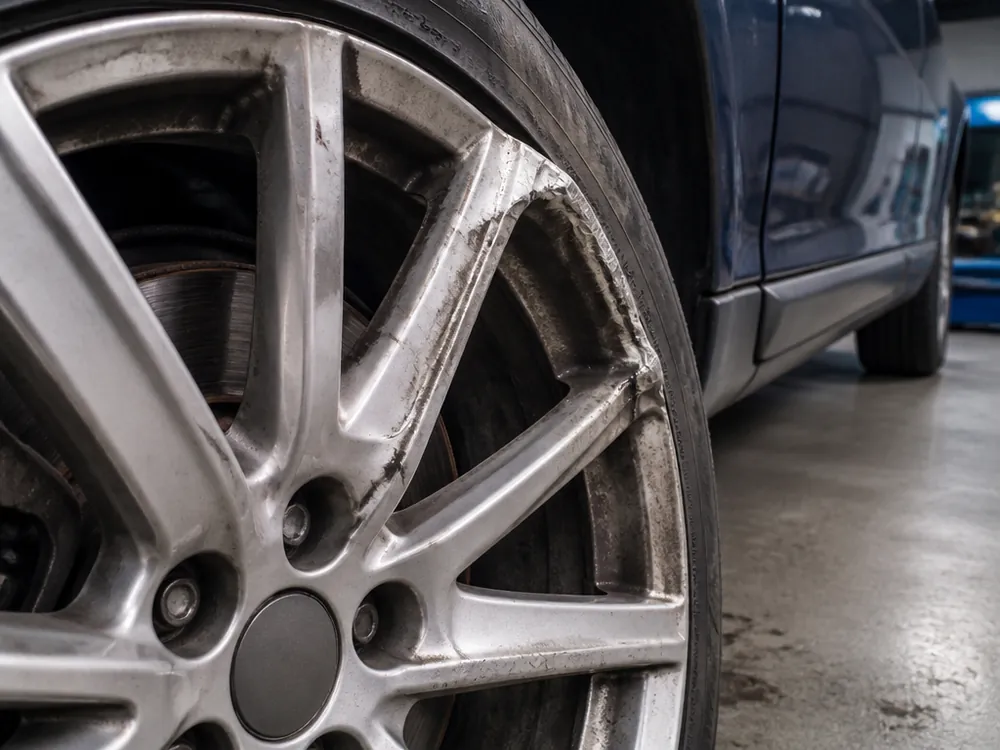
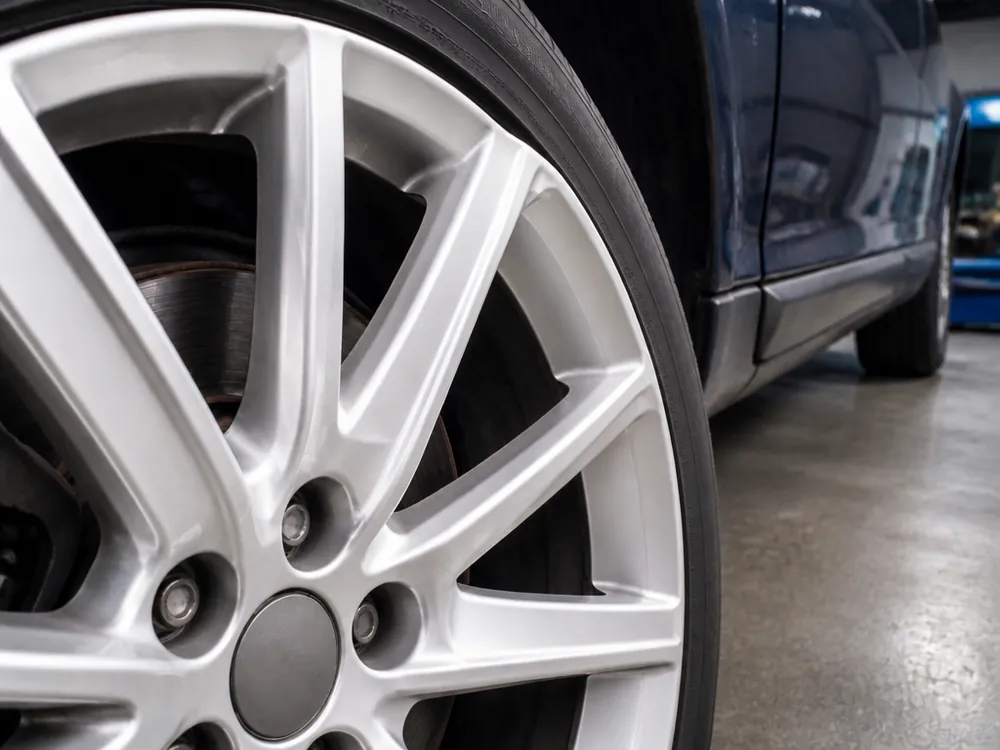
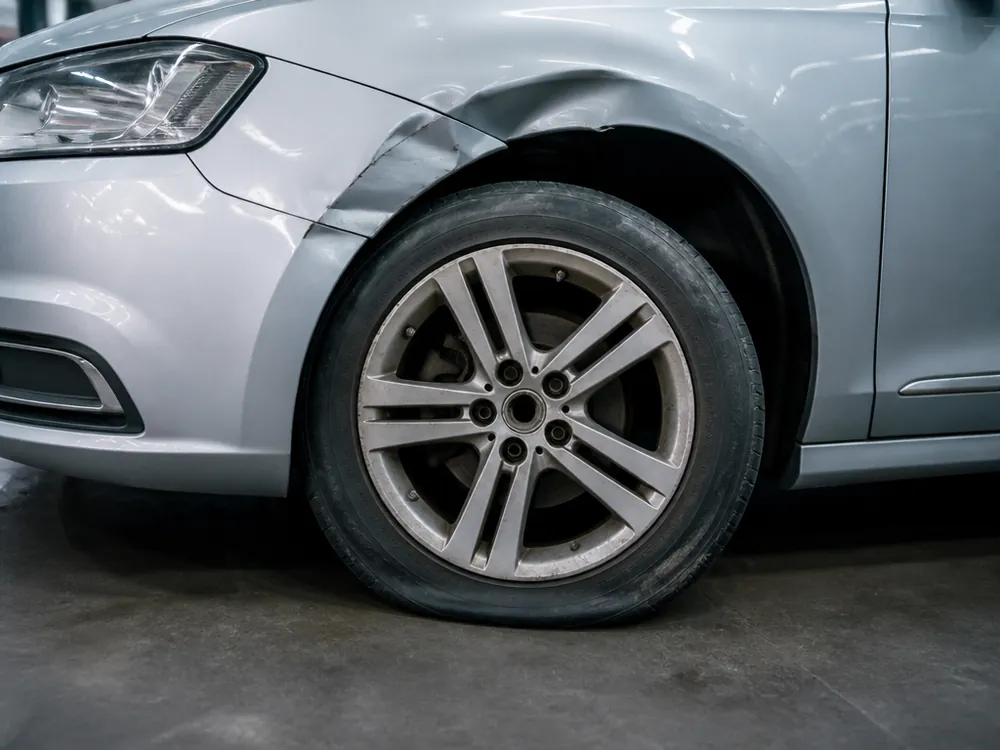
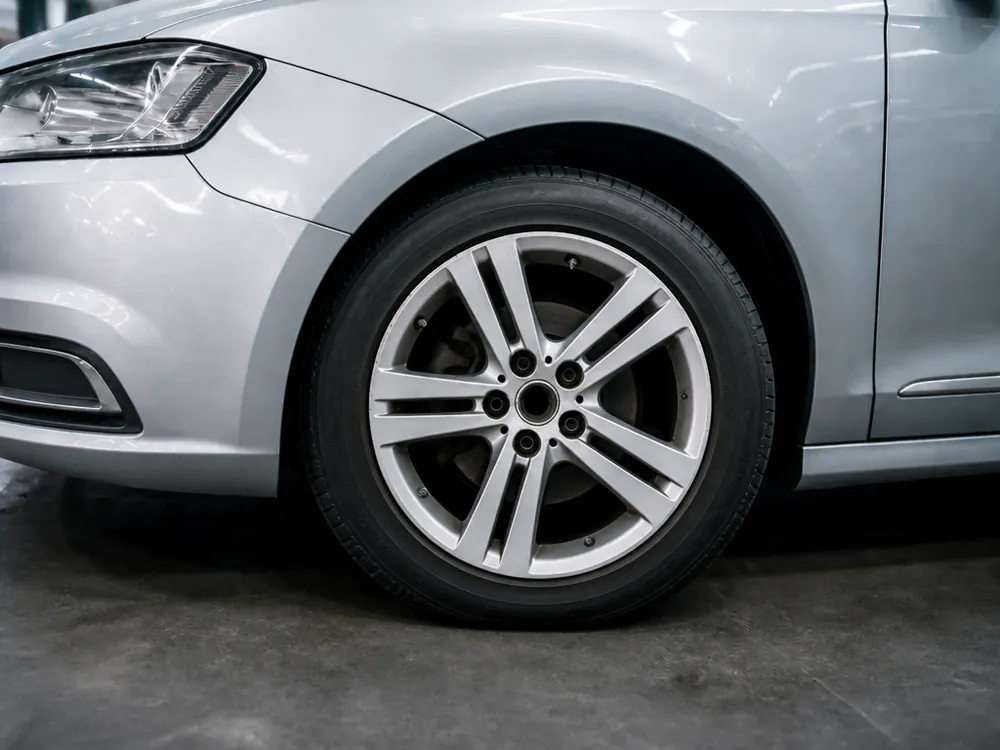
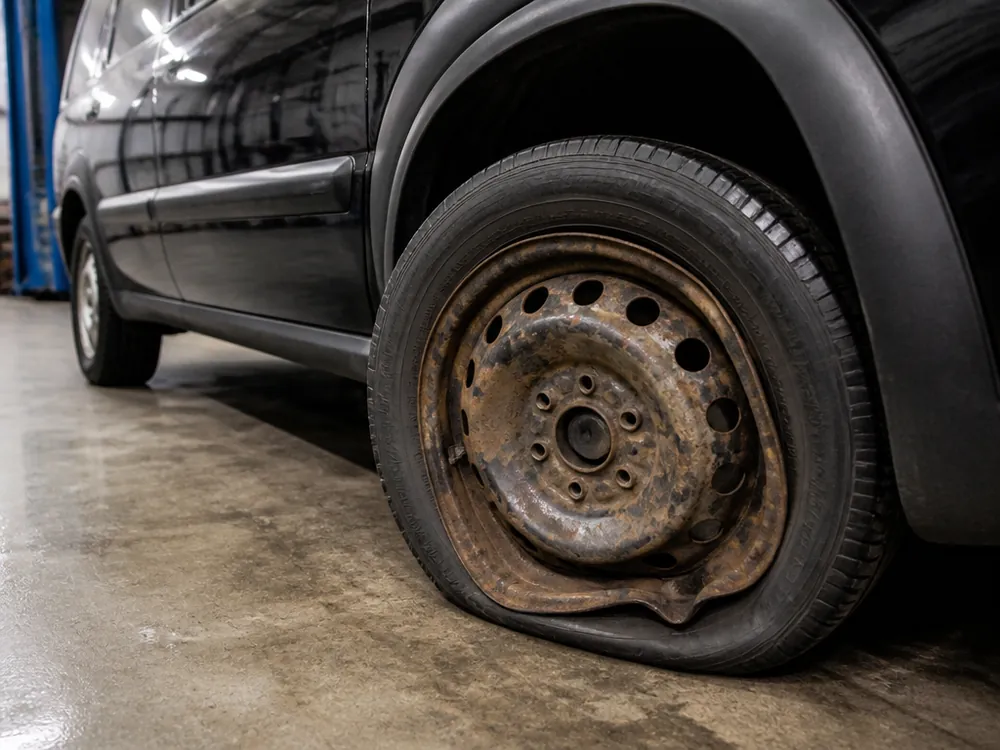
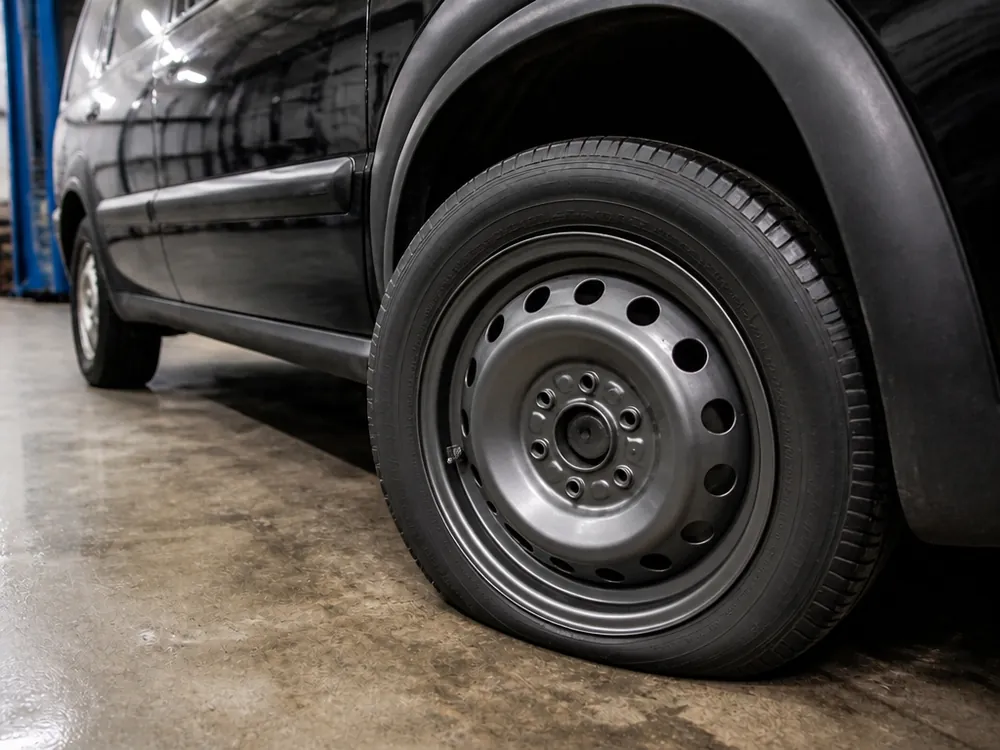
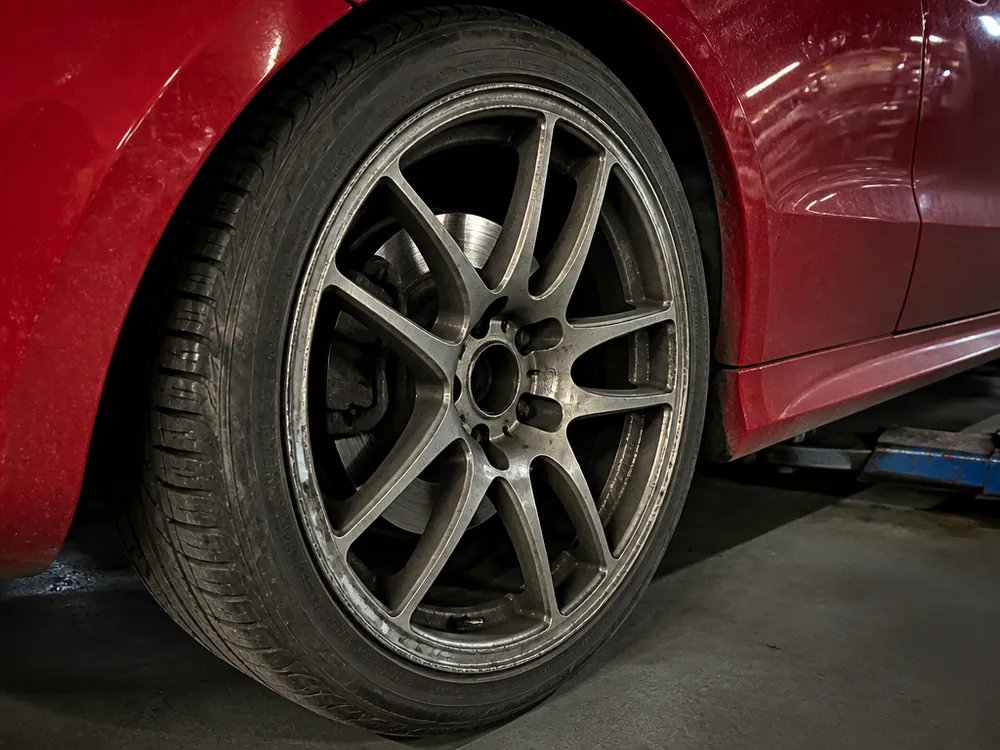
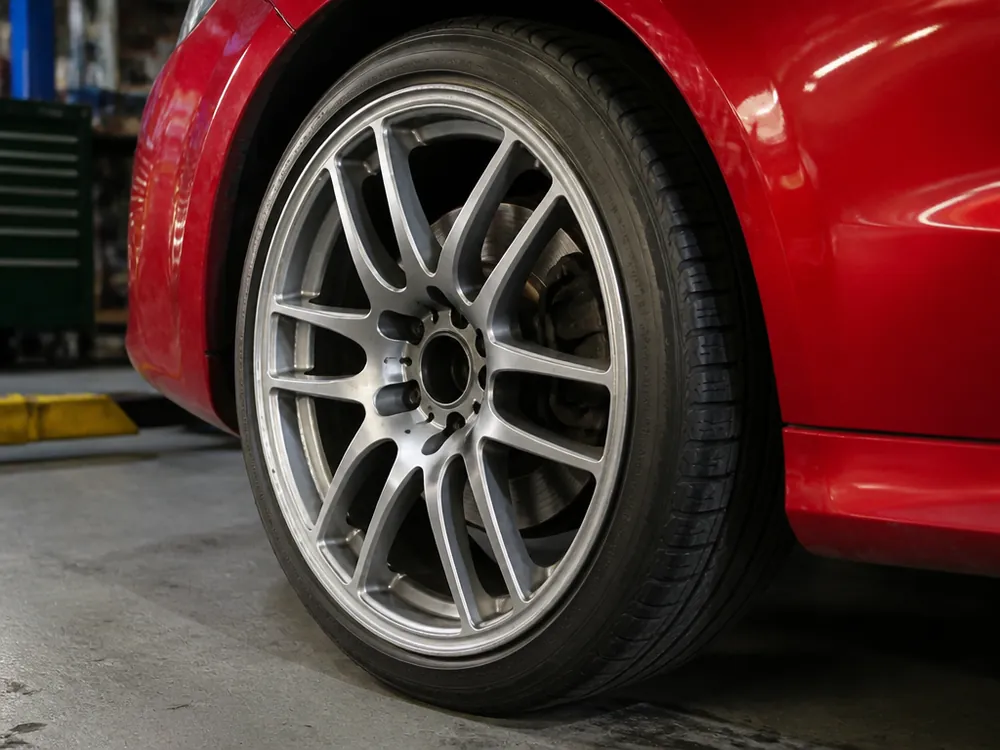
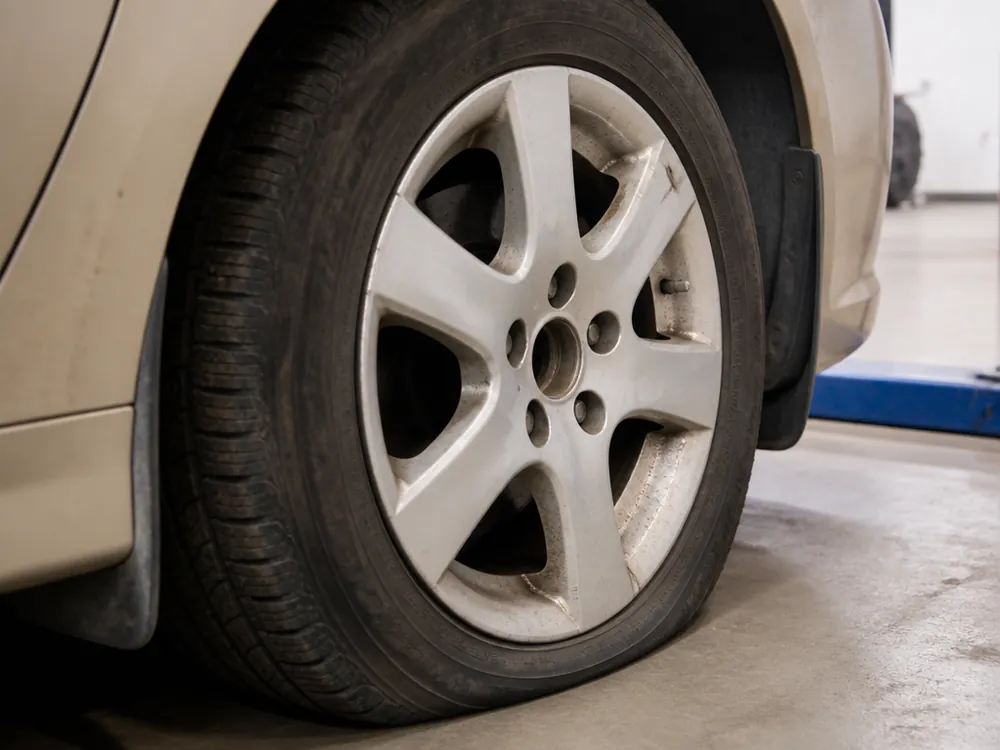
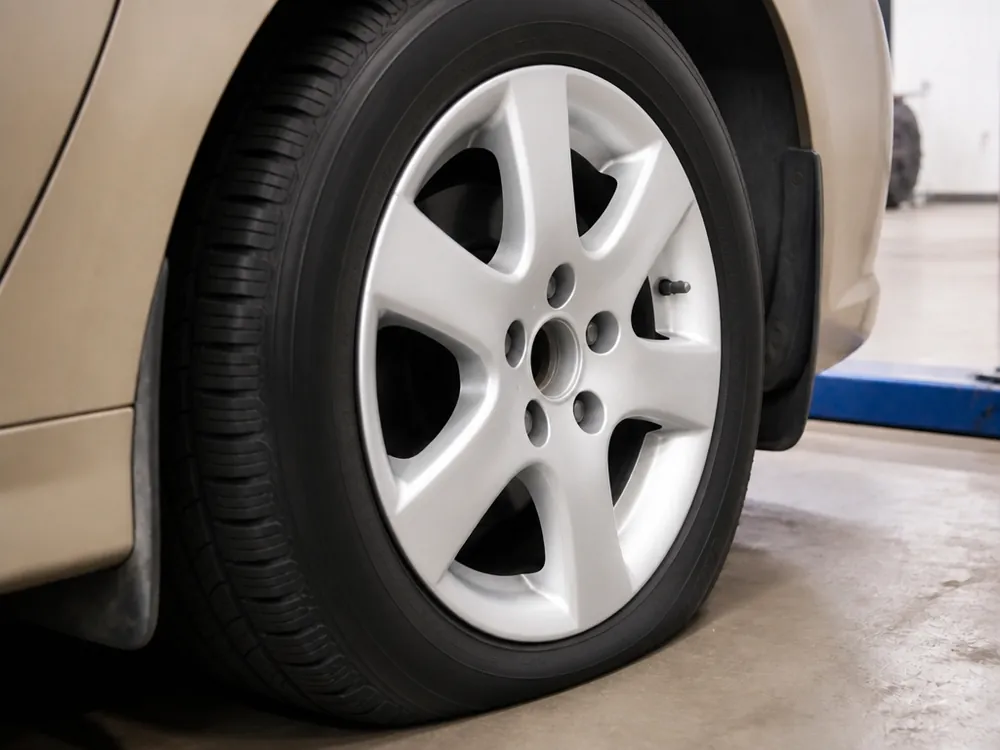
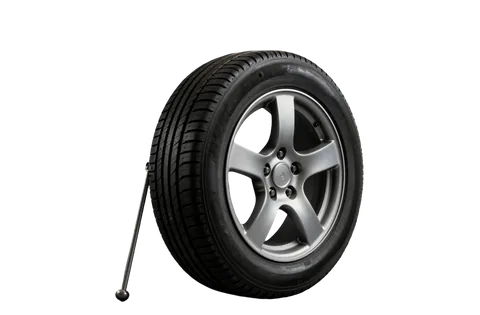
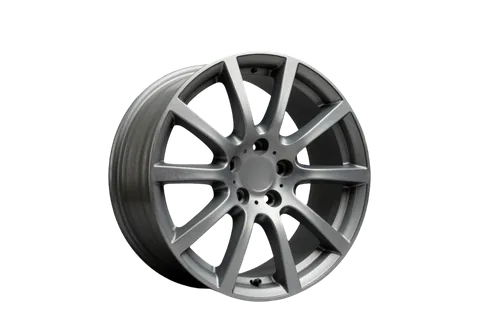
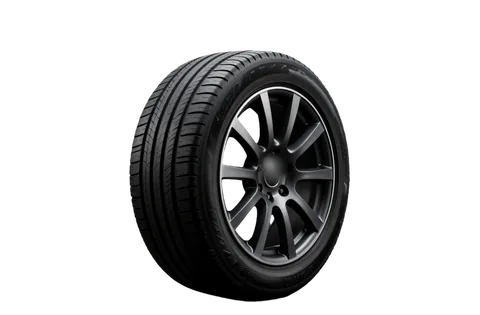
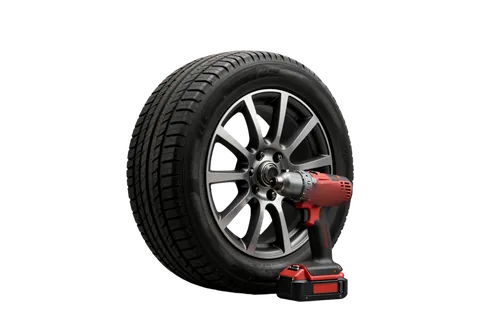
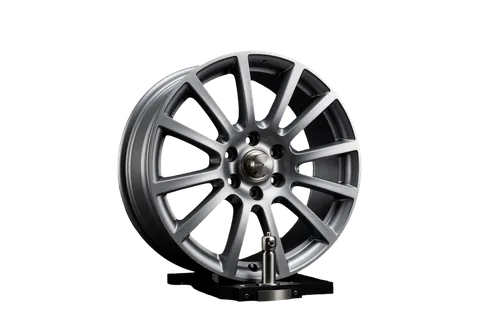
Wheel straightening (rolling) is the restoration of wheel rim geometry after impacts with potholes, speed bumps or curbs. We straighten both steel and alloy wheels, eliminating radial and lateral runout. The work is performed on a professional machine with a precision gauge; after straightening, the wheel fits perfectly on the hub and runout while driving disappears. Price — from 2 500 ₸, work warranty — 6 months.
We straighten damage and eliminate radial and lateral runout. Prices are for typical jobs; the exact cost depends on the condition of the rim.
Service
Duration
Warranty
Price
Diagnostics and inspection of the rim on the stand
15 minutes
6 mo
from 1,000 ₸
Straightening of light radial runout (up to 2 mm)
1 hour
6 mo
from 3,000 ₸
Straightening of moderate radial runout (2-5 mm)
1–2 hours
6 mo
from 5,000 ₸
Straightening of severe radial runout (over 5 mm)
2–3 hours
6 mo
from 8,000 ₸
Elimination of lateral runout (up to 3 mm)
1–2 hours
6 mo
from 4,000 ₸
Elimination of lateral runout (over 3 mm)
2–3 hours
6 mo
from 7,000 ₸
Straightening of a steel rim R13-R15
1 hour
6 mo
from 3,500 ₸
Straightening of a steel rim R16-R18
1–2 hours
6 mo
from 5,000 ₸
Straightening of an alloy rim R13-R15
1–2 hours
6 mo
from 4,500 ₸
Straightening of an alloy rim R16-R18
2–3 hours
6 mo
from 6,500 ₸
Straightening of a forged rim R13-R15
1–2 hours
6 mo
from 5,500 ₸
Straightening of a forged rim R16-R18
2–3 hours
6 mo
from 7,500 ₸
Straightening of a rim with scuffs on the edge
2–3 hours
6 mo
from 6,000 ₸
Express straightening (within an hour)
1 hour
6 mo
from 7,000 ₸
Mobile straightening (around the city)
from 1 hour
6 mo
from 10,000 ₸
Removal and installation of the wheel
30 minutes
6 mo
from 2,000 ₸
Balancing after straightening (1 rim)
20 minutes
6 mo
from 2,500 ₸
Straightening of a rim with crack repair
from 1 day
6 mo
from 12,000 ₸
Complete straightening of a set (4 rims)
from 4 hours
6 mo
from 18,000 ₸
The exact cost depends on the condition of the rim and the complexity of the damage. We give the final price after diagnostics — it is free when the work is performed. Warranty periods — see the page «Warranty»
06
Why choose wheel rim rolling at CARGID
Warranty.
Every promise — backed by a number or a document: work order, photos, removed parts.
6MO
warranty on labor — the term is stated in the work order.
Geometry Restoration
6-month Warranty
Same-Day Results
01
3D runout measurement
Before and after rolling, we measure runout on the stand with an indicator. The client sees the numbers: it was 4 mm — now 0.8 mm, not just "looks straight".
02
Up to 2 mm — we roll without heating
We straighten minor deviations cold on hydraulics: the metal does not lose its structure and does not soften. Such a wheel then does not wobble at speed.
03
Over 5 mm — we heat to 180 °C
Only with such runout is uniform heating of the rim in a furnace needed, otherwise a cast rim will crack along the spoke. We heat gradually and roll with rollers without sharp impacts.
04
6-month warranty
If within a year the rim bends again from driving without an impact — we will re-roll it for free. The warranty covers geometry, not tires or balancing.
07
How we roll wheel rims
Steps.
Wheel rim rolling at CARGID is precise restoration of wheel geometry without risk to the metal. We work with all types of rims: stamped steel, cast alloy, and forged.
01
Inspection and diagnostics
You submit a request on the website or call the service, tell us the car make and the nature of the rim damage — we find a convenient time. Upon arrival, the technician removes the wheel, inspects the rim for cracks and chips, and checks runout on the stand.
request on WhatsApp
02
Equipment selection
Depending on the rim type and degree of deformation, we select the necessary tooling and rolling mode so as not to damage the metal.
inspection and diagnostics
03
Heating and rolling
The rim is heated to working temperature, then the seat and side flanges are carefully leveled with special rollers and mandrels.
estimate before work starts
04
Geometry check
After straightening, the rim is mounted on the stand again — we check axial and radial runout and achieve indicators no worse than factory.
work to factory procedure
05
Wheel balancing
The assembled wheel is balanced to remove vibrations — we use a modern machine and high-quality weights.
result check
06
Vehicle handover
We install the wheel on the car, check the bolt tightening, and if necessary retighten according to the regulations. You receive the car with restored rims, a warranty on the work, and recommendations for further operation.
Wheel straightening in Almaty at CARGID is restoring the geometry of a steel, cast, or forged wheel on a machine with 3D runout measurement. First we record the "before" numbers, straighten cold up to 2 mm or with heating up to 180 °C for severe runout, then re-measure and balance. 6-month warranty in the work order.
What Wheel Straightening Is and How It Differs from Bending and Rolling
Straightening is restoring wheel geometry on a machine. People often call it rolling, and bending refers to cold metal adjustment. Let's break down where the line is between these terms and what work is included in the service — point by point below.
Are Straightening, Bending, and Rolling the Same Thing or Different?
Straightening and rolling are the same service under two names, and bending is part of it: cold metal adjustment on hydraulics without heating. Wheel rolling in everyday speech means the same procedure as straightening — restoring the rim shape on a machine. The difference is in scope: cold bending only removes small deviations up to 2 mm, while machine straightening with a dial indicator addresses both radial and lateral runout with control measurement. Measuring runout with an indicator before and after shows real changes in geometry, not just "looks straight now." In my opinion, confusion in terms is what most often leads to wrong expectations: someone asks to "just bend it back," but actually a full straightening with rollers is needed. That's why before work we always clarify which defect we're fixing and how. If you need wheel straightening in Almaty, we explain upfront how it differs from simple bending and why you can't skip runout measurement.
What's Included in Straightening and What's a Separate Operation
Straightening as geometry: restoring rim shape on a machine with control runout measurement — that's the main service.
Wheel removal and installation: a separate item since it requires a lift and technician time beyond the straightening itself.
Balancing after straightening: counted separately — it compensates mass with weights, not corrects rim shape.
Argon welding for cracks: a separate operation since it's metal repair, not geometry correction.
Written estimate: we list all items upfront so every charge is visible in the estimate.
Why Wheel Runout Can't Be Fixed by Balancing Alone
Balancing eliminates uneven wheel mass but not geometry: a bent wheel will keep causing steering vibration even with perfect weights. A balancing machine detects weight distribution but doesn't correct radial rim runout — that requires a straightening machine with an indicator. A tire on a bent rim seats unevenly, and at speed you get vibration that weights only mask. That's why at tire service we first check runout on the machine and attach weights only after straightening — otherwise balancing has to be redone. Almaty residents know this well: after winter potholes many experience steering vibration, and some drivers replace tires when the problem is rim geometry. Runout check takes minutes and immediately shows whether straightening is needed or something else is wrong.
Signs of Deformation and When to Straighten vs Replace
A wheel bends unnoticed: the edge looks fine but the steering vibrates at acceleration. Below are signs of deformation and the limit beyond which straightening won't help. Let's go over the signs of deformation and the limit beyond which straightening won't help.
How to Tell a Wheel Is Bent When It Looks Fine
Steering vibration: the wheel shakes at 90–100 km/h, while at low speed geometry deviation is barely noticeable.
Uneven tire wear: tread wears in patches rather than a even strip around the circumference.
Pressure loss: the tire leaks at the bead though no puncture is found and the rubber is intact.
Shaking in floor and body: vibration transfers to the seat more than the steering wheel during acceleration.
Knocking on small bumps: a metallic sound appears that wasn't there before.
When to Straighten vs Replace — Criteria by Damage Type
comparison of damage and solution for each case
Damage
Solution
Radial runout up to 5 mm
Straighten
Scuffs and chips on the edge
Straighten with cleaning
Lateral runout up to 3 mm
Straighten
Crack on a spoke
Replace
Split rim or spoke
Replace
What Happens to Suspension If You Drive on a Bent Wheel
Constant wheel runout transfers vibration to the wheel bearing and ball joints, accelerating wear and leading to suspension repairs. Every wheel revolution hits the bearing, and the part's lifespan drops faster than planned — instead of a long service life it wears out in just months. The tire wears in patches rather than evenly, so tire replacement comes sooner than scheduled, and alignment suffers too. Our technicians' experience shows that a pair of new tires costs more than wheel straightening — and if you wait longer, the bearing and re-alignment add to the tire cost. Not everyone notices vibration around town: at low speed it's barely felt and shows up on the highway when the wheel spins up. Straightening steel wheels in such cases is often cheaper than replacement and restores working geometry to the wheel.
How Straightening Is Done and How the Result Is Checked
Straightening starts with measurement, not a hammer blow. Here's how we measure runout, why we heat only for severe deviation, and how the client sees the result in numbers on the indicator. Step by step below.
Runout Measurement Before and After in Numbers
We measure runout on a machine with an indicator before and after straightening, and the client sees the numbers: was 4 mm — now 0.8 mm, not just "looks straight." The first measurement on the machine with an indicator shows exactly where geometry deviated — at the edge, side flanges, or mounting seat. We place the indicator on the same points again and compare readings: the difference is recorded in the work order, which the service advisor maintains until handover. We take photo reports at key stages — you can see the roller position and indicator needle during the pass. Control measurement is done on the same machine and with the same mounting, otherwise the numbers aren't comparable and comparison is meaningless. Measurement before work isn't for reporting but for choosing the technology: the technician uses the number to decide whether to straighten cold or heat.
Why We Straighten Up to 2 mm Without Heating and Heat Above 5 mm to 180 °C
Up to 2 mm we straighten cold on a hydraulic press — the metal keeps its structure. If runout is over 5 mm, we heat the wheel to 180 °C, otherwise a cast wheel will crack along the spoke. When straightening cold, the rollers press on the rim edge in small steps, and the aluminum returns to shape without annealing. With severe runout, even heating in the oven relieves internal stress: cold metal on a bend like that will simply crack. We heat slowly so the heat spreads through the whole spoke, not just the rim. We roll it out without sharp blows — a sharp blow to heated cast metal causes a microcrack that shows up later, after the car has already been handed over. Between passes we monitor the temperature and the dial gauge readings so we don't overheat the metal and lose strength.
Radial and lateral runout — which one gets straightened
two types of geometry deviation and their symptoms while driving
Runout type
How it shows up
Radial
Shakes above 90 km/h
Lateral up to 3 mm
Vibration at low speed
Lateral over 3 mm
Pulls the steering wheel to one side
Wheel types and special cases
Steel, cast and forged wheels bend and straighten differently, and edge gouges and cracks are separate cases. Our approach to each type is below. Let's go through the approach to each type.
Steel, cast and forged — how the approach differs
comparison of the three types by deformation and straightening method
Wheel type
How it bends
How we straighten it
Steel stamped
Easily, from any curb
Cold on a hydraulic press
Cast aluminum alloy
Moderately, more often radial runout
Up to 2 mm cold, over 5 mm with heating
Forged
Rarely, but with a dense structure
Gradually, without sharp blows from the roller
Wheel repair after an impact — edge gouges and cracks
After hitting a curb, the edge usually takes the damage — we remove gouges and burrs before straightening, and a crack is first welded with argon and only then rolled out. We start with an inspection on the stand: the service advisor records in the work order exactly where the damage is and what the runout deviation is. We remove burrs with a burr tool before balancing — otherwise they tear the tire sidewall when it seats on the rim. A crack along a spoke or the rim flange is welded with argon, heating the area, then we check the seam and only after that put the wheel on the machine. Work on a crack comes last: the metal first has to cool and hold its shape. Edge gouges are dangerous because they tear the tire sidewall, so they're removed before balancing, not after.
Straightening cast wheels — when it's justified and when it isn't
This work is justified with radial runout and an intact spoke, but with a crack along a spoke or a split, cast wheels aren't restored — they'll crack under load. Cast aluminum alloy wheels are less ductile than stamped steel, so the technician first looks at the measurement and then decides whether straightening makes sense. A dial gauge reading shows whether the rim has shifted or a spoke has bent: up to 2 mm we straighten cold, at 2–5 mm we roll it out with monitoring, over 5 mm we heat it in the oven to 180 °C — without even heating, a cast wheel cracks along the spoke. If there's a chip on the edge or a seam from an old weld, we don't start straightening: the metal has already lost strength in that area. In our shop's experience, a cast wheel with a crack is cheaper to replace than to roll out and wait for the wheel to fall apart at speed.
Timing, warranty and what to do if it bends again
What worries a customer is how long the car sits in the shop and what we'll do if the steering wheel shakes again a month later. We answer on timing, booking and warranty obligations without generalities — just specifics. Here's the rundown.
How long rolling takes and how to book
We roll one wheel within an hour, a set of four in a single visit, and by appointment we take you out of turn daily from 09:00 to 20:00. We do urgent processing within an hour if you need the wheel for a trip — the technician takes it out of the general queue and doesn't mix it with scheduled orders. A set of four wheels goes through the full cycle: runout measurement on the machine, rolling with rollers, a control measurement and balancing of each wheel. The service advisor takes in the car and manages the work order through to handover, so you get the status from one person instead of asking different shifts. If you need the wheel for a trip, tell us when booking — the technician will put it into work out of the general queue and won't mix it with scheduled orders.
6-month warranty and what it covers
Term: we give 6 months on rolling; the term and conditions are recorded in the work order and the completion certificate at handover.
What it covers: the work performed and the wheel's behavior after rolling — if the runout comes back without external impact, we sort it out under warranty.
What it doesn't cover: a new hit on a curb or pothole, third-party interference, normal wear of consumables, and a part brought in by the customer.
How we document it: before handover we do a test drive and give you the documents with the conditions spelled out, so there are no disputes.
If the steering wheel shakes again after straightening — what to do
If the steering wheel shakes again after straightening, we do a free diagnostic as a warranty case and take a runout measurement — a repeat impact and a work defect are told apart by the numbers. On the stand with a dial gauge you can see whether the wheel stayed true after rolling or the geometry shifted again: it was 0.8 mm — now it's 3 mm, which means the wheel caught a new pothole rather than "drifting" on its own. Often "repeat runout" turns out to be a new hit on a curb or an imbalance after tire service somewhere else, where the weights were put on a dirty edge. So first a repeat measurement on the machine, not a second rolling right away: without numbers it's easy to straighten a healthy wheel and miss the real cause. Based on the results we name the cause and only then suggest the work — sometimes rebalancing the wheel is all it takes.
Wheel Straightening Key Points
We've gathered the key points before you come in: how to tell deformation from other causes of vibration, which defects can actually be straightened and which need replacement, and what work the warranty covers. Below is a short summary.
Rolling and rolling out: it's one service, and straightening is part of it; balancing and wheel removal are counted as separate operations.
Sign of deformation: steering wheel vibration at 90–100 km/h and patchy tire wear, not just a visible shift of the edge.
Temperature regime: up to 2 mm is straightened cold, over 5 mm is heated to 180 °C, otherwise a cast wheel cracks along the spoke.
Replacement instead of straightening: a crack along a spoke and a split are a reason to fit another wheel, not to roll this one out.
Warranty: 6 months on the work; with repeat runout, a measurement is taken first to tell a new impact from a defect.
10
Frequently asked questions about wheel straightening in Almaty
Questions.
Price, timeframes, warranty, payment — 10 questions asked most often.
10
Didn't find an answer?
Message us on WhatsApp — a service advisor will reply within 5 minutes.
The price for straightening one wheel at our service is from 3,000 to 8,000 tenge. The final cost depends on several factors: the wheel material (steel or alloy), the degree of deformation (a slight "eight" or serious rim damage), the diameter and width of the wheel, the presence of cracks and chips. The complexity of access to the deformation site and the need for additional straightening on the machine also affect it. We name the exact price after inspection — it is free and takes 10–15 minutes.
On average, straightening one wheel takes 30–60 minutes. If the damage is complex, for example, the wheel is bent in two places or there is a crack, the time may increase to 1.5–2 hours. Usually we perform the work on the day of contact, but if you have several wheels or additional welding/straightening is needed, the deadline may be moved to the next day. We name the exact time after diagnostics.
Yes, we provide a warranty for the work performed — 30 days. The warranty covers repeated deformation of the wheel in the same place, provided that it did not occur due to a new impact (for example, hitting a pothole). If during the warranty period the wheel warps again, we will perform repeated straightening for free. But note: the warranty does not cover damage caused by violation of operating rules or an accident.
An appointment is not required, but desirable — this way you will avoid waiting in line, especially during tire service season. You can call us and check the mechanic's available time. If you come without an appointment, we will try to accept you in the order of the live queue, but during peak hours there may be a wait of up to 1–2 hours. We recommend booking in advance to save your time.
Yes, you can bring your own wheels — this is the main option. We do not impose the purchase of wheels, you come with your own tires and wheels. If you need new wheels or balancing weights, we can select and offer them, but this is not necessary. The main thing is that the wheels are compatible with your car (diameter, offset, bolt pattern). We use our own other materials (for example, welding wire, if welding is needed), their cost is already included in the price of the service.
If after straightening you notice steering wheel vibration, pulsation when braking, or that the wheel has deformed again — immediately come to us. Under the warranty, we will conduct a free diagnostics and, if our work was of poor quality, fix the problem for free. We value our reputation, so we deal with each case individually. If you went to another service, we can also evaluate their work, but there will be a fee for diagnostics — 2,000 tenge.
Machine straightening (with professional rolling equipment) and cold straightening are essentially the same thing. We use a modern machine that carefully straightens the wheel geometry without heating. Cold straightening allows preserving the metal structure and does not disrupt the factory hardening. Unlike hot straightening, the cold method is safer and more reliable. We use it for most deformations. The exception is cracks that require welding and preheating of the metal.
After straightening, it is important to follow several rules: for the first 2–3 days, avoid driving over deep potholes and bumps at high speed to avoid sudden loads; monitor tire pressure (we recommend checking it once every two weeks); when changing tires, use balancing to avoid imbalance that can cause repeated deformation. It is also recommended to check the wheel geometry on the machine once a year, especially after winter.
You can pay for wheel straightening in cash or by bank card at the service, as well as by bank transfer by invoice for legal entities. The payment method does not affect the time: straightening work begins after agreeing on the scope and cost. The cost depends on the number of wheels, the degree of deformation and the type of wheel — steel or alloy. The exact amount is announced after inspection.
Yes, but only if the crack does not go through the edge and does not affect the load-bearing capacity. In such cases, we first weld the crack with argon, and then straighten the wheel. This is more complex work, it is evaluated separately — from 5,000 tenge per wheel. If the crack is serious, for example, the wheel is split, it is safer to replace it rather than restore it. In any case, we conduct diagnostics and honestly say what is cheaper and more reliable.
11
Reviews of our wheel straightening work
Reviews.
We collect ratings on the website and on maps — we hide nothing.
4.8
872 reviews on the website 1 900+ ratings in total
Alexander
Toyota Camry
Bent a wheel on a Toyota Camry, hit a pothole. Went to CARGID on a friend's advice. They straightened it in a day, charged 7000 tenge, which is cheaper than I thought. The vibration disappeared completely, the steering wheel no longer shakes. Thanks for the quick work!
Zhanna
After a trip to the countryside, I noticed vibration at speed. Honda Accord. The mechanics at CARGID said the wheels were warped. They straightened both front wheels in a day, it cost 16000 tenge. The car drives like new, thanks for your patience and explanations.
Dmitry
Sportage
On a Kia Sportage, after the highway, the wheel was knocking badly. I arrived, it turned out the wheel was badly deformed. At CARGID they straightened it and also checked the balancing. Price 9000, time — a day. Everything is clear, the result is excellent, I recommend them.
Aigul
We have a Nissan X-Trail, after off-roading the wheel became an eight. My husband was on a business trip, so I took it myself. They accepted me without an appointment, straightened it in a few hours, 8000 tenge. Now we drive smoothly, no complaints. Excellent service and polite mechanics!
Sergey
Volkswagen Passat, hit a curb hard. I thought I'd have to replace the wheel, but at CARGID they welded the crack and straightened it. The work is complex, took two days, I paid 12000. The result — the wheel is like new, no air leaks. Many thanks to the mechanic!
Aslan
Mercedes E-Class, vibration appeared at speed. Diagnostics showed the rear wheel was warped. They straightened it in a day, 10000 tenge. After the repair, the car drives perfectly, no vibration. The mechanics are pros, they explained everything during the work. I recommend them to all my friends.
Igor
On a Skoda Octavia, after a pothole on the highway, vibration appeared. I came to CARGID, they straightened the front wheel in half a day, balanced it. Price 6500, which pleasantly surprised me. Quality is top-notch, no vibration for a month already. Thanks for the excellent work!
Elena
Almaty, I found CARGID from reviews. I have a Mazda 6, after potholes the wheel warped. The mechanic quickly identified the deformation, straightened it in a couple of hours. They charged 7000, the car drives smoothly. Very satisfied, I will come back again!
Kanat
Land Cruiser
Toyota Land Cruiser, heavy wheel, bent it on rocks. At CARGID they managed in a day, even though the wheel is large and stiff. Price 11000 tenge, but the work is worth it. Now the wheel is round, as it should be. Thanks for the professionalism!