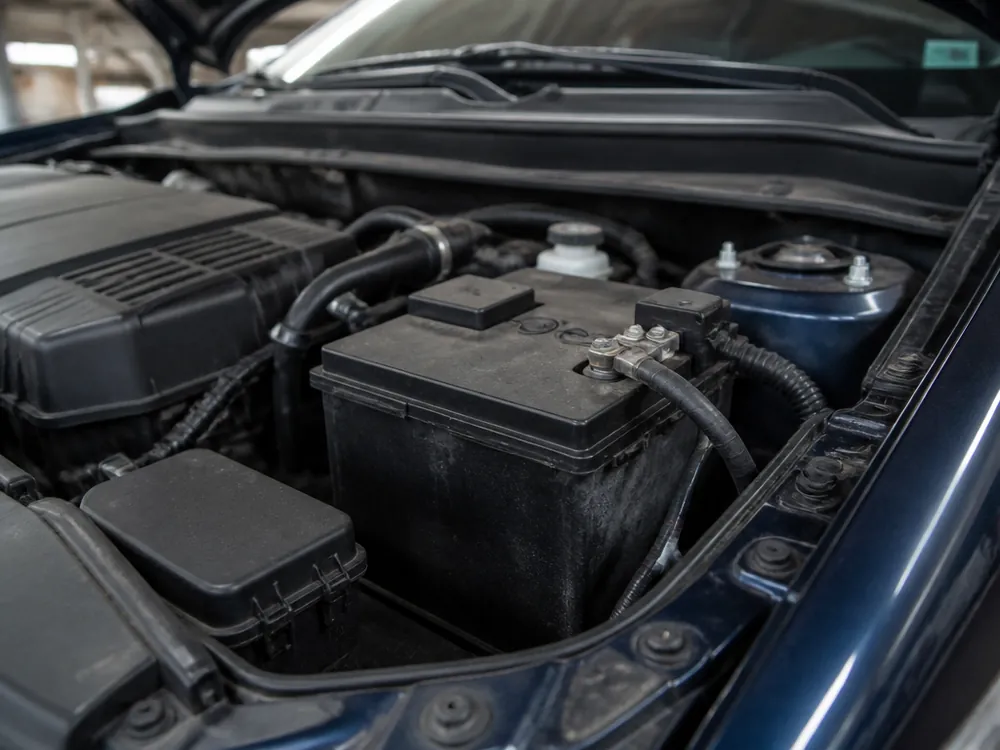
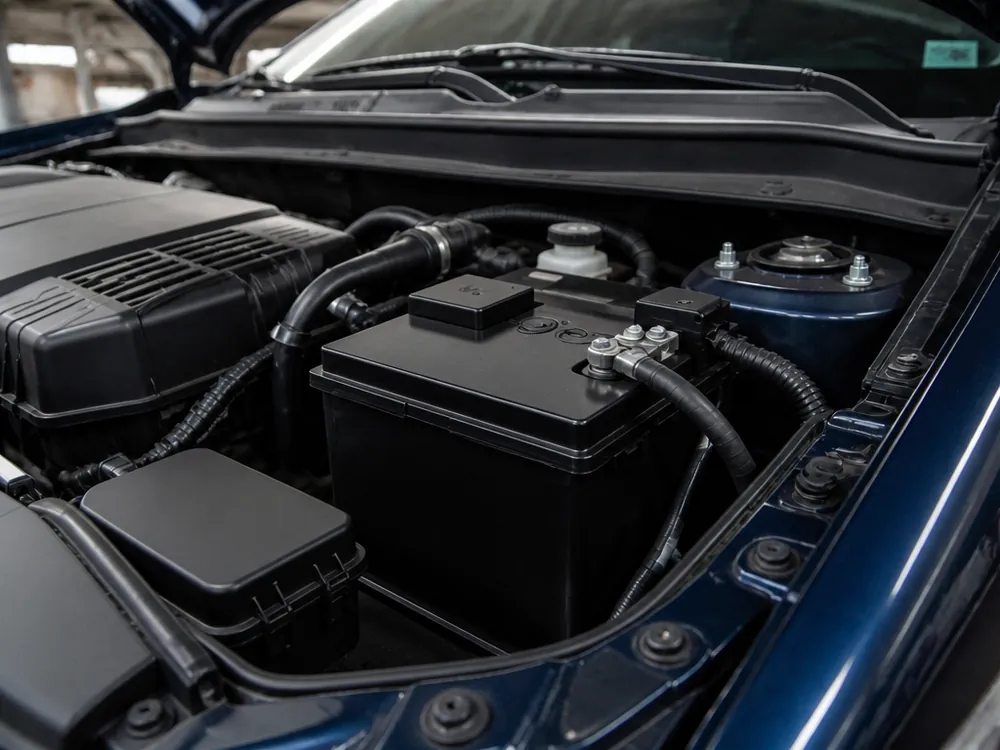
Most often, a jump start in Almaty is needed in the morning before work, when there's no time to sort things out. Let's look at when a booster start is enough and when charging or battery replacement is needed.
What the on-site jump start includes
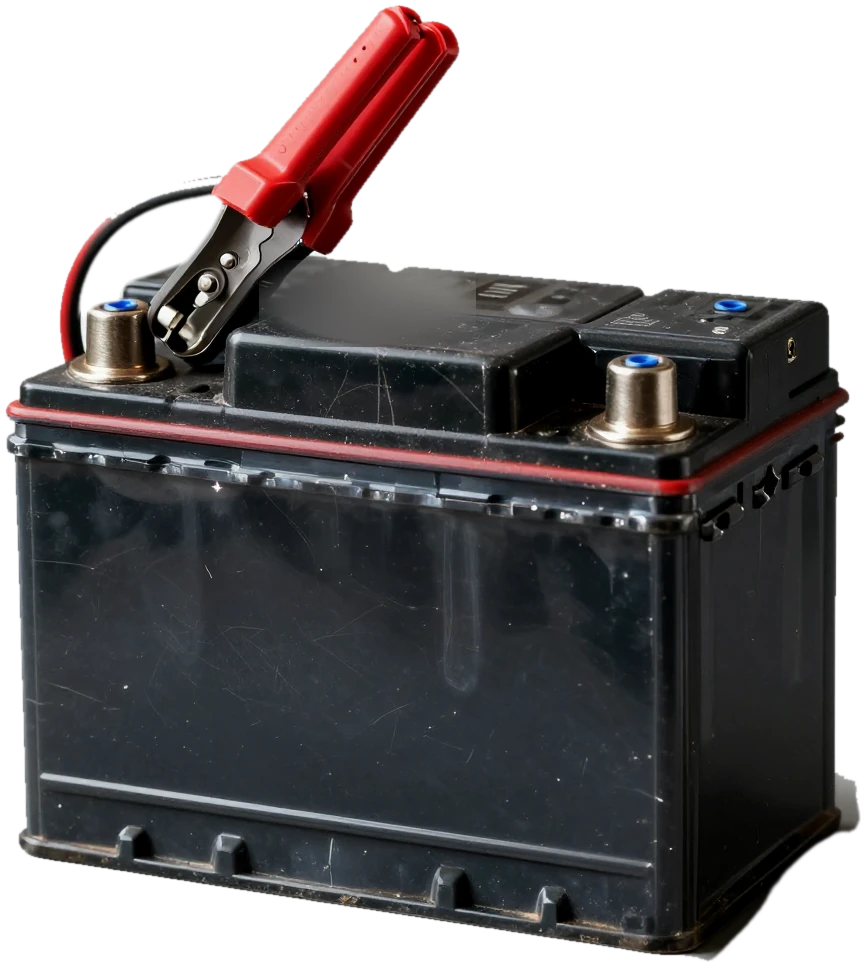
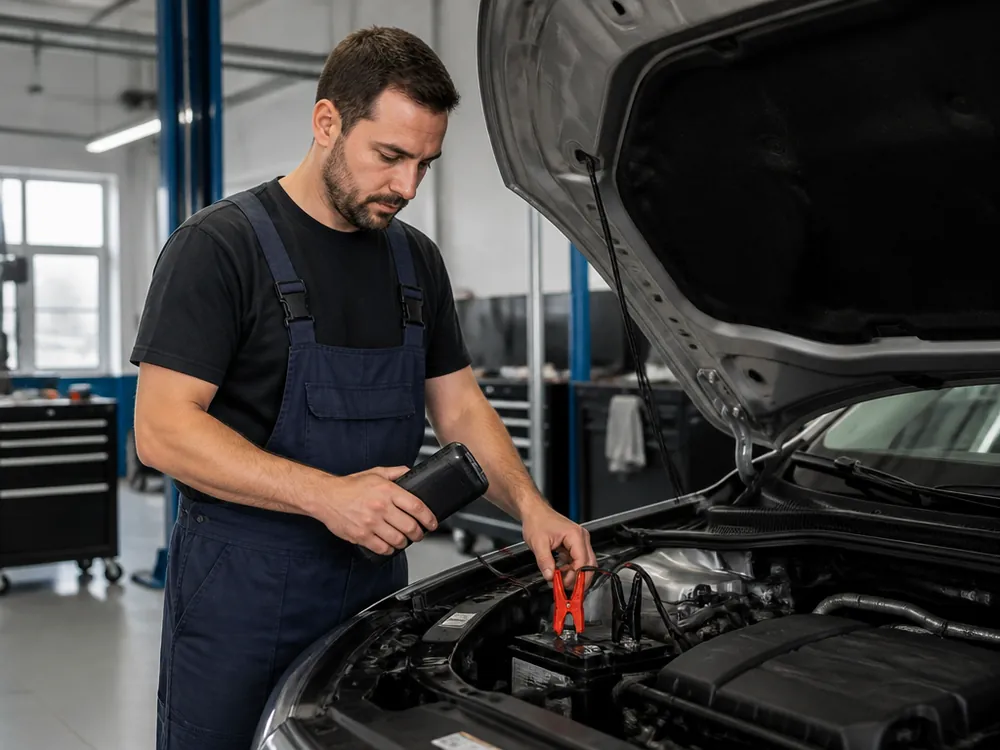
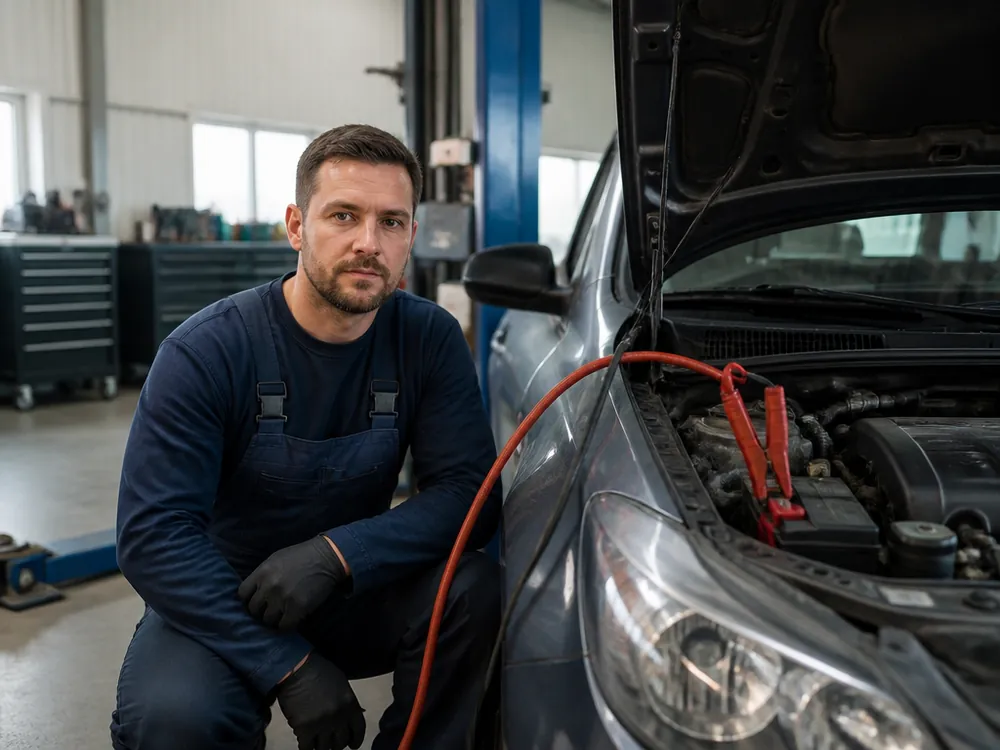
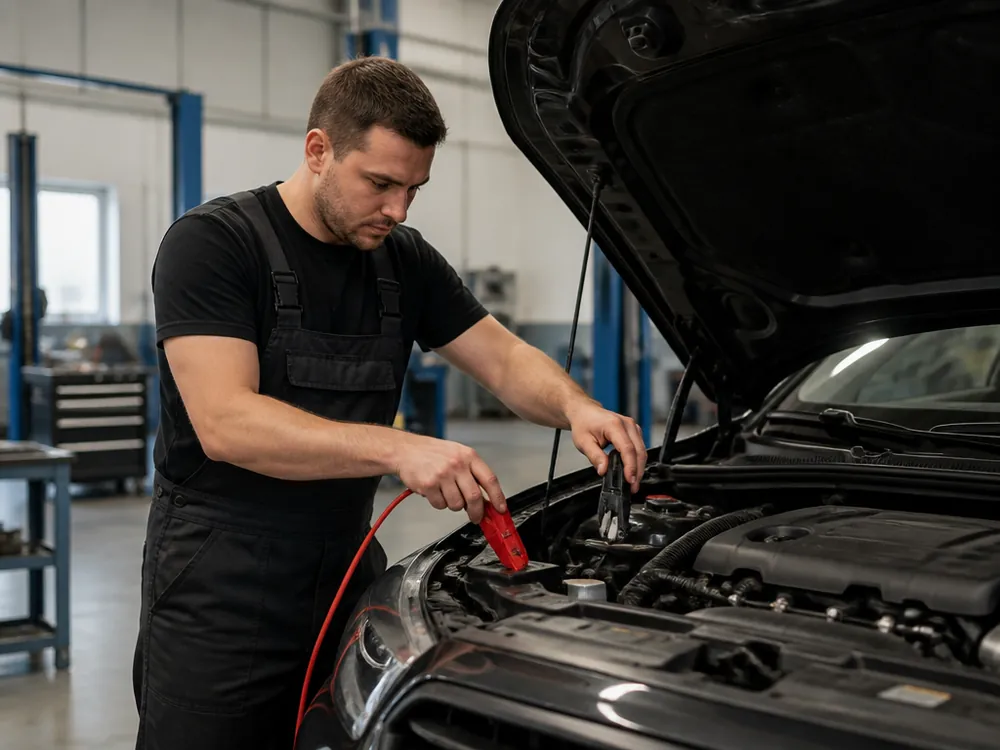
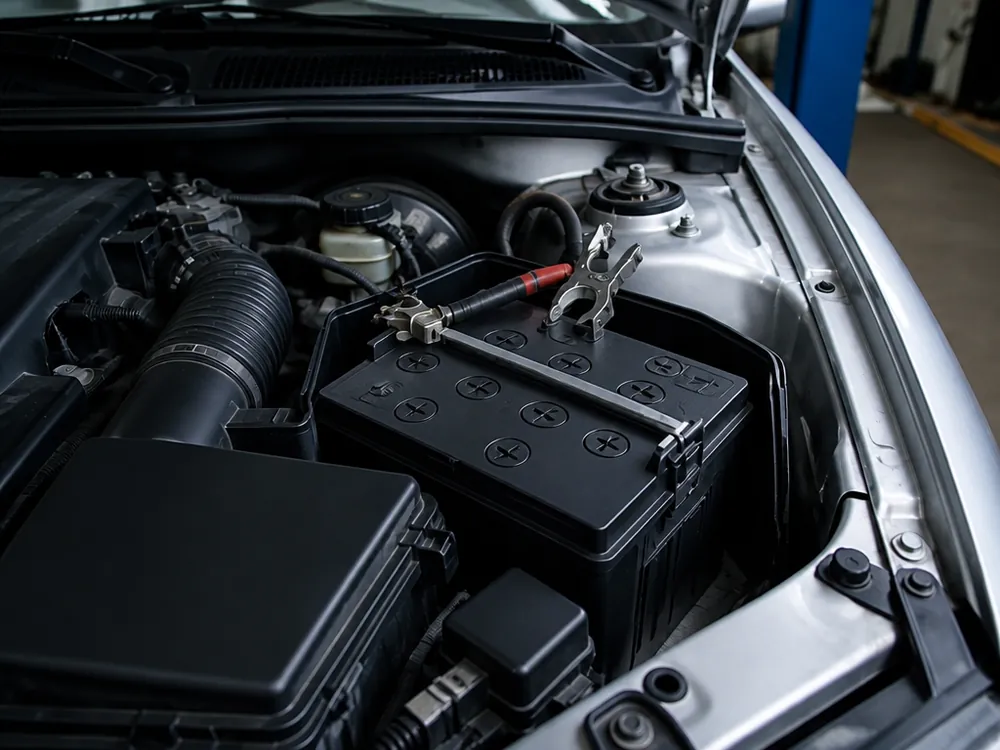
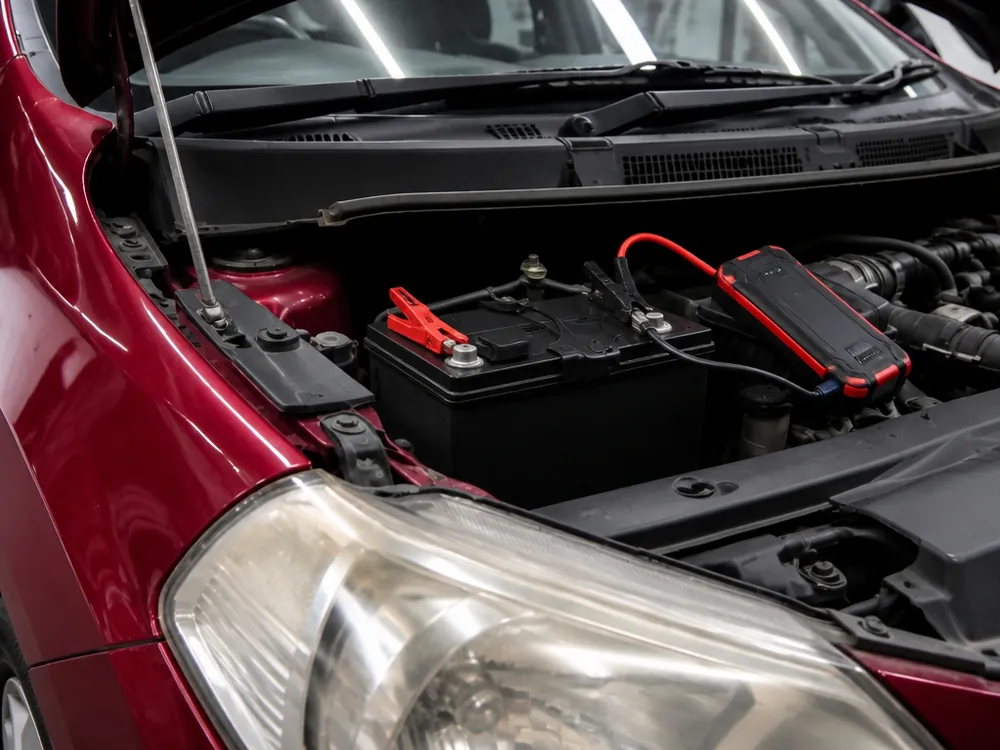
- Booster start: we supply power directly to the terminals without removing them — ECU settings, clock, and radio memory stay intact.
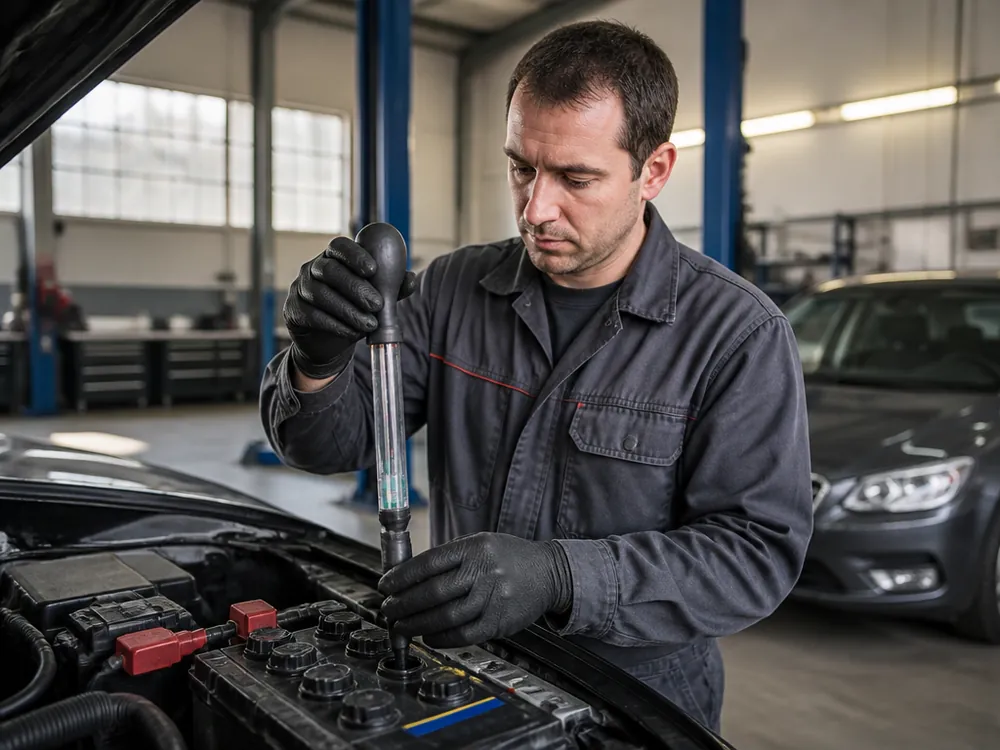
- Density check: we test the electrolyte with a hydrometer in all six cells, not just one — a single reading isn't enough to draw a conclusion.
- Water top-up: we bring the level of distilled water up to normal if the plates are exposed.
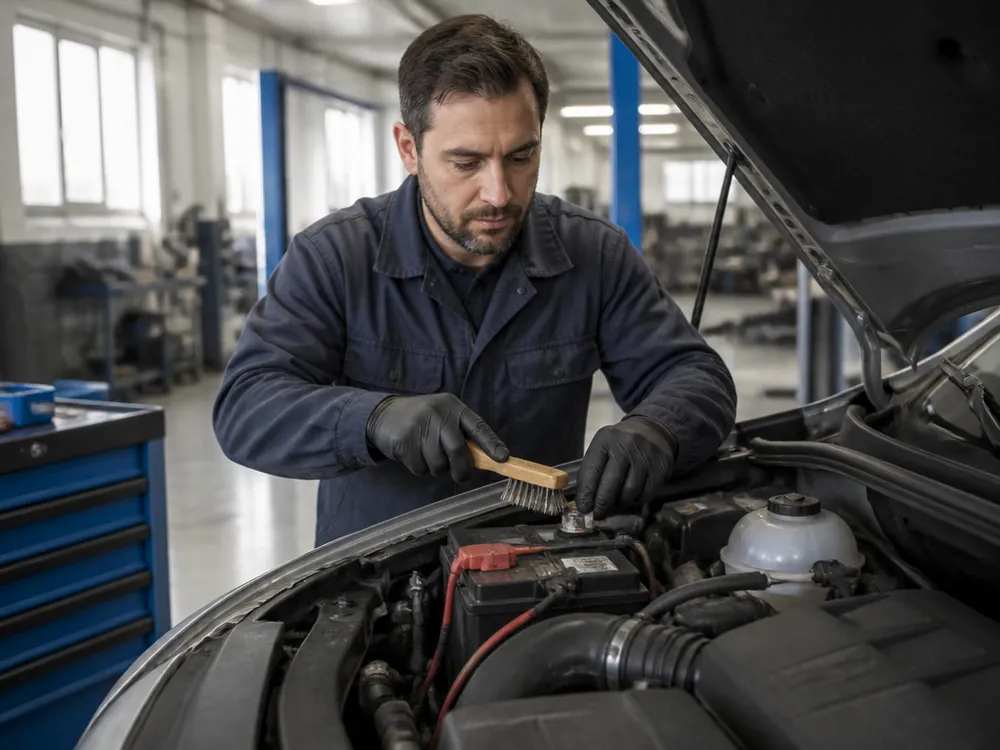
- Terminal cleaning: we remove oxidation with a brush down to bare metal and apply protective grease for a tight contact.
- On-site charging: if needed, we charge the battery without removing it or driving to the shop.
Jump start, charge, or replace the battery
choosing between a jump start, charging, and battery replacement| Situation | What the measurement shows | What we do |
|---|
| Density is normal in all cells | even readings | jump start with a booster |
|---|
| Density has dropped evenly | deep discharge | charge on site |
|---|
| Noticeable spread between cells | shedding of plates | recommend replacement |
|---|
| Terminals are oxidized | poor contact | clean and treat |
|---|
How to jump start a car from another battery safely
The main fear when supplying power is damaging the control unit or resetting settings. Let's explain how we connect a booster and why the electronics stay safe after starting.
Why we connect the booster without removing the terminals
We connect the booster directly to the terminals without removing them — this way the ECU settings, clock, and radio memory are not reset, and the driver doesn't have to reconfigure the car. Power to the control unit is continuous, and the electronics don't go into reset mode. The owner doesn't need to set the time, sync the phone with the radio, or remember which functions turned off. Removing the terminals on modern cars resets throttle and transmission adaptations, and for the first few kilometers the car may run rough until the control unit relearns. This is most noticeable on models with an electronic gas pedal — RPMs stay high and shifts are delayed. That's why during a booster start we don't touch the mounting at all, and work only with the contact point.
Checking polarity and starting current when connecting
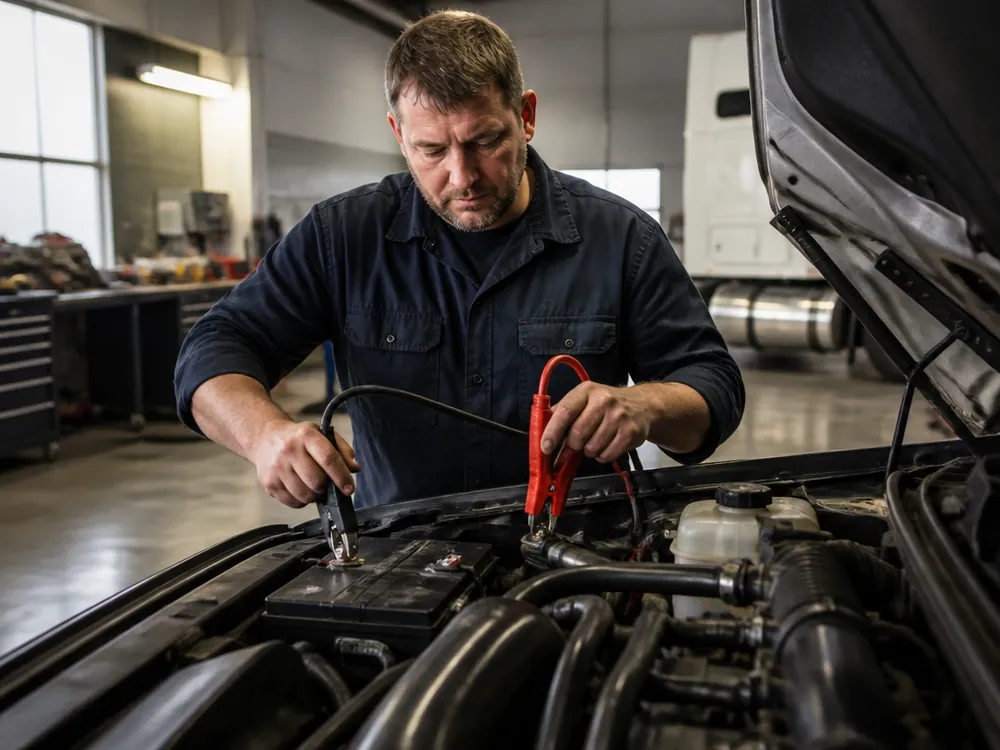
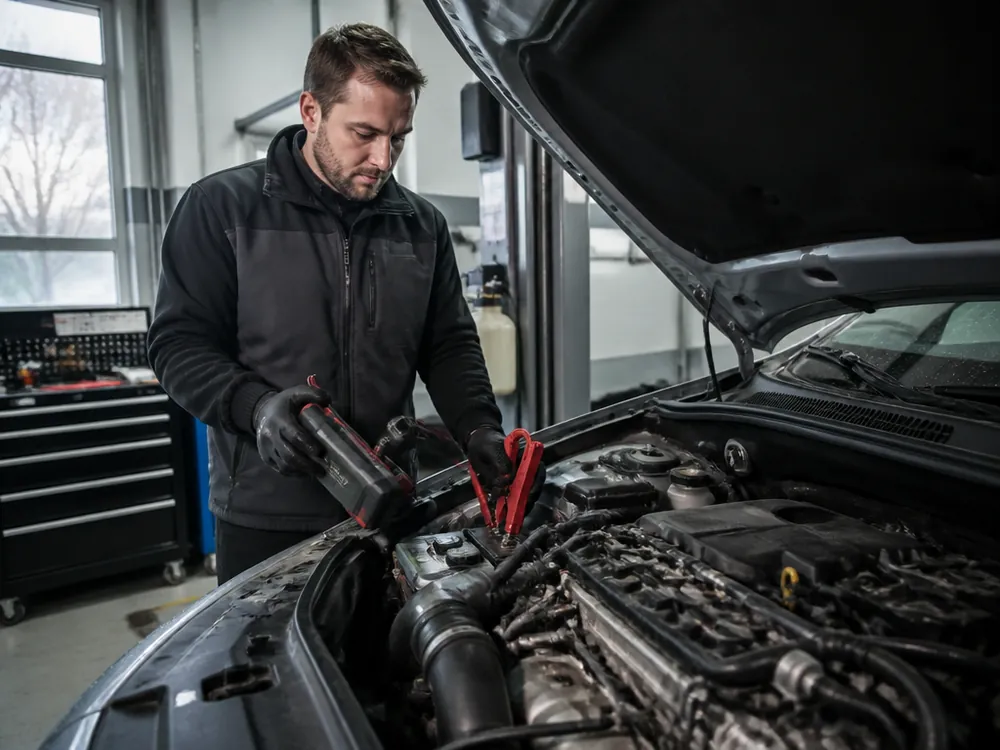
Before connecting, we check the polarity of the terminals and match the booster's starting current to the engine size — it's different for a gasoline engine and a diesel, and the wrong mode is exactly what creates a risk for the electronics. On a compact booster for a gasoline engine, the current stays in one range; for a diesel with preheating, a higher reserve is needed, otherwise the starter cranks sluggishly and drains the remaining charge. We set the engine start mode from the booster according to the device's datasheet, not by eye: each model has a peak and working current, and exceeding the peak heats up the wiring. If you mix up plus and minus, the first thing to suffer is not the battery but the fuse box and relays — so we check polarity twice, before touching the terminals. The red cable goes to plus, the black to ground, and only then is power turned on.
Cleaning and treating terminals as part of the jump start
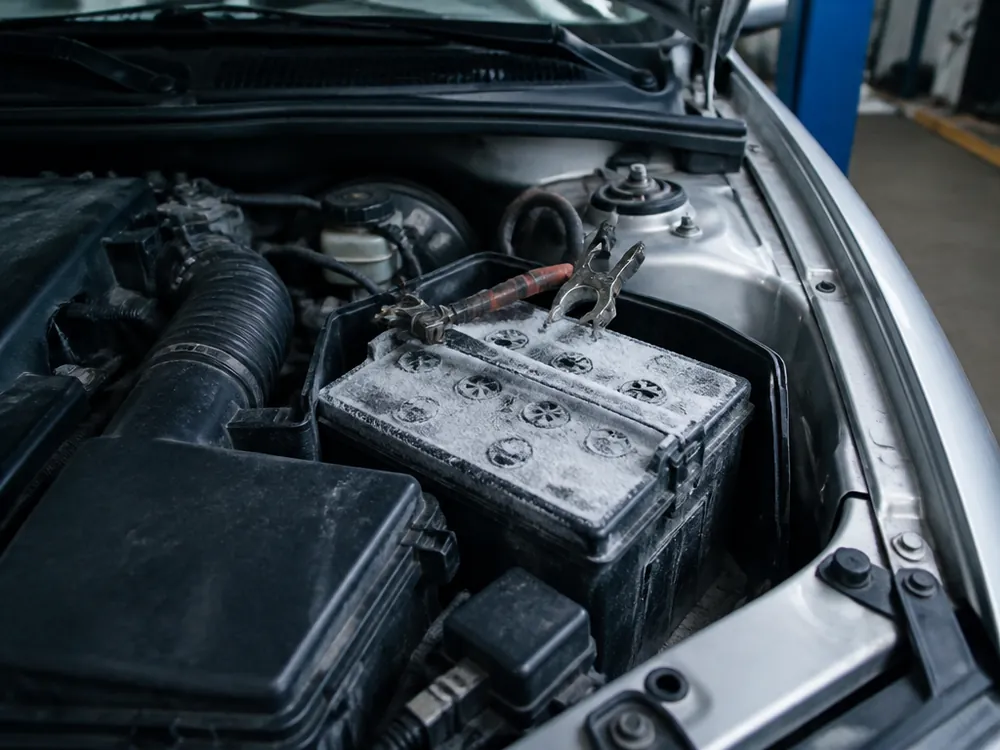
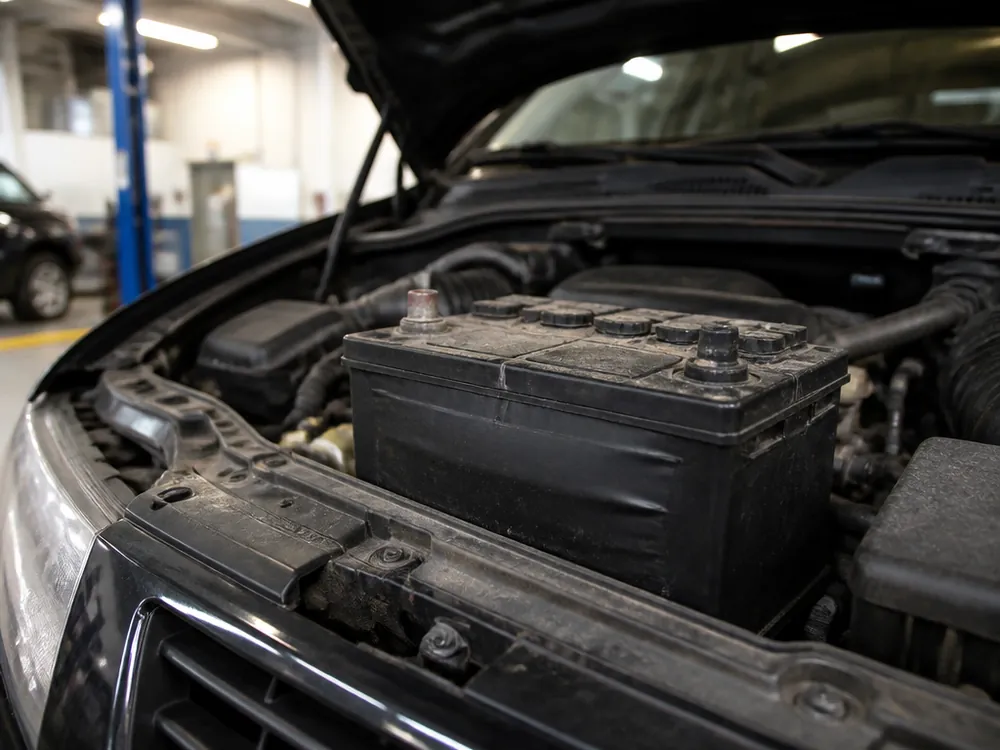
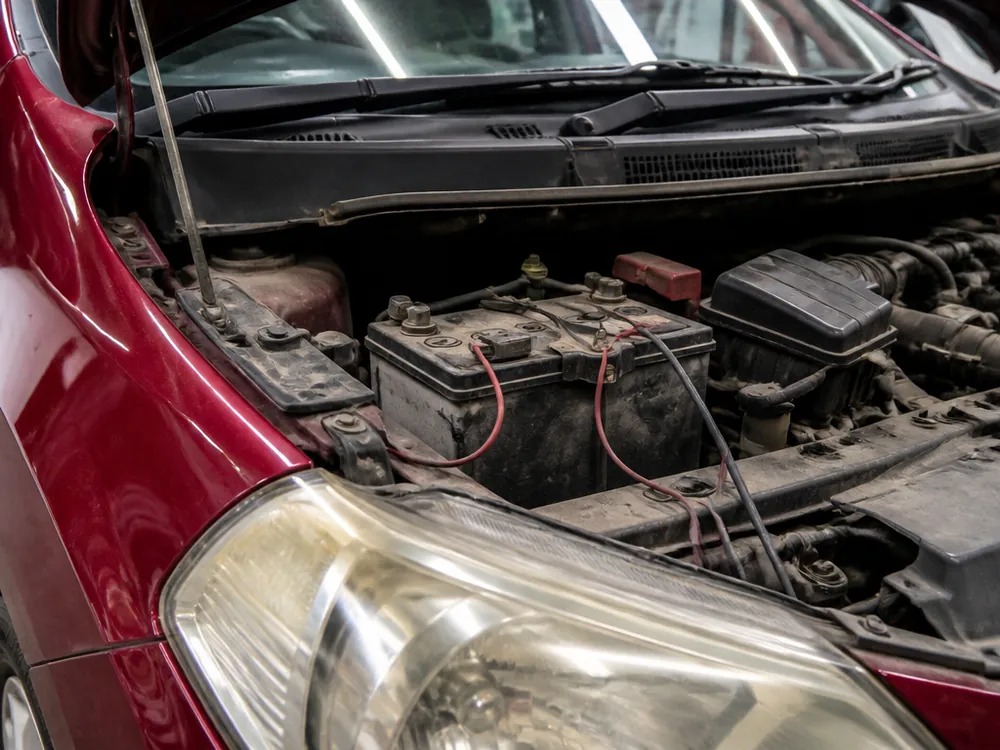
We remove oxidation from the terminals with a brush down to bare metal and apply protective grease — the contact becomes tight, and current leakage through dirt stops. The white coating isn't cosmetic; it's sulfates that act as resistance: even a charged battery won't deliver the needed starting current through them. Often a call about a "dead" battery ends with cleaning the contacts rather than replacing the battery — after treatment, the car starts on the first try. We also check the mounting bolts: a loose contact heats up and gradually melts the plastic around the terminal. Cleaning takes a few minutes and is included in the call-out; we don't count it as a separate procedure. After treatment, the technician checks the voltage at the terminals under load again to make sure the contact holds current and the battery accepts charge. If the battery holds charge after power is supplied, it doesn't need to be replaced.
How to properly jump start a car from an external source
A diesel engine, a four-wheel-drive SUV, and a truck up to 5 tons start differently — discharge strength, warm-up, and catch time vary. Let's explain what we take into account for each type of vehicle.
Jump starting a diesel with preheating
We jump-start diesels with a pre-start glow cycle — the glow plugs need to run their full cycle before you try to start, otherwise the starter cranks but the engine won't catch. After connecting the booster, we wait for the glow indicator on the dash to go out, and only then turn the key. A diesel engine has a higher compression ratio than a gasoline one, so the crankshaft needs more effort to turn — a weak battery can't deliver the needed RPM here, and the starter just drains. In winter in Almaty, after starting, a diesel should idle longer than a gasoline engine: cold fuel thickens, and for the first few minutes the fuel pump works under increased load. That idle warm-up decides whether the car drives on its own or stalls a block later.
Jump-starting SUVs and truck engines up to 5 tons
We jump-start SUVs and trucks up to 5 tons with a high-output booster — they have a bigger engine and a stronger starter, so the regular passenger-car mode won't cut it here. An all-wheel-drive vehicle also has a higher-capacity stock battery, so a weak booster will only wake up the electronics but won't turn the crankshaft. A truck up to 5 tons often has not one but two batteries wired together — you have to connect with the wiring in mind, otherwise the second battery stays drained and the same story repeats in the morning. Before we head out, we confirm the engine size and the number of batteries so the technician brings a booster with the right power and doesn't have to come back. That saves one trip: the wrong mode is the most common reason heavy vehicles have to be started twice.
How jump-start modes differ by vehicle type
comparison of start modes by vehicle type| Vehicle type | What we consider | Start specifics |
|---|
| Passenger gasoline | standard output | start right after connecting |
|---|
| SUV | high output | more powerful starter and battery |
|---|
| Diesel | pre-start glow | wait for the glow plug cycle |
|---|
| Truck up to 5 tons | deep discharge, battery wiring | may have two batteries in a bank |
|---|
What to do after the jump start and why the engine stalls
The car started, but that's not the end. Here's what to do in the first minutes, why the battery may be dead again in the morning, and what the dash icon means.
What to do right after the car starts
- Don't shut it off right away: let the engine idle so the alternator can recharge the battery.
- Remove the booster carefully: disconnect the negative terminal first, then the positive, to avoid a spark near the gases.
- Check the voltage: the technician measures it at the terminals — with the engine running, a healthy alternator holds the operating voltage.
- Go for a drive instead of parking: a short trip home won't restore the charge, the alternator needs time — plan a longer route in the coming days.
Why the car won't start again after a jump start
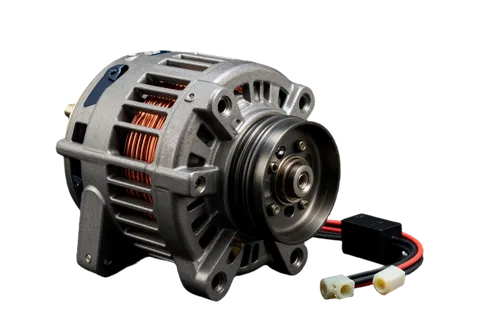
If the car won't start again in the morning, the cause is usually not the jump start itself but a current leak, a worn battery, or a faulty alternator — we find it with diagnostics, not by repeating the procedure. A deep discharge triggers plate sulfation, and the battery capacity drops irreversibly: each next attempt brings replacement closer instead of solving the problem. We check the leakage current across circuits, the alternator condition, and the battery's remaining capacity. A repeat call for the same car most often ends with a battery replacement, not another jump start from an external source. In freezing weather, capacity drops anyway, so it's worth checking the battery before winter — that way you won't end up with a dead battery at the worst possible moment.
What a dash error after starting means
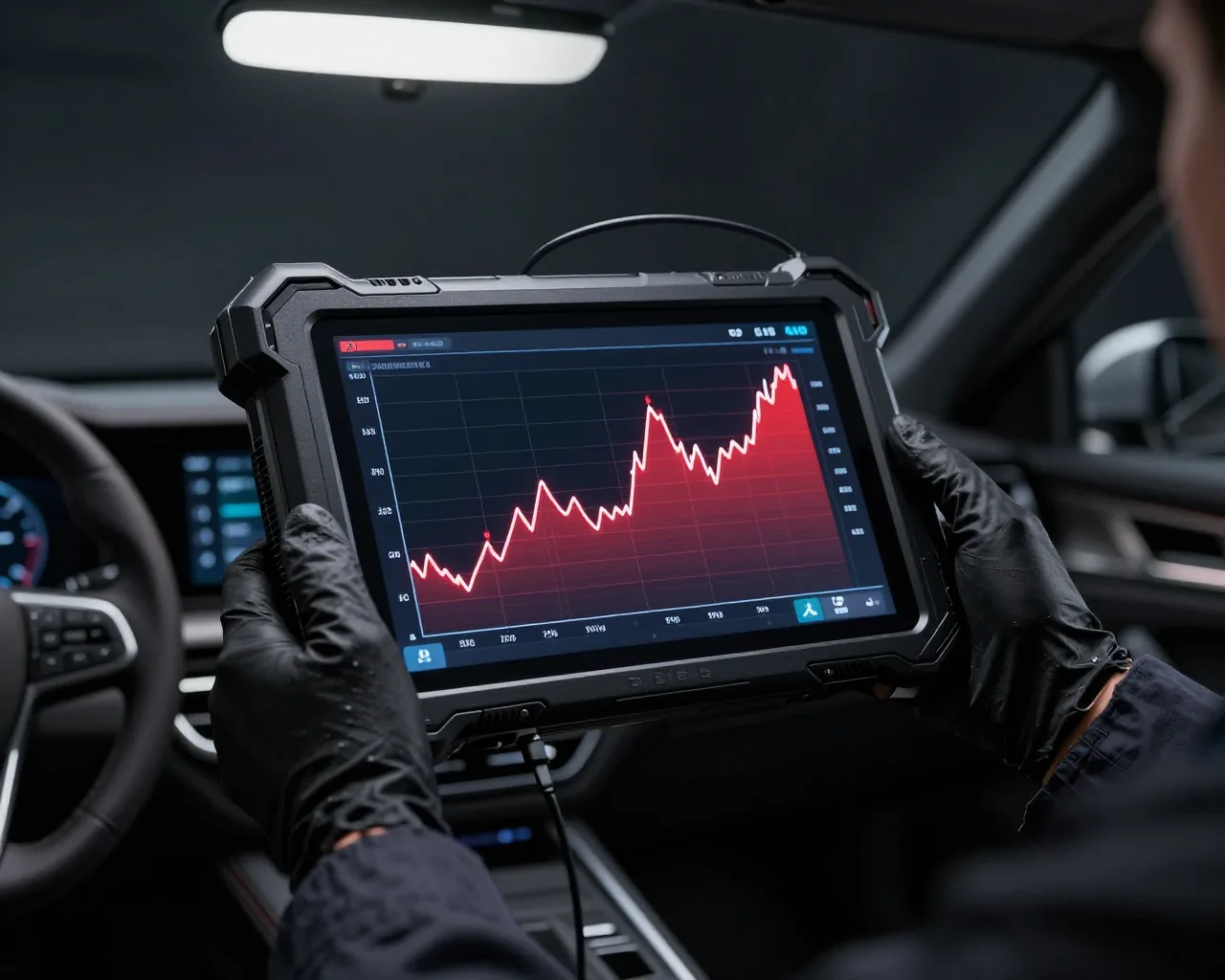
A dash error after starting is most often caused by a brief voltage drop — we read the codes with a dealer scanner for 40+ brands and see whether the error clears after the charge stabilizes. Some of these codes relate to ABS, stability control, and airbag electronics: during a voltage dip, the modules log a fault and light the icon. If the light goes out by itself after a few start cycles and a drive, there's no reason to worry. When the error persists, the scanner shows the specific module and code, not an abstract "system fault" — that's how the technician determines which system to check next. Our advice: don't clear codes blindly and don't disconnect the terminal "just in case" — read the cause first, otherwise the icon will come back on the next voltage dip.
How to request mobile jump-start help and what about the warranty
Booking a call-out takes a few minutes — it's important to give the vehicle type and address. Here's how booking works, what details to give the specialist, and what the warranty by type of work gives you.
How to book a call-out and what to tell the technician
- Vehicle type and engine: give the make, model, displacement, and fuel type — that's how we select the booster and start mode.
- Address and landmark: a precise location with a local landmark helps the team arrive without extra calls and clarifications on site.
- Symptoms: describe what happened — whether the lights dim, whether the starter cranks, whether there was frost overnight.
- Time load: to start the engine with a call-out, we agree on a time based on the workload — during rush hour the wait may be longer than in the morning.
- Contact: leave a number for communication, the specialist will call before dispatch and confirm where the car is parked.
What the jump-start warranty covers
We record the warranty by type of work in the work order and the completion certificate at handover — it covers the operations performed and the parts installed, and diagnostics for a warranty case is free. If you need a mobile jump start, the warranty applies to that operation too. The term depends on the type: 12 months — for the engine, electrical system, cylinder head, and timing belt, 6 months — for oil changes, brakes, suspension, and tire service, 24 months — for body repair and painting. We state the terms in the documents at handover so the client sees them before signing. The warranty does not cover an accident after repair, third-party interference, natural wear of consumables, or a part supplied by the client — these boundaries are set in advance to avoid disputes. Before signing the certificate, check the list of operations and the term — that makes it easier to argue your case if the fault returns.
Why our own technician handles the call-out, not a middleman
Our own in-house electrical specialist handles the jump start — the shop has technicians with 8–17 years of experience, and if diagnostics are needed after the start, the same shop does it, not an outside crew. Across the city we come with our own equipment: dealer scanners for 40+ makes let us check the cause of the drain on the spot, and in the workshop, on six lifts, a common rail injector test bench is available. The car is handled by the service advisor, who sees the work order through to handover, and we take photo reports at key stages. When the jump start and the follow-up diagnostics are done by one provider, the cause of the drain doesn't get lost between contractors: whoever started the engine already knows the car's history.
When a jump start is enough
Here's the main thing to keep in mind when the battery lets you down at the worst possible moment — from the first signs to deciding what to do next.
- Signs of a dead battery: a sluggish starter, a dim dashboard and weak headlights are a signal that cranking further is pointless and it's time to call a technician.
- Without removing the terminals: connecting a booster directly to the terminals preserves the ECU settings, the clock and the radio's memory, and polarity monitoring protects the electronics.
- Electrolyte density: measuring all six cells shows whether a jump start from an external source will be enough or the battery needs charging or replacing.
- Vehicle type: a diesel, an SUV and a truck up to 5 t need their own starting current and warm-up — the mode is selected in advance.
- Stalling again: if the engine dies again, the cause is a current leak, the alternator or battery wear — it's found by diagnostics, not by another attempt to revive the car.