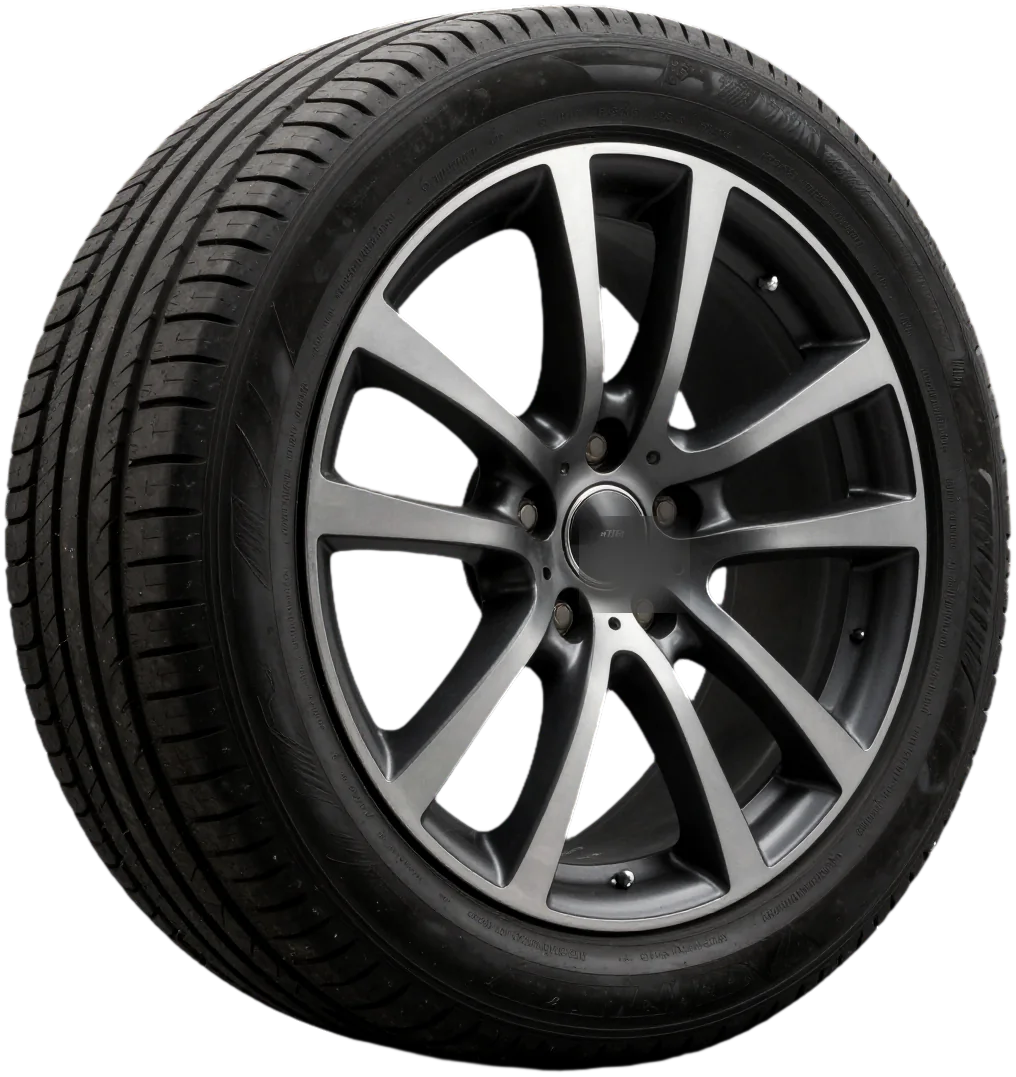
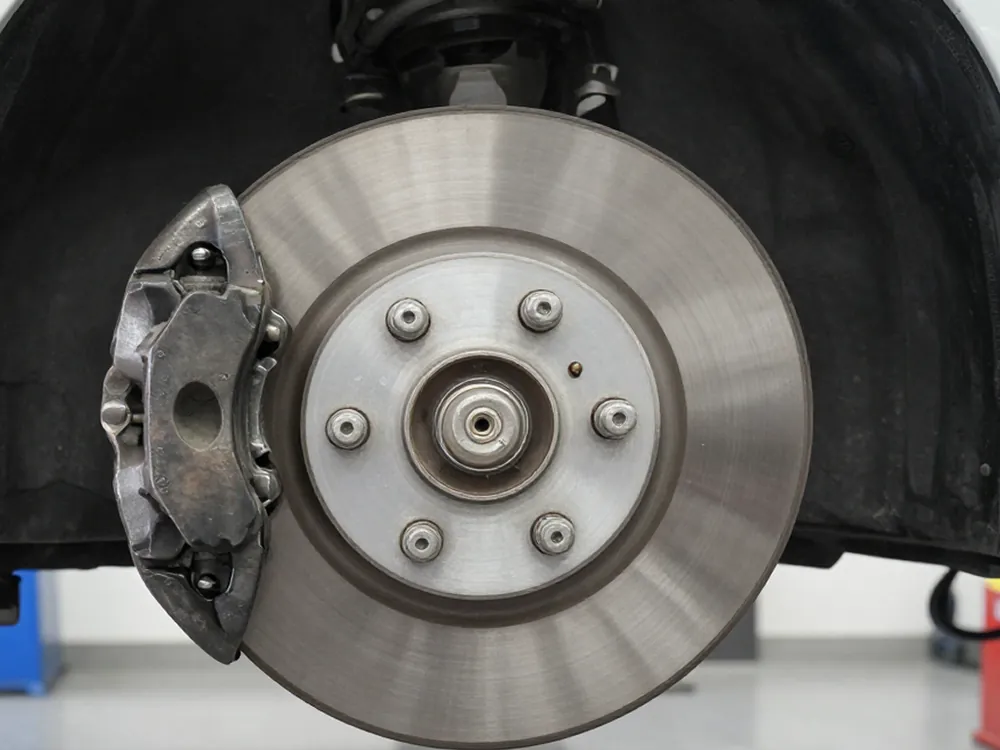
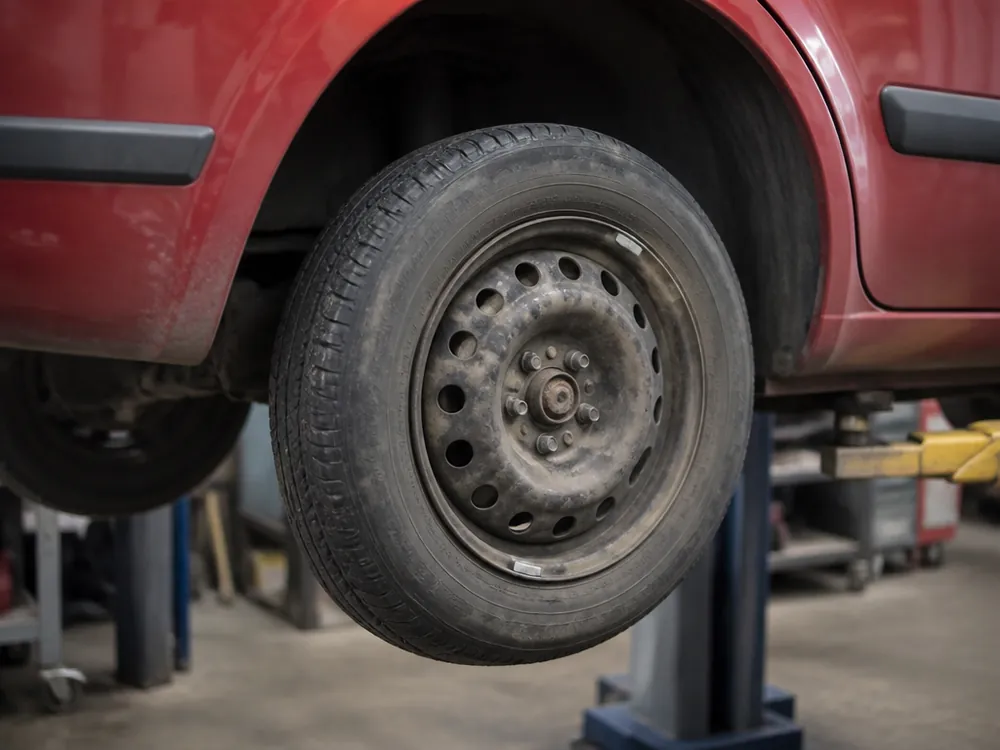
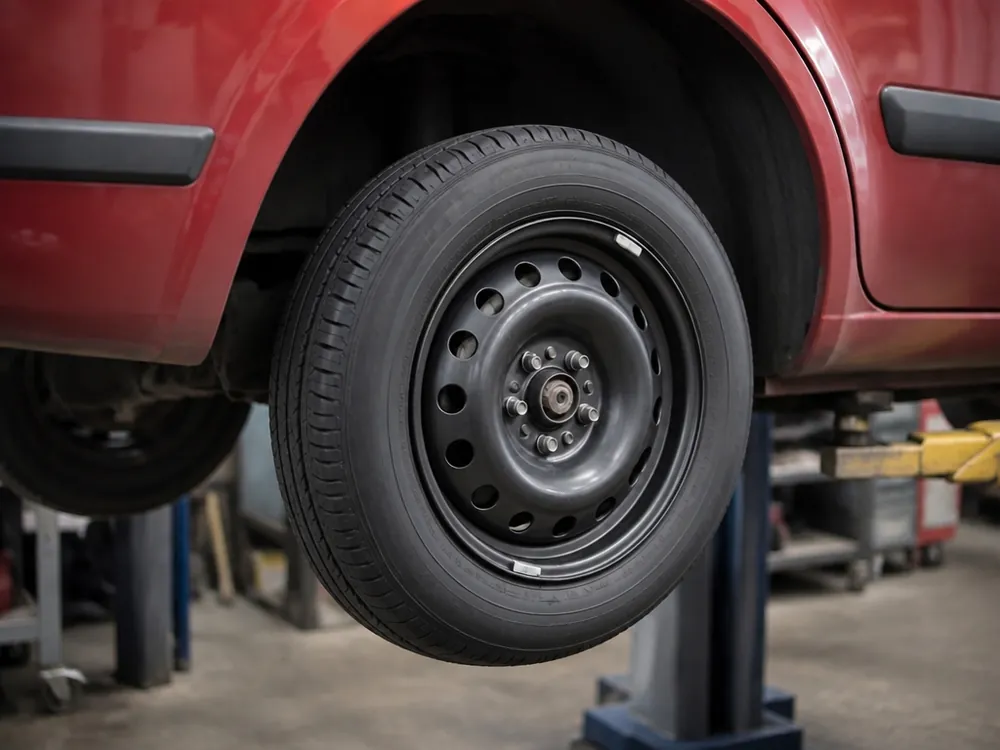
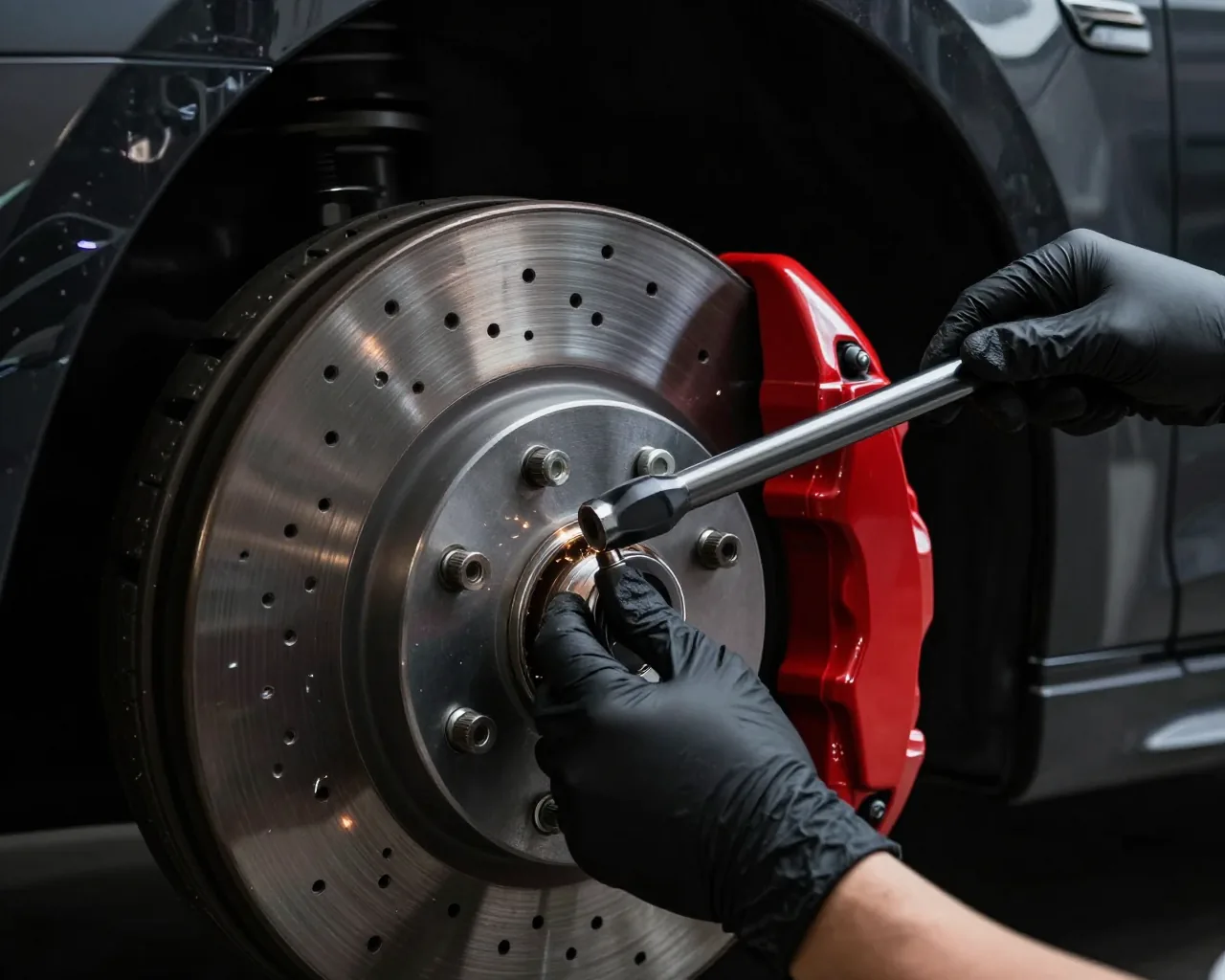
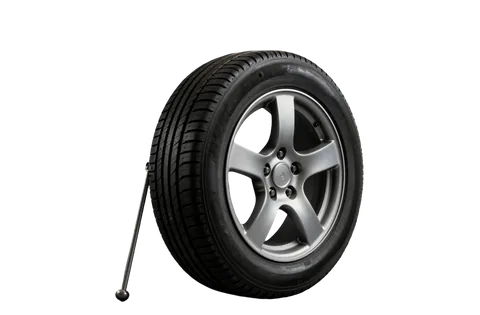
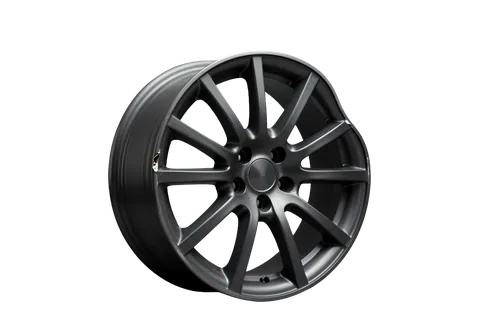
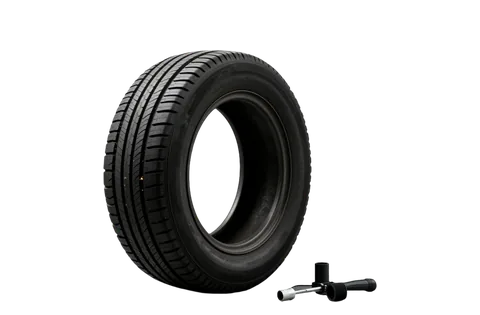
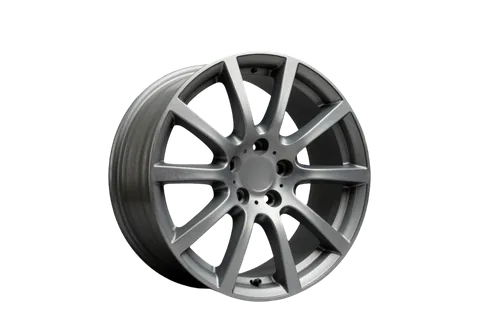
Imbalance is uneven distribution of wheel mass that turns into vibration at speed. Let's break down how to tell imbalance from other causes and when it's time to get balancing.
The main sign of imbalance is vibration in the steering wheel or body at 90–110 km/h that disappears when you slow down and gets worse when you accelerate. At low speeds the wheel mass is distributed so that the runout is barely noticeable, but on the highway centrifugal force pushes out even a couple dozen grams of excess weight. Vibration through the steering wheel usually points to the front wheels, through the body or seat — to the rear. A fallen-off weight is visible as a clean mark on the rim next to the bead seat. Look at the inner side of the wheel after a car wash: a light strip without dirt is where the balance weight was. If the steering wheel shakes only at one speed and is smooth at others, it's almost always balance, not a wheel bearing.
How Often to Balance and What Happens If You Ignore It
It's worth checking balance every 10–15 thousand km, after tire service and after a hard hit on a pothole; on Almaty roads it's better to stick to the lower end of that interval. A fresh patch, a new tire or rotating tires changes the mass distribution, so after any of these the wheel is balanced again. Constant vibration speeds up wear on wheel bearings and suspension components and slightly increases fuel consumption due to uneven rolling. The rubber also wears in patches rather than evenly, and the set wears out ahead of schedule. On Almaty roads with potholes and rails, it's better not to put off the check: a seasonal tire change and any tire repair are already a reason to stop by the machine. If you noticed after winter that the car pulls at speed, don't put off the inspection until next season.
When Vibration Isn't from Balance
If vibration appeared after an impact, is accompanied by knocking or humming on turns, the cause may be in the suspension, hub, or geometry, not balance. A hum that grows with speed and changes on turns is often a wheel bearing; knocking on bumps — worn control arm bushings or ball joints. It's easy to tell: the procedure removes speed-related vibration, while a suspension or hub defect causes constant humming or knocking regardless of acceleration. If vibration remains after wheel balancing, check alignment angles on a 3D alignment machine — incorrect geometry gives a similar picture. Start with balance: it's the fastest and cheapest check, and its result shows whether to dig further into the suspension.
How the Procedure Goes in Our Shop
We show step by step how work with a wheel goes from removal to control spin and what operations are included in the service beyond the procedure itself. This way you see what you're paying for and what details to look at when picking up the car.
What's Included in Servicing One Wheel
- Wheel removal and installation: we unscrew, remove from the car, and put back with torque tightened to the manufacturer's specification.
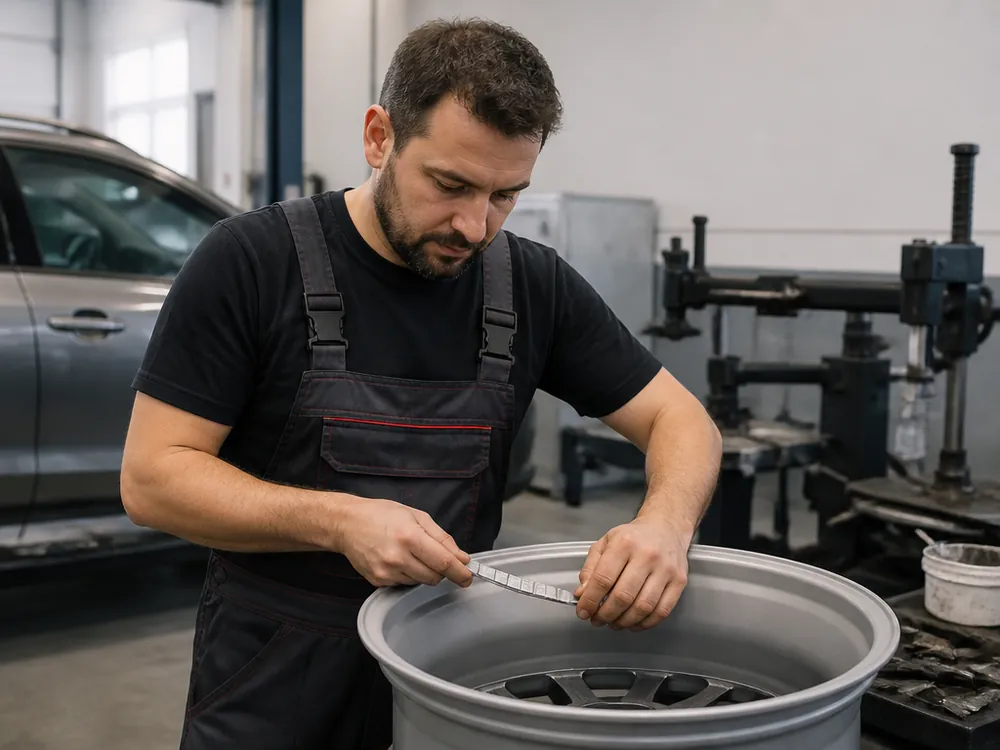
- Old weights: we remove previous weights and clean the rim's bead seat from adhesive and dirt so the new weight sits evenly.
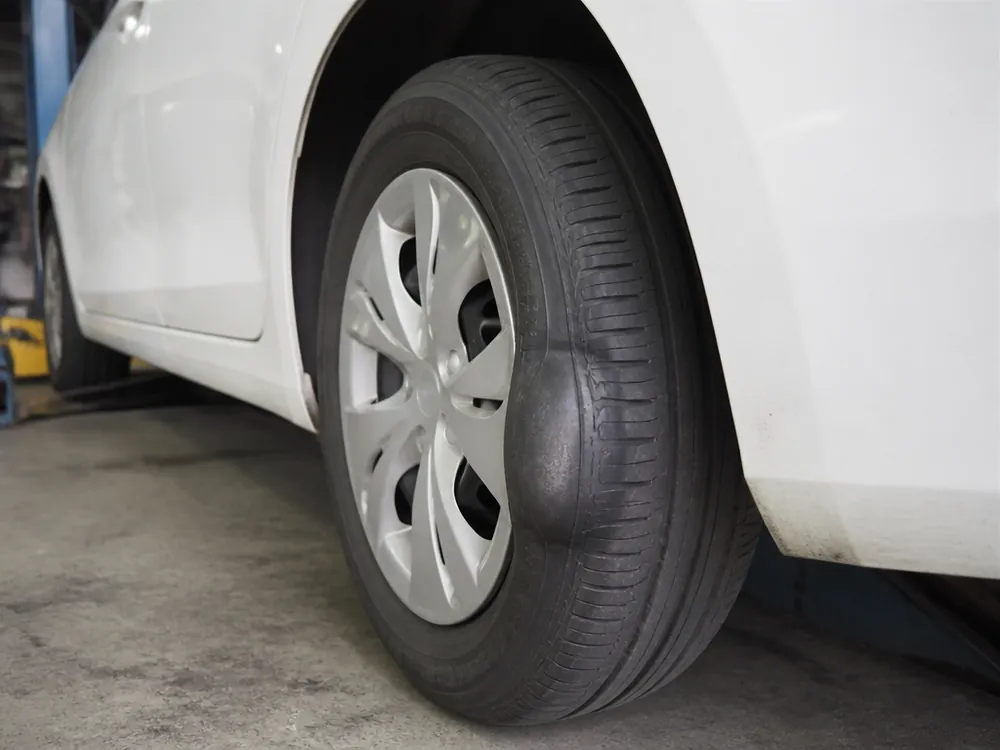
- Tire and rim inspection: we check the tread, sidewalls, and edge for cuts, bulges, and impact marks.
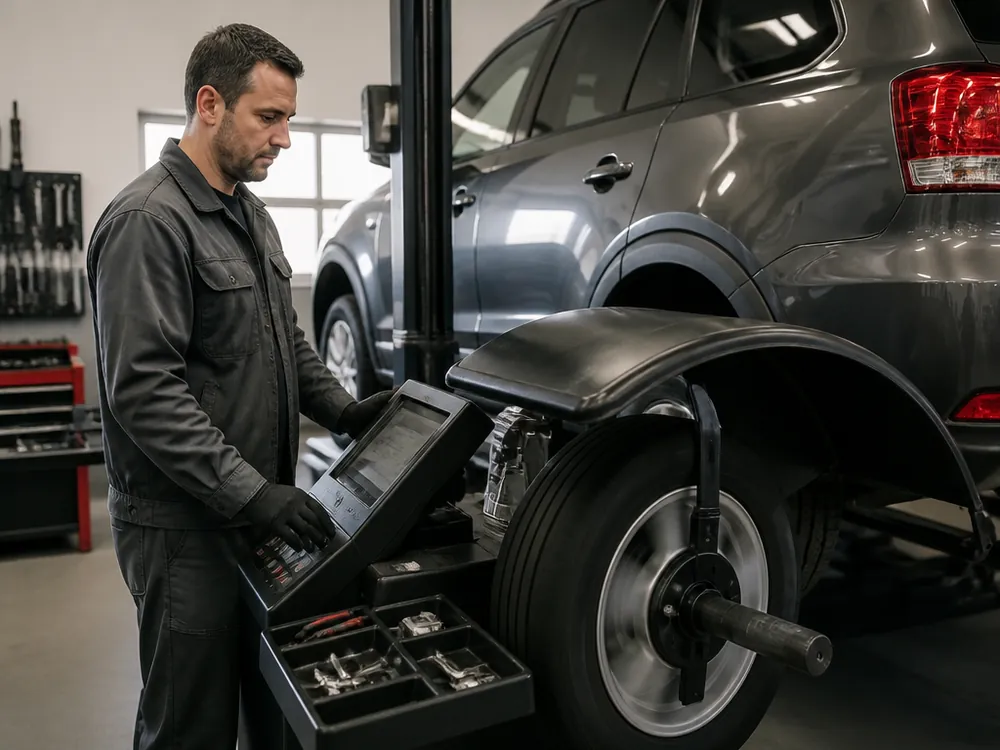
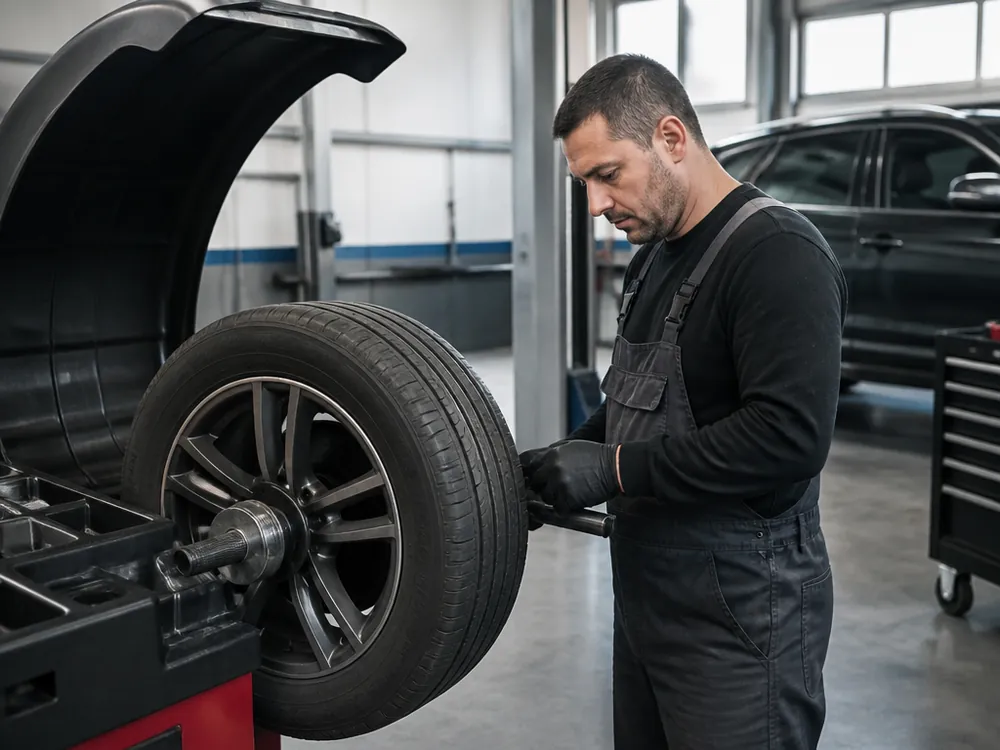
- Imbalance measurement: we put the wheel on the computer machine and get the exact location and mass of the missing weight.
- Weight installation: we select the type for the rim and attach precisely according to the machine's readings.
- Control spin and pressure: we spin the wheel again and check pressure, inflating to spec.
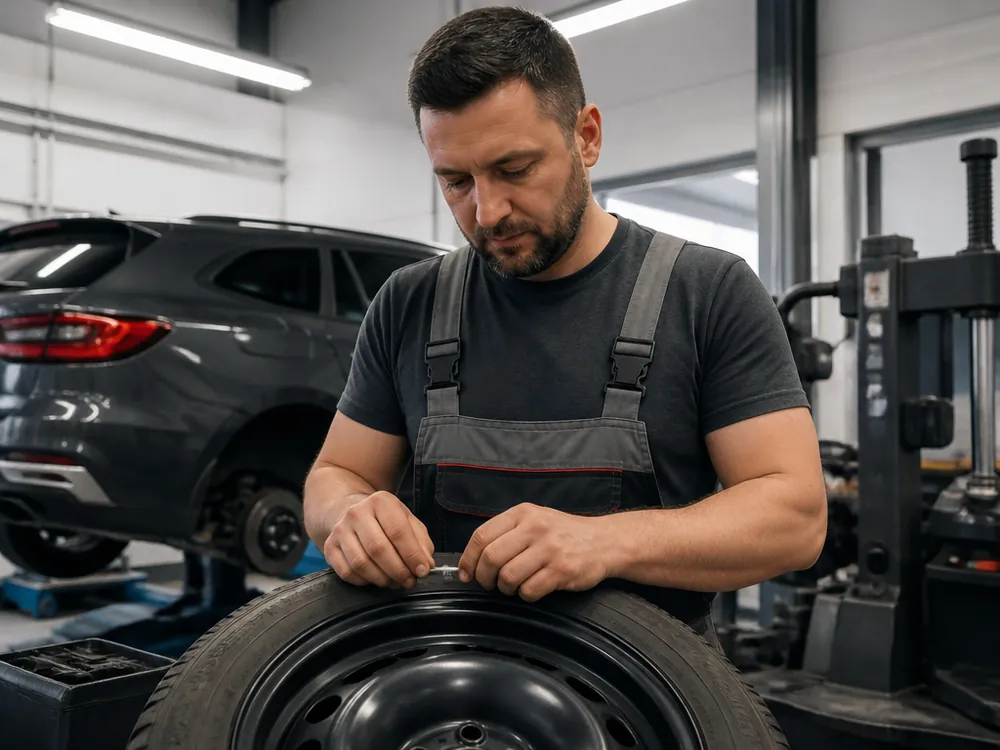
- Tire repair if needed: a puncture or cut found during inspection is fixed before the main procedure — a patch adds mass, and without this the result would have to be redone.
How Long It Takes and Why to Stop By After Tire Service
A set of four wheels takes us about 40 minutes; after tire service or rotating wheels, we always do this procedure because the tire seats on the rim differently and mass distribution changes. The machine shows: even a wheel simply moved from the rear axle to the front requires new correction — the position of weights relative to the hub is different, and the old balance doesn't match the new seating. By appointment, the car is accepted without waiting, and the service advisor manages the work order from wheel removal to delivery. Our practice on Almaty roads is simple: seasonal tire changes and any tire repair are a reason to check balance, not postpone until vibration appears at speed.
0.5 g Precision and Control Spin
We work on a computer machine with 0.5 g precision — the technician sees exactly where weight is missing and places it precisely, not by eye. Such tolerance is important for alloy rims and low-profile tires, where an extra couple of grams on the shoulder is felt through the steering wheel at speed. After installing weights, the wheel is spun again without weights: if the machine shows zero, the balance is set correctly, not "approximately." At delivery, we record the result in the work order and take photos of key stages. It's the control spin that distinguishes real wheel balancing from a quick job — without it, the technician doesn't know if the weight hit where the machine indicated. If after spinning the machine shows residual imbalance, the weight is moved and the measurement repeated until the needle reads zero.
Which Weights and Adapters Fit Your Rim
The weight must hold on the rim and not damage it. We explain which type fits alloy, steel, and low-profile, and how the rim is fixed on the machine.
Adhesive, Clip-on, and Hidden Weights
weight types for different wheels| Wheel type | Weight type | How it's attached | What matters |
|---|
| Alloy | Adhesive tape | On a degreased rim lip | Doesn't scratch the face |
|---|
| Alloy | Hidden | On the inner side | Keeps the look clean |
|---|
| Steel | Clip-on | Onto the wheel edge | Holds without glue |
|---|
| Low profile 30–35% | Adhesive | On a short spindle | Sidewall doesn't get pinched |
|---|
Cone, flange, and hub centering
The wheel is fixed on the machine with a cone, a flange, or by the hub — hub centering; for alloy wheels with a precise fit, the last option is the right one. A cone adapter sits in the center bore and works for steel wheels and general jobs, a flange presses against the hub face and is handy on steel wheels with a wide lip. Hub centering copies the fit on the car: the adapter goes into the hub bore and centers on the same diameter as on the vehicle. We keep all three types of adapters and pick the one for the specific wheel, not for whatever the tech grabs first. If you clamp it off-center, the machine shows an imbalance that isn't there on the car — and the weights end up in the wrong place. So before you book the service, ask which center they use to mount: on alloy wheels a mounting error gives a false reading of up to 20–30 g. The right adapter and weights are the key to wheel balancing in Almaty without false results and repeat visits.
Low-profile tires and large wheel sizes
We balance low-profile tires 30–35% on a short spindle — that way the sidewall doesn't get pinched and the wheel sits straight on the machine. On a 30% profile the sidewall is stiff and low, a long spindle presses against it and skews the fit, so we use a short one for these wheels. R19–R21 wheels are heavy, with a wide lip and big offset: we mount them by the hub on the machine, and use only adhesive tape weights — a clip on a wide edge holds worse and leaves a mark. For SUVs and minivans with their weight and tall profile, the standard cone and clip-on weights work. On low profile any mounting error causes noticeable vibration, so checking the result with a test spin is especially important here.
What to do if vibration remains after balancing
If vibration doesn't go away after balancing, the cause is usually not the weights. We go step by step through which components to check and in what order — from the wheel to the alignment angles.
Wheel, tire, or hub
- Wheel runout: a dial indicator on the machine shows how far the bead seat is off the circle; a deviation beyond spec can't be fixed with weights.
- Tire ovality: an uneven contact patch and a "step" on the tread cause runout even with zero imbalance.
- Wheel bearing: we check play with the wheel lifted — rocking it by hand reveals wear before it starts humming.
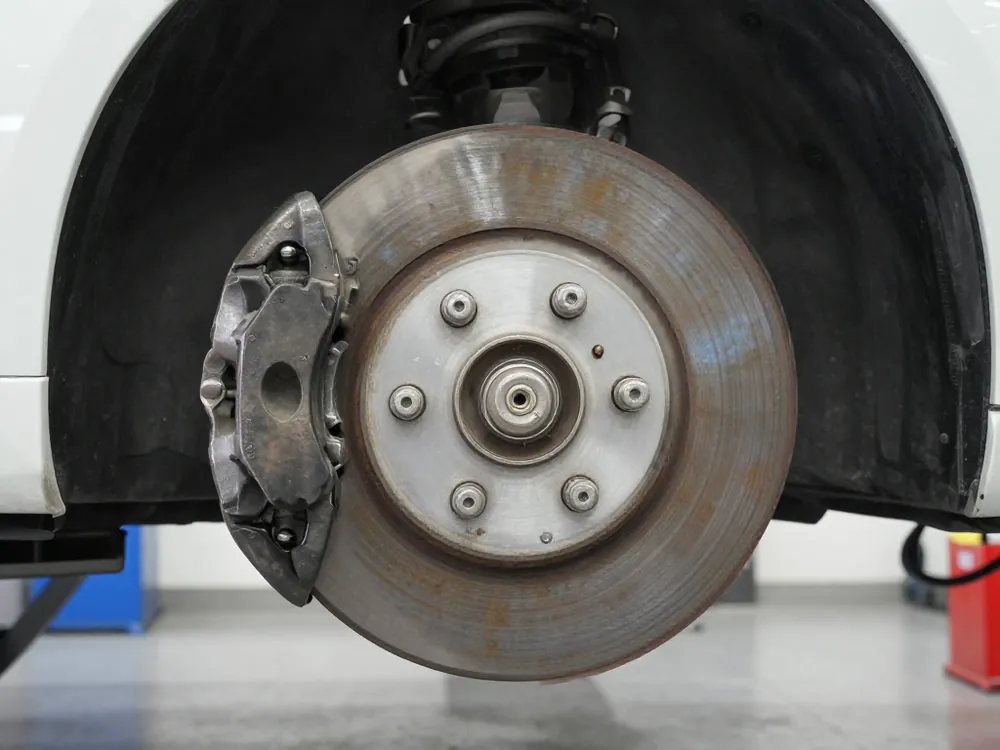
- Hub fit: rust or dirt under the wheel prevents it from sitting flat, and the rim "wanders" on the bolts.
- Fasteners: overtorqued or unevenly tightened nuts warp the wheel, so we check the torque and tightening sequence.
When it's not balance but wheel alignment
If the balance is fine but vibration and pull remain, we check wheel alignment on a 3D alignment stand — we have one in the shop. The stand measures toe and camber on all four wheels at once and shows deviations in degrees and minutes, and the tech compares them with the manufacturer's specs for your model. Incorrect angles cause uneven tire wear — patches along the inner or outer edge — which makes the rim start "kicking" again even after a fresh procedure. In our practice, a common picture: the owner comes in with vibration at speed, the balance is fine, but in fact one tire is mounted crooked and wears on the edge. So after adjusting the angles we spin the set on the stand again — that way we see the imbalance hasn't returned. Book alignment together with balancing in one visit: you won't have to take the wheels off again.
What to do if vibration appears after tire service
If vibration appears right after tire service, the wheel needs a recheck: maybe a weight fell off, the tire seated unevenly, or the pressure isn't set. First the tech inspects how the tire sits on the rim — during mounting the bead sometimes gets pinched and the wheel goes on crooked; then checks the pressure with a gauge against the placard on the door pillar, not "by eye." A test spin on the stand shows whether the balance is off: if a weight flew off, it's repositioned precisely rather than rebalancing the whole set. No need to redo all the work — just check with a test spin and reposition the weight if needed; under warranty we do the diagnostics free of charge, and the time and terms are recorded in the work order. Bring the wheel in with the same set — that way the tech immediately sees changes since the last visit.
Urgent booking, mobile service, and work warranty
We explain how to get balancing without a queue, what to do if the car won't start, and what cases the work warranty covers.
Urgent balancing and mobile service around the city
We do urgent procedures without an appointment within 30 minutes, and if the car won't start, we come to you anywhere in Almaty. The urgent format helps before a long trip and after a pothole on the highway, when you can't wait for a scheduled visit. For a mobile call, just give the address and model — the tech arrives with a machine and three types of weights to finish the job on site. Mobile wheel balancing uses the same equipment as in the shop, so the result is no different from a stationary one. With an appointment you come at your time without a queue: we work daily from 09:00 to 20:00, including weekends. A mobile call makes sense when the wheel is off or bent so badly you can't drive to the shop — otherwise it's faster to come to 129 Mukagali Makataev St., where we have six lifts and room for everyone. Book for a weekend morning — intake runs smoothly, without cars piling up by noon.
What the 6-month warranty covers
We give a 6-month warranty on the work and record the term and conditions in the work order and the completion certificate when the car is handed over. Six months is the same term as for tire service, wheel alignment, brakes and oil changes, while for the engine, transmission and electrics we give 12 months, and for the body and painting — 24. The warranty covers the work performed and the parts installed: if a wheel weight flies off through our fault, we redo it free of charge, and we do any diagnostics for a warranty case at no cost. It does not cover an accident after the repair, interference by third parties, normal wear of consumables, or a part brought in by the customer. That is why in the work order we record not only the type of work but also the condition of the wheel before we start — with that record it is easier to prove that a chip or dent was already there at check-in. Keep the certificate until the term ends.
Test drive and photo report before handover
Before handing over the car, the technician takes it on a test drive to make sure there is no vibration, and we take a photo report of the key stages of the work. The job is handled by the service advisor: he takes in the car, records the complaints and hands it back to the same customer who came in. The photo report shows which weights were installed and where, how the mounting flange was cleaned and what condition the tire was in before the procedure — the photos show which parts were changed and why. The test drive catches what the machine cannot: vibration that only shows up under load at speed. From our practice, a mismatch between the balancer readings and how the car behaves on the road comes up more often on low-profile tires and large wheel sizes, where every gram counts. If the steering still pulls after handover, come back: we will recheck and redo it under warranty.
When to Check Wheel Balance
The short version, in case vibration showed up at speed or it is simply time to check the wheels before the season.
- The first sign of imbalance: shaking in the steering wheel or body at 90–110 km/h is a reason to check the balance; as routine maintenance it is done every 10–15 thousand km and after any tire service.
- What the work includes: removing and installing the wheel, cleaning the rim of old weights, measuring on the balancer, installing weights, a control spin and a pressure check.
- Choosing weights: adhesive ones for alloy rims, clip-on ones for steel rims, hidden ones for looks; low-profile tires need a short machine spindle.
- If the shaking remains: the rim itself, the tire and the hub are checked, along with the wheel alignment angles on a 3D alignment stand.
- Warranty: balancing comes with a 6-month warranty, and the term and conditions are recorded in the work order and the completion certificate at handover.