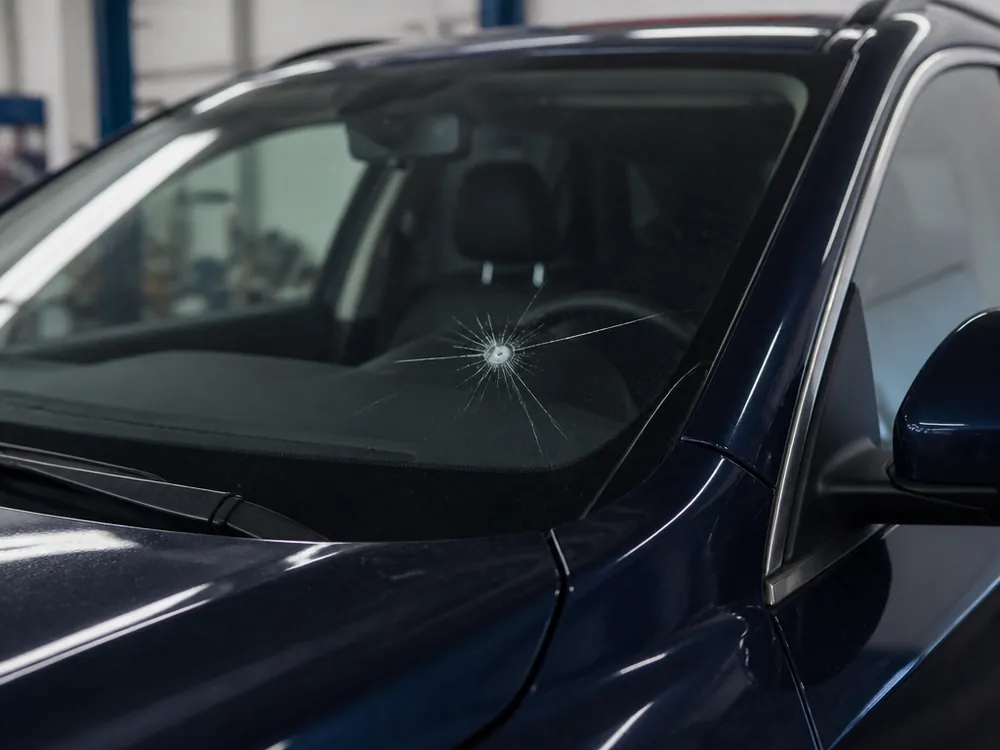
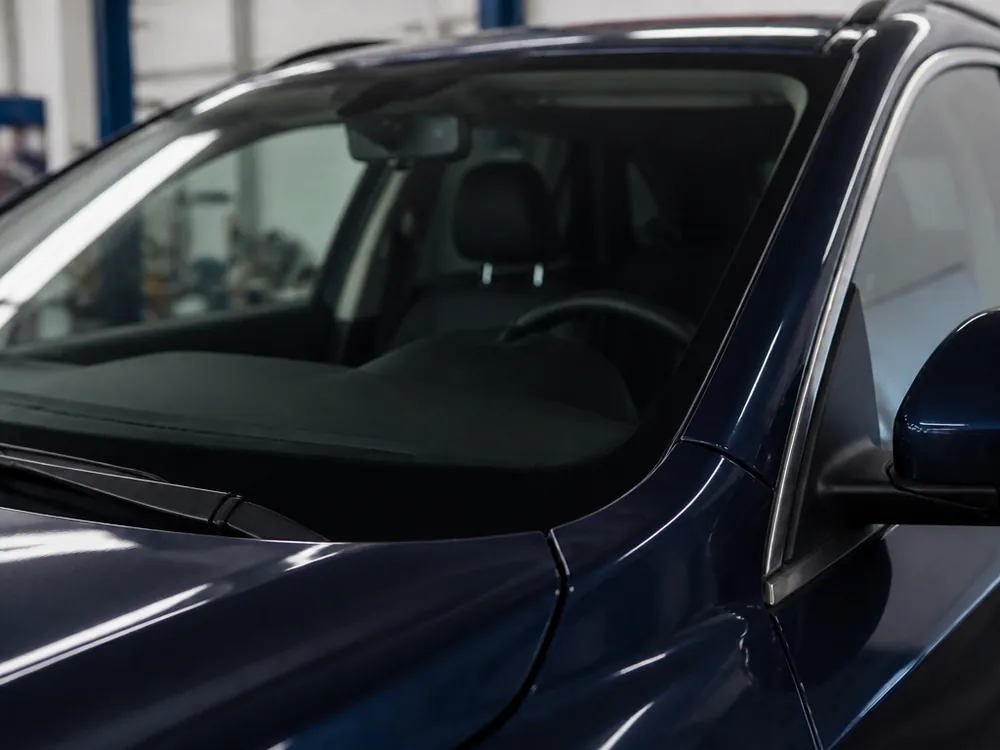
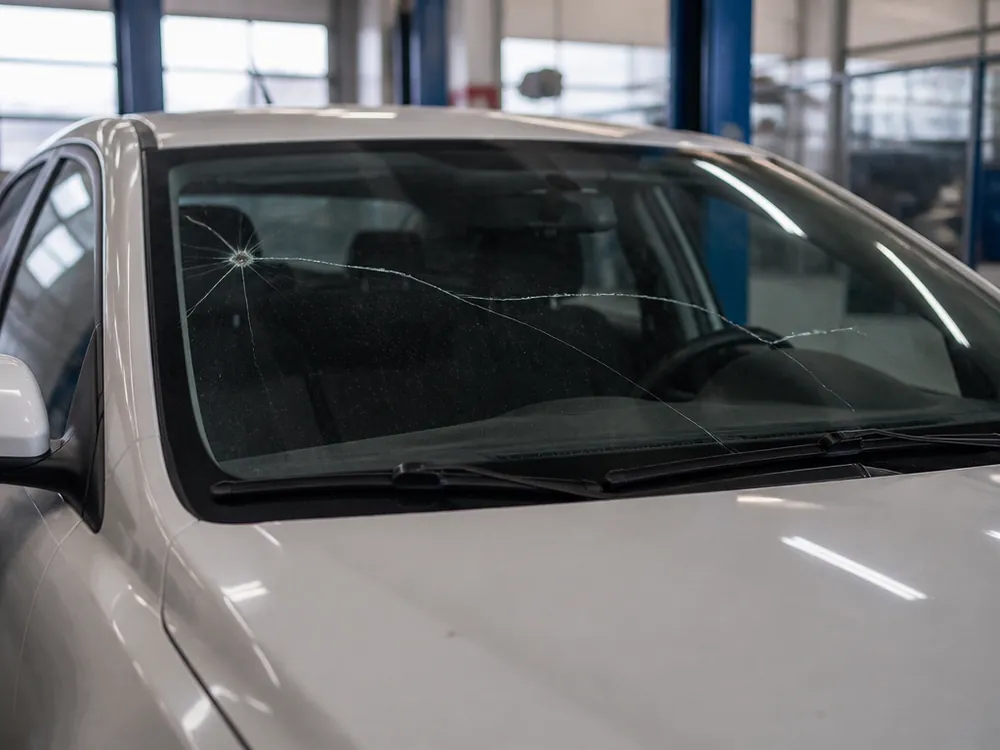
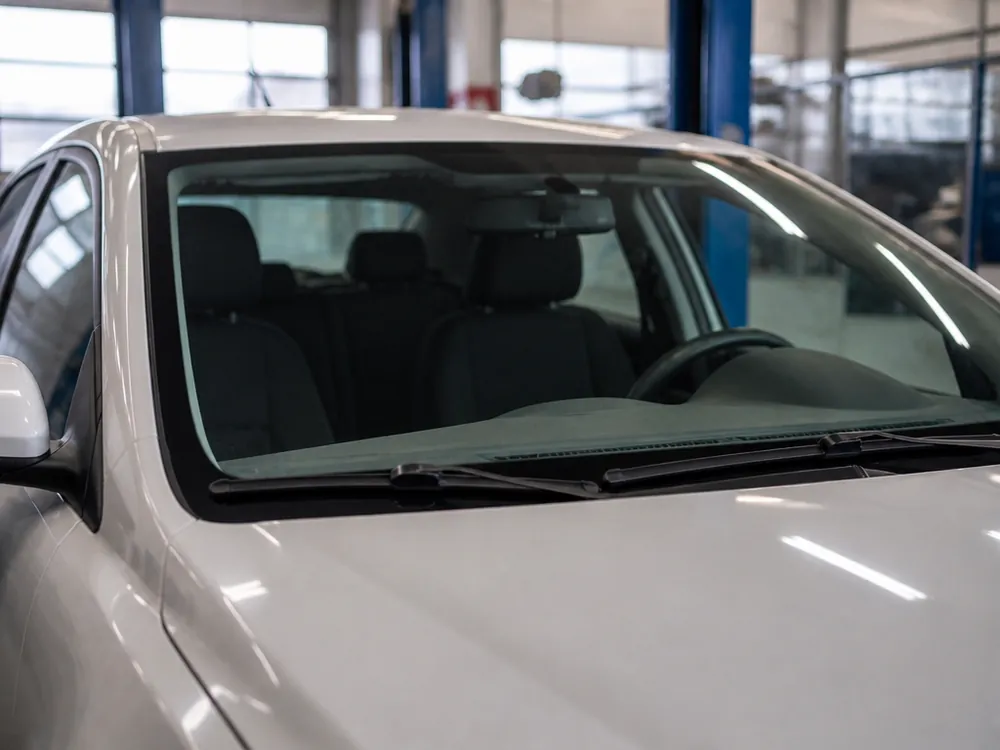
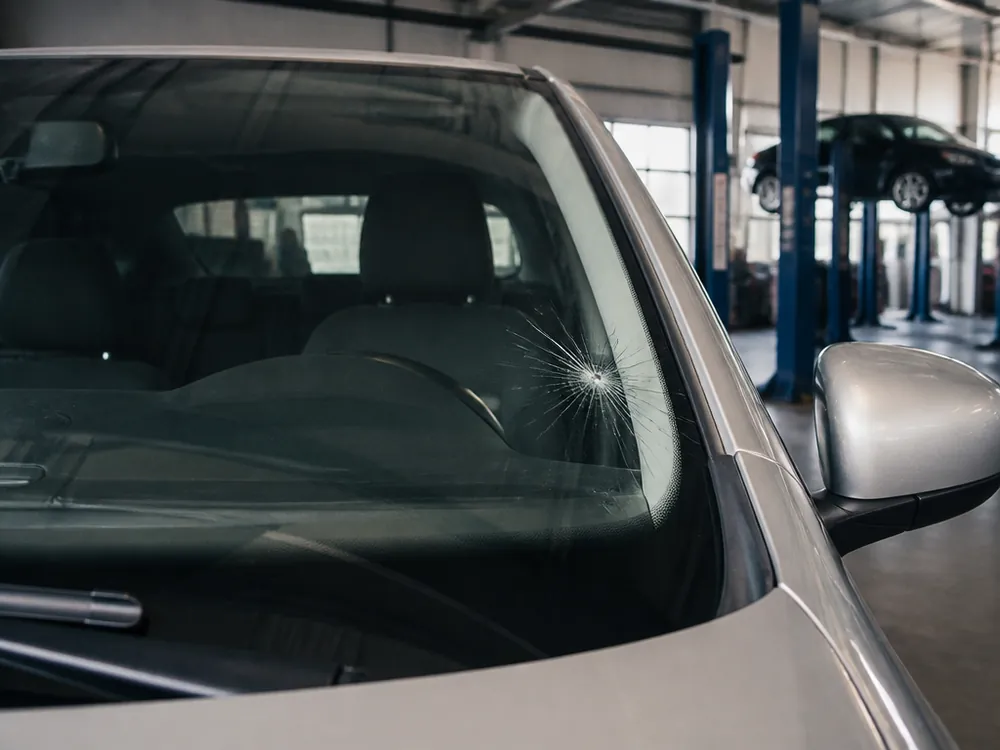
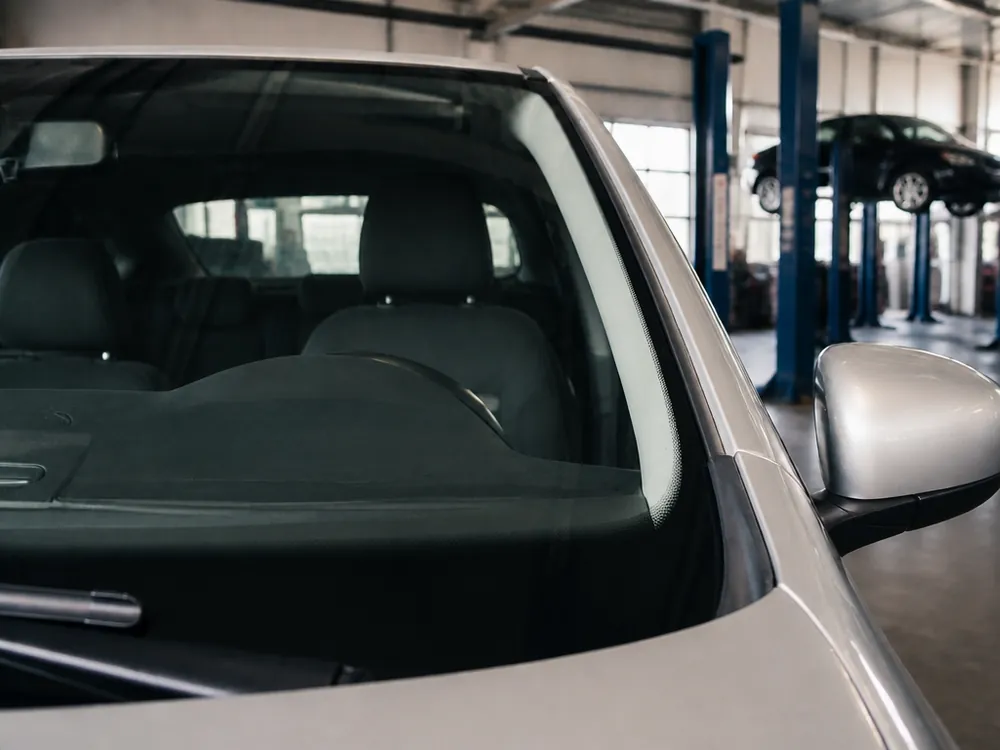
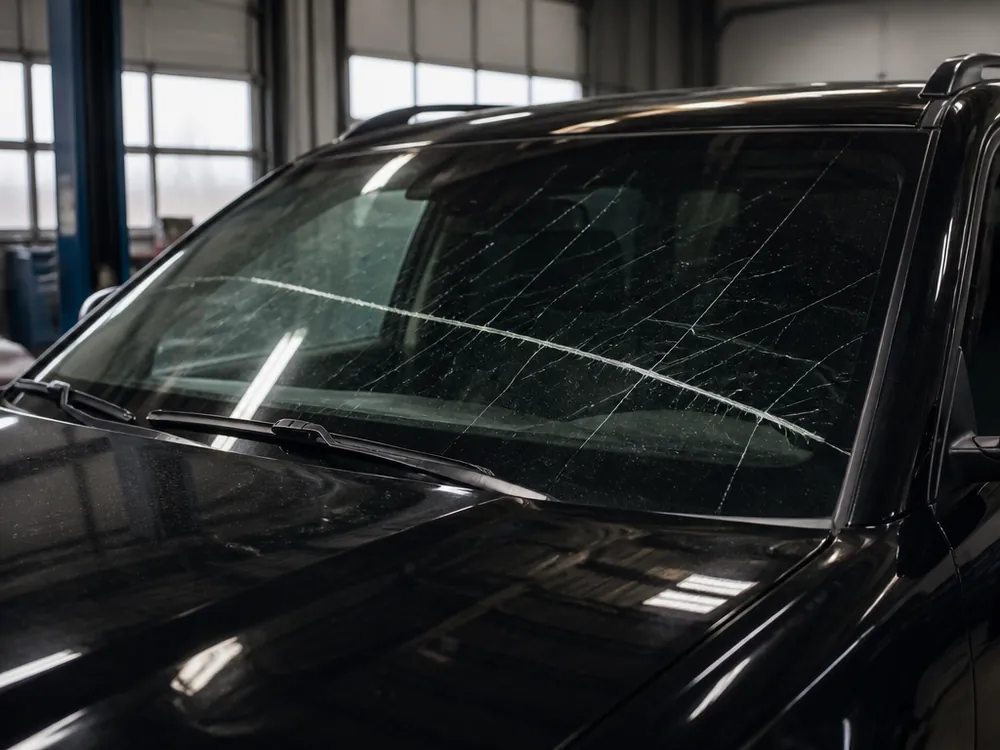
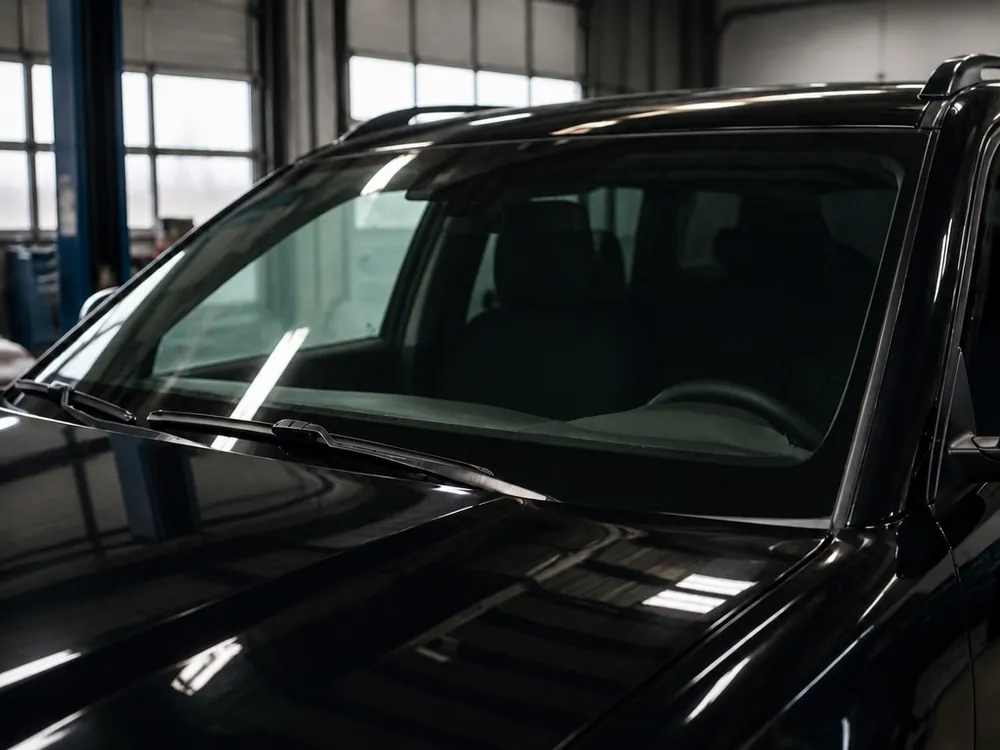
Repair isn't always the answer — it depends on the damage. Below are the size and location thresholds the technician uses to decide after diagnostics, and the cases where replacing the glass right away is the honest call.
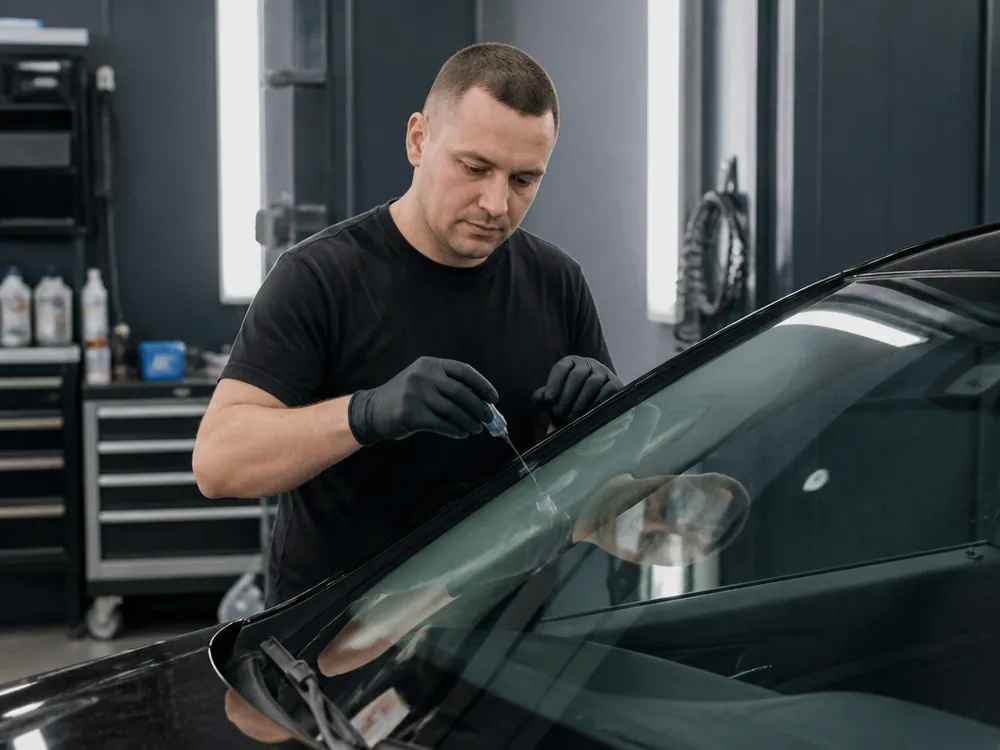
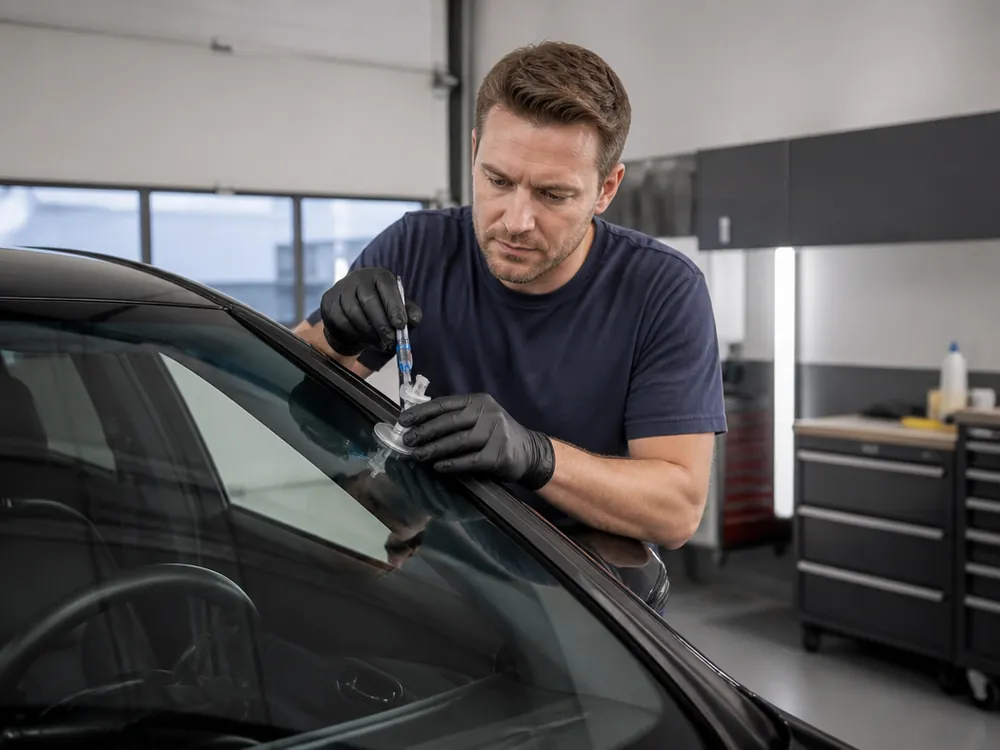
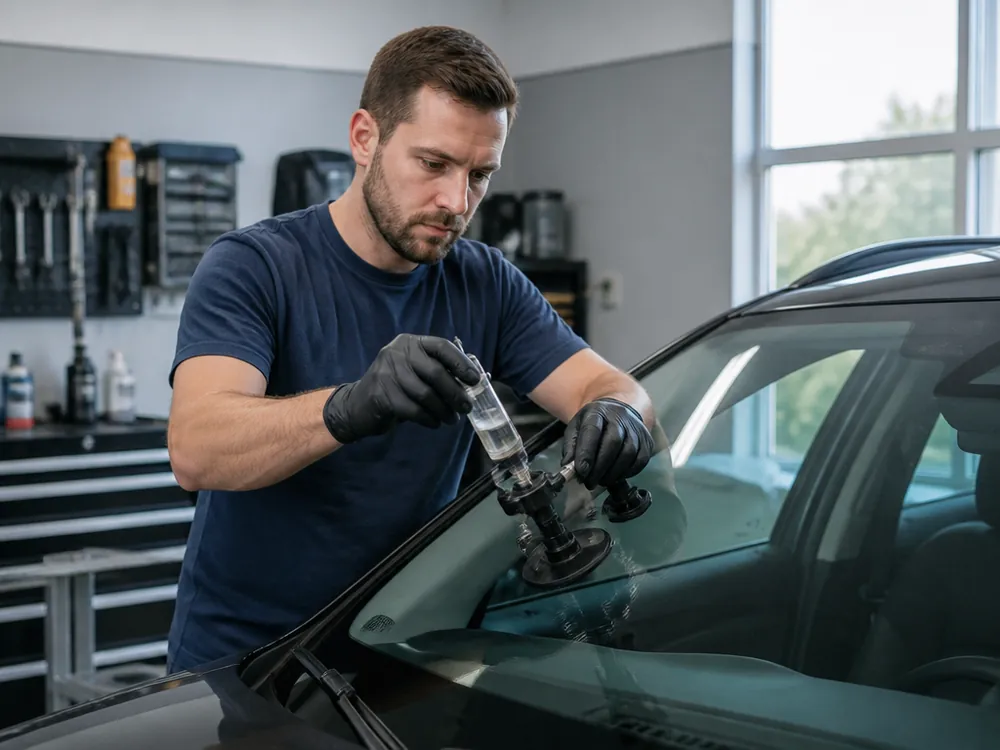
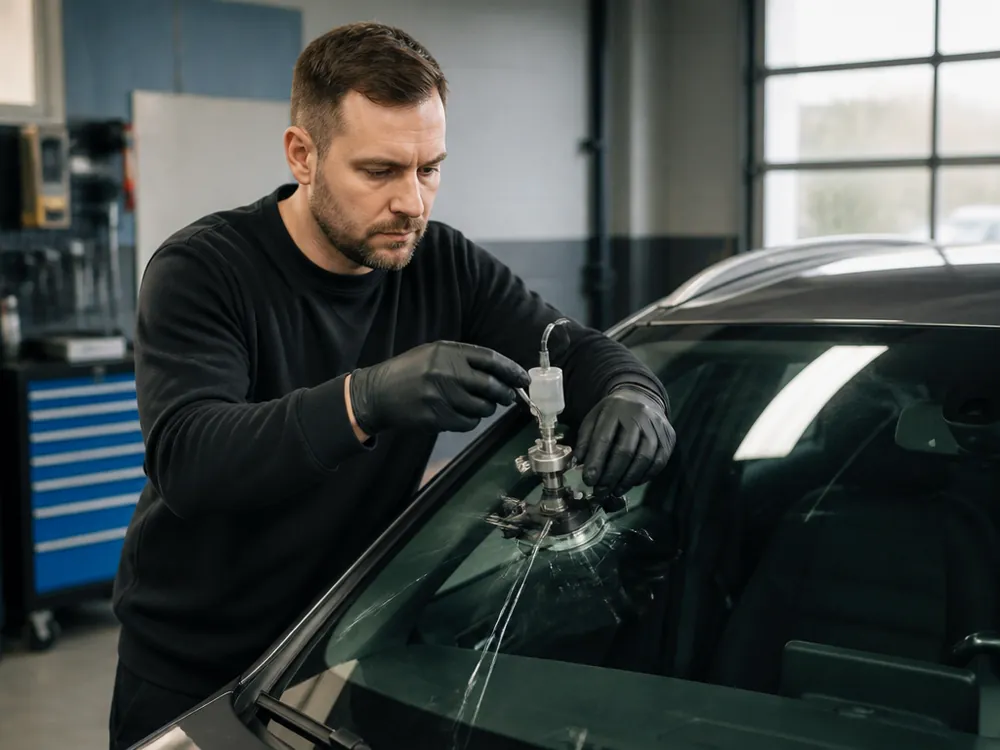
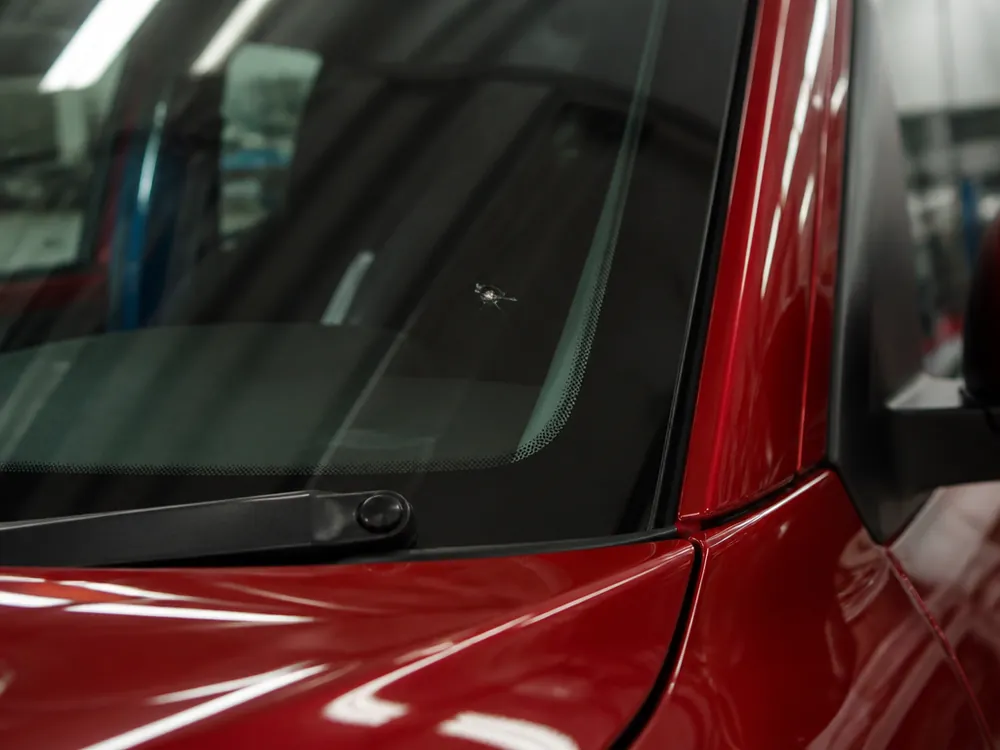
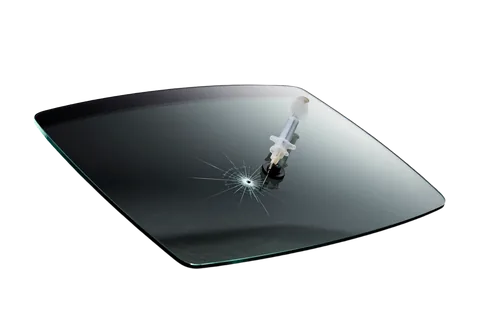
At CARGID we take on chips up to 5 mm in diameter and cracks up to 10 cm and seal them in 60 minutes — that's enough time for the polymer to fully cure. We inject the resin under pressure so it fills the entire volume of the damage, not just the top edge, then cure it with a UV lamp for 3 minutes: without that the polymer stays soft and quickly pops out of the cavity. The technician works a crack up to 10 cm along its full length and keeps it from spreading during the job. When it's done, the glass holds up under load with no distortion in the repaired area. This kind of windshield repair in Almaty takes less than an hour, and the sooner you come in, the less chance the crack runs deeper and needs its ends drilled — that's a different technique and a different result.
When repair no longer works and replacing the glass is the honest call
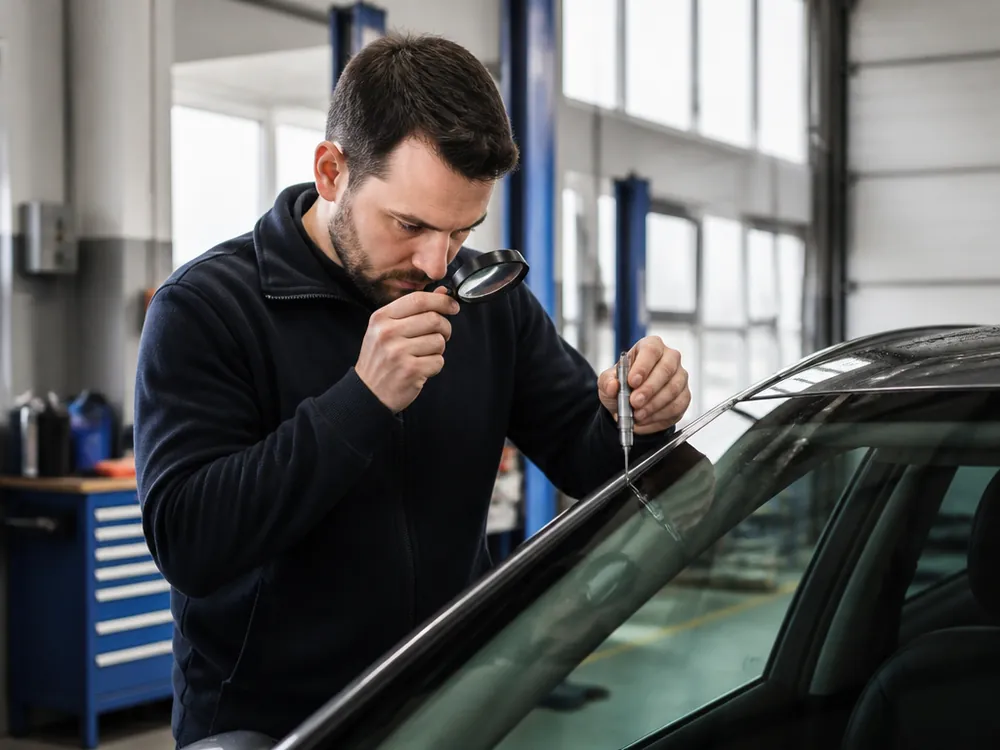
If a crack is longer than 30 cm, runs along the edge, or the damage in the driver's line of sight won't give a clear view, we tell you straight at diagnostics and recommend replacement. During the inspection the technician measures the length and depth and checks whether the damage has reached the edge — that's where the glass flexes and the polymer won't hold. Damage in the sensor and camera area also needs its own decision: repair is possible, but we discuss calibration afterward in advance. You can't put it off: within a month a crack branches out, and even a repairable case turns into "replacement only." So the 30 cm threshold isn't a formality — it's the line beyond which the risk of repeat damage outweighs the benefit of repair, and the technician warns you about it before starting.
Spiderweb of several cracks — repairable or a lost cause
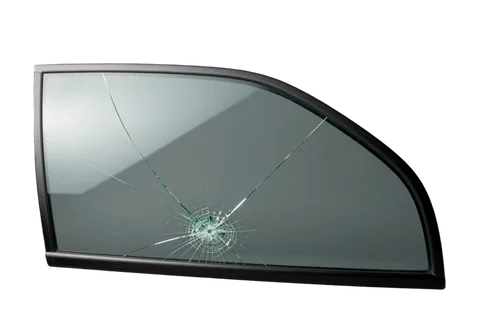
We repair a spiderweb up to 30 cm: the polymer fills each branch, the UV lamp cures it in 3 minutes, and the glass holds up under load. We work each branch separately — first we fill the central impact point, then the radiating spokes, otherwise air stays in the cavity and causes cloudiness. A complex branching pattern follows the same approach as a single crack, just takes longer. If the branches already spread wider than 30 cm or there are more than five, it's more honest to discuss replacement — otherwise the customer comes back a month later with the same problem. In my experience, the spiderweb is the one that most often lands in the gray zone, where the decision depends on how deep the central chip goes: on an edge impact the branches run under the seal, and the polymer won't hold there.
Chip, crack and spiderweb — what windshield repair includes
Each type of damage has its own technique and its own result. Below is how we handle each case and how scratch polishing differs from fixing a chip.
How a chip differs from a crack and why the approach is different
A chip is a point defect from a stone hit; a crack is a line that has already spread across the glass. A chip is treated by filling the pit, a crack by filling the channel and stopping its growth at the ends. The polymer is injected under pressure so it pushes air and moisture out of the cavity and fills the whole volume. A chip without a crack is almost always repairable, while a crack needs its length and direction assessed — that determines whether the ends need drilling. Drilling is done at the ends of long cracks to relieve stress at the tip and keep the line from creeping further. On short runs up to 15 cm the ends can often be stopped without drilling — just by curing. We seal a chip up to 5 mm in diameter and a crack up to 10 cm in an hour: that's how long the polymer needs to fully cure. Direction matters more than length: a line across your line of sight is more dangerous than a lengthwise one of the same size.
Table of work by type of damage
types of work by type of glass defect| Work | What we do | Result |
|---|
| Damage diagnostics | inspection, measurement, repairability assessment | decision: repair or replacement |
|---|
| Chip repair | filling the pit with polymer under pressure | defect sealed, glass clear |
|---|
| Crack repair | filling the channel, drilling the ends if longer than 30 cm | growth stopped |
|---|
| Spiderweb repair | filling each branch | multiple lines sealed |
|---|
| Scratch polishing | polisher at 1500 rpm, cerium oxide paste | scratches removed without distortion |
|---|
| Crack sealing | protection from moisture and dirt without curing | temporary measure until repair |
|---|
Scratch polishing and sealing are not chip repair
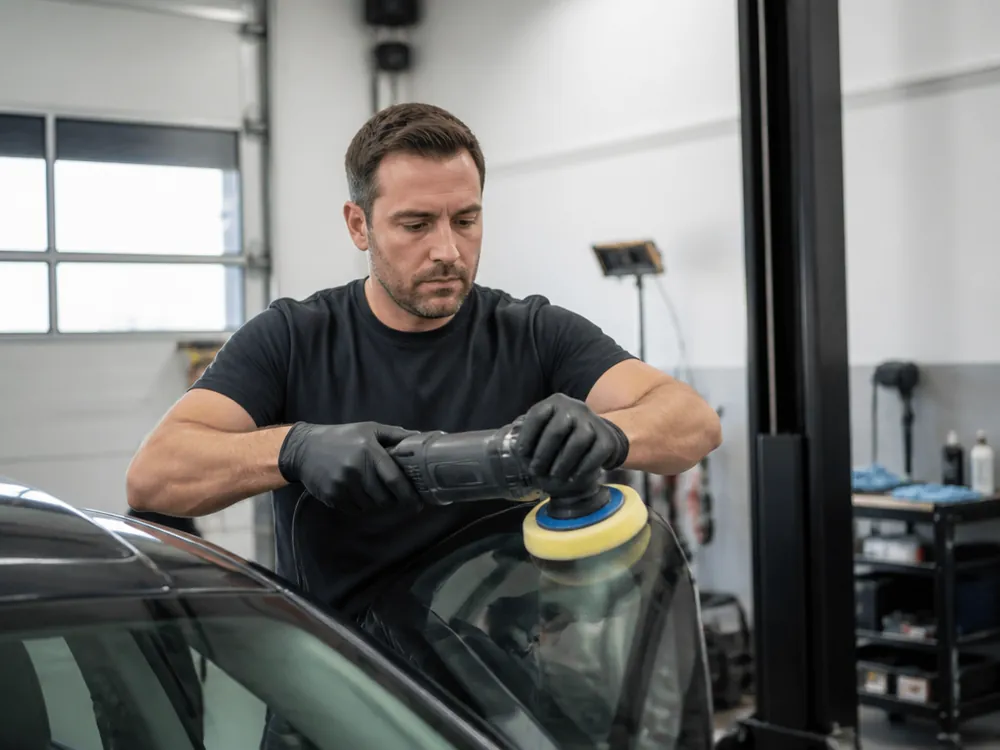
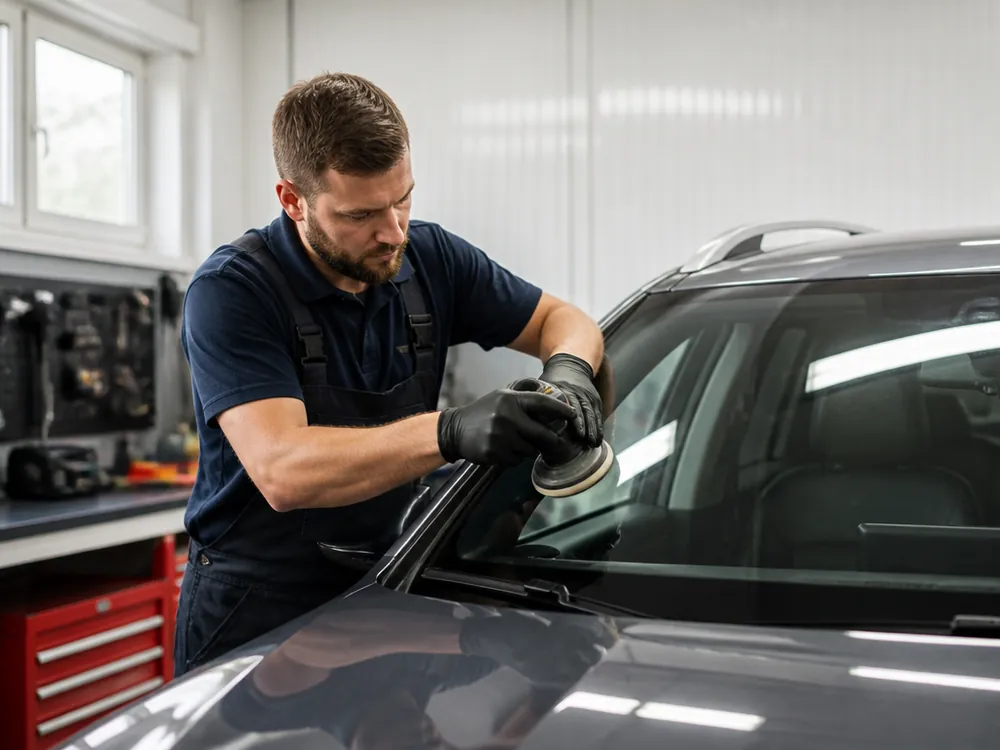
Polishing scratches and sealing a crack are separate services: the first removes surface marks, the second temporarily protects the line from moisture until full restoration. We remove scratches with a machine at 1500 rpm using a cerium oxide-based paste — the glass doesn't overheat and doesn't distort. Windshield chip repair works differently: the polymer fills the cavity from the inside rather than removing a layer of material from the surface. Sealing doesn't replace restoration: if the line is already "breathing" from temperature changes, you can't delay polymerization — moisture inside the channel prevents the polymer from setting. We perform eight types of work, from diagnostics to final polishing, and at check-in we explain what each item gives you. Diagnostics is a separate item not for "upselling" but so the client sees what they're paying for before work begins.
How windshield repair goes and how long it takes
We break down step by step how work on the car goes from check-in to pickup, how long it takes, and how to treat the glass in the first day after the work.
Repair stages from check-in to test drive
- Check-in and inspection: the service advisor records the damage, measures it, and agrees on the scope of work with you.
- Written estimate: before work starts you see the full scope, not a "final" total.
- Polymer filling: the compound is injected under pressure into the chip or crack, displacing air and moisture.
- UV curing: 3 minutes under the lamp — the polymer reaches full hardness, otherwise the resin stays soft.
- Sanding and polishing: a machine at 1500 rpm with cerium oxide paste removes excess without overheating or distortion.
- Test drive and handover: we check the result on the road and return the car with a work order and a photo report of key stages.
How long the car actually stays in the shop
We fix a chip up to 5 mm and a crack up to 10 cm in 60 minutes — that's enough time for the polymer to fully cure, and you can pick up the car the same day. After that, the time depends on the configuration: a branching crack or "spiderweb" requires filling each ray in turn and more time for sanding. Repairing a windshield crack with branching takes longer than a single chip. During damage diagnostics, the technician shows exactly where the polymer will go and which areas will need drilling at the ends to stop the crack from spreading. In our experience, most cars with a chip leave within an hour to an hour and a half, while complex cases stretch to two or three hours. If the damage is complex, we discuss the timeline separately during inspection — promising "an hour" for any case would be dishonest.
What you can do with the glass in the first day
We don't recommend washing the car at a high-pressure car wash in the first day after the work — the polymer is already hard, but a sharp change in pressure and temperature along the edge of the treated area isn't needed. Normal rain, wipers, and city driving are fine: the polymer holds in the cavity mechanically and chemically. A slight mark at the chip site is normal: the compound doesn't restore the glass to "like new" condition, it stops the damage from spreading and restores clarity. If the chip was dirty or there was moisture in the cavity, the technician dries the area before filling, otherwise adhesion drops and the procedure will have to be repeated in a month. Final polishing removes residual marks and makes the optics smooth again — at check-in, ask whether it's included in your case, because for deep damage it's done as a separate step.
Heated glass, sensors, and cameras
A modern windshield is not just a transparent surface but also heating filaments, a rain sensor, and an assistant camera. We explain how the work changes when damage hits these areas.
Heated glass — what not to touch
We service heated glass but work carefully: the heating filaments are thin, and the technician's job is not to touch them during sanding and polishing. The filament thickness is fractions of a millimeter, so we guide the sander with depth control and protect the area around the damage. If a chip hits the filament itself, we first assess whether it's intact: often the break happens on impact from a stone before the car reaches the shop. Restoring a crack or chip in such an area doesn't bring a broken filament back to life — it only stops the damage from growing. Therefore, right after finishing, we check the heating in that area and tell the client what we fixed and what was already broken before us. Turn on the heating and see if the area defrosts evenly — that way you can see the filament condition yourself.
Driver's field of view — can it be restored
We fix chips in the driver's field of view, but with a caveat: if a noticeable optical mark remains after polymerization, it's more honest to discuss replacement — visibility matters more than saving money. The boundaries of this zone are defined not only by the driver: essentially it's the sector that falls into the line of sight through the glass directly ahead and in the center. We perform damage diagnostics before work begins: we look not only at the chip diameter but also at its position relative to the line of sight. A 5 mm chip right in front of your eyes is more distracting than a 15 mm one off to the side by the pillar. The polymer fills the damage and restores clarity, but it's not always possible to remove the mark completely — much depends on depth and shape. If a dot or slight distortion remains in your field of view, it's better to discuss it with the technician right away rather than drive with discomfort.
Rain sensor and camera — is calibration needed after work
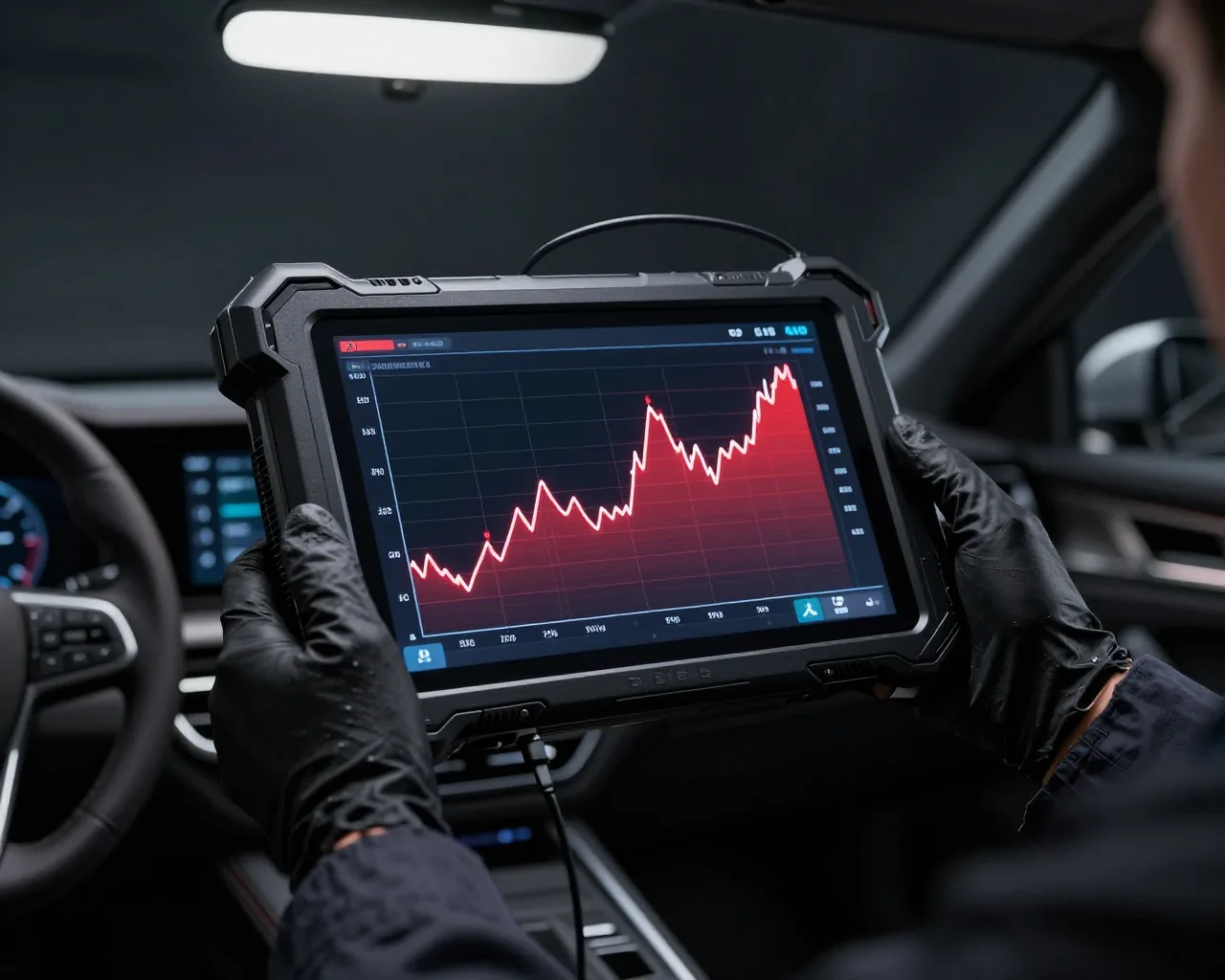
A chip in the rain sensor or camera area usually doesn't require calibration — we don't change the glass geometry, only fill the damage. The assistant camera looks through the glass, and its position relative to the body remains the same, so no readjustment is needed. Another matter is the camera window itself: if a chip hits it directly, work must be especially precise to avoid leaving a polymer ridge on the clear zone. If the damage does affect the camera window, it's worth checking the assistants — sometimes the interference isn't visible to the eye but shows up as a system error on the dashboard. We warn about this in advance and recommend driving a few kilometers to make sure lane keeping and automatic braking work properly.
Warranty, estimate, and visit organization
Warranty and estimate are what the client focuses on before booking. Below are the conditions we put in writing, how the visit goes, and what we do if the damage behaves unexpectedly after the work.
12-month warranty — what it covers and what it doesn't
We give a 12-month warranty on glass restoration: the term and conditions are recorded in the work order and the completion certificate when you pick up the car. The documents stay with the client, so any time you come back it's clear when and what we did. The warranty covers the work performed and the materials installed — the polymer injected into a chip or crack, and the final polishing of the work area. It does not cover an accident after your visit, third-party interference, normal wear of consumables, or a part brought in by the client — these are standard limits worth knowing in advance. And warranty diagnostics are free with us: even if it turns out the cause isn't our work, we won't charge for the inspection. In our experience this saves the client time on back-and-forth — the technician immediately determines whether the case falls under warranty or not.
What to do if the damage "spreads" after your visit
If the crack has spread further after your visit, bring the car in — warranty diagnostics are free, and based on the results we decide what to do: repeat the procedure or replace the glass. First the service advisor inspects the area, checks it against the photo report and work order, then checks whether the polymer has separated along the seam. A repeat procedure is possible if the crack has grown within a few centimeters and hasn't reached the driver's field of view; with more growth, it's more honest to install new glass. Don't try to stop the crack yourself with home remedies — glue or tape only make it harder to assess how the polymer will behave, and the technician loses a reference point during the inspection. Call and book diagnostics the same day you notice the growth: the less the crack has spread, the higher the chance of getting by with a repeat procedure without replacement.
Booking, written estimate and client materials
We work daily from 09:00 to 20:00, no days off, by appointment — no waiting in line; first diagnostics and a written estimate, and we start work only after the client agrees. The service advisor handles the work order from intake to pickup, takes a photo report at key stages, and shows and returns old parts to the client. We accept client materials if they're compatible and within their shelf life — but then the warranty covers only the work, not the polymer you brought. This rule also applies to scratch polishing and chip repair: the compound must be fresh, otherwise curing will be unpredictable. Before your visit, check by phone which material you want to bring — the technician will tell you in advance whether it suits the specific type of damage or whether it's easier to use ours.
When windshield repair works and when replacement is needed
Windshield repair is a decision based on the condition of the damage, not on wanting to save money. Here's the key info that determines the result, timing and preservation of the glass.
- Restoration by indication: a chip up to 5 mm and a crack up to 10 cm are repairable, while a defect longer than 30 cm and damage in the driver's field of view often require replacement.
- Different damage — different technology: a chip, a crack and a "spiderweb" are treated differently, while scratch polishing and sealing are separate services with their own purpose.
- Realistic timing: a simple case is done in 60 minutes, complex branching configurations are discussed after diagnostics.
- Special glass can be restored: heating, rain sensor and camera are not a death sentence, but they require care and a check after polymerization.
- Warranty is in the documents: the term and conditions are recorded in the work order and certificate, and warranty diagnostics are free.