Pads wear gradually, and you can judge their condition by three things — mileage, pedal behavior, and inspection. Here's what to look at before visiting the service.
Front and rear pad life in city driving
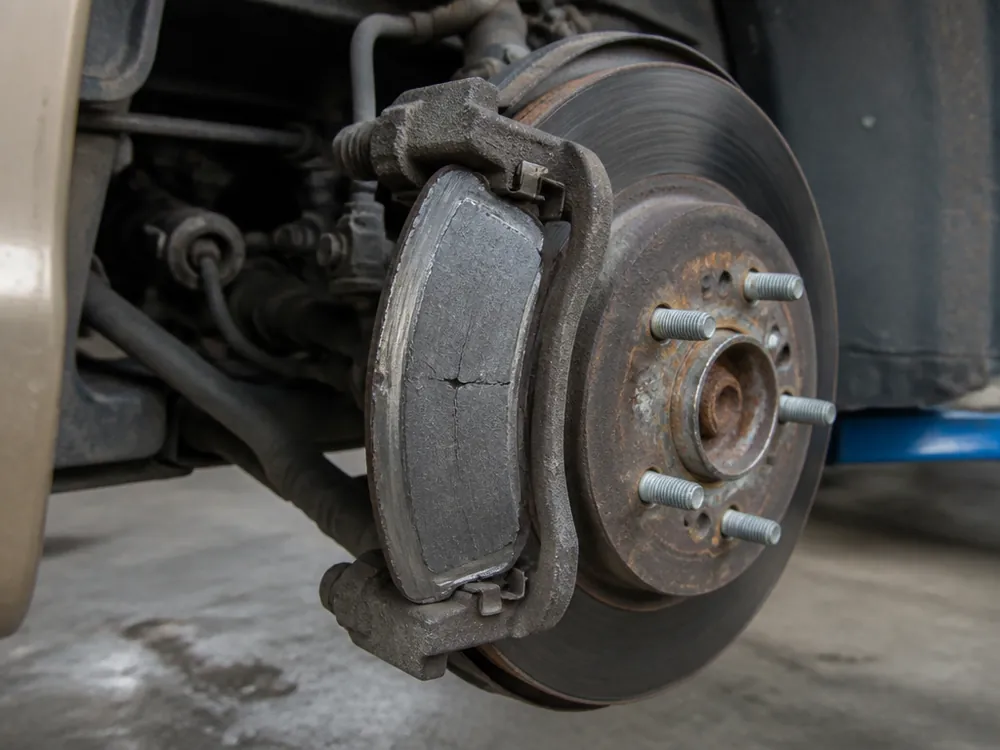
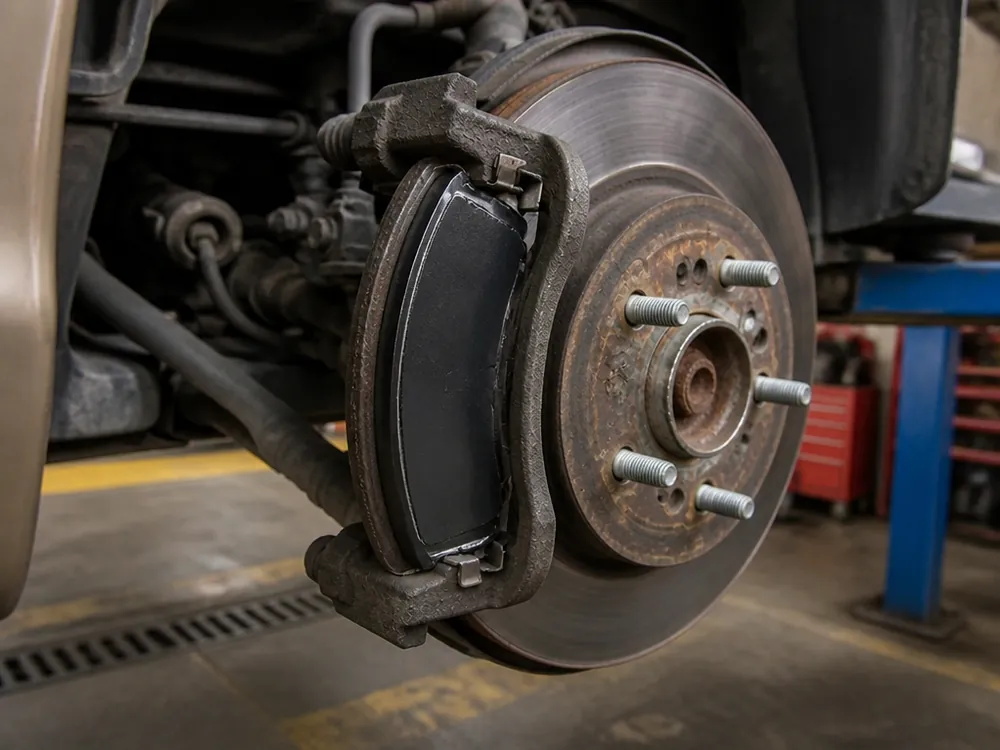
Front pads in city traffic with jams wear faster than rear ones because the front axle takes most of the braking load. Rear pads mainly work with the parking brake and in gentle decelerations, so their linings last noticeably longer — sometimes one and a half to two times the mileage. Measuring friction material remaining with a micrometer on each axle shows the real picture: the figure in millimeters is more accurate than any mileage guidelines, since everyone's driving style is different. Replacing both axles "for symmetry" isn't necessary — we look at the actual measurement of each axle, not the car's total mileage. In our view, this approach both saves the owner's budget and doesn't harm brake balance. If you need brake pad replacement, keep in mind: Almaty is a city with dense traffic, and here lining life is consumed especially fast. So it's better not to postpone measuring friction material remaining until scheduled maintenance.
Why you can't put new pads on a worn rotor
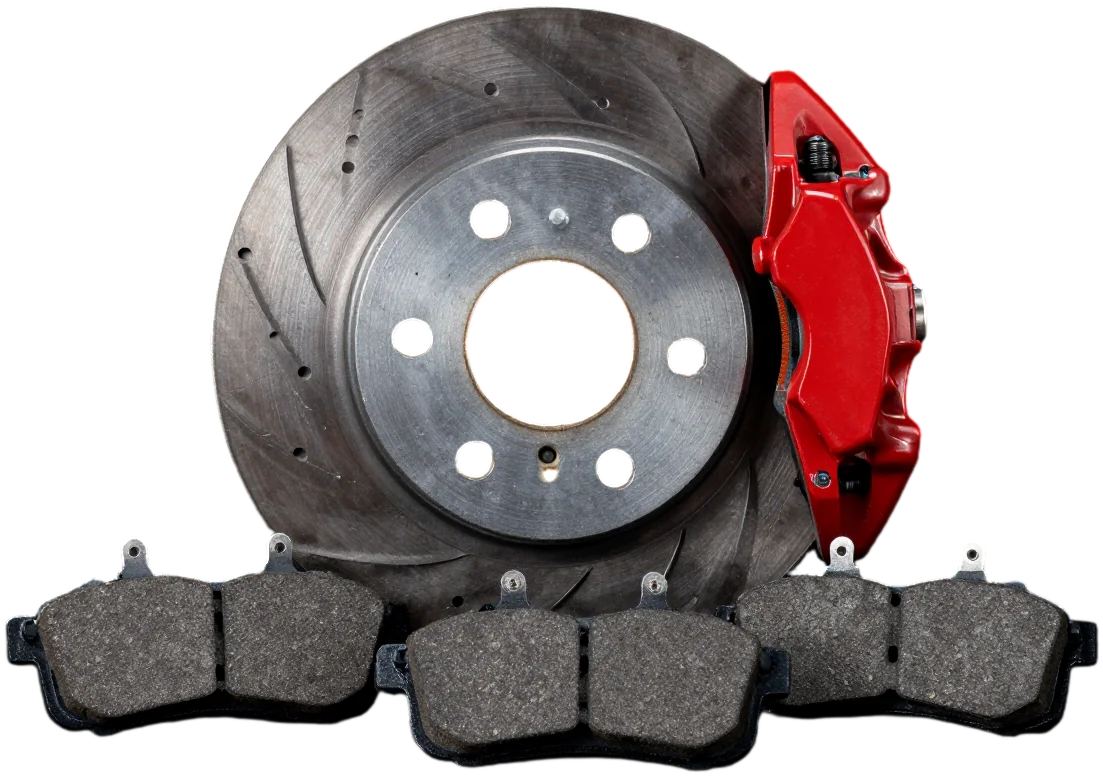
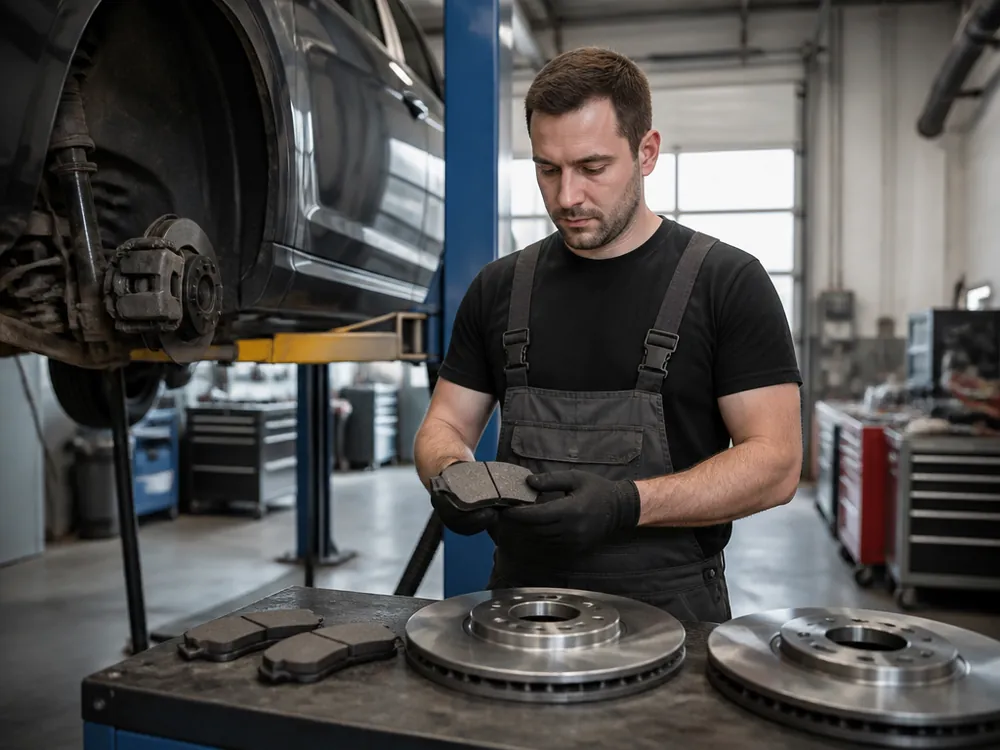
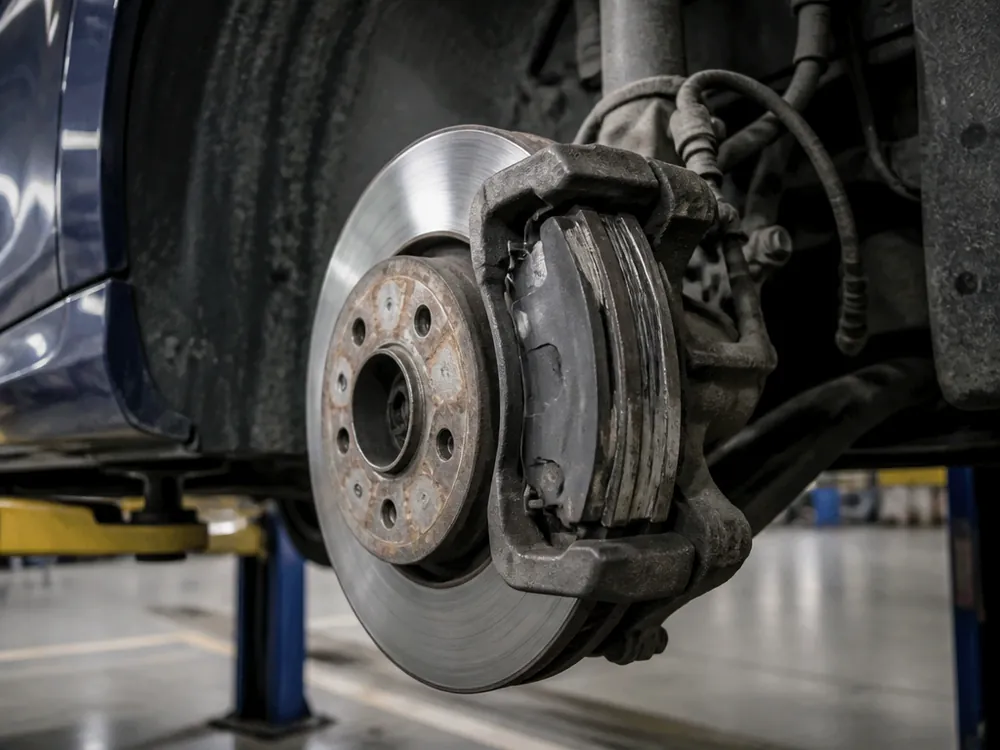
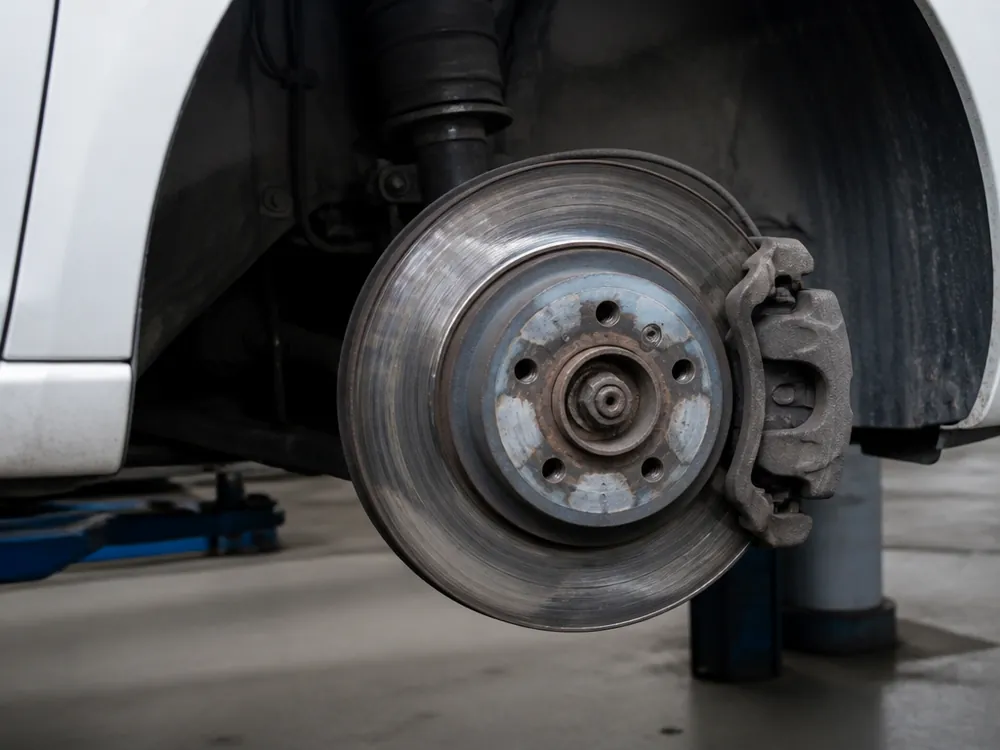
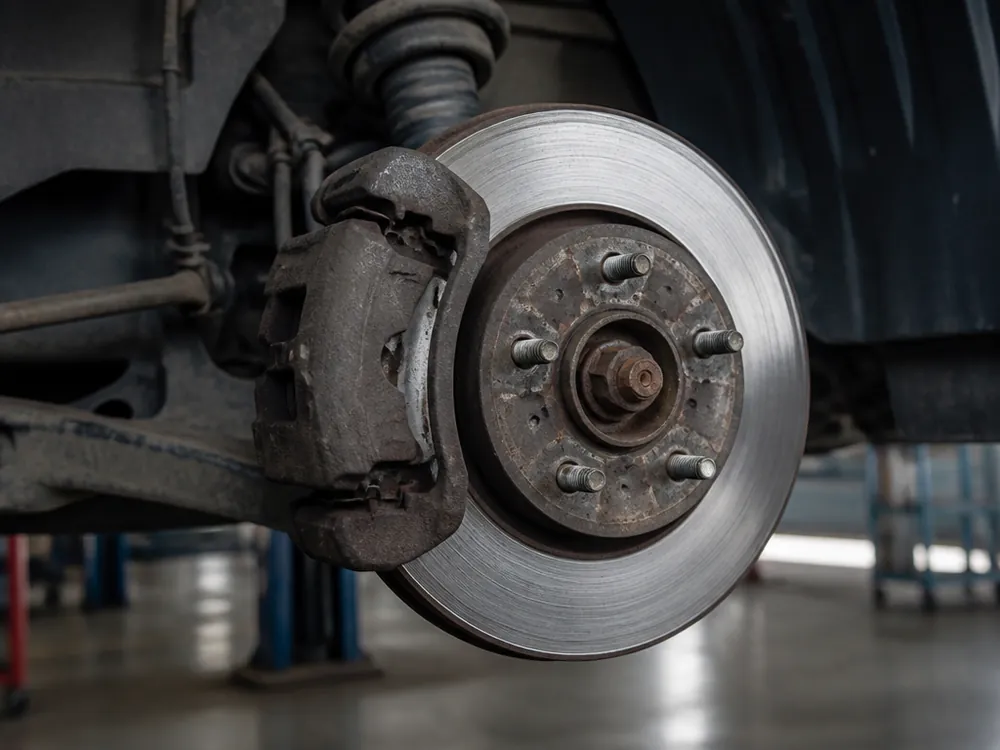
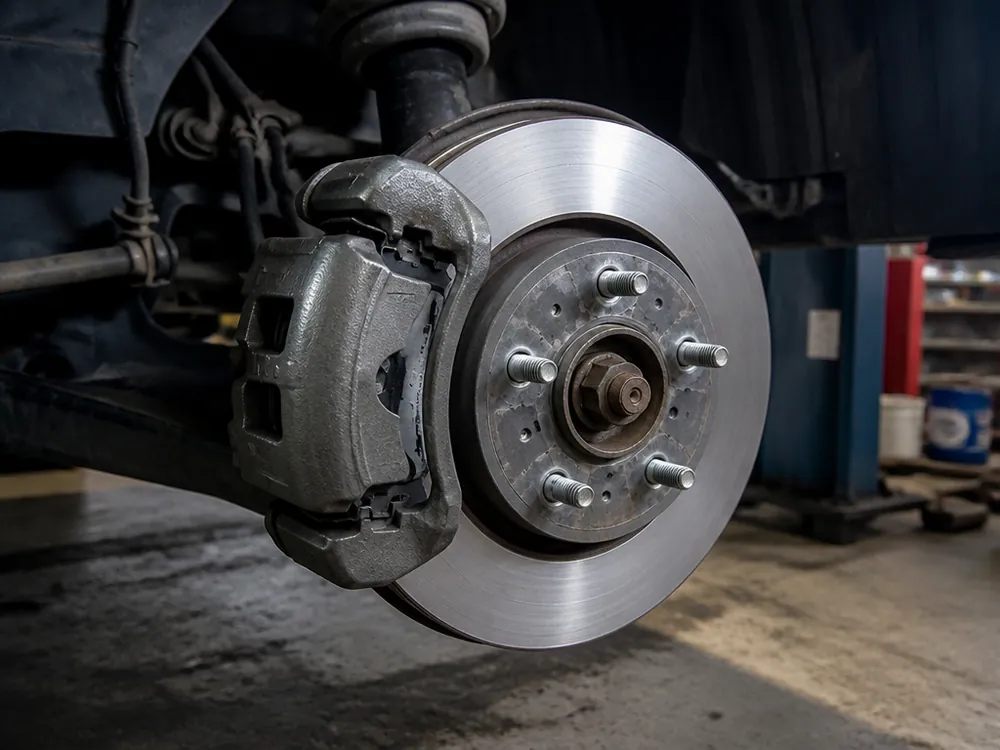
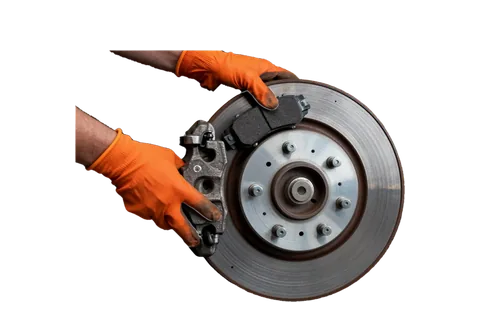
We don't install new pads on a rotor that's out of spec — first we measure thickness and runout, and if the surface is worn, we replace it together with the pads. The micrometer shows the remaining body, the runout gauge shows play and misalignment, and these two measurements show whether the part will survive a new set of pads. A thin rotor with wear doesn't dissipate heat and behaves unpredictably under load, and a fresh pad sits on an uneven surface and doesn't bed in properly. The metal of a pad worn down to the backing plate will score the rotor to the point of replacement within a couple hundred kilometers — so "driving it till it's done" costs more than coming in earlier. At CARGID, before replacing front pads we always check the rotors too, so the decision is based on facts, not guesswork.
How brake pad replacement is done and what it includes
Working with brake pads isn't just taking a part off and putting it on. Here's the breakdown of the steps and how they differ on disc and drum brakes. Below is the procedure and the specifics of each type.
Steps from intake to handover
- Intake: the car is received by the service advisor, who also manages the work order through to handover and approves all work.
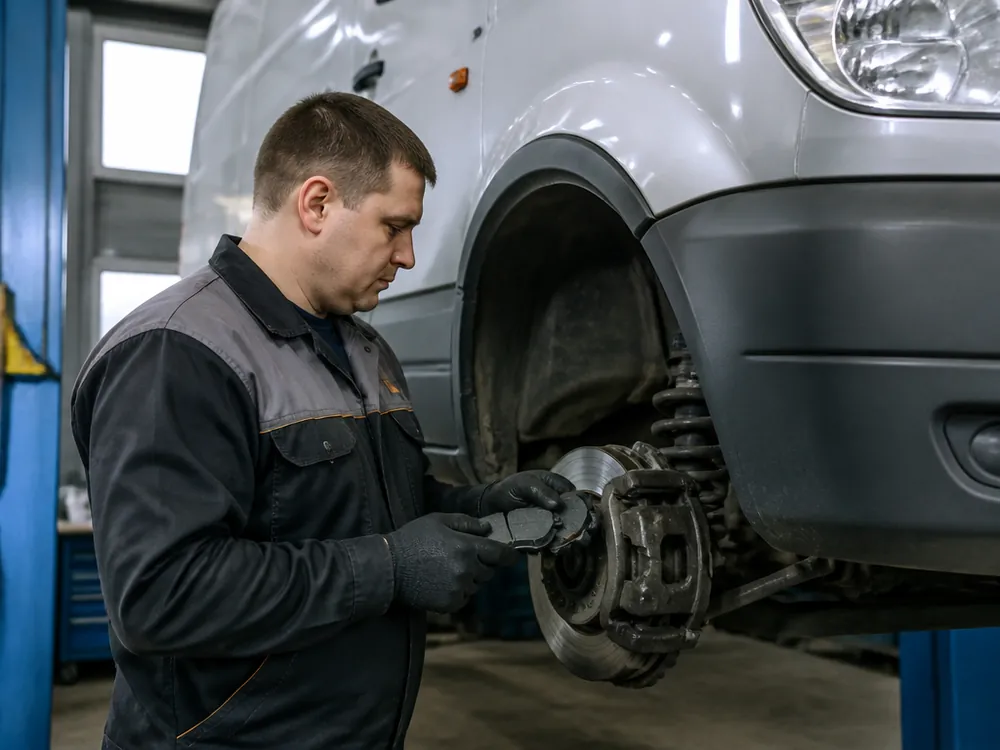
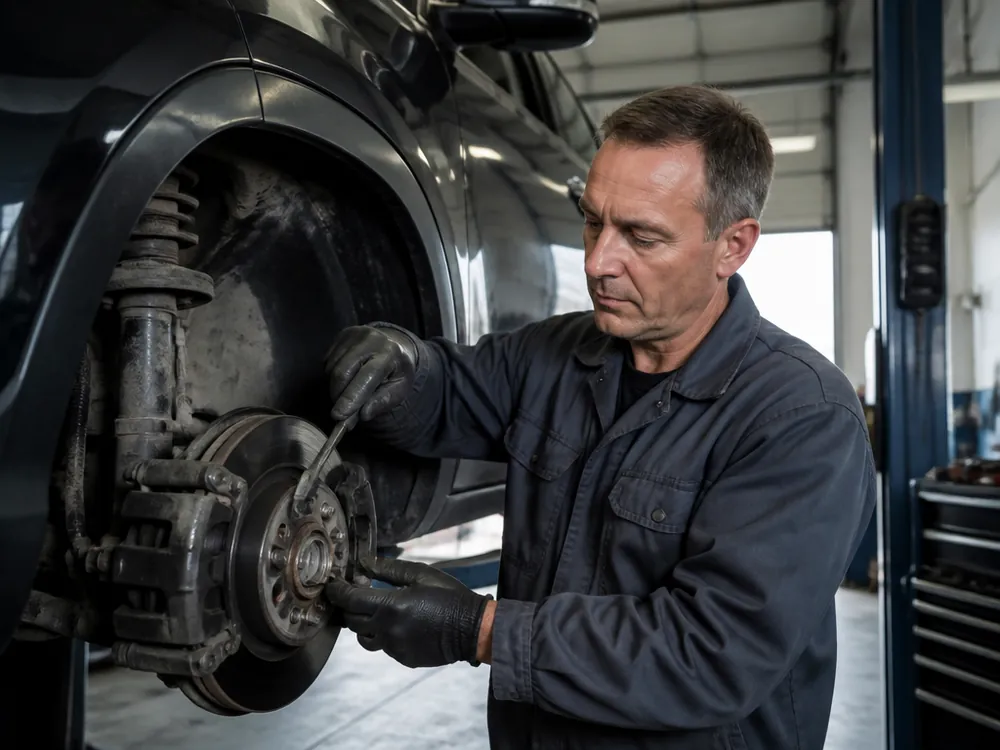
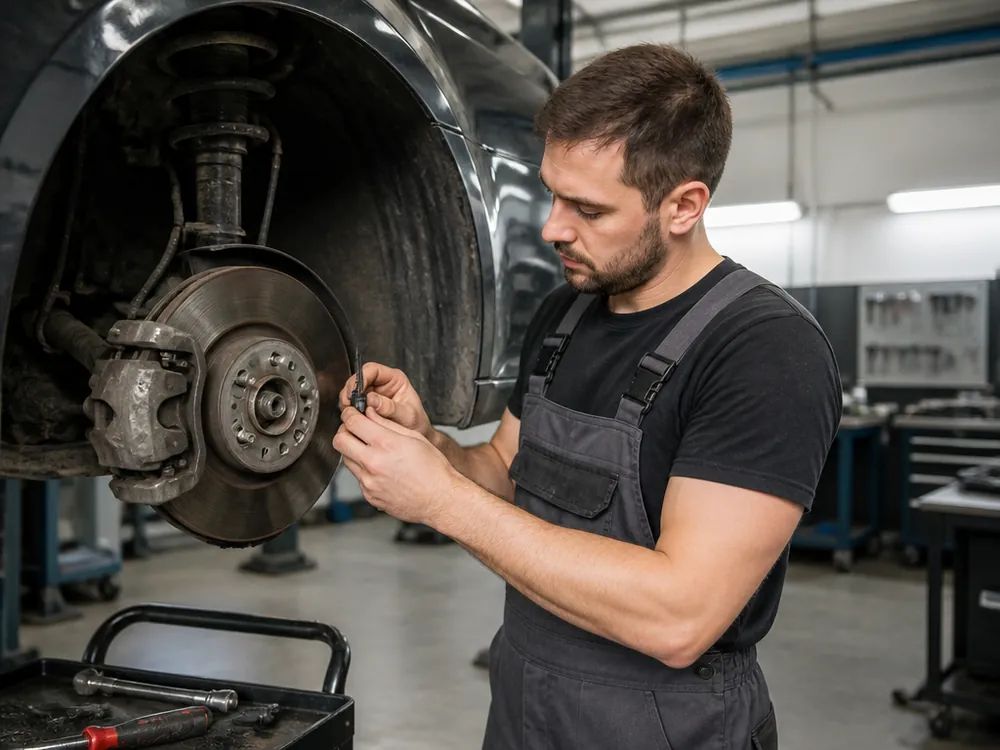
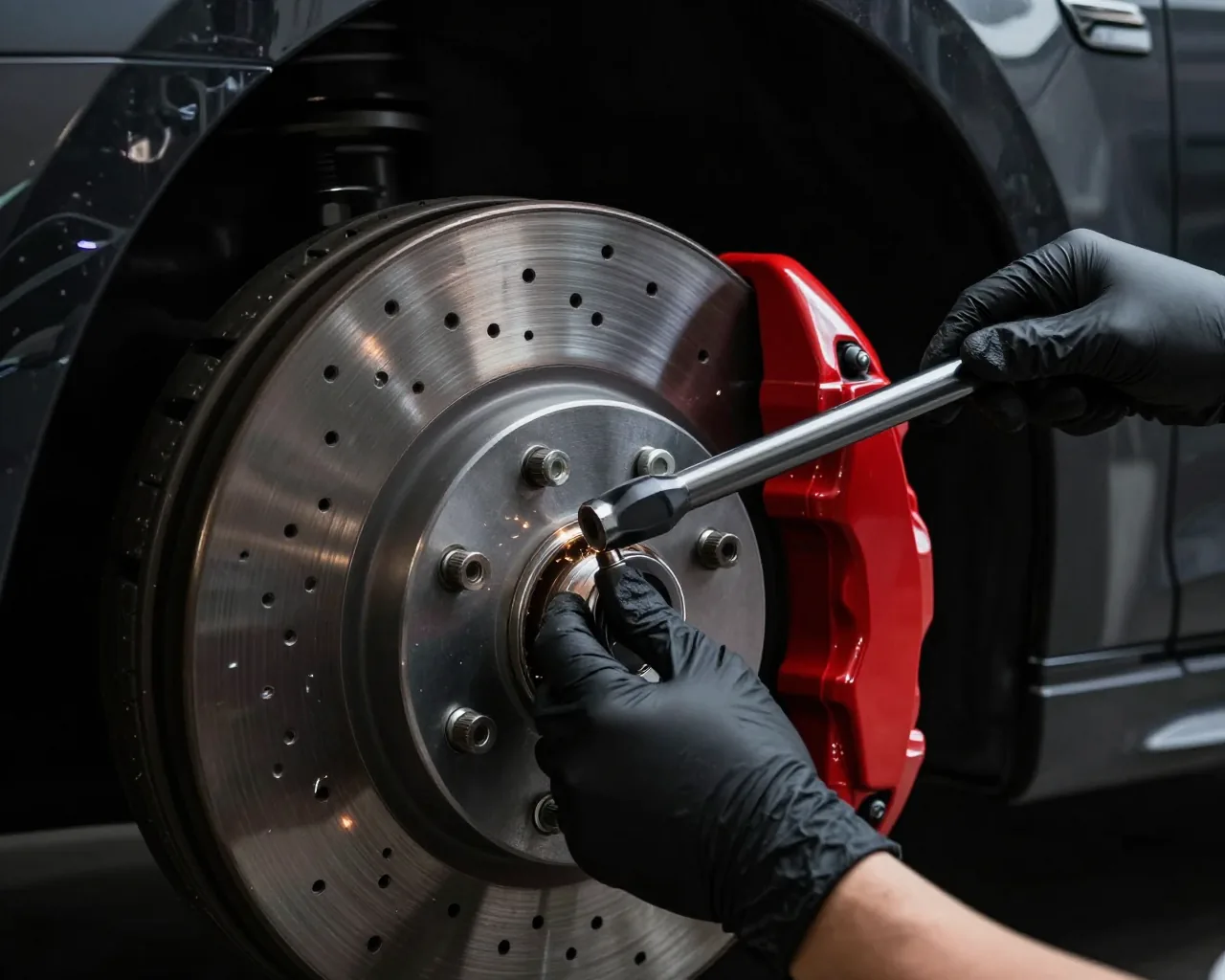
- Diagnostics: we inspect the pads, rotors, and calipers, measure friction material remaining with a micrometer, and rotor runout with a dial indicator.
- Estimate: before starting work we provide a written estimate, and we begin repairs only after the client agrees.
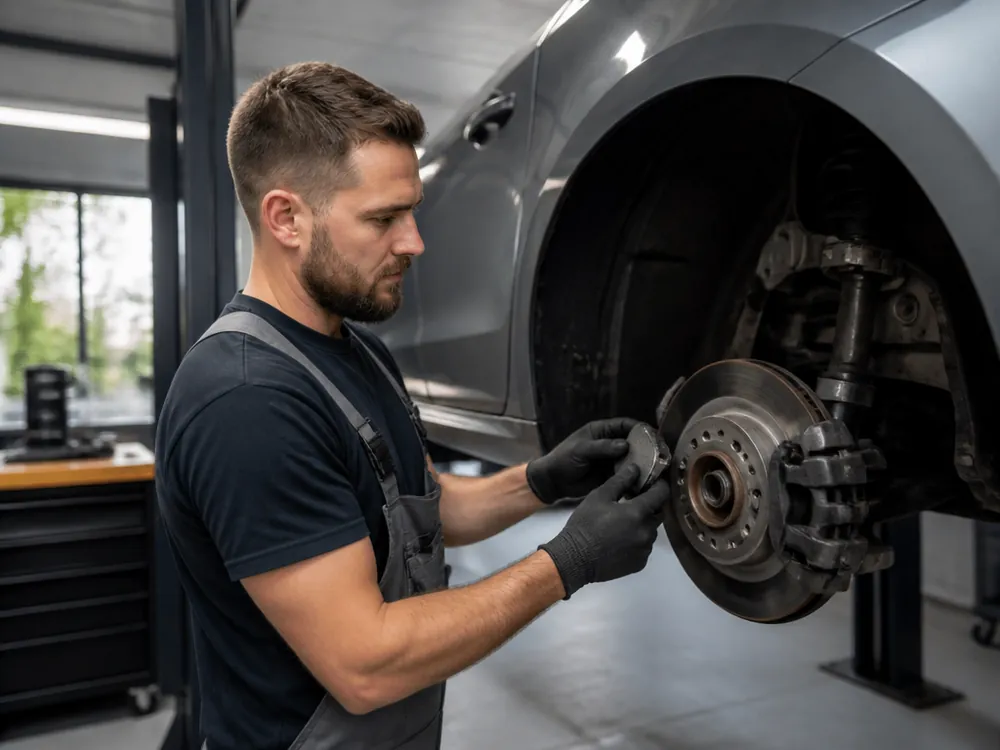
- Repair: we replace the friction material, service the calipers, and if necessary install new rotors, hoses, or a wear sensor.
- Photo report: we capture key stages on camera, and show and return the removed parts at handover.
- Handover: before returning the car we do a test drive and record the warranty period and terms in the work order and acceptance certificate.
- Explanation: the technician explains which part wore the most and what to watch for in the first 200 km.
How replacement differs on disc and drum brakes
comparison of components and work procedure on different brake types| Parameter | Disc | Drum |
|---|
| What presses the pad | Caliper piston | Wheel cylinder and expander mechanism |
|---|
| Access to parts | Removing the caliper | Removing the drum and hold-down springs |
|---|
| Service | Lubricating guides and piston | Replacing cylinders, restoring guides |
|---|
| Adjustment after replacement | Bedding in to the rotor | Setting the gap between pad and drum |
|---|
| What's replaced as a pair | Pads and rotors on the same axle | Pads, cylinders, parking brake cable |
|---|
4-point lubrication and why it's needed
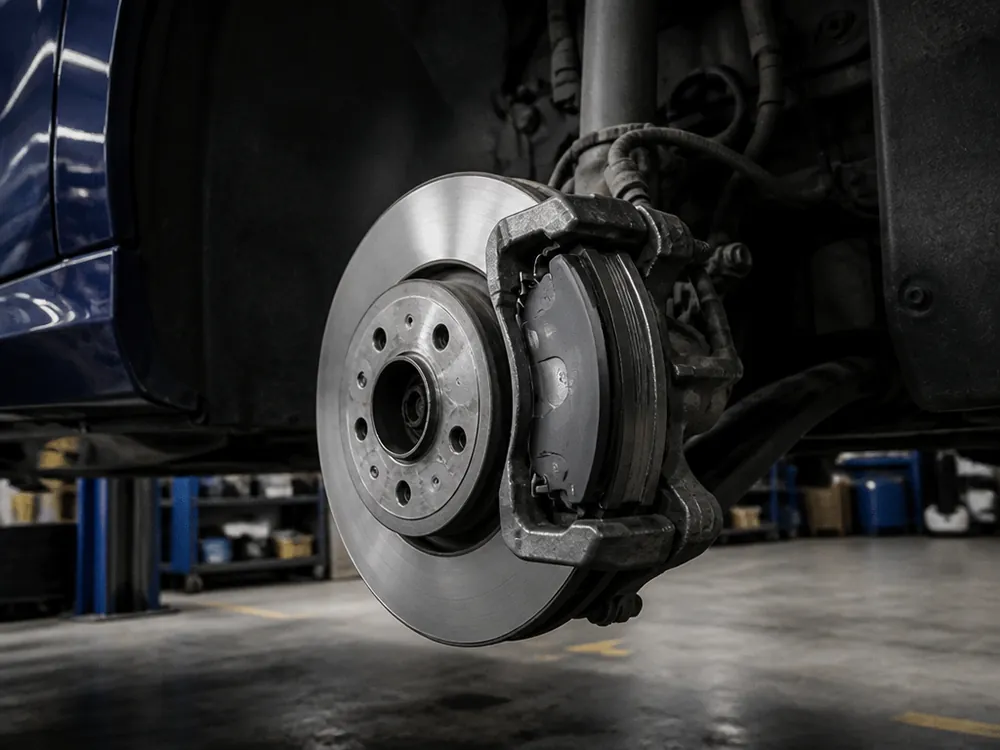
We apply high-temperature paste to the caliper guides, the ends of the friction pads, and the piston — without it the mechanism seizes and starts squealing within a month. The paste withstands heat from active braking and isn't washed away by water from puddles or a pressure washer. On the guides, the lubricant keeps the bracket moving freely; on the ends, it dampens rattle; on the piston, it protects the boot from drying out and cracking. The anti-squeal shim on the outer pad works together with the paste and eliminates high-frequency squeal at low speed. 4-point lubrication also prevents uneven wear: a sticking pad wears faster than its neighbor and takes the rotor with it, and the whole assembly along with it.
What work we do along with brake pad replacement
Sometimes pads are replaced separately, and sometimes together with rotors, fluid, or hoses. Here's when only the basic set is needed and when the extended one is.
When we replace rotors together with pads
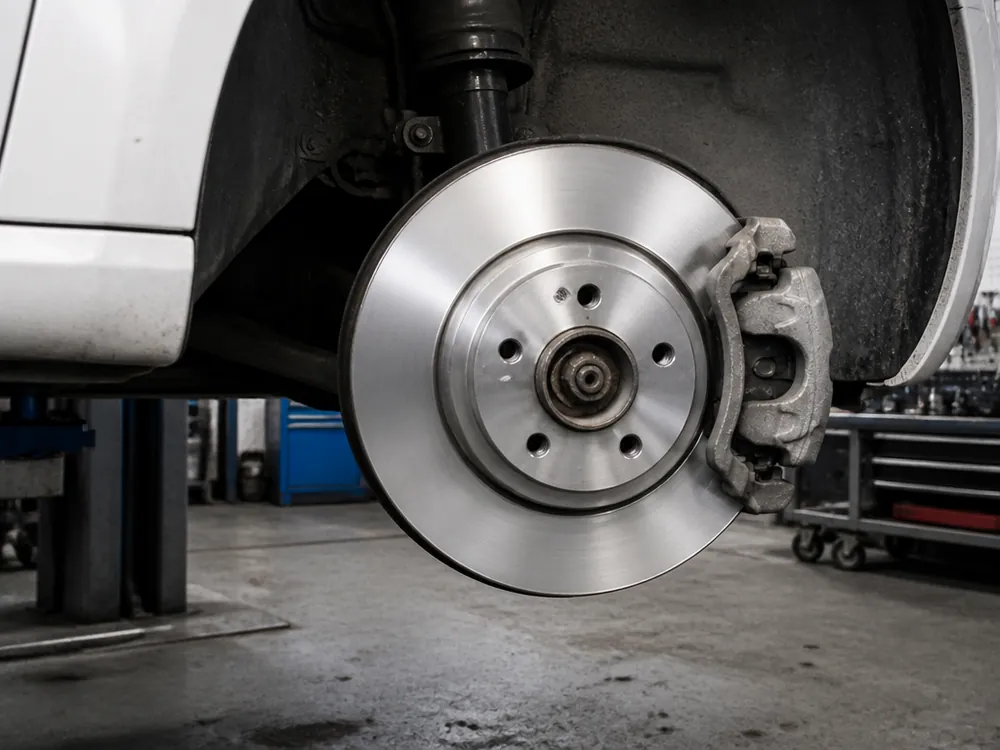
We replace rotors together with pads if measurements show they are out of spec for thickness or runout — otherwise the new part won't sit flat and you'll get vibration. Before work, we measure the remaining friction material with a micrometer and check rotor runout with a dial indicator, and only these numbers decide the fate of the pair. On one axle, we install pads and rotors as a set: an old surface with wear and a lip quickly eats up new friction material, and the steering wheel starts to shake when braking from speed. If the rotor is within spec, there's no need to replace it "just in case" — pads and servicing the calipers are enough. In our practice, a common reason for a repeat visit a couple of months later is exactly new parts on a worn rotor, so measuring before disassembly saves both time and rework.
Brake fluid, hoses, and wear sensor
- Soft pedal: if it sinks or feels spongy, we check the fluid and hoses, and if confirmed, we replace the fluid and bleed the system.
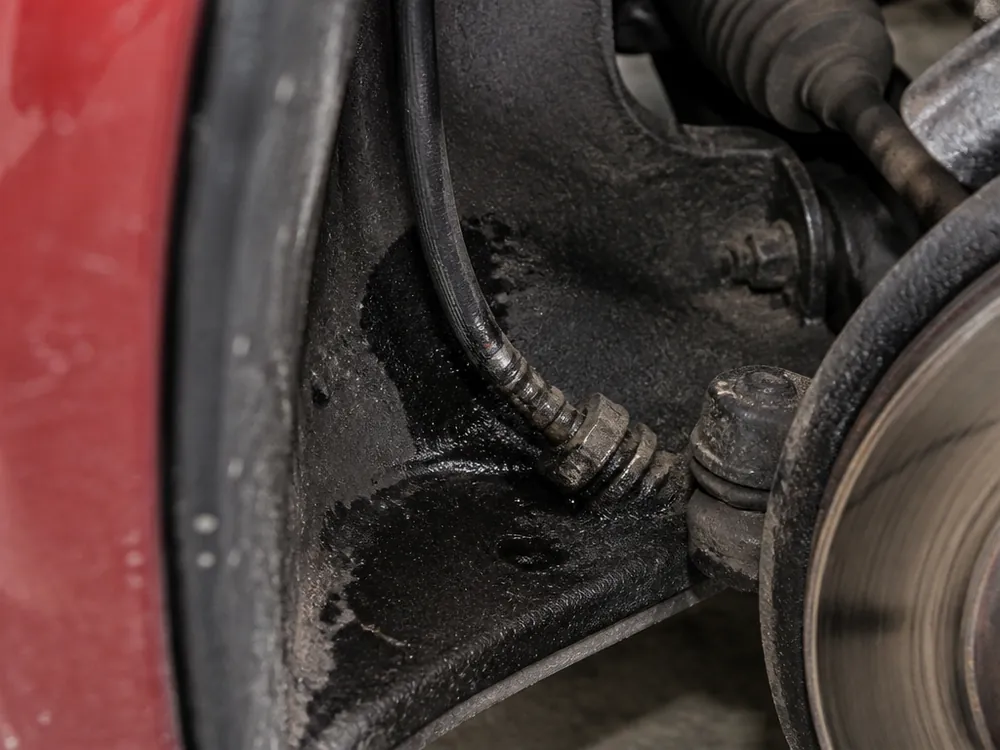
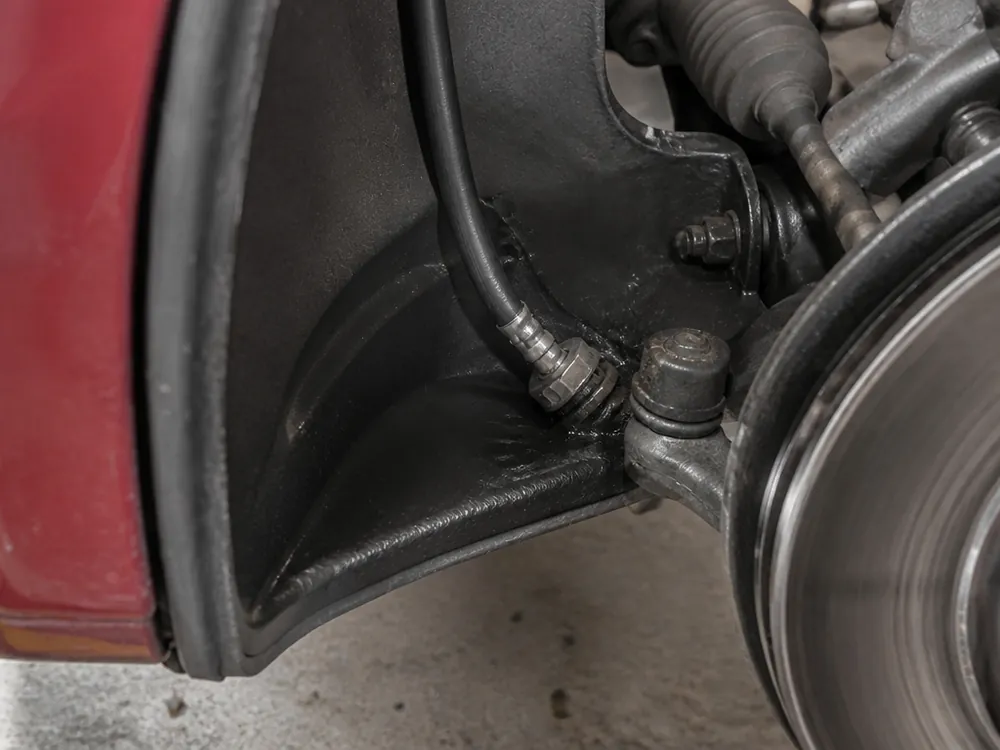
- Brake hose: cracks and bulges on the rubber are a reason to replace both hoses on the axle, even if a leak is visible on only one.
- Wear sensor: when installing pads with an electronic sensor, we install a new one, otherwise the service reminder will stay on the dashboard.
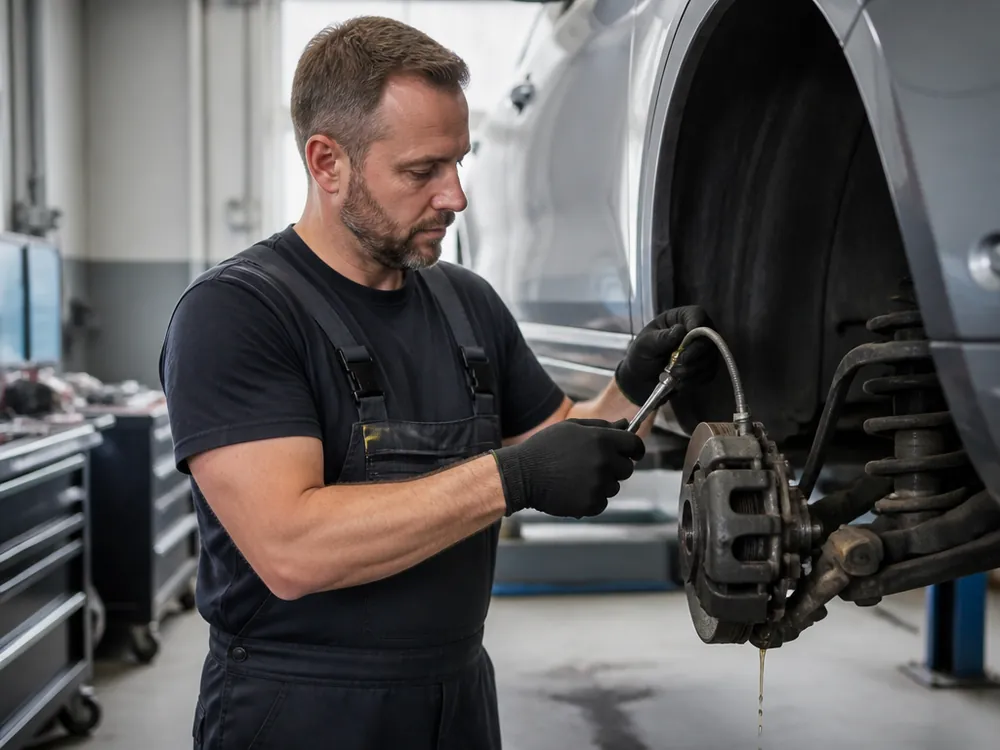
- Bleeding the system: after changing fluid or hoses, we bleed out air so the pedal returns to its usual travel.
- Post-work check: a soft pedal after installing pads is not normal — most often it's air in the system or a leaking hose, and it's better not to drive with that.
Brake pad service options in one table
Brake pad service packages and their purpose| Service option | What we do | When it's needed |
|---|
| Pads only | Replace pads on the axle | Rotors and calipers are within spec |
|---|
| Pads and rotors | Replace the pair on one axle | Rotor is out of spec for thickness or runout |
|---|
| Pads and hoses | Replace the rubber on the axle | Cracks, bulges, leaks |
|---|
| Pads and wear sensor | Install a new sensor | Electronic wear monitoring |
|---|
| Pads and bleeding | Bleed air from the system | Soft pedal, fluid replacement |
|---|
| Pads and fluid | Full fluid replacement | Scheduled service or moisture in the system |
|---|
Your own parts, warranty, and what to do about squealing after replacement
Two questions come up most often — can I bring my own pads, and what to do if there's squealing after replacement. We answer directly, with reference to the warranty and how we handle parts. Let's go through both.
Can I bring my own brake pads
We accept your own pads — OEM, aftermarket, or customer-supplied parts are the customer's choice, but the warranty doesn't cover customer-supplied parts, only the labor itself. At check-in, the service advisor verifies the marking and completeness against the VIN and caliper model: one platform can have two pad sizes, and they look almost identical. If the part doesn't fit in size or the box is missing springs and a sensor, work stops and the car stays on the lift until the right kit is delivered. Bringing your own pads makes sense when the owner knows the exact part number for their car or wants a specific brand for their driving style. We check your pads before disassembling the assembly. A tip from practice: before buying, verify the part number by VIN, not by the seller's catalog — that way it's less likely the kit won't fit the caliper.
What the 6-month warranty covers and where its limits are
- Term: we give 6 months on brake pad replacement — same as for brakes and suspension in the general warranty table.
- Document: the term and conditions are recorded in the work order and the completion certificate when the car is handed over.
- What's covered: the work performed and the parts we installed, including a re-check of the assembly.
- Diagnostics: we diagnose warranty cases free of charge.
- What's not covered: an accident after repair, third-party intervention, natural wear of consumables.
- Customer-supplied part: the warranty does not apply to customer-supplied pads — only to the labor.
200 km break-in and what to do about squealing or vibration
For the first 200 km, brake gently, without sharp stops — let the pad settle against the rotor so there's no vibration in the steering wheel. During this period, the friction pair beds in: the micro-relief of the new pad matches the rotor tracks, and the contact patch gradually grows to almost full. Sharp braking in the first kilometers overheats the surface layer, and glassy spots appear on the pad — that's where the abnormal noise and uneven wear come from. If noise or vibration doesn't go away after 200–300 km, diagnostics are needed: it's free for warranty cases, and we check the installation, guide lubrication, and play. In my opinion, most complaints about noise after replacement are either an unbedded pad or a guide that wasn't lubricated at all four points. It's better not to delay the check until the rattle becomes constant.
How long brake pad replacement takes and how to book
Timing depends on the brake type and the scope of work, and you can book a specific time. Let's break down how long the procedure takes and what urgency options are available.
How long replacement takes on a passenger car vs. a crossover
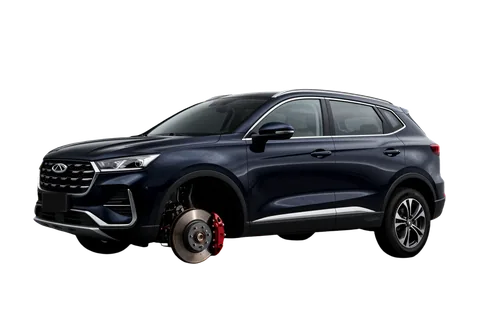
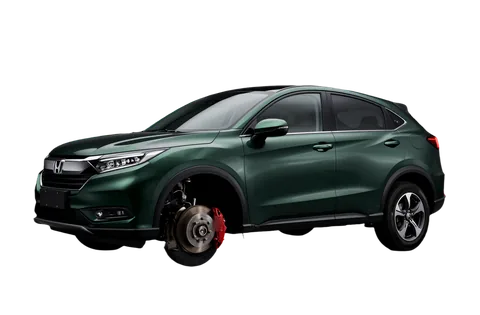
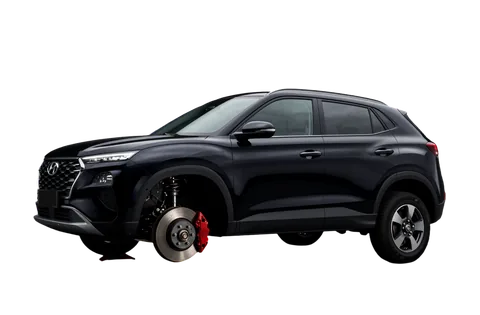
Replacing front brake pads on one axle of a passenger car takes less time than on an SUV or crossover — there's more disassembly and larger components. Rear drum brakes take longer to disassemble than disc brakes: we remove the drum, take out the springs and adjuster bar, and clean the mechanism. On a crossover, there's also the underbody shield and massive calipers, so one axle takes longer than on a sedan. If we service the calipers at the same time — cleaning and lubricating the guides, replacing boots — that's a separate line in the estimate. We always start with brake system diagnostics: we measure the remaining friction material and rotor runout, and the results show which work goes into the estimate. We give the exact time after diagnostics: if we replace rotors or service calipers along with the pads, the work takes longer.
Urgent and mobile replacement
- Urgent replacement: we do it within 2–3 hours of booking when it's risky to drive and the car can't be left.
- Mobile replacement: we come to an address in Almaty within a 15 km radius if the car is parked and can't reach the shop.
- What to choose: with squealing and wear but no loss of braking, it's safer to come to the shop — here we have a lift and all the tools at hand.
- Why a lift matters: it's easier to check the guides, piston, and rotor runout on a lift than from a jack in the yard.
How to book and what to bring
We book you for a specific time — if you have an appointment, you skip the line. We're open daily from 09:00 to 20:00, seven days a week, at 129 Mukagali Makataev St., Almaty. We've been repairing cars in Almaty for 12 years, and more than 9,000 vehicles have come through our shop. Your car is received by the service advisor, who handles the work order through to handover: he also records your complaints and agrees on the scope. All you need to bring is the registration certificate and, if you're supplying your own pads, the parts themselves — the choice between OEM, aftermarket, and customer-supplied parts is yours. We start with diagnostics and prepare a written estimate, and we begin the repair only after the customer approves it. The cost depends on the scope of work and the type of brakes, so we give the exact amount in the estimate after inspection — before the repair starts. We take photos at key stages and show you the old parts and hand them over.
Brake pad replacement key points
Here's the key info on brake pad replacement: when it's time, what the job involves, how to make new pads last longer, and where to go if you hear an unusual noise.
- Signs of wear: squealing when braking, a soft pedal, and a deep groove on the disc are a signal to check the brakes, not put it off.
- Front and rear wear differently: front pads wear out faster than rear ones, so there's no need to replace both axles "for symmetry" — each axle according to its own wear.
- Disc out of spec: new pads go on only together with replacement of a worn disc, otherwise vibration and uneven wear will come back.
- Lubrication and bedding in: paste on the guide pins and gentle braking for the first 200 km extend pad life and get rid of unusual noise.
- Vibration when braking: if squealing or judder appears, come in for diagnostics instead of "rolling it" until your scheduled visit.