Protect your car body from corrosion with full anti-corrosion treatment in Almaty. We treat the underbody, hidden cavities, welded seams and wheel arches. We use compounds that displace moisture and create a long-lasting protective layer. We provide a warranty of 24 months.
Treatment of a new car (initial anti-corrosion protection)
from 1 day
24 mo
from 35 000 ₸
Anti-corrosion treatment of a trailer or light commercial vehicle
from 4 hours
24 mo
from 25 000 ₸
Follow-up inspection after treatment, operating recommendations
30 minutes
24 mo
free of charge
Prices are indicated for passenger cars and depend on the condition of the body and the scope of works. We will calculate the exact cost after diagnostics — book in advance. Warranty periods — see the page «Warranty»
06
Why choose anti-corrosion treatment at CARGID
Warranty.
Every promise — backed by a number or a document: work order, photos, removed parts.
24MO
warranty on labor — the term is stated in the work order.
Materials from global brands
Warranty of 24 months
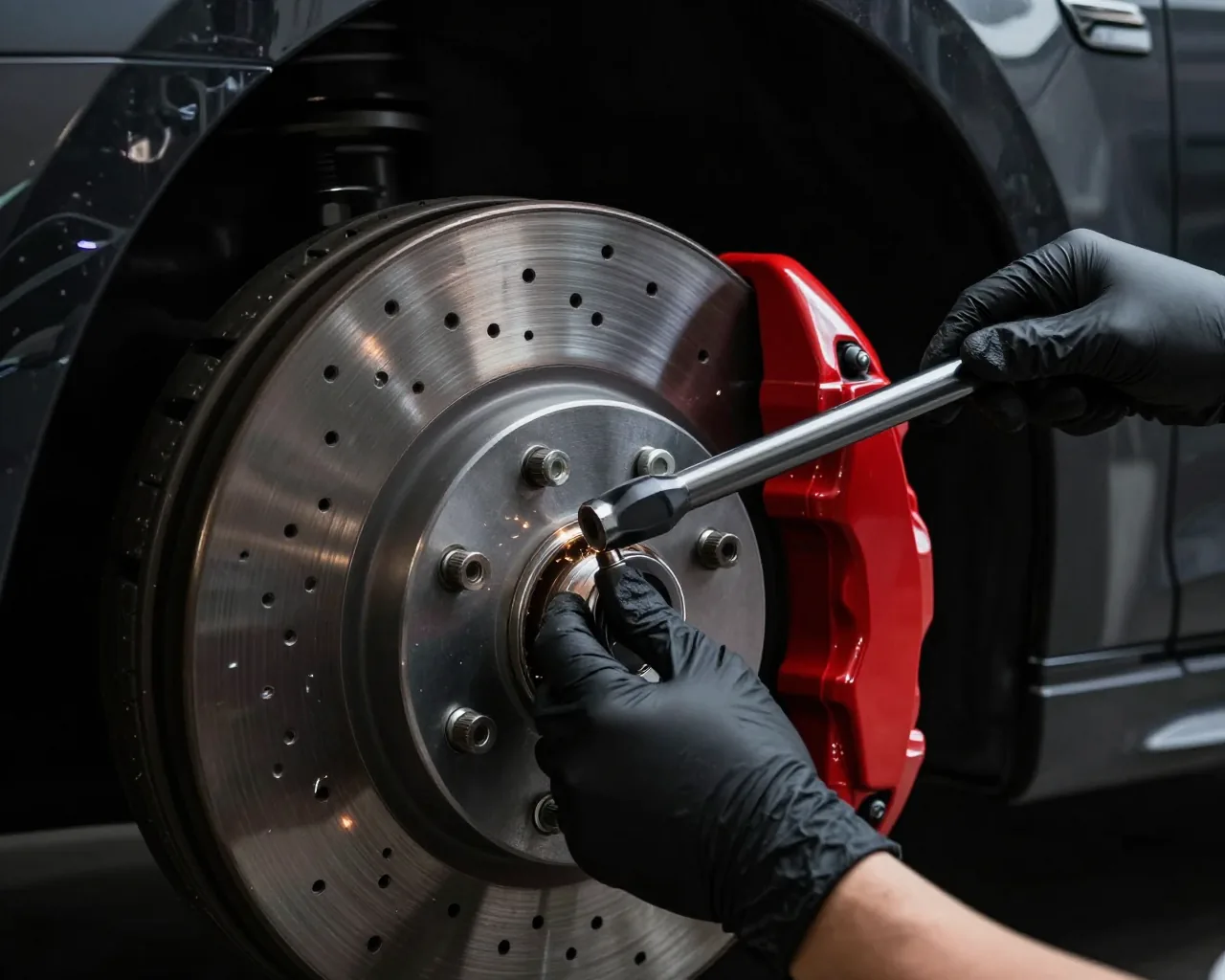
Removal of wheel arch liners
01
4 layers in hidden cavities
We pour the compound into the cavities through process holes with a fog nozzle in 4 passes. This way the compound gets into joints where a brush cannot reach.
02
We disassemble the interior without breaking clips
We remove the seats and carpet and work on a clean floor. We put the clips and wiring back in place, nothing rattles after reassembly.
03
Done in 2 days
A day for drying after washing and drying, a day for the anti-corrosion itself. It cannot be handed over earlier: the wet compound will not gain adhesion.
04
24-month warranty
We give 3 years for anti-corrosion of the underbody and hidden cavities against blistering and peeling. Come for an inspection once a year — free of charge.
07
How anti-corrosion treatment is performed
Steps.
From request to finished car — 6 clear steps, each under the master's control.
01
Car inspection
You leave a request on the website or by phone, we choose a convenient time and day. The master assesses the condition of the body and underbody, identifies corrosion spots and chips.
request on WhatsApp
02
Selection of the compound
We choose the right type of anti-corrosion: mastic, wax or polymer, based on the tasks.
inspection and diagnostics
03
Washing and drying
We thoroughly wash the underbody with chemicals and dry it so that the compound adheres to a clean surface.
estimate before work starts
04
Preparation for treatment
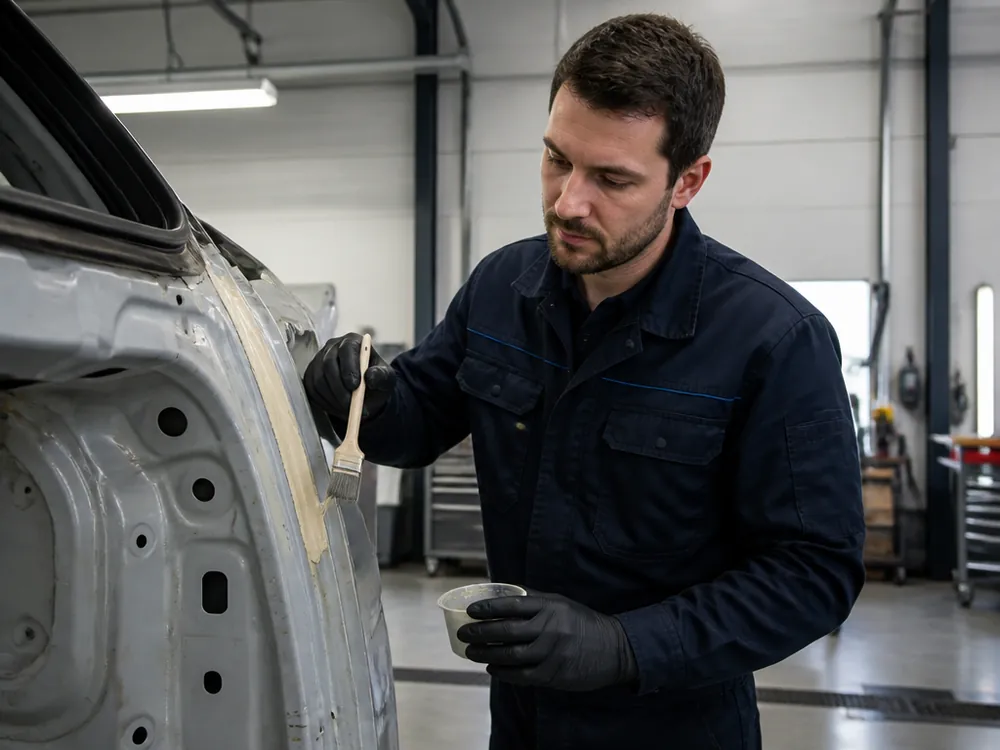
We mask elements that should not be treated and clean the problem areas.
work to factory procedure
05
Application of anti-corrosion
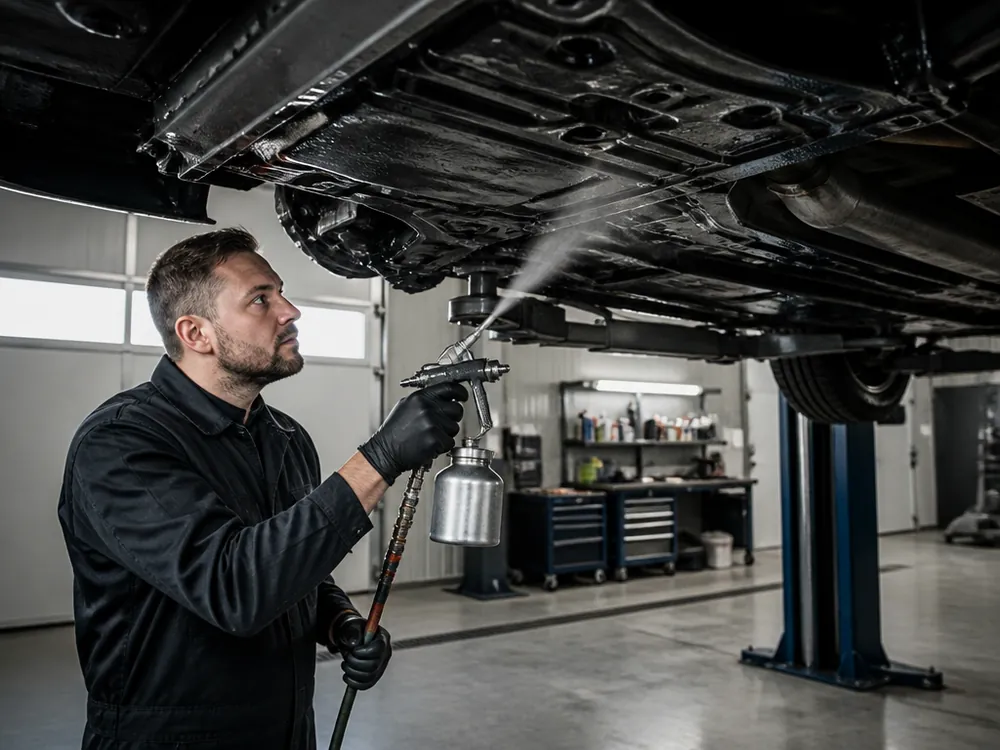
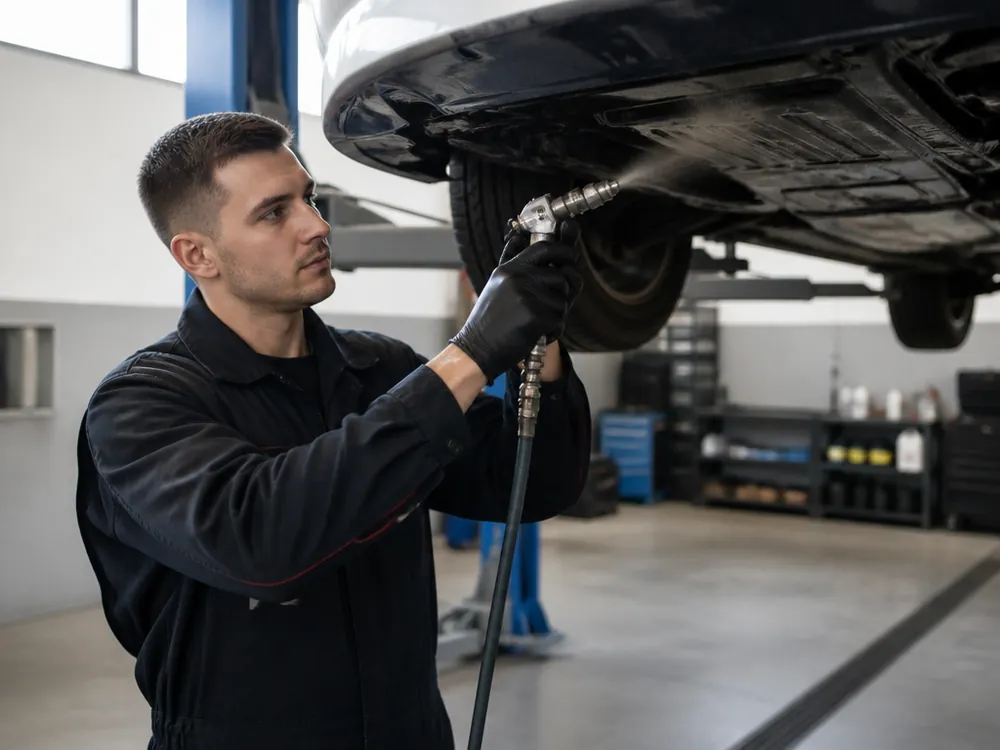
We evenly apply the compound to the underbody, arches and hidden cavities with a special sprayer.
result check
06
Car handover
We let the compound dry, check the layer thickness and coating quality. We perform a final inspection together with you and issue a warranty for the work performed.
Car anti-corrosion treatment in Almaty at CARGID means protecting the underbody, hidden cavities with an inhibitor, arches, welded seams and the cabin floor. We apply 4 coats with a fog nozzle, and we take the interior apart and put it back together without clip rattle. It takes 2 days because of drying, with a 24-month warranty stated in the work order.
Why car anti-corrosion treatment matters in Almaty
Corrosion rarely starts where you can see it — it begins under a layer of road dust, in the arches and on the underbody, where a car wash never reaches. Let's look at where metal gives out first and what treatment does.
Where the body rusts first
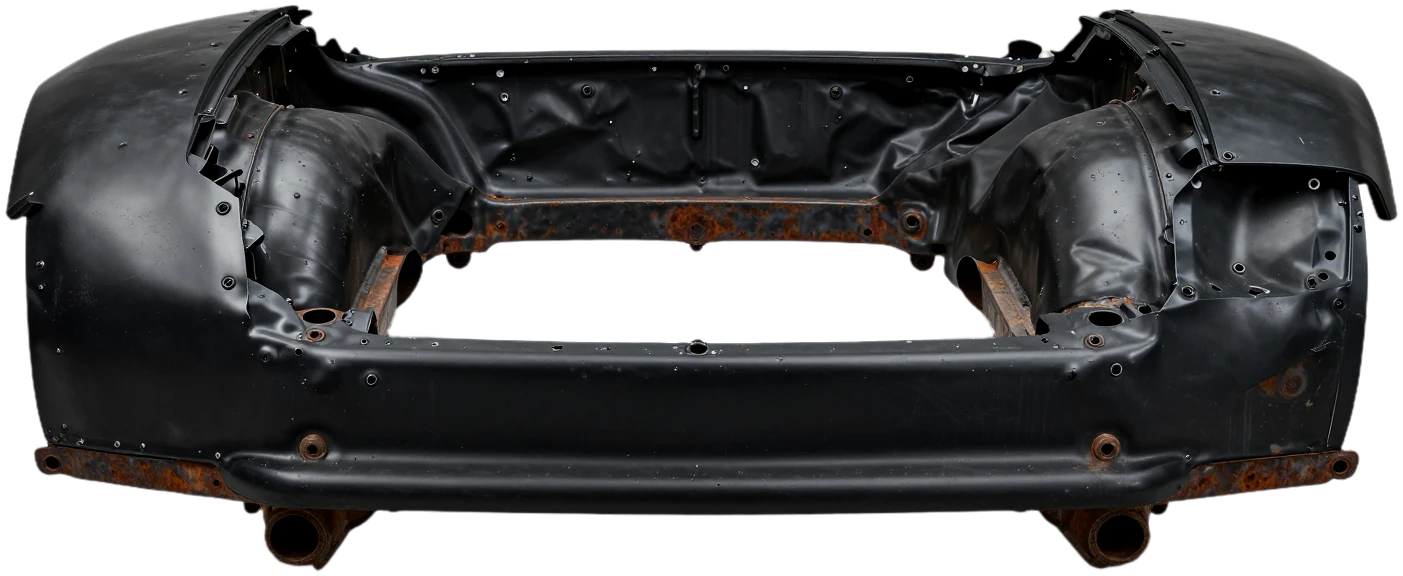
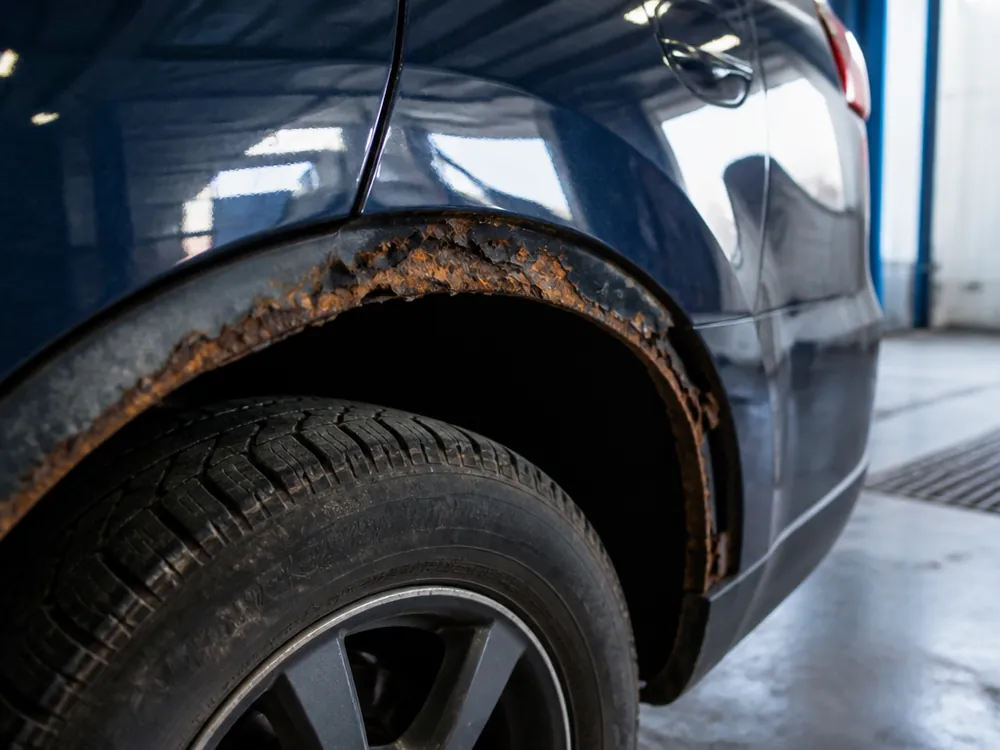
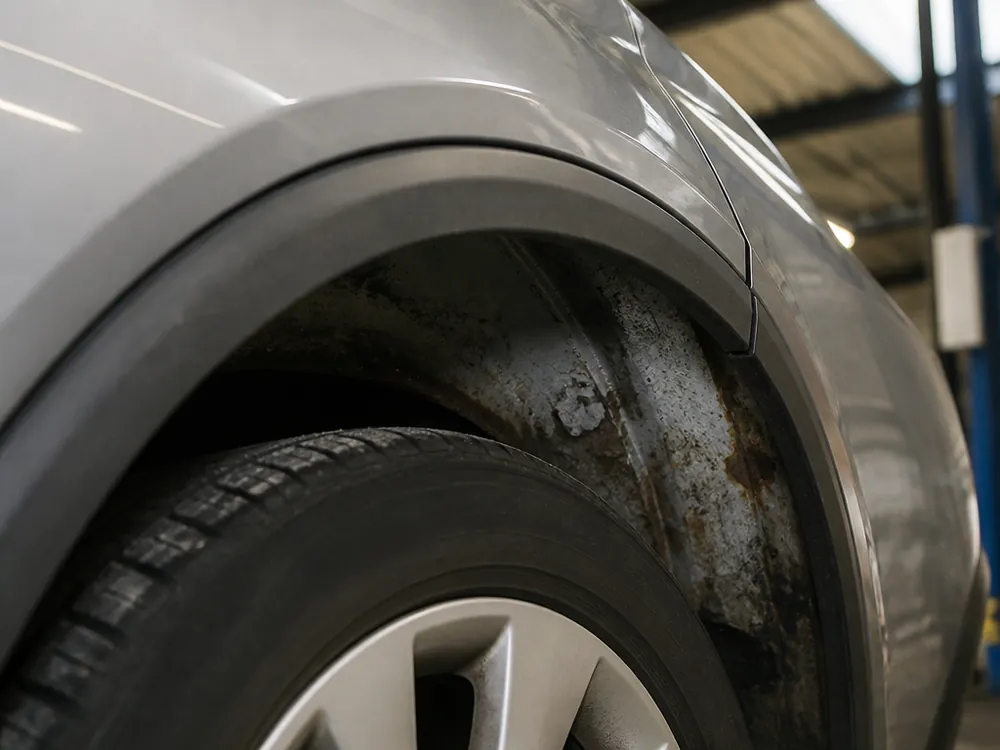
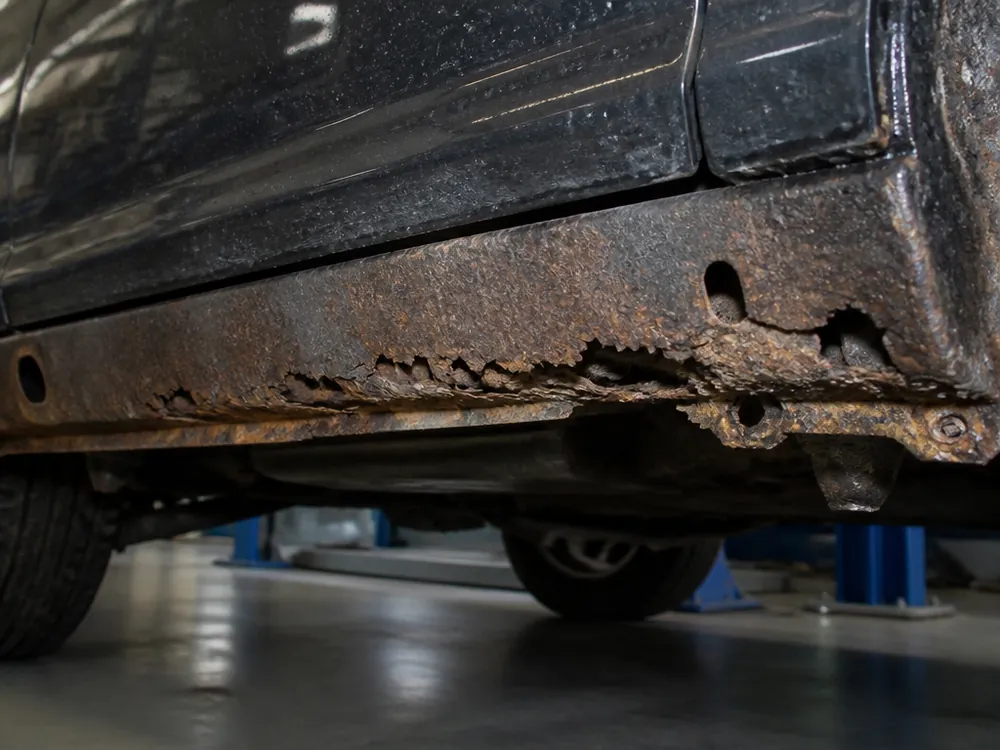
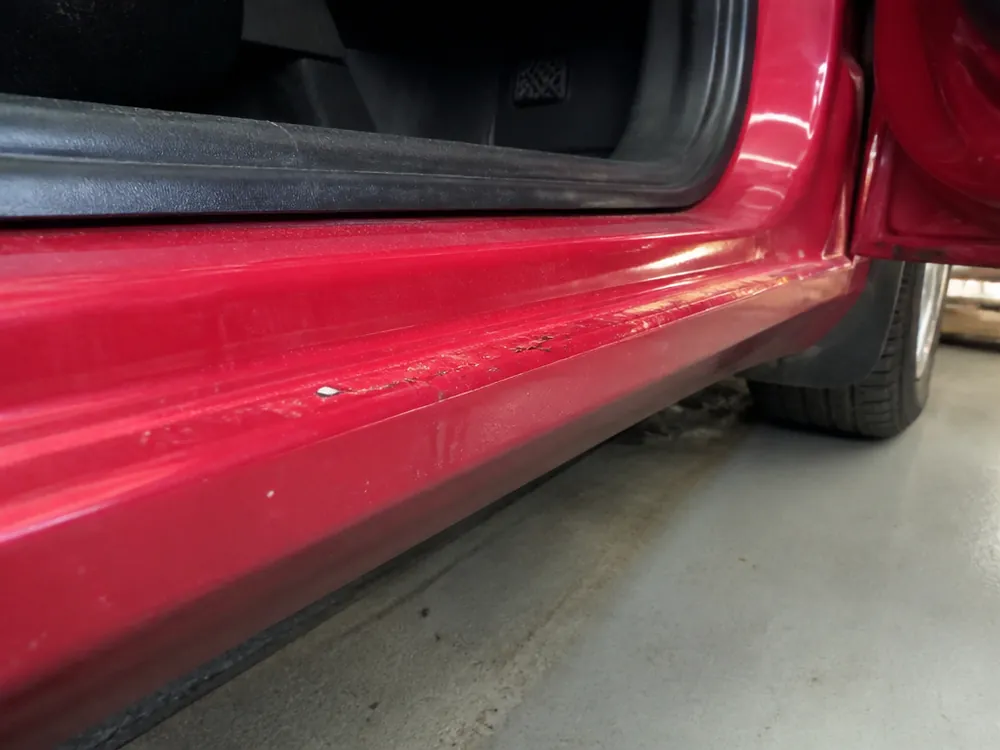
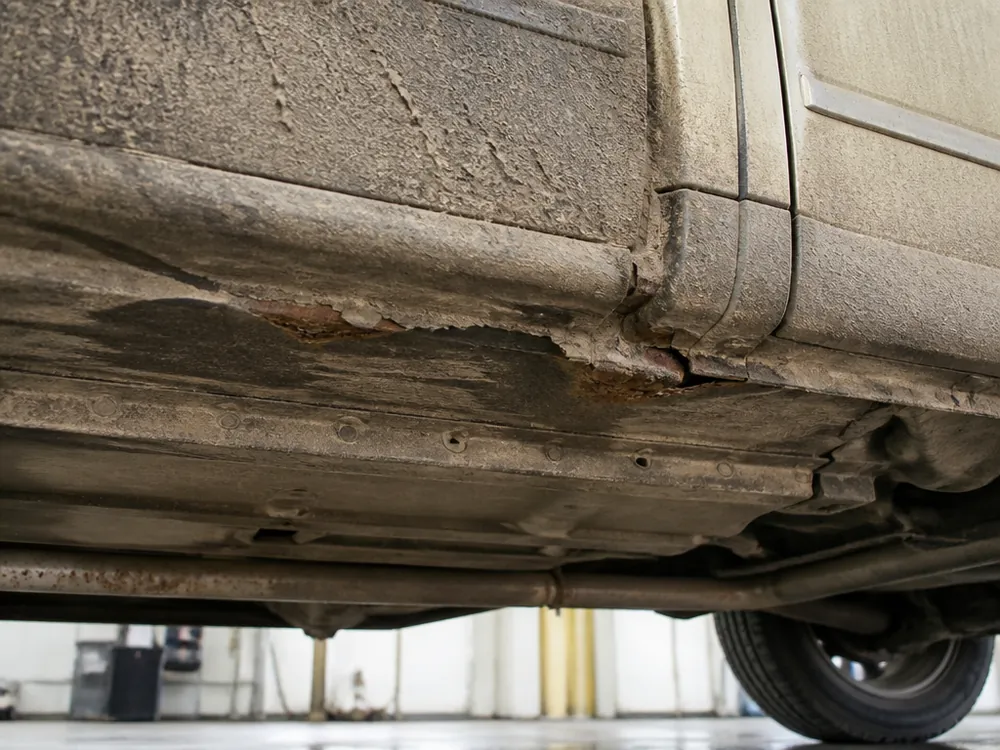
Wheel arches, sills, the underbody and welded seams corrode first — that's where moisture collects along with road dust and de-icing chemicals. Dust on Almaty roads is dense and fine; it clogs drain holes and stays on the metal for months, and in winter de-icing mixtures add to it. Welded seams suffer first: microcracks form in the factory sealant, and moisture gets right into the joint between two panels. Rear arches and the lower part of the sills on most sedans and crossovers are typical hotspots that show up as orange spots by the fourth or fifth season. Hidden corrosion in the cavities works from the inside and is invisible from outside, so you can't judge the condition of the body by how the sill looks. During the inspection, the technician taps the sills and checks the cavities through the service holes — that's how a hotspot is found before it shows up as orange spots on the paint.
Why body protection from rust matters more than it seems
Dust acts like a sponge: fine city dust absorbs moisture and holds it on the metal, so a car that's dry on the outside rusts under the dirt.
Winter chemicals: de-icing mixtures settle on the underbody and in the wheel arches and only wash off with a pressure wash.
The dry climate is deceptive: there's little rain, but the occasional moisture under the dust doesn't evaporate and keeps working all year round.
Underbody protection: a dense compound cuts off the oxygen supply, and hotspots get no fuel.
Shop experience: we've been repairing cars in Almaty for 12 years and we see how fast untreated sills give out.
What costs less in the end — anti-corrosion or repairing rusty sills
Prevention vs. welding: treatment costs less than welding and painting rotten sills and arches, because it's easier to stop corrosion than to fix it.
The stage matters: while the rust is surface-level, sanding and a protective compound are enough; once the metal is rusted through, you need body repair.
Order of work: first a repair insert is welded in, filled and painted, and only then is the protective compound applied to the underbody.
Hidden cavities: they're treated with an inhibitor before orange streaks appear, otherwise the compound goes on top of rust.
Timing: prevention takes two days, while body repair with sill painting stretches to a week or more.
Bottom line: once rust has eaten through the metal, anti-corrosion won't save it — you need body repair first, and protection only after.
What car anti-corrosion treatment includes and how the types differ
Anti-corrosion isn't a single procedure but a set of zones, and each has its own job. Let's look at which areas we cover and how they differ in load and compound.
Underbody and wheel arches
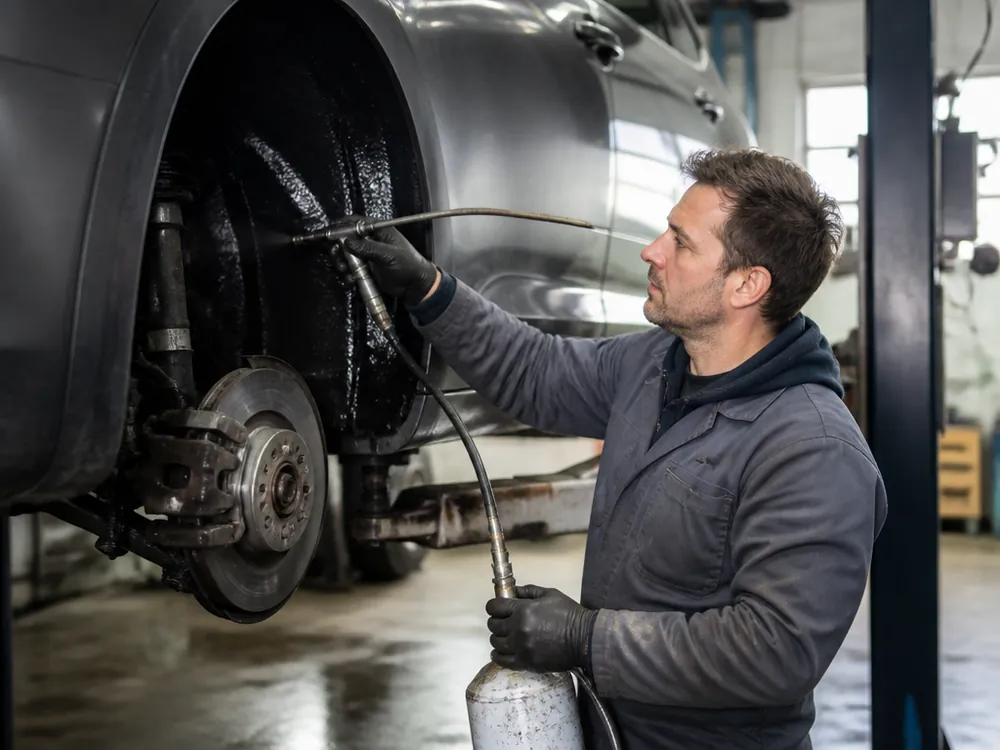
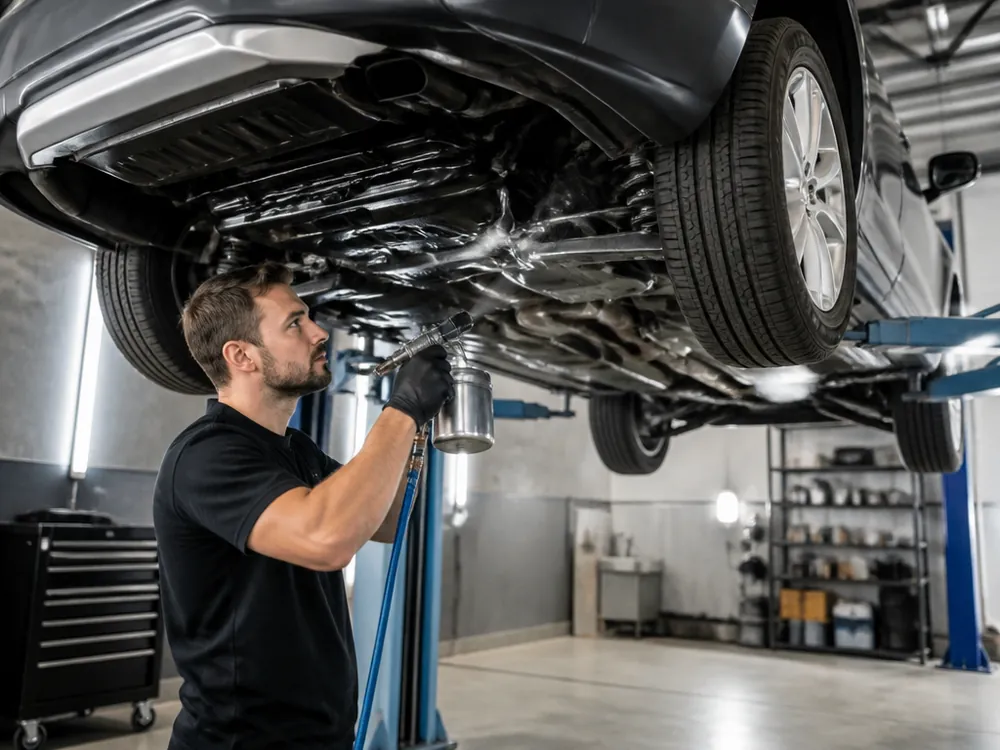
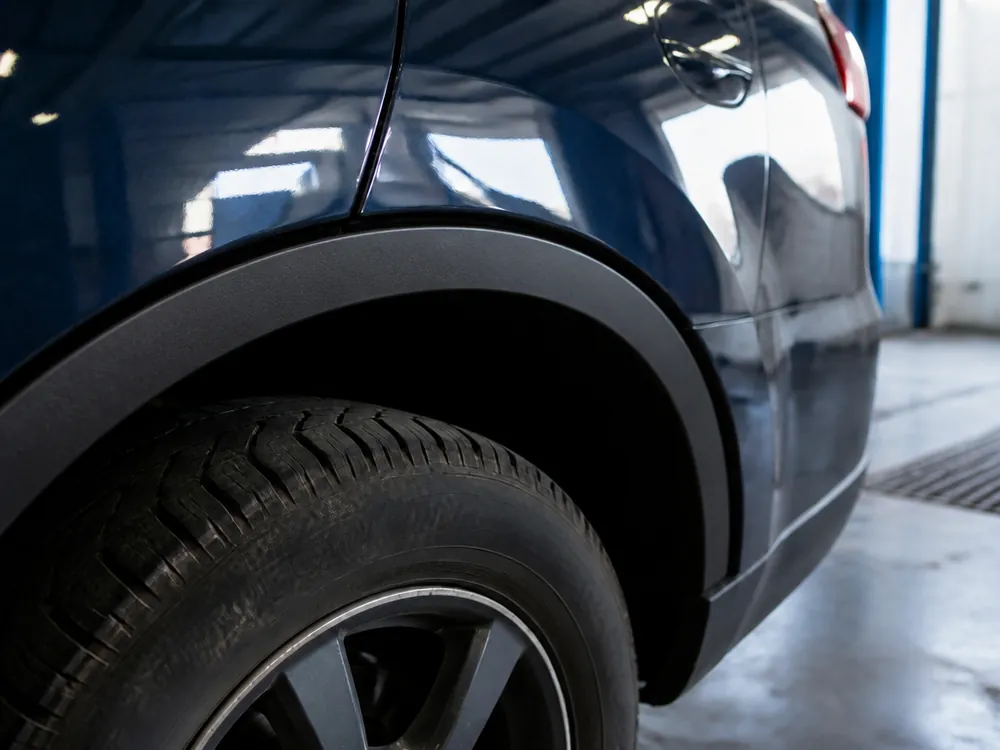
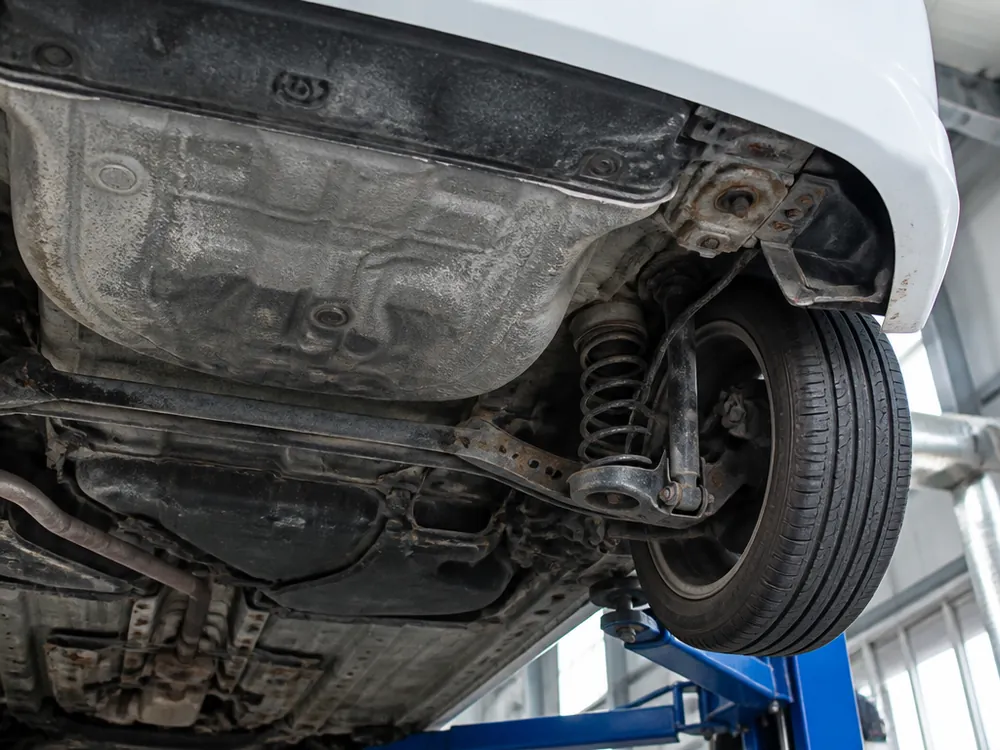
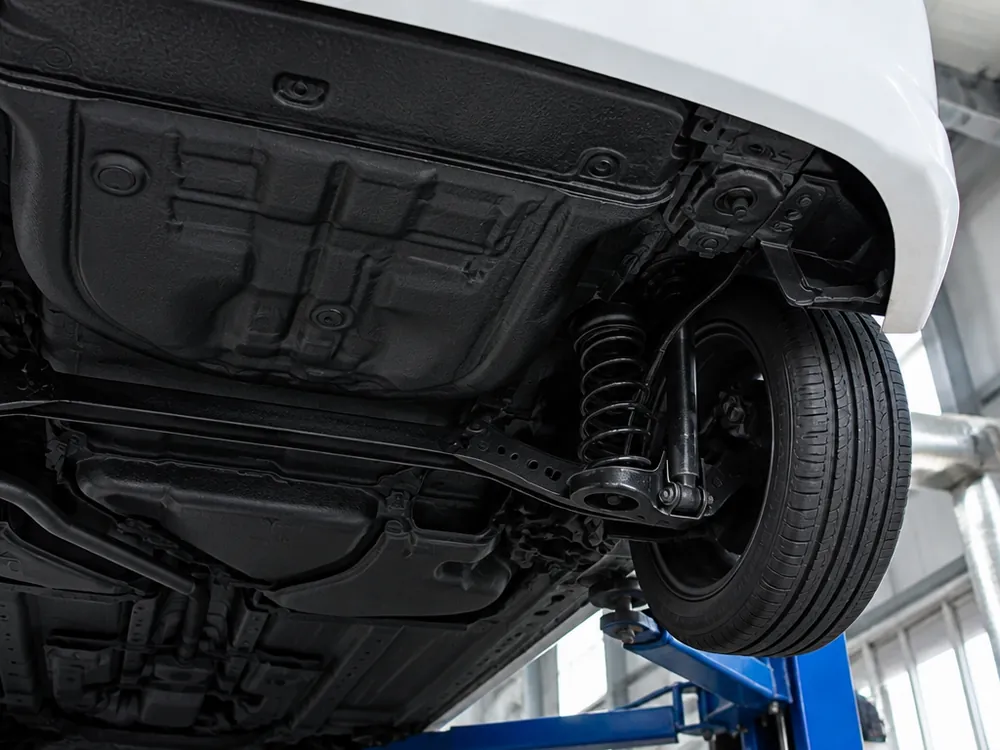
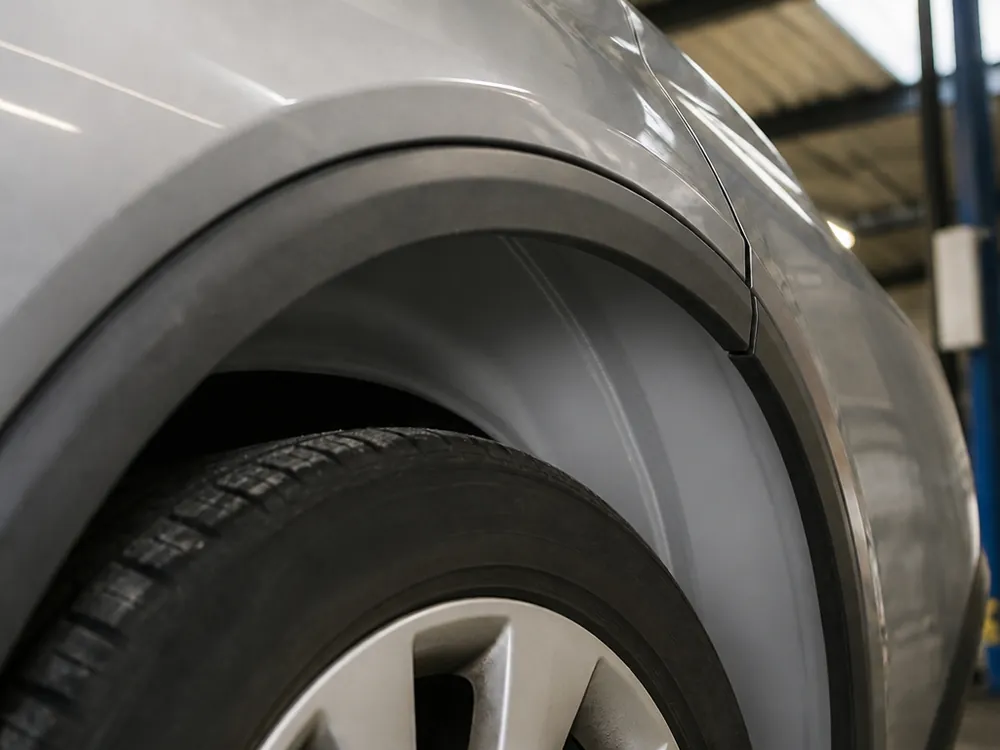
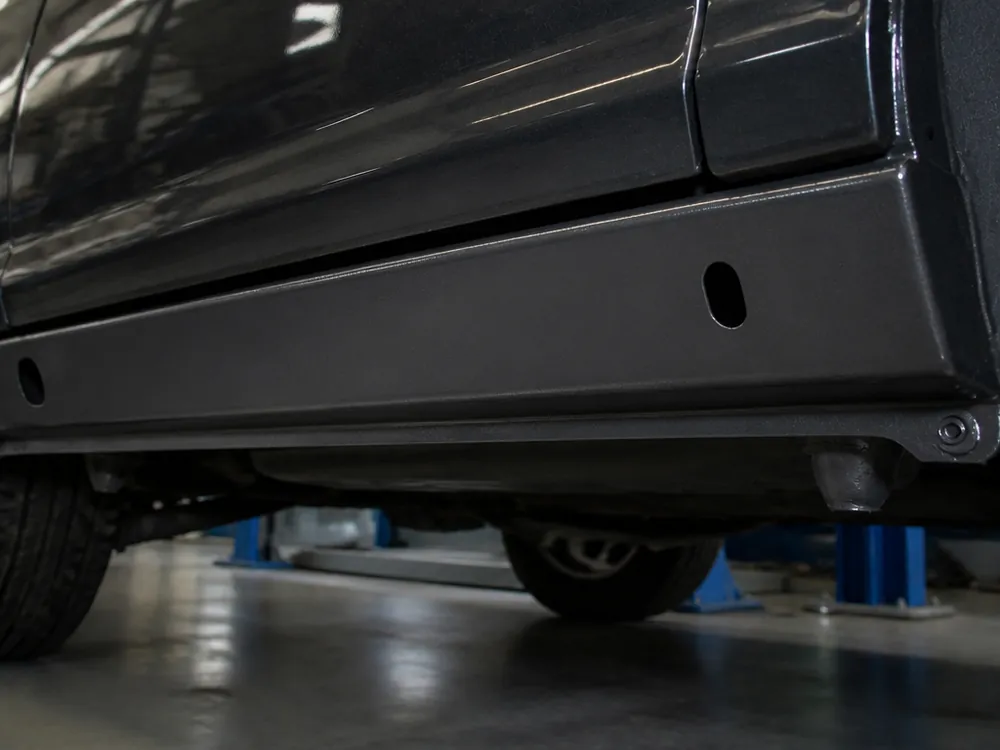
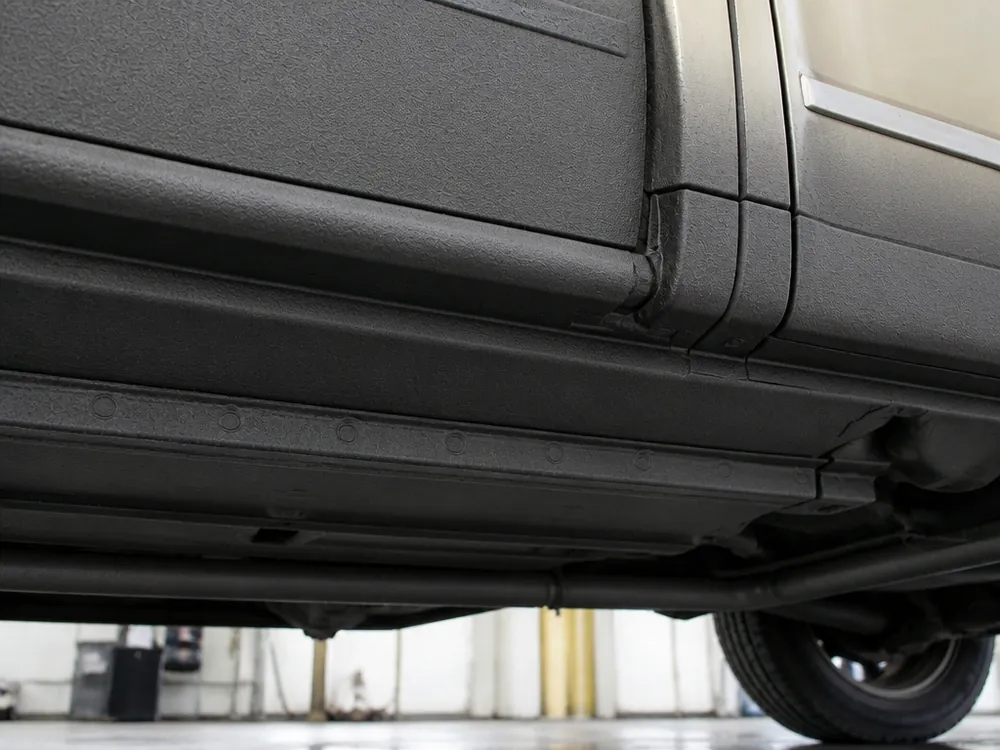
We treat the underbody and wheel arches with a protective compound — these areas take the first hits from stones, dirt and chemicals. We work on lifts: we raise the whole car so we can reach the sills, frame rails and all the lower points of the body with no blind spots. We cover the wheel wells with a separate mixture — it's denser and more elastic than the base coat. This approach lasts longer: the coating on flat metal underneath and in the wheel well takes different loads. The arches are in constant contact with sand and gravel, so the protection there has to be tougher than on a flat surface. Before applying, the technician inspects the edges and sills — if rust has already started, we sand the hotspot first, otherwise the new coat goes on top and peels off within a season.
Hidden cavity treatment with an inhibitor
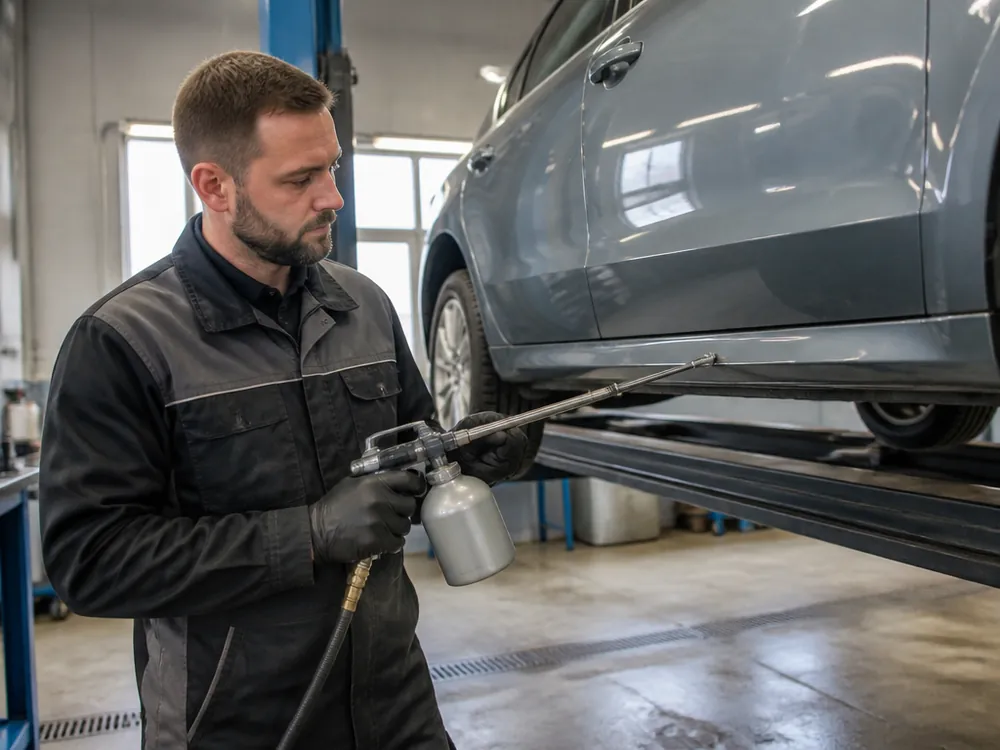
Access through the holes: we pour the corrosion inhibitor into the sills, pillars and frame rails through the factory service holes, without drilling anything extra.
Fog nozzle: we spray the mixture as a fog so it settles on the inner walls of the cavity instead of running down to one spot.
Four passes: we run the nozzle in 4 coats in the hidden cavities — that way the compound gets into the joints and gaps a brush can't reach.
Check after filling: we make sure the liquid has come out of the drain channels — that means the cavity is filled along its full length.
Why it's needed: corrosion inside a cavity goes on invisibly from the outside, and treating only the visible metal won't stop it.
Welded seams, joints and the cabin floor
treatment zones and their protection
Type of treatment
What it protects
Feature
Underbody anti-corrosion
underbody, lower points of the body
base coat against stones and chemicals
Wheel arches
arches, edges
separate heavy-duty compound
Hidden cavities
sills, pillars, frame rails
4 passes with a fog nozzle
Welded seams and joints
weld points, panel joints
spot treatment
Cabin floor
floor under the carpet
with seats and carpet removed
How car anti-corrosion treatment works in our shop
Here's the full sequence of work from drop-off to pickup, with a focus on what sets our process apart from the "spray and drive" approach. Every stage affects how long the protection lasts.
Washing, drying, and why you can't work on a dirty underbody
Pressure washing: we blast off dirt, sand, and old flaking coating, and rinse out seams and access holes.
Drying for a full day: after washing, the car sits in the shop for at least a day — the product only bonds to dry metal.
Inspection before application: the technician marks corrosion spots and areas where the old coating is barely holding on.
Why not over dirt: a film of dirt keeps the product from bonding to the metal, so it just sits on top of the dirt.
Moisture in seams: on wet metal, the product seals in water, and corrosion continues underneath.
Result of the mistake: within a season, such a coating peels off in sheets, and the job has to be redone.
Four coats in the cavities and stripping the interior
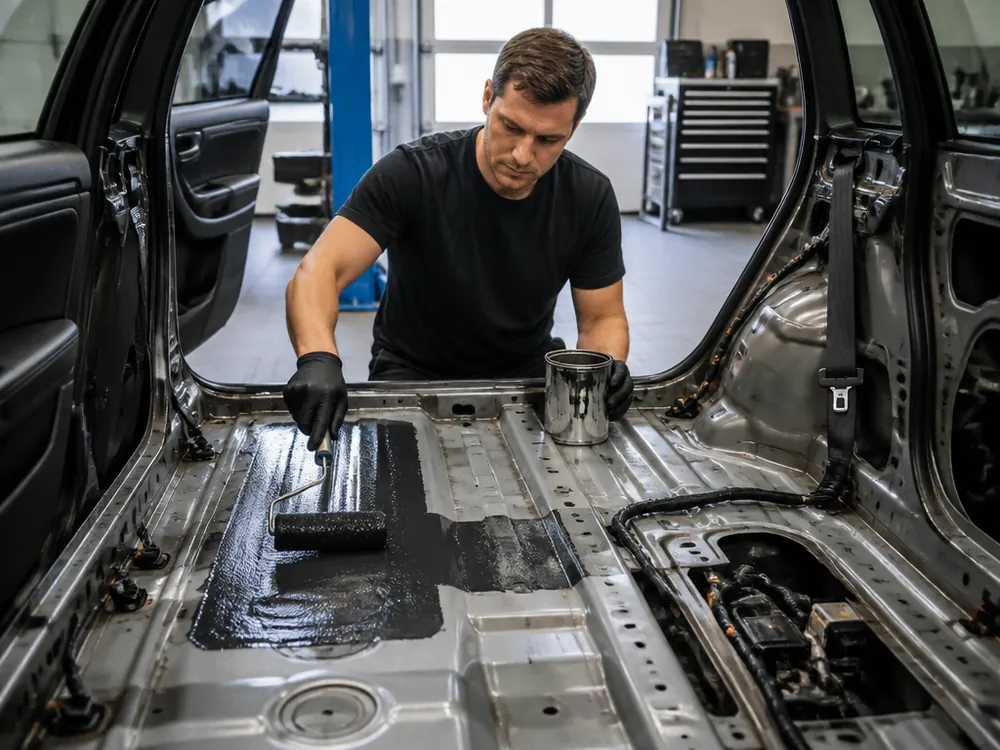
Stripping the interior: we remove the seats and carpet and work on a clean floor, not over the carpets.
Cavities: we spray the compound through access holes with a fog nozzle in 4 passes — it reaches seams a brush can't.
Why four passes: one coat doesn't cover the whole cavity; four passes reach the far corners and weld points.
Underbody and wheel arches: separate flexible compounds that handle gravel and road chemicals without cracking in the cold.
Reassembly: clips and wiring go back where they belong — after reassembly, nothing rattles or comes loose.
Photo report: we shoot the key stages — the stripped interior, the passes through the cavities, and the finished result.
How to tell the protection was done right
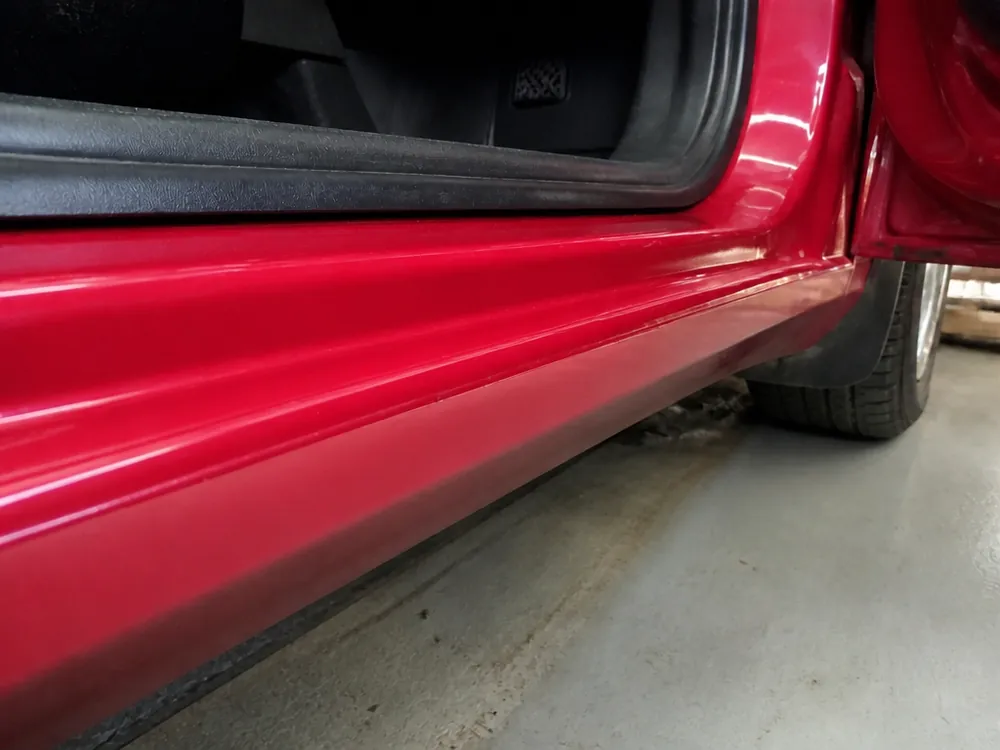
Quality rust protection shows in an even coat with no gaps on the arches and rocker panels, in treated weld seams and joints, and in an interior that goes back together with no gaps or rattles. Cavities are checked by looking through the access holes toward a light — the compound should be visible on the walls, not just at the opening. On the arches and rockers, the coating stays flexible: it doesn't crack or peel off in sheets when you press it. A photo report of the key stages settles the question of what was actually done — the photos show the stripped interior, the fog nozzle passes, and the finished result. Ask whether the cavities were treated and how: if the technician only talks about "smearing the underside," they probably left the cavities unprotected.
How long the coating takes to dry and when to pick up the car
Let's break down what makes up the two days and why we can't hand the car over sooner — it's not about the queue, it's about the compound bonding to the metal.
What makes up the two days
A full day goes to drying after the wash and another to the rustproofing itself, which is why we hand the car back in 2 days. First we wash the dirt and road chemicals off the body and underbody, then blow them out and dry them — leftover moisture in the seams won't let the compound bond to the metal. On the second day we apply the protective compound to the underbody, arches, and cavities, spraying them with a fog nozzle in 4 passes through the access holes. Rustproofing in Almaty follows the same process: we don't release the car until the layer has bonded — a fresh compound wipes off with an accidental touch, and the work is ruined. Pick it up early and the coating will start peeling in the first season — redoing it costs more than waiting the extra day.
Can you drive in the rain and through puddles right after rustproofing
Normal driving: right after pickup the car is fully ready to go — city trips and rain won't hurt the coating.
Deep puddles: for the first few days, steer around flooded spots — pressurized water hits the arches and can damage a layer that hasn't fully set.
Pressure washes: hold off on the first wash for a few days; a pressurized jet cuts through fresh rustproofing in the wheel arches.
Checking the underbody: a couple of days later, take a look underneath — an even dark layer with no bare patches means the compound went on right.
First wash: once it's had time to set, wash as usual, but be gentler around the arches where the layer is thinner.
What to do if you need the car every day
Book ahead: we're open daily 09:00–20:00, seven days a week, and take cars by appointment — no waiting in line.
Two days in the shop: that's enough time for the compound to bond, and the car goes back into service with no restrictions.
Planning: if you can't go without a car, schedule the treatment for the weekend — two days later it's back on the road.
Don't double-book: don't schedule it on a day you'll need the car a few hours later — rushing it means redoing it.
Service advisor: handles the work order from drop-off to pickup and will tell you the exact pickup time.
Does a new car need rustproofing, and how often to repeat it
Let's look at three scenarios: a fresh car from the dealer, a repeat treatment after several winters, and the season when rust protection makes the most sense.
Does a new car need rustproofing
Factory protection doesn't cover everything: at the plant, the outer panels get primer and paint, but the cavities, seams, and inner joints are left with almost no compound.
Corrosion inhibitor works in the cavities: we spray it through the access holes with a fog nozzle in 4 passes so the coating reaches seams a brush can't.
New-car rustproofing is done before the first winter: while the metal is clean, the protection goes on evenly and lasts longer than on a body that's already showing rust.
The treatment doesn't affect the factory warranty: the compound goes on the lower panels and into the cavities without touching the paint or the electrics.
On a new car, it makes the most sense right after purchase, before corrosion has started — then the job doesn't have to be combined with cleaning up corrosion spots.
How often to repeat the treatment
Repeat the treatment based on the condition of the layer and how you drive, not on a fixed schedule: a car on dusty, chemical-covered roads needs a check more often than one kept in a garage. Putting it on a lift shows the wear on the wheel arches, lower panels, and cavities — those areas reveal where the layer has worn thin or peeled. Underbody protection lasts longer if you don't blast it point-blank with a pressure washer or scrub it with a wire brush. Corrosion under a peeled layer develops out of sight, so checks are tied to the change of season. It's best to inspect the arches and lower panels before road-salt season, so you can refresh the coating before corrosion starts.
Can you get rustproofing done in winter
You can get rustproofing done in winter because the work happens indoors, where the car dries inside the shop instead of outside. In winter, road-salt grime builds up on the lower panels, so washing and drying the body before treatment matters even more — otherwise the compound goes on over dirt and won't bond properly. We put the car on the lift, wash the wheel arches and lower panels, blow them out and dry them, and only then apply the coating. We do SUVs and crossovers more often in winter: they have big wheel arches and a frame where snow, sand and salt pack in. Trailers and commercial vehicles aren't tied to the season either — they run all year, and it's easier to dry them indoors than outside. In winter we take cars by appointment, so you won't have to wait in line.
Warranty on car rustproofing and how we document it
Here's how long we stand behind the work, what that covers, and how we put it all in writing so nothing is left as just a verbal promise.
Warranty period and where it's recorded
Length: we give 24 months on the treatment — the same as on body repair and painting.
First document: we write the period and terms into the work order when we take in the car.
Second document: we hand over the completion certificate along with the keys when you pick up the car.
What's in it: the type of work, date, scope of treatment and warranty period — no vague wording.
Why the paperwork: if there's a dispute, you rely on the document, not on the technician's memory or a verbal promise.
Where to keep it: keep both copies in the glovebox — you'll need them if you come back.
What the warranty covers and what it doesn't
Covers: the work performed and the parts installed.
Doesn't cover: an accident after the repair.
Doesn't cover: interference by third parties.
Doesn't cover: normal wear of consumables.
Doesn't cover: a part supplied by the customer.
Diagnostics: free of charge for warranty claims.
How a warranty case is handled
For a warranty claim we do free diagnostics, check the situation against the work order and fix the problem if it falls under the terms. The service advisor puts the car on the lift, inspects the treated areas and confirms whether the defect matches the work performed. Before handover, after any repair, we do a test drive — that's how we check that nothing rattles or comes loose after reassembly. It's best to bring the work order and completion certificate with your claim: they make it easier to verify the work instead of reconstructing the history from memory. If the defect isn't related to our treatment, we show you the cause and offer a solution under a separate estimate. For Almaty residents this means claims are handled without red tape, and warranty diagnostics cost you neither time nor money.
Key points of anti-corrosion treatment
Here's a quick summary of rustproofing: which areas get covered first, how long the job takes, and what to check when you pick up the car from the shop.
Risk areas: body protection covers the wheel arches, rocker panels, underbody and weld seams — that's where corrosion starts first.
Hidden cavities: we flood them with an inhibitor in several passes using a fog nozzle, otherwise rust starts from the inside.
Cabin floor: treatment involves disassembly, and during reassembly the clips and wiring go back where they belong.
Timing: two days — that's drying after the wash plus drying the compound itself; we can't hand the car back sooner.
Warranty: the period and terms are recorded in the work order and completion certificate, not left as a verbal promise.
10
Frequently asked questions about anti-corrosion treatment of cars in Almaty
Questions.
Price, timeframes, warranty, payment — 10 questions asked most often.
10
Didn't find an answer?
Message us on WhatsApp — a service advisor will reply within 5 minutes.
Comprehensive treatment includes washing the underbody and hidden cavities, drying, defect detection (searching for rust spots), if necessary welding and cleaning, applying mastic to the underbody and arches, injecting liquid compounds into the sills, side members and pillars. We also restore factory plugs and give care recommendations. In our service, the full package takes 6-8 hours, and the car is delivered the next day after drying. The price includes materials and labor, the exact amount depends on the condition of the body.
With professional application and proper operation, the protective coating retains its properties for up to 8-10 years. However, the service life is affected by conditions: active use in winter with reagents, frequent high-pressure washing, driving on gravel roads. We recommend renewing the treatment of hidden cavities every 3 years, and the underbody — every 5-7 years. Our masters evaluate the condition of the coating for free during a visit and will advise whether it needs renewal.
The price depends on the size of the car and the materials used. The basic package for a C-class sedan costs from 45,000 tenge, includes treatment of the underbody, arches and all hidden cavities. For crossovers and SUVs — from 60,000 tenge. The exact cost can be found out after a free diagnostic — write to us on WhatsApp, we will make a calculation. Exact prices are in the price list on this page.
Yes, and this is the right approach. A new body is not yet affected by corrosion, so it is enough to apply protective compounds without welding and cleaning. We recommend treating a new car in the first 3-6 months after purchase, while dirt and salt have not accumulated in the cavities. This extends the service life of the body and increases liquidity when selling. The average cost of a full anti-corrosion treatment for a new foreign car is from 35,000 tenge.
Before visiting, it is recommended to wash the car from below, removing large clumps of dirt. For 2-3 days try not to drive on wet roads so that the body dries. Remove the spare wheel and tools from the trunk — this will provide access to the niche. Additionally, remove decorative sills and wheel arch liners if they can be removed quickly. Our master will conduct a full defect detection and decide what additional work is needed.
We use Finnish compounds Noxudol and Dinitrol — they have proven themselves in cold climates and salty roads. For the underbody we use impact-resistant rubber-based mastics, for hidden cavities — liquid preservatives with a penetrating effect. It is not recommended to use bitumen mastics of unknown brands — they crack in frost. In our service, materials are already included in the price.
No, you can't. Immediately after applying mastic and liquid compounds, you need to wait at least 6-12 hours for the coating to dry and set. Otherwise the compound will be washed off by water and dirt, and the protection will be uneven. We deliver the car the next day after drying. For the first week, avoid washing the underbody with high pressure so as not to damage the fresh film.
If the corrosion is through, simply applying anti-corrosion is not possible — the metal inside is already deteriorating. It is necessary to first weld the car's underbody, cutting out the damaged areas and welding in new metal plates. Only after that is a full anti-corrosion treatment carried out. In our service we perform such works turnkey — diagnostics, welding, anti-corrosion. Don't delay, otherwise the holes will spread further. Exact prices are in the price list on this page.
High-quality anti-corrosion treatment many times slows down and almost completely stops corrosion in the treated areas, but does not give an absolute guarantee in case of through damage to the body due to accidents or factory defects. If the technology is followed and normal operation, the car retains its integrity for 8-10 years. We give a written guarantee for the work for 24 months, if there was no mechanical damage to the coating.
Yes, it's a reasonable investment. A car with a treated underbody sells faster and for more — buyers know that the body is protected from rust. During inspection, you can show the certificate for the materials used and the service warranty. In addition, you preserve the market value, because rotten sills and side members reduce the price by 20-30%. Even if you don't plan to sell, you are investing in the longevity of the car.
11
What clients say about our rustproofing
Reviews.
We collect ratings on the website and on maps — we hide nothing.
4.8
872 reviews on the website 1 900+ ratings in total
Andrey
Tucson
I brought my Hyundai Tucson 2016 for anti-corrosion treatment. The underbody had rust spots, especially the seams. The service did everything carefully, in 2 days and for 48,000 tenge. Now I feel calm about the body. I will recommend to friends.
Dinara
I had anti-corrosion treatment done on my Toyota Corolla. I was choosing for a long time, but here I liked everything: both the price and the timeline. They treated both the underbody and hidden cavities with wax. I inspected afterwards — clean, even. The car is 5 years old, but now it's like new. Thank you!
Sergey
I bought a used Mazda 6 and immediately decided to get anti-corrosion treatment. At CARGID they scheduled quickly, inspected, and offered options. I settled on mastic. Result: 31,000 tenge, 1 day, excellent result. They covered chips on the sills, no more rust.
Yerlan
I took my Mitsubishi Outlander for anti-corrosion treatment. I feel sorry for the car, so I was thorough: I watched how they treated. I liked that the underbody is washed with chemicals, not just anyhow. I paid 54,000 for the whole day, satisfied.
Olga
We had anti-corrosion treatment done on a Volkswagen Tiguan. My husband was choosing for a long time, went around services, and settled on this one. Everything was clear: scheduled, done on time, even sent a photo report. Price 42,000, fine. The car is from Almaty, salty winters, now it's protected.
Aigerim
Келісім бойынша антикор жасаттым. Машина — Kia Sorento, 2019 жыл. Днище таза болса да, қорғаныс үшін өңдедік. Жұмыс сапалы, бәрі түсіндірілді. Бағасы — 48000 теңге, уақыты — 2 күн. Ракмет!
Alexey
I applied for anti-corrosion treatment for my Nissan X-Trail. The mileage was such that it was time. They lifted it on the hoist, showed all the weak spots. They did it in 2 days, I paid 52,000. Now I don't worry about the arches and sills.
Timur
UAZ Patriot, 2015, bought on Avito, and the bottom was a coffin. In CARGID they did everything properly: replaced the sills, anti-corrosion treatment. It came to 70,000 tenge, 3 days. Now the bottom is solid. Thanks to the craftsmen!
Dmitry
I brought a Hyundai Elantra 2018 for anti-corrosion treatment. I was worried they might do it wrong, but here everything was done properly. Fast, careful, price 35,000. Winter has already passed — zero surprises, the body is clean. I was satisfied.