Diagnostics is reading and analyzing data from electronic control units via OBD-II, not just “looking at fault codes.” Below we explain when it’s needed and how basic differs from advanced.
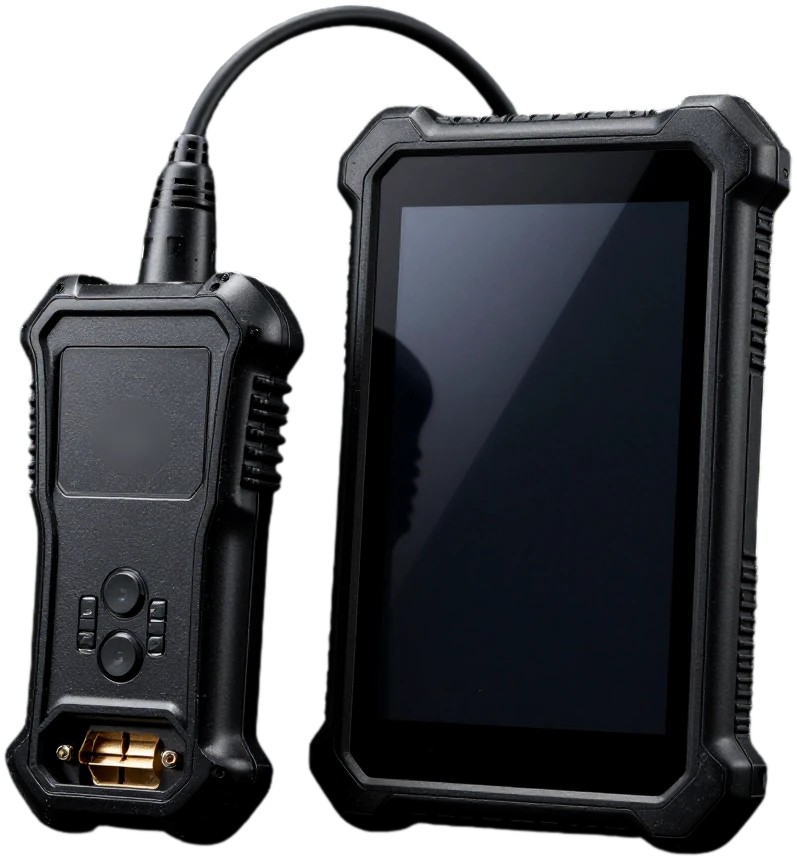
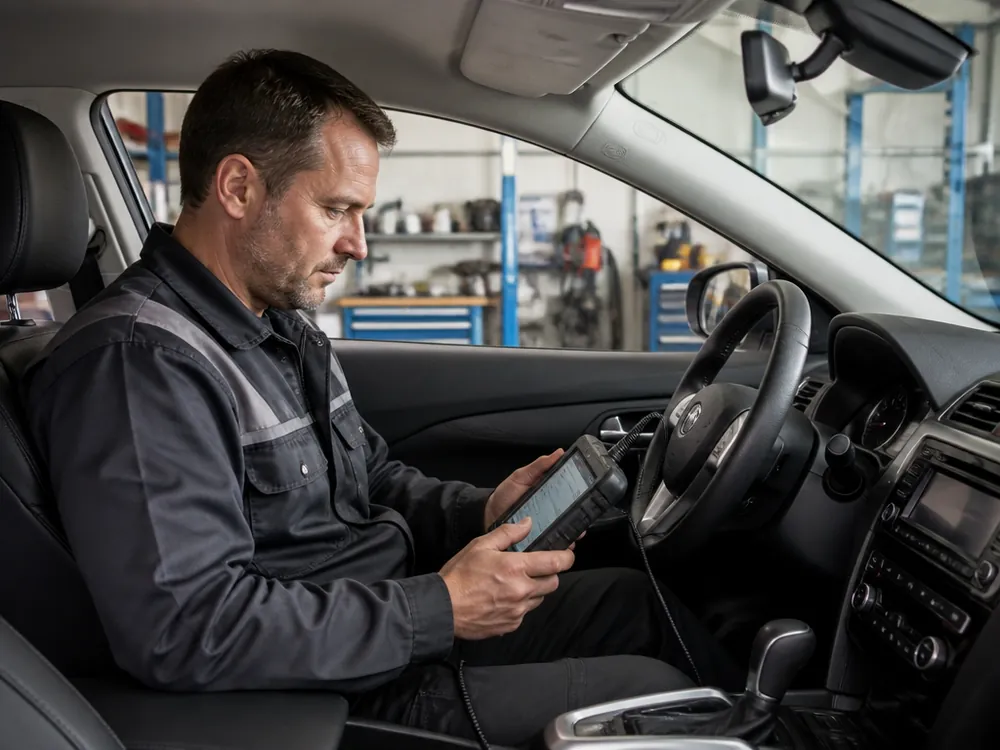
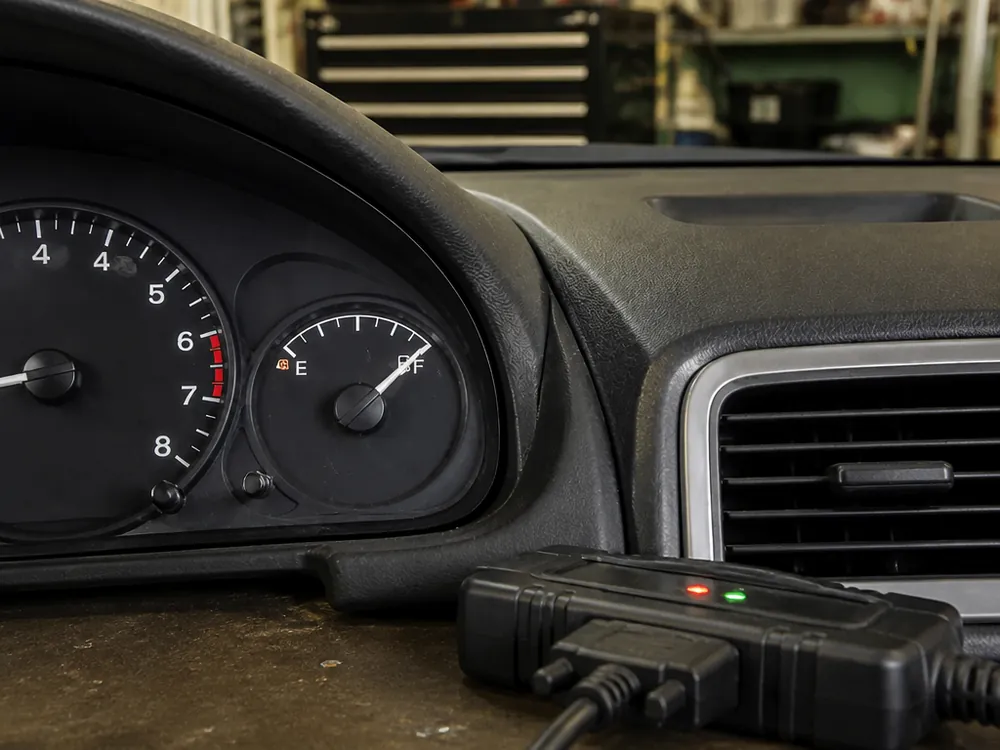
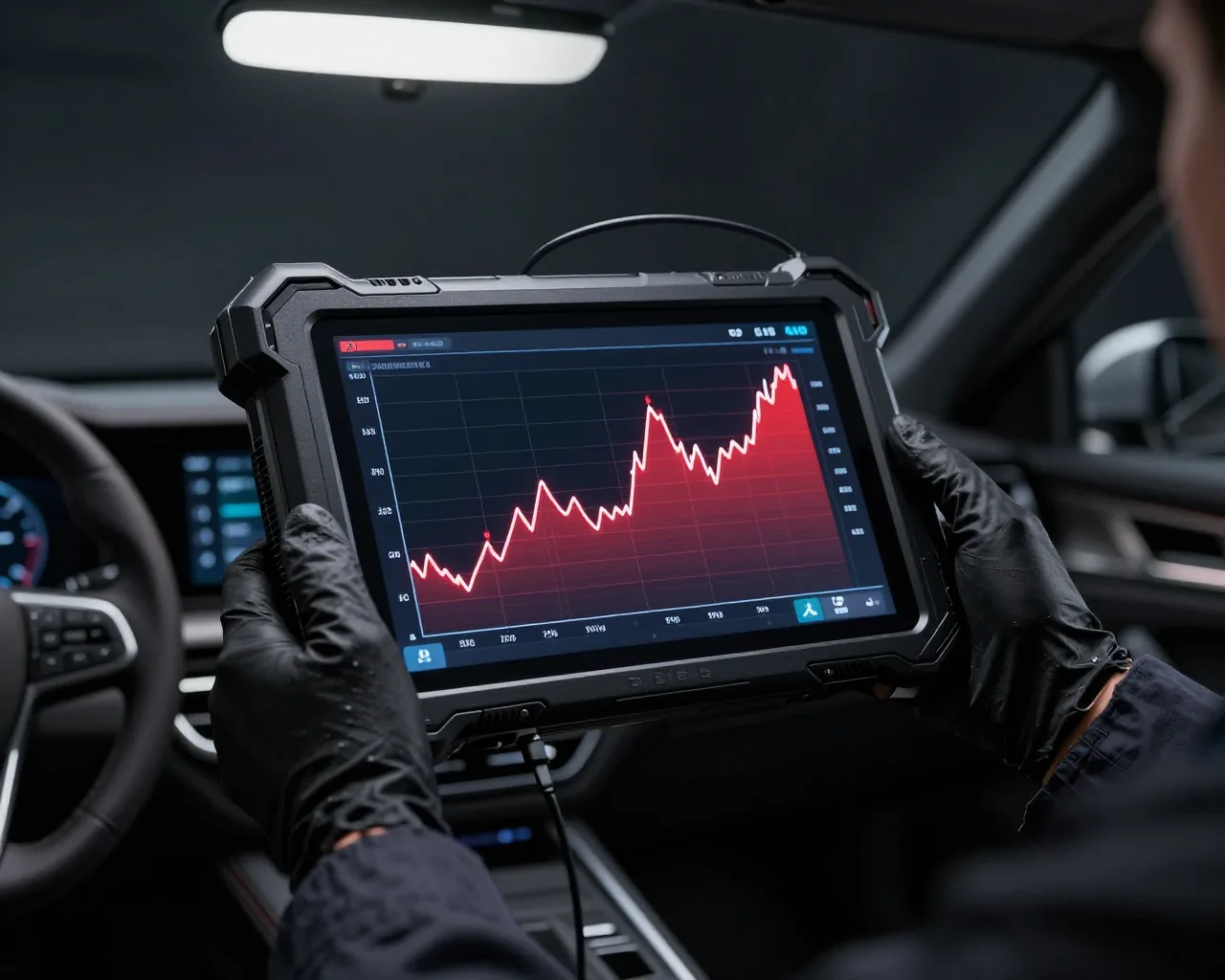
The scanner reads fault codes and real-time parameters from the ECU and other modules, so it finds a fault before it shows up in how the car behaves. Through the OBD-II connector, the technician sees not only the codes themselves but also freeze frames — a snapshot of parameters at the moment the fault occurred: RPM, temperature, load, sensor readings. Car computer diagnostics is built on this: first we read the data, then we check versions. Reading data with a scanner makes sense even on a visually healthy car: the electronics record mixture deviations, misfires, and the operation of coils and oxygen sensors that you can’t notice by ear or eye. Freeze frames show at what RPM and temperature the failure occurred — such a snapshot rules out half the versions before any disassembly. A fault in memory is not a diagnosis yet: the code points to a chain (sensor, wiring, module), and the technician goes through it step by step; otherwise, replacing a part based on the code often doesn’t solve the problem.
When to come for diagnostics and which symptoms can’t wait
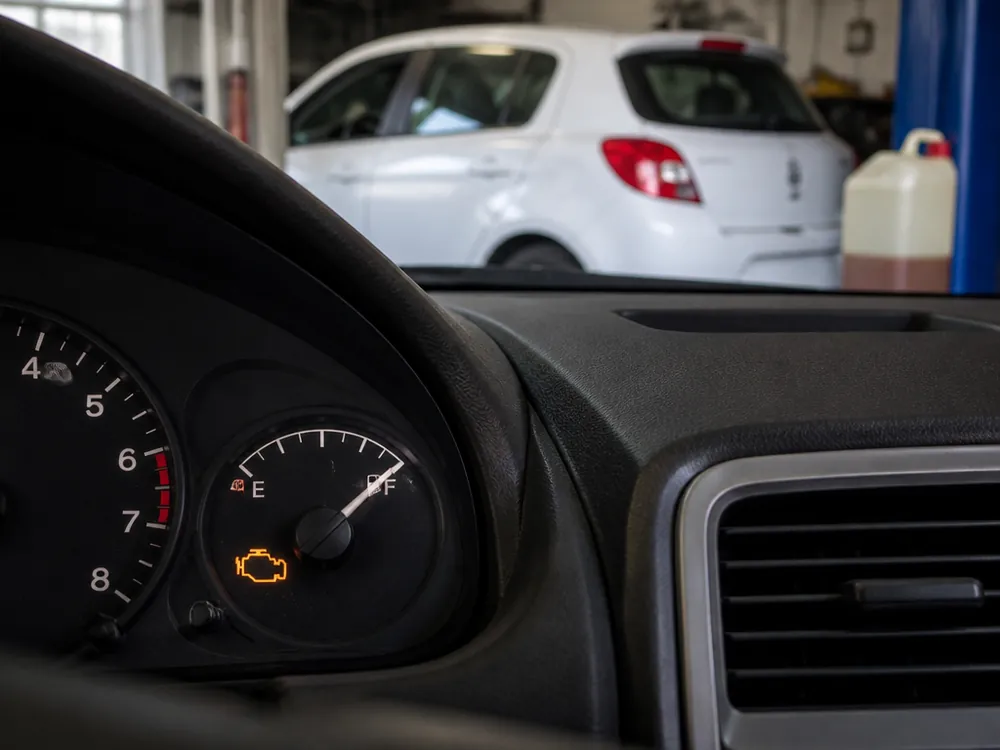
We accept electronics checks for a lit Check Engine light, jerking and hesitation during acceleration, increased fuel consumption, hard starting, and also as scheduled — before buying a used car. Symptoms you shouldn’t wait until the next service for: fluctuating idle RPM, fuel smell in the cabin, the car stalling at a traffic light, the transmission kicking when shifting, the engine starting on the second or third try in the morning. If the Check Engine light is steady and the car drives normally, it’s still not worth putting off for months: some faults (misfires, lean mixture) accumulate and lead to more expensive repairs than the diagnostics itself. We don’t start repairs after the inspection without your consent — first a written estimate, then the work.
Basic vs advanced diagnostics — what’s the difference
comparison of check depth by car modules| What we check | Basic | Advanced |
|---|
| Fault codes and ECU parameters | Yes | Yes |
|---|
| Engine and fuel system | Reading | Pressure test with a gauge |
|---|
| Common rail injectors | No | Injector test bench |
|---|
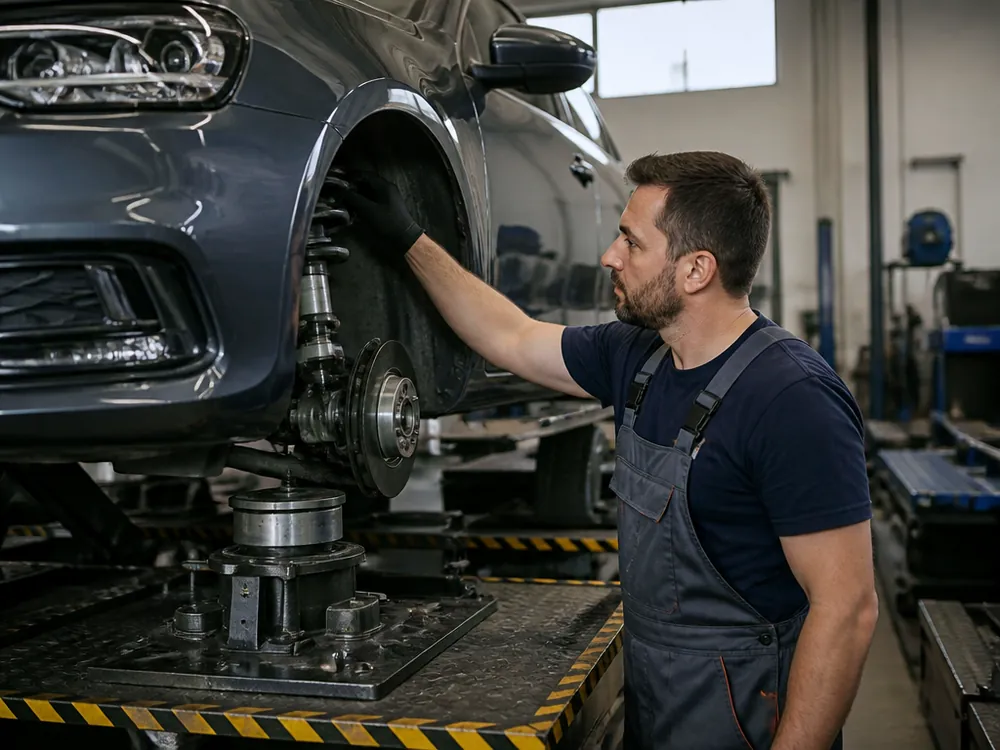
| Suspension and wheel alignment | No | 3D alignment stand |
|---|
| Alternator and battery under load | Voltage | Voltage drop and ripple |
|---|
How car computer diagnostics works across 8 modules
We break it down by module: which components we check, which symptoms point to which module, and where a scanner isn’t enough. This is the core of the service and the main answer to “what am I paying for.”
Engine, fuel system and sensors
For the engine, we read codes and real-time parameters, and we measure fuel pressure with a gauge plumbed into the line under load, because the pump may hum but not deliver the required pressure. The scanner shows the ECU, oxygen sensor, temperature sensor and mass airflow sensor readings — these show where the mixture goes out of spec. Car computer diagnostics in Almaty for this module isn’t limited to reading codes: a gauge in the line gives a live pressure drop under load that you can’t see from the module’s electrics. We test injectors on a common rail bench: spray pattern and flow matter more than a dry fault code. If the scanner shows a lean mixture or misfires and the pressure is normal, we look for an air leak or injectors; if pressure drops under load, it’s a question for the pump and filter, not the sensors. In our experience, jerking during acceleration often comes down to fuel delivery, not electronics.
Automatic transmission, CVT and SRS airbags
Diagnostics of automatic transmissions and CVTs is part of our service: we read control module codes, temperature and pressure, and check adaptations; we check SRS separately via the airbag module. Adaptations show how the transmission shifts and whether the hydraulics have gone into limp mode. For the CVT, we separately check circuit pressure and pulley temperature — this isn’t always readable from codes. We query the SRS module through its own channel: airbags aren’t connected to the engine, and a generic scanner skips them. With SRS, it’s important not to “erase the error” but to understand the cause: a triggered impact sensor, a break in the harness, or low voltage — a cleared code will come back, and the airbags may not deploy in a crash. That’s why we always trace the signal to its source on airbags instead of just turning off the light.
Electrics, alternator and battery under load
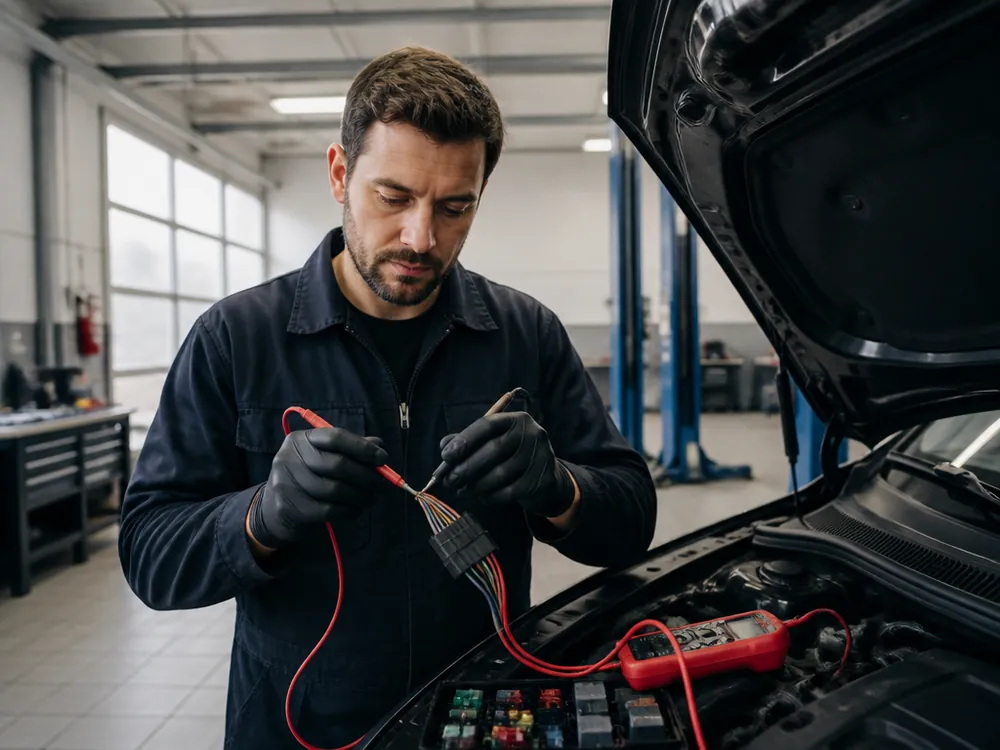
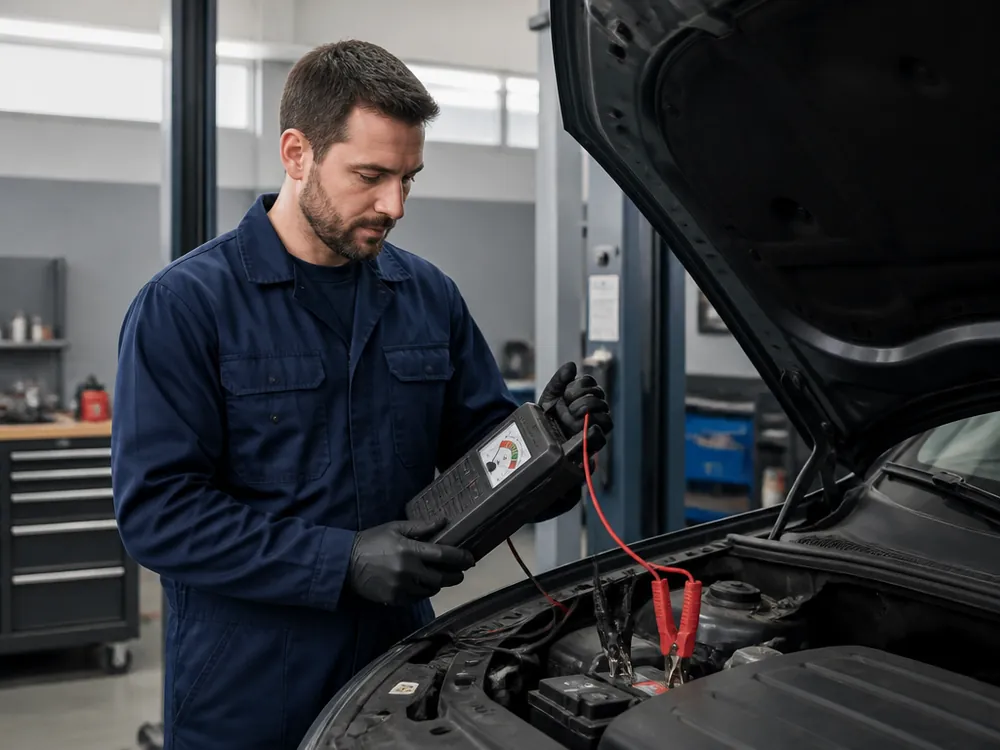
We test the alternator under load — we measure voltage with the headlights, heater and defroster on, and by the voltage drop and ripple we identify a diode bridge or brushes, not “just the battery.” A multimeter on the terminals with all consumers off shows only a superficial picture: a fully charged battery can read 12.6 V and still not handle the load. We turn on the headlights, heater and defroster — and see whether the voltage regulator maintains the charge and whether there’s ripple from the diode bridge. For electrics, we separately check harnesses, grounds and sensors: a corroded contact gives the same symptoms as a dead component. Replacing a battery based on the symptom “starts poorly” without checking the alternator is a common mistake: a new battery goes flat in a couple of weeks if the voltage regulator or diode bridge isn’t charging.
What you get after car computer diagnostics
Diagnostics doesn't end with a verbal "you've got an error" — it ends with documents: a report with decoded codes, a written estimate, and a clear plan. Here's what documents you take with you and how to use them going forward.
Report with decoded codes and recommendations
After the check we issue a report: error codes with decoding, which parameters went out of spec, what we checked, and what conclusion we reached for each module. The report records freeze frames — sensor readings at the moment of the fault — which show at what RPM and temperature the problem surfaced. For the engine and fuel system we note deviations in air flow, mixture composition, and pressure; for the electrical system, voltage drop under load. Dealer scanners for 40+ brands read not only engine modules but also the transmission, SRS, and body electronics, so the report shows exactly which module the code sits in. A good report isn't judged by the number of errors but by the "code — check — conclusion" link: if the list has only errors with no notes on the measurements taken, chances are the cause wasn't really looked for. Ask not "how many codes" but "what measurements did you take by hand to confirm each one" — that answer tells you right away how deep they dug.
Written estimate and repairs only after you agree
After the check we prepare a written estimate, and we start repairs only after you agree — you see the scope of work and parts before the car enters the shop. The estimate goes into the work order, which the service advisor manages from intake to handover, so nothing gets lost along the way and no "surprise" items pile up. We deliberately separate diagnostics from repairs: first measurements and a conclusion, then the work — that way the bill doesn't grow mid-job. The estimate is also a tool for talking yourself through it: if the list comes out long, it makes sense to split it into "critical now" and "can wait" rather than agreeing to everything at once. Note the deferred items in the work order — on your next visit the technician will see the history and won't start checks from scratch. And if it turns out the cause wasn't confirmed, you pay only for diagnostics, not for guesses.
Choosing parts and photo report at each stage
You choose the parts yourself — OEM, aftermarket, or your own — and we take a photo report at the key stages of repair, show you the old parts, and hand them over to you. That way you can see exactly what was replaced: the removed component stays with the customer instead of disappearing into the shop. In our shop's experience, the choice of part type depends on the component: aftermarket electronics and sensors often work unreliably, while on consumables the difference from OEM is barely noticeable. There's no warranty on a part the customer brings in — worth keeping in mind when choosing "your own" parts: saving on a part can turn into repeat work at your own expense. If you buy the part yourself, keep the receipt and check the seller's return terms — if it's defective, that's your only argument. For the work, the warranty is recorded in the work order and the completion certificate, so keep the report and estimate together with those documents.
Timing, booking, and preparing your car for computer diagnostics
How long it takes, whether you need an appointment, and how to prepare the car so the check goes smoothly without extra visits. And honestly about the limits of the mobile format — which checks can't be done on site.
How long diagnostics takes and how to book
A standard inspection with scanner hookup and measurements takes 40 minutes, and we agree on complex cases with teardown separately. We're open daily from 09:00 to 20:00, any day of the week, by appointment — straight to a free lift. The technician starts the scanner check by reading codes and freeze frames, then moves on to measurements: fuel pressure with a gauge, alternator voltage with the accessories on, sensor checks. We set aside a window with buffer for each car, because an intermittent fault may not show up on the first start. If you come without an appointment, the wait depends on how busy the shop is — at peak hours there may be no free bay. So for a complex case it's better to book a window with buffer right away: otherwise the technician will only have time to read the codes and won't get to reproducing the symptom — and you'll need a second visit.
How to prepare your car and what can't be checked on a mobile visit
No special preparation needed — just come with the engine running and, if you have one, a description of the symptoms. On a mobile visit we can't check the suspension on an alignment stand, fuel pressure under load with a gauge spliced into the line, or injectors on a common rail bench. The mobile format is limited precisely on bench and load tests: the scanner reads codes but won't show the pump's pressure drop under load or diode bridge ripple. The more precisely you describe the conditions where the symptom appears — cold start, acceleration, turning, braking — the faster the technician can reproduce it in the shop. That saves time and lowers the risk of "the error didn't come back." In our practice, such details often cut the search for the cause from several visits down to one.
Warranty on computer diagnostics and warranty cases
Here's what work the warranty covers, how it's documented, and what to do if the same symptom comes back after repair. Separately — about warranty cases and diagnostics for them.
Warranty periods by type of work and where it's recorded
warranty periods by work group| Type of work | Warranty period |
|---|
| Oil change, brakes, suspension, alignment, tire service | 6 months |
|---|
| Engine, cylinder head, timing belt, transmission, electrical, glass, headlights | 12 months |
|---|
| Body repair, painting, rustproofing, protective film, ceramic coating | 24 months |
|---|
Warranty cases and what the warranty doesn't cover
Diagnostics for a warranty case is free with us, and the warranty covers the work performed and the parts we installed — but not an accident after repair, third-party interference, normal wear of consumables, or a part the customer brought in. If the symptom comes back, don't go to another shop "just in case": third-party interference voids the warranty, and figuring out whose work failed becomes harder. Bring the car to us with the work order — the service advisor will compare the codes and repeat the measurements on the same equipment as the first time. In our shop's experience, more than half of warranty claims are resolved with a readjustment or a consumable replacement, not a major repair. We install customer parts only with their written consent: they're not covered by warranty, and we record that in the document in advance.
Computer diagnostics key points
Here's the key stuff to keep in mind before you bring your car in for computer diagnostics with a scanner, and how to read the results correctly.
- Diagnostics is not about clearing codes: the scanner reads codes and parameters from the electronic control units, and the cause is found through the chain of "code → check → conclusion."
- The scanner doesn't see everything: fuel pressure, alternator operation under load, and common rail injectors are checked separately with a pressure gauge and on a test bench.
- The result is documents: a proper check ends with a report that decodes the codes and a written estimate before any repair begins.
- Repairs only with your approval: the owner chooses the parts (OEM, aftermarket, or their own), and the warranty is tied to the type of work performed.
- Timelines are clear up front: a standard inspection takes 40 minutes, and complex cases involving disassembly are agreed on separately — no surprise line items on the bill.