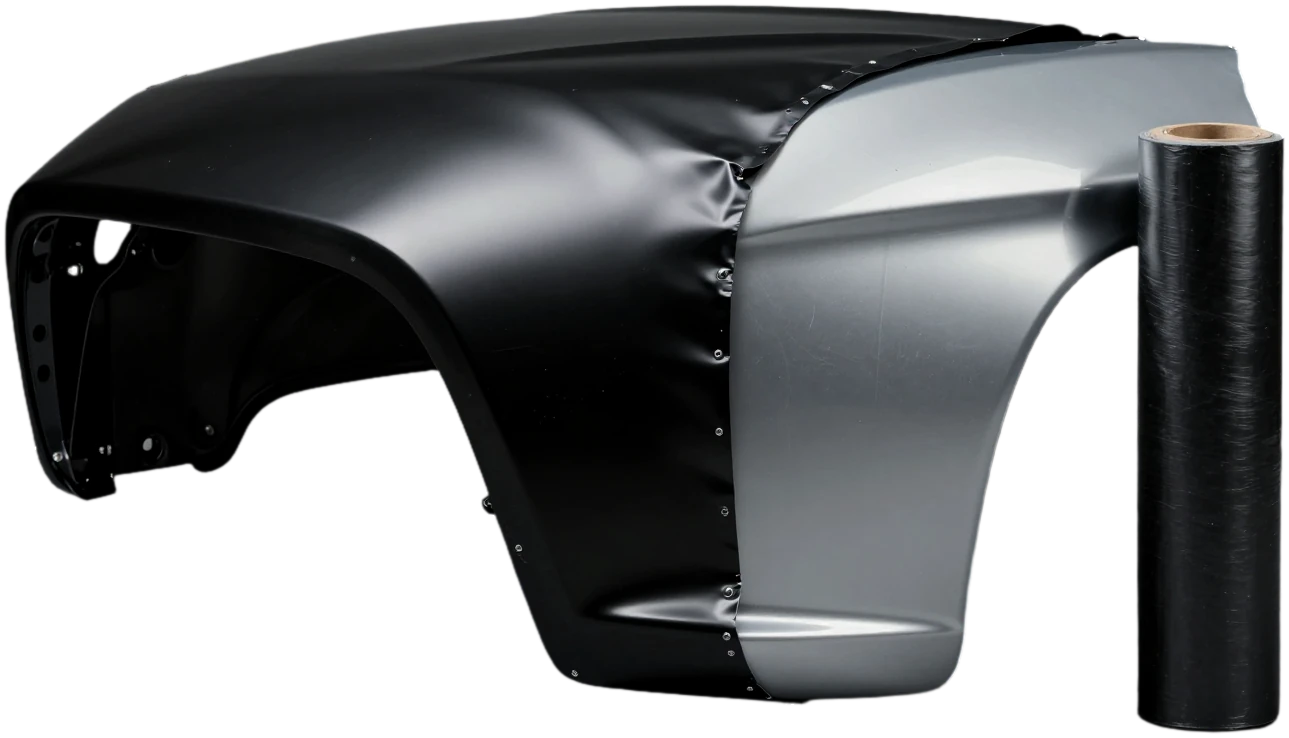
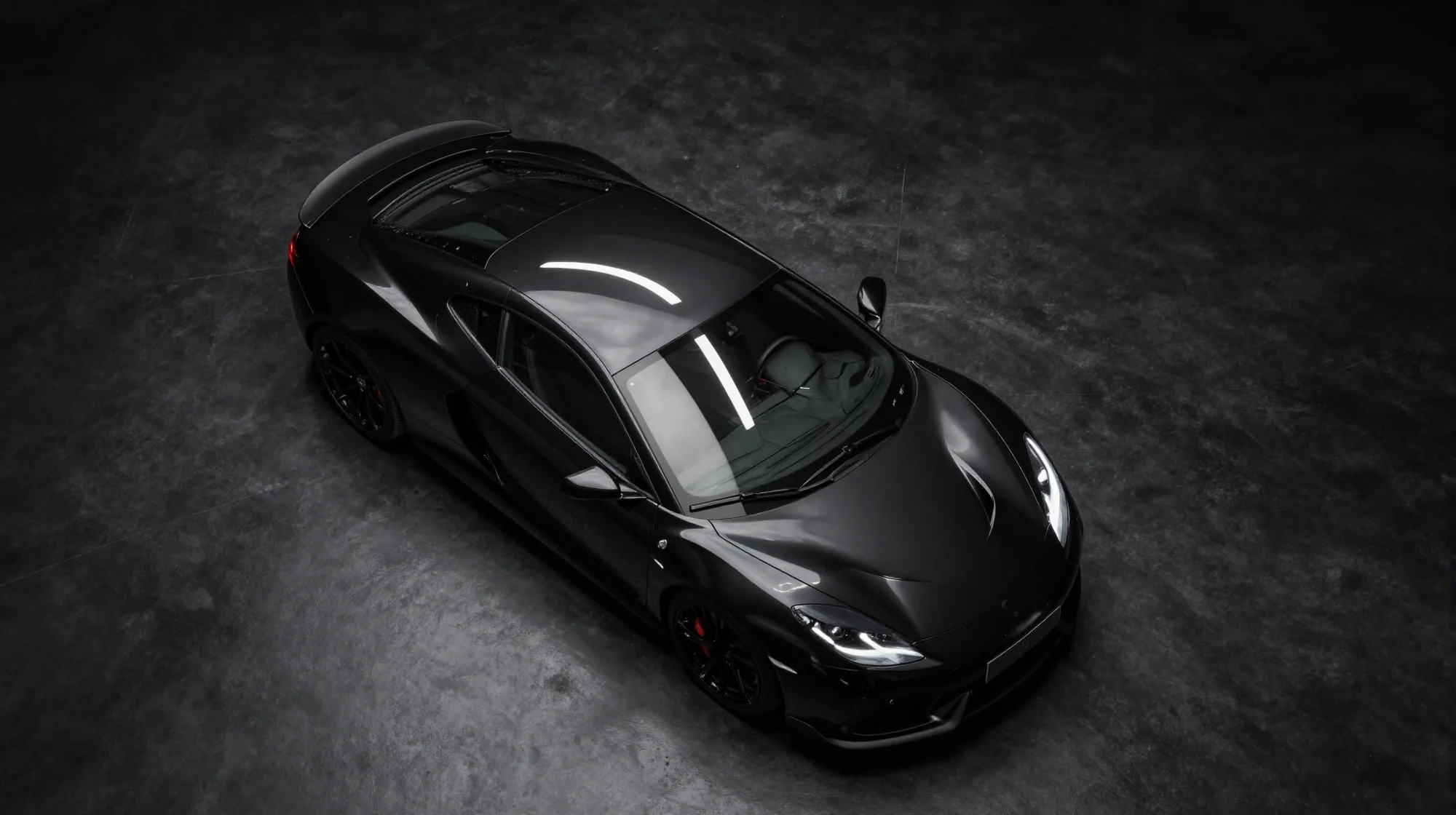
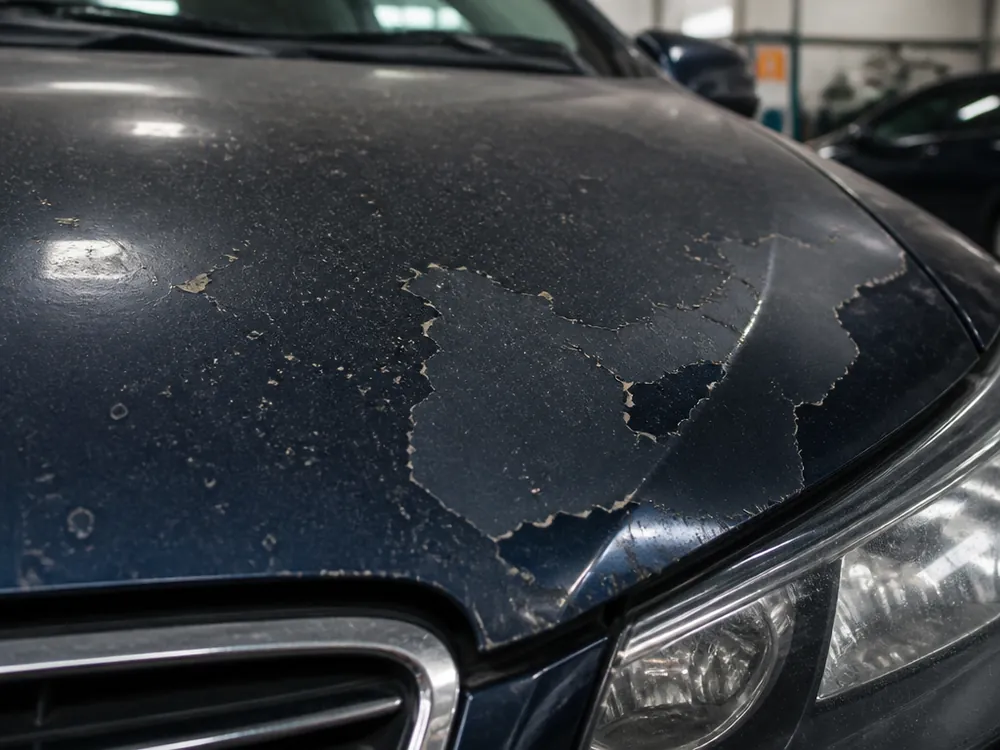
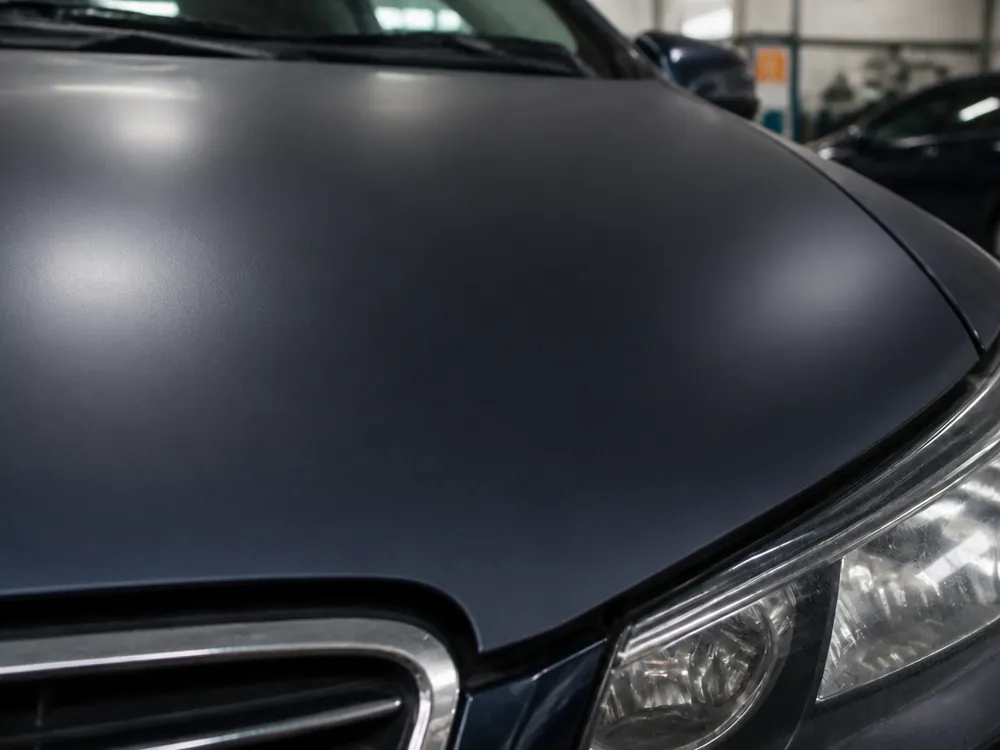
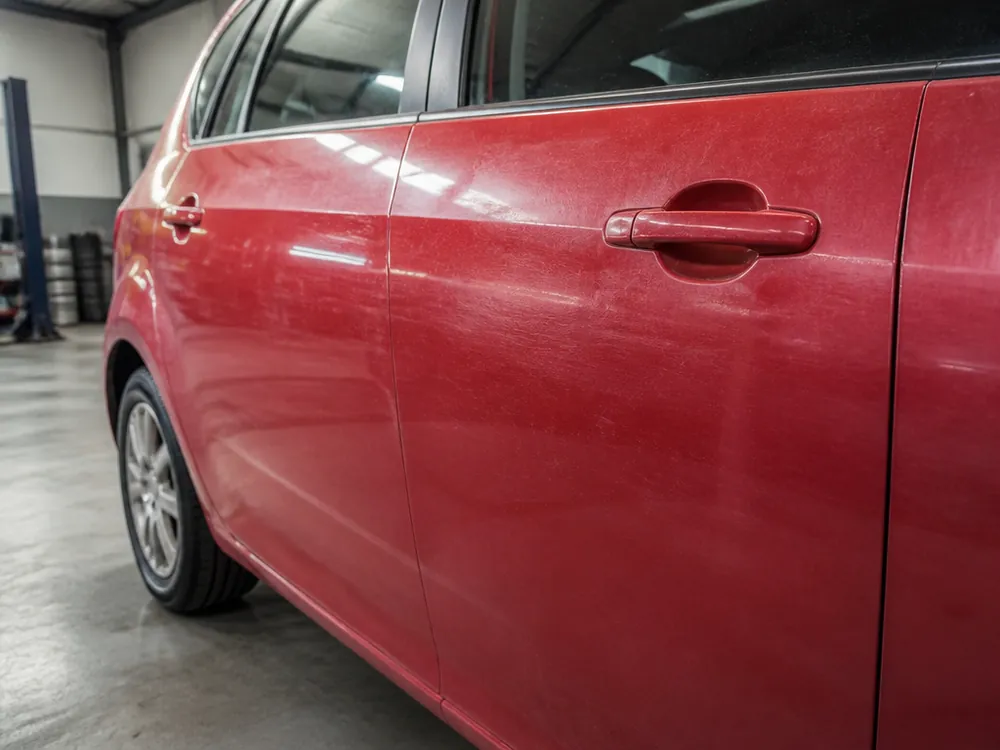
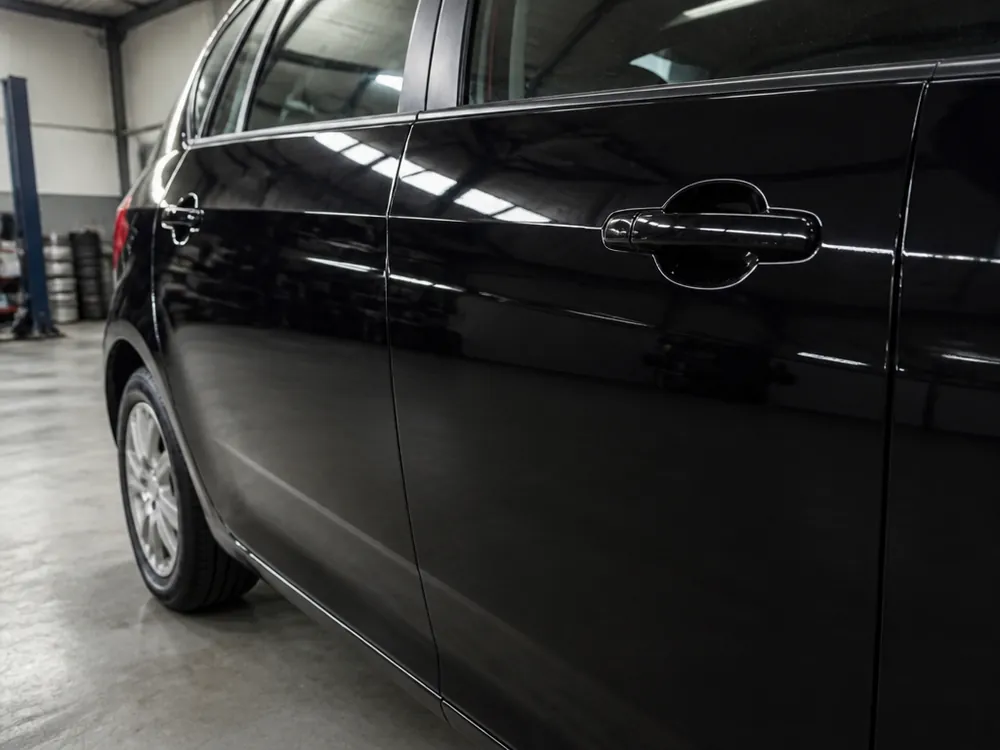
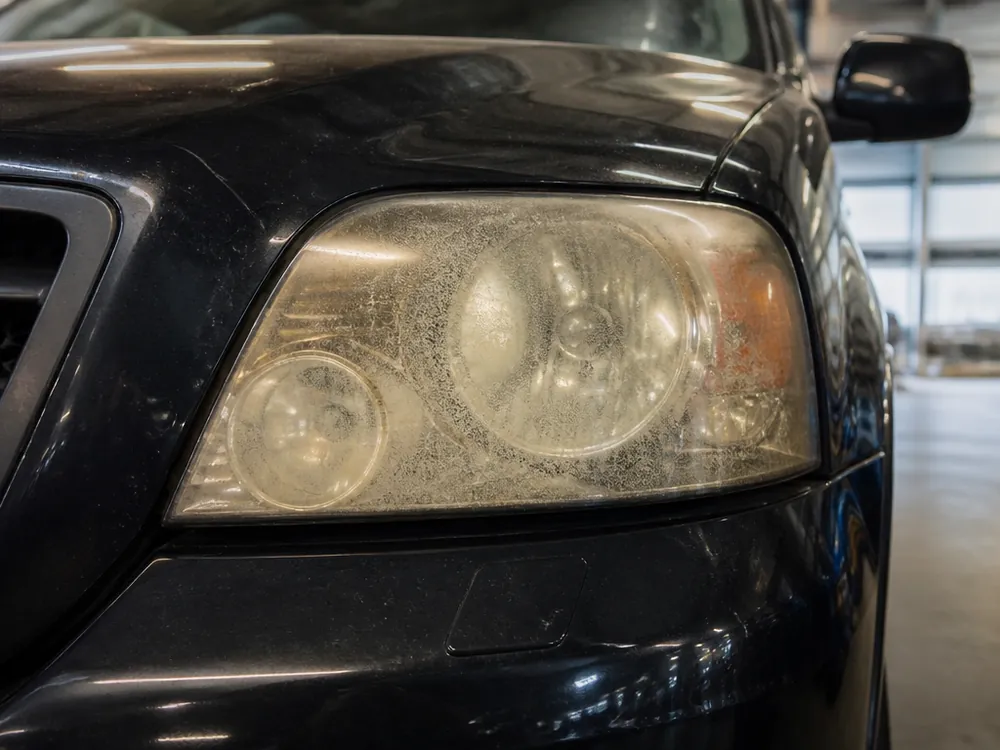
Wrapping can be full, partial, or per element, and the material is chosen based on the task: polyurethane protects the body, while vinyl and carbon change the look. Let's break down which format covers which need.
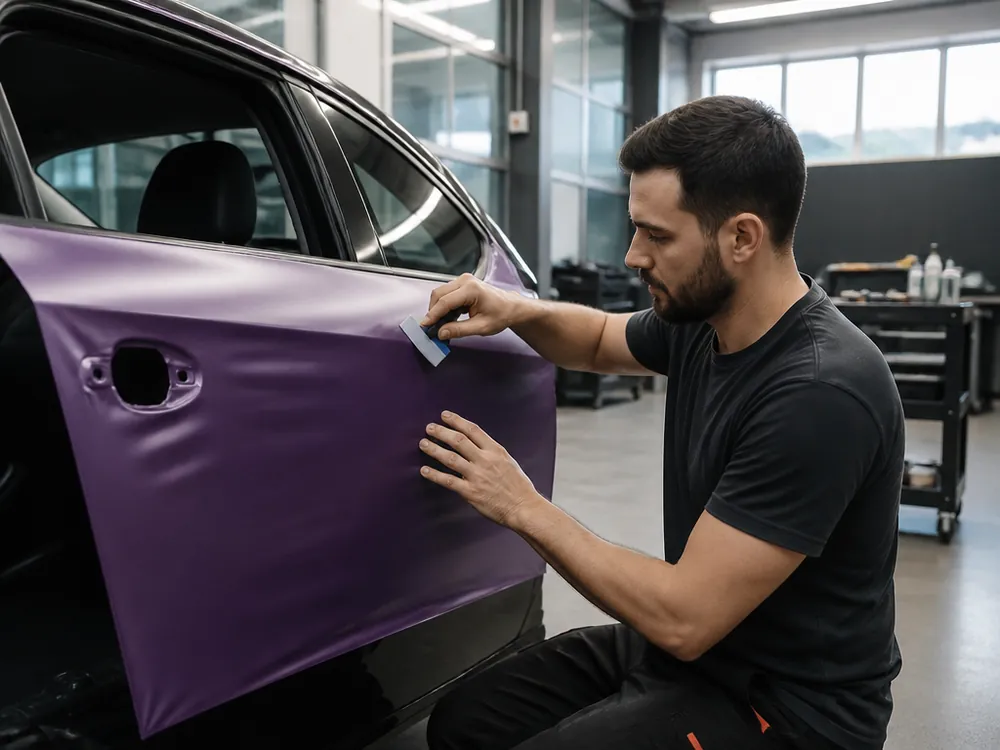
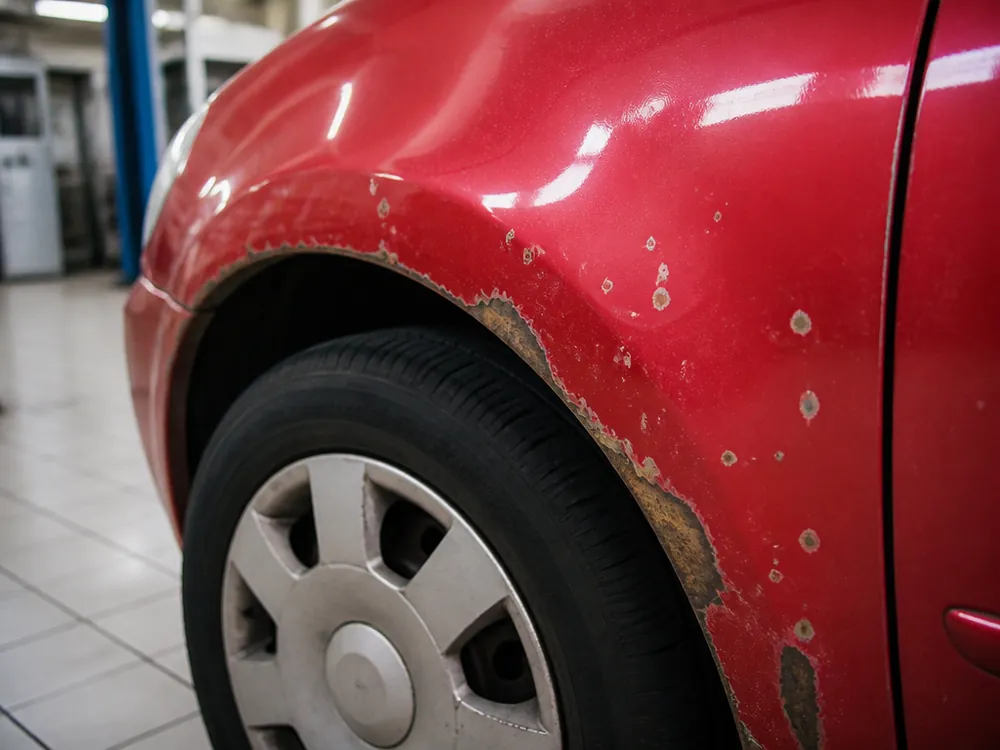
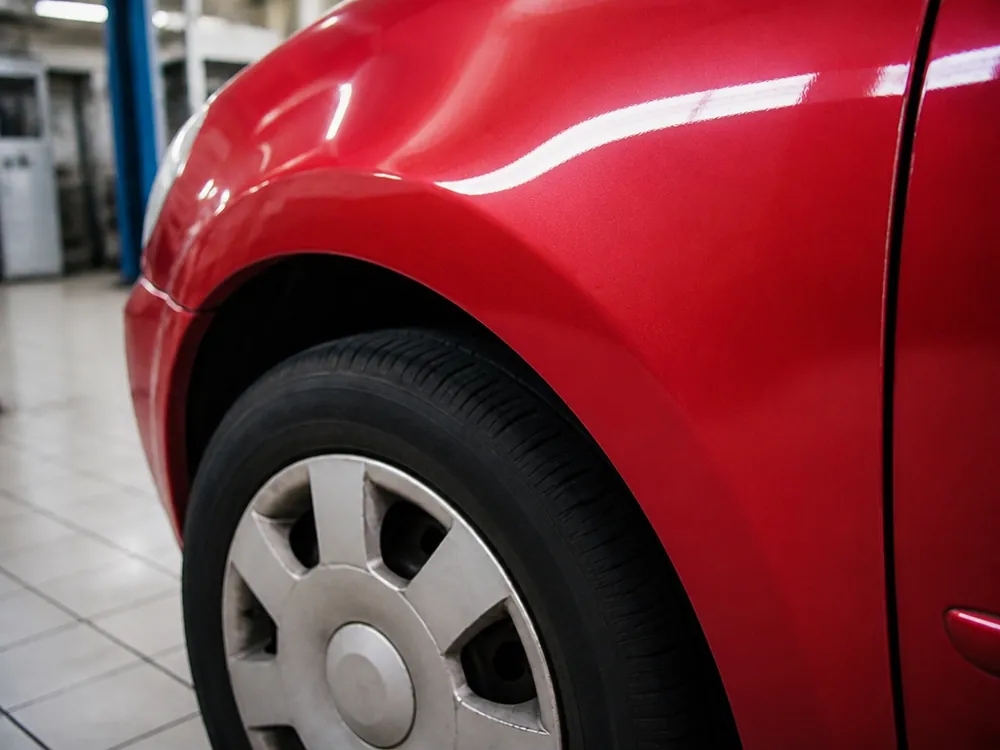
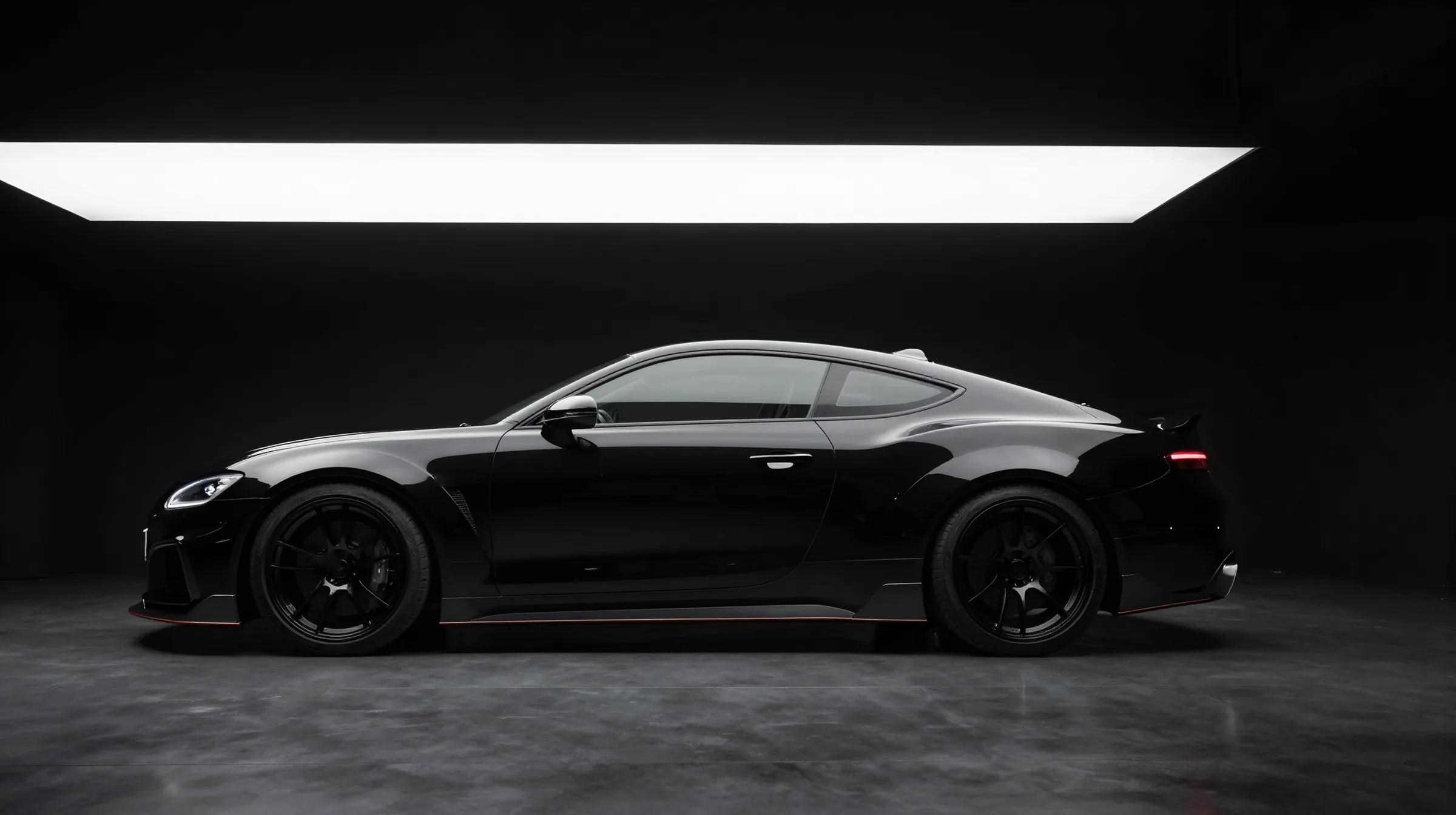
We split the work into three formats — full body, risk zones (hood, bumper, roof), and individual elements like a single door. Full car wrapping in Almaty covers all exterior panels and is more often done with vinyl for a color change. Partial wrapping protects the front end, which is the first to take gravel from the wheels of oncoming cars on the highway. Wrapping individual elements solves a specific task — refresh one door after a parking scuff or cover the roof against sun fading. For us these are three different jobs with different labor intensity: a full body takes the longest, a single part is the fastest. And a full body is more often chosen for a vinyl color change, while partial wrapping is chosen for protection against highway gravel, where the front zones take the hit.
Polyurethane, vinyl and carbon — what each is for
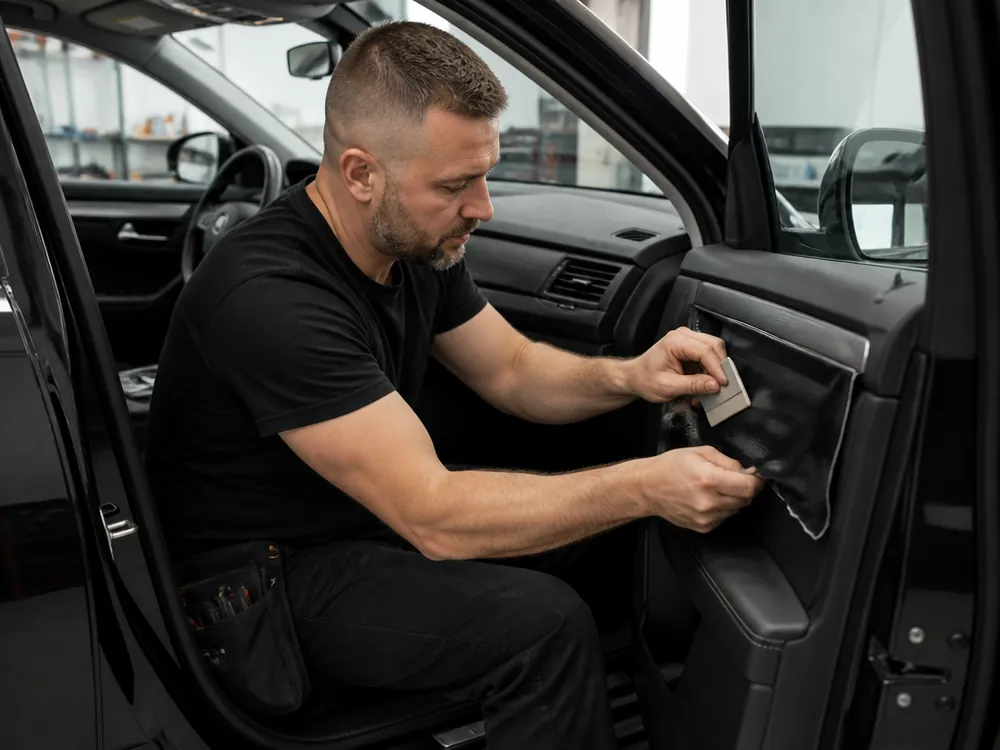
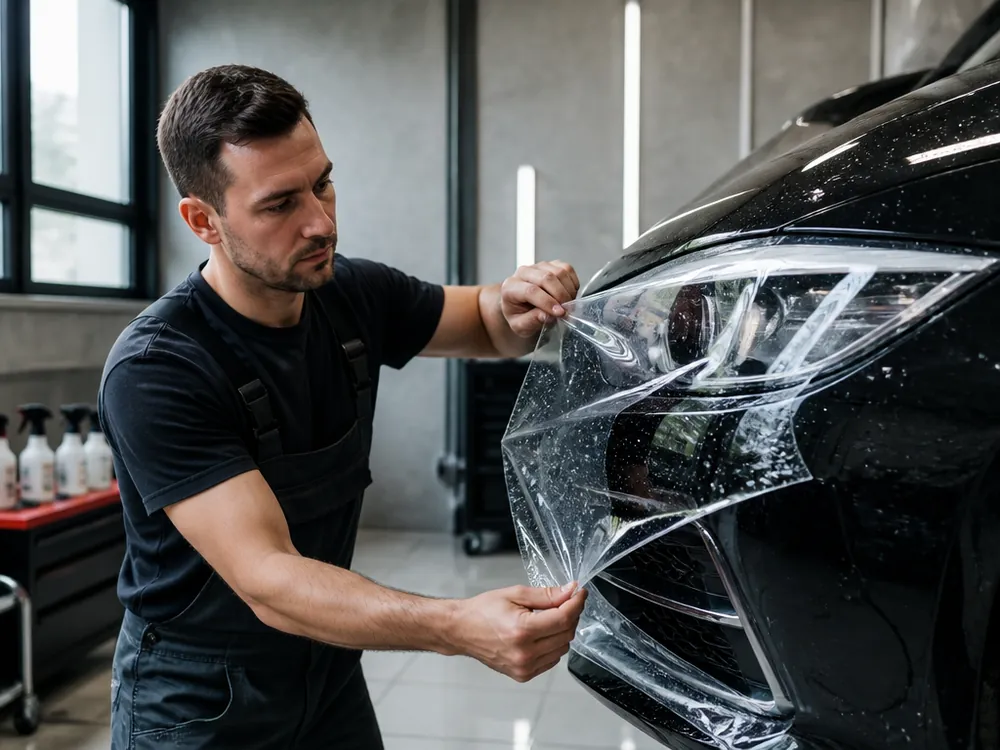
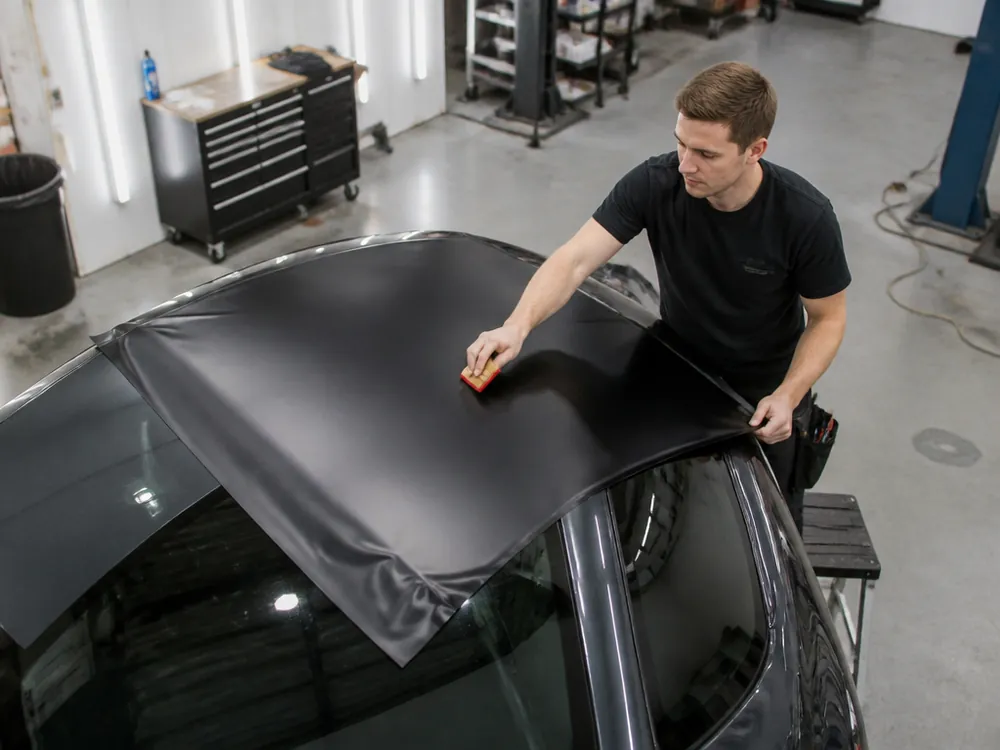
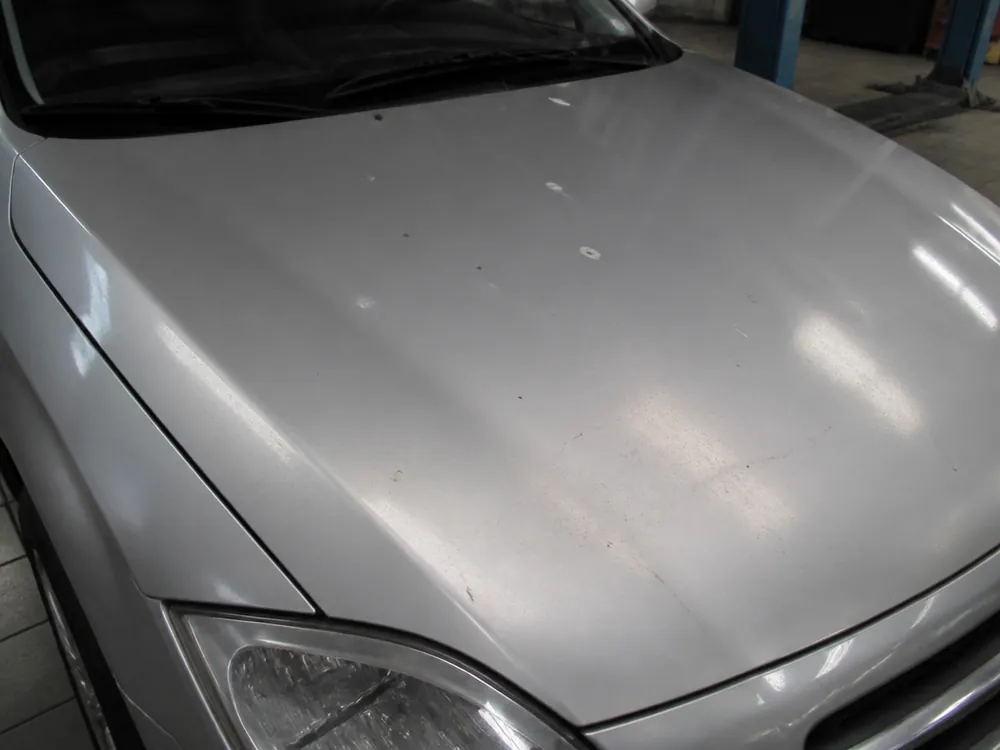
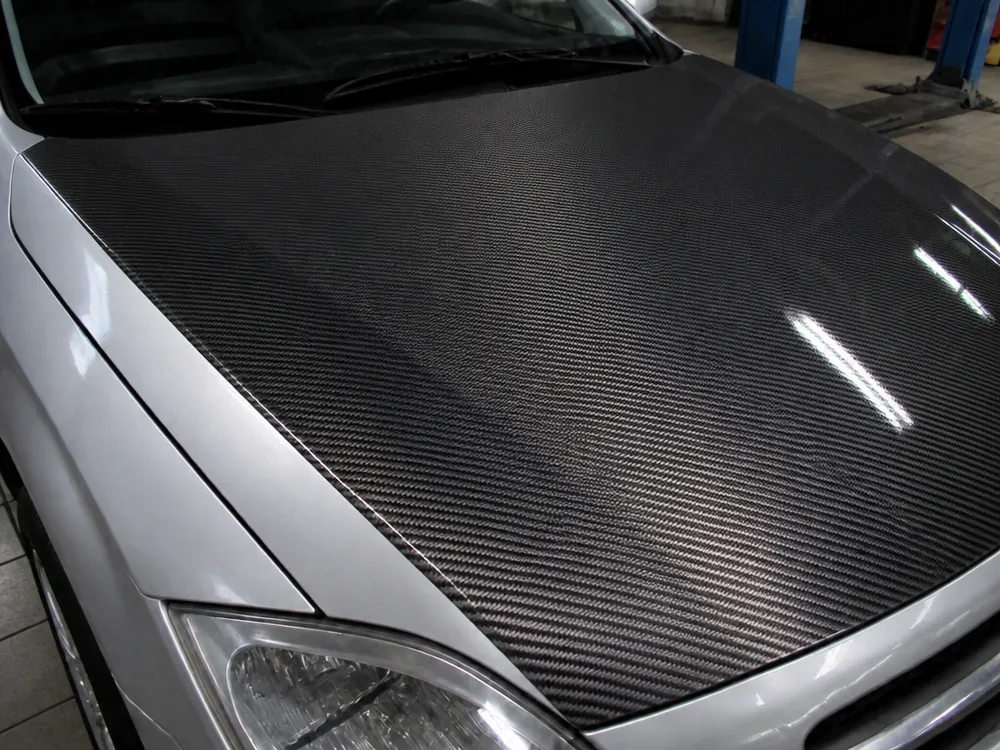
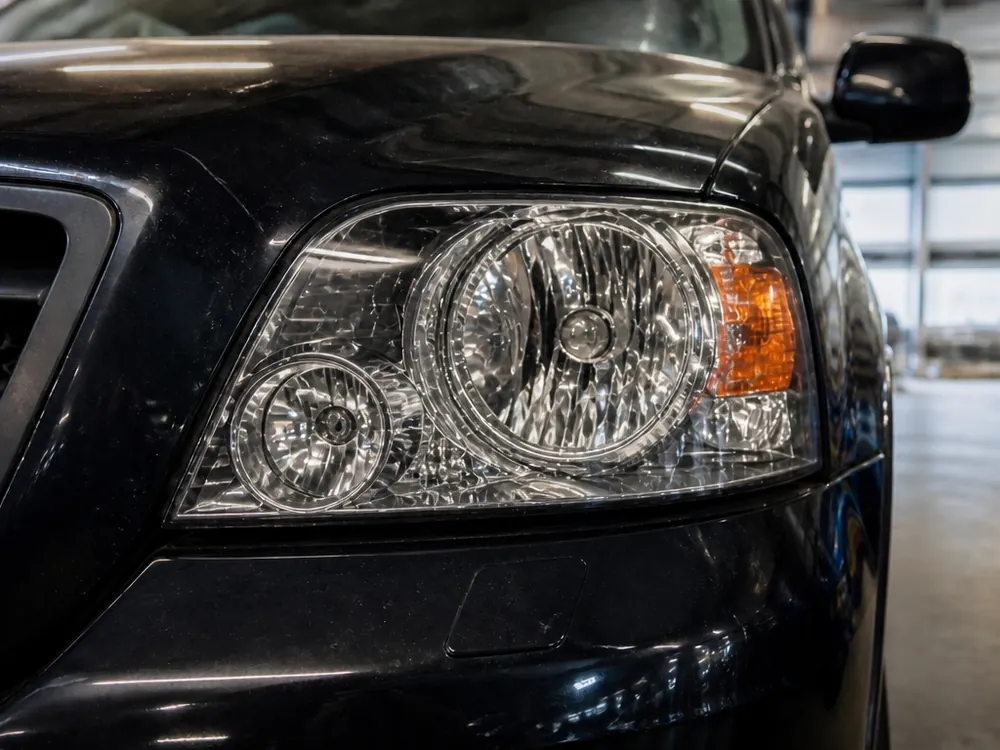
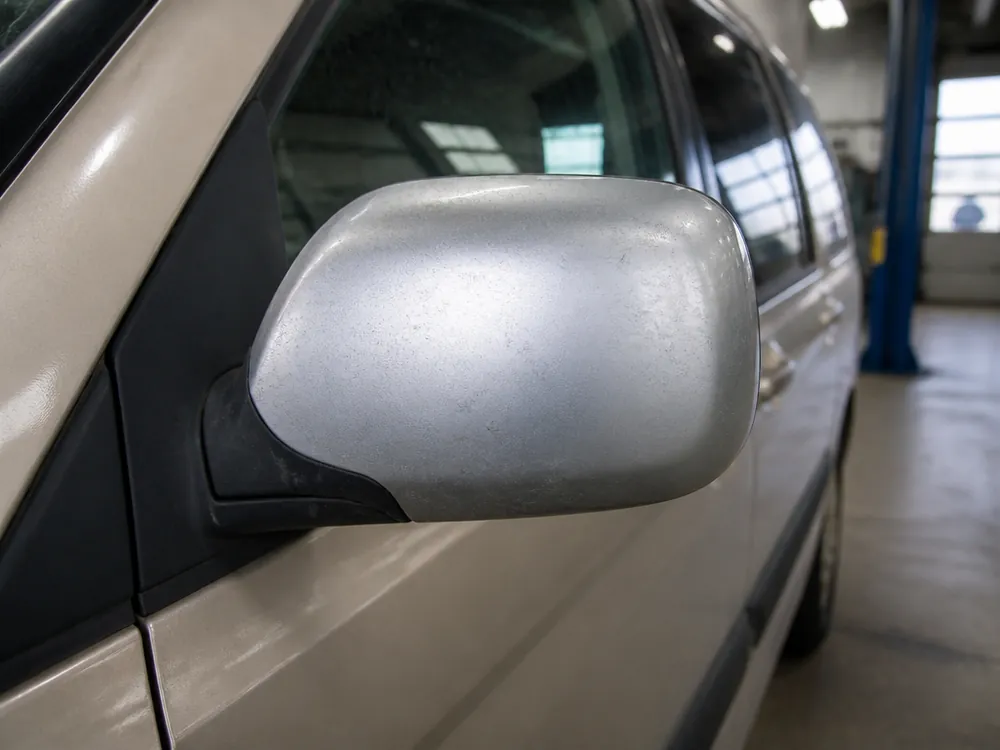
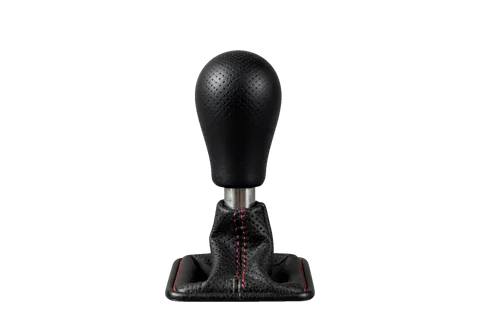
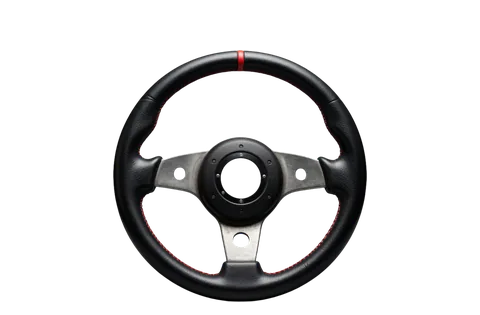
Polyurethane armor film is clear and protects the paint from chips, vinyl changes color and texture, and carbon gives a decorative texture on the body and in the interior. Polyurethane is the thickest of the three materials — it absorbs a stone impact and doesn't let it reach the paint. Vinyl film is thinner and only handles cosmetics: scratches from branches, light road chemicals, but not chips. Carbon film is decor with a weave pattern; it's used on the roof, mirrors, interior trim, not for protecting the hood. We apply clear polyurethane to the hood and front bumper more often than any other material — that's exactly where gravel flies. If the goal is to preserve the factory paint until resale, go with clear polyurethane; if you want a new look without painting — vinyl or carbon.
Where two layers of armor film are needed
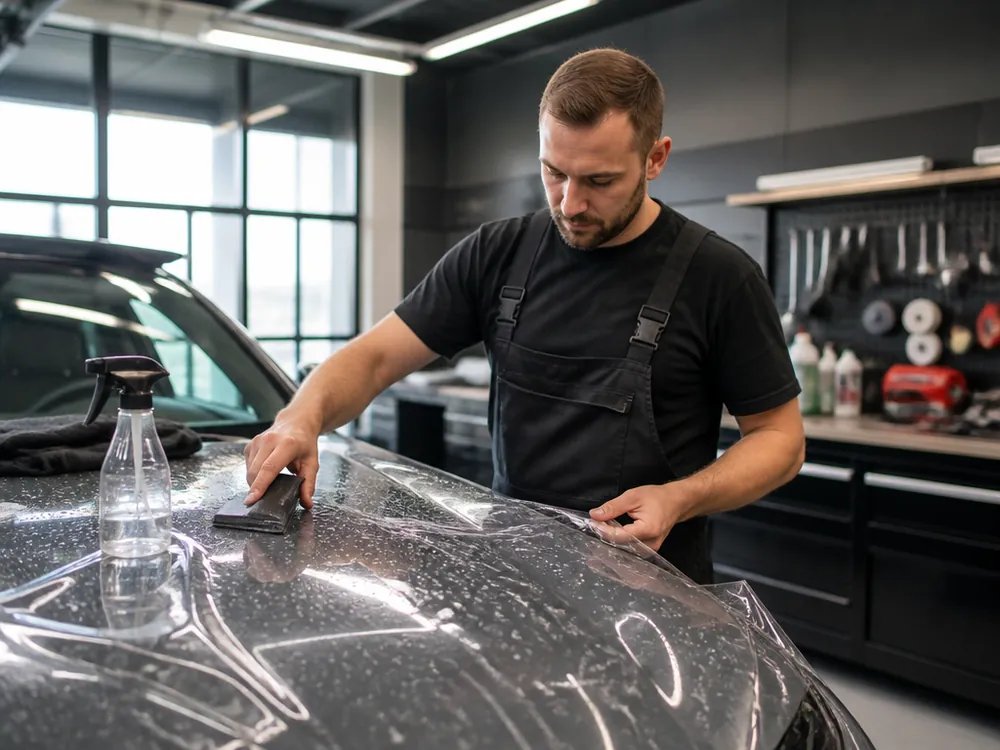
We apply two layers of polyurethane to the hood and front bumper — the first absorbs gravel impacts, the second protects against repeat chips. A sedan's hood is the largest horizontal surface, and fine highway debris hits it at a sharp angle, pushing through one layer in a season of active driving. The front bumper takes the stream from oncoming trucks at speed — the impacts there are stronger than on the hood. Two layers give a margin: the top one takes the hit and gets replaced, the bottom one stays intact and holds the paint. One layer handles fine debris, but on the highway stones fly harder, and the second layer extends the coating's service life without re-wrapping and protects against repeat chips at the lower level.
How car wrapping is done and why it doesn't peel
Wrap quality rests on two things: surface preparation and temperature control. Let's go step by step through what we do before the film and during application.
Body preparation before wrapping
Before wrapping we wash the body, remove tar and degrease the surface, and during the inspection we show the client the existing chips and scratches. Washing is touchless, and we remove tar with a separate compound from the sills, arches and lower part of the doors — that's where sticky spots interfere with adhesion. We degrease the entire area of the future coating, including edges and gaps where the material tucks under. We inspect the body under bright light: that's how micro-scratches and gravel marks that are almost invisible in daylight show up. A service advisor receives the car and records the treatment zones in the work order. Car wrapping starts with exactly this preparation: a clean, degreased surface holds the material without bubbles or lifting at the edges. Film doesn't hide paint defects — it follows the relief — so it's better to note small chips in advance, otherwise they'll show through the coating.
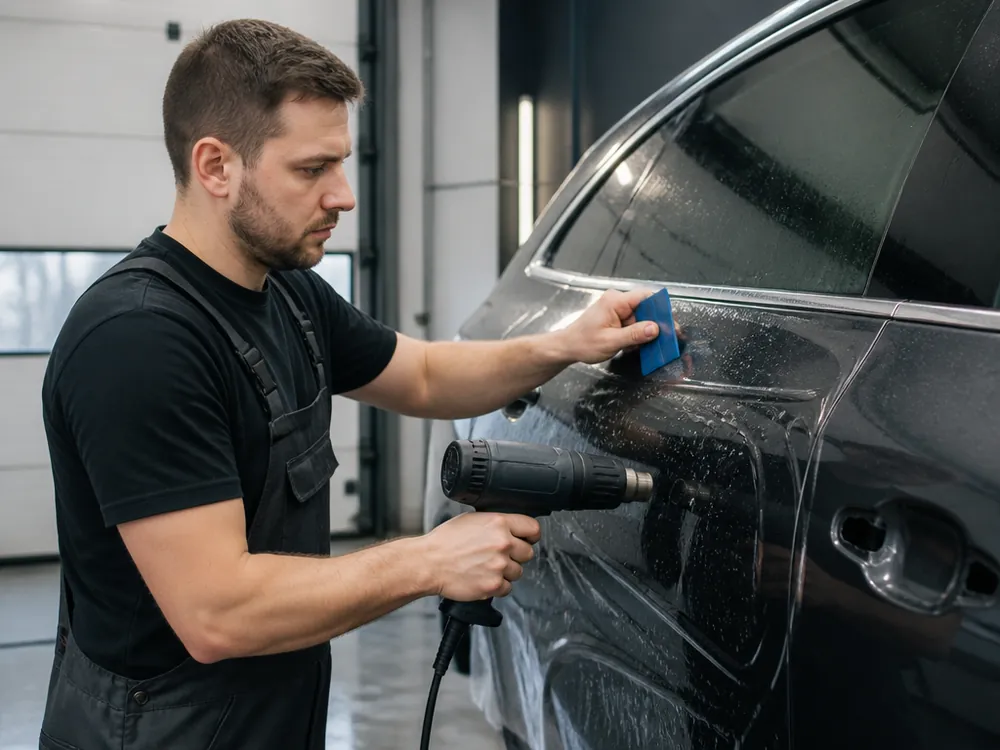
Heating with a heat gun up to 60 °C and laying along the relief
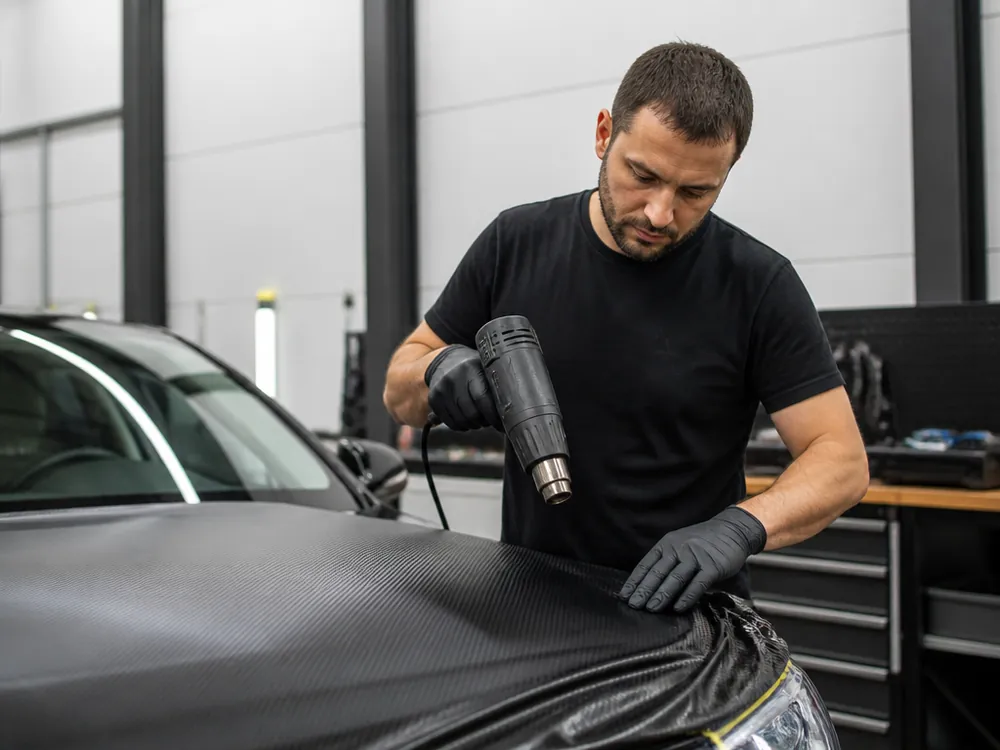
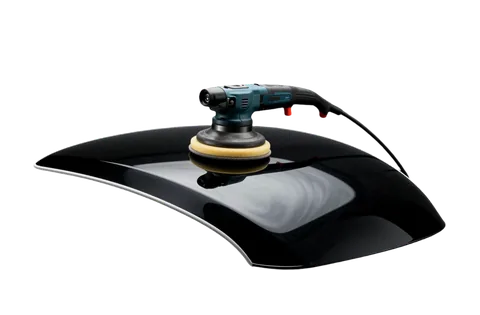
We heat the film with a heat gun up to 60 °C so it settles along the relief without tension and doesn't peel after a month. We keep the temperature by a pyrometer, not by eye: overheating makes polyurethane lose its elasticity, underheating means it won't settle in the curves. On complex zones — mirrors, handles, door edges — we stretch the material minimally and heat locally so the edge tucks under. We apply two layers of polyurethane to the hood and bumper: the first absorbs gravel impacts, the second protects against repeat chips. We tuck the edges under with a few millimeters of margin and lay it into the gap, not on the edge — that way the edge isn't caught by a jet of water during washing. Film stretched without heating returns to its original shape and pulls the edges — that's where bubbles and lifting at the edges come from within a few weeks.
Drying the seams and when you can wash
After application the seams need to settle and dry — that's why we hand over a hood and bumper in two layers in two days, not one. A single door or roof takes a day, but even there we don't touch the edges until fully cured. Drying happens indoors in the shop at a constant temperature, without drafts or dust: a speck of dust under a fresh seam stays forever. Before handover we check the edges around the entire perimeter, look at the tucks under light and do a test drive. Quality control is done by the same technician who received the car — he also shows the client the result and explains how to care for the coating in the first weeks. It's best to postpone the first wash until the edges are fully cured, otherwise pressurized water will lift an edge that hasn't settled yet.
Car wrapping timelines and how to book
Duration depends on the element and the number of film layers: a single part is handed over in a day, a two-layer coating takes longer. Below are the real timelines by type of work and how booking at the shop works.
How long wrapping takes by element
timing for wrapping different body parts| Type of work | Layers | Time |
|---|
| One door | 1 | 1 day |
|---|
| Roof | 1 | 1 day |
|---|
| Hood | 2 | 2 days |
|---|
| Front bumper | 2 | 2 days |
|---|
| Hood and bumper | 2 | 2 days |
|---|
| Interior parts | 1 | depends on volume |
|---|
Do you need an appointment
We're open every day from 09:00 to 20:00, no days off, and with an appointment your car is taken in without waiting in line. Our service advisor notes the part, material and number of layers on the work order, so the bay and the roll of film are prepped before you arrive. We'll take you without an appointment too, but we can't guarantee a free lift and a free installer on the date you need — in peak season we're busier. You can book a specific time, and then the car isn't left waiting at intake. In my opinion, a call a day or two ahead saves the client half a day: the staff has time to check whether the right shade of polyurethane or vinyl is in stock, and the job doesn't have to be pushed back because of a delivery. And you can sort out the details over the phone, before the visit.
What happens from request to pickup
The car is received by our service advisor, who handles the work order through to pickup, and we send photo updates at the key stages. First we inspect the body and prepare a written estimate — we start work only after you approve it. During the job we send photos of the prep, the film application and the seam drying: you can see exactly how each part was treated. Before pickup we do a test drive — that's how we check that everything went back in place after disassembly and nothing interferes while driving. We show you the removed parts and hand them over, so you can see which part was replaced. We record the warranty period and terms on the work order and the acceptance certificate at pickup. This process takes away the client's main worry — not knowing what's happening to the car while it's away.
Warranty on car wrapping and bringing your own film
The warranty on wrapping is 24 months, but it doesn't cover just anything. Let's go over exactly what the period covers, what it doesn't, and what to do if you brought your own material for wrapping the body.
What the 24-month warranty covers
We give a 24-month warranty on wrapping and record the period and terms on the work order and the acceptance certificate when the car is picked up. Twenty-four months is the maximum under our warranty schedule, and it also applies to body repair, painting, rustproofing and ceramic coating. The warranty covers the work performed and the materials installed: what we did and supplied, not any damage to the body. If the film bubbles because of our fault or peels at a seam, that's a warranty case and we redo the car. In practice, people more often come in not with a wrapping defect but with the question of what even counts as faulty work. In my opinion, an honest answer belongs in the document: that's why the period and terms are written on the work order instead of being left as a verbal promise.
What the warranty doesn't cover
The warranty doesn't cover accidents after the repair, tampering by third parties, normal wear of consumables, or a part the client brought in. These four points are the most common cause of disputes, so we go over them before work starts, not after. A rock chip on the highway, scuffs from someone else's parking job, an attempt to peel the film off yourself to "see what's underneath" — all of that is external impact, not a wrapping defect. Normal wear of consumables is also outside the warranty: film has its own service life, and it depends on operating conditions. If a case is unclear, we do the diagnosis for a warranty claim free of charge — that shows where there's a work defect and where it's external impact. This heads off half the conflicts right at the inspection stage.
Can I bring my own film
You can bring your own film — the choice of material is up to the client, but the warranty doesn't apply to material you supply. It's the same logic as with client-supplied parts during a repair: we're responsible for the quality of the application, not for how a roll bought elsewhere behaves. The warranty on the work stays in full — 24 months on the wrapping. At the inspection stage we tell you honestly what we take on and what we don't: if the material is thin, from a questionable batch or was stored improperly, we warn you right away, before the car goes into the shop. In our experience, secondhand film more often shrinks and bubbles on complex contours — not because it was applied badly, but because no one controlled how it was stored.
Caring for film in Almaty's climate
Film on the body lasts no less than the paintwork, but it needs comparable care. Let's go over how to wash a matte finish without ruining the texture, and how well the material holds up to the local sun.
How to wash matte film without streaks
Wash matte film with a soft sponge, no abrasives or wax, and dry it with microfiber so you don't leave streaks on the texture. First knock off the dust with water at low pressure, then go over the body top to bottom with a neutral-pH car shampoo — alkaline and acidic products gradually eat away the top layer of polyurethane and vinyl. Scrubbing with a brush or the rough side of a sponge leaves micro-scratches on the matte that read as cloudy streaks in raking light. After rinsing, remove the water with an absorbent microfiber rather than letting it air-dry: hard-water droplets leave lime right in the texture. Don't dry with a heat gun — overheating tightens the material on curves and lifts the edges. Wax and polishes clog the matte surface and leave stains you can't wash off, so use silicone- and fragrance-free products on matte. In our shop we hand out a short washing guide with every car wrap — with it, the finish keeps its look longer.
Does film fade in the sun
Quality polyurethane and vinyl hold their color in the sun for years, but cheap films without UV stabilization fade faster. Polyurethane is clear to begin with and works as a barrier: the paint doesn't get direct ultraviolet, and the layer itself is stabilized against clouding. Vinyl is colored through and through, and UV resistance depends on the pigment: saturated red and blue hold up worse than black, white and gray shades. Material without a UV filter loses color depth after a couple of seasons under open sky — first it dulls, then it turns yellow on light tones. A car that sits in a yard rather than a garage gets a double dose: sunlight plus the body heating up to high temperatures at midday. In Almaty's climate with its bright summer, what matters more than the color itself is UV resistance — so when choosing material, ask whether it's rated for constant outdoor use.
Key points before car wrapping
Here's the main stuff to keep in mind before wrapping: from choosing the format and number of layers to timelines and warranty terms.
- Format for the job: full wrap, partial, or individual panels — protection from gravel and a change of look need different approaches.
- Reinforced layer on the front: the hood and bumper get covered in polyurethane in a couple of passes — the first takes the rock hits, the second catches the repeat chips.
- Heating to 60 °C: the film is warmed with a heat gun so it settles into the contours without stretching and doesn't peel at the edges a month later.
- Real timelines: a door or roof — one day, hood with bumper in a couple of passes — a day for shrinkage and drying the seams.
- 24-month warranty: covers the work and material, but not accidents, third-party interference, or film brought in by the client.