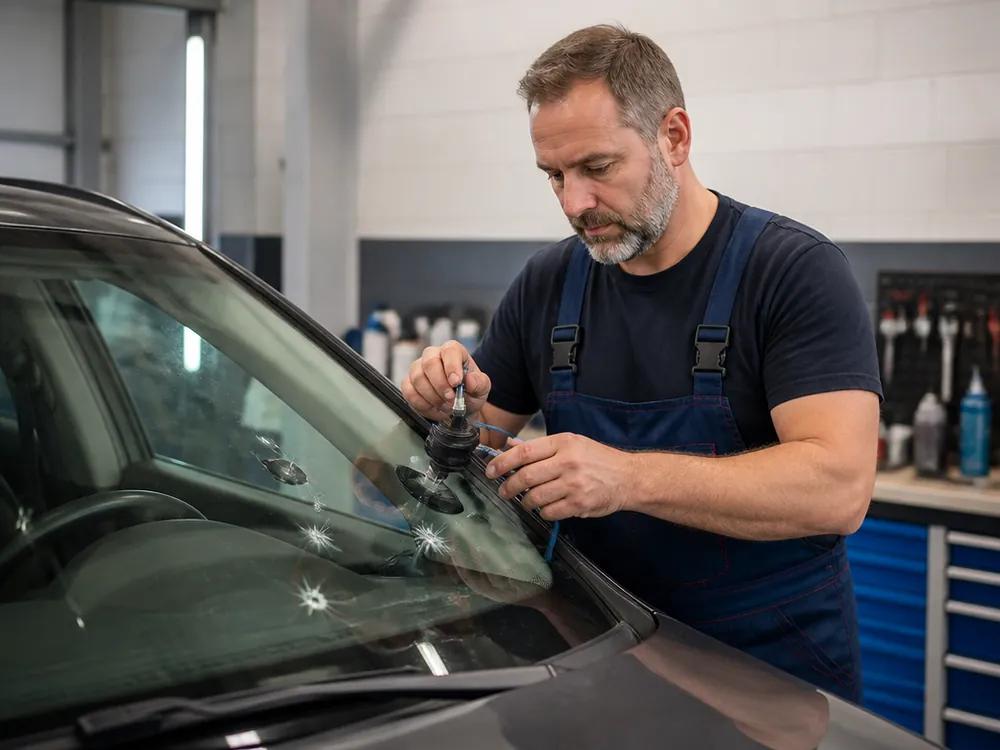
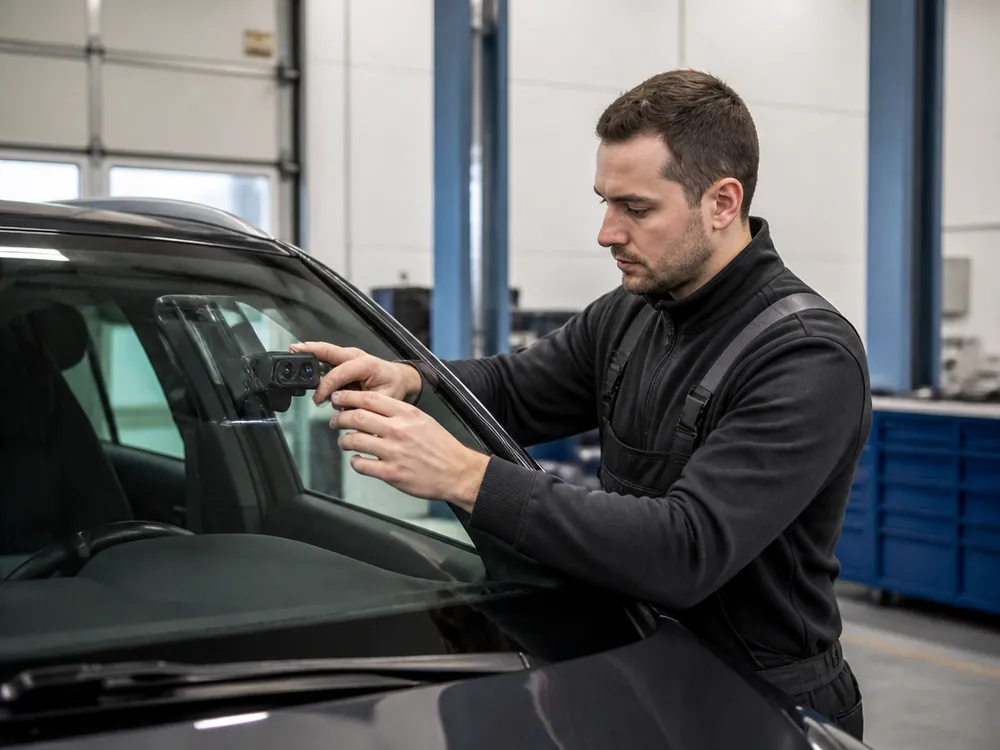
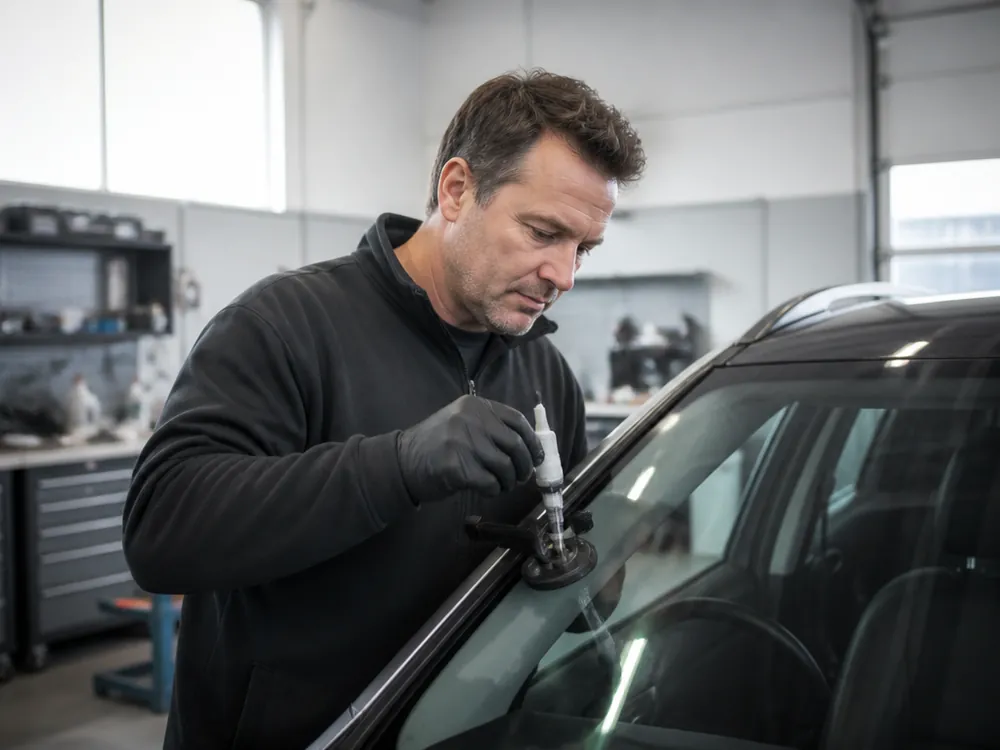
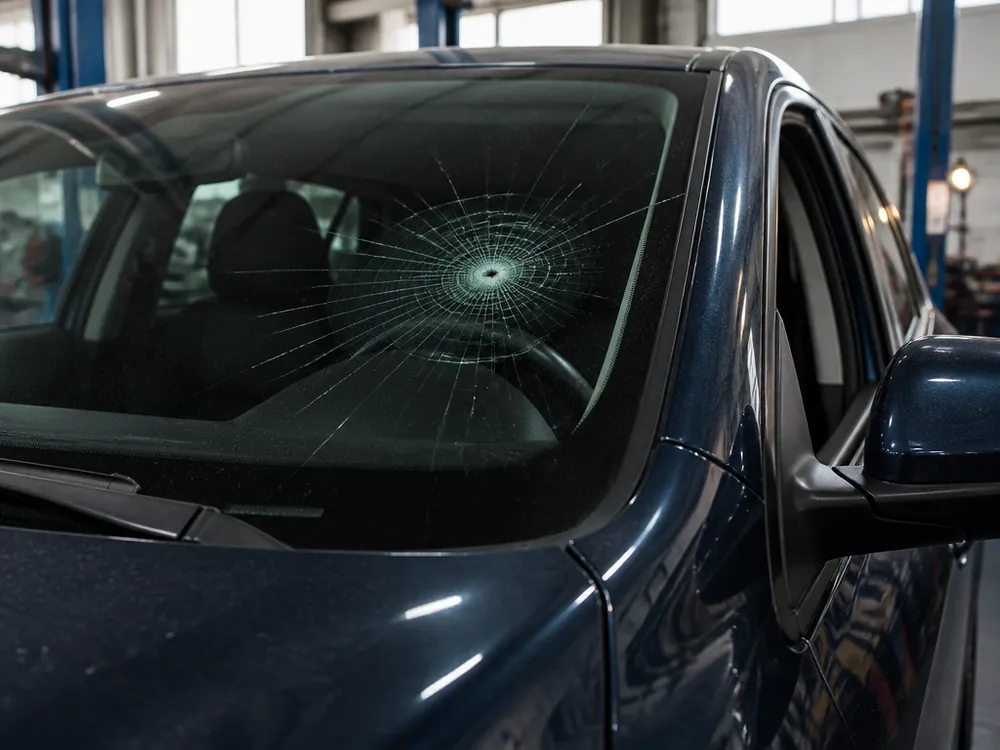
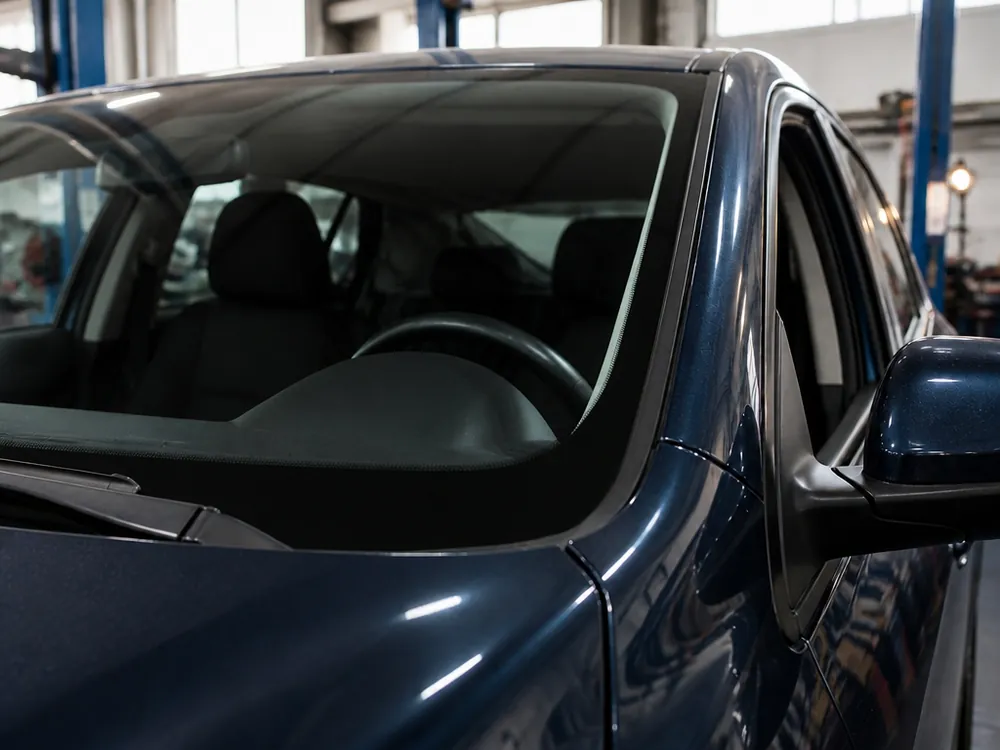
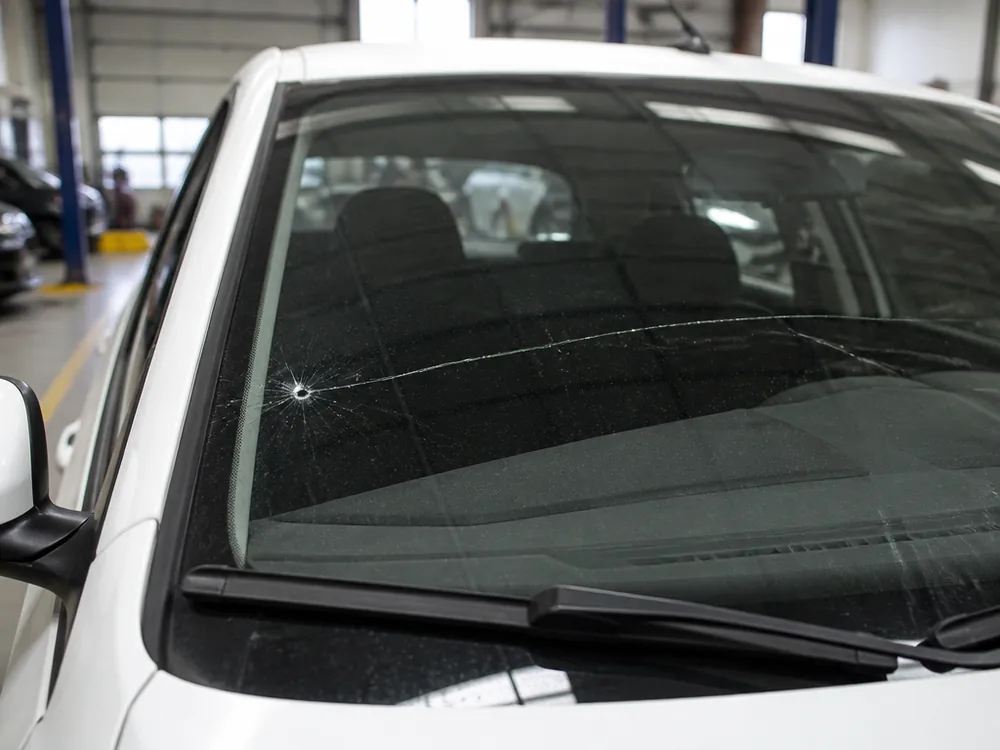
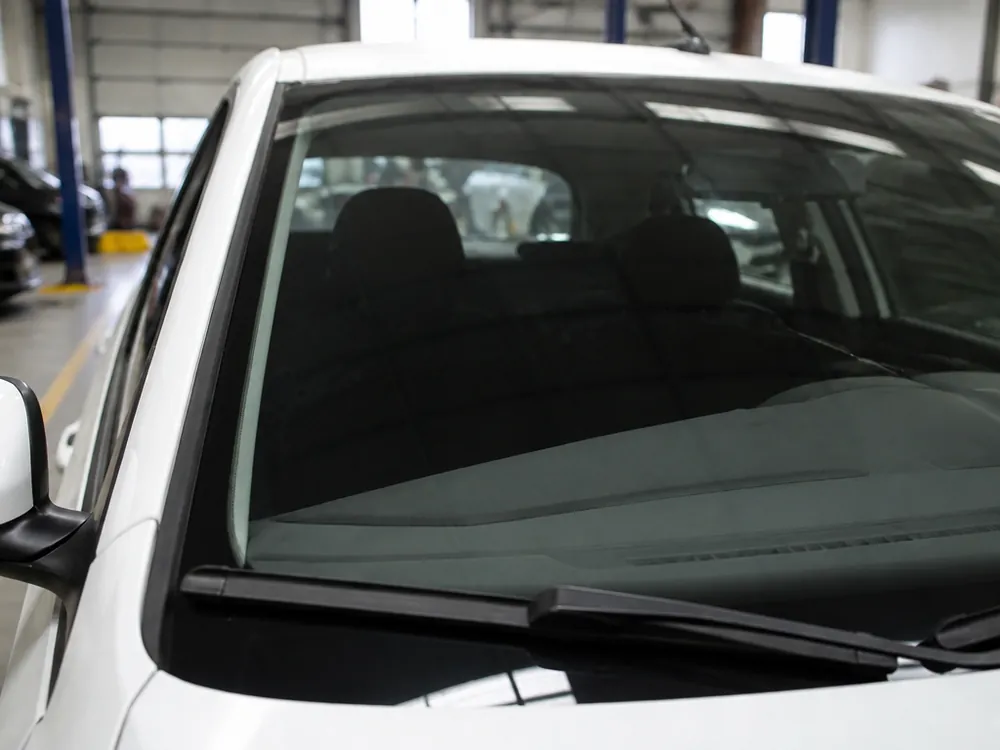
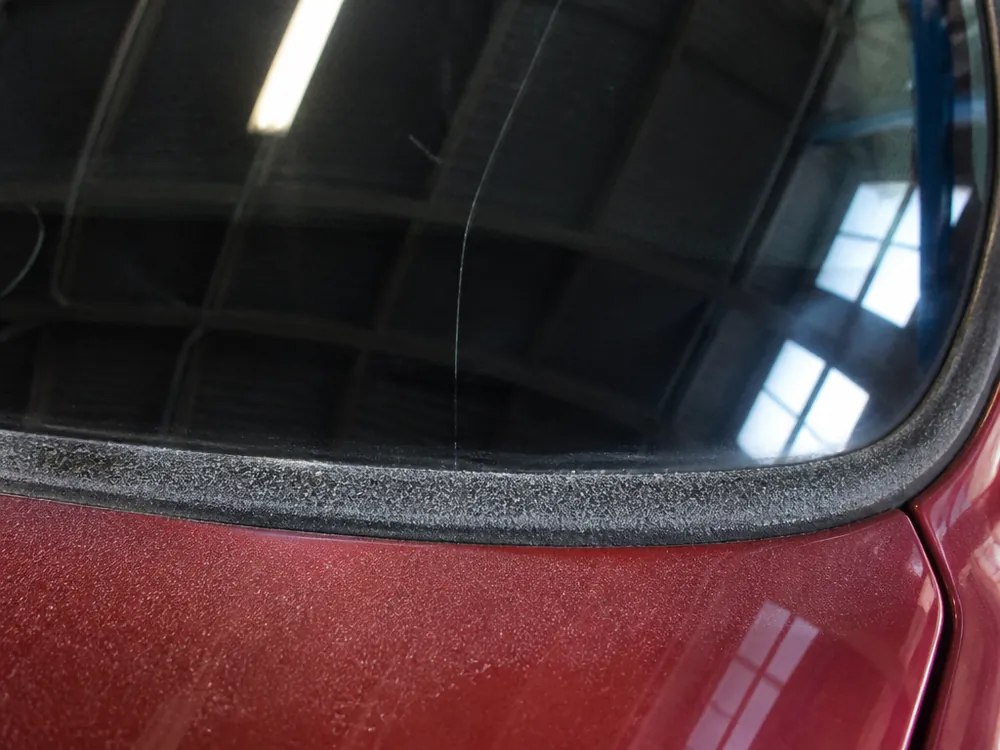
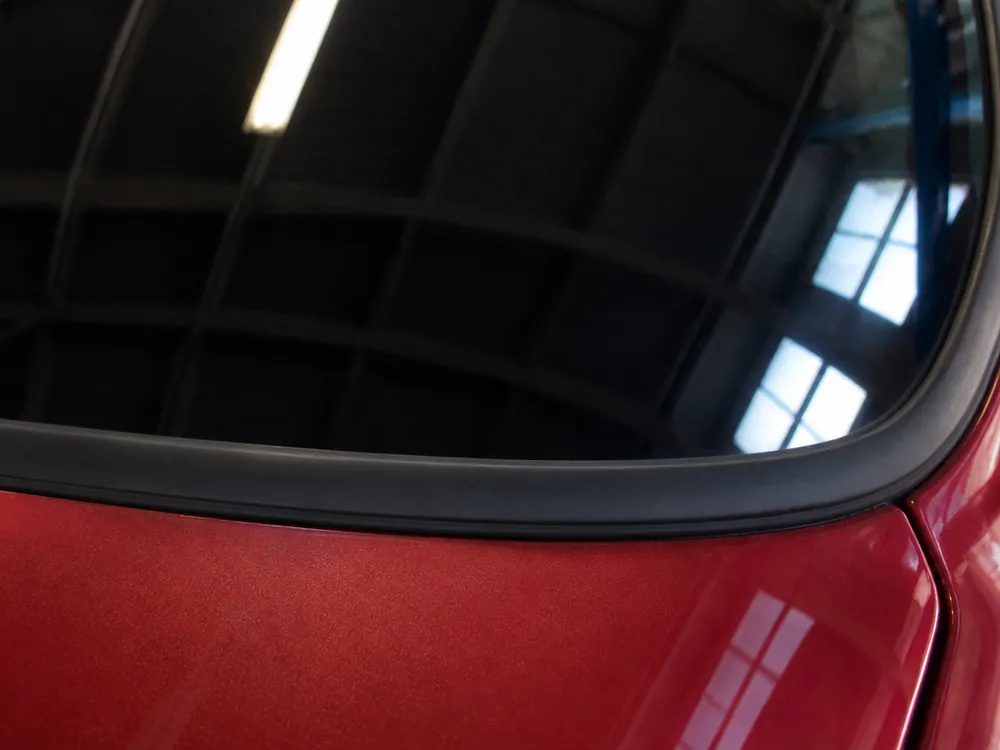
We will restore the strength and clarity of your windshield: we repair chips and cracks, and restore heating and electrics. We work with most car brands and provide a warranty of 12 months. We can come to you or you can visit our service center on Seifullina.
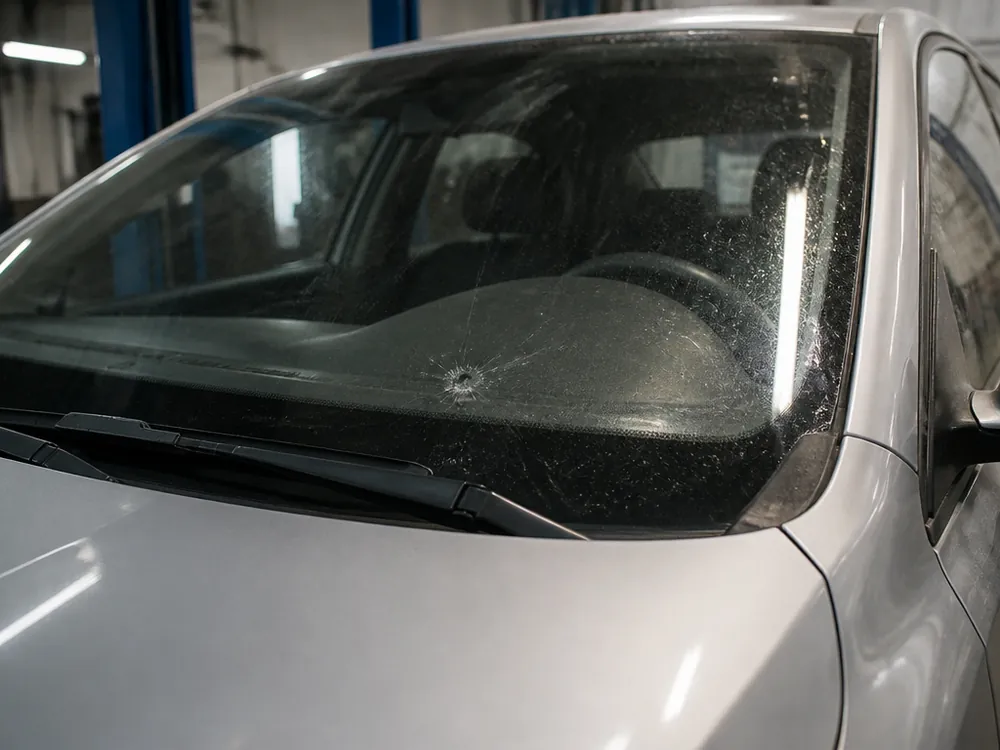
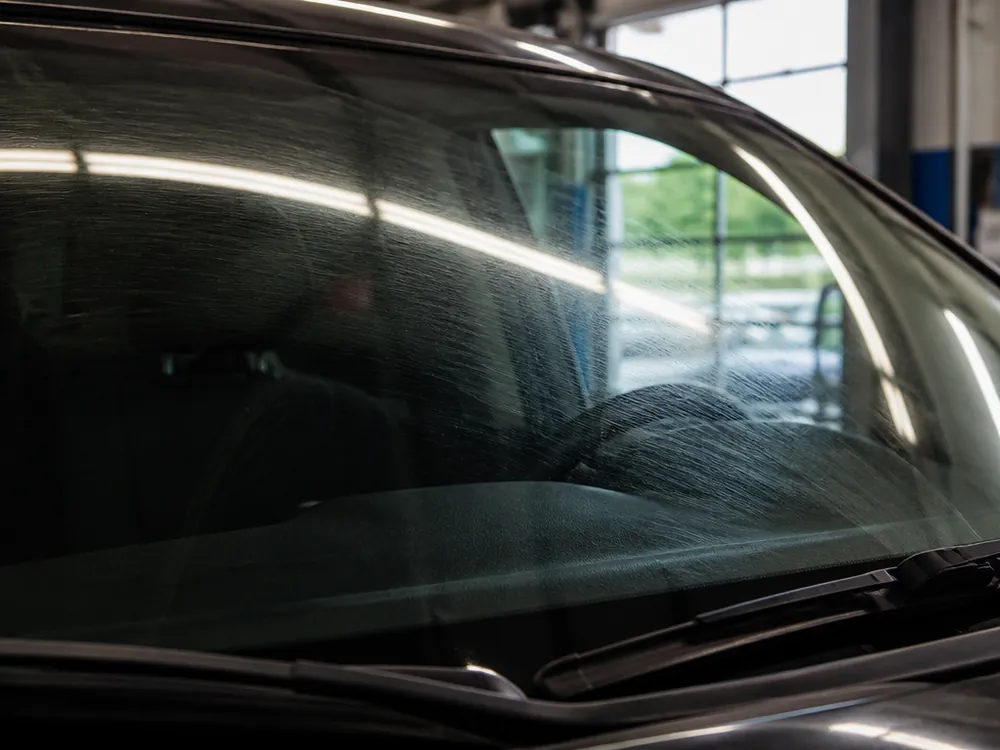
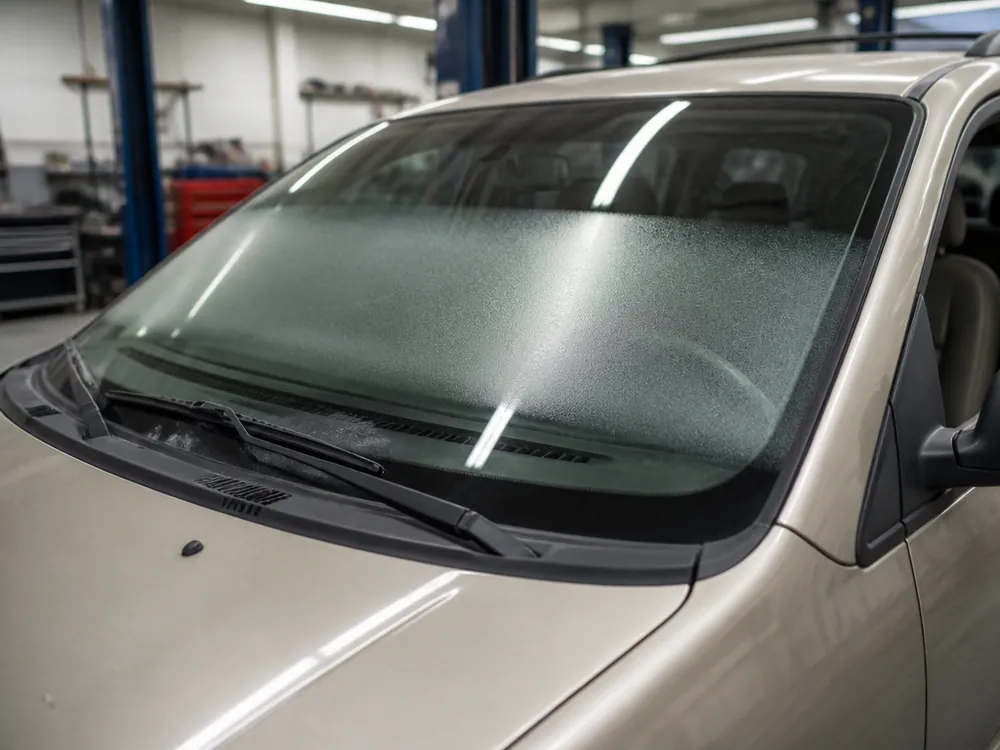
The owner complained that in rain and against the sun the windshield "blinds" with a cloudy arc along the wiper path.
Found
The rubber hardened and worked on dry glass — abrasive scratches in the driver's field of view. No chip, integrity not compromised.
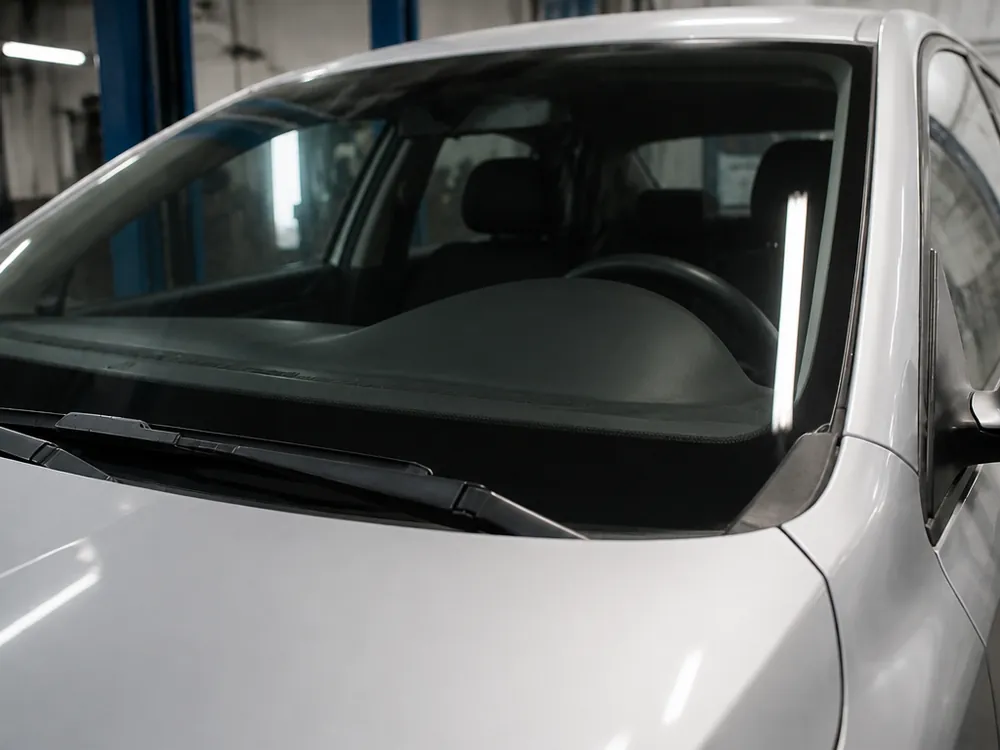
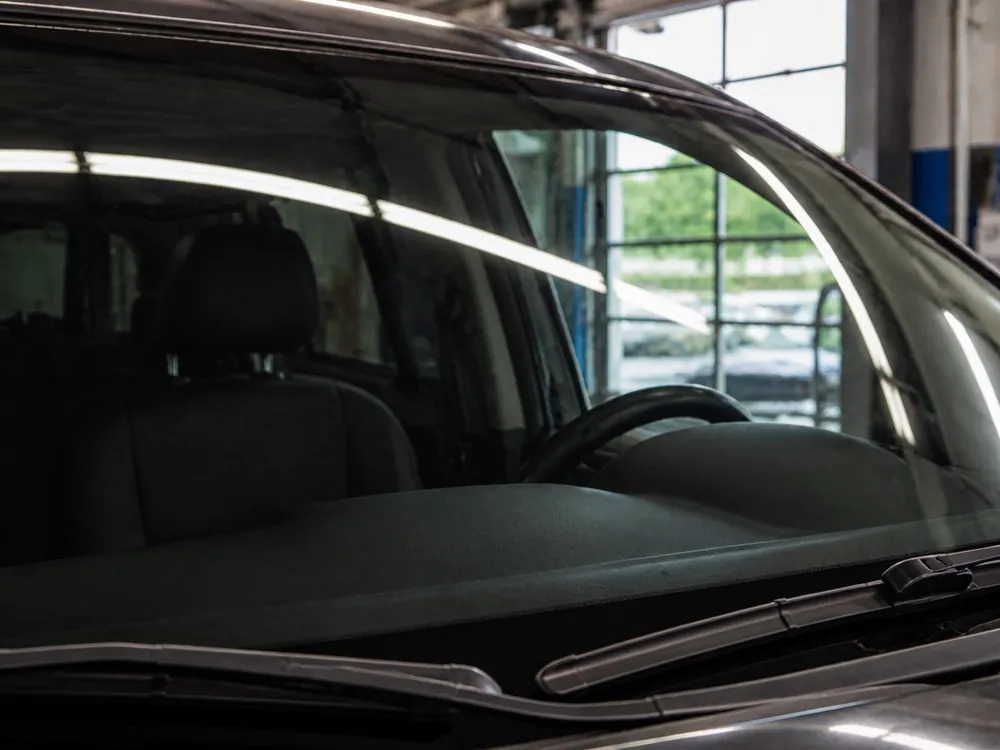
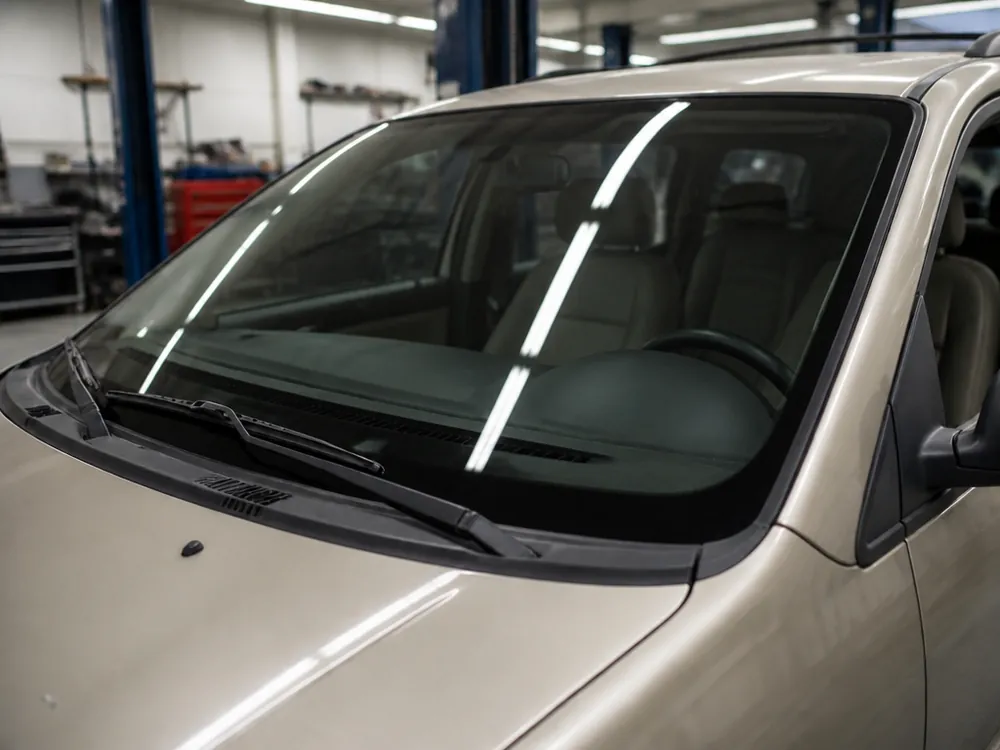
Done
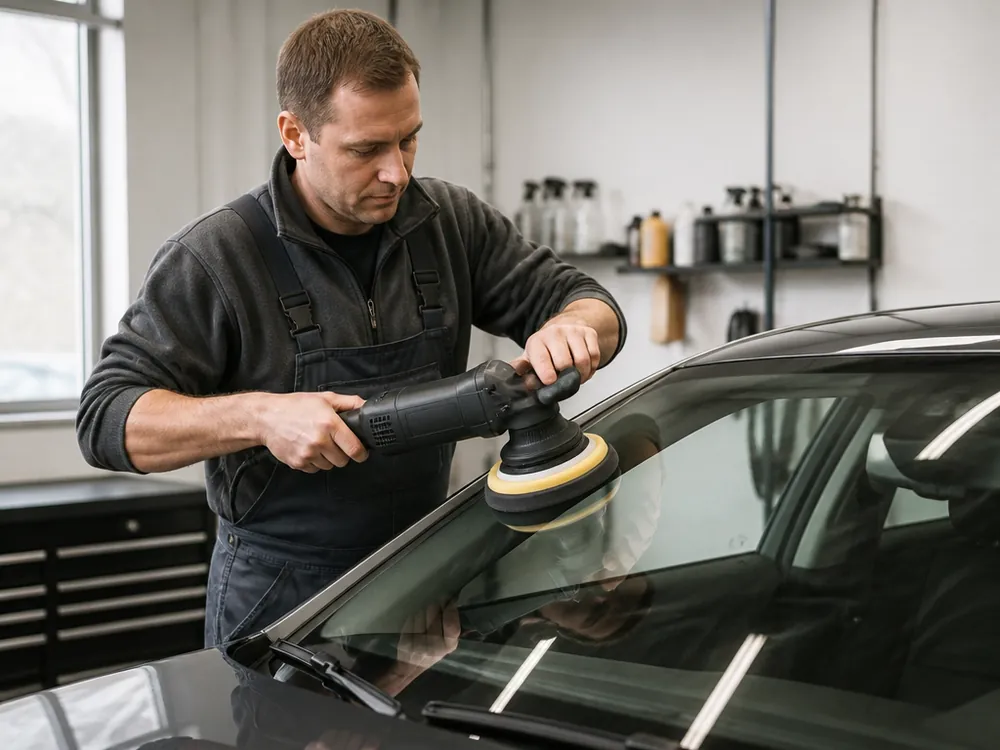
Polished the glass in the wiper area with thickness control, removed the scratches, replaced the wipers and treated the glass with a hydrophobic coating.
We carefully eliminate chips and cracks, restore the tightness and transparency of glass. The exact cost depends on the type of glass and the complexity of the damage.
Removal and installation of glass during body repair
from 1 day
12 mo
from 15 000 ₸
Glass repair with rain sensor (calibration)
2–3 hours
12 mo
from 18 000 ₸
Prices are for labor only, excluding the cost of glass and materials. The exact estimate will be given by the specialist after inspecting the car. Warranty periods — see the page «Warranty»
06
Why choose auto glass repair at CARGID
Warranty.
Every promise — backed by a number or a document: work order, photos, removed parts.
12MO
warranty on labor — the term is stated in the work order.
12-month warranty
All car brands
Fast and careful
01
2-layer polymer
First, we fill the chip under vacuum, then apply a second layer under UV. Without vacuum, air remains, and it will become cloudy in a month.
02
Drilling up to 3 mm
At the end of the crack, we make a 2–3 mm hole to relieve stress. Otherwise, the glass will continue to crack from temperature changes.
03
Repair in 40 minutes
We do a chip or "spider" in 40 minutes before the polymer sets. A crack up to 15 cm — in an hour, so as not to disassemble half the panel.
04
12-month warranty
If the repaired chip or crack spreads further — we will redo it or refund the money. Condition: no impact in the same place.
07
How auto glass repair is performed
Steps.
From request to finished car — 6 steps, each under the master's control.
01
Inspection and assessment
You leave a request on the website or by phone, we clarify the car make and type of damage. The master inspects the glass, determines the possibility of repair, and gives the exact cost.
request on WhatsApp
02
Price approval
We fix the price in the work order — it will not change during the work.
inspection and diagnostics
03
Glass preparation
We clean the damaged area from dirt and moisture to ensure high-quality filling.
estimate before work starts
04
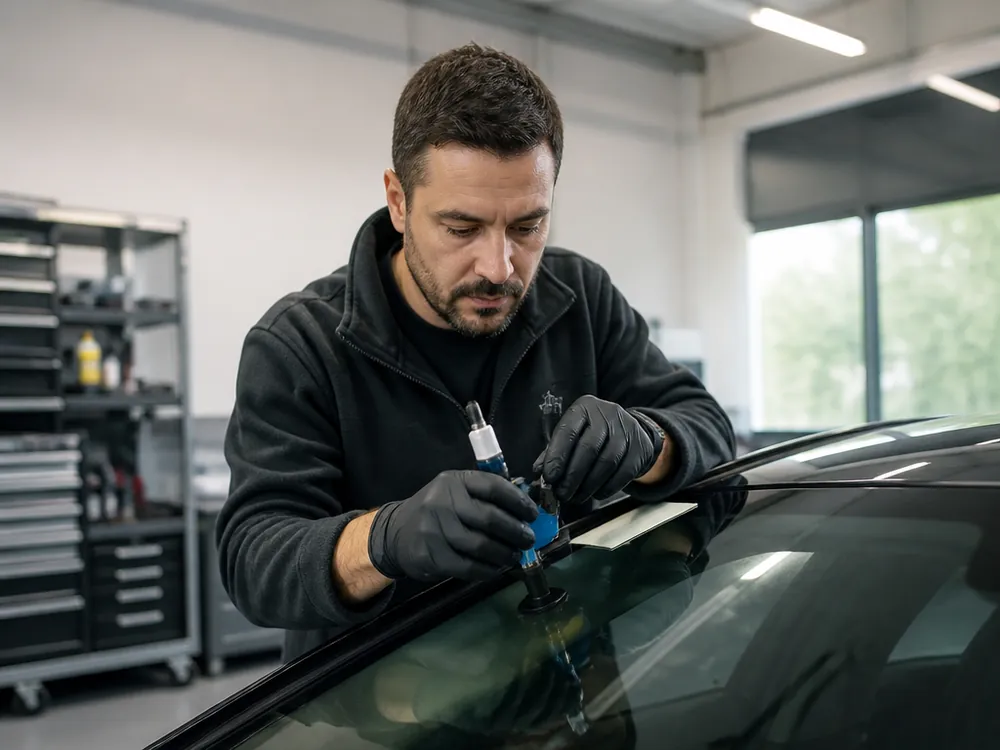
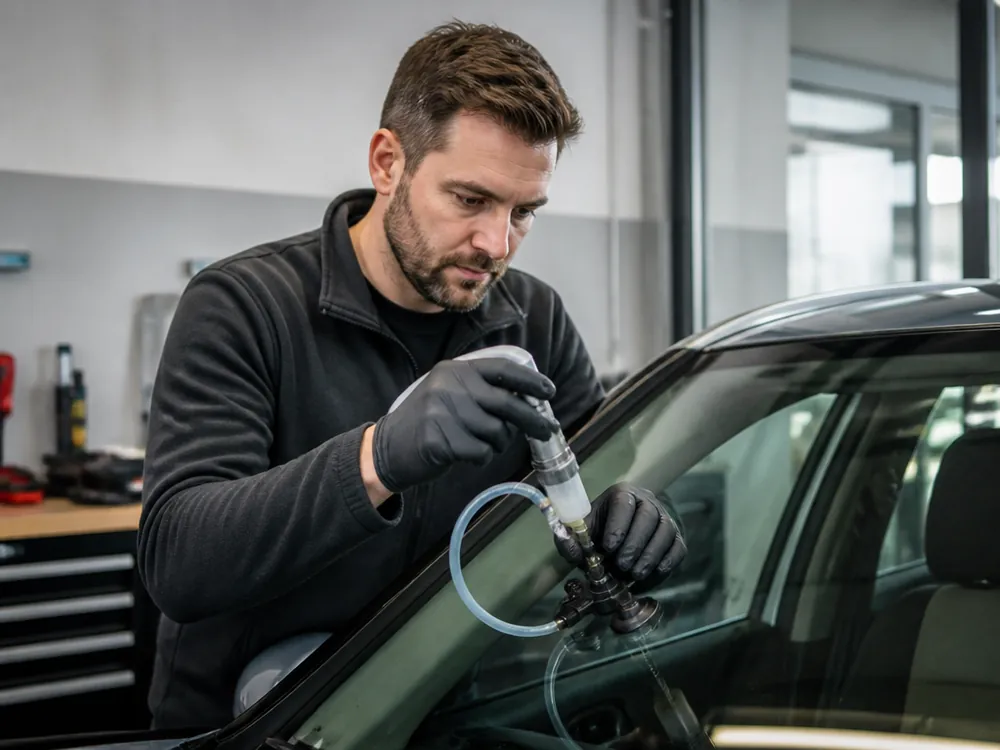
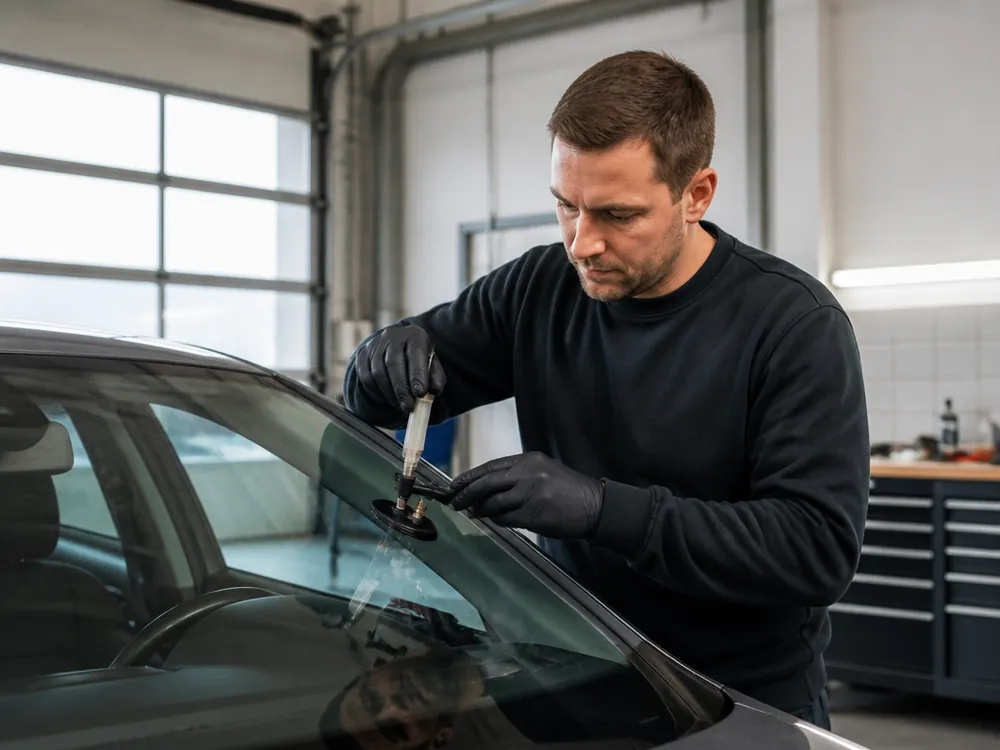
Polymer filling
We inject a special polymer into the chip or crack under pressure, removing air.
work to factory procedure
05
Polymerization
We dry the glass with an ultraviolet lamp until the polymer fully hardens.
result check
06
Grinding and polishing
We remove excess polymer, grind the surface for smoothness and transparency. We check the quality of repair, hand over the keys and give care recommendations.
CARGID repairs auto glass in Almaty without replacement: we fix chips, cracks, and "spiders" with polymer under vacuum, polish scratches, repair glass with a rain sensor and calibrate it. First diagnostics and a written estimate, then work. We give a 12-month warranty on glass repair and record it in the work order.
Which glass damage can be repaired and when replacement is needed
The owner's main question is whether it can still be repaired or it's time to replace. We decide based on the type, size, and location of the defect, not by eye: the same flaw in the center and on the edge requires a different approach.
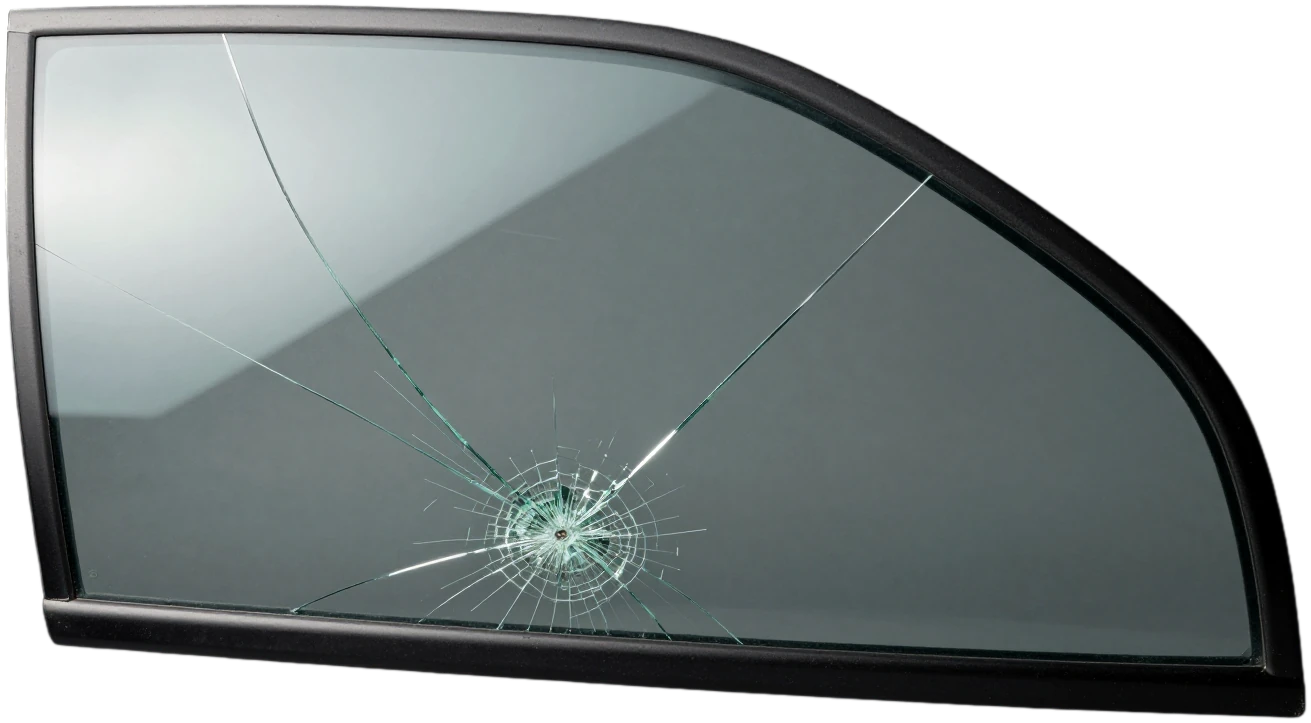
Chip, crack, "spider," and scratches — what we do with each
We divide defects into four groups — a pit without a break, a pit with a break, a line, and a "spider" of multiple pits — and each has its own procedure. We fill a pit damage with polymer under vacuum in two layers, and if a break has already started from it, we first relieve stress with stop-drilling. We work a line from the end: a 2–3 mm hole, then filling and UV curing. We treat a "spider" one spot at a time so each fills completely, without air pockets. Our auto glass restoration in Almaty starts with exactly this kind of analysis — both the set of operations and the time depend on it. Auto glass repair in Almaty follows the same logic: first we determine the defect type, then we choose the method. Scratches and scuffs are not restoration but polishing: polymer is not poured into them; a thin layer is removed with abrasive.
Repairability limits by size and location
During diagnostics, we assess repairability by three parameters — size, location, and whether it reaches the edge — and we honestly say when the work won't give a result. A coin-sized defect and a line up to 15 cm can be restored, while a break of 20 cm or more usually needs replacement — polymer doesn't hold that length under temperature changes. Reaching the edge changes the picture: there's the adhesive seam and body geometry, and the load is distributed differently. Damage on the wiper line or in the sensor area is harder to restore: not only strength but also clear visibility and electronics operation matter there. We assess repairability before starting work and record it in the work order so the decision is shared.
Table of damage types and what we do with them
defect map and work methods
Damage type
What we do
Time
Chip without a crack
Polymer under vacuum, two layers
~40 minutes
Chip with a crack
Stop-drilling and polymer filling
~40–60 minutes
Crack up to 15 cm
2–3 mm stop hole, polymer, UV
~1 hour
"Spider"
Sequential filling of each spot
~40 minutes
Scratches and scuffs
Glass polishing with abrasive
depending on scope
Crack reaching the edge
Assessed during diagnostics, often replacement
—
How the repair is done and why the technology works
The process relies on physics: the polymer displaces air from the cavity, cures under UV, and restores the glass's strength. We break down each step — from vacuum filling to final polishing of the area.
Why polymer is injected under vacuum and in two layers
First we fill the chip with polymer under vacuum, then apply a second layer under UV — without vacuum, air remains inside and the spot becomes cloudy in a month. A vacuum injector creates negative pressure and pulls air out of the chip cavity, after which a compound with a refractive index close to that of glass enters. The first layer cures under a UV lamp, the second levels the surface and seals micropores at the edges. This auto glass repair holds because no air layer remains in the cavity — that's what causes the cloudy spot and scatters the headlights of oncoming cars. On a "spider" with multiple legs, we place the injector on each branch in turn, otherwise the far channels stay dry and leave gray streaks. That's why filling a chip with sealant or covering it with tape before visiting the service center is pointless — it doesn't remove air but prevents the polymer from curing.
Why a stop hole is drilled at the end of a crack
At the end of a crack, we drill a 2–3 mm hole with a diamond bit to relieve stress — otherwise the glass will keep cracking from temperature changes. A crack grows from the stress concentration at its very tip, and polymer injected into such a tip without preparation won't hold it. The diamond bit removes the edge, the stress redistributes around the hole, and growth stops even before curing. We drill carefully, with coolant, to avoid chipping on exit and to avoid touching the inner layer of the laminated glass. We keep the diameter within 2–3 mm: smaller won't relieve stress, larger will leave a noticeable dot. If the crack reaches the edge of the glass, a stop hole no longer helps — the edge acts as a stress concentrator, and we honestly tell the client about replacement. The stop hole is not visible from the driver's seat if it falls within the treated area, but it is what stops the crack from growing before the polymer cures.
How noticeable the treated area will remain
After sanding and polishing the area, the chip site is almost invisible from the driver's seat, but a slight trace remains — this is normal and does not affect strength. We sand the surface in stages, from coarse to fine abrasive, then polish with paste until clear, and the boundary between polymer and glass stops catching the light. On dark glass the trace is more noticeable, on light glass it almost blends with the background. We separately check the visibility area: if the damage falls within the wiper sweep in front of the driver, we evaluate the result at an angle and under side lighting, not just straight on. With a deep chip affecting the inner layer of the laminated glass, polishing does not completely remove the shadow — in this case we show the area to the client before handover and explain that strength is restored but an optical trace will remain. The sooner the car is brought in, the less dirt and moisture get into the chip — and the cleaner the result looks after curing.
Repair of glass with a rain sensor and calibration
Glass with a rain sensor is a special case: restoring the sensor area is combined with calibration, otherwise the electronics may work incorrectly. Let's break down what the work involves and what the technician checks before handover.
Why restoring glass with a sensor is two operations
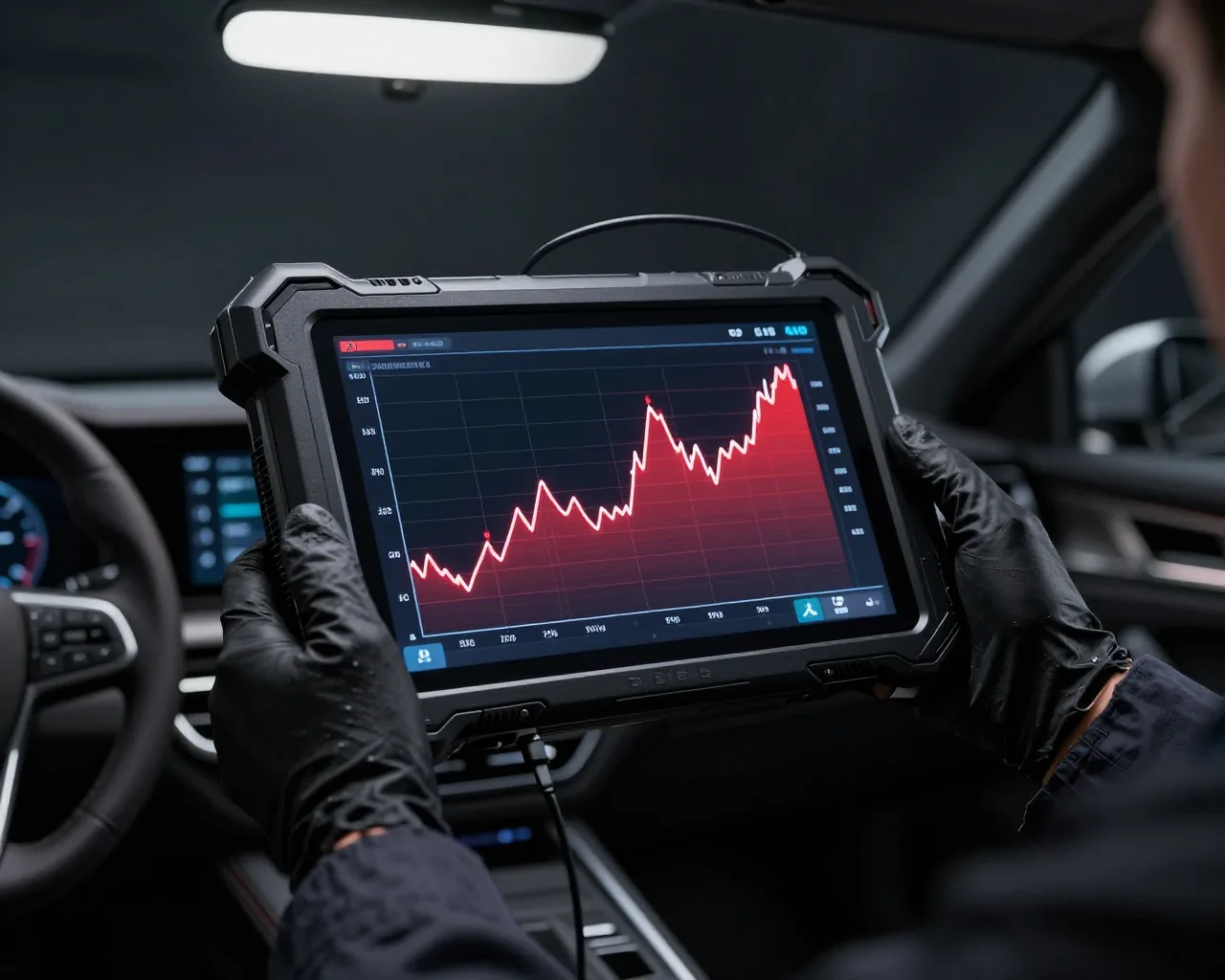
We repair glass with a rain sensor and calibrate the sensor separately — these are two operations, because after working in the sensor area the electronics need to be set up. The element itself is mounted on the inside of the windshield and connected to the control unit; the polymer, UV curing and heating change the optics along the infrared beam path. We calibrate on dealer scanners for 40+ makes — without it the sensor may respond with a delay or not react to fine drizzle. We calibrate on dealer scanners for 40+ makes — setup time depends on the model and the number of sensitivity thresholds being checked. In my opinion, this is not the stage to cut corners on: electronics that kick in late annoy the driver more than the chip itself. When you order auto glass repair, ask right away whether the setup is included in the job — otherwise you get a treated area and finicky automation.
What we check before handing over a car with a sensor
Before handover we do a test drive and check that the automation triggers correctly in different modes — this is part of the job, not an option. The service advisor runs the sensor in manual and automatic modes, watches how it reacts to intermittent water spray and to a dry windshield, and compares the scanner readings with the factory thresholds for the specific make. We take photo reports of the key stages and record the setup result in the work order. If the electronics behave erratically after the job, diagnostics under warranty are free — we get it working without extra charges. We record the warranty period and terms for the glass and the setup in the work order and the handover report when the car is released. If the sensor glass has already been re-glued somewhere else, tell the technician before you drop the car off — it changes the calibration plan. So before handing over a car with a chip on the windshield in the sensor area, tell the technician about any previous work — it changes the calibration plan.
How long auto glass repair takes and how to book
Timing depends on the type of damage, and booking depends on the shop's workload. Here's how long to expect for each type of work and how to come in without waiting in line.
How long it takes to fix a chip and a crack
We fix a chip or a "spider" in about 40 minutes, a crack up to 15 cm in an hour, and you can wait at the shop the whole time. Chip repair doesn't require taking the panel apart: the technician works from the outside until the polymer sets under the UV lamp. Chip repair takes less time than it seems if you come in before the damage spreads. A crack takes longer — first we drill a 2–3 mm stop hole at the end to relieve stress, then inject the compound under vacuum in two layers. While the work is going on, the car stays put, and you don't need to pick it up the next day. In our experience, complicated cases take more than an hour — a crack that reaches the edge or multiple chips in one area. Don't put it off: the damage grows from temperature changes and vibration and over time can go beyond what's repairable, after which replacement is the only option.
How to book and why booking ahead is better
We're open daily from 09:00 to 20:00, seven days a week, and with a booking we take you without waiting in line — a service advisor handles the car from the work order to handover. First comes glass diagnostics and an assessment of whether it can be repaired, then a written estimate: we start work after you approve it. We take photo reports of the key stages and show and hand over the old parts — you can see what was replaced. Our advisor records the type of damage in the work order and passes it to the technician, so you don't have to explain again on site what happened to the glass. Booking doesn't just save you the wait: the technician knows the type of damage in advance and prepares the right polymer and tooling for your arrival. Getting there is easy any day of the week — our shop at 129 Mukagali Makataev accepts cars on weekends too, and the car goes through a test drive before handover. We provide a 12-month warranty on the glass and write the term into the work order at handover.
Warranty, care after repair and what to do if something goes wrong
Here's what the warranty on glass work covers, how to treat the repaired area in the first days, and where to go when work done elsewhere turned out badly.
What the 12-month glass warranty covers
We give a 12-month warranty on glass work and record the term and conditions in the work order and the completion report when the car is released. It covers the polymer that fills the chip, the seal of the glass installation and the rain sensor calibration after the work. Diagnostics under warranty are free: the service advisor inspects the area, compares it with the photo report of the key stages and records the reason for the visit. When the defect is related to our work, we fix it at no charge. The warranty covers the work performed and the parts installed, but not an accident after the work, interference by third parties, normal wear of consumables or a part brought in by the customer. Before the car is released, check the term written in the report against what was agreed at intake — it's easier to sort out a discrepancy on the spot than to prove it later.
Caring for the glass in the first days after the work
Washing: in the first days wipe the area with a soft sponge, no pressure and no abrasives.
Car wash: put it off for a few days, especially in winter when hot water is used.
Temperature changes: don't point a cabin heater at the glass and don't pour boiling water on it.
Inspection: if it clouds up or the crack grows, come in for warranty diagnostics — it's free.
Documents: keep the work order — it confirms the warranty on the work.
When work done elsewhere turned out badly
When work done elsewhere turned out badly, we first run diagnostics and assess whether it can be redone — often the clouded polymer is removed and refilled. At intake the technician checks whether the crack has gone under the seal and whether there's any separation along the edge: once it reaches the edge, a redo no longer gives the original strength, and replacing the glass is the smarter choice. We remove the clouded layer, dry the chip cavity and fill it with polymer in two layers under vacuum — the same as with the initial repair. We diagnose the damage and assess repairability before any work starts, so the result is known in advance. Signs of a bad repair are clouding within a month, visible air under the polymer and a crack that kept growing from the chip. If you notice even one of them, don't put off the inspection: a fresh chip is easier to redo than a crack that has spread.
What decides a successful glass repair
Here's the key stuff that decides how the repair turns out: from the type of damage and the technology we pick to the paperwork you get when you pick up the car.
The damage type decides the method. A chip with no crack and a bullseye get filled with polymer, while a crack that reaches the edge often means replacement.
Technology matters more than speed. Vacuum filling and a second layer of UV-cured polymer are what separate a lasting result from one that goes cloudy a month later.
Stop-drilling stops the crack. A 2–3 mm hole at the end relieves the stress and keeps the surface from spreading further when the temperature changes.
A rain sensor needs calibration. Working with a sensor is two operations, and you can't skip calibration or the automatic features won't work right.
The warranty has to be on paper. The term and conditions are written into the work order and the completion certificate, and warranty diagnostics are free.
10
Frequently asked questions about auto glass repair in Almaty
Questions.
Price, timeframes, warranty, payment — 10 questions asked most often.
10
Didn't find an answer?
Message us on WhatsApp — a service advisor will reply within 5 minutes.
The price of auto glass repair in our service depends on the type of damage (chip, crack), size, depth, and location. For example, repairing a chip up to 1 cm in diameter costs on average 5000–8000 tenge. If the crack is up to 30 cm long, the price will be higher — from 10000 to 15000 tenge. The car brand and the presence of sensors (e.g., rain sensor) in the damage area also affect the cost. The exact cost can only be stated after diagnostics — which is free with us.
On average, repairing one damage takes 40–60 minutes. This time includes surface preparation, polymer injection, and curing under a UV lamp. If the damage is complex or there are several, the time may increase to 2–3 hours. Scheduling a specific time allows the work to be done without waiting.
Yes, we provide a written warranty for all types of auto glass repair. The warranty covers the tightness of the repair area and maintaining transparency for 12 months. If during this period cracks or cloudiness appear at the repair site, we will redo the repair for free. The warranty does not apply to mechanical damage or violation of operating rules after repair.
An appointment is not required but recommended — this way you avoid waiting in line, especially on weekends and evenings. You can call us and choose a convenient time. If you come without an appointment, we will accept you as soon as possible, but during peak hours the waiting time may be 1–2 hours. For legal entities and regular customers, priority booking is available.
We do not recommend using your own polymers, as the quality and compatibility with our equipment may be unpredictable. Repair using our materials is already included in the price and guarantees the result. If you want to replace the glass entirely, you can bring your own glass — we will assess its condition and agree on installation. However, we are not responsible for the quality of its surface when installing someone else's glass.
If the repair was done poorly at another service, you can contact us. We will perform diagnostics and assess the possibility of re-repair. Often we can improve the aesthetics and tightness, but we cannot always guarantee complete removal of defects due to remnants of old polymer. The cost of re-repair depends on complexity, starting from 7000 tenge. If after our work there are complaints, our 12-month warranty applies.
Chip and crack repair differ in technology. A chip is a point damage where polymer is injected under pressure through a hole, preventing further spreading. A crack requires a more complex procedure: first, stop-holes are drilled at the edges, then the entire cavity is filled with polymer. Chip repair is cheaper and faster, taking 30–40 minutes. Crack repair takes 1–2 hours and costs more. The best method depends on the glass condition: if the crack is longer than 30 cm or goes to the edge, its repair is impractical — replacement will be required.
After repair, it is not recommended to wash the glass for 24 hours so the polymer fully hardens. During the first week, avoid temperature changes, do not direct hot air from the heater directly at the repair site. After a month, it is advisable to replace the wipers if they are worn out — this will prevent scratches. We also recommend monitoring the condition of the rubber seal. If you notice slight cloudiness that does not disappear within a week, contact us: it may be a sign of a microcrack.
Yes, we accept payment in cash, by bank cards (Visa, MasterCard), as well as transfers to the account for legal entities. Prepayment is not required — you pay for the work after its completion and quality check. We issue a receipt and warranty card. For regular customers, an accumulating discount of up to 10% is available.
We perform repair of chips and cracks on windshields, as well as repair of side and rear windows for minor damage. We use technology that prevents crack propagation and restores transparency. We repair cracks up to 30 cm long and chips up to 2 cm in diameter. If the damage is too large or located in the sensor area, we recommend glass replacement. For SUV and commercial transport owners, we offer reinforced repair.
11
Customer reviews of auto glass repair at CARGID
Reviews.
We collect ratings on the website and on maps — we hide nothing.
4.8
872 reviews on the website 1 900+ ratings in total
Aigerim
Caught a stone on the highway, the chip was nasty. Called CARGID, they scheduled me for the next day. They did it quickly, about 40 minutes, and I drove on. The price was 7500 tg, fine. Thanks!
Dmitry
Toyota Camry
A crack from a chip appeared on the windshield of my Toyota Camry. I was afraid I would have to replace it, but the guys did the repair for 12000 tg and in one day. The crack is almost invisible, very pleased.
Gulnara
I noticed a chip after the road, thought it would be expensive. At CARGID they did the repair for 9000 tenge, excellent quality. I recommend it to everyone!
Ruslan
Came with a crack on the windshield, the length was considerable. The master examined it, said it could be repaired. They did it in a day, price 12000 tenge. The glass is like new, the crack is invisible. I recommend!
Aijan
They repaired the chip on time, very fast and quality. I paid 8000 tenge, the result is very good. Thanks!
Elena
A chip in the windshield after hail, I was worried I would have to replace the glass. I went to CARGID, they repaired it quickly, for 8000 tg. Thanks to the master, he did everything neatly.
Sergey
Sportage
Got a chip on Kia Sportage, on recommendation I went to this service. They did it in 40 minutes, it cost 7000 tenge. Very convenient that no appointment is needed.
Maxim
I had a large star crack on the windshield. Other services said only replacement. Here they took it on and repaired it for 10500 tg, in one day. Two weeks passed — all good.
Natalya
I hit a pothole, the impact caused a crack on the glass. I thought that's it, replacement. But here they repaired it for 9000 tenge, not even noticeable. Very pleased, thanks!