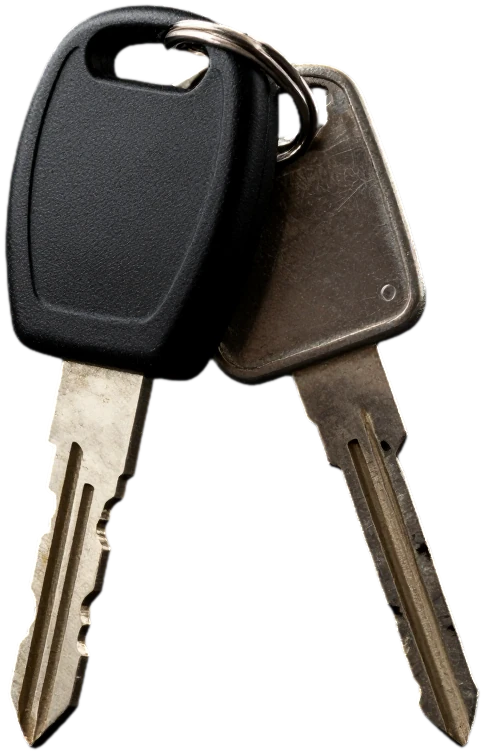
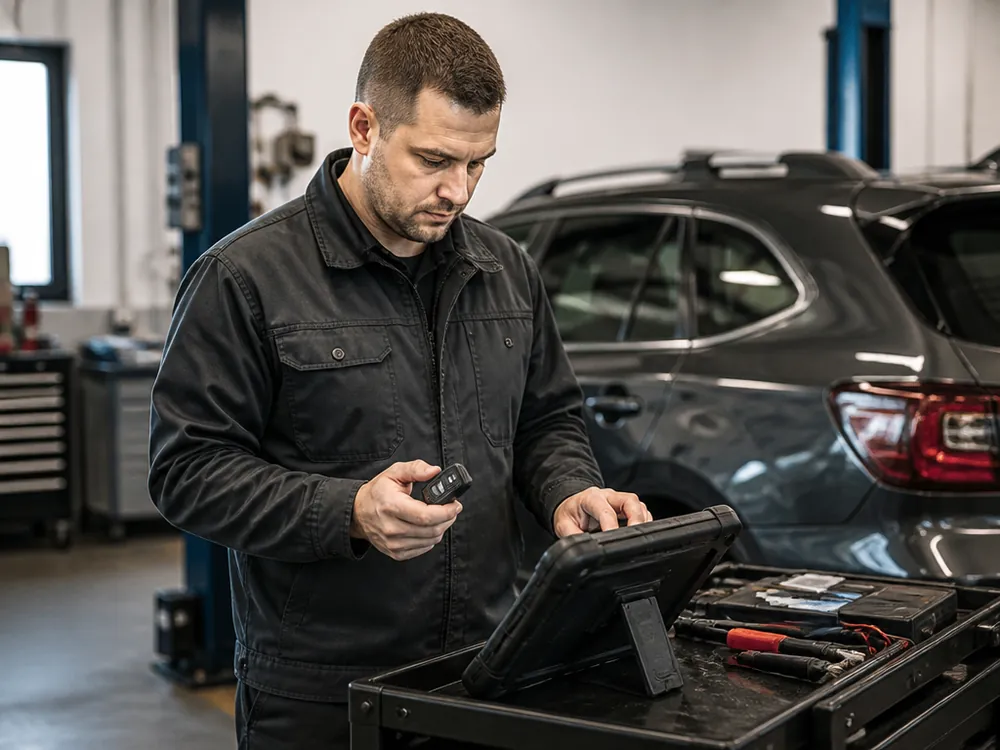
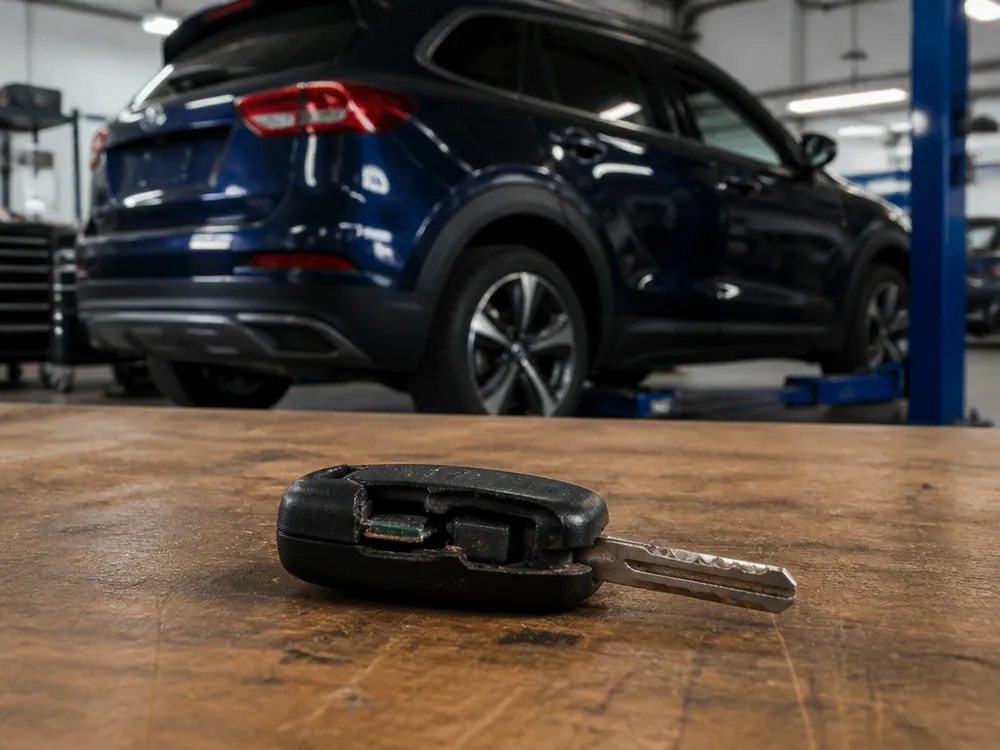
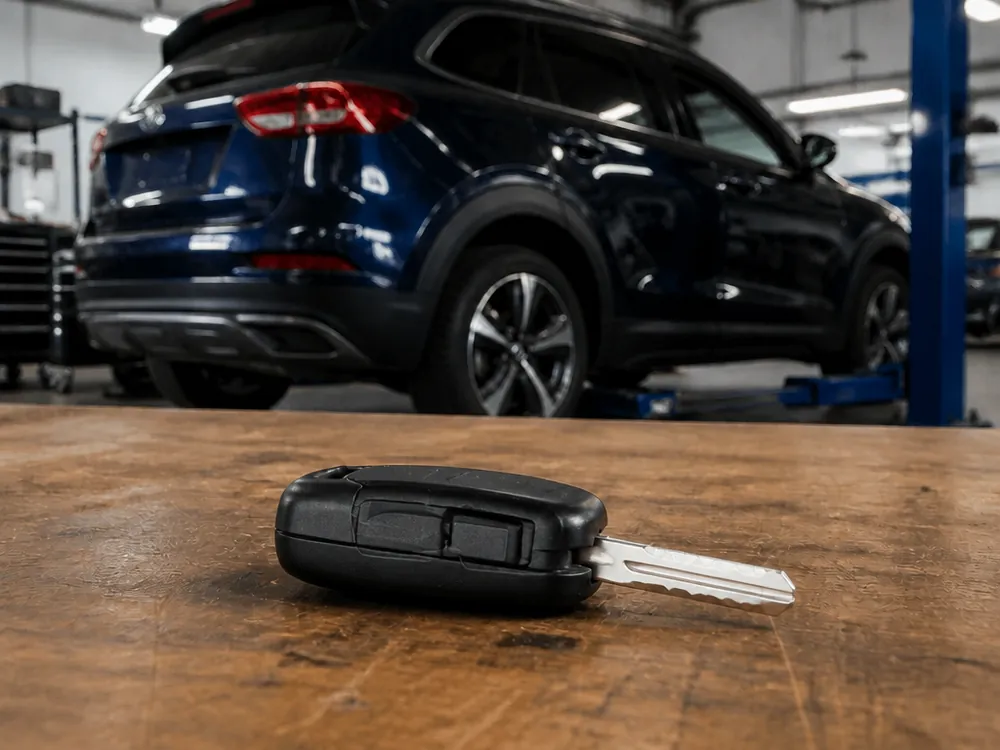
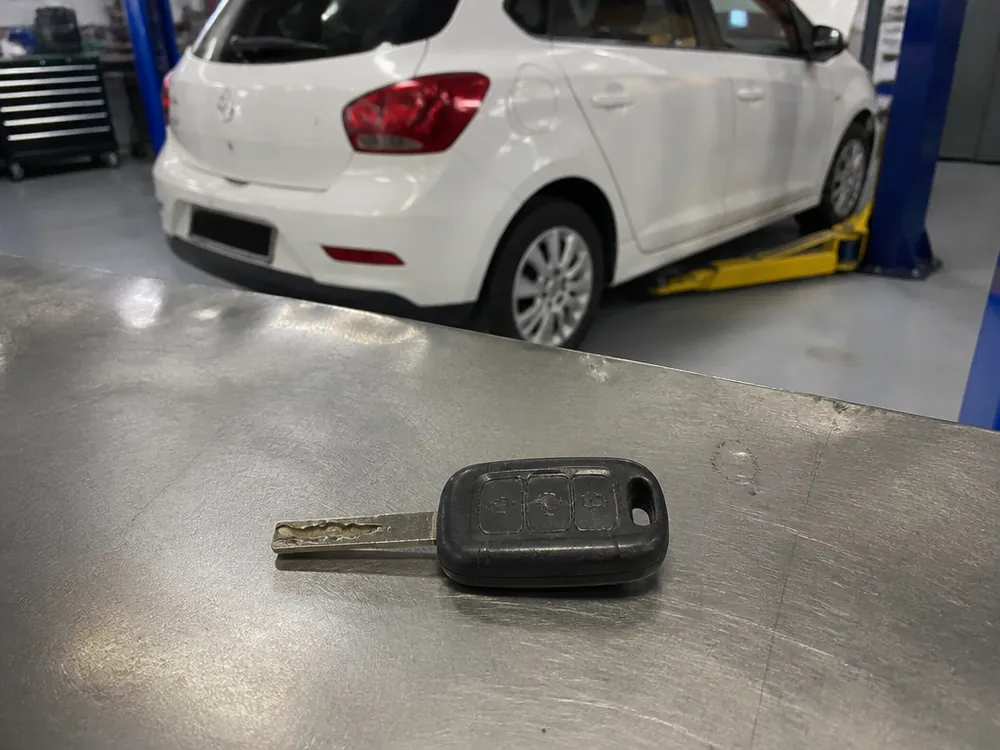
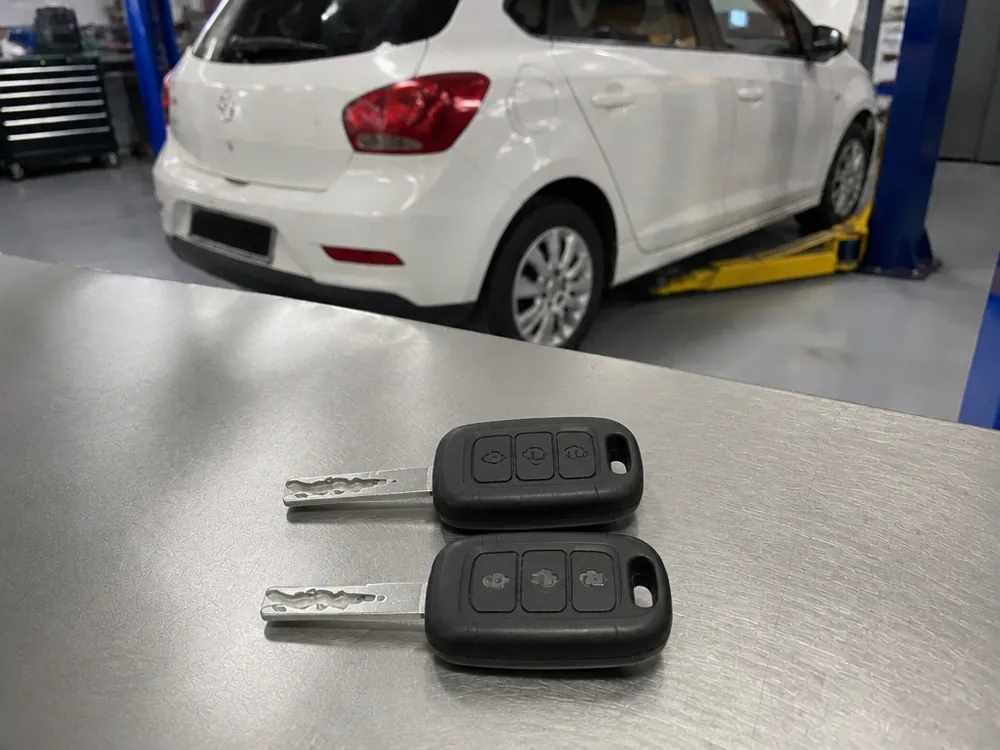
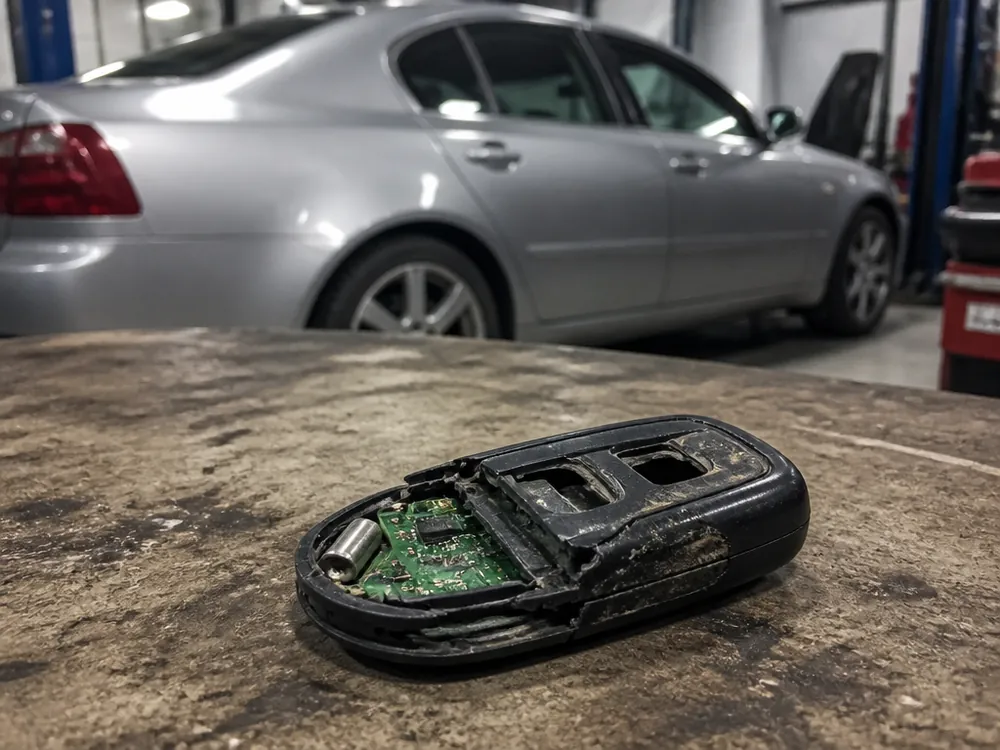
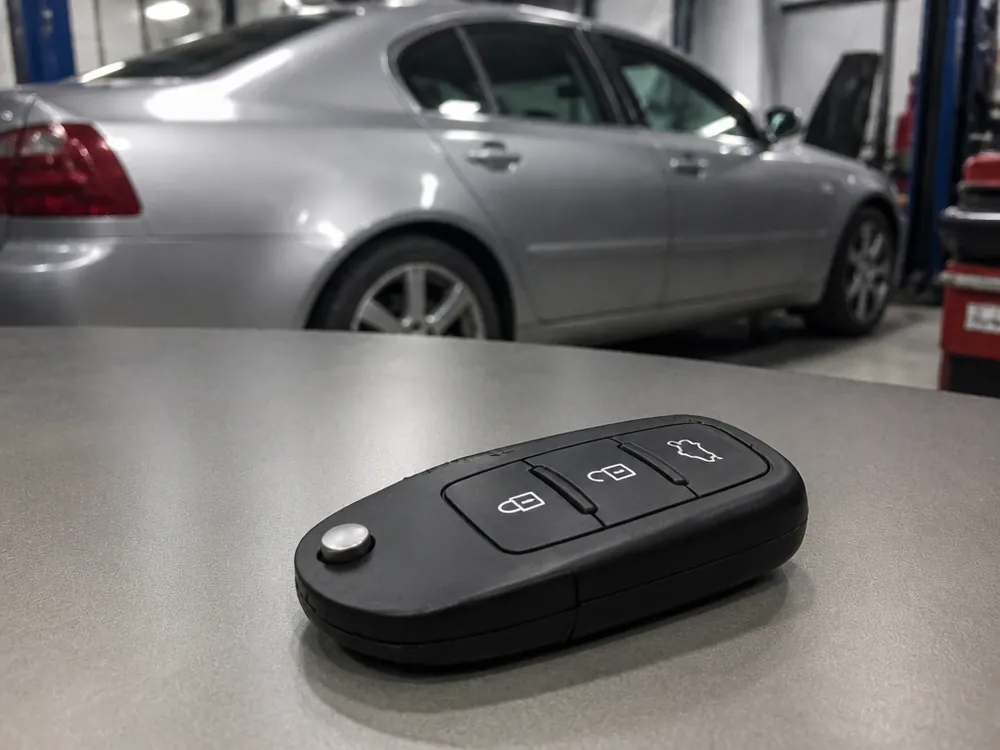
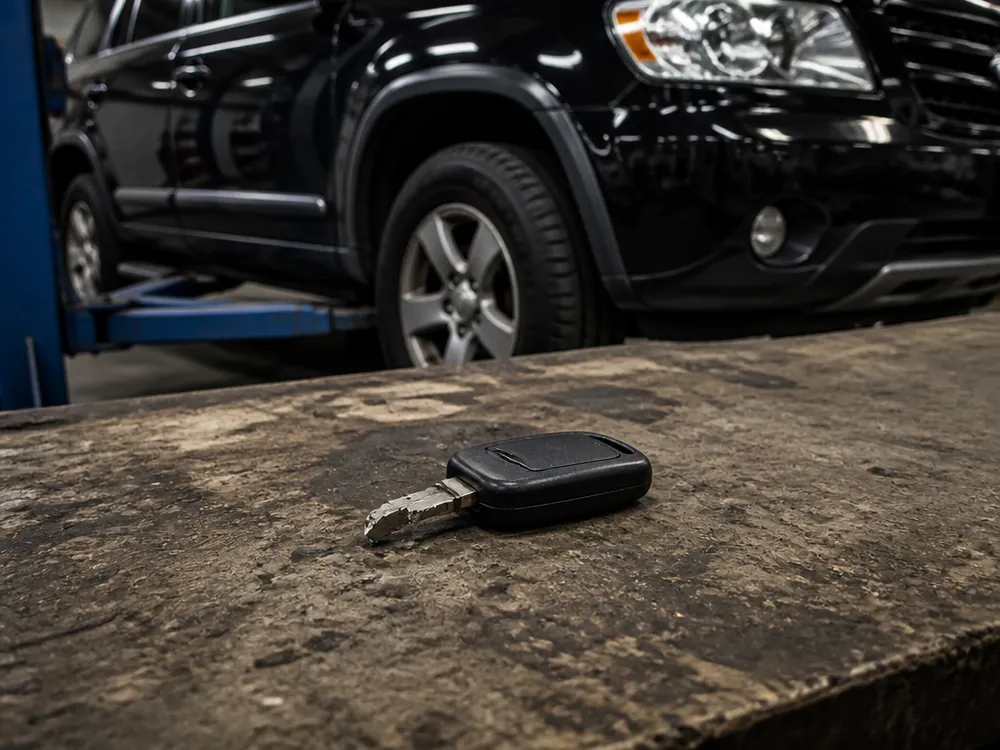
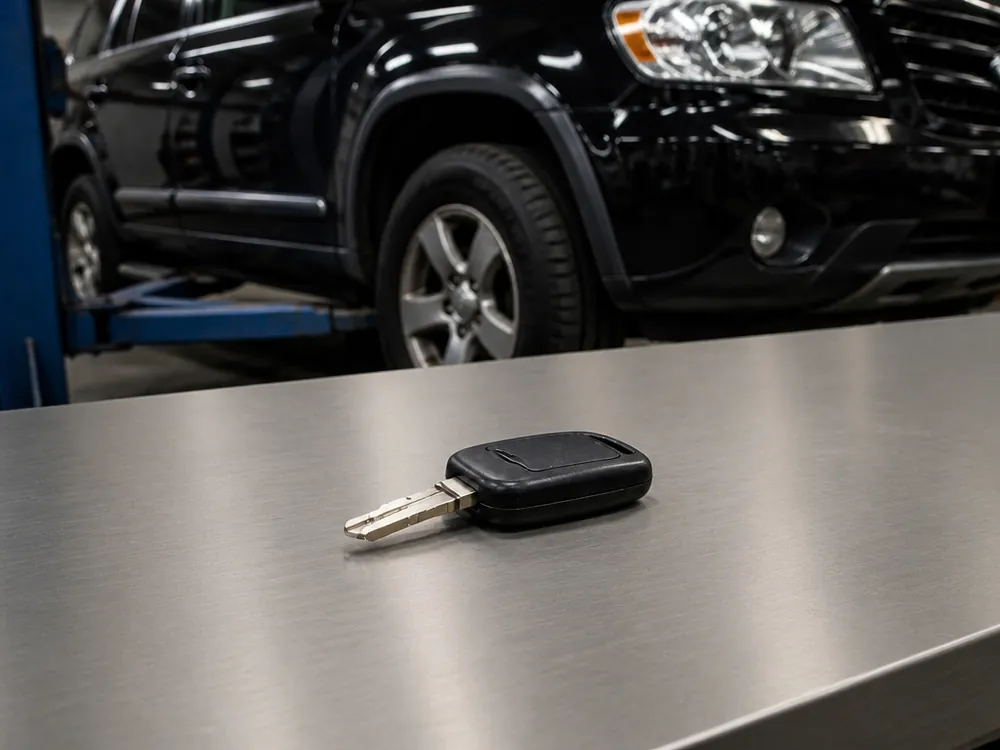
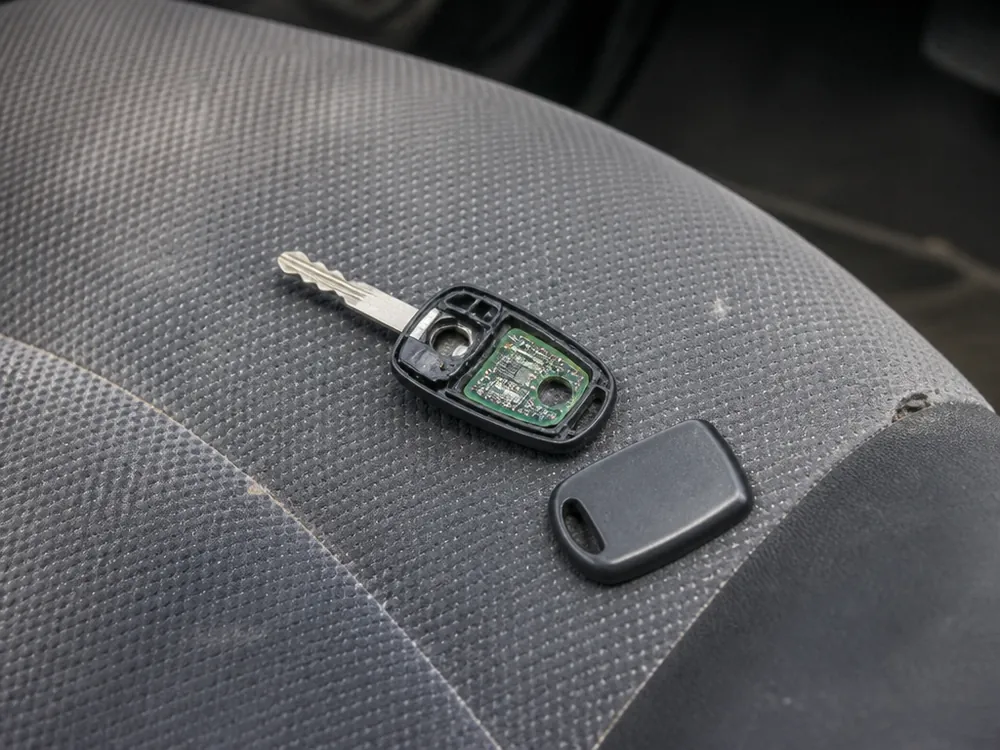
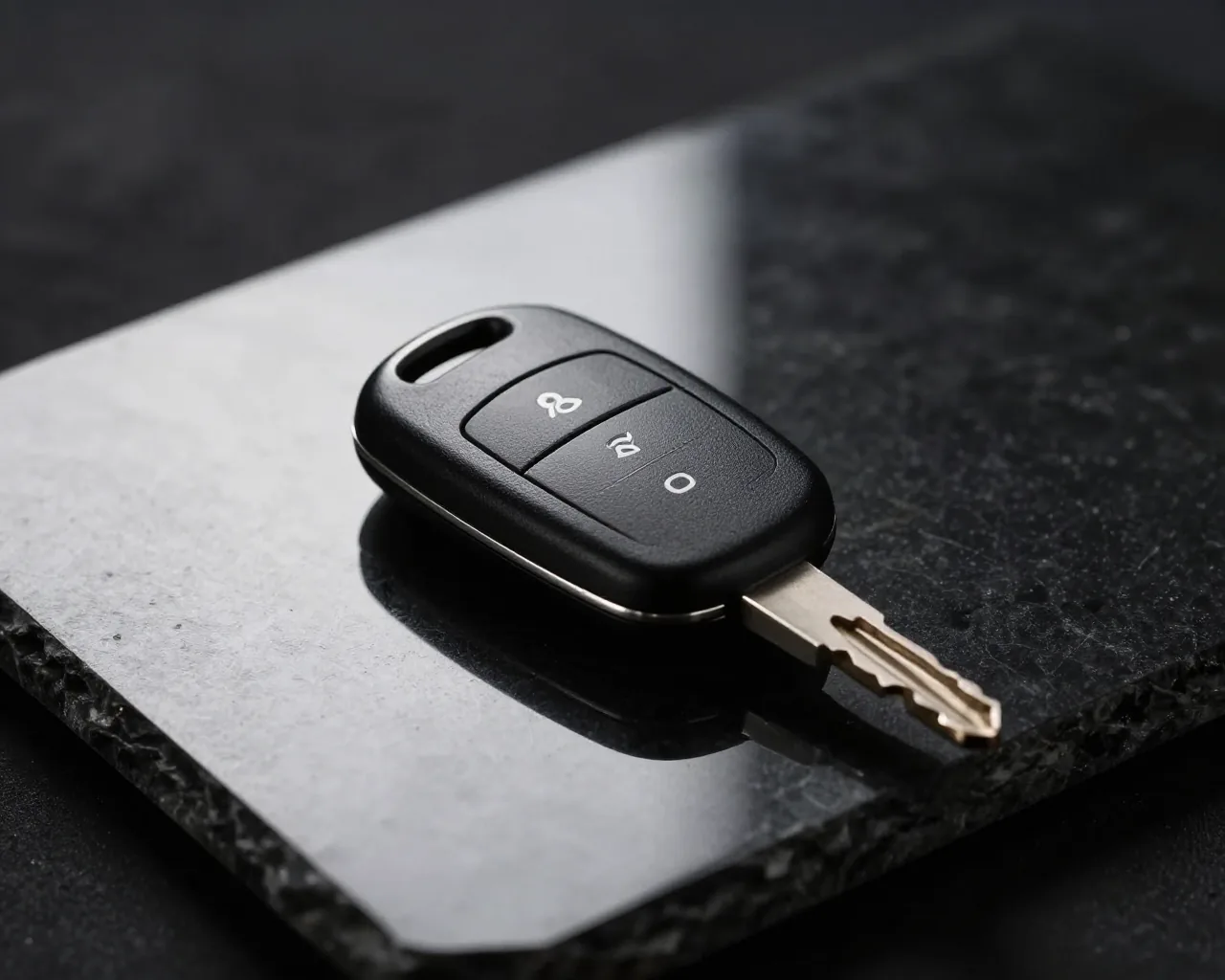
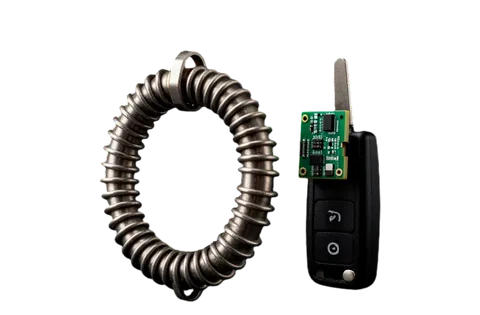
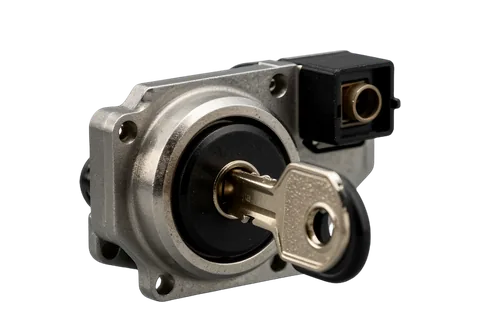
Externally similar keys are built differently. The type of system determines what will have to be done besides cutting the blade and how much time programming will take.
VIN, lock and immobilizer
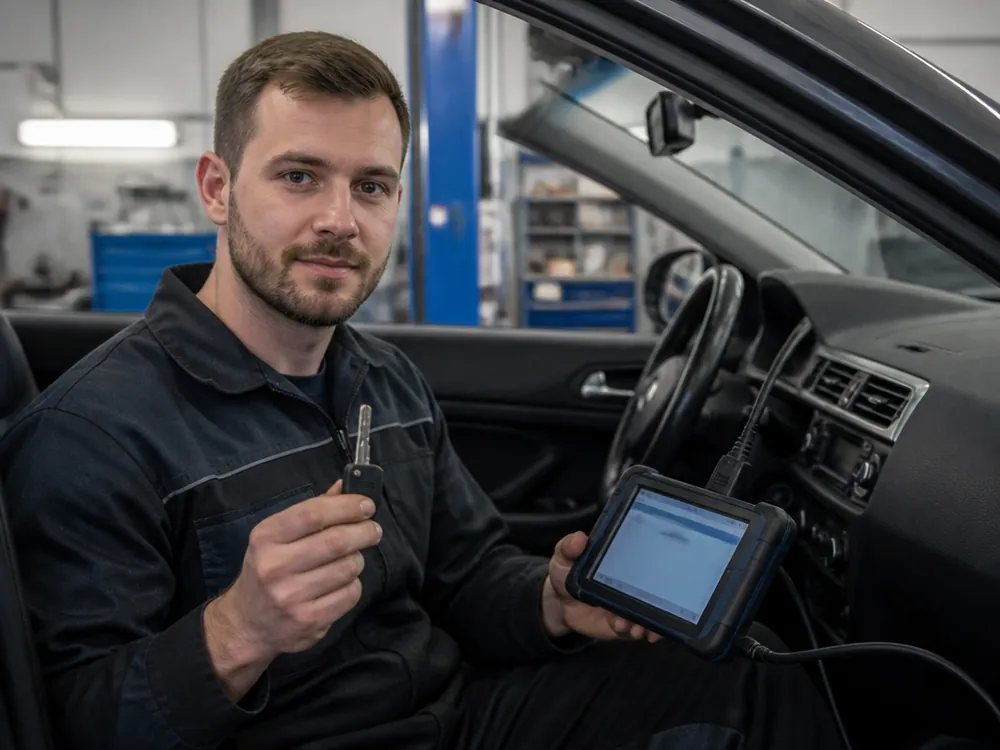
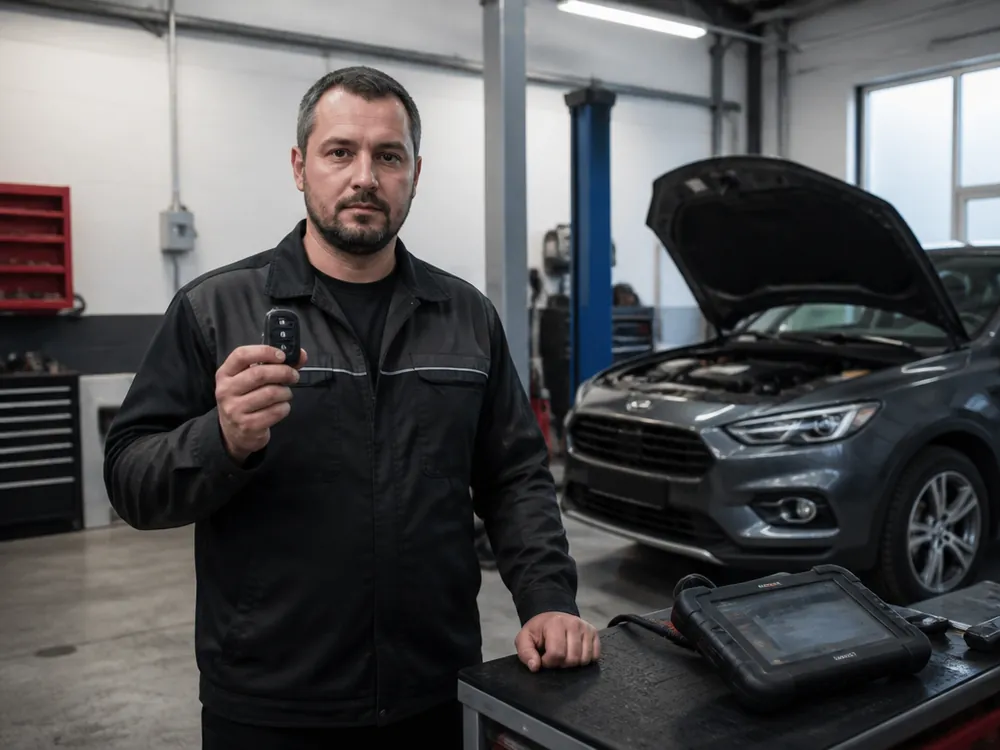
We determine the type of keys by VIN code and lock, not by eye: the same model in different years had different immobilizers, and externally identical keys are programmed differently. Car key cutting in Almaty at our shop starts with selecting a blank for the specific car — we check the blade profile, transponder type and remote frequency before starting work. If there is no original key, we take data by VIN or read the profile from the ignition lock cylinder. Then we connect to the immobilizer and see how many keys are programmed in it and whether it supports adding a new one without deleting the old ones. This determines the work order: in some systems a new key is simply added, in others the entire set has to be reprogrammed. Therefore, it is better to bring all the car keys for the visit, even faulty ones. That way we immediately see the full picture and won't have to connect to the module twice, and you will leave with a set that works completely.
Signs that the key has a chip
- Immobilizer lamp: if the key or lock icon lights up and goes out on the dashboard when the ignition is turned on, the car is checking the transponder.
- Thick plastic head: a chip is usually hidden inside it, even when there are no remote buttons on the key.
- Copy doesn't start: if a duplicate cut in a workshop opens the doors but the engine doesn't start, the original has a chip.
- Engine stalls after a second: the engine catches and immediately stalls — a typical immobilizer reaction to an unprogrammed transponder.
- Mention in documents: the immobilizer is directly indicated in the owner's manual and equipment list, and the VIN confirms the system type.
How a key with a chip and remote is built
A modern key has two independent electronic parts, and either of them can fail. Understanding the difference makes it easier to describe the problem to the technician and avoid paying for unnecessary work.
Transponder and immobilizer
The transponder is a passive chip without a battery that responds to the immobilizer with a code when the head is near the ignition lock. The antenna around the lock sends a signal, the chip returns its code, and if it is in the immobilizer's memory, the module allows the engine to start. No battery is needed for this, so the car starts even with a completely dead remote. The chip itself rarely fails; more often its connection with the antenna suffers: a crack in the case, an impact or water displaces the chip. Another cause of failure is a memory glitch in the immobilizer after electrical work or a battery discharge. In this case the chip itself is fine, but it needs to be reprogrammed. A new transponder is selected strictly for the immobilizer type: the module simply won't see a chip of a different standard.
Remote and comfort module
The remote buttons control the central lock through the comfort module and are programmed separately from the chip. So it's possible that the car starts but the doors don't open with the button, or vice versa. We check both parts separately: first the remote's battery and circuit board, then the synchronization with the comfort module. The remote operates on a specific frequency, and a board from another model may fit in size but not in frequency. When making a new key with a remote, we synchronize it with the module so that all buttons work: lock, unlock, trunk, and, if present, remote start of the factory system. We repair the key housing while keeping the chip if the board is intact, and we replace the battery on every visit with a complaint about short range. If the range doesn't improve after replacing the battery, we check the board's antenna and the button contacts, which wear out over time.
Why universal blanks fail
- Transponder not matched to the model: a universal chip emulates the code, but after a voltage drop or cold it may stop responding to the immobilizer.
- Inaccurate blade profile: the blank "almost fits," the blade turns with effort and gradually wears the lock cylinder.
- Different remote frequency: the buttons work only right next to the car, and in a parking lot the doors don't respond.
- Fragile housing: cheap plastic cracks at the hinge of the flip blade, and the chip starts to wobble inside.
- Our approach: we program the OEM blade and transponder for the specific car, so the duplicate works without issues and doesn't lose its tag.
Making a spare car key in advance
A spare set seems unnecessary until the first one is lost at the worst possible moment. Making it in advance is easier than restoring access to a car that's sitting locked in the yard.
Why it's easier to make a key while the first one still works
Duplicating a car key when the original works is faster and easier than making one from scratch. We copy the blade profile from the original rather than reading it from the lock, the transponder and remote data are available, and the immobilizer usually allows adding a new transponder without reprogramming the entire set. If the last key is already lost, we have to work through the VIN or the ignition lock, sometimes order a blank, and spend several hours on it. We recommend making a spare right after buying a used car if it comes with only one key. While we're at it, we check how many keys are programmed in the immobilizer: sometimes the previous owner kept a third key that the new owner doesn't know about. We can unbind it during the same visit, and then the car will start only with the keys you have.
What to bring
- All car keys: even a broken or faulty one will be useful, and if the set is reprogrammed without it, it will stop working.
- Vehicle registration and ID: documents confirm ownership; without them we don't make chip keys.
- The car itself: programming the transponder and remote goes through the immobilizer and comfort module, so the car must be present.
- A charged battery: programming can fail at low voltage, so it's best not to leave the car parked for long before the visit.
- Information about past work: if the ignition lock or immobilizer module was replaced, this changes the programming procedure.
Unbinding lost keys
If a key is stolen or lost along with documents, it should be unbound from the immobilizer; otherwise the found key can start the car. Unbinding means the lost transponder's code is erased from the module's memory, and the remaining keys are reprogrammed. We do this during the same visit when we make a new key and verify that the old code is no longer accepted. With the mechanical part it's more complicated: the lost key will still open the door, so if the key was stolen along with the address, consider rekeying the locks. After unbinding, be sure to check all remaining keys—each should open the doors and start the engine. If one of them wasn't included in the reprogramming, it will stop starting the car and will have to be programmed separately.
Blade and locks when making a car key
Electronics handle starting, but metal still opens the door and ignition lock. Blade precision is no less important than chip programming: it affects how long the locks last.
CNC machine and two passes
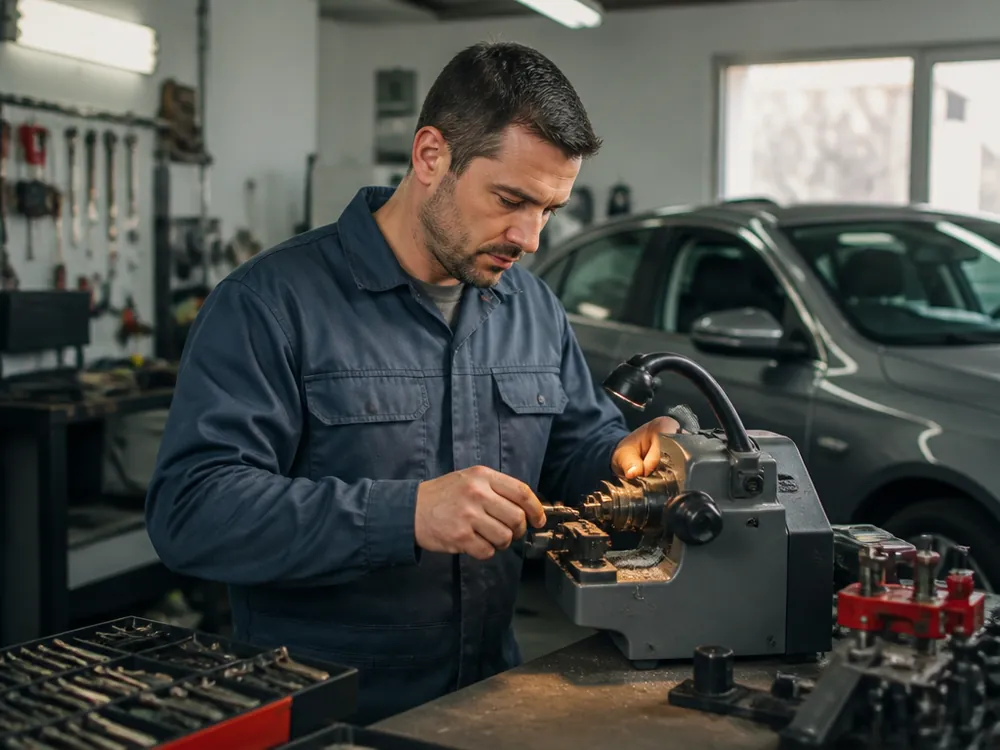
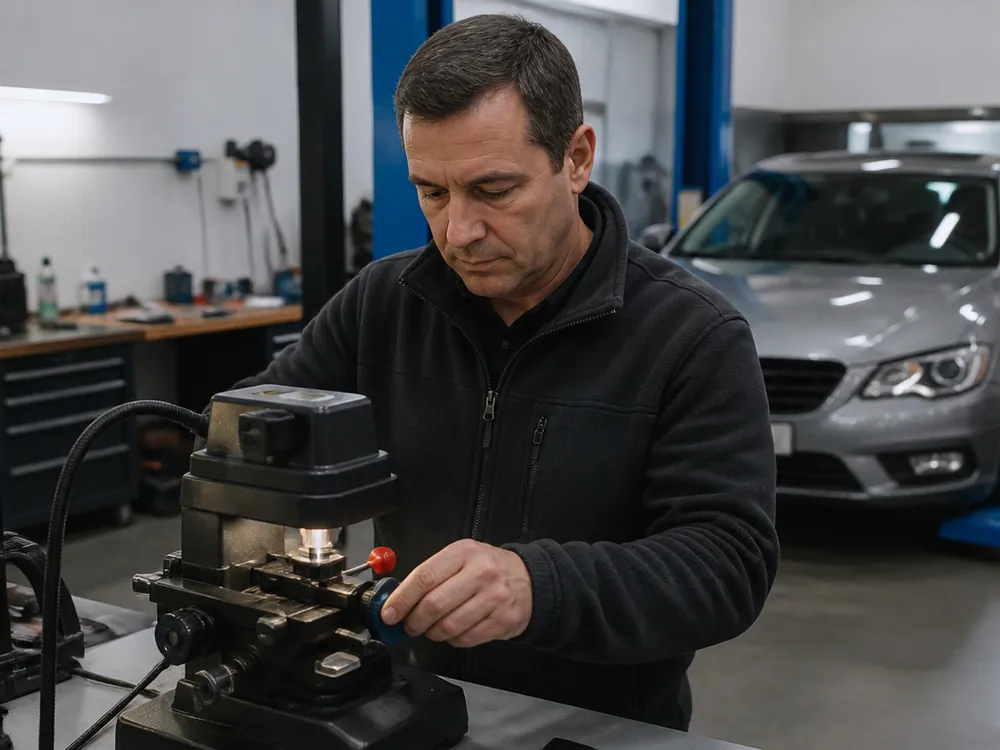
We make car keys in Almaty on a CNC machine in two passes, not on a manual duplicator. The first pass is rough: the machine removes the bulk of the metal and forms the profile. The second is a finishing pass using the copy, bringing each cut to the exact depth. After that we deburr so the blade enters the cylinder smoothly and doesn't scratch its pins. The blade follows the factory profile, not the worn original, so the new key often works more smoothly than the old one. We test the finished blade in all the car's locks: driver's door, trunk, and ignition. If the blade turns hard anywhere, we adjust it rather than handing it over hoping it will wear in. This approach takes a little more time but prevents jamming and broken keys in the lock. For laser and flip blades this is especially important: they have thin bridges, and an inaccurate cut quickly leads to breakage.
Blade types
blade profiles and what to check on each| Blade | Feature | What to check |
|---|
| Standard | Edge cuts | Even edge, no burrs |
|---|
| Laser | Groove on the flat, double-sided profile | Groove depth along the entire length |
|---|
| Flip | Folds into the housing | Hinge and blade retention |
|---|
| Truck | Long reinforced | Snug fit in the cylinder |
|---|
When the cylinder needs replacing
If a new key cut to the factory profile turns hard, the cause is usually a worn cylinder, not the key. Over the years the pins wear to match the old key, and the lock starts accepting only that key, and increasingly poorly. We check the cylinder during inspection: binding, play, and signs of attempts to open the lock with a foreign object are immediately visible. When a key breaks in the lock, we extract the fragment carefully without drilling, then check whether the pins are damaged. If the cylinder is badly worn, we honestly say that a new blade won't solve the problem and offer repair or replacement of the cylinder with keys made for it. Work on the ignition lock is done together with an immobilizer check so that after replacement the car starts on the first try.
Smart Key and keyless access
Keyless access is convenient in everyday life, but its fob is the hardest to make and program. Let's look at how it differs from a regular key with a remote.
How keyless access works
A car with a Keyless Go system constantly looks for the fob with a radio signal and unlocks the doors when it comes near. Antennas in the doors, cabin, and trunk determine where the fob is: outside, you just touch the handle, and inside, the engine starts with a button. The fob has a battery, and when it weakens, the car starts failing to see it on the first try. For this case, almost every Smart Key hides an emergency mechanical blade, and there's a spot in the cabin where the fob is read even with a dead battery. If the fob stops being detected entirely, the cause may be the board, the battery, the car's antenna, or the access module. So before making a new key, it's worth making sure the fob really is the problem. Sometimes replacing the battery or restoring contact on the board is enough, and you won't have to buy a new fob.
Programming a Smart Key
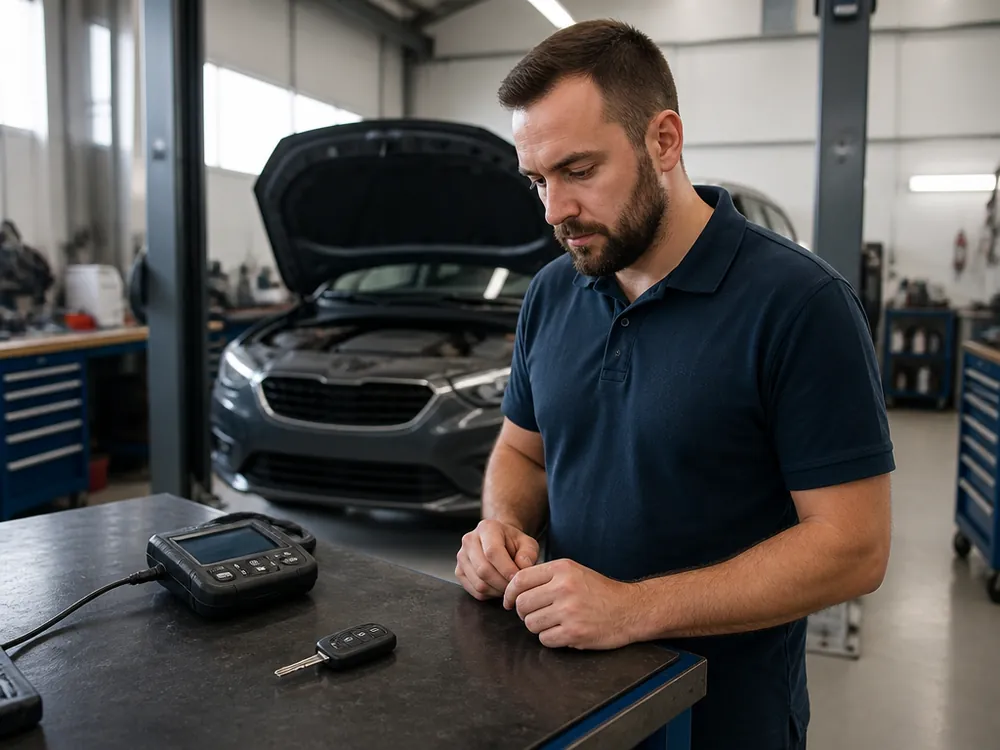
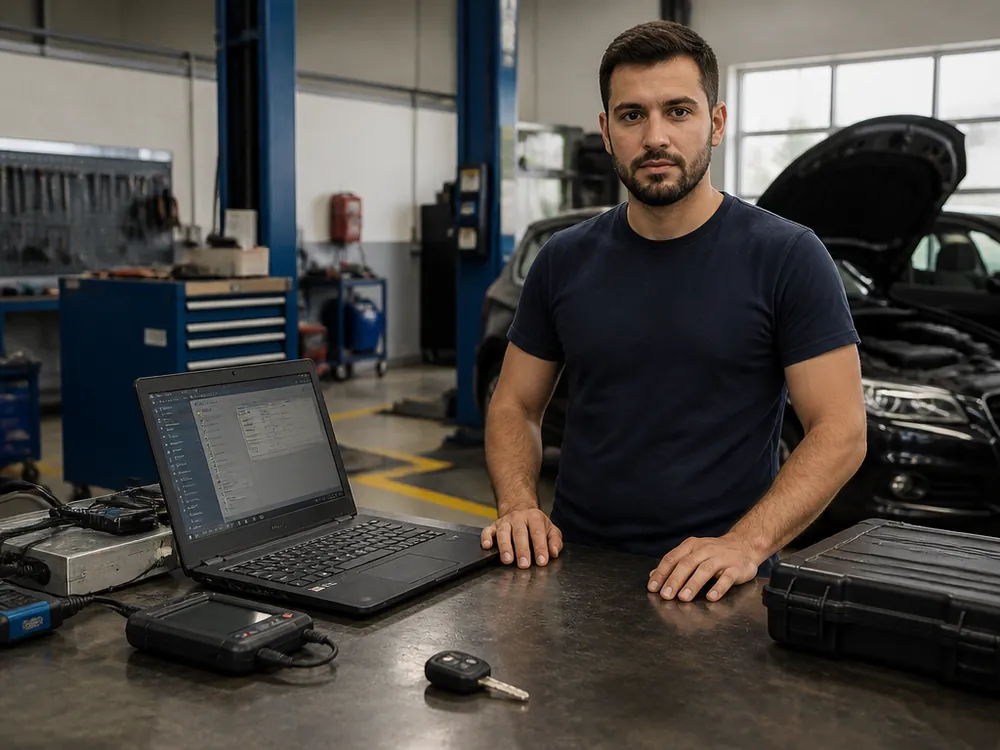
Programming Smart Key car keys requires working with the keyless access module, not just the immobilizer. We match the fob to the specific model by VIN, connect a scanner to the car, and program the new fob so it works for both unlocking and starting. The difficulty depends on the brand: in some systems a new fob is added to the existing ones, in others the whole set has to be reprogrammed. Programming takes longer than a regular chip key blank, so it's best to allow extra time for your visit. All existing fobs need to be brought along. If no original keys are left, the job is still possible without them, but through the lock or access module and with the car's documents.
Checking the finished key
- Door locks: we check unlocking and locking with the buttons and, for Smart Key, by touching the handle from different sides of the car.
- Trunk and central locking: all buttons should respond on the first press, and the doors should lock at the same time.
- Engine start: the engine starts right away and doesn't stall a second later, and the immobilizer light goes out.
- Remote range: we check that the doors respond from a normal distance, not just right next to the car.
- Documents: we hand over the finished set with a work order that records the 12-month warranty on cutting and programming.
Key cutting essentials for car owners
A new key lasts a long time if it's matched to the car's system and made to the factory profile. Below are the main things to keep in mind before and after cutting, so you don't come back to this in six months.
- System type: mechanical keys, chip keys, remote keys, and Smart Keys differ in the amount of work, which is determined by VIN and the lock.
- Electronics: the transponder handles starting, the remote handles central locking, and they're programmed separately.
- Spare key: making one while the original still works is easier and faster than restoring access from scratch.
- Security: a lost key needs to be unlinked from the immobilizer, and if it was stolen along with your address, think about the locks.
- Blade and lock: a stiff new key more often points to a worn lock cylinder than to a mistake in cutting.