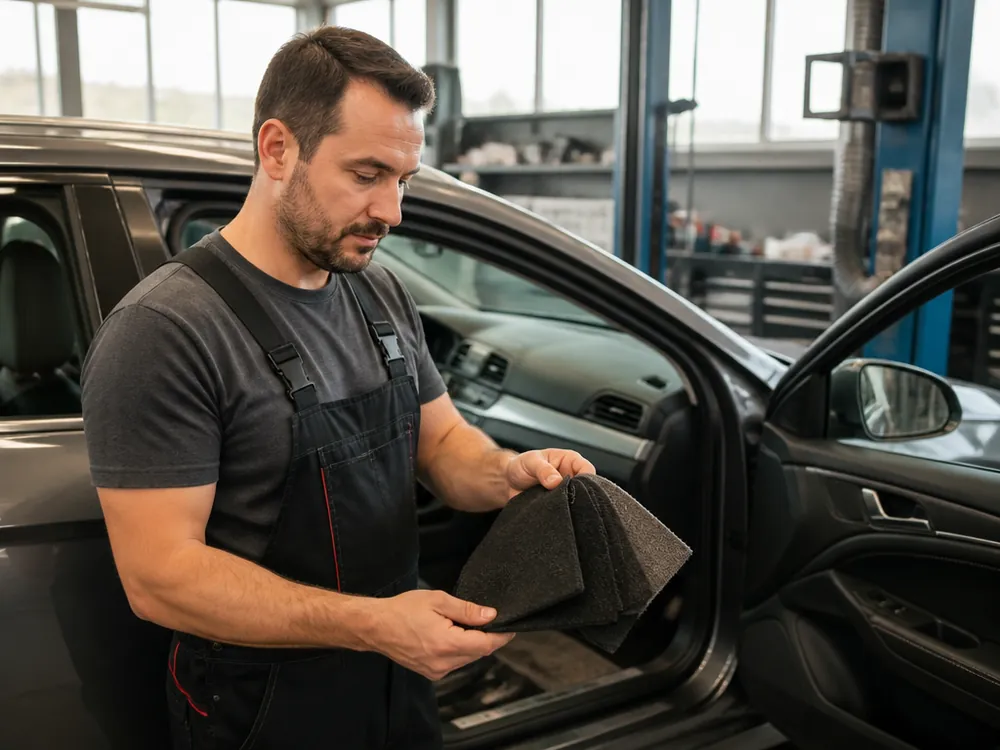
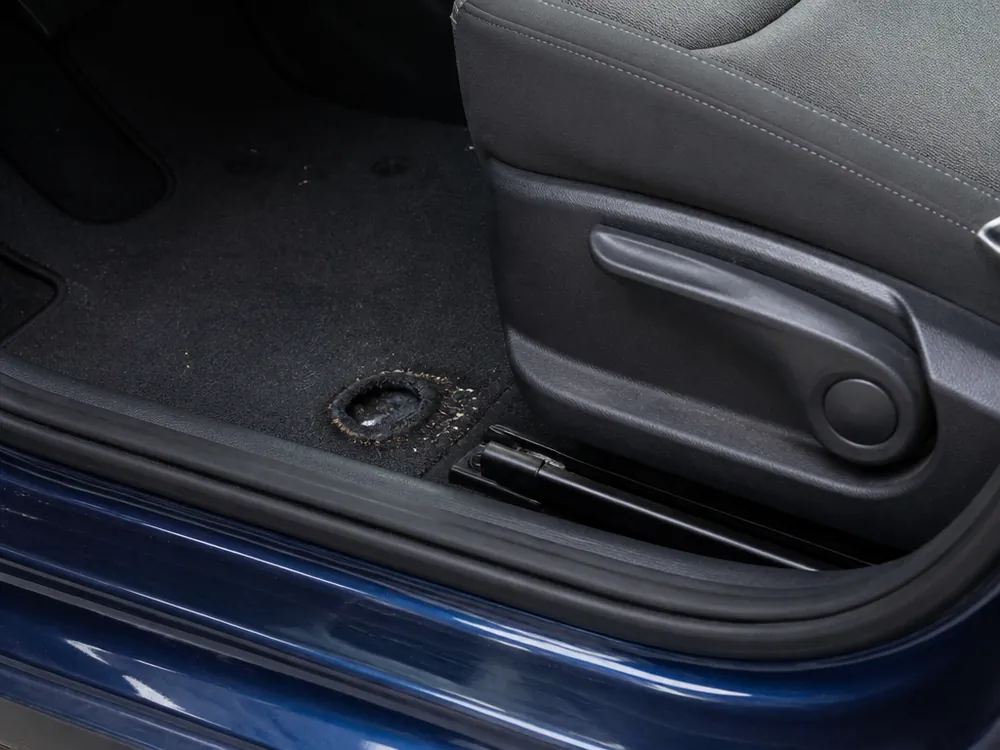
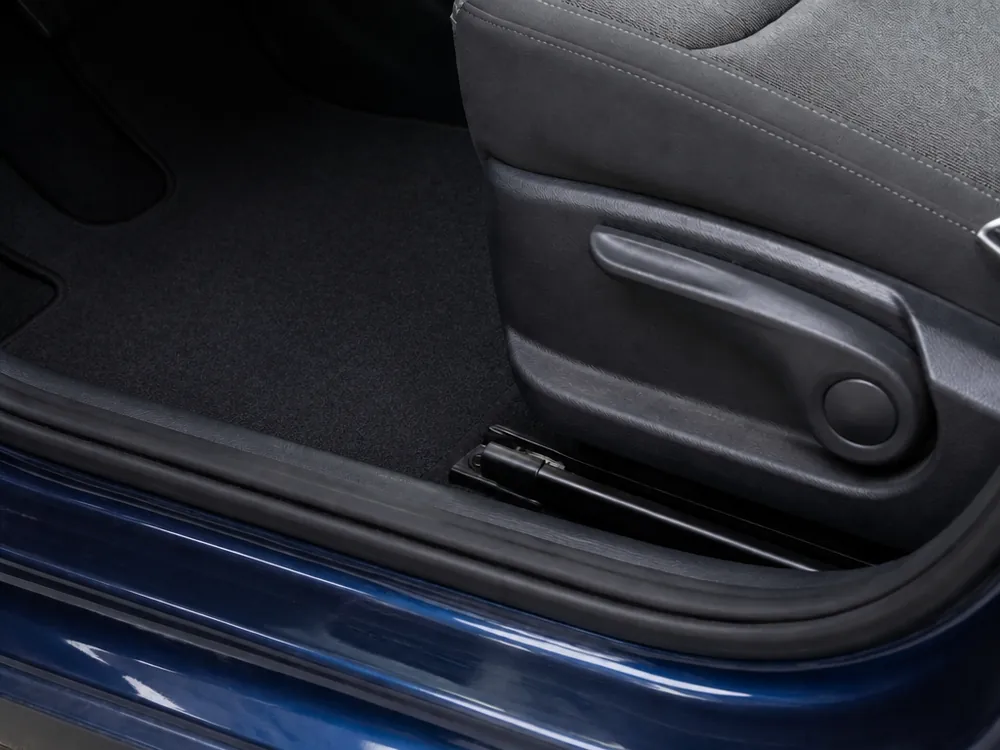
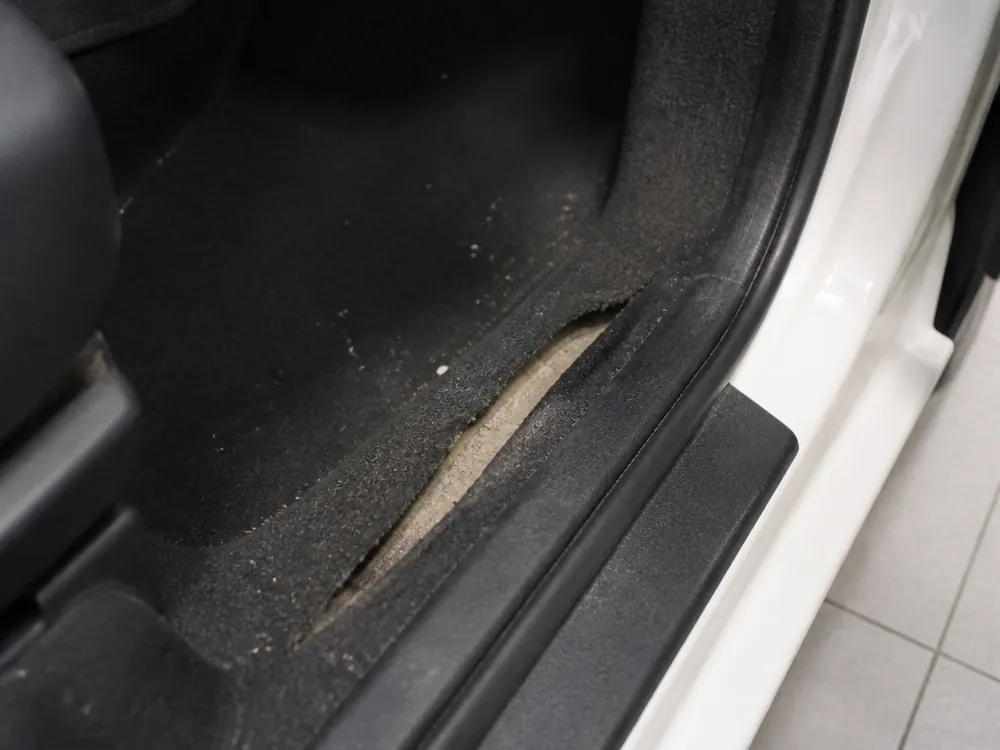
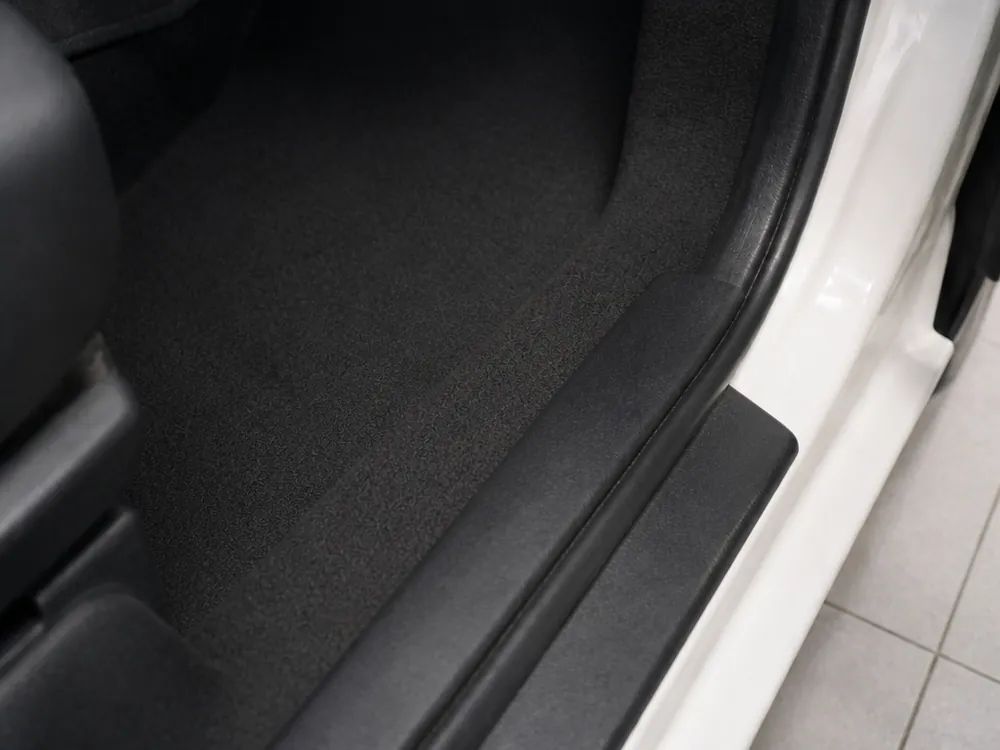
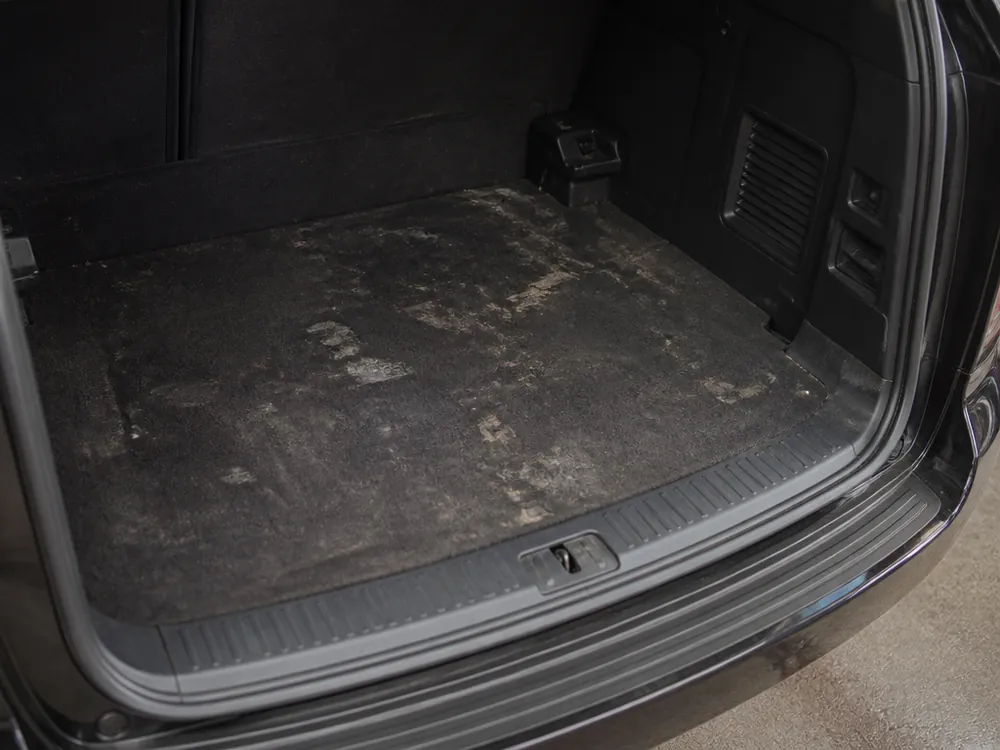
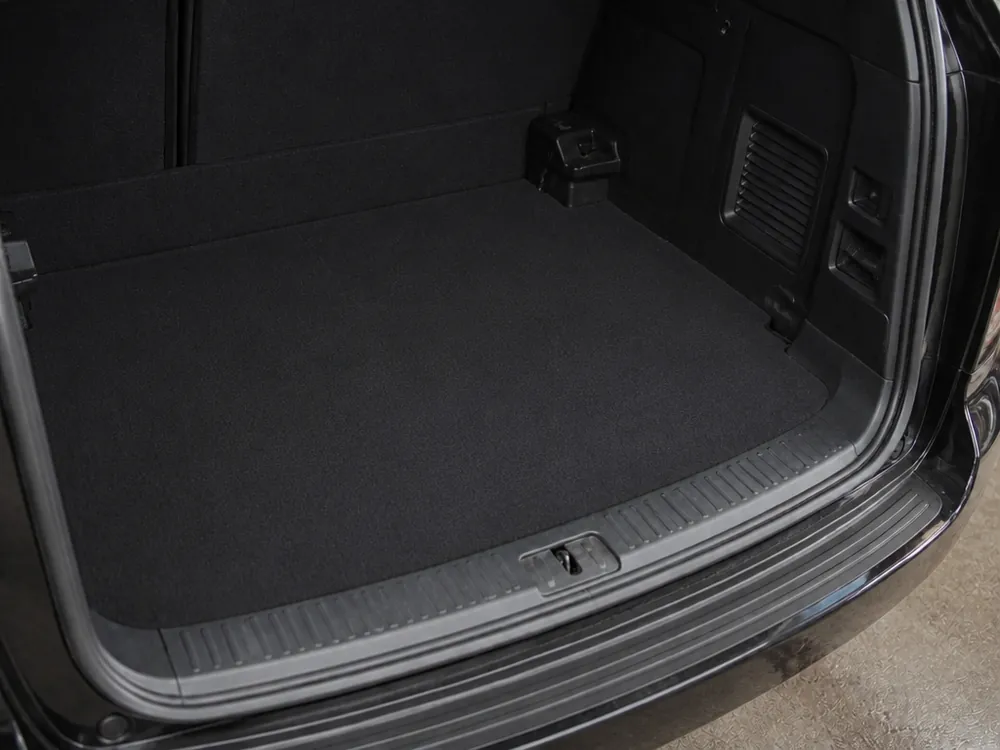
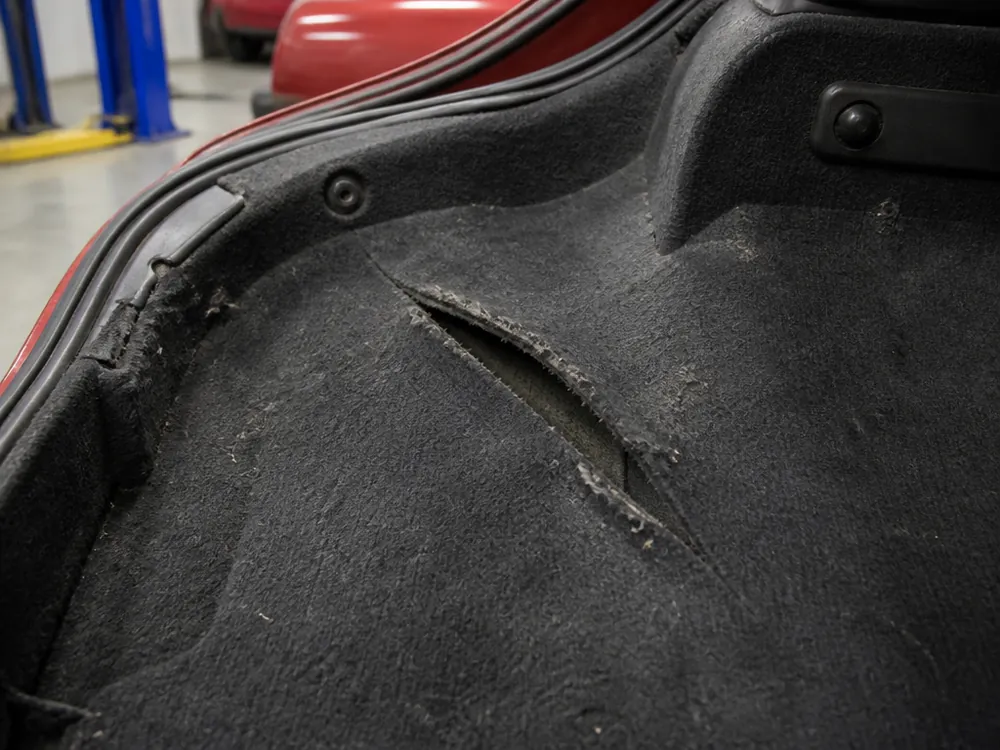
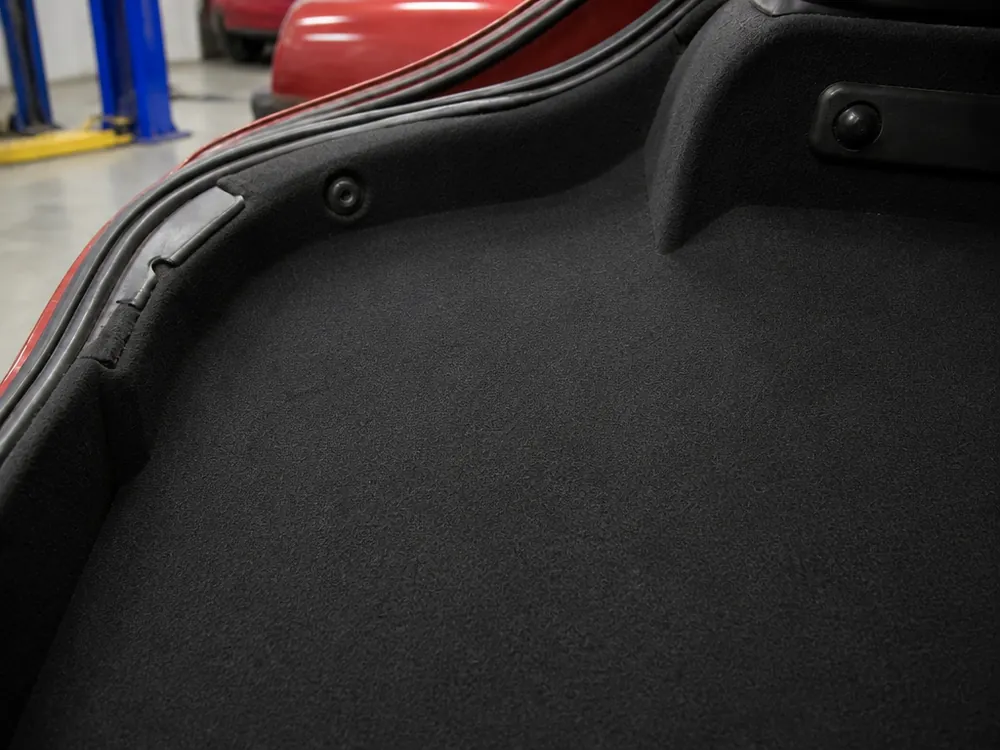
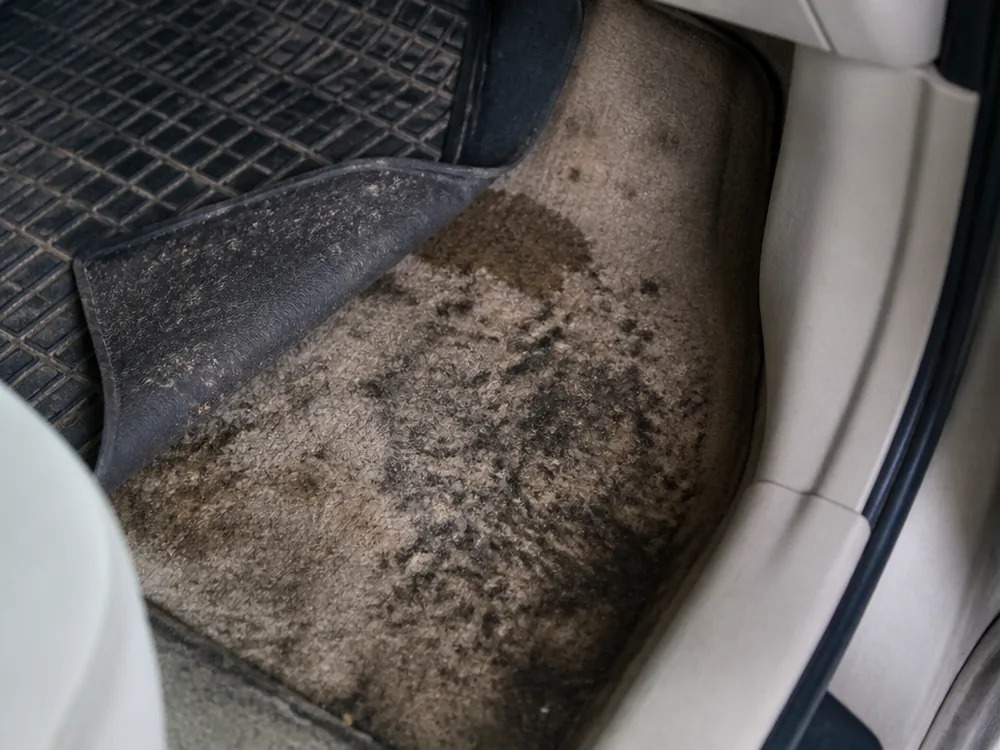
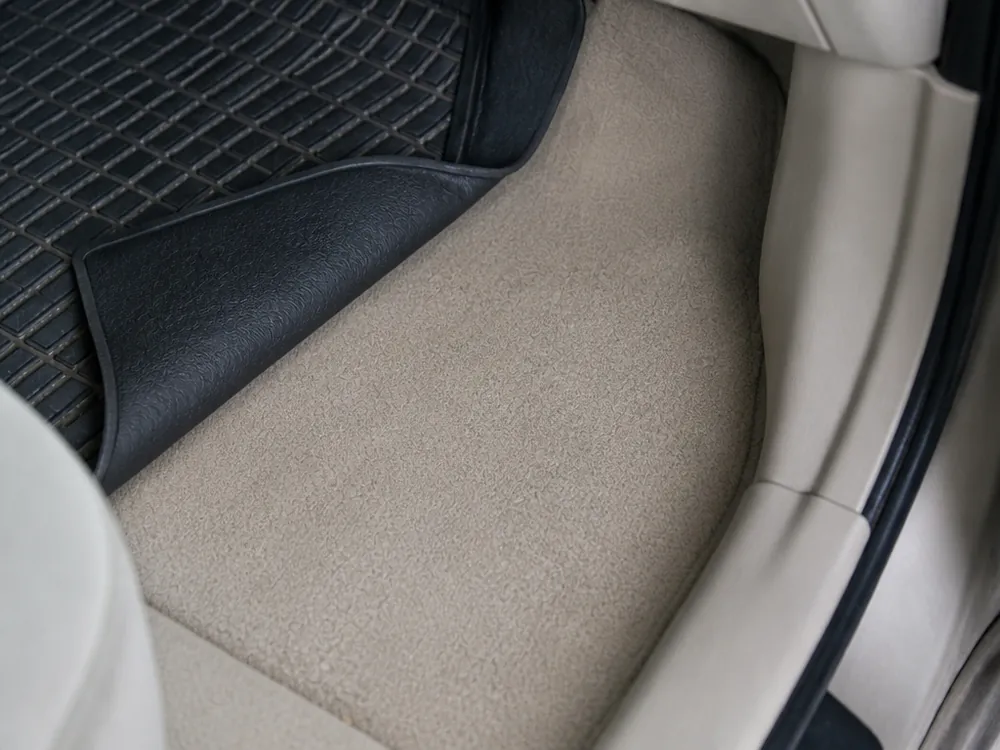
Car carpet repair isn't always a full interior reupholstery. First we assess the type and area of damage, and that assessment determines what we do: a local insert or a section replacement.
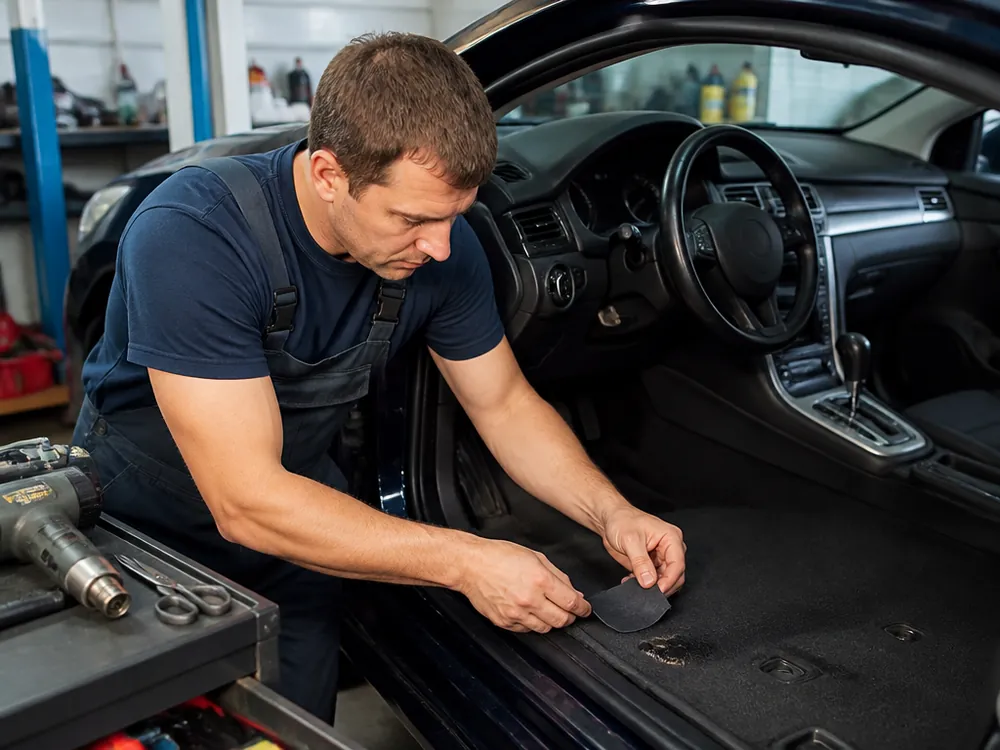
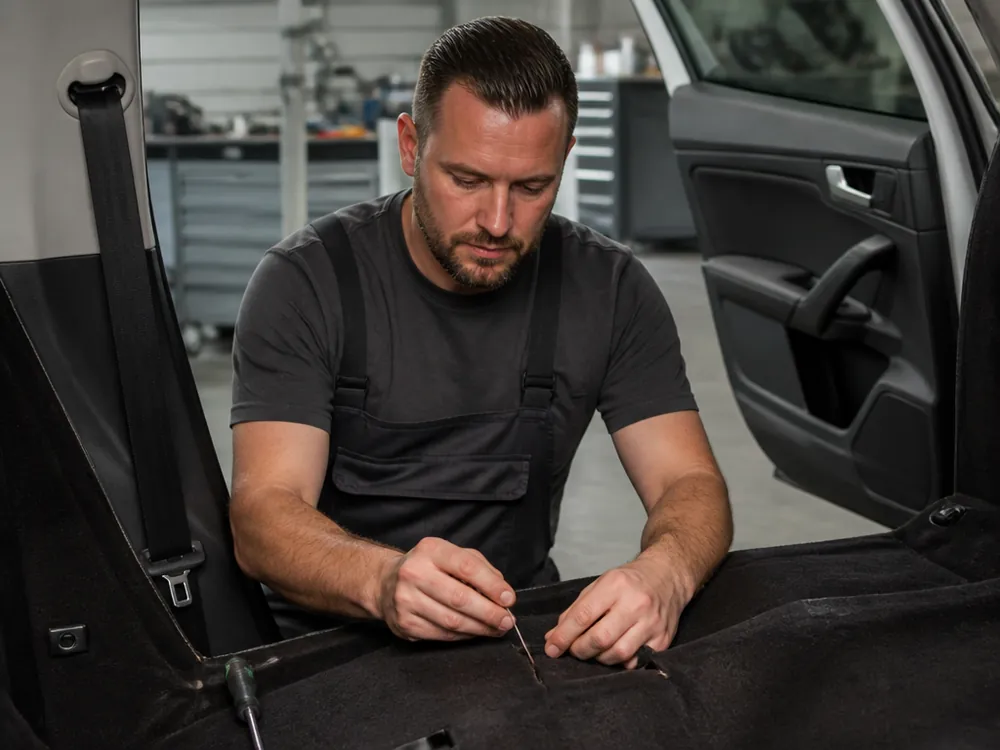
We fix burns, cuts up to 5 cm, wear near the driver's seat and sills — where the pile is damaged in a limited area. In such cases, replacing the entire carpet isn't necessary: we match the material to the factory color, join the fibers with a three-thread needle, and secure the fragment butt-to-butt. We close a cut up to 5 cm and a section up to 0.5 m² in one shift without removing the entire seat. From our shop's experience, most often people bring in cigarette burns and wear near the driver's seat — these account for the majority of local repairs. Such car carpet repair in Almaty takes little time if the pile around the damage hasn't frayed yet. The sooner you bring the car after damage, the less the pile frays around it and the less noticeable the seam; an old cut with frayed edges requires more matching material.
When Local Repair Isn't Enough and a Section Is Replaced
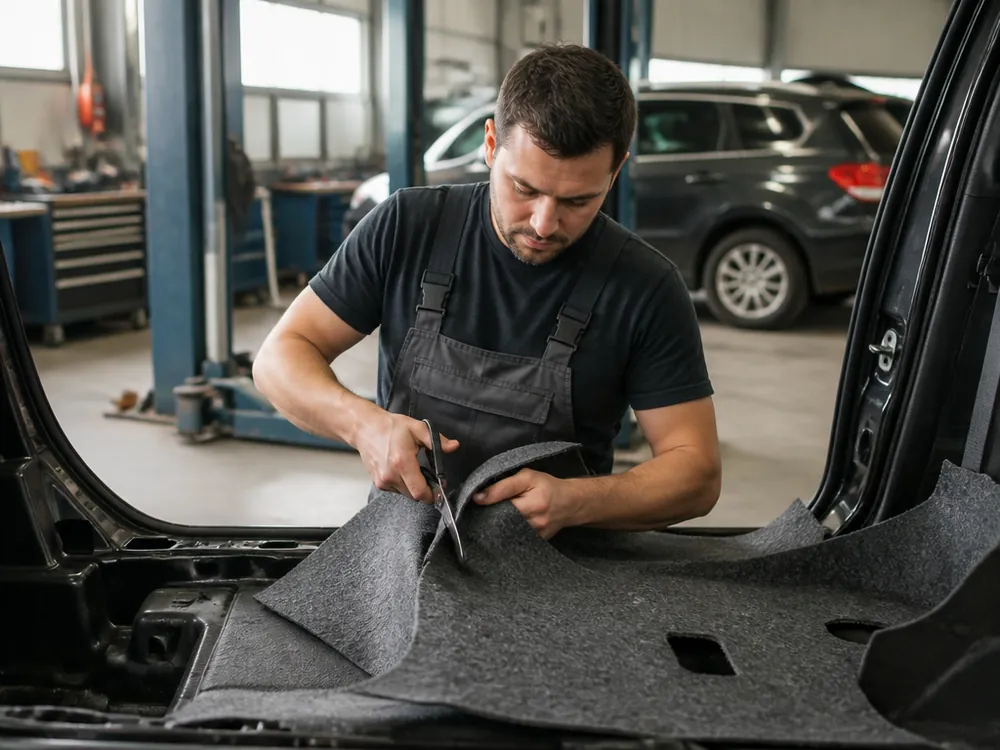
If the damage is wider than a 5 cm cut or the pile is destroyed over an area larger than 0.5 m², we suggest replacing the section rather than patching. With such volume, restoring the floor covering no longer gives a flat surface: a large fragment lies in waves, and that's visible in side light. We replace a section up to 0.5 m² by cutting out butt-to-butt along the contour and matching the pile direction. On SUVs with a reinforced base and thick backing, the material behaves differently — there it's more important to cut the fragment correctly, otherwise a bump will appear at the joint. Before cutting, we check the sound insulation under the carpet: if the backing is wet, we dry it first, otherwise the new piece will come off in a couple of weeks.
Comparison of Work Options by Damage Type
work options by damage type and area| Damage | What we do | Disassembly area |
|---|
| Cigarette burn | Color-matched fragment, three-thread seam | Trim or seat |
|---|
| Cut up to 5 cm | Needle join of pile, butt joint | Cut area only |
|---|
| Wear near driver's seat | Section replacement up to 0.5 m² | Driver's seat |
|---|
| Bulge after moisture | Wrinkle removal, drying, securing | Local |
|---|
| Pile destruction after chemicals | Restoration or section replacement | By area |
|---|
How Car Carpet Repair Works and What Gets Removed
Most often, the client fears one thing: that for a five-centimeter cut, the whole interior will be disassembled and half the clips lost. Our disassembly is local — next we show exactly what we remove and in what order.
What Gets Removed During Local Repair
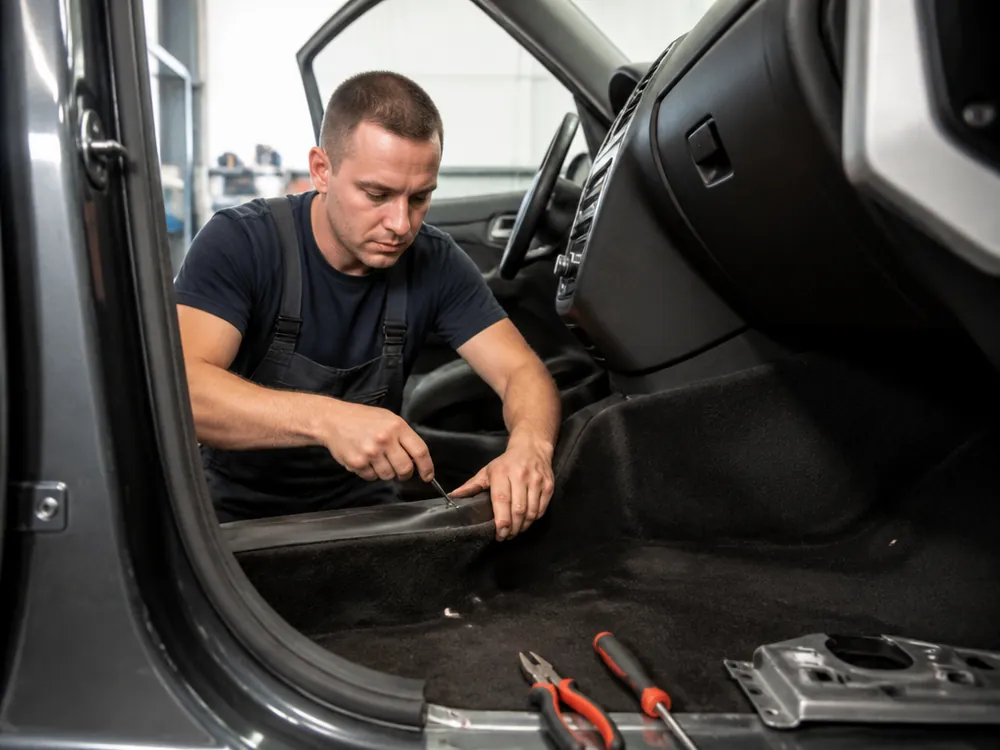
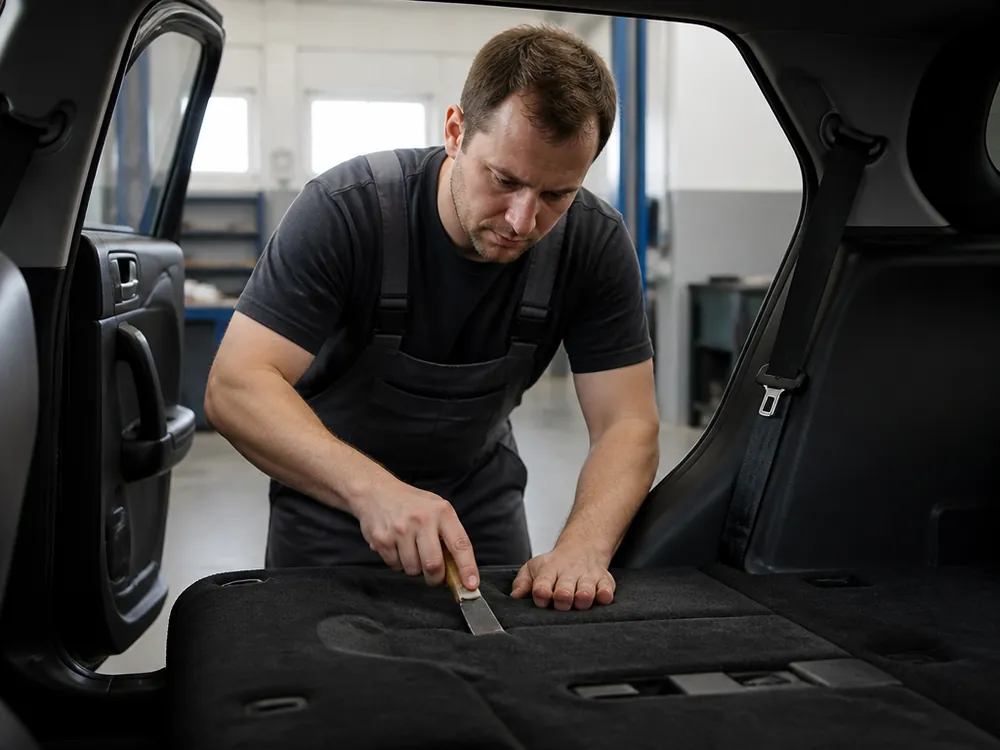
At the sills and the driver's seat, we remove the trim and the seat, not the whole interior — the rest of the upholstery and clips stay intact. In our practice, restoring the floor covering almost always fits this scheme: the technician unscrews the seat mounts, carefully moves the wiring aside, removes the plastic sill trim, and gains access to the damaged pile area. The carpet isn't pulled out entirely — we lift only the area where the seam will be and secure it with clamps so the material doesn't shift under the needle. We close a cut up to 5 cm and a section up to 0.5 m² in one shift without removing the rear bench or touching the tunnel trim. Local disassembly saves not only time: the fewer clips touched, the less likely a squeak or gap in the trim after reassembly. If the damage is extensive, replacing the car carpet turns out to be more reasonable than local repair.
How We Check the Electronics Under the Seat
Before removing the seat, we check the wiring and sensors in the lower part of the seat with dealer scanners for 40+ brands, and after reassembly we check again. In the driver's area, there's usually a harness with a connector for the heater, presence sensor, and side airbag — during careless removal, the connector is easy to snag, and then an SRS error lights up on the panel. The scanner reads codes from the airbag control module and climate system, and before delivery the car goes on a test drive: the technician checks that the heater warms, the seat adjustments work, and no indicators are on. If the seat has a presence sensor or heater, it's better to catch an error before delivery, not a week later — that's why we check twice, and diagnostics for warranty cases are free.
How Long the Glue Dries and Whether You Can Drive Right Away
The glue dries while the zone is being reassembled, and in the evening you pick up the car with a finished floor — you can drive right away. We apply the adhesive spot-wise under the pile and secure the area with pressure while the technician puts the sill trim and the seat back; by the time reassembly is done, polymerization has already passed its main phase. A cut up to 5 cm and a section up to 0.5 m² are done in one shift without removing the seats — the car doesn't stay overnight at the shop, and the service advisor manages the work order through to handover. For the first day, it's best not to put wet mats on the repaired zone or wash the cabin — moisture slows the glue's polymerization and the seam holds worse. If a long drive is ahead in the evening after handover, just let the zone reach full strength overnight.
Car Carpet Repair Timelines, Booking, and the Day of Work
The timeline depends on the type of damage and the shop's workload. Below is what the day of work looks like, what the time depends on, and what you need to get a shift without extra waiting.
How Long Carpet Restoration Takes
We do a cut up to 5 cm and a section up to 0.5 m² in one shift without removing the seats — in the evening you pick up the car with a finished floor. Local disassembly at the sills and the driver's seat takes less time than a full interior teardown: we remove the trim and one seat, while the rest of the upholstery and clips stay in place. Restoring the floor covering in this volume doesn't require a full disassembly. Matching the material and the three-thread seam go in parallel with glue drying, so we don't allocate a separate day for drying. If there are several damages in different areas, the shift may go to two areas instead of one — we fix the scope and timeline in the estimate before starting work.
Do You Need to Book in Advance?
We're open every day from 09:00 to 20:00, no days off, and if you book ahead your car goes in without waiting — the service advisor handles the work order all the way to handover. Booking isn't just a formality: a bay in the shop and color-matched material are reserved for your slot, and if you drop in without an appointment, color matching can take longer and push back your pickup. By phone or message, just give us the model, the damaged area and the approximate size of the cut — that's enough to reserve a slot. Same-day inspection is possible if the bay is free, but we can't guarantee it in advance. Come at the start of the shift — that leaves the technician time to let the glue cure and do a test drive before evening.
What happens from inspection to handover
- Inspection: the technician assesses the type and area of damage, the disassembly zone, and the condition of the mounts and clips.
- Estimate: written, with the scope of work and timeline; we start the repair only after you approve it.
- Work: local disassembly, inserting the section, a three-strand seam, glue curing.
- Photo report: we shoot the key stages so the photos show exactly what was replaced.
- Handover: test drive, a 12-month warranty recorded in the work order and the completion certificate.
How carpet material is color-matched for car carpet repair
A patch gives itself away not by color but by the seam and the pile. Here's how we match the material and why the seam doesn't stand out in the light.
How carpet is color-matched to the factory material
We match the material by color and structure to the factory carpet, not "looks similar in a photo" — we compare the sample against the section on the car. Matching is done in daylight and under a lamp: some shades look identical in a photo but differ by half a tone on the cabin floor. We look at three parameters — pile height, density and the lay direction of the fibers — because even the right tone reads as an insert at a different height. On faded carpet, what matters isn't the overall background but the area around the damage: that's what the new piece has to match. Faded carpet is darker deep down than on the surface, so we compare against the area around the defect, not the overall cabin background. If there's no exact match, it's more honest to say so before the work — not after, when the section is already glued in.
Why the three-strand seam doesn't stand out
We join the pile fibers with a needle, matching threads to three shades of the area — the seam holds under stretching and doesn't stand out in the light. On pile carpet, what shows isn't the joint itself but the tone boundary: a single matching thread almost always leaves a stripe in side light. Three shades compensate for the tone shift on faded carpet — from dark deep down to light at the tips. We go fiber by fiber with the needle, not with a continuous stitch, so the join follows the pile direction and doesn't stick up. It holds under stretching thanks to the weave, not the glue: under the driver's foot, a section like this doesn't come apart. Checking the result is simple — walk around the car with a flashlight at a sharp angle: if the boundary doesn't read, the seam was done right.
Can I bring my own carpet
Yes, you can bring your own material or the customer's material — the choice of OEM, aftermarket or your own part is yours. We take this on if the piece matches the area in pile height and density: otherwise the insert will show no matter how good the seam is. Before we start, we compare your sample against the damaged area and tell you straight whether it will work or not. There's no warranty on a part brought by the customer — it covers the work performed and the parts we install, so keep that in mind in advance. The timeline and warranty terms for the work itself are recorded in the work order and the certificate at handover. In our experience, a refusal is more often about pile thickness than color: a sample from another cabin looks similar but differs noticeably in pile height.
Warranty, restoration after chemicals and care
The warranty and proper care decide how long the repaired floor lasts. Here's what the 12-month warranty covers and doesn't, a separate scenario with chemicals, and the rules for the first days after handover.
What the 12-month warranty covers and what it doesn't
- Term: we give 12 months on carpet restoration and record the terms in the work order and the certificate at handover.
- Covered: the three-strand seam, inserting a section up to 0.5 m² and glue fixing.
- Covered: the work performed and the parts installed by our technicians.
- Not covered: accidents and third-party interference in the seam area.
- Not covered: natural wear of consumables and a part brought by the customer.
- Diagnostics: free for a warranty case — bring the car in and we'll sort it out at no charge.
Carpet restoration after chemicals and spilled liquids
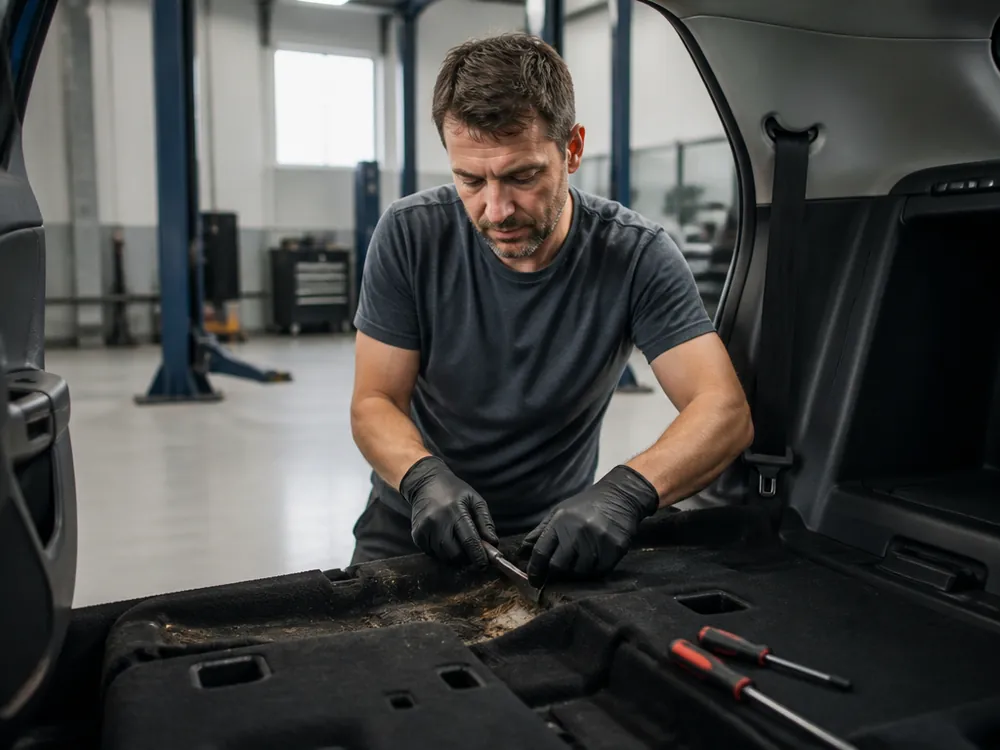
Chemicals and spilled liquids leave bulges, creases and destroyed pile on the cabin floor — we restore such areas, and where the fibers can't be saved, we replace the section up to 0.5 m². Harsh products, coffee or antifreeze destroy not only the pile but also the adhesive layer underneath, so first we dry the area and check the base for strength. If the glue has lost its properties, a new insert will come off along with the old layer — in our experience, jobs like this after a DIY deep clean come up regularly. On damaged areas we match the material to the factory carpet and lay it on a prepared base. Don't try to mask the effects of chemicals with plastic polish or home remedies — that only soaks deeper into the pile and makes restoration harder.
How to care for the carpet after repair
- First day: don't wet the repair area and don't wash the cabin — the adhesive needs to gain strength.
- Floor mats: rubber mats with a high lip protect the seam from moisture and dirt.
- Chemical cleaning: do it carefully, without aggressive chemicals near the seam line.
- Load: don't put heavy items on the repaired area in the first days.
- If the seam comes apart: come in for a free warranty diagnostic — this is a warranty case.
What determines carpet repair approach
Carpet damage is assessed by area and type: that determines whether a local repair is enough or a new section is needed. Below is a quick summary to help you choose the right option.
- Spot repair: a burn, a cut up to 5 cm and scuffing are restored locally, while damage wider than 0.5 m² requires replacing the section.
- Zone disassembly: at the sills and the driver's seat, the trim and seat are removed, while the rest of the upholstery and clips stay intact.
- Electronics under the seat: connectors and wiring are checked with a scanner before reassembly so you don't get an error after installation.
- Timeline and glue: a cut and a section are finished within a shift, the compound gains strength by handover, and you can drive right away.
- Warranty: 12 months on the work is recorded in the work order, but it doesn't cover accidents, third-party interference, natural wear or a customer's part.