The main question for any owner is whether to save the wheel or just get a new one. We break down the criteria for each type of damage so you can decide before you even come to the shop.
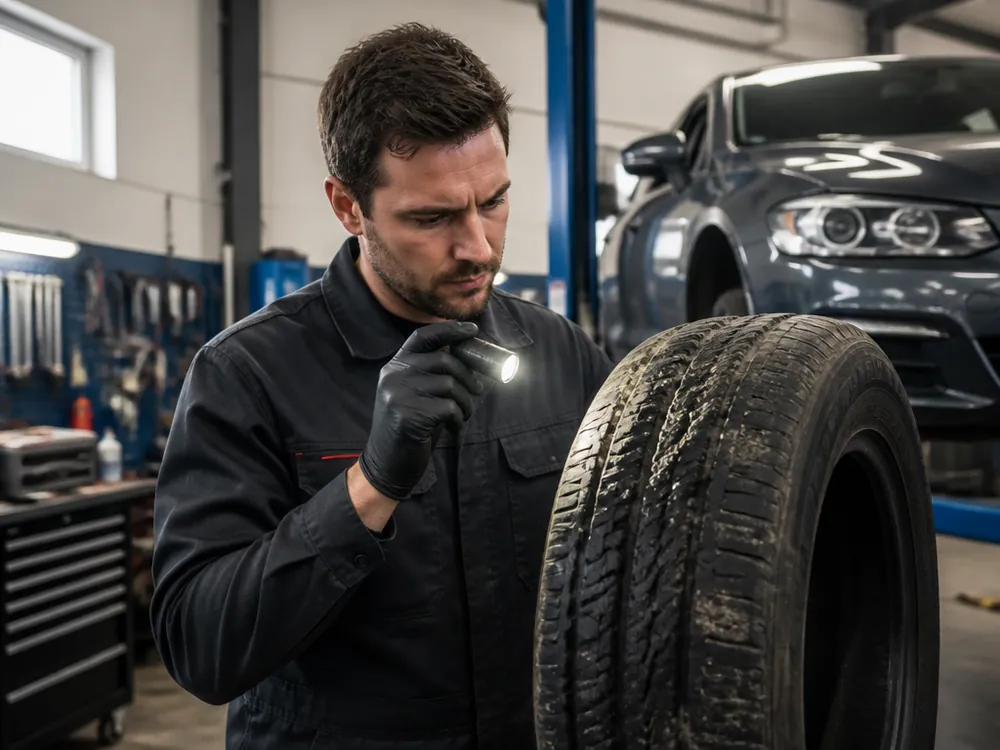
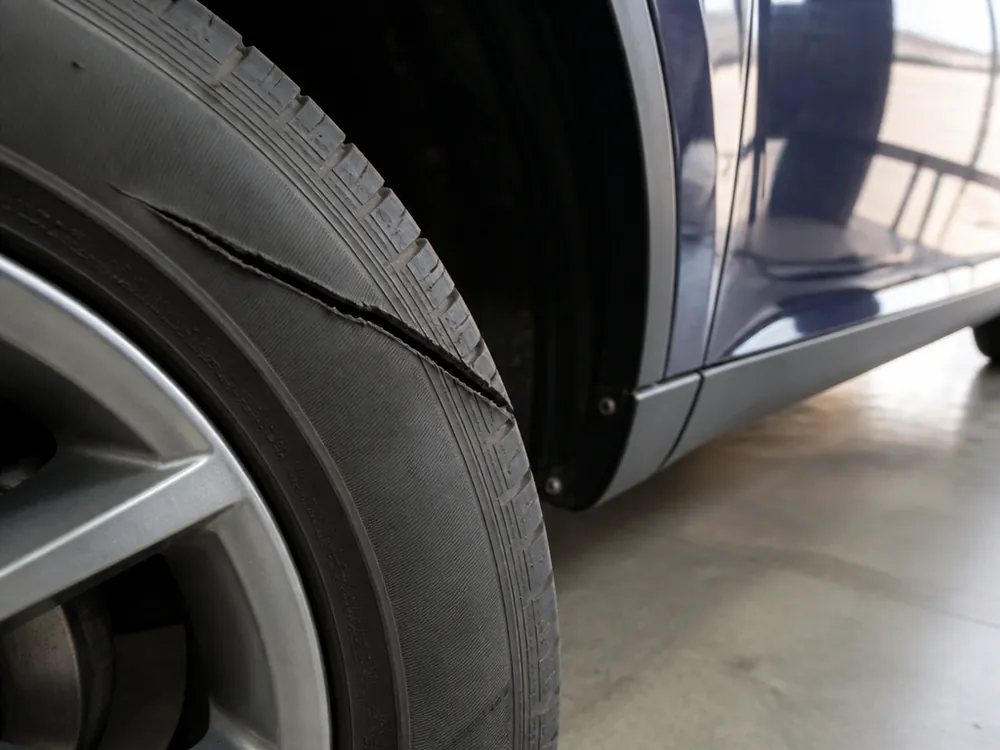
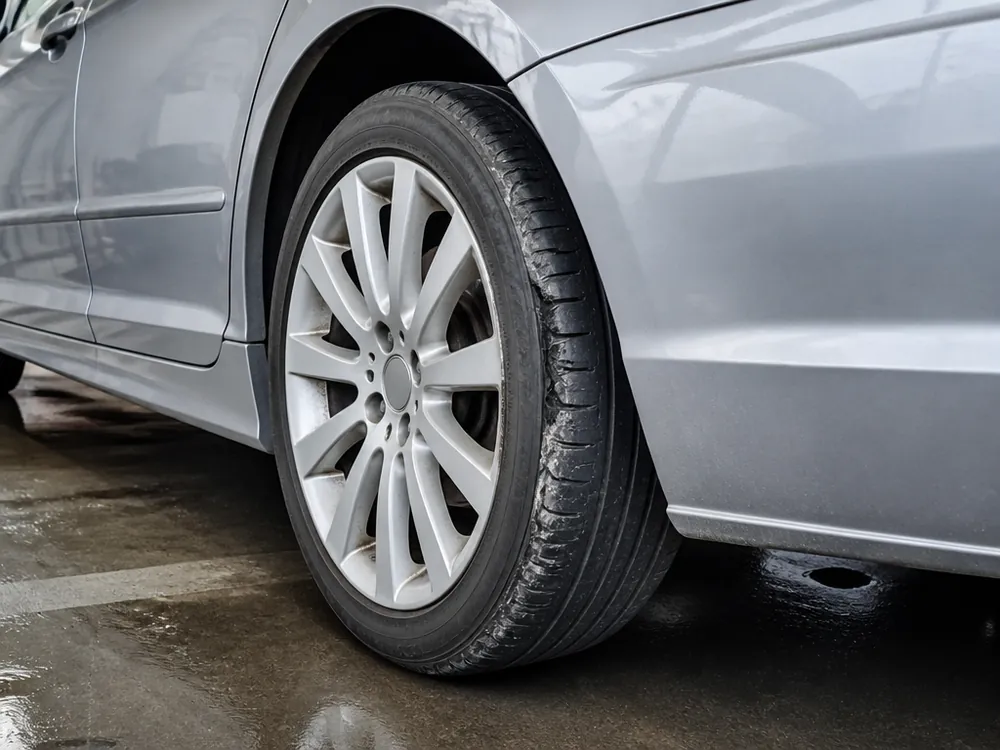
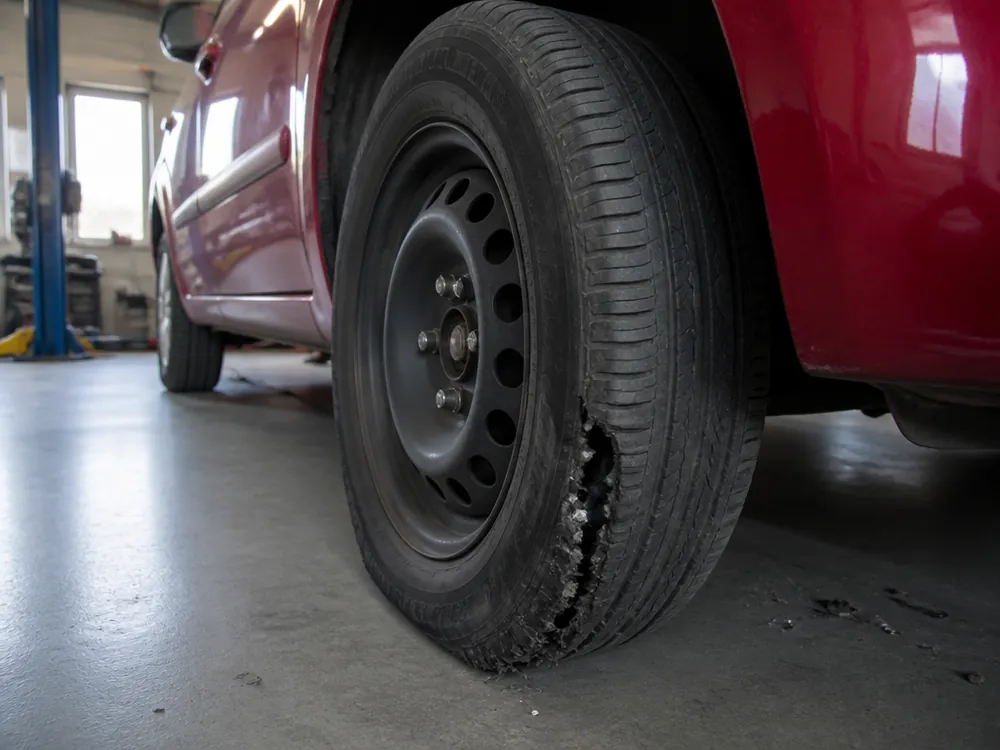
We stitch a side cut with cord thread in 2 layers and put a patch on the inside if the cord hasn't separated through its full depth and the cut doesn't reach the bead seat. The line is drawn by the condition of the threads: when they're intact and just pushed apart by the cut, a reinforced seam holds its shape and pressure; when the cord is frayed or torn out in chunks, the tire loses its load-bearing capacity in that area and can't be restored. We also look at the edge separately: damage right at the bead, where the tire seats on the rim, is risky to fix — that's the zone that holds the seal. On the sidewall, technicians with 8–17 years of experience give a verdict after inspection, not over the phone. Our tire repair in Almaty starts with that inspection: the technician checks the cord and only then says whether we can save the wheel. The sooner you bring the wheel in after a cut, the less moisture and dirt gets into the cord threads — that directly affects whether the seam holds its shape while driving.
A bulge on the tire — fix it or is it dangerous to drive
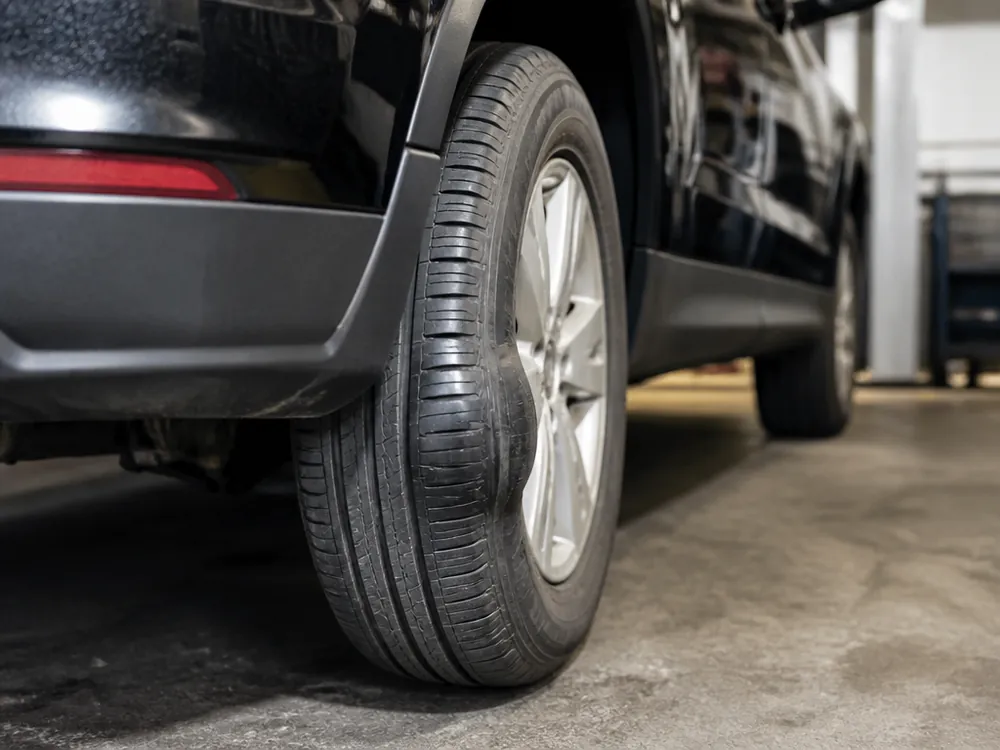
We fix a bulge on the tread by laying cord and vulcanizing, but a bulge on the sidewall with torn threads usually means replacement — driving on it is dangerous. The difference is where the bulge popped up. On the tread, the carcass is covered by the breaker and a thick layer of rubber: a local thread break can be covered with a cord patch and heated to 150 °C so the raw rubber fuses with the tire into one piece. On the sidewall, the carcass flexes with every wheel rotation, and a patch holds worse there — if several threads are torn, the tire can blow out at speed. The technician assesses a puncture, tread cut, and bulge on the removed wheel: from the outside you only see the top of the bulge, not the scale of the carcass damage. A bulge is almost always the result of hitting a pothole or curb, so after fixing it you should also check the rim for runout — otherwise the new tire will repeat the old one's fate.
Punctures, tread cuts, and low-profile tires
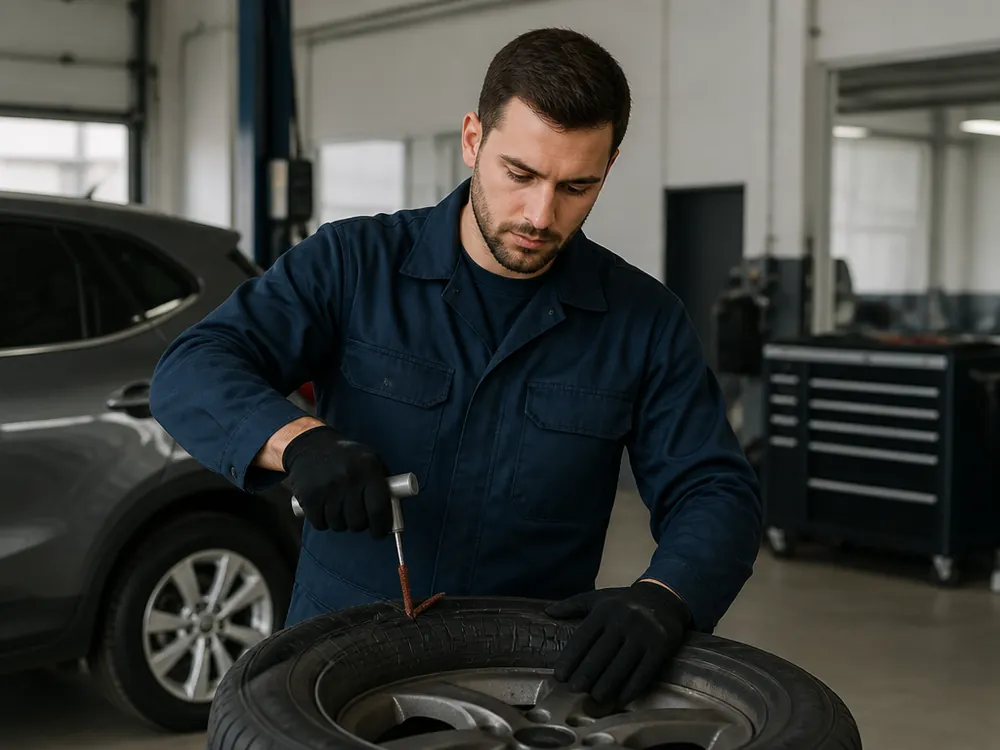
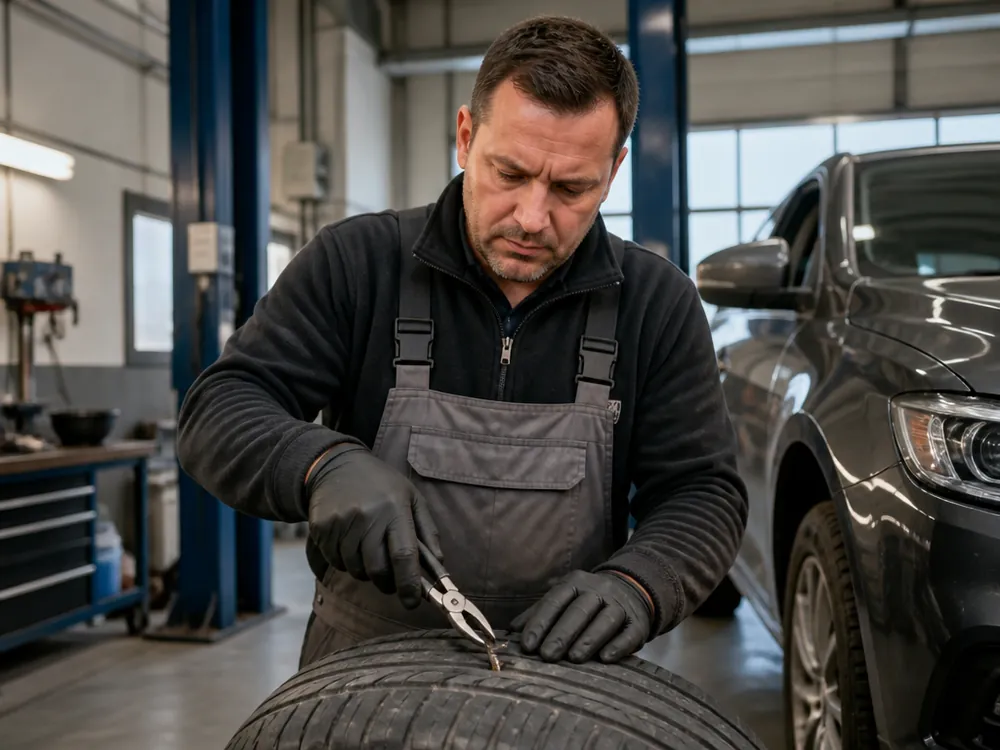
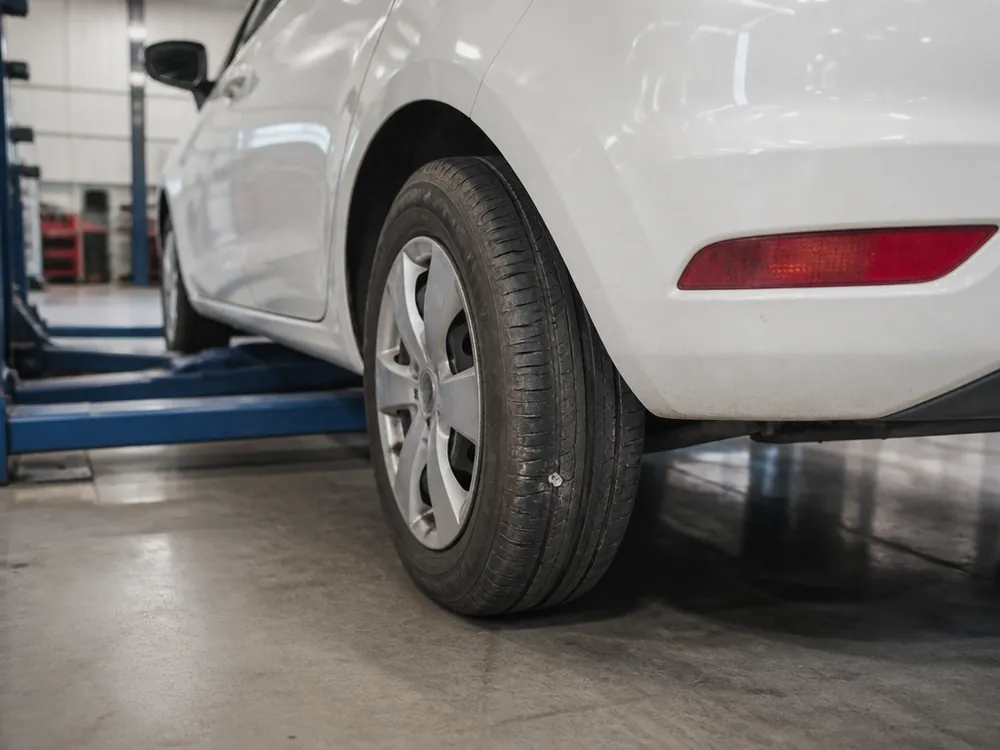
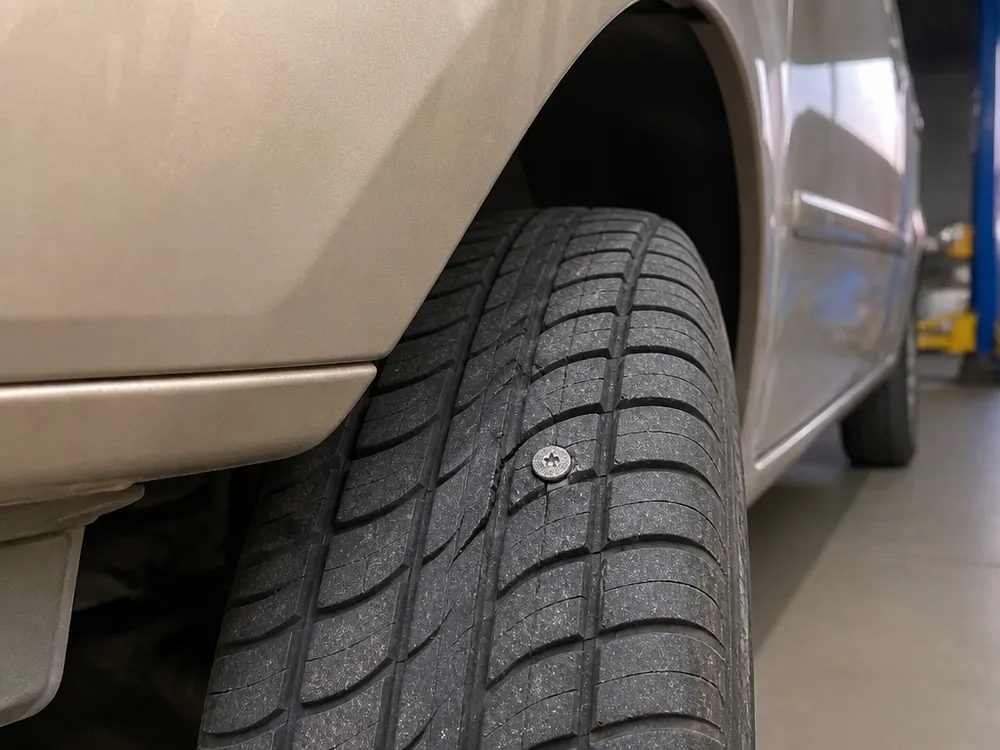
A puncture up to 6 mm is fixed with a plug, a tread cut without dismounting — with a patch, and low-profile tires and RunFlat need more careful dismounting because of the stiff sidewall. The plug goes into the puncture channel and is vulcanized, the cord patch goes on the inside and covers a tread cut that hasn't reached the carcass. On 35–45 profiles and reinforced RunFlat sidewalls, the machine works with limited force: a stiff sidewall seats worse on the bead, and careless mounting easily damages the bead. That's why such wheels are removed slower and with inflation, not with a yank — rushing here costs more than time. On a low profile, the technician first checks whether the rim edge is damaged — when working with the tire, this is a common hidden cause of repeated leaks.
How we repair tires for different types of damage
We break down the methods by type of damage — from plugs to hot vulcanization, with the parameters that determine seam reliability and how long the wheel lasts after repair.
Plug, patch, and vulcanization — how the methods differ
repair methods and the cases where each one fits| Method | When we use it | What we do | Key point |
|---|
| Plug | Puncture up to 6 mm | Insert a plug into the channel | Fast, no dismounting |
|---|
| Cord patch | Cut, puncture from inside | Glue a cord patch | Holds the load from inside |
|---|
| Cold vulcanization | Minor damage | Glue and patch | Simpler, softer seam |
|---|
| Hot vulcanization | Side cut, complex cases | Raw rubber at 150 °C | Fuses into one piece |
|---|
How we restore a side cut with reinforcement
We start work on a tire side cut by cleaning the edges and degreasing — on dirty rubber, neither glue nor raw rubber will bond. Then we lay cord thread in 2 layers, put a patch on the inside, and vulcanize with a machine at a precise temperature. That seam holds its shape and doesn't come apart while driving. We follow one control scheme for both tire puncture repair and side cut restoration: after the seam, we check for leaks and balance. Cuts right at the rim edge are the worst: there's little room for a patch, and the technician has to lay the cord tighter than usual. The 2-layer reinforcement isn't for tear strength — it's so the seam doesn't "wander" in turns, which is exactly where the sidewall flexes. That's why after the repair we ask you to come back in a couple of weeks: we'll inspect the seam and make sure it hasn't shifted.
What puncture repair includes besides the plug
Fixing a tire puncture doesn't end with installing the plug. After that, we check the wheel for leaks in a tank — we dunk it in water and look for air coming from the edge of the plug or from under the bead. Then we balance it on the machine: the plug adds weight at one point, and without a weight the wheel starts to shake. Balancing after a repair is often skipped, and that's exactly what causes the "shimmy" at 80–100 km/h that drivers mistakenly blame on the suspension. It takes us a few minutes, but the steering stays calm on the highway. If the puncture is complex or the object went in deep, we first remove the wheel and inspect the channel from the inside — that way we can see whether the cord is affected.
How long tire repair takes and how to book
Time depends on the type of damage: a simple puncture is closed quickly, while a cut with reinforcement takes longer. Here's how long each case takes and how to get into the shop without waiting.
How long repair takes by type of damage
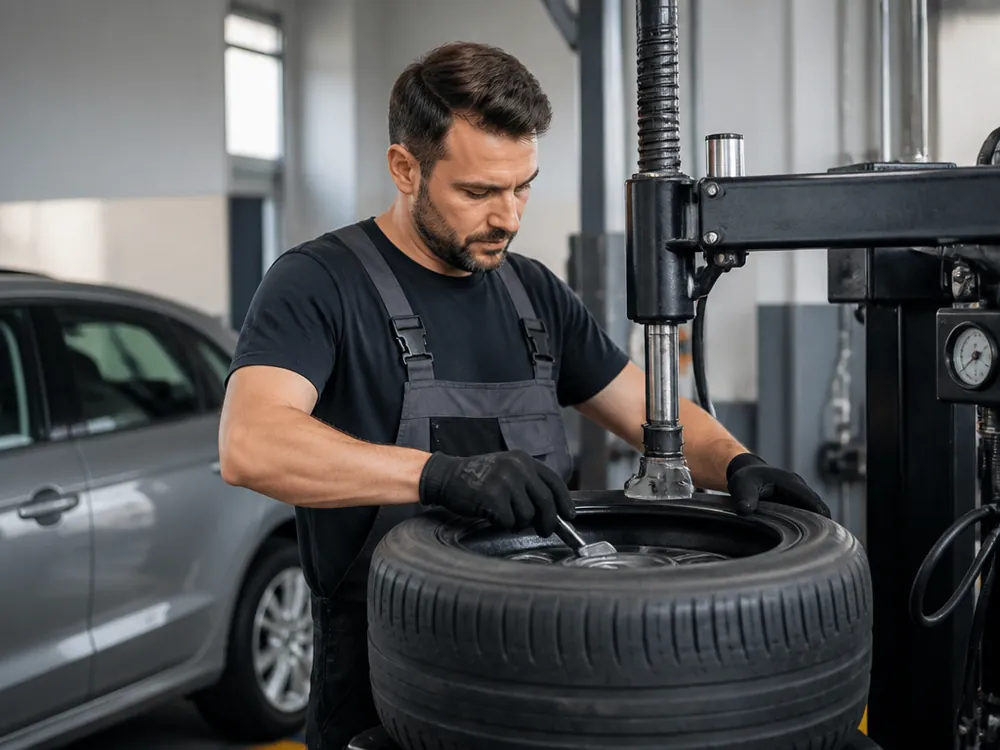
We fix a simple puncture or cut with a plug and vulcanize it in 40–60 minutes, while a complex cut with reinforcement takes longer — the specialist gives the exact time after inspecting the tire. Sidewall cut repair takes more time than fixing a puncture, because the technician reinforces the seam and installs a patch from the inside. The inspection takes a few minutes: it finds the leak point, assesses the depth and decides which method fits — a plug, a cold patch with cord, or hot vulcanization at 150 °C. Then the tire is demounted on the machine, the damaged area is prepared, a patch is applied from the inside and the tire is reassembled. Demounting and mounting on the machine take less time than manual dismounting and don't scratch the wheel. If you come with the wheel already removed, it takes less time — but we don't ask the client to figure it out themselves, the machine is safer for the wheel and the bead.
Appointment without waiting and urgent repair
We work daily from 09:00 to 20:00, seven days a week, and by appointment we take you without waiting — urgent tire repair is done within an hour. The car is received by the service advisor, who also manages the work order through to handover and stays in touch during the job. When you book, we clarify the type of damage and set aside time for the specific operation: one slot for a puncture, a longer one for a cut with cord. Booking matters especially in tire-change season, when tire shops are busy: a time agreed in advance saves an hour or two of waiting at peak. With an appointment, the client arrives at their time instead of standing in a walk-in line — handy if the tire needs to be back in service by a certain hour.
Roadside assistance and what to bring
If a tire goes flat on the road, we come out with equipment across the city and fix the damage without removing the wheel; all you need is the car documents and, if you have one, a spare wheel. Roadside tire assistance covers typical cases — running over a nail or screw, losing bead seal. The specialist arrives with a plug and tools, removes the object, cleans the channel and installs the plug on the spot. On site, they first assess whether the defect can be closed there — with a sidewall cut with cord, it's safer to bring the tire to the shop, where seam reinforcement and vulcanization are available. A spare wheel in the trunk speeds up the visit: while the technician works on the damaged tire, the car stays drivable and doesn't have to be left on the shoulder.
What the 6-month warranty covers
A warranty is not a promise but a specific document listing the work and the term. Here's what it covers, which cases fall outside it, and what to do when a tire leaks again after the work.
What the warranty covers and where it's recorded
The 6-month warranty applies to the work performed and the parts installed, and we record its term and conditions in the work order and the completion certificate when the car is handed over. Six months is the standard for tire service in our practice: oil changes, brakes, suspension, wheel alignment and wheel work all follow the same term, while engine, cylinder head, timing belt, automatic transmission, electrics, glass and headlights get 12 months. For each order, the service advisor manages the work order from intake to handover, and we take photo reports at key stages — they show the condition the tire arrived at the bay in and exactly what was done. Keep the document with the terms until the warranty ends — in a disputed case it settles questions faster than a payment receipt.
What the warranty doesn't cover
- Accident after the work: damage from a crash is not the technician's work and isn't covered by the warranty.
- Third-party interference: if the tire was redone elsewhere, the warranty on our work no longer applies.
- Normal wear: consumables age regardless of work quality, and their condition is checked separately.
- Client's part: a part or inner tube brought by the client is the supplier's responsibility, not the shop's.
What to do if a tire leaks again after the work
When a tire leaks again, we run diagnostics for the warranty case free of charge and find the cause — often it's not the work itself but the valve, bead or pressure sensor. A repaired tire can be driven on the highway if the seam was reinforced and the wheel was balanced — but it's best to check the pressure after the repair. The cause is traced in order: first the tire goes into the water bath to see where the bubbles come from, then the bead seat and valve core are checked, and only after that is the seam itself assessed. If the defect is ours, we redo it under warranty; if not, we show the inspection result and offer a solution. Book diagnostics in advance — by appointment we take you without waiting, and the check takes less time than dismounting blindly.
Pressure sensor repair and materials we work with
It's easy to catch the sensor in the wheel during tire service, and whether a patch holds depends on the quality of the materials. Here's how we handle the wheel's electronics and what we put inside the tire.
TPMS pressure sensor repair
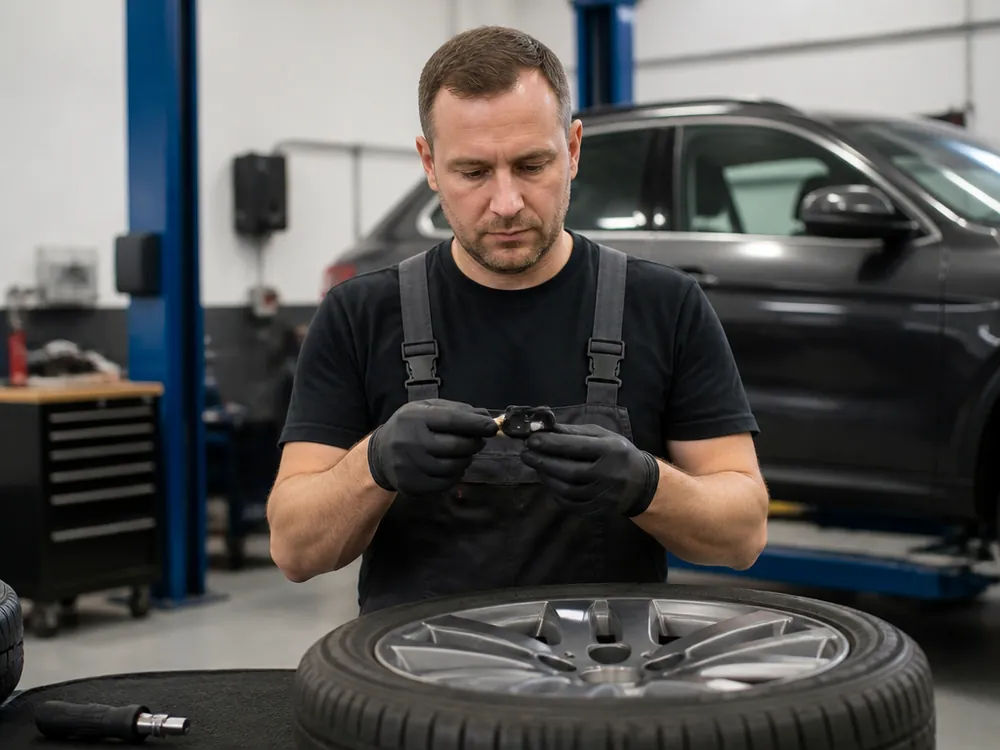
We repair TPMS pressure sensors and program them with dealer scanners for 40+ brands — the sensor is easy to damage when demounting the tire, so we work carefully and don't drag the wheel over the bead. Inside such a unit there's a battery and a membrane that react to impact during dismounting, and the sensor itself is attached to the valve and corrodes from road chemicals. After replacing a tire or fixing a cut, we check the readings on the stand and re-program the unit into the control module — otherwise an error stays on the dash even though the wheel holds air. If a pressure error lights up after tire service, it's not always a failed sensor — sometimes it just needs re-programming. This takes less time than hunting for the cause with a pressure gauge.
What materials we use and whether you can bring your own
We use plugs, cord patches, raw rubber and cord thread, and we accept client materials, but the warranty doesn't apply to them. A plug closes a simple puncture up to 6 mm, a cord patch holds a cut from the inside, raw rubber fuses with the tire at 150 °C during vulcanization, and cord thread reinforces a sidewall seam in 2 layers. We vulcanize with a machine at precise temperature so the rubber bonds into one piece instead of holding on glue. Bringing your own materials only makes sense if you're sure of their origin — incompatible glue or an old patch cancels out even careful work. We show old parts and hand them to the client so it's clear what was replaced. The tire service warranty is 6 months, and we record the term and conditions in the work order when the car is handed over.
Key Factors in Tire Repair Success
Here's what most often decides the outcome: when a tire can still be saved, which method is more reliable, and what to expect after the repair.
- When a tire can be repaired: a sidewall cut and a bulge on the tread are often fixed with reinforcement, while broken cords on the sidewall usually mean the tire has to be replaced.
- The method matters more than speed: hot vulcanization at 150 °C produces a stronger seam than glue and a plug — raw rubber fuses with the tire into a single piece.
- Timing: a simple puncture is closed in 40–60 minutes, while a cut involving the cord takes longer and needs a separate diagnosis.
- Warranty: 6 months on the work performed and the parts installed; the term and conditions are recorded in the work order and the acceptance certificate at pickup.
- After the repair: check the pressure and don't skip balancing — otherwise the wheel will pull again.