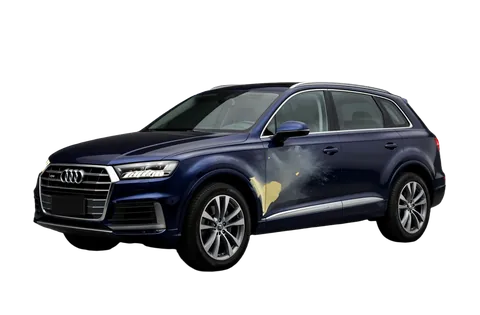
Our Subaru body repair in Almaty covers the full cycle — from a small dent to sill welding and painting. Below we break down the scope of work and how repair options differ.
How local, partial, and full repairs differ
repair options by scope of work| Option | What it covers | When we choose it |
|---|
| Local | An area with color blending | A chip or scuff on one panel |
|---|
| Partial | One panel entirely | A dent with a crease on a fender or door |
|---|
| Full | Several panels and geometry | Accident consequences with misaligned openings |
|---|
When we fix a dent without painting and when straightening is needed
The technology determines whether the factory paint is preserved and how long the car stays in the shop. We explain the limits of PDR and two operations where precision matters — sill welding and plastic heating.
When a dent is fixed with PDR and when straightening with painting is needed
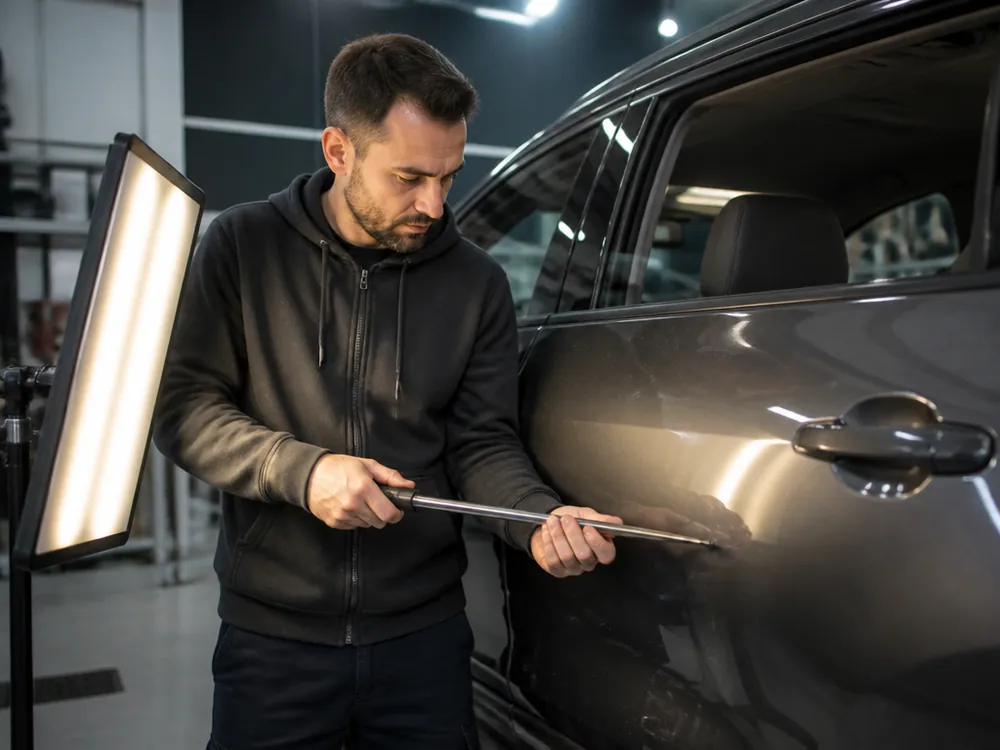
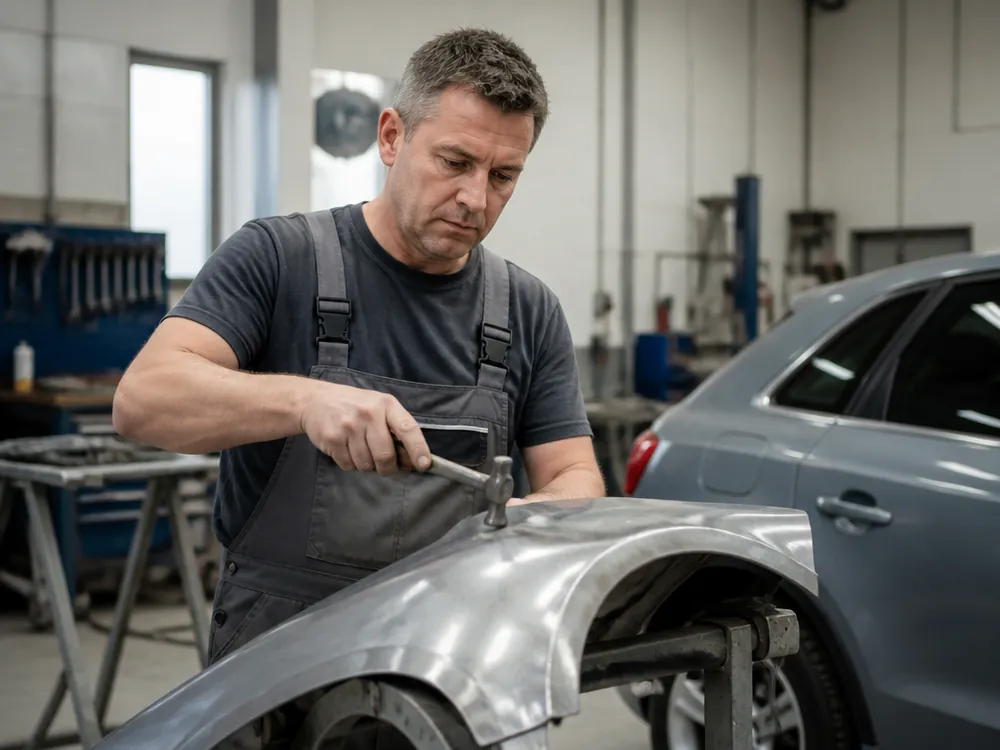
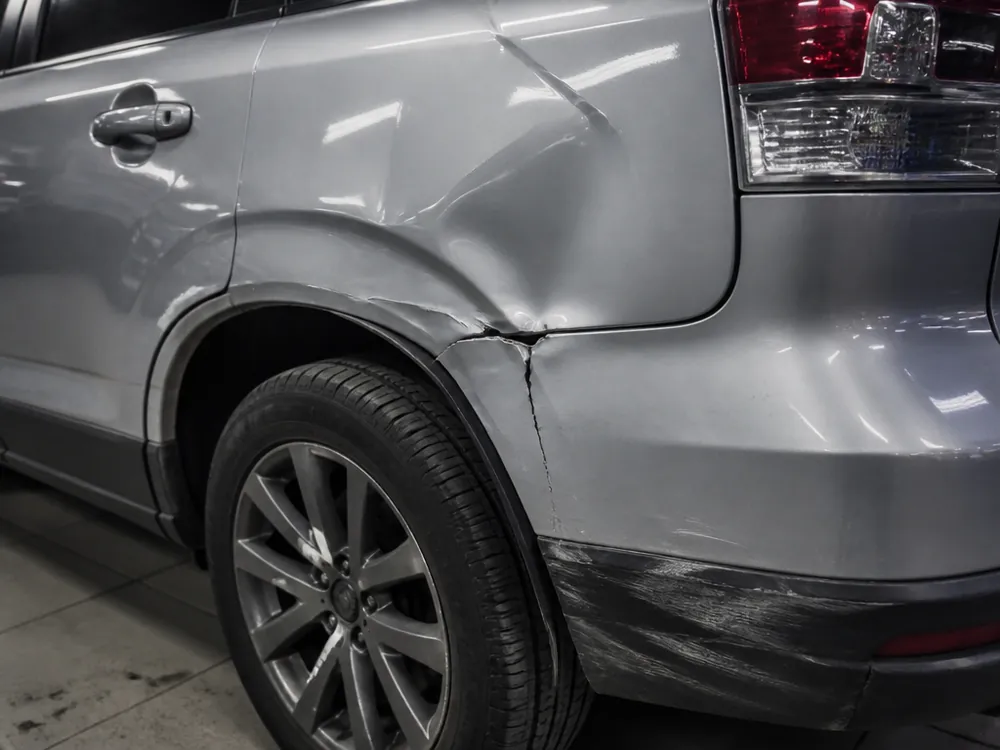
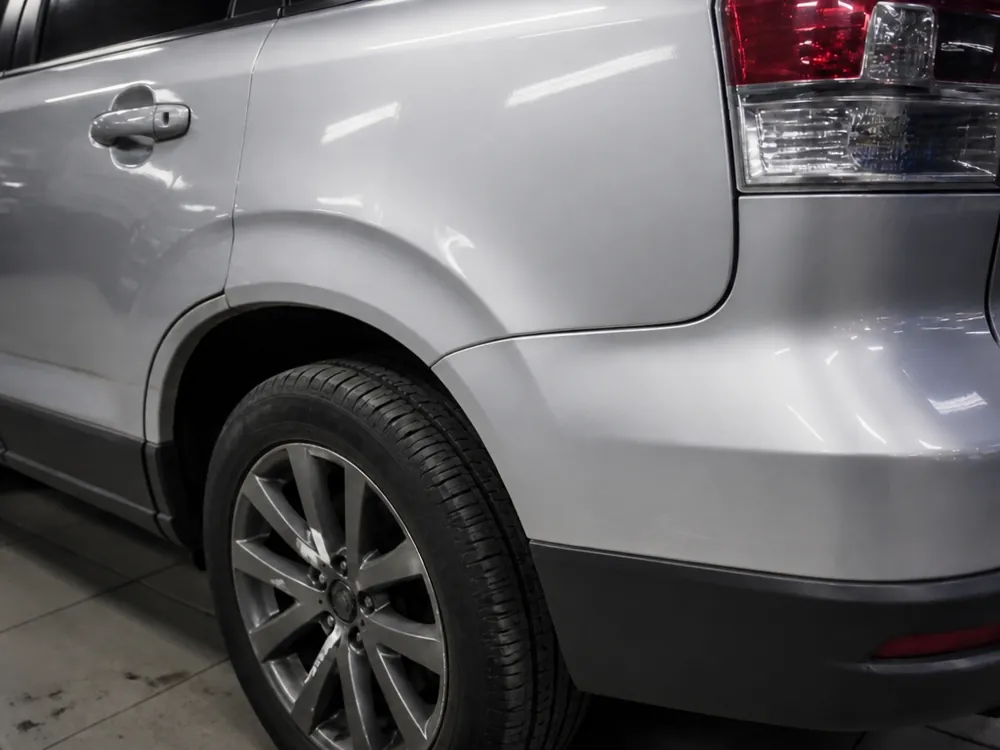
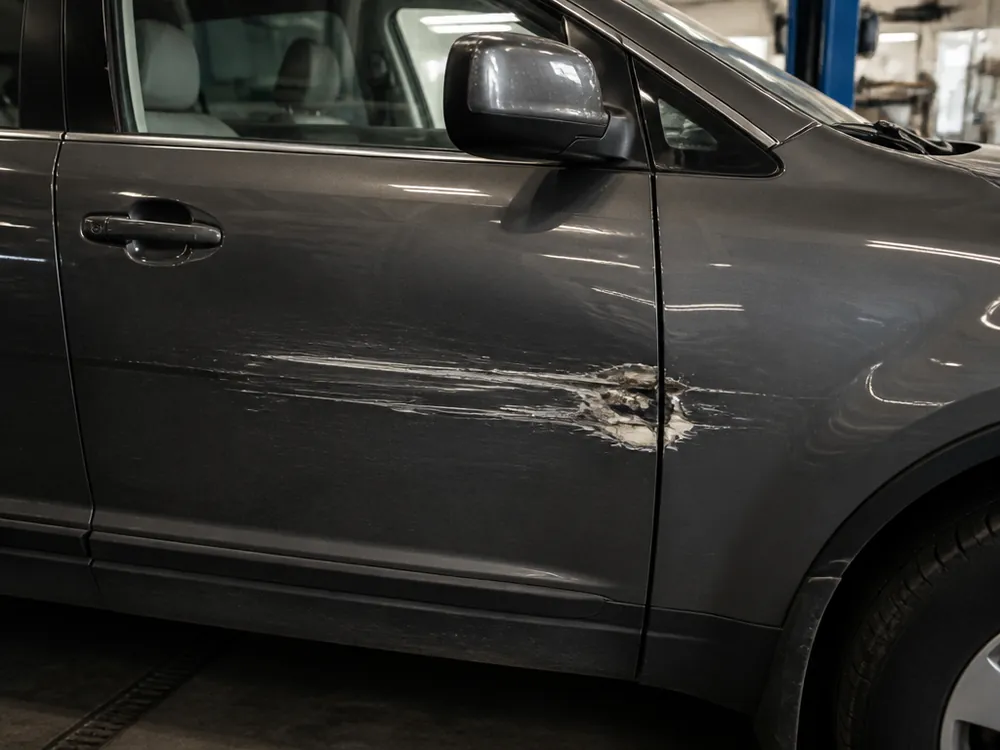
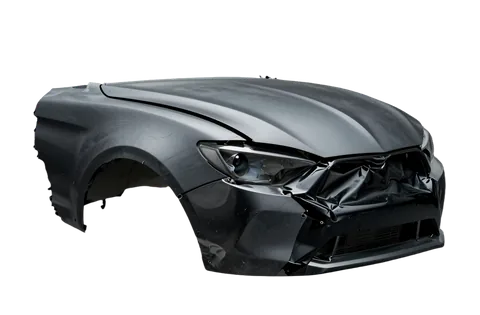
We fix a dent without paint damage using PDR in a day, but if the crease is sharp or the chip goes to metal, straightening with painting is needed. The line is drawn by the integrity of the clear coat: if the thickness gauge shows factory coating and there are no cracks, the panel is pulled with hooks through technological holes or glue tabs without removing the bumper or trim. Once the clear coat has cracked and primer or metal is visible, the technology won't help — the metal is already stretched, and without filler and painting the geometry can't be restored. In this case, Subaru painting follows the full cycle — with preparation, primer, and color matching so the panel doesn't stand out. On Forester and Outback, dents on fenders and doors after parking are most common; on XV, hood chips from gravel — that's a different scenario. PDR preserves the original panel and its resale value — we don't touch the paint, and the thickness gauge shows factory coating.
Why we weld the sill in 2 passes and heat plastic to 60 °C
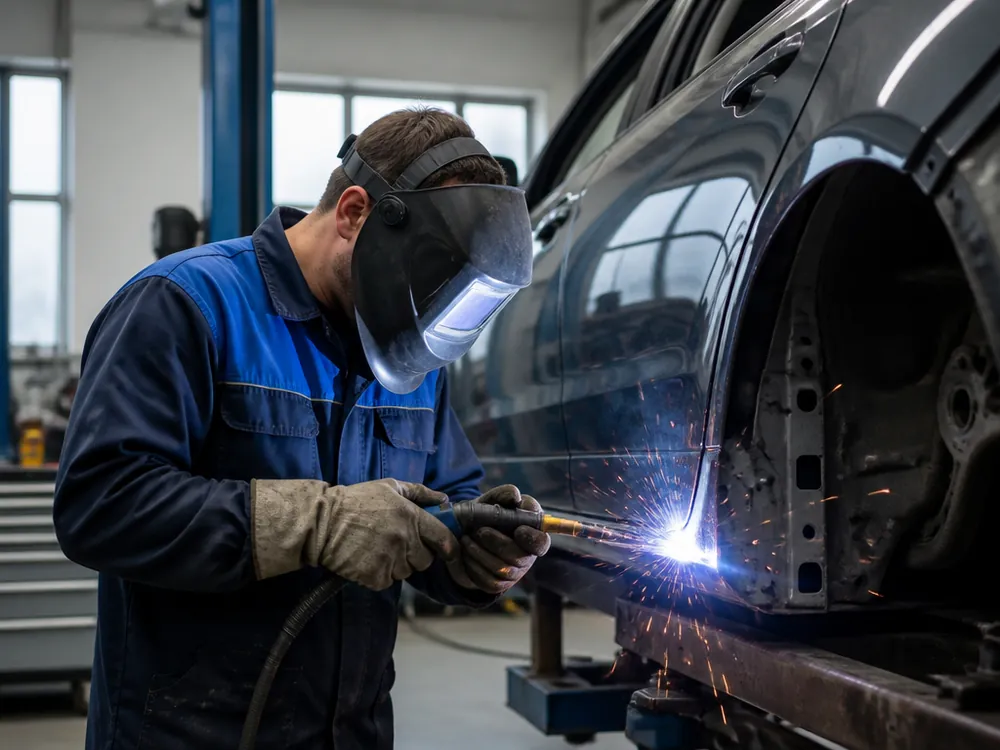
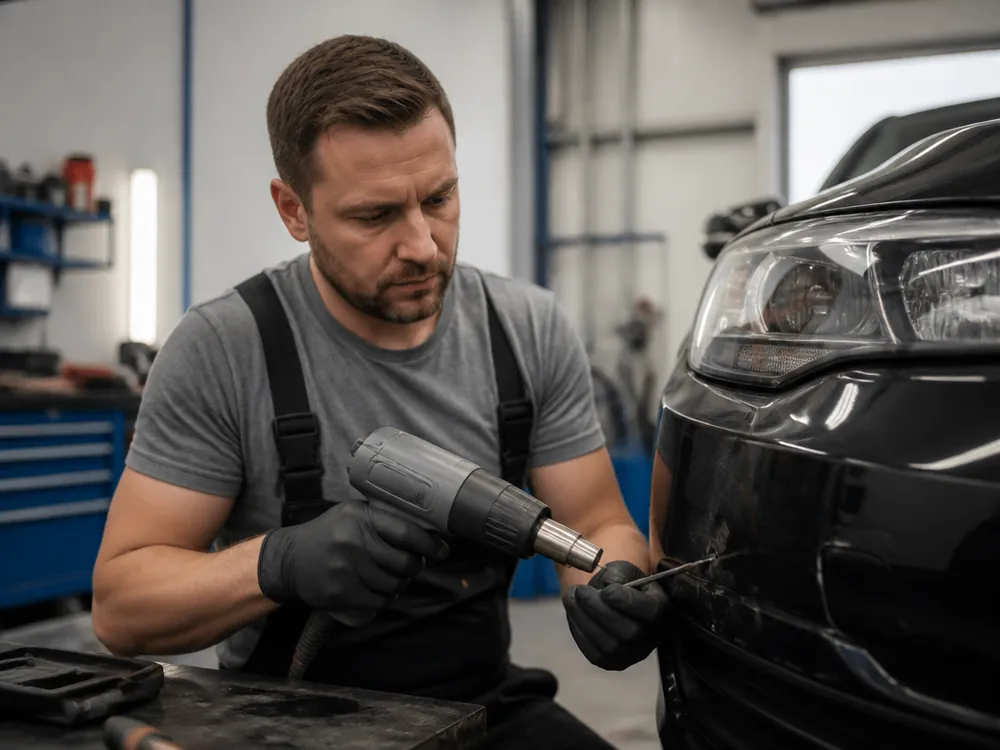
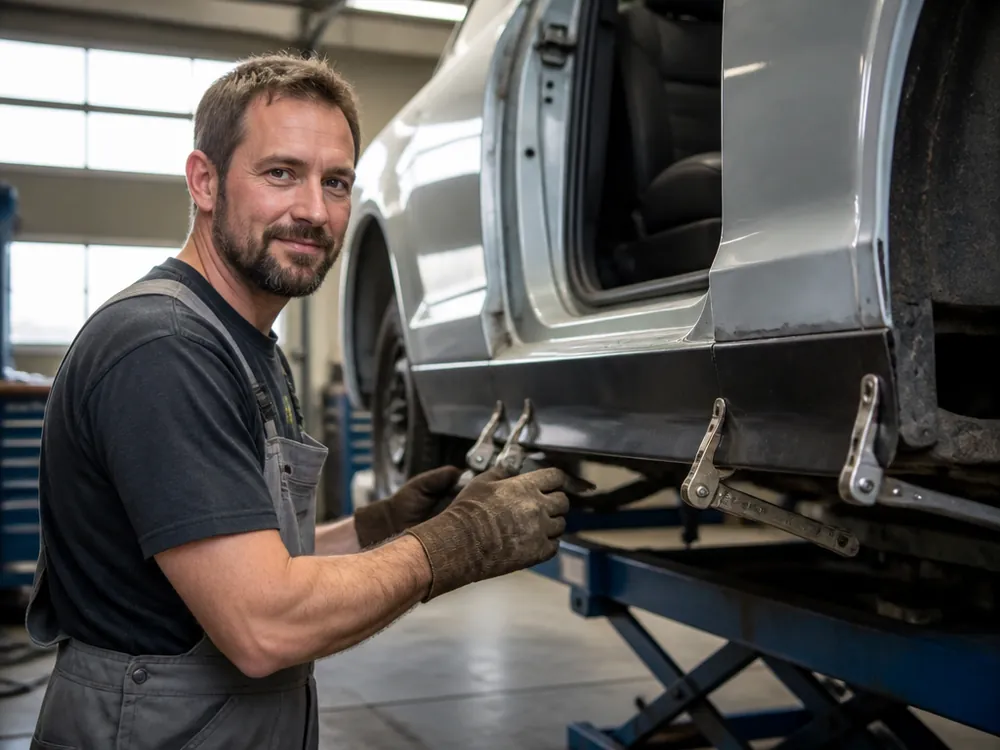
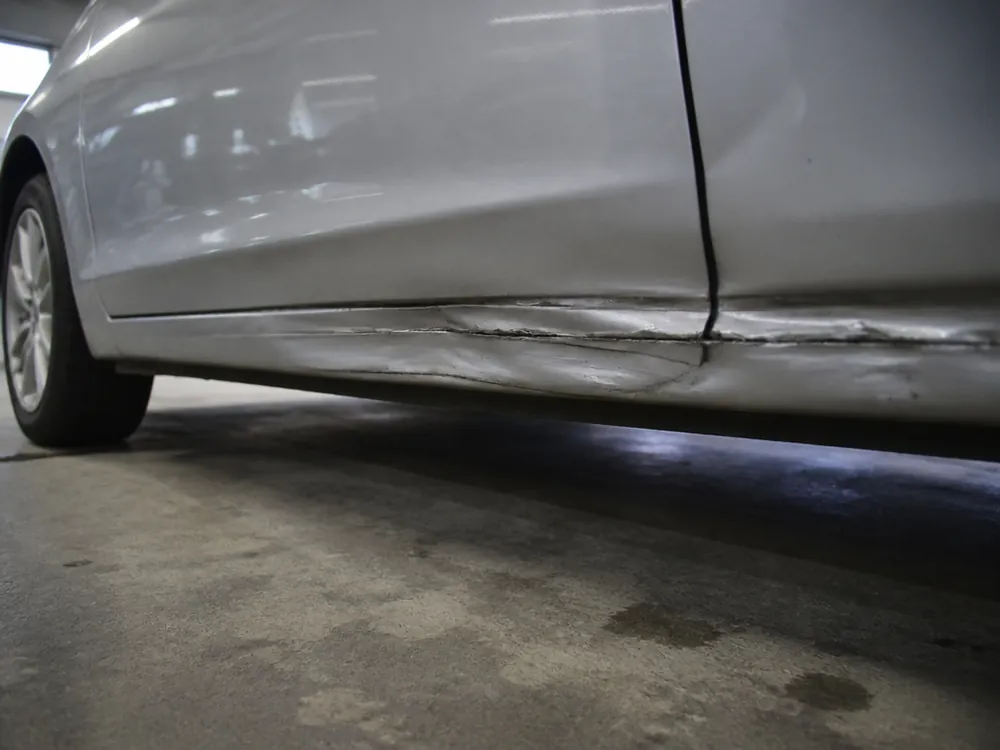
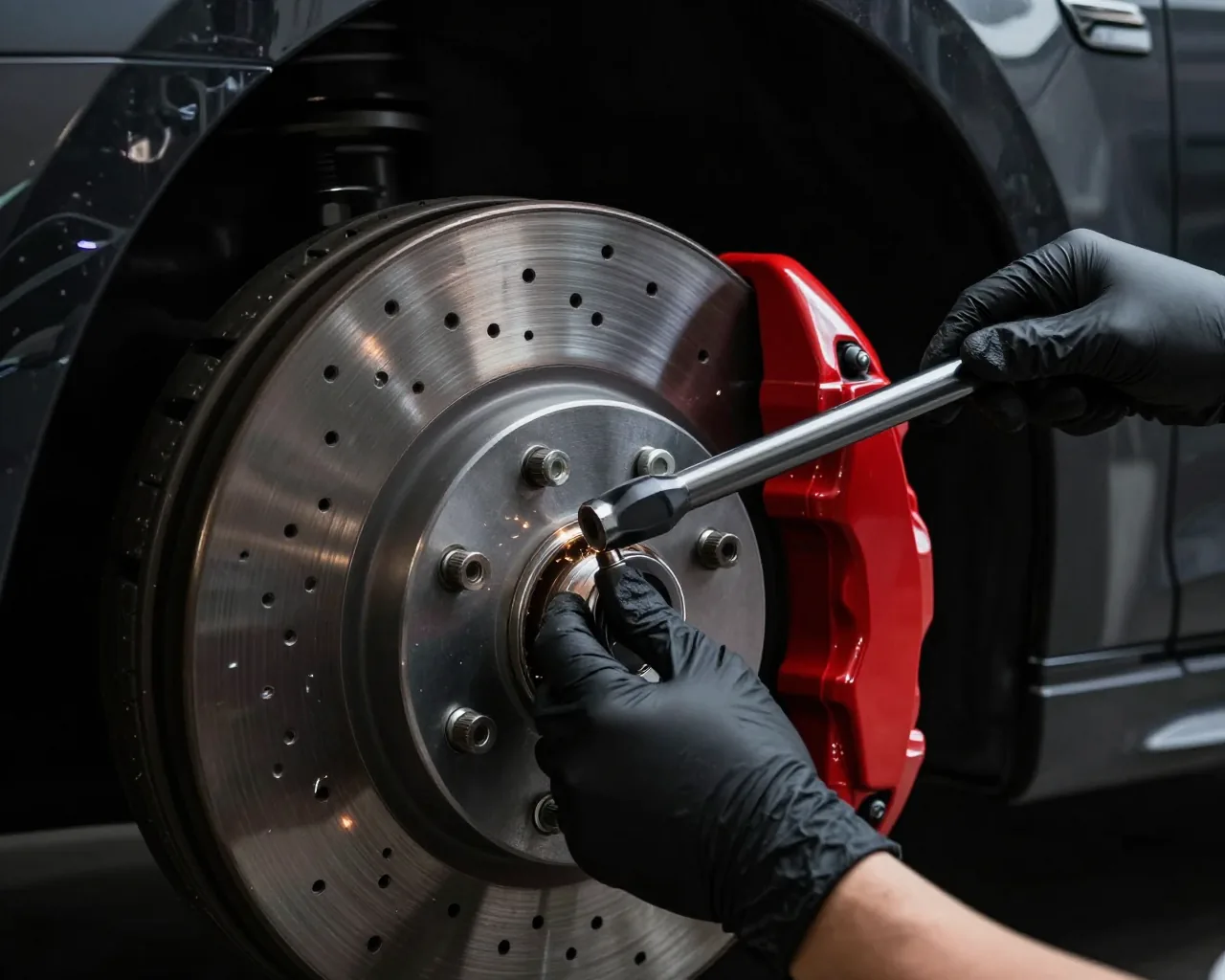
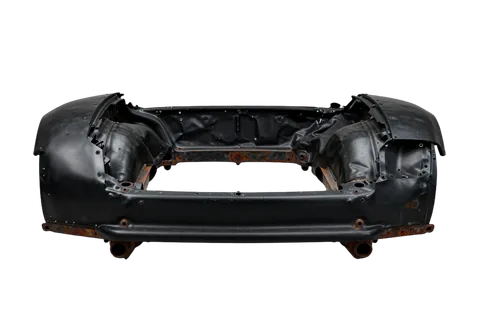
We weld the sill with a semi-automatic in two passes — root seam and face — and heat the bumper plastic with a heat gun to 60 °C with a hold. The first pass fills the joint through and prevents edges from separating; the second lays on top and levels the surface for primer. Such a seam doesn't tear from vibration and doesn't let moisture under the paint — along the sill edge it gets into the hidden cavity and starts corrosion from inside. With plastic, the logic is similar: at 60 °C polypropylene stretches but doesn't warp or bubble, so we push the bumper dent out from inside and hold the shape until it cools. Overheat it and the surface will float, and the part will have to be filled and painted entirely. Our warranty on body repair and painting is 24 months, timeline fixed in the work order.
Weak spots of the Subaru body by model
Each Subaru model has its typical damage. Below are the typical damages that owners of Forester, Outback, Legacy, Impreza, XV, and WRX/STI bring in for repair.
What we most often repair on Forester, Outback, and Legacy
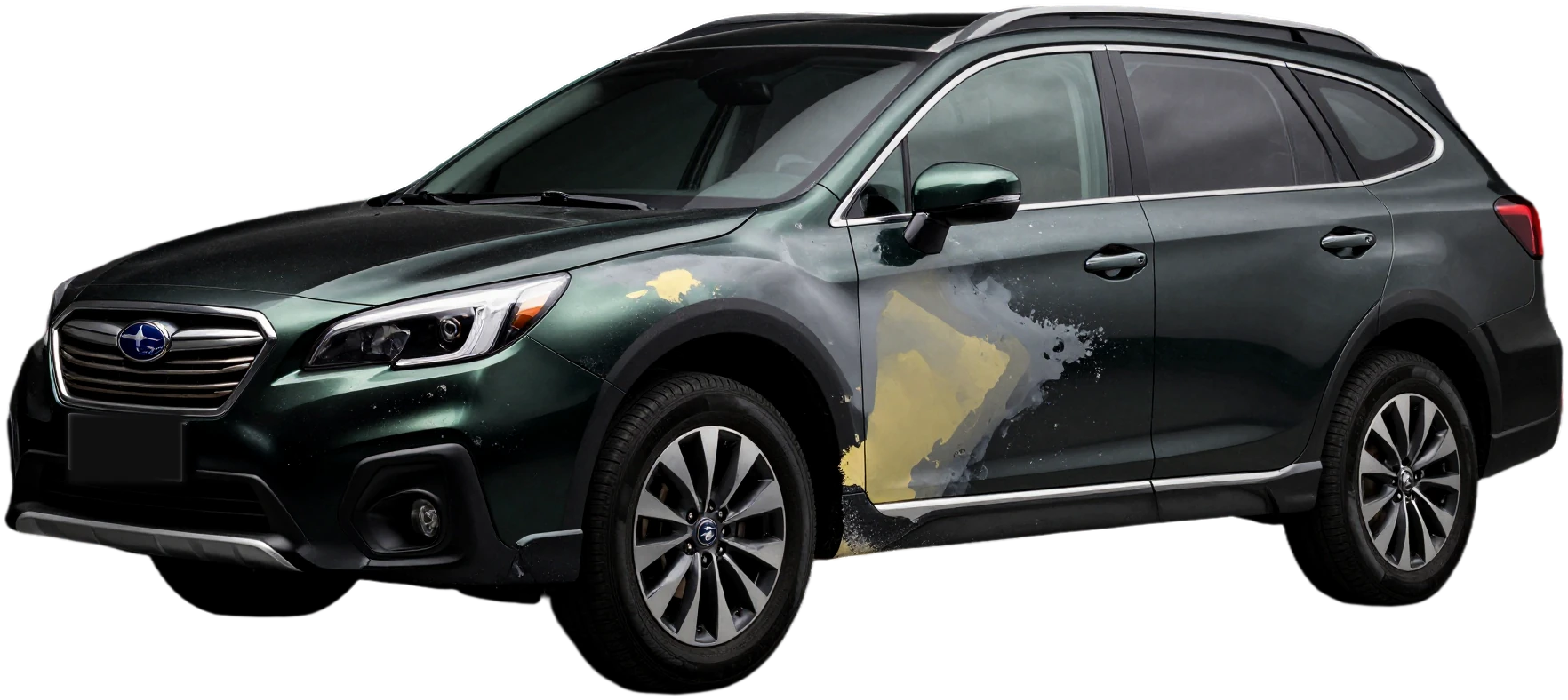
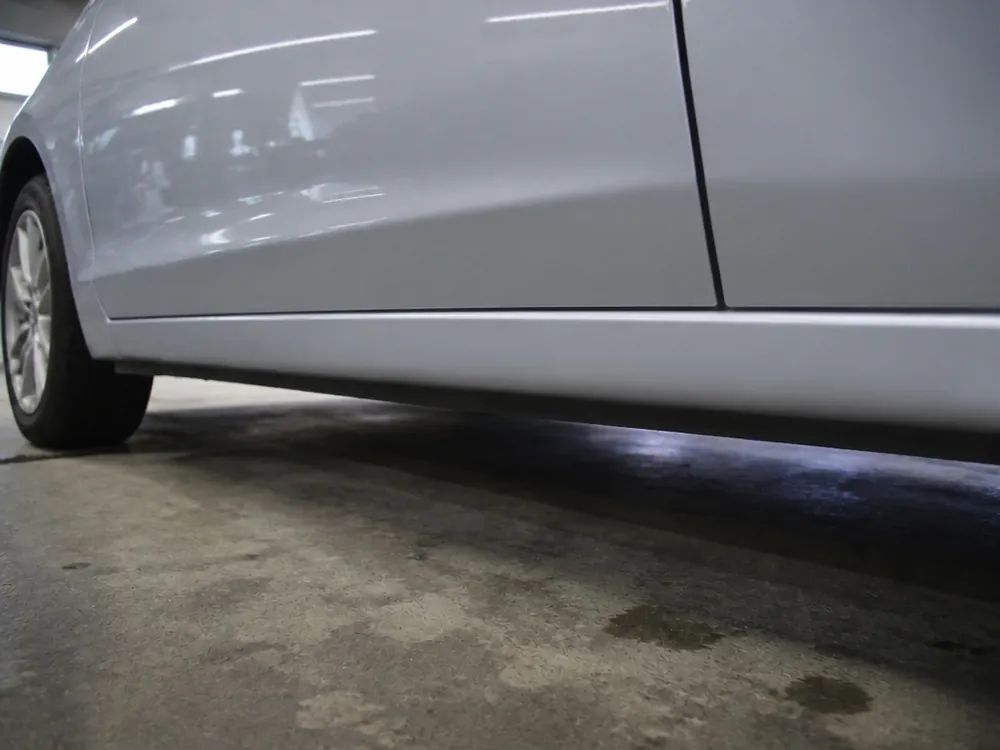
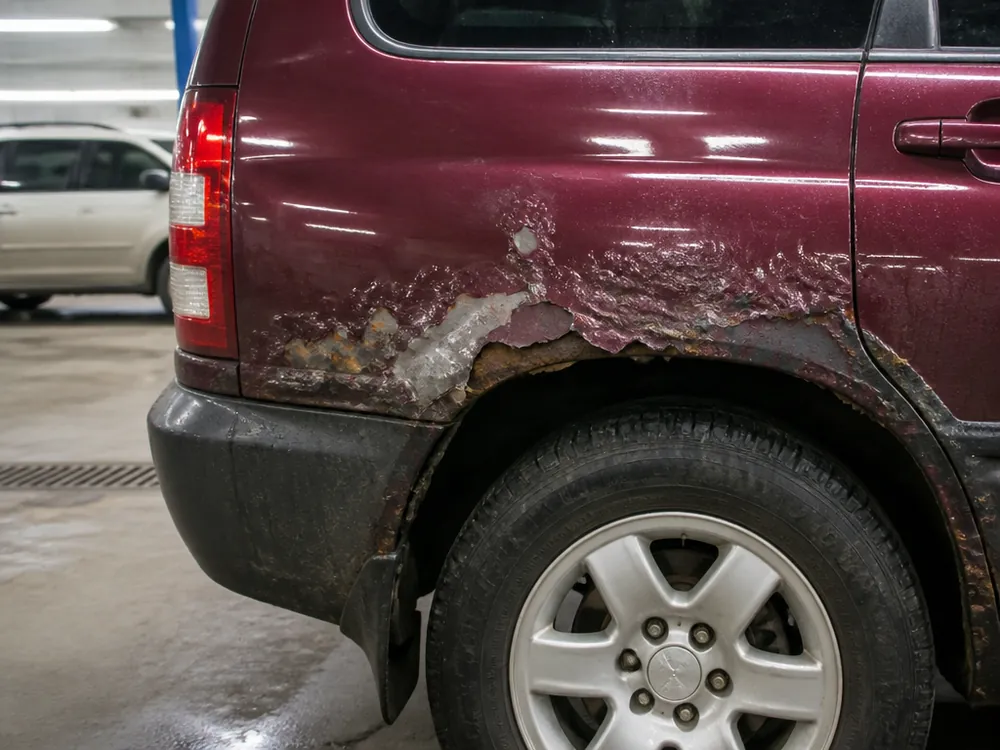
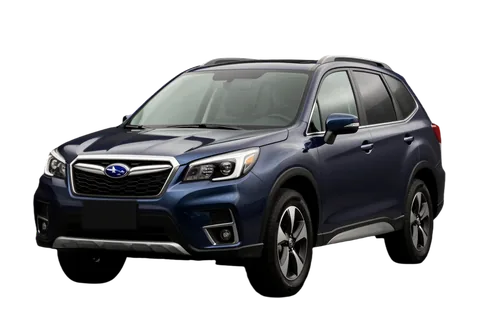
On Outback and Legacy wagons and the Forester crossover, sills and arches suffer most often — they come in for sill repair with welding or sill replacement, less often for fender straightening. On these models, the metal in the lower part works close to the road: winter reagent slush and gravel strip the protective coating faster than on sedans with high ground clearance. On Forester, the arch pillars and sill edges are additionally stressed by wide tires — sand and fine gravel constantly hit them. Subaru body repair in these cases most often involves the lower part: sills, arches, and door edges. We weld the sill with a semi-automatic in two passes: root seam and face layer, so the joint withstands vibration and keeps moisture out. The sill rusts from inside, so the defect is visible outside later than corrosion begins; during inspection we tap the metal and check drainage to avoid welding over rust.
What ails Impreza, XV, and WRX/STI
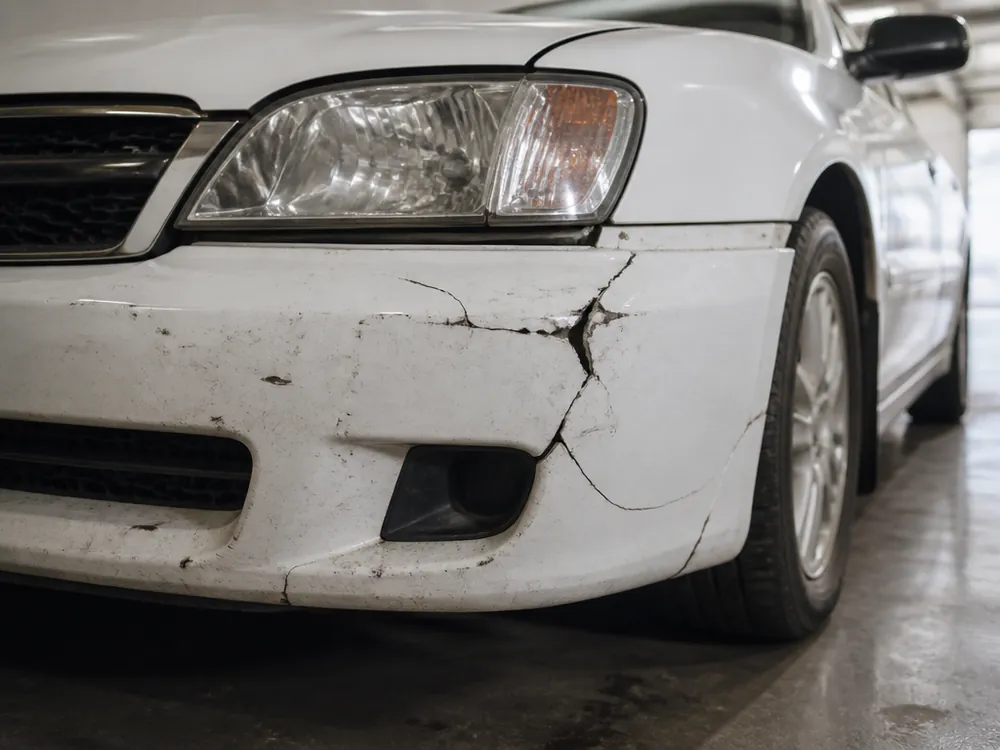
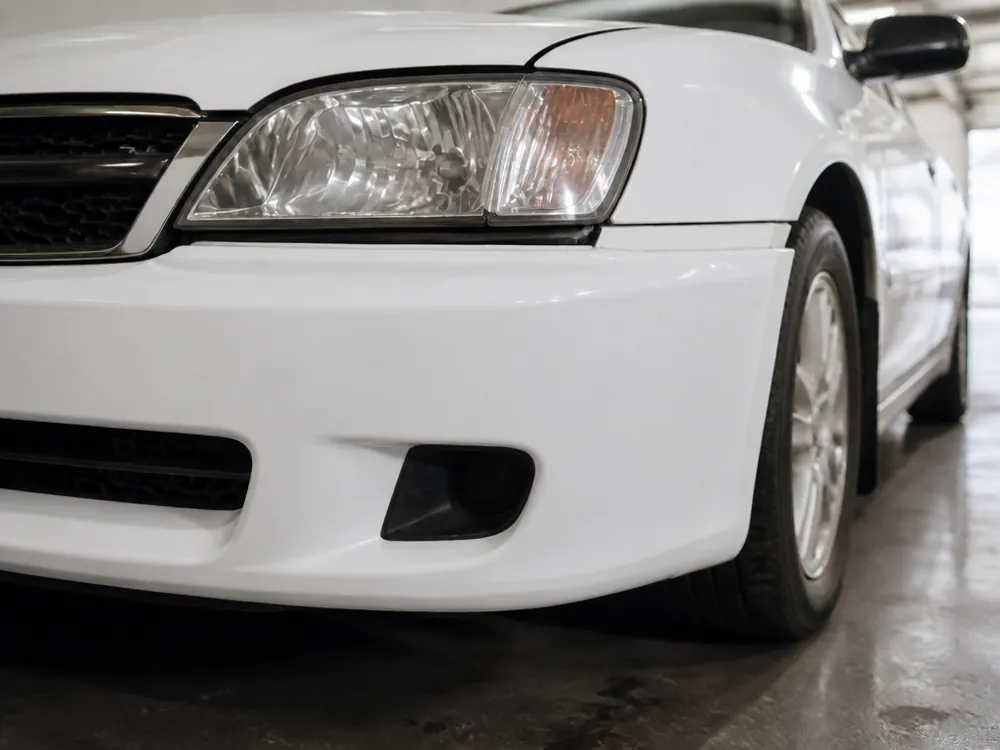
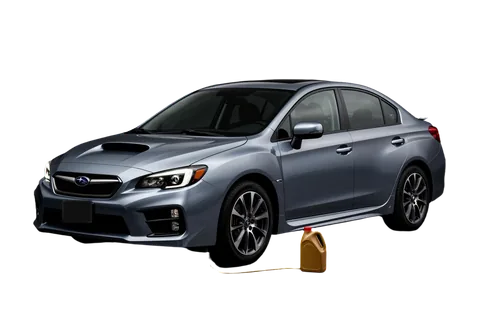
On Impreza and XV, bumpers and fenders after parking contacts are most common; on WRX/STI — body kits and low ground clearance that catches curbs and speed bumps. On these models, plastic takes the hit first: on XV the front lip sits low, and on WRX/STI the splitter and sill covers protrude beyond the dimensions. We start plastic bumper repair by assessing the crack — if the body of the part is torn, welding holds the shape; if the mount is torn, the element is replaced. Bumper painting and fender painting on Impreza require color matching by body number, otherwise pearl and metallic give a noticeable transition on the adjacent panel. Plastic loses elasticity in frost, so cracks are better welded before cold weather — otherwise the tear grows from vibration.
What the 24-month warranty on Subaru body repair actually covers
A warranty only works when its terms are clear before the repair. Below is what these 24 months cover for body work, which cases fall outside it, and how the choice of parts affects it.
What the warranty covers and what it doesn't
warranty limits for body work| Covers | Does not cover |
|---|
| Body repair | Accidents after the repair |
|---|
| Painting | Third-party interference |
|---|
| Undercoating | Normal wear of consumables |
|---|
| Protective film and ceramic | A part brought in by the client |
|---|
Can I bring my own parts and what happens to the warranty
The client chooses OEM, aftermarket, or their own parts; the warranty covers the work performed, but not the client's part. For each option, the service advisor explains which work falls under the 24 months and which stays the owner's responsibility. We show the old parts and hand them over to the client so it's clear which parts were replaced. If a part you brought doesn't fit the gaps, we show it in the photo report before painting — that makes it easier to sort out with the seller instead of redoing it at our own cost. In my view, your own parts make sense when the part is rare and takes a long time to order — that shortens the turnaround, but the owner takes on the risk for the body geometry.
What we put in the work order at pickup
We record the warranty period and terms in the work order and the completion certificate when the car is picked up. We give 24 months on repair, painting, and undercoating; diagnostics for a warranty case are free, and the service advisor manages the work order through to pickup. In the work order we list the type of work, the parts installed, and the warranty period for each item — so there are no disputes later about exactly what it covers. If the client brought a part, we note that separately in the document: the warranty doesn't apply to it. We hand over a copy of the work order and the certificate along with the photo report of the repair stages. Before signing the estimate, check that the document lists both the work and the parts we installed — that's exactly what the warranty covers.
How the repair goes from request to pickup
A repair doesn't start with welding — it starts with diagnostics and a written estimate. Below is how the process works in our shop and how to care for the car after pickup from the service.
Stages from intake to test drive
The car is received by the service advisor, who manages the work order through to pickup: first diagnostics and a written estimate, and we start work only after the client agrees. During the inspection we record hidden damage — under the bumper and on the rocker panels there's often more than you can see from outside, so the estimate may differ from the initial assessment. Then the team disassembles the part, straightens the metal, welds the rocker panels with a MIG welder in two passes, preps the surface, and paints in the booth. We make a photo report of the key stages and show the old parts and hand them to the owner — so it's clear which parts were replaced, with no "just trust us." Before pickup we do a test drive and check the gaps, lights, and glass. In our experience, a work order with a photo report saves time in warranty disputes: you can see what work was done and at which stage.
How long the paint dries and how to care for the body after repair
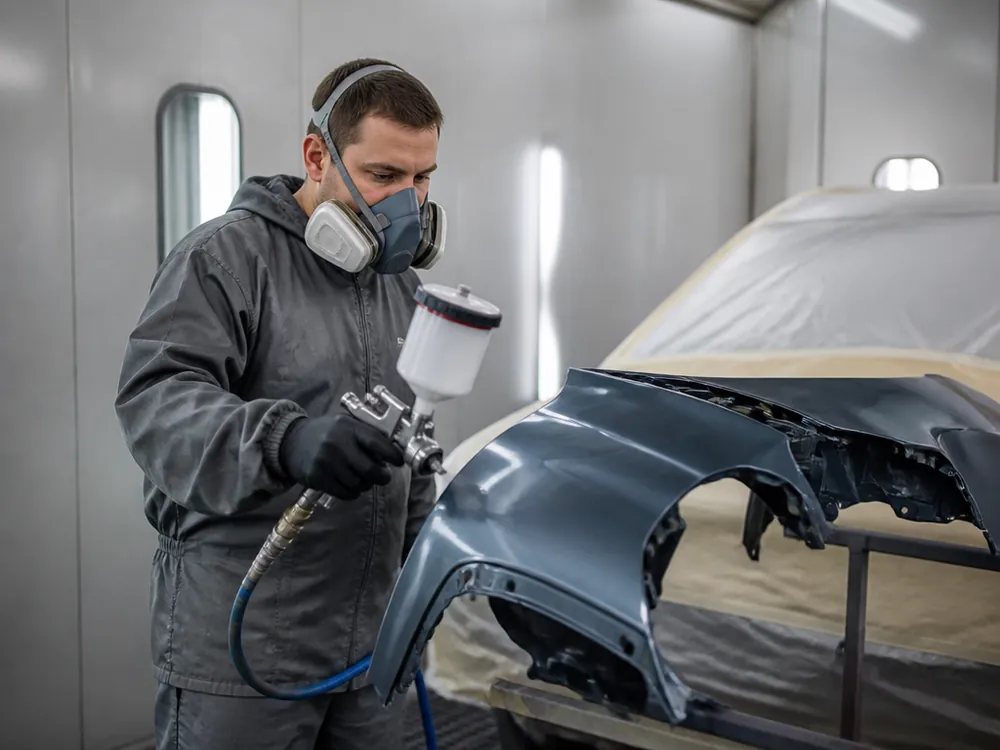
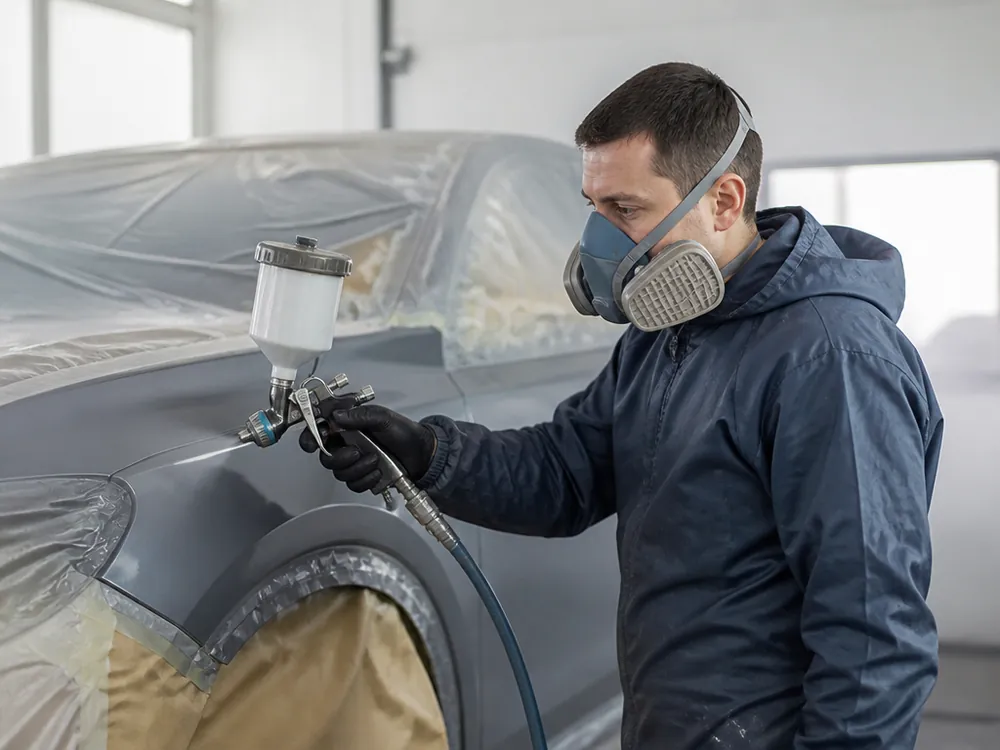
After painting in the booth the paint polymerizes, and for the first few weeks it's best not to wash the body with harsh chemicals or hold a pressure washer right up against the fresh coating. For the first few weeks after painting, avoid stiff brushes at the car wash, don't apply wax, and don't park under sappy trees. We fix a dent without paint damage with PDR in a day — we don't touch the paint, so the part stays factory. After welding the rocker panel we apply undercoating right away — without it, moisture gets under the paint along the seam and corrosion comes back before the warranty runs out. Our work is covered for 24 months, and we record the period and terms in the work order and the completion certificate at pickup. Diagnostics for a warranty case are free — bring the car in if you notice bubbling or orange peel on the fresh coating.
Subaru body repair key points
We've gathered the key points that determine the result of body repair: the limits of the technologies, model-specific weak spots, and honest warranty terms.
- PDR limits: a dent without paint damage is fixed in a day, but a creased edge needs straightening and painting.
- Careful technique: the rocker panel is welded with a two-pass seam, and the bumper plastic is heated to 60 °C — these are signs of a real craftsman, not marketing.
- Model weak spots: on wagons the rocker panels and wheel arches suffer, on crossovers the bumpers, and the inspection starts with these areas.
- Warranty: it works when the period and terms are written into the work order, and the coverage limits are clear before work begins.
- Your own parts: a client's part is allowed, but the warranty doesn't apply to it — worth keeping in mind in advance.