The fluid in a manual gearbox ages quietly, and owners often mistake its wear for a broken transmission. Here's how a technician tells one from the other.
How a Technician Tells Old Oil from Gearbox Wear
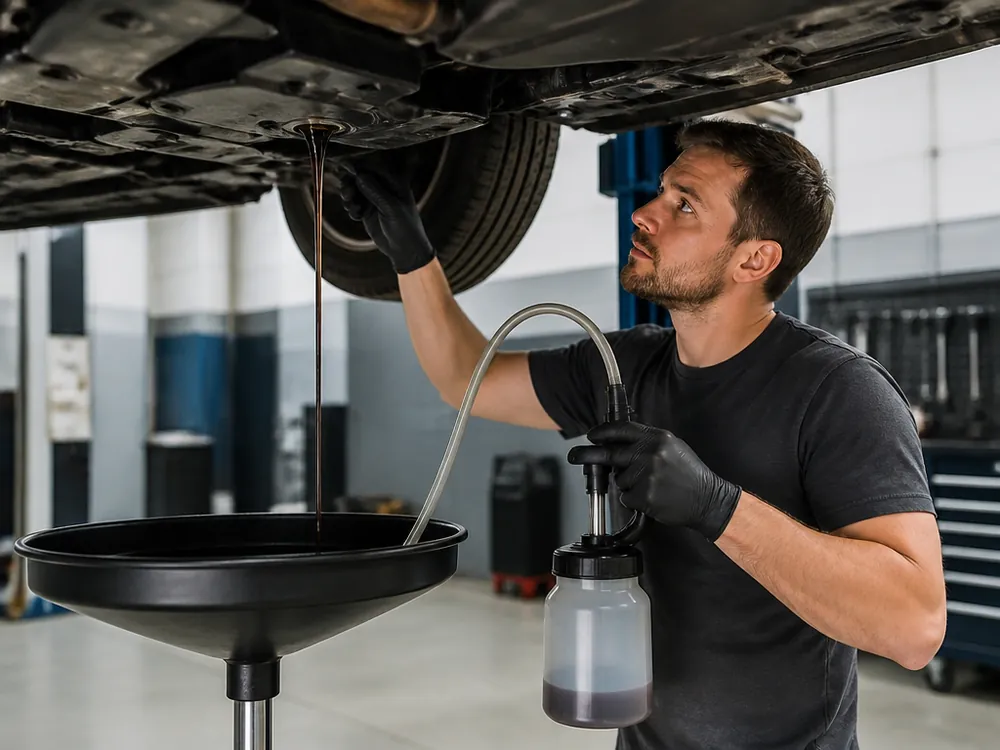
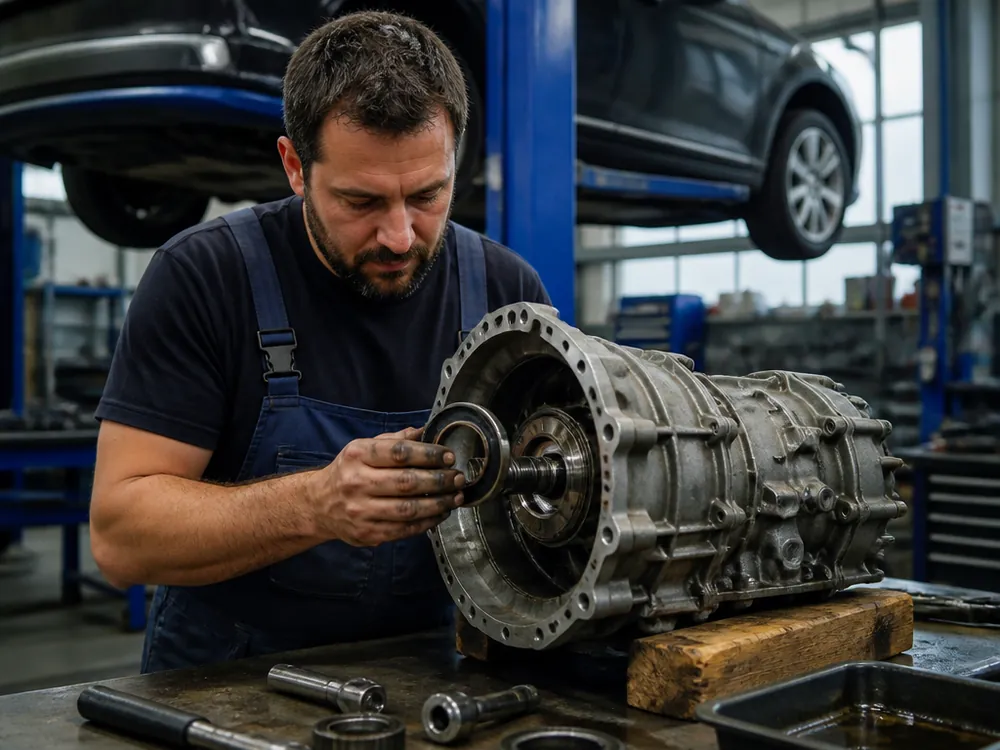
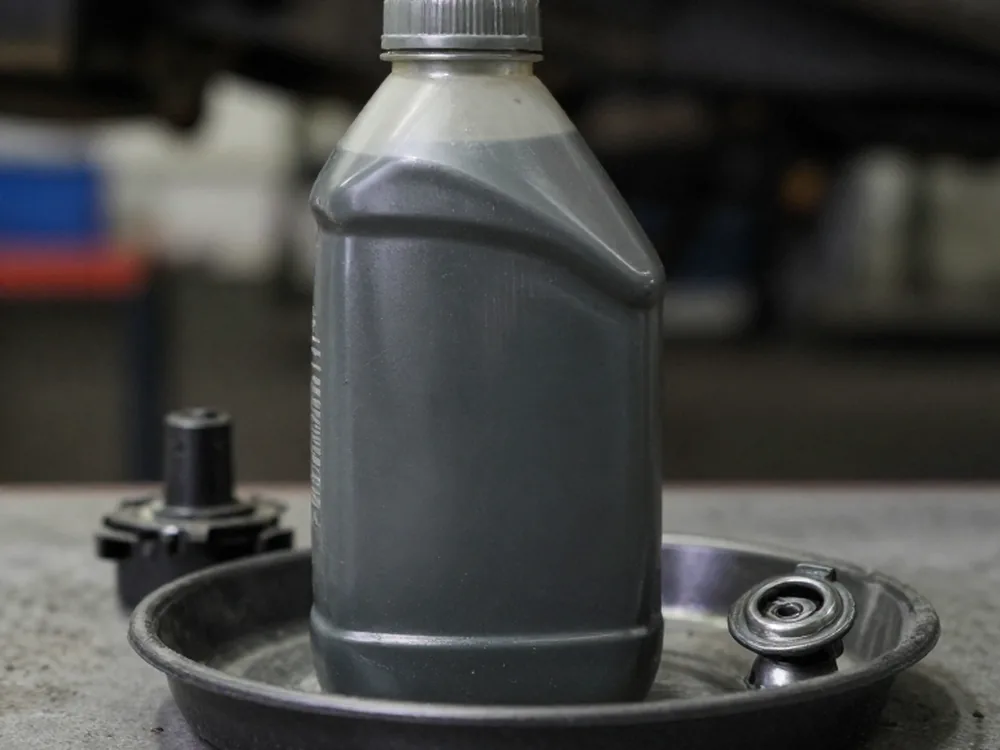
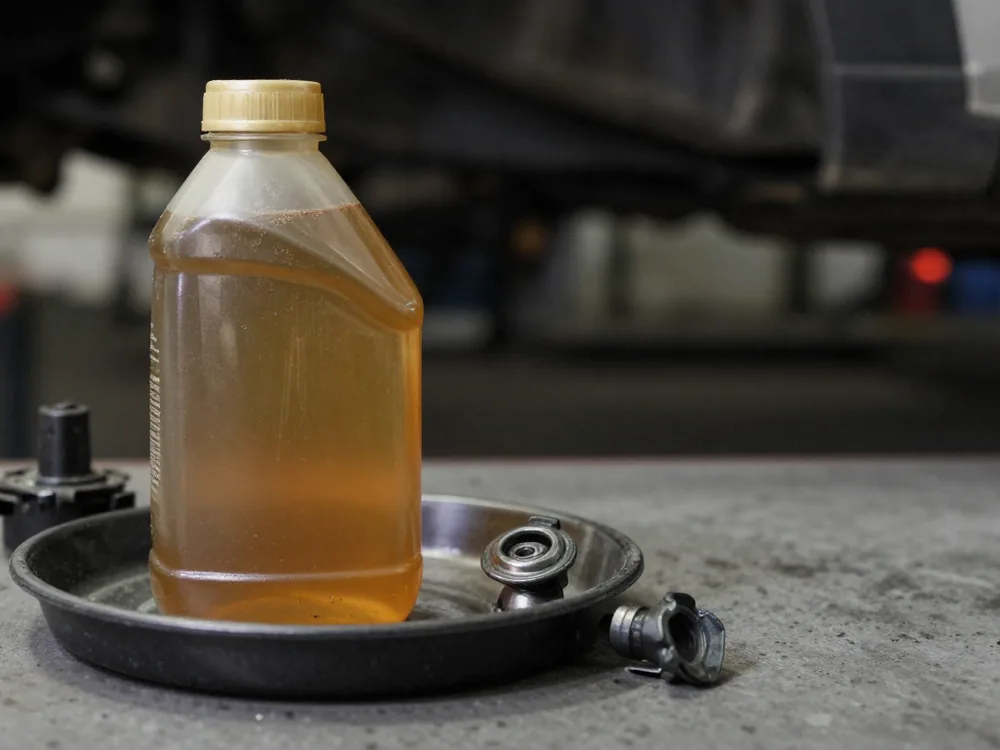
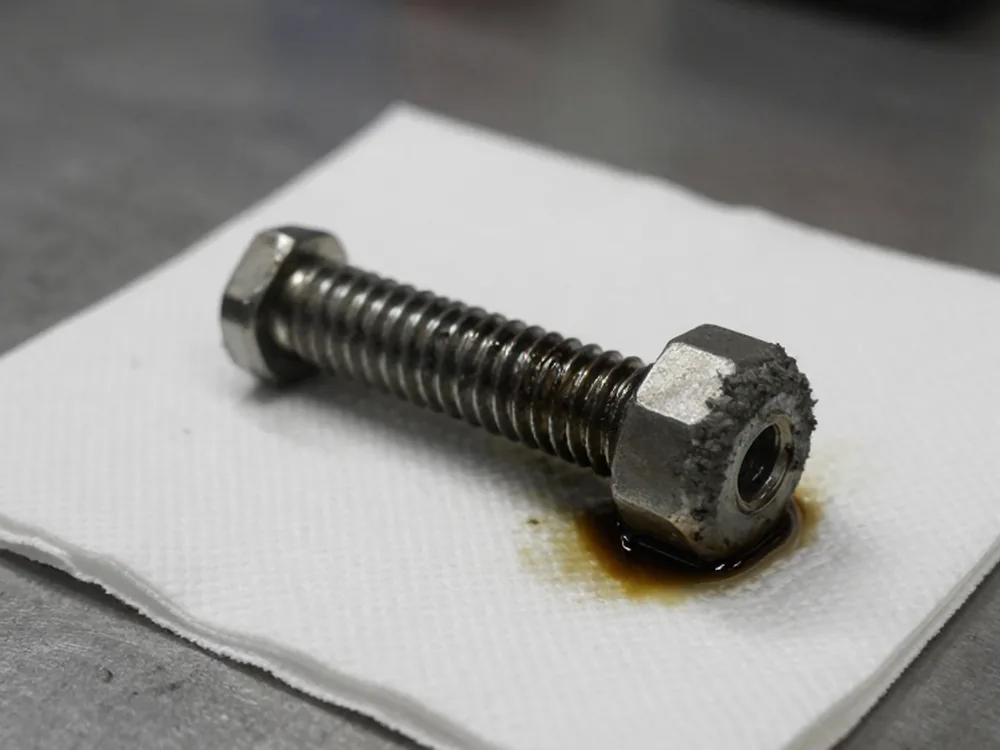
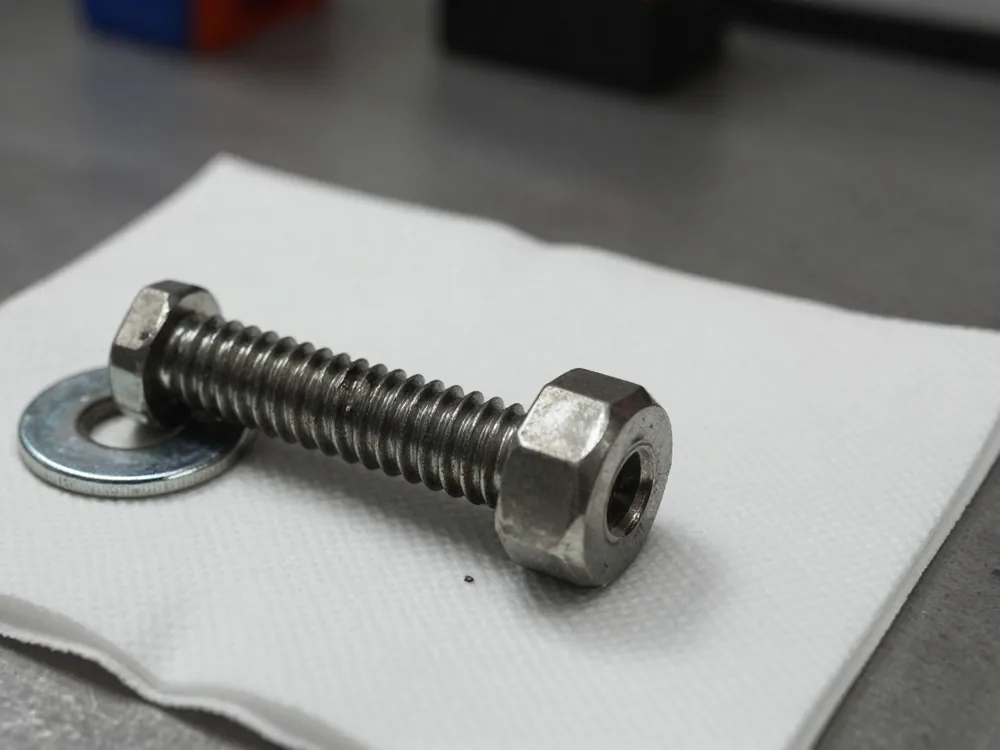
Our diagnostics start with draining the oil and inspecting the magnet on the drain plug: shavings and sludge show the condition of the gearbox before any teardown. The service advisor records the type of sediment in the work order, and we take photos at key stages so the client can see what was left on the magnet. Fine metal dust on the magnet is normal wear, but large particles and crunching under load already point to the synchros, and then fresh fluid only delays the repair. Towing and mountain climbs put more load on a manual than city driving: in those conditions the interval is cut by a third. If shifting returns to normal once warm, it's usually thickened fluid rather than the synchros — a reason to start with fresh fluid, not a teardown. A Subaru manual transmission oil change in Almaty starts with gearbox diagnostics and a written estimate — we only suggest a teardown after the client agrees.
What Oil to Use and How Much to Put in a Subaru Manual Gearbox
The volume and spec depend on the gearbox type and model, so guessing doesn't work here. Here's what to check before filling.
Spec and Oil Volume for 5MT and 6MT
gearbox types compared by volume and spec| Gearbox type | Models | Approximate volume | What we check |
|---|
| 5MT | Impreza, Forester | about 3–3.5 L | spec and viscosity per the schedule |
|---|
| 6MT | Forester, Outback | confirmed by model | condition of the synchronizers |
|---|
| Over 150 thousand km | all models | by dipstick | viscosity matched to wear |
|---|
Can You Mix Oils and Why Counterfeits Are Risky
Mixing different transmission fluids in a Subaru manual gearbox isn't worth it: additives from different makers conflict, and the gearbox ends up with the worst of both. For a manual, use Subaru Extra MT or an aftermarket fluid with the right viscosity, 75W-90 or 80W-90, matched to the specific Forester, Impreza or Outback model. A counterfeit gives itself away with uneven printing on the bottle and a price well below market. If a Subaru manual transmission oil change is coming up, it's best to confirm the spec for your gearbox in advance and not mix brands. In our practice we fill fluid to spec from trusted suppliers, and the client can bring their own, so the choice stays with them: OEM, aftermarket or customer parts. Over 150 thousand km, viscosity is matched to the condition of the gearbox, not just the model year, because thick lubricant makes shifting worse on worn synchronizers.
How We Do a Manual Transmission Oil Change at Our Shop
The procedure looks simple, but quality comes down to details — how long the oil drains, how the level is checked, and when the unit needs the pan dropped. Here's the order of work, step by step.
A 15-Minute Drain and Filling by the Dipstick
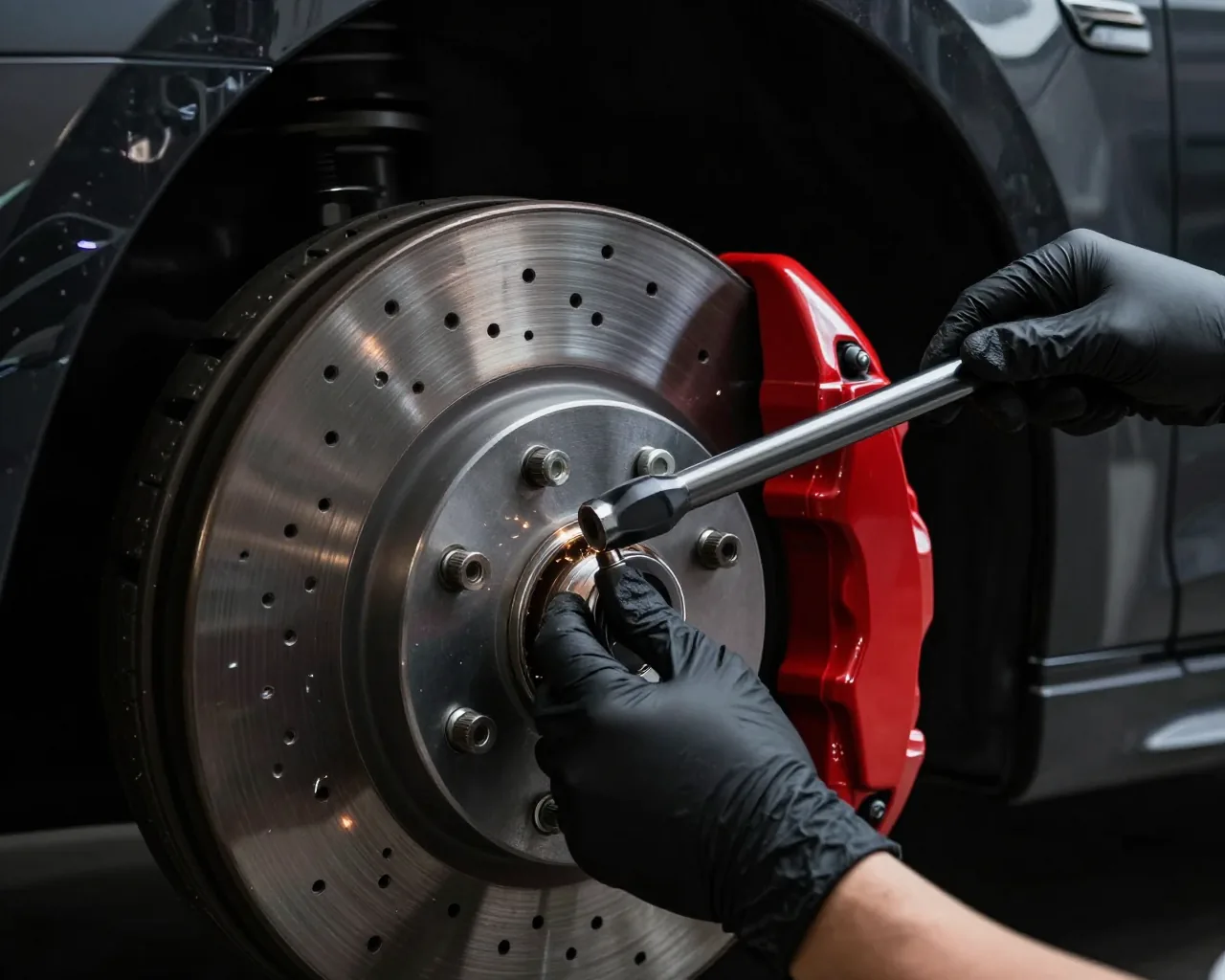
We let the old oil drain for 15 minutes instead of plugging it back up after a minute, and we fill exactly what the gearbox needs, checking the level with the dipstick. During that time the old sludge leaves the case — wear products from the gears and synchros that stay inside during a quick drain and act like an abrasive. We match the volume to the spec for the specific transmission, not by eyeballing the bottle. After filling, we check the mark again on a test drive before handover: in motion the fluid spreads through the channels, and the actual reading on the dipstick can shift. Overfilling pushes out the seals, and underfilling speeds up gear wear, so the final check is done by the dipstick, not from memory. A Subaru Forester manual transmission oil change follows the same principle — a full drain and a level check with the dipstick. In my view, those fifteen minutes of waiting are exactly what separates a proper procedure from a formality.
When the Pan Needs Dropping, a Flush and a Seal Replacement
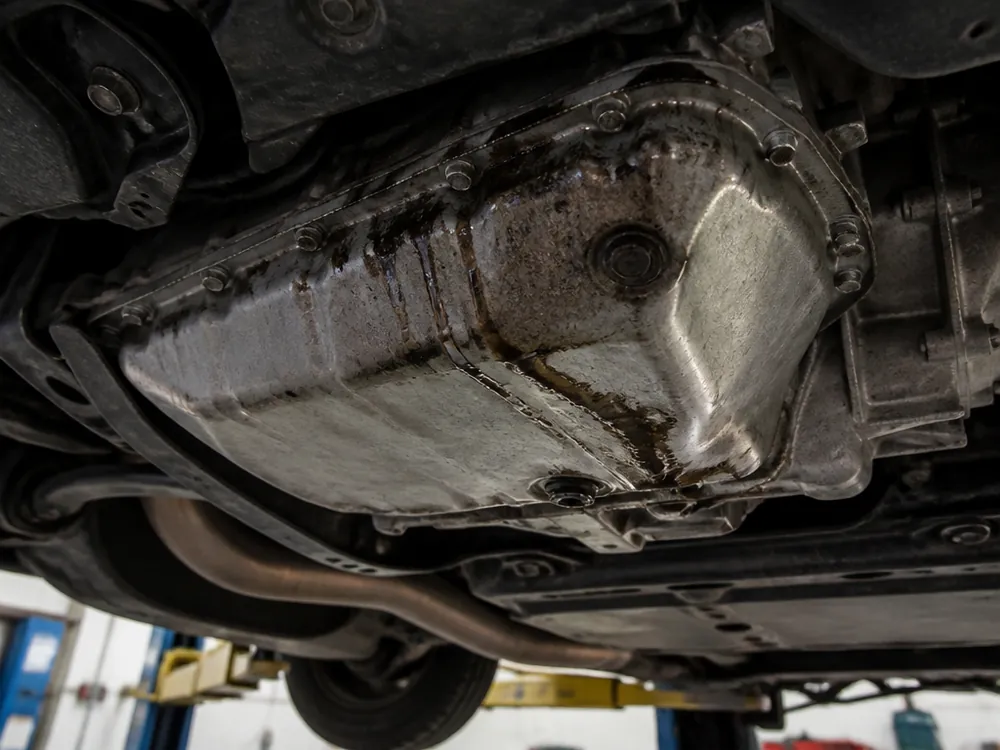
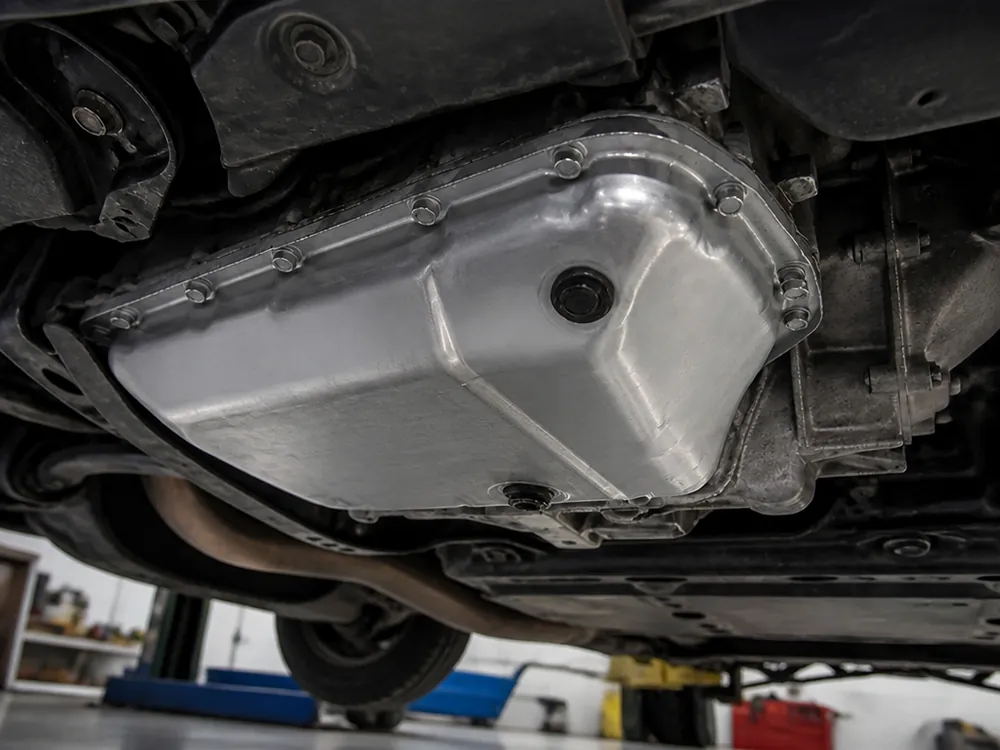
- Dropping the pan: needed when sludge has built up and to reach the manual transmission filter and gasket.
- Flushing with a special compound: we use it for heavy contamination, when a simple drain isn't enough to clean the unit.
- Manual transmission seal replacement: done when there's a leak at the joint — otherwise fresh fluid will escape.
- Filter and gasket replacement: goes together with dropping the pan; we don't push them separately.
- Showing the old parts: we hand the removed filter and gasket to the client so it's clear what was changed.
- Approval before the work: dropping the pan and flushing are decisions based on the unit's condition, not a mandatory add-on to every change, so we agree on each step in advance.
Why Gears May Shift Stiffer After an Oil Change
If the gears feel stiffer after the change, it's usually the wrong spec or an inaccurate level, not a new failure. Fresh fluid with the right viscosity normally makes shifts smoother within the first few kilometers, so a worsening feel is a signal to come back for a check, not to wait for the unit to wear in. Sometimes the cause is confusion over the gearbox type: a robotized manual has its own service logic and its own lubricant schedule, and the approach from a classic manual doesn't carry over. My advice is to come in and check the dipstick mark and whether the fluid matches the spec: it takes minutes and settles the question instead of guessing about a breakdown.
Manual transmission, differential and transfer case in one visit
On a Subaru with Symmetrical AWD, the manual works together with the differential and the transfer case, so owners often ask whether all three units should be serviced at once or can be spread out over time.
Why change the differential and transfer case oil together with the manual transmission
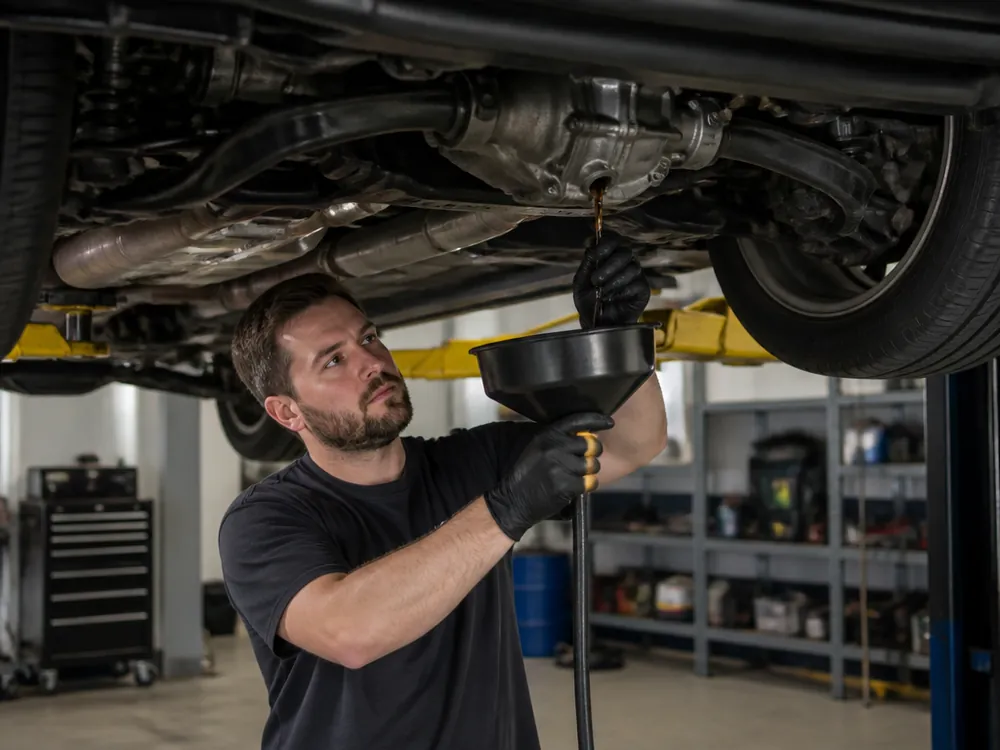
The lubricant in the differential and transfer case ages over the same mileage as in the gearbox, so changing everything together makes sense: one lift, one change, one level check. On all-wheel-drive Subarus the front and rear differentials plus the transfer case are under constant load: torque goes through them to both axles, and the lubricant in them heats up just like in the manual. At CARGID we schedule draining and refilling for all three units on one car, check the seals and measure the level at the check plugs. If you put off the differential and transfer case until the next visit, you'll pay again for the lift and disassembly, and the worn lubricant in them will have had time to work on the gears.
How to get it all done in one day
We service the manual transmission, differential and transfer case in one shift: drop it off in the morning, pick it up in the evening, without stretching it over a week. With six lifts, the car doesn't wait in line: the service advisor takes the car in, manages the work order through to handover, and we plan the work by appointment in advance. While the old fluid drains from the gearbox, we drain the lubricant from the differentials and transfer case, check the seals and refill fresh fluid to the dipstick mark. Before handover we do a test drive and record the warranty period in the work order. To finish in a day, we plan the work in advance by appointment, so the lift isn't sitting idle and the technician has time to drain, refill and test drive each unit. If the car arrives without an appointment, the advisor will still assess the scope of work and offer the nearest open slot so the car isn't kept an extra day.
Timing, appointments and warranty on the oil change
Before the visit, it helps an owner to know three things: how long the work takes, whether an appointment is needed, and what to do if a problem comes up after the repair.
How long the visit takes and whether an appointment is needed
We do a manual transmission oil change in one shift, and with an appointment we take you in without a line, daily from 09:00 to 20:00, and the client is welcome to bring their own fluid and filters. On the manual in a Subaru Forester and other models of the brand, we change the lubricant on the lift and inspect the differential and transfer case at the same time, which saves a second trip. We've been working in the city for twelve years, 9,000+ cars have been through the shop, and intake is handled by the service advisor: he manages the work order from start to handover. Before starting, he prepares a written estimate, and the repair begins only after the client agrees. Ask for the estimate before the car goes on the lift, so the final amount doesn't creep up during disassembly.
What the 6-month warranty covers
- Warranty period: we give 6 months on a manual transmission oil change and record it in the work order and the handover report when the car is released.
- What it covers: the work performed and the parts installed: if a noise or a leak appears, we deal with it under warranty.
- What it doesn't cover: accidents, third-party interference, normal wear of consumables, and a part brought by the client.
- Diagnostics: for noises we check the gearbox as a warranty case free of charge, with no separate fee.
- How to check: verify the period and terms in the report before leaving the shop: that document is the basis for a claim.
Subaru MT oil change essentials
Here's a short summary of the topic — no repeated details, just what's useful when choosing a service and planning a visit for an oil change.
- Change interval: fluid in a manual ages by 60–80 thousand km, and sooner in traffic and mountains; the first sign is stiff shifting when cold.
- Diagnostics before disassembly: metal shavings on the drain plug magnet and crunching under load help tell fluid wear from worn synchronizers before the gearbox is opened.
- Choosing the fluid: the spec and volume are selected by gearbox type and model, and mixing different fluids or pouring in a counterfeit isn't worth it.
- Quality of the change: a full drain, a level check at the dipstick and removing the pan based on the unit's condition are what separate careful work from a formality.
- Combined visit: the differential and transfer case make sense to service together with the gearbox in one visit, and the warranty and terms should be visible in the work order.