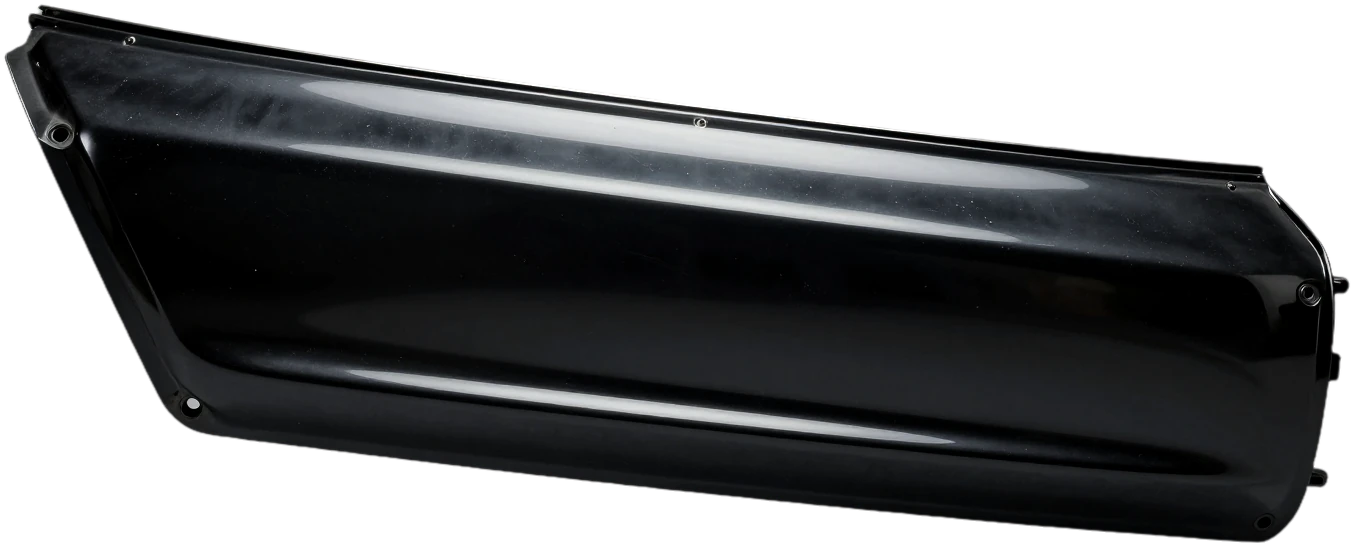
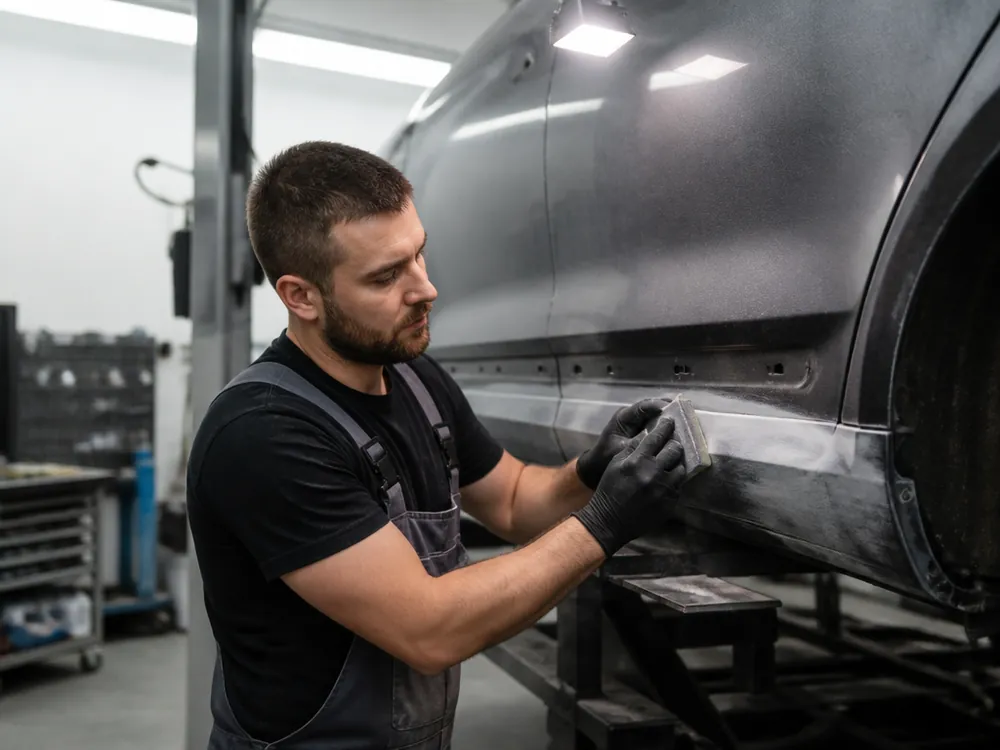
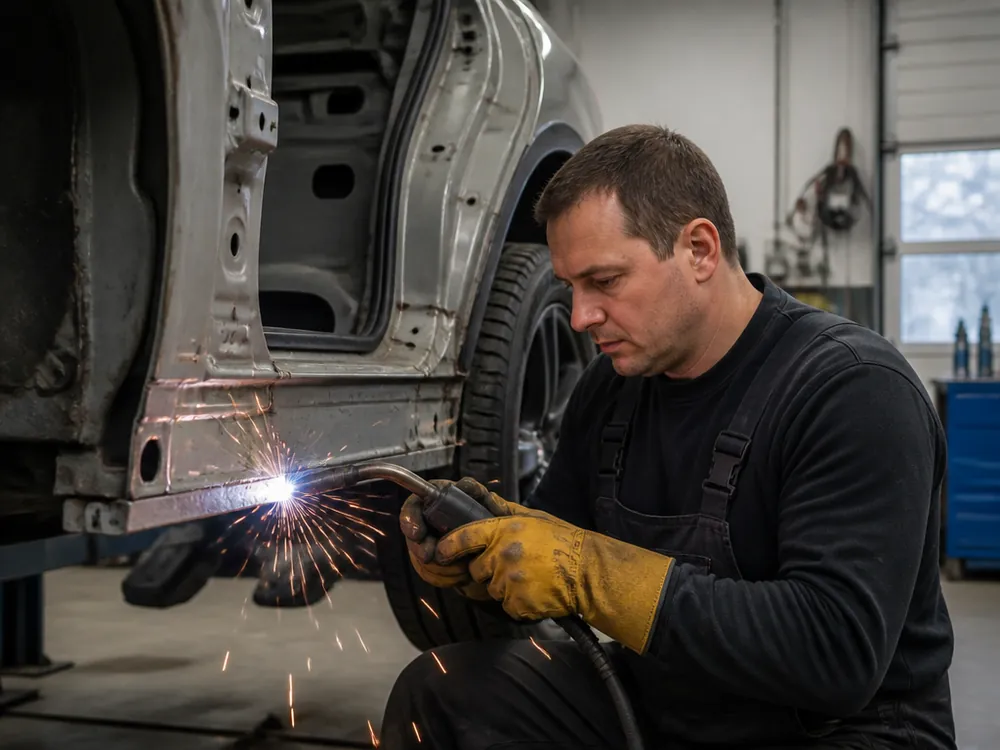
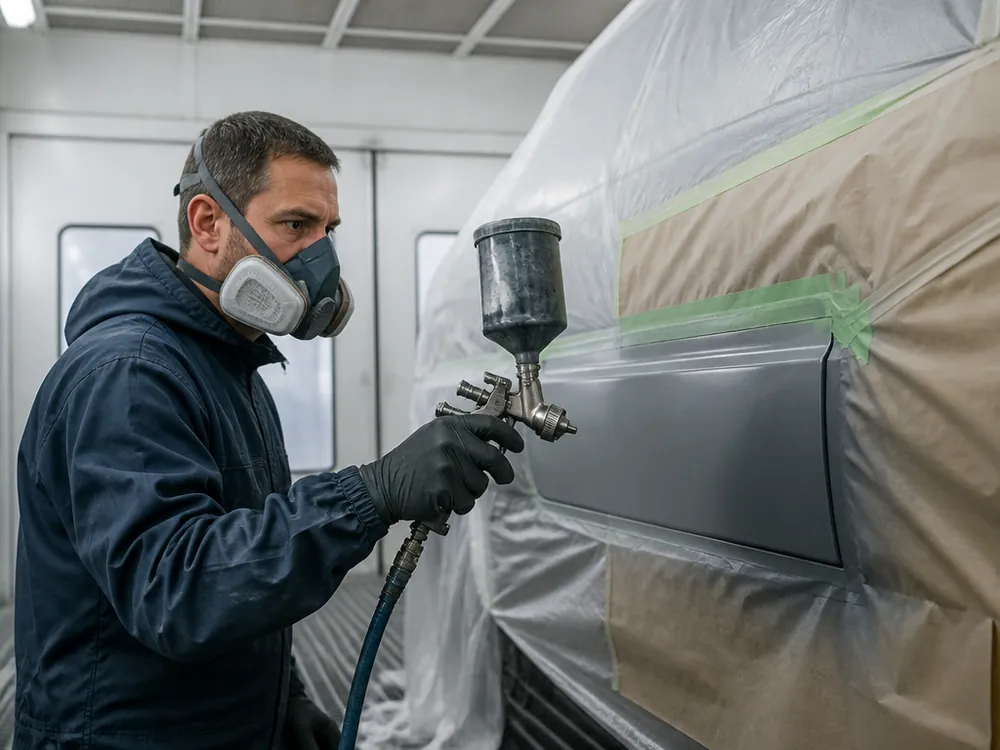
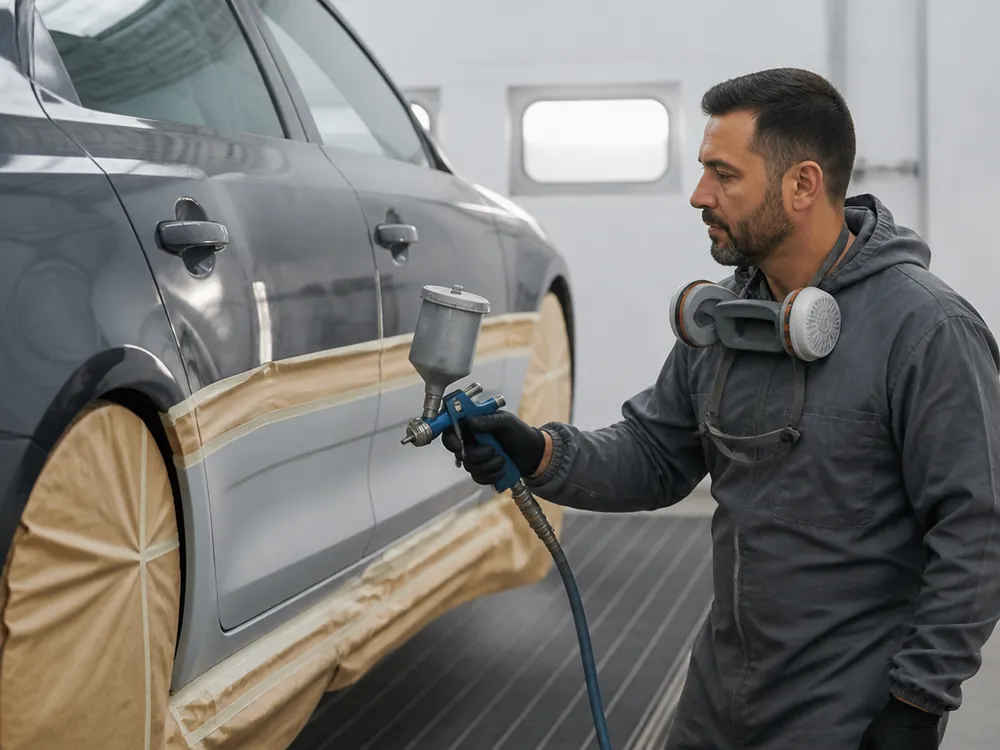
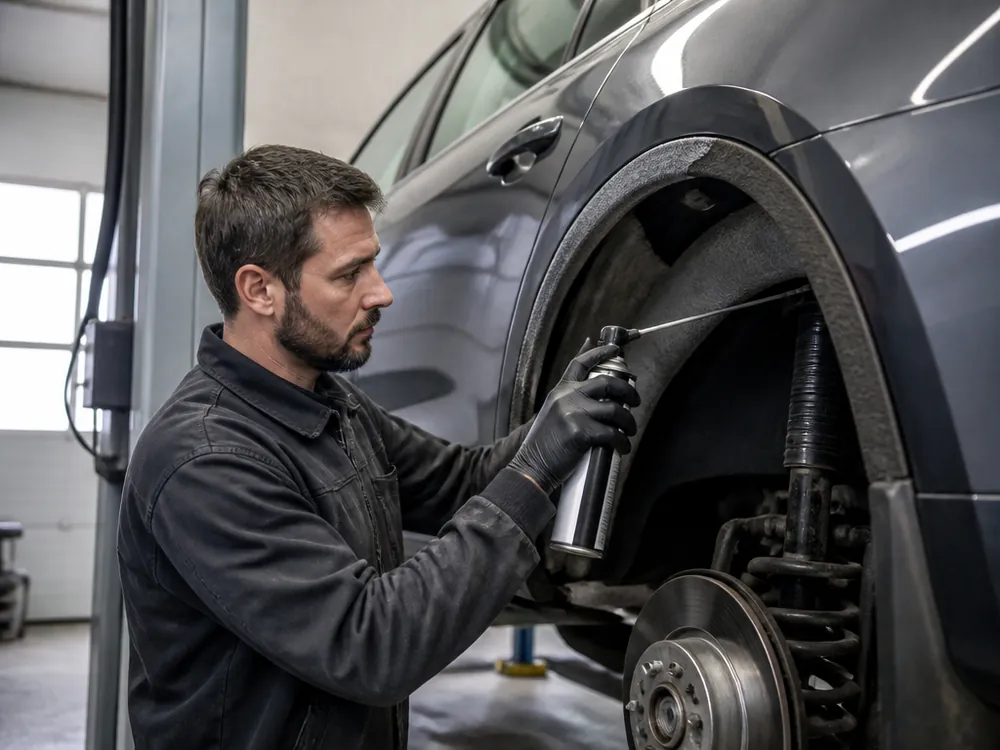
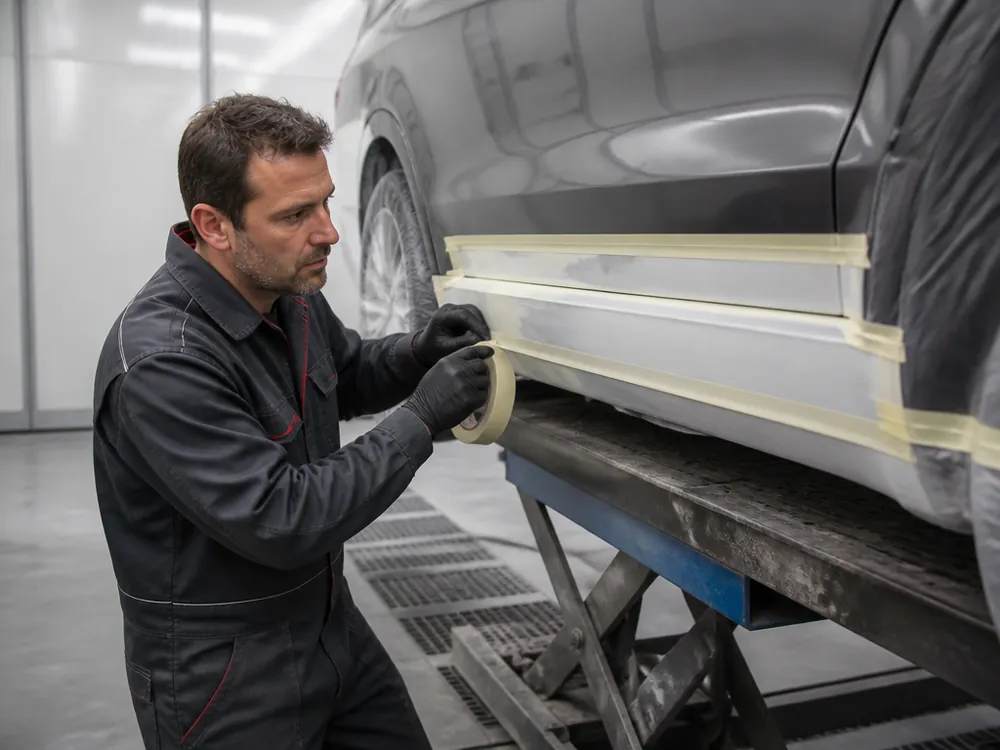
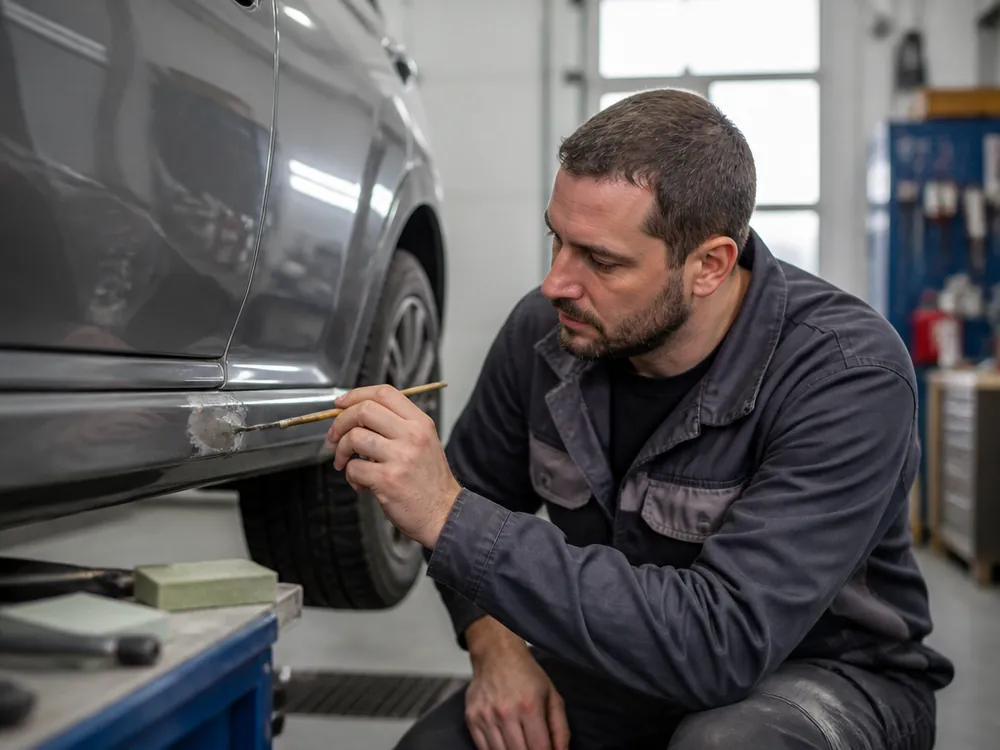
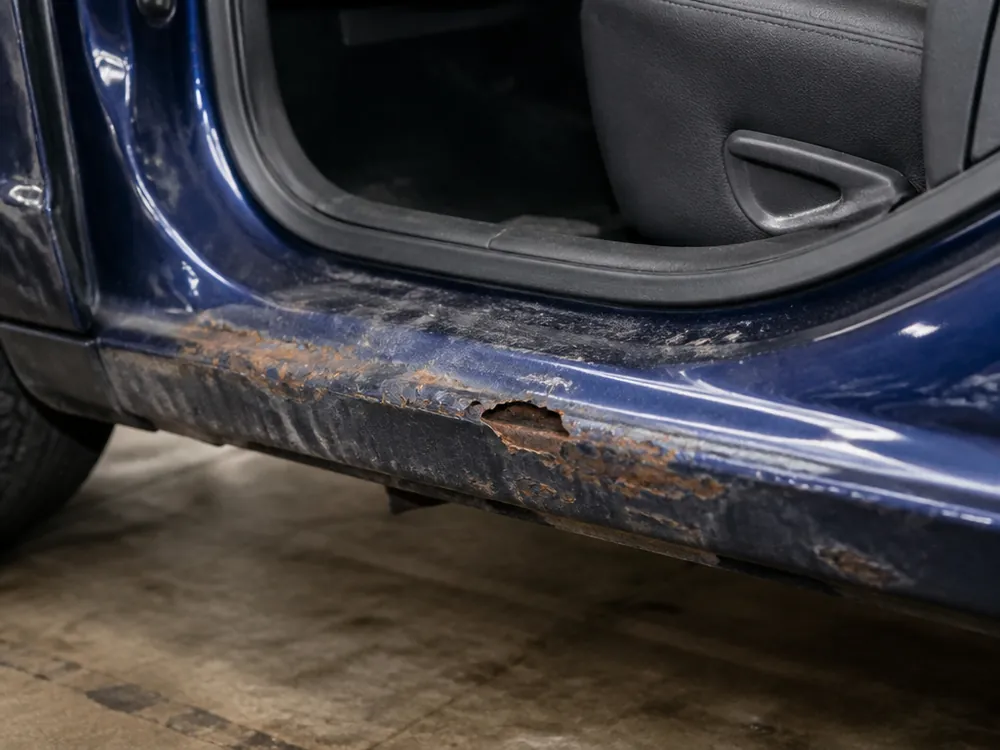
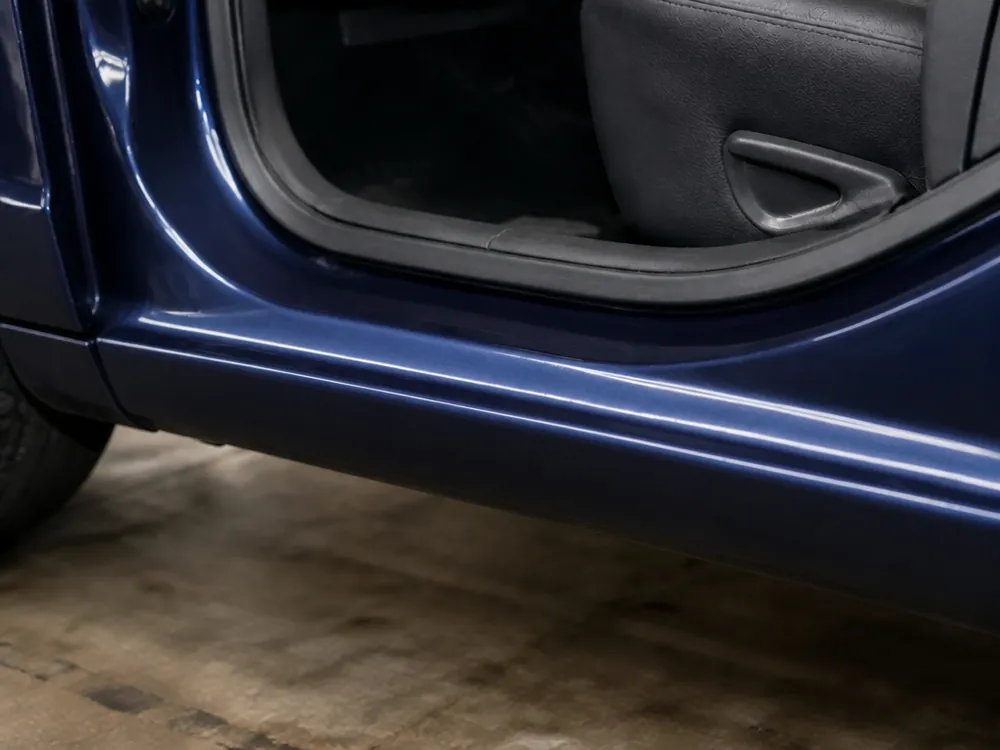
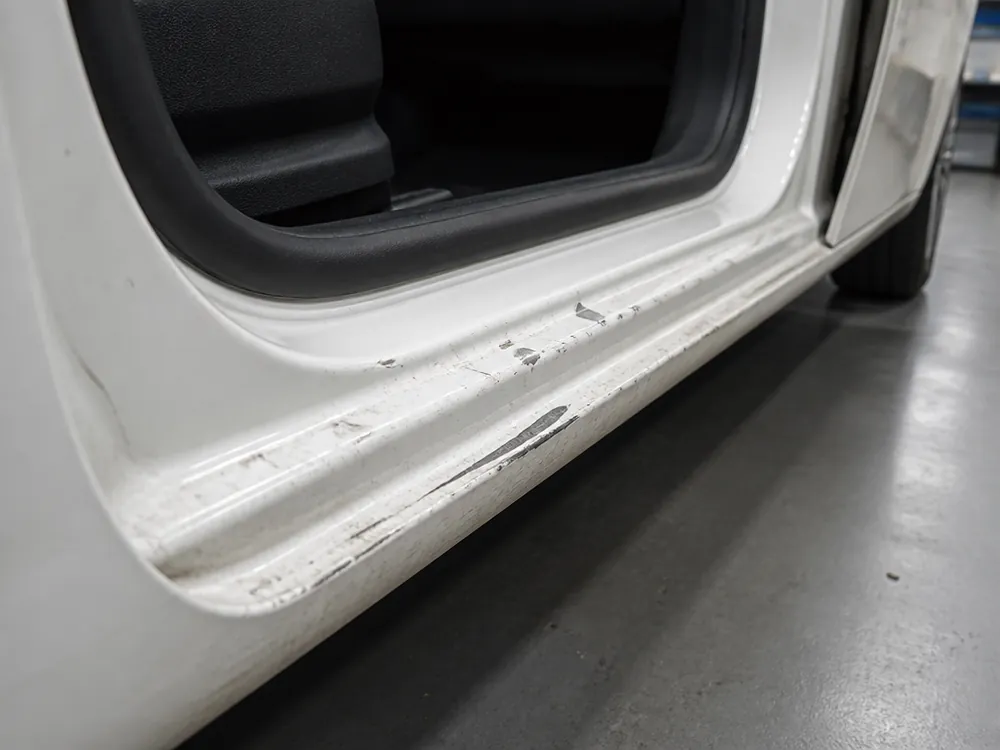
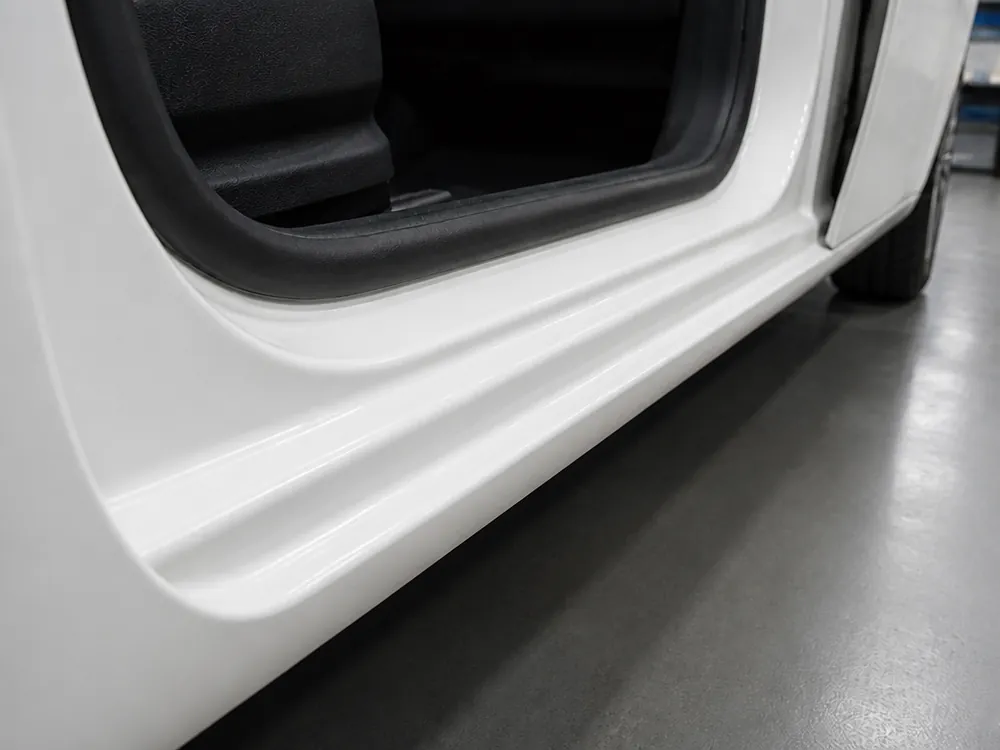
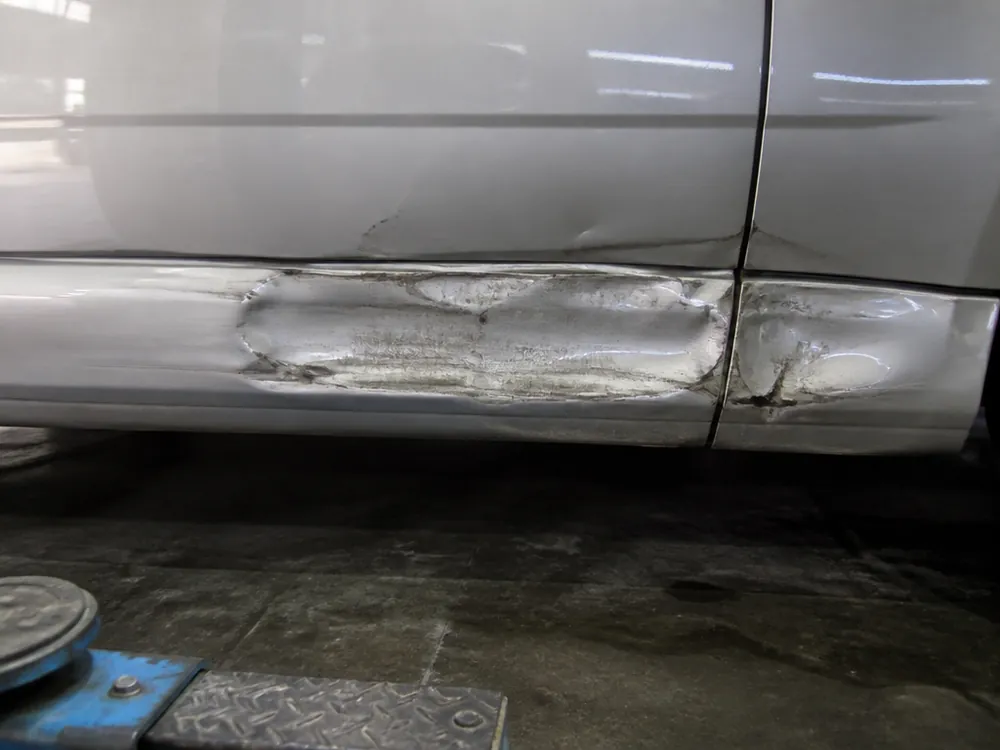
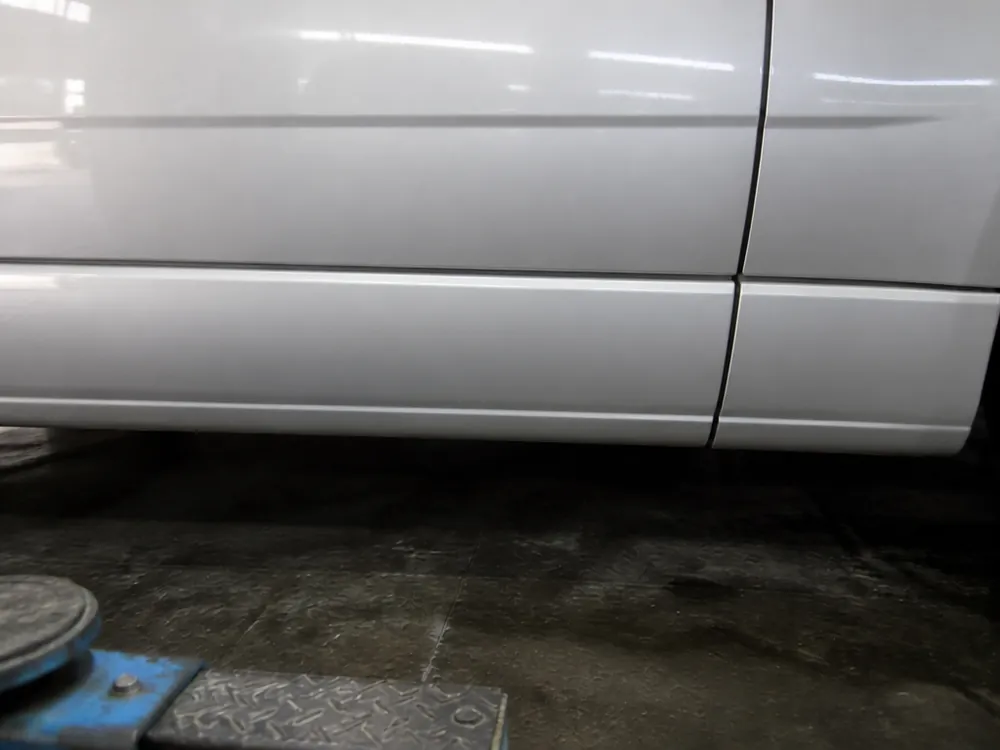
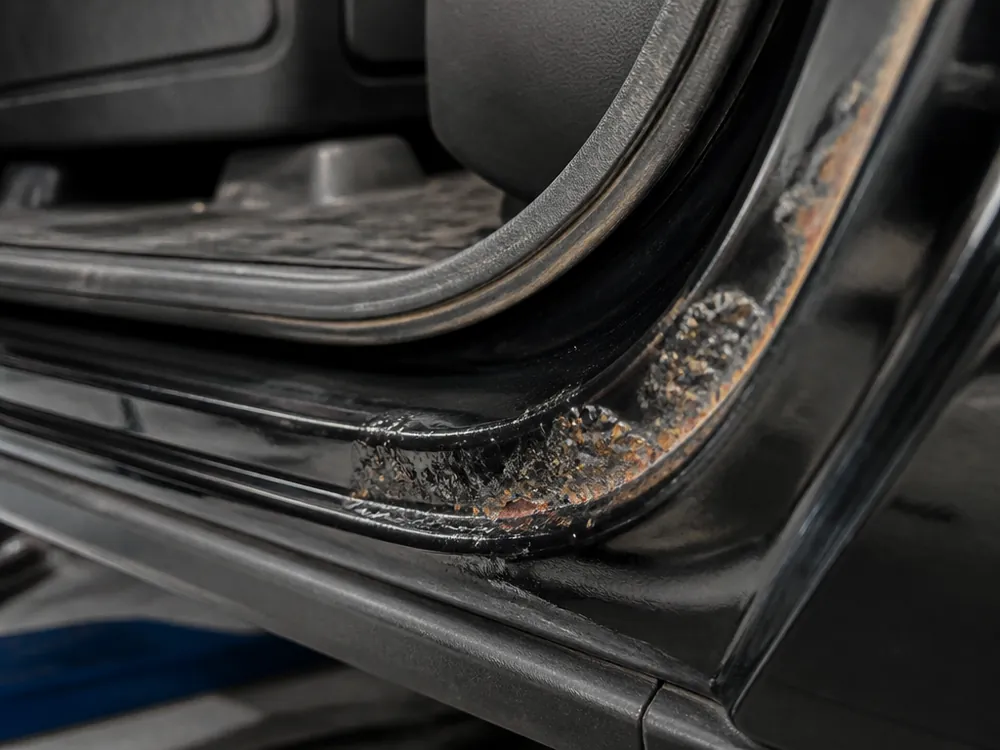
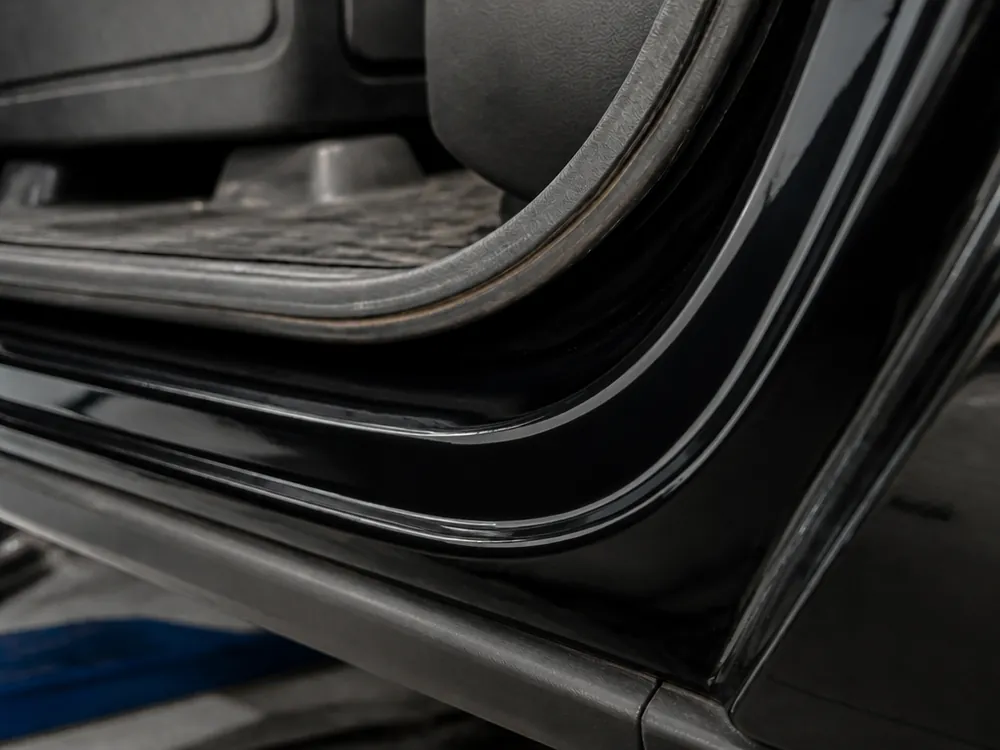
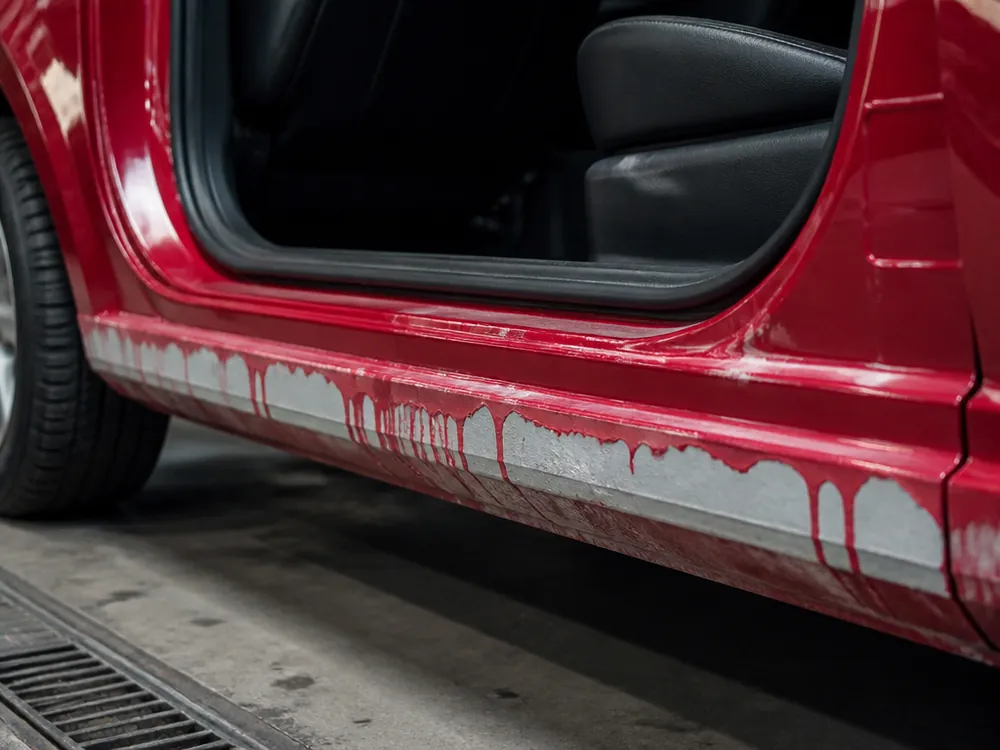
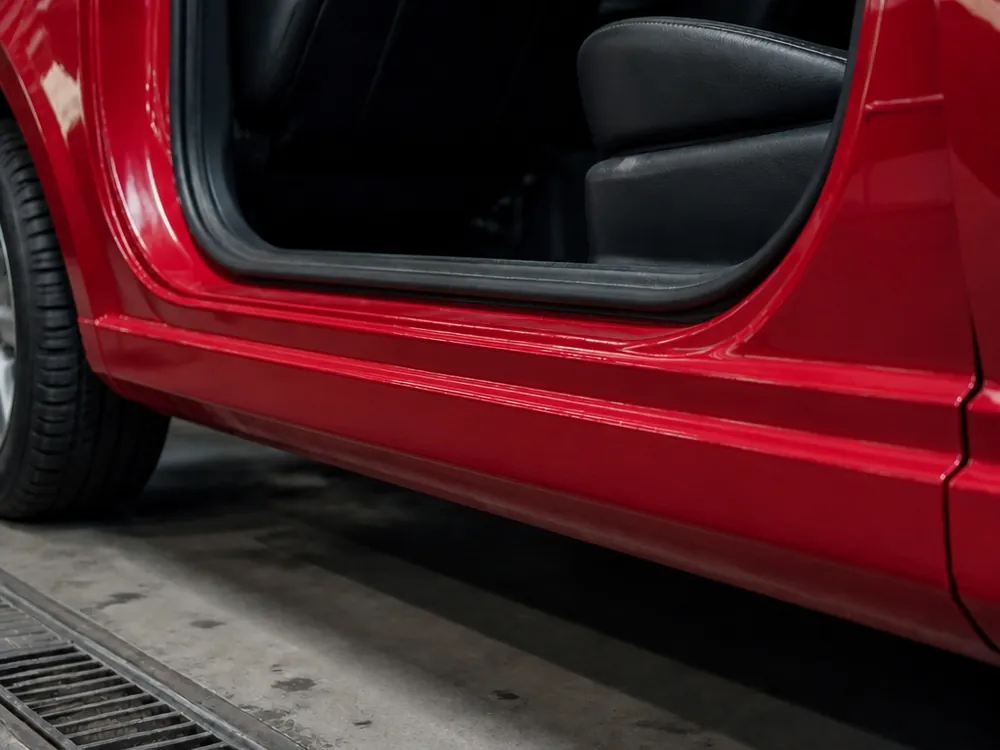
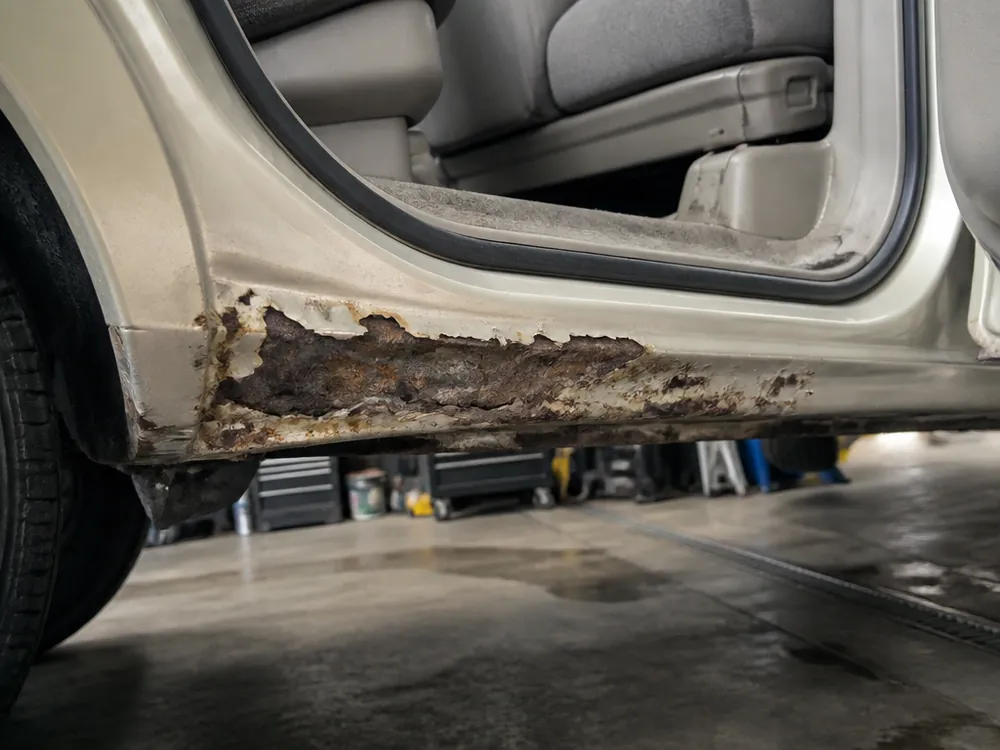
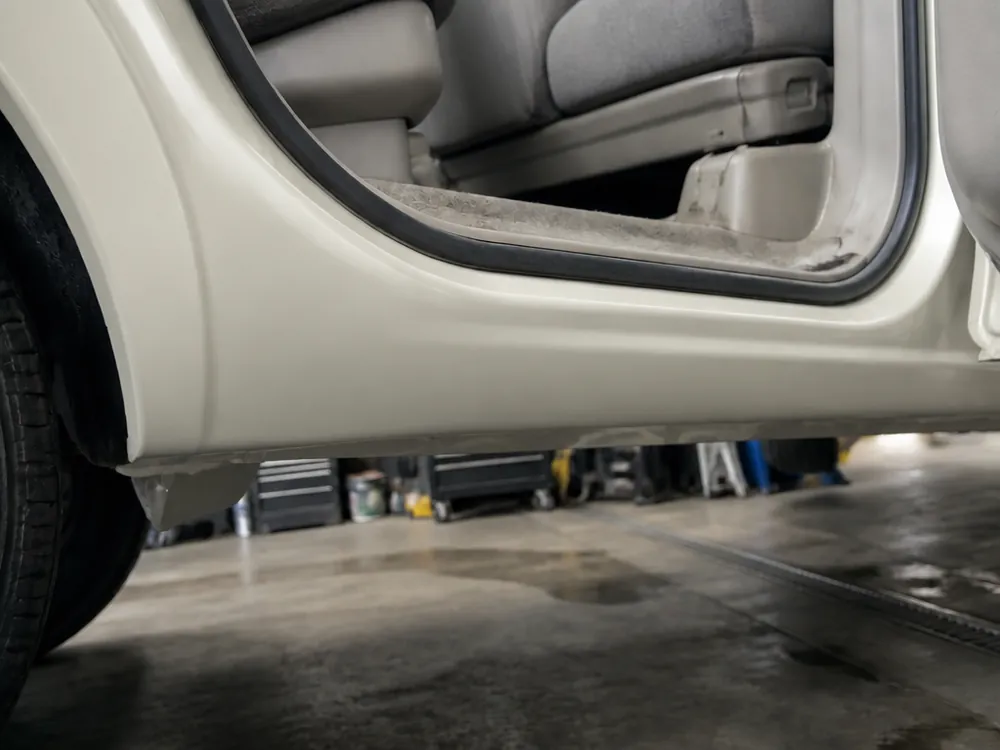
We'll restore your sills to factory condition: remove chips, scratches, and corrosion spots. We work with all types of paint coatings, matching color by code or sample. Warranty on work — 24 months, exact price — after inspection.
The exact cost depends on the condition of the rocker panel, the type of paint coating, and the scope of work. Below are the base rates.
Service
Duration
Warranty
Price
Inspection and diagnostics of the rocker panel (free when ordering painting)
15–20 minutes
24 mo
Free
Rocker panel painting without straightening (prep + painting)
1–2 days
24 mo
from 25 000 ₸
Rocker panel painting with partial straightening (up to 30 minutes of work)
2–3 days
24 mo
from 35 000 ₸
Rocker panel painting with medium-complexity straightening (up to 1 hour)
2–4 days
24 mo
from 45 000 ₸
Rocker panel painting with complex straightening (more than 1 hour)
3–5 days
24 mo
from 60 000 ₸
Rocker panel painting with rocker panel replacement (inserting new metal)
4–7 days
24 mo
from 80 000 ₸
Painting of one rocker panel (left or right) — basic
1–2 days
24 mo
from 22 000 ₸
Painting of two rocker panels (left and right) — basic
2–3 days
24 mo
from 40 000 ₸
Rocker panel painting with arch and hidden cavity protection
2–3 days
24 mo
from 50 000 ₸
Rocker panel painting for a station wagon or SUV
2–4 days
24 mo
from 30 000 ₸
Rocker panel painting with local touch-up (up to 10 cm of damage)
5–6 hours
24 mo
from 12 000 ₸
Express rocker panel painting (within 1 day)
1 day
24 mo
from 45 000 ₸
Mobile rocker panel painting (on-site visit to the client)
1 day
24 mo
from 55 000 ₸
Rocker panel polishing after painting (polishing for gloss)
1–2 hours
24 mo
from 8 000 ₸
Rocker panel painting with anti-gravel coating
2–3 days
24 mo
from 38 000 ₸
Rocker panel painting with primer and body filler application (elimination of deep scratches)
1–2 days
24 mo
from 20 000 ₸
Rocker panel painting in metallic, pearl (complex colors)
2–4 days
24 mo
from 55 000 ₸
Rocker panel painting with full removal of the rocker panel (removal and installation)
3–5 days
24 mo
from 70 000 ₸
Rocker panel painting with welding seam treatment and sealant
3–5 days
24 mo
from 65 000 ₸
The final cost depends on the condition of the rocker panel, the car brand, and the selected materials. We will give you the exact price after an inspection at the service station — book by phone or online. Warranty periods — see the page «Warranty»
06
Why people choose rocker panel painting at CARGID
Warranty.
Every promise — backed by a number or a document: work order, photos, removed parts.
24MO
warranty on labor — the term is stated in the work order.
Drying at 60°C
Polishing after painting
24-month warranty
01
Welded seam instead of filler
We replace the rocker panel with a continuous seam, cleaned and sealed. Filler at the joint cracks within a season — the seam withstands the load.
02
Primer in 3 layers
After the metal, we apply acid and acrylic primer, then base coat. Three layers keep rust from spreading from the inside a year later.
03
Cavities don't stay dry
We fill the arches and hidden cavities with anti-corrosion coating through the service holes. Outside the paint is intact, but rot comes from within — we eliminate that.
04
24-month warranty on painting
We cover blistering, peeling, and color change caused by us. The metal under the paint won't rust provided a chip isn't left for years.
07
Rocker panel painting: 6 steps to a perfect result
Steps.
We explain how the work goes from request to vehicle pickup.
01
Inspection and assessment
You submit a request on the website or by phone, we find a convenient time, and book you for a rocker panel inspection. Upon arrival, the technician inspects the rocker panel, evaluates corrosion and damage, and records the initial condition.
request on WhatsApp
02
Price approval
We quote the exact cost of work and materials and the completion time; you approve the plan and leave the car.
inspection and diagnostics
03
Surface preparation
We remove the rocker panel, strip the old paint and rust, and weld or pull the metal if necessary.
estimate before work starts
04
Protection and priming
We apply anti-corrosion primer and body filler, creating a perfectly even and protected surface.
work to factory procedure
05
Painting in the booth
We paint the rocker panel in a special booth at the required temperature and humidity for the best paint adhesion.
result check
06
Drying and polishing
We dry the paint, polish the joints and surface to a glossy shine, and check the color and texture. We reinstall the rocker panel, check the quality, provide a warranty, and hand over the car.
CARGID paints sills in Almaty at 129 Mukagali Makataev St.: first we inspect the metal and write an estimate, then we do the work. We paint in a booth, apply primer in 3 coats, and rustproof the hidden cavities through the service holes. The painting warranty is 24 months, and we put the timeline and terms in the work order.
When a Sill Can Be Painted and When It Needs Replacing
The scope of work is set by the condition of the metal under the paint, not by what the client wants. Here are three scenarios and how we tell them apart during the inspection.
Three Painting Scenarios and How to Choose Yours
We split the work into three scenarios — painting without straightening, painting with straightening, and sill replacement with welding — and choose the scenario based on metal thickness and the area of corrosion. Sill painting in Almaty starts with an inspection on the lift: we tap the edge, check the filler layer with a thickness gauge, and look into the service holes with a borescope. If the dent holds its shape and the rust is only on the surface, prep and coating are enough. When the body metal is pushed in but still intact, we add straightening — up to half an hour, up to an hour, or longer, depending on the area. We replace a sill by welding in a new part with a continuous seam, then grinding and sealing, because filler on the joint cracks within a season, while a seam takes the load. We write the estimate before work begins. If the surface gives way under a finger or rust spots come from inside, treating it on top will peel within a season — such a sill is better replaced.
What to Do If the Sill Was Already Painted Somewhere Else
During the inspection we find signs of a failed job — orange peel, peeling clear coat along the edge, rust coming out from under the filler at the joint — and show them to the client before any work. We start a redo not with sanding but with a check: there must be no through corrosion under the old coating. The technician strips the layer locally, assesses how much metal is left, and only then proposes a plan: local touch-up for damage up to 10 cm, full restoration with straightening, or replacing the section. We keep a photo report of the key stages and show and hand over the old parts — you can see exactly what was replaced. Our experience shows that most often a redo is needed where a weld seam was covered with putty instead of sealant and moisture got into the coating. Otherwise the new paint goes over the same problem and it all comes back a year later.
How the Painting Is Done and Why It Doesn't Rust from Inside
Here's the order of the coats and why a sill that looks good outside can rot from inside if the cavities aren't treated. We'll cover both the work sequence and the protection you can't see from outside.
Coats and Work Order from Metal to Clear Coat
Acid primer: the first coat goes right on the stripped metal and gives the adhesion that acrylic lacks on bare steel.
Acrylic primer: the second coat levels the surface and fills the sanding micro-relief so the base lays down evenly.
Base in the body color: we match the third coat by code and spray-out, otherwise a mismatch shows up on a faded body.
Clear coat in the paint booth: we apply the finish at a stable temperature in a clean bay with no dust or drafts — that way it lays down without orange peel.
Removing the trims: we take off the plastic trims before applying the coating, because moisture builds up under them and the edge stays unprotected.
Drying and inspection: after the booth we check the joints and edges and polish the blend if needed.
Hidden-Cavity Rustproofing and Anti-Gravel Coating
We spray rustproofing into the arches and hidden cavities through the service holes, and apply the anti-gravel coating right after treatment while the layer is fresh. We run the rustproofing through the inner channels of the sill and the arches — that's where condensation and road salt build up, and Almaty streets get plenty of salt in winter. The anti-gravel coating protects the outer edge and the bottom of the sill from wheel sandblasting, so it isn't put off for later: it goes on a fresh layer without bubbles or peeling. After metal replacement we grind and seal the weld seam instead of hiding it with filler — putty on the joint cracks within a season. The paint outside is intact while rot spreads from inside along the seam — that's the main reason for repeat repairs a year later. In my view, clients most often underestimate cavity treatment, even though sill repair and painting don't last long without it.
Color and Mismatch
We address the owner's main fear — "it'll be obvious it was painted." Here's how we match the tone on a faded body and what we do if the client still notices a difference.
How We Match Color on a Faded Body
We match the color by the body code and by a sample taken from the car itself, and we apply complex metallic and pearl colors with a blend onto the adjacent part — so the border doesn't read. For 40+ brands we have dealer scanners: they give the factory code, but on faded metal the code and the actual spray-out differ, so the technician takes a sample from the sill or fender and checks it against the catalog. Metallic and pearl contain particles that play differently in direct light and from the side, and blending onto the adjacent panel smooths that out. After drying we polish the treated area and check the tone in daylight, not just in the shop. On a faded body the factory code often doesn't match what's actually on the metal — so we take the sample from the part and use the catalog as a guide, not as a ready-made recipe.
One Sill or Two, and What to Do About a Chip
One sill: we apply with a blend onto the adjacent part so the coating doesn't clash with the fender and door.
Two sills: we do them in one visit — the left and right sides get coating from the same batch, so the tone matches.
Small chip: we cover damage up to 10 cm with a local touch-up, leaving the factory layer around it untouched.
Fresh chip after painting: we polish the area and touch it up in spots so we don't have to recoat the whole sill.
Timeline and How You Get the Car
We give timelines without promising "in three hours": here's what the time in the shop is made of and how booking, intake and handover work.
What the Timeline Depends On and Why "in a Day" Is a Red Flag
work options and factors that extend the timeline
Work option
What's included
What the timeline depends on
Local touch-up
Up to 10 cm of damage
Size of the defect
Painting without straightening
Prep and painting
Paint type
Painting with straightening
Metal straightening up to an hour
Depth of the dents
Sill replacement
Metal insert, welding, sealant
Amount of welding
Express painting
Separate same-day schedule
Paint booth load
Booking, intake and vehicle handover
The service advisor takes in the car and manages the work order through to handover, and with a booking we take you in without waiting — daily from 09:00 to 20:00. During the inspection we record the damage and agree on the estimate: work starts only after your approval, and we provide photo reports at the key stages. Painting car sills takes longer the more complex the metal prep and color matching are. Before handover we do a test drive and show you the old parts if anything was replaced. We paint wagon and SUV sills with the body geometry in mind: they have a different part area and the trims come off differently, so we calculate the scope at the inspection, not over the phone. It's worth booking in advance — that way the car goes into work at the agreed time instead of waiting in line on the lot.
Warranty and care after painting
We explain exactly what our warranty covers, which cases it doesn't, and how to treat the new coating in the first weeks so you don't have to repaint.
What the 24-month warranty covers and what it doesn't
We give a 24-month warranty on sill painting and record the term and conditions in the work order and the completion certificate at handover. The coverage applies to the work performed and the parts installed: peeling clear coat, paint blistering on prepared metal, seam defects after metal replacement. For a warranty case, diagnostics are free — the technician inspects the part, checks it against the stage-by-stage photo report and states the cause. Over 12 years, 9,000+ cars have gone through our shop, and most body-related requests are about redoing someone else's work. The warranty doesn't cover an accident after the repair, third-party interference, normal wear of consumables, or a part brought in by the client — we record this in the documents in advance. If the panel was painted somewhere else, our certificate for the previous work doesn't apply — first we look at how much metal is left from the prep.
Your own materials and care in the first month
We can accept your own paint, clear coat and body filler, but the warranty applies to the work performed and the parts installed, and it doesn't extend to the client's material. As for parts, the choice is yours: OEM, aftermarket or client-supplied parts — we work with any option, but we check brought-in metal for geometry and corrosion before painting. Our service advisor records in the work order whose materials were used — in a dispute, the basis will be clear. In the first month after painting, it's best not to wash the panel with a pressure washer or rub it with abrasives — fresh clear coat hardens gradually, and early washing leaves dull spots. Polish restores the gloss without abrasives, and you can use it after two weeks. At the car wash, ask them not to aim the jet at the joint with the wheel arch — that's where the sealant takes the longest to reach full strength.
What to Know Before Sill Painting
We've gathered the key points that determine the result of sill painting and help you avoid redoing the work a season later: from choosing the scenario based on the metal to the paperwork you get in hand.
Scenario based on the metal: the method is chosen by the condition of the sill, not by preference — hidden corrosion under paint without straightening will come back.
Anti-corrosion treatment of cavities: wheel arches and hidden cavities are filled through the service holes, otherwise rot spreads from the inside even though the coating looks intact outside.
Color matching: the shade is taken from a sample off a body panel, not just by code — faded paint gives a noticeable mismatch.
Timelines: the time depends on the scope and drying of the layers, and a promise of "a couple of hours" with welding is a red flag.
Warranty: the term and conditions are recorded in the work order and the certificate at handover, so you have something to check against.
10
Frequently asked questions about rocker panel painting in Almaty
Questions.
Price, timeframes, warranty, payment — 10 questions asked most often.
10
Didn't find an answer?
Message us on WhatsApp — a service advisor will reply within 5 minutes.
The cost of painting one rocker panel at CARGID is from 25 000 to 45 000 tenge. The final price depends on the condition of the rocker panel, the complexity of the defects, and the type of paint and coating materials chosen. For example, if only local painting with a blend is required, it is closer to 25,000-30,000 tenge. If corrosion spots need to be sanded, filled, and the panel painted completely, it is up to 45,000 tenge. We will give you the exact amount after a free inspection on the lift, since visually you cannot always see all the hidden damage.
Standard rocker panel painting takes 1-2 working days. This is provided there is no serious corrosion and no welding is required. If the rocker panel has rusted through and a metal insert or replacement of a fragment is needed, the timeframe increases to 3-4 days, since time is needed for welding, applying anti-corrosion coating, and complete drying of each layer. We do not do fast 'in 3 hours' jobs — that is always a compromise with quality. We release the car only after the paint has fully cured, to avoid chips and peeling.
Yes, we provide a 24-month warranty on all painting work. It covers paint peeling, blistering, and corrosion spots in the painted area (provided there is no mechanical damage). If within a year you notice defects related to our work, we will fix them free of charge, usually on the day you come in (complex repairs take up to 3 working days). Important: the warranty does not apply if the operating technology is violated, for example, if you hit the rocker panel or washed it with aggressive chemicals, damaging the paint coating.
Booking is advisable: first the technician inspects the rocker panel to determine whether there is corrosion and whether welding or filling is required. The painting itself with preparation usually takes from one to two days; the exact timeframe depends on the area of damage and the need for drying between layers. If the scope is small, the work can sometimes be done on the day of your visit — check when booking.
Technically you can, but we do not recommend it. First, we cannot guarantee the quality of the materials you bought — sometimes counterfeit products are sold as original paint. Second, if the paint is not the right one for your type of paint coating, cracks may appear over time or the shade may change. We use proven systems (for example, Sikkens, Standox, Spies Hecker) and provide a warranty on the result. If you still want to use your own material, let us know in advance — if it is suitable, we will accept it, but the warranty on the paint coating is void in that case, and you bear responsibility for the quality of the paint.
We strive to ensure such situations do not occur, but if after the work you discover defects (orange peel, runs, uneven color, peeling), come to us within the warranty period. We carry out diagnostics: if the problem is caused by our defect, we repaint the rocker panel at our expense. If the problem is due to your actions (for example, you scratched the rocker panel or were in an accident), we will offer a discount on repainting. The main thing is do not try to fix it yourself by sanding or polishing — that will make the situation worse and complicate the process.
Local painting is when only the damaged area is painted without covering the entire part. It is usually practiced on small scratches and chips, but on rocker panels it rarely looks aesthetic, since the rocker panel is long and the blend can be noticeable. Full rocker panel painting is the most reliable option; the paint is applied to the entire part, which ensures uniformity of color and gloss. Painting with blending means we extend the paint onto the adjacent part (for example, onto the fender) so the color transitions without a visible border — it is used if the rocker panel is not painted completely or the color transition needs to be hidden. For a rocker panel, the optimal choice is full painting or local painting with blending if the rocker panel is long and the body is light-colored.
For the first 30 days after painting, the part is especially vulnerable: the paint has not yet fully hardened. Avoid high-pressure washing and aggressive chemicals — only hand washing with a soft sponge and shampoo. Do not take the car to a self-service wash with acids. Try not to hit the rocker panel on curbs or sharp objects. After washing, wipe the rocker panel dry so no streaks remain. After a month, you can use regular polishes (but not abrasive ones). If you notice chips, treat them with a special touch-up pen to protect the metal from corrosion.
Payment is accepted in cash and by transfer to an account; cashless payment is possible for legal entities. The cost depends on the degree of damage to the rocker panel, the scope of preparation work — sanding, filling, priming — and the selected paint shade. The technician states the final amount after inspecting the car before starting work.
If the technology is followed and the car is used normally, quality rocker panel painting lasts 5-7 years without losing its appearance. Important: the rocker panel is the most vulnerable area to chips and corrosion (sand, stones, road chemicals). It is also important that the anti-corrosion treatment before painting is done correctly. If you drive on dirt roads or are constantly in a city with road chemicals, the term may shorten to 3-4 years, but this will not be a defect — it is operational wear. Exact prices are in the price list on this page.
11
What clients say about our sill painting
Reviews.
We collect ratings on the website and on maps — we hide nothing.
4.8
872 reviews on the website 1 900+ ratings in total
Alexey
Toyota Camry
Came in with a rocker panel on a Toyota Camry, there was rust. They did it quickly, in 2 days, the price was 45 000 tenge, generally fine. The color match was perfect, you can't tell it from the factory one. Thank you, I'm satisfied!
Maria
Kia Rio
Had the rocker panel on a Kia Rio painted, there were chips. The guys did everything neatly, matched the color, now it's invisible. It cost 32 000, for me that's reasonable. The only thing is I had to leave the car for a day, but that's fine. I recommend it!
Dmitry
Solaris
A rocker panel on a Hyundai Solaris after an accident. They did dent repair and painting, the result is excellent. The price was 58 000 tenge, it took 3 days. The technicians explained all the stages, you can tell they're experienced. Now the rocker panel is like new, no worse than before the accident.
Aizhan
I ordered rocker panel painting on my car, there were scratches. I really liked that they scheduled me without a queue and did everything quickly. The quality is excellent, the color matched. Thank you, I will recommend them.
Bolat
Менде порогта коррозия болды, тапсырдым, керемет жасап берді. 65 мың теңге төледім, екі күнде бітірді, енді автокөлік жаңадай. Рахмет, келесі жолы тағы соғамын!
Igor
I painted the sill on a Skoda Octavia, there was hidden rust. The guys opened it up, cleaned it, painted it — all spot on. 3 days, 65,000 tenge, but for such quality it's not a pity. The car is like new. I recommend!
Viktor
Painting the sill on a VW Passat. Done in a day, price 40,000 tenge. Quality is super, colors matched, polishing, no drips. Satisfied, will come again.