Truck Painting in Almaty at CARGID's Own Paint Shop
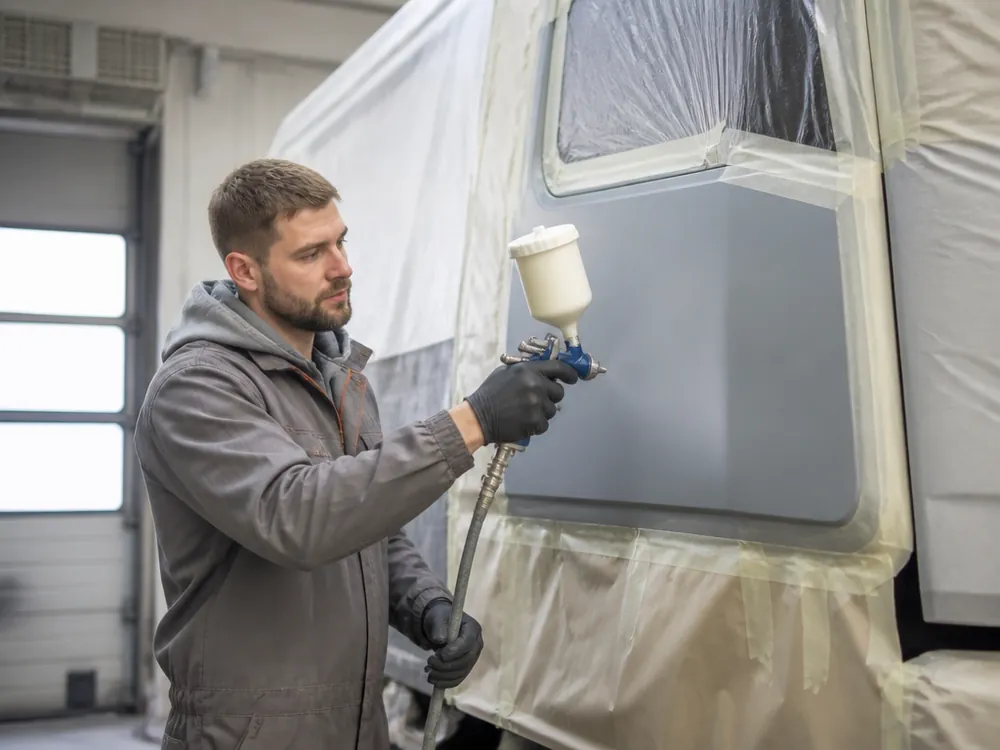
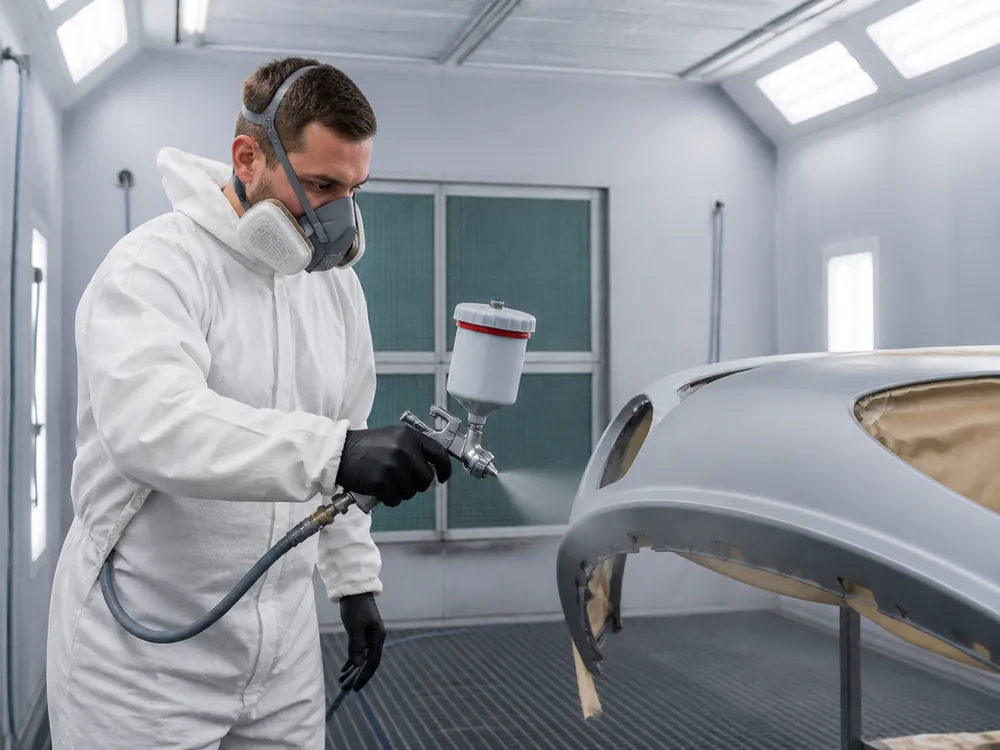
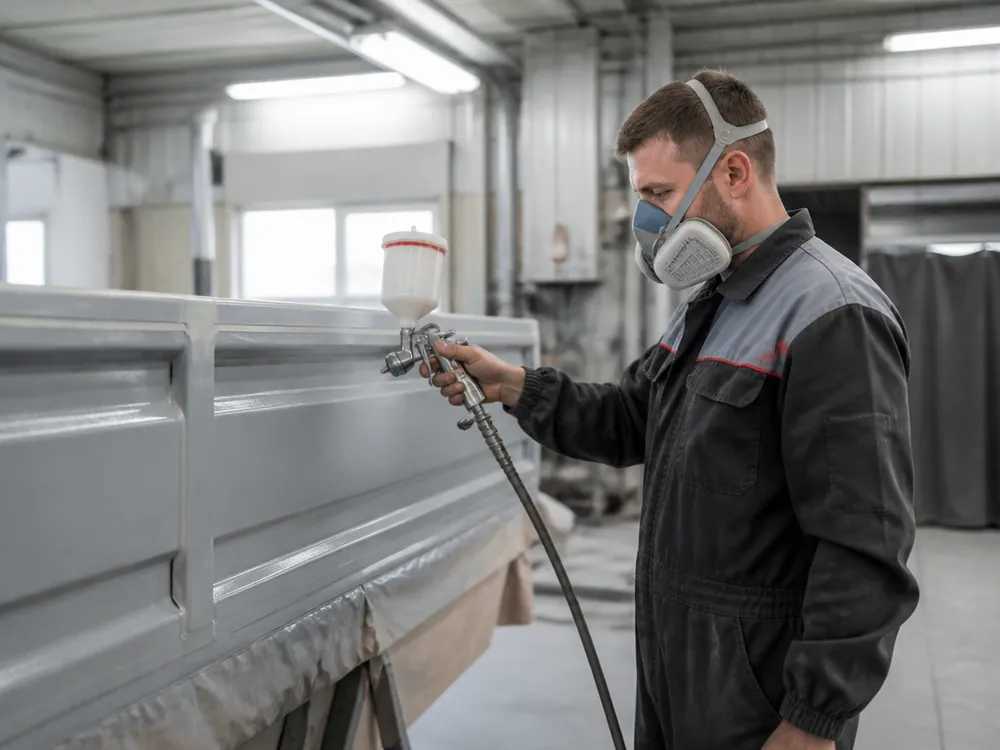
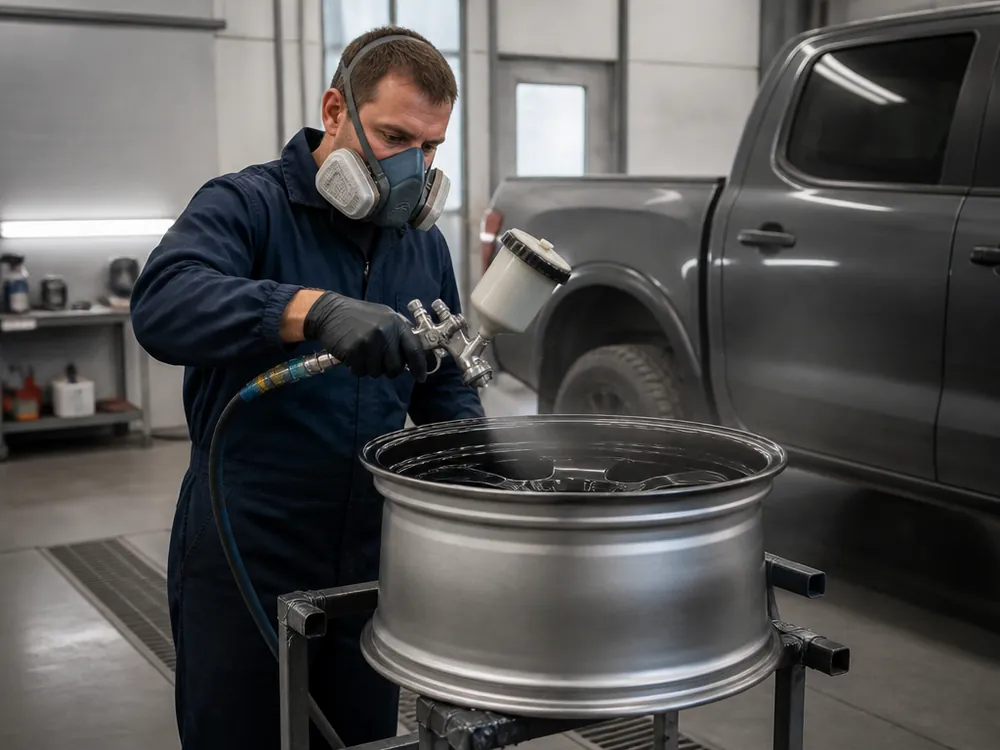
CARGID paints trucks in Almaty in its own spray booth: cab, side panels, frame, wheels, tarp and semi tractor. We paint in 3 coats (primer, base, clear) with each coat baked at 60 °C, and we disassemble the cab so there's no overspray on the glass. Painting warranty is 24 months, recorded in the work order.
Types of Truck Painting and When You Need Each
The scope of work depends on what's damaged: a single part, a body zone or the whole body. Here's how we choose by zone and by the condition of the paint.
When Partial Painting Is Enough and When You Need a Full Job
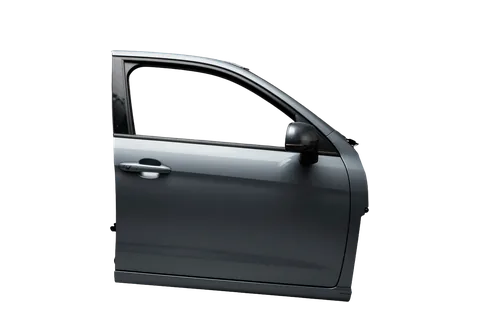
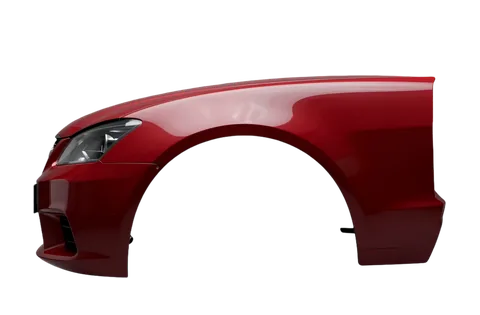
We paint the cab partially (fenders, doors, pillars) or fully, a side panel in one section up to 3 m², the bumper and the sill separately — we set the scope by the damaged zone and the condition of the clear coat. Partial restoration of a truck cab fixes local defects without disassembling the whole body, while a full job is needed when the damage spans more than one panel. Local treatment of scratches and chips plus body polishing solve the problem while the clear coat around them is intact, and paintless dent removal (PDR) preserves the factory finish where there's no breakthrough. Truck painting in Almaty follows the same principle: first we assess the zone and the condition of the clear coat, then we choose a partial or full scope. If the defect is local and the clear coat around it holds, polishing or local restoration of the part is cheaper and faster than a full job; a full cycle is planned when there are several corrosion spots and the color transition can no longer be hidden.
Frame, Wheels, Tarp and Tractor as Separate Jobs
| Job | What we paint | Technology | Key point |
|---|---|---|---|
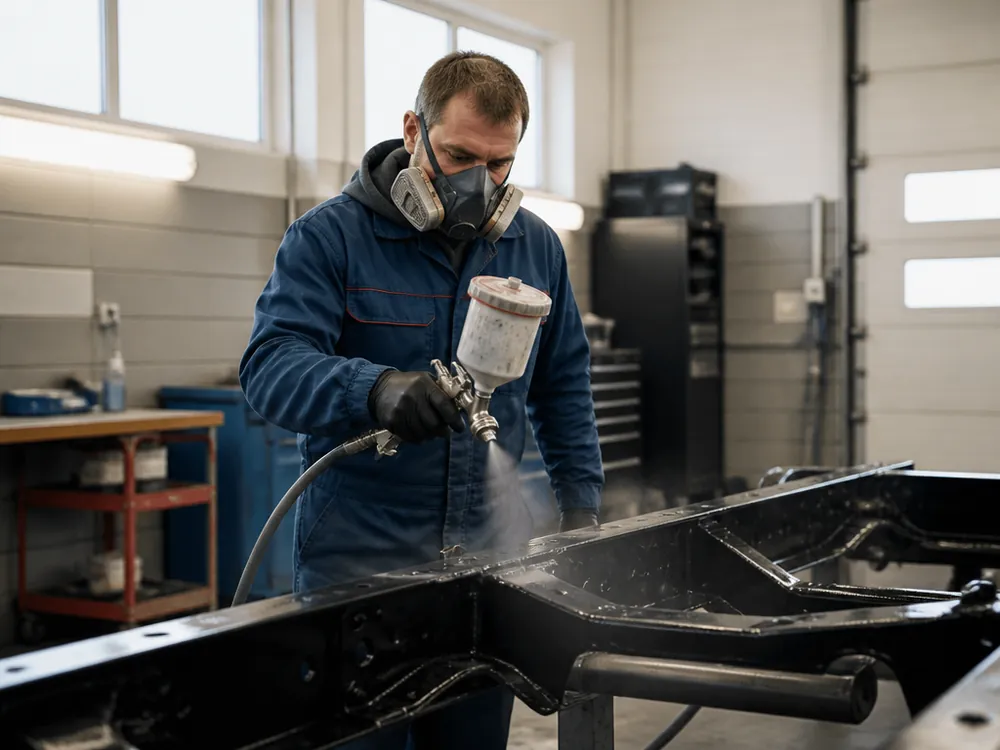
| Frame | side rails, crossmembers | two-component enamel | protection from road chemicals and corrosion |
| Wheels | 1 wheel | sandblasting, powder, baking at 200 °C | lasts longer than liquid paint |
| Tarp | per 1 m² | flexible coating | doesn't crack at the folds |
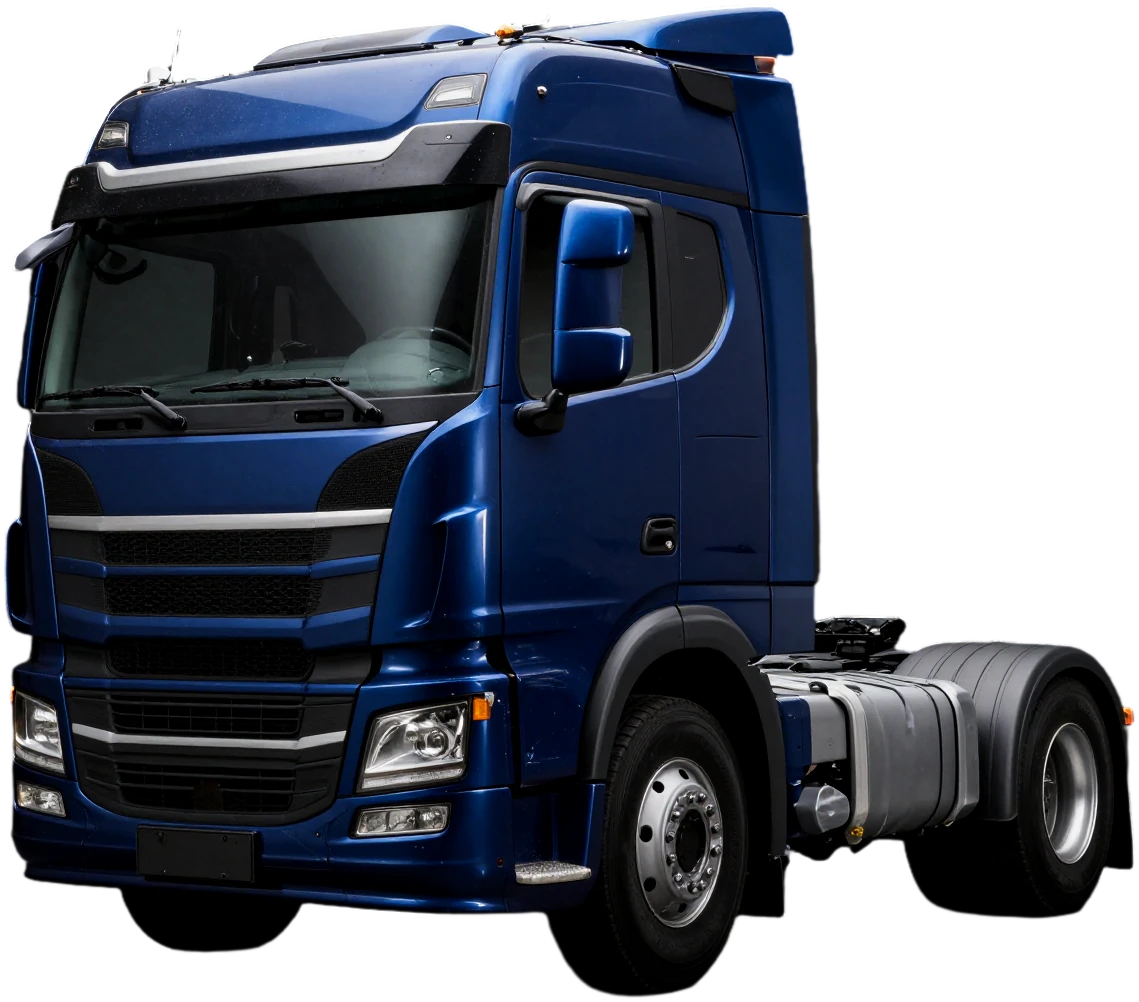
| Semi tractor | cab and bumper | 3 coats, single color | one shade for the whole set |
| Side panel | one section up to 3 m² | 3 coats with a blend | no spot at the seam |
| Sill and step | small parts | 3 coats | a common corrosion zone |
Why Color Mismatch Happens and How We Prevent It
Color mismatch is a truck owner's biggest fear when it comes to painting. Here's where it comes from, why a shade that looks perfect "by code" leaves a spot on the body, and what we do so the new area doesn't stand out against the old one.
Where Color Mismatch Comes From
Color mismatch happens for three reasons — paint from a different batch, the wrong shade match for faded clear coat, and applying "in a spot" without blending into the neighboring parts. Tinting batches don't match each other by a few shades: the same color number from different supplies gives a different shade, and on a large panel that's visible from several meters away. The second reason is fading: over the years sun and road chemicals change the color of the clear coat, so a fresh coat from the can looks darker or lighter than the original finish. The third is local application without blending: the painter covers the chip but doesn't feather the transition, and the border reads like a rectangle. Clear coat faded over the years changes shade, so working strictly "by code" without matching to the specific body is a sure way to a visible spot even with perfect technique.
How We Match the Color and Paint with a Blend
We match the shade to the specific body, take paint from a single batch for the whole scope and apply it with a blend into the neighboring parts so the border is invisible. We start matching with tinting by sample: we take off the fuel door or cut out a fragment of the old coating and compare it with spray-outs on metal, not on paper — paper is off by half a shade. We check the finished area and the neighboring panels with a portable lamp at different angles: under side light you can see whether the shade blends in. The blend is done at the panel borders and on body curves where the eye doesn't catch the seam, so we plan partial work on a truck cab along the split lines, not in the middle of a flat panel. We polish the fresh coat together with the neighboring ones so the orange peel and gloss match the factory finish.
Body Prep and Painting in 3 Coats
Durability of the finish is decided not by the last strokes of the spray gun but by metal prep and the drying mode of each coat. Here's what we do with corrosion and old paint, and why primer, base and clear dry separately.
What Body Prep Includes
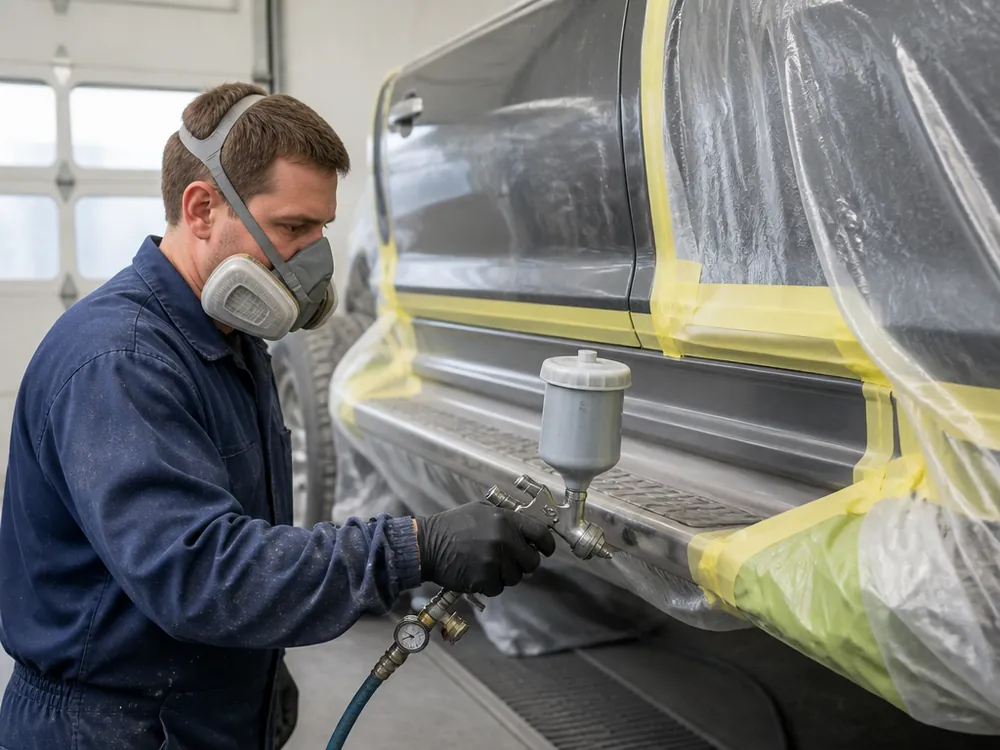
We strip the old paint and corrosion spots, degrease the surface, fill the uneven areas and mask off the parts that aren't being painted, and only then apply primer. We strip down to bare metal at the corrosion spots, not "by eye": the technician removes the loose paint, grinds out the pits, washes and degreases the panel before filling. We don't lay repair filler on in one thick slab — the coats are thin and each one is dried, otherwise moisture stays under the finish. Parts that aren't being painted — handles, badges, glass edges, seals — we cover with film and masking tape. In the spray booth every panel gets primer, and corrosion spots are additionally treated with an anti-corrosion compound. Truck painting starts with exactly this kind of prep, and how long the finish lasts depends on it. If rust isn't taken down to bare metal and is just covered with primer, corrosion keeps growing under the finish and shows up as blisters within a few months.
Why We Paint in 3 Coats and Dry at 60 °C
We apply three coats — primer, base, clear — and dry each at 60 °C: a thin coat gives no depth, a thick one runs, so we keep to three coats with drying. The primer fills the micro-relief and gives adhesion to the metal and filler, the base is responsible for color and coverage, and the clear holds the gloss and protects the pigment from UV and road chemicals. In the spray booth we control temperature and drying time with instruments, not "by feel." For side panels and frames we use polyurethane paint — it's denser than acrylic and takes gravel hits better. Painting a truck differs from a passenger car in the area and geometry of the panels: on a side panel and a van the coat goes onto large flat surfaces where a run is more noticeable. You can't rush the drying — an under-dried coat gives orange peel and weak adhesion, so the process takes several days, not one, and that's the price of a durable finish.
Cab with Disassembly and Protecting the Glass from Overspray
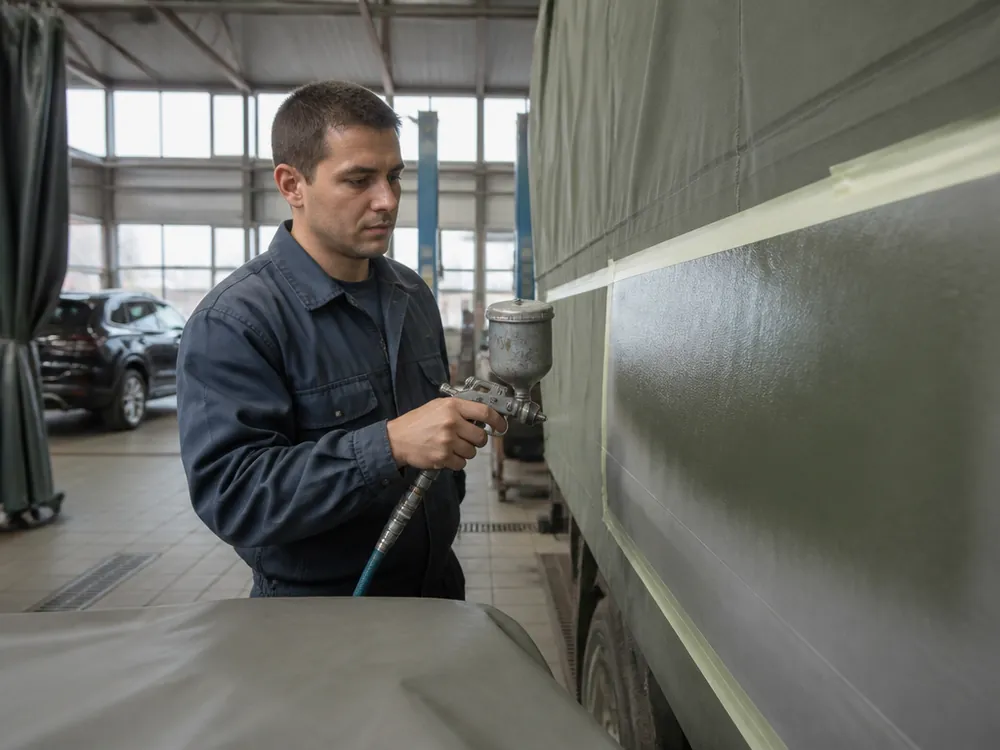
We paint a truck cab with disassembly: we cover the glass and seals with film so there's no overspray, and after drying we put the parts back without scratches. We remove the grille, mirrors, door handles, moldings and some of the trim plastic — that way the paint reaches the edges and seams where the spray gun otherwise can't get. We cover the glass with masking film around the perimeter and tape off the seals: overspray on rubber won't wash off with solvent without leaving a trace. After drying we put the parts back, torque the fasteners to spec, and check the door and hood gaps. Cab work with disassembly takes longer, but that's what gives clean lines. A truck has a lot of glass area and many trim parts, so without disassembly the overspray settles on the rubber and in the seams, and you won't be able to remove it without a trace.
Timelines, booking and how the work goes at the shop
We show the vehicle's path from the call to pickup: intake, written estimate, work in the booth, photo report and test drive. That makes it easier for the owner to plan runs and know what to expect time-wise.
From booking to pickup
The service advisor takes in the vehicle and manages the work order through to pickup, and we're open daily from 09:00 to 20:00, seven days a week — with an appointment the truck goes in without waiting in line. We do a photo report at the key stages so you can see exactly what was primed, painted and reassembled. The shop is at 129 Mukagali Makataev, and that's also where the paint booth and the 3D alignment stand are. First comes paint diagnostics and a written estimate, and we start the repair only after you agree. Booking ahead isn't about the line — it's to free up the booth for a specific amount of work, which determines what day the truck goes into the shop, so call before the vehicle is parked up.
How long it takes and whether it can be sped up
The timeline depends on the scope: local work on one part takes less time than a full truck cab painting, and for priority jobs we have a rush mode starting from 1 day. The difference in days isn't the painter rushing — it's the number of layers and drying at 60 °C: primer, base and clear coat dry one after another, and each layer needs its own pause in the booth. Rush mode makes sense when the truck is needed for a run: we put the order first in the booth, but we don't cut the process — a thin layer has no depth, and a thick one runs. You'll hear the exact timeline at intake, along with a written estimate before work starts — plan your return to the road by it.
24-month warranty on truck painting and what it covers
The warranty takes away the main fear about painting — that a bubble will show up in a month or a different shade will come through. But it has limits, and we're upfront about them before work starts.
What the paint warranty covers
We give a 24-month warranty on painting and record the term and conditions in the work order and the completion certificate when the vehicle is picked up. Two years cover clear coat peeling, blistering and primer showing through — the typical results of breaking the application process. The warranty applies to the work performed and the parts installed: if we installed the part, we're responsible for how it behaves too. Diagnostics for a warranty case are free. In our experience, the main reason customers come back is poor prep by a previous painter, and that shows up as soon as we measure coating thickness at intake. At the first signs of peeling or bubbles, bring the vehicle in right away: at an early stage the defect is fixed locally, while an advanced case already needs a full repaint of the part with disassembly.
When the warranty doesn't apply
The warranty doesn't cover accidents after the repair, third-party interference, normal wear of consumables, or a part brought in by the customer. The terms are simple: any external impact — a hit, a DIY touch-up, work by another shop — voids the obligations for that area. Consumables like seals and fasteners wear with mileage, and that's not a coating defect. If the customer supplied the paint or material, there's nothing to claim regarding adhesion and shade — we don't know how it was stored or which batch it came from. That's why we offer our own materials for critical areas, and take customer materials with a liability disclaimer. Before pickup, go over with the service advisor which areas are covered by the warranty — it's recorded in the documents, so there's nothing to argue about later.
What Determines Truck Painting Results
We've pulled together what determines the result of truck painting: the scope of work, protection against color mismatch, prep, timelines and warranty obligations.
- Scope: the damaged area dictates the format — a local part, one side section or the full cab.
- Color mismatch: it's prevented by matching the shade to the body, using a single paint batch and blending.
- Durability: the coating holds up thanks to prep and three layers dried at 60 °C, not by speeding up the process.
- Timelines: time depends on the scope, and priority jobs are taken in rush mode from one day.
- Warranty: 24 months cover the work performed and the parts installed, but not accidents, third-party interference or a customer-supplied part.