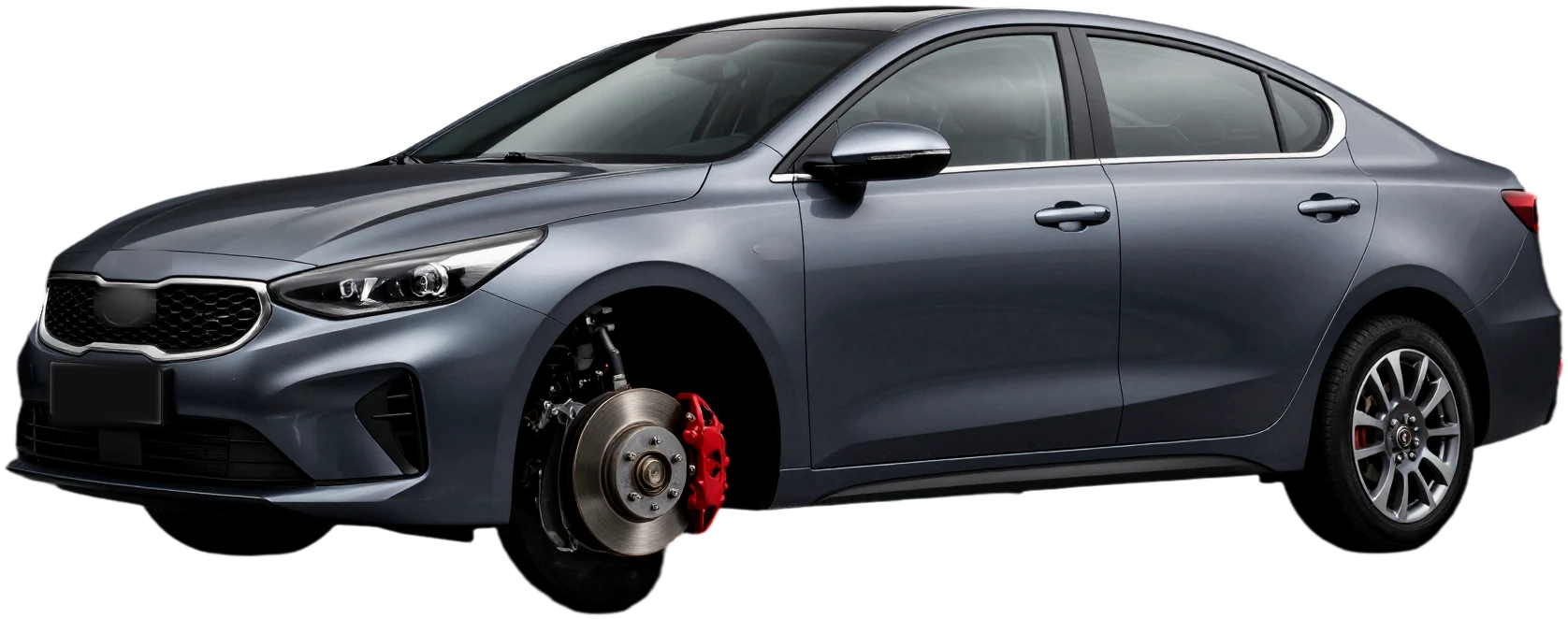
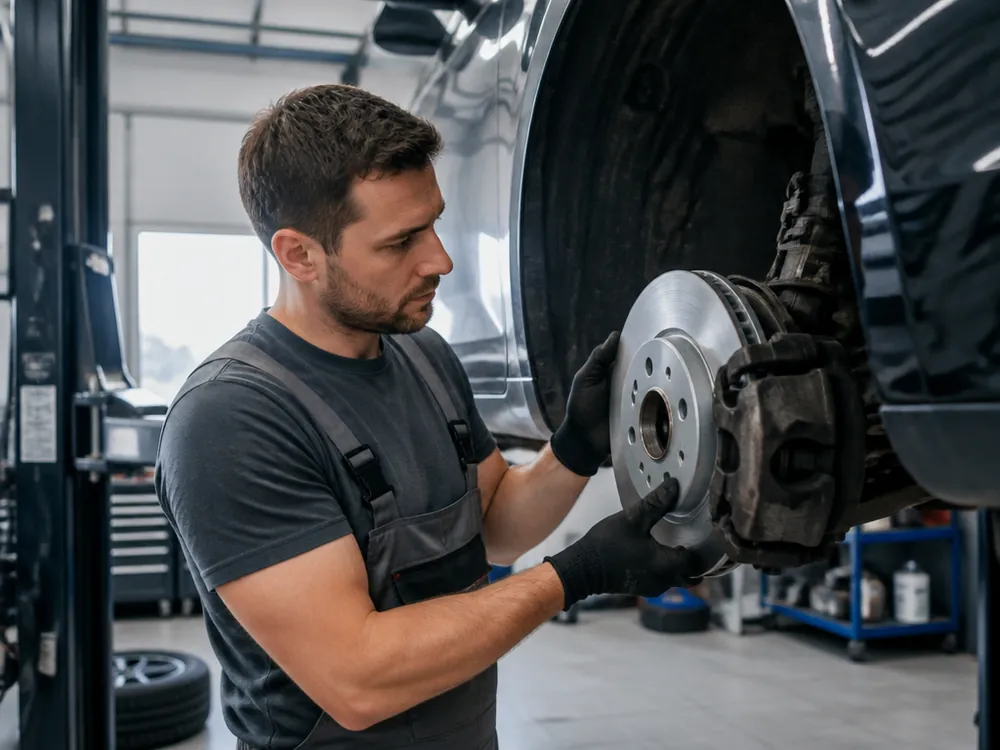
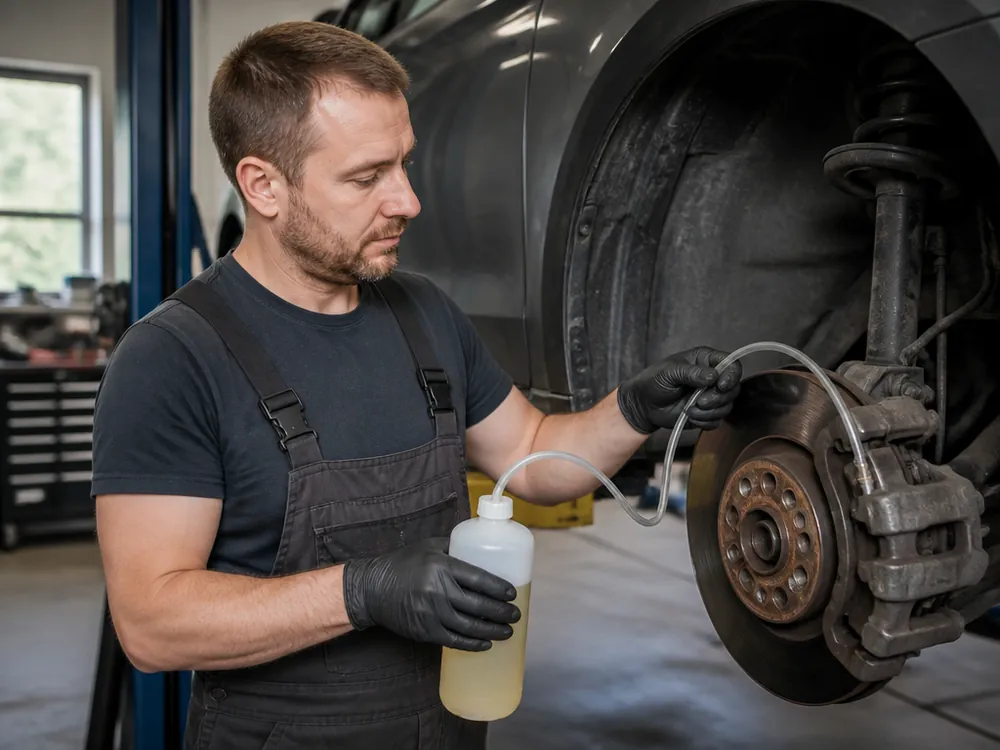
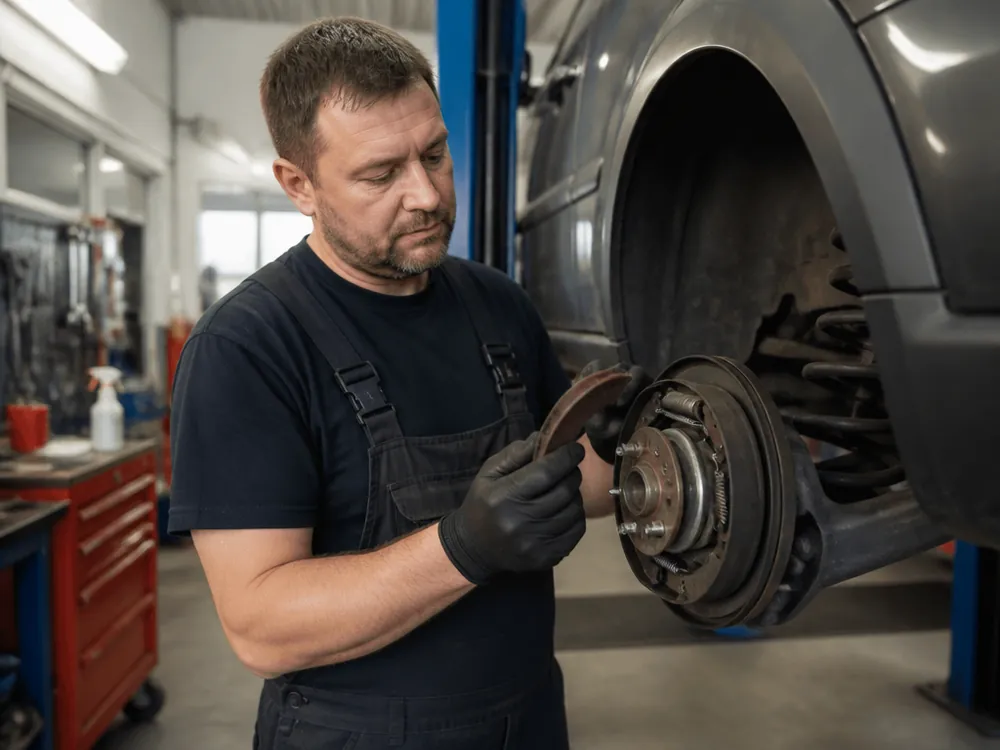
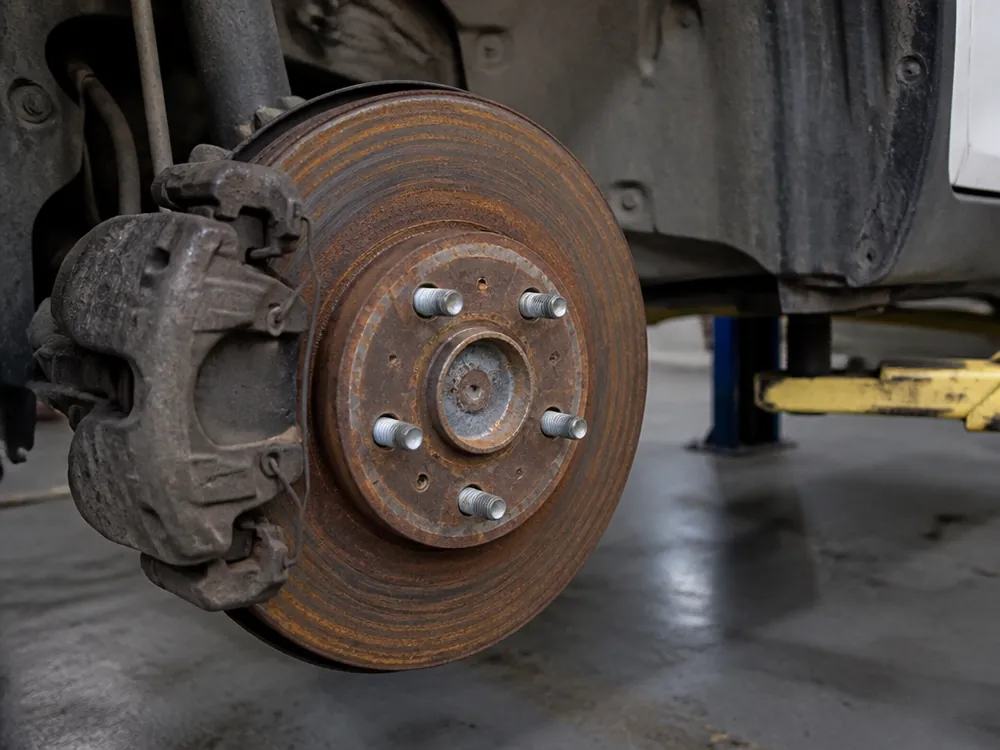
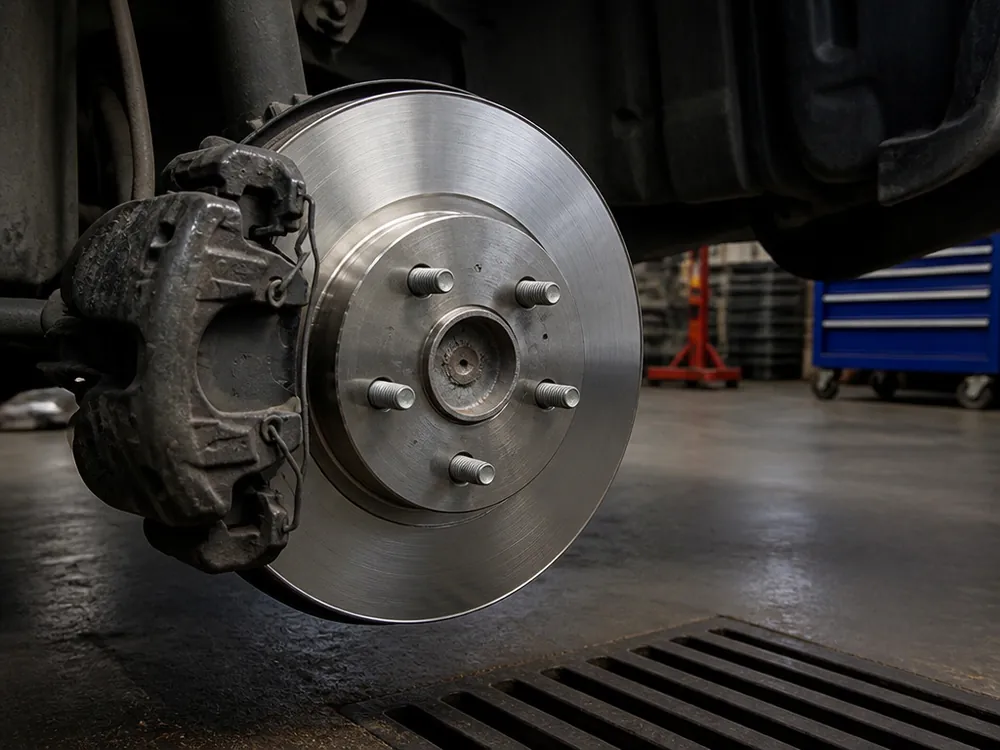
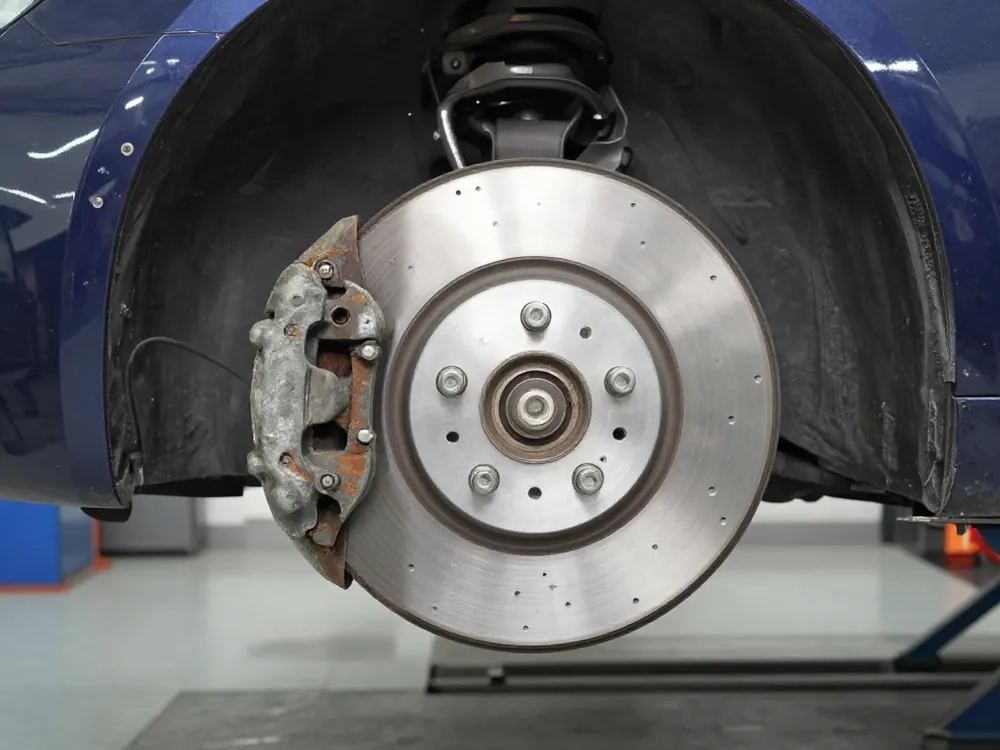
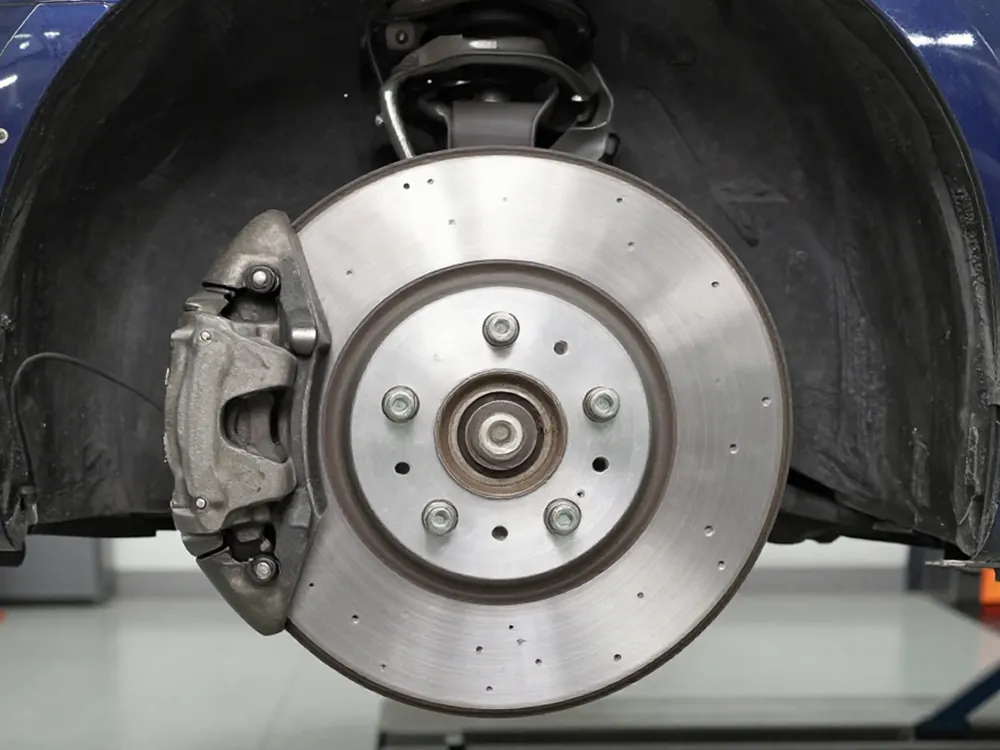
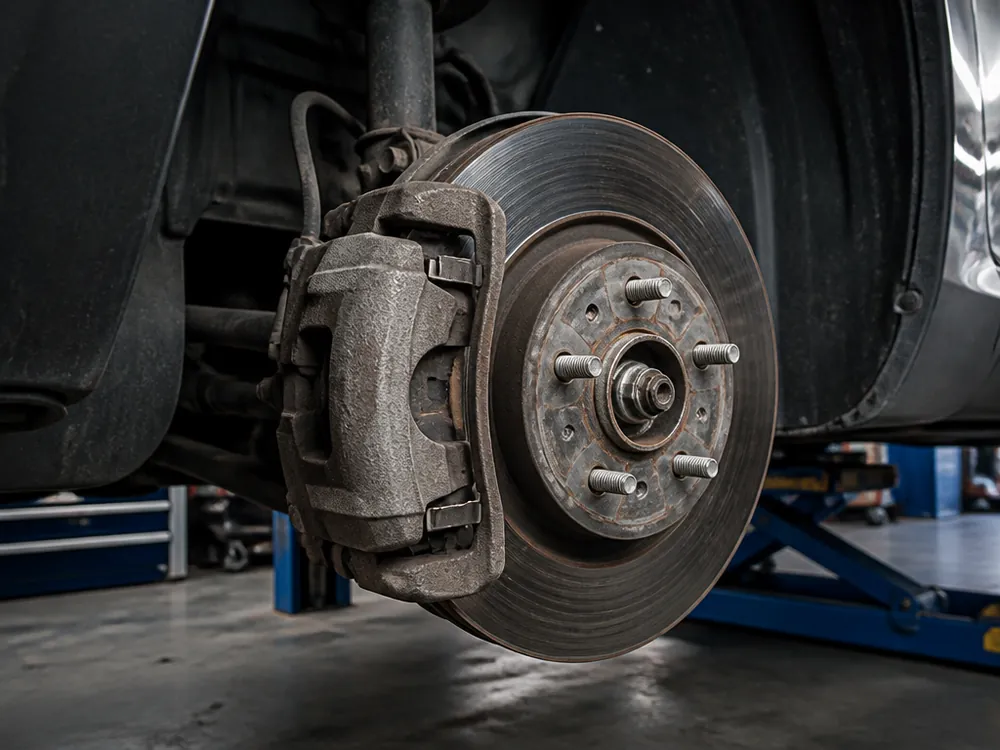
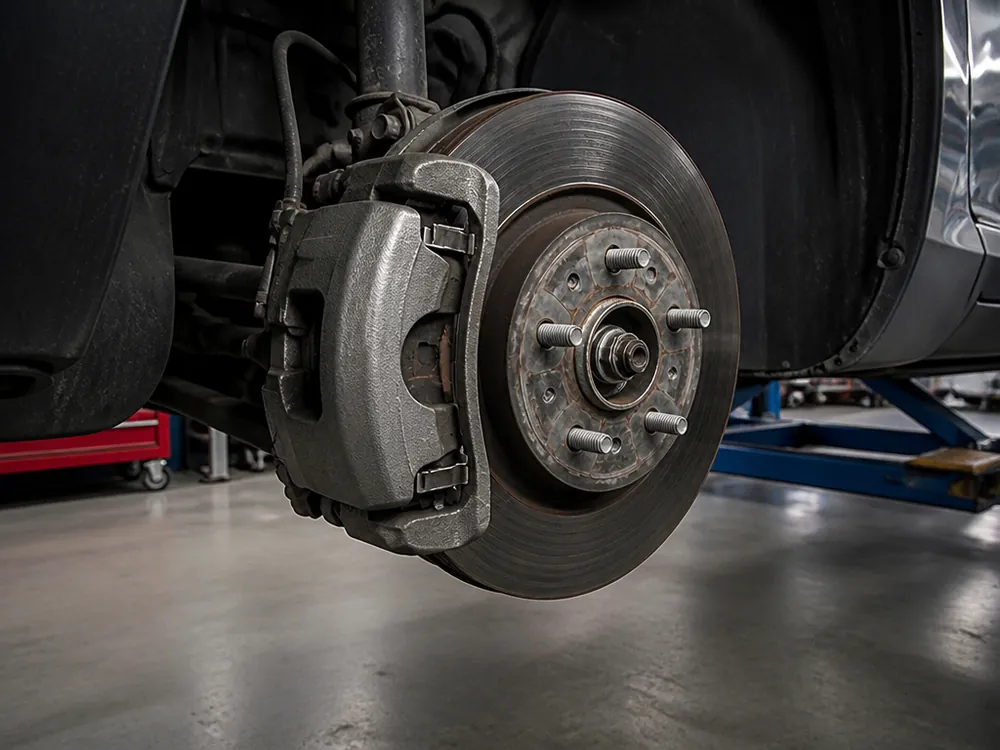
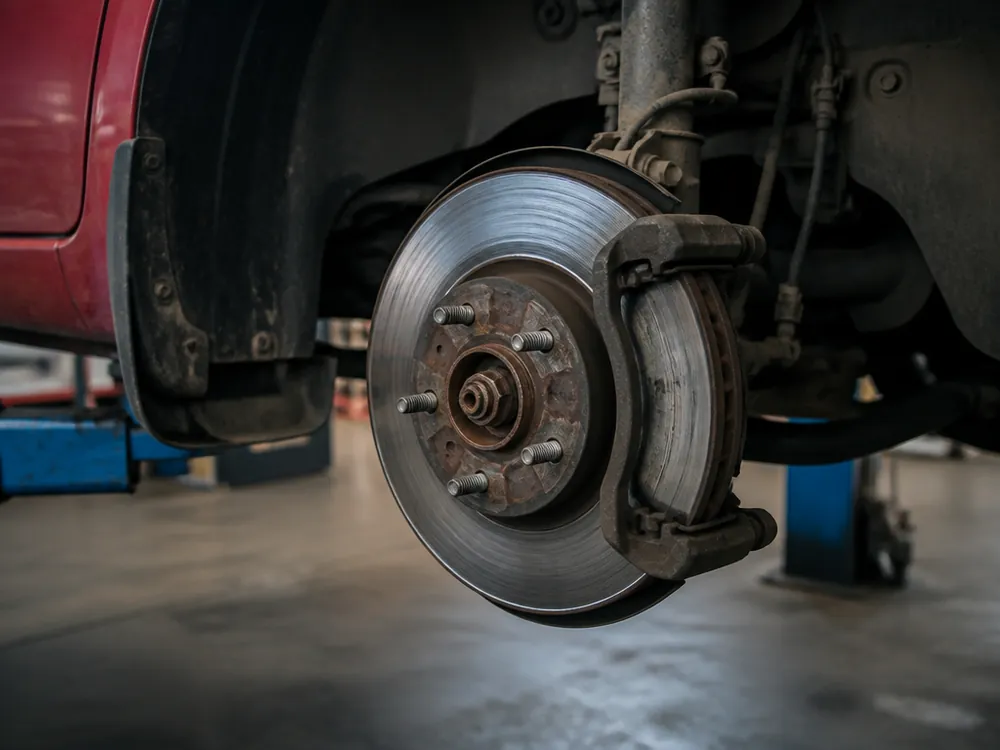
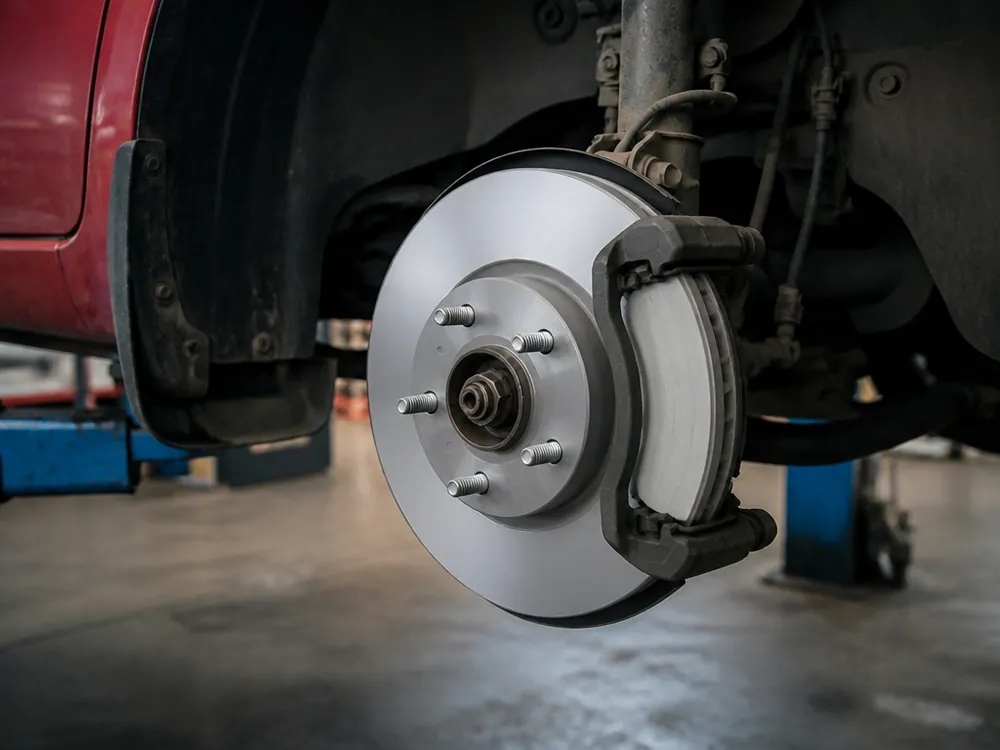
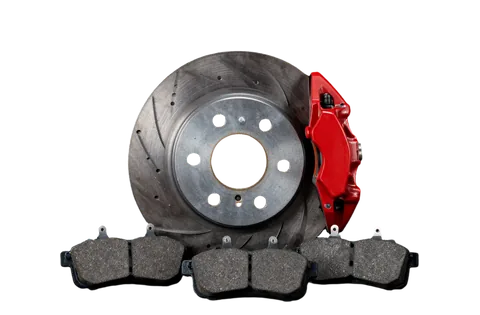
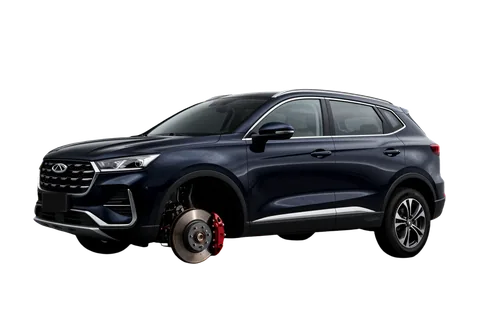
Worn out your pads? We'll replace them on Kia Soul, Sportage, Optima and other models. Free brake diagnostics before replacement, original and aftermarket parts in stock. Average labor cost — 5000-8000 ₸, takes up to 2 hours.
Minimum prices are shown; the final cost depends on the model and complexity.
Service
Duration
Warranty
Price
Front pad replacement (Kia Rio)
1–2 hours
6 mo
from 5 000 ₸
Rear pad replacement (Kia Rio)
1–2 hours
6 mo
from 5 000 ₸
Front pad replacement (Kia Soul)
1–2 hours
6 mo
from 6 000 ₸
Rear pad replacement (Kia Soul)
1–2 hours
6 mo
from 6 000 ₸
Front pad replacement (Kia Sportage)
2 hours
6 mo
from 7 000 ₸
Rear pad replacement (Kia Sportage)
2 hours
6 mo
from 7 000 ₸
Front pad replacement (Kia Optima)
2 hours
6 mo
from 8 000 ₸
Rear pad replacement (Kia Optima)
2 hours
6 mo
from 8 000 ₸
Brake pad set replacement (front+rear)
3–4 hours
6 mo
from 12 000 ₸
Brake disc replacement (set)
2–3 hours
6 mo
from 10 000 ₸
Brake system diagnostics
30 min
6 mo
Free
Brake fluid replacement
1 hour
6 mo
from 5 000 ₸
Caliper removal and installation
2 hours
6 mo
from 7 000 ₸
Parking brake replacement (pads)
2–3 hours
6 mo
from 5 000 ₸
The final price depends on the type of pads and the complexity of access. We use high-quality aftermarket and original parts. Warranty on all work. Warranty periods — see the page «Warranty»
06
Why choose Kia brake pad replacement at CARGID
Warranty.
Every promise — backed by a number or a document: work order, photos, removed parts.
6MO
warranty on labor — the term is stated in the work order.
Bleeding on 2 circuits
6-month warranty
OEM and aftermarket
01
Disc measurement with micrometer
We measure the thickness and runout of each disc. If wear is near the minimum, we tell you before pad replacement, not after complaints of vibration.
02
Bleeding both circuits
We displace the old fluid through both circuits until clean fluid comes out. The pedal remains firm and does not sink in hot weather.
03
200 km break-in
For the first two hundred kilometers, the pads bed in to the disc. We warn you about this immediately to avoid surprises during the first braking.
04
6-month warranty
Half-year warranty on the work and that the pads will not start squealing or squeaking. If squeaking appears, we redo it at our own expense.
07
Kia brake system repair stages
Steps.
We explain step by step what will happen to your car at our service center.
01
Brake diagnostics
You submit a request on the website or by phone, we find a convenient time and book you for diagnostics. We remove the wheel, inspect the pads, discs, calipers, and brake fluid level.
request on WhatsApp
02
Pad selection
We select original or high-quality aftermarket pads, taking into account the Kia model and your driving style. We provide the exact cost of work and parts before repair begins, with no hidden fees.
inspection and diagnostics
03
Removing old pads
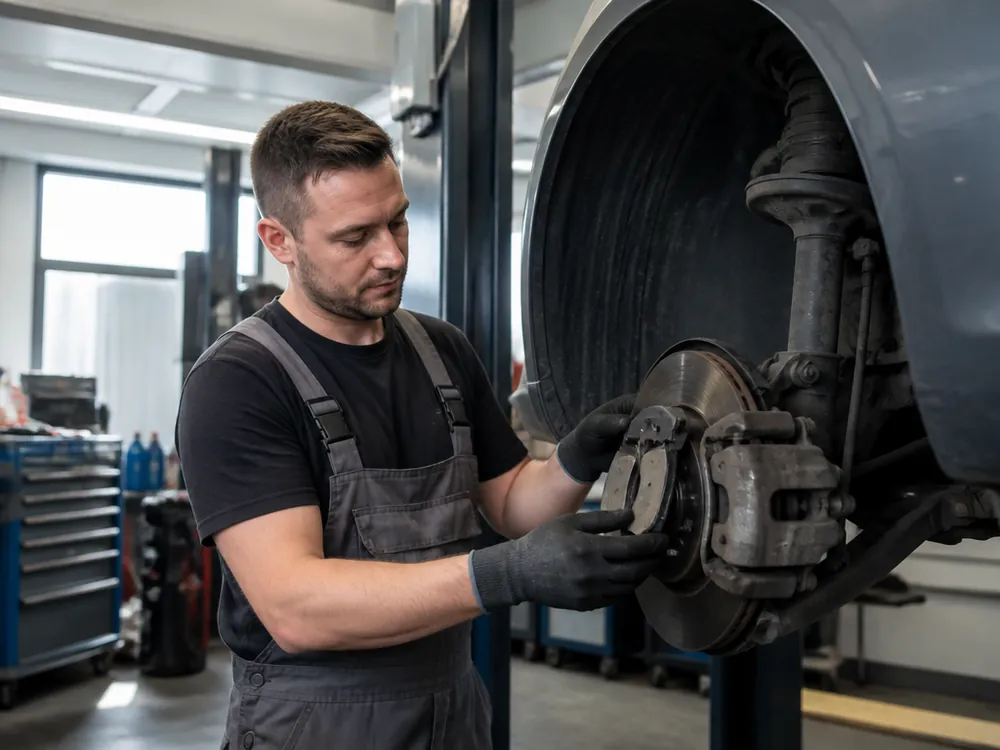
We carefully remove the worn pads and check the condition of the calipers and guide pins.
estimate before work starts
04
Installing new pads
We install new pads, lubricate the guide pins, and reassemble the brake mechanism.
work to factory procedure
05
Check and bleed
We check the fluid level, top up if necessary, and bleed the system.
result check
06
Final check and handover
We take a test drive, check brake efficiency, and return the car.
Car service in Almaty. We reply on WhatsApp and by phone.
5 000 ₸Front pad replacement
10 · Useful
Kia Brake Pad Replacement in Almaty with Rotor Inspection
Author: Роман Вернерgeneral car repair technician, 13 years of experience
Published Updated
At CARGID, we replace Kia brake pads in Almaty with a preliminary inspection: we measure the thickness and runout of each rotor with a micrometer, show you the verdict before work, and bleed the brakes on two circuits. The warranty on pad replacement is 6 months, and the terms are fixed in the work order. You choose the parts: OEM, aftermarket, or your own.
When It's Time to Replace Kia Brake Pads and What Diagnostics Will Show
Pads wear gradually, and the first signals are easy to miss. Here's what signs a Kia driver should watch for and what check the technician performs on the lift before replacement.
Signs of wear you can see and hear
Squealing when braking: a metallic squeal at low speed means the friction layer has reached the wear indicator.
Longer stopping distance: the pedal feels softer and the car stops later than usual — check the pads and fluid.
Pedal vibration: a pulsation you feel in your foot when braking from speed — often a sign of a worn or warped rotor.
Deep pedal travel: it sinks closer to the floor — possible fluid leak or air in the circuit.
Squeaking while driving without braking: the pad is constantly rubbing against the rotor, and you shouldn't put off the inspection.
Dashboard light: on some models, the wear sensor triggers the indicator, and that's a direct reason to come in for a check.
Metallic grinding: the friction material is worn to the base, and the pad is metal-on-rotor — better not to let it get that far.
What the technician checks during brake diagnostics
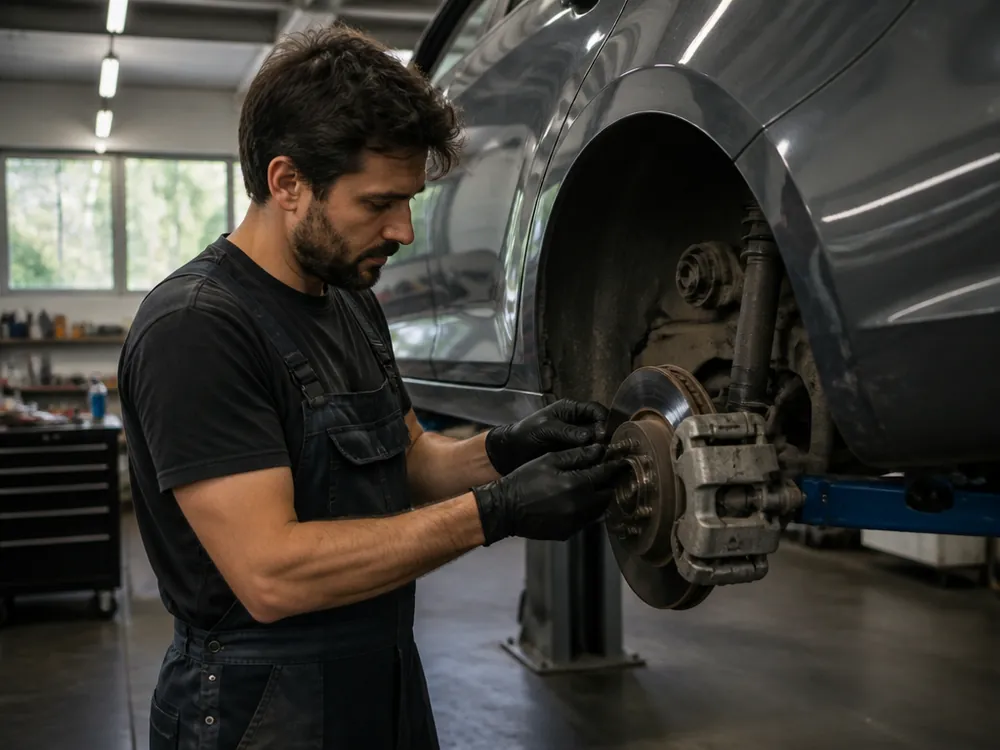
During diagnostics, we measure the remaining pad thickness, rotor thickness and runout with a micrometer, and check the condition of the calipers and fluid. We inspect the caliper piston for seizing, the boots for cracks, and test the brake fluid for moisture and color. We also check the guide pins and evenness of wear across the axles: uneven wear indicates sticking. The service advisor shows you the results on the lift and prepares a written estimate before work begins, and we start repairs only after the client agrees. Kia brake pad replacement in Almaty at our shop always starts with this check. We measure the rotors before installing new pads, not after complaints of vibration: if the rotor is already at the minimum, it's cheaper and more correct to replace it along with the pads in one visit. We take photo reports of key stages — you can see what the rotor was like and what it became after work.
How Kia Brake Pad Replacement Is Done and What's Included
The procedure takes less time than it seems, but what matters is not speed but the set of operations. Below we explain what exactly we do with the caliper, guide pins, and rotors, why a torque wrench is needed, and when pads are replaced together with rotors.
Step-by-step procedure for pad replacement
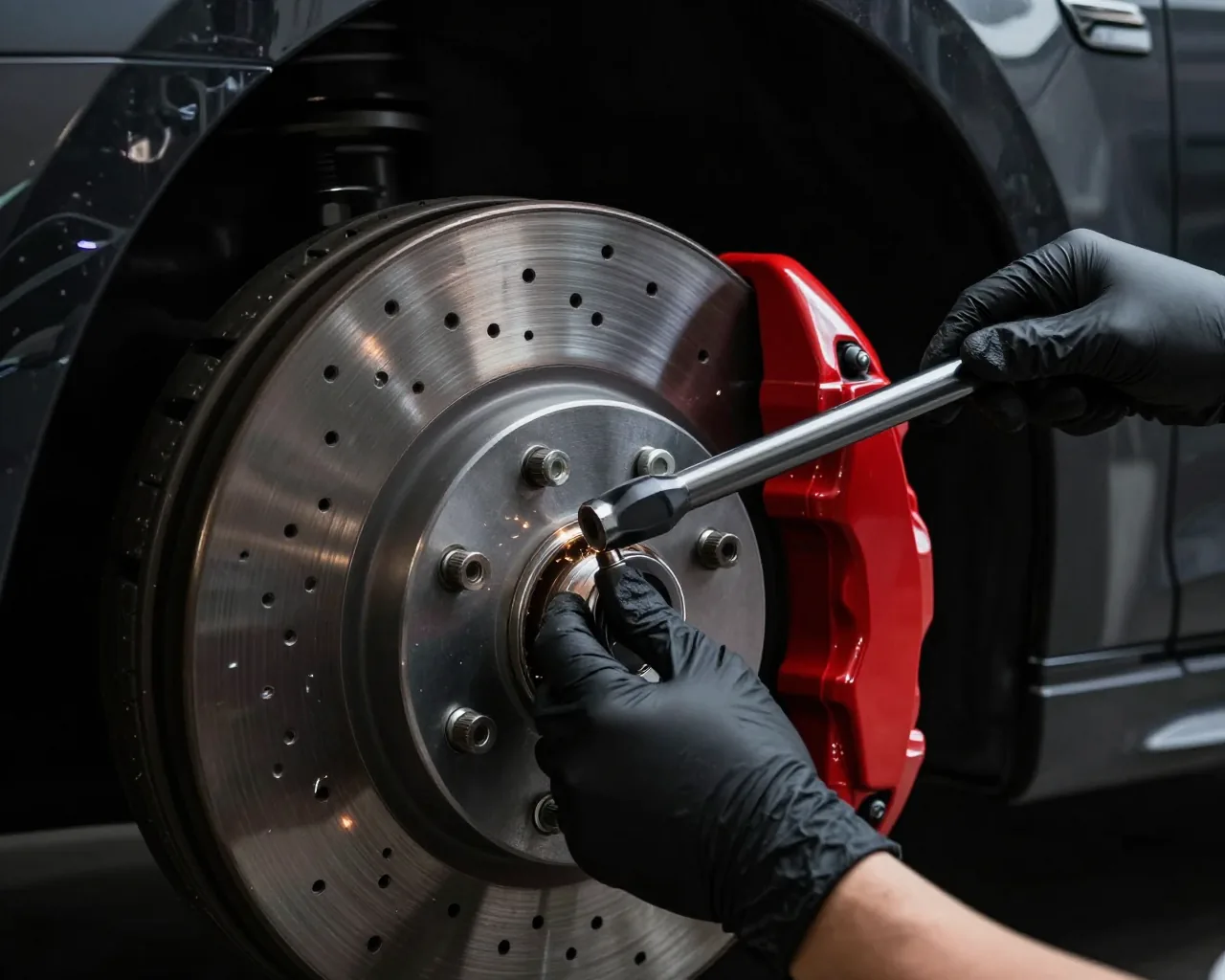
Removing the wheel and caliper: we remove the wheel, swing the caliper aside, and take out the old pads without stretching the brake hose.
Cleaning and lubricating the guide pins: we remove carbon deposits and rust, apply a high-temperature compound — the caliper must move freely.
Compressing the piston: we use a tool to push the piston into the cylinder, making room for the thickness of the new friction material.
Installing pads and anti-squeal shims: we install the new parts and put the shims and springs back in place.
Tightening with a torque wrench: we torque the caliper fasteners to Kia specifications, not by feel.
Checking and bleeding: we check pedal travel and, if necessary, flush the old fluid through both circuits.
Pads alone or together with rotors
options for Kia pad and rotor work
Type of work
When it's suitable
What we check
Front pad replacement
friction wear, rotor within spec
rotor thickness and runout
Rear pad replacement
rear axle wear
condition of parking brake mechanism
Front and rear set
mileage, wear on both axles
rotors on both axles
Pads and rotors
rotor at minimum or with runout
micrometer measurement before work
Kia Model-Specific Features and Electronic Parking Brake
Different Kia models have different brake designs, and this affects the time and order of work. Here are the key differences for Rio, Soul, Sportage, and Optima owners.
How the brakes differ on Rio, Soul, Sportage, and Optima
On the Rio and some Soul models, the rear brakes are drum-type, while on the Sportage and Optima the rear axle is more often disc with an electronic parking brake. The drum is hidden inside the hub, so the condition of the friction material there is assessed after removing the cover, not by the appearance of the caliper. On versions with rear discs, both the caliper and the remaining friction layer are visible, but there's an added assembly with an electric motor on the caliper. Because of this difference, Kia brake pad replacement takes different amounts of time on different bodies: drum brakes take longer to disassemble, and the electronic parking brake requires setup. Rear consumables on cars with this drive wear differently than front ones, so they should be checked no less often than the front, even if the pedal feels normal.
Rear Kia pads with electronic parking brake
On Kia models with push-button parking brakes, we replace the rear pads with a service mode reset via scanner, otherwise the caliper piston can't be pushed back without risk. The electric motor holds the piston in its working position, and mechanical force only does harm here: the guide gets skewed and the drive gearbox suffers. The scanner puts the mechanism into service mode, then after reassembly calibrates the travel and checks that the parking system engages evenly. We handle kia soul brake pad replacement with this unit in a single visit. Our scanner supports 40+ makes, and a dedicated electrical specialist handles the electrical part. Before work starts, the service advisor shows the old parts and writes the warranty period into the work order — 6 months on this job.
What happens after replacement and how to bed in the pads
Fresh pads behave differently from worn ones, and that's normal. We explain how braking feels, why bedding in matters, and when squealing becomes a reason to come back.
200 km of bedding in and pedal behavior
For the first two hundred kilometers the pads wear in to the disc, so brake more gently and avoid hard repeated stops. The new friction layer hasn't yet mated to the surface, the contact patch grows gradually — hence the feeling that the pedal travel got softer or the stopping distance grew by a couple of meters. On Kia Rio and Soul with their small front discs, break-in takes about the same mileage as on Sportage and Optima, but the crossover's body mass is greater, so the initial braking feels more pronounced. The pedal shouldn't sink: we bleed the fluid on both circuits until it runs clean, and we warn about bedding in right away so break-in isn't a surprise. A "spongy" pedal is more often about air in the circuit than the pads themselves — that's why we spend as much time bleeding as on installation.
Squealing and knocking after pad replacement
A slight squeal at the start of break-in is part of bedding in, but knocking, vibration or squealing after 200 km is a reason to come in for a check. Anti-squeal shims and guide grease damp high-frequency vibration, but with a worn disc that has deep scoring, the new pad seats unevenly and starts to "sing" at low speed. Vibration under braking more often points to disc runout than to the pads — a micrometer shows this in a couple of minutes. For a warranty case we do diagnostics free of charge: if the cause is our work, we fix it, and if it's the customer's parts or disc wear, we show it on the lift before any repair. The warranty on pad replacement is 6 months, and we record the term and conditions in the work order at pickup, so there are no disputed situations.
Warranty, your own pads and the shop's responsibility
Parts and the shop's obligations are the two things people worry about most before booking. Here's how we handle parts selection and what obligations we take on for the work.
OEM, aftermarket or your own pads
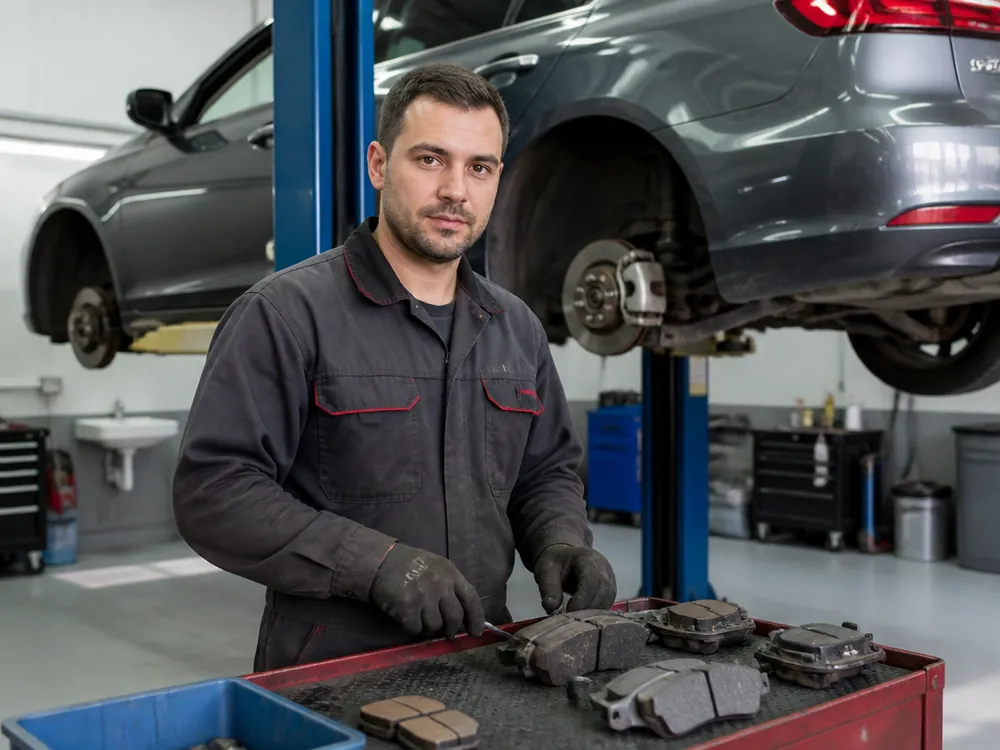
The customer chooses the parts: we can install OEM, aftermarket, or pads brought in by the customer, and kia brake system work follows the same procedure in any case — with disc measurement by micrometer and bleeding of both circuits. Before installation we lay out the removed parts on the table and explain the difference: OEM lasts longer, quality aftermarket is quieter on dust, and budget kits tend to squeal in the first few hundred kilometers. We don't cover customer parts, but we do stand behind the work: if something goes wrong after installing your pads due to our fault, we'll sort it out and show the result on the lift. And we still check the brought-in kit for model compatibility — an incompatible part goes back before work starts, not after.
What the 6-month warranty covers
We give 6 months on pad replacement and record the term and conditions in the work order and the completion certificate at vehicle pickup. The warranty covers the work performed and the parts we installed and does not cover accidents after repair, third-party interference, or natural wear of consumables. We take a photo report of the key stages and give the old parts to the customer — you can see exactly what was replaced. Diagnostics for a warranty case is free: if the pedal behaves differently from what we agreed, come in and we'll look at it at no charge. Before pickup we take the car on a test drive, so any issues surface before you leave the shop. Some brake questions after replacement aren't about the part itself but about bedding in — we warn about that in advance.
Kia brake pad replacement essentials
Kia brakes need attention based on pedal behavior and sound, not mileage. Here's the key to a good pad replacement result.
Wear signals: squealing during braking, a longer stopping distance and vibration in the pedal matter more than the odometer reading — they show up before the service interval.
Disc measurement: a micrometer before work starts shows the thickness and runout of each disc, so the decision on a "pads plus discs" pair is made in advance, not after complaints about vibration.
Electronic parking brake: rear pads on models with an electromechanical parking brake are replaced with a service mode reset via scanner — without it the caliper piston can't be retracted.
Bedding in: for the first 200 km the parts wear in to the disc, so brake more gently, and the pedal stays firm and doesn't sink.
Paperwork: warranty obligations and the division of responsibility for customer parts are recorded in the work order and the certificate at vehicle pickup — this protects both sides in a disputed situation.
11
Frequently asked questions about Kia brake pad replacement in Almaty
Questions.
Price, timeframes, warranty, payment — 10 questions asked most often.
10
Didn't find an answer?
Message us on WhatsApp — a service advisor will reply within 5 minutes.
At our service, replacement of a set of front Kia pads costs from 7,000 to 12,000 tenge, rear — from 5,000 to 8,000 tenge. The exact price depends on the model (e.g., Kia Rio, Sportage, Sorento) and design features: on some models (e.g., with electronic parking brake) computer diagnostics and error reset are required, which increases the cost. The final amount includes labor, inspection of calipers, and lubrication of guide pins. The pads themselves are paid separately if you buy them from us, or you can bring your own — the labor will be cheaper.
On average, the procedure takes from 40 minutes to 1.5 hours. If the pads are replaced on only one axle (front or rear), usually 40–60 minutes is enough. When replacing on both axles, and also if difficulties arise (seized guide pins, rusty rotors), the time may increase up to 2 hours. We always warn if unexpected delays occur. Booking an exact time allows you to plan your day — in most cases you can drop by at lunch and pick up the car in an hour.
Yes, we provide a warranty on the performed work — 6 months or 20,000 km, whichever comes first. The warranty covers the quality of installation and the consumables used (lubricants, retainers). If during the warranty period problems arise related specifically to our work (e.g., squeaking due to improper installation or caliper seizing), we will fix them free of charge. The brake pads themselves are covered by the manufacturer's warranty — usually 1 year, but wear is not a warranty case.
We recommend booking in advance — by phone or via WhatsApp. This guarantees that we can take you at a convenient time and you won't have to wait. However, we often have 'windows' for urgent visits: if you need it right now, call us, and we will try to fit you in within 1–2 hours. On weekends and evenings, booking is especially important as the customer flow is high. When booking, specify the Kia model, year of manufacture, and which pads need replacing (front/rear) — this will allow us to prepare the necessary parts and complete the work faster. We do not offer mobile replacement, only at the service center.
Yes, you can install pads purchased on your own. In this case, the labor price will be lower: front pad replacement — 5,000–8,000 tenge, rear — 6,000–10,000 tenge. Before installation, we will check the pads for compatibility with your Kia model and assess their condition. It is important to understand: if the pads turn out to be defective or do not fit, the responsibility lies with the owner — we do not provide a warranty on the parts you installed, but we guarantee the quality of the work. We recommend purchasing pads from trusted suppliers to avoid counterfeits.
Immediately after installation, a slight squeak during the first 200–300 km is normal, as the pads are bedding in to the rotors. If the squeak does not go away or intensifies, and also if knocking, vibration, or the car pulling to one side appears, contact us immediately — within the warranty we will perform diagnostics and fix the problem. Most often squeaking occurs due to low-quality pads or lack of lubrication on the caliper guide pins. At our service, we always use high-quality components and lubricants, so such problems rarely occur.
Replacing only pads is a standard procedure in which we replace the friction linings, clean and lubricate the caliper guide pins. If the brake rotors are worn (have deep grooves, cracks, or thickness below the allowable), their replacement is necessary: otherwise the new pads will wear unevenly, and steering wheel judder will appear when braking. The second option — replacing pads and rotors — is recommended for mileage over 50,000–70,000 km. The labor cost in this case will increase by approximately 5,000–8,000 tenge per axle. Our mechanics always check the condition of the rotors and advise the optimal option.
For the first 200 km, avoid sudden braking — the pads need to bed in to the rotors. Try to brake smoothly, especially in the rain. After replacement, a slightly increased pedal travel may be observed — this is normal until the pads break in. Regularly check the brake fluid level (should be between MIN and MAX). Once a year, perform caliper maintenance: cleaning and lubricating the guide pins — this will extend the life of the pads. If an unusual sound appears or pedal behavior changes, contact the service — it's better to double-check than risk safety. We provide care recommendations when handing over the car.
Payment is accepted in cash, by bank card, and by transfer; the method does not affect the cost of Kia pad replacement. The work takes from 40 minutes per axle and includes removing the wheel, dismantling the worn pads, cleaning and lubricating the guide pins, installing new pads, and checking the brake fluid level. The final price depends on the Kia model, the number of axles, and the class of the pads themselves.
Main signs of wear: squeaking when braking (metallic screech of the wear indicator), increased braking distance, pedal vibration, car behavior when braking. Visually, you can assess by looking at the pads through the wheel spokes: if the friction layer thickness is less than 3–4 mm, replacement is needed. We perform free brake system diagnostics when replacing pads — we remove the wheel, inspect the pads, rotors, calipers, check the fluid level. If you are unsure about the condition of the brakes, just book an appointment — the mechanic will inspect and tell you whether replacement is required. Diagnostics during subsequent repairs at our service is free.
12
What Kia owners say about our brake pad work
Reviews.
We collect ratings on the website and on maps — we hide nothing.
4.8
872 reviews on the website 1 900+ ratings in total
Aidar
Kia Rio
Had the rear pads replaced on a Kia Rio. The mechanic showed and explained everything, why it's better to take not the original but a quality aftermarket part. The price came to 24,000 tenge including labor. Done in an hour and a half, braking is precise, no sounds. Thanks!
Marina
Sportage
Came in with a Kia Sportage with vibration when braking. Thought it was just pads to replace, but it turned out the rotors were warped. The guys replaced both and bled the brakes. Paid 112,000, expensive for me, but now everything is perfect. The car brakes smoothly.
Dmitry
Ran into the issue that after replacing pads elsewhere a squeak appeared. At CARGID they rebuilt the caliper, lubricated everything as needed. The squeak is gone, brakes feel more responsive. They charged only 15,000 for the work. Now only here.
Serik
I don't trust kopytnym, but here it's really fast. Came in with a Kia Sorento, they said pads and caliper were needed. Thought it would take long, but it turned out they did everything in two days and even gave a warranty. Brakes feel like new. Price 68,000, reasonable.
Aigerim
I am satisfied with the quality of service. Replaced the front pads on a Kia Ceed. They explained everything, no squeaking, braking is good. Paid 30,000 tenge, fair price. Now only here.
Ivan
I have a Kia K5, the wear indicator light came on. Came to CARGID, they replaced the pads with the sensor for 32,000. Done in an hour, and they even did a free brake system diagnostics. Everything is spot on, I recommend.
Nurlan
Optima
I drove my Kia Optima, the brakes squeaked. Turned out that at the previous service they didn't lubricate the guide pins. At CARGID they took everything apart, lubricated, installed the pads correctly. Now the brakes work silently. 15,000 tenge — cheap.
Elena
Kia Rio
Replaced the pads on a Kia Rio. Really liked that the mechanic immediately said the rotors could still be resurfaced, not necessarily replaced. In the end saved money. Total 26,000, done quickly. Brakes are now excellent.
Aslan
I changed the pads on a Kia Ceed, because metal on metal was screeching. At CARGID they charged 48,000 for rotor resurfacing, replacement of the fluid is included. Everything was done in a day, brakes like new. Thanks!