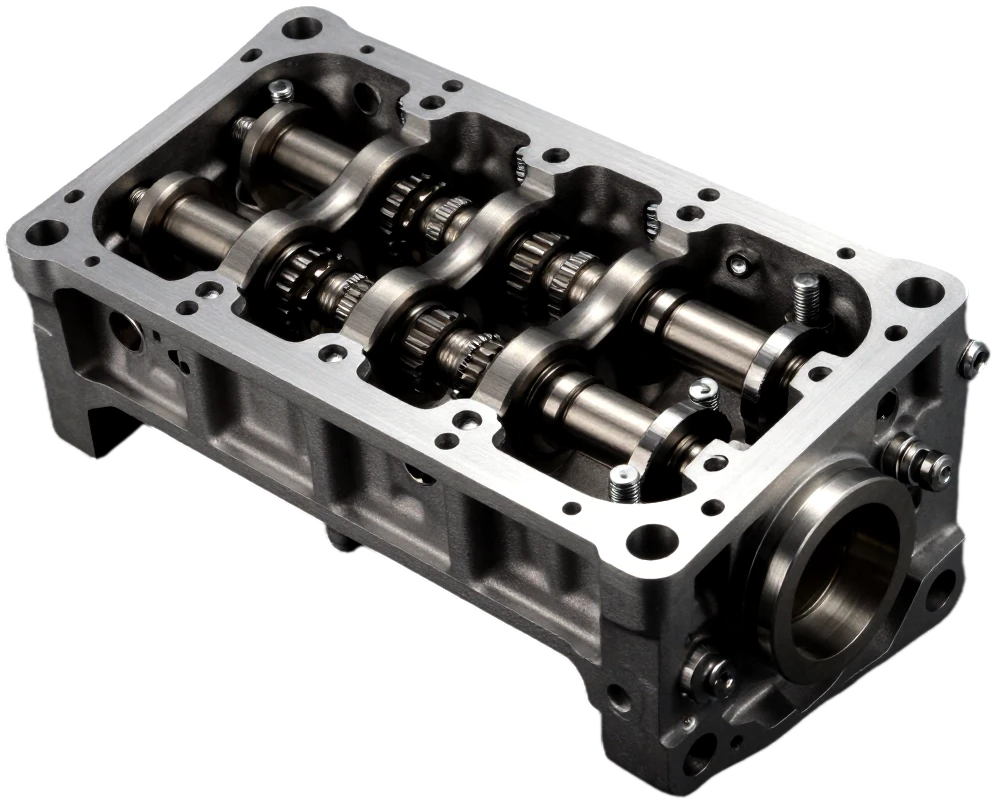
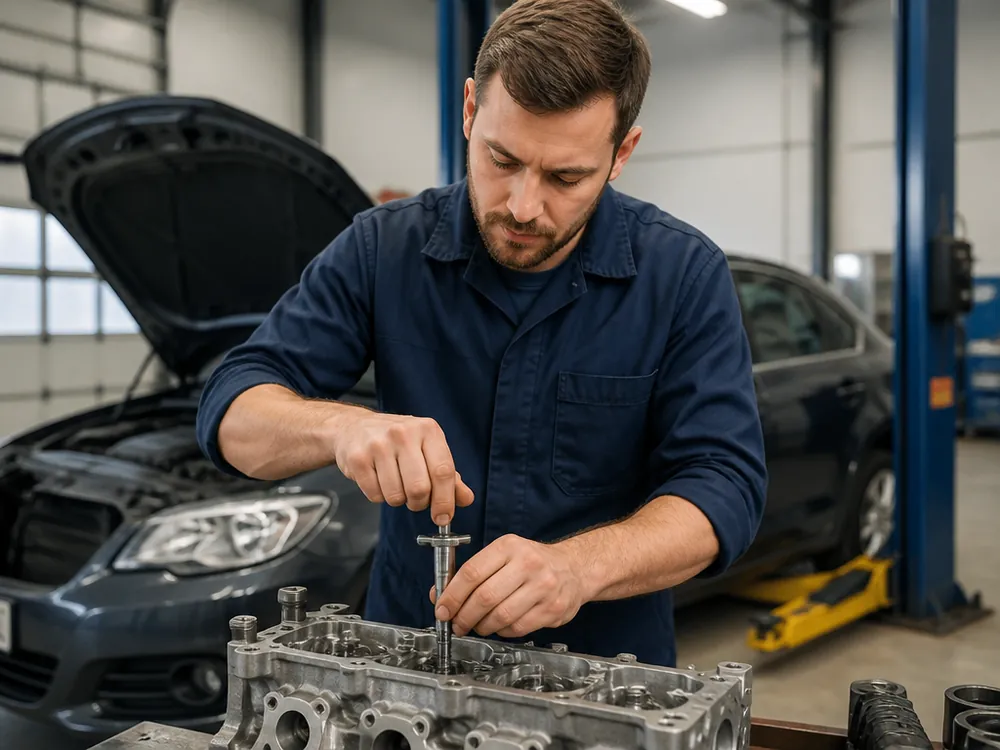
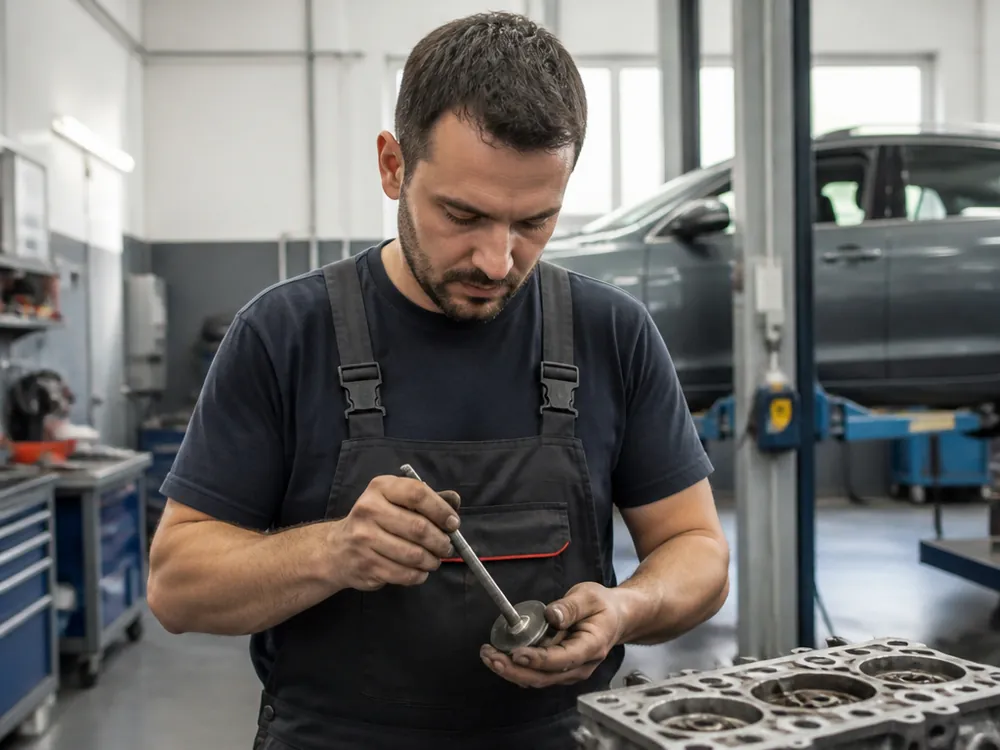
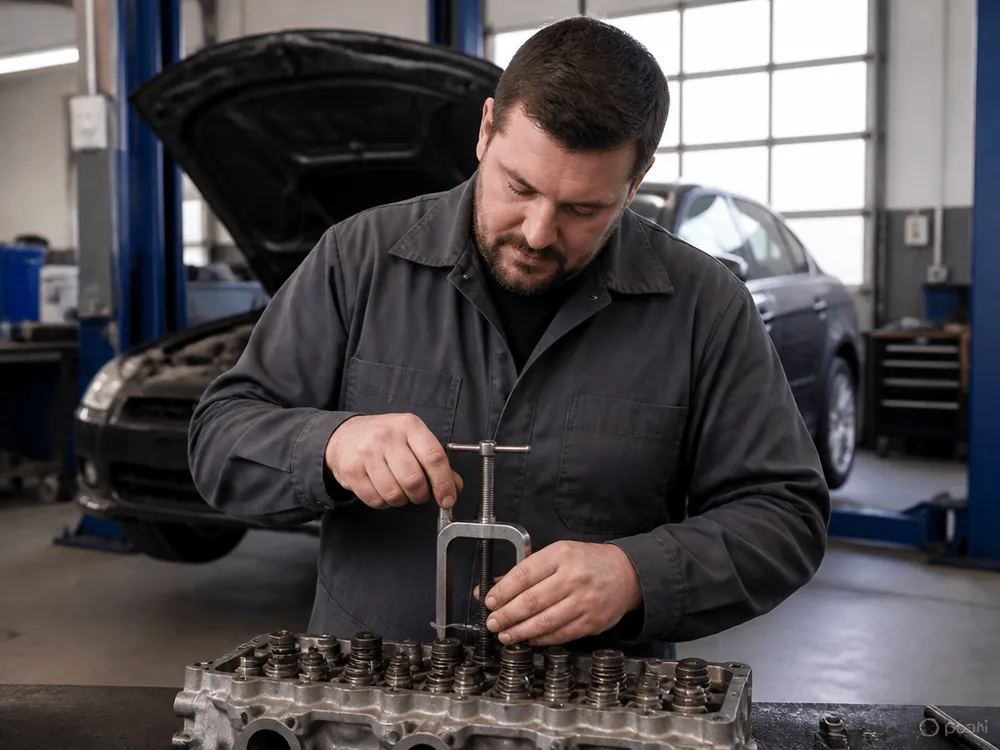
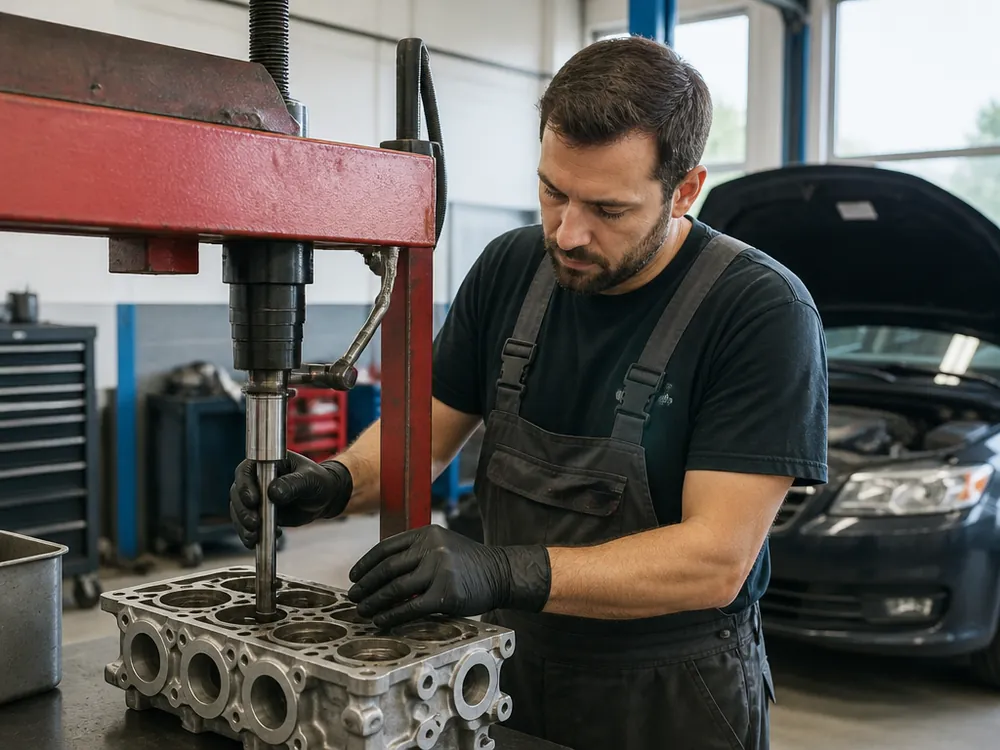
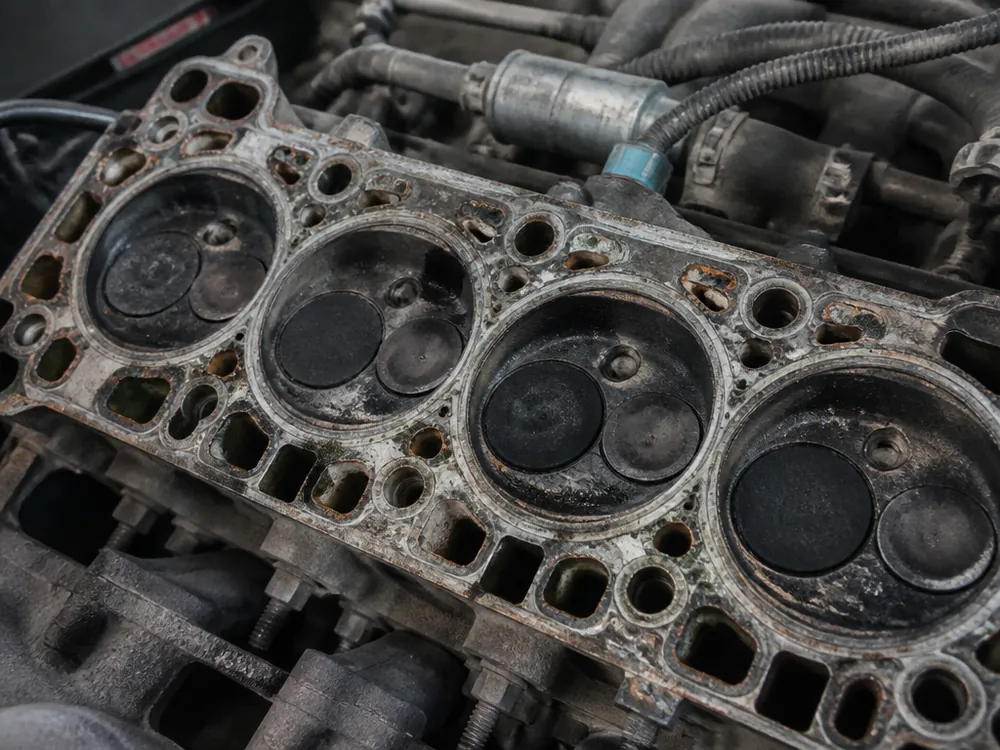
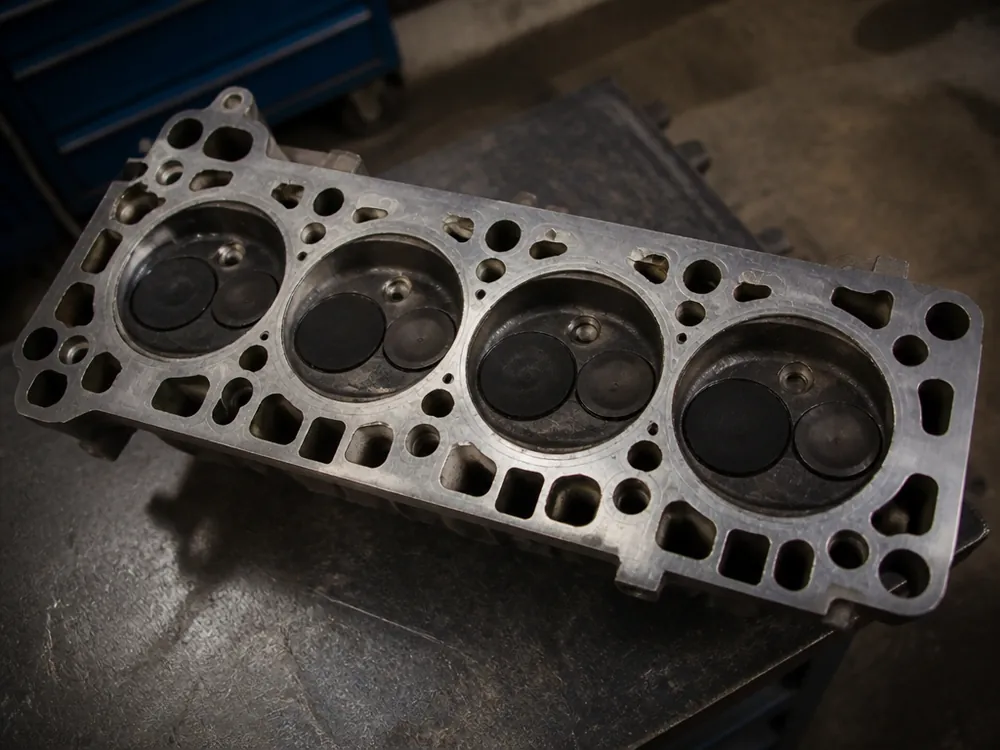
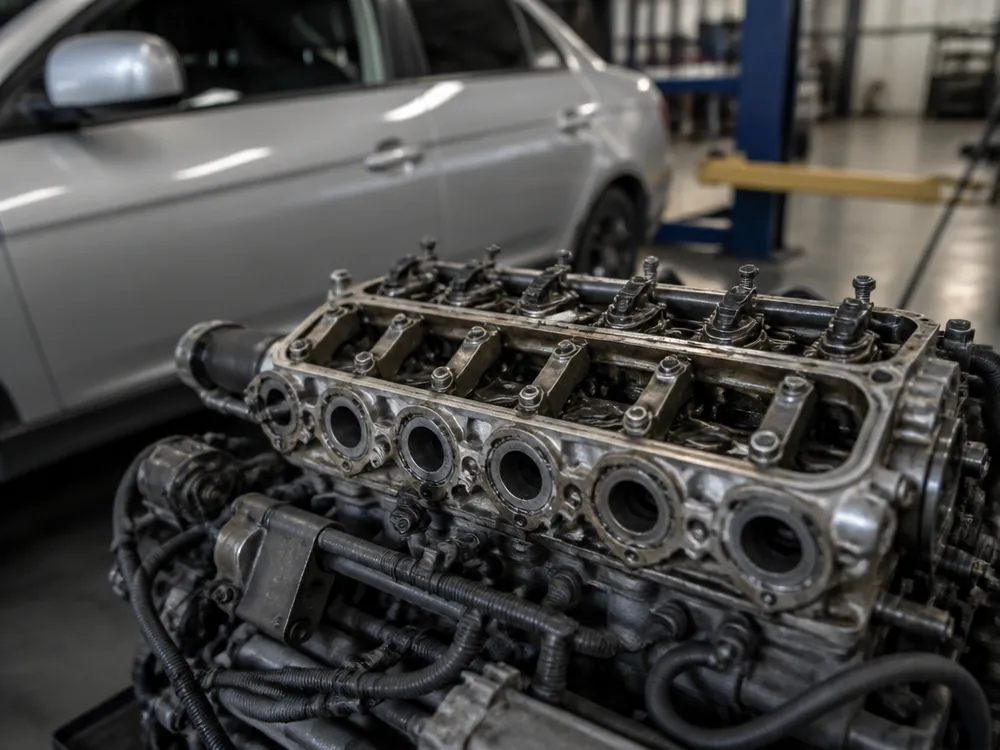
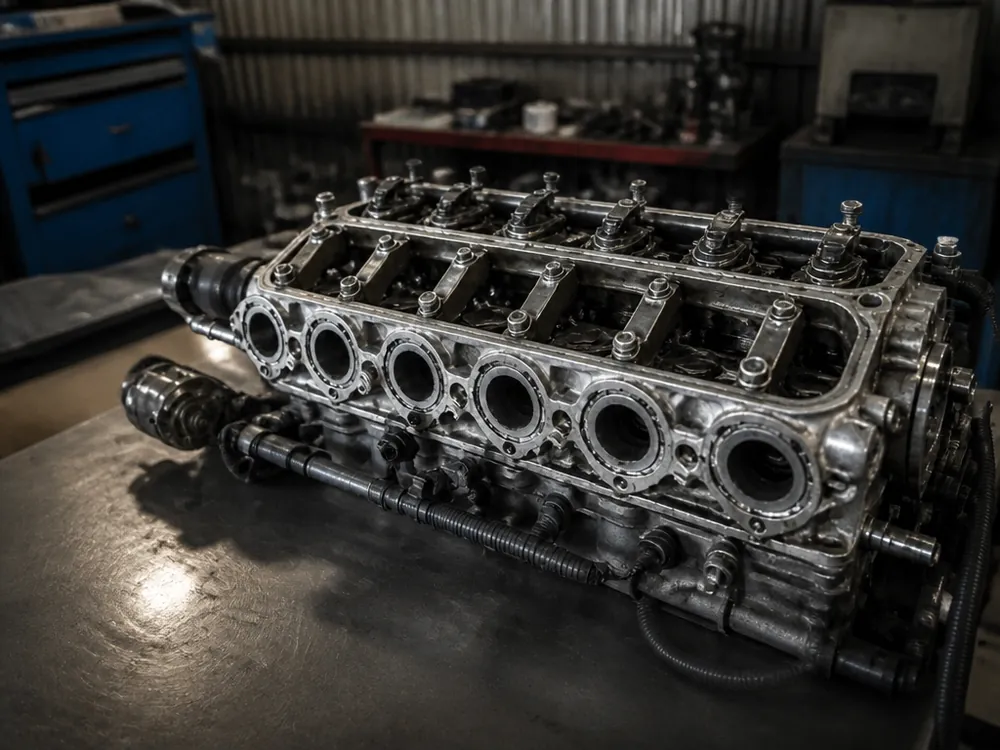
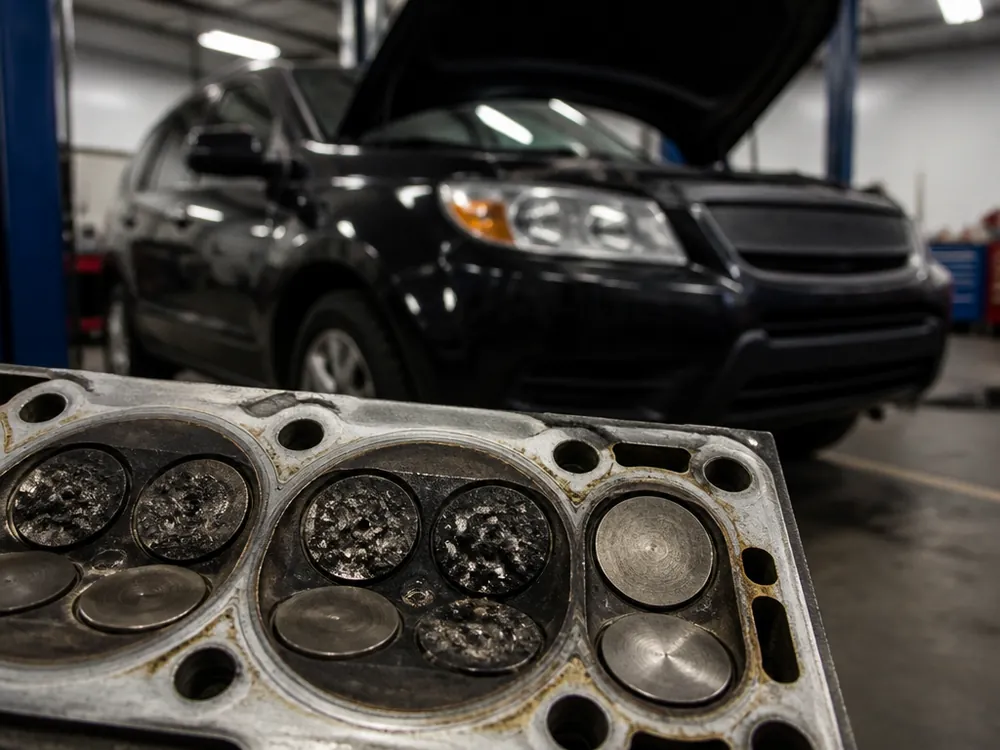
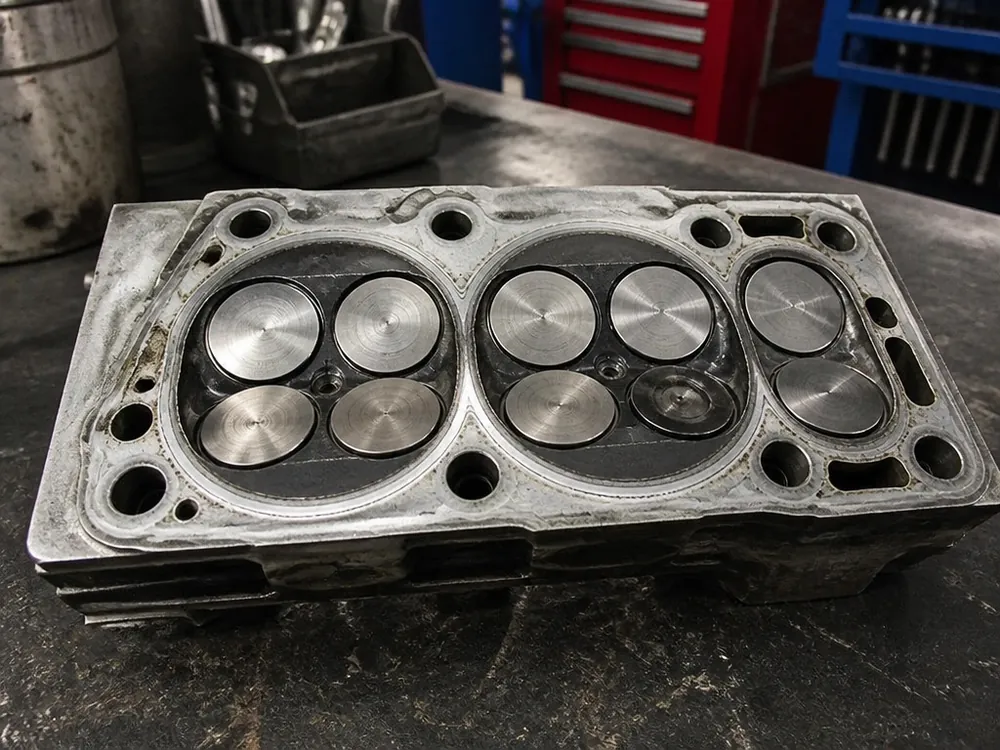
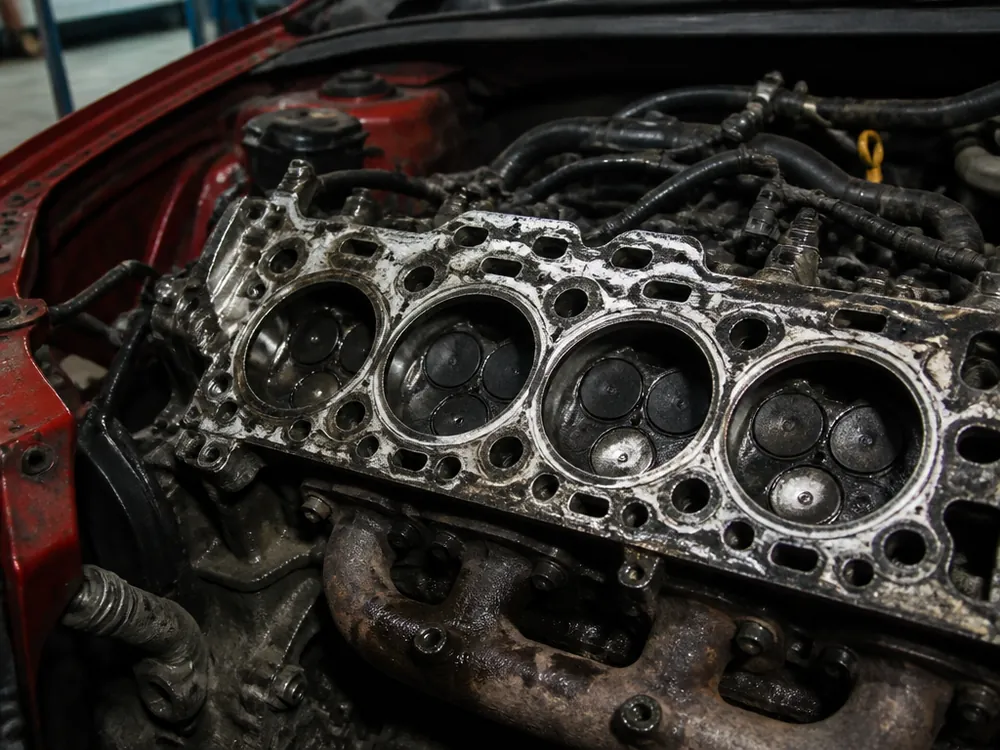
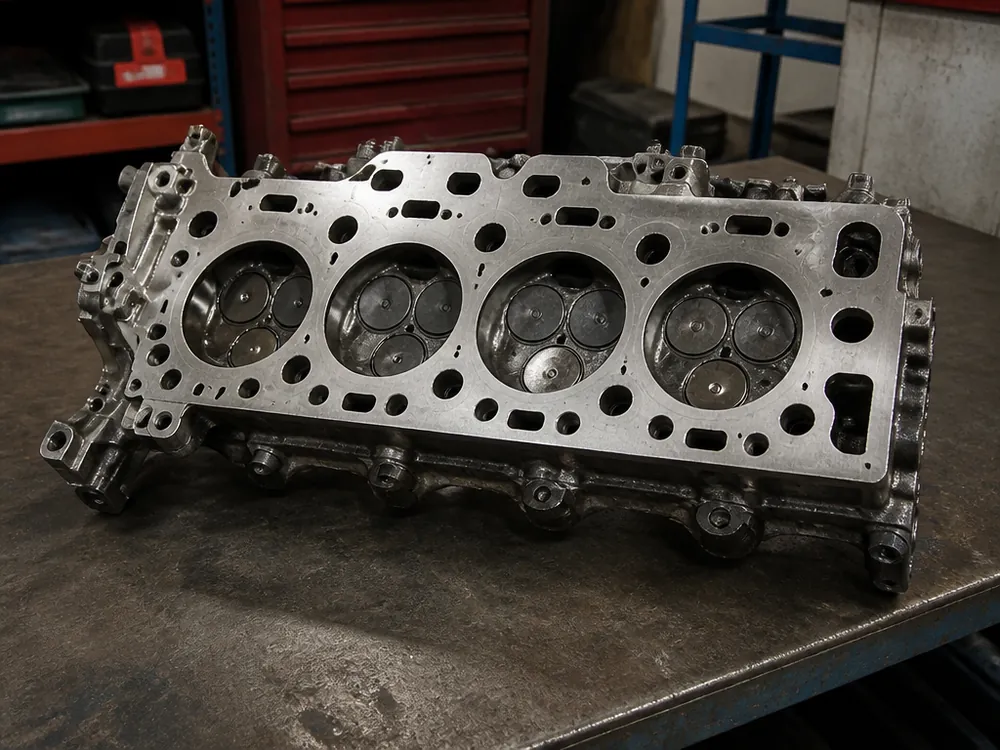
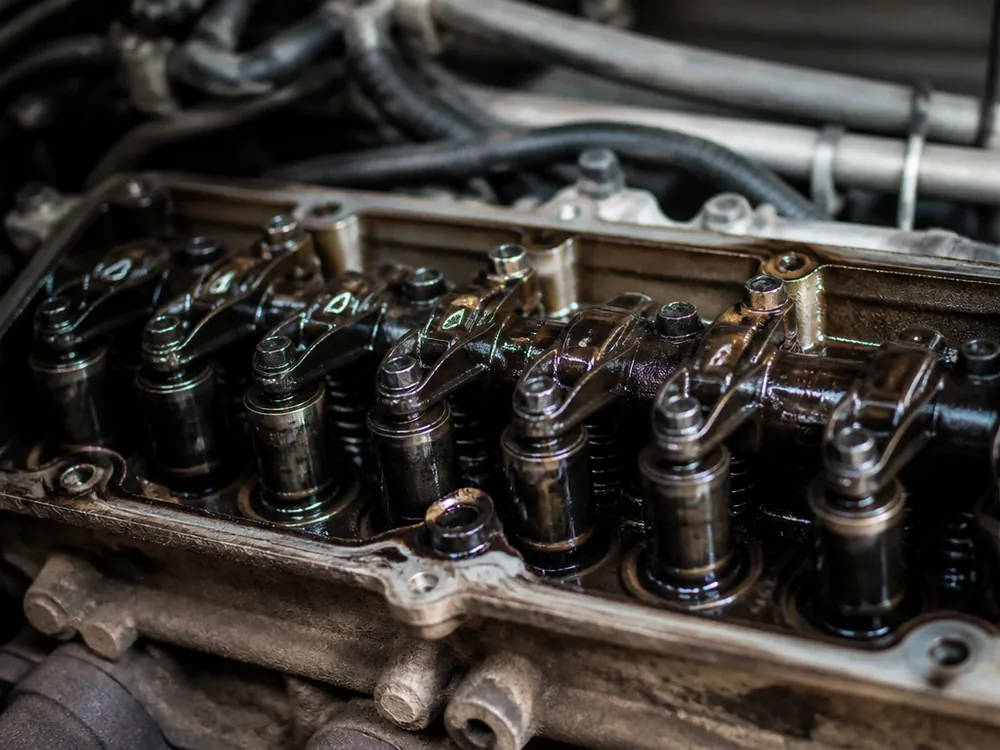
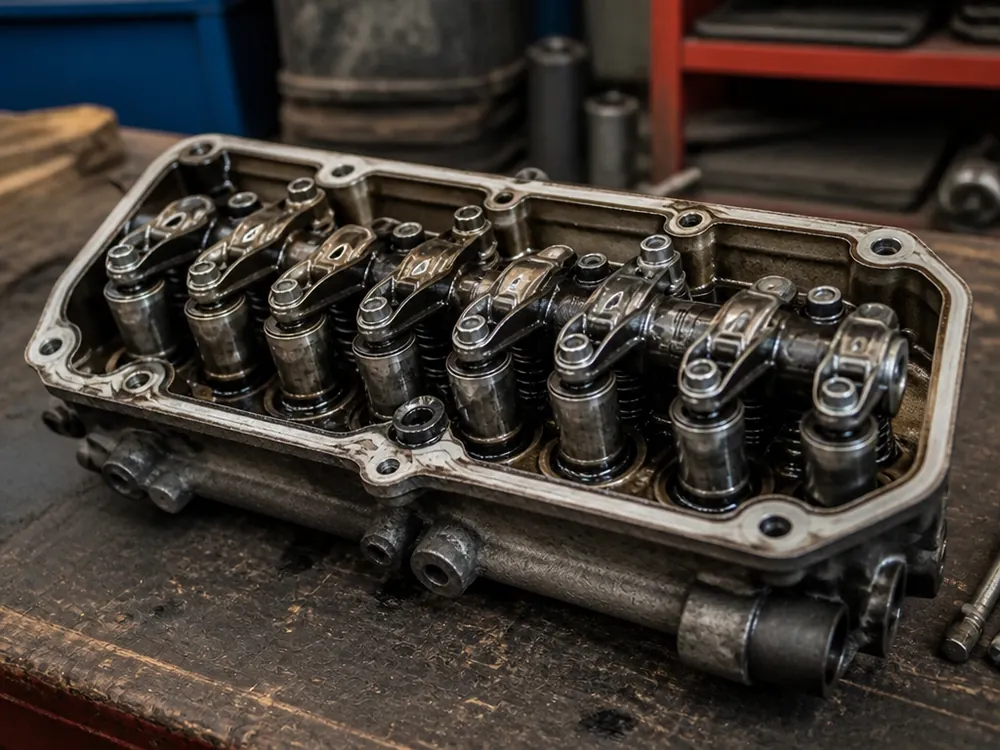
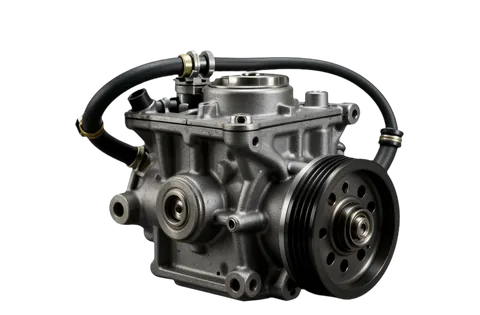
The cylinder head (CH) is the upper part of the engine that covers the cylinders and is responsible for the operation of the gas distribution mechanism. Inside it are valves, guides, seats, injectors and cooling channels. It is the CH that experiences enormous loads: temperature fluctuations from -30 to +200°C and gas pressure up to 100 atmospheres. Any violation — overheating, detonation, hydrolock or simply high mileage — can lead to cracks, gasket burnout, wear of valve seats and guide bushings.
Timely CH repair is several times cheaper than replacing the entire engine. In Almaty, the average cost of head repair with gasket replacement and basic valve lapping is 80,000–120,000 tenge. If valve, seat or bushing replacement is required, the budget can reach 150,000–250,000 tenge. It is important to understand: delaying repair leads to more serious damage, up to destruction of the block.
Signs and causes of CH malfunction
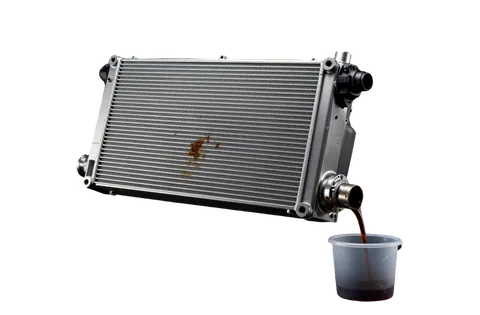
The first symptoms of CH malfunction are often attributed to spark plugs or injectors. But there are characteristic signs that should alert you: white or bluish smoke from the exhaust pipe, antifreeze in the oil or oil in the antifreeze, increased pressure in the cooling system, engine overheating, popping or shooting in the muffler. If you notice at least one of these symptoms — do not delay diagnostics.
Main causes of failure: engine overheating (temperature above 105°C), prolonged operation with low oil or antifreeze level, fuel detonation, hydrolock when driving through deep puddles. Natural wear is also common: after 150,000–200,000 kilometers, valve seats and bushings wear out, and valves stop closing tightly. In this case, engine valve replacement and valve lapping are required.
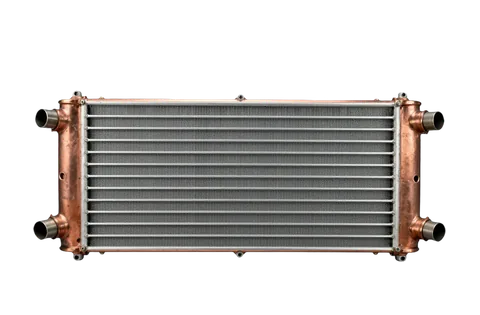
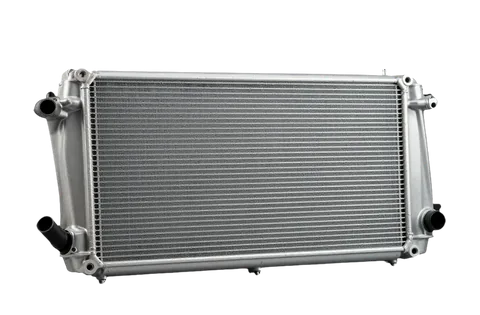
What to pay attention to: if the cause is overheating, be sure to check the radiator, water pump and thermostat. Ignoring these components after CH repair will lead to repeated breakdown.
Repair technology: from diagnostics to assembly
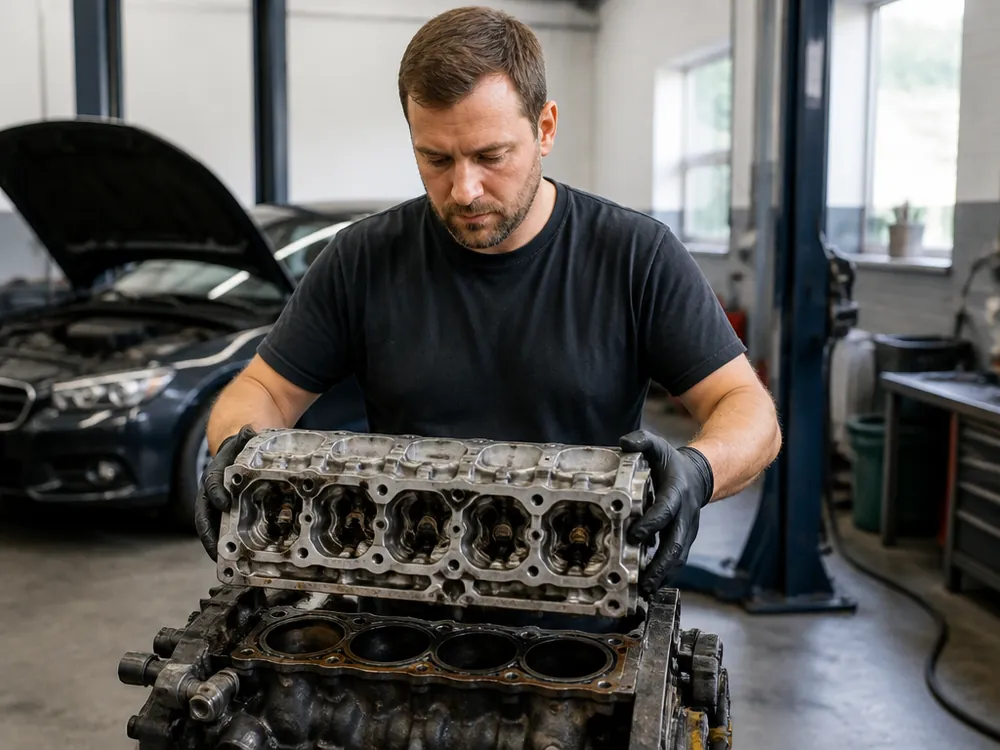
Quality cylinder head repair is a multi-stage process that cannot be rushed. It begins with fault detection: the head is completely disassembled, cleaned of carbon deposits, washed and checked for cracks in a kerosene bath or by pressure testing. Then the head plane is measured for deformation. If the plane is distorted, grinding or milling is performed. Only after that the valve block is addressed.
The next stage is checking the valve guide bushings and seats. If the clearances exceed permissible norms, replacement of valve guide bushings and seat replacement are performed. Next — valve replacement (if necessary) and lapping them to the seats. Valve lapping, the price of which depends on the quantity and type, is usually included in the total cost. After head assembly, a new CH gasket is installed, and everything is mounted on the engine.
A typical mistake of many unscrupulous services is skipping the lapping stage or replacing only the gasket without repairing the valve group. This is a temporary solution that quickly leads to burnout. The duration of a full CH repair is from 2 to 5 days depending on complexity.
Materials and equipment: what affects quality
The result of repair directly depends on the quality of parts and equipment used. The CH gasket must be either original or from proven manufacturers (Victor Reinz, Elring, Goetze). For cast iron heads, a multilayer metal gasket is acceptable, for aluminum — paronite with reinforcement. Saving on the gasket is unacceptable: burnout will occur after 5,000–10,000 kilometers.
Guide bushings and seats must correspond to the engine type. For gasoline engines, bushings made of brass or cast iron with graphite coating are used, for diesel — reinforced. Exhaust valves are made of heat-resistant alloys that withstand high temperatures. Engine valve replacement is always a paired job: if one valve is worn, all valves in the head are replaced.
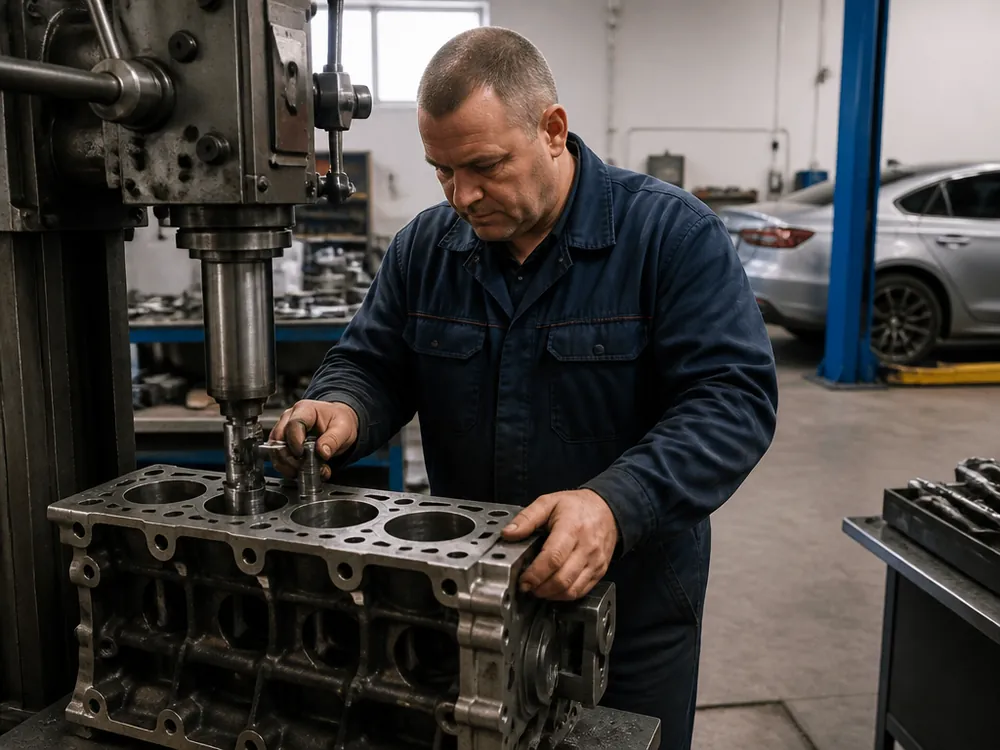
As for equipment, a proper service uses: a hydraulic press for pressing bushings, diamond cutters for seat machining, and the plane is ground on a special machine. The presence of a modern machine park is a sign of professionalism. Find out how CH boring and plane grinding are performed, talk to the master. If they answer evasively — it's worth thinking.
| Type of work | What is included | Duration |
|---|
| CH gasket replacement | Removal/installation, gasket replacement, bolt tightening with torque compliance | 1–2 days |
| Valve lapping | Lapping of 8/16 valves, tightness check | 1–2 days |
| Guide bushing replacement | Bushing pressing, reaming, clearance check | 2–3 days |
| Valve seat replacement | Seat boring, seat pressing, machining | 3–4 days |
| CH boring | Plane grinding, channel boring | 1–2 days |
| Repair of cracks in cast iron CH | Argon welding, pressure testing | 2–4 days |
| CH repair KamAZ | Full repair with replacement of valves, bushings, seats | 3–5 days |
Work stages and real CH repair timelines
Cylinder head repair is a sequential process, each stage of which takes a certain time. On average, the full cycle of work in Almaty takes from 2 to 5 working days, depending on the complexity of the defect and the service workload. It all starts with diagnostics: the mechanic removes the head, visually inspects it, checks the plane on a stand, measures valve clearances and the condition of guide bushings. This stage usually takes 2-3 hours.
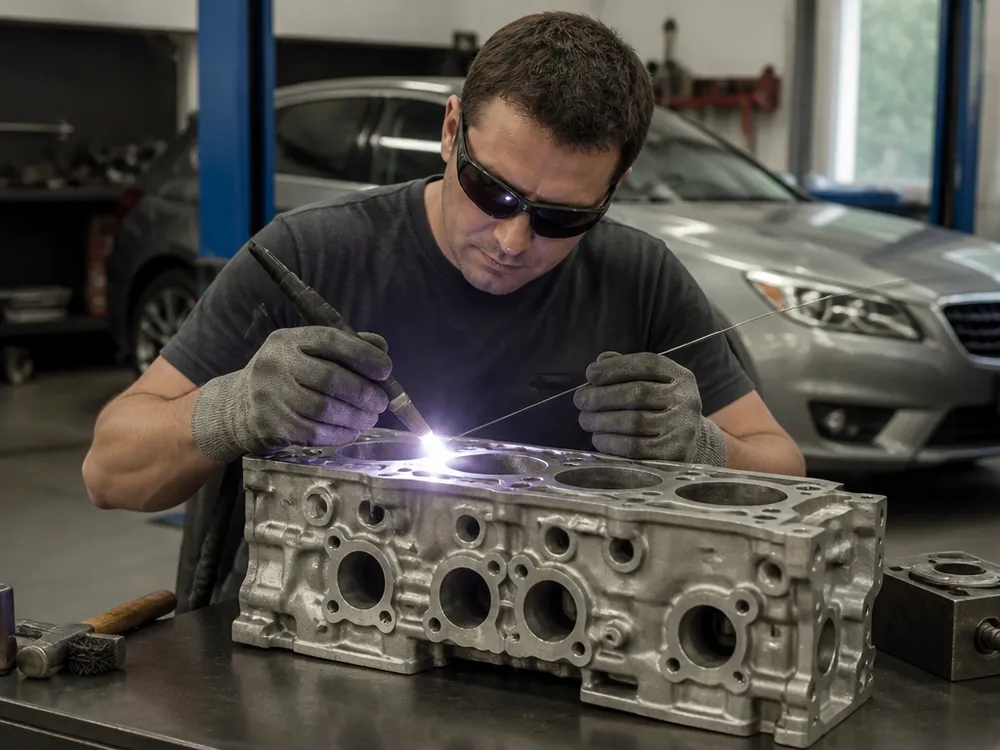
Next comes disassembly and fault detection: the head is disassembled into components, washed, checked for tightness of combustion chambers and oil channels. If cracks are found, they are welded with argon — this adds 1-2 days to the timeline. Then mechanical processing: plane milling, seat boring and guide bushing replacement. After that, new valves are installed, lapped, the head is assembled and installed on the engine. Final valve adjustment and tightness check take half a day.
It is important to understand that urgent repair is possible, but only if there is no need to order rare parts or complex welding. Usually we announce exact timelines after diagnostics, as the nuances of each engine are individual.
- Diagnostics and CH removal — 3-4 hours (from 15,000 ₸)
- Disassembly and fault detection — 2-3 hours (from 10,000 ₸)
- Mechanical processing (milling, boring) — 1-2 days (from 8,000 ₸)
- Replacement of bushings and valves, lapping — 4-6 hours (from 20,000 ₸)
- Assembly and installation — 3-4 hours (from 15,000 ₸)
- Final timelines — 2-5 days, with complex cracks up to 7 days
Common mistakes in CH repair and how to avoid them
One of the most common mistakes is saving on diagnostics. Many car owners in Almaty come with overheating symptoms, but instead of a full check, they ask to immediately "change the gasket". As a result, after 1000 km the problem returns, as the cause was not eliminated — a crack in the head or plane distortion. Therefore, we always insist on fault detection before replacing the CH gasket.
The second mistake is using cheap non-original gaskets and seals. Parts of unknown brands often do not withstand temperature loads and compress more than necessary, leading to repeated depressurization. We use proven materials: Elring, Goetze, Victor Reinz gaskets, as well as original parts — this guarantees durability.
The third mistake is incorrect tightening of CH bolts. If the tightening torque is violated or an old bolt that has already stretched is used, this leads to oil and antifreeze leaks. We always replace bolts with new ones and observe the tightening torque according to the manual, and also perform a control check with a torque wrench after engine warm-up.
Such mistakes can only be avoided by contacting a specialized service with experience, where all processes are standardized and controlled by a master receiver.
Features of CH repair on different car brands
Each engine has its own design features that affect the cost and complexity of CH repair. Japanese cars (Toyota, Honda, Nissan) are characterized by precise valve clearances that require adjustment with shims or tappets. Hydraulic lifters are also common, which may require replacement — this increases the budget. On engines 1NZ, 2ZR, SR20 and similar, it is important to strictly follow the bolt tightening sequence.
German cars (BMW, Mercedes, VW/Audi) often have aluminum CHs that are sensitive to overheating. Therefore, during repair, a check for microcracks is necessary, especially in the area of exhaust channels. The cost of work may be 20-30% higher due to difficult access and the need for special tools.
Domestic cars (VAZ, UAZ, GAZ) and commercial vehicles (KAMAZ, GAZelle) are easier to repair: cast iron heads, complex hydraulic lifters are less common, but they often require seat boring and bushing replacement. Work on KAMAZ can be performed in 1-2 days, and part prices are significantly lower.
Korean brands (Hyundai, Kia) are characterized by multi-valve engines, where precise lapping and calibration are required. It is important to use quality valve seals, as they wear out quickly under increased loads.
Warranty and post-repair maintenance rules
After completing CH repair, we provide a written warranty on the work performed — usually 12 months. The warranty covers the quality of lapping, tightness of gaskets, installation correctness. Used parts are covered by the supplier's warranty — from 3 to 12 months.
In the first 500 km of mileage, it is important to avoid high RPM (up to 3000 RPM) and intense loads. It is necessary to check the oil and antifreeze level at every start to ensure there are no leaks. After 500 km, we recommend coming for a control inspection and tightening of CH bolts — this is a mandatory procedure that prevents loosening on a hot engine.
After CH repair, it is necessary to replace the oil and filter, even if they were fresh, as metal particles could have entered the system during mechanical work. Also pay attention to the composition of the coolant — it must comply with the manufacturer's approvals.
In the future, regular maintenance — antifreeze replacement every 2 years, oil level control, timely timing belt replacement (if it is related to the CH) — will significantly extend the service life of the repaired unit.
Price guidelines for CH repair in Almaty
The cost of CH repair in Almaty depends on the engine type, complexity of the defect and car brand. Here are average market prices to help you navigate before contacting a service. CH gasket replacement will cost 35,000 – 60,000 ₸, including work and materials, depending on the brand. Valve cover gasket replacement — 5,000 – 10,000 ₸.
If CH boring (plane milling) is required, the price will be from 7,000 to 15,000 ₸. Engine valve replacement is usually estimated at 30,000 – 45,000 ₸, including lapping. Valve lapping as a separate service costs from 8,000 to 15,000 ₸.
Repair of cracks in cast iron CH, including welding and mechanical processing, starts from 15,000 ₸. Valve seat replacement — from 4,500 ₸ per piece, and valve guide bushing replacement — from 3,000 ₸ per piece. Full head reconstruction with replacement of all consumables can reach 100,000 – 150,000 ₸ for foreign cars.
We offer a transparent estimate calculation before starting work and fixed prices in the contract. If you need quality CH repair with a warranty and reasonable price, write to us on WhatsApp — we will guide you on the exact amount and schedule you at a convenient time.