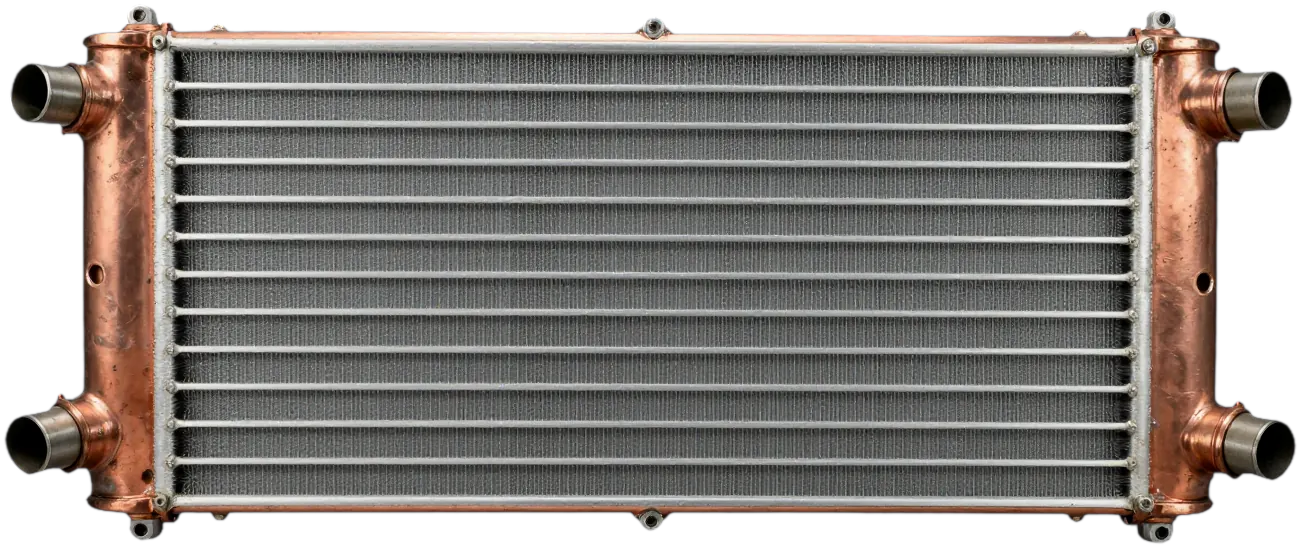
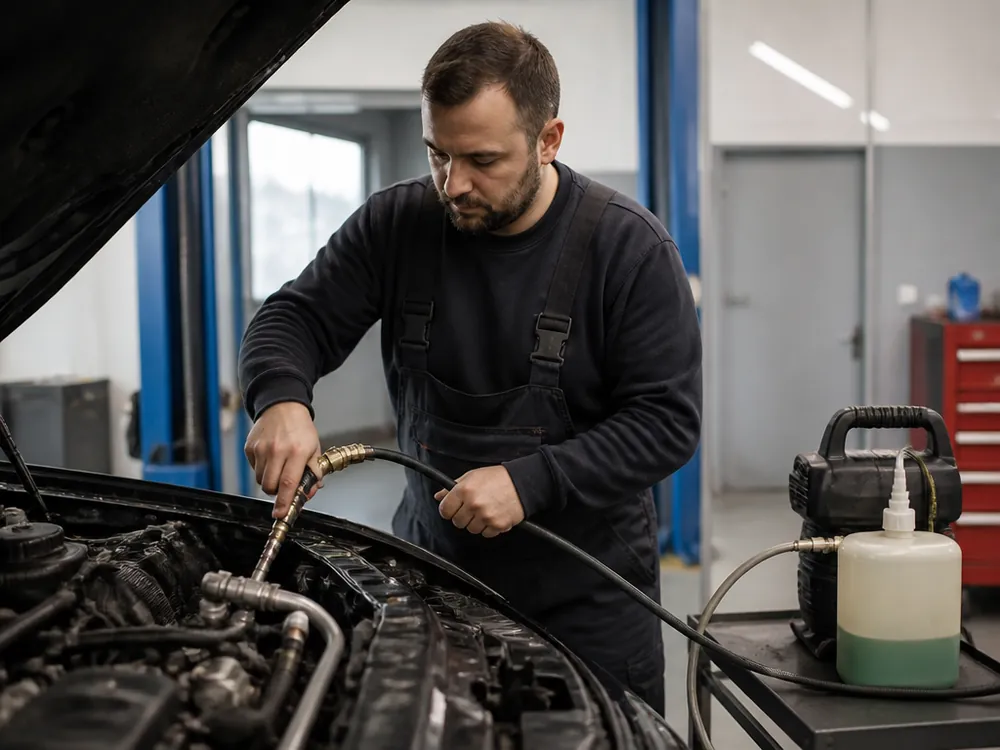
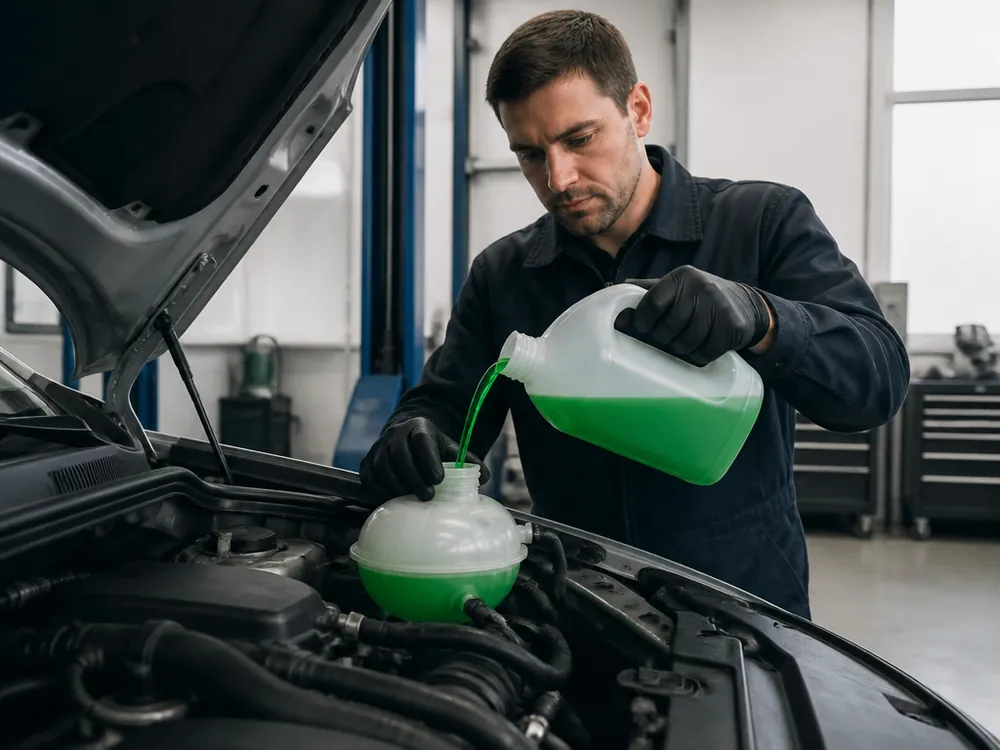
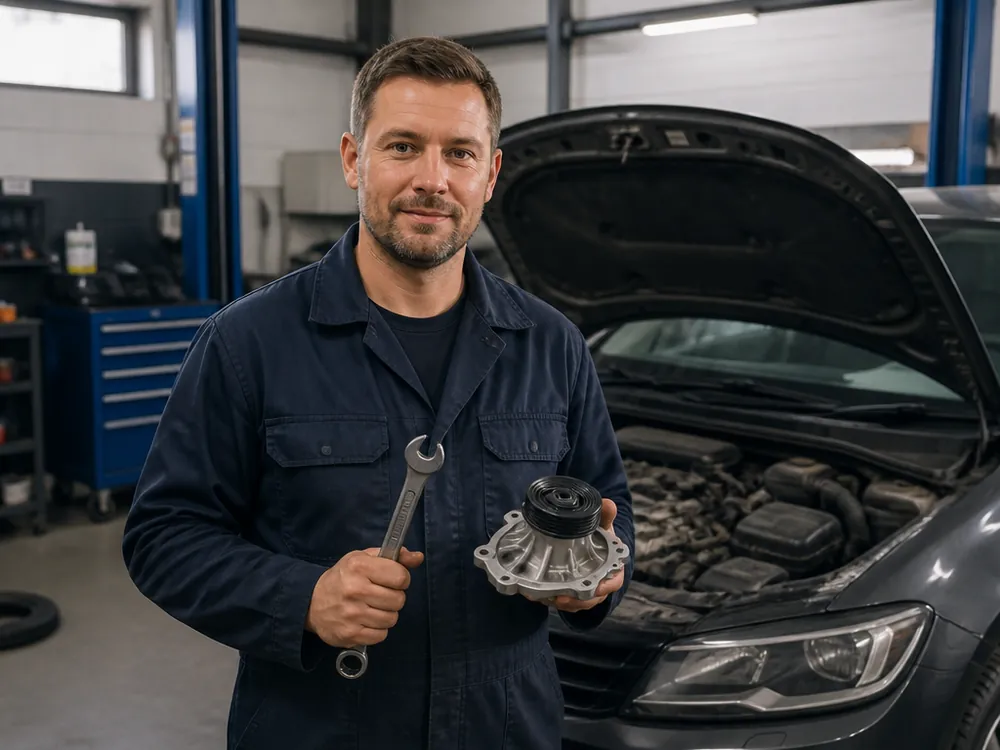
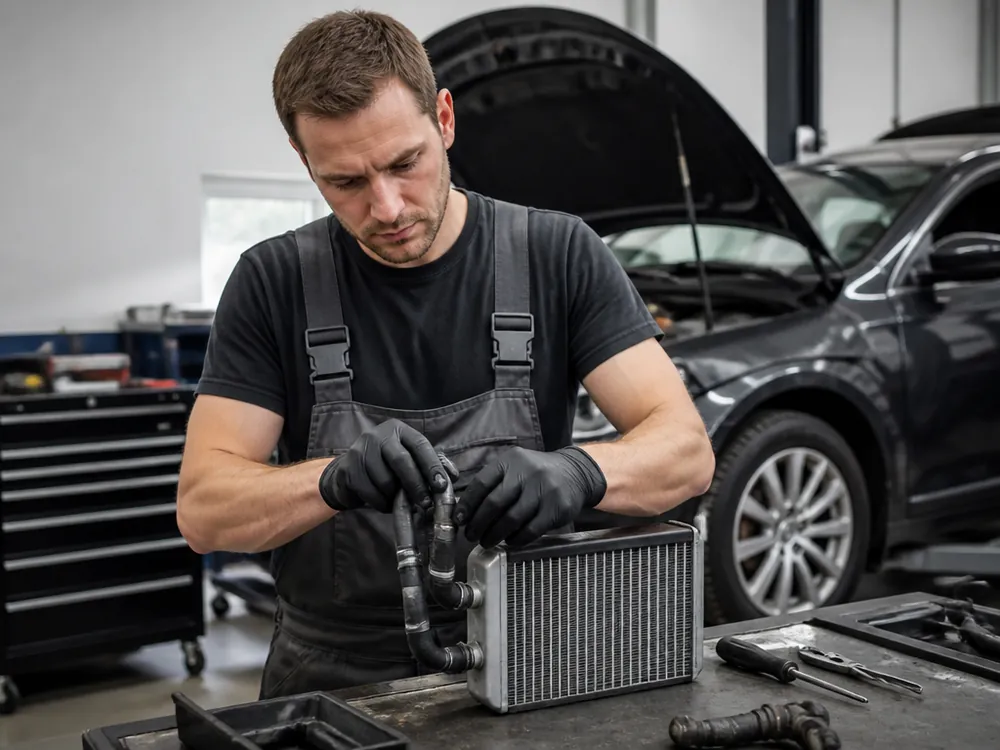
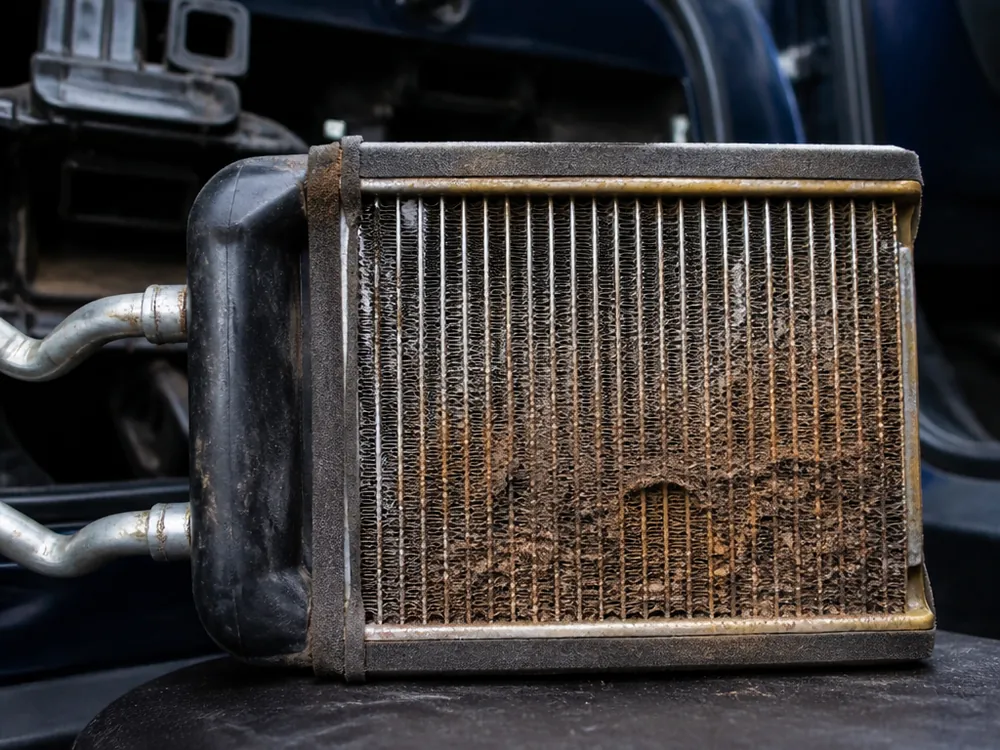
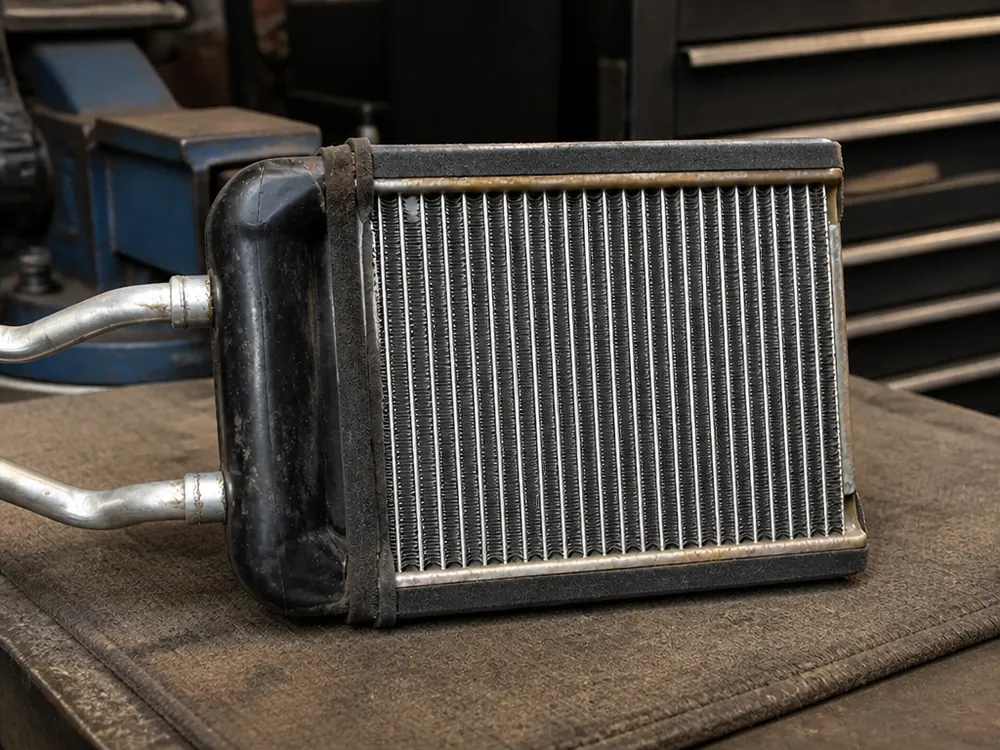
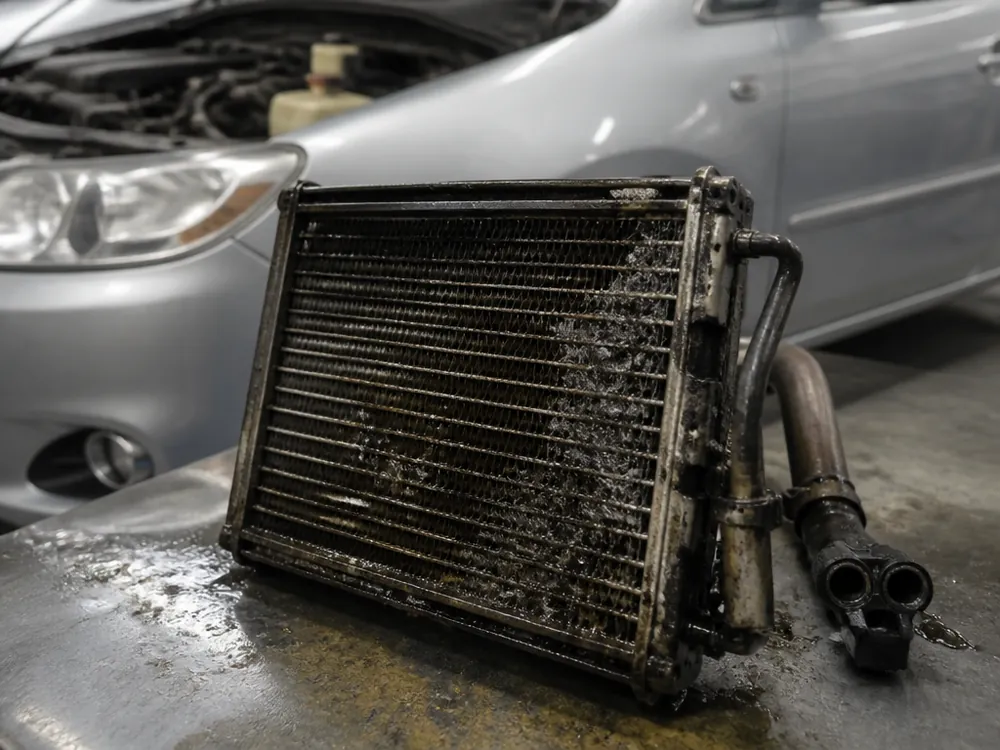
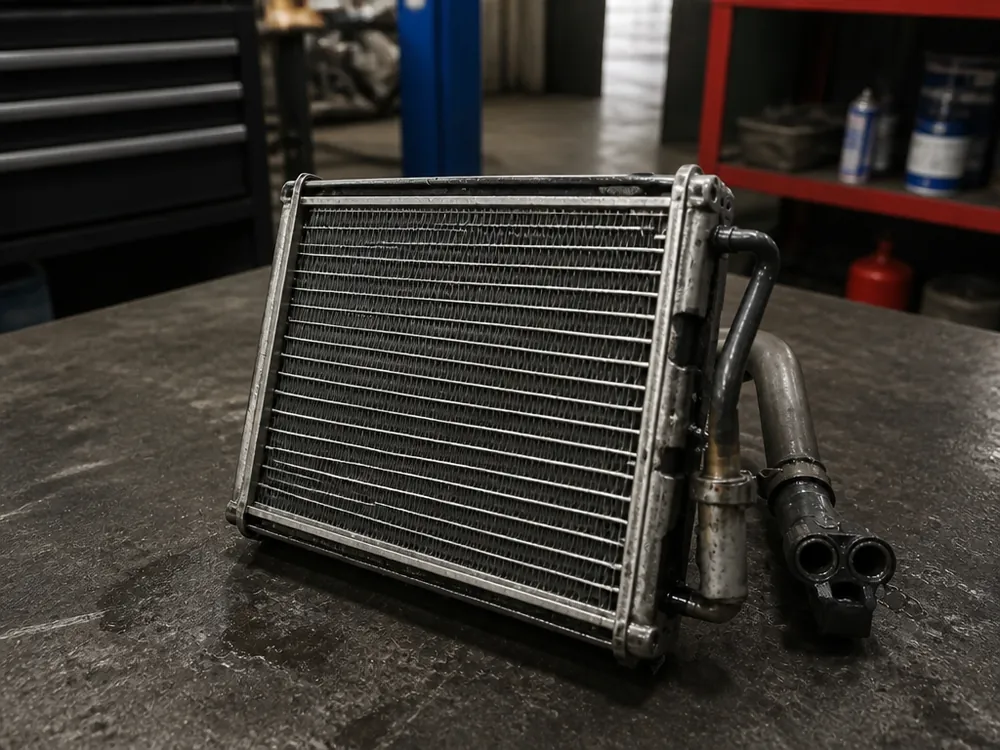
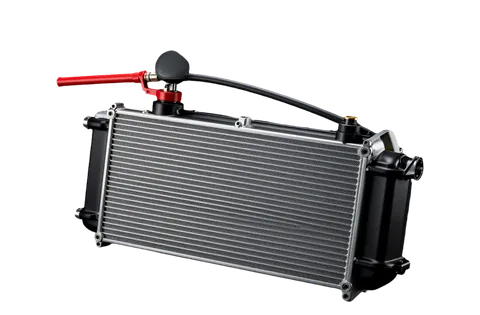
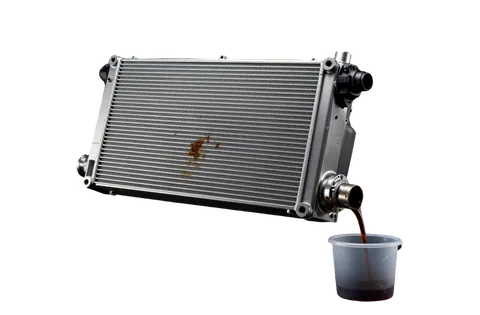
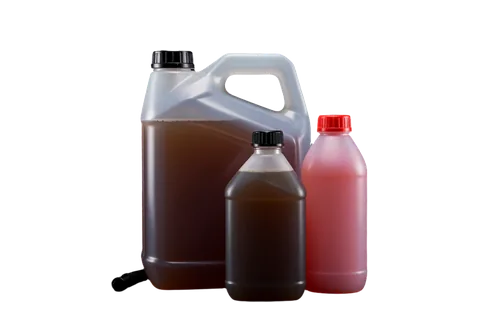
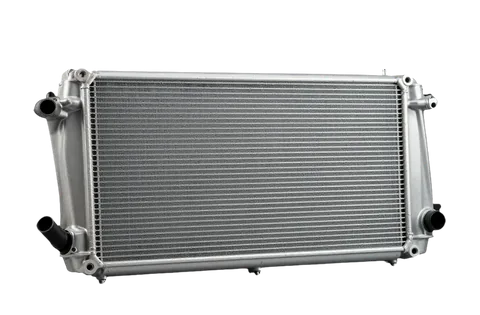
Over time, the heater radiator clogs with scale, dirt and deposits — heat flow drops, the heater blows cold. We flush the radiator without removal or with removal, remove blockages and restore coolant circulation. We work with a warranty and use professional flushing compounds.
Current prices for flushing the heater core for various vehicles and job complexities.
Service
Duration
Warranty
Price
Cooling system and heater diagnostics
30–40 min
12 mo
from 3 000 ₸
Heater core flushing without removal (chemicals + compressor)
1–2 hours
12 mo
from 7 000 ₸
Heater core flushing with removal (cabin access)
3–5 hours
12 mo
from 15 000 ₸
Heater core flushing with removal (engine firewall access)
4–6 hours
12 mo
from 18 000 ₸
Heater core flushing with dashboard removal (difficult access)
1–2 days
12 mo
from 25 000 ₸
Urgent heater core flushing (same day)
3–6 hours
12 mo
from 20 000 ₸
Mobile heater core flushing (on-site)
1–2 hours
12 mo
from 10 000 ₸
Heater core flushing with complete coolant replacement
3–5 hours
12 mo
from 15 000 ₸
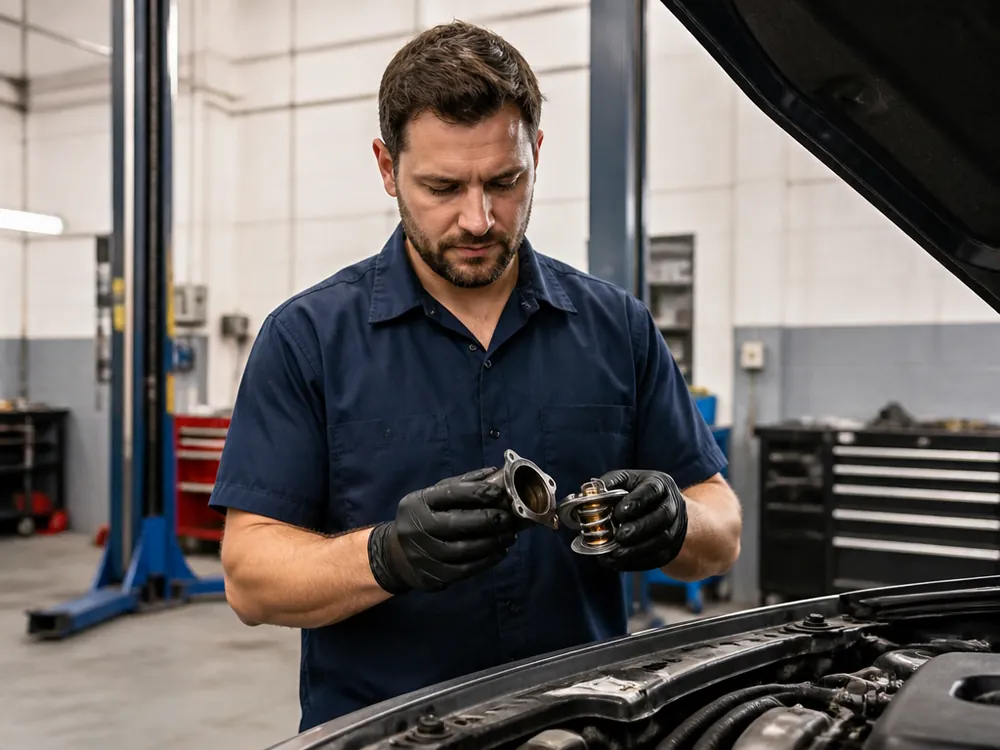
Heater core flushing with water pump replacement
4–8 hours
12 mo
from 20 000 ₸
Heater core flushing with thermostat replacement
3–6 hours
12 mo
from 18 000 ₸
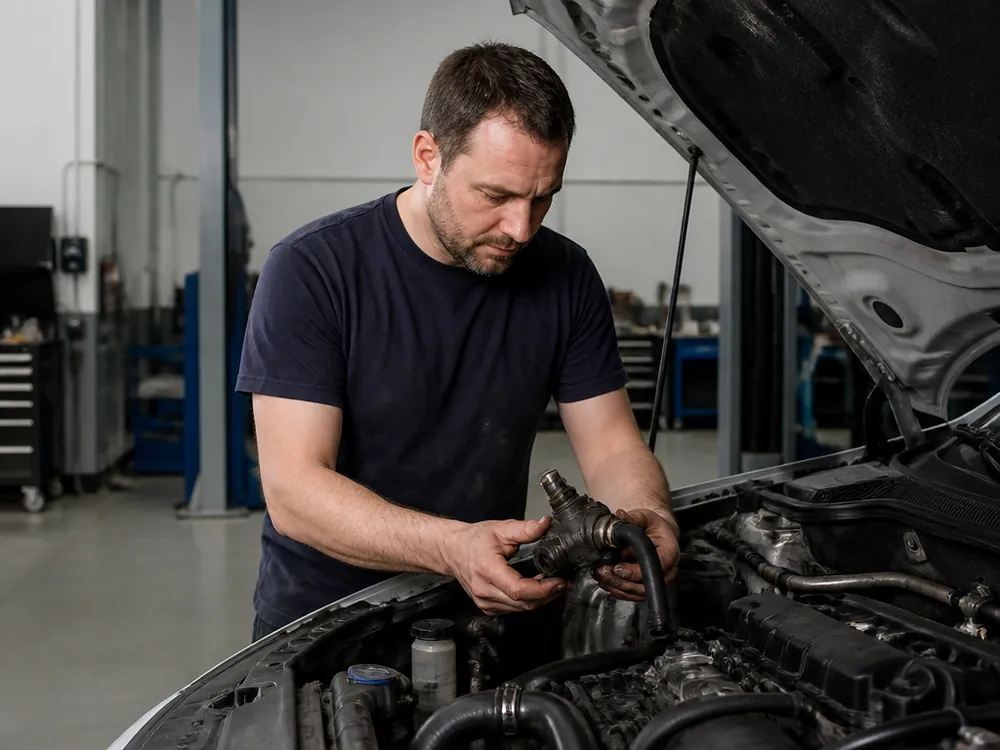
Heater core flushing with heater valve replacement
3–5 hours
12 mo
from 17 000 ₸
Heater core flushing with hose replacement
2–4 hours
12 mo
from 12 000 ₸
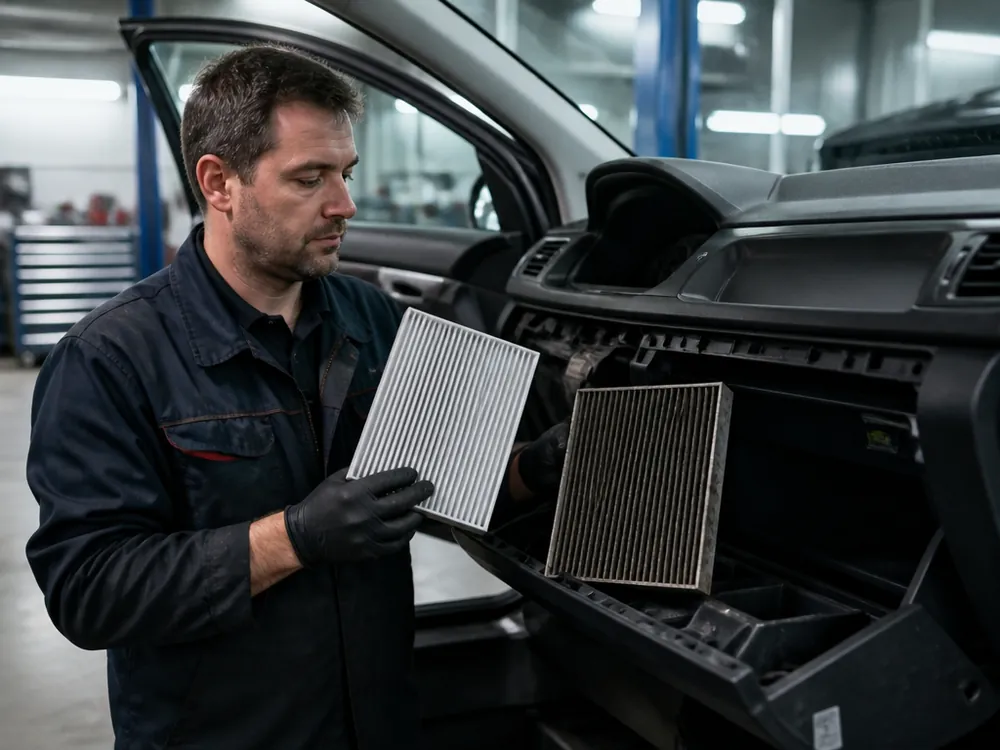
Heater core flushing with cabin filter replacement
2–3 hours
12 mo
from 10 000 ₸
Heater core flushing on a truck
5–8 hours
12 mo
from 25 000 ₸
Heater core flushing on a minibus
4–7 hours
12 mo
from 20 000 ₸
Heater core flushing with radiator replacement (if flushing fails)
4–8 hours
12 mo
from 22 000 ₸
Heater core flushing with heating system cleaning
3–5 hours
12 mo
from 16 000 ₸
Heater core flushing with system pressure testing
2–3 hours
12 mo
from 9 000 ₸
Prices depend on the vehicle make/model and access complexity. Exact cost after diagnostics. Warranty periods — see the page «Warranty»
06
Why choose heater radiator flushing at CARGID
Warranty.
Every promise — backed by a number or a document: work order, photos, removed parts.
12MO
warranty on labor — the term is stated in the work order.
Flow restoration
Leak check
Warranty
01
Without removing the radiator
We flush on the vehicle through the hoses without touching the panel or disturbing factory connections. The client does not pay for cabin disassembly.
02
We wash up to 4 bar
Pressure above 4 bar ruptures the core. We keep 2–3 bar and wash in both directions so as not to push dirt deeper.
03
We select antifreeze by specification
We pour only the one approved by the manufacturer. We do not mix colors, otherwise additives will fall out as flakes and clog the radiator.
04
12-month warranty
If after flushing the heater blows cold again, we redo it for free. We cover the blockage itself, not wear of parts.
07
Heater radiator flushing: stages of work
Steps.
We explain how the heater radiator flushing procedure is carried out in our auto service.
01
Inspection and diagnostics
You leave a request on the website or by phone — we select a convenient time and day for your visit. The technician checks the cooling system, assesses the condition of the heater radiator and identifies the cause of the problem.
request on WhatsApp
02
Draining the coolant
We carefully drain the old antifreeze so that the radiator is flushed without mixing with used fluid.
inspection and diagnostics
03
Radiator flushing
We use special compounds and flushing solutions that clean the core from scale and dirt.
estimate before work starts
04
Reverse flushing
We flush the radiator under pressure in the reverse direction to wash out all deposits from inside.
work to factory procedure
05
Leak check
We check the radiator and hoses for leaks and make sure the heating system connections are intact.
result check
06
Test drive
We pour in fresh coolant and remove air pockets from the cooling system. We warm up the engine, check the heater operation in all modes and hand the vehicle over to the owner.
Car service in Almaty. We reply on WhatsApp and by phone.
3 000 ₸Cooling system and heater diagnostics
10 · Useful
Heater radiator flushing in Almaty with a 12-month warranty
Author: Роман Вернерgeneral car repair technician, 13 years of experience
Published Updated
CARGID flushes the heater radiator in Almaty with or without removal, holding pressure at 2–3 bar and flushing the core in both directions. First, cooling system diagnostics and a written estimate, then the work. We select antifreeze according to the manufacturer's specification, and the 12-month warranty is recorded in the work order.
Why the heater blows cold and how to tell a clog from another fault
The heater doesn't warm well only because of a clog. We break down the symptoms that help distinguish a clogged radiator from an air lock, thermostat, and water pump — so you don't pay for unnecessary work.
Symptoms that indicate a clogged heater radiator
A clogged heater radiator heats unevenly: one side blows hot, the other cool, and at idle the heater cools down and only blows warm again while driving. The core clogs gradually, and the corner farthest from the pipes is the first to stop passing antifreeze — that's what causes the side-to-side temperature difference. At idle, flow through the clogged channels drops and heat quickly dissipates; while driving, the pump pushes fluid faster and the airflow revives. An air lock behaves differently — it appears suddenly, after a repair or antifreeze change, rather than building up over months. The side-to-side temperature difference is the earliest sign: it's best to catch the problem at this stage, while the radiator still gives off heat, not when it blows completely cold.
How to tell a clog from a thermostat, water pump, and air lock
Radiator clog: consistently weak heat flow and temperature difference side to side, engine reaches operating temperature normally.
Thermostat: engine takes long to warm up, temperature drops on the highway — the entire cooling circuit suffers.
Water pump: reduced circulation, noise or bearing play, weak airflow in all modes, including idle.
Air lock: sudden cold after a repair, gurgling in the circuit, fixed by removing air, not by flushing.
All together: a clogged core often coexists with a tired water pump, so during diagnostics we check the entire system — technicians with 8–17 years of experience handle the work order from intake to delivery.
Heater radiator flushing methods and how access affects timing
We choose the method based on access to the radiator and the condition of the core — this determines both the amount of disassembly and the duration of work on the lift.
Flushing without removal vs. with removal — what's the difference
Without removal, we flush the radiator on the car through the pipes, without touching the panel or factory connections; with removal, we take the radiator out and flush it separately. The second option is needed when the clog is dense or the core is clogged with breakdown products of additives. Heater radiator flushing in Almaty more often starts with the first method: it's cheaper in terms of disassembly and handles moderate clogs. Through the pipes we supply chemicals and wash out the suspension in both directions, without disturbing the pipe fit or stripping clamps. With heavy deposits inside the core, such a pass only removes the top layer, and the warm airflow remains weak. This option really helps with moderate clogs and saves time, but if the heat output hasn't recovered afterward, further flushing without removal only wastes time — it's more honest to move straight to removal.
Access from the cabin, from the firewall, and with dashboard removal
heater access options and disassembly duration
Access type
What we disassemble
Approximate time
Without removal
nothing, we work through the pipes
1–1.5 hours
With removal, access from cabin
part of the interior trim
3–4 hours
With removal, access from firewall
components under the hood near the firewall
3–4 hours
With dashboard removal
the entire dashboard
longer, specified by model
Urgent flushing, on-site service, and commercial vehicles
Urgent flushing: we take the car on the day of request if a lift and technician are available — check when booking.
On-site flushing: we come to the location when the vehicle is not drivable and flush through the pipes.
Trucks: heater flushing on commercial vehicles follows the same scheme but with a larger system volume.
Minibuses: their heater radiator is often more accessible than on passenger cars, and disassembly takes less time.
Pressure testing after on-site service: it's more reliable to check for leaks and test the pump in the shop on a lift, not on site.
Pressure and flushing method without risk to the core
Burst cores and recurring clogs a month later are almost always the result of one thing: incorrect pressure or one-way flushing. We cover the method separately because it determines whether the radiator stays functional or needs replacement.
Why we hold 2–3 bar and never above 4
We hold 2–3 bar because above 4 bar thin aluminum cores burst, and the radiator has to be replaced instead of flushed. We connect the compressor through a regulator and gauge, not directly to the line — in our shop on Mukagali Makataev, the supply is higher than needed for a heater. The danger isn't the rupture itself but unnoticed deformation: crushed cells may not leak immediately but weeks later, so we monitor pressure throughout the procedure, not just at the start. In my opinion, this is the main difference between careful work and a quick job: a technician with a gauge spends the same half hour but doesn't leave the client with a hidden leak. Before delivery, we check the system for leaks — if there's an antifreeze smell in the cabin, we'll catch the deformation right away, not on the highway.
Two-way flushing and why citric acid is dangerous
We flush in both directions — forward and reverse flow — to wash out dirt rather than push it deeper into the core. A flushing machine with a check valve switches the flow without disconnecting fittings: first with the antifreeze flow, then against it, for several cycles until clean fluid comes out of the pipes. Citric acid and homemade solutions are aggressive to aluminum and rubber seals, so after such treatment the radiator often leaks — professional chemicals are matched to the cell material and don't corrode seals. In our practice, re-clogging after acid comes faster than after machine flushing: the eroded metal attracts suspension more actively. We also check the heater valve and pipes — if they're already stiff, flushing the car's heater radiator without replacing them gives only a temporary effect, and the heater will cool down again by the first cold snap.
Antifreeze after flushing and maintenance to prevent re-clogging
A flush clears the clog for a while, but the result lasts only with the right coolant and simple upkeep. Here's what to fill, what to avoid, and how to tell when it's time to check the system again.
Coolant by spec and why you can't mix colors
We only fill coolant approved by the manufacturer to spec, and we never mix colors — mixing makes the additives flake out and clogs the radiator all over again. Before filling, we check the specification in the documentation for the specific make: Japanese, Korean, and European models have different specs, and there's no universal fluid that fits them all. A procedure without a fluid change leaves remnants of the old mix in the core, so afterward we drain the old fluid completely and blow out the circuit. We fill the fluid to spec and bleed the air out of the system, otherwise the heater blows unevenly. Coolant color is no sign of compatibility: two red fluids from different makers can have incompatible additive packages, so we go by the spec in the documentation, not by the shade of the fluid.
What to do after a flush and how often to repeat it
Removing air pockets: after filling, we bleed the air out of the circuit, otherwise the heater blows cold at idle.
Leak check: we pressure-test the system and inspect the hoses to catch a leak right away, not a week later.
Test drive: before handover, we check the heat at different modes — from idle to highway — to make sure the flow is even.
Cabin filter: we replace a clogged filter, otherwise airflow drops and the heat feels cold with nothing actually broken.
Repeat by symptoms: with healthy coolant, we don't tie the procedure to a schedule — we watch the heat and the airflow.
Pump check: if it's cold again a month later, the culprit is usually the pump, not the core — we diagnose the whole system, not just the radiator.
When a flush won't help and how we back up the result
Sometimes the core can't be flushed anymore: we show you honestly and offer a replacement, and we give a warranty on the work done, written into the work order.
How to tell it's time to replace the radiator, not flush it
If flushing both ways under working pressure didn't bring the heat flow back, the core is damaged or clogged solid, we show the radiator's condition in a photo report and offer a replacement. On the removed unit you can see what you can't see on the car: crushed partitions, peeling sealant, a layer of scale deep in the tubes. The service advisor walks you through the before-and-after shots so the decision isn't just words. Another "just in case" pass in this situation only wastes the client's time and money, so we base the call on replacement on the actual result of the work, not on mileage or the car's age. And one more thing: a unit clogged solid won't wash out even with chemicals and a compressor — it needs a new one.
Warranty, estimate, and how the work is done
12-month warranty: we give a year on the heater core flush and record the term and conditions in the work order and the handover report.
Written estimate: first we diagnose the cooling system and heater, and we start work only after you agree to a fixed scope.
Photo report by stage: we shoot the key moments of the flush and replacement so you can see exactly what was done.
We return the old parts: we show you the removed radiator, hoses, and heater valve and hand them over to you.
Parts of your choice: OEM, aftermarket, or your own parts — but the warranty doesn't cover a part you bring yourself.
What the warranty doesn't cover: an accident after the repair, third-party tampering, and normal wear of consumables — we fix the terms in advance so there's no misunderstanding.
What decides heater flushing success
Here's the key stuff that decides the outcome of heater work: what the choice of method depends on, what pressure is safe, and when a repair no longer saves the day.
Diagnosis by symptom: a clogged heater gives uneven heat and mixed temperatures, not just fully cold air from the vents.
Method by access: without removal it's faster and cheaper on labor, with removal it's more reliable for a heavy clog and a blocked core.
Pressure of 2–3 bar: above 4 bar the core bursts, so a proven method matters more than speed and force.
Coolant by spec: mixing fluids of different colors makes the additives flake, and the heat exchanger clogs again within a few weeks.
Replace instead of repeat: if the procedure didn't bring the heat flow back, another cycle just wastes time — it's more honest to install a new part.
11
Frequently asked questions about heater core flushing in Almaty
Questions.
Price, timeframes, warranty, payment — 10 questions asked most often.
10
Didn't find an answer?
Message us on WhatsApp — a service advisor will reply within 5 minutes.
The cost of heater core flushing at CARGID depends on the engine type and the complexity of access to the unit. For most cars with a gasoline engine, the price ranges from 12,000 to 18,000 tenge. For diesel cars and some models with a large engine displacement, the price may be higher — up to 25,000 tenge, as more time is required for removal and installation. The exact cost can only be named after the technician inspects the car, as it is important to consider the degree of contamination and possible additional work, for example, if the radiator is heavily clogged and chemical cleaning is required. The price already includes removal and installation of the radiator, flushing with a special compound, and checking the cooling system for leaks.
On average, the procedure takes from 2 to 3 hours. The specific time depends on the design features of the car: on some vehicles access to the heater core is difficult, and removal of the dashboard is required, which increases the time to 4-5 hours. On most modern cars we finish within 2.5 hours. If you book in advance, we can accept you without a queue and complete the work exactly on time. We recommend planning your visit taking this time into account to avoid any inconvenience.
Yes, we provide a 12-month warranty for all completed work. The warranty covers the quality of flushing and the absence of leaks at the hose connection points. If within this period problems arise related specifically to our work, we will conduct a free re-diagnosis and fix the issue. The warranty does not apply if the radiator has mechanical damage or natural wear, as well as if you used an unsuitable antifreeze after our work. We always record the condition of the system before and after work so that warranty obligations are transparent.
An appointment is not mandatory, but highly recommended. We try to accept all customers, however during peak hours (morning and evening) queues are possible. If you book in advance by phone or through the website, we guarantee that your car will be on the lift at the appointed time. Booking also helps us prepare the necessary consumables and plan the time for the procedure. In case of an urgent need (for example, the heater doesn't warm at all), you can come without an appointment, and we will try to find a slot within 1-2 hours.
Yes, you can bring your own materials if they are suitable for your car. However, we recommend using our professional products, which we include in the price. Our flushing compounds are selected for effective removal of scale and dirt and are safe for aluminum radiators. If you bring your own materials, we will check their compatibility with your cooling system. If an unsuitable fluid is used, we are not responsible for possible breakdowns. Also note that we do not reduce the cost of work if you use your own materials, since the price is for labor, not for chemicals.
We guarantee that if there is no result after flushing, you will not pay for the work. But that's not all: we will conduct additional diagnostic procedures free of charge to find the true cause, which may not have been the radiator (for example, a faulty thermostat or pump). In rare cases, the radiator is so clogged that flushing without removal and disassembly does not help — we will honestly warn you about this before starting work and offer alternative options. Our goal is to make the heater in your car work efficiently, so we approach the matter responsibly.
Flushing without removal (the so-called "express flush") is performed through the car's cooling system: we connect a special machine to the hoses and run the flushing fluid through the circuit. It is faster (about 1 hour) and cheaper (from 7,000 tenge), but effective only for minor contamination. Flushing with radiator removal involves dismantling the unit, which allows cleaning the radiator fins outside and inside and removing dense deposits. This method gives maximum effect and is recommended for severe clogging, when air flow through the radiator is difficult. The cost of such a service is from 12,000 tenge, and it includes a full cycle of work.
After flushing, we fill in fresh antifreeze that meets your car's specification, so you don't need to buy anything extra in the near future. To make the heater core work for a long time, follow a few rules: use only the recommended type of coolant and change it every 2-3 years or 60,000 km; monitor the antifreeze level — a drop may indicate a leak; do not mix different types of antifreeze (for example, G11 and G12); check the cooling system for leaks once a year. Also do not wash the heater core with aggressive substances — only special compounds. These simple measures will help avoid repeated clogs.
Payment is made after the work is completed, in cash or by card at the service. The exact cost is communicated before flushing begins: it depends on the car model and whether the heater core is removed or flushing is performed without removal. If partial disassembly of the dashboard is required, this also affects the amount.
This is determined during the flushing process. If after removing the radiator we see that the fins are heavily corroded, destroyed, or clogged so much that chemicals cannot cope and mechanical cleaning gives no result, we stop work and inform you. In such cases, further operation of the radiator is ineffective: the heater will warm weakly or not at all. We recommend replacing it with a new radiator. Our technicians always photograph the problem and show it to you so that you can make an informed decision. If you agree to replacement, we will select an original or high-quality analogue for your car and install it with a warranty.
12
What clients say about our heater core flushing
Reviews.
We collect ratings on the website and on maps — we hide nothing.
4.8
872 reviews on the website 1 900+ ratings in total
Anton
Toyota Camry
Toyota Camry 2014, the heater started to warm poorly. I booked an appointment at CARGID for radiator flushing. They did everything quickly, for 18,000 tenge. Now it blows heat perfectly, the windows don't fog up. I was satisfied!
Dmitry
On the Nissan Pathfinder the heater was barely warm. The technicians flushed the heater core, 22000 tenge. It became noticeably warmer, but still not perfect. They said if it doesn't help, replacement is needed. For now I'm driving and monitoring.
Elena
CX-5
The windows were fogging up in the Mazda CX-5, the heater couldn't cope. At CARGID they flushed the heater core. A day later they released it, price 21500 tenge. Now the windows are clear, it dries well. Thank you!
Kanat
Elsewhere they said: the radiator needs to be replaced. I came to CARGID, they flushed the radiator, it really helped. Only 20,000 tenge, it worked for 2 days. Now the car is warm. Solid!
Alexey
On the Volkswagen Polo there was an unpleasant smell from the heater. It turned out the radiator was leaking. At CARGID they advised replacement, since flushing wouldn't have helped. They replaced it for 35000 tenge. No smell, everything is great.
Olga
I came with a problem: the heater barely warmed in the cold. At CARGID they flushed the heater core. Price 24000 tenge, it took one day. It became noticeably warmer. I'm happy, I recommend.
Igor
Honda Accord, the heater was noisy and gurgling. I came to the auto service, diagnostics showed a clogged radiator. They flushed it, reinstalled it, now it's quiet and warm. 18000 tenge, done in a day. Thanks to the technicians!
Marina
Sportage
Kia Sportage, problem with heater - it blew little warm air. Service rinsed heater core, 21000 tenge. Better, but not perfect. May need radiator replacement later. Good service, honest techs.
Andrey
Mitsubishi Outlander, the heater didn't warm. They flushed the radiator, 20000 tenge. Almost perfect. Thanks for the work!