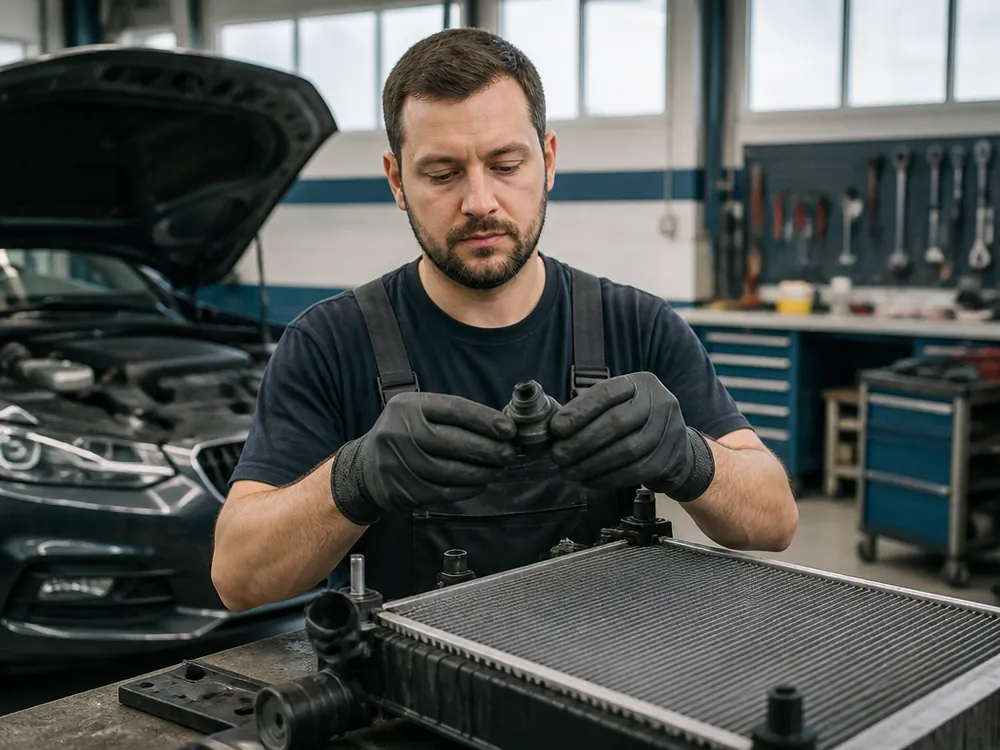
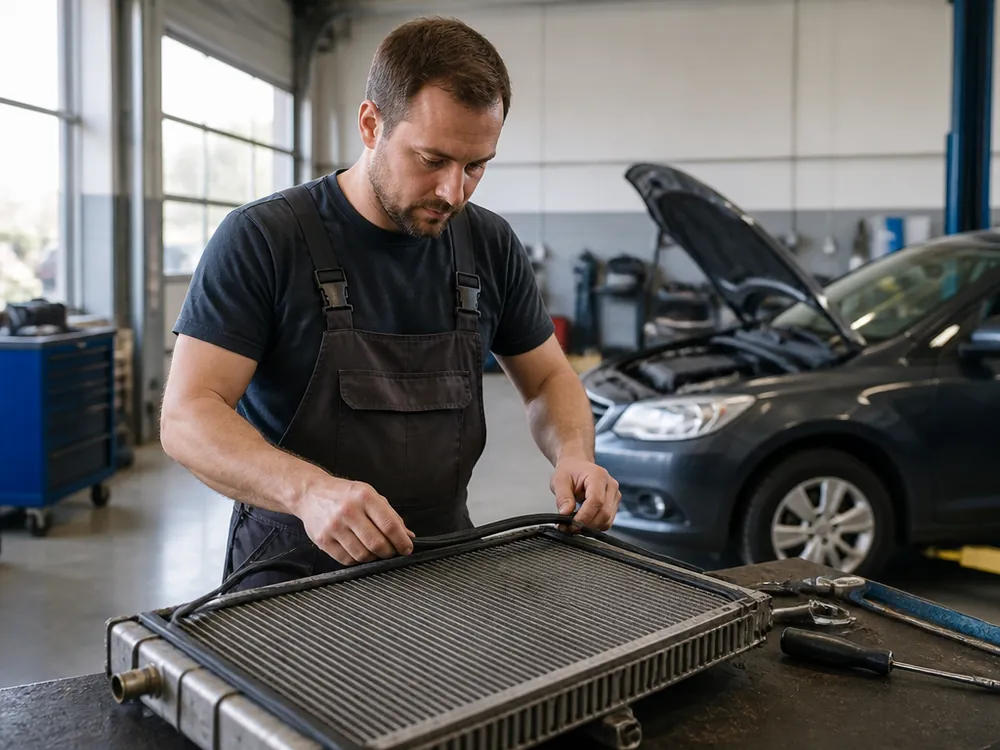
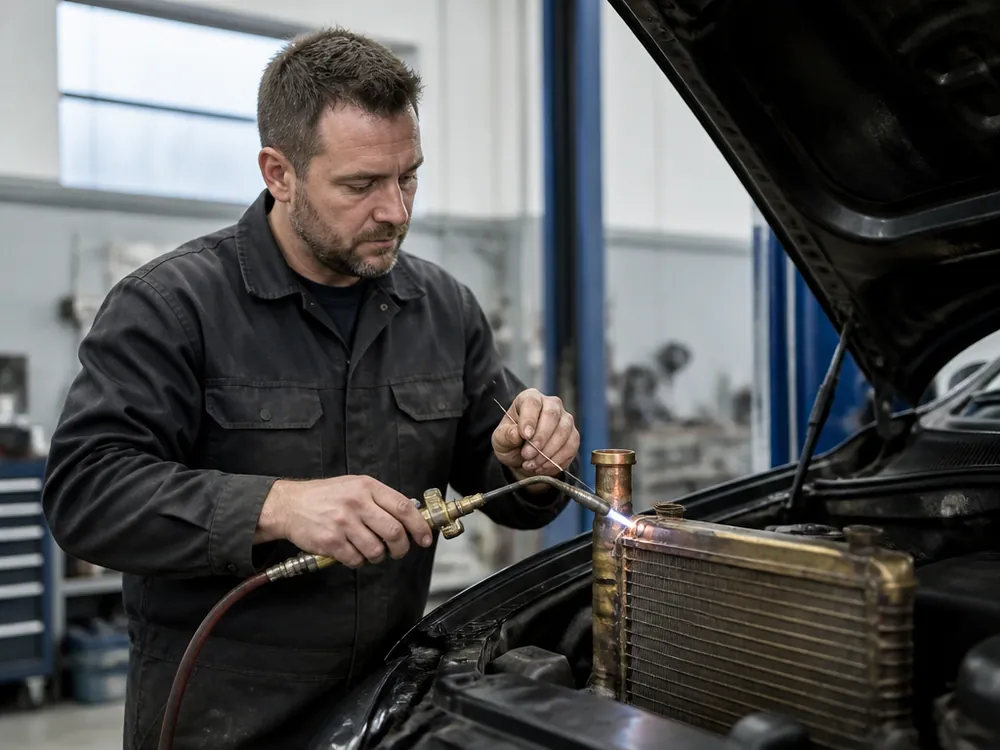
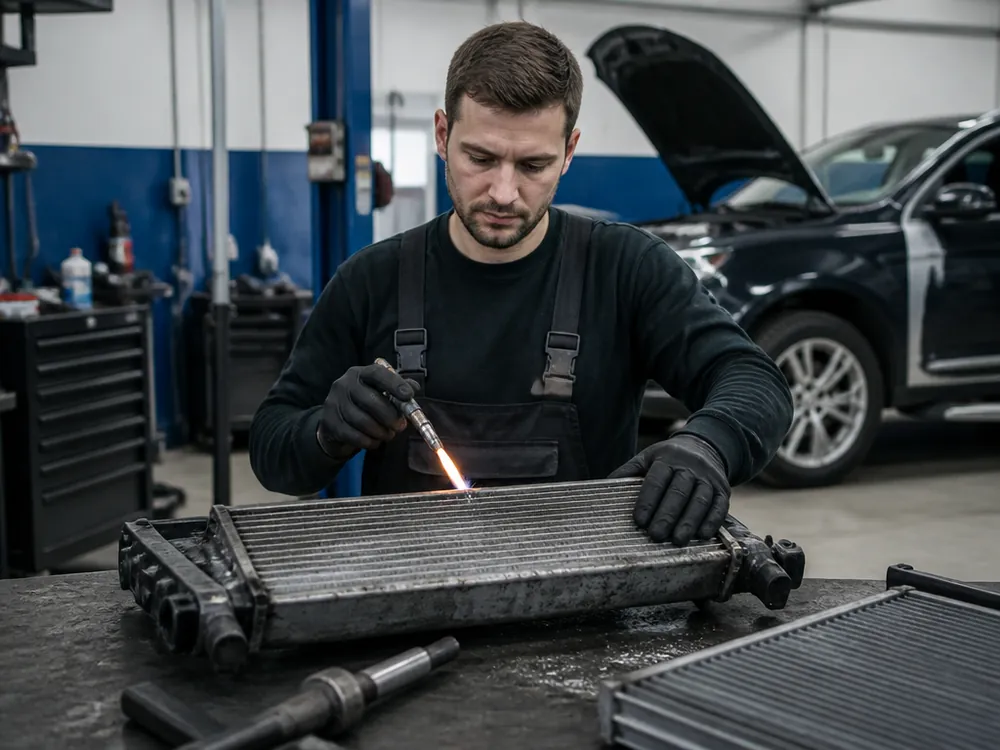
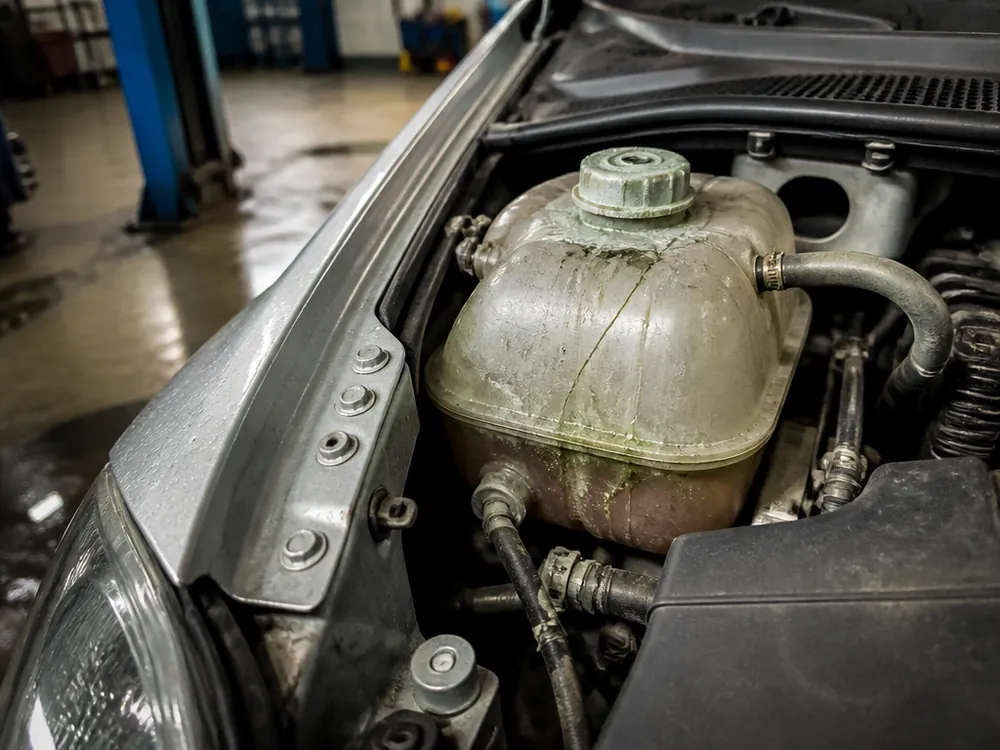
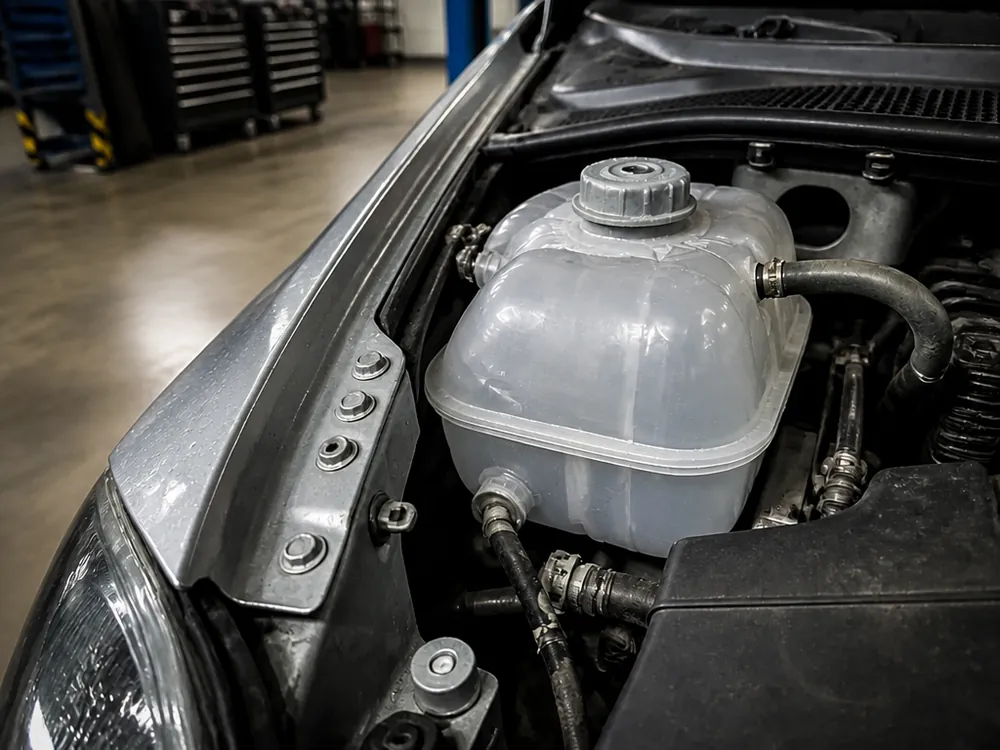
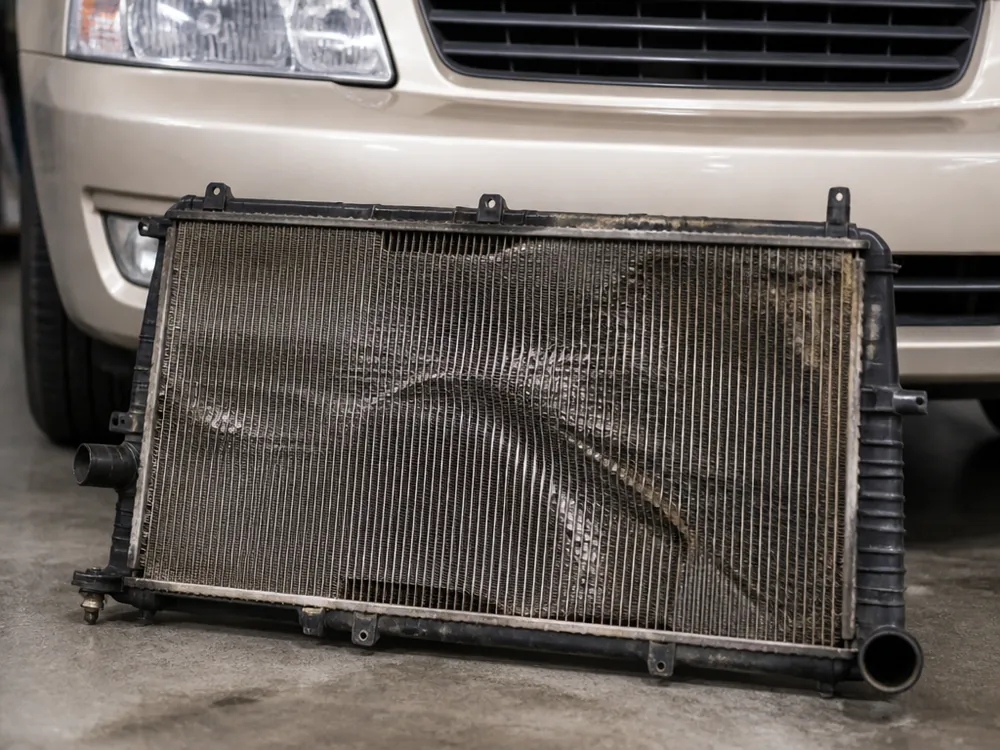
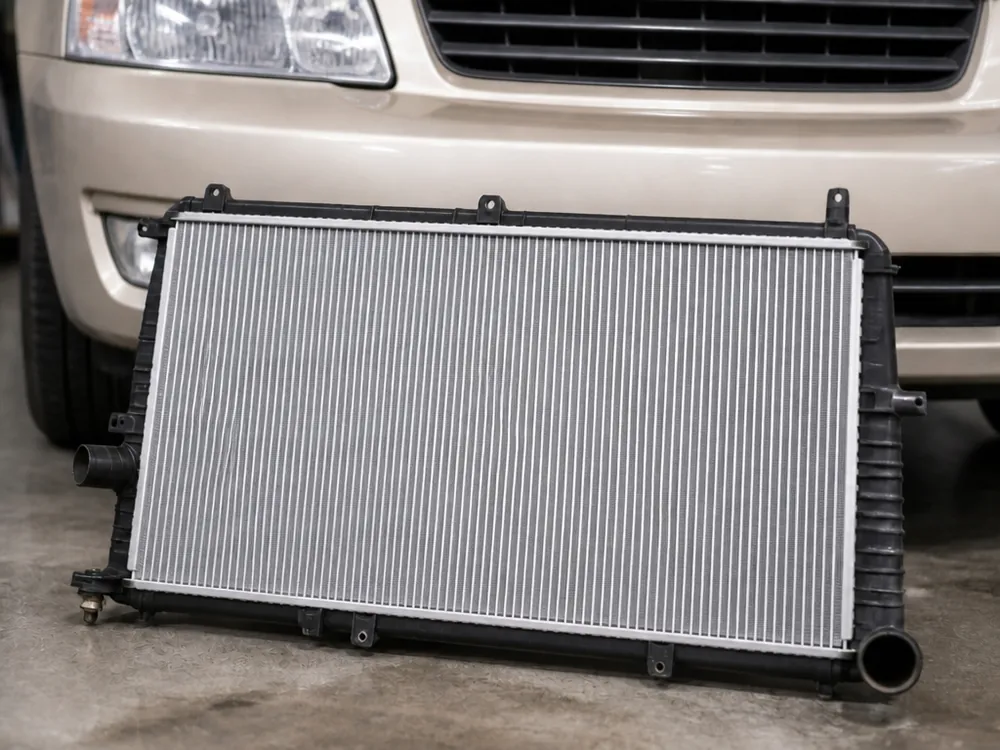
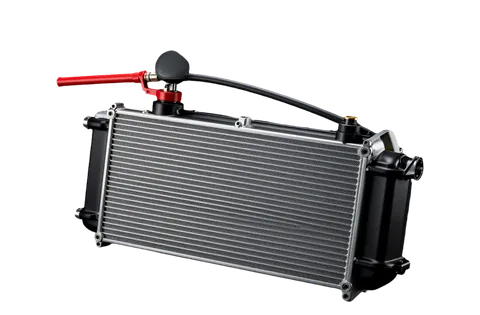
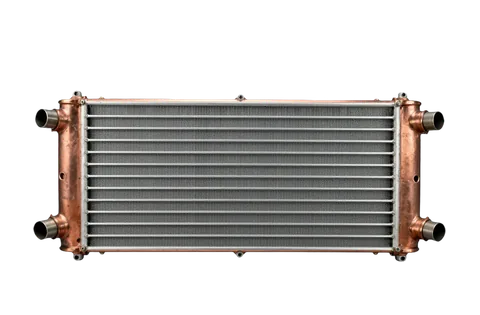
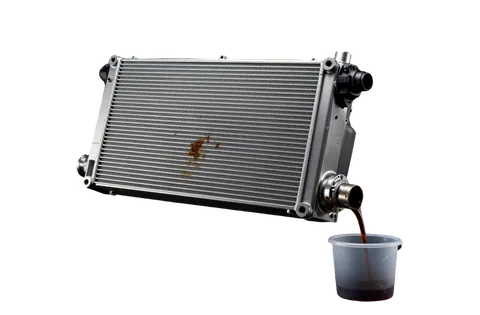
The cooling radiator is the main element of the cooling system. If it leaks or is clogged, the engine overheats, and this leads to expensive repairs. We solder aluminum and copper radiators, replace hoses and thermostats, flush the system. We work quickly, provide a warranty of 12 months, and help you save money — repair often costs 3-5 times less than replacement.
Radiator and cooling system flushing (without dismantling)
1–2 hours
12 mo
from 5 000 ₸
Pressure testing of the radiator and cooling system (leak test under pressure)
30–60 minutes
12 mo
from 3 500 ₸
Comprehensive radiator repair with full disassembly, fault detection, and reassembly
from 5 hours
12 mo
from 18 000 ₸
Urgent radiator repair (same-day intake, no queue)
2–4 hours
12 mo
from 10 000 ₸
On-site radiator repair (Almaty, within the city)
as the case may be
12 mo
from 8 000 ₸ + travel
Air conditioning radiator (condenser) replacement with system recharge
3–5 hours
12 mo
from 15 000 ₸
Radiator repair with replacement of seals and rubber mounts
1–2 hours
12 mo
from 4 000 ₸
The exact cost depends on the make/model of the car and the radiator material. Warranty on work — 12 months. Warranty periods — see the page «Warranty»
06
Why Choose Radiator Repair at CARGID
Warranty.
Every promise — backed by a number or a document: work order, photos, removed parts.
12MO
warranty on labor — the term is stated in the work order.
Removal and installation
Diagnostics
12-month warranty
01
Pressure Testing at 2 Bar
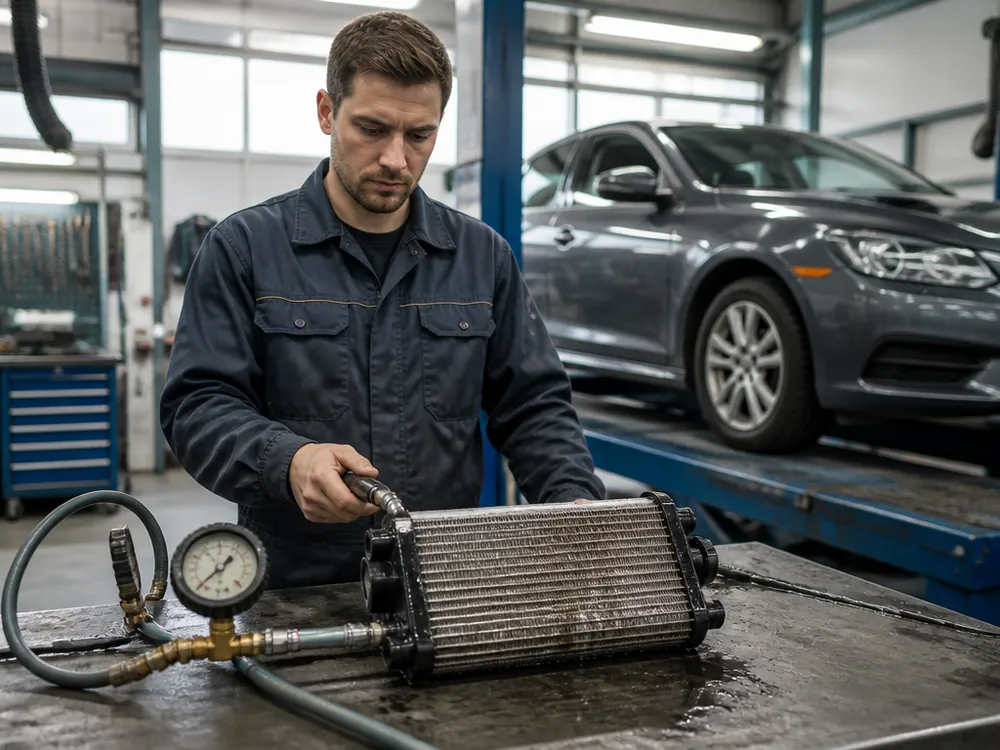
We test the assembled radiator with air under 2 bar pressure in water. Bubbles reveal microcracks that are invisible to the eye.
02
Soldering at 220°C
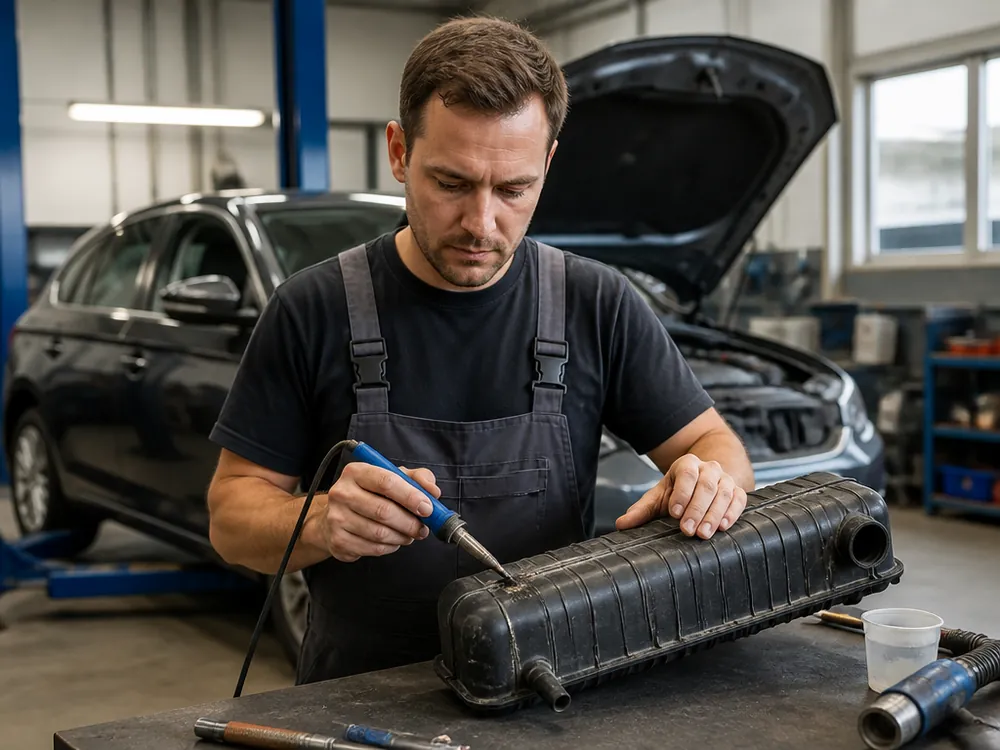
We solder copper and brass with soft solder and flux, maintaining exactly 220°C with a torch. Overheating burns the flux, and the seam leaks later.
03
Tank Replacement Without Core Removal
We replace the plastic tank with factory-style crimping: the core stays in place. The client doesn't pay for extra disassembly and doesn't lose sealing.
04
12-month Warranty
We cover the seam and seals for one year — our work. If it leaks due to our soldering, we will redo it for free, no questions asked.
07
Radiator Repair Stages
Steps.
We explain how radiator repair proceeds from request to vehicle handover.
01
System Diagnostics
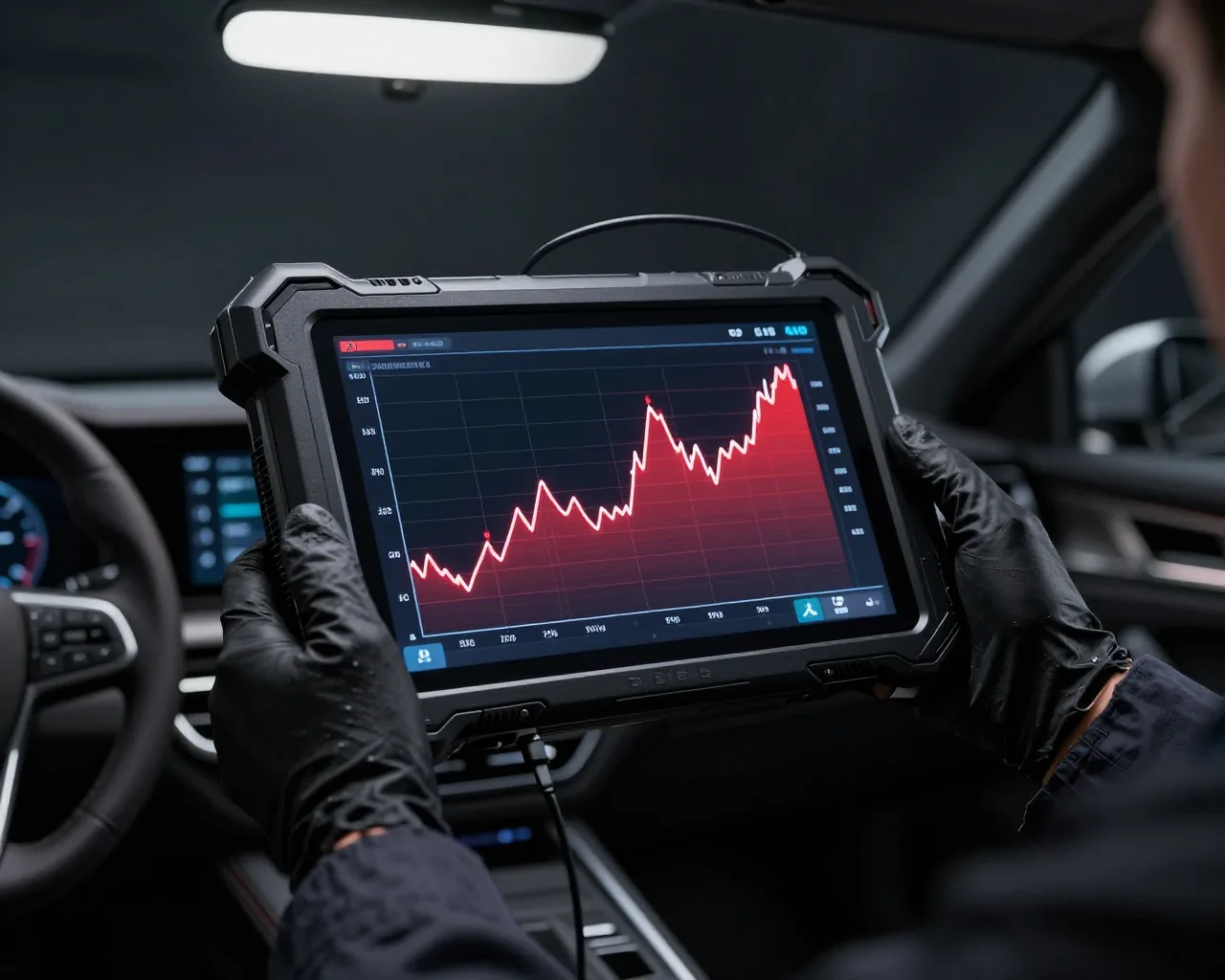
You submit a request on the website or by phone, we find a convenient time and schedule you for diagnostics. We check the radiator for leaks, clogs, and assess the condition of hoses, cap, and fan.
request on WhatsApp
02
Parts Ordering
After diagnostics, we provide the exact repair cost and timeline, and you make a decision. If new radiators or components are needed, we order original or high-quality aftermarket parts.
inspection and diagnostics
03
Radiator Removal
We carefully remove the radiator and drain the antifreeze to avoid damaging adjacent components.
estimate before work starts
04
Repair or Replacement
We perform soldering, cleaning, or replacement of the radiator depending on the defect.
work to factory procedure
05
Installation and Testing
We install the radiator, fill with antifreeze, and check for leaks under pressure.
result check
06
Vehicle Handover
We conduct a test drive, return the car, and provide a warranty on the work.
Car service in Almaty. We reply on WhatsApp and by phone.
3 000 ₸Cooling system diagnostics
10 · Useful
Radiator Repair in Almaty by CARGID's Own Technicians
Author: Роман Вернерgeneral car repair technician, 13 years of experience
Published Updated
CARGID repairs radiators in Almaty at 129 Mukagali Makataev St.: first we diagnose the cooling system and prepare a written estimate, and after the client approves, we solder, replace the tank or the core. Every assembled radiator is pressure-tested at 2 bar, and the 12-month warranty is recorded in the work order.
Which Radiators and Failures We Take In for Repair
A car has more than one radiator — it has several heat exchangers, and each one serves its own system. Let's break down which unit does what, what failures it has, and how we handle them.
Which Radiator Does What in a Car
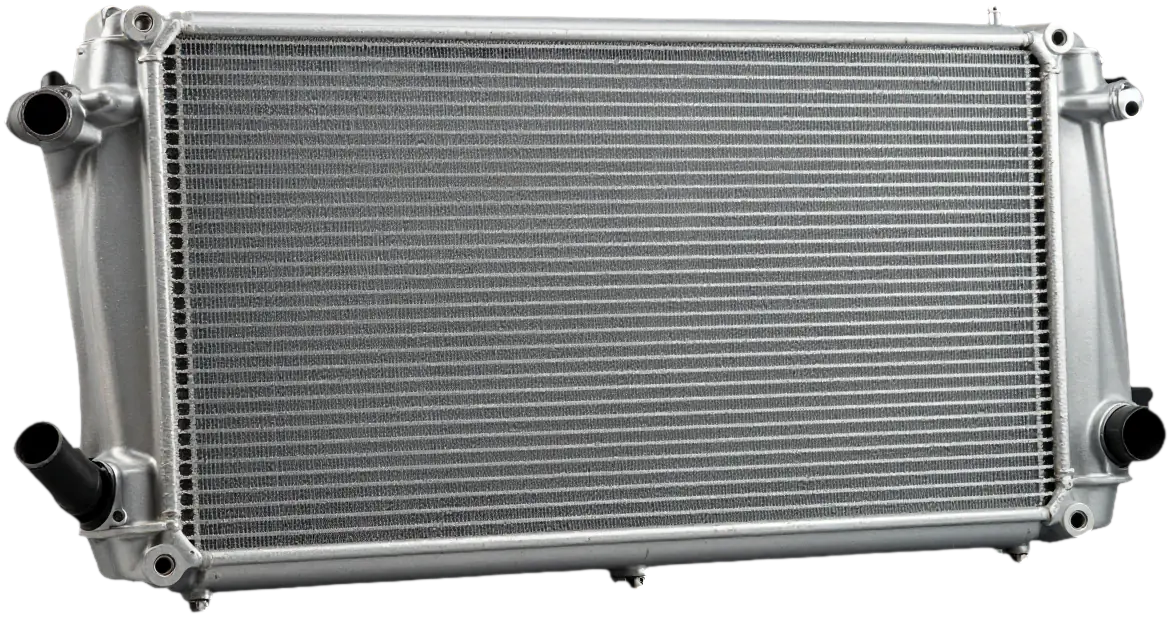
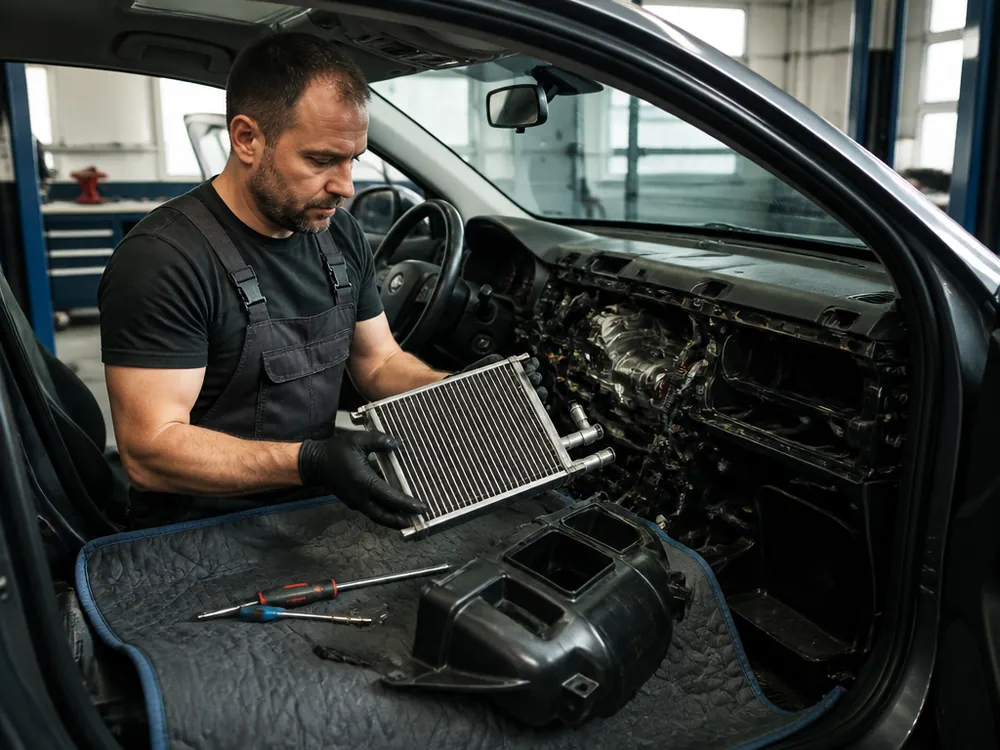
The engine cooling radiator dissipates the heat from the coolant, the heater radiator warms the cabin, the oil radiator cools the oil, the transmission radiator cools the gearbox fluid, and the A/C condenser releases the refrigerant heat. The main unit sits in front of the engine and takes the oncoming airflow, the heater is hidden in the panel under the dashboard, the oil and transmission radiators are often moved into a separate pack in front of the main one, and the condenser is the frontmost in the stack. Our radiator repair in Almaty starts with diagnostics: it's important to understand which heat exchanger is leaking before changing anything. Cracks, clogs, and leaks show up differently on each unit: the main radiator more often leaks at the tank, the heater leaks into the cabin under the floor mat, the oil radiator pushes oil outward. The symptom "smells like coolant in the cabin" almost always points to the heater, not the main radiator — so you should start with diagnostics, not with replacing the first part you come across.
What Work We Do on Each Type of Radiator
work and checks for each heat exchanger
Radiator type
What we repair most often
What we check
Engine cooling
tank cracks, core replacement, gaskets
pressure tightness
Heater (cabin)
leak, clog, replacement
operation after panel removal
Oil
leak, flushing
pressure test after assembly
Transmission
radiator replacement
gearbox cooling circuit
Condenser
replacement with recharge
circuit tightness
Solder or Replace the Radiator
The owner's main question is whether to repair the unit or install a new one. The line is drawn by the core material and the nature of the damage, not by the desire to save money: sometimes replacement ends up cheaper than two repeat visits.
When Soldering Holds and When It's Easier to Replace
We solder copper and brass with soft solder and flux at 220 °C, while an aluminum radiator with plastic tanks is more often replaced — soldering doesn't hold on it for long. Soft solder gives a tight joint on brass cores and heater tubes, where the metal is thick and takes the load. Aluminum melts at a lower temperature, the oxide film prevents the solder from bonding, and the joint works only until the first pressure surge in the system. We close a thin crack in plastic with cold welding only as a temporary measure until a new tank is installed. In our practice, the decision is made by inspection after pressure testing, not by the appearance of the stain. Overheating the torch burns the flux, and the joint then leaks — so we keep the temperature steady, not "by eye."
Soldering the Radiator Without Removal and Replacing the Tank with Crimping
We solder without removal when the damaged area is accessible, and we replace the plastic tank with factory crimping without touching the core. This approach saves time: the unit stays on the car, the technician works on the accessible area and doesn't disassemble half the front end for one crack. We seat the plastic tank on the factory crimp edge — the core stays in place, the client doesn't pay for extra disassembly and doesn't lose the tightness of the joint. A makeshift sealant fit holds until the first warm-up, then leaks at the seam. If the core itself is damaged, crimping won't help — then we replace the core and re-solder the tanks. Factory crimping preserves the tightness of the joint — a makeshift tank fit on sealant leaks at the first warm-up.
How We Check Tightness After Repair
Repair without a tightness check is a gamble. We show how pressure testing catches a microcrack you can't see with the naked eye, and why a leak comes back even after careful soldering.
What 2-Bar Pressure Testing Is and What It Shows
We test the assembled radiator with air at 2 bar in water — bubbles reveal a microcrack you can't see with the naked eye. The pressure-test tank is in the shop, so every radiator goes through it, not just one out of a batch. A pressure of 2 bar is higher than the working pressure in the cooling system, so a weak spot shows itself immediately: bubbles run along the seam, the tank crimp, or the seal. The method catches both a crack in the core that a visual inspection under a lamp won't show and a tired rubber cushion that will leak in a month. Pressure testing reveals both a seam defect and a worn seal — so we do it after any assembly, not just after soldering.
Why It Leaks Again After Repair
Poor seam: the solder went on with underheated flux, the joint doesn't hold for long and leaks at the first warm-up.
Overheating during soldering: the torch burned the flux, the seam turned out porous and lets coolant through under pressure.
Expansion tank cap: a stuck valve holds excess pressure in the system and bursts even a careful seam.
Foreign sealant: clogs the core, reduces heat transfer, and the leak returns within a few weeks.
Hose or clamp: it's not the radiator leaking but the connection next to it — a common cause of a false conclusion.
Signs of a Leak and What to Do Before the Shop
A puddle on the asphalt doesn't always mean the radiator. Let's break down how to tell a radiator leak from a hose leak and whether you can drive to the shop on your own.
A Coolant Stain Under the Car — Radiator or Hose
A puddle at the front of the car usually comes from the cooling radiator, while near the hoses and clamps it's the connections; a pressure test pinpoints the leak. Hoses and pipes are held by clamps, and over time the rubber hardens and the clamp loosens — then coolant seeps out in a thin stream right at the joint. The cooling radiator has different weak spots: the seam where the plastic tank meets the aluminum core, the lower tank after a stone hit, the edge seam. If the puddle confirms a leak along the tank seam or the core, the cooling radiator needs repair, not just tightening the clamps. The expansion tank gives itself away faster than a puddle does: the level drops within a couple of days, and there's a sweet smell when the engine is hot. A sweetish smell and a quickly dropping level in the expansion tank point to a leak more than the puddle itself does — you can't judge the cause by it, and before a pressure test you shouldn't replace parts at random.
Can you drive with a leak and which coolant to use after repair
With a small leak you can make it to the shop if you keep an eye on the coolant level and temperature, but don't push the engine if it overheats. Keep a liter of premixed coolant in the trunk for top-ups, check the expansion tank with the engine cold, and don't open the cap when it's hot — the steam will burn you. If the temperature gauge climbs, the cooling fan doesn't kick in, or the thermostat is stuck, pull over and shut off the engine: overheating leads to a warped head, and that's a different job. After the repair we fill with the coolant recommended by the car's manufacturer — cheap fluid with a different formula eats away the seam and seals, and the leak comes back early. Mixing red and green formulas in the same loop isn't a good idea either: the sediment clogs the core.
Timing, warranty and how the repair goes
From check-in to handover, one service advisor handles your car. Here's what the timing depends on, what the warranty covers, and how the work goes.
How the work goes from diagnostics to handover
First we diagnose the cooling system and write up an estimate, we start work only after the client agrees, and before handover we do a test drive. The car is checked in by the service advisor, who manages the work order through to handover: he records the complaint, approves the scope of work, and stays in touch along the way. Diagnostics include a computer check, a visual inspection, and a pressure test for leaks — that way we find the source of the leak before disassembly, not after. We pick parts together with you: OEM, aftermarket, or your own parts — the choice is the client's. We take photos at key stages and show and hand over the old parts to the client — so you can see exactly what was replaced. In our experience, a photo report settles half the questions at handover: the client sees the crack or clogged core with their own eyes, not just hears it from the technician.
12-month warranty and what it covers
We give a 12-month warranty on radiator repair, and the term and conditions are written into the work order and the completion certificate at handover. The warranty covers the work performed and the parts installed, and diagnostics for a warranty case are free — if the leak comes back, we sort it out at no extra charge. Other jobs have different terms: oil changes, brakes, and suspension — 6 months; body repair and painting — 24 months. There are limits too: the warranty doesn't cover an accident after repair, third-party interference, normal wear of consumables, or a part brought in by the client. That's why it's better to choose parts together with the technician: the aftermarket or OEM part we install is covered, a part you bring yourself is not. We spell out the terms before work begins so there are no misunderstandings at handover.
Urgent repair and on-site service within Almaty
For an urgent order we take the car in the same day, no queue, by appointment, and for on-site service the technician comes to you within Almaty. On-site works for accessible seams and tank replacement — complex core re-soldering is still done in the shop on our equipment. The shop has six lifts and dealer scanners for 40+ makes, so diagnostics and a 2-bar pressure test are done without waiting for a free bay. Book by phone during business hours from 09:00 to 20:00, every day, no days off. In our experience, urgency is most often needed when the car is stuck in a parking lot or courtyard — then on-site service saves you a tow truck. But if the core is leaking and the tanks need tight re-soldering, it's better to bring the car to the shop: that kind of seam can't be pressure-tested on site.
Key points in radiator repair
Here's the key to what determines the result of radiator repair: what decides between soldering and replacement, why the job isn't done until it's leak-tested, and what keeps the seam from leaking again.
The line between repair and replacement: it's set by the core material and the type of damage, not by the wish to save on a new part.
Soldering copper and brass: soft solder and precise temperature hold the seam, while an aluminum unit with plastic tanks is more often replaced entirely.
Pressure testing: water under excess pressure reveals a microcrack the eye can't catch, so working without it is a gamble.
Repeat leaks: they most often come back from the seam, the expansion tank cap, or someone else's sealant poured into the system earlier.
Warranty and old parts: the terms are recorded in the work order, and the removed components are shown at handover.
11
Frequently asked questions about radiator repair in Almaty
Questions.
Price, timeframes, warranty, payment — 10 questions asked most often.
10
Didn't find an answer?
Message us on WhatsApp — a service advisor will reply within 5 minutes.
The cost of radiator repair in Almaty at our service depends on the type of radiator (car cooling radiator, heater, intercooler), material (aluminum, copper/brass), complexity of damage and the need for removal/installation. The base price for soldering or sealing a crack is from 5,000 tenge. Heater radiator repair costs from 8,000 tenge, restoration of an aluminum radiator with disassembly and cleaning — from 12,000 tenge. If complex soldering with replacement of fins or insertion of pipes is required, the price can reach 12,000 tenge. The exact cost is given after free diagnostics.
On average, radiator repair takes from 1 to 3 hours, depending on complexity. Simple soldering of a crack with installation takes about 1.5 hours. If you need to remove, disassemble, clean, solder and put back — it may take 3-4 hours. Radiator repair with replacement of fins or headers can take up to one working day. In case of urgent need, we try to do the work on the day of contact, but it is better to make an appointment by phone in advance so that we reserve time.
Yes, we provide a 12-month warranty for all types of radiator repair. The warranty covers the quality of soldering, tightness of connections and proper operation of the radiator if the operating rules are followed. If during the warranty period the defect recurs due to poor-quality repair, we will fix it free of charge. The warranty does not apply to mechanical damage after repair (e.g., an accident) or chemical exposure to unsuitable fluids. Warranty obligations are recorded in the work order.
An appointment is desirable but not required. We accept cars without an appointment, but there may be a queue during peak hours. If you arrive without an appointment, we will perform free diagnostics and, if there are available mechanics, start the repair immediately. If there are no available specialists, we will offer a convenient time. To avoid waiting, call us in advance or leave a request on the website — we will find a convenient slot for you.
Yes, you can bring your own radiator or materials. If you bring a new radiator, we will install it and check it. The cost of radiator replacement work is from 10,000 tenge. If you bring solder, flux, sealant — we will use your materials, but then we do not provide a warranty for the quality of soldering, since we cannot be responsible for the properties of the materials. If you use our materials, the warranty is fully preserved. We recommend using our materials to ensure the reliability of the repair.
If after our repair the radiator leaks again, contact us immediately: call the service or come to us within the warranty period (12 months). We will perform diagnostics and determine the cause of the leak. If it is our fault, we will redo the repair free of charge. In some cases, the cause of a repeated leak may be other faults (e.g., increased pressure in the system due to a faulty expansion tank cap) or external damage (a stone from the road). If you have doubts, we always meet you halfway and find a solution.
We do: soldering of cracks and punctures (copper/brass — argon welding for aluminum); replacement of individual fins or sections; repair of pipes and fittings; replacement of the lower or upper part of the radiator (in case of deformation, tank detachment); chemical cleaning of the radiator from scale and deposits; complete disassembly and restoration of the radiator with replacement of all gaskets. The difference is in complexity, materials used and, accordingly, price. Simple soldering of a crack costs from 5,000 tenge, and complete restoration with disassembly — from 15,000 tenge.
For diagnostics, we first inspect the radiator and pressure-test the cooling system. If the antifreeze is weak or there is little of it, we can still perform diagnostics. It is desirable that the antifreeze level is at least minimal, but if necessary, we will add technical fluid (at our expense) for testing. If the leak is severe and the car overheats, it is not recommended to drive yourself — it is better to call a tow truck. We can also provide tow truck contacts. Upon arrival, we will quickly identify the problem and offer options.
After repair, it is important to maintain the correct antifreeze level, use high-quality coolant recommended by the manufacturer, and monitor the tightness of the system. Flush the cooling system with special flushes at least once a year when changing antifreeze. Avoid aggressive road conditions that can damage the radiator (stones, ice). Regularly check the operation of temperature sensors and have the radiator inspected at a service station. Following these simple rules will extend the service life of the repaired radiator.
Payment is accepted in cash, by card and by bank transfer. The final amount depends on the scope of work: tank soldering, fin replacement or complete overhaul. The cost is agreed upon before the repair after diagnostics.
12
Reviews of our radiator repair
Reviews.
We collect ratings on the website and on maps — we hide nothing.
4.8
872 reviews on the website 1 900+ ratings in total
Aleksey
Sportage
Good service. I came in a Kia Sportage with a coolant leak. Diagnostics were quick, they found a crack in the radiator tank. They soldered it in a day, I paid 18,000 tenge. Now everything is fine, no overheating. Thanks to the mechanics!
Daniyar
The car was overheating in traffic, I thought the radiator was done for. I came to CARGID, it turned out the fins were clogged. They removed it, flushed it, cleaned it, put it back. It took one day and 15,000 tenge. Now it works perfectly.
Murat
Toyota Camry
I was saving my Toyota Camry, the radiator was leaking, coolant was disappearing every day. At the service they quickly found the cause — a crack in the tank. They soldered it, replaced the clamps, checked the pressure. I paid 20,000 tenge, 12-month warranty. I recommend.
Aigul
I came in with a problem: I started noticing spots under the car. Diagnostics showed the radiator was leaking. The guys did everything quickly, replaced the hoses and clamps, checked the system. The price was pleasant — 12,000 tenge. Now I feel at ease about the car.
Sergey
I noticed overheating in my Mitsubishi Lancer. At the service they checked, it turned out the fins were clogged. They cleaned, soldered, put it back. Everything was done well, no fuss. I paid 15,000 tenge. The car now flies, thanks!
Arman
I had a minor accident, dented the radiator. I took it to CARGID, they assessed the damage, decided to solder and straighten the fins. The result is excellent, no traces of repair are visible. The price is 20,000 tenge, the time is 2 days. I recommend!
Natalia
Prado
On my Toyota Prado the fan started making noise. At CARGID they did diagnostics, it turned out to be bearing wear. They replaced the fan, checked the relay. They worked quickly, for 32,000 tenge. Now it works quietly, no problems.
Bakhyt
I complained about engine overheating. I thought the problem was the thermostat, but it turned out the radiator was clogged. The service quickly washed the radiator, cleaned the fins and returned the car the same day. The cost is 15,000 tenge, the car no longer overheats. Super!
Elena
I want to thank the guys from CARGID for repairing the radiator on my Ford Mondeo. There was a crack in the plastic tank, they did soldering. Neatly, without traces. I paid 12,000 tenge, a year later everything works. Thanks!