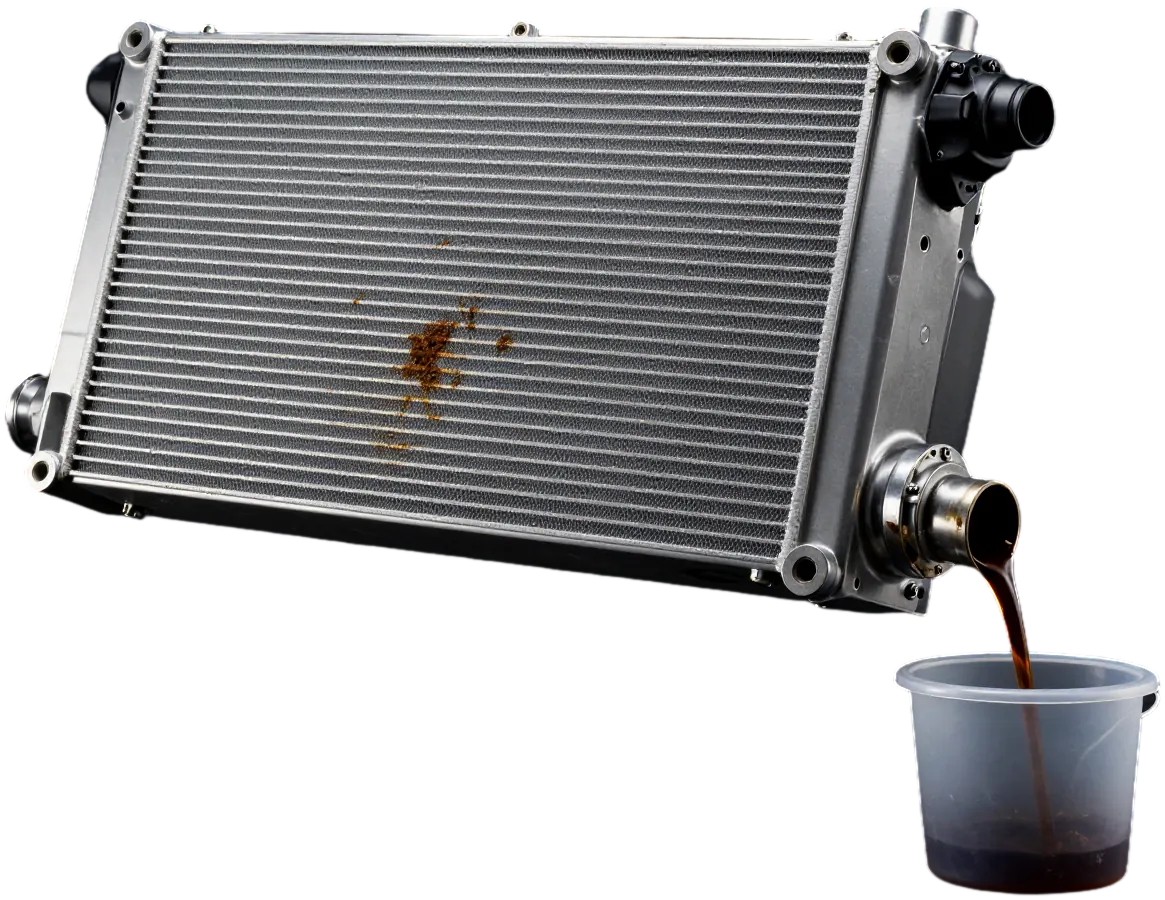
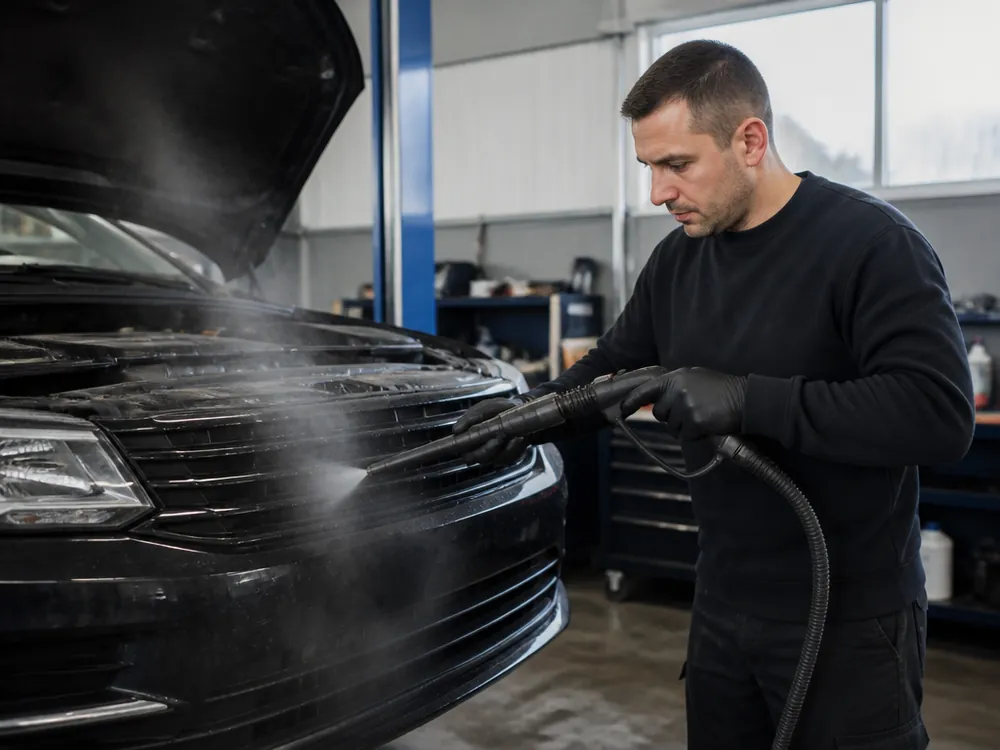
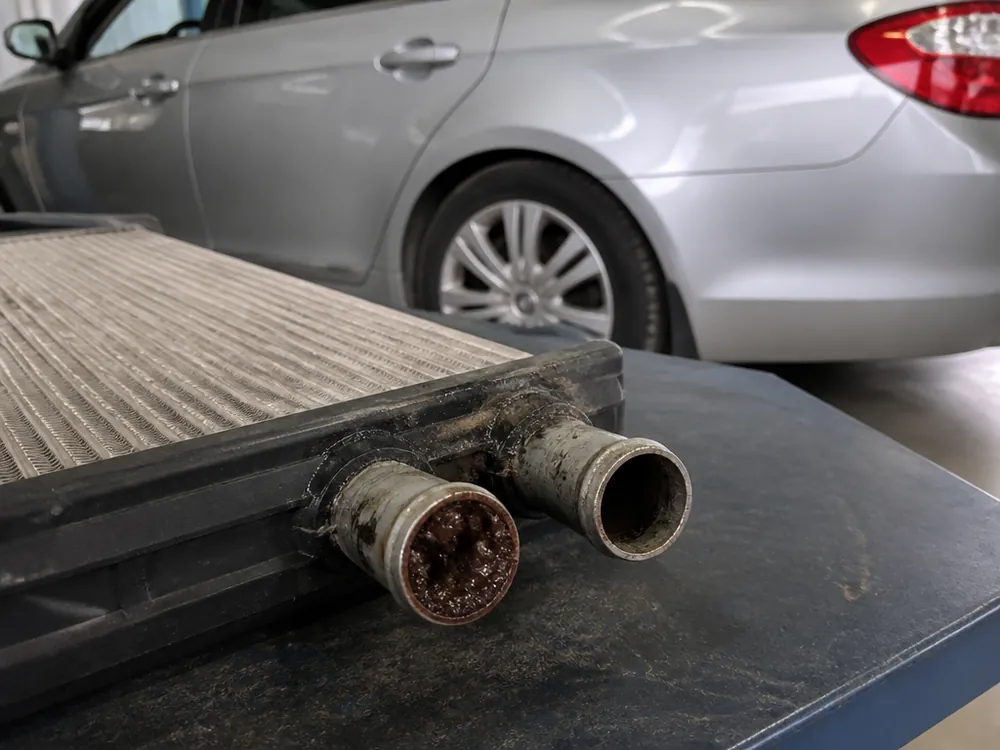
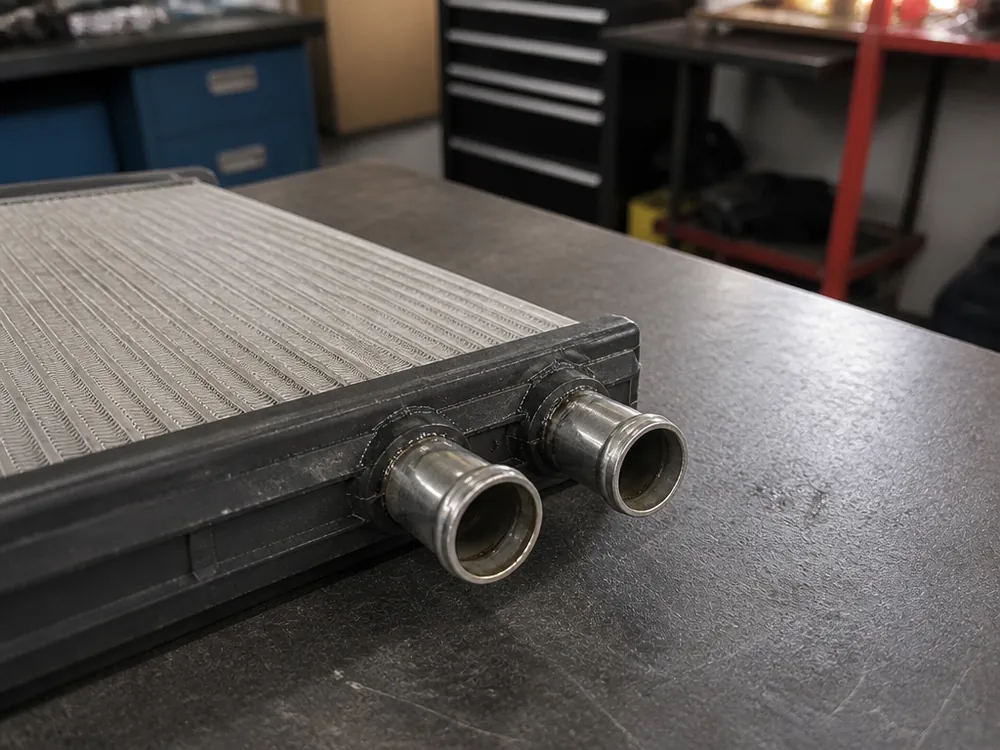
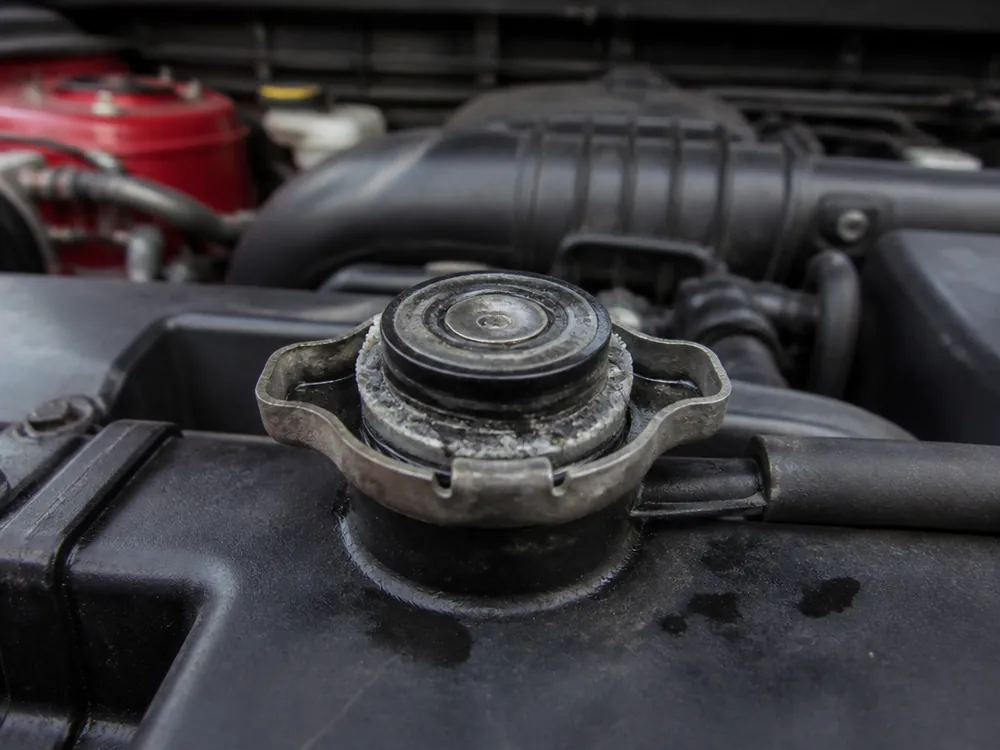
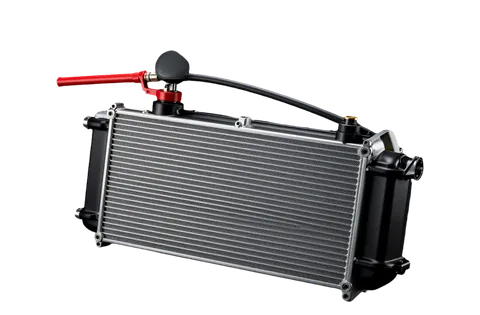
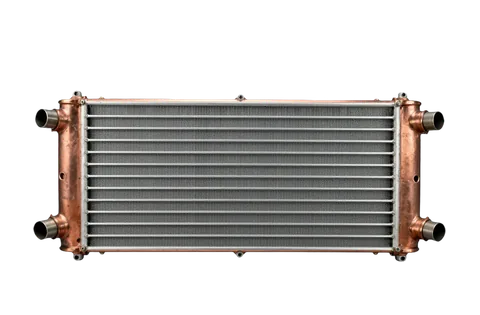
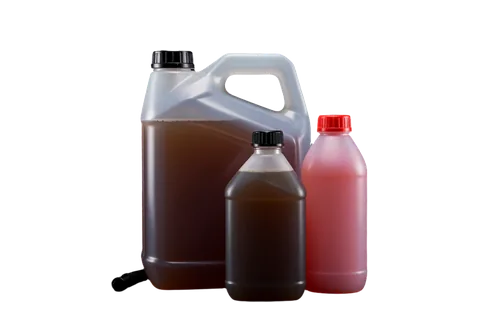
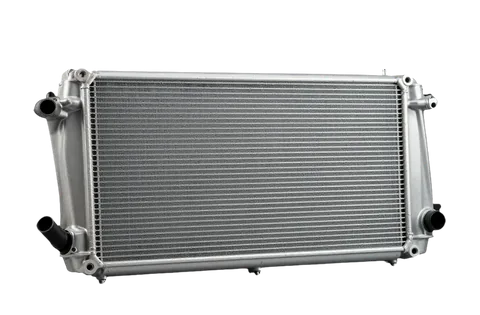
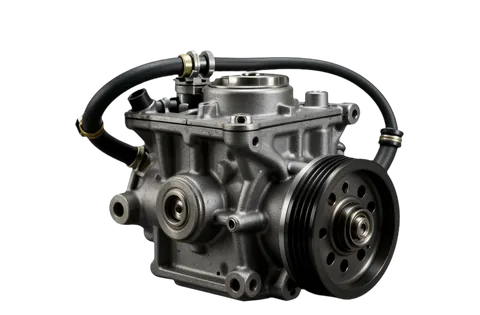
The radiator is a key element of the cooling system, and its contamination leads to engine overheating. We flush radiators of all types, removing scale, dirt and oil deposits, restoring heat transfer and preventing costly repairs. Warranty on work — 12 months.
Complete list of services for flushing radiators of all types: from diagnostics to urgent on-site service. Prices are in tenge; the exact price depends on the condition of the system and the car make.
Service
Duration
Warranty
Price
Cooling system diagnostics, radiator check for clogs, leaks, pressure
30 minutes
12 mo
from 3 000 ₸
Visual inspection of the radiator without removal (access through the hood) and checking hoses
20 minutes
12 mo
from 2 000 ₸
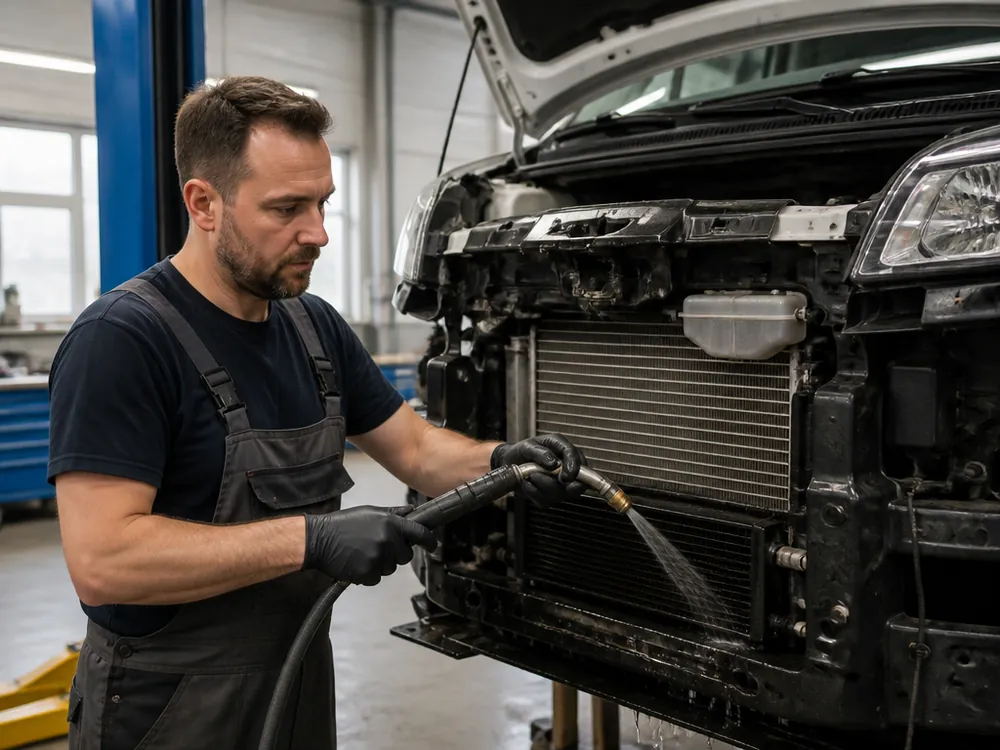
Radiator flushing with water/steam without removal (simple method)
1 hour
12 mo
from 5 000 ₸
Radiator flushing using chemical agents without removal
1–2 hours
12 mo
from 7 000 ₸
Removal and installation of the radiator for flushing (passenger car)
2–3 hours
12 mo
from 10 000 ₸
Removal and installation of the radiator for flushing (SUV/crossover)
3–4 hours
12 mo
from 15 000 ₸
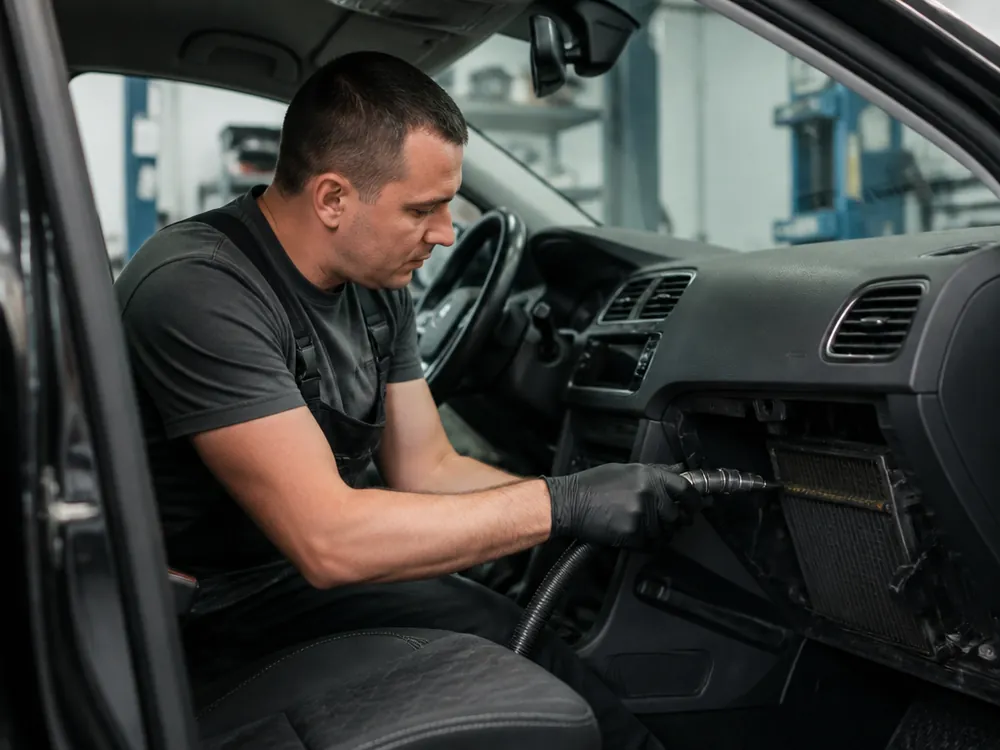
Heater radiator (heater core) flushing with unit removal
3–4 hours
12 mo
from 12 000 ₸
Deep radiator flushing with complete disassembly (removal, disassembly, cleaning of fins, reassembly)
5–6 hours
12 mo
from 20 000 ₸
Chemical cleaning of the radiator with removal and reinstallation
3 hours
12 mo
from 14 000 ₸
Reverse radiator flushing (under pressure, with forced water flow)
1.5 hours
12 mo
from 8 000 ₸
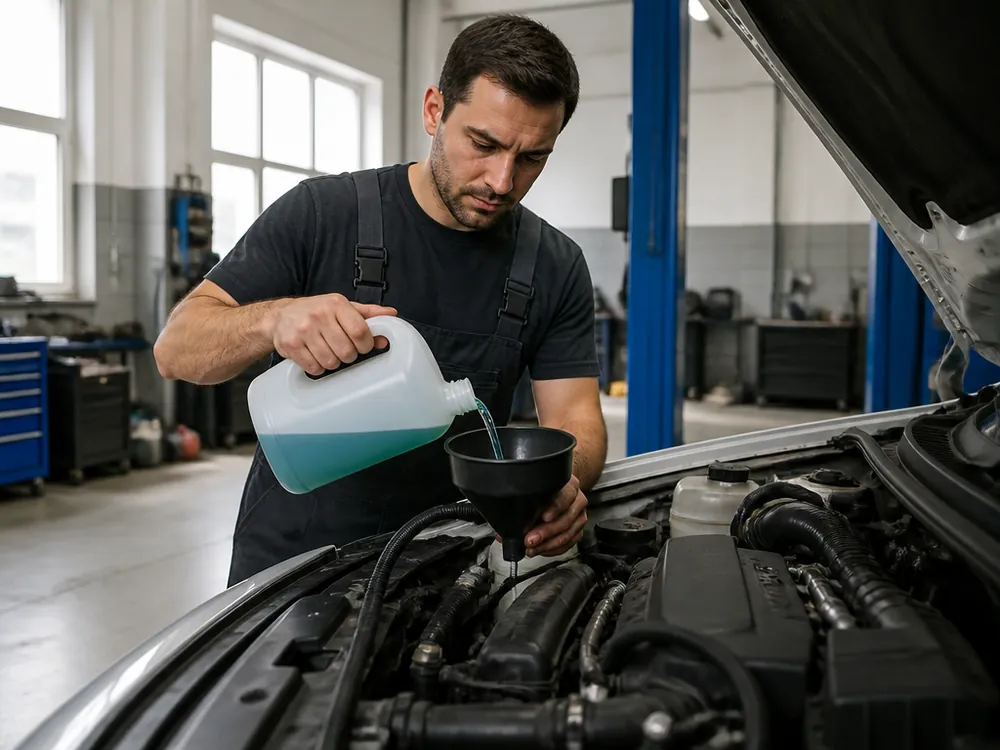
Radiator flushing with coolant replacement (includes draining, flushing, filling with new coolant)
2–3 hours
12 mo
from 15 000 ₸
Urgent radiator flushing on the day of request (priority appointment)
2–3 hours
12 mo
from 18 000 ₸
On-site radiator flushing (at the client's location, without removal)
1.5 hours
12 mo
from 12 000 ₸
Radiator flushing on commercial transport (Gazelle, etc.)
3–4 hours
12 mo
from 18 000 ₸
Flushing of two radiators (main + air conditioner, if the design provides for it)
3–4 hours
12 mo
from 20 000 ₸
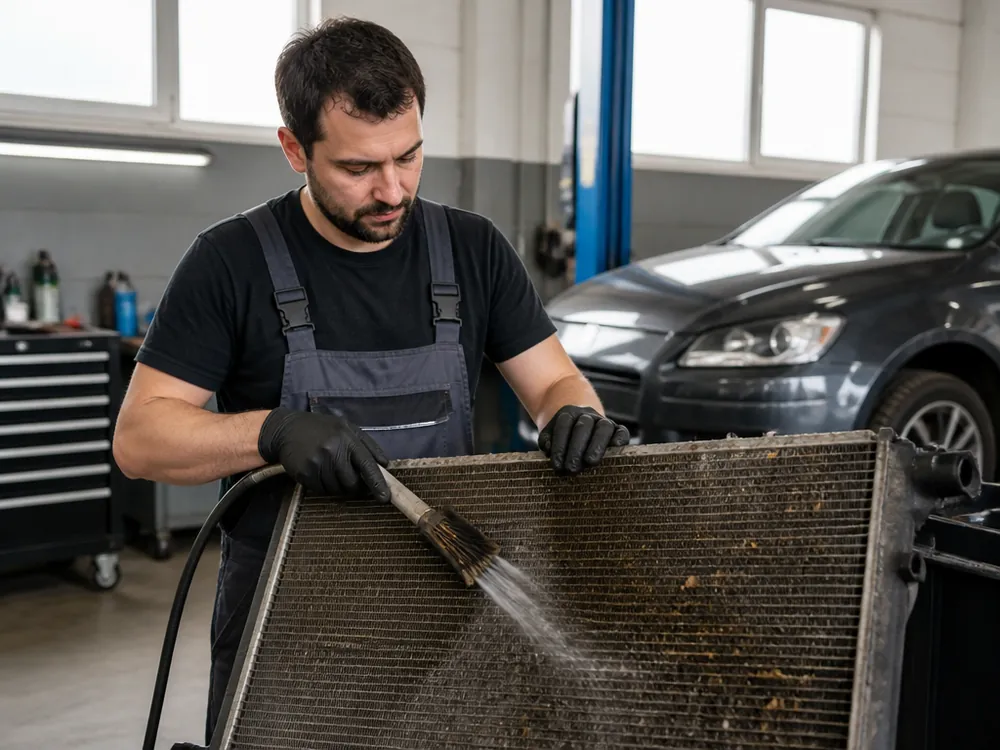
Radiator flushing with additional cleaning of fins from dust, dirt, and insects
1.5–2 hours
12 mo
from 9 000 ₸
Prices include labor but not the cost of consumables (chemicals, antifreeze, hoses). A 10% discount applies for comprehensive flushing and coolant replacement. The exact cost is determined after diagnostics. Warranty periods — see the page «Warranty»
06
Why choose radiator flushing at CARGID
Warranty.
Every promise — backed by a number or a document: work order, photos, removed parts.
12MO
warranty on labor — the term is stated in the work order.
Antifreeze replacement
12-month warranty
All car brands
01
Pressure no higher than 1.5 bar
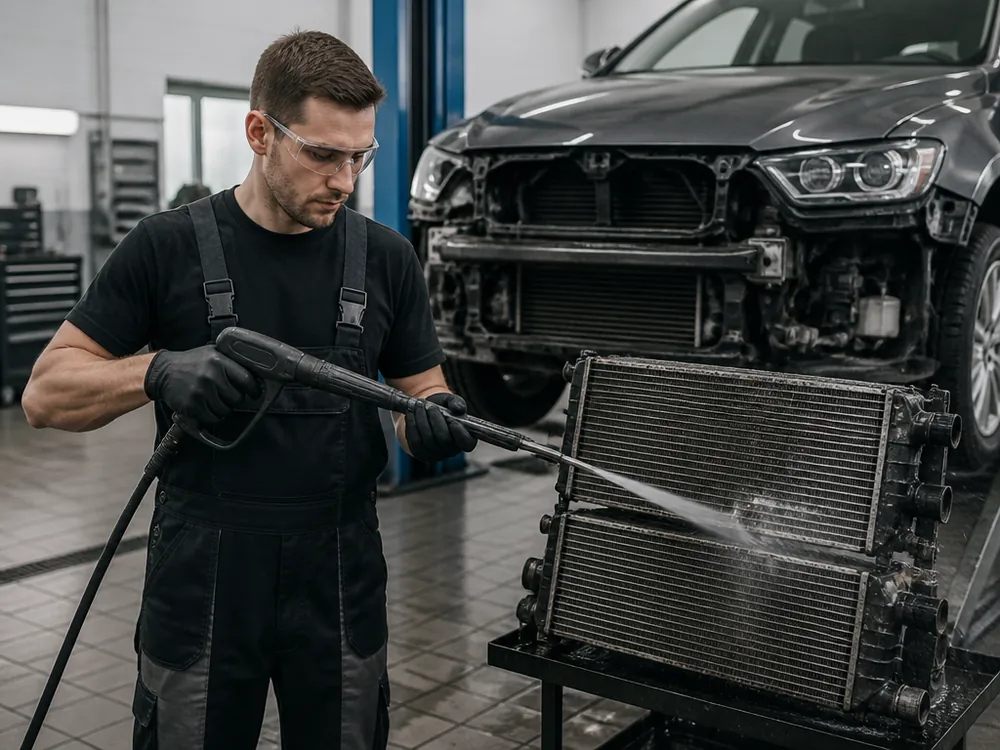
We wash the radiator with a jet under pressure gauge control. Higher — we risk tearing the fins, so we keep a safe threshold.
02
Chemicals for the type of contamination
We select the compound: acidic for scale, alkaline for oil. We neutralize after flushing so it doesn't corrode aluminum.
03
We flush the heater separately
We wash the heater circuit autonomously, without mixing with the main one. Otherwise dirt from the heater will return to the engine radiator.
04
3-stage flushing
First we drain the old coolant, then flush with distilled water, and after that with chemicals. Three passes wash out scale and sludge, not just water.
07
Radiator flushing in 2 hours
Steps.
We explain how radiator flushing works at our auto service — from booking to vehicle handover.
01
Vehicle acceptance
You submit a request, we select a convenient time and immediately provide a preliminary cost of flushing. The technician receives the car, records its condition, and checks the coolant level and condition.
request on WhatsApp
02
System diagnostics
We check the cooling system for leaks, pressure, and temperature to confirm the need for radiator flushing.
inspection and diagnostics
03
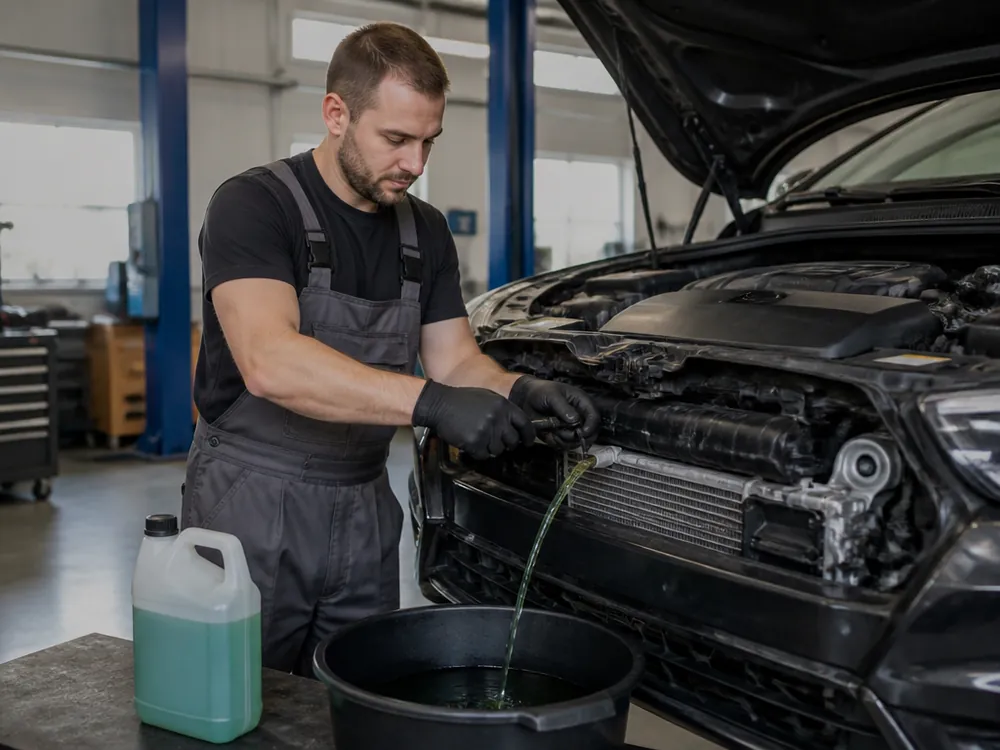
Draining old fluid
We carefully drain the old coolant and dispose of it if necessary.
estimate before work starts
04
Radiator flushing
Using a special compound and reverse water flow, we flush the radiator fins and remove scale, dirt, and deposits.
work to factory procedure
05
Filling new coolant
We fill with fresh coolant selected according to the vehicle specifications.
result check
06
Vehicle handover
We start the engine, check the system for leaks, monitor the temperature, and test-drive the vehicle. We return the car with a clean cooling system and provide recommendations for further operation.
Car service in Almaty. We reply on WhatsApp and by phone.
5 000 ₸Radiator flushing with water/steam…
10 · Useful
Radiator Flushing in Almaty with a 12-Month Warranty from CARGID
Author: Роман Вернерgeneral car repair technician, 13 years of experience
Published Updated
Radiator flushing in Almaty at CARGID means cooling system diagnostics, a written estimate and flushing with pressure controlled at no more than 1.5 bar. We work on the main radiator, heater and A/C, match the chemicals to the type of contamination and neutralize them. The 12-month warranty is recorded in the work order.
Signs of a Clogged Radiator and What Happens If You Don't Flush It
A clogged radiator rarely starts with overheating — first it's a weak heater, then the needle creeps up in traffic. Here's how to tell a clogged radiator from other causes and what a delayed radiator cleaning can lead to.
How to Tell If the Radiator Is Clogged Inside Rather Than Outside
An internal clog shows up on a warmed-up engine — the heater blows cool, the upper hose is hot while the lower one is barely warm; an external clog shows as a layer of dust and insects on the fins visible through the hood. An internal blockage is scale, corrosion products and oil emulsion inside the tubes, which coolant no longer passes through at full cross-section. The external layer is poplar fluff, dust and bugs that clog the fins and block airflow. With such a blockage the heater warms worse than the main unit: the heater circuit is thinner and clogs first. The external layer is removed by cleaning the fins without disassembly, while the internal one requires flushing the circuit — so before choosing a method, the technician first inspects the unit from outside and checks the hoses for a temperature difference.
What Happens If You Don't Flush the Radiator and Just Top Up the Antifreeze
Topping up antifreeze doesn't clear clogged channels — it only masks the lack of volume, and the fins stop dissipating heat, so in summer traffic the temperature creeps toward overheating. The fluid circulates through narrowed channels, the pump runs under increased load, and the sensor only shows a rise once the margin is already gone. Overheating damages the head gasket and the cylinder head, and then the procedure turns into an engine repair. That's why we start with cooling system diagnostics and a written estimate: we check the unit for clogs, leaks and pressure, show the result, and only after the client agrees do we begin cleaning. In our shop's experience, a neglected clog costs several times more than a scheduled procedure, and our warranty on this work is 12 months.
Flushing Methods from a Wash Without Removal to Deep Disassembly
The method is chosen based on the degree of clogging and the vehicle's design — from cleaning the fins without removal to deep disassembly. Below is a comparison of the options we perform, by scope of work and timing.
How Radiator Cleaning Methods Differ
service options by scope of intervention
Method
What we do
When it fits
Radiator removal
Water or steam
circuit flush without removal
light clogging, preventive care
no
With chemicals
reagent matched to the type of contamination
scale, oil film
no
With removal
disassembly and flushing
dense internal clog
yes
Reverse flushing
flush under pressure
clog deep in the fins
no
Deep with disassembly
disassembly and fin cleaning
heavy clogging, fins blocked
yes
Fin cleaning
removing dust and insects
external layer of dirt
no
Can You Clean the Radiator Yourself and When Does It Need to Be Removed
You can wash only the external fins yourself with a hose, and without going overboard on pressure, but internal circuit cleaning and radiator removal on a crossover or a Gazelle are best left to a technician — they have their own fasteners, system volume and risk of damaging the fins. On crossovers the main unit often sits behind the bumper paired with the A/C heat exchanger, and removing one without touching the other doesn't always work on the first try — that's why we do the paired cleaning in a single visit. On commercial vehicles you also have the system volume and the tight underhood layout, where a hose can't reach the fins. Our radiator flushing in Almaty starts with cooling system diagnostics and a written estimate, and we provide a photo report of the key stages. Before disassembly, check whether there's a second radiator in the pair — this affects both the scope of work and when the vehicle is ready.
Safe Pressure and Chemicals That Won't Harm Aluminum
An owner's main fear is that the radiator will be ruined by pressure or aggressive chemicals. Here are the two technical limits we hold to on every procedure.
What Pressure Is Safe for Washing the Radiator
We wash with a jet under gauge control and keep pressure at no more than 1.5 bar — above this threshold the thin fins tear and the part has to be replaced. On the reverse-flushing unit the flow runs against the normal direction, pushing dirt outward rather than deeper into the core. The gauge on the line shows the pressure in real time, so the technician sees any deviation immediately and releases it before deformation happens. The threshold matters not only for the fins: excess pressure crushes the cooling fins, and even an intact unit then dissipates heat worse. And the gauge stays on the line the whole time, not "by eye" — by eye, deformation is noticed only after the fins have already folded, and they can't be restored — that's why we keep the gauge on the line at all times.
What Chemicals Must Not Be Poured into an Aluminum Radiator
We match the formula to the type of contamination — acidic for scale, alkaline for oil film — and neutralize it after the procedure so the residue doesn't eat into the aluminum. We don't pour undiluted concentrated acid or household drain cleaners into the circuit: they strip not only scale but also the protective layer on the tube walls. Leaving acid without neutralizing is a common reason why the unit starts leaking through the fins after such treatment. That's why the final distilled-water flush and neutralization are part of the job, not an option: distilled water doesn't add new salts, and the neutralizer cancels the remnants of the formula throughout the circuit, including the far corners of the core. On aluminum, uncontrolled alkali is more dangerous than acid — it eats the thin oxide layer, so the technician keeps the concentration and soak time per the procedure, not by intuition.
The Heater and Heater Circuit When It Stops Warming
A weak heater at normal engine temperature is a separate scenario where cleaning the main radiator doesn't always solve the problem. Here's why the heater circuit is flushed on its own.
The Heater Warms Weaker — Flush the Heater or the Whole System
If the engine isn't overheating but the heater blows cool air, we flush the heater circuit with the unit removed, separately from the main radiator — otherwise dirt from the heater comes back into the engine radiator. The heater is built like a miniature heat exchanger with thin channels: deposits build up in it faster because less fluid passes through the core and it stagnates when the flap is closed. On commercial vehicles and crossovers with two circuits the approach is the same — first an independent flush of the heater, then a check of the main unit. At CARGID, removing the heater unit is a separate line item, so you only pay for the circuit that's actually clogged. Mixing the circuits into one procedure means pushing deposits from the heater through the whole system; an independent heater flush takes less time and leaves the main circuit alone unless it needs work.
Why the heater still blows weak after a flush
Most often the cause is an air pocket in the heater circuit, or the fact that only the main unit was treated and the clogged heater was left as is — then the heat doesn't come back. Air collects at the highest point of the circuit, and fluid doesn't pass through the heater core even though the engine runs normally. The second possibility is heater channels clogged with scale: fluid runs along the edge and the middle of the unit stays cold. The third is a faulty heater valve or flap, and then no procedure will help at all. After a flush the circuit needs to be warmed up and bled, otherwise the heater blows cold even with a healthy radiator; that's why a control start and warm-up is a required step, not a formality.
Antifreeze replacement, upkeep and the flush warranty
Fresh antifreeze and clear warranty terms are the two things an owner wants along with the job. We've put it all in one place: how the fluid change goes, when preventive maintenance is due, and exactly what the warranty covers.
Do you need to change the antifreeze after a flush and how often to do it
We flush the cooling radiator with a fluid change — drain the old fluid, run the circuit and fill new fluid to the spec for the specific model. The customer can bring their own antifreeze, just like their own parts: we record the type and brand in the work order before starting. We do this procedure with a coolant change on 6 lifts, and we take a photo report of the key steps — you can see what fluid was drained and what was filled. Plan preventive external core cleaning before the hot season, when the load on cooling is at its highest: dust and insects clog the cells faster than scale builds up inside. Pouring the old fluid back in makes no sense — it still holds wear products, and they'll settle in the core again, so saving on fresh fluid means a repeat visit to the shop.
What the 12-month warranty covers and how long it takes
We give a 12-month warranty on radiator flushing and record the term and conditions in the work order and the completion certificate when the car is handed over. The job takes from one and a half to three hours depending on the method: cleaning without removal is faster, a deep flush with disassembly takes longer. We do urgent jobs the same day by appointment, and we test-drive the car before handover. The warranty covers the work performed and the parts we installed, but not an accident after the repair, third-party interference, normal wear of consumables, or a part the customer brought. Warranty diagnostics are free with us, and we record the scope of work and parts in the order before starting — so there are no disputes.
What determines a radiator flush
Here's everything in one place that determines the outcome of radiator service: how to spot a clog, how it's cleared, and which mistakes lead to rework.
Early signs: a clogged radiator starts with a weak heater and a creeping temperature in traffic, and topping up antifreeze doesn't clear the clog.
Choosing the method: the method is picked based on the type of clog — from cleaning the core without removal to a deep disassembly with core cleaning.
Pressure: the safe limit during service is no higher than 1.5 bar with a gauge check, otherwise the thin core ruptures and the part has to be replaced.
Chemicals: the formula is chosen by the type of contamination — acidic against scale, alkaline against oil — and neutralized afterward so it doesn't eat the aluminum.
Heater: the heater circuit is flushed separately from the main unit, otherwise dirt from the heater returns to the engine and the job has to be redone.
11
Frequently asked questions about radiator flushing in Almaty
Questions.
Price, timeframes, warranty, payment — 10 questions asked most often.
10
Didn't find an answer?
Message us on WhatsApp — a service advisor will reply within 5 minutes.
The cost of radiator flushing at our service depends on the type of radiator (main, heater, air conditioner), its condition, and the flushing method. The minimum price is from 5 000 tenge for an external wash. Internal flushing using chemical compounds will cost from 15 000 tenge. If removal and installation of the radiator is required, the price increases to 20 000 tenge. The exact cost can only be stated after diagnostics, as the complexity of access to the unit differs significantly on different cars. The price is also affected by the need to replace the antifreeze (from 12 000 tenge including the fluid) and additional work to eliminate leaks. We recommend coming in for a free diagnostics — the technician will assess the scope of work and give the final amount.
On average, the procedure takes from 1.5 to 3 hours. If only an external wash with disassembly is required — about 1 hour. Internal flushing with chemicals and reinstallation usually takes 2-2.5 hours. If the radiator is heavily contaminated, clogged with deposits, or requires removal of the tanks, the time may increase to 4 hours. On some cars, due to difficult access, the bumper or other elements have to be removed, which adds up to 1.5 hours. The technician will inform you of the exact time after inspection. We recommend booking time in advance — this will allow you to plan your day, and we guarantee completion of work within the agreed timeframe if no unforeseen difficulties arise.
Yes, we provide a 12-month warranty for all radiator flushing work. The warranty covers the quality of the performed work: we guarantee that after flushing the radiator will work efficiently, will not leak, and the cooling system will function normally. If during the warranty period problems arise related specifically to our actions (for example, insufficient quality flushing or damage during installation), we will fix them free of charge. The warranty does not apply in cases where the cause of the breakdown was radiator wear or external influences. Also note: to maintain the warranty, it is necessary to use quality antifreeze and follow the maintenance recommendations.
Booking in advance is strongly recommended, as during the temperature change season (autumn and spring) the queue for radiator flushing can be 2-3 days. If you come without an appointment, you will have to wait until a technician is free, usually 2-4 hours. We work from 9:00 to 20:00 without days off. You can book by phone or via Instagram, specifying the car make and desired time. When booking, you get priority: your car enters exactly at the appointed time. You can also clarify the preliminary cost and ask questions. If you are already booked and your plans change, notify us at least 3 hours in advance — we will reschedule without penalties.
Yes, you can bring your own materials: antifreeze, special flushing compounds, or even a new radiator. However, it is important that they suit your cooling system. If you use your own antifreeze, check that its concentration matches the manufacturer's recommendations. We will perform the work with your materials, but we do not bear warranty responsibility for their quality. If we use our materials (chemicals and antifreeze), they are already included in the price, and they are covered by the warranty. We recommend consulting with our technicians before purchasing your own materials — they will suggest the appropriate type of antifreeze for your car make. The price of work when using your materials will be lower (we will deduct the cost of the compound).
At our service, we bear full responsibility for the quality of work. If after flushing you notice problems: engine overheating, antifreeze leaks, incorrect heater operation — you can return within 6 months, and we will fix the defects free of charge. We value our reputation, so technicians carefully check the cooling system after flushing, perform a control engine start and pressure test to detect leaks. If you do find a problem, just call us and describe the symptoms — we will schedule you for free diagnostics. No disputes or formalities: if it's our fault — we'll fix it immediately. We also issue a receipt and a work completion act listing the services.
An external wash is cleaning the external fins of the radiator from dirt, fluff, salt, and insects. It improves airflow and cooling, performed with pressurized water and special agents. Recommended once a year, especially after winter. Internal flushing is the removal of scale, deposits, and rust inside the radiator channels using special chemical compounds or distilled water with additives. It is necessary if the antifreeze has become cloudy, the heater warms poorly, or the engine overheats. Internal flushing is more complex and requires removing the radiator or flushing on the car using special equipment. A comprehensive flush (outside and inside) gives the maximum effect and is often done together. The price of an external wash is from 5 000 tenge, internal — from 15 000 tenge.
After flushing, we pour in fresh antifreeze, so for the first few days monitor the fluid level in the expansion tank. If it has dropped slightly — this is normal (air leaves the system), top up with distilled water or antifreeze to the norm. Within a week, check for leaks under the car. Periodically (once every 2-3 months) inspect the radiator externally for contamination, especially in warm weather. Once a year, perform an external wash. Use only quality antifreeze that matches your car's specification (usually G11, G12, or G13). Do a full antifreeze change every 2-3 years or according to the schedule. Do not mix different types of antifreeze unnecessarily. Also make sure the radiator is not hit by stones and reagents — this can cause damage.
Payment for radiator flushing is accepted in cash, by card, and by transfer; the final method is agreed upon when placing the order. Payment is made after the work is completed and the result is checked. The cost depends on the type of radiator, the degree of contamination, and the need to remove the part for flushing.
Main signs: the engine has started overheating frequently (the temperature gauge goes into the red zone, especially in traffic jams); the heater warms weaker than usual; the cooling fan runs more often and longer; the antifreeze in the tank is cloudy, with flakes or has a rusty tint; traces of leakage are visible under the radiator; a smell of antifreeze has appeared in the cabin. If you notice at least one of these symptoms, it is worth coming in for diagnostics. We will check the condition of the radiator and cooling system free of charge and determine the degree of contamination. Regular flushing once every 1-2 years is prevention that allows you to extend the life of the radiator and avoid sudden breakdowns. Exact prices are in the price list on this page.
12
What clients say after a radiator flush
Reviews.
We collect ratings on the website and on maps — we hide nothing.
4.8
872 reviews on the website 1 900+ ratings in total
Aibek
Toyota Camry
I came in with a Toyota Camry, suffering from overheating in the heat. The guys flushed the radiator and also changed the antifreeze. Now the temperature is normal and the heater blows hot. I paid 14 000 tenge, everything was done in two hours. Thanks, I'll recommend you!
Svetlana
Kia Rio
I have a Kia Rio, I noticed a smell of antifreeze in the cabin. It turned out the radiator was leaking. They did a flush and replaced the gaskets. Everything was neat, fast, and the price was pleasing — 15 000 tenge. I recommend!
Dmitry
Volkswagen Passat, in the frosts the heater barely warmed. I booked a radiator flush, and it turned out the heater core was clogged. The technicians cleaned everything, now it's warm in the cabin. I paid 18 000 tenge, they worked for 3 hours. Thanks!
Zhanat
Solaris
My car is a Hyundai Solaris. The antifreeze became cloudy and the engine overheated. The technicians flushed the radiator and poured in new fluid. Everything is good, now the temperature is normal. I paid 20 000 tenge, took one day. Thanks!
Alex
Mitsubishi Lancer, there was an overheating problem. They did a radiator flush and replaced the antifreeze. Now everything is ok, the car doesn't overheat. I paid 12 000 tenge, everything in 2 hours. I recommend this service!
Igor
I have a Skoda Octavia, after replacing the water pump at another service, overheating started. I came here, and it turned out the radiator was clogged with deposits. They did a flush and poured in new antifreeze. Now everything is great. The price is 16 000 tenge, they finished in 3 hours. Thanks for saving it!
Aigul
Nissan Qashqai, I started noticing a noise from under the hood, similar to boiling. I came to the service, and it turned out there were air locks in the system. They flushed the radiator and removed the air. Now it's quiet and smooth. I paid 14 000 tenge, satisfied. Thanks!
Sergey
BMW 320
BMW 320, the heater didn't warm well in winter. It turned out the heater radiator was clogged. They did a flush, now it's warm. Price 18 000 tenge, they worked 3 hours. I recommend, high quality and fast!
Elena
I have a Mazda 6, the antifreeze turned green and became cloudy. I stopped by CARGID for a radiator flush. They did everything with quality, poured in new antifreeze, now everything is clean. I paid 20 000 tenge, but it was worth it. Thanks to the technicians!