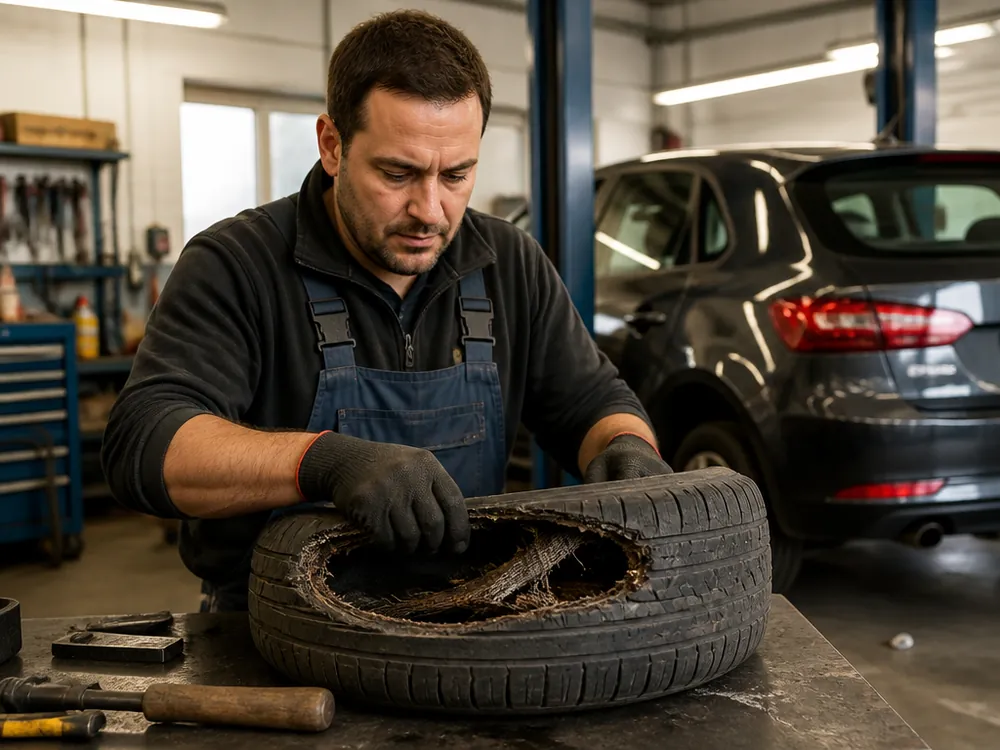
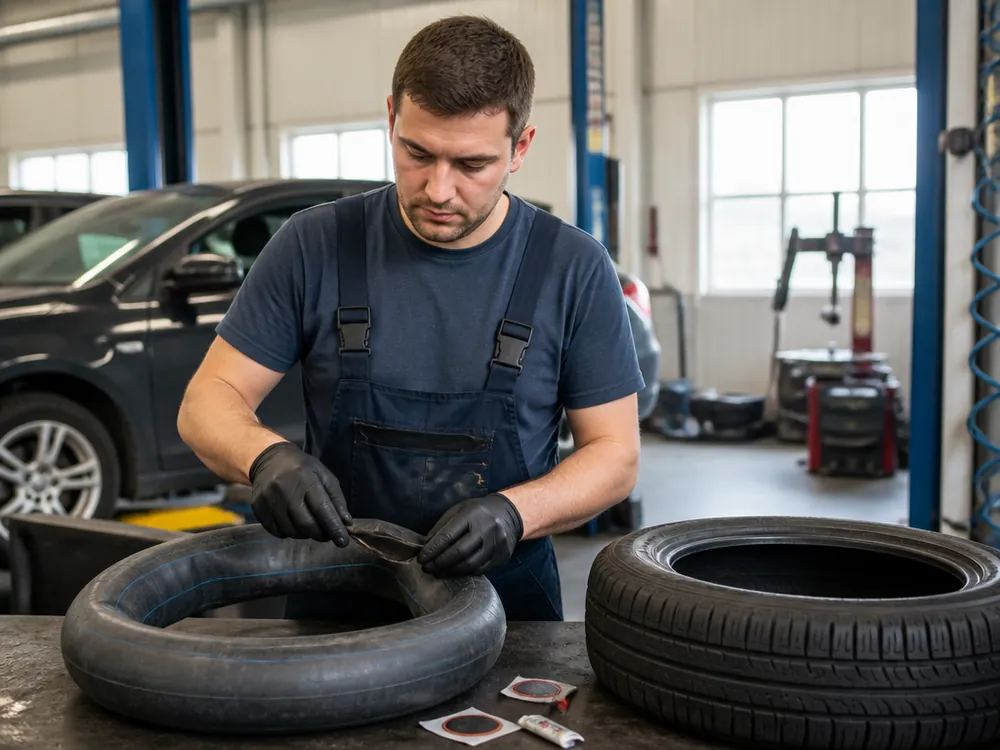
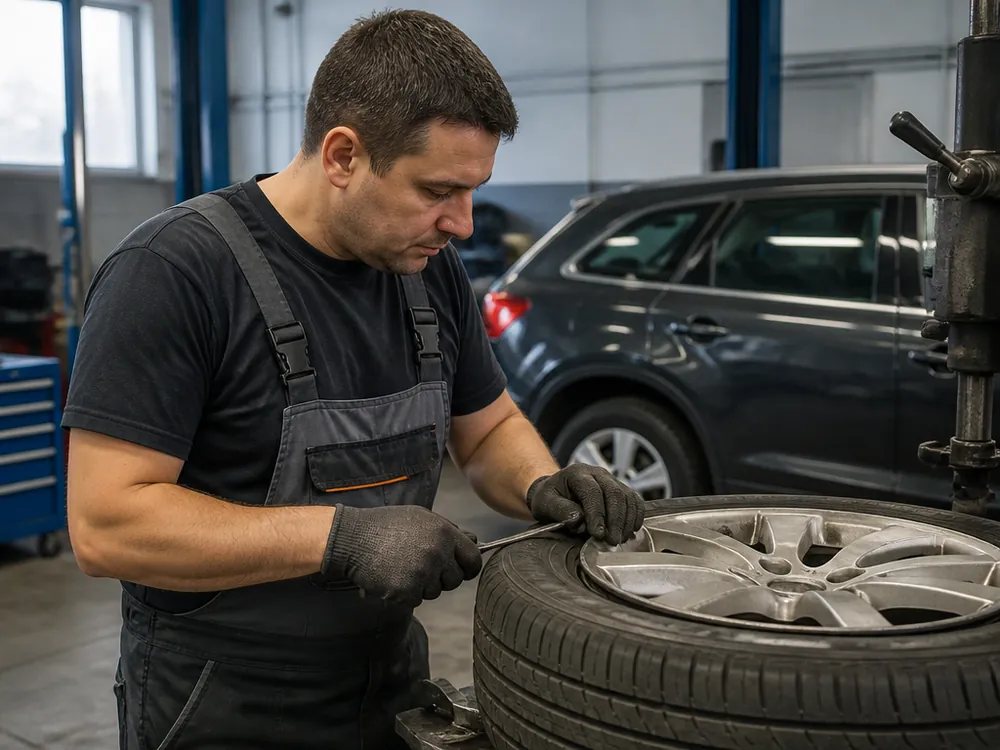
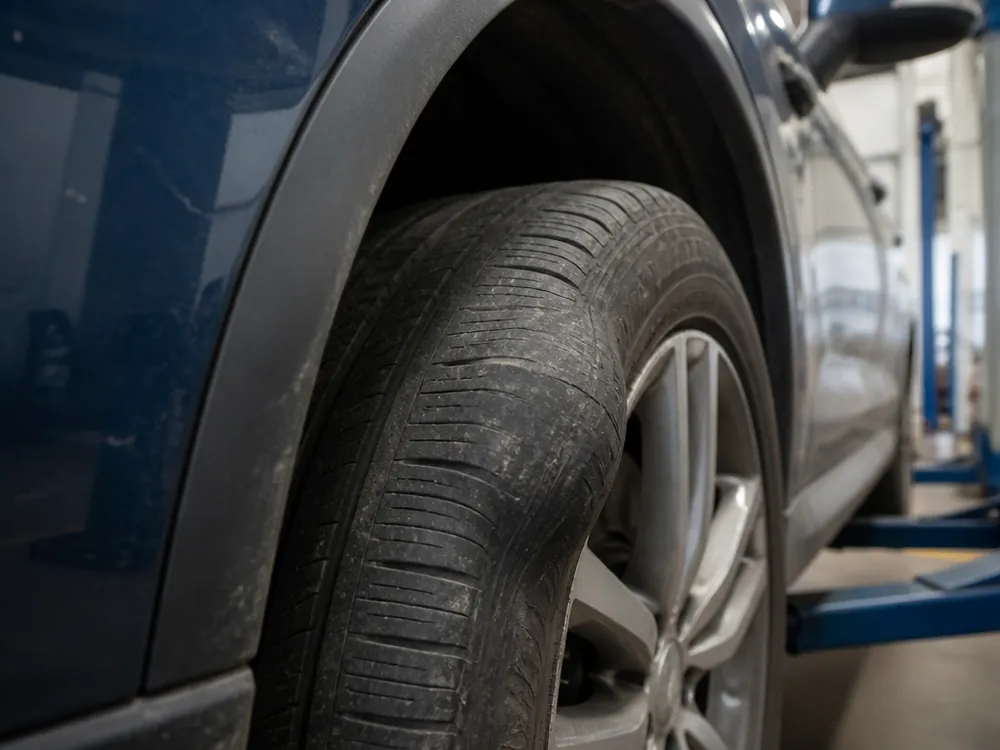
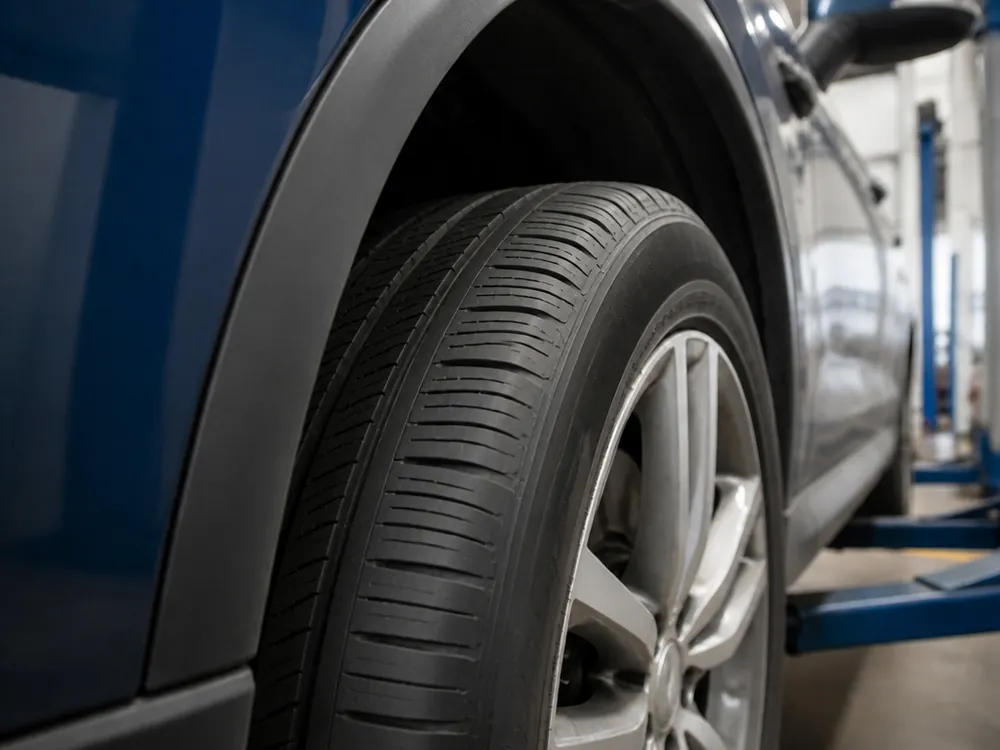
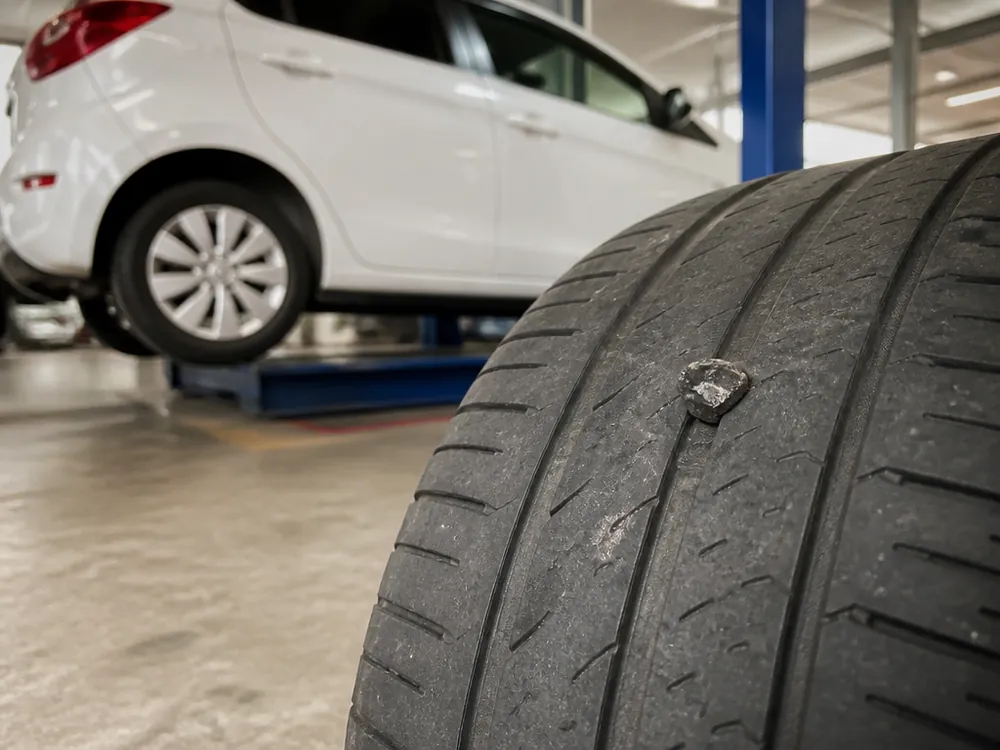
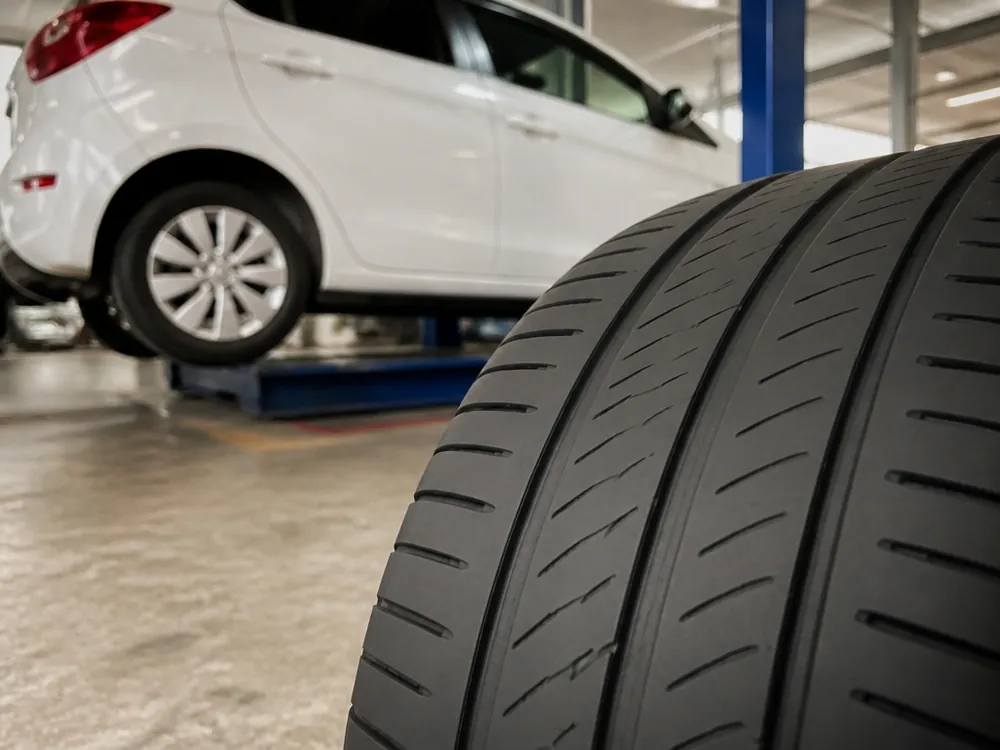
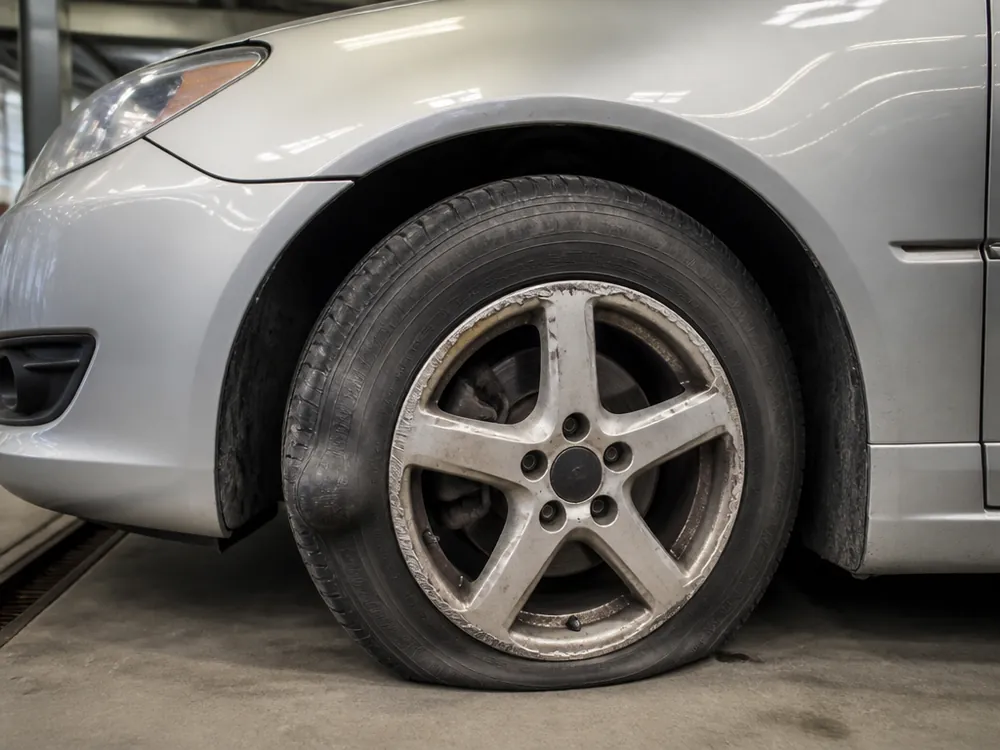
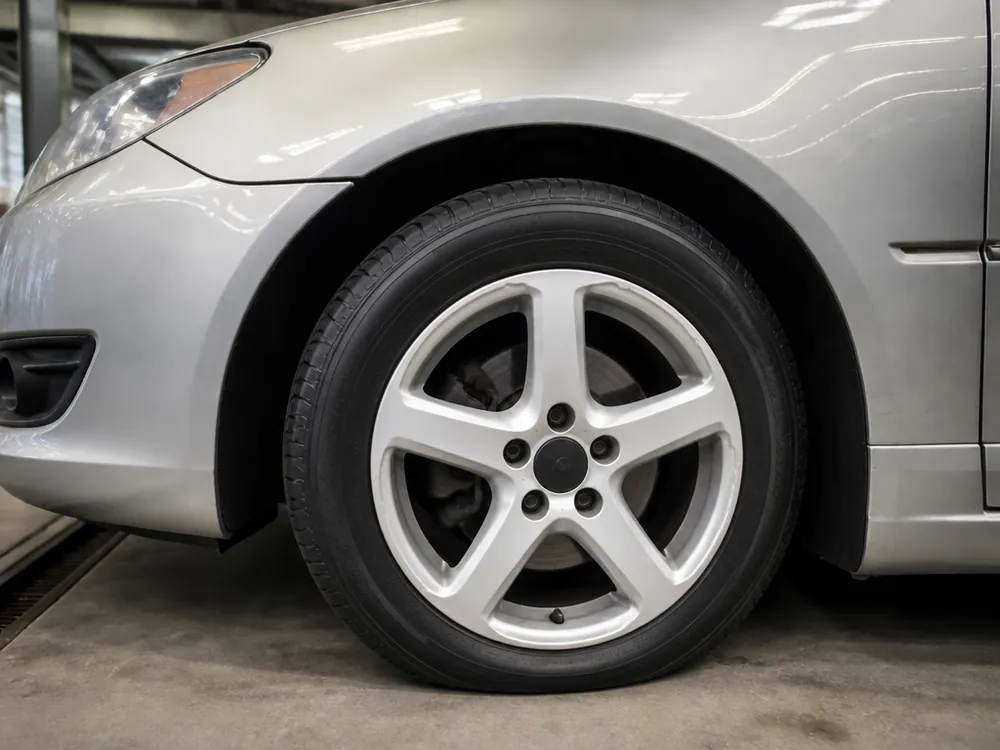
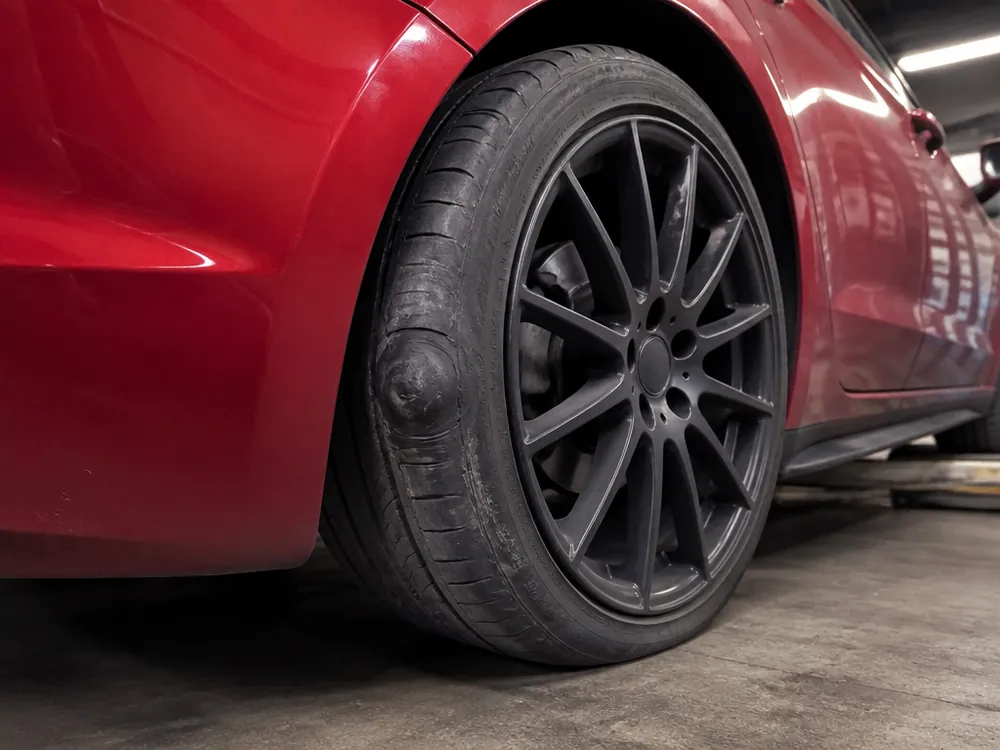
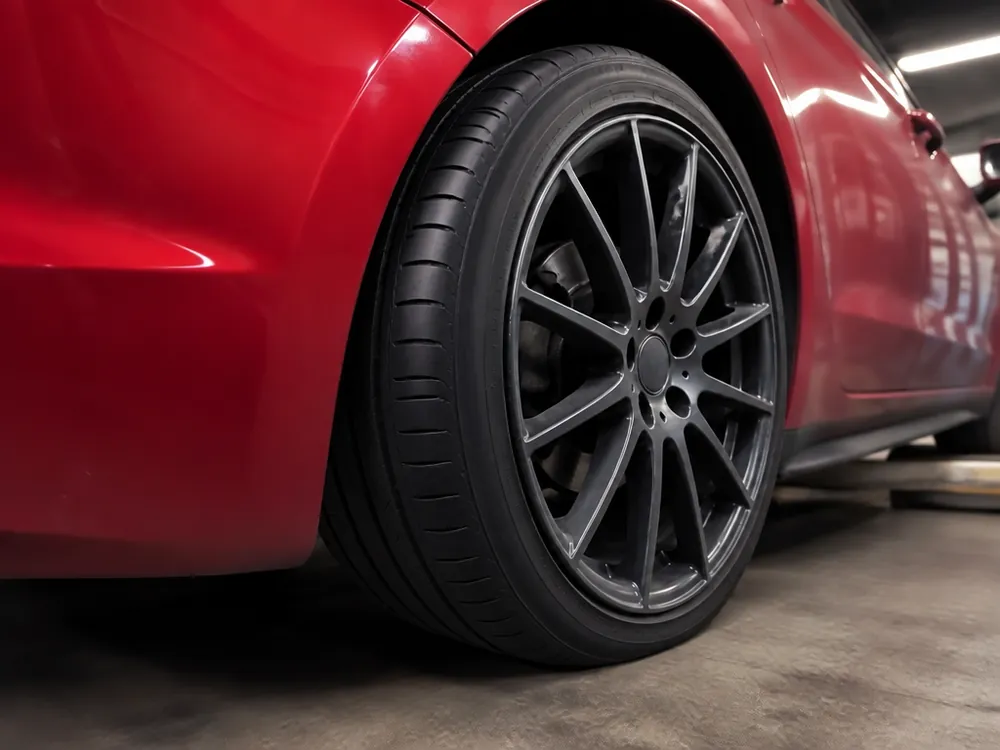
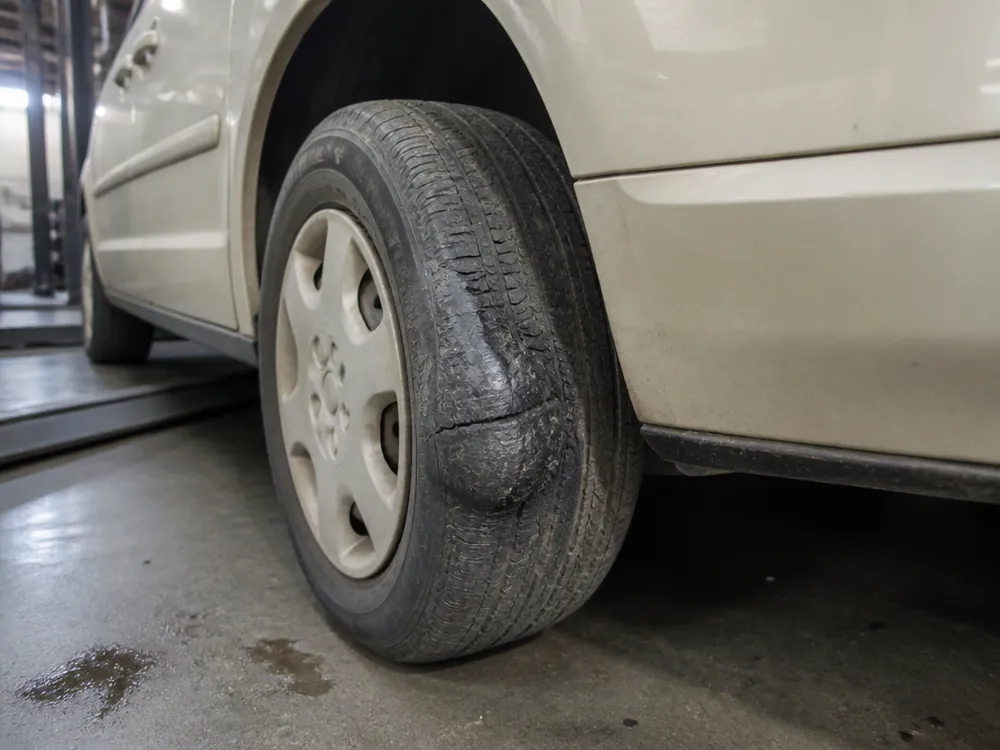
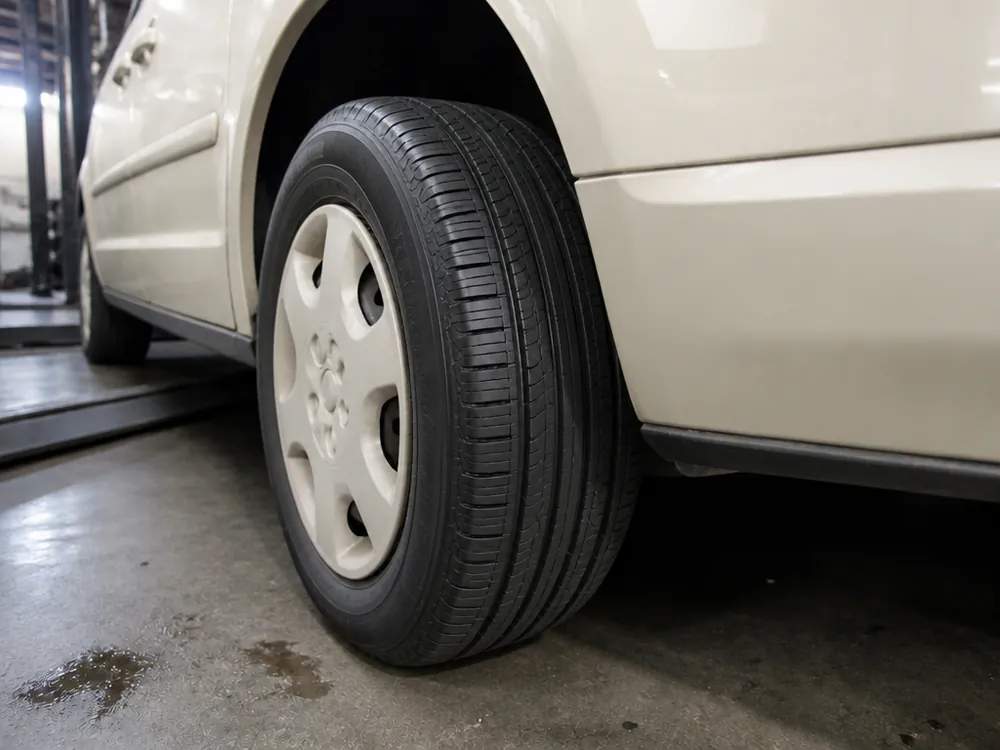
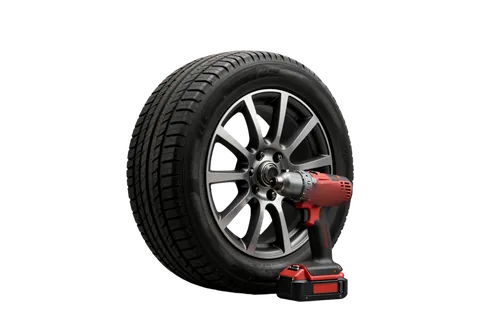
A bulge on a wheel is a swelling on the sidewall or tread that appears after an impact or a manufacturing defect. Driving with it is dangerous: the tire can burst at any moment. We restore tires with bulges, returning their strength and safety. We work with passenger and truck tires and provide a warranty on the result.
Restoration of sidewall tire damage with a warranty of 6 months.
Service
Duration
Warranty
Price
Tire diagnostics, bulge detection and assessment of repair feasibility
30–40 minutes
6 mo
from 3,000 ₸
Wheel removal from the vehicle
20–30 minutes
6 mo
from 2,500 ₸
Tire removal from the rim (mounting/demounting)
30–40 minutes
6 mo
from 3,000 ₸
Internal roughening of the bulge area (sanding)
30–50 minutes
6 mo
from 4,500 ₸
Hot vulcanization patch on the bulge (raw rubber)
1–2 hours
6 mo
from 6,000 ₸
Installation of a reinforcing patch on the bulge using the cold method
1–1.5 hours
6 mo
from 7,000 ₸
Sealing of the inner layer (sealant, plug)
1–2 hours
6 mo
from 8,000 ₸
Sidewall restoration on the outer side (adhesive repair)
2–3 hours
6 mo
from 10,000 ₸
Tire bulge repair with cord damage
2–4 hours
6 mo
from 12,000 ₸
Emergency bulge repair (within 2 hours)
2 hours
6 mo
from 15,000 ₸
Mobile team call-out to the breakdown location (Almaty)
1 day
6 mo
from 18,000 ₸
Tire bulge repair with mobile tire service (truck, SUV)
from 1 day
6 mo
from 20,000 ₸
Bulge repair with a tube (tube-type tire)
2–3 hours
6 mo
from 9,000 ₸
Tire bulge repair with R16-R18 rims
1–2 hours
6 mo
from 7,500 ₸
Tire bulge repair with R19 rims and larger
2–3 hours
6 mo
from 9,500 ₸
Tire bulge repair with a low-profile tire
1–2 hours
6 mo
from 6,500 ₸
Tire bulge repair with demounting (difficult access)
2–3 hours
6 mo
from 11,000 ₸
Bulge repair with wheel balancing
1–2 hours
6 mo
from 8,500 ₸
Emergency mobile tire bulge repair
from 1 day
6 mo
from 25,000 ₸
Tire bulge repair work with reinforced cord (RunFlat)
from 1 day
6 mo
from 22,000 ₸
Prices are for labor only and do not include the cost of materials. The exact scope of repair is determined after diagnostics. Warranty periods — see the page «Warranty»
06
Why they choose tire bulge repair at CARGID
Warranty.
Every promise — backed by a number or a document: work order, photos, removed parts.
6MO
warranty on labor — the term is stated in the work order.
6-month warranty
Passenger and truck
Fast within 1-2 hours
01
We heat to 140–150 °C
The vulcanizer provides precise heating. The patch rubber fuses with the tire rather than just gluing — it holds at speed and in frost.
02
Machine balancing
After repair, we always balance the wheel. Without this, at 90–110 km/h vibration appears on the steering wheel, which destroys the suspension.
03
Timeframe — 1 day
Hot vulcanization takes 40–60 minutes, the rest is disassembly, cleaning, and assembly. We return it the same day without rushing.
04
6-month warranty on the seam
If the bulge reappears due to our fault, we will redo it for free. The warranty covers the repair area, not cuts or impacts.
07
How tire bulge repair is performed
Steps.
Briefly about what we do to make your tire safe and reliable again.
01
Tire inspection
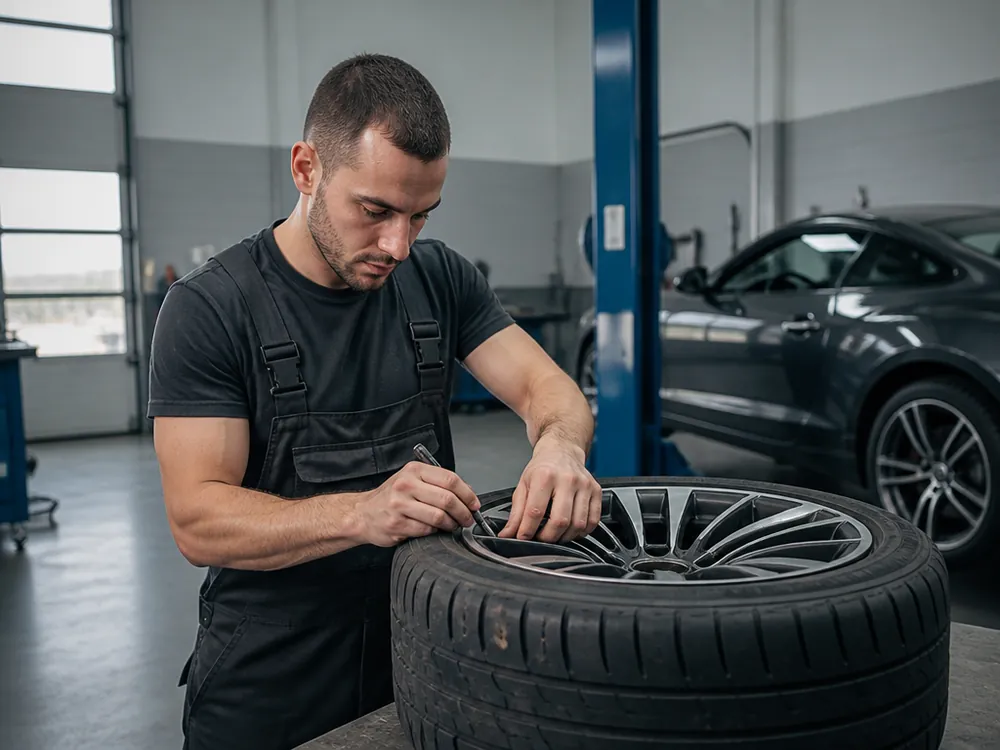
You leave a request on the website or by phone, we select a convenient time for your visit. The master removes the wheel, carefully examines the bulge, assesses its size and condition.
request on WhatsApp
02
Diagnostics
We check for internal cord damage that could make repair impossible.
inspection and diagnostics
03
Tire removal
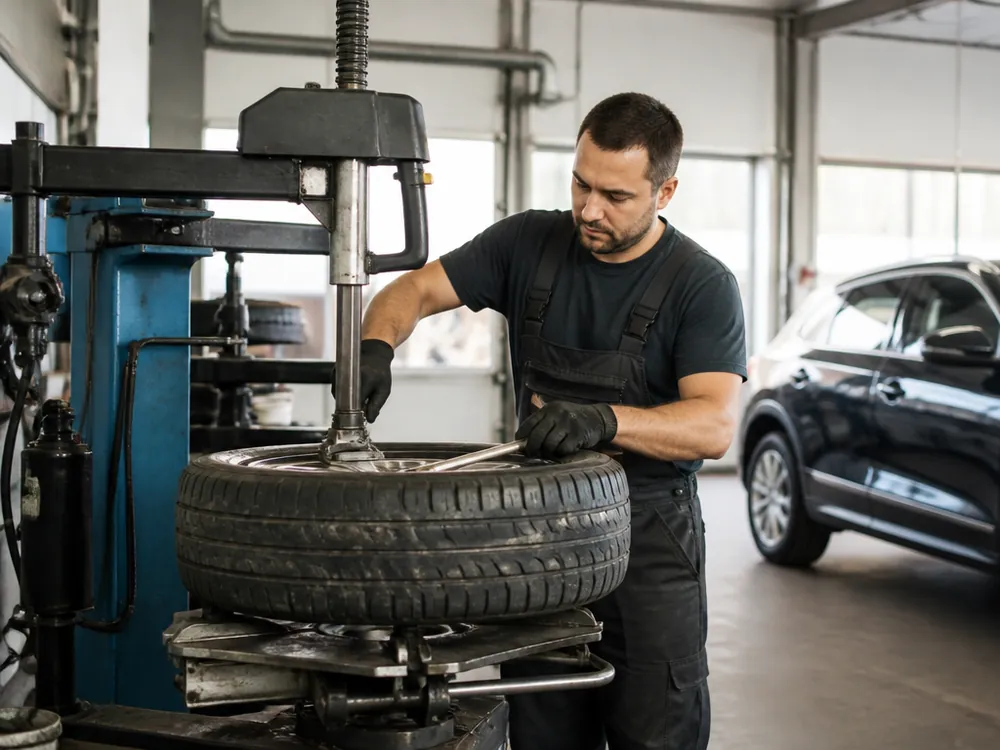
The tire is removed from the rim on a special machine to gain access to the inner surface.
estimate before work starts
04
Cleaning and preparation
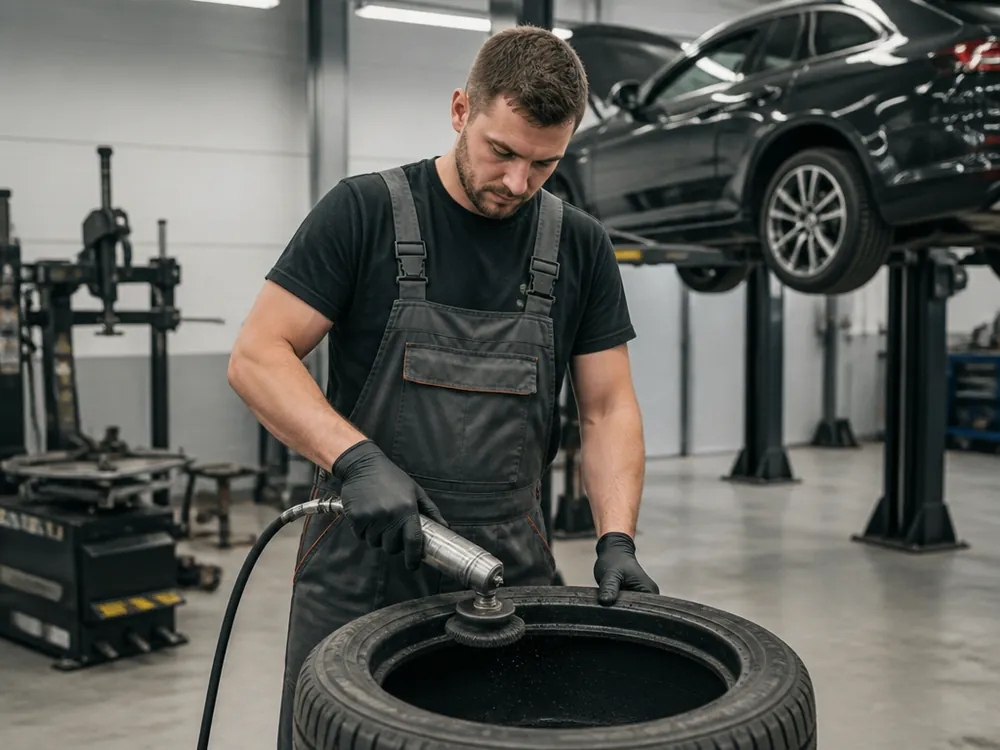
The damaged area is thoroughly cleaned, degreased, and prepared for patch application.
work to factory procedure
05
Patch installation
We vulcanize a reinforced patch using cold vulcanization, creating a strong bond.
result check
06
Assembly and balancing
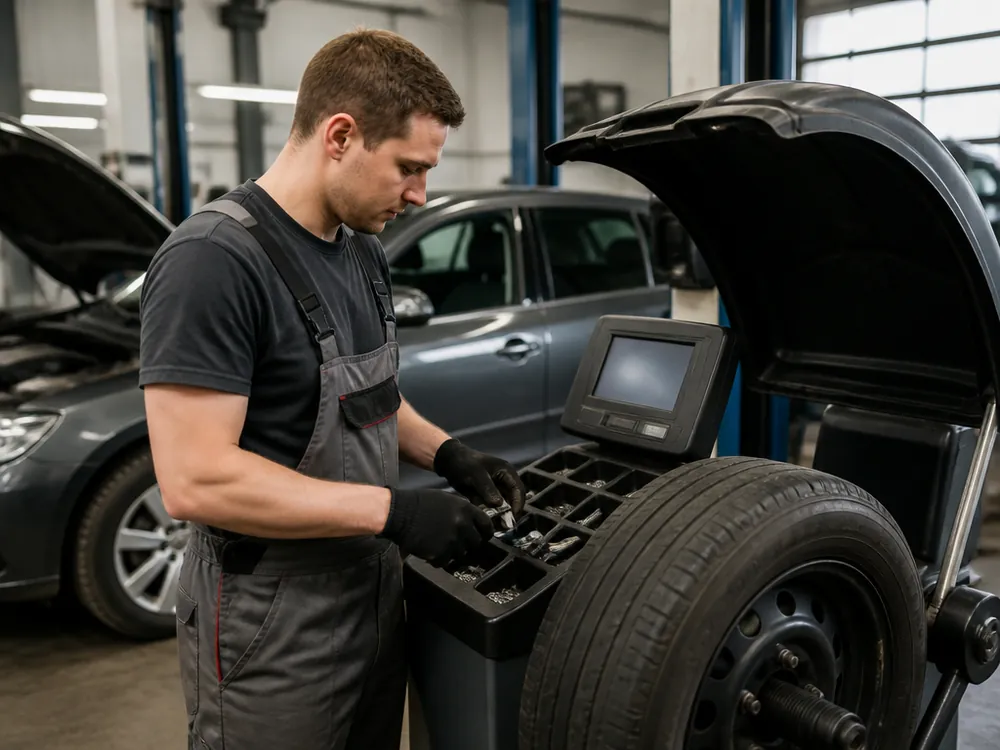
We mount the tire on the rim, perform balancing to avoid vibrations while driving. We check the pressure, visually inspect the repair quality, and return the wheel to you.
CARGID repairs tire bulges in Almaty by hot vulcanization: we cure a raw rubber patch into the tire at 140–150 °C instead of gluing it on. Heating takes 40–60 minutes, and you get the car back the same day. The tire service warranty is 6 months; the timeframe and terms are recorded in the work order.
Why a sidewall bulge is dangerous and when repair is no longer possible
A bulge is a rupture of the cord threads, and the rubber pushes out under air pressure. Here's why it's not cosmetic and what determines whether to restore the wheel or replace it.
What a bulge is and why it appears after a pothole
A bulge is a local rupture of the cord threads on the sidewall that makes the rubber push out under internal air pressure. The tire cord is the carcass threads that hold the sidewall's shape and take the load from the road; when some threads break, the airtight layer stays intact, but the carcass in that spot no longer works fully. A sidewall bulge appears after hitting the edge of a pothole, a curb, or a rail: a short impulse passes through the wheel, and the sidewall gets pinched against the rim. Most often the threads break on impact at low pressure — low pressure doesn't absorb the jolt, and the whole load goes into the sidewall instead of being spread across the tread. A wheel bulge is dangerous because it grows: with every kilometer there are fewer intact threads, and at some point the sidewall bursts at speed. Before driving, press the bulge with your finger and compare its firmness with the surrounding areas — a soft, "springy" bulge means the carcass is barely holding, and it's better to get to the tire shop on the spare.
When it's too late to restore a bulge
Damage across the full sidewall height: if the defect runs from the tread to the rim, the threads have nothing to anchor to.
A repeat bulge in the same spot: after someone else's repair, this is a sign the carcass has weakened, and a second patch will only delay the blowout.
Exposed or delaminated cord: when the threads are visible and sticking out, the carcass integrity is lost.
Cracks and cuts next to the bulge: they widen under load, and the patch sits on an unstable area.
Tread wear below the limit: restoring the sidewall doesn't bring the wheel back to working condition.
Bulge repair methods and why hot vulcanization is more reliable
We look at three approaches to the sidewall — cold vulcanization, reinforcement, and hot vulcanization — and explain why temperature, not patch thickness, is what matters.
How hot vulcanization differs from cold
We heat the patch to 140–150 °C in a vulcanizer, and the raw rubber cures into the tire as one piece instead of holding on glue. The cold method works differently: a reinforcing patch is glued with a compound that sets at room temperature, and the seam remains a boundary between two materials. The vulcanizer holds precise heat without scorching, so the patch rubber stays flexible both in frost and on a hot highway. Before laying the patch, we roughen the bulge area on the inside of the sidewall — otherwise neither hot nor cold compound will bond to the surface. The sidewall flexes on every pothole: a glued seam peels off precisely from cyclic deformation, while a cured layer withstands it. Tire bulge repair in this case is predictable: the cured layer behaves like solid rubber. In my view, that's the main argument — a cold patch holds only until the first serious load.
Comparison of sidewall restoration methods
comparison of four techniques by purpose
Method
What we do
Which case it's for
Hot vulcanization
Cure raw rubber at 140–150 °C
The main method for the sidewall
Reinforcing patch
Glue cold with reinforcement
Small bulges, intact cord
Sealing with a plug
Fill the inner layer
A supplement to the patch
Exterior glue repair
Restore the appearance
After internal repair
What the repair area looks like from outside and what will be visible
The owner's main fear is that after the work a noticeable spot of a different color will remain on the sidewall. We break down what the outer layer consists of, what's actually visible on the wheel, and how technicians work with the outside.
Will the patch be visible from outside
The main patch sits on the inside and isn't visible from outside, while we restore the outer sidewall with a glue repair matched to the rubber color. The reinforcing layer takes the load from inside, while the outer contour gets a neat repair without rough seams or ridges. The technician matches the compound to the color of the specific tire instead of pouring a universal black sealant — on soft sidewalls and on dense rubber the shade lays differently, and that's exactly what produces the notorious color mismatch owners worry about. We apply the glue repair in a thin layer and roll it down so no bump remains that would later cause vibration at speed. On a black sidewall, a neat repair can only be felt by touch and seen up close — the outer layer doesn't affect driving quality or balancing.
Why the inner patch doesn't spoil the appearance
The reinforcing patch goes on the inner surface of the tire, so it isn't visible from outside at all — the color and pattern of the sidewall stay the same. Before installation, we roughen the bulge area on the inside: without this, the raw rubber won't bond to the smooth sealing layer and the patch will peel off on the first pothole. Roughening follows strictly the damaged spot, the surrounding cord stays untouched, so the sidewall profile keeps its factory geometry. If a noticeable bump or mark remains outside after someone else's repair, the problem isn't the patch but an area not roughened properly and a sidewall profile not restored. In our experience, redoing work after such haste requires removing the old layer and fully rebuilding the wheel.
Which tires we take on and where the limits are
Not every wheel is repaired the same way: the set of operations depends on the profile, cord type, and access to the damage. Here's what we take on and where we honestly state the limitations.
Low profile, runflat and tube-type tires
We repair bulges on low-profile tires, on R16–R18 and R19 and larger wheels, on tube-type tires and on runflat tires with reinforced cord. Low profile needs careful mounting: a thin sidewall and a rim that sits close to it don't forgive rough handling, so we take the tire off on a tire changer. Runflat with its stiff sidewall is harder to heat and lay a patch on — the reinforced cord doesn't let the rubber stretch the way it does on a regular tire. We check a tube-type tire separately: after repairing the tire we also inspect the tube itself, otherwise air will leak through the old fold. On low profile and runflat the risk of damaging the rim during dismounting is higher than on a standard tire, and we tell you that before the work starts, not after.
What the job includes by tire type
set of operations by tire type
Tire type
What we do
Specifics
Low profile
Machine mounting, patch
Risk of damaging the rim
Runflat
Repair with reinforced cord
Stiff sidewall, limitations
Tube-type
Repair with tube
Separate tube check
R16–R18
Standard cycle
Common case
R19 and larger
Standard cycle
More wheel weight
How a tire bulge repair goes and how long it takes
We walk you through the full sidewall repair cycle — from diagnostics to a road test — explain what the timeline is made of, and why the job isn't finished without balancing.
Work stages and timelines
Tire diagnostics: we inspect the bulge, check the cord and assess whether the sidewall can handle a repair.
Removal and dismounting: we take the tire off the car and dismount it to reach the damage from the inside.
Buffing the bulge area: we remove the inner rubber layer down to the cord — this determines how firmly the patch will hold.
Hot vulcanization: raw rubber fuses with the tire at 140–150 °C, heating takes 40–60 minutes.
Mounting and balancing: we mount the tire on the rim, check it on the equipment and put it back on the car.
Road test: the technician evaluates how the car behaves after the tire bulge repair in Almaty and only then hands it back to the owner.
Why balancing is needed after the repair
After the work we always balance the wheel, because the patch changes how mass is distributed around the circumference. Even a small patch on the sidewall shifts the center of gravity, and at speed the imbalance grows with every revolution. Without this check, at 90–110 km/h you get vibration in the steering wheel that gradually wears out the suspension — saving at this stage turns into spending on the running gear. The balancing machine shows how many grams to add and where on the rim so the rotation runs true. That's why balancing is a separate stage of the job: without it, a repaired sidewall makes itself known fast. In my experience, owners come back more often because of skipped balancing than because of the patch itself. So we consider the job unfinished until the wheel has been checked on the equipment and has gone through a break-in run on the road.
Warranty and care after the repair
We explain exactly what the warranty on a tire bulge repair in Almaty covers, how to get it when you pick up the car, and how to treat the repaired wheel in the first kilometers so the bulge doesn't come back.
What the 6-month warranty covers
We give a 6-month warranty on tire service and record the term and conditions in the work order and the handover report when you pick up the car. The coverage applies to the work performed and to the parts we install ourselves: the vulcanized patch, the reinforcing layer, the sealant. If a defect shows up in the same spot due to our fault, we do the warranty diagnostics free of charge and redo the work. The coverage doesn't apply after an accident, third-party interference, normal wear of consumables, or to a part the customer brought in. In my view, it's more honest to spell out these limits upfront than to promise all-inclusive service. We put the term and conditions in writing, so in a dispute all you need to do is open the work order and check the date.
How to treat the wheel after the repair
Break-in: for the first 500 kilometers keep your speed under 90 km/h and avoid hard hits against curbs and potholes.
Pressure: check with a gauge once a week — an underinflated tire takes a pothole hit with its whole sidewall.
Inspection: after every serious bump, check the sidewall for a new bulge.
Balancing: if vibration appears at 90–110 km/h, come back for a rebalance of the wheel.
Prevention: a repeat bulge is more likely on an underinflated tire, so a gauge in the glovebox is more useful than any insurance.
Key Steps in Bulge Repair
A tire bulge repair in Almaty comes down to checking the cord and choosing a repair method, not to judging the size of the bulge. Below are short takeaways to help you decide what to do with the wheel.
Cord matters more than size: a bulge is a rupture of the carcass threads, and whether a repair is possible depends on their condition, not on the visible height of the bulge.
An inside check is a must: buffing the bulge area from the inside shows whether the threads are intact and whether the sidewall can take the load.
The method sets the reliability: hot vulcanization fuses the patch rubber with the tire at 140–150 °C, while a glued seam holds weaker.
Balancing isn't optional: without it, at 90–110 km/h you get vibration in the steering wheel that speeds up suspension wear.
Timelines are predictable: vulcanization takes 40–60 minutes, the rest is disassembly, buffing and assembly, and the wheel is handed back the same day.
10
Frequently asked questions about tire bulge repair in Almaty
Questions.
Price, timeframes, warranty, payment — 10 questions asked most often.
10
Didn't find an answer?
Message us on WhatsApp — a service advisor will reply within 5 minutes.
The cost of bulge repair at our service depends on several factors: the size and location of the damage, the type of tire (passenger car, SUV, truck), and whether only cold vulcanization is required or the installation of an additional reinforcing layer. On average in Almaty, the price for bulge repair for a passenger car starts from 7 000 tenge, for SUVs — from 10 000 tenge, for trucks — from 15 000 tenge. The exact cost can only be given after inspecting the tire, since in some cases the bulge may be too large or the damage affects the cord, which increases the complexity and price. The removal and installation of the wheel is also taken into account if you arrive without a spare.
Usually bulge repair takes from 1.5 to 3 hours depending on the complexity. If the damage is small and there is no need for a complex multi-layer patch, we finish within 1.5–2 hours. For large bulges or when additional reinforcement is needed, it may take up to 3 hours. We always inform you of the exact time after diagnostics so you can plan your day. Repair is done on the day of contact if there are available slots; an appointment is not required but recommended.
We provide a warranty for all bulge repair work — 6 months or 5 000 km of mileage, whichever comes first. The warranty covers the quality of vulcanization and the tightness of the patch. If during this period leaks or detachments occur, we will redo the repair free of charge. It is important to follow the operating recommendations: do not exceed the permissible speed and avoid driving with low pressure. The warranty does not apply to mechanical damage to the tire after repair, such as cuts, punctures in the repair area, or driving on a flat tire.
An appointment is not required, but recommended. Our service is often busy, especially during the season, so we recommend calling and booking a convenient time. If you come without an appointment, we will try to accept you on a first-come, first-served basis, but waiting from 30 minutes to 1 hour is possible. A preliminary appointment allows us to prepare the necessary materials and start work immediately, which saves your time. You can also book online through our website or by phone.
Yes, you can bring your own tire if you have it separately from the rim, but in most cases clients come by car and we remove the wheel ourselves. As for parts, special materials are used for bulge repair — vulcanization compounds, reinforcing fabrics, which we purchase from trusted suppliers. The use of third-party materials is undesirable, as we cannot guarantee their quality and compatibility with our technology. Therefore, we strongly recommend using our materials, which are already included in the repair cost.
If after repair you discover the bulge has reappeared or notice other problems, contact us immediately. Under the warranty, we will conduct a re-diagnosis and fix the defect free of charge if it occurred due to our fault (for example, patch detachment or violation of technology). To do this, keep the payment receipt. If the problem arose due to external factors (hitting a pothole, overloading the car, driving on a flat tire), the warranty does not apply, but we will offer a discount on re-repair. Our technicians always strive to perform work with quality, so such situations are rare.
Cold vulcanization is a method that uses special adhesive compounds and patches that do not require heating. It is suitable for small bulges (up to 2-3 cm) and is the fastest and most economical option. Hot vulcanization involves heating the patch and rubber to high temperatures, which provides a stronger bond and is used for medium damage. Reinforcement is the installation of an additional layer of strong fabric or cord for large bulges, when it is necessary to restore the rigidity of the sidewall. At our service, we more often use hot vulcanization and reinforcement, as they give a more reliable result. The cost varies: cold — from 7 000 tenge, hot — from 9 000 tenge, with reinforcement — from 12 000 tenge.
After bulge repair, it is important to follow several rules to extend the tire's service life and avoid repeated damage. For the first 200 km, avoid sharp maneuvers, high speeds (over 120 km/h) and off-road driving. Regularly check tire pressure — it should correspond to the vehicle manufacturer's recommendations (usually 2.0–2.3 atm for passenger cars, check the manual). Avoid impacts against curbs, potholes and other obstacles. After 100-200 km after repair, we recommend coming to us for a check-up to make sure the patch is holding reliably. Also watch for new bulges on the sidewall — if you notice any, contact us immediately.
Payment for bulge repair is accepted in cash, by card and by transfer. The price includes inspection of the damage, removal and installation of the wheel, mounting the tire on the rim and balancing. The final price depends on the tire size, the location of the bulge — on the sidewall or near the bead — and whether vulcanization with cord reinforcement is required. The time usually takes from a few hours to one day.
Not all tires are eligible for bulge repair. The professional safety standard prohibits repairing damage if: the bulge is large (more than 5-6 cm in diameter), the cord is damaged or the sidewall has cracks and cuts; the tire has already been repaired in this spot; or if the tire is old and worn by more than 60%. In such cases, repair will be unreliable and dangerous. Our technicians will conduct a free diagnosis and honestly tell you whether it makes sense to repair your tire or whether it is cheaper and safer to replace it. We adhere to the principle — client safety above all, so we do not take on work that does not guarantee reliability.
11
Customer reviews of tire bulge repair
Reviews.
We collect ratings on the website and on maps — we hide nothing.
4.8
872 reviews on the website 1 900+ ratings in total
Alexey
I hit a pothole on the highway, and a bulge appeared on the sidewall. CARGID quickly took a look, said the cord was intact, it could be repaired. They did it in one day, I paid 7 500 tenge. I've been driving for a month already, all good, no vibrations. Thanks!
Dmitry
I contacted them about a bulge on a new tire, thought I'd have to replace it. The technicians checked, said it was a manufacturing defect, but it could be repaired. They did everything neatly, balancing too. The price was 5 900 tenge, for me it was a lifesaver. I recommend!
Elena
Tucson
I have a Hyundai Tucson, a bulge appeared on the rear wheel. I was very worried that I'd have to buy a new tire. At the service, they calmed me down, explained that repair was possible. They did everything quickly, with quality, I picked up the car the next day. Plus balancing. Thanks for the honesty!
Aibek
The wheel hit a pothole, a bulge appeared on the sidewall. At CARGID they took a look, said it could be fixed. They did it in one day, I paid 8 200 tenge. Six months have passed, everything is fine, the tire is working. Good service, I will come back.
Natalya
We got a bulge on a low-profile tire, thought it was done for. The guys at the service took it on, made a patch, balanced it. The cost was 9 500 tenge, but at least we didn't have to buy a new tire for 30 thousand. Two months have passed, all good.
Sergey
I contacted them about a bulge on the sidewall, thought I'd have to change the tire. At CARGID they did the repair in one day, charged 7500 tenge. I've been driving for a few months already — all okay. I recommend.
Anna
I noticed a bulge on the wheel, went to the service right away. It turned out it could be repaired. They did everything neatly, explained that the patch was reinforced, so it's reliable. I paid 6 800 tenge, happy. Thanks for the work!
Marat
Көлігімнің дөңгелегінде грыжа пайда болды. CARGID-де тексеріп, жөндеуге болатынын айтты. Бір күнде жасап берді, бағасы 7500 теңге болды. Қазір бәрі жақсы, дөңгелек қалыпты жұмыс істеп тұр. Рахмет!
Alexandr
I hit a pothole on the highway, a bulge appeared on the wheel. At CARGID they did the repair in 1 day, it cost 8200 tenge. I've driven for 3 months already — no problems. I recommend this service.