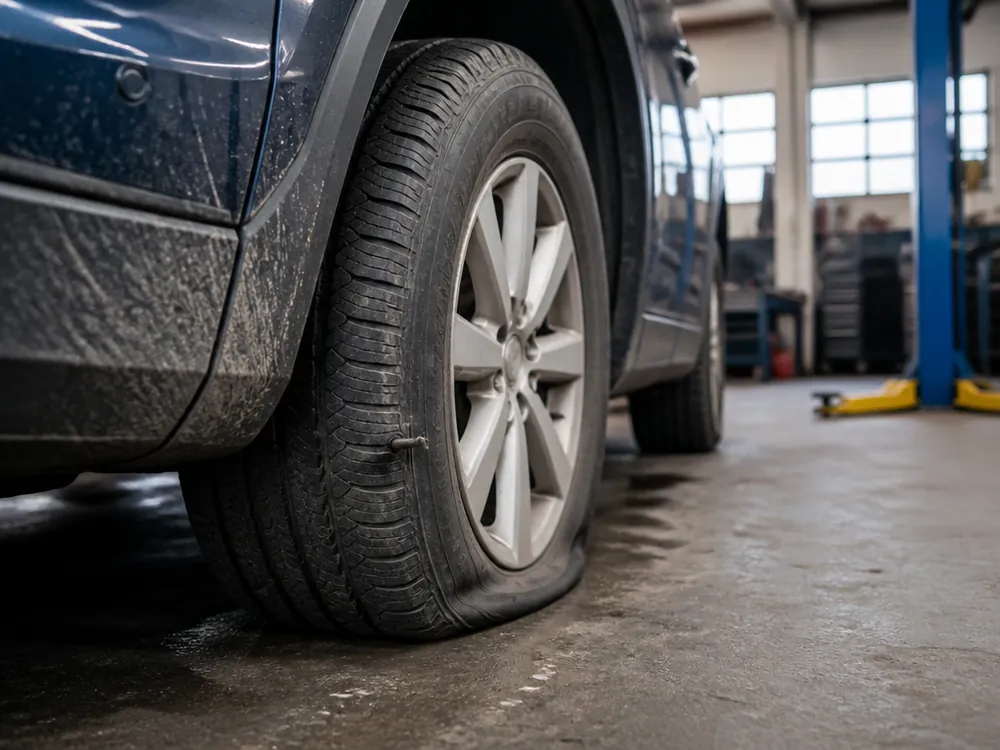
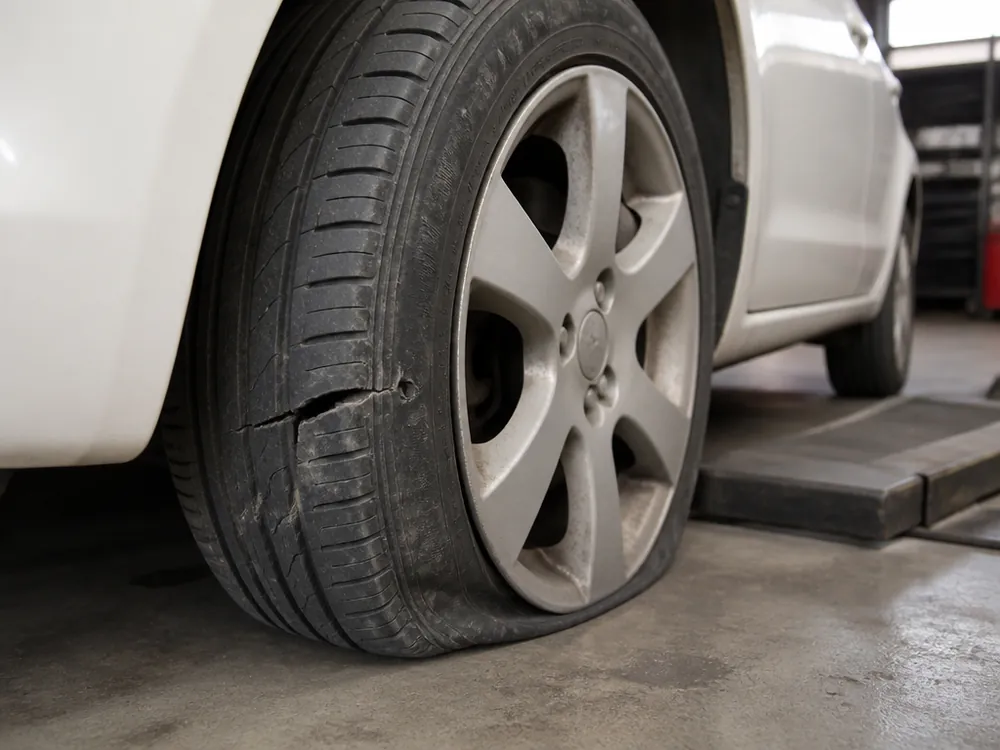
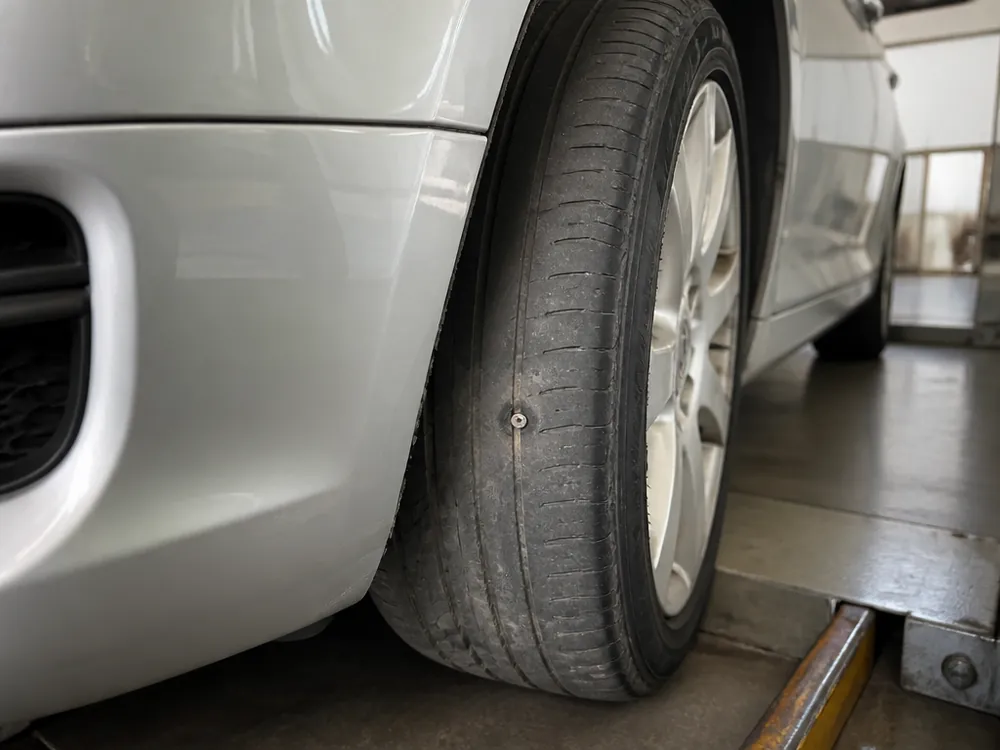
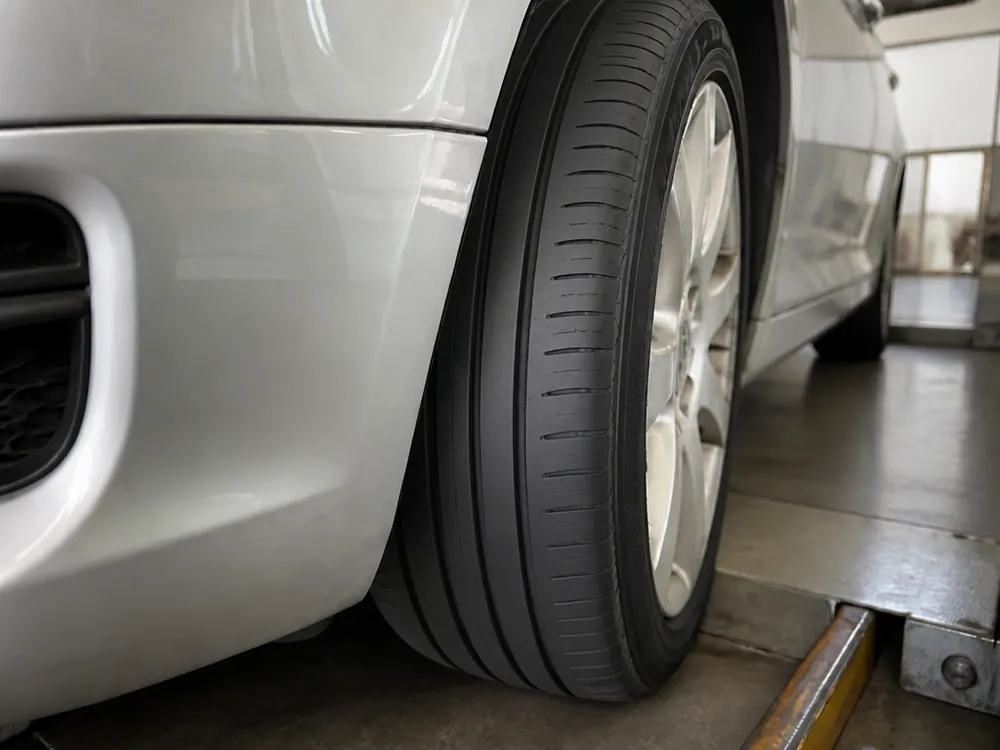
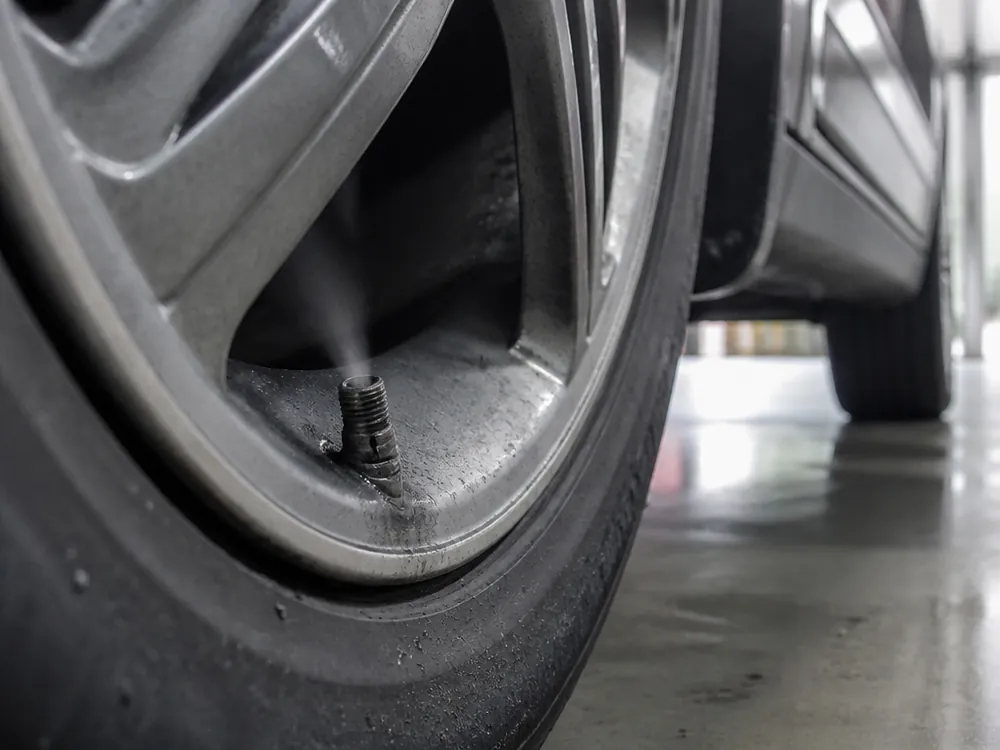
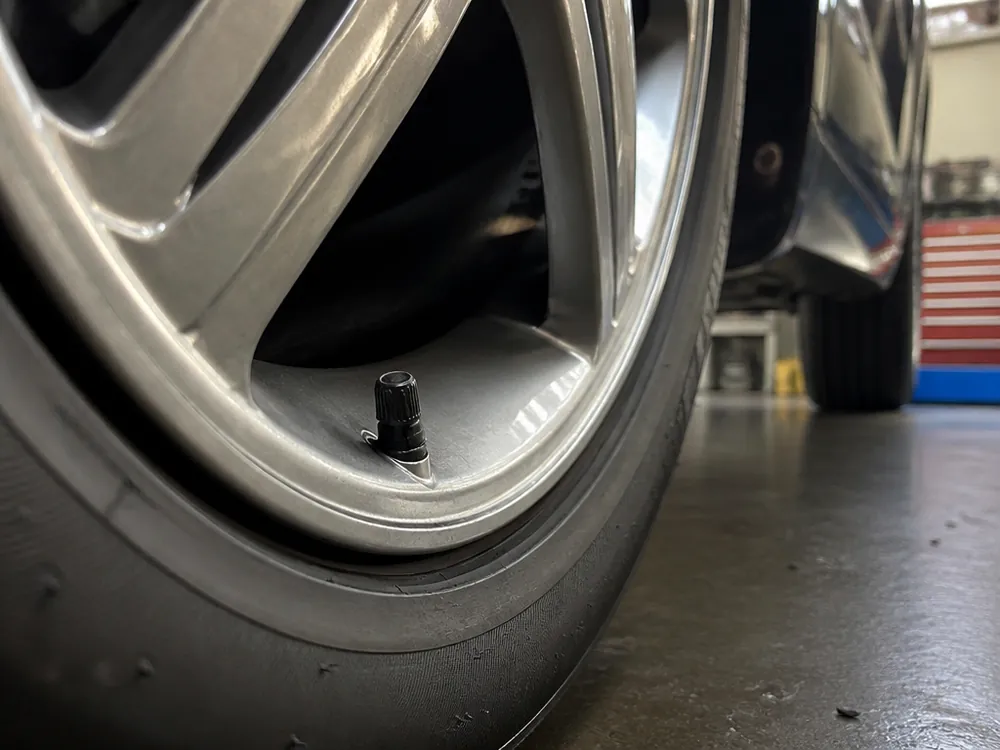
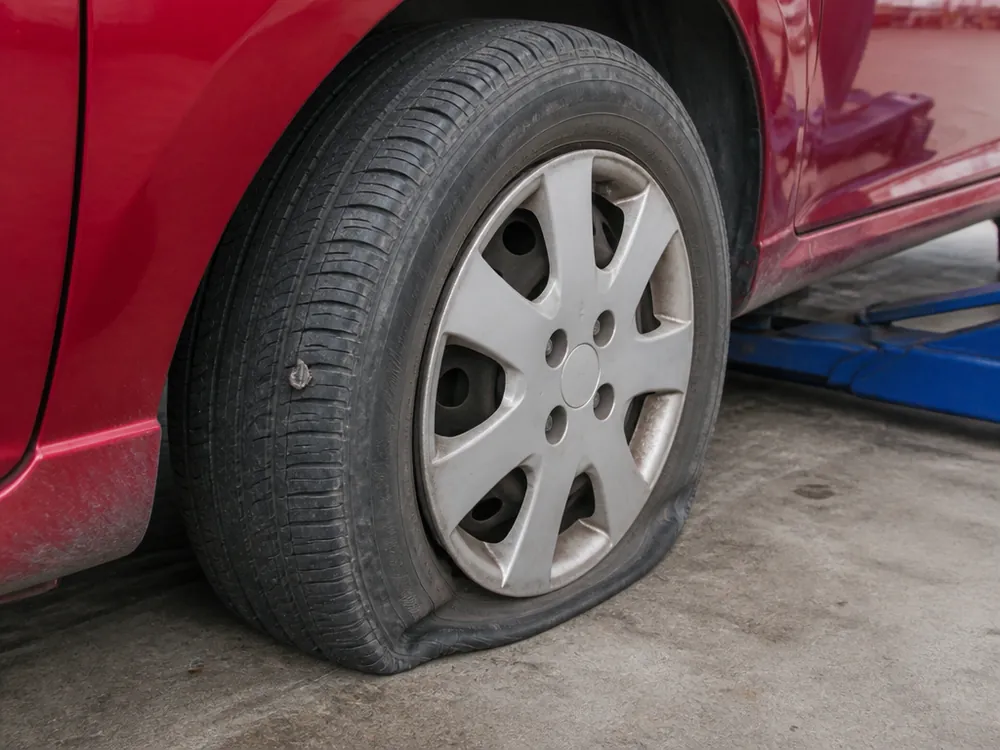
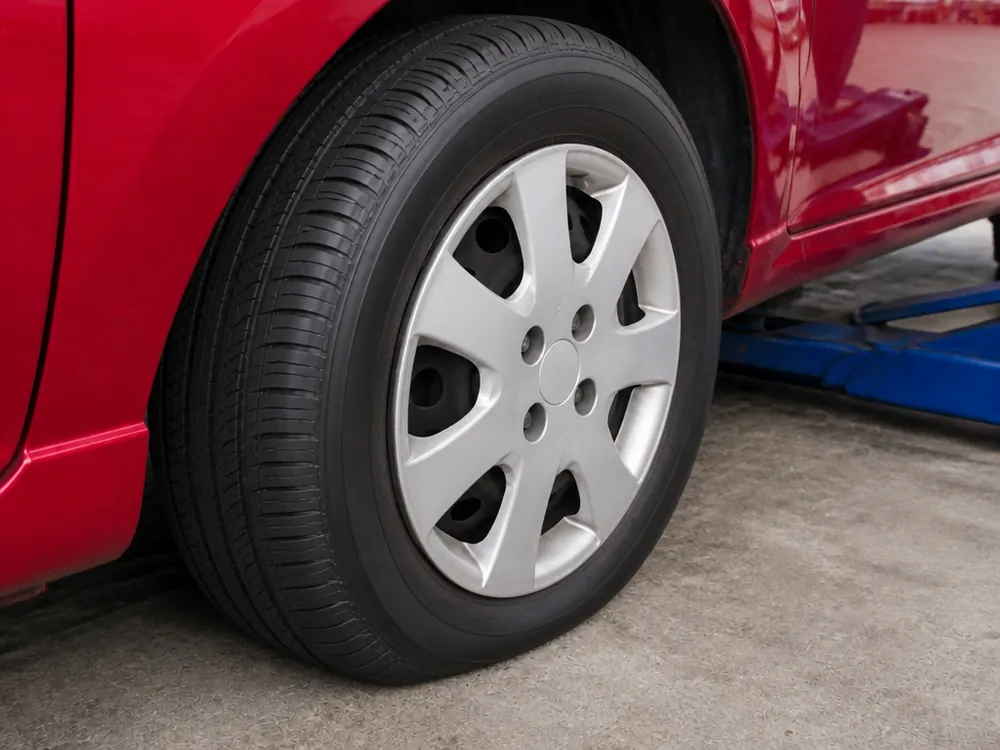
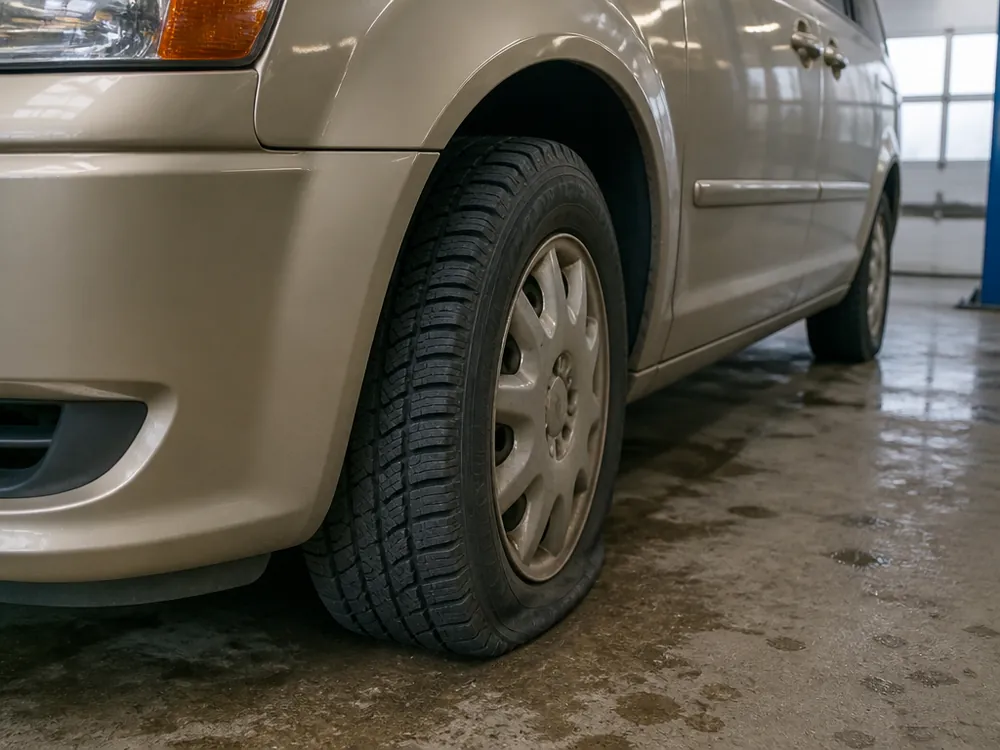
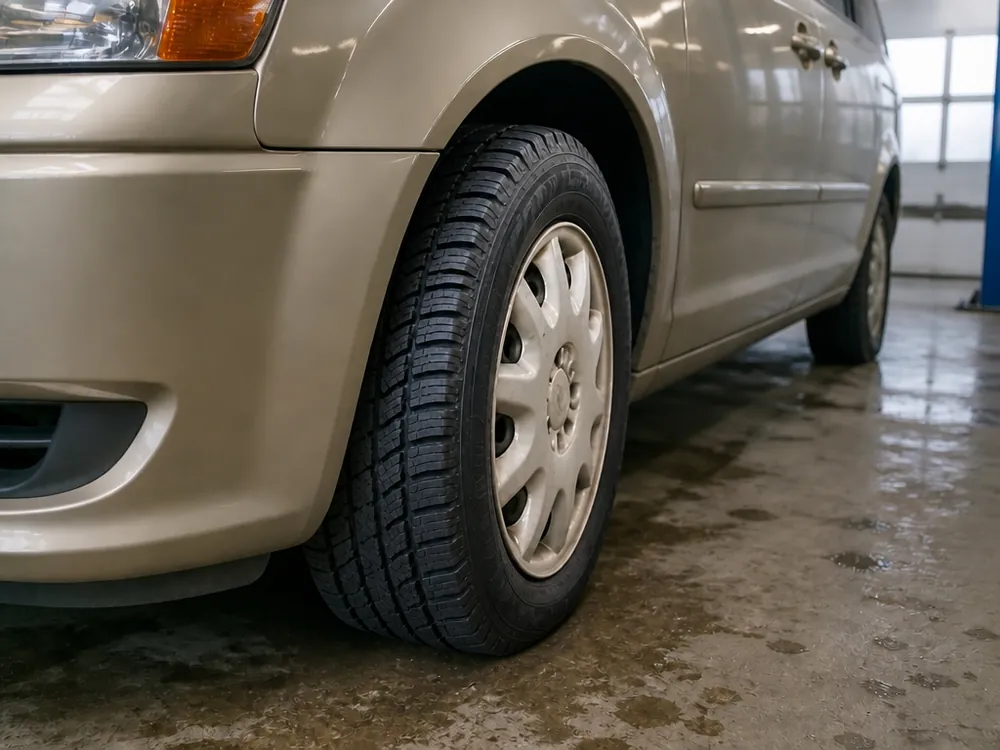
A tire puncture is one of the most common troubles on the road. At the tire service CARGID in Almaty, we quickly and reliably fix punctures of tube or tubeless tires. We will restore the wheel's airtightness, check and balance it. Get back on the road in just 30-40 minutes.
Puncture repair with partial replacement of bead rubber
4–5 hours
6 mo
from 12 000 ₸
Prices are for labor; the cost of consumables (plug, patch, sealant) is included in the price. The exact price and repair time will be determined by the technician after inspecting the wheel. Warranty periods — see the page «Warranty»
06
Why choose wheel puncture repair at CARGID
Warranty.
Every promise — backed by a number or a document: work order, photos, removed parts.
6MO
warranty on labor — the term is stated in the work order.
Mobile tire service
Warranty
Fast
01
Plug without removing the tire
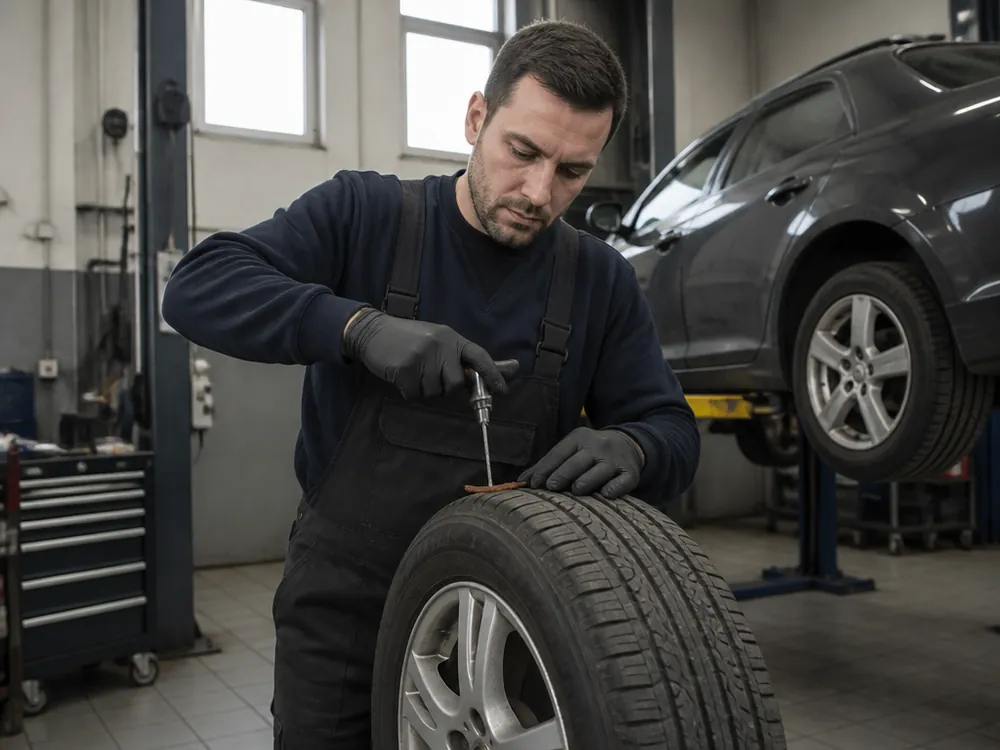
We install a 4 mm plug with glue, widen the puncture site with an awl and degrease. We do not balance in this case — the wheel stays in place.
02
3 layers, not one
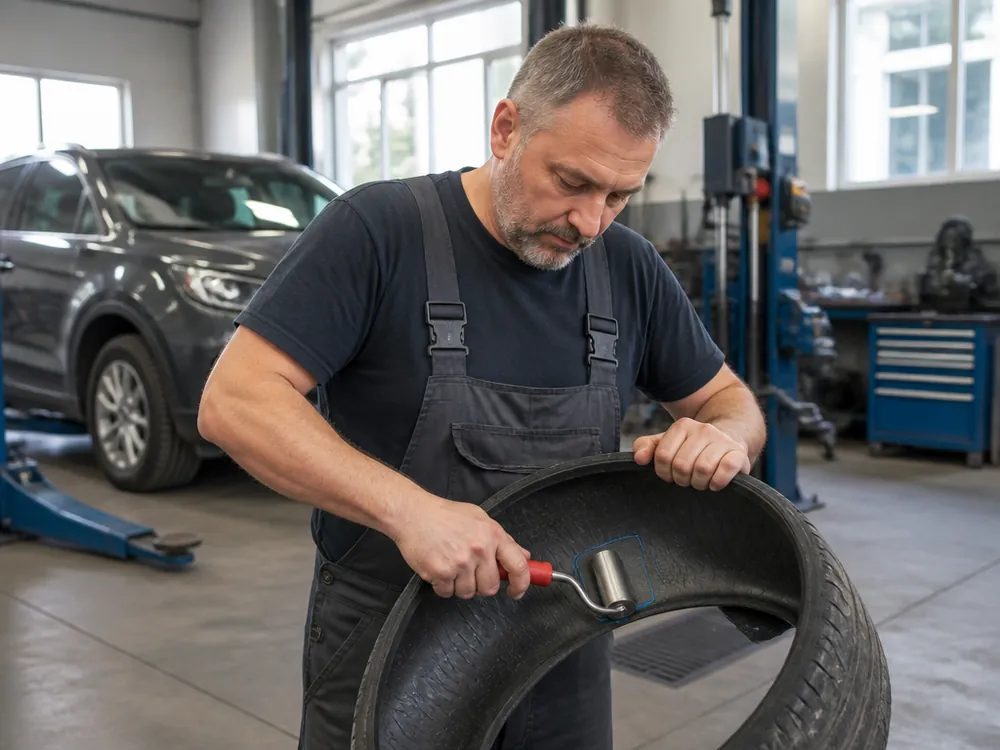
We stitch a sidewall cut up to 5 cm: cord, then two layers of cord patch with heating up to 150 °C. One layer does not last long and tears at the edge.
03
In 40 minutes, not a day
We do a tread puncture in your presence in about 40 minutes, a sidewall cut — in an hour. Longer only due to patch heating and balancing.
04
6-month warranty
We give six months for vulcanization and mushroom plugs. If air leaks again at this spot, we will redo it free of charge, covering the work itself.
07
Wheel puncture repair in Almaty: from tire service to balancing
Steps.
We show how puncture repair is done at CARGID: from request to finished wheel.
01
Inspection and diagnostics
You leave a request or call, provide the car make and address, and we find a convenient time. We remove the wheel, find the puncture location, assess the damage and the possibility of repair.
request on WhatsApp
02
Tire removal
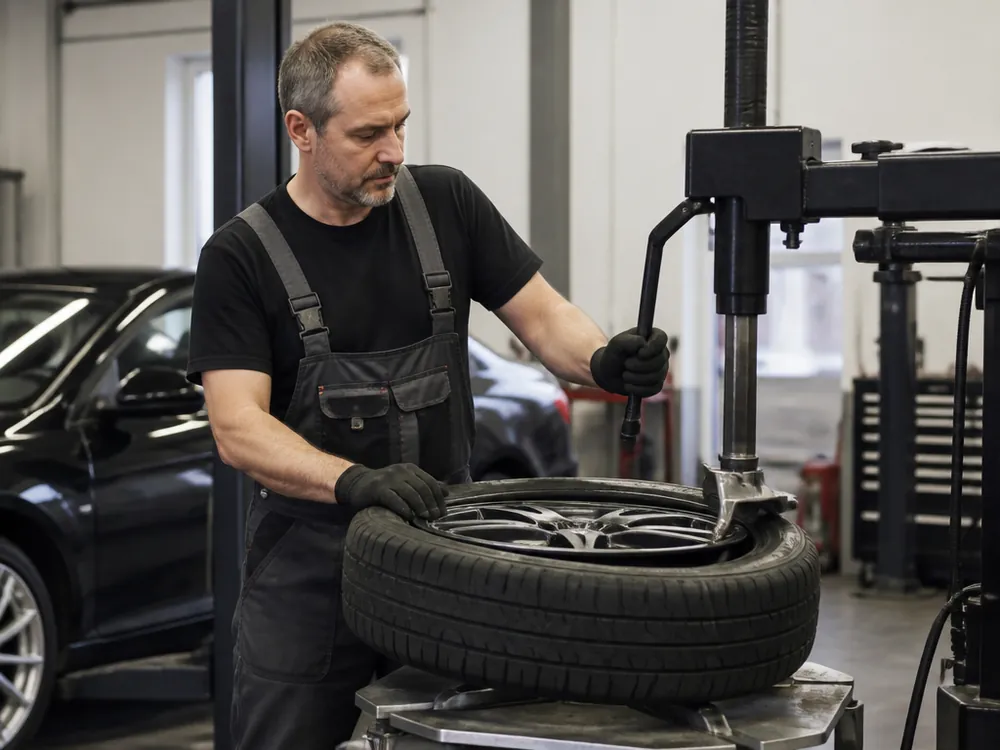
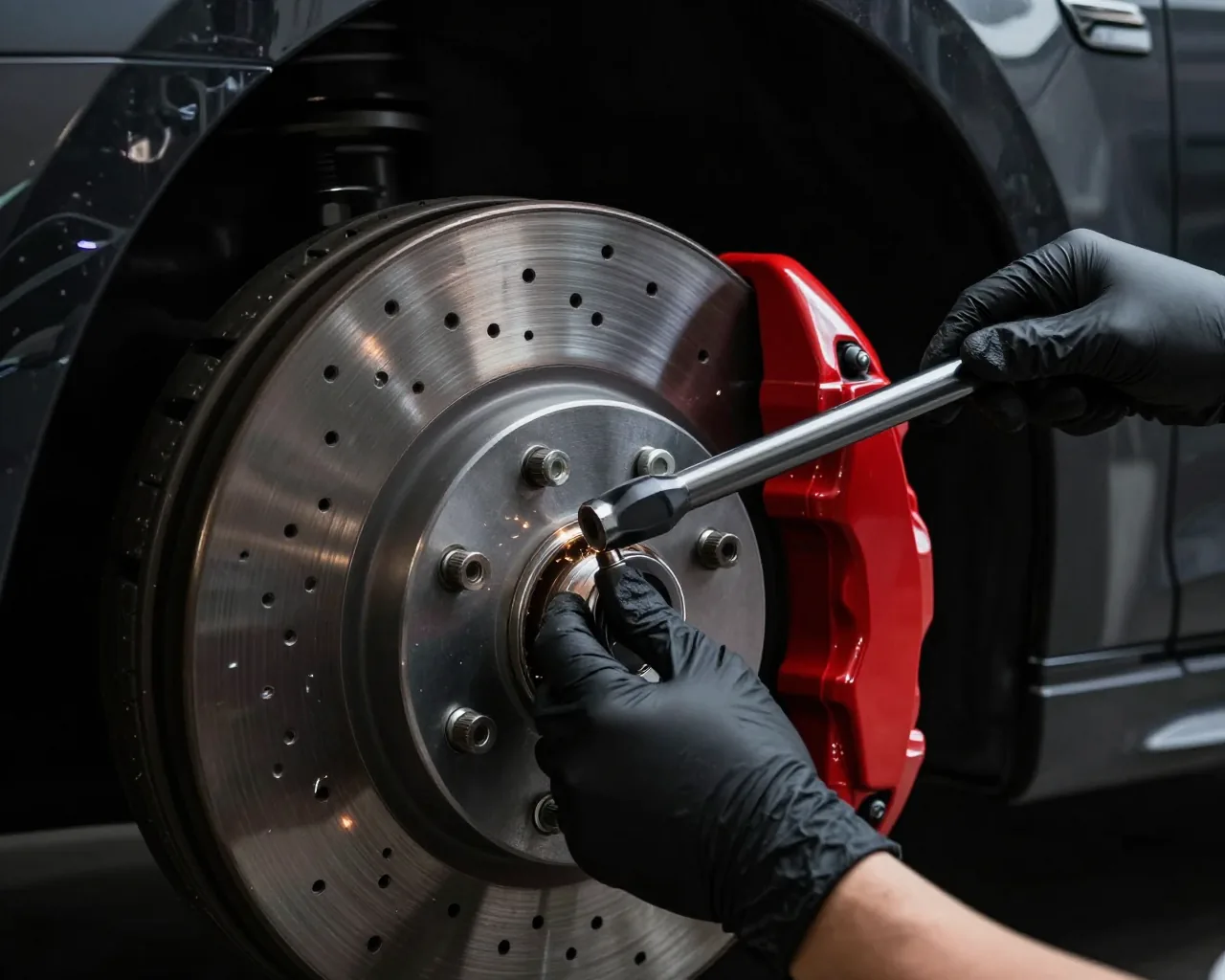
We carefully remove the tire from the rim on the tire changer without damaging the beads.
inspection and diagnostics
03
Preparation of the puncture site
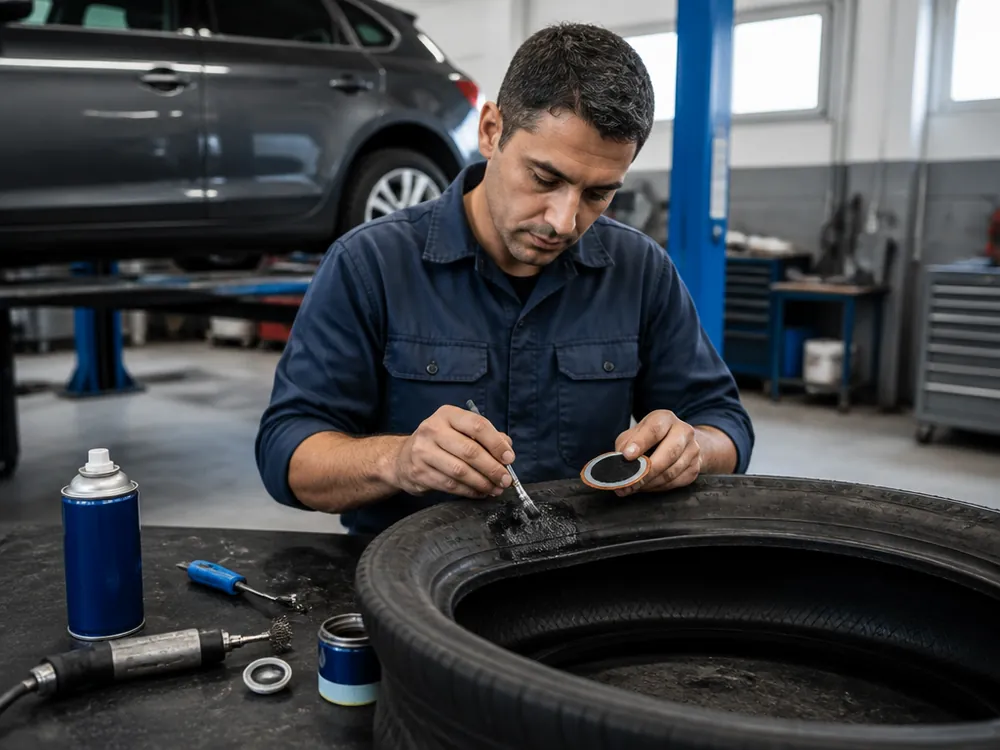
We clean and degrease the damaged area so the patch adheres firmly.
estimate before work starts
04
Plug or patch installation
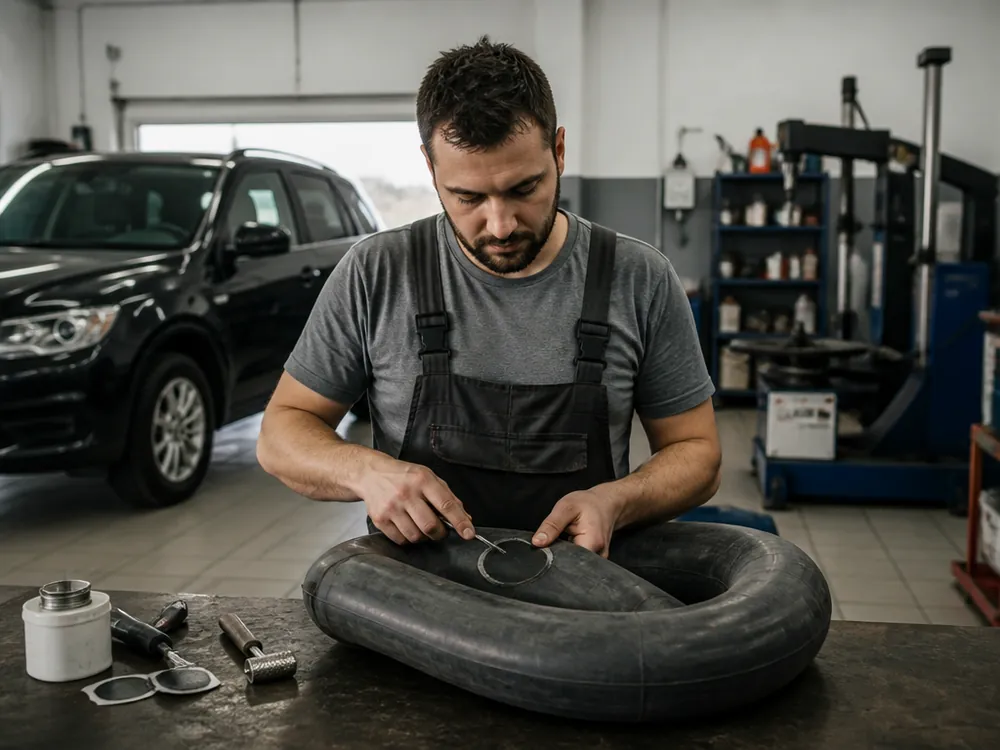
Depending on the type of puncture, we install a plug or apply a patch with sealant.
work to factory procedure
05
Reassembly and inflation
We mount the tire back, inflate to the required pressure, and check for leaks.
result check
06
Installation and check
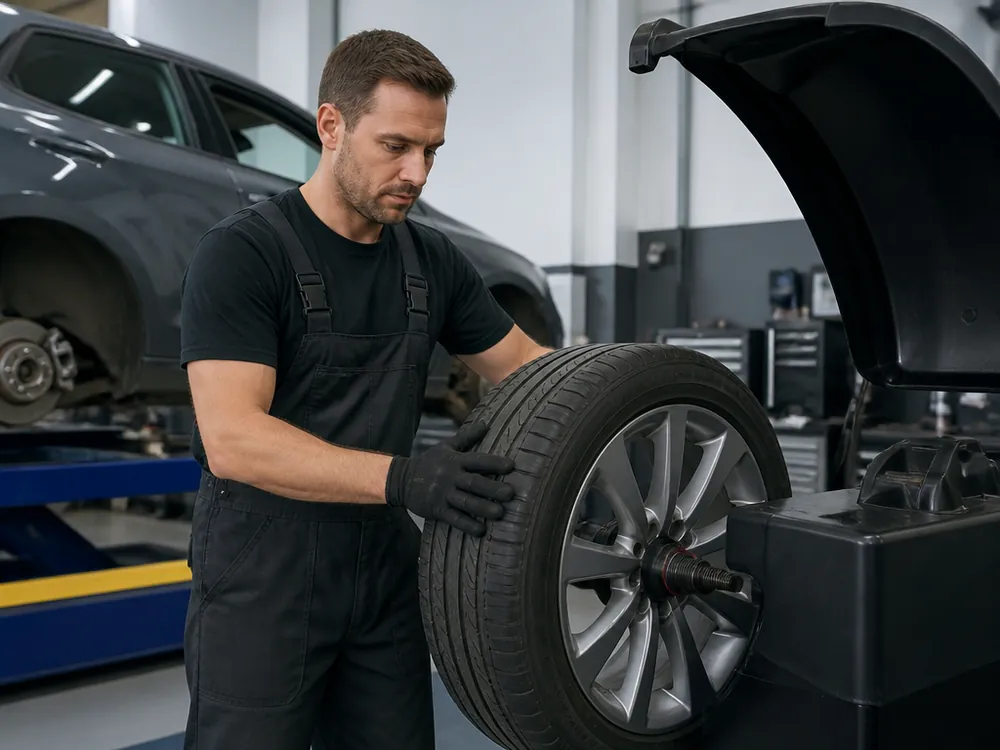
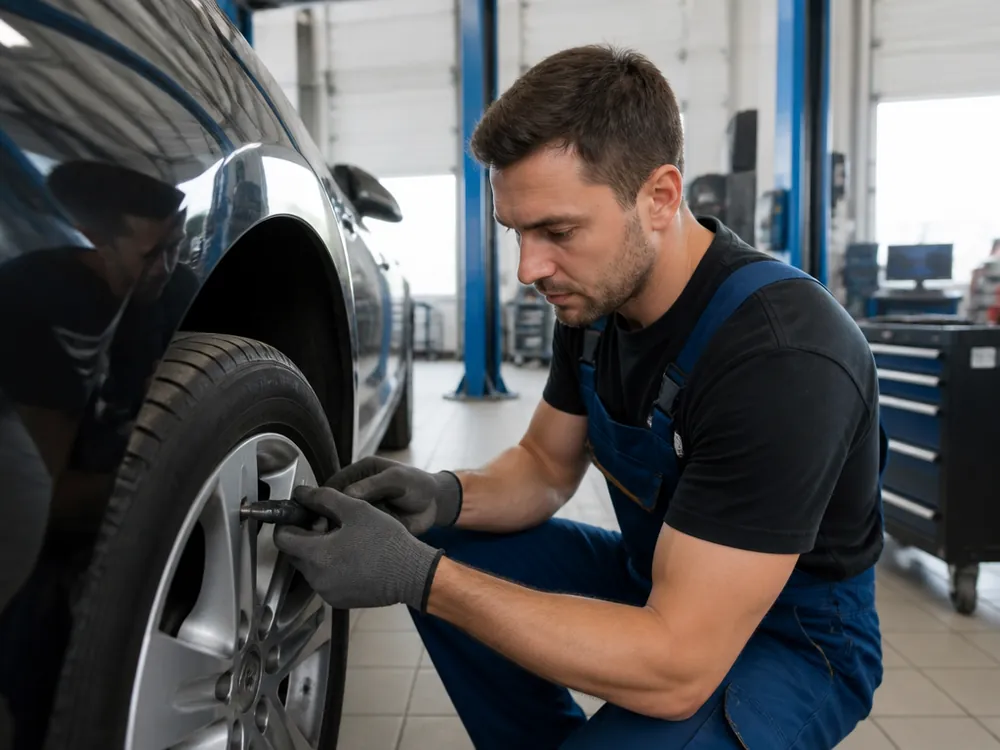
We balance the wheel to avoid vibrations and uneven tire wear. We put the wheel back, check the tightening, pressure, and provide a warranty for the repair.
CARGID repairs tire punctures in Almaty at 129 Mukagali Makataev St.: first an inspection and a written estimate, then the work. A tread puncture takes about 40 minutes while you wait, a side cut up to 5 cm takes an hour. The tire service warranty is 6 months; the term and conditions are recorded in the work order.
What kind of puncture you have and how tire repair is done
The repair method depends on where the damage is located — in the tread, the shoulder area, or the sidewall. We explain what suits each case and where the limits of restoration are.
How a plug differs from a patch and what to choose
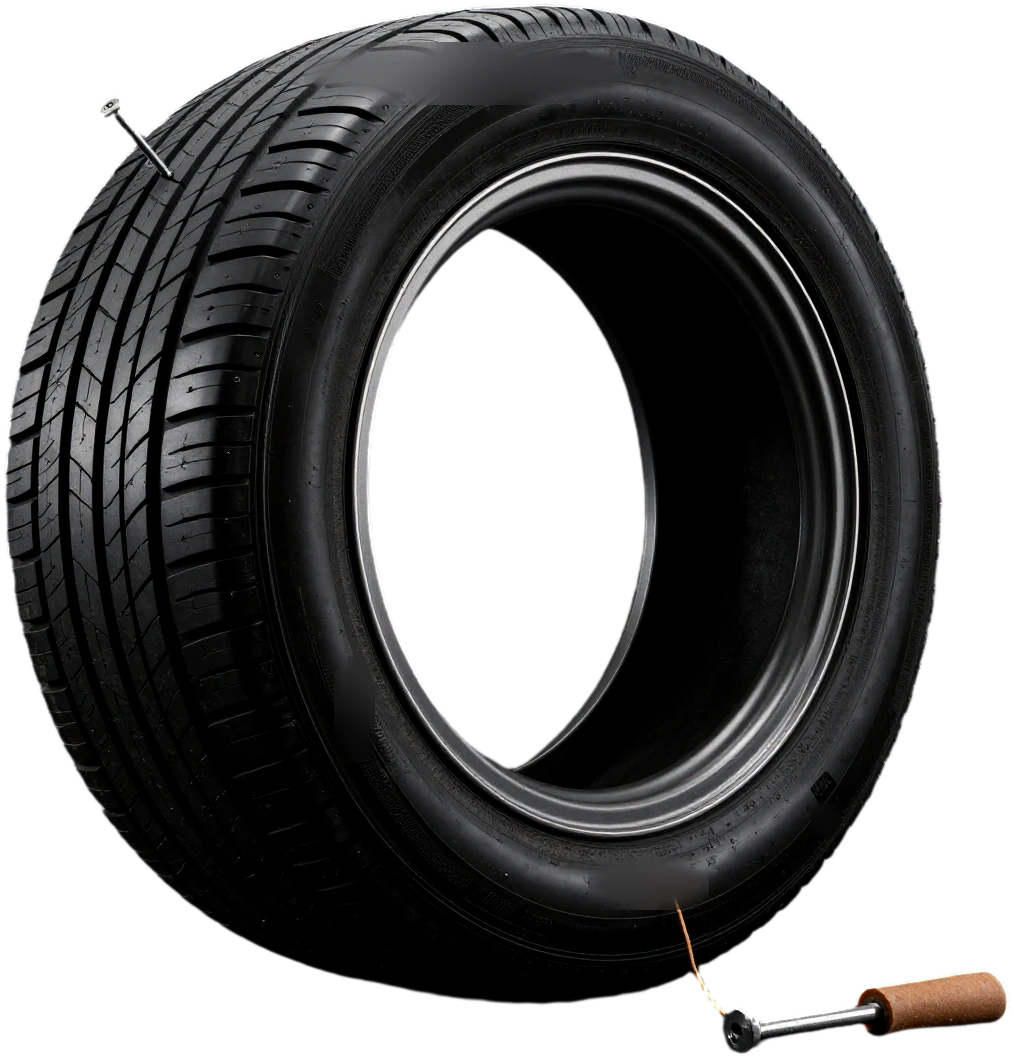
We install a 4 mm glue-coated plug without removing the tire — we widen the damaged area with an awl and degrease it; in this case we do not balance. This is a quick option for a nail in the tread: the wheel stays in place. A patch works differently — the tire is removed from the rim, the hole is cleaned, and a patch with sealant is applied, then the wheel is balanced after assembly. The shoulder area does not hold such a plug well: the rubber there flexes, and the rigid insert gradually loosens the hole. In our practice, the express method lasts long specifically on a flat tread, while at the border with the shoulder a patch from the inside is more reliable. The quick method is suitable for a nail in the tread, but if the damage is closer to the shoulder, choose a patch with sealant, otherwise it will leak again in a month. We select tire puncture repair in Almaty based on the damage zone: sometimes a plug is enough, and sometimes a patch from the inside is needed.
Side cut and the limits of repair
We stitch a side cut up to 5 cm in 3 layers — first the cord, then two layers of cord patch with heating up to 150 °C. First we restore the carcass threads, then apply the patches in layers and heat them so the rubber bonds with the cord as one piece. Such a repair withstands the load on the sidewall, which constantly flexes during turns and on uneven roads. A single layer does not last long and tears at the edge, so for a cut larger than 5 cm or a cord rupture, we honestly tell you about tire replacement instead of taking on a knowingly weak repair. The limit here is not about money but about the condition of the carcass: if the cord threads are torn and sticking out, the patch covers the hole but does not restore strength. We show the cut to the client on the removed wheel and explain exactly what we will restore.
Comparison of puncture repair methods
repair methods by damage zone
Damage zone
Method
Wheel removal
Balancing
Tread, small puncture
4 mm glue-coated plug
No
Not done
Tread, large hole
Patch from the inside + sealant
Yes
Yes
Side cut up to 5 cm
3-layer cord patch
Yes
Yes
Tube-type tire
Patch or new tube
Yes
Yes
Cut larger than 5 cm, cord rupture
Tire replacement
—
—
How long tire puncture repair takes while you wait
We do not keep the car for a day — we do the work while you wait, and it fits within clear time frames. We show you what the time consists of.
How long tread and sidewall puncture repair takes
We perform a tread puncture repair while you wait in about 40 minutes, a side cut in an hour. In the first case, we remove the wheel, install a patch with sealant and heat it in a vulcanizer up to 150 °C, then check it on a balancing machine. We stitch a side cut up to 5 cm in three layers: first the cord, then two cord patches with heating — we do not switch to a single layer, as it tears at the edge. It takes longer only because of heating the patches and balancing — these steps cannot be shortened without losing reliability, so we honestly state the time before starting work. In my opinion, it is right to announce the time before disassembling the wheel: until the tire is removed, only the fact of damage is visible, not the condition of the cord.
Is balancing needed after plug repair
When repairing with a plug without removing the tire, we do not balance — the wheel stays in place, its position does not change. The technician widens the damaged area with an awl, degreases it, and installs a 4 mm glue-coated plug, then checks the pressure. The wheel mass changes by grams from such an operation, and the fit on the hub remains the same, so no imbalance occurs. But if vibration on the steering wheel appears after a repair with removal, that is a reason to come back — we will recheck the balancing free of charge under warranty. Shaking at 80–100 km/h more often indicates a lost weight than the damage itself, and it is found in a couple of minutes on the stand: the technician checks the runout and rebalances the weights if necessary.
Warranty on tire puncture repair and what to do if it leaks again
We do not just give a warranty in words — we record the term and conditions in the work order and the completion certificate when the car is handed over. We explain what is covered and what is not, and where to go if the tire leaks again.
What warranty covers puncture repair and what it includes
We give a 6-month warranty on tire service; the term and conditions are recorded in the work order and the completion certificate when the car is handed over. The commitment covers the work performed and the parts installed — if a patch or plug fails due to our fault, we redo it free of charge. We also perform diagnostics for such a claim free of charge. There are limits: an accident after repair, third-party interference, natural wear of consumables, and a part brought by the client are not covered by the warranty. In practice, each case is decided by inspection, not by a formal denial. Before handing over the wheel for work, clarify which items are covered by the commitment — this makes it easier to avoid disputes during a repeat visit. The warranty period for tire puncture repair is the same for both a plug and a patch.
What to do if the tire leaks again after repair
Come in — we inspect warranty cases free of charge and figure out whether air is leaking at the repair site or something else is going on. First we check the pressure, the valve core and the valve stem, then we look at the patch itself. Quite often a "second puncture" turns out to be a new nail nearby or a leaking valve core — in that case there's no point redoing the seam. But if air is leaking through our work, we fix it at our own expense. The service advisor records the inspection result in the work order so you keep the history of the visit. Bring the car during shop hours, daily from 09:00 to 20:00 — with an appointment we'll take you without waiting. You can have a punctured tire re-sealed under warranty any day, the shop has no days off.
Tough cases — run-flat, TPMS, truck and 4x4 tires
Not every wheel is repaired the same way as a regular passenger tire. Here's what we do with run-flat, tire pressure sensors, truck and off-road wheels.
Run-flat and TPMS tire repair
We repair run-flat tires, and on cars with TPMS we work without removing the pressure sensor — it stays in place. The reinforced cord and low profile don't forgive haste: we put the wheel on the tire changer and break the beads carefully along the sides so the rim edge isn't damaged. We don't unscrew the sensor itself — we only remove the tire, and the sensor stays mounted on the wheel. Then we check the pressure with a gauge and compare the reading with the dashboard: if the sensor is silent, we look for the cause in the contact, not in the sensor itself. In my experience, half of all TPMS visits are not a broken sensor but an installation angle knocked off at another tire shop. Run-flat tires have a stiff sidewall with a reinforced cord, so we mount and demount on the machine strictly along the beads — otherwise the rim edge and the sensor suffer.
Truck wheels and 4x4 tires
We repair damage on truck wheels up to 12R and on off-road wheels with 4x4 tires. On trucks we work with both tube-type and tubeless seating, on off-road tires with a reinforced tread that holds a plug worse than a passenger tire: here an internal patch with heat curing is more often needed. On such tires the wheel bead often suffers, so we check bead tightness and restore it if needed — we bend the edge back and treat the rim. We replace bead rubber partially when it's partly damaged, so the customer doesn't have to buy a new wheel. In our practice, off-roaders come in from dirt roads with sand in the bead — we always clean that seam before installing a patch. We also check the truck wheel's seating ring separately: on 12R it seats with interference, and after repair it's important to make sure the wheel holds pressure not only at the tread but around the whole contour.
Can you drive in and how to book a slot at the shop
When the tire is already flat, the main thing is not to make the damage worse on the way. Here's how to get to the shop and how to book.
Can you drive on a punctured tire to the tire shop
You can't drive on a completely flat tire — at speed the sidewall sits on the rim, and instead of a puncture repair you end up with a tire replacement and a wheel straightening. When the gauge shows at least part of the norm, inflate it with a compressor and move slowly along the shoulder, watching how the steering behaves. Keep the speed within 20–30 km/h and turn on the hazard lights: on broken asphalt the sidewall gets cut through in a couple of kilometers. On smooth pavement with live pressure you can realistically make it to the shop, on a dirt road you can't. Inspect the damage: if a screw is sticking out, don't pull it before you arrive — it's what's holding the air in. In my experience, it's better to spend an extra five minutes inflating than to replace the tire later.
Booking, mobile service and shop hours
We're open daily 09:00–20:00 with no days off, by appointment — no waiting; we also offer puncture repair with a mobile visit anywhere in Almaty. The service advisor takes in the car and manages the work order through to handover. Book a convenient time and you'll get your punctured tire sealed without waiting in the general line. When the damage is in the tread and the gauge shows the norm, it's faster to come to the shop — there's a balancing machine and a vulcanizer on site, and a mobile visit doesn't always cover a sidewall cut. In an urgent scenario, keep a compressor and a spare plug kit in the car: with them you can make it to the shop if the tire is only partly flat. Of our technicians with 8–17 years of experience, the ones working the tire service are those who specialize specifically in puncture repair.
What to Know Before Fixing a Puncture
Here's the main thing to keep in mind before repairing a punctured tire: from choosing the method to checking the work after leaving the shop.
Method by damage area: a small puncture in the tread is closed with a plug, while a large hole and a sidewall cut require a patch or a cord patch with the tire removed.
Timing: a hole in the tread takes about 40 minutes, a sidewall cut about an hour, longer only because of patch heat curing and balancing.
Warranty: tire service comes with a 6-month warranty, the term and conditions are recorded in the work order and the completion certificate at handover.
Losing air again: first we check the pressure, the valve core and the valve stem rather than immediately redoing the patch — the cause is often not the patch itself.
Flat tire: you can't drive on it, the sidewall sits on the rim, and the repair turns into a tire replacement.
10
Frequently asked questions about wheel puncture repair in Almaty
Questions.
Price, timeframes, warranty, payment — 10 questions asked most often.
10
Didn't find an answer?
Message us on WhatsApp — a service advisor will reply within 5 minutes.
The price of puncture repair at our CARGID service in Almaty depends on the tire type and the complexity of the damage. For passenger cars with R13-R16 tires, repair with a plug costs from 2000 to 3000 tenge, with an internal patch — from 3500 to 5000 tenge. For SUVs and crossovers with R17-R20, the price is higher: from 3000 to 6000 tenge for a plug and from 5500 to 6000 tenge for a patch. The cost is also affected by the presence of studs (repair is more difficult) and the location of the puncture: in the tread area it's cheaper, in the shoulder area it's more expensive because more thorough sealing is required. We quote the exact amount after inspecting the tire — this is free.
On average, wheel puncture repair takes 30-60 minutes. If the puncture is small and in the tread area, we can fix it with a plug in 15-20 minutes. If the tire needs to be removed from the rim and an internal patch installed (a more reliable method), the time increases to 40-60 minutes. In complex cases, for example when the puncture is near the sidewall or there is cord damage, it may take up to 1.5 hours. We try to work quickly but with quality — we won't rush so you can be confident in safety.
Yes, we provide a warranty for all types of puncture repair. If a plug is used — the warranty is 6 months. If repair is done with an internal patch (with patch and sealant applied) — the warranty is 6 months. The warranty covers the airtightness of the puncture site: if within this period air leaks appear at the repair site, we will fix the problem free of charge. It is important to understand that the warranty does not apply to damage caused by further operation (for example, if you run over a sharp object in the same place). A warranty case is recorded in the receipt.
An appointment is not required, but it is desirable, especially in the evening and on weekends when there are many clients. You can come to us without an appointment — we will do the repair on a first-come, first-served basis, usually the wait is no more than 15-20 minutes. If you want to save time, call us 30-40 minutes in advance and book a convenient time. You can also book through our website or messengers. We work from 9:00 to 20:00 without breaks and days off. Address: Almaty, Mukagali Makataev St., 129.
Technically you can bring your own plugs, patches, or sealant, but we do not recommend it. Reasons: first, we cannot guarantee the quality of repair when using non-original materials — the service life and reliability of our materials are confirmed by tests. Second, if you bring your own parts, we do not provide a warranty for the result, as we are not responsible for their quality. Our repair price already includes all consumables. If you insist, we can perform the work with your materials, but we will warn about reduced warranty. It is better to trust the choice to professionals — it is safer.
If the tire loses air again after our repair, first check the pressure and inflate the tire. If the leak continues, come to us — we will perform diagnostics free of charge: inspect the repair site, check airtightness with soapy water and pressure. If the problem is with our repair (for example, the plug came out or the patch came off), we will fix it free of charge under warranty. If it turns out there is another puncture or damage, we will inform you and offer options. It is important not to drive on a flat tire — this can damage the tire.
A plug is a special rubber cord that is inserted into the puncture without removing the tire from the rim. Pros: fast (15-20 minutes), cheap (from 2000 tenge). Cons: the plug seals the puncture only from the inside, it is less reliable for large damage (more than 5 mm), and its service life is shorter. A patch is a rubber patch applied from the inside of the tire after removing it from the rim. Pros: more airtight and reliable, suitable for punctures up to 8 mm, longer service life. Cons: longer (40-60 minutes), more expensive (from 3500 tenge). For small punctures (nail, screw) in the tread, a plug is sufficient. If the puncture is large or you plan long trips, it is better to choose a patch. We recommend a patch for most cases.
After puncture repair, follow a few simple rules: 1) During the first 2-3 hours, avoid intensive braking and sharp maneuvers so the materials set well. 2) During the first 100 km, check the pressure in the repaired tire — it may drop slightly, this is normal, inflate to the norm. 3) Do not exceed 140 km/h during the first day. 4) After repair with a plug, try not to overload this wheel (for example, off-road). Overall, the repair does not impose serious restrictions, and you can operate the car as usual. If unusual vibrations or knocks appear — contact us.
Yes, we accept cash, bank cards (Visa, Mastercard, Halyk Bank, Kaspi Gold), as well as transfers to mobile banking (Kaspi, Halyk). Payment is made after the work is completed — first you accept the result, then you pay. For legal entities, payment by bank transfer with closing documents is possible. We also have a bonus program: for each repair you receive bonuses that can be spent on future services. We value transparency: the final cost is fixed before work begins, and it will not change during the process.
Sometimes the puncture is in the tire sidewall, or the damage is too large (more than 8 mm), or there is cord rupture. In such cases, repair is unsafe — the tire may burst while driving. We honestly inform you about this and do not take on the work. In this situation, we offer alternatives: 1) Use a spare tire, if available. 2) Buy a new tire — we have partners where you can purchase a tire with a 5% discount for CARGID clients. 3) If the tire is almost new, you can try installing a tube (if the rim allows), but this is a temporary solution. In any case, we will give advice and help you choose a safe option.
11
What clients say after a puncture repair
Reviews.
We collect ratings on the website and on maps — we hide nothing.
4.8
872 reviews on the website 1 900+ ratings in total
Aigerim
Tucson
I came in with a puncture on a Hyundai Tucson, thought I'd have to buy a new tire. The guys looked at it and said it could be repaired. They did it quickly, in about an hour and a half, and charged 3500 tenge. Very pleased, thank you!
Dmitry
I caught a nail on the highway, the tire went flat. Came here on a recommendation. They removed it, patched it, balanced it. The price was 5000, not expensive. A month later it's holding air perfectly.
Erzhan
Sportage
The tire on my Kia Sportage was slowly losing air. I thought it was nothing, but it turned out to be a cut. They did hot vulcanization, 9800 tenge. I've been driving for a week now, pressure is normal.
Madina
Toyota Camry
I came in with a puncture on a Toyota Camry. They charged 4500 tenge and did it in 40 minutes. Pleasantly surprised by the service, they explained everything and showed me the puncture spot. I recommend!
Alexander
I hit a pothole, the tire got deformed. At the service they said the tire couldn't be restored, but they patched the puncture just in case. They found what was there. It cost 3000. Fine.
Gulmira
I looked for a long time for a place that could patch a sidewall cut. CARGID took it on and did it neatly. The seam is almost invisible. I paid 7000, the result is excellent.
Sergey
I caught a screw on my Nissan Qashqai. Stopped by CARGID, they quickly pulled it out and installed a plug. All for 2000 tenge. Cheap and cheerful.
Aliya
The tire on my Lexus RX was losing air, the cause couldn't be found. It turned out to be a puncture inside, almost invisible. The guys found it and fixed it. 5500 tenge, half an hour. Thanks for your attentiveness!
Vladimir
The wheels are non-standard, low profile. I hit a pothole, got a puncture and a bulge. They did the repair, but warned that the bulge might remain. It did, but it's drivable. Price 4000.