






Tire Pressure Sensor Repair in Almaty by CARGID with a Warranty

CARGID repairs tire pressure sensors in Almaty without replacing the whole unit: first computer diagnostics and a multimeter check of the circuit, then a written estimate, and repair only after you approve. We clean the contacts, replace the membrane without soldering, the O-rings and valves, and if needed install a new sensor with reprogramming. 6-month warranty on the work order.
Why the TPMS Light Is On and What Actually Breaks in the Sensor
A TPMS light doesn't always mean "replace the sensor." More often the culprit is the contacts, the wiring or a dead battery, while the unit itself is fine. Here's what actually fails in different types of sensors and how to tell one from another before replacing anything.
Why the TPMS Light Is On Even Though the Tires Are Inflated
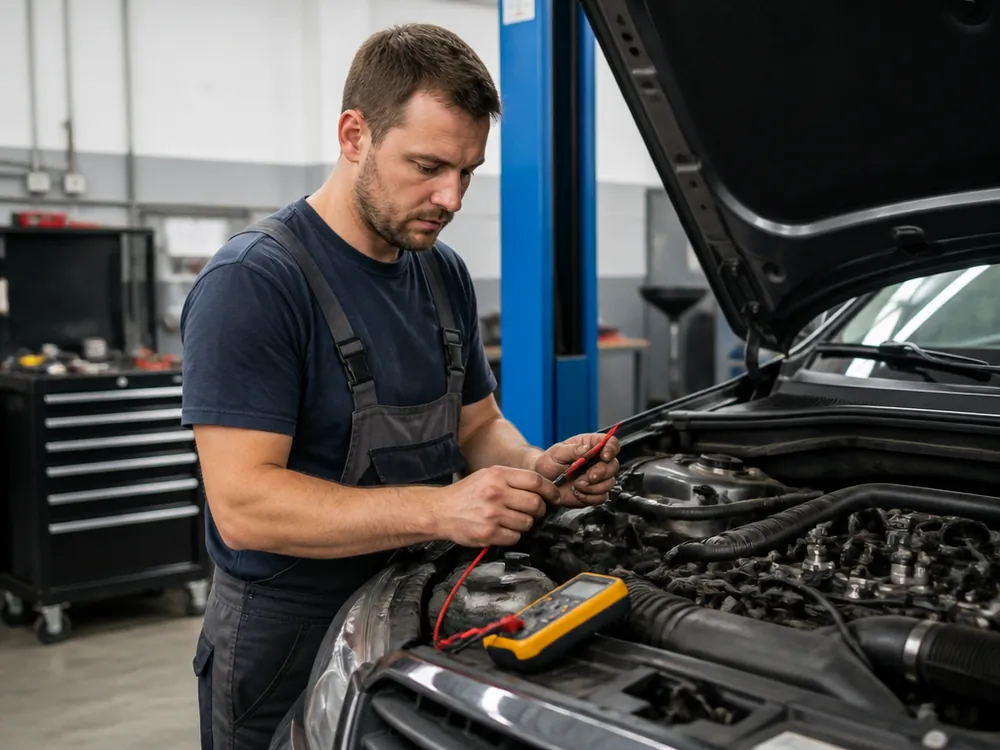
At our shop, a TPMS error with normal pressure most often turns out to be corroded contacts, a break in the wiring or a dead sensor battery — not a failed unit. Each tire has a sealed sensor with a battery that lasts a few years, and when the charge drops, the control module stops getting a signal — so the light comes on with the tire fully inflated. The second common culprit is oxidized contacts on the valve stem after road chemicals and moisture, and the third is chafed wiring in the wheel arch, where the harness flexes over bumps. We start tire pressure sensor repair by checking the circuit: our technician tests it with a meter and measures insulation resistance, so he can see exactly where the break is under the sheathing instead of just "something's shorting somewhere." Before replacing a sensor, it's worth running this multimeter check — it's faster and cheaper than replacing a working unit.
What Breaks in Different Types of Pressure Sensors
| Sensor type | What fails most often | What we do |
|---|---|---|
| Tire (TPMS) | battery, contacts, sealing | cleaning, replacement with reprogramming |
| Oil (mechanical) | membrane, threads | membrane replacement, thread repair |
| Fuel | valve, seal | replacement with adaptation |
| A/C | valve | valve replacement |
| Air (intake) | contamination, contacts | cleaning, replacement |
| Power steering | sealing | replacement |
When a Pressure Sensor Is Repaired and When It's Replaced
Restoration isn't always possible, but replacing the whole part is needed less often than it seems. Here's how we reach a verdict and why you see the estimate before any work starts.
Can a Sensor Be Repaired or Is It Always Replaced as a Whole
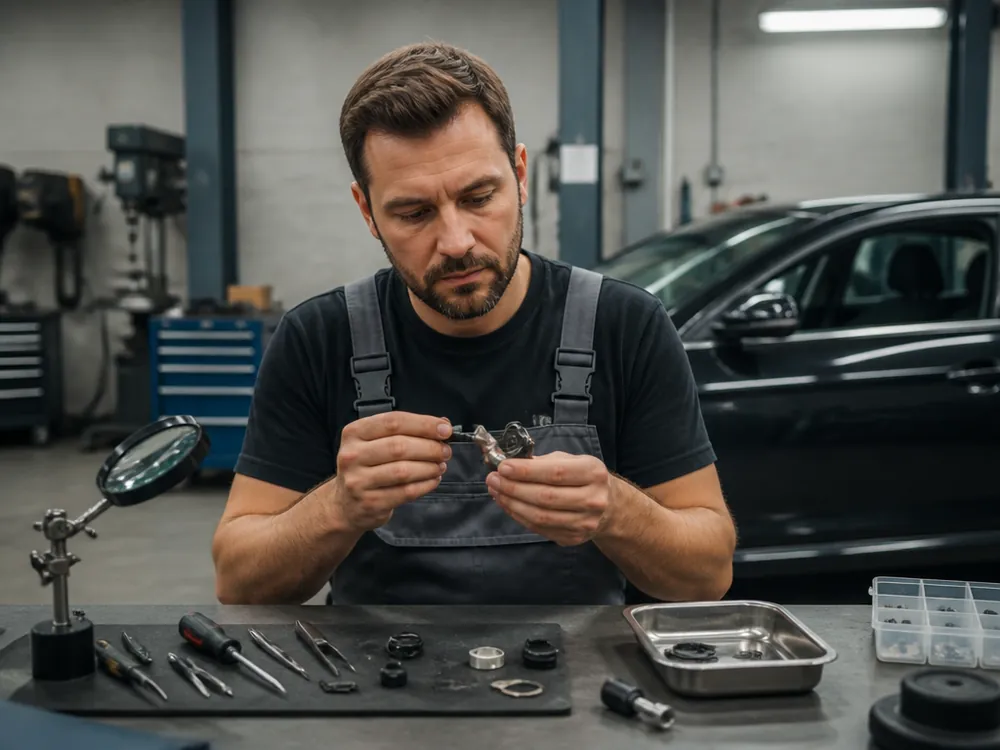
We restore a sensor if the board and housing are still good and the fault is in the contacts, wiring, membrane or O-ring — replacing the whole part is needed when the electronics or battery can no longer be restored. Our list of services includes restoring the wiring according to the wiring diagram, installing a new membrane without soldering the board, cleaning the contacts and replacing the O-ring. We start tire pressure sensor repair in Almaty with a check, not a replacement: a sensor that throws an error but still works most often comes back to life after cleaning the contacts and fitting a new ring — the board itself stays original. We make the decision based on the test results, not the symptom. First computer diagnostics of the pressure system and a visual inspection, then a written estimate, and we start work only with your approval — so you don't pay for an unnecessary replacement.
How We Choose Between Restoration and Replacement
- Diagnostics: a scanner and multimeter show exactly where the signal is lost — in the sensor itself or in the wiring.
- Board condition: working electronics — we restore; burnt out — we install a new part.
- Sealing: the housing leaks at the seam — we replace the membrane or O-ring without soldering.
- Battery: a dead cell in a sealed housing — replacement only, the power can't be restored.
- Estimate: we show the scope of work and give you a choice before work starts, with no add-ons pushed on you.
- Warranty: if the error remains after restoration, we do the warranty diagnostics free of charge and see it through to a result.
Timelines, Warranty and What the Work Order Covers
Most sensor work is done within one shift. Below are the actual timelines by type of work and the warranty coverage written into the work order.
How Long Does Pressure Sensor Repair Take
| Work | Timeline | What we check afterward |
|---|---|---|
| Contact cleaning | within one shift | readings on the scanner |
| O-ring replacement | within one shift | sealing |
| Wiring repair | within one shift | circuit with a multimeter |
| A/C valve | within one shift | system operation |
| Replacement with reprogramming | within one shift | test drive |
What Warranty You Get on the Repair
We give a 6-month warranty on sensor work and record the term and conditions in the work order and the completion certificate when the car is handed over. The warranty covers the work performed and the parts installed. It does not cover accidents after repair, tampering by third parties, or a part the customer supplied. The car is received by the service advisor, who manages the work order through to handover, so the warranty terms don't get lost between shifts. For a warranty case, diagnostics are free — bring the car in and we'll sort it out with no inspection fee. The warranty does not cover a part the customer supplied — we record this condition in the work order in advance. Before handover, ask the advisor which items are covered by the warranty in your case — this is put in writing.
Premium cars, wiring and reprogramming
Restoring expensive sensors on premium cars is more cost-effective than replacing the whole unit. Here's how we work with electronics and wiring and what we do after installing a new part so the control unit accepts it.
Can expensive sensors on premium cars really be restored
Yes, on premium cars we restore sensors that the dealer replaces as a whole: we install a new membrane without soldering, without touching the board, and we fix the wiring according to the connection diagram. We replace the membrane with a housing puller — we take it apart without striking the electronics and without the risk of stripping the thread. We test the wiring with a multimeter: we measure insulation resistance and find a break under the braid, not just the spot where it shorts. Restoration with membrane replacement covers special cases where the housing is intact but the unit leaks at the seam. On premium models the wiring and seal often suffer while the board itself stays alive — this shows in the circuit test results. We separately check the fit tightness after assembly: pressure testing shows whether the unit holds pressure under load, not just at idle. We install the membrane with a housing puller, so the sensor holds pressure again and doesn't leak at the seam — soldering doesn't overheat the board.
Does a new TPMS sensor need to be reprogrammed
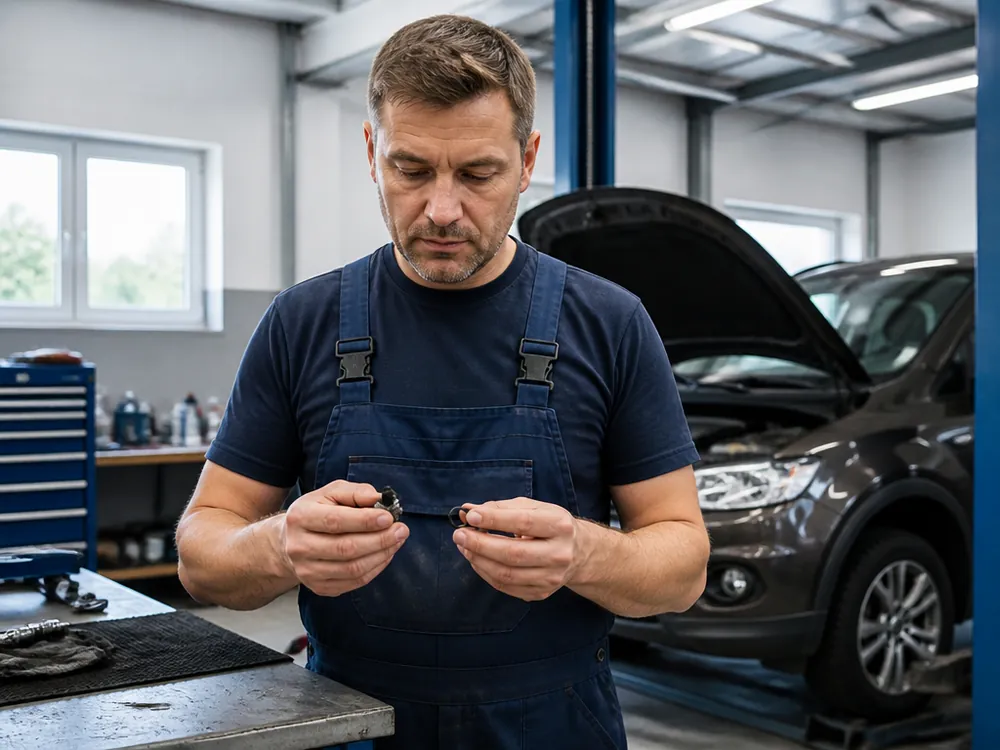
TPMS sensor replacement at our shop comes with reprogramming so the system sees it, and we install the fuel pressure sensor with adaptation — this is part of the job, not a separate customer request. We register the new unit with a dealer scanner: the shop has such devices for 40+ makes, so the control unit accepts both OEM and aftermarket parts the owner brings. Without registration, an aftermarket sensor stays a stranger to the car: the system doesn't see it and keeps signaling low pressure even though the tire is inflated. The scanner writes the ID into the control unit's memory and binds the unit to a specific wheel. Before handover we do a test drive — we make sure the readings match the pressure gauge. An aftermarket sensor works correctly if it's registered with a dealer scanner for the specific make — without this the control unit won't accept it.
How the visit goes and what you get in hand
From intake to handover, one service advisor manages the car — they hold the work order and are responsible for every stage. Below is the order of steps and the documents you keep.
What diagnostics includes and whether you can bring your own sensors
Diagnostics includes a computer check of the pressure system, a visual inspection and a check of the contacts, and the owner chooses the parts — OEM, aftermarket or brought in themselves. First we test the circuit with a multimeter and measure insulation resistance: this reveals a break under the braid, not a vague "something's shorting somewhere." Dealer scanners support 40+ makes, so we read the fault by the specific wheel, not as a generic line. Work starts after a written estimate and your approval — the rule applies to any operation at CARGID. When a customer brings a part, the warranty doesn't cover it, but we still check and record the installation and tightness in the work order, and we show the old unit at handover. If the sensor is your own, before installing we match the part number and frequency with the control unit — a mismatch gives the same TPMS error as a breakdown.
What you get in hand after the work
- Test drive: before handover we check the pressure system in motion, not just on the lift in the shop.
- Old parts: we show them and give them to you — they show exactly which part was removed from the wheel.
- Photo report: we capture the key stages; the photos show what was done with the sensor and wiring.
- Certificate and work order: the warranty term and conditions are written on paper at handover, and you keep a copy.
- Warranty diagnostics: if the case is recognized as a warranty one, the repeat inspection is free for the owner.
What to Know Before TPMS Repair
Here's the key stuff to keep in mind before your diagnostic visit: what factors decide whether the unit can be restored, how long it takes, and which cases the warranty covers.
- TPMS error at normal pressure: most often it's the contacts, wiring or a dead battery, not a failure of the unit itself.
- Restoration instead of replacement: bringing the part back to life is realistic while the board and housing are intact; burnt electronics or a dead power source require a new one.
- Timing: most work fits into one shift, including the tightness check after assembly.
- Warranty: we give 6 months on the work, and we record the term and conditions in the work order and certificate at handover.
- Programming: a new TPMS part is installed with reprogramming for the specific make, and the fuel sensor with adaptation.