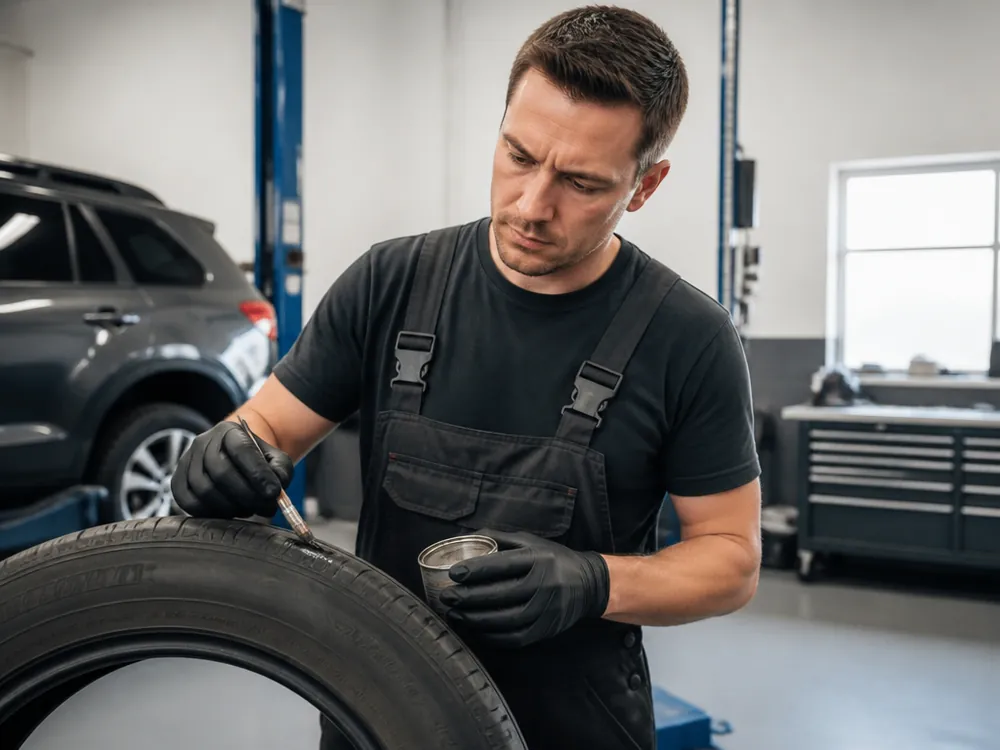
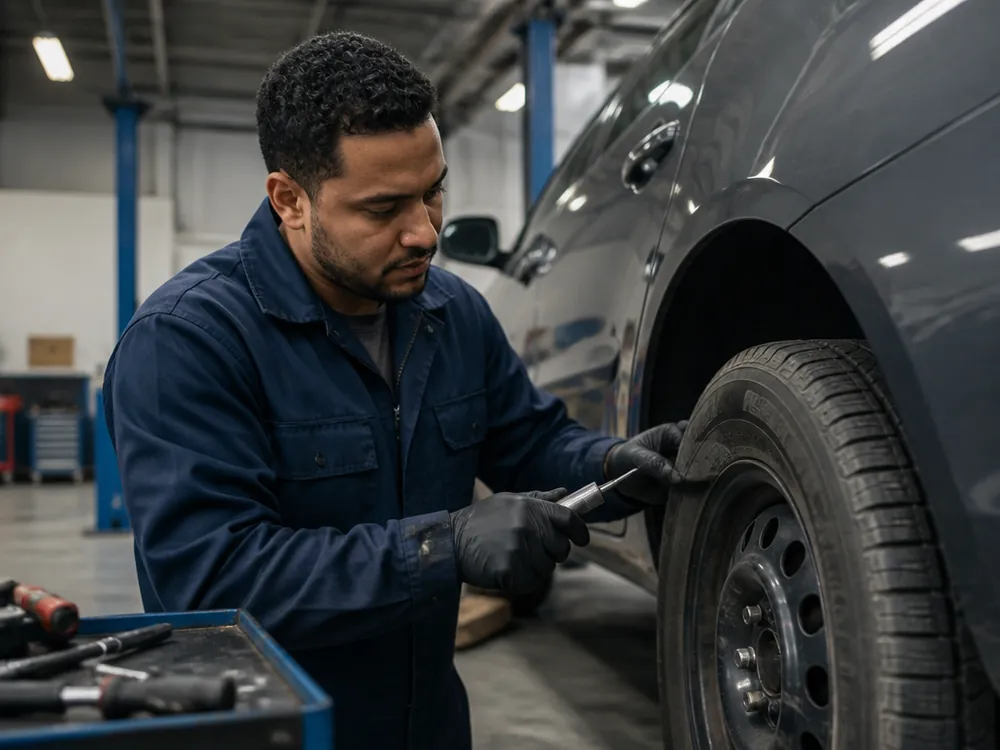
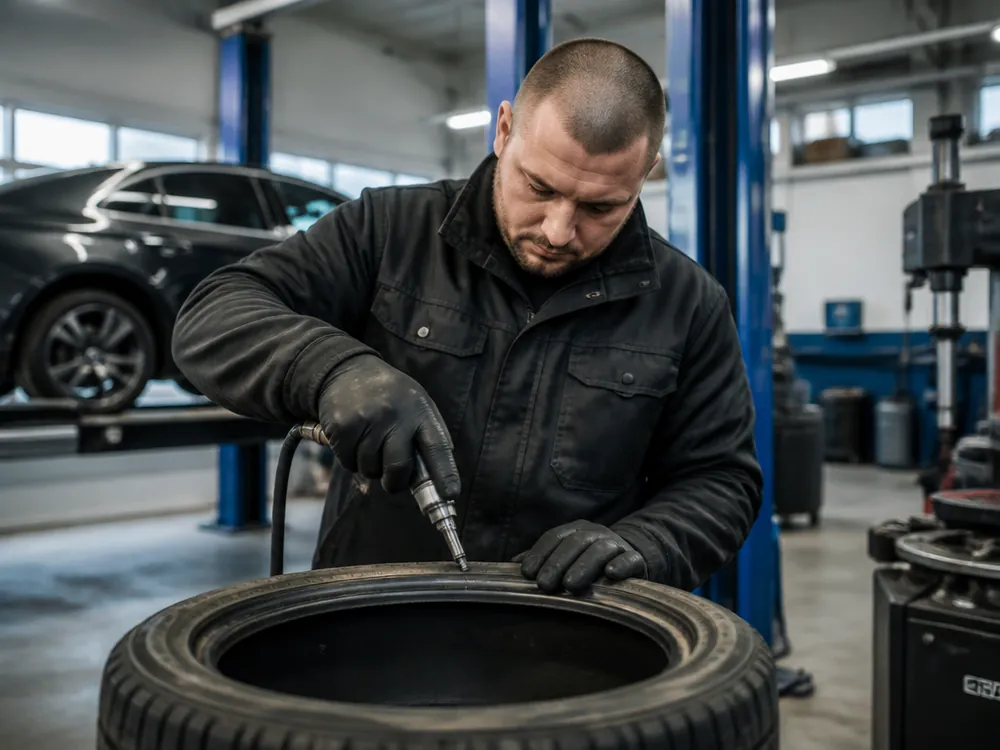
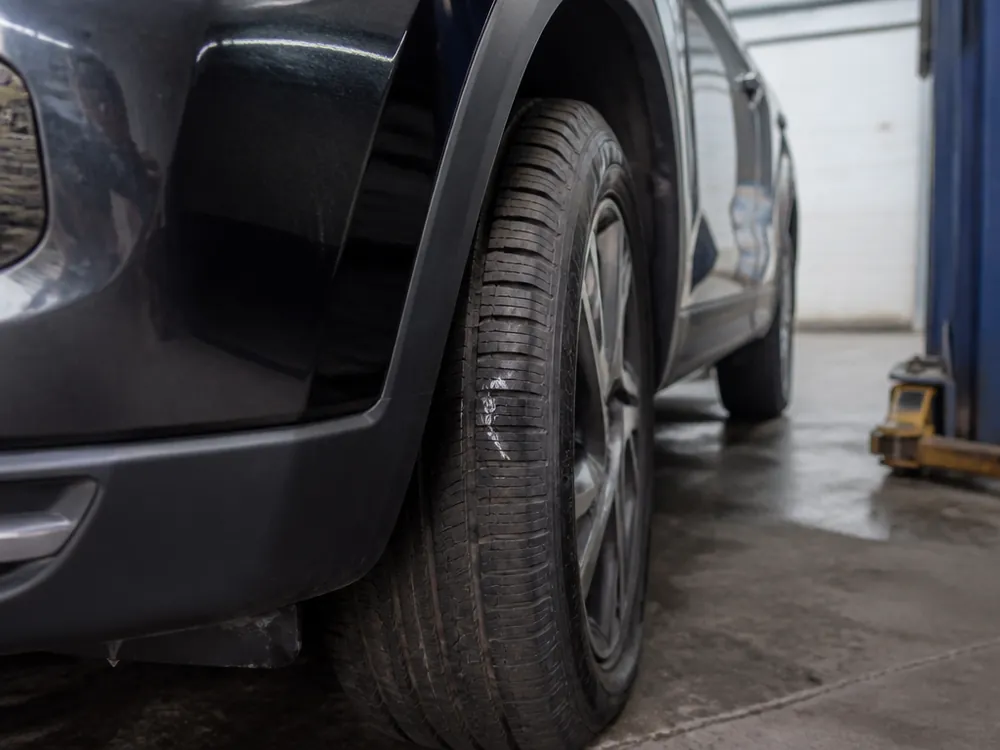
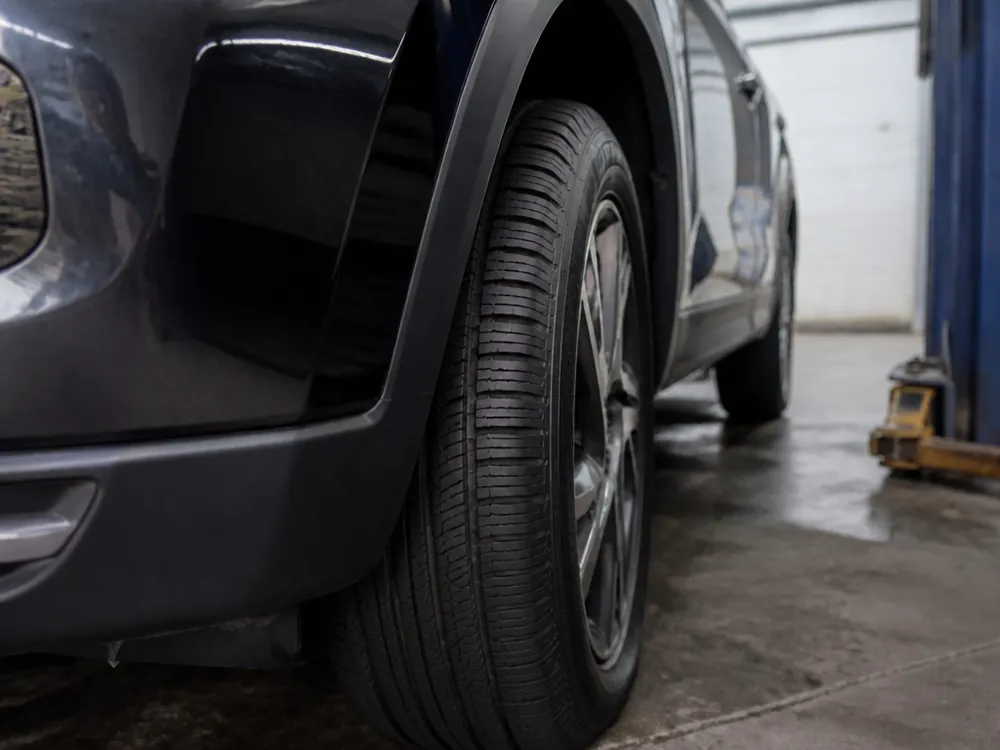
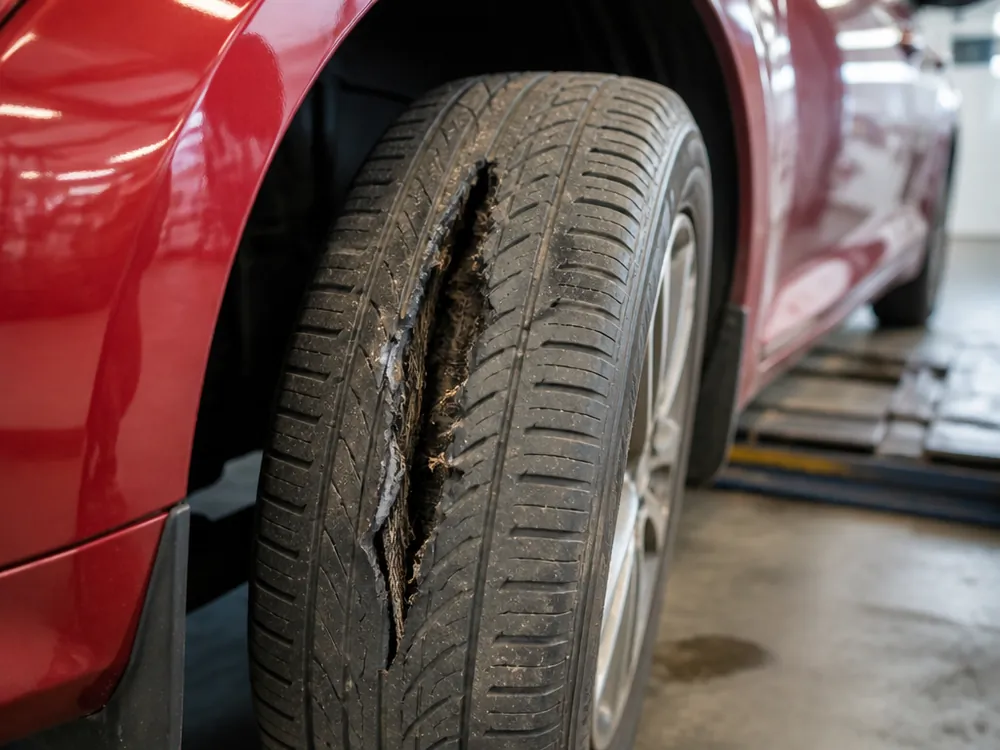
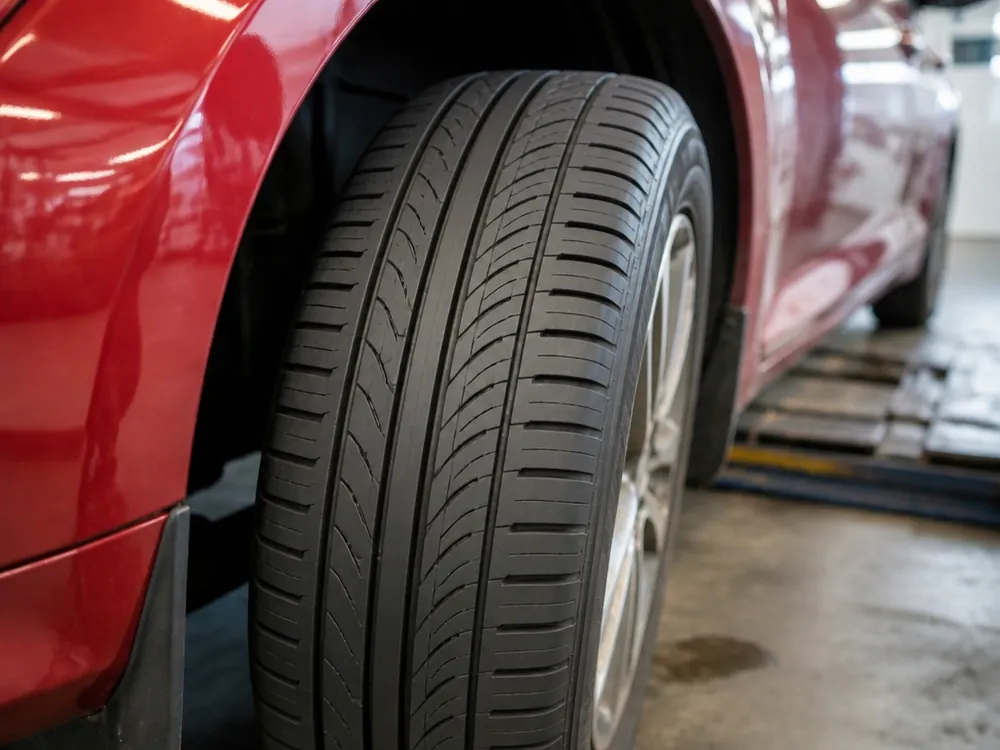
The difference between the methods is not in the name, but in how the rubber bonds with the tire. This determines whether the patch will fall off in a month or last the entire life of the wheel.
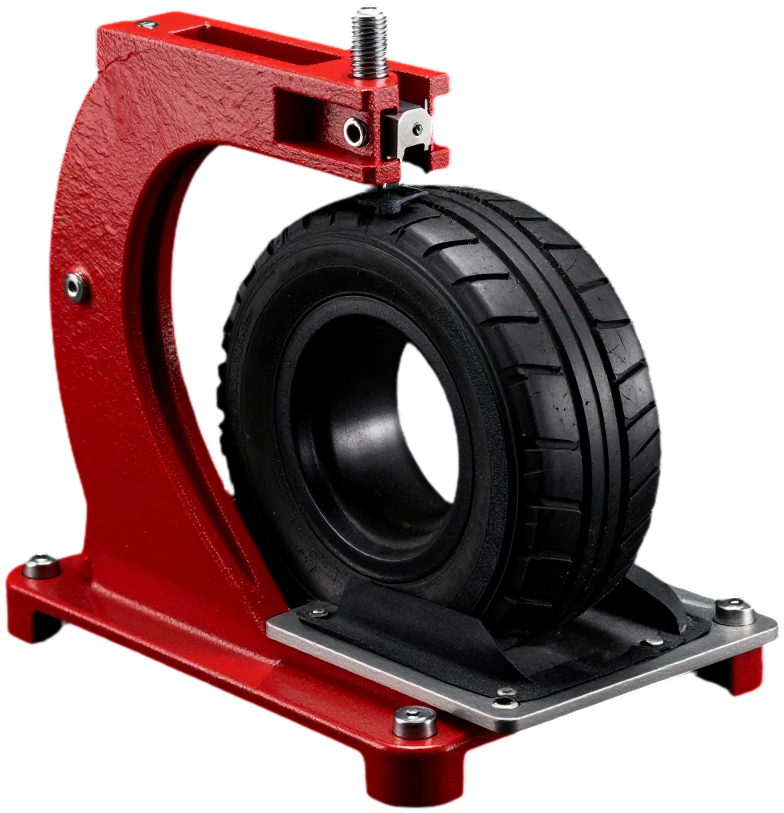
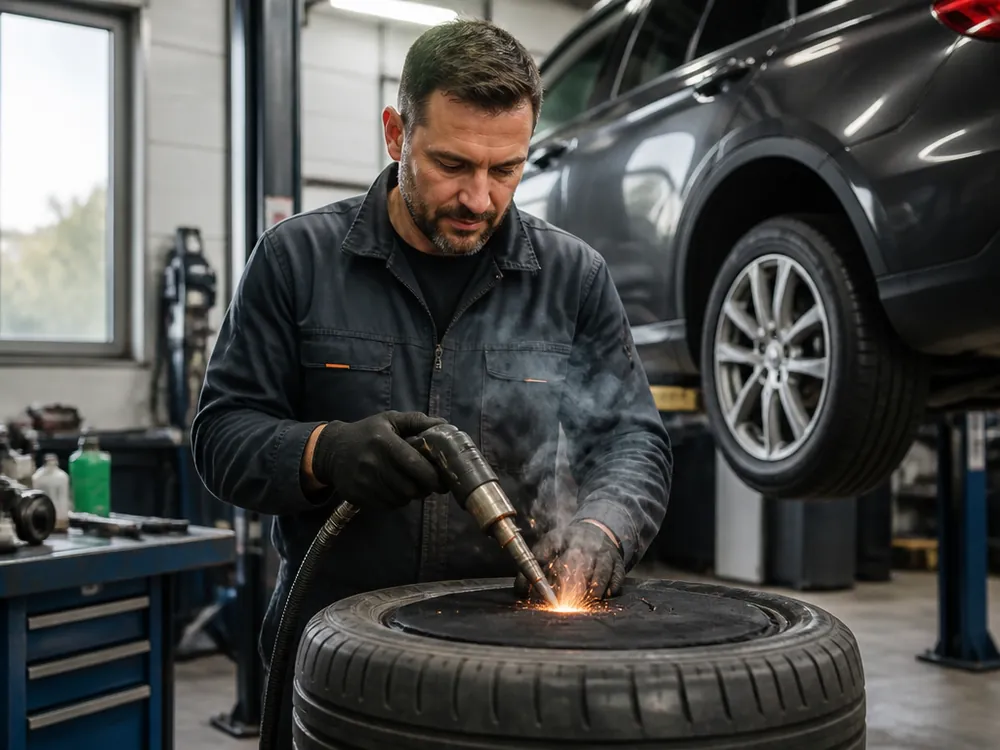
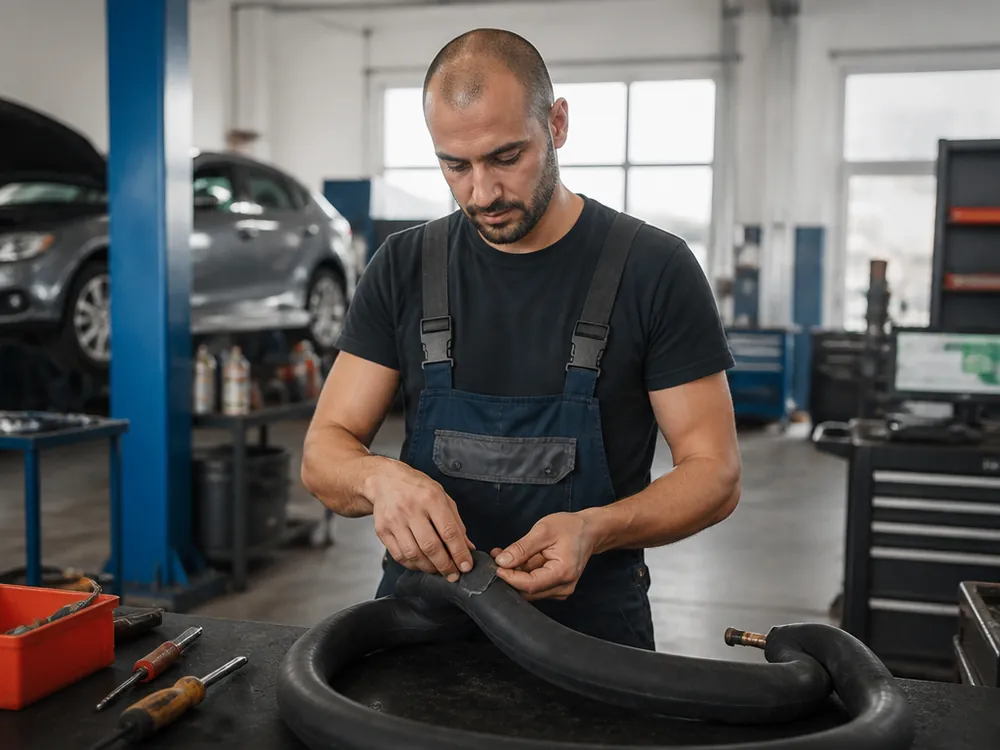
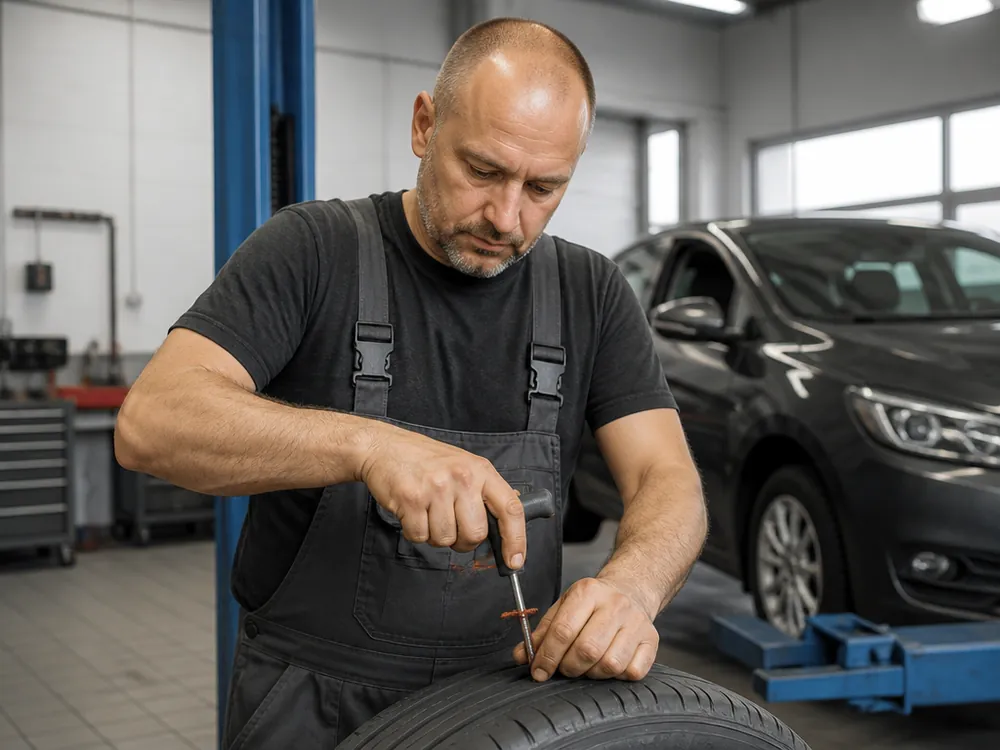
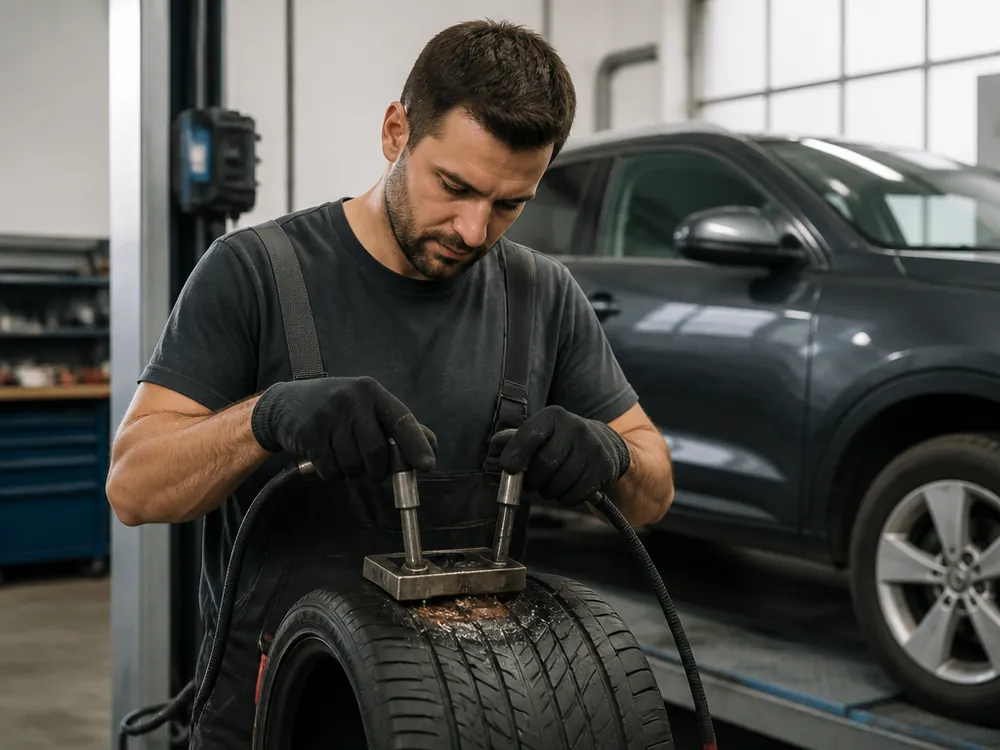
We perform hot tire vulcanization in Almaty at 145 °C under pressure — raw rubber flows into the pores of the tire and bonds with it into a single whole, rather than just being glued on top. The vulcanizer maintains the temperature and pressure for the set time, so the patch becomes part of the tire itself: it has the same elasticity and the same expansion coefficient when heated on the highway. Cold repair works differently — a plug or glue bonds through adhesion on the surface, without melting into the rubber structure. On a flat puncture of a tubeless tire, this method holds, but on a tread cut it more often peels off under load, not over time. A plug on a tread cut holds worse than a hot insert — especially on wheels that carry loads or frequently travel on the highway.
What happens if the patch is underheated
If underheated, the patch peels off after about a month — the rubber doesn't have time to bond with the tire and holds only on glue. At first it's unnoticeable: the tire pressure drops slowly, and the driver attributes it to the season and temperature. Then the patch starts leaking at the edge, and at speed the tire heats up more at the peeling point. That's why we don't heat by eye: the 145 °C under pressure mode is set by the vulcanizer's gauge, not by the technician's feel, otherwise the whole repair would have to be redone. On tread cuts, we add a second layer: the first holds pressure, the second takes the load. A single layer on a cut leads to a repeat rupture — and then the tire can no longer be repaired, even if the cord is intact.
What we repair and what we honestly send for replacement
The line between repair and replacement is drawn by the type and size of the damage, not by the technician's desire to sell a new tire. We explain which damages we fix with hot vulcanization and where it's more honest to replace right away.
Which damages we fix with hot vulcanization
types of damage and repair times| Damage | What we do | Time |
|---|
| Tube puncture | patch | 40 minutes |
|---|
| Tubeless puncture | plug | 40 minutes |
|---|
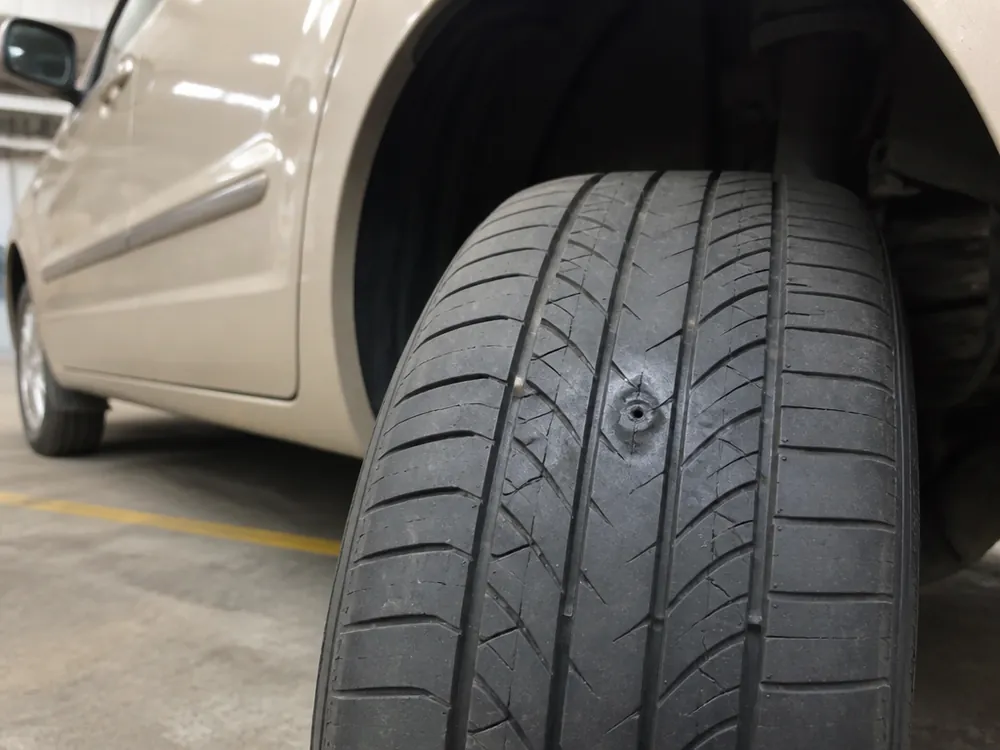
| Sidewall cut up to 3 cm | hot tire vulcanization | up to 3 hours |
|---|
| Tread cut up to 3 cm | two-layer patch | up to 3 hours |
|---|
| Sidewall bulge | repair with reinforcement | up to 3 hours |
|---|
| Bead ring, bead rupture | bead repair | up to 3 hours |
|---|
| Complex damage | reinforcing mesh | up to 3 hours |
|---|
When a tire cannot be repaired
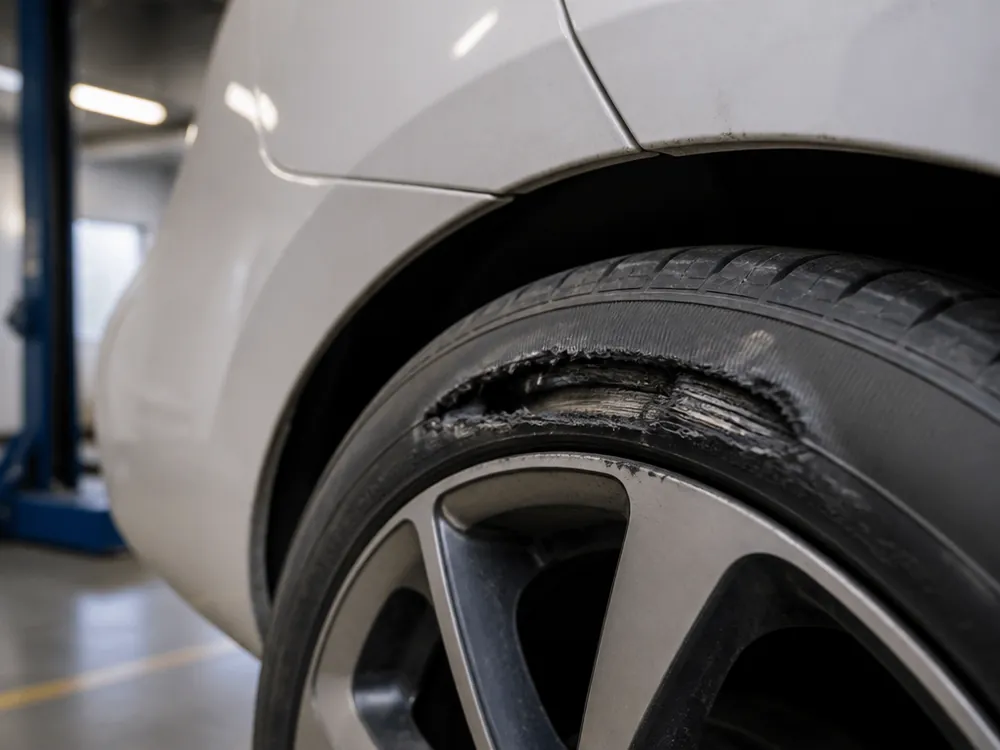
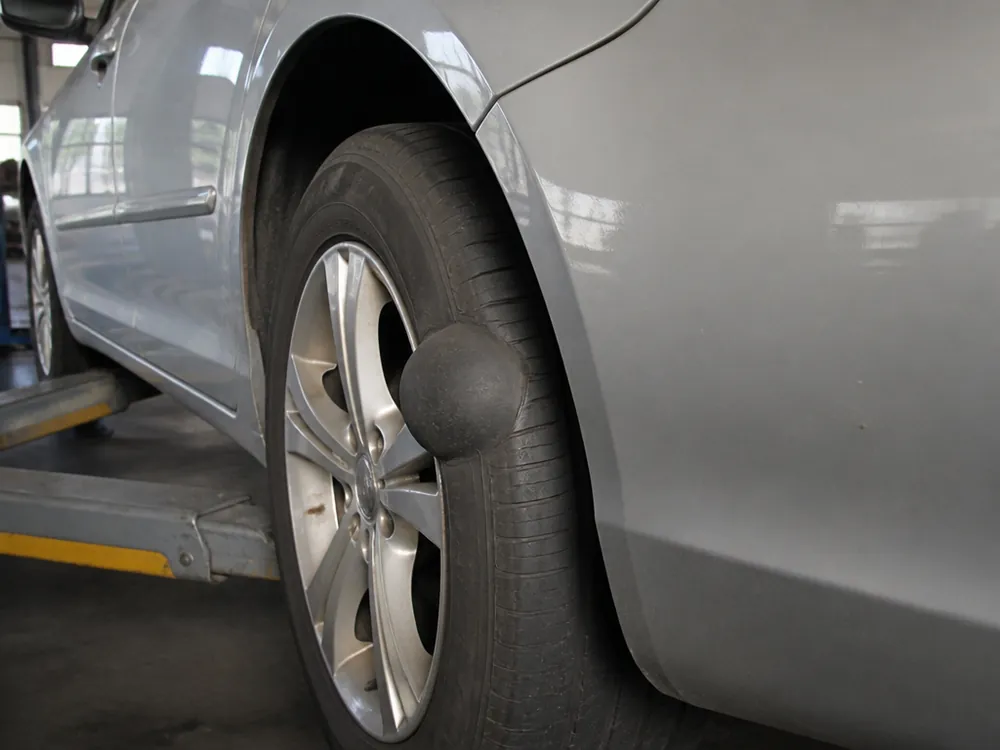
A tire cannot be saved when the carcass cord is damaged, the cut involves broken threads, or a bulge appears due to delamination of layers rather than a local impact. On low-profile tires, the carcass reserve is smaller, so even a small bulge often means replacement. We handle cuts over 3 cm and complex damages with a reinforcing mesh — a single patch is not enough there; a load-bearing carcass is needed, and such a tire should no longer be planned for long highway trips. Some tires come in already delaminated after someone else's repair — it's impossible to restore their service life. It's more honest to say this right away than to take the job and risk at speed. If in doubt, bring the wheel for inspection: the technician will assess the cord condition and show the damage on the lift before you decide to replace or repair the tire.
How tire vulcanization goes and how long it takes
The repair goes step by step: buffing, applying the patch, heating under pressure, checking the bead seating on the rim, and balancing. Each step affects whether vibration will appear at speed after leaving the shop.
Why we apply two layers on a tread cut
On a tread cut, we apply a two-layer patch: the first layer holds pressure, the second takes the road load. At 145 °C under pressure, raw rubber flows into the pores and bonds with the tire body, rather than just being glued on top. The upper layer takes the compression and tension cycles during movement, the lower works as a load-bearing carcass and prevents the cut from spreading. For cuts up to 3 cm, this scheme is sufficient, and on longer sections we add a reinforcing mesh along the entire length of the damage. A single layer on a cut leads to a repeat rupture — the rubber cannot withstand the load-unload cycle at speed, so saving on the second layer results in a new repair.
How long the repair takes by damage type
We fix a tube or tubeless puncture in 40 minutes, complex cuts with reinforcement — up to 3 hours. During this time, the technician checks the tire seating on the rim and the condition of the bead ring to rule out hidden defects. While the glue dries, we inspect the other side of the tire — often a cut is found there that the owner didn't notice, and this changes the scope of work. It's possible to fix two damaged tires in one visit if you book in advance: with an appointment, the car is accepted without waiting. A mobile technician also works around the city, but complex cuts with reinforcement are still brought to the shop — there's a stand and precise heating there. It's more honest to tell the client right away that a cut over 3 cm cannot be fixed in 40 minutes and offer an appointment at a convenient time.
Is balancing needed after repair
We always balance after repair — the patch changes the wheel weight, and without balancing, vibration appears at speed. A two-layer patch with reinforcing mesh adds noticeable mass at one point, and the balancing machine shows how many grams and where to stick. When repairing a wheel with a TPMS pressure sensor, we remove it carefully and put it back, otherwise an error will light up on the dashboard after leaving. Wheel balancing after repair is included in the list of works, not a separate upsell — without it, the repair makes no sense. We also check residual rim deformation: if it's bent, weights won't help, and it's better to say so right away. Tire vulcanization without a final check on the machine is a lottery with vibration at 100–120 km/h.
Warranty and what to do if the patch leaks
A warranty only works when its limits are written on paper, not just mentioned when you pick up the car. Here's what our tire repair warranty covers and what it doesn't.
What the 6-month warranty covers
We give a 6-month warranty on vulcanization and record the term and conditions in the work order and the completion certificate when you pick up the car. Six months is the same term we give for tire service, wheel alignment, suspension, brakes and oil changes; for the engine, transmission and electrical work it's 12 months, and for body and painting it's 24. The warranty covers the work itself and the materials the technician used to fix the damage: the patch, the reinforcing mesh, the glue. Diagnosis for a warranty case is free — if the patch is leaking, you don't pay to confirm the defect. The service advisor handles the work order from intake to pickup, so any dispute goes back to a specific record with a date and the type of work. The certificate confirms the cut was repaired in our shop and not with a plug on the roadside — that's what qualifies it as a warranty case.
What the warranty doesn't cover
The warranty doesn't cover accidents after the repair, tampering by third parties, normal wear of consumables, or a tire the customer brought in themselves. A second impact on the same wheel, topping up with sealant yourself, trying to trim the patch, or having the tire moved at another shop all void the warranty: the technician can't be responsible for someone else's work on top of his own. Consumables — the valve, wheel weights, sealant — wear out by definition and aren't covered. A tire the customer brought in is also their own risk: the condition of the cord and hidden damage can't be fully checked before work starts. If the patch starts leaking a month after the repair, first rule out a second impact in the same spot — a warranty on the work isn't a warranty on the whole tire. Practical tip: keep the completion certificate — it makes a warranty case much easier to confirm.
Booking, mobile service and safety after the repair
After a repair, what matters isn't just how well the tire holds pressure, but also how you get to the shop and how fast you can drive afterward. Here's how booking works, when a technician comes to you, and how to treat a repaired tire.
How to book and whether mobile service is available
We're open daily from 09:00 to 20:00, seven days a week, by appointment — no waiting in line — and if your tire goes flat in your own yard, a mobile technician will come to you anywhere in the city. You can book any repair from the price list: a punctured tube, a sidewall cut, a bulge, a torn bead. On a callout, the specialist inspects the tire and diagnoses the damage, and takes complex cuts that need reinforcing back to the shop — that kind of work can't be done on site. Booking saves you time on the visit: the service advisor handles the work order from intake to pickup, so you arrive at a set time instead of waiting in line. In our experience, an urgent repair within an hour is realistic when you book — the car is taken in without waiting. Arrive 10 minutes before your appointment and we'll have time to set up the work order without rushing.
Can you drive on the highway after a sidewall cut repair
After a sidewall cut repair you can drive on the highway, with one caveat: keep to normal city speeds and don't load the wheel with sharp maneuvers. The sidewall flexes over every bump, so the first miles put more stress on the patch than a smooth highway does. Keep the pressure at the car's spec — underinflation adds flex right in the repair zone. If the tire was already vulcanized somewhere else, we first check how the previous repair went in — a second layer over an old patch holds worse than on clean rubber. A repeat repair after someone else's work takes longer: the old patch has to be removed and the area cleaned again. Check the repaired tire after your first few drives — an inspection will show whether the seam is holding.
Key Aspects of Tire Vulcanization
Here's the main thing to keep in mind if you own a damaged tire: what the strength of a patch depends on, where repair ends, and how the warranty is handled.
- Curing temperature: the hot method at 145 °C under pressure bonds the rubber to the tire as one piece, while underheating leads to the patch peeling off after about a month.
- Repair limit: we can save a cut up to 3 cm, but a torn cord and separated carcass mean it's time to replace the tire.
- Layers on a cut: on the tread we use a two-layer patch, where the first layer holds pressure and the second takes the load.
- Timing and balancing: a puncture is fixed in 40 minutes, complex cuts with reinforcing take up to 3 hours, and balancing after the work is mandatory.
- Warranty: six months, recorded in the work order and certificate, with limits that honestly exclude accidents, third parties, wear and customer-supplied tires.