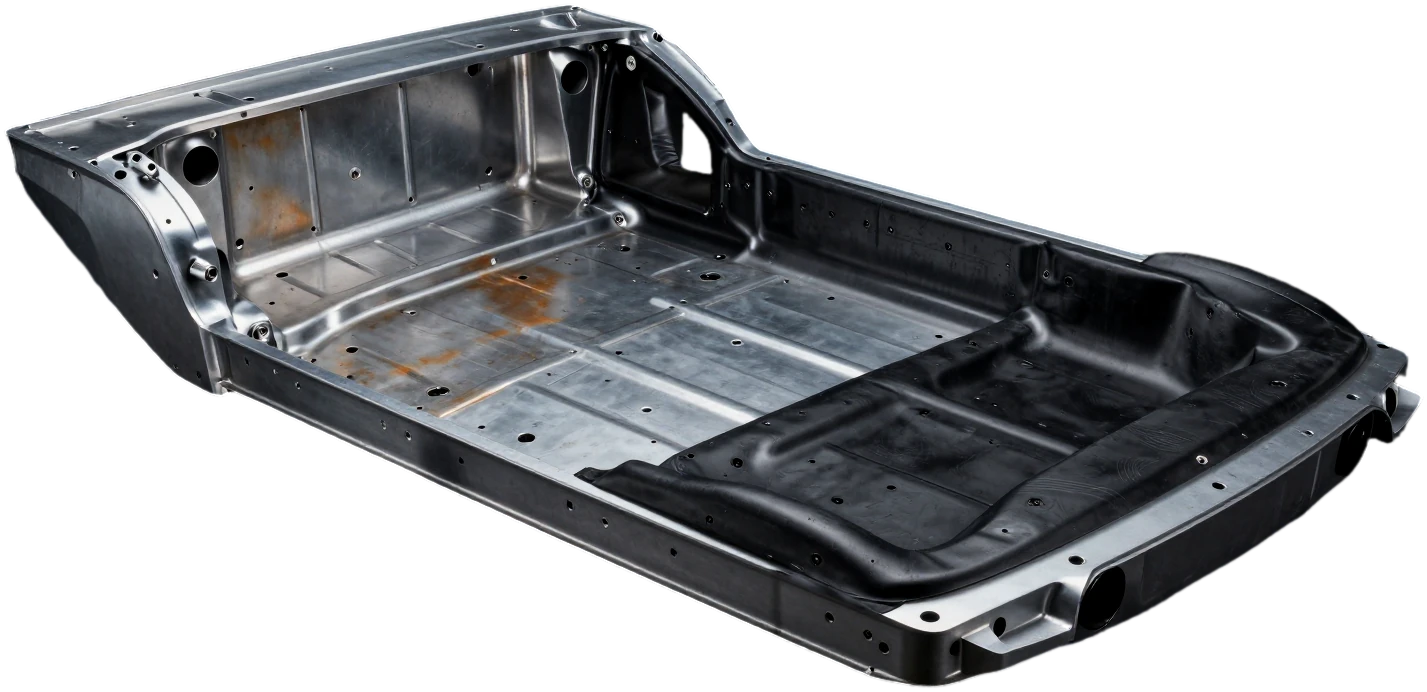
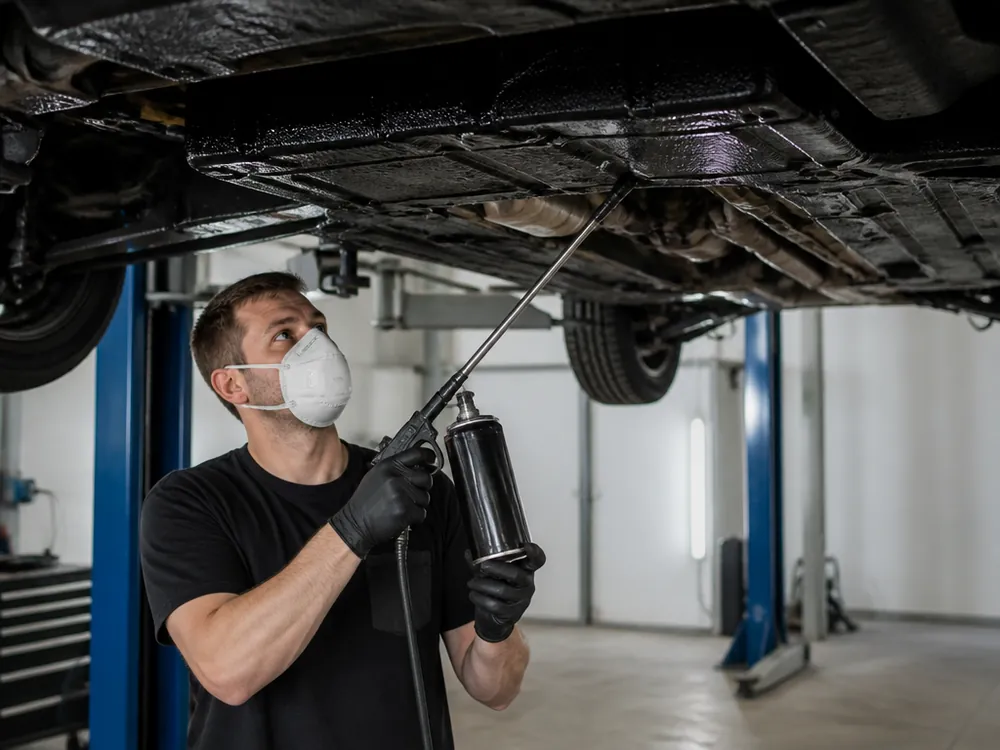
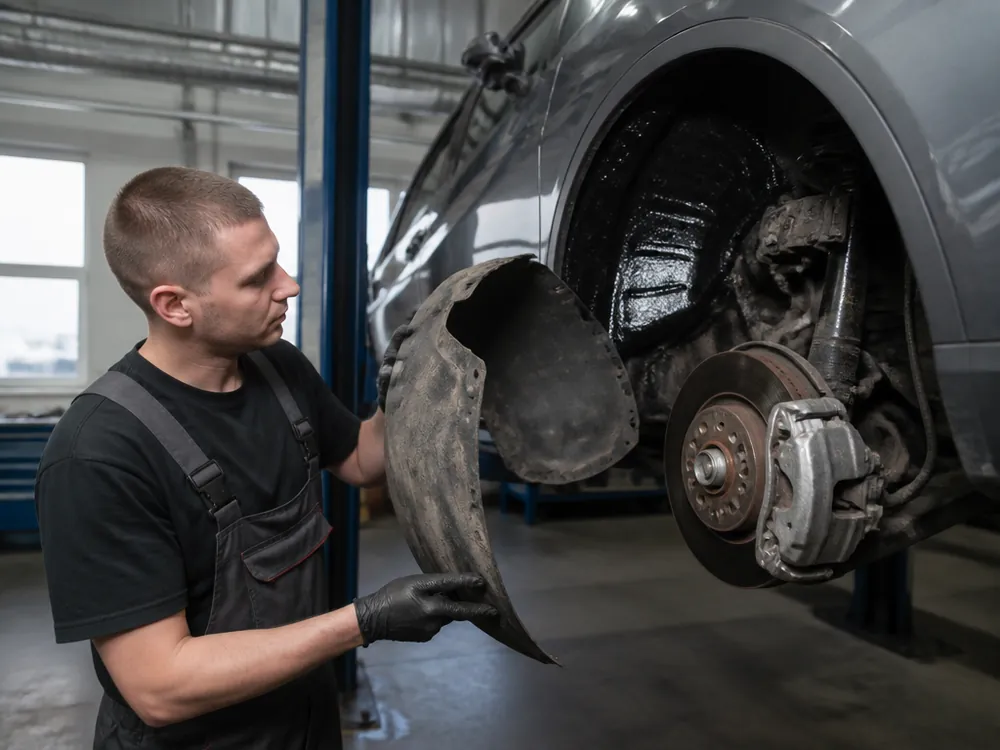
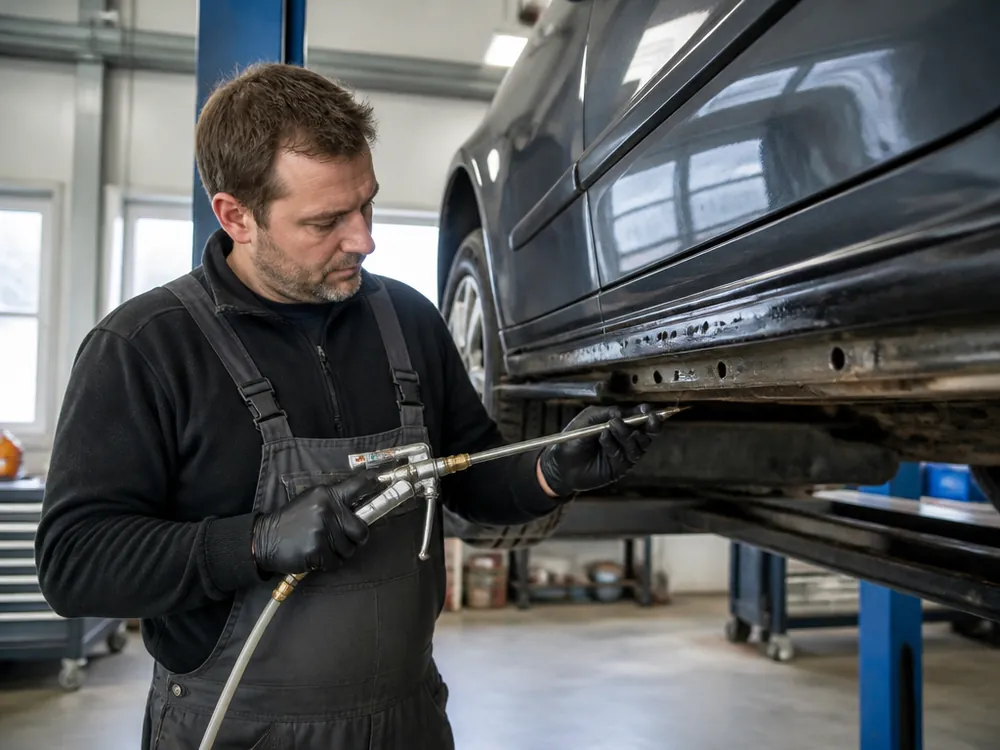
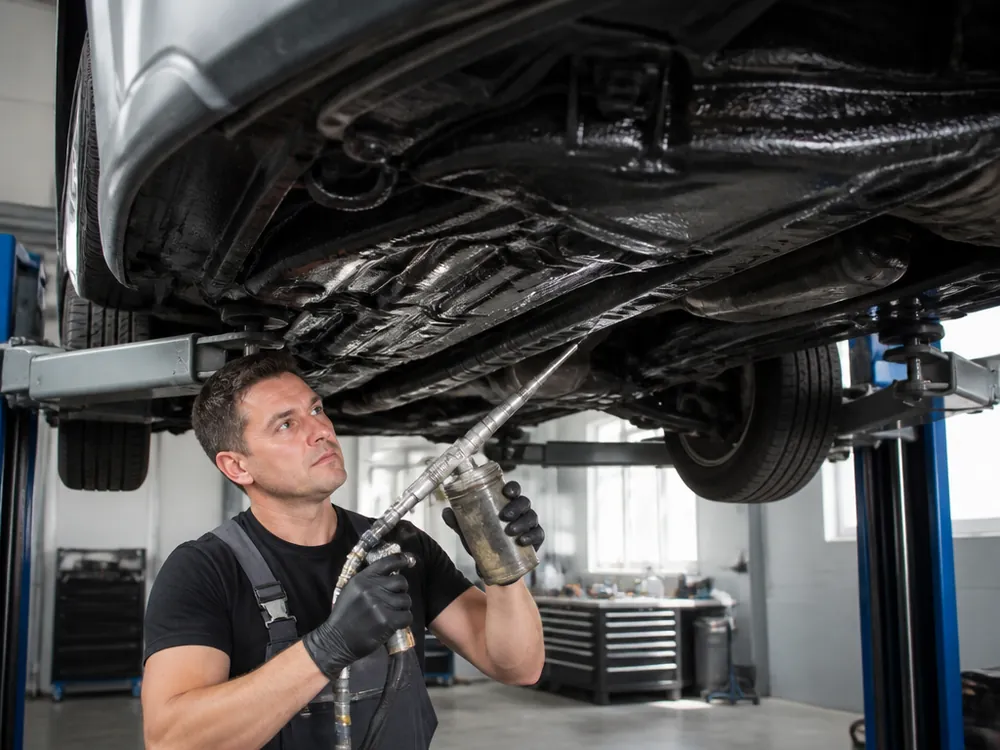
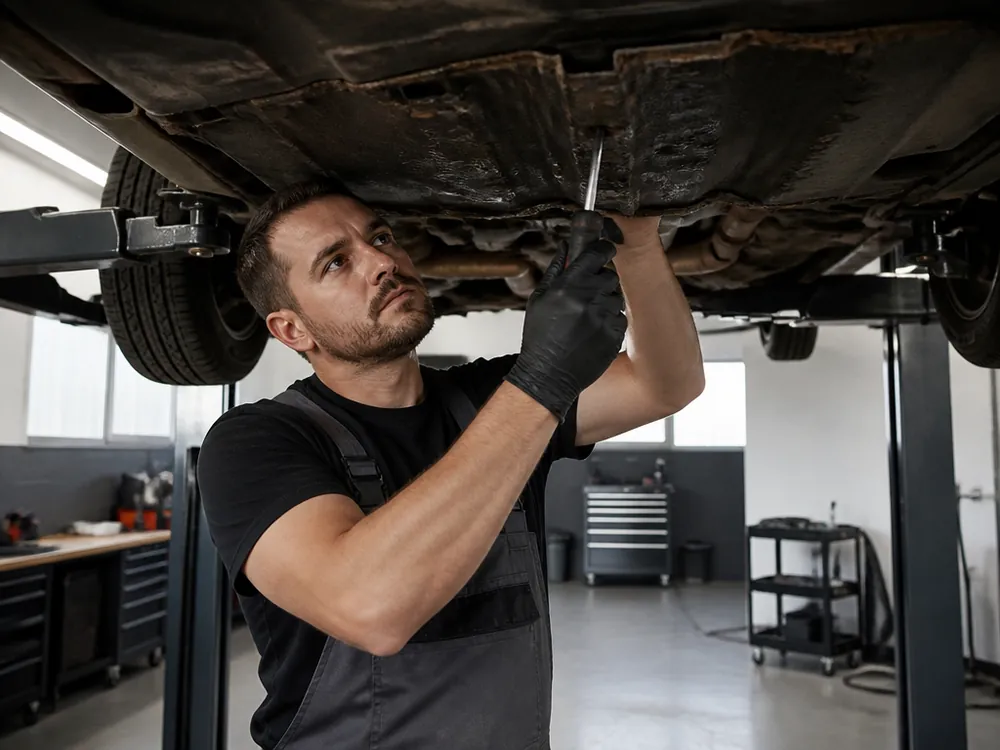
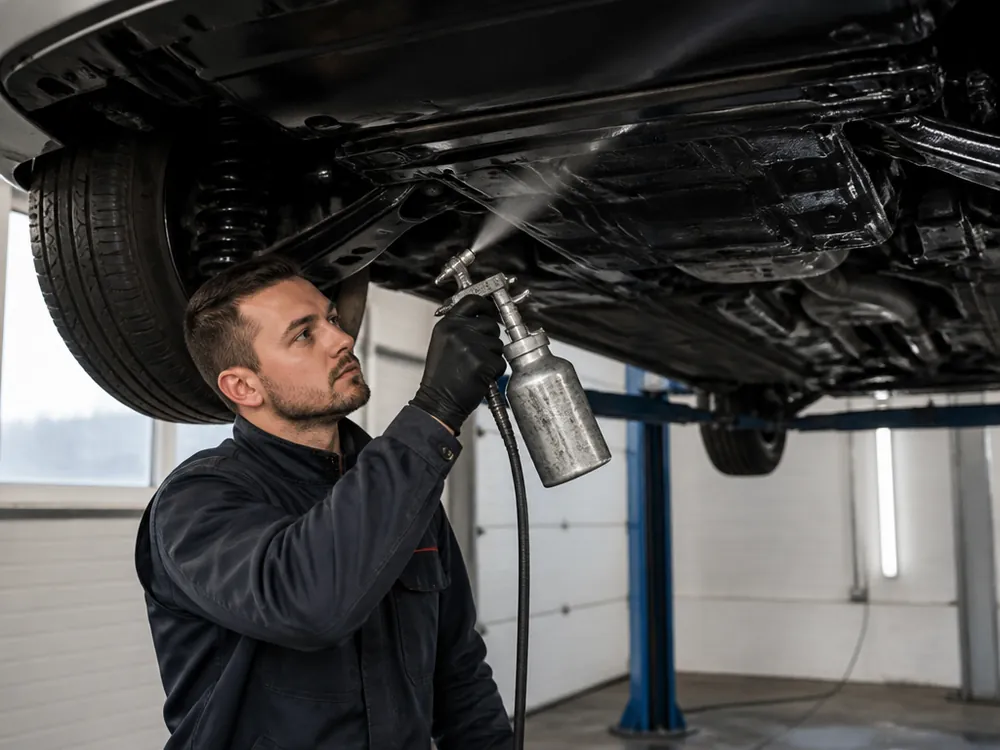
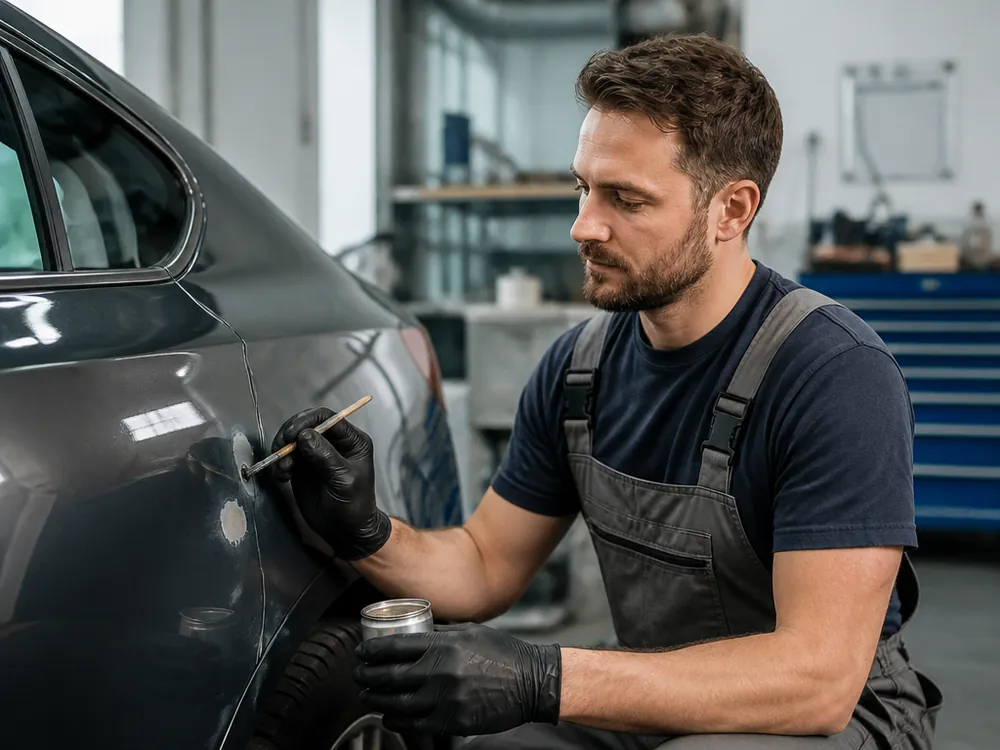
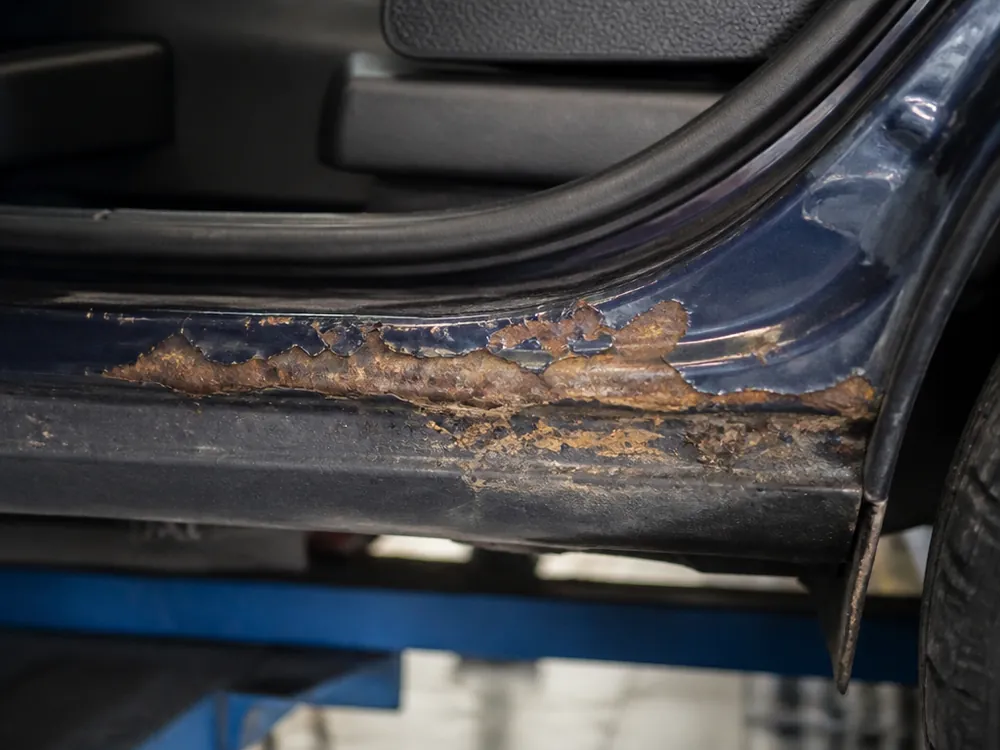
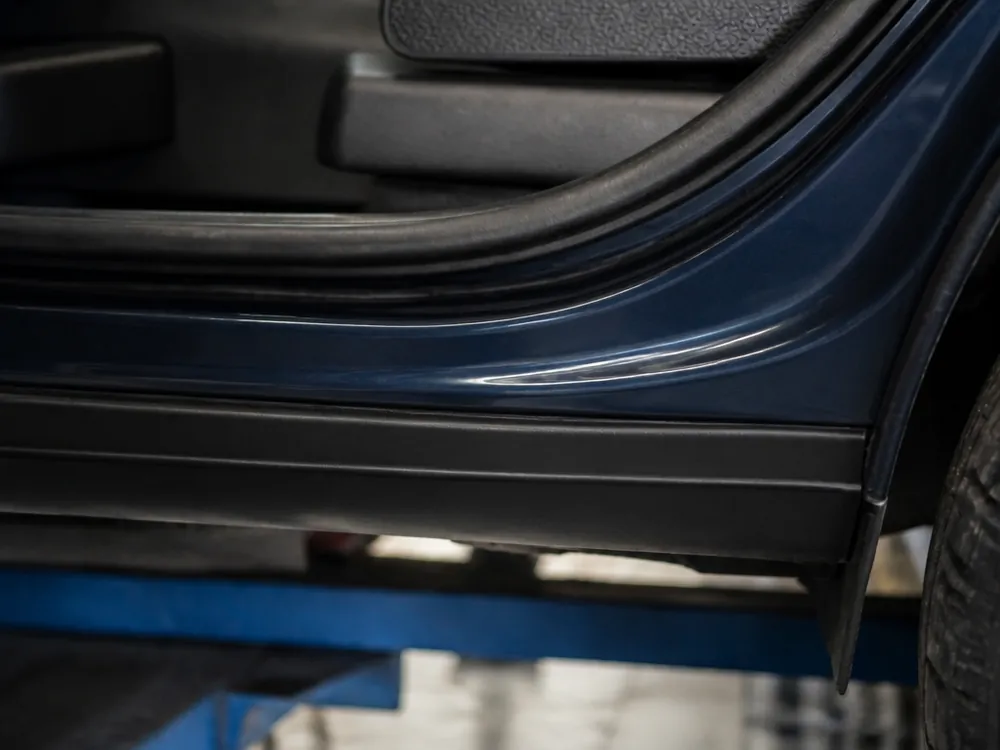
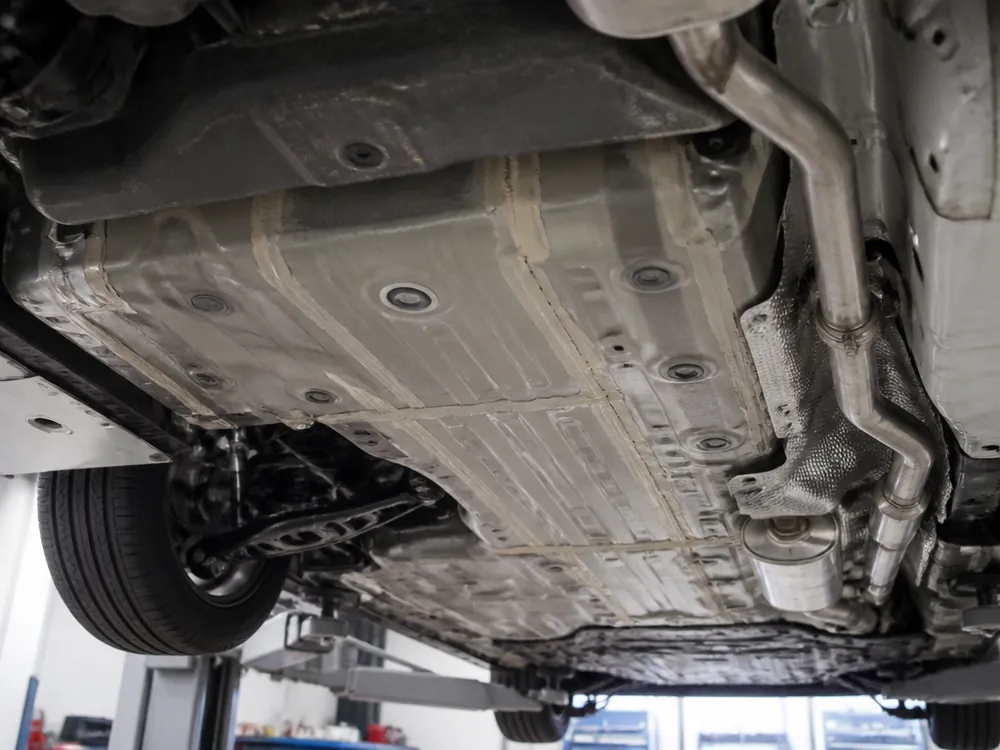
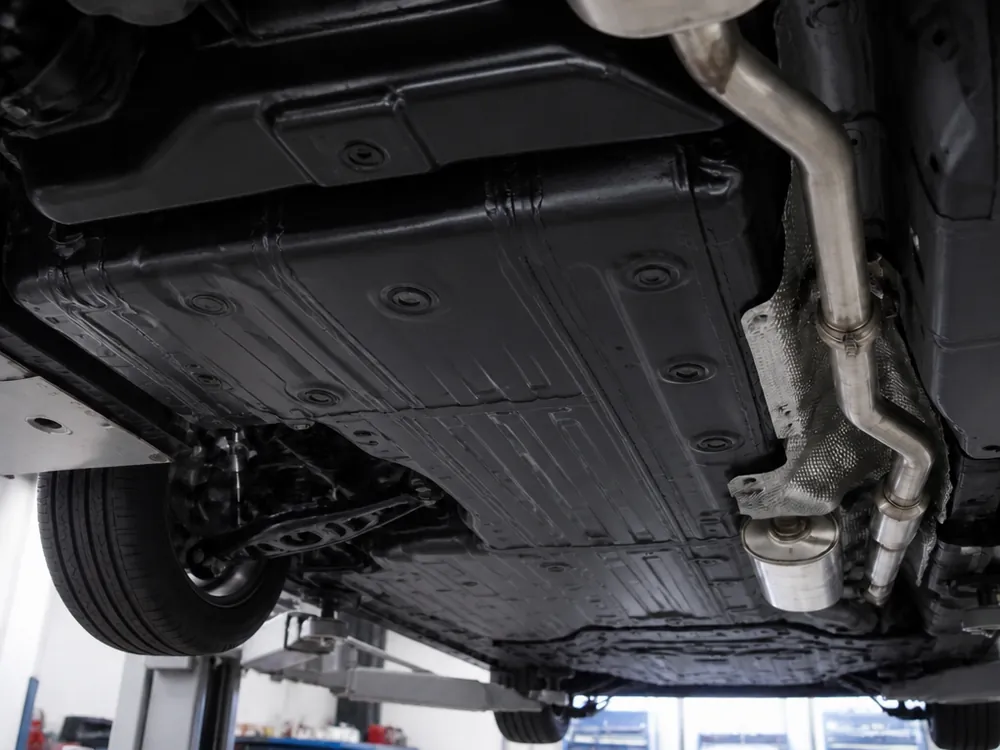
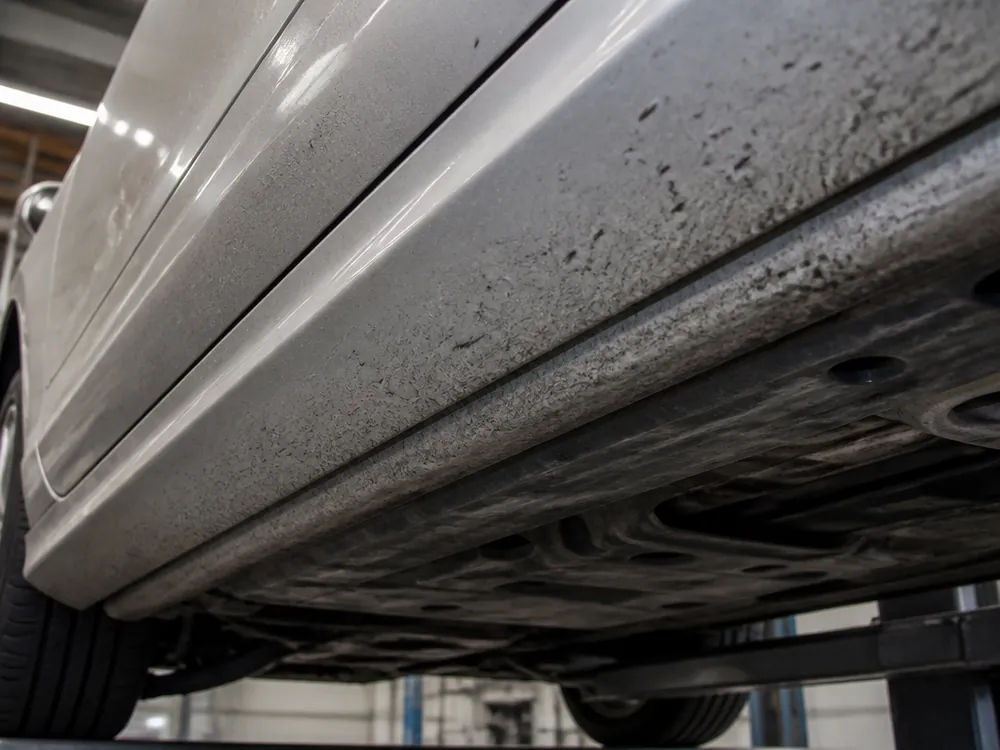
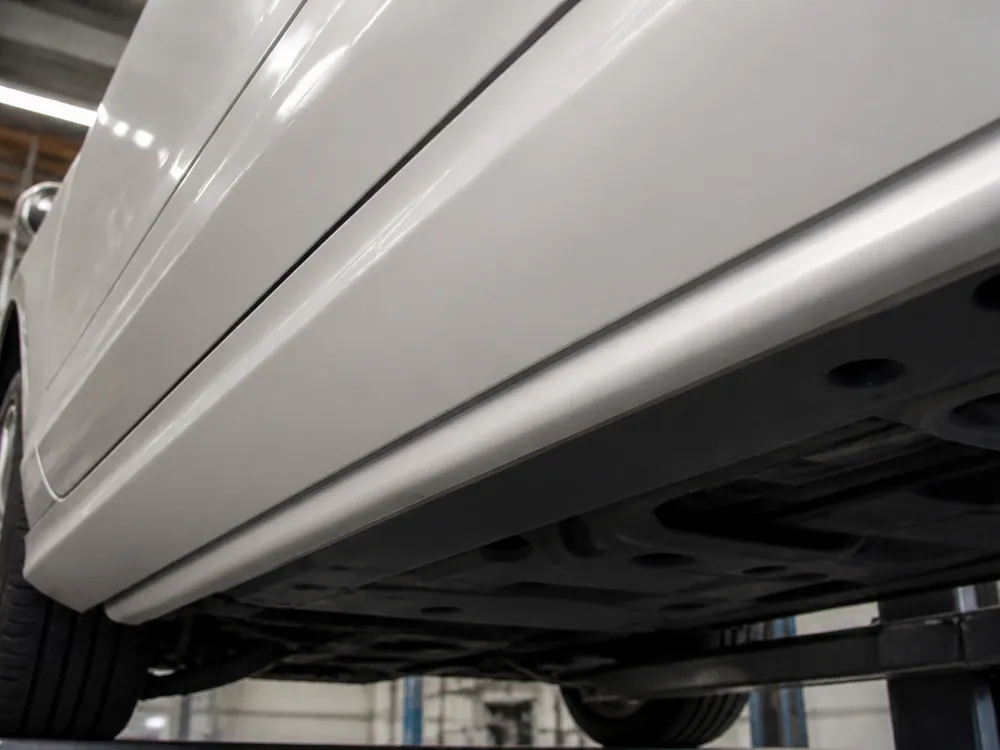
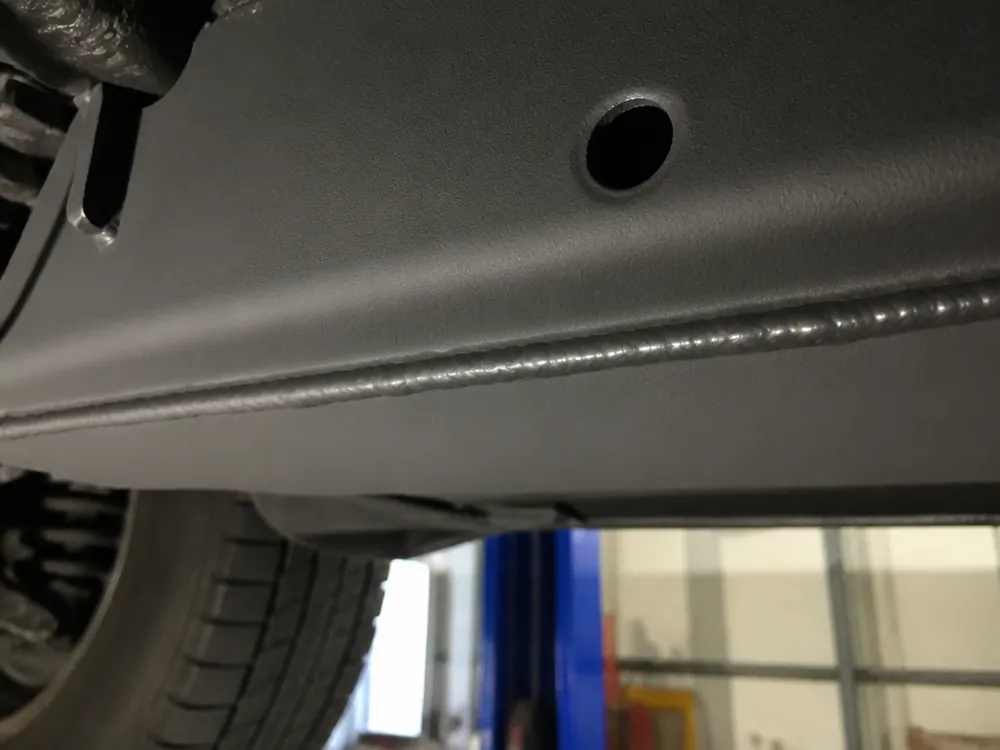
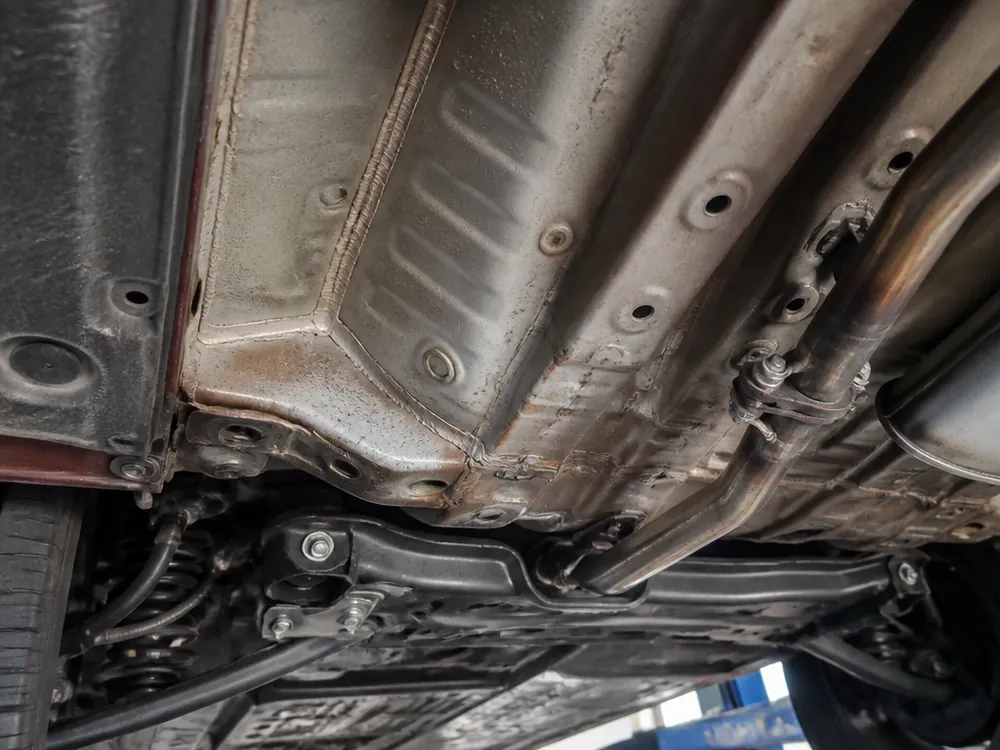
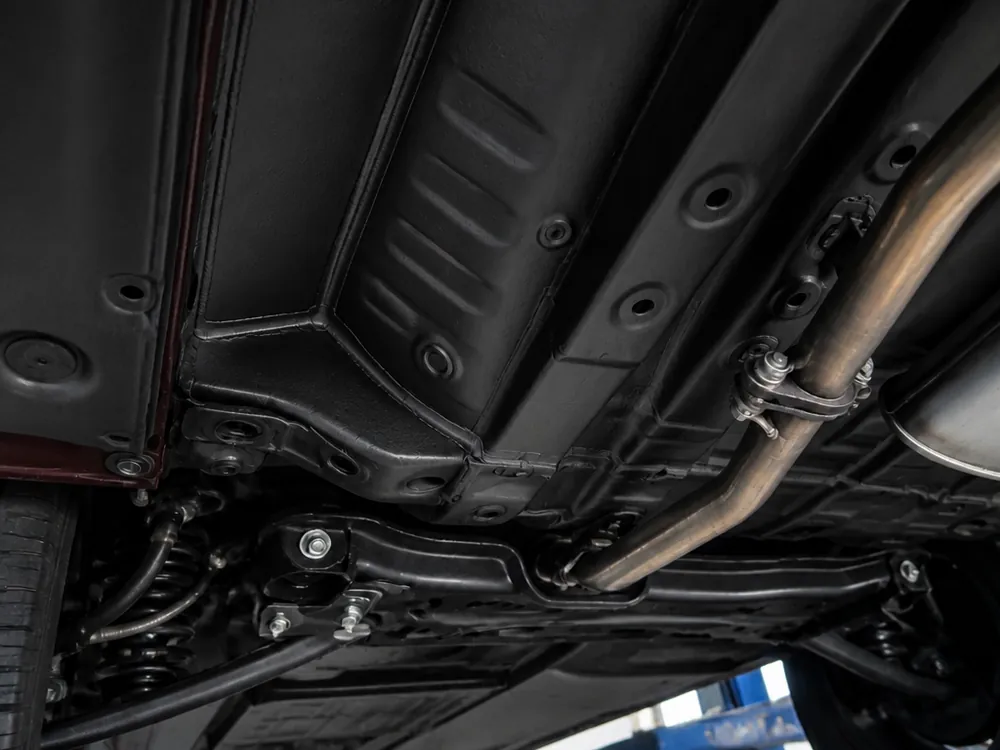
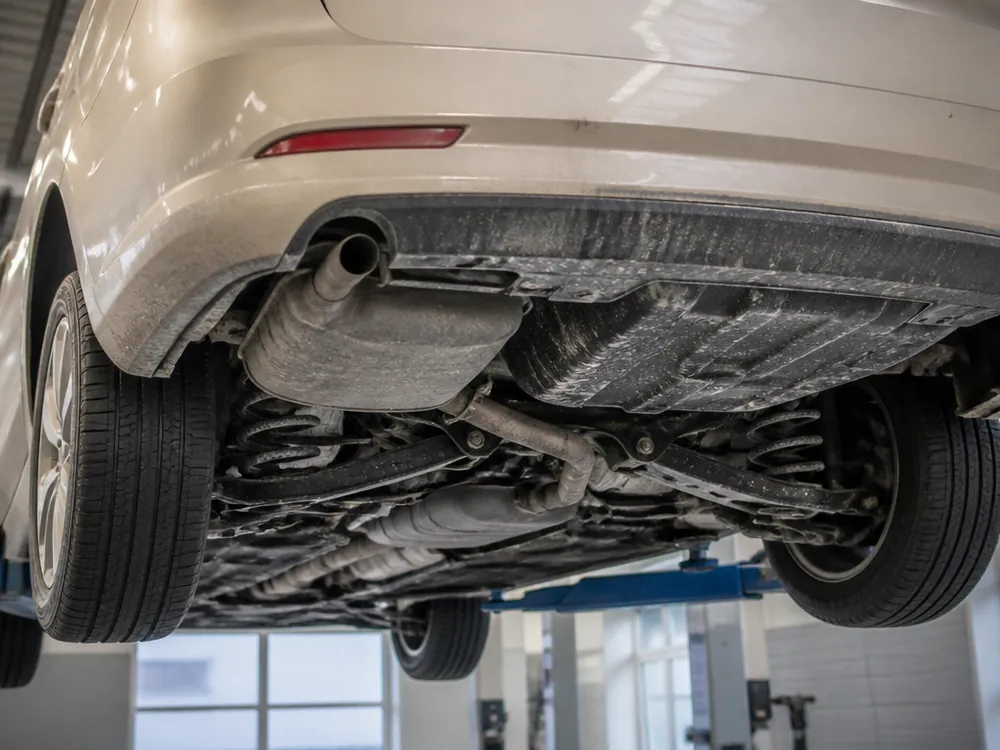
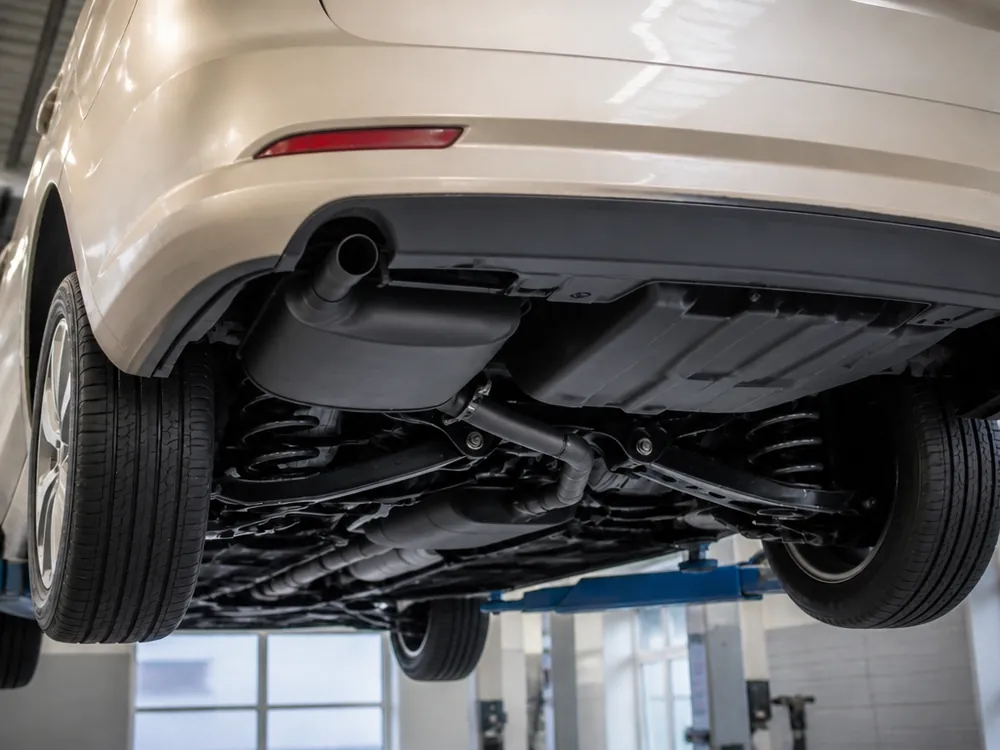
A car's underbody is constantly exposed to moisture, road chemicals and stones. Anti-corrosion treatment creates a reliable barrier, preventing rust and extending the body's service life. Book a treatment in Almaty — we'll protect your car from corrosion for years.
Removal and installation of fender liners (if necessary)
1–2 hours
24 mo
from 7 000 ₸
Removal and installation of plastic crankcase protection
1 hour
24 mo
from 3 000 ₸
Removal and installation of the exhaust system for access to the underbody
2–3 hours
24 mo
from 10 000 ₸
Repair of local paintwork damage with anti-corrosion coating application
2–4 hours
24 mo
from 9 000 ₸
Final quality check of the coating after drying
30 minutes
24 mo
from 2 000 ₸
The final cost is based on the complexity of the work and materials. We provide a warranty on the performed treatment. Warranty periods — see the page «Warranty»
06
Advantages of anti-corrosion undercarriage treatment at CARGID
Warranty.
Every promise — backed by a number or a document: work order, photos, removed parts.
24MO
warranty on labor — the term is stated in the work order.
24-month warranty
Experienced technicians
Working since 2014
01
We wash the undercarriage 3 times
Before treatment, we blast away dirt, salt and old anti-corrosion coating with a high-pressure washer, then degrease. Only on a clean undercarriage does the material adhere without peeling.
02
Bitumen in 2 layers
The first layer is a primer for adhesion, the second is bitumen mastic 1.5–2 mm thick. Two layers prevent the coating from cracking and letting moisture through.
03
Timeframe — 1 day
We apply the anti-corrosion coating in the morning and return the car in the evening: bitumen needs 4–6 hours to polymerize. We do not delay because we do not dry each layer separately.
04
24-month warranty
If the anti-corrosion coating peels off or bubbles without mechanical damage, we will redo the area free of charge. The warranty covers the adhesion of the coating to the metal.
07
How we work on your vehicle
Steps.
Book an anti-corrosion undercarriage treatment — we will inspect, prepare the body and apply the protective compound.
01
Inspection and assessment
You submit a request on the website or by phone, and we select a convenient time and day for your visit to the service center. Upon arrival, the technician inspects the undercarriage, assesses the condition of the paintwork and metal thickness, and determines the scope of work.
request on WhatsApp
02
Washing and drying
The undercarriage is thoroughly washed under pressure, dirt, bitumen and rust are removed, then the vehicle is completely dried.
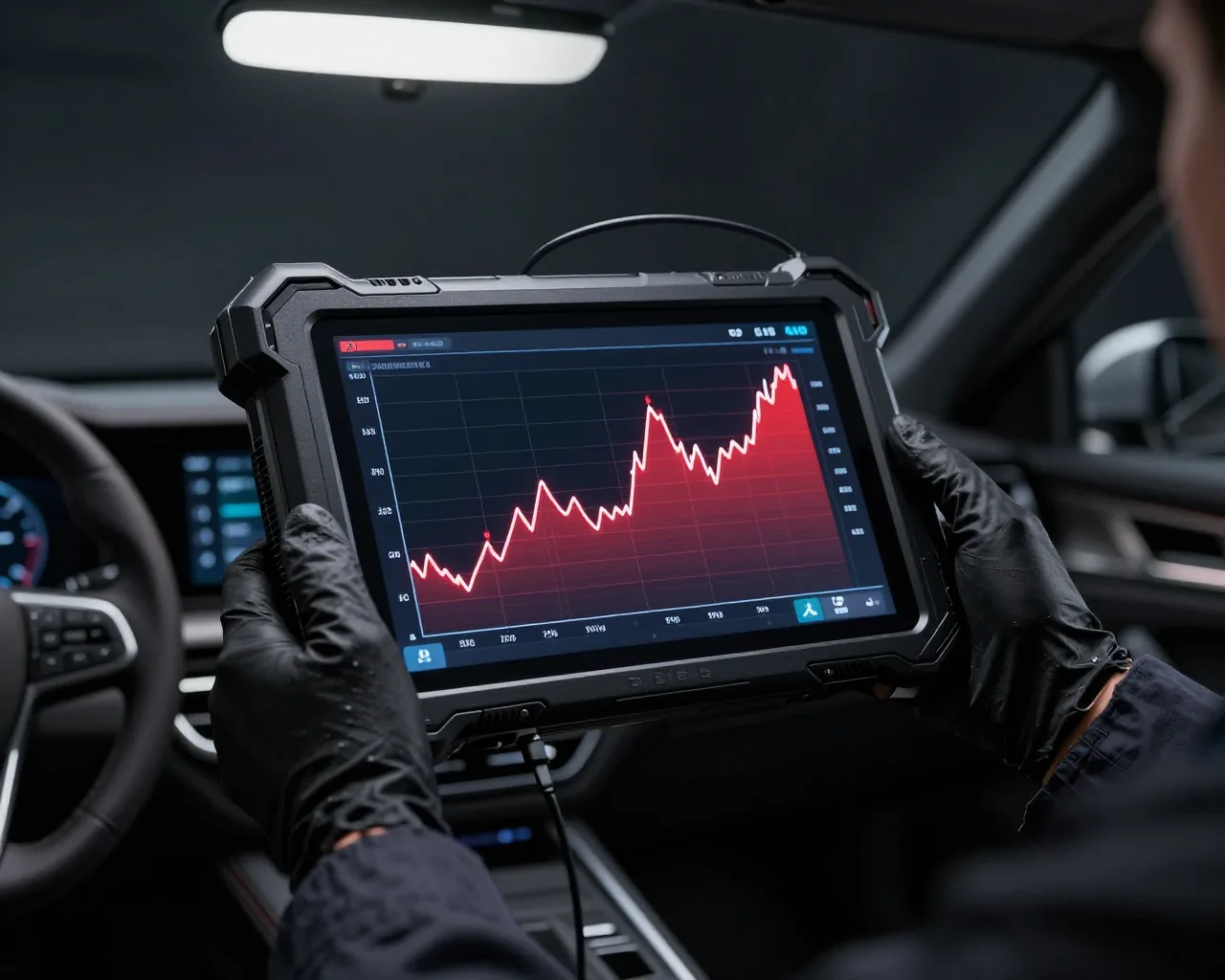
inspection and diagnostics
03
Protection of components
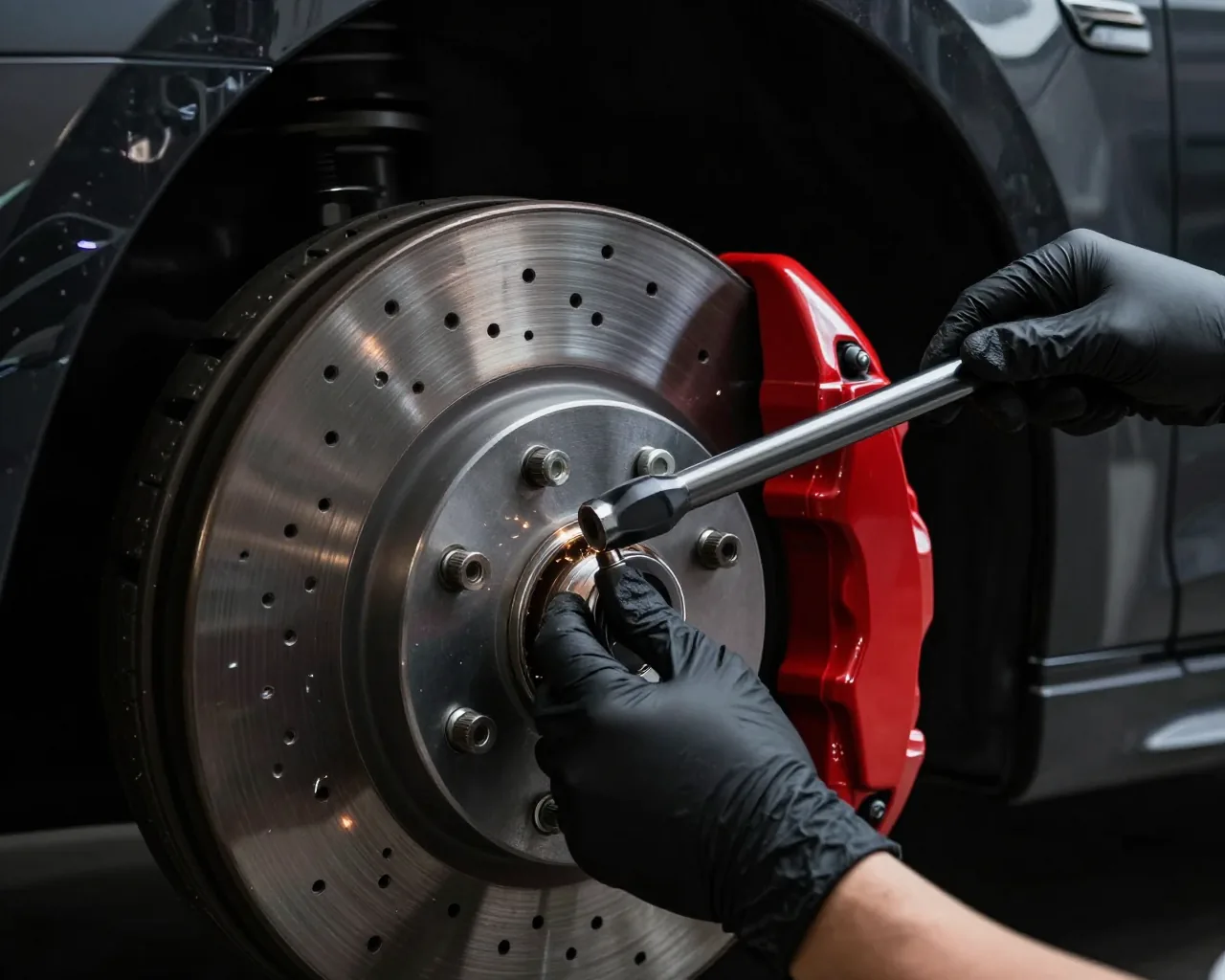
Elements that should not be treated (brake discs, exhaust system, threaded connections) are masked off.
estimate before work starts
04
Application of the compound
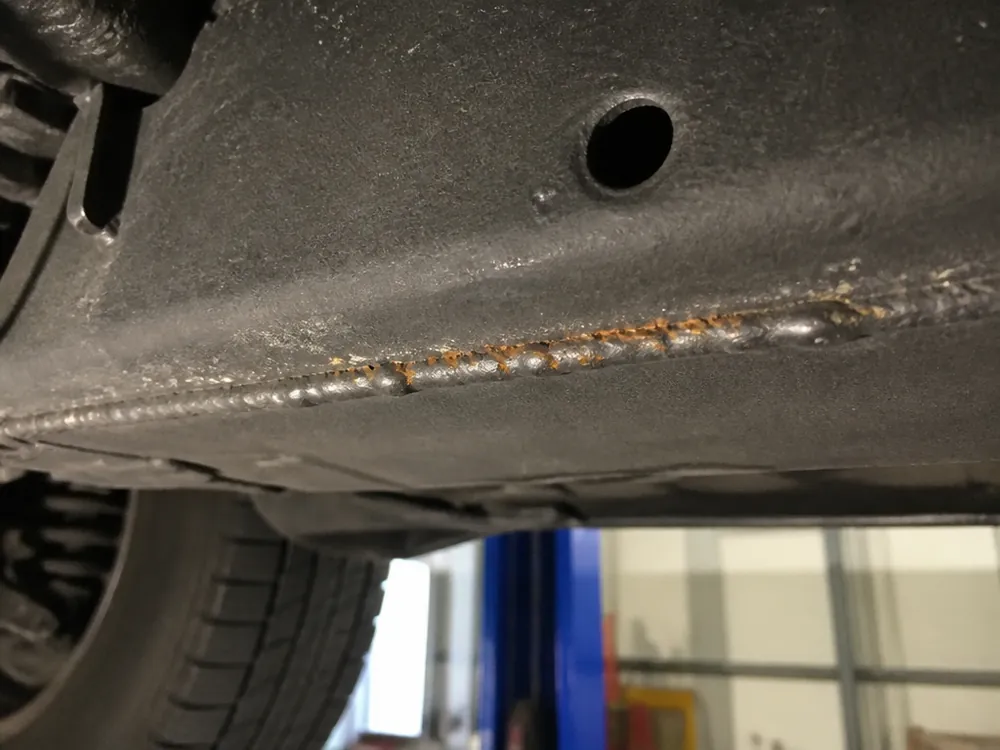
A special anti-corrosion compound is applied to the undercarriage, including hidden cavities and welded seams.
work to factory procedure
05
Quality check
After application, the technician checks the uniformity of the coating and the absence of missed spots over the entire surface.
result check
06
Vehicle handover
The vehicle is left in a warm bay until the compound is completely dry, then a final inspection is carried out. You receive the vehicle with a protected undercarriage, as well as care recommendations and a warranty on the work.
CARGID performs underbody anti-corrosion treatment in Almaty in one day: we wash the underbody three times, degrease it, apply bitumen mastic in two layers 1.5–2 mm thick, and treat hidden cavities with wax. We record a 24-month warranty in the work order and take a test drive before handover.
When underbody anti-corrosion treatment is needed and how it differs from painting
Underbody anti-corrosion treatment isn't only for rusty cars. We distinguish three surface conditions — prevention, treatment, and redo — and explain why painting doesn't replace corrosion protection.
Three underbody conditions and what to do in each case
Treatment is selected based on the surface condition: on a clean underbody it's prevention, on rust spots it's treatment with cleaning and a rust converter, and on peeling old coating it's complete removal and reapplication. Prevention is done on a new or recently purchased car: we knock off factory dirt, degrease the base, and cover it with bitumen mastic before the first spot appears. Treatment starts where red spots and dots are already visible: they are cleaned down to bare metal, treated with rust converter, and only then is the compound applied. Redo is the most common scenario on used cars: the old anti-corrosion coating has bulged, peeled off in layers, or cracked, and it has to be removed in hard-to-reach places, otherwise the new layer will sit on a loose base and come off with it. An inspection on the lift shows which of the three cases a particular car falls into. If rust has gone through, welding is needed first — mastic won't stop corrosion on a hole. Underbody anti-corrosion treatment in Almaty follows the same principle: first we assess the surface condition, then we offer prevention, treatment, or redo.
How anti-corrosion treatment differs from underbody painting
Underbody painting is a decorative-protective coating in a thin layer, while anti-corrosion treatment is an elastic bitumen mastic 1.5–2 mm thick that absorbs stone impacts and blocks moisture and salt. Paint holds as a film a few dozen microns thick: gravel from the road punches through it to the base, water with road chemicals gets under the peeled edge and stays there. Bitumen mastic works differently — it's softer, springs back under impacts, and seals small chips without cracking over the entire area. On the underbody these two coatings solve different tasks: paint restores a neat appearance and protects from the atmosphere, while anti-corrosion treatment takes on the mechanical and chemical abuse of the road. That's why local paint damage repair with anti-corrosion application is done in one go: first the bare area is touched up, then it's covered with mastic. Paint on the underbody cracks from gravel and lets water under the film, so as standalone corrosion protection it falls short — it's used together with anti-corrosion treatment, not instead of it.
How underbody anti-corrosion treatment is done and why bitumen in two layers
We break down the stages in order — from triple washing to final inspection — and explain why two layers are needed and why hidden cavities get separate treatment.
Underbody treatment stages from washing to inspection
We wash the underbody three times — knocking off dirt, salt, and old anti-corrosion coating with a high-pressure washer, then dry it, blow out hidden cavities, and degrease before application. Underbody protection starts with removing the wheel arch liners and plastic engine splash shield: moisture and salt accumulate under them, and the compound won't adhere to covered areas. Next we clean corrosion spots, convert rust, apply the coating, and after drying perform a final inspection over the entire area, including arches and seams. On a dirty or wet surface, bitumen goes on with peeling and comes off in layers within a season, so washing and drying aren't a formality but half the result: saving on this stage brings the car back for a redo before the warranty expires.
Why two layers of bitumen and separate treatment of hidden cavities
The first layer is a primer for adhesion, the second is bitumen mastic 1.5–2 mm thick; two layers keep the coating from cracking and letting moisture through. Underbody treatment with bitumen without primer holds worse: the compound sits on the metal but doesn't bond at the molecular level, and the first stone knocks out a piece of the coating. We treat hidden cavities (sills, longitudinal members, pillars) with wax through service holes — that's exactly where corrosion starts from the inside and isn't visible from outside until rust shows through the paint. Missed cavities are a common reason the coating has to be redone even though the bitumen itself was applied properly. Wax stays elastic and creeps into microcracks, while mastic only covers the outer surface.
Timing, curing, and care after treatment
One honest take on timing: how long the work takes, how long the coating dries, and what you can do with the car in the first days while the bitumen gains strength.
How long treatment takes and when to pick up the car
We apply anti-corrosion treatment in the morning and hand the car over in the evening: bitumen needs 4–6 hours to cure, so the whole job fits in one day. A service advisor handles intake and keeps the work order until handover, and we take photos at key stages. The primer goes on the degreased underbody, then the bitumen mastic 1.5–2 mm thick gains hardness at above-zero temperatures. We apply underbody anti-corrosion treatment in a single visit, with no need to leave the car for several days. We don't keep vehicles for days — the coating is road-ready within a shift, and the owner drives away the same day. Before handover we take a test drive and perform a final quality check after drying, and we record a 24-month warranty in the work order.
How to care for the underbody after treatment
First days without washing: skip high-pressure car washes and don't drive through fords — fresh bitumen needs time to reach its final hardness.
Gentle spray: at the car wash, ask them not to hit the underbody at a sharp angle, otherwise the pressure can cut into the still-soft coating.
Deep puddles and mud: steer around them for the first few days, and after driving on wet off-road, check the arches for peeling.
Follow-up check: bring the car in for inspection after it's fully dry — that way you can see where the mastic went on evenly and where it needs touching up.
After that, regular care: a routine underbody wash and a seasonal arch inspection extend the service life without rework.
Warranty, booking and terms of work
What exactly we put in writing, how to get on the lift, and what happens to the warranty if you bring your own materials — we break it down point by point, no fine print.
What the 24-month warranty covers
We give 24 months on underbody treatment and record the term and conditions in the work order and the completion certificate when the car is handed over. The warranty covers the work performed and our materials — two-layer bitumen mastic and wax in the hidden cavities. It does not cover accidents after the repair, third-party interference, or natural wear. Diagnosis for a warranty case is free: if the coating has bubbled or peeled, the technician will put the car on the lift and find the cause before you pay anything. For the body repair line, which includes this service, the warranty is 24 months; for the engine, 12; for the suspension, 6. What matters more than the number itself is that the term and conditions are written in the work order and the completion certificate when the car is handed over.
Booking, your own materials and how we work
Booking: we work daily from 09:00 to 20:00, by appointment — no queue and no waiting in the bay.
Service advisor: the car is received by the service advisor, who also manages the work order through to handover and answers questions as the work progresses.
Estimate: first an underbody inspection and a written estimate; we start treatment only after you agree.
Your own materials: you can bring them, but the warranty doesn't apply to them — if the customer's mastic peels off, that's not a warranty case.
Photo report: we photograph the key stages, and we show and hand over the old parts so you can see what was replaced.
Treatment options and scenarios for different vehicles
We show the treatment options in a table, then go through two separate scenarios — an SUV with an increased scope of work and redoing a previous coating that has peeled.
Treatment options and what each one includes
comparison of treatment options by scope of work
Option
What we treat
Who it's for
Underbody
Underbody only, 2 layers of bitumen
Prevention on clean metal
Underbody and arches
Underbody and arches with partial removal of the wheel arch liners
Cars with rust spots on the arches
Full package
Underbody, arches and hidden cavities with wax
Maximum protection, older cars
SUV
Increased scope for underbody and arches
Crossovers and SUVs
Redo
Removing old anti-corrosion coating and applying new
Peeled previous coating
SUVs and redoing a bad anti-corrosion coating
For SUVs and large crossovers we do treatment with an increased scope — more underbody and arch area — and if the previous coating has peeled, we first remove it and clean up the affected spots. Our shop has six lifts, so a large body gets in for treatment without delays. A bad coating shows up as bubbles and peeling at the edges: if you apply new coating on top, it will come off together with the old. That's why we always start a redo with removal — we knock off the old coating in hard-to-reach places, degrease the metal, and only then apply two layers of bitumen. On older cars we add wax treatment of the hidden cavities — the sills and longitudinal members rust from the inside before they do on the outside. Before starting, the service advisor shows you on the lift where the coating is holding and where it has come off — we use that map to calculate the scope of work.
Underbody treatment key points
To make an informed decision about the underbody, let's gather the key parameters in one place: what determines the set of operations, what two-layer bitumen gives you, how long the treatment takes, and how the warranty is handled.
Choosing by condition: prevention, rust treatment or redoing an old coating — the set of operations is determined by the underbody inspection, not by the car model.
Two layers of bitumen: mastic 1.5–2 mm thick over a primer plus wax treatment of the hidden cavities give protection that ordinary painting can't replace.
One day: the compound is applied in the morning and the car is handed over in the evening; bitumen needs 4–6 hours to polymerize, and in the first days the coating should be kept away from high-pressure washing.
24-month warranty: the term and conditions are recorded in the work order and the certificate at handover; diagnosis for a warranty case is free.
A separate approach: SUVs and cars with a bad previous coating need increased material consumption or full removal of the old layer before applying the new one.
10
Frequently asked questions about anti-corrosion underbody treatment in Almaty
Questions.
Price, timeframes, warranty, payment — 10 questions asked most often.
10
Didn't find an answer?
Message us on WhatsApp — a service advisor will reply within 5 minutes.
The cost of underbody treatment at our service depends on the type of compound (bitumen-based mastic or polymer-bitumen compound), the condition of the body, and whether additional work is needed. The basic option (bitumen mastic) will cost from 25 000 tenge for a sedan or hatchback, and from 35 000 to 55 000 tenge for a crossover or SUV. Polymer-bitumen compounds with a longer service life cost 15–20% more. If preliminary washing, removal of the old coating, or treatment of hidden cavities is required, the price increases. We provide an exact estimate after inspection on the lift – it's free.
Standard anti-corrosion underbody treatment takes from 4 to 6 hours. The time depends on the condition of the car and the chosen compound. If old mastic or a lot of rust needs to be removed, the work may take up to 8 hours. You can wait at the service, but we recommend leaving the car for the day: after treatment, time is needed for the compound to dry and not collect dust. It's convenient if you leave the car in the morning and pick it up in the evening. Appointments for a specific time are also possible – come in and we'll start right away.
Yes, we provide a warranty on the work and on the compound. For bitumen mastic – a 24-month warranty, for polymer-bitumen compound – 24 months. It is important that you follow our care recommendations during the first 7 days (do not wash the underbody, avoid aggressive chemicals). If during the warranty period corrosion spots or coating peeling appear – we will fix the problem free of charge at our service. The warranty is valid provided the work was performed at CARGID and there is no mechanical damage to the underbody.
An appointment is recommended, as treatment takes 4-6 hours and a lift slot needs to be booked. You can make an appointment by phone or through the website, choosing a convenient time. If you come without an appointment, we will try to fit you in within 1-2 hours if there is a free slot, but during the season (spring, autumn) the waiting list may be several days ahead. An appointment guarantees that your car will be accepted on time, without waiting.
Yes, you can bring your own materials, but please note: we only provide a warranty on the work and on the compounds we use. If you bring your own mastic or anti-corrosion compound, we will perform the treatment, but you are responsible for the quality of the compound. We recommend using the materials we have tested – they are selected for the Almaty climate (sharp temperature changes, road chemicals). If you still want to bring your own compound, consult with the technician in advance to see if it is suitable for your car and region.
If a previous treatment was done poorly, the old mastic must be removed and the surface treated again. In such cases, we first wash the underbody, then mechanically remove the peeling coating and rust, then degrease the surface and apply a new compound. This service requires additional time and money: removing old mastic costs from 12 000 tenge depending on the area and complexity. After that, treatment is performed at the standard price. It is important not to leave the old layer under the new one, otherwise corrosion will develop faster.
Our price list has three options. Basic – application of bitumen mastic to the underbody and wheel arches after light cleaning. Standard – includes washing the underbody, treatment with a rust converter, application of a polymer-bitumen compound in 2 layers, as well as treatment of hidden cavities (sills, side members) – this is serious protection. Luxury – maximum protection: full preparation with removal of the old coating, application of 3 layers, additional treatment of welds, as well as anti-gravel protection of the wheel arches. Accordingly, basic costs from 25 thousand tenge, standard – from 45 thousand, luxury – from 70 thousand. The choice depends on the age of the car and operating conditions.
During the first 7 days after treatment, avoid washing the underbody with high pressure, and do not drive through deep puddles or off-road – the compound must fully harden. After a week, you can wash the car in the usual way, but do not use aggressive chemical products on the underbody. Once a year, inspect the underbody for chips and scratches – if you find damage, it is easy to touch up the coating. Also try not to clean the underbody with metal brushes or use bitumen removal solutions if you do not want to remove the protective layer.
We accept payment in cash, bank cards (Visa, Mastercard, Elcart), as well as transfers to a bank account for legal entities. No prepayment is required – you pay after the work is completed and the car is inspected. If you make an appointment in advance and cannot come, please let us know at least 3 hours in advance so we can offer this time to other clients. If necessary, we can issue a receipt and closing documents.
Yes, treatment can be done in winter, but only if the work is performed in a heated bay. Our service is heated, so in winter we can perform the treatment with quality. It is important that the underbody surface is dry and clean – we do washing and drying in a warm room. Limitation: if there is severe frost outside and the car arrives with stuck snow and ice, the car must first be allowed to warm up in the bay. It is better to plan treatment for a period when the temperature is consistently above -10°C, but overall we work all year round.
11
What clients say about our underbody rustproofing
Reviews.
We collect ratings on the website and on maps — we hide nothing.
4.8
872 reviews on the website 1 900+ ratings in total
Alexander
Toyota Camry
Came in with a Toyota Camry 2018, rust spots appeared on the sills. The guys did everything quickly, in one day. The price was 85000 tenge, reasonable for this kind of work. A month later I checked – everything is holding up perfectly. Thanks!
Dmitry
Sportage
Bought a new Kia Sportage 2021 and went straight for anti-corrosion treatment. It took two days, 120000 tenge, including hidden cavities. Everything is neat, the coating is even. I'll come back for a checkup closer to summer, as agreed.
Yerlan
Lada Vesta 2019, the entire underbody was scratched after driving on dirt roads. They cleaned it, treated it, and the wheel arches too. The price was 95000, done in a day. A couple of months later I checked – nothing new appeared. I recommend them.
Aigerim
CX-5
Mazda CX-5 2022, there was rust on the welds. I brought it in, they cleaned everything, treated it. 110000 tenge, one day. A week later I drove it onto the lift – perfect. Thanks for the thoroughness.
Sergey
Tucson
Hyundai Tucson 2020, I wanted to protect the new car right away. Full treatment with cavities – 130000 tenge, two days. The result is excellent, now the Almaty winter is not scary. The technicians know their stuff.
Igor
BMW 3 Series 2017 from Germany, the underbody was covered in road chemicals. Sandblasting, multi-layer coating – 150000 tenge, two days. They did it perfectly, like new. I'll register it so the work warranty doesn't expire.
Nurlan
After the incident, I had anti-corrosion treatment done on a VW Passat 2019. I paid 100000 tenge, it was finished in one day. They explained everything, I was satisfied. I recommend them.
Robert
Mitsubishi Outlander 2021, I went for anti-corrosion treatment. They did everything with quality, 125000 tenge for two days. The coating is even, the cavities were treated. A month later I checked – all good. Thanks!
Alexey
Nissan Qashqai 2020, corrosion on the sills was driving me crazy. They cleaned it, treated it, result – 115000 tenge, one day. Everything is spot on, no issues. I already recommended them to an acquaintance. Satisfied.