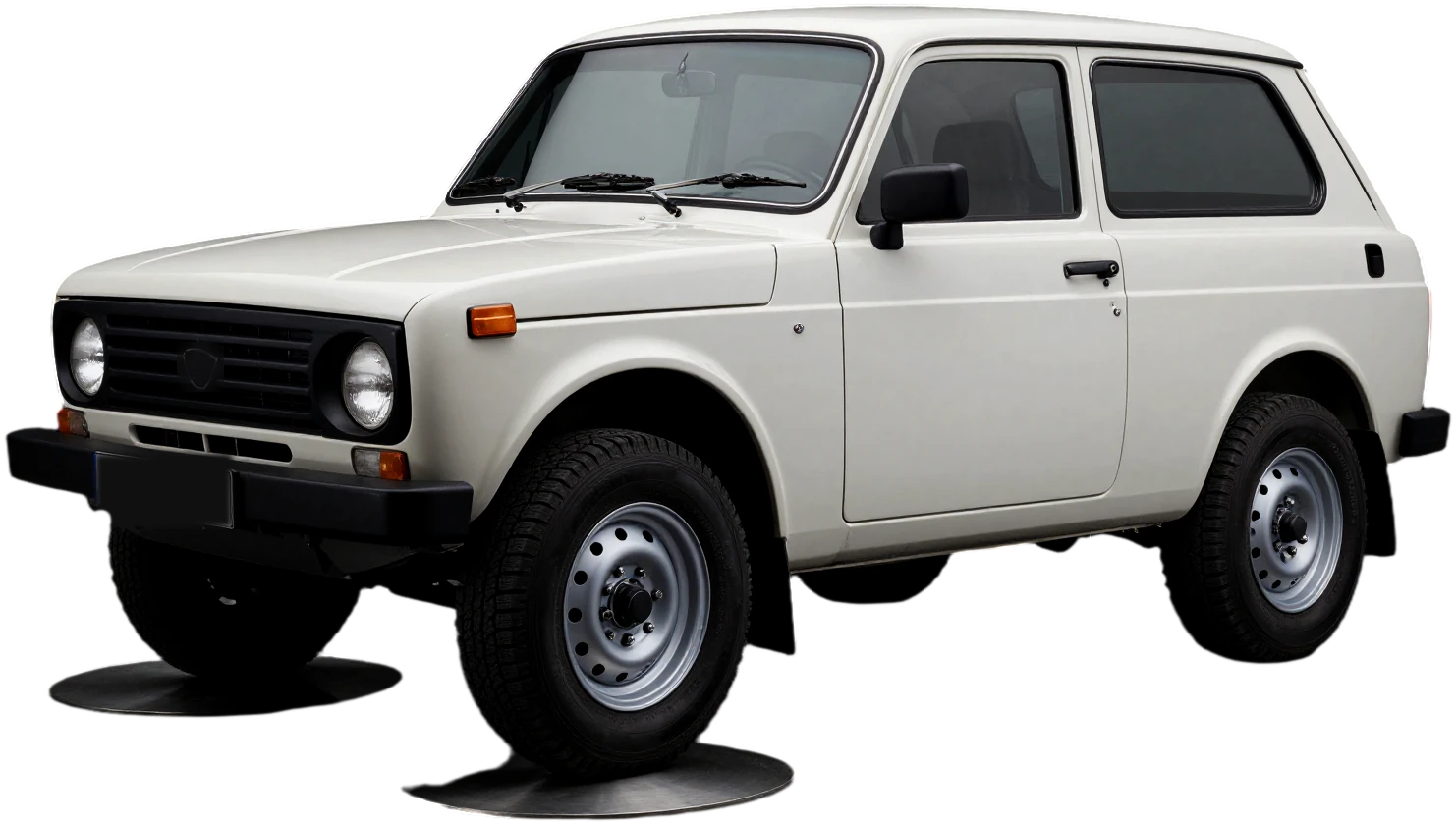
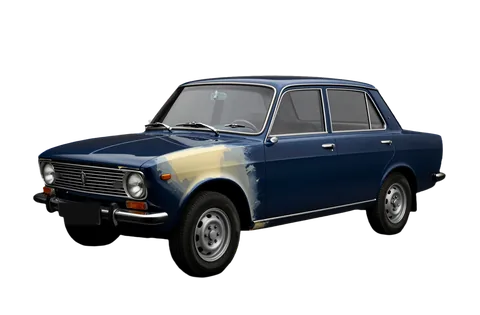
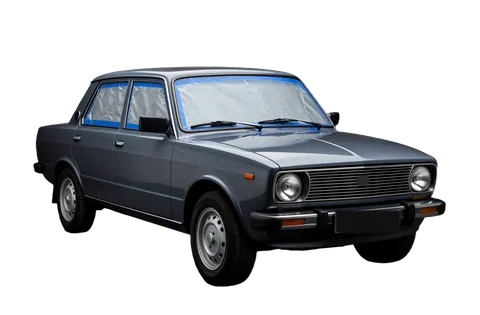
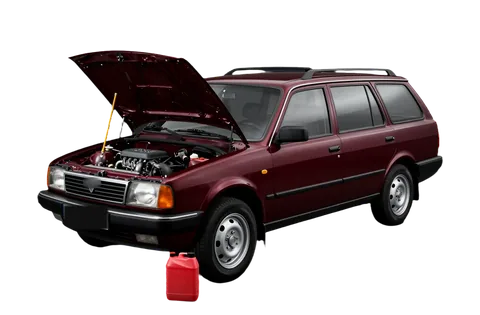
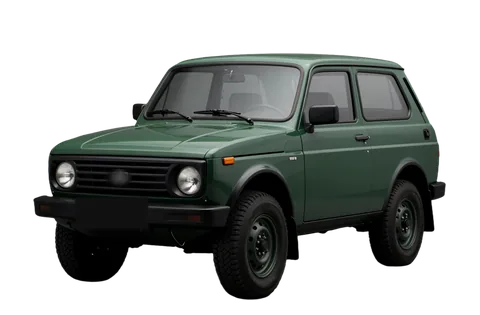
Lada has three different suspension designs, and the set of available adjustments is not the same across them — that determines what the technician actually does on the stand.
Why toe goes out faster on a Lada and what lowering has to do with it
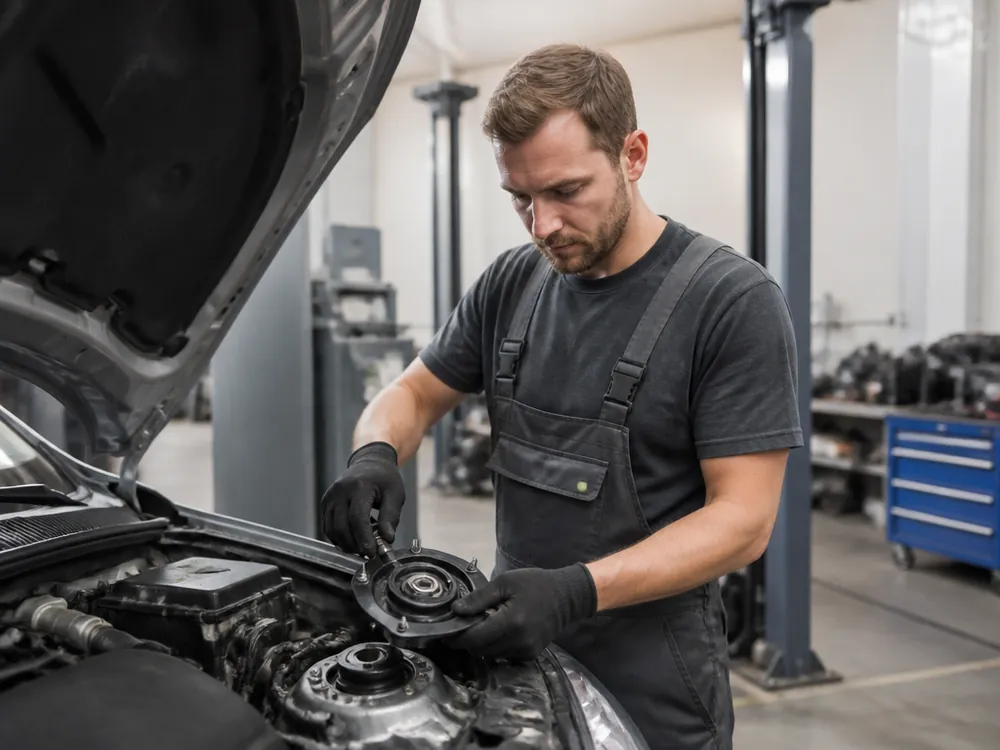
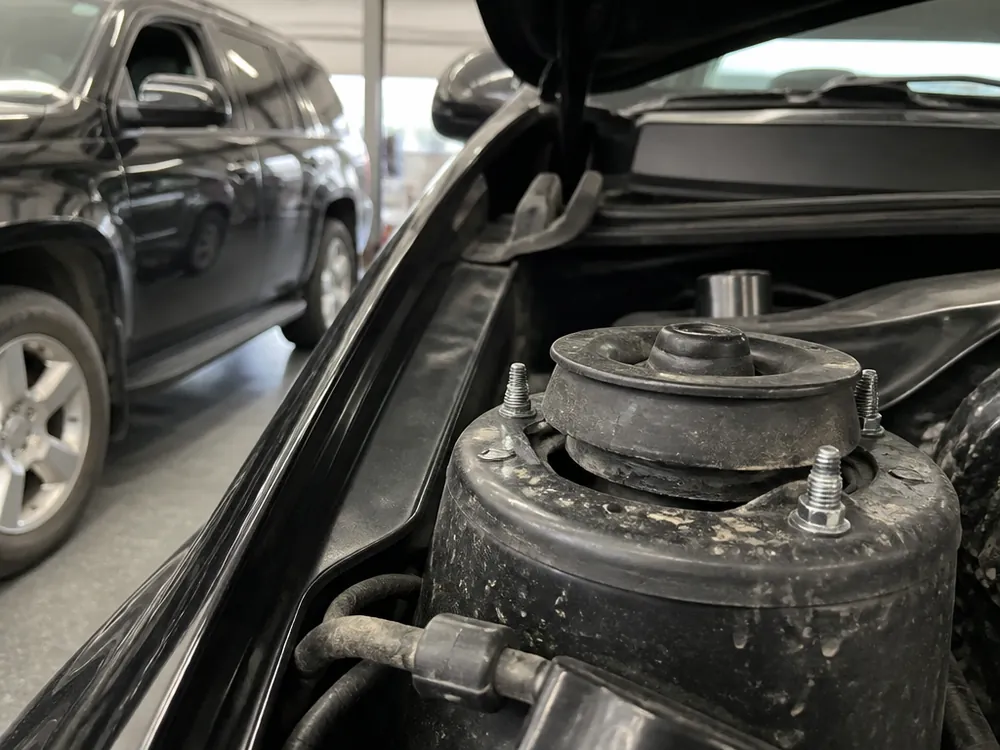
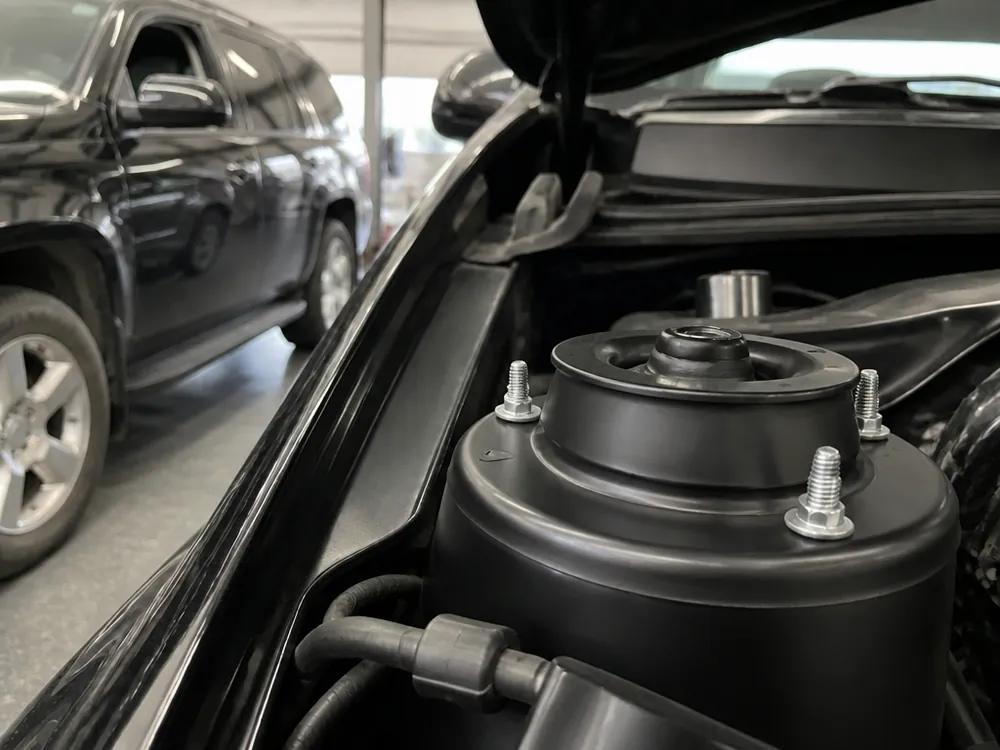
Angles go out faster on a Lada because of play in the tie rods, ball joints and strut bearings — these parts wear out sooner than on foreign cars, and any free play shifts the angle under load. Before adjusting, the technician checks the tie rod, ball joint and strut bearing: until the play is fixed, setting the angles is pointless — the toe will go out within 100 km. On a lowered suspension the factory specs don't apply — we set the angles individually for the actual ride height, otherwise the tire will keep wearing at the edge. In our experience, a sagging spring or a worn strut bearing on a front-wheel drive model is most often what explains why the steering wheel points sideways again after the last adjustment. We also check the steering gearbox separately on the classic: its wear creates noticeable free play that looks like lost toe on the stand. We adjust camber on front-wheel drive Ladas and the Niva only after replacing worn mounts — otherwise the new angles won't hold for long.
When it's time for the stand and how often to check the angles
Angles don't just get knocked out by potholes. There are situations when you need to get on the stand right away, before the tire starts wearing at the edge.
Signs the angles are off
- Pulling to one side: on a flat road the car pulls left or right, and you have to keep correcting to hold a straight line.
- Crooked steering wheel: when driving straight, the spoke isn't centered but noticeably tilted to one side.
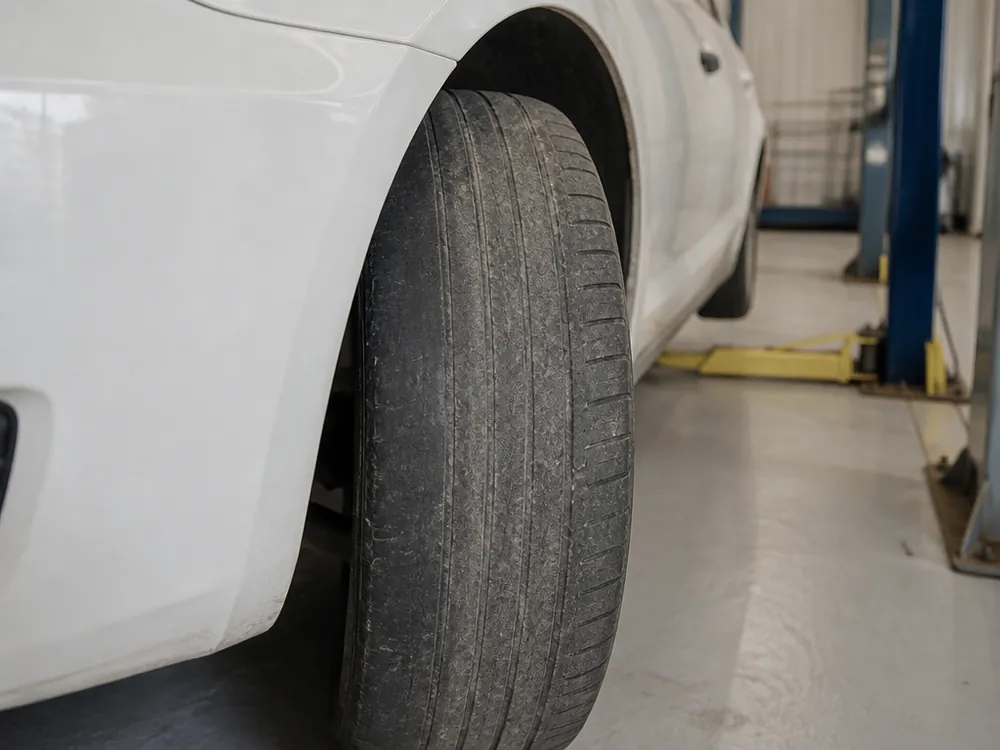
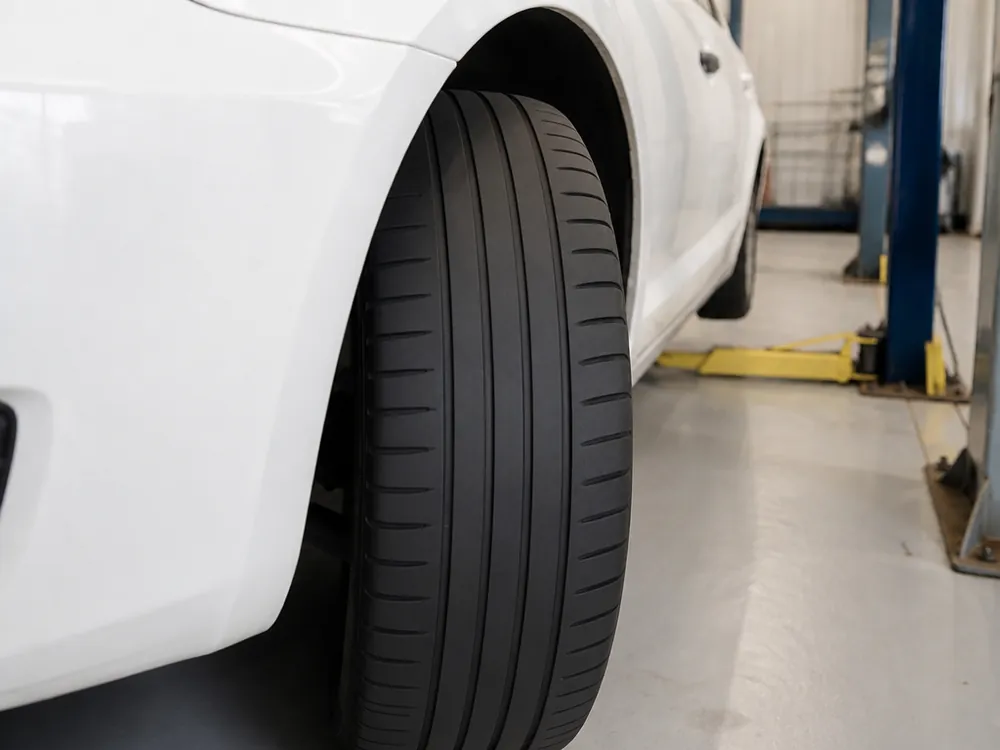
- Edge wear: the inner or outer edge of the front tires wears faster than the rest of the tread.
- Wheel impact: hitting a curb or a deep pothole at speed is a reason to check the angles right away, not later.
- Suspension repair: replacing struts, ball joints, tie rods and strut bearings changes the geometry, so a check measurement is needed.
- After a tire change: if the car pulls on new tires, we check the suspension and angles instead of blaming it on the tires breaking in.
How often to check the angles on a Lada and after which jobs
We check wheel geometry on a Lada every 15–20 thousand km, and also after replacing struts, ball joints, tie rods and strut bearings — these jobs change the wheel position. A check measurement after such a repair is a must. Toe after such a replacement drifts by an average of 0.3–0.8 degrees, and the car starts eating the edge within a couple thousand kilometers. On our stand we first measure the actual values, and we replace the strut bearing, tie rod and ball joint before adjusting, otherwise the numbers we set will drift again. The gearbox and camber on the classic need a separate approach — there the measurement follows its own method. We check Priora wheel alignment the same way: first the measurement, then the adjustment. After the seasonal tire change the readings don't change, but if a pull shows up on new tires, that's a reason to check the suspension rather than wait for the rubber to wear down.
How Lada wheel alignment is done on the stand
The order of work on the stand determines whether the result lasts until the next check. That's why we don't set the angles while there's still play in the suspension — otherwise the work is wasted.
Why we fix play first and set the angles after
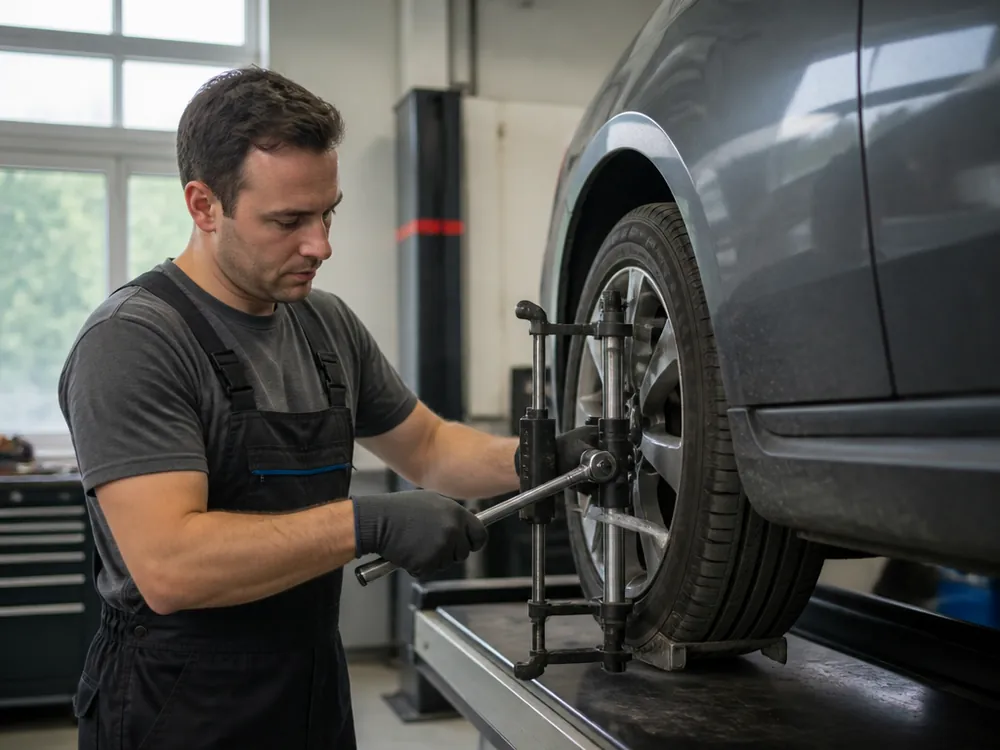
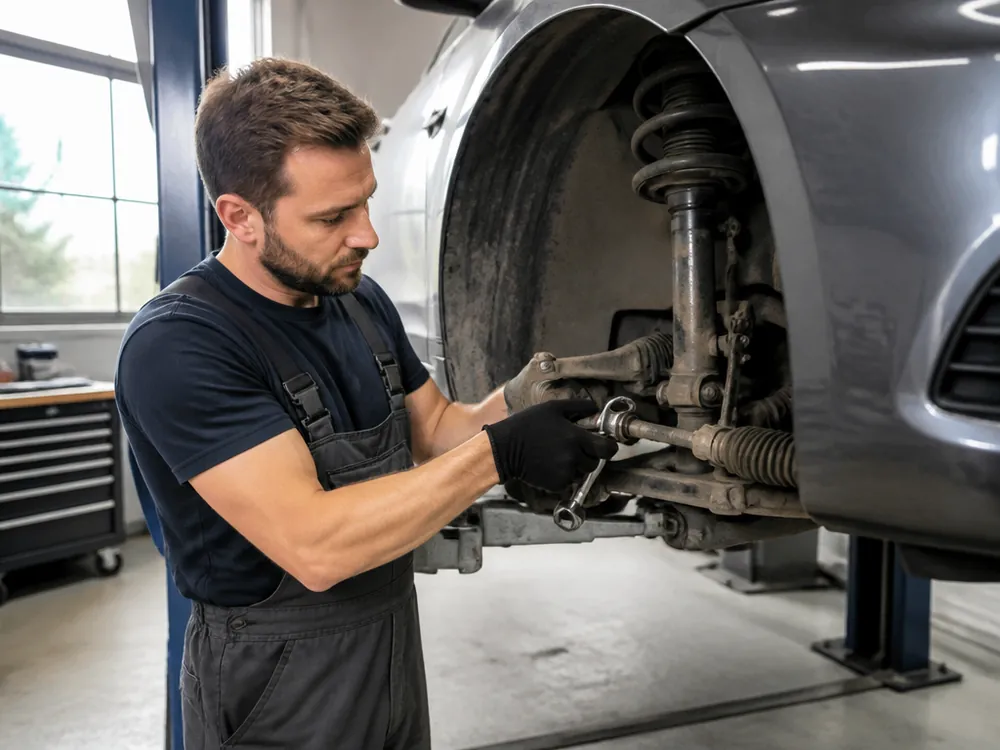
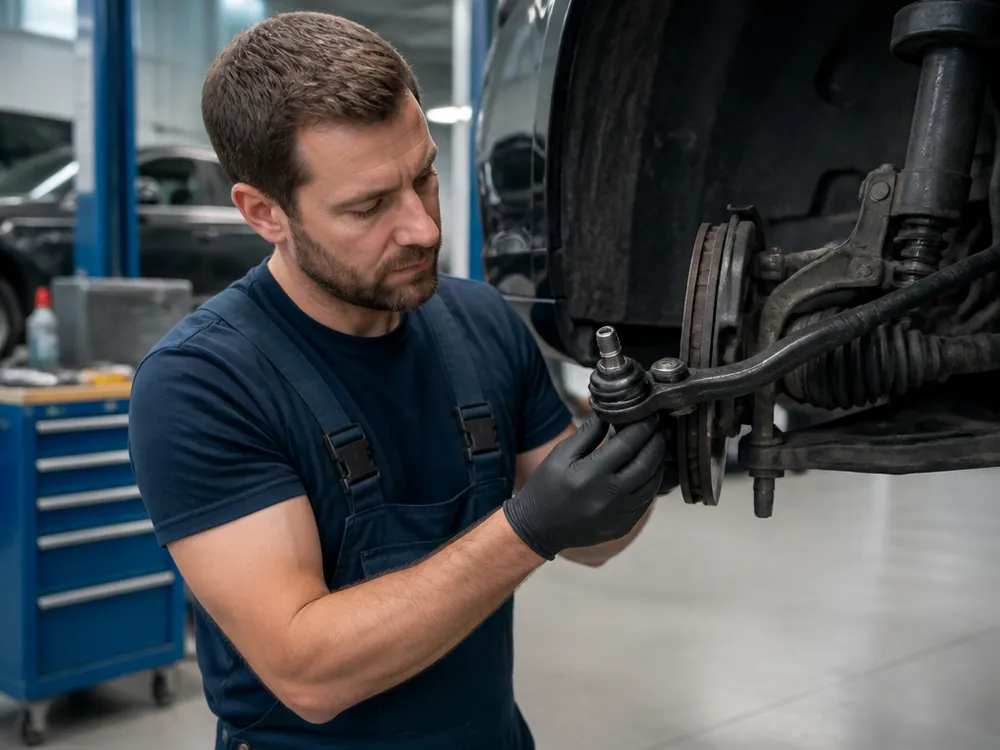
We adjust with no play — before adjusting we inspect the tie rods, ball joints and strut bearings, and if there's play, we fix it first, otherwise the toe will go out within 100 km. Lada wheel alignment in Almaty starts with exactly this check, because a worn part cancels out any precision of the stand. A worn ball joint gives free play in turns, a tie rod with a worn end wanders on bumps, and a sagging strut mount changes the knuckle angle. All three parts on front-wheel drive Ladas are replaced separately from the strut, so the replacement doesn't require taking the whole assembly apart. On the classic, steering knock and free play usually come from the steering gearbox rather than the tie rods — so on the 2101–2107 we check the mesh play separately and tighten it if needed. Angles don't hold long on a worn part: the technician sets zero, and a hundred kilometers later the wheel pulls to the side again.
Toe in two stages and why we roll the car
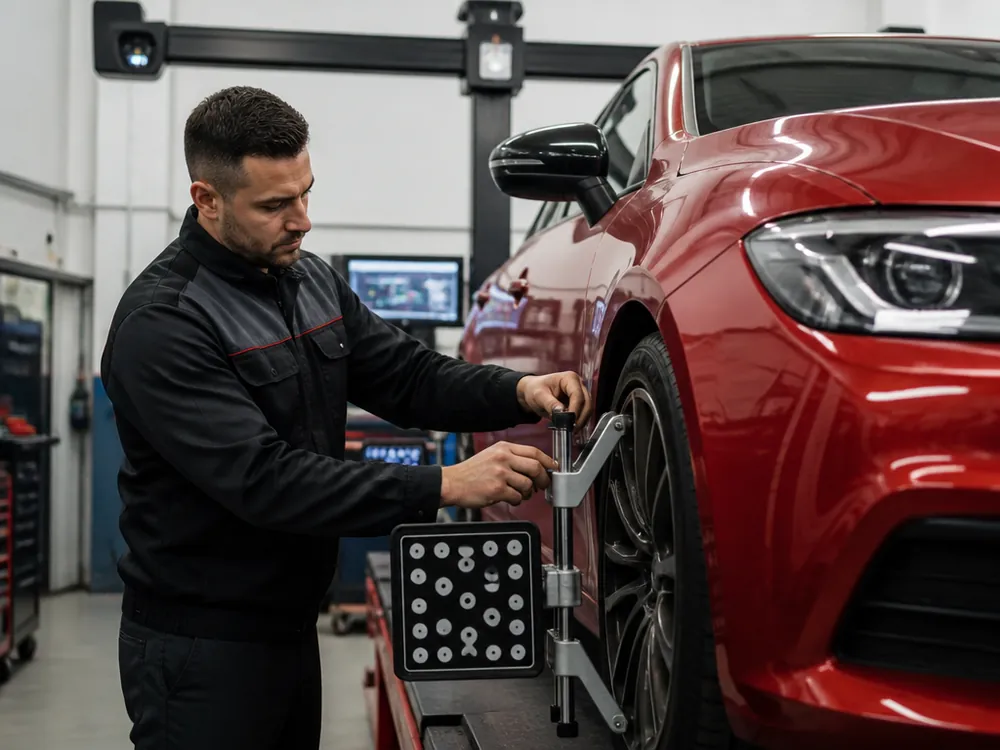
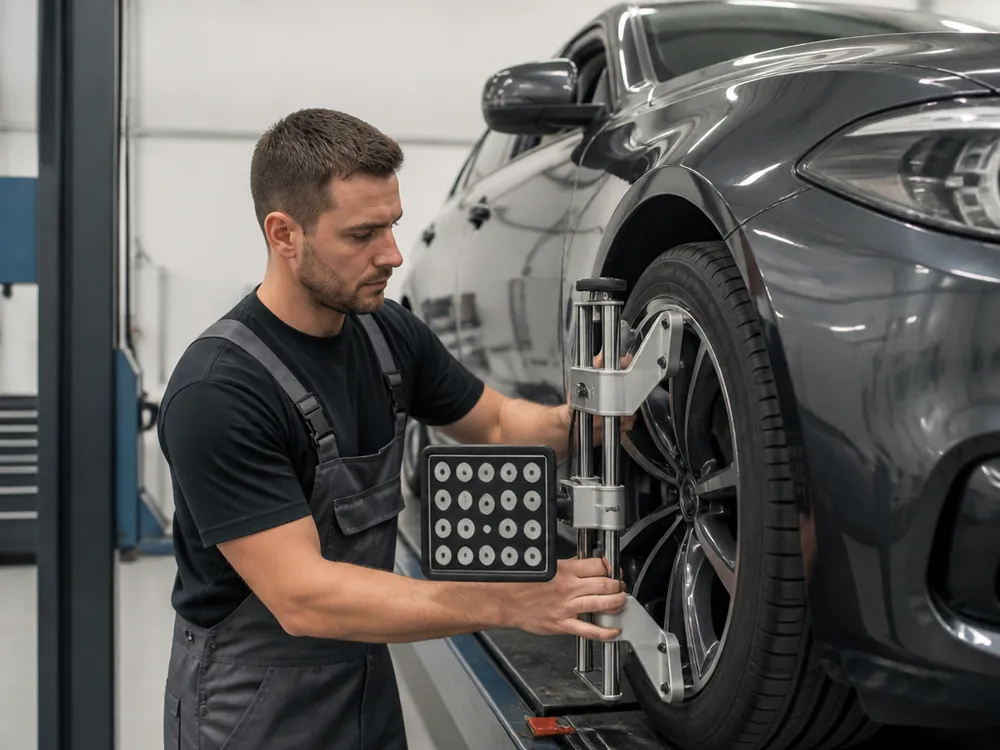
We set the alignment in two stages — first a preliminary adjustment, then we roll the car and correct it a final time, so the angles stay accurate under load on the suspension. Our 3D stands read deviations down to 0.01°, but that precision is useless if the bushings and springs "settle" after the car is back on its wheels and rolls a few meters. We take the preliminary readings with the suspension raised, then lower the car, roll it, and take the control readings under load. We compare the final printout with the original — the difference shows line by line for each wheel. If a wheel is out of tolerance, the technician corrects the position and re-runs the measurement until all four wheels are within spec. Before handover, the technician takes the car for a test drive and makes sure the steering wheel is straight and the car tracks straight at speed.
What the pre-adjustment check includes
- Wheel alignment angles: measured on a 3D stand before any work, we record the starting position.
- Tie rods and ends: we check for play and replace worn parts before adjustment.
- Ball joints: free play in a ball joint is a common reason Lada angles drift.
- Strut top bearings: we assess their condition and replace them if worn.
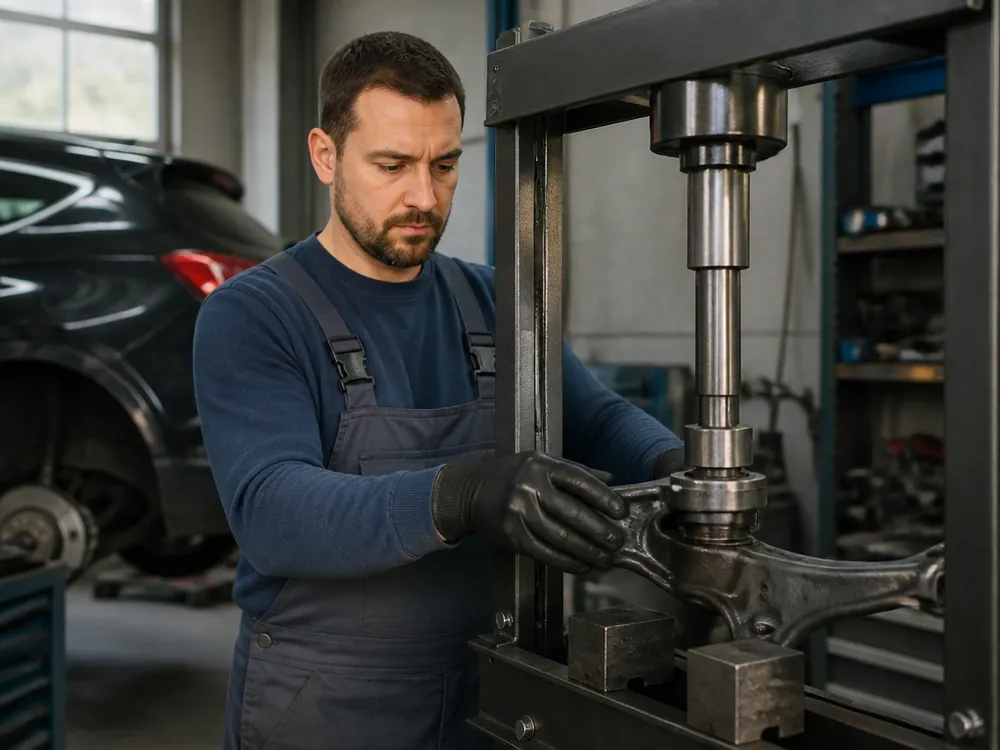
- Control arm bushings: cracks and tears affect how stable the angles stay.
- Steering gearbox: on the classic models we check free play and tighten it if needed.
- Written estimate: if a part needs replacing, we show it to the client and get approval before starting the repair.
If the car still pulls after alignment
Still pulling even though the stand showed it in spec? The cause isn't always geometry — here's what we check first and in what order.
What we check first when the car pulls
When a car pulls after alignment, we first check tire pressure, tread wear, and the condition of the calipers, then any remaining play in the suspension and steering. A pressure difference of 0.3–0.5 bar between wheels on the same axle already creates a noticeable pull at 90–100 km/h. A sticking caliper brakes one wheel and pulls the car to the side — on the lift you can see it by the heat of the disc and uneven pad wear. Next we check the steering gearbox and tie rods: on the Priora, the steering wheel ends up crooked after tie rod replacement if the technician didn't set the rack position to the marks before adjustment. When the steering wheel returns to center worse than before, it's usually an over-tightened gearbox or uneven tire wear across the axles, not the angles. This check is done by the technician who handled the work order — he's the one who tracks down the cause.
How the warranty re-check works
Diagnostics for a warranty case are free — if the car starts pulling, come in, we'll re-check the geometry and find the cause. First the service advisor compares the stand printout with the current readings: if the difference is within tolerance, the settings are holding, and we keep looking — tires, brakes, play. If an angle has drifted, we look at what changed since the car was handed over. The alignment warranty is 6 months, and we record the term and conditions in the work order and the completion certificate at handover. The warranty covers the work performed and the parts installed, but not an accident after the repair, third-party interference, or a part the client brought in. So before a repeat visit, don't change anything in the suspension yourself — otherwise the case is no longer covered.
Preparation, procedure time, and warranty
To keep the procedure free of surprises, it's worth preparing the car in advance, and when it comes to the warranty, knowing before your visit exactly what it covers and for how long.
How to prepare your Lada for alignment
- Tire pressure: set it to the spec for your model — half an atmosphere of difference already skews the angle readings.
- Load: remove extra weight from the trunk and cabin, it changes the suspension position on the stand.
- Condition of the parts: if you know about play or a knock, tell the service advisor in advance, before the car goes up.
- Your own parts: you can bring tie rods, ball joints, or top bearings — we install OEM, aftermarket, or client-supplied parts, your choice.
- Time: the procedure itself takes about an hour, longer if parts are replaced; we'll give you the exact time after diagnostics.
What the 6-month warranty covers
We give a 6-month warranty on the alignment, and we record the term and conditions in the work order and the completion certificate when the car is handed over. Before handover, the technician takes the car for a test drive and checks how it behaves in a straight line, and takes photos of the key stages of the work. The warranty covers the work performed and the parts installed; diagnostics for a warranty case are free. It does not cover an accident after the repair, third-party interference, normal wear of consumables, or a part the client brought in. In my experience, that last point is what most surprises Lada owners who bring their own tie rods: if the part fails quickly, there's no one to make a claim against, so we inspect such parts before installation and record their condition in the work order.
Key Aspects of Lada Wheel Alignment
Here's a quick summary of wheel alignment on a Lada — what determines the scope of work, why play comes before the stand, and how to make the result stick.
- The family determines the adjustments: on the classic VAZ models, camber, toe, and the gearbox are adjustable; on front-wheel-drive models and the Niva, only the front axle.
- Play comes first: alignment on worn tie rods or ball joints doesn't hold — toe drifts within 100 km.
- Two stages are more accurate: a preliminary setting, a roll, and a final correction keep the setup after load on the suspension.
- Triggers matter more than mileage: after a pothole, or replacing struts or ball joints, come to the stand right away instead of waiting for the scheduled 15–20 thousand km.
- The warranty is in the document: the term and conditions must be written in the work order and certificate, not just promised verbally.