Automatic Transmission Fluid Change · Mitsubishi · all models
Mitsubishi Automatic Transmission Fluid Change in Almaty
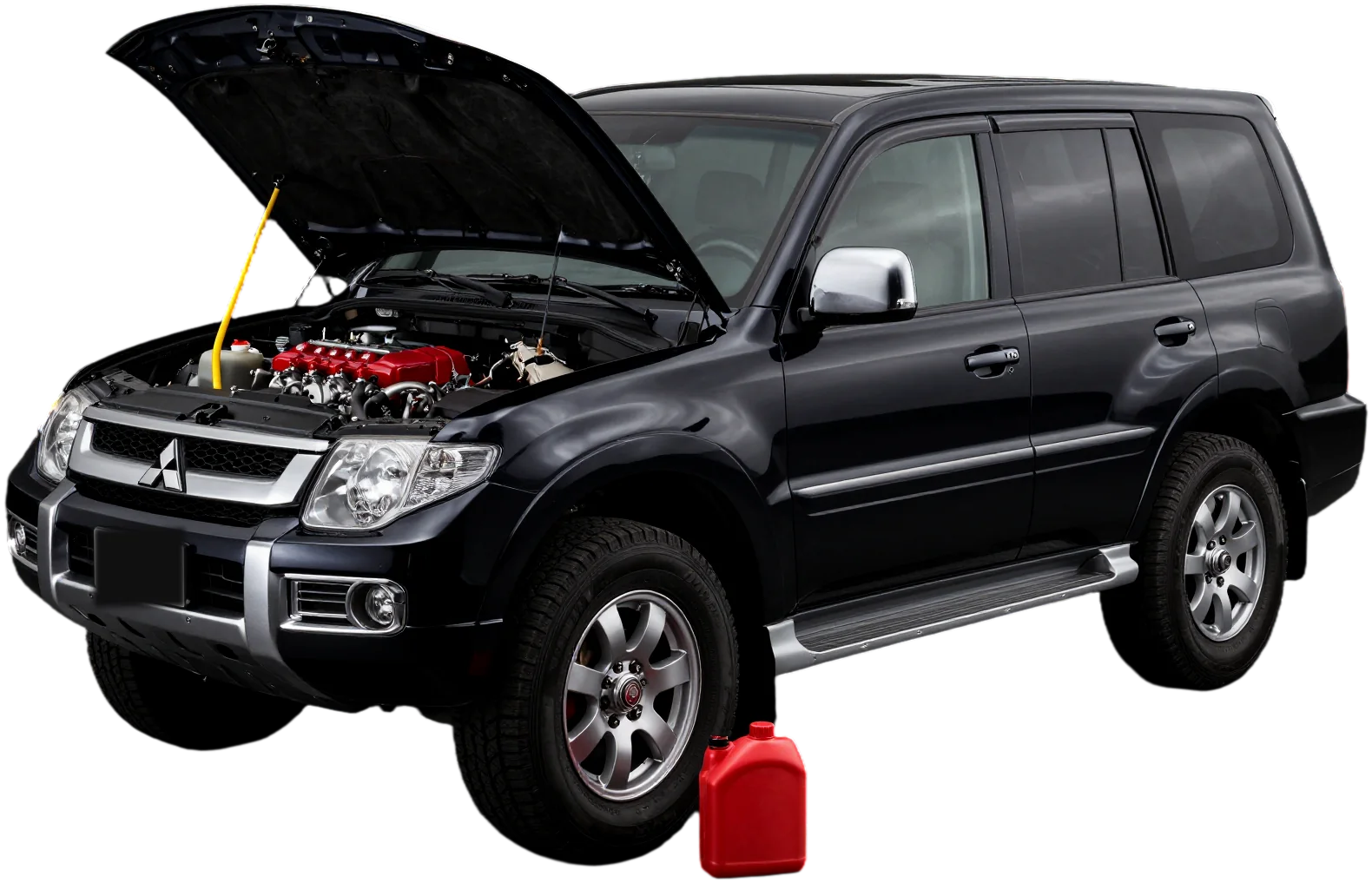
An automatic transmission is a complex and expensive unit. To keep it running smoothly, it is important to change the fluid on time. At the CARGID service in Almaty, we perform Mitsubishi automatic transmission fluid change in compliance with the regulations and using quality materials. Warranty on work — 6 months.
Automatic Transmission Fluid Change Including Materials
2–3 hours
6 mo
from 35 000 ₸
The final price depends on the type of fluid, quantity, and vehicle condition. The exact cost will be provided after diagnostics. Warranty periods — see the page «Warranty»
06
Advantages of Mitsubishi Automatic Transmission Fluid Change at CARGID
Warranty.
Every promise — backed by a number or a document: work order, photos, removed parts.
6MO
warranty on labor — the term is stated in the work order.
Pan flushing
Level check
Resetting the aging counter
01
We Drain 90% of the Old Fluid
During flushing, we run 8–10 liters through the machine under pressure. Minimal old fluid remains, not half of the dirty fluid in the valve body.
02
New Filter and Gasket
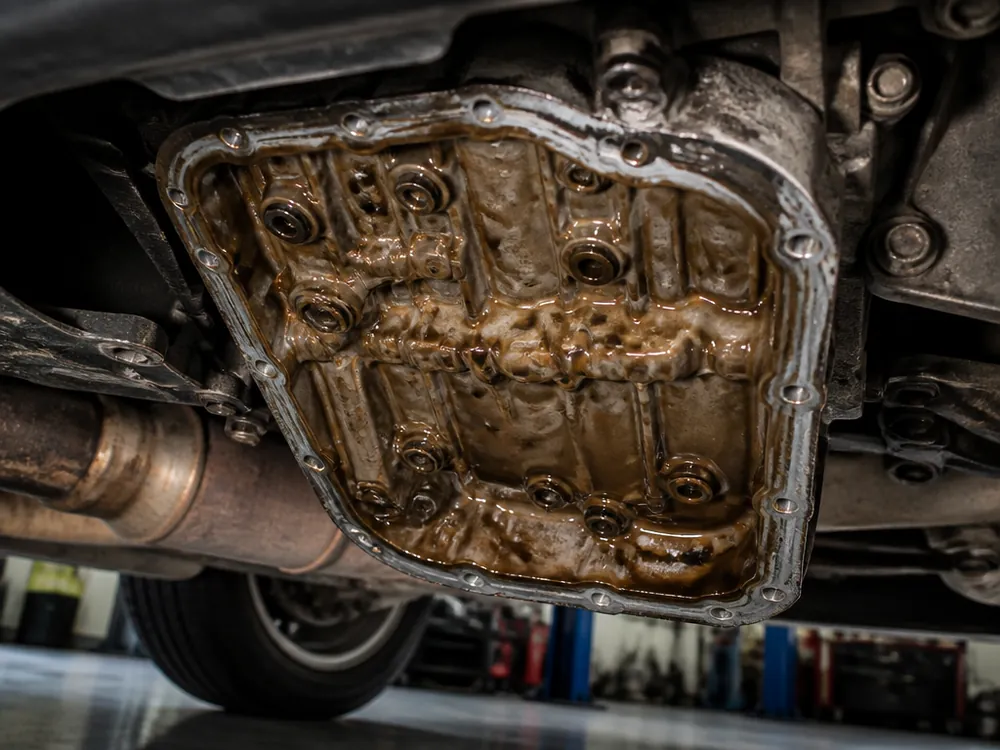
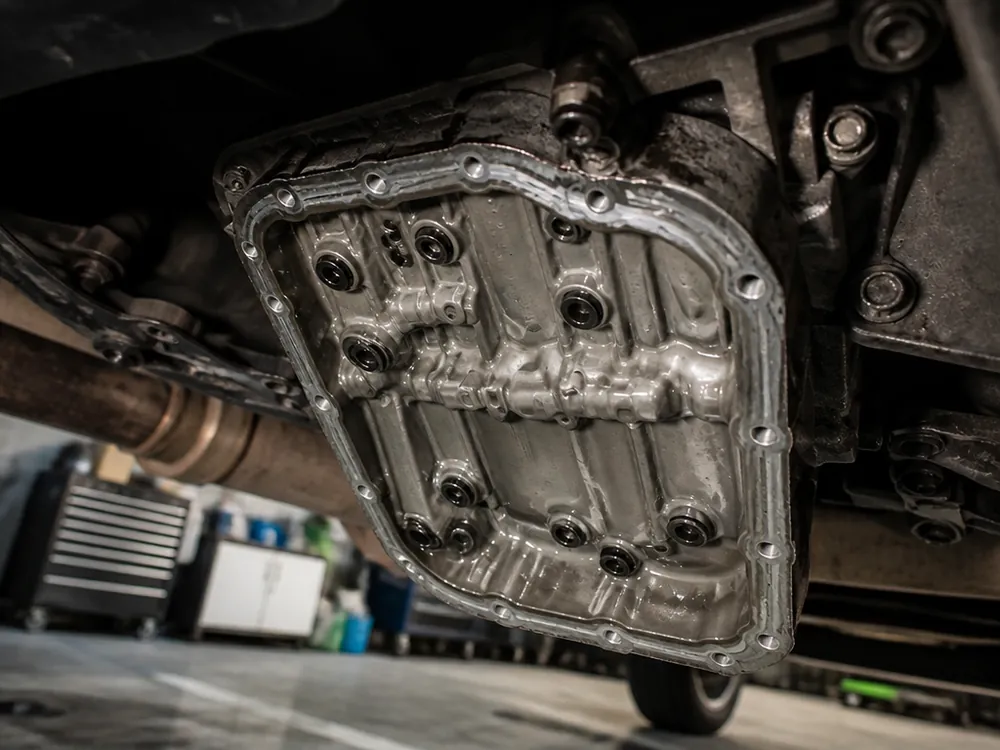
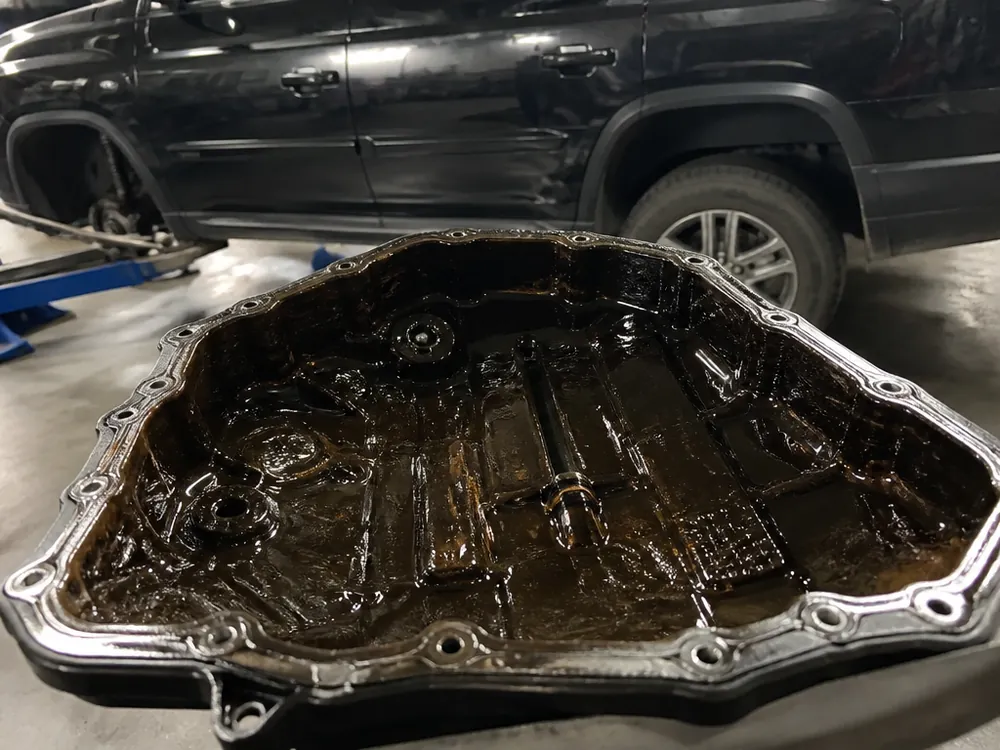
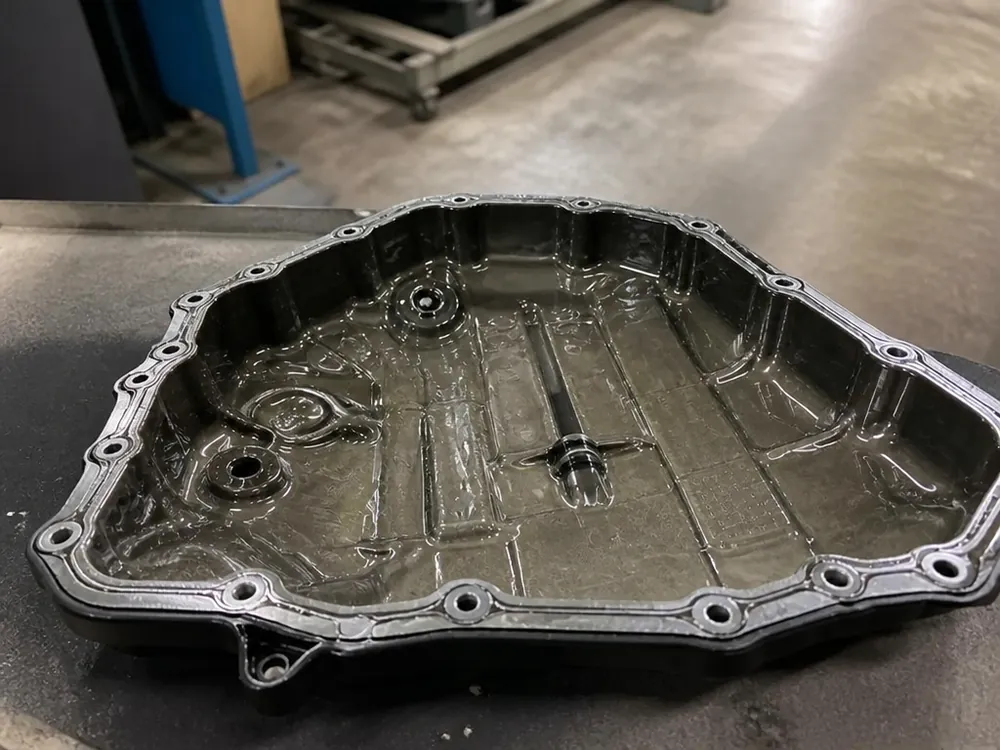
We remove the pan, install a new automatic transmission filter and gasket. The old gasket leaks after re-tightening, so we do not reuse it.
03
We Measure the Level by Temperature
The level is set at 40–50 °C using the dipstick or control plug. Overfilling and underfilling equally kill the friction plates.
04
We Give a 6-month Warranty
We cover sweating and leaks from the pan gasket. If a leak appears after replacement in our work area, we will redo it for free.
07
How Mitsubishi Automatic Transmission Fluid Change is Performed
Steps.
We explain step by step what happens to your transmission at our service center.
01
Inspection and Check
You submit a request on the website or by phone, and we find a convenient time. We check the fluid level and condition, as well as the integrity of the automatic transmission pan.
request on WhatsApp
02
Fluid Selection
We determine the correct type and volume of fluid for your Mitsubishi model.
inspection and diagnostics
03
Draining the Old Fluid
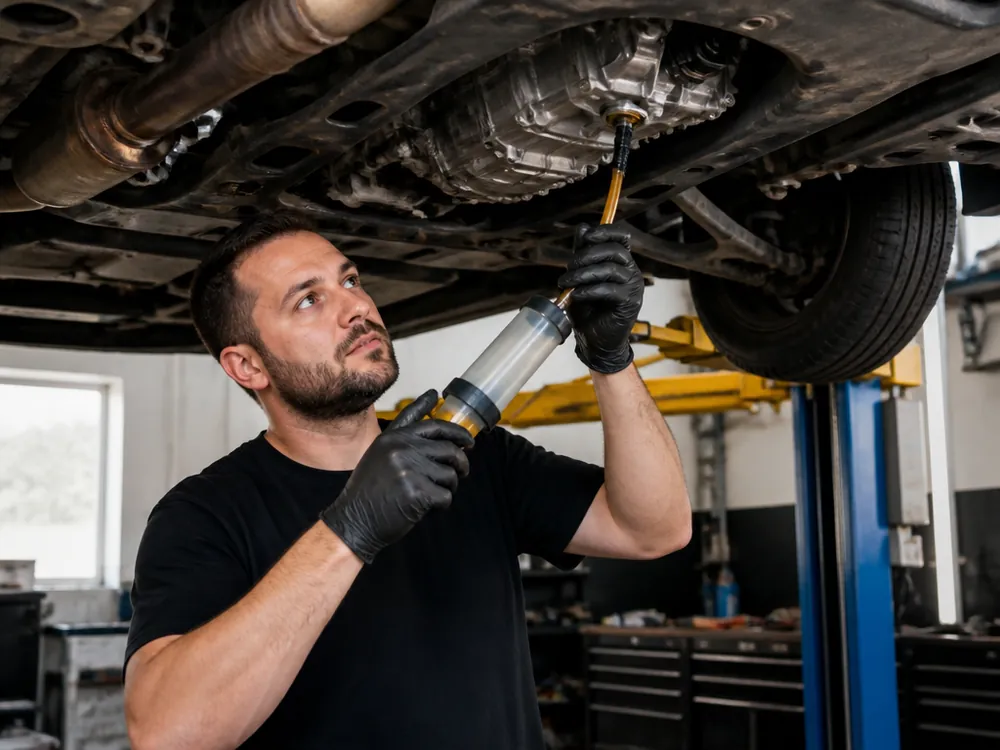
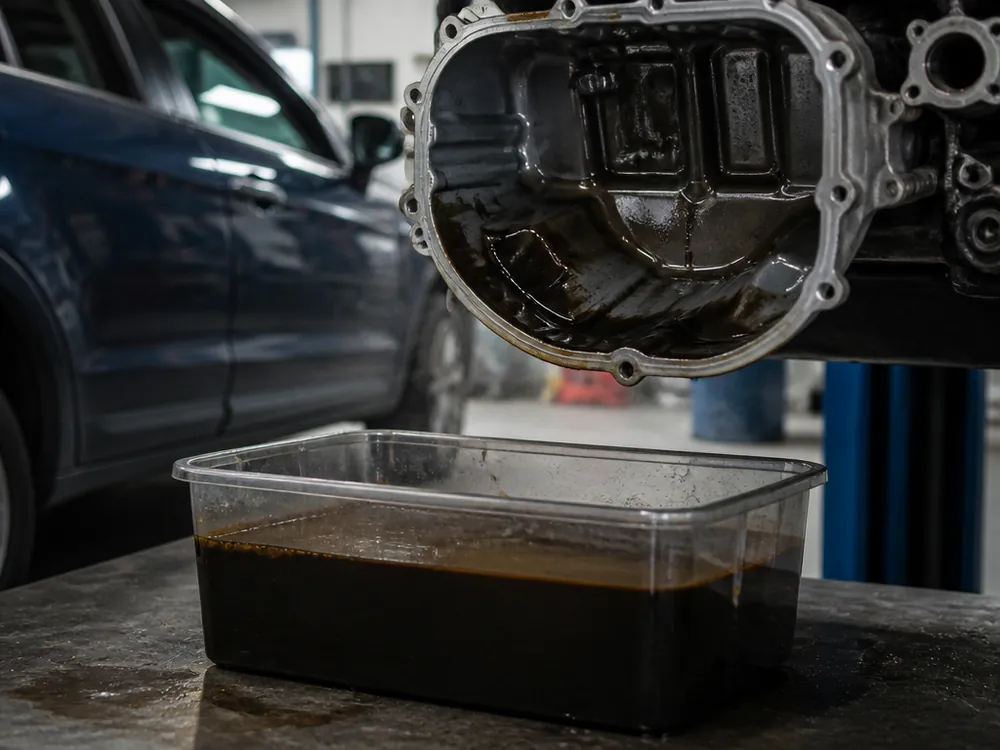
We drain the old fluid through the drain plug or pan, and assess for metal shavings.
estimate before work starts
04
Filter Replacement
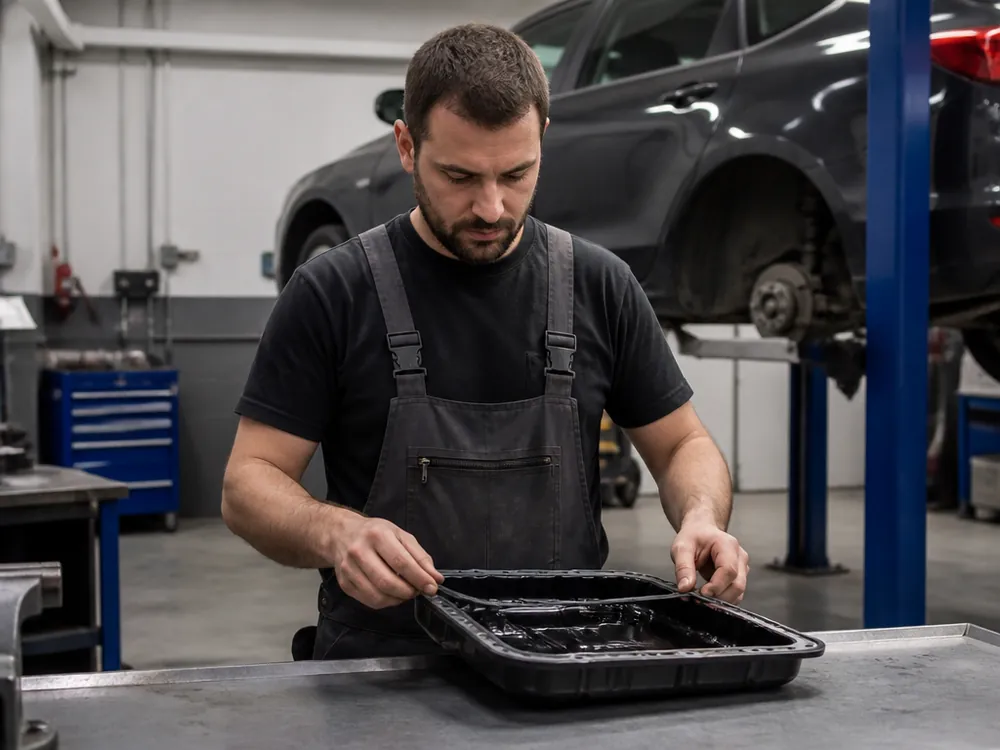
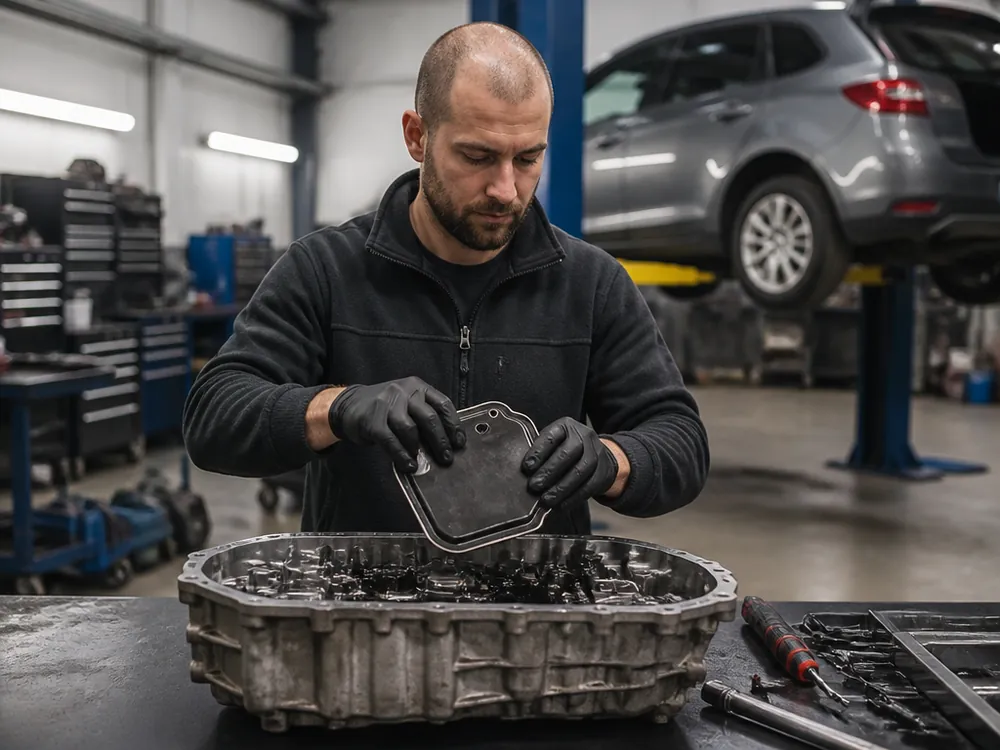
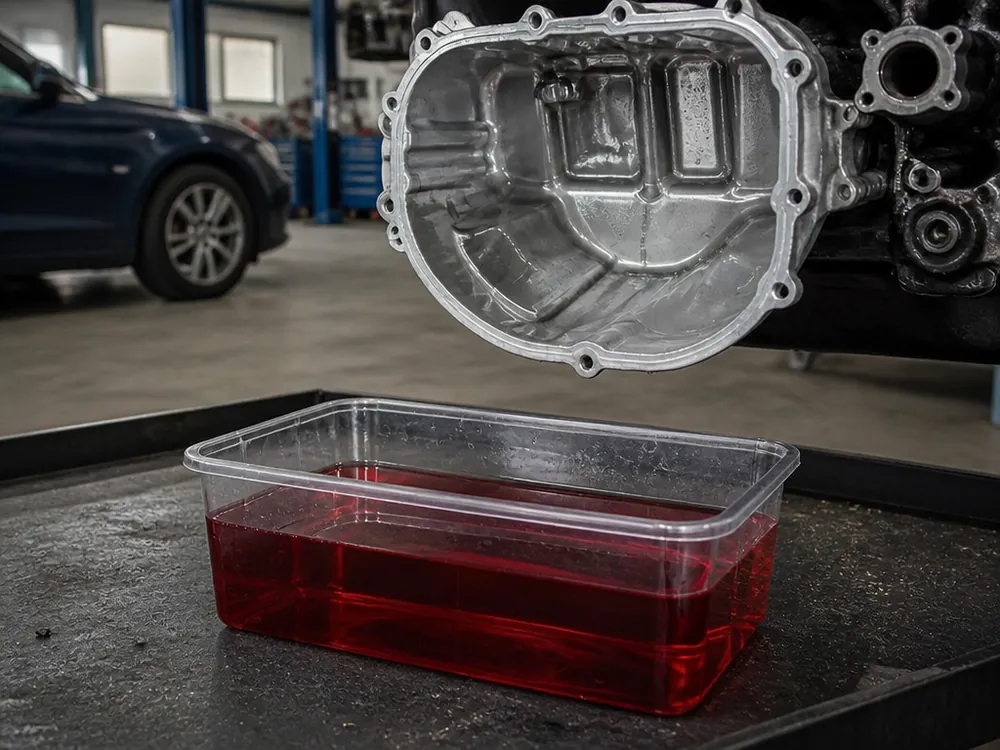
We replace the automatic transmission filter and pan gasket to keep the system clean.
work to factory procedure
05
Adding New Fluid
We pour fresh fluid through the filler neck exactly to the norm.
result check
06
Vehicle Handover
We warm the transmission to operating temperature, check the level and shifting. We return the car with a clean automatic transmission compartment and fluid of suitable quality.
Car service in Almaty. We reply on WhatsApp and by phone.
15 000 ₸Mitsubishi Automatic Transmission Fluid…
10 · Useful
Mitsubishi Automatic Transmission Fluid Change in Almaty by CARGID Technicians
Author: Роман Вернерgeneral car repair technician, 13 years of experience
Published Updated
CARGID in Almaty changes Mitsubishi automatic transmission fluid with the pan removed, a new filter and gasket, and the level set at 40–50 °C. First comes diagnostics and a written estimate, with a 6-month warranty on the work recorded in the work order. Open daily 09:00–20:00 by appointment, no waiting in line.
When It's Time to Change the Transmission Fluid and How to Tell by How It Behaves
The change interval depends not only on mileage but also on driving conditions: heat, traffic jams and dust shorten ATF life. Let's go over how to spot it by how the transmission behaves.
How Often to Change Mitsubishi Automatic Transmission Fluid in Almaty Conditions
We go by the model's manual with an adjustment for local conditions: in city driving with traffic jams and summer heat, the fluid ages faster than on the highway. Mitsubishi hydraulic automatics are rated for gentle use per the schedule, but heavy traffic on the avenues and uphill climbs in the foothills mean constant acceleration and braking. Road dust and overheating in jams speed up oil oxidation, so during diagnostics we assess the condition of the used fluid by color, smell and wear products, not just by the number on the odometer. A Mitsubishi automatic transmission fluid change in Almaty with local conditions in mind is exactly the case where it's better not to wait until the jerking starts. The service advisor records these parameters in the work order before any work begins. Because of heat and dust, ATF loses its properties sooner than the scheduled interval, so go by how the transmission behaves, not by the mileage.
Signs It's Time to Change the Fluid in a Mitsubishi Transmission
Jerking when shifting: jolts and impacts when changing gears mean the fluid has lost viscosity and can't hold pressure in the valve body.
Delays and slipping: a pause between pressing the gas and starting to move points to a pressure drop from a clogged filter or old used fluid.
Darkening and a burnt smell: dark fluid with a burnt smell on the dipstick is a sign of overheated clutches, when the oil no longer does its job.
Increased noise and vibration: a hum while driving and vibration at idle indicate the torque converter is running on worn fluid.
Preparing to sell: before a deal, check the used fluid and how the transmission behaves in advance so you don't have to change the fluid in a rush.
Don't judge by color alone: CVTs may not have a dipstick, and on hydraulic automatics the color changes later than the jerking starts, so we look at behavior and wear products.
Partial or Machine Fluid Exchange and What to Do at High Mileage
The two methods solve different problems, and the choice depends on mileage and the condition of the transmission. We show the difference between them and go over when each is appropriate.
How a Partial Change Differs from a Machine Exchange
comparison of ATF refresh methods by procedure and volume
Method
What we do
Fluid volume
When it's appropriate
Partial
drain through the pan, refill, new filter and gasket
less, some of the old fluid remains
routine maintenance, gentle driving
Machine
pressure exchange with circulation through the whole system
8–10 liters
average mileage, a full exchange is needed
Repeated partial
a second visit after 1–2 thousand km
less, the share of fresh fluid grows
high mileage, dirty used fluid
Should You Do a Machine Exchange on a Pajero 3 with 180 Thousand km
At high mileage, we first look at the used fluid and how the unit behaves, and only then decide whether a machine procedure is appropriate on the Pajero or a partial change is safer. On a Pajero 3 with 180 thousand, the condition of the clutches and valve body matters more than the odometer reading — we remove the pan and assess the layer of metal shavings on the magnets and the color of the used fluid. If the Pajero's automatic fluid is dark with visible particles and the transmission jerks when shifting, pressure displacement can stir up deposits and speed up wear — then we suggest a partial change with a new filter and gasket. Clean used fluid without a burnt smell and smooth operation allow a machine exchange. Diagnostics come before work, not after, so we first show the used fluid and a written estimate, and only proceed after you agree.
What Fluid, Filter and Gasket Mitsubishi Needs
The specification and filter availability depend on the transmission type, so we first determine what's in the car and only then pick the consumables.
What Fluid to Put in a Mitsubishi Automatic Transmission — SP-III, J1 or J4
The fluid specification is tied to the transmission type: ATF SP-III for classic automatics, and J1 or J4 compounds for CVTs depending on the model. Early Outlander and ASX hydraulic automatics have a four-speed automatic with SP-III, while later versions of the same models already have a CVT with J4. You can tell the units apart without a lift: on a CVT the selector moves through positions without detents and the Ds indicator lights up on the panel, while a classic automatic shows the usual P-R-N-D with a separate L or 2 position. Some cars have no dipstick at all — the level is checked through the check plug with the engine running. A mistake with the fluid type doesn't show up right away but through jerking and clutch wear, so we select by VIN and unit type, not by the label on the can. A Mitsubishi transmission fluid change starts with correctly identifying the unit type and the right specification.
Do You Need a New Filter and Pan Gasket for the Service
Removing the pan: we take off the pan to reach the filter and assess the condition of the magnets on the bottom.
New transmission filter: we install a fresh element — a clogged one lowers pressure in the valve body and causes jerking.
New pan gasket: we don't reuse the old one; after being retightened it leaks and seeps at the seam.
Fill volume: a partial procedure takes from 4 to 6 liters depending on the unit; the technician gives the exact volume after inspection.
Check after assembly: we start the engine, run through the gears and make sure the pan seam is dry.
CVT separately: on a CVT the filter may be built into the housing, so the procedure differs from a classic automatic — we first determine the transmission type.
How We Set the Level by Temperature and Why Overfilling Is Dangerous
The level in an automatic is the most common cause of problems after service, so we set it by temperature and test-drive the car before handing it over.
Why the Level Is Set at 40–50 °C
We set the level at 40–50 °C using the dipstick or the check plug, because the fluid expands as it heats up and reads wrong when cold. A Mitsubishi automatic is designed for a specific volume at operating temperature: on a warm unit the dipstick gives that exact mark that shows the real fill. We monitor temperature with a dealer scanner — it reads the transmission sensor directly, without the error of a household thermometer, and on different models the threshold zone shifts by a couple of degrees. On the Pajero with the four-speed automatic the dipstick is under the hood, while on transmissions without one the measurement is done through the check plug on the pan — the correct moment is when a thin trickle starts seeping out of it. Overfilling and underfilling kill the friction plates equally: in one case the fluid foams, in the other the pump draws in air, and both scenarios lead to jerking. In my opinion, skimping on this check makes no sense — a repeat valve body repair will cost more than one accurate temperature-based measurement.
Jerking after a change — normal or a service mistake
Light adaptation after servicing is possible, but persistent jerking more often points to a wrong level or a problem in the valve body and solenoids. Fresh fluid changes the pressure in the lines, and for the first few kilometers the transmission adjusts shifting to the new conditions — a short jolt going from first to second is expected here. It's another matter if the jerking doesn't go away and gets worse: then we recheck the fill, read solenoid fault codes with the scanner and check the pressure in the valve body. Scanner diagnostics and a repeat level check help tell one from the other, not topping up "by eye" — an extra half-liter only muddies the picture. Before handover we do a test drive: the technician drives the car and listens to how the transmission behaves under load so the client picks up the car without surprises.
Our own materials, warranty and how a visit goes
Let's go over what the work warranty covers, whether it holds with your own materials, and how a visit works from vehicle intake to handover.
What the 6-month warranty covers and what it doesn't
For automatic transmission work we give a 6-month warranty by type of work and record the term and conditions in the work order and the completion certificate at vehicle handover. The warranty covers the work performed and the parts we install. Diagnostics for a warranty case is free. The warranty does not cover an accident after repair, third-party interference, natural wear of consumables, or a part brought by the client. For the automatic transmission and engine the term is different — 12 months, while the oil procedure is covered by exactly the six-month period. In the work order the service advisor records the type of work, the parts installed and the handover date, so in a disputed situation it's enough to open the document. Before signing the certificate, check the list of work and the warranty term — a discrepancy with what was discussed at intake is easier to fix right away than after leaving the shop.
Can I come with my own oil and filter
Yes, you can bring your own materials: the warranty on the work still holds, but it doesn't extend to a part brought by the client. The choice is yours — OEM, aftermarket or client parts, and we don't push an option. Intake is handled by the service advisor: he inspects the car, creates the work order and manages it through to handover. We take a photo report at the key repair stages, and we show you the old parts and give them to you — you can see exactly what was changed and what condition the used fluid was in. In my experience, a dispute over whether the filter was changed is settled precisely by photos of the pan before and after. If you bring your own oil, check that it meets the SP-III or J1/J4 spec for your model — the wrong fluid undoes all the work.
Mitsubishi fluid change key takeaways
Servicing a Mitsubishi automatic transmission comes down to five things: driving conditions, the type of procedure, choosing consumables, the exact level and a documented warranty. Below is a short summary of each point.
Interval by driving conditions: heat, traffic jams and dust speed up fluid aging, so condition is judged by the used fluid and how the transmission behaves, not by mileage alone.
Procedure type by task: partial and machine methods solve different tasks, and at high mileage the choice is made after diagnostics, not in advance.
Consumables by unit: the fluid specification and whether there's a filter depend on the transmission type, so the unit is identified first, then the oil and filter are chosen.
Level by temperature: setting it at 40–50 °C is mandatory, because overfilling and underfilling harm the friction plates equally.
Warranty in the documents: the term and conditions are recorded in the work order; coverage applies to the work and installed parts, but not to a client part or the consequences of an accident.
11
Frequently asked questions about Mitsubishi transmission fluid replacement in Almaty
Questions.
Price, timeframes, warranty, payment — 10 questions asked most often.
10
Didn't find an answer?
Message us on WhatsApp — a service advisor will reply within 5 minutes.
The cost of transmission fluid replacement for a Mitsubishi at our auto service depends on the vehicle model, the type of transmission (CVT or classic automatic), and the replacement method: partial or machine. Prices start from 15,000 tenge for a partial replacement and from 25,000 tenge for a machine replacement with flushing. We will give you the exact cost after diagnostics, as different models require different amounts of fluid (from 4 to 12 liters) and filter elements. Typically the price range is from 35,000 tenge, including labor and materials. The difficulty of accessing the transmission pan and the need to remove the pan to replace the filter also affect the price.
A standard partial transmission fluid replacement for a Mitsubishi takes about 1 – 1.5 hours. A machine replacement with flushing and filter replacement, if provided by the design, can take 2 – 3 hours, as it requires removing the pan, cleaning it, and flushing the system with special equipment. If the car is not drivable or you need it urgently, we can perform the service on the day of request, if slots are available. The exact time depends on the model and condition of the gearbox.
The warranty for Mitsubishi transmission fluid replacement is 6 months or 10,000 km, whichever comes first. It covers the quality of the work performed: no leaks at the pan or drain plug, correct level, and compliance of the filled fluid with the manufacturer's specification. The warranty does not cover faults of the gearbox itself related to its natural wear or previous violations of operating conditions.
Yes, an appointment is desirable, as it allows us to prepare the necessary fluid and filters for your Mitsubishi model and guarantee the service at a convenient time for you. You can make an appointment by phone or via messengers. Customers often come without an appointment, and if there is a free slot, we take the car right away. However, during peak hours or on weekends there may be waiting. Therefore, we recommend booking in advance to save your time.
Yes, you can come with your own consumables. We will accept your fluid and filter, but in this case the warranty on the quality of materials does not apply — only on the work. It is important that the fluid and filter are suitable for your transmission model, otherwise we may recommend replacing them with suitable ones. If you are unsure about compatibility, our technicians will advise, but using unsuitable fluid can lead to gearbox malfunctions. If we are not confident in the quality of your materials, we have the right to refuse installation.
Neglecting Mitsubishi transmission fluid replacement leads to critical consequences. Old fluid loses its properties, becomes contaminated with wear products from the clutches and metal shavings, which accelerates wear of the valve body, solenoids, and bearings. You will notice shocks, jerks when shifting, and a burning smell. It is recommended to change the fluid every 60,000 – 80,000 km for classic automatic transmissions and every 40,000 – 60,000 km for CVTs, but exact intervals are specified in the owner's manual. Exact prices are in the price list on this page.
Partial replacement is simpler: the old fluid is drained through the plug, and new fluid is added. Only part of the volume is renewed (about 30-50%), and old contaminated fluid remains in the system. Machine replacement (or the displacement method) is carried out using special equipment that flushes the entire system, displacing old fluid with new under pressure. This allows almost 100% of the volume to be renewed. Machine replacement is more effective, especially for old gearboxes with heavy contamination, but it costs more. We recommend machine replacement for scheduled maintenance and if the gearbox works without complaints, and partial as a preventive measure for high mileages.
After transmission fluid replacement, it is important to follow several rules. In the first 100-200 km, avoid hard starts and aggressive driving, let the gearbox adapt. Check the fluid level after a few days, as the system may release air and the level may change. Watch for leaks — there should be no oil stains on the asphalt. If you notice unusual sounds or jerks, immediately contact the service for diagnostics. Regularly undergo maintenance and change the fluid within the intervals recommended by the manufacturer (usually 60-80 thousand km). Following these recommendations will extend the life of the transmission.
We accept cash, Visa and Mastercard cards, as well as Kaspi QR and transfers. For legal entities, payment by bank transfer is possible with all necessary documents. Payment is made after completion of work; you can see the process and result. If you need a receipt, we will issue it in the established manner. No prepayment is required; if you have booked in advance, we reserve the time and necessary materials for you. For large orders, partial prepayment is possible.
Signs that Mitsubishi transmission fluid needs replacement: 1) The gearbox shifts with jerks or shocks. 2) Delays are felt when shifting. 3) A smell of burnt fluid appears. 4) Dark fluid with particles of shavings is visible on the dipstick. 5) A hum or howl from the gearbox is heard in traffic or while driving. 6) Computer diagnostics shows errors. If you notice at least one of these signs, it is recommended to perform diagnostics and, most likely, replace the fluid. Delaying will lead to costly repairs.
12
What owners say about our Mitsubishi fluid change
Reviews.
We collect ratings on the website and on maps — we hide nothing.
4.8
872 reviews on the website 1 900+ ratings in total
Alexey
Had the transmission fluid changed on a Mitsubishi Outlander 2014. Mileage 120 thousand, the gearbox started jerking. They did everything quickly, filled the correct fluid, and replaced the filter at the same time. Price 38,000 tenge, finished in half a day. After the replacement, the gearbox shifts smoothly, like new. Thank you!
Dmitry
Came in with a Mitsubishi Lancer 2010, there were jerks during acceleration. Turned out the transmission fluid hadn't been changed in a long time, it was burnt. They replaced the fluid with flushing, it came to 45,000 tg. Didn't think a fluid change could have such an effect. Now everything is smooth, thanks to the technicians!
Aigerim
The gearbox on a Mitsubishi ASX started howling when cold. The guys immediately found that the fluid was like water. They replaced it and the filter as well. A day later the car is like new! Paid 40,000 tenge, cheaper than at the dealer. Very grateful, now only to you!
Marat
Changed the fluid in the gearbox on a Mitsubishi Pajero Sport. Mileage 150 thousand, hadn't changed it in a long time. Everything was done to standard, Spirax fluid, filter replaced. Came to 58,000 tenge, thought it would be more expensive. The gearbox works easier now, no shocks. I recommend!
Elena
My husband asked me to book his Mitsubishi Delica for transmission fluid replacement. The car runs, but the shifts are a bit harsh. Turned out the fluid was black, hadn't been changed in a long time. The technicians did everything in a day, replaced the fluid, filter, gasket. 45,000 tenge, acceptable. After the procedure my husband is happy, the shifts are soft.
Ivan
Transmission fluid replacement on a Mitsubishi Pajero 4. Diagnostics showed the fluid was fine, but the schedule requires it. Replaced with filter for 50,000 tg. The car runs great. Convenient that you can track through the website, booked online. Service is top-notch, will come again.
Alina
Mitsubishi L200 2016, automatic gearbox. Started noticing shocks when shifting gears. Came here, they explained the fluid was old. Replaced quickly, 38,000 tg, so far driving, all good. Thanks for honesty, no pushing extra services.
Sergey
Changed the transmission fluid on a Mitsubishi Galant 2008. There were shifting problems, thought it was a repair. Turned out it was just the fluid. Replaced with filter, total 42,000 tenge. Work is quality, showed and explained everything. After the replacement the gearbox works perfectly. I recommend this service.
Gulnara
Had the transmission fluid changed on a Mitsubishi RVR. Mileage 80 thousand, all according to schedule. The service is neat, the technicians explained everything. Replacement along with filter — 45,000 tenge, took half a day. The car drives smoother, wish I had done it earlier. I recommend!