
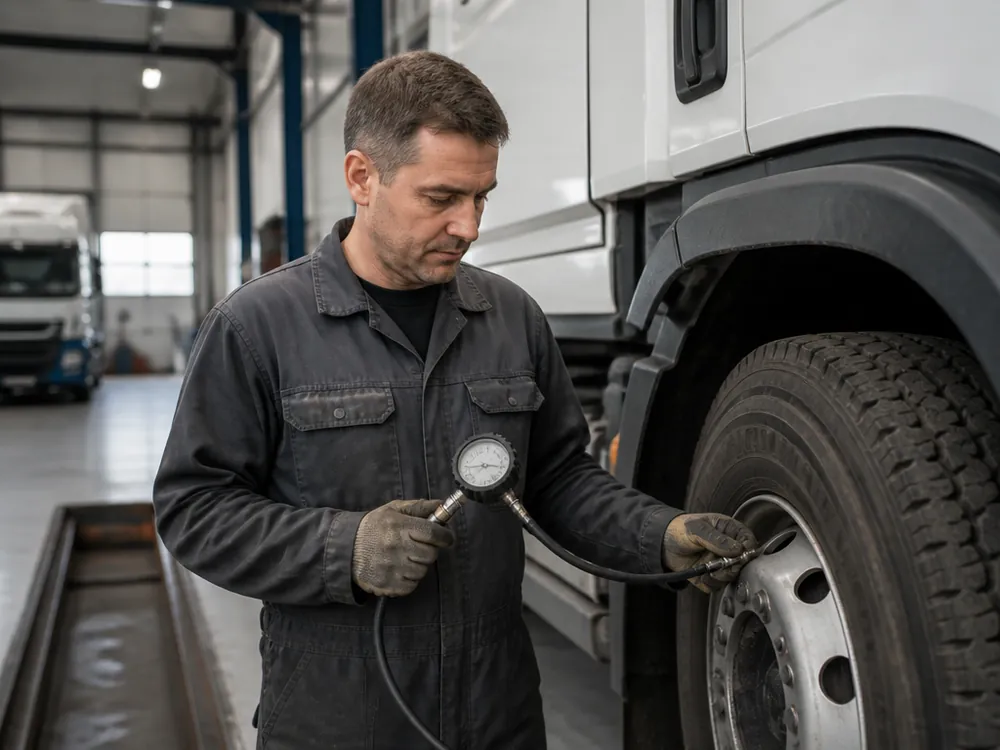






Truck tire service in Almaty from CARGID, done right the first time

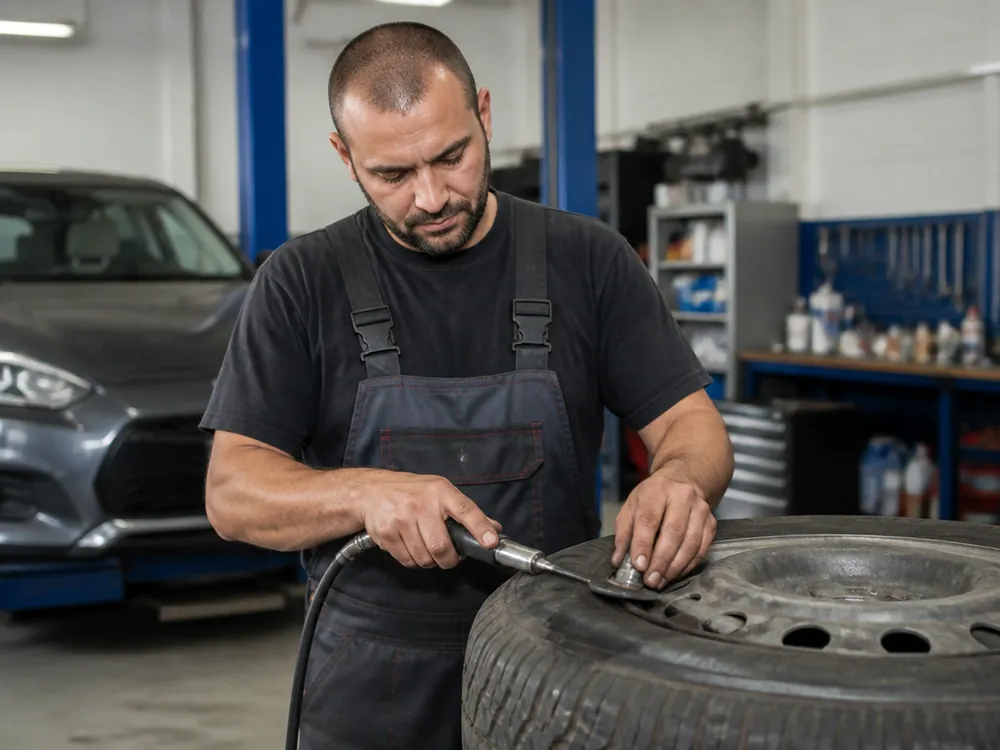
CARGID is a full-service auto shop in Almaty at 129 Mukagali Makataev, where our own techs handle truck tires 20–22.5". We repair a punctured 22.5" wheel and put it back on in 60 minutes; we use a plug only as a temporary fix, and a sidewall cut or patch gets vulcanized. We give a written 6-month warranty on the work in the work order.
What truck tire service includes and how a plug differs from vulcanization
Here's what actually goes into servicing a 20–22.5 inch wheel — from diagnosis to balancing — and why choosing between a quick fix and a proper repair decides whether the wheel comes back for a redo.
What work goes into servicing a 20–22.5 wheel
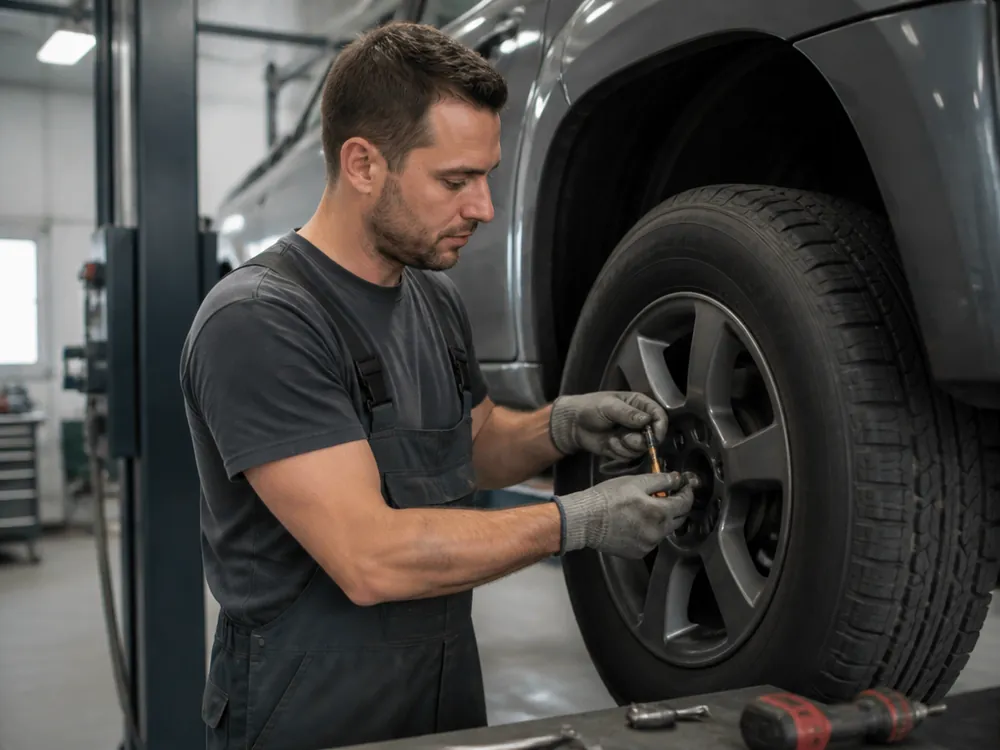
- Wheel removal and installation: we take the assembly off the truck and put it back on after the work with a pressure check.
- Tire and pressure diagnosis: we find the damage and assess whether the tire is worth repairing or needs replacing.
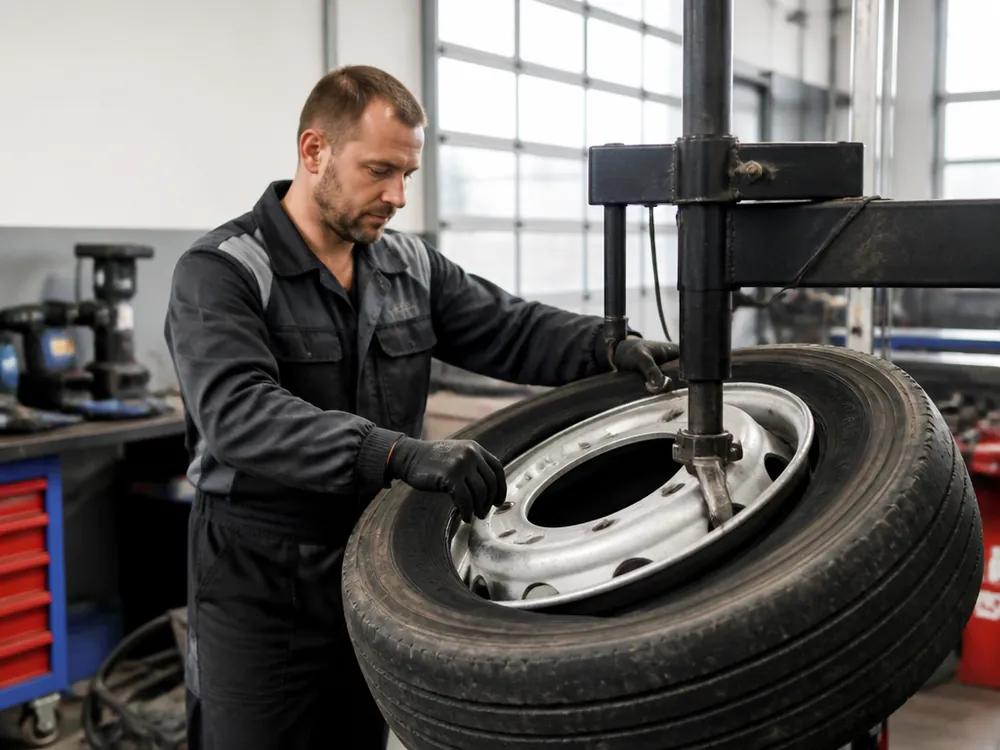
- Dismounting: we take the rubber off the 20–22.5 inch rim to reach the damage from the inside.
- Repair: we install a quick fix, a patch or a tube, and replace the valve depending on the type of damage.
- Wheel balancing: we compensate the weight on the rim after remounting, otherwise you'll get vibration at speed.
- Nitrogen inflation: we equalize tire pressure before handing the truck back.
Plug or patch with vulcanization — what to use as a permanent fix
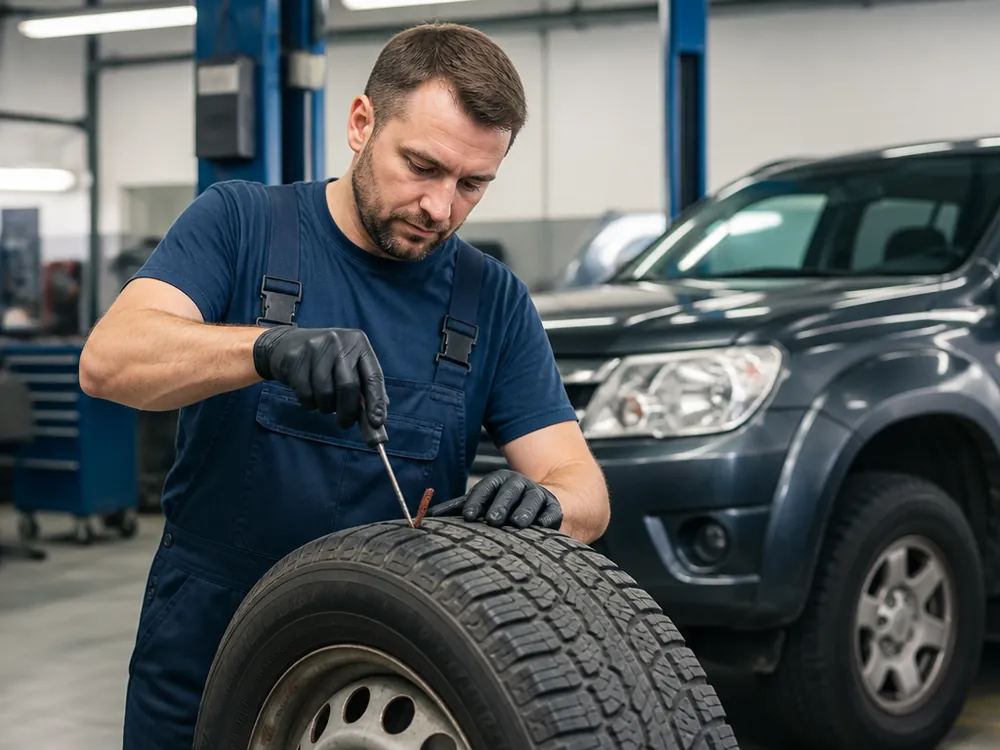
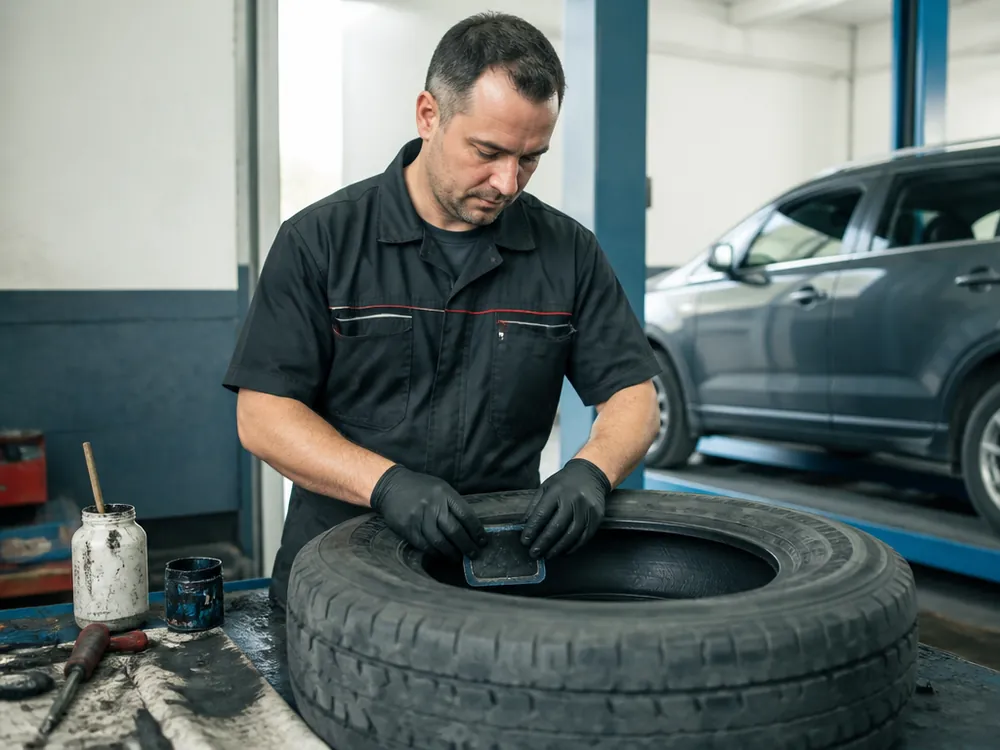
We install a plug only as a temporary fix to get you to the shop, while a sidewall cut and a patch get the tire dismounted, two-component glue and hot treatment of the damaged area. A plug is inserted into the puncture from the outside and seals the channel, but it doesn't restore the seal from the inside: the rubber around it is stressed every time the wheel turns. A patch is applied from the inside on a prepared surface, and the glue and hot treatment fuse it to the tire body, so this fix holds up under load permanently. A sidewall cut can't be fixed with a plug at all — the rubber thickness and the loading are different there. If the wheel leaks again a week after a quick fix, that's not a defective patch but the expected behavior of a temporary fix, so a proper repair with dismounting will still be needed. Truck tire service in Almaty is built exactly on this approach: first we assess the damage, then we choose the repair method.
Comparison of tire repair methods
| Damage | Method | Tire dismounted | When we use it |
|---|---|---|---|
| Tread puncture | Plug | No | Temporarily, to get to the shop |
| Tread puncture | Patch | Yes | Permanently |
| Sidewall cut | Patch, glue, hot treatment | Yes | Permanently |
| Two punctures close together | One patch | Yes | Permanently |
| Loss of seal at the bead | Tube installation | Yes | When the tire holds with a tube |
| Damaged valve | Valve replacement | No | Related work |
Truck tire service times, urgent repair on the road and mobile service
Here's how long one tire takes and how long a set takes, what to do if you get a puncture right on a run, and how mobile service works in the city and beyond.
How long it takes to repair a punctured 22.5 wheel on a run
We remove a punctured 22.5" tire, repair it and put it back on in 60 minutes, so your run schedule stays on track. Truck tire service on a run is always a race against time, and every minute counts. We're open daily from 09:00 to 20:00, seven days a week; a service advisor takes in the truck and manages the work order through handover — the driver doesn't have to figure out who's responsible for each step. Over 12 years, 9,000+ vehicles have come through the shop, and at tire service it's usually not the repair itself that eats time but waiting for a lift. With an appointment, the truck goes in without a queue, and we service a set with 20–22.5 inch rims in one visit. Time is counted from when the truck enters the shop, not from the call — if you get a puncture at rush hour, it's faster to drive to 129 Mukagali Makataev yourself than to wait for a crew to cross town.
How mobile tire service works in the city and out of town
- In Almaty: we come anywhere within the city if the truck can't be driven across town on a punctured tire.
- Out of town: we work up to 50 km beyond the city limits to keep your run going on the highway without towing to the shop.
- Removal and installation: we do the full cycle on site — remove, repair, put back on and check pressure.
- When it fits: the tire holds pressure long enough to get there, or the truck can't be moved.
- When it doesn't: in all other cases, on-site repair takes longer and without the full equipment lineup.
- What we bring: a plug, a patch and a vulcanizer for the 20–22.5" bead size.
How long it takes to remount a set of 6 wheels
We remount a set of 6 wheels 20–22.5" by appointment, so the truck isn't stuck in a queue and the set goes through in one visit. The price list has separate items for remounting all wheels (4 pcs.) and tire service for a set with 20–22.5 inch rims (6 pcs.) — the second one is for tractors and trailers, which have more than four wheels. While the first wheel is off, the tech already sees the wear on the rest and tells you in advance where a patch will be needed and where balancing will do. It's cheaper to bring the whole set rather than one wheel at a time: that way we service all the wheels in one visit. Seasonal storage for 6 tires per month covers the shoulder season, when it's too early to swap the truck over but there's nowhere to keep the tires.
Color mismatch, vibration and tire compatibility on an axle
The wheel pulls to one side or shakes at speed after tire service — and it's unclear whether the mounting or the tire itself is to blame. Let's break down what mismatched tires on an axle have to do with it and how to tell a technician's mistake from normal wear.
Why you shouldn't put tires with different wear on the same axle
- Different grip: the tread of a new tire and a worn one grip the asphalt differently, and on a wet surface the axle behaves unpredictably when braking.
- Different radius: a worn tire rolls on a smaller circle, the wheel drags, and the truck pulls to the side — the driver corrects with the steering wheel.
- Different manufacturers: models differ in sidewall stiffness and tread pattern, so the pair doesn't work as a single unit under load.
- Differential wear: with a constant difference in radius on the drive axle, the load falls on the gears instead of the rubber.
- Hidden defect: a worn tire more often has a weakened bead, and checking the whole pair is cheaper than replacing it on the road.
Where vibration after tire service comes from and when to come back for a redo
Vibration after tire service usually means the balancing is off or the tire isn't seated correctly on the rim, and that's a reason to come back, not to drive around "until it settles in." We balance on the machine, and the service advisor records the result in the work order — so it's clear the wheel ran true. Shaking at 60–80 km/h points to an imbalance, steering wheel judder at low speed points to a bent bead or uneven seating, and pulling to one side points to different pressure in the pair. If a wheel leaks at the bead right after mounting, the problem isn't the patch but the seating — we redo that without argument, but shaking that shows up a month later we first check on the machine, because by then the tire itself may be the cause.
6-month warranty and what to do if a redo is needed
When the truck is handed over, we put the warranty period and terms in the work order and the completion certificate. Let's break down which cases it covers, which fall outside it, and how a redo works if a wheel starts leaking again.
What the 6-month tire service warranty covers
- Period: we give 6 months on tire service and record it in the work order and certificate at handover.
- Work: covered are puncture repair with a plug, sidewall cut repair, patch installation with vulcanization, and re-mounting a set.
- Parts: the warranty covers parts from us — valve, tube, repair consumables.
- Accident after repair: not covered — an impact changes the wheel geometry and isn't related to our work.
- Third-party involvement: if another shop re-mounted the tire after us, the warranty on the operation doesn't apply.
- Normal wear: tread wear and rubber aging aren't covered by the warranty.
- Customer's part: the owner is responsible for a tire they bring in; we guarantee the quality of the work.
How a warranty redo works
If a wheel leaks or shakes after our work, we do the diagnosis for a warranty case free of charge and redo it without argument. The truck is received by the service advisor, who opens a work order and manages it through to handover — the same process as on the first visit. First we check the pressure, the bead seating on the rim, and the balancing to find the cause instead of guessing. Then we fix it: re-glue the patch and rebalance. A redo is processed the same way as the first repair, so it's worth keeping the paperwork from the previous visit: it shows which operations were done and what the warranty covers. A quick redo costs less than a trip on an underinflated wheel: the tire heats up, wear increases, and you already need to put a pair on the axle.
Your own tires, booking in season, and storing a set
Do we accept customer tires, how to get into the shop without waiting in peak season, and where to put six wheels between tire changes — the three questions asked most often before a first visit.
Can you come with your own tires and who is responsible for quality
- Your own tires and materials: we accept a truck with the customer's tires, tubes, and patches, and we don't push a replacement.
- Warranty limits: a part brought in by the customer isn't covered by the warranty — we're responsible for the quality of the work itself.
- Check before mounting: the technician checks whether your material suits the type of damage and tells you in advance.
- Choosing parts: OEM, aftermarket, or your own — the decision stays with the vehicle owner.
- Estimate up front: diagnosis and a written estimate first, and we start work after you agree.
- What you get back: we show and hand over the old parts to the customer so it's clear what was replaced.
How to book and avoid standing in line in season
We're open daily from 09:00 to 20:00, seven days a week, and by appointment the truck is taken without a line — in season that's the only way not to lose half a day. Booking is handled by the service advisor: he records the time and type of work and stays with the work order through to handover. Truck tire service runs at full capacity during tire-change season, so it's best to book open slots in advance — especially for re-mounting six wheels. Book for a specific time for a specific job: six wheels and one puncture take different amounts of time, and the technician needs to know how much to schedule per shift. By appointment the truck comes in at the agreed time and doesn't wait in line for the lift.
Seasonal storage for a set of truck tires
- All six wheels: we take the whole set for seasonal storage and keep it until the next tire change.
- Marking: we label the set so the wheels go back on the same axle next season.
- Correct position: we store tires so they don't lie stacked on their side.
- Check before handover: we inspect the condition of the wheels before the set goes back to the customer.
- Monthly billing: storage is charged for six wheels per month, with no calendar tie-in.
What to Expect from Truck Tire Service
The breakdown is done, so let's pull the main points into a short list — it makes it easier to decide what to do with a punctured wheel and what to expect from the repair.
- A plug is a temporary fix: a permanent repair of a puncture and sidewall cut is done with a patch and vulcanization after dismounting the tire, otherwise the patch won't hold the load.
- An hour per 22.5" wheel: a punctured tire is removed, repaired, and put back in 60 minutes in the shop.
- A full pair on the axle: different wear on one axle causes vibration and pulling, so the second wheel is checked together with the first.
- 6-month warranty: the period and terms are recorded in the work order, and diagnosis for a warranty case is free.
- Your own material is accepted: in that case we're not responsible for the quality of the rubber — the warranty applies only to the work performed.