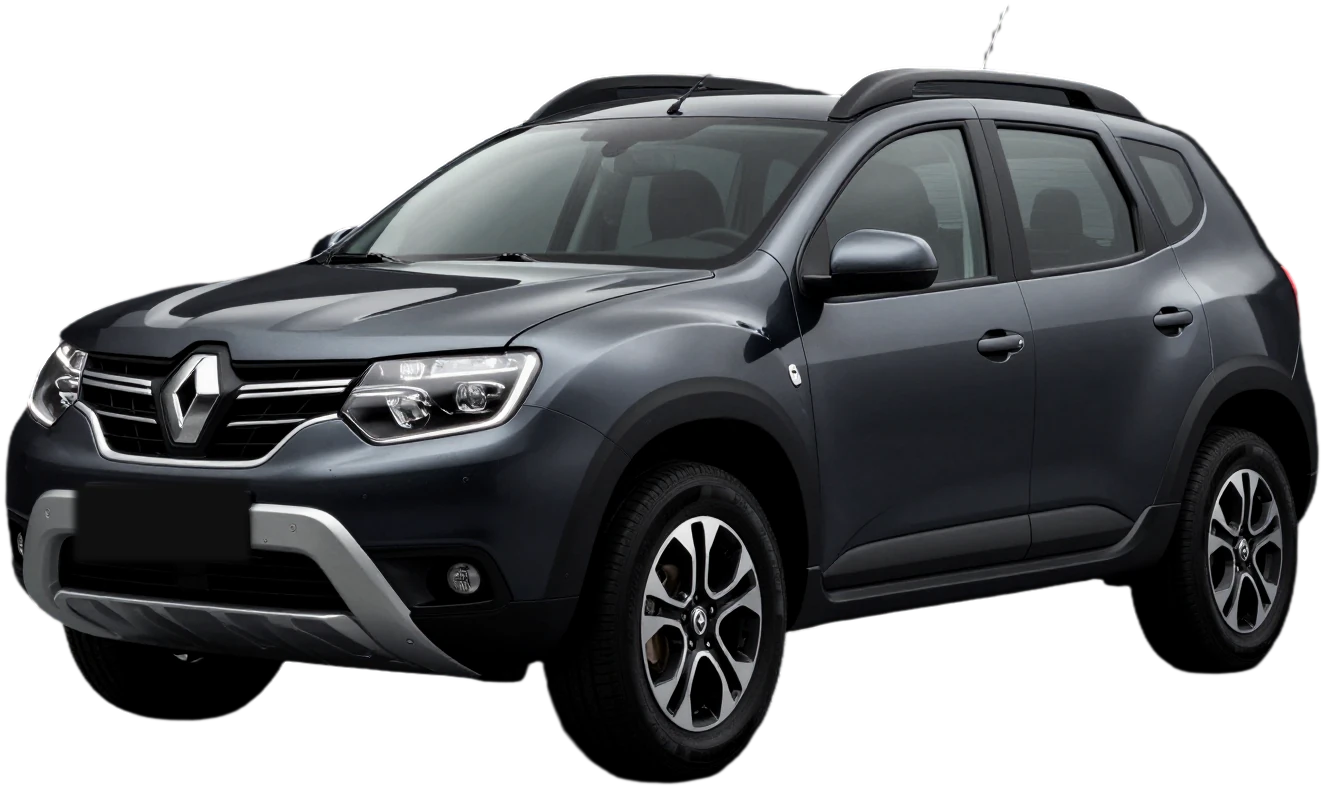
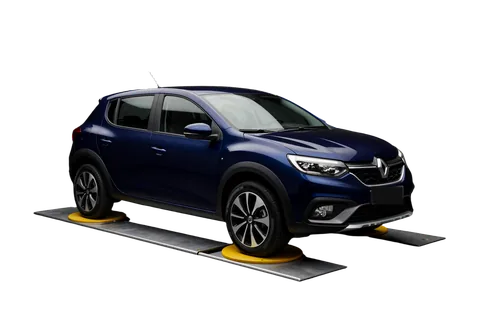
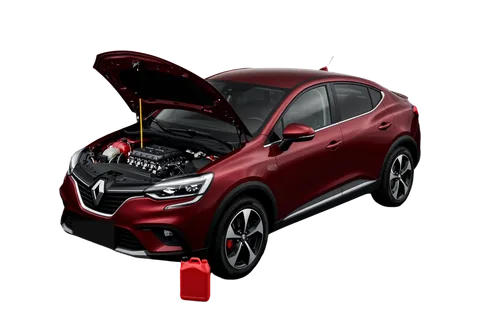
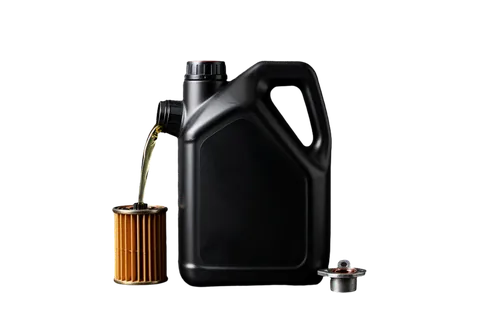
A Renault oil change is a basic procedure that determines the engine and transmission lifespan. We use manufacturer-recommended oils and filters and strictly follow the service schedule. We work with Duster, Logan, Sandero, Kaptur, Arkana and other models.
The cost of work does not include consumables and oils. The exact price depends on the Renault model and the scope of work. Warranty periods — see the page «Warranty»
06
Why choose Renault oil change at CARGID
Warranty.
Every promise — backed by a number or a document: work order, photos, removed parts.
6MO
warranty on labor — the term is stated in the work order.
Genuine filters
6-month warranty
WhatsApp booking
01
Pressure draining
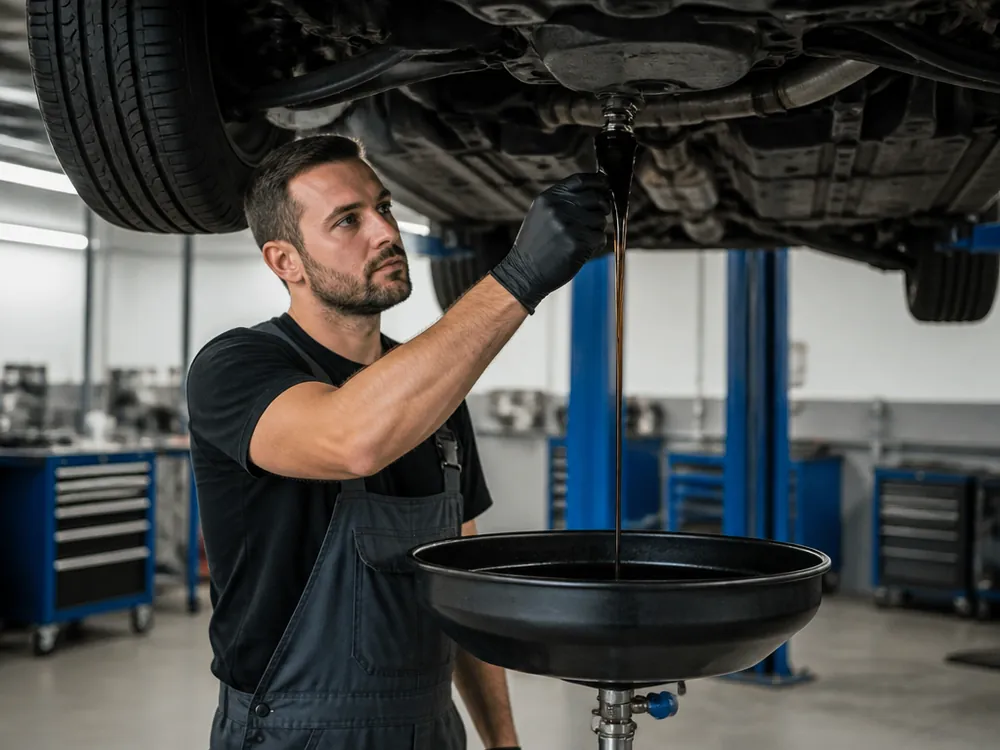
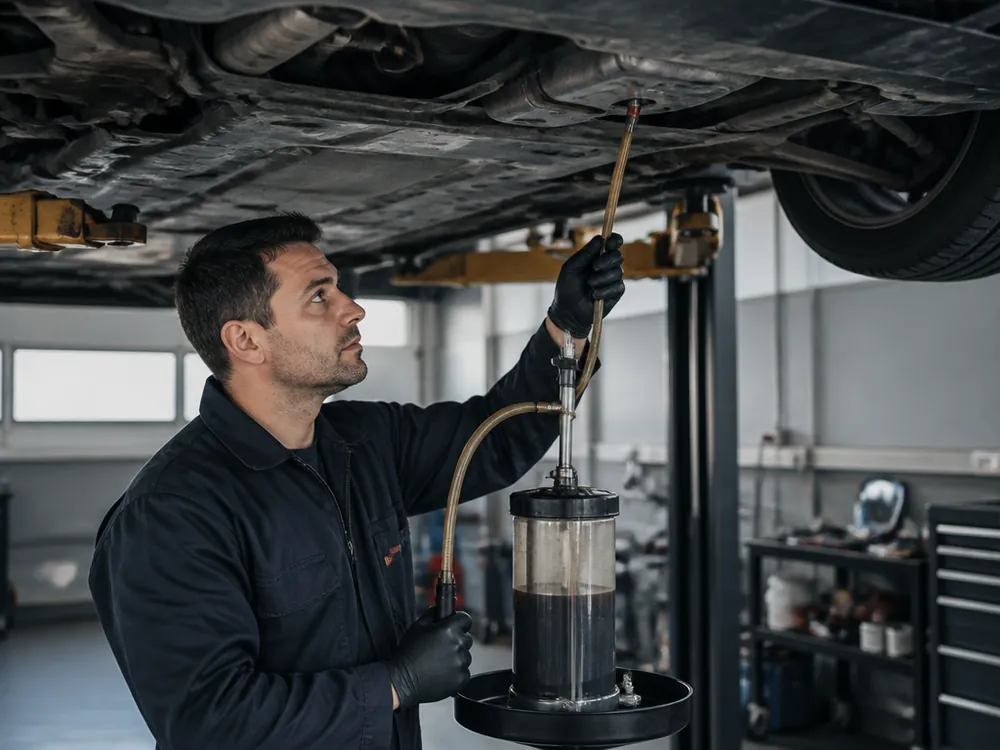
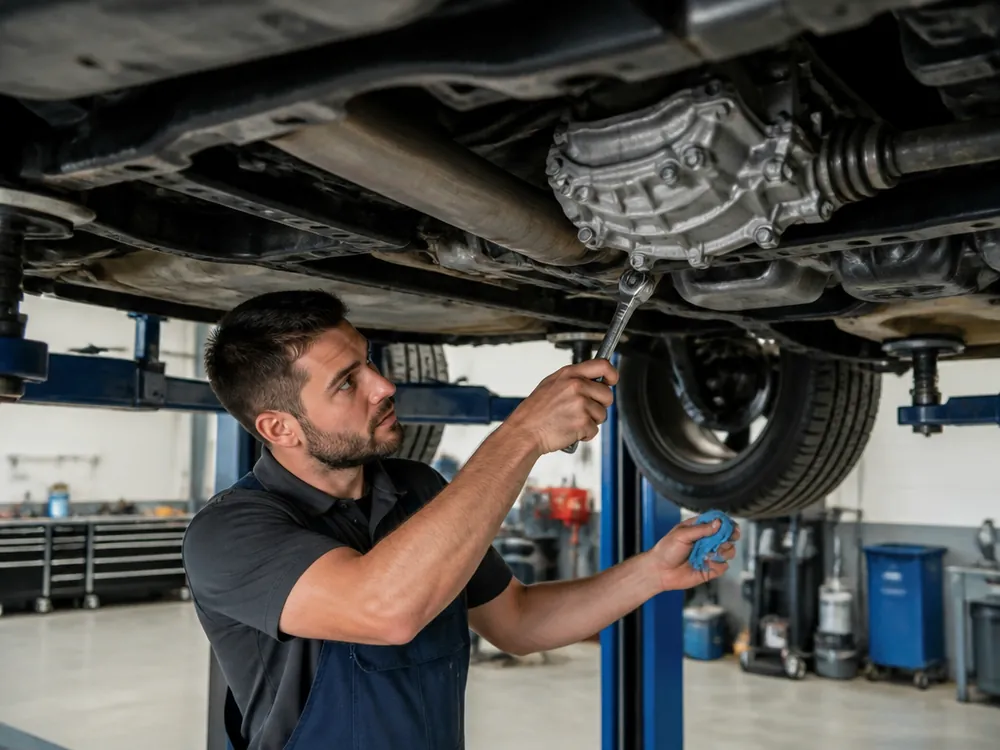
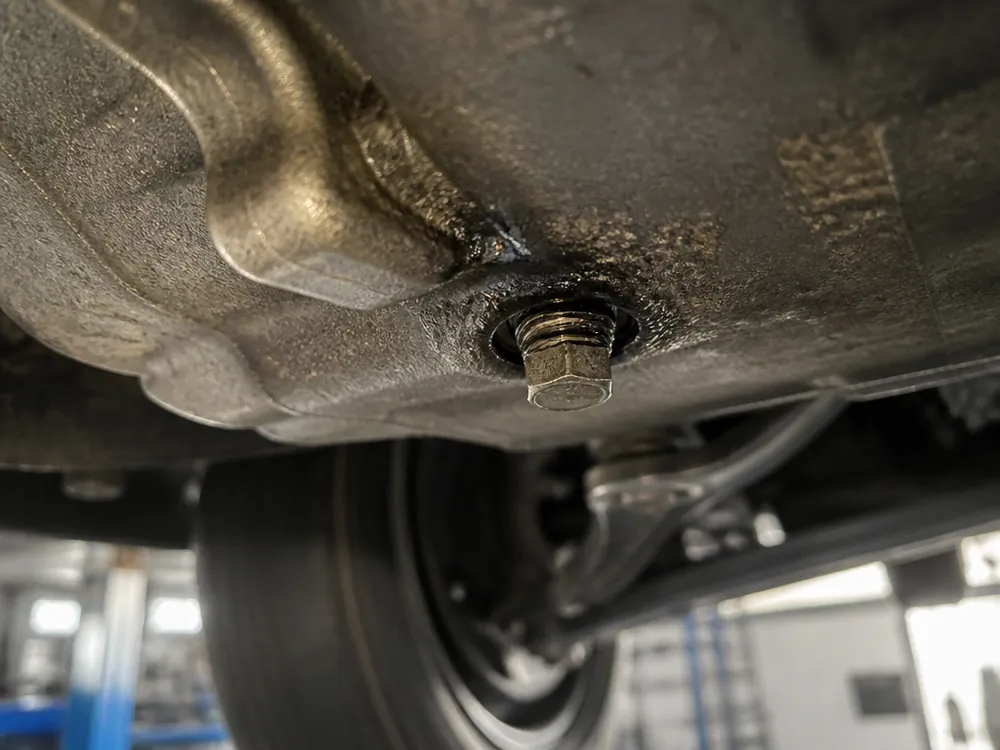
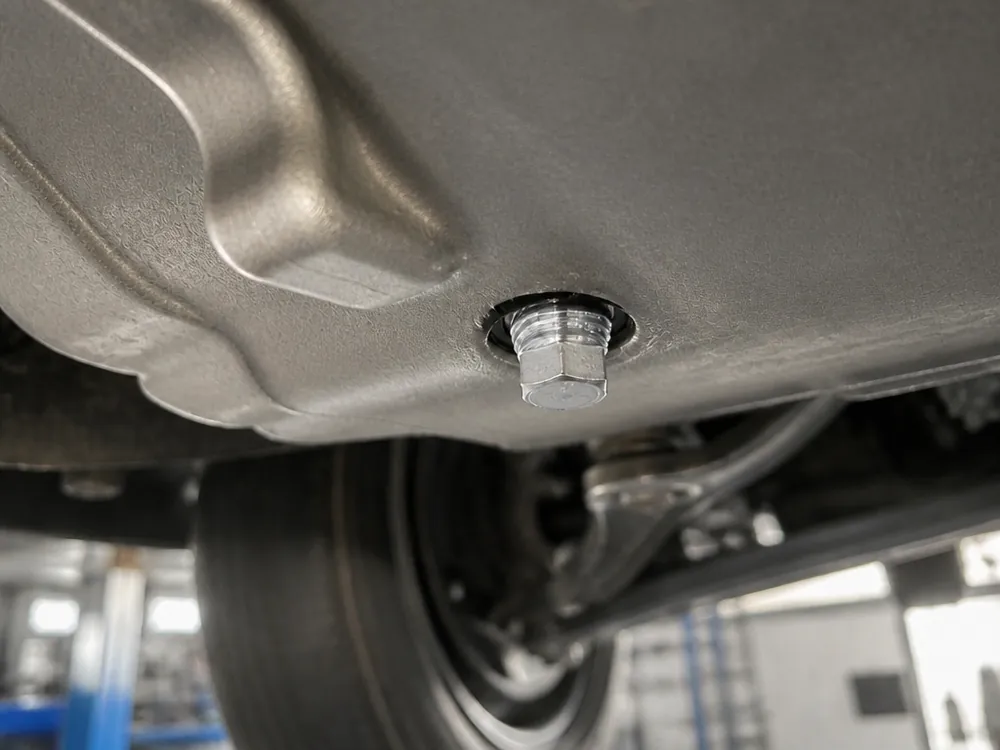
We pump out the used oil through the dipstick on a warm engine and drain the remainder through the plug. This removes more old oil than a regular drain.
02
Flushing at 150k mileage
If the oil was changed rarely, we flush the system with a mild flush and drain it completely. Without this, fresh oil darkens within a couple thousand km.
03
Dipstick level measurement
We fill to the dipstick mark at operating temperature, then check again after a run. Overfilling is just as harmful as underfilling.
04
1 hour for the change
A standard oil and filter change takes about an hour including warm-up and draining the remainder. During this time, we manage to check all levels.
07
Renault oil change in Almaty in six steps to a clean engine
Steps.
We explain how the oil change at CARGID works — from request to vehicle handover.
01
Inspection and consultation
You submit a request on the website or by phone, and we find a convenient time for your visit. On the lift, we check the engine condition and oil leaks, and clarify the details.
request on WhatsApp
02
Selection of oil and filter
We select original oil and filter according to Renault recommendations for your model.
inspection and diagnostics
03
Draining used oil
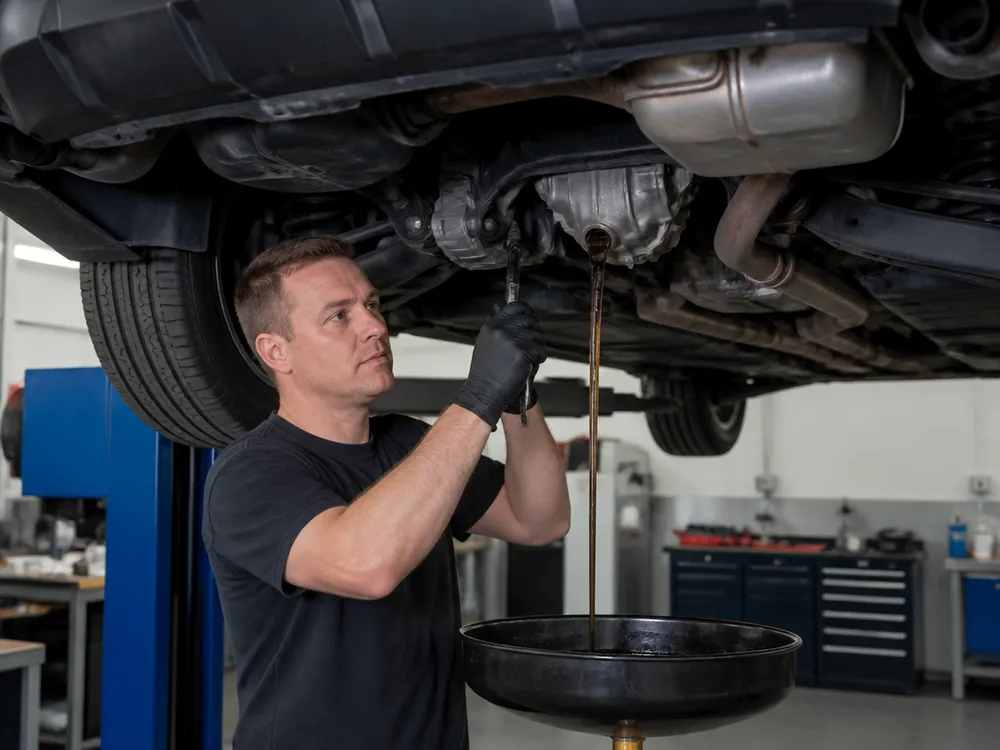
We warm up the engine and drain the used oil to remove as much contamination as possible.
estimate before work starts
04
Filter replacement
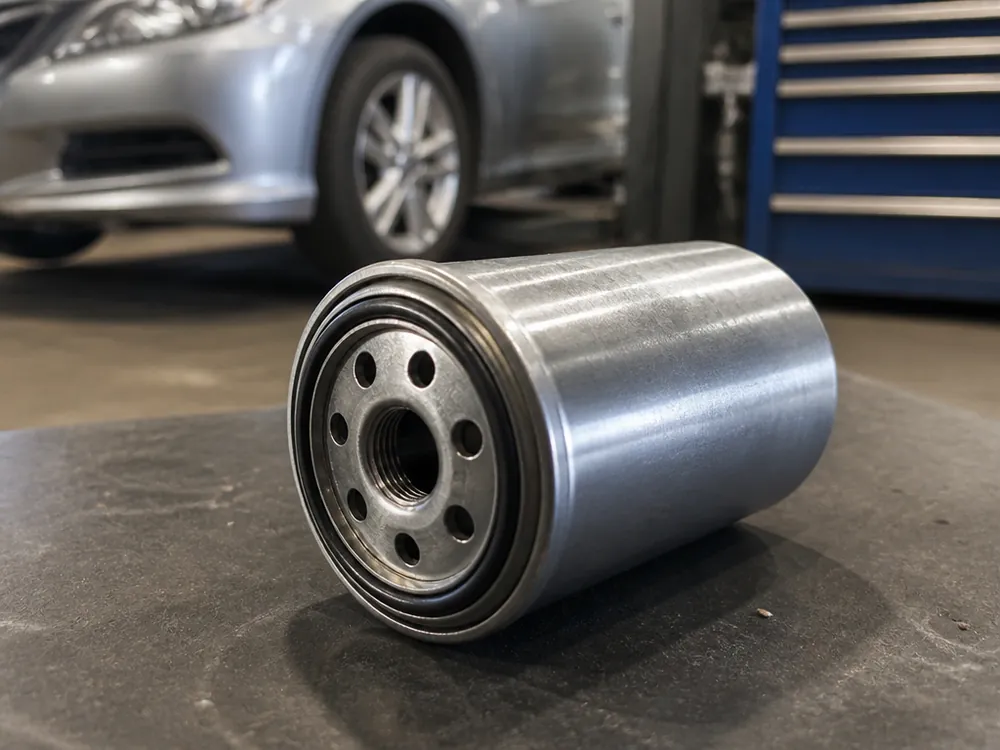
We remove the old oil filter and install a new one, after lubricating the sealing ring.
work to factory procedure
05
Filling new oil
We fill fresh oil strictly to the required volume, checking the level with the dipstick.
result check
06
Vehicle handover
We start the engine, check the pressure and tightness, and reset the service interval. We return the car with a note in the service book and a warranty on the work.
Car service in Almaty. We reply on WhatsApp and by phone.
5 000 ₸Engine oil change
10 · Useful
Professional Renault oil change in Almaty by CARGID technicians
Author: Роман Вернерgeneral car repair technician, 13 years of experience
Published Updated
CARGID changes Renault oil by unit: engine, manual transmission, automatic transmission, differential, transfer case, power steering. We pump out the old oil through the dipstick on a warm engine and drain the rest through the plug, then set the level by the dipstick at operating temperature. The work is covered by a 6-month warranty recorded in the work order.
Which Renault units we service during an oil change
A Renault oil change is not one job but a set of operations by unit. The engine, transmission and differential use different fluids with their own intervals and methods, so we quote and perform each item separately.
How engine service differs from the transmission and differential
In the engine we change the engine oil and oil filter, while the manual transmission, automatic transmission, differential and transfer case each take their own fluid, and these are separate jobs with different intervals. On the Duster, Logan and Sandero, the transmission and differential run on their own lubricants that are not connected to the engine sump: the transmission has its own viscosity and its own service life, and the power steering has its own fluid in a separate reservoir. A Renault oil change in Almaty includes each of these items as a separate operation with its own schedule. Engine oil ages from heat and combustion products, while transmission fluid ages from the load in the gear mesh, so they are checked differently. If you only change the engine oil, the fluids in the transmission and differential age unnoticed — their condition is judged by the unit's mileage and color, not by the car's total mileage.
Table of units and oil change work
Renault units and fluid change methods
Unit
What we change
Method
Engine
Engine oil and oil filter
Dipstick plus drain plug
Manual transmission
Transmission fluid
Through the plug
Automatic transmission
Automatic transmission fluid
Partial or machine exchange
Differential
Differential oil
Through the plug
Transfer case
Transfer case oil
Through the plug
Power steering
Power steering fluid
Through the reservoir and plug
How we change oil using the dipstick plus drain plug method
The way you remove the old oil decides how much of it stays inside. We combine pumping through the dipstick with draining through the plug, and set the level by the mark on a warm engine.
Why we pump through the dipstick and drain through the plug
We pump out the old oil through the dipstick on a warm engine and drain the rest through the plug — this removes more old fluid than a regular drain. On a hot engine the lubricant is thin, so it flows out more easily from the channels and from under the valve cover, where most of it stays during a cold extraction. With the dipstick we pull the old oil out of the sump, which the plug does not fully reach on some Renault models — for example, the Duster with its layout. Then we open the drain plug and wait for the rest to flow out. This order takes a little longer, but it leaves no extra liter of old fluid inside. If fresh oil darkens within a couple thousand kilometers, old oil is still in the system — the combined method is exactly what reduces that leftover.
How we set the level by the dipstick at operating temperature
We fill to the dipstick mark at operating temperature, then check again after a test run — overfilling is just as harmful as underfilling. First we fill to two-thirds of the volume, start the engine, let it reach operating mode and shut it off. We wait a couple of minutes for the oil to drain into the sump and check the mark — it should sit between the lines, closer to the top. Overfilling pushes out the seals and foams the fluid, while underfilling leaves the channels without lubrication on a cold start. After the test run we check once more: some of the oil goes into the filter, and the mark may drop. Checking the level on a cold engine is pointless — the fluid has not spread through the system and the mark lies; the second check catches a mistake you cannot see right away.
Engine flush when it helps and when it hurts
A flush is not a mandatory step of every oil change but a scenario for a specific service history. On one engine it extends service life, on another it does harm.
When a flush is needed at 150 thousand km
If the oil was changed rarely, we flush the system with a mild flush and drain it completely — without this, fresh oil darkens within a couple thousand kilometers. A Renault oil change with a flush makes sense when thick carbon deposits are visible in the sump and on the walls, and the old oil comes out in clumps. A mild flushing fluid works gradually: it dissolves deposits in a thin layer and carries them out with the old oil without tearing them off in sheets. Aggressive products act faster, but large pieces of carbon break off and can clog the oil pickup. That is why at around 150 thousand km we choose a mild product and hold it for the manufacturer's specified time, not longer. Pour in the flush before service and let the engine idle — that is enough to remove the top layer without disturbing deep deposits. After this procedure, fresh oil stays light longer and holds pressure.
When it is better to skip the flush
If the oil is changed regularly and the system is clean, no flush is needed — it lengthens the visit and adds a consumable without a noticeable effect. If the service interval was never exceeded and the old oil drains evenly without clumps, the internal surfaces stay clean on their own. One separate caution is high-mileage engines with a thick layer of dense carbon: a flush sometimes shifts deposits, and they worsen oil pressure in the line. On such engines we first check the condition of the oil pickup and only then decide whether the procedure is needed. There is no universal recommendation here: the verdict comes after an inspection, not by default. An extra can of flush on a healthy engine is wasted time with no gain in service life.
Warranty, your own parts, and what to do if it leaks after the change
An oil change warranty only works when it's clear what it covers. Here's what we commit to and what to do if you bring your own consumables.
What the 6-month oil change warranty covers
We give a 6-month warranty on an oil change and record the term and conditions in the work order and the completion certificate when you pick up the car. The same term applies to brakes, suspension, wheel alignment and tire service, while for the engine, cylinder head, timing belt and automatic transmission it's twice as long — 12 months, and for the body and painting — 24. The document stays with the client, so in a disputed situation you don't have to recall verbal agreements: the work order shows the date, the type of work and the scope of the service's obligations. In our practice, a Renault Duster oil change is a frequent procedure, and the warranty terms for it are the same as for the brand's other models. The warranty covers the work performed and the parts installed and does not cover an accident after the repair, third-party interference or natural wear of consumables — we set that boundary right away.
Your own oil and filter, what happens to the warranty, and what to do if it leaks
You can bring your own oil and filter, but the warranty doesn't cover the client's part; if a leak appears or a knock starts after the change, diagnostics for a warranty case are free. The service advisor accepts the consumables and records in the work order that they are the client's — that keeps the line of responsibility fair for both sides. A leak more often comes not from the drain plug but from the crankshaft seal: the technician first looks at exactly where it's seeping from and only then decides whether it's a warranty case or wear. In the shop's experience, a knock after an oil change is rarely related to the procedure itself — it's usually hydraulic lifters when cold or a loose chain tensioner. Come in for a check as soon as the first symptoms appear: early diagnostics saves both the engine and money.
How a visit goes from booking to picking up the car
An oil change visit takes less time than you'd think if you book ahead. Here's the order from intake to pickup and what you get in hand.
Booking, a written estimate and the time of work
We're open daily from 09:00 to 20:00, seven days a week, take booked appointments without a queue, and give a written estimate before the work and start only after the client agrees. The service advisor takes in the car and manages the work order all the way to pickup, so you always know what stage your Renault is at. At intake we record the mileage, the trim and the complaints, measure the level and condition of the oil on the dipstick, and check for signs of leaks at the valve cover gasket and the oil pan. Then the specialist matches the volume and type of fluid to the manufacturer's approval for your engine and selects the filter. Booking saves more than just the queue — the advisor has time to prepare the consumables for your model, and the car doesn't sit waiting for the right filter.
Photo report, old parts and a test drive before pickup
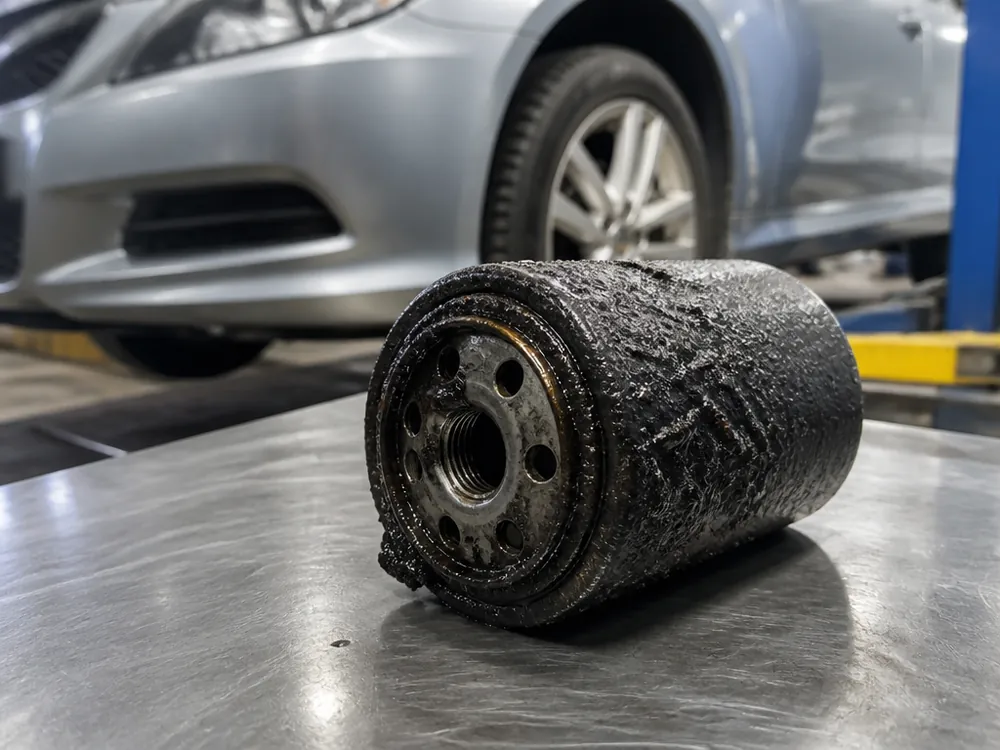
We take a photo report at the key stages of the repair, show the old parts and hand them to the client, and do a test drive before pickup. The photos show the condition of the drained used oil, the removed filter and the pan's sealing plug — these are the parts that are easiest to make a claim about later. After the service, the engine technician starts the engine, lets it run and rechecks the level on the dipstick at operating temperature: overfilling is just as harmful as underfilling. On the test drive we listen to the engine at idle and under load, and check whether the oil pressure light has come on or any drips have appeared under the car. The old filter and leftover oil in hand are not a formality: they show exactly what was changed, and that settles questions if something seems off later.
Renault Oil Service Key Takeaways
Below are brief takeaways on servicing Renault engines and transmissions that are handy to keep in mind before booking the procedure at any service.
Units are serviced separately: oil work on a Renault is a set of operations for the engine, transmission, final drive and transfer case, not a single procedure.
A double drain is more effective: combining extraction through the dipstick with draining through the plug removes more old used oil than a regular drain.
Flushing by indication: it's needed when the oil was changed rarely and the mileage is high, and on regular maintenance it gives no noticeable effect.
Level by dipstick: it's measured at operating temperature and rechecked after a run — overfilling is just as harmful as underfilling.
Warranty in the documents: the term is recorded in the work order, and a part brought by the client isn't covered by the warranty.
11
Frequently asked questions about Renault oil change in Almaty
Questions.
Price, timeframes, warranty, payment — 10 questions asked most often.
10
Didn't find an answer?
Message us on WhatsApp — a service advisor will reply within 5 minutes.
The cost of a Renault oil change at CARGID depends on the model and type of oil. The price includes: oil (semi-synthetic or synthetic of your choice), oil filter, labor for the change, and waste disposal. We'll give you the exact amount after clarifying the model and year of manufacture — call us, we'll calculate quickly. Exact prices are in the price list on this page.
The price consists of several factors: engine type and volume (petrol or diesel, displacement), the oil class recommended by the manufacturer (for example, 5W-30 or 5W-40 ACEA C3 is suitable for most Renaults), the cost of the oil filter (original or aftermarket), and the volume of oil (usually 4–5 liters). The condition of the oil pan also matters — if there are leaks, additional work will be required. The average labor price is from 5,000 tenge, oil and filter — from 10,000 tenge.
A standard oil and filter change takes about 1–1.5 hours. We don't rush, but we don't drag it out either: we need to drain the old oil, replace the filter, fill new oil, check the level, and top up if necessary. If you come by appointment, we'll try to finish faster. Time may increase if the sump guard needs to be removed or a problem is found (for example, a stripped drain plug thread) — but usually such surprises are resolved on the spot.
Yes, we provide a 6-month warranty for the oil change work. This means that if during this period problems arise related specifically to the quality of the performed work (for example, oil leaking due to a loose plug or improper filter installation), we will fix them free of charge. Important: the warranty does not cover the oil and filter themselves — they are covered by the manufacturer's warranty. You must also follow the operating recommendations we give after the change.
Booking is preferable: a Renault oil and oil filter change takes from 40 to 60 minutes, and when booked, the right oil is selected according to the specification and volume for the specific model — Logan, Duster, Kaptur, and others. Without an appointment, acceptance is possible, but waiting time depends on the bay's workload. The cost depends on engine volume, oil type (mineral, semi-synthetic, synthetic), and whether only the oil filter is changed or also the air and cabin filters.
Yes, you can bring your own oil and oil filter. In this case, we only charge for labor — 5,000 tenge. But note: we are responsible only for the quality of the work, not for the quality of the provided materials. If the oil turns out to be counterfeit or not meeting Renault specifications, the responsibility lies with you. We recommend using original oils and filters or proven equivalents — we can advise what is best for your model.
If after the change you notice an oil leak, unusual knocking in the engine, or the oil pressure indicator lights up — immediately stop using the car and contact us. During the warranty period, we will fix problems caused by our work free of charge. If the cause is a defective oil or filter, we will help you sort it out with the manufacturer. The main thing is not to delay, otherwise serious engine damage is possible. We are always in touch and ready to solve any problem.
The difference is significant. At our service center, we have professional equipment: a lift, an oil filter wrench, a special key for the drain plug. We know the design features of Renault — for example, where the filter is located (on some models access is difficult), how to properly tighten the plug so as not to strip the thread. We comply with environmental standards: we dispose of used oil. We also provide a warranty and do a free suspension and brake diagnostic. Doing it yourself is risky: you can overtighten the plug, install the filter incorrectly, or fill the wrong oil.
For the first 200–300 km after a Renault oil change, it is recommended to avoid prolonged operation at maximum RPM and sharp accelerations — the new oil and filter need to stabilize operation in the system. After that, it is enough to check the level with the dipstick once every 1–2 weeks and monitor for leaks under the engine. The interval for the next change depends on the oil type and operating conditions: for synthetic in city mode, it is usually 8–10 thousand km, for semi-synthetic — less. The specific schedule for your Renault model is specified in the service book.
We accept cash, bank cards (Visa, MasterCard, UnionPay), and transfers to Kaspi, Halyk, and other banks. Payment by QR code is also possible. We always issue a receipt or payment confirmation, which confirms warranty obligations. For legal entities, payment by bank transfer with all documents is possible. You choose the convenient method — for us, the main thing is that you feel comfortable.
12
What drivers say about our Renault oil changes
Reviews.
We collect ratings on the website and on maps — we hide nothing.
4.8
872 reviews on the website 1 900+ ratings in total
Dmitry
Oil change on a Renault Duster 2018, I've driven 2000 km already — so far so good. The price was 18500 tenge, as agreed, no extras. It's nice that the technician cleared a sensor error unrelated to the oil change for free. I recommend it.
Aigerim
I had the oil changed on my Renault Kaptur after a long trip to Astana. The technician immediately said the oil was already dirty and the filter was a total mess. Everything was replaced in an hour, they even offered coffee. A month later everything is great, the engine is quieter. Thank you!
Sergey
The car is a Renault Logan 2019, I started noticing increased fuel consumption. I just happened to book an oil change. It turned out the previous service had filled the wrong oil. Here they selected the right one, replaced it, and consumption returned to normal. The price was 16900 tenge, not expensive.
Nurlan
Changed the oil on a Renault Sandero 2017. Everything was fast and high-quality, done in 30 minutes. No defects found. The price is 22100 tenge, including replacement of the gasket that was leaking. It's very convenient that they booked me online, without waiting.
Olga
I had an oil change on a Renault Megane at this service. I came right after work, the car was accepted, and while I waited they did a free suspension diagnostic. The oil was changed quickly, and the cabin filter was replaced too. Total was 21700 tenge, they gave a discount for the first visit.
Vadim
Oil change on a Renault Duster 2018 — took about 40 minutes, no queues. They filled full synthetic 5W40 as I requested. The price was per the catalog, no extra services were pushed. The technician showed me the old oil — it was black as tar, so it was time. Everything was spot on.
Aliya
They did it quickly without waiting in line. Renault Arkana 2022, oil change was 24900 tenge. The filter was replaced too, the engine runs quietly. I'm very satisfied, everything was explained clearly. The car was received and handed back properly.
Igor
Renault Sandero 2017, oil change + flush. I noticed the engine was knocking when cold, I thought it was an engine rebuild. But it was just that no one had changed the oil for 15 thousand km. Here they flushed it, filled new oil, now it runs like clockwork. 22100 tenge, well spent.
Ksenia
Thanks for the promptness! Oil change on a Renault Megane 2021. I came without an appointment, but they took me right away. Everything was done in an hour while I drank coffee. The oil is original, the price is reasonable — 21700 tenge. I'll come back in 5000 km. Special thanks for resetting the service interval.