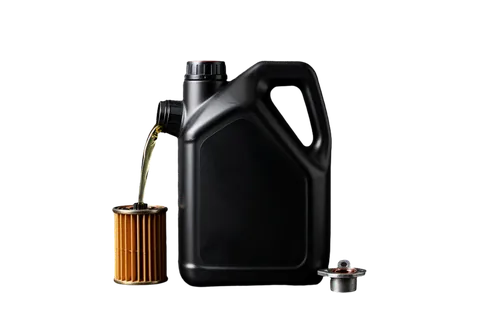
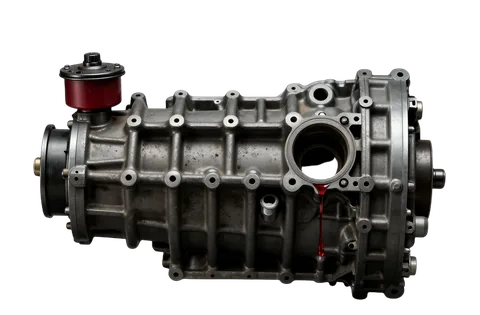
A proper oil change isn't just draining the old oil and pouring in fresh fluid. Here's what our work consists of and why each step affects engine life.
Which oil and filter fit Dodge
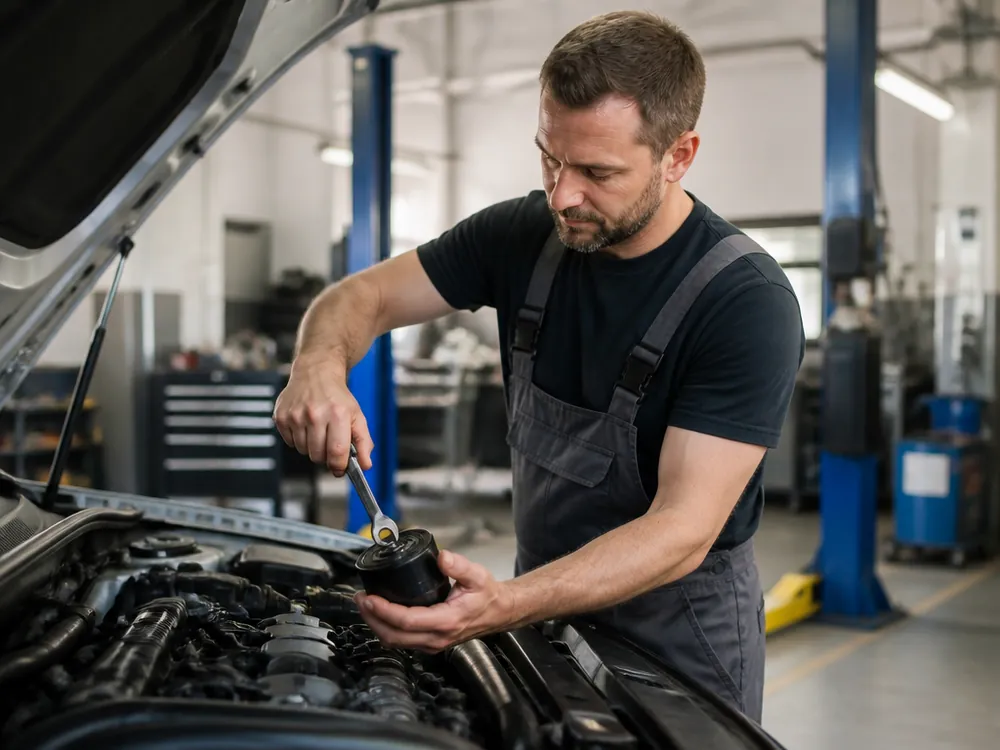
A Dodge oil change in Almaty starts with selecting fluid by spec and viscosity for the specific engine and the local climate, and we install only a filter with a working bypass valve — we check it before installation. Gasoline engines get synthetic with the manufacturer's spec, diesels get a formula with a reinforced detergent additive package; 5W-30 covers most models, and 5W-40 is used for higher loads and the hot season. We spot counterfeits by the batch marking, the quality of the canister seam, and the hologram — with an unknown seller it's better to ask for a certificate of conformity. A flush makes sense when switching to a different base oil or after a long interval, but with regular changes on the same spec it does more harm than good — it washes out the remaining additives. Our technician checks the volume for the engine by model so it isn't overfilled above the mark.
Level control and protection against overfilling and underfilling
Overfilling and underfilling harm the engine equally: the first puts pressure on the seals, the second leaves components without lubrication. Here's how the two-stage level control works and what to do if a leak or an error appears after service.
How we check the level in two stages
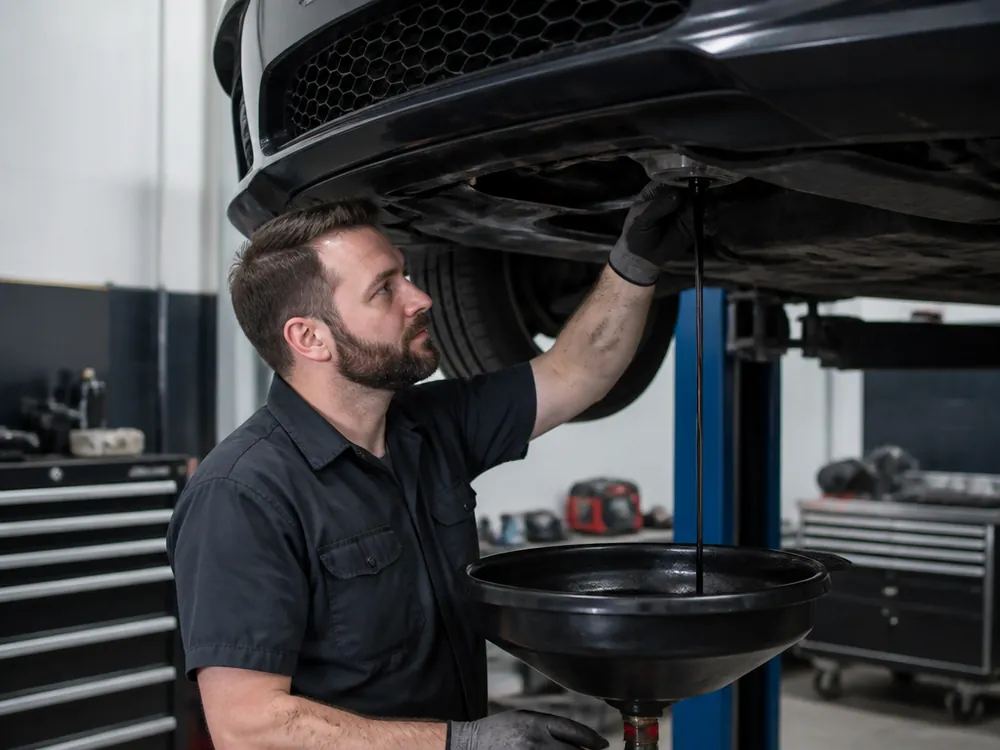
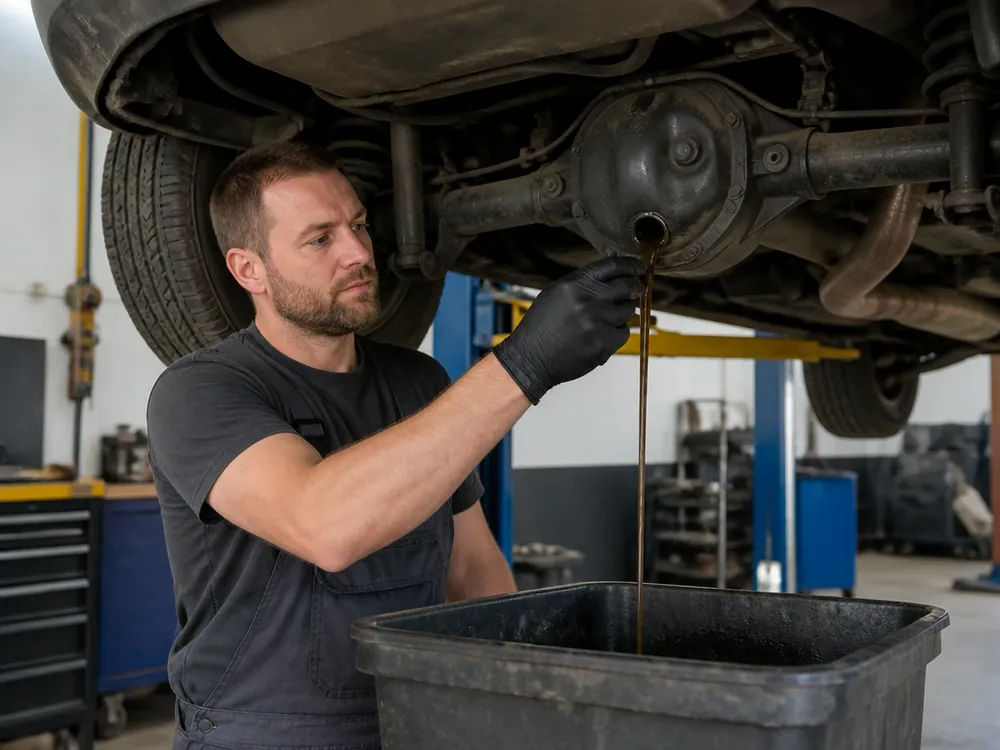
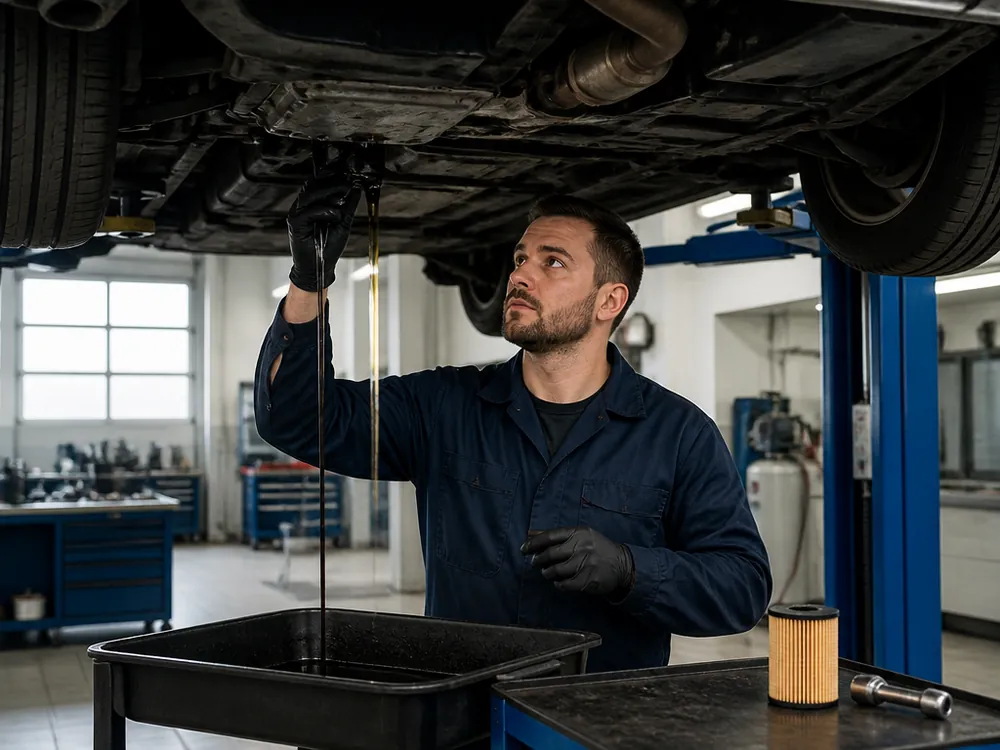
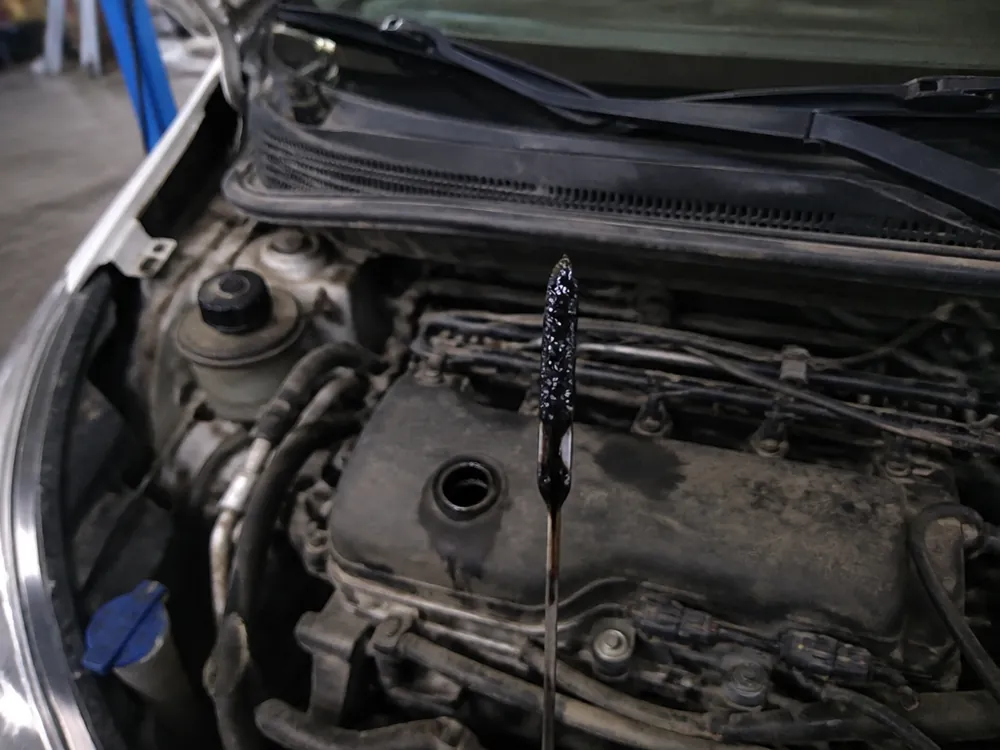
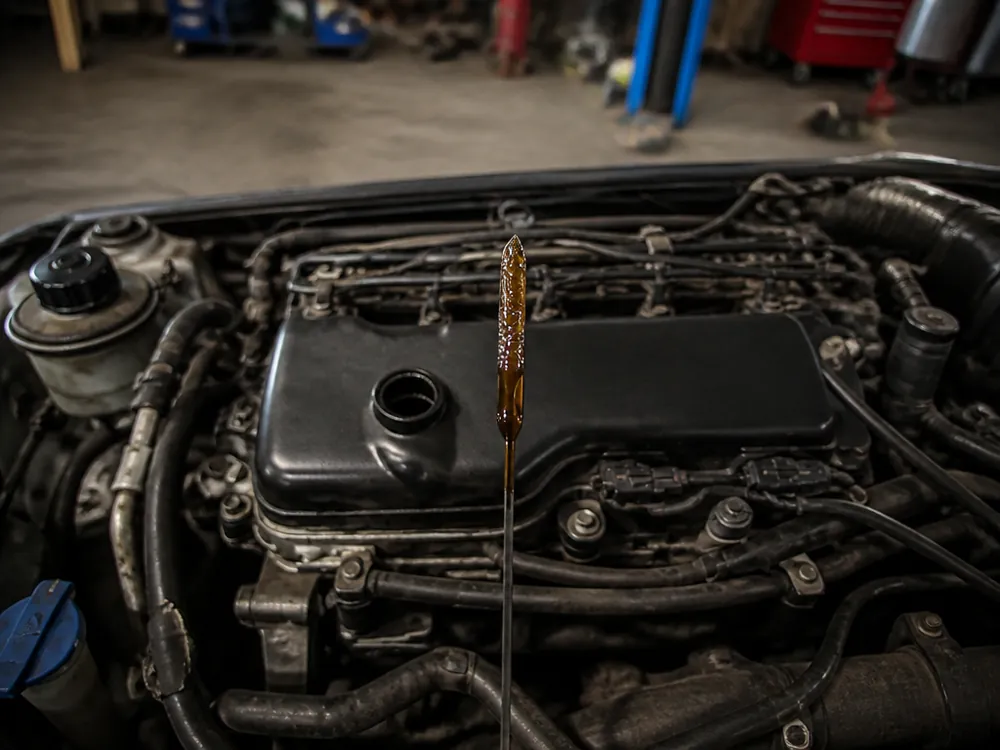
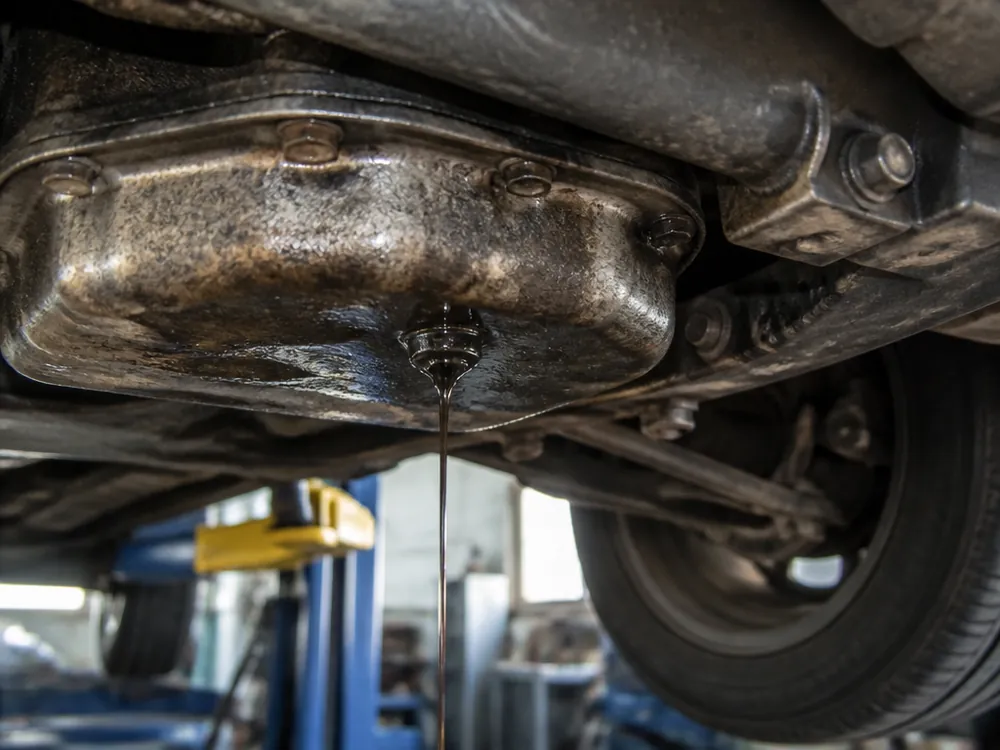
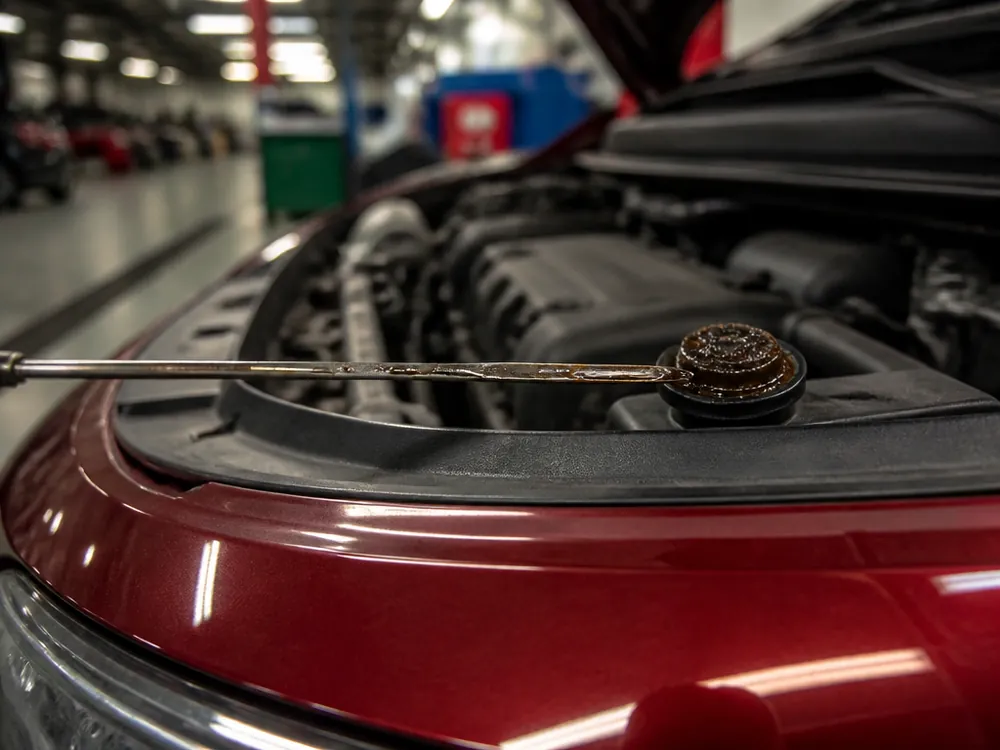
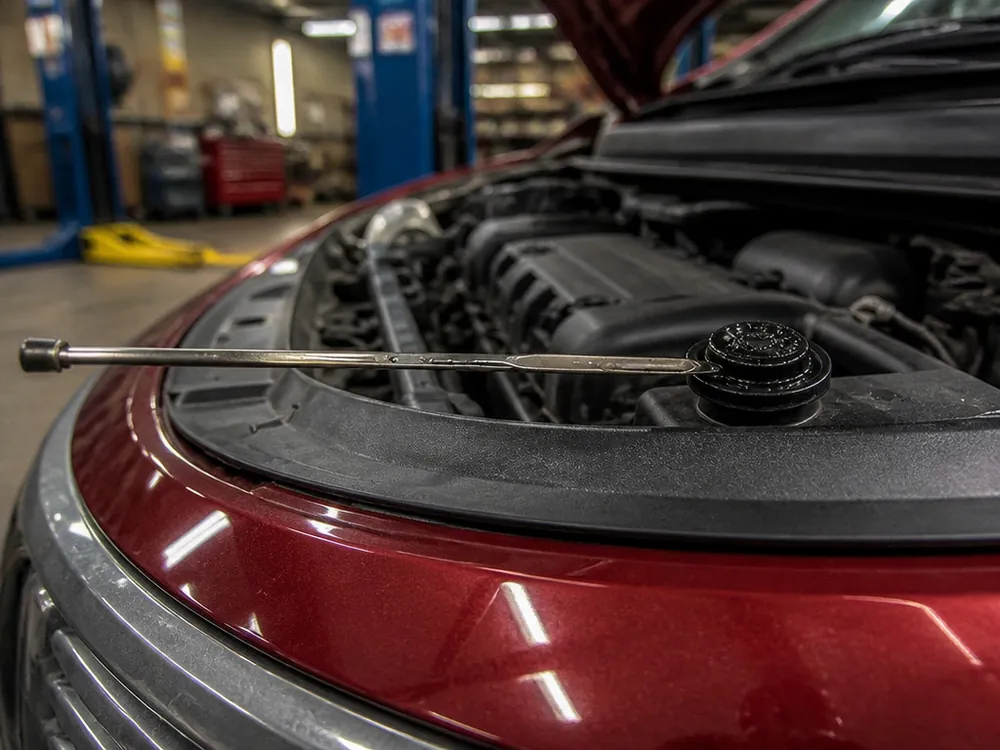
We have two control stages — we fill by the dipstick, then after starting the engine and a pause we check again to rule out underfilling or overfilling. First the technician drains the old oil through the drain plug with a seal, installs a new filter, and fills the fresh volume strictly to the dipstick mark on a cold engine. Then the engine is started, runs for a couple of minutes, the oil circulates through the channels and drains back into the pan — and the technician takes a second measurement on the warmed-up engine. Overfilling is more dangerous than underfilling on a cold start: foamed oil pumps worse and puts pressure on the seals, so we take the second measurement not right away but after the time needed for the oil to drain into the pan. Our Dodge oil change takes about an hour and a half including both measurements — enough time for the level to settle.
A leak or an error after service — what to do
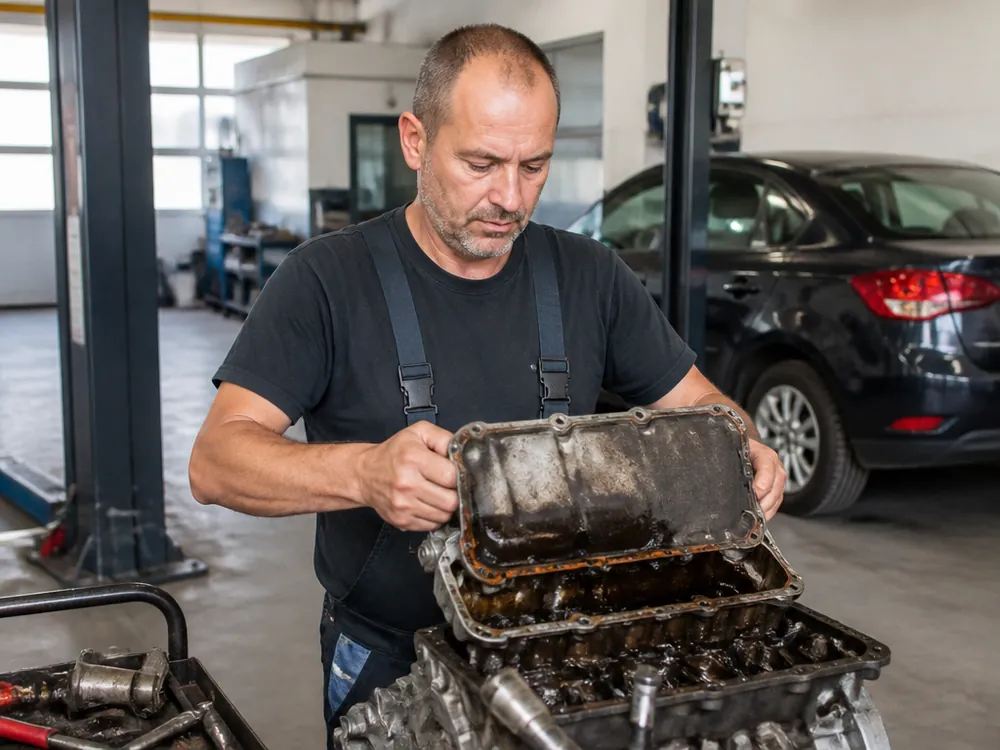
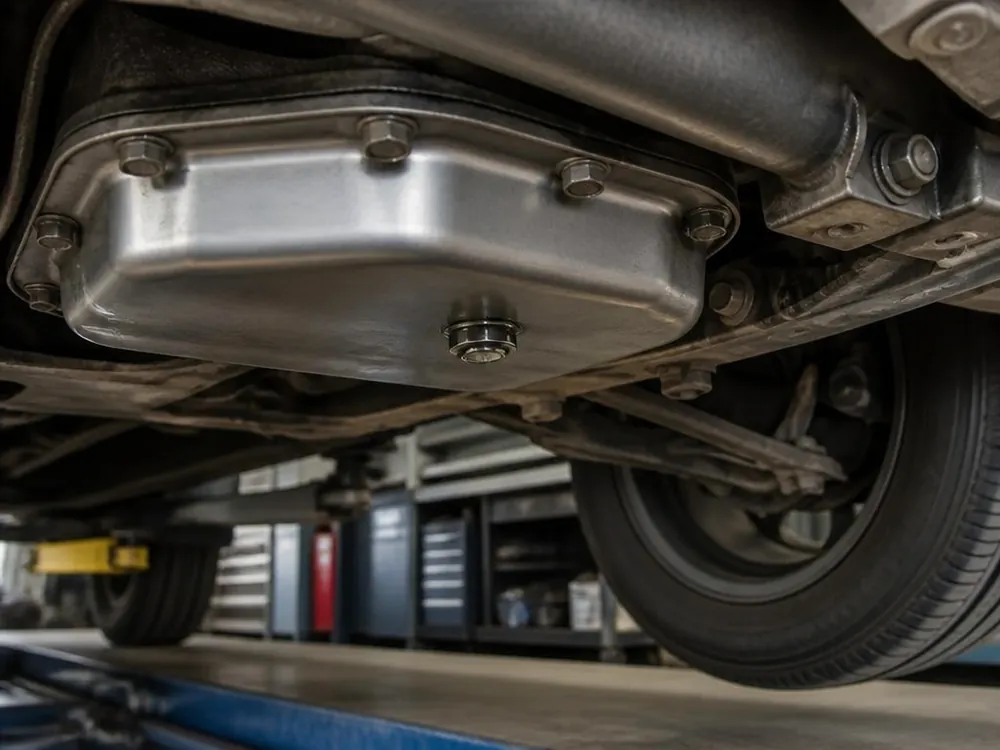
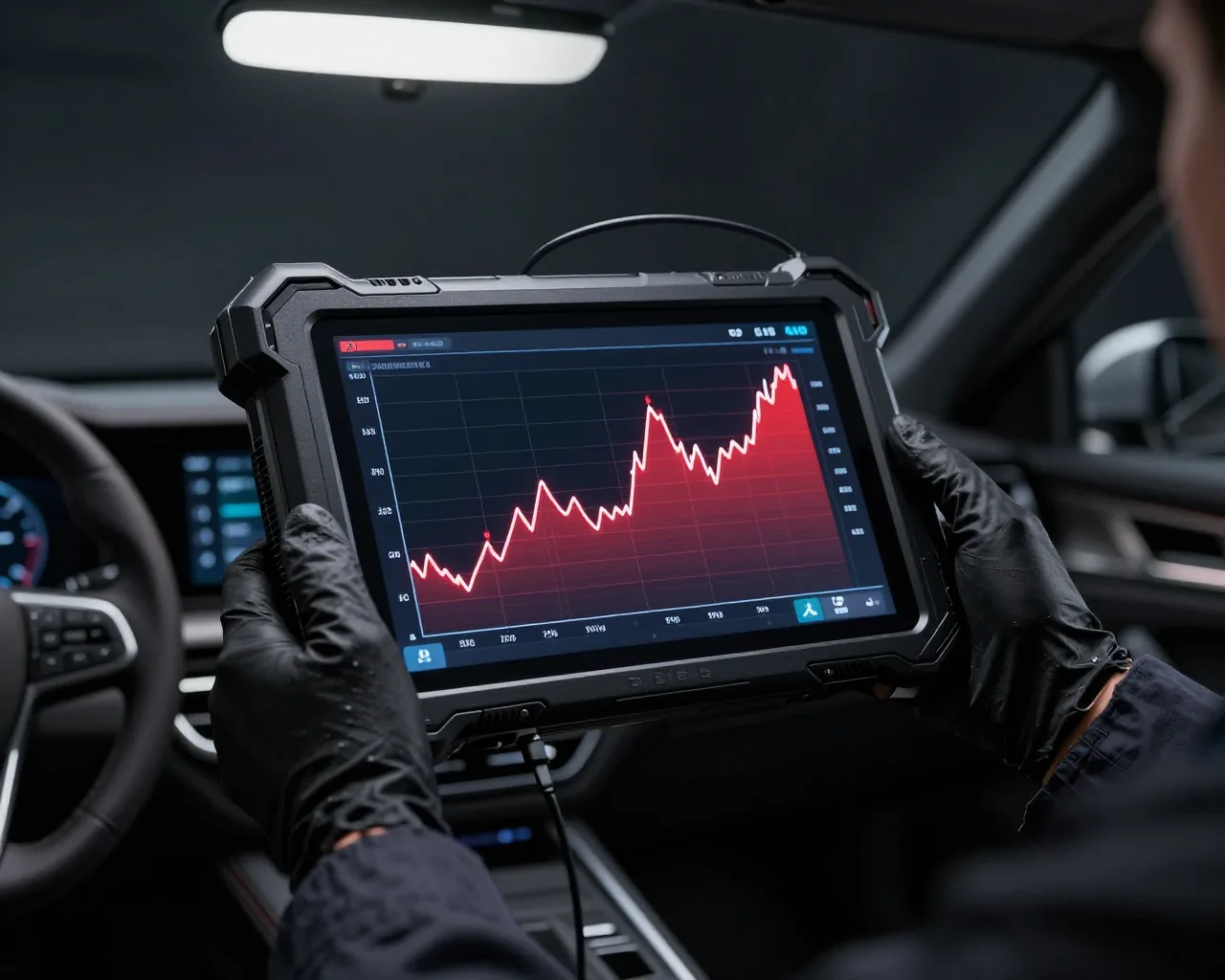
If the pan gasket starts leaking after a Dodge oil change or the check engine light comes on, come in — we do diagnostics for a warranty case free of charge. Most often the cause isn't the procedure itself but a hardened pan gasket or a pressure sensor that reacted to the change in viscosity — so when there's a leak we check the seating surface, the plug's tightness, and the sensor's condition. We read the error with a scanner, compare it with the parameters for the specific model, and only then decide what to replace: the gasket with sealant, the plug, or the sensor. The warranty on labor is 6 months, and the term and conditions are recorded in the work order when the car is handed over. In our practice, most leak complaints are resolved by replacing the pan gasket rather than draining the oil again.
Dodge models and oil volumes
Every Dodge model has its own oil volume and its own transmission. We've put together a table of what owners of the Caliber, Caravan, Journey, Ram, and Charger should know before visiting the shop.
Volumes and oil type by model
reference by models and transmission types| Model | Engine | What we change | Note |
|---|
| Caliber | 1.8 / 2.0 / 2.4 | engine + CVT | we change the CVT fluid separately from the engine |
|---|
| Caravan / Grand Caravan | 3.3 / 3.6 / 3.8 | engine + automatic transmission | volume depends on the engine, we check by VIN |
|---|
| Journey / Nitro | 2.4 / 3.6 | engine + automatic transmission | the 3.6 takes more than the 2.4 |
|---|
| Ram | diesel / gasoline | engine + automatic transmission | the diesel has its own oil spec |
|---|
| Charger / Challenger | 3.6 / 5.7 | engine + automatic transmission | selected by spec for the specific engine |
|---|
How a Dodge Caliber CVT fluid change is different
A Dodge Caliber CVT fluid change is a separate line item from the engine oil change for us — given the traffic jams and heat, the interval should be shortened compared to the schedule. The CVT fluid in the Caliber works together with the steel belt and pulleys, so degraded lubrication hits them directly. In city driving with frequent acceleration the fluid overheats faster than on the highway, and overheating speeds up belt wear. In my experience, owners notice the problem by how the car behaves: jerking when pulling away and delays during acceleration mean it needs checking ahead of schedule. Come in for diagnostics at the first such symptoms — that way the transmission avoids a repair. We check the CVT level on a warmed-up transmission and show the old fluid to the customer.
Transmission and all-wheel drive
Oil in the transmission and axles ages differently than in the engine. Here's when a partial procedure makes sense, when a machine flush does, and why the transfer case and differentials should be serviced separately from the engine.
Partial or machine transmission fluid change
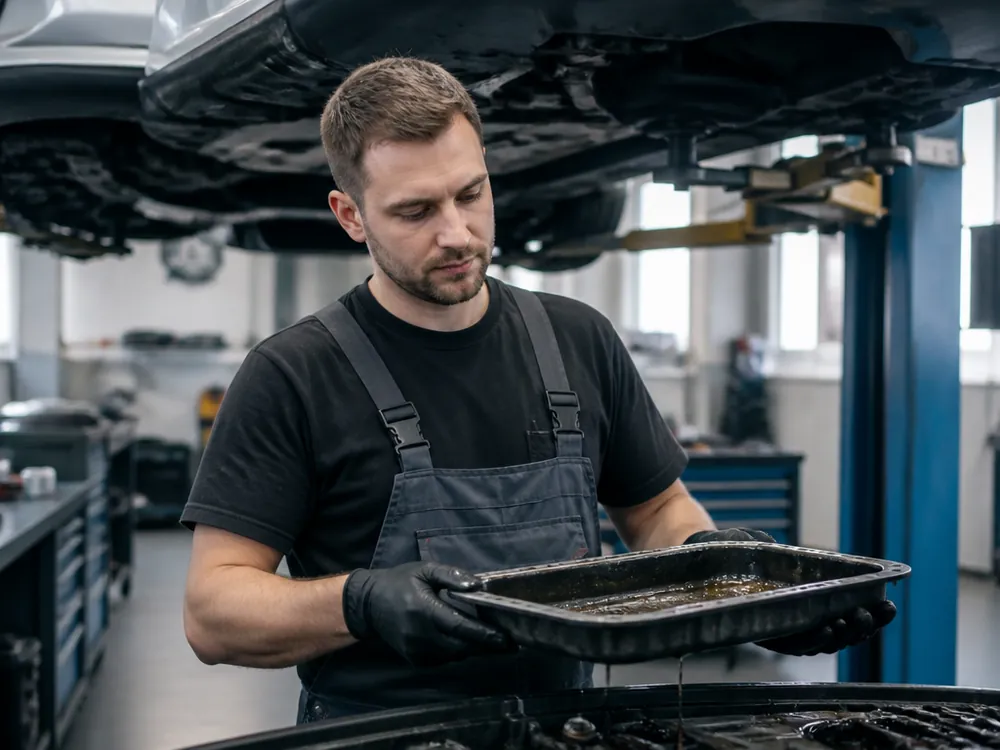
For a partial transmission service we don't drop the pan; with the machine method we fully flush out the old fluid. The choice depends on the oil condition and mileage. With the partial method we drain roughly half the volume and add fresh ATF/CVT fluid — one pass refreshes part of the fluid while the rest mixes with the new. The machine method pushes the old fluid out under pressure through the transmission circuit and renews almost all of it, but it requires a healthy unit and a clean pan. Above 150 thousand kilometers with darkened fluid, we first check its condition: color, burnt smell, wear debris on the magnets. At high mileage with worn fluid, the machine procedure can stir up deposits and do harm — in such cases a partial change, repeated after an interval, is safer.
Why Change the Oil in the Transfer Case and Differentials
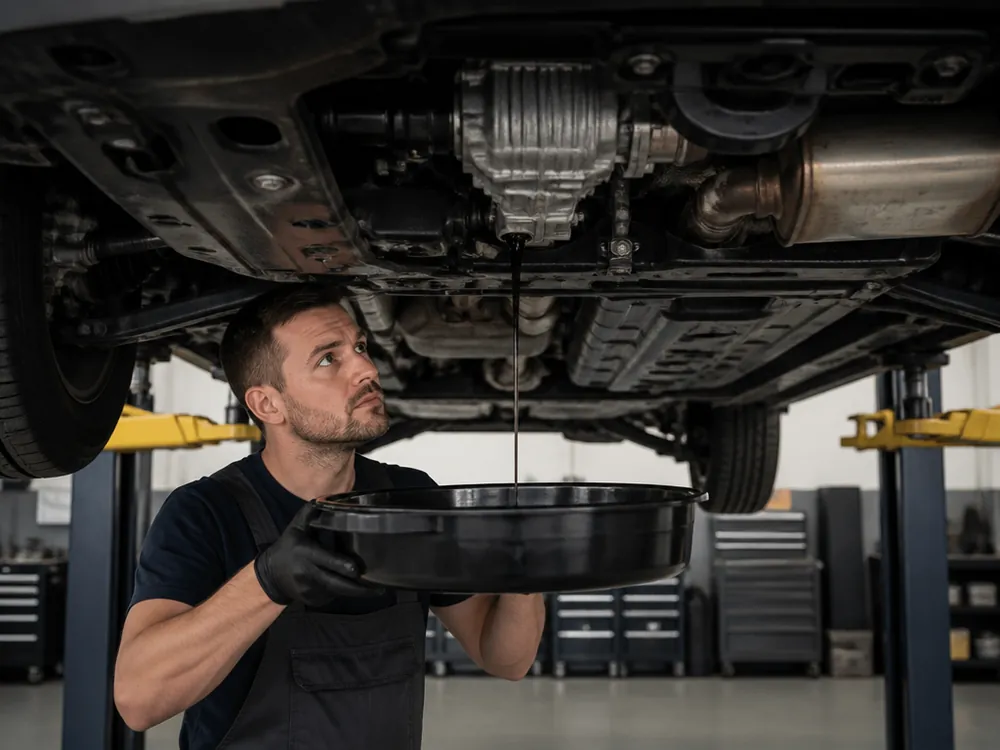
We change the oil in the manual transmission, transfer case and axle differentials separately from the engine — these units have their own lubricant life and their own specs. The transfer case and axles use thick gear oils with extreme-pressure additives, and the loads there differ from the engine: gears and bearings rub under high load, and the lubricant loses its properties from heat and metal shavings. All-wheel drive stresses the transfer case and axles more than you'd think: on dirt roads and in traffic the fluid in the differentials ages faster, so its condition is worth checking along with the transmission fluid rather than waiting for the service interval. In our shop the technician drains the old fluid, inspects the magnetic plug for shavings and fills new fluid up to the fill hole level.
Warranty, Your Own Oil and Booking Without the Wait
Before booking, an owner needs to understand three things: exactly what the warranty covers, whether you can bring your own oil, and how booking works. We answer these questions straight, with no fine print.
What the 6-Month Warranty Covers
We give a 6-month warranty on oil changes and record the term and conditions in the work order and the completion certificate when the car is handed over. The warranty covers the work performed and the parts we install: if a seal or pan gasket starts leaking a month after our work, we'll sort it out under warranty, and diagnostics for a warranty case are free. It does not cover an accident after the repair, third-party interference or normal wear of consumables. A separate note on a part brought by the customer: it isn't covered by the warranty — for an obvious reason, we haven't checked the quality of someone else's part. We put the term and conditions in writing so that six months later there are no disputes about what exactly was promised.
Can I Bring My Own Oil and Filter
Yes, you can bring your own oil and filter — the choice of OEM, aftermarket or customer parts is yours, but the warranty doesn't cover a part brought by the customer. If your oil doesn't match the engine's spec, responsibility for the consequences rests with the owner. That's why, before filling, the technician checks the specification against the one recommended for your model and warns you if it differs. In practice this happens more often with thick oils for older engines and with cheap filters whose bypass valve doesn't work correctly. We don't refuse to work with customer-supplied consumables — we just honestly tell you about the risks in advance, before the car goes up on the lift. This approach saves the owner money on consumables and avoids misunderstandings at handover.
How Long It Takes and How to Book
The procedure takes 1.5 hours, we're open daily 09:00–20:00, by appointment — no waiting in line. You arrive at the lift, the service advisor writes up the work order, drains the old oil, changes the filter and fills the new oil. An hour and a half later you pick up the car, and before handover the technician takes it for a test drive. In peak season, showing up without an appointment easily means waiting an hour or an hour and a half, so it's better to book ahead — by phone or through the form on the website, and we'll agree on a time that fits your schedule. After the service, for the first few kilometers it's worth checking the level with the dipstick and looking for leaks under the car: if anything worries you, come back — we'll take a look the same day. We hold appointments to within half an hour so you don't waste your time.
Dodge Oil Change Key Points
We've gathered the key points that determine the result of an oil change on a Dodge — from selecting the fluid by VIN to recording the warranty terms in the documents.
- Selection by VIN: the oil and filter are selected by body number, not by make and year — a single model line can have several specs.
- Filter check: the bypass valve of a new filter is checked before installation, otherwise a cold start runs without lubrication.
- Two-stage check: the level is checked with the dipstick after filling and again after starting with a pause — this rules out underfilling and overfilling.
- Documents in hand: a written estimate before work begins, a photo report by stage and the old parts show exactly what was changed.
- What to look for: don't focus on price and speed but on how transparent the process is — it says more about quality than advertising.