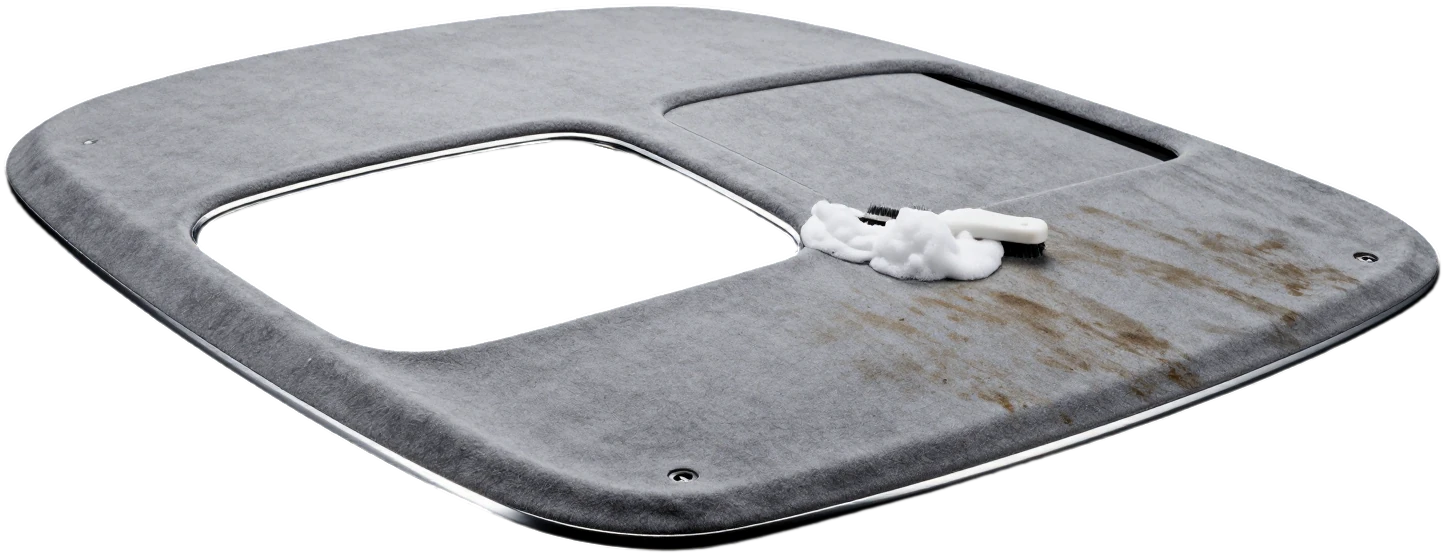
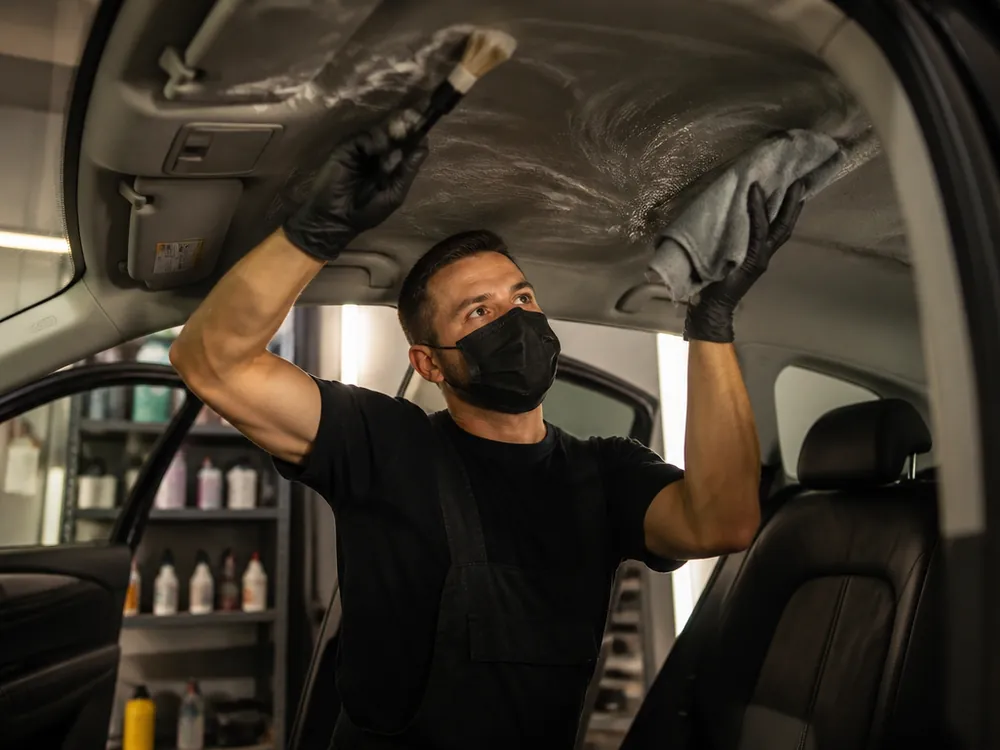
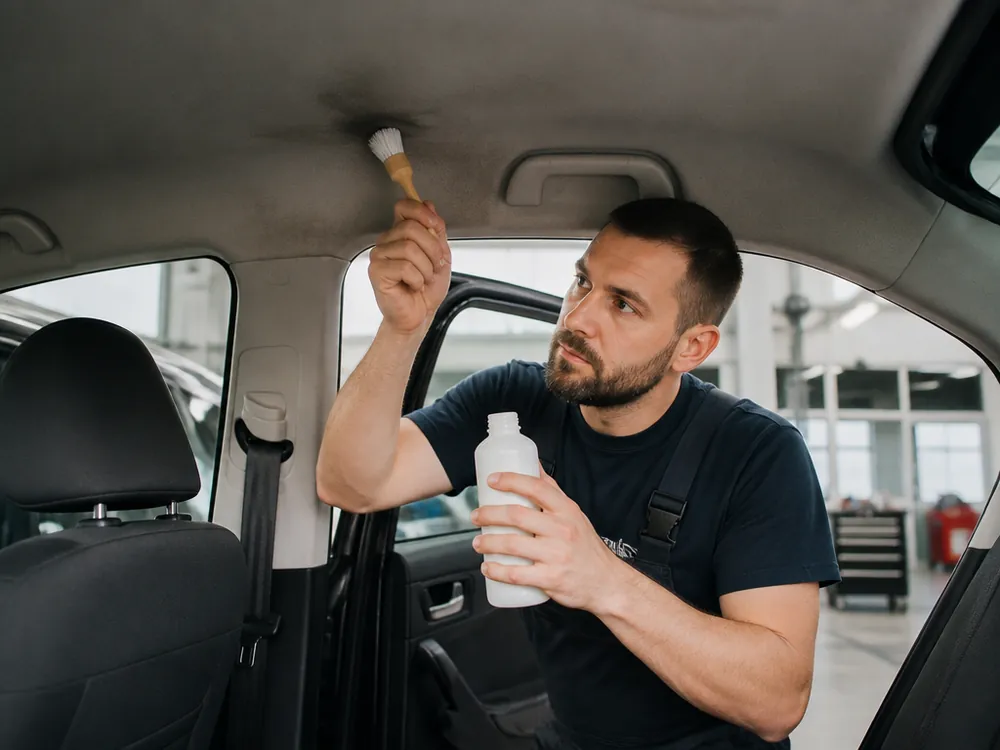
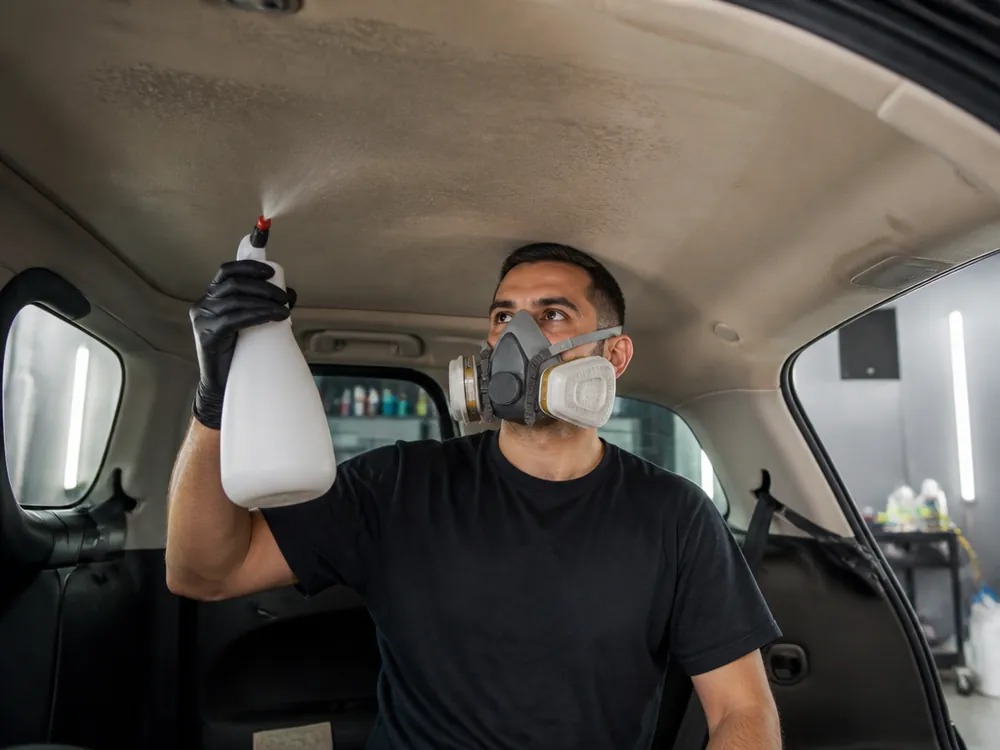
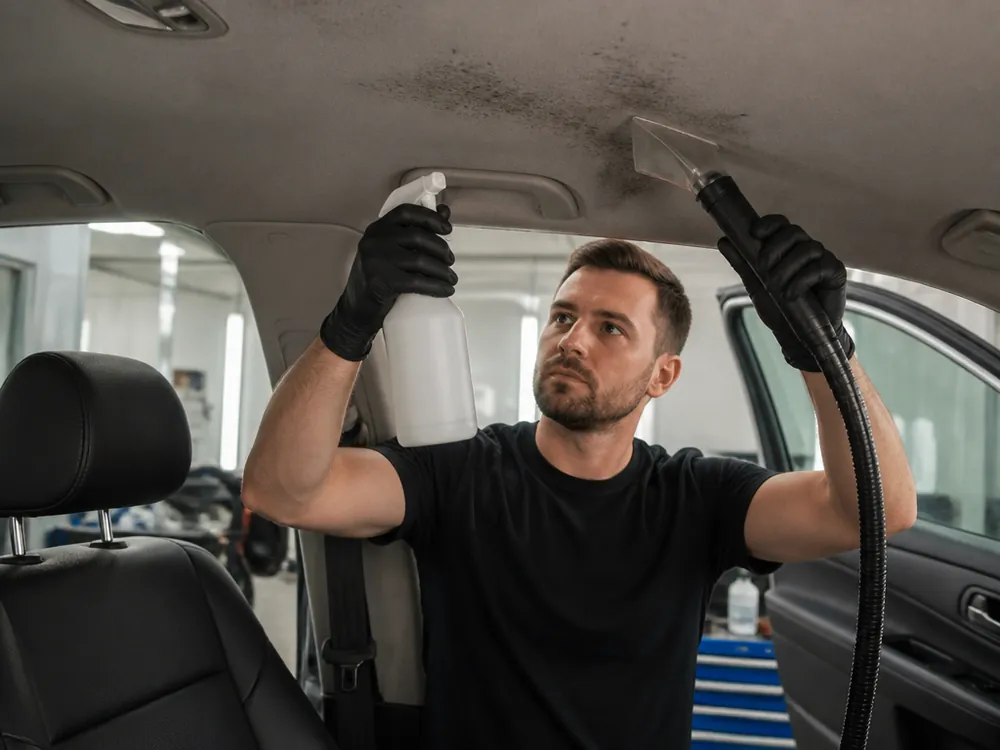
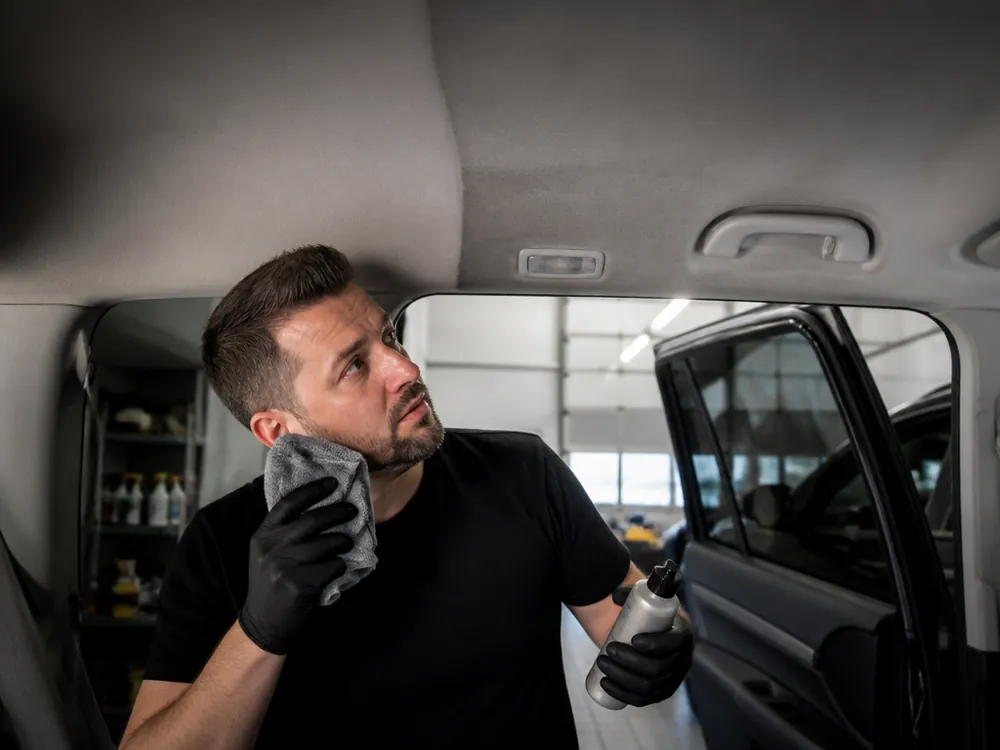
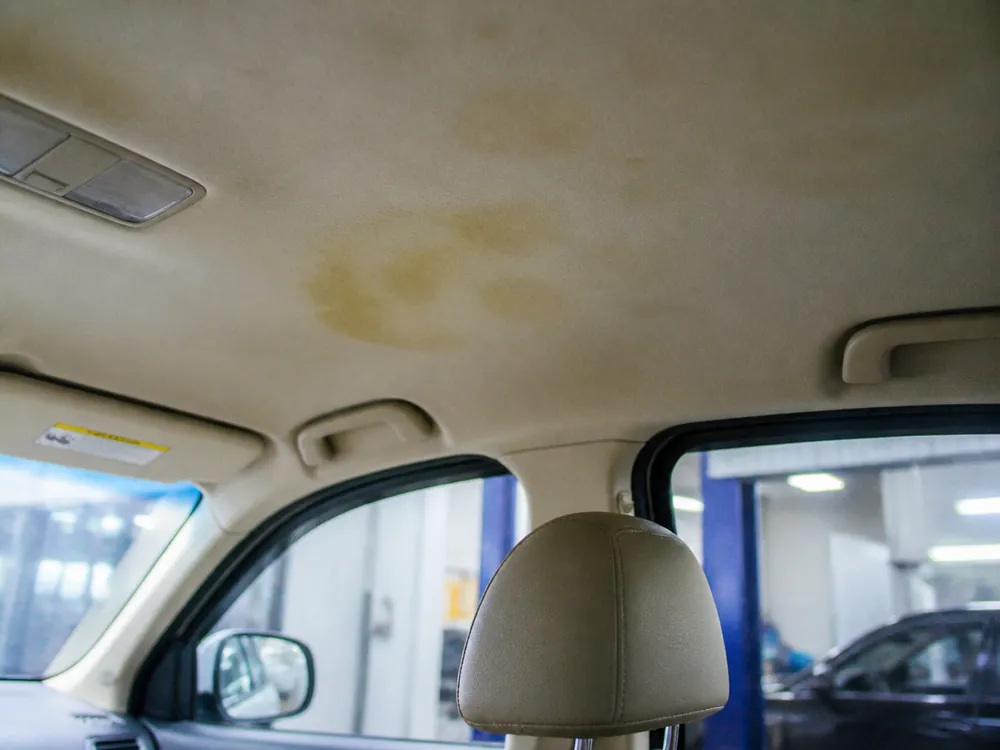
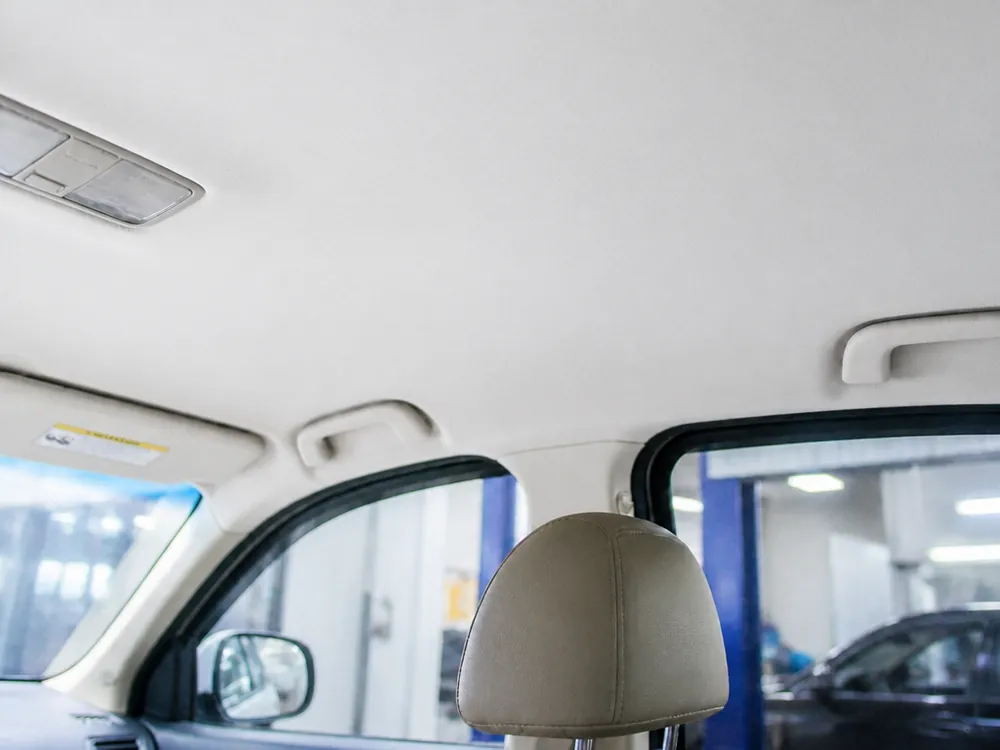
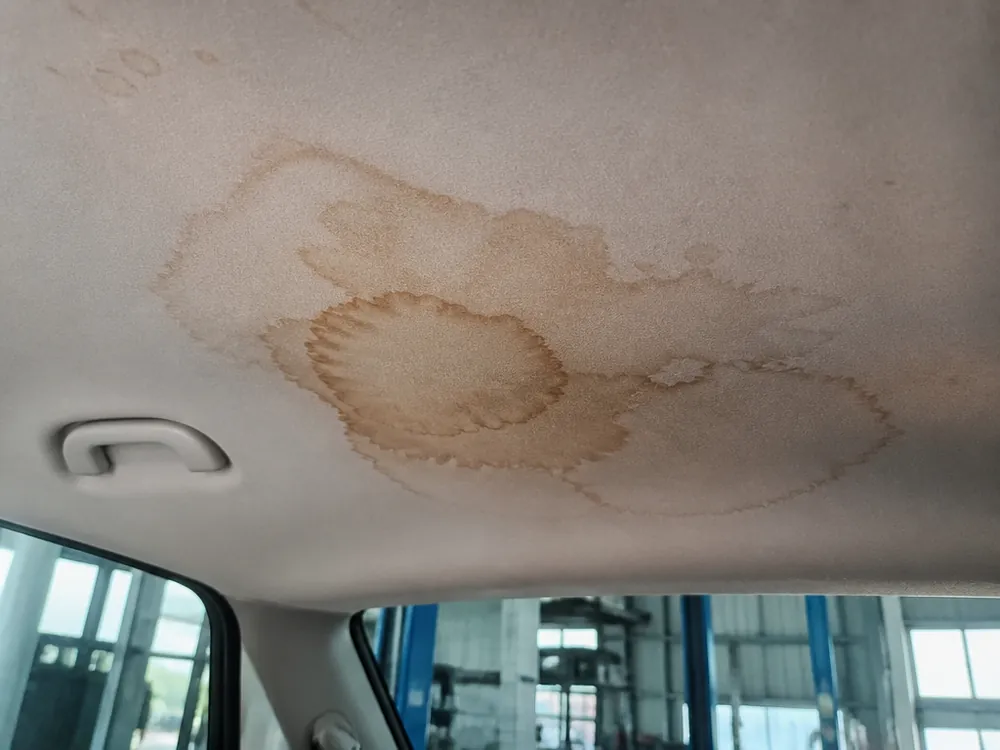
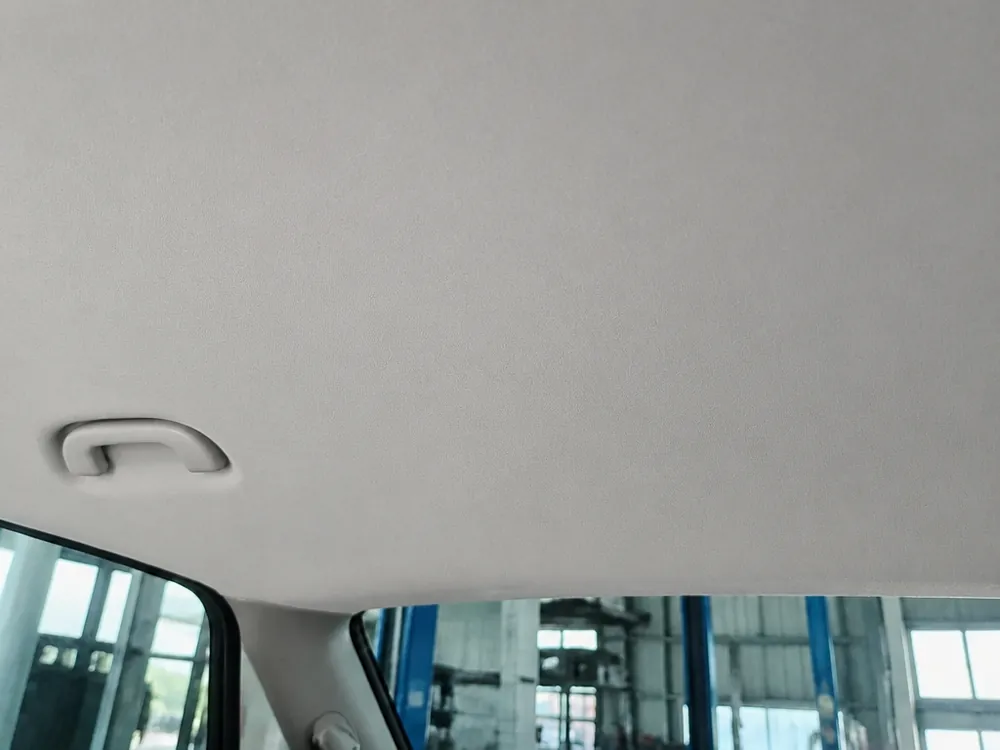
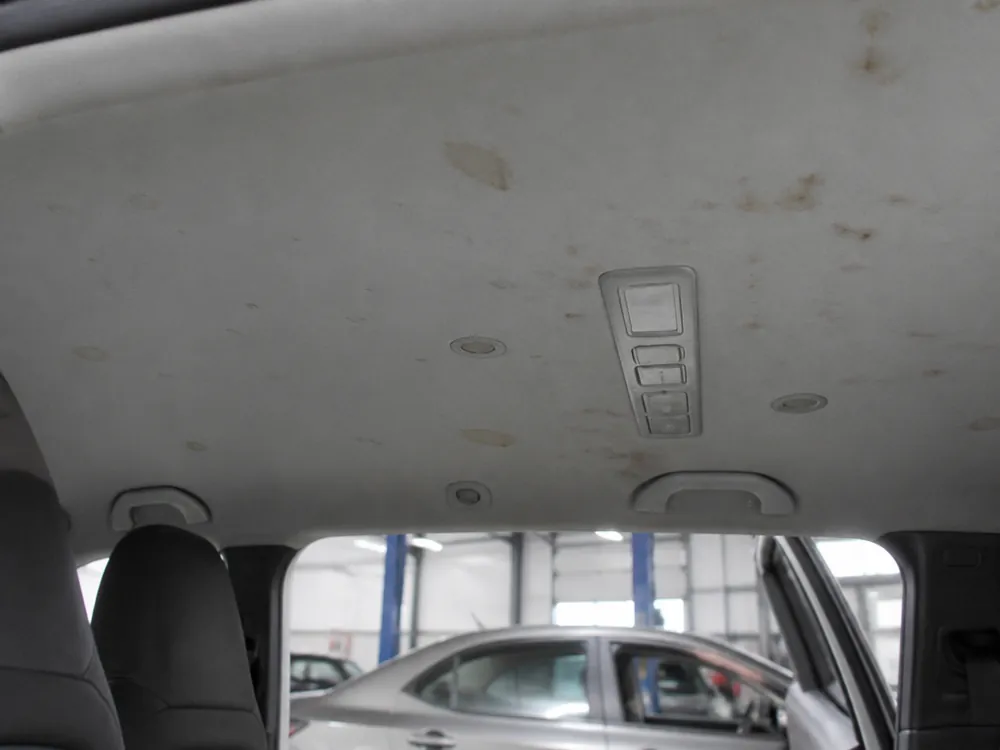
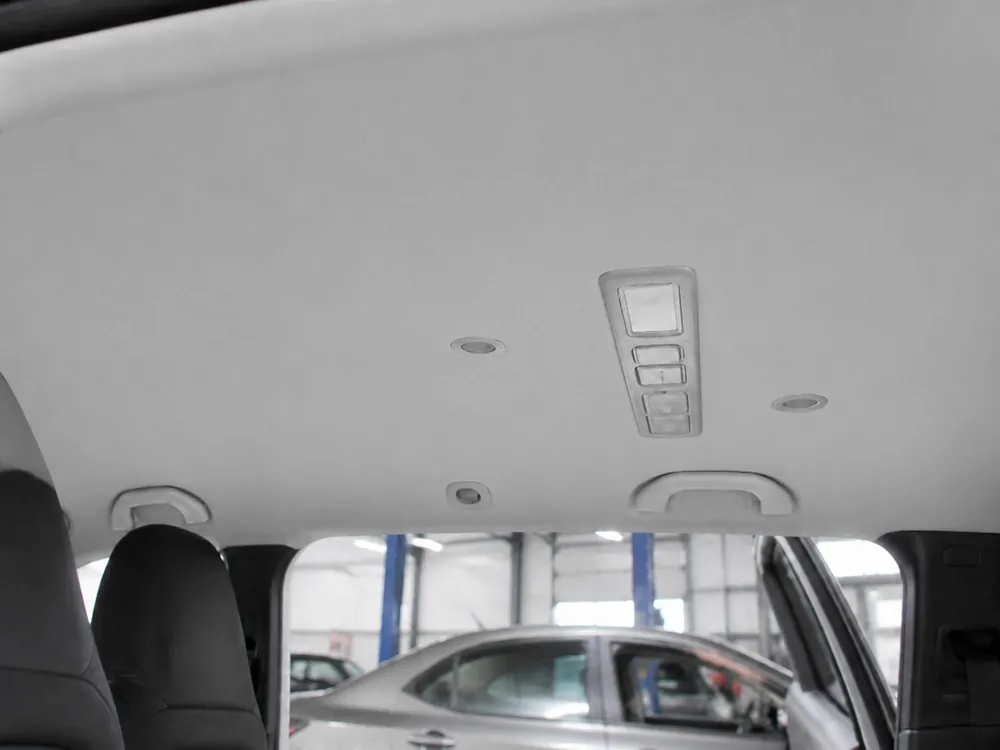
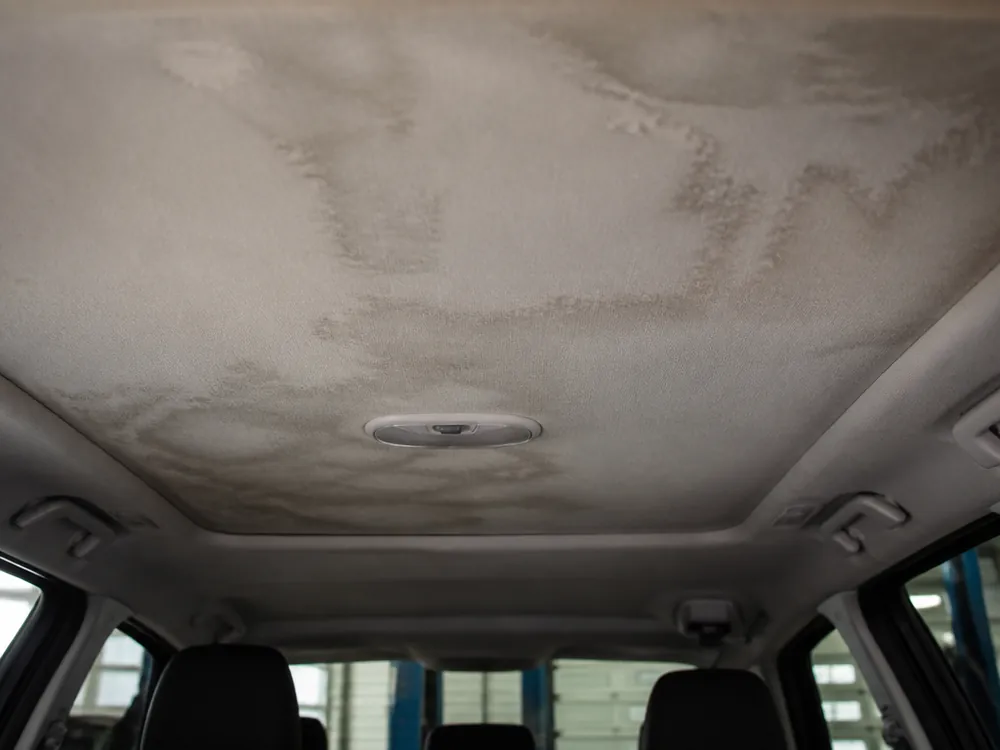
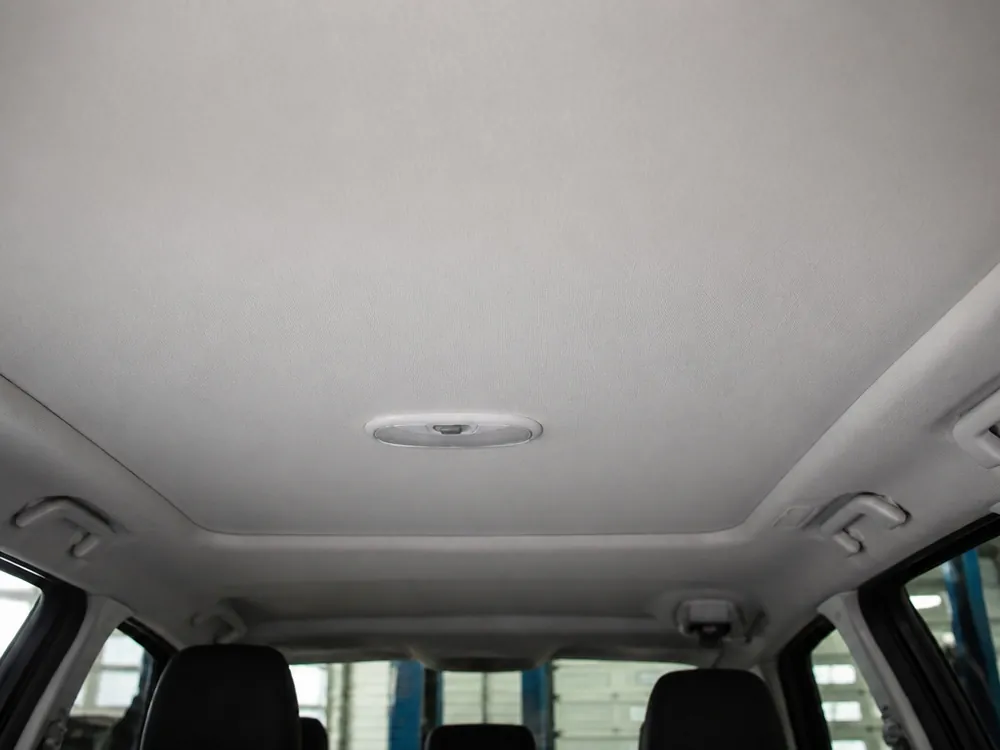
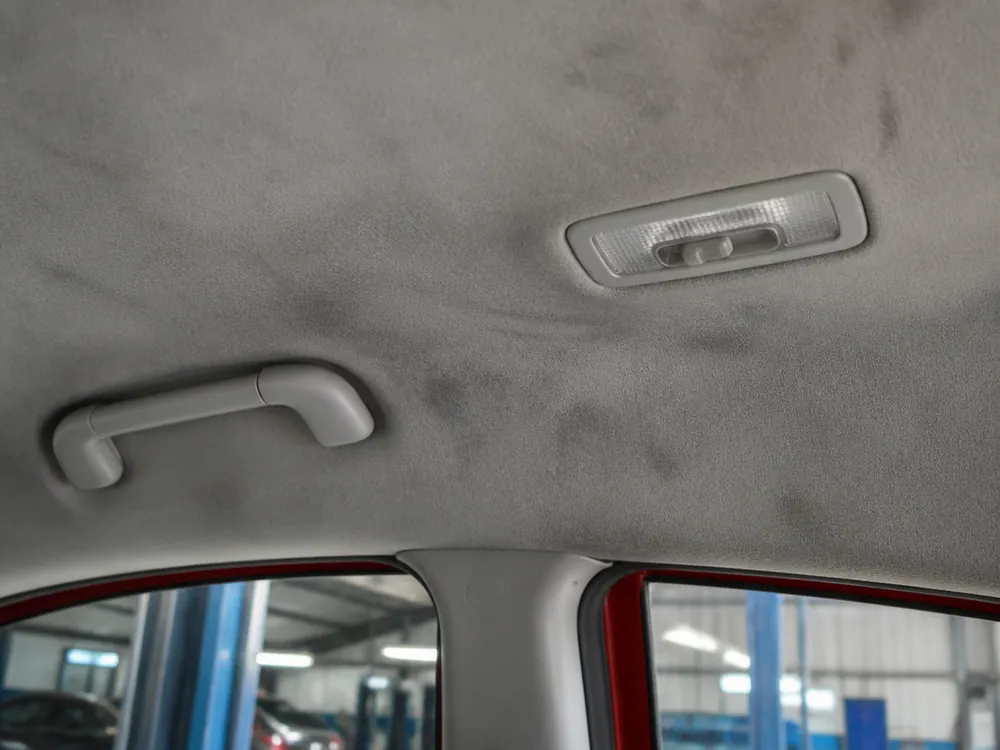
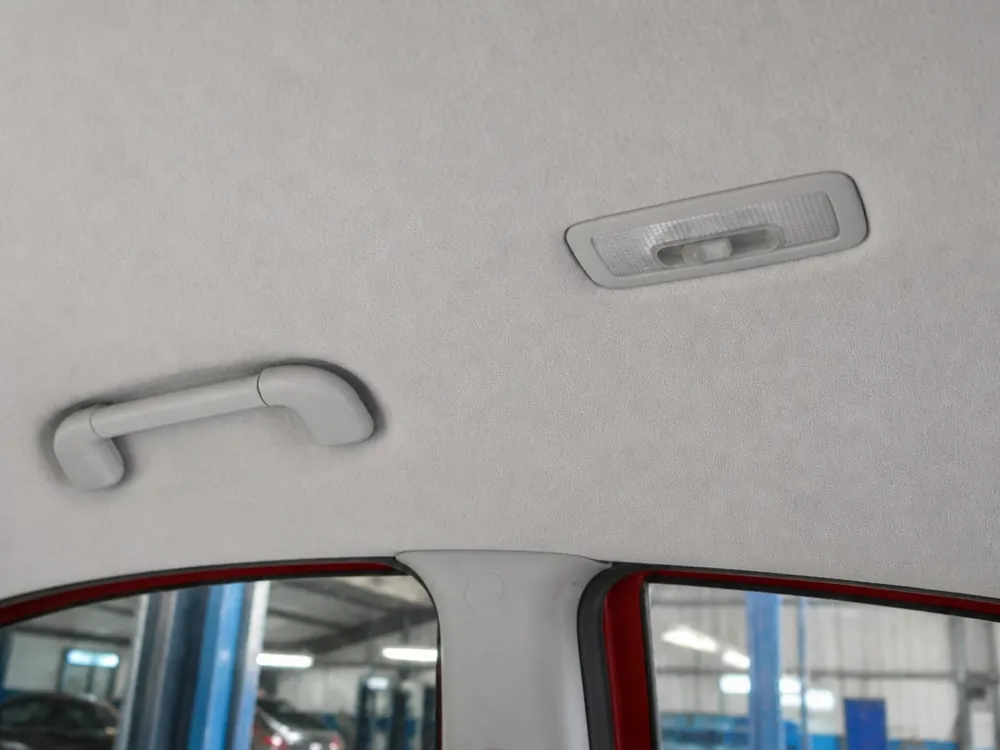
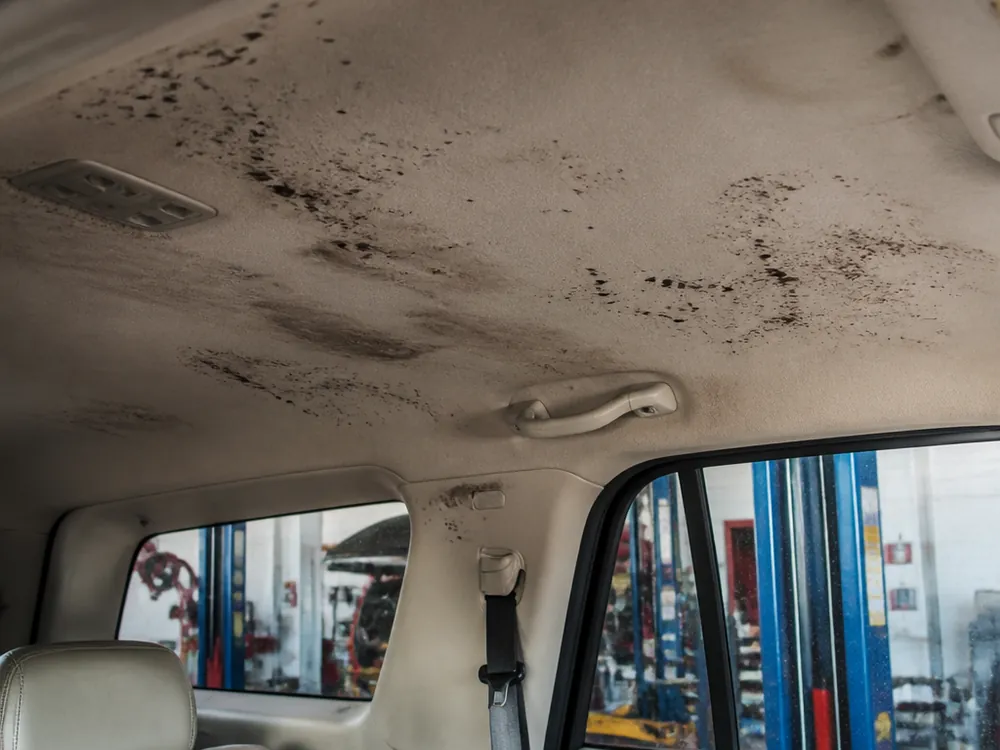
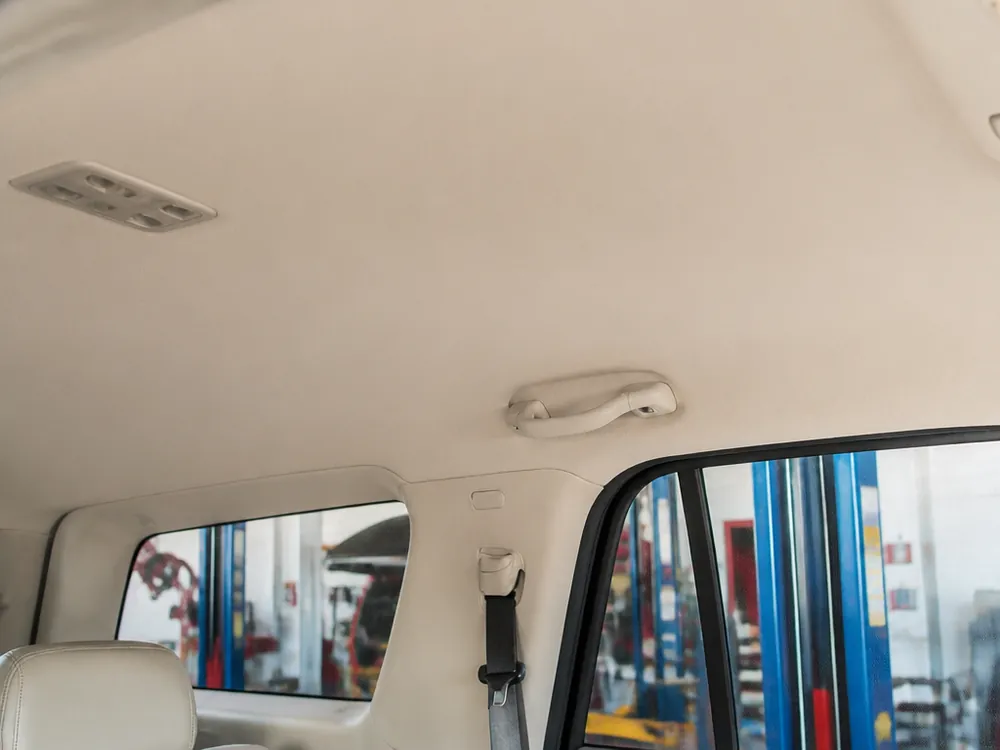
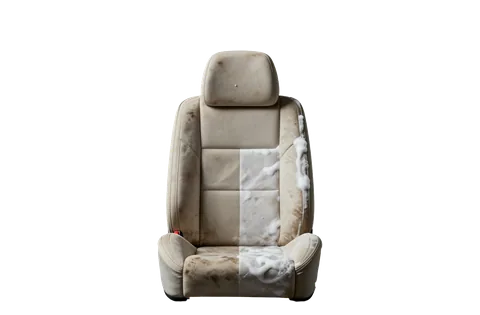
The headliner is the most visible part of the interior, but often the most soiled. We carefully remove ingrained stains, smoking traces and streaks, restoring a fresh look to the upholstery. We use professional chemicals and equipment that are safe for the material and health. The result is a clean headliner without streaks or odors, like in a new car.
The cost depends on the degree of soiling and the material. We will provide an exact price after inspection.
Service
Duration
Warranty
Price
Local spot cleaning on the headliner
30–60 min
30 days
from 5,000 ₸
Headliner dry cleaning (passenger cars)
2–4 hours
30 days
from 19,000 ₸
Headliner dry cleaning (SUVs, minivans)
3–5 hours
30 days
from 25,000 ₸
Headliner dry cleaning with odor removal
3–5 hours
30 days
from 22,500 ₸
Headliner dry cleaning with protective impregnation
3–6 hours
30 days
from 31,000 ₸
Headliner and pillar dry cleaning
3–4 hours
30 days
from 22,500 ₸
Alcantara headliner dry cleaning
3–5 hours
30 days
from 31,000 ₸
Vinyl headliner dry cleaning
2–3 hours
30 days
from 15,000 ₸
Removal of smoking traces from the headliner
4–6 hours
30 days
from 20,000 ₸
Elimination of mold and mildew on the headliner
4–8 hours
30 days
from 30,000 ₸
Headliner color refreshing
1–2 hours
30 days
from 8,000 ₸
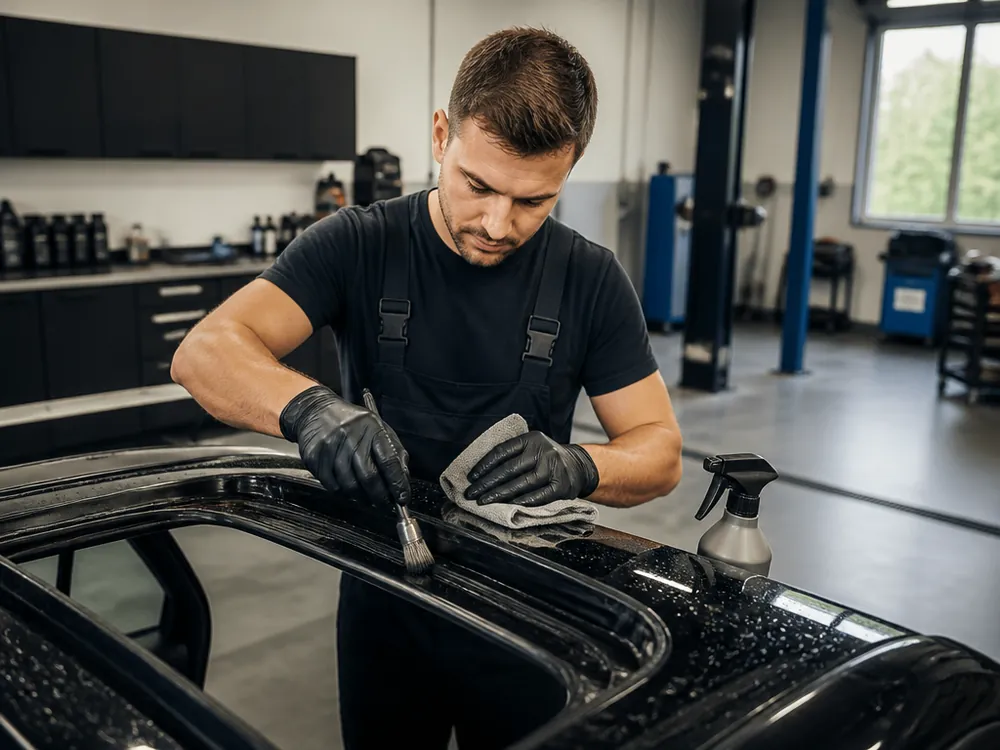
Cleaning the sunroof and its seals
30–60 min
30 days
from 3,000 ₸
Interior ozonation after cleaning
30–60 min
30 days
from 6,000 ₸
Express headliner dry cleaning
1–2 hours
30 days
from 12,500 ₸
Comprehensive interior and headliner dry cleaning
5–8 hours
30 days
from 50,000 ₸
Prices include consumables and the technician's labor. In cases of heavy soiling or the use of special products, an additional charge may be required, and we will inform you in advance. Warranty periods — see the page «Warranty»
06
Why people choose car headliner deep cleaning at CARGID
Warranty.
Every promise — backed by a number or a document: work order, photos, removed parts.
30DAYS
warranty on labor — the term is stated in the work order.
Drying
Work with all materials
Guaranteed result
01
Deep cleaning without disassembly
We clean the headliner through the sunroof and pillars without removing the upholstery. This preserves the factory clips and does not disrupt the roof's sound insulation.
02
Neutral pH foam
We apply pH 7–8 foam and collect dirt with an extractor. The neutral solution leaves no streaks and does not destroy the fabric's adhesive layer.
03
We kill mold by 99%
After cleaning, we treat the headliner with an antiseptic and dry it with a fan heater at 50°C. This guarantees the removal of fungal spores, not just masking the odor.
04
We remove smoking traces in 3 hours
We use ozonation and a sorbent to neutralize the odor. The full cycle with drying takes 3 hours — during this time the odor is completely eliminated.
07
How we clean a headliner at our shop
Steps.
We explain step by step how we restore freshness to the headliner and remove stains and odors.
01
Interior preparation
We inspect the headliner: determine the fabric type, the nature of the contamination, and the degree of material wear. We protect the panels, seats, and floor with film so they don't get wet or dirty during work.
request on WhatsApp
02
Dry cleaning
We remove dust and small debris with a special brush and vacuum so we don't spread dirt further.
inspection and diagnostics
03
Applying chemicals
We spray a professional product for fabric surfaces that suits your specific upholstery type.
estimate before work starts
04
Working in and waiting
Using a soft brush, we distribute the solution over the headliner and let it dissolve the dirt for a few minutes.
work to factory procedure
05
Dirt extraction
Using an extraction vacuum, we pull out all the dirt and chemical residue from the fabric along with water.
result check
06
Drying and inspection
We spot-treat tough stains (coffee, grease, marker) with special stain removers. We dry the headliner with a fan heater and check the result: cleanliness, color, and smell.
Car service in Almaty. We reply on WhatsApp and by phone.
5 000 ₸Local spot cleaning on the headliner
10 · Useful
Car Headliner Cleaning in Almaty Without Taking the Interior Apart
Author: Аружан А.detailing specialist (mobile), 11 years of experience
Published Updated
CARGID cleans car headliners in Almaty without removing the upholstery: we work through the sunroof and pillars, apply foam with a neutral pH of 7–8, extract the dirt with an extractor, and dry at 50 °C. The factory clips and roof sound insulation stay in place, and a 30-day warranty is written into the work order.
When a headliner needs cleaning instead of reupholstery
The biggest fear for an owner is paying for a cleaning and then hearing the headliner needs reupholstery. The difference comes down to the condition of the fabric and the adhesive layer, not the color of the upholstery. You can see the difference in a couple of minutes.
How to tell the headliner can be cleaned
A light-colored fabric headliner that has grayed from dust and hands can be cleaned — the dirt sits in the top layer of the nap, not in the fabric structure. Velour, flannel, and carpet hold dirt on the surface of the fibers, so a neutral foam lifts it without damaging the backing. Alcantara behaves differently: its nap is finer and denser, and it absorbs oil from hands and smudges from rags more readily, but it also releases them well to the extractor. Refreshing the color of the upholstery in these cases restores the original shade almost completely — the difference shows only at the edge where the upholstery wasn't removed. Cleaning the headliner in the car in these cases gives a predictable result if the fabric still holds to the backing. It's easy to check: if the fabric is taut, doesn't sag or peel at the edges, and the stain has no rusty water halo, it's a case for cleaning, not reupholstery. A water halo is a sign that someone already rubbed the stain and spread the solution across the fibers.
Signs that cleaning won't help anymore
Sagging in a bubble: the fabric has separated from the backing in a visible spot — the adhesive layer is broken, and water will make the peeling worse.
Peeling at the edge: the upholstery has come away at the sunroof or pillars, and the backing shows under the nap — cleaning won't glue it back.
Rusty streaks from past attempts: traces of water and soap have already soaked into the backing, and they can't be removed without replacing the fabric.
A musty smell under the upholstery: if moisture is trapped under the fabric, cleaning will add more and start mold in the roof insulation.
Wear down to the backing: the nap is worn at the folds and near the handles — the color can't be refreshed, and the headliner needs reupholstery in Alcantara or OEM fabric.
How car headliner cleaning works without taking the interior apart
By "without taking apart" we mean work where the roof upholstery stays in place: the technician reaches the fabric through the sunroof, pillars, and openings. There's no need to disassemble the interior — and we'll explain why.
What cleaning through the sunroof and pillars gives you
We treat the headliner through the sunroof and pillars without removing the upholstery — the factory clips stay intact, and the roof sound insulation isn't disturbed. We work this way on every car with a sunroof: first we remove and wash the mesh, then we go over the fabric around the perimeter and in the area of the drain channels where condensation usually runs. We apply foam with a neutral pH of 7–8 in spots and extract it right away — moisture doesn't get into the insulation. Car headliner cleaning in Almaty through the sunroof and pillars is done without removing the upholstery, so the factory clips and roof sound insulation stay untouched. When the upholstery is removed, the clips almost always break and get replaced with aftermarket ones, and the fabric often sags after it's put back — that's why we don't use that route. Before booking, check whether your model has a sunroof: through it the procedure goes faster and the headliner dries more evenly.
How cleaning without disassembly differs from cleaning with removal
comparison of two approaches to headliner cleaning
Parameter
Without disassembly (our way)
With upholstery removal
Upholstery
stays in place
removed and put back
Clips
factory, intact
often break, get replaced
Roof sound insulation
not disturbed
risk of shifting during reassembly
Interior protection
film on the dashboard, seats, floor
interior disassembly
Why no streaks or uneven color appear after cleaning
Streaks and uneven color are the second-biggest fear for an owner after the price itself. We'll show where the rings on the upholstery come from, how we prevent them, and what we do so the fabric doesn't peel at the edge.
Where streaks and uneven color come from
Streaks come from over-wetting and rushing the drying — water spreads dirt across the nap and leaves rings at the border between wet and dry areas. When the fabric is soaked through, moisture reaches the adhesive layer, and the upholstery starts to peel at the edge — that's no longer cosmetic, it's reupholstery. The second source is aggressive alkali: it washes out the dye and causes uneven color that can't be fixed by polishing the nap. A backyard "the stronger the better" cleaning gives exactly that result: the stain goes away, and a light ring stays in its place. Professional chemicals are chosen for the type of headliner fabric, not by maximum concentration. Our service advisor checks the upholstery composition before work starts and tests the product on a hidden area — if the nap reacts, the approach is changed before the foam touches a visible spot.
How we prevent streaks
Foam with a neutral pH of 7–8: we apply a product that doesn't break down the adhesive layer or wash the dye out of the nap.
Extractor instead of a rag: we pull out the dirt along with the moisture instead of smearing it across the whole headliner.
Drying with a heat fan at 50 °C: moisture doesn't stay in the fabric, so no rings form at the border between areas.
Working through the sunroof and pillars: we clean without removing the upholstery, and the factory clips and roof sound insulation stay in place.
30-day warranty: the term and conditions are recorded in the work order, and diagnostics for a warranty case are free.
Mold, dampness, and tobacco smell on the headliner
The two most difficult cases are mold in the corner of the upholstery and years of smoking in the interior. For both we give an honest answer: what cleaning fixes and where it won't help anymore.
Mold on the headliner — cleaning or replacing the upholstery
We remove mold from the fabric surface with an antiseptic treatment and drying, but once the source has gone into the foam under the upholstery, treatment won't save it — it needs replacing. Here's how we work: we apply an antiseptic to the affected area, let it sit for the time specified by the product, extract the residue, and dry the upholstery with an air stream. It makes sense to treat fungus and mold while the dark spots are still on the top layer of fabric and there's no persistent stench. Checking the depth is simple: after treatment, the upholstery should smell neutral by the next day. A sign that the microorganisms have reached the foam is dampness coming back a few days after treatment, even if the stain looks gone. In that case, it's cheaper and more honest to re-cover the headliner than to keep running antiseptic in circles every couple of months.
Can tobacco smell really be removed completely
The nicotine film comes off the headliner and we neutralize the stench with ozonation and an absorbent — but when someone smoked in the car for years and the smoke has soaked into the foam, the upholstery may need replacing. First we remove the yellowing from the fabric, then we treat the interior with an ozone generator and leave an absorbent in the air ducts and under the seats while it dries. Removing smoking traces from the headliner takes one visit: we clean the pillars, sun visor, and sunglasses holder at the same time — the same film builds up there. To be honest up front: ozonation pulls the stench out of the air and off the surface, but it doesn't reach deep into the foam — that's why we tell you the expected result before we start. When the tobacco smell comes back on the second or third day after treatment, we discuss replacing the upholstery with you rather than selling another round of ozonation.
Timing, warranty, and care after headliner cleaning
How long the fabric takes to dry, what obligations we take on based on the results, and how to keep the upholstery looking fresh — the three questions people ask most often before booking an interior headliner deep clean.
How long the headliner takes to dry and when you can drive
We dry the headliner with a fan heater at 50 °C, so you can drive off right after pickup instead of waiting a day for the fabric to dry on its own. This mode pulls moisture out of the fibers evenly — without overheating the adhesive layer and without the risk of the upholstery misbehaving along the seam. On a standard sedan, the treatment and drying cycle fits within a working shift at our shop at 129 Mukagali Makataev — we schedule it so the car doesn't spend the night on the lot. Minivans and crossovers have a noticeably larger headliner area, plus the zones above the third row and around the sunroof, so the cycle with drying takes longer — worth keeping in mind when planning your day. Come at opening, from 09:00: that leaves the technician a buffer for drying before evening pickup.
What the warranty covers and how to care for the headliner
Work warranty: we give 30 days on headliner deep cleaning; the term and conditions are recorded in the work order and the completion certificate at vehicle pickup.
Free inspection: if streaks or uneven color come back during this period due to our fault, the inspection and re-treatment of the area are free of charge.
Cases outside the warranty: fresh stains from spilled drinks, scuffs from cargo, and third-party tampering with the upholstery are not covered by our obligations.
First days: don't rub the headliner with a cloth and don't park in direct sunlight — the fabric stays fresh longer if you let it settle.
If a stain appears: blot it with a dry napkin from the edge toward the center, don't rub — that way the dirt won't spread through the fibers or leave a halo.
Key points for headliner cleaning
Let's sum up headliner cleaning: what actually affects the result and what to look for so you don't end up with uneven color and rework. Below are short takeaways without promises.
A grayed light-colored headliner: usually washes clean, and re-covering is only needed when the fabric sags and the adhesive layer separates.
Cleaning without removing the trim: preserves the factory clips and roof sound insulation, so no squeaks or popping appear after the job.
Streaks and uneven color: come from over-wetting and aggressive chemicals, not from the procedure itself — a neutral pH 7–8 foam doesn't cause that effect.
Mold and tobacco smell: can be removed while the source stays on the fabric, but once it's gone into the foam under the upholstery, treatment no longer helps.
Work warranty: must be written in the work order and completion certificate, not promised verbally at intake.
11
Frequently asked questions about car headliner dry cleaning in Almaty
Questions.
Price, timeframes, warranty, payment — 10 questions asked most often.
10
Didn't find an answer?
Message us on WhatsApp — a service advisor will reply within 5 minutes.
The cost of headliner dry cleaning at CARGID starts from 19,000 tenge for passenger cars. The price depends on several factors: type of fabric (velour, Alcantara, vinyl), degree of soiling (stains, odor, ingrained dirt), headliner size (sedan, station wagon, crossover, minivan) and presence of complex stains (grease, glue, cigarette marks). For example, for a sedan with minor soiling — from 19,000 tenge, for a crossover — from 25,000 tenge, for a minivan — from 20,000 tenge. The exact price can be quoted after inspecting the headliner. We do not charge extra for standard stains and odors, but if additional treatment with an antibacterial compound is required, this adds 3,000–5,000 tenge to the bill.
On average, the procedure takes from 1.5 to 3 hours. The time depends on the size of the headliner, degree of soiling and the chosen cleaning method. If only local cleaning of individual stains is performed, we will finish in 40–60 minutes. Full dry cleaning with removal of elements (handles, ceiling lights) takes up to 3 hours, as it requires care and drying. We do not use extremely fast methods that can damage the fabric. After finishing the work, it is recommended to wait 2–3 hours for complete drying, so on the day of service, please take this time into account.
Yes, we provide a 14-day warranty on the quality of headliner dry cleaning. If after the procedure you find that some contaminants were not removed, or streaks appear (provided that you have not used the vehicle and have not spilled liquid on the headliner), we will re-clean the problem areas free of charge. The warranty also covers the integrity of the fabric and upholstery: we are responsible for possible damage that occurs during work. Photo recording of the headliner condition before and after is standard practice; it helps avoid disputed situations.
Yes, an appointment is desirable but not strictly mandatory. By booking in advance, you are guaranteed a free slot and won't have to wait. This is especially relevant on weekends when the workload is at its highest. You can book by phone or via messengers. If you arrive without an appointment, we will try to accept you within 30–60 minutes, but during peak season there may be a queue. For large SUVs and minivans, we recommend booking at least a day in advance, as more time is allocated for them.
We understand that some clients have preferences for chemicals. In most cases, we do not recommend using your own products, as our professional chemicals are selected for various types of fabrics and tested for compatibility. If you insist on your product, we can use it, but we disclaim the warranty on the result if the product turns out to be unsuitable and causes damage to the fabric or color. The exception is special products for removing complex stains that you can provide, but we will ask to show the composition and label. The rate and timeframes remain unchanged.
If after dry cleaning you find that the headliner is not clean enough or streaks are visible, contact us immediately within 14 days from the date of service. We will re-clean free of charge if the problem arose due to our fault: incorrectly selected product, poor drying, insufficient treatment. Most often, streaks appear due to haste or use of unsuitable chemicals. We will eliminate the defects, usually on the day you come in (complex repairs take up to 3 working days). If you soiled the headliner after cleaning, re-treatment will be paid — from 5,000 tenge for local cleaning.
Standard headliner dry cleaning includes removal of surface dirt, dust, light stains, color refreshing and odor neutralization. It is recommended for regular maintenance once a year. Deep dry cleaning is a more labor-intensive process with delicate disassembly of interior elements (handles, ceiling lights, sun visors), use of stronger products to remove old stains, engine oil, paint marks, ingrained dirt. Deep cleaning also includes treatment with an antibacterial compound and impregnation that protects against future soiling. The duration of deep cleaning is 3–4 hours, cost from 31,000 tenge. If the headliner is heavily soiled or has specific stains, choose deep cleaning. In other cases, standard cleaning is sufficient.
After dry cleaning, during the first 24 hours, it is not recommended to touch the headliner, as the fabric must dry completely. Do not load or rub the surface to avoid disrupting the structure. Ventilate the interior to avoid condensation. In the future, avoid smoking in the car, do not leave dirty hands on the headliner, and promptly remove fresh stains with a damp microfiber cloth. Once every 3–4 months, you can perform dry cleaning with a vacuum cleaner and brush. Do not use aggressive household cleaning products that contain solvents or acids — they can damage the coating. We recommend repeating professional dry cleaning annually to maintain freshness.
At CARGID you can pay for headliner dry cleaning in cash in tenge, by bank card (Visa, Mastercard, Kaspi Gold), as well as via Kaspi QR. For legal entities, payment by bank transfer is possible with all necessary documents (contract, invoice, act). We issue a payment receipt, which serves as confirmation of warranty obligations. You can also pay for the service in advance online or on the day of service. We do not require prepayment for booking if you plan to visit within the next few days. All prices quoted at booking remain unchanged.
We prefer to clean the headliner in place, without completely removing the upholstery. This is safer for the car and eliminates the risk of damaging moldings or deforming the frame. However, for quality cleaning, we remove individual elements: glass ceiling lights, handles, sun visors, if they are heavily soiled. For hard-to-reach areas or in case of leaks, partial removal of the headliner may be required, but this is agreed separately and rarely. In 95% of cases, we work with the installed headliner, using special tools for delicate cleaning and dirt extraction. This takes a little more time but gives an ideal result without sagging or deformation.
12
What clients say about our headliner cleaning
Reviews.
We collect ratings on the website and on maps — we hide nothing.
4.8
872 reviews on the website 1 900+ ratings in total
Aigerim
Tucson
I came in with a coffee stain on the headliner of my Hyundai Tucson. The stain was removed perfectly, I couldn't even believe it was possible. The price was 18,000 tenge, it took about an hour. The service is neat, everything was done quickly. I recommend!
Sergey
Vaz 2114, the headliner was in terrible condition after smoking. They did dry cleaning, the smell was gone, the color looked fresher. I paid 25,000 tenge, it took half a day. Good, quality work.
Dmitriy
Toyota Camry
I had the ceiling of my Toyota Camry chemically cleaned. There were juice stains and dirty marks. They made everything clean, without smell. It cost 30,000 tenge, but the result was worth it. Thank you!
Gulnara
I searched for a long time for a place to clean the headliner from yellowing after smoking. At CARGID they did an excellent job! Now the interior is like new. I spent 45,000 tenge, but it was worth it. Thank you very much!
Vlad
Sportage
I noticed water stains after rain in my Kia Sportage. The guys did chemical cleaning, ironed and treated antibacterial. The smell of dampness disappeared. Very satisfied, price 20,000 tenge.
Arman
I transported building materials, the headliner in the station wagon got stained with cement. I thought I would have to reupholster it. But they cleaned it! Dry cleaning took a day, I paid 35,000 tenge. Very glad I didn't have to replace the upholstery.
Natalya
I have a Mitsubishi Outlander, the kids drew on the headliner with markers. The technicians even removed the ink! They said it was difficult, but they managed. The price was 50,000 tenge, it took two days. But now it's clean. Thank you!
Timur
I ordered headliner dry cleaning for my Mazda 6 before selling it. The guys did it perfectly, the buyer didn't even believe the car wasn't new. I paid 32,000 tenge, the result exceeded expectations.
Elena
We have a large family car, the headliner was simply terrible: stains from everything. The guys came to our home and did everything on site. True professionals! Thank you, now driving is a pleasure.