






Car AC Compressor Repair in Almaty by CARGID

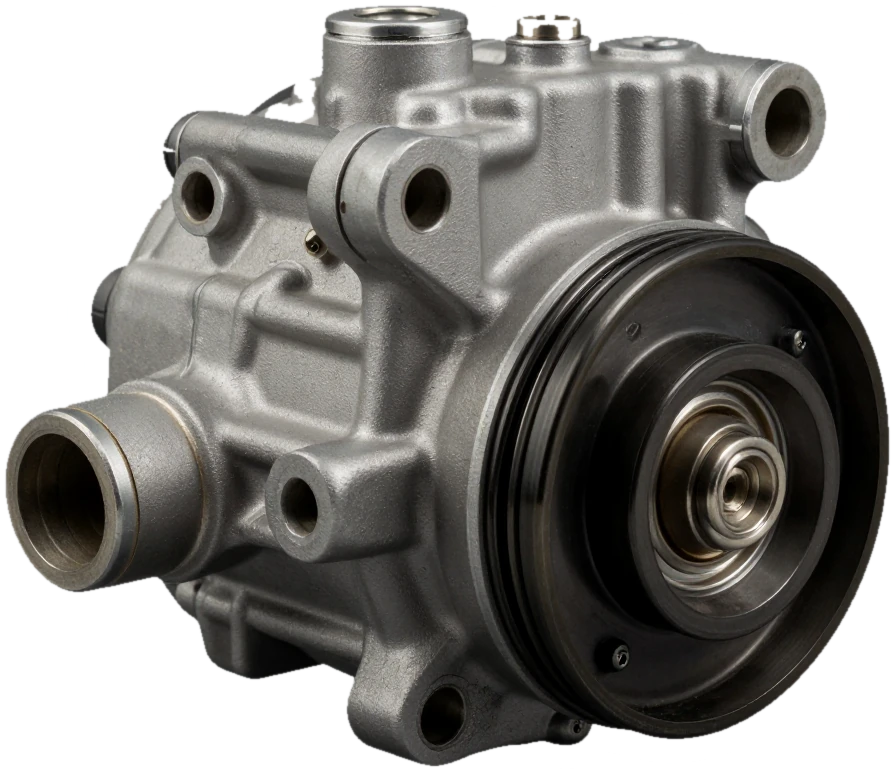
CARGID in Almaty rebuilds the AC compressor down to the housing, not just replaces the whole unit: we disassemble the assembly, replace the valve group and seal, and check the clutch and solenoid. First diagnostics and a written estimate, repair after approval. 12-month warranty on work in the work order.
Compressor or Not — How to Tell a Unit Failure from a Leak
The owner arrives with one symptom — "not cooling" — and doesn't know if they came to the right place. We break down the cause by component: the compressor itself, refrigerant leak, charging quality, control electrics.
Why It Blows Warm When the Compressor Is Spinning
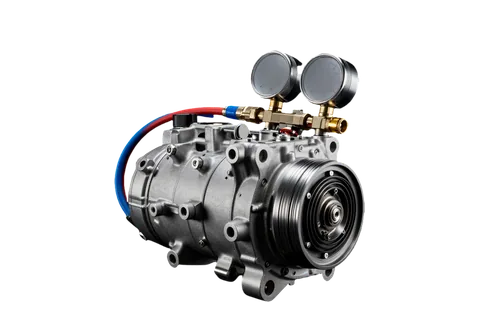
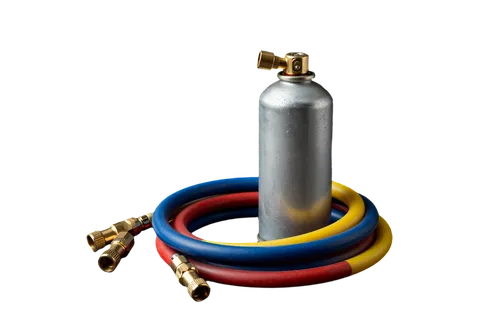
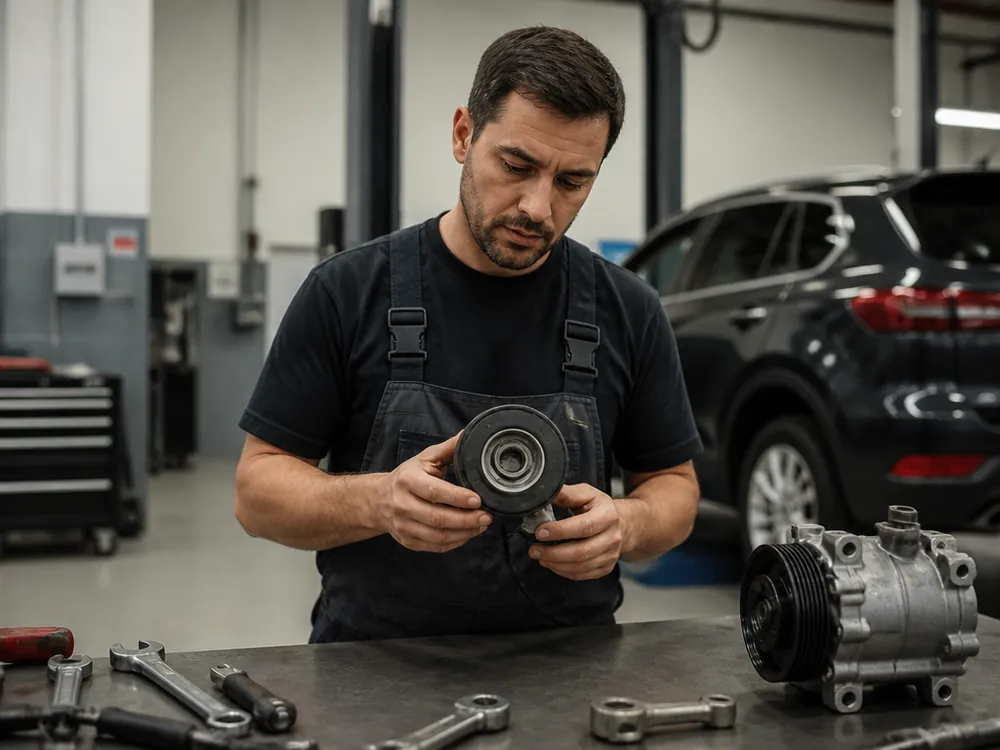
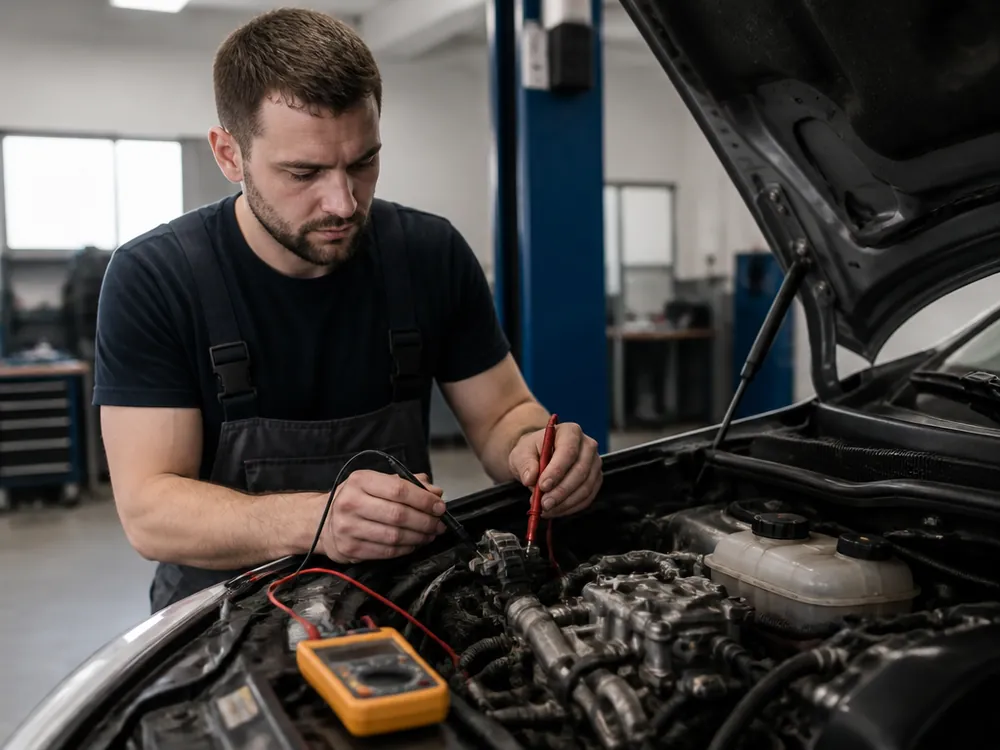
At our diagnostics, the first thing we do is measure pressure in the circuit and check if the electromagnetic clutch engages — a spinning pulley doesn't mean the compressor is pumping. The pulley spins constantly from the drive belt, but the clutch presses the disc to it only on command from the control unit. A manifold gauge set shows the difference between high and low pressure sides: when there's no difference, the refrigerant isn't being compressed. We separately test the solenoid control valve — on many modern models it changes piston stroke, and if it fails, the unit spins but doesn't pump. If the gauges show normal values but there's still no cold, this valve is usually the culprit, not the piston group — we test it on the bench before disassembling the compressor. In such cases, car AC compressor repair starts with precise diagnostics of the unit, not with replacing the whole assembly.
Humming, Seizing, or a Burned Clutch — What Each Symptom Means
- Humming during operation: the clutch bearing, not the piston group — it only makes noise when the disc is engaged.
- Seizing: smell of burning rubber and drive belt slipping on the pulley.
- Metal shavings in the oil: a sign of piston group wear, the unit needs a rebuild or replacement as a whole.
- Burned clutch winding: the unit doesn't engage, but works after clutch replacement if the inside is clean.
- Silence without a click: electrical issue — power interruption or a pressure sensor blocking engagement.
- Weak cooling at idle: clogged receiver-drier or undercharge, the compressor itself is fine.
Rebuild or Replace as a Whole — How We Decide
The owner's main question is whether the unit can be restored or a new one is needed. We show the criteria the technician uses to choose the approach — rebuilding the unit or installing a new one.
When a Rebuild Solves the Problem and When Replacement Is Needed
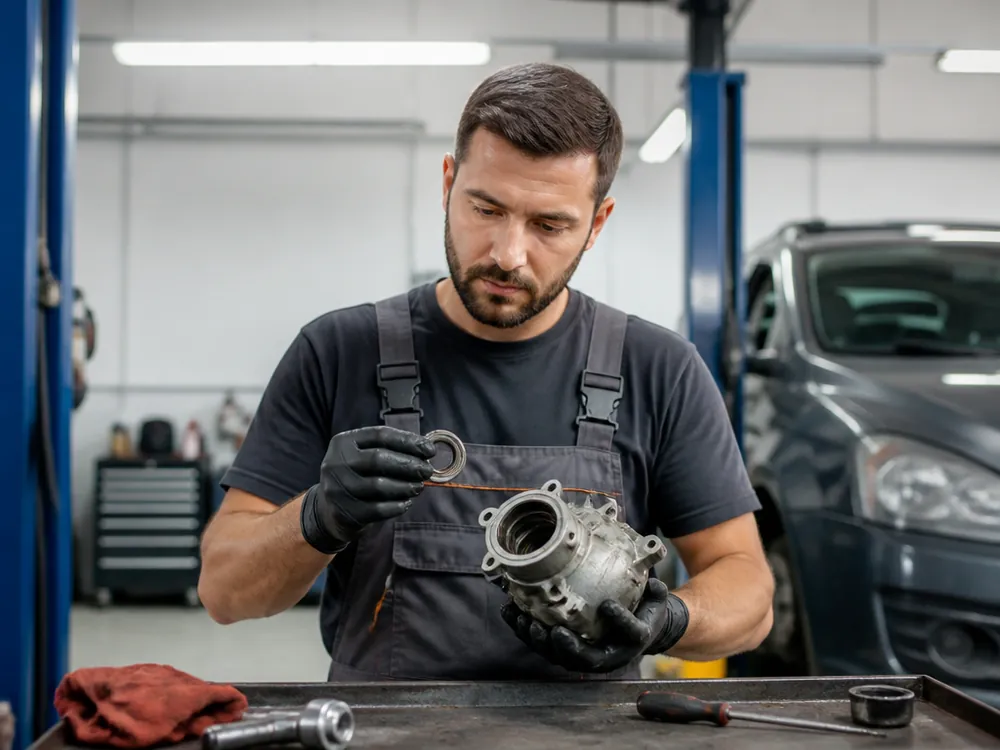
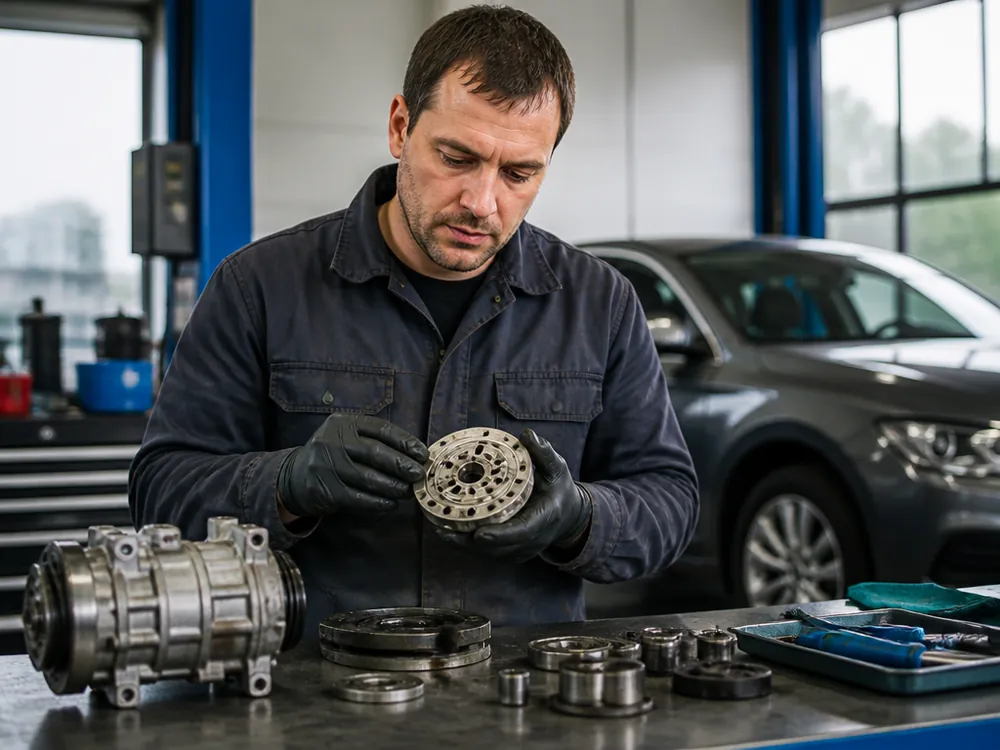
We rebuild the compressor down to the housing and install a fresh valve group with a seal if the housing and piston group are intact — a new assembly is more expensive but doesn't address wear in other components. A rebuild restores functionality through the valve group, shaft seal, and gaskets, and we refresh the piston group when cylinder wear is already noticeable in clearance measurements. We press the seal in with a driver without damaging the lip, otherwise the oil leak returns within 500 km. Car AC compressor repair in Almaty starts with fault diagnosis: we disassemble the unit, check the clutch, test the solenoid, and pressure-test. We decide after that: if metal shavings are found in the system, a rebuild without flushing the circuit will bring back the same failure within a few thousand kilometers.
Comparison of Work Options for the Unit
| Option | What we replace | When we choose it | What we check after |
|---|---|---|---|
| Rebuild | Valve group, seal, gaskets | Housing and piston group intact, no shavings | Pressure and oil flow on the bench |
| Replacement as a whole (new) | Complete compressor | Housing worn or repair not cost-effective | Pressure test and recharge |
| Replacement as a whole (used) | Complete compressor | Client chooses by budget | System flush and receiver-drier replacement |
What Changes in the System When the Unit Is Replaced
Replacing the car AC compressor as a whole is justified when the housing is worn and restoration is not cost-effective. In any case involving opening the circuit, we install a new receiver-drier and flush the system — otherwise old shavings will kill the fresh unit too. We flush on a special machine that circulates the solution through the circuit in both directions: this washes out shavings from the lines, radiator, and evaporator where you can't reach by hand. We replace the receiver-drier every time the circuit is opened because the receiver absorbs moisture from the air and, without replacement, releases it into the unit along with the refrigerant. After assembly, we pressure-test the system and only then recharge — so a leak is visible before the unit goes back into service. Practical advice: don't skimp on flushing and the receiver-drier, because their cost is incomparable to the price of a repeat repair and vehicle downtime.
Why It Leaks or Doesn't Cool Again After Repair
A repeat leak or weak cooling isn't "bad luck" but the result of specific procedural violations. We show which operations we check on each unit so the work doesn't have to be redone.
Why the Oil Leak Returns and How We Prevent It
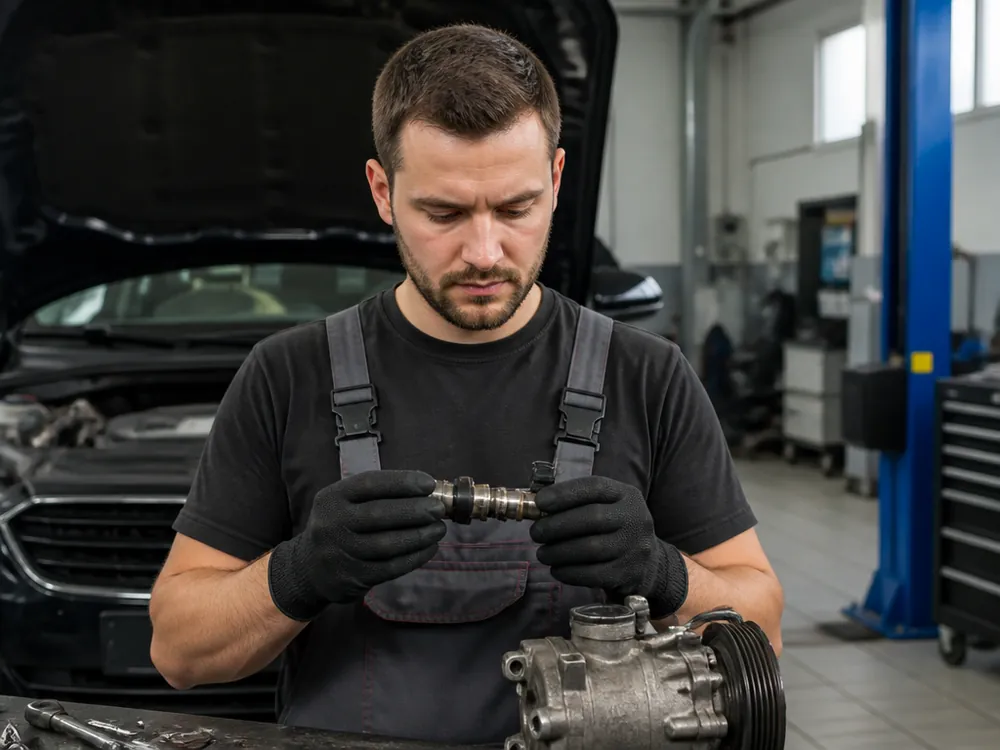
We press the shaft seal in with a driver without damaging the lip — otherwise the oil leak returns within 500 km after service. Without a guide, the lip is easy to damage, and the part looks fine until the first warm-up when pressure in the circuit rises. We work with seals sized to the shaft, not "by eye": even a fraction of a millimeter misalignment creates a gap through which oil escapes with the refrigerant. Before installation, we check the seat for wear and scoring — a new seal doesn't last long on a worn journal. In our practice, technicians with 8–17 years of experience document the pressing stage in a photo report so the client sees how the part was assembled. A damaged lip only shows itself under pressure — that's why it seems the unit was fine.
Why Flush the System and Replace the Receiver-Drier
- System flush: we wash metal shavings out of the lines and radiator, otherwise they reach the new compressor and score the piston group.
- Receiver-drier replacement: the receiver picks up moisture from the air when the circuit is opened, and without replacing it that moisture travels into the unit along with the refrigerant.
- TXV or expansion valve replacement: a clogged valve throws off refrigerant metering, and the cold disappears even with a healthy compressor.
- Pressure test and recharge: we check the circuit for leaks under pressure before recharging, so we don't waste refrigerant.
- Pressure sensor check: a faulty sensor cuts off the clutch, and the compressor looks dead while the hardware is fine.
How the repair goes and how long the car stays in the shop
What worries the customer is downtime: how many days the car sits in the bay and when they can pick it up. Here are the stages from intake to handover, and when it's actually realistic to finish in one day.
Stages from diagnostics to test drive
The service advisor takes in the car and also handles the work order through to handover — first diagnostics and a written estimate, and we start work only after the customer agrees. For AC compressor repair the car goes on the lift: we check circuit pressure, clutch electrics, clearances and the solenoid. Then we remove the unit, strip it down to the housing and inspect the valve group, shaft seal and piston group. We take a photo report at the key stages, and we show the old parts and give them to the customer — so you can see exactly which parts were replaced, not just read it on paper. Before handover the technician takes the car on a test drive and checks the cold in all modes. Ask for the photo report before you pay — the wear photos show whether every defect made it into the estimate.
Timelines and the "one day" scenario
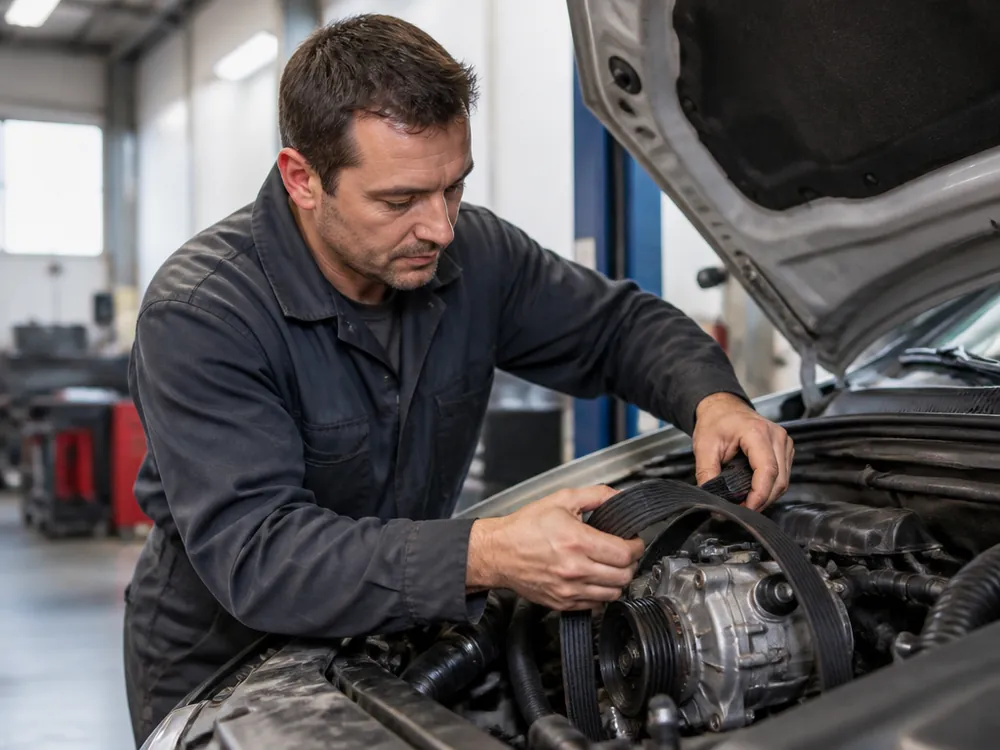
If the compressor arrives before noon, we remove, rebuild and reinstall it within a shift — rush jobs get priority in the queue. Replacing the AC compressor as a complete unit takes less time than a rebuild with a circuit flush: while the unit is on the bench, the system dries after the flush and the receiver-drier gets replaced. On a minivan or SUV the timelines are the same as on a passenger car, but we replace the drive belt together with the clutch if it has cracks. Mobile service around the city is possible when only diagnostics or a clutch replacement without removing the unit is needed. Book a morning slot: a 09:00 intake leaves room for an unexpected defect and still lets you pick up the car the same day.
Warranty, your own parts and what to do if the problem comes back
Two questions come up most often before signing the estimate: exactly what work the warranty covers and whether you can bring your own parts. Here are the specific terms — no vague wording and no fine print.
What the 12-month warranty covers
Compressor repair comes with a 12-month warranty — the term and conditions are written into the work order and the completion certificate at handover. Coverage applies to the work itself and to the parts our technician installed: shaft seal, valve group, solenoid valve, clutch with bearing. If the unit stops cooling again or a leak appears during this period, the warranty inspection is free — the technician strips the compressor and compares the condition of the components with the notes from handover. We don't cover accidents after the work, third-party interference, normal wear of consumables, or a part the customer supplied. The 12-month term also applies to commercial vehicles — minivans and SUVs, where the unit works under higher load.
Can I bring my own parts and what about the warranty
We work with OEM, aftermarket or customer-supplied parts — the choice is yours, but a part you bring isn't covered by our warranty. The reason is simple: we don't know how it was stored or where it came from, so we can't vouch for its service life. The work itself is done to the same scope and with the same staged photo report — clearances, clutch condition, solenoid test and pressure test are documented as usual. If you bring a rebuild kit without a seal driver, the technician will have to improvise tooling — better to discuss that before booking so we don't lose a shift. Our work stays covered either way: we stand behind the quality of assembly no matter whose part is in the housing.
Car AC compressor repair essentials
Here are the key takeaways on the unit: which approach solves the problem, where repeat failures come from, and which points to check in the paperwork before signing.
- Rebuild instead of replacement: stripping the compressor down to the housing with a new valve group and seal works if the housing and piston group show no wear.
- Repeat leak: oil comes back after a seal pressed in without a driver, a dirty circuit and an old receiver-drier — the procedure matters more than the part.
- Pressure-based diagnostics: a circuit pressure reading and a clutch test help tell a failed unit from a refrigerant leak — the single symptom "not cooling" doesn't.
- Timelines: a unit dropped off before noon can realistically go back into the car within a shift — the drop-off time in Almaty determines the handover.
- Warranty: the term and conditions are recorded in the work order and certificate, so read them before signing the estimate, not after handover.