A mobile visit saves you a tow truck and half a day, but there are limits to repairing at the car. It's better to know them in advance so your expectations from the technician's visit match what can actually be done in the yard.
When the Car Still Goes to the Workshop
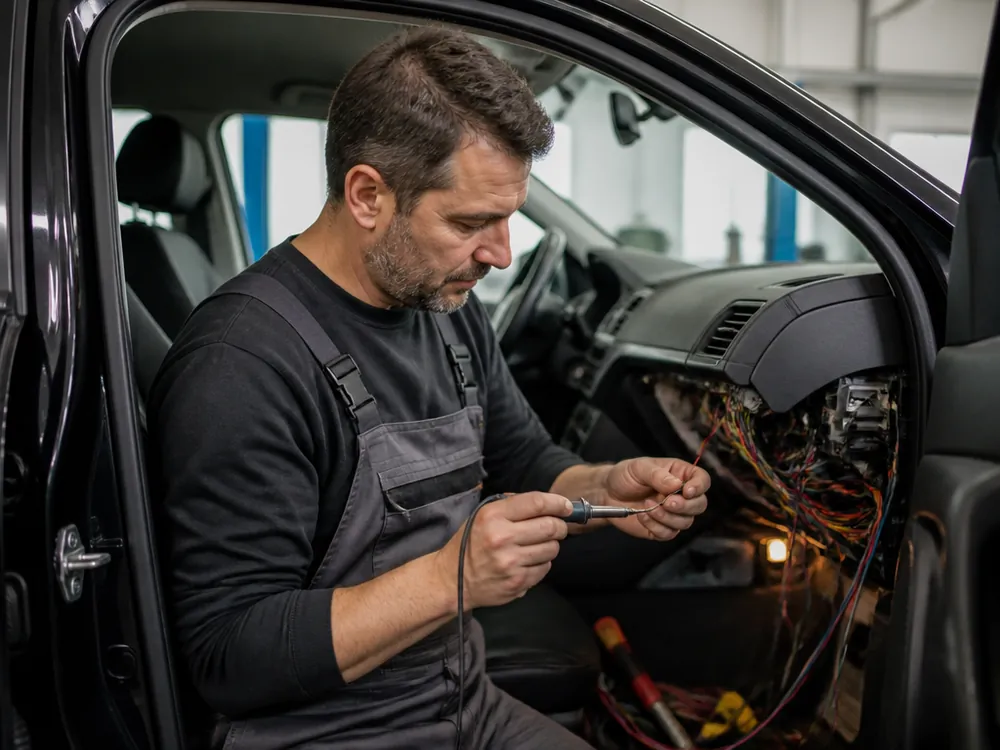
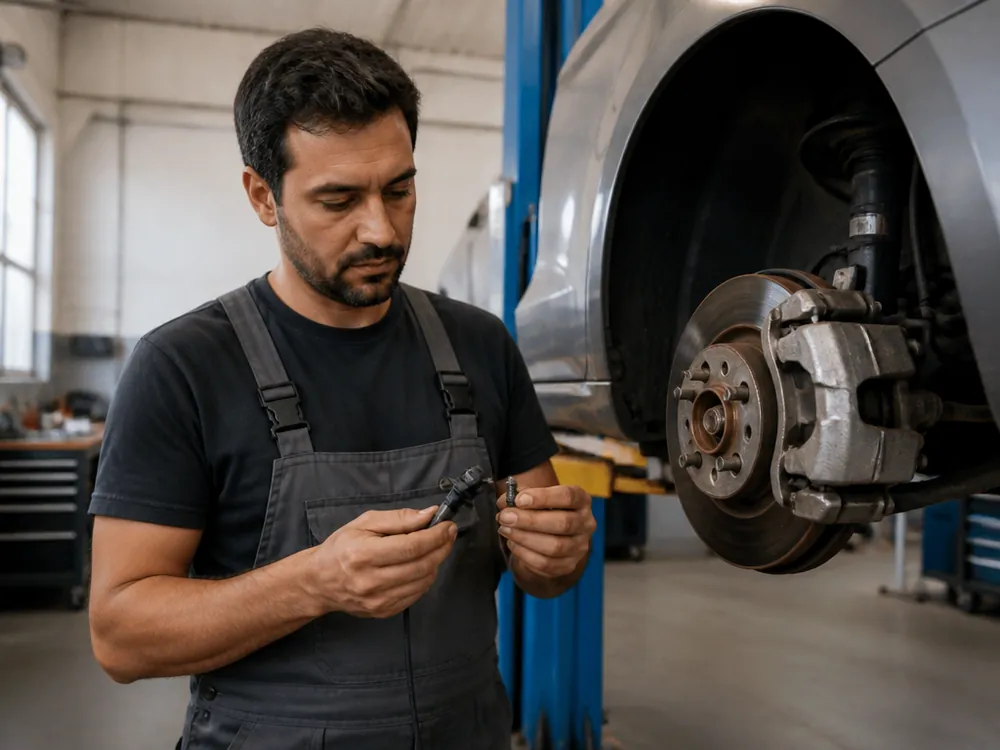
A mobile auto electrician in Almaty honestly says when a repair on site won't work, and does so before starting work. Most often the workshop is needed if the faulty unit requires a lift: on many engines the starter is removed only from below, and the harness along the underbody can't be inspected from the asphalt. The second case is control unit circuit boards. Their repair requires a soldering station and a clean bench, so the technician removes the unit, takes it away, and in a day or two returns and reinstalls it. The third is a short circuit hiding under the dashboard that can't be found by continuity testing without removing panels. In such cases we don't start disassembly in the yard but suggest driving to the workshop if the car can move. Even then the visit isn't wasted: the cause is already known, and work in the workshop starts right away.
How to Prepare for the Technician's Visit
A few minutes of preparation save the technician from searching for the fault, and the owner — time and unnecessary work. The most important thing is an accurate description of the problem and free access to the car.
What to Report When Requesting a Visit
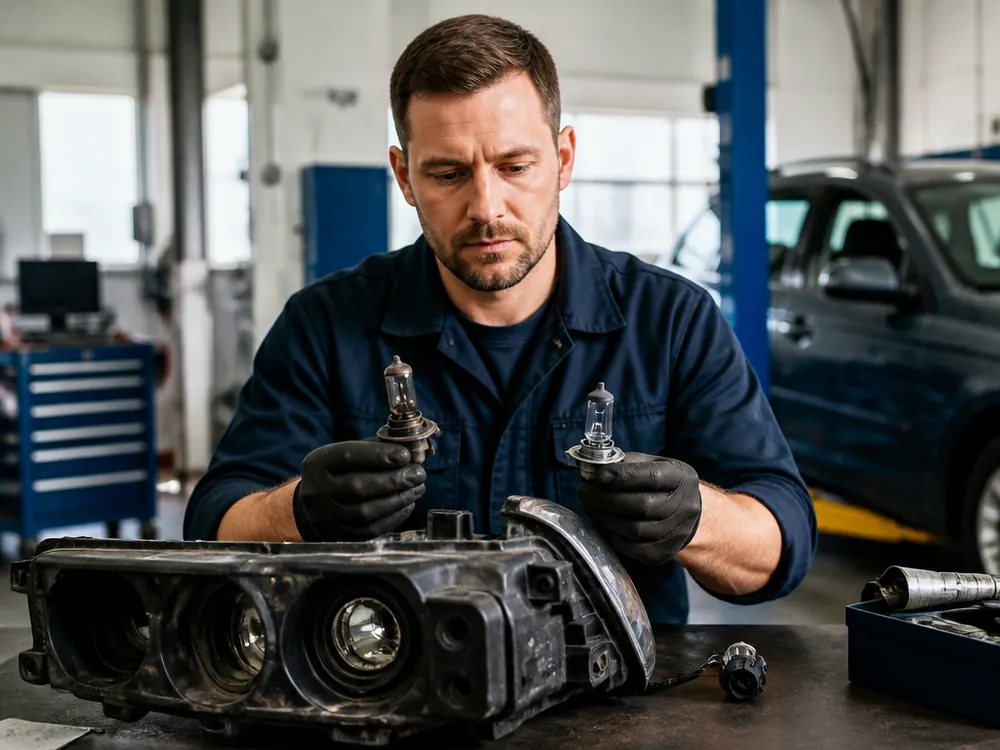
- Make, model and year: from these we understand the wiring diagram in advance and bring suitable fuses, bulbs and terminals.
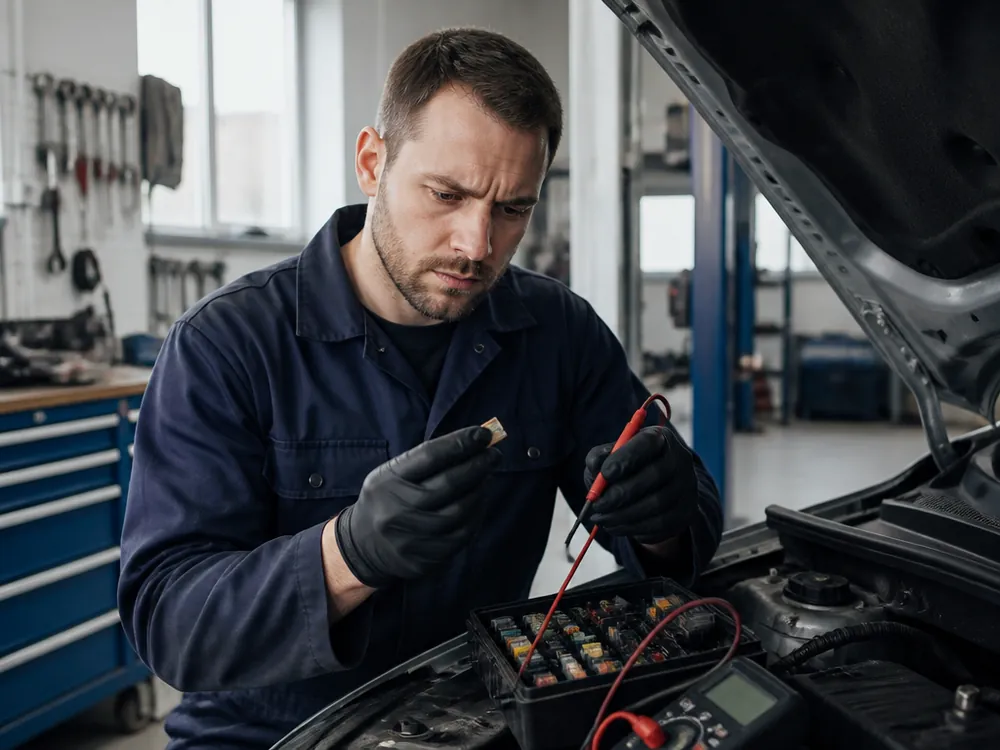
- What exactly happened: won't start, headlights don't work, battery dead, fuse blown — each detail narrows the search.
- When it started: after a car wash, rain, long parking, repair at another service — this often points directly to the cause.
- What was installed on the car: alarm, dash cam, aftermarket radio with non-standard wiring often turn out to be the source of a leak or short circuit.
- Messages on the dashboard: a photo of the instrument panel with warning lights helps the technician choose the scanner and parts in advance and understand which system to start with.
A Place to Work at Home or Office
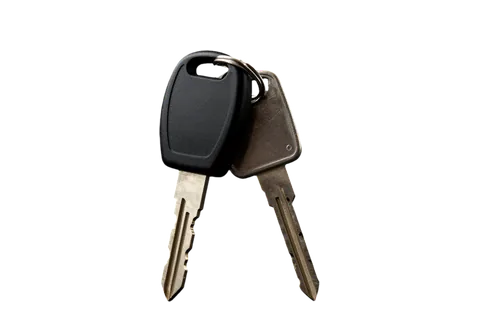
The technician needs access to the hood, the cabin, and sometimes the wheel arches, so it's best to leave the car so the hood opens fully and there's at least half a meter of free space on the sides. A courtyard or open parking lot is the easiest place to work. An underground parking garage works too, but the light and signal can be weak there, and running the engine after repairs requires ventilation. If the car is parked right up against a wall or the next car, it will have to be rolled back, and without working electrics that's not easy, so think about the spot in advance. Keep the keys, the alarm fob, and the spare key handy: the immobilizer and central locking are often checked with them. If the repair is happening at work, arrange with security for the technician to enter — that saves you from waiting at the barrier. You don't need the car documents, but it helps to know when the battery was replaced and what electrical repairs were done before.
The car won't start in the morning
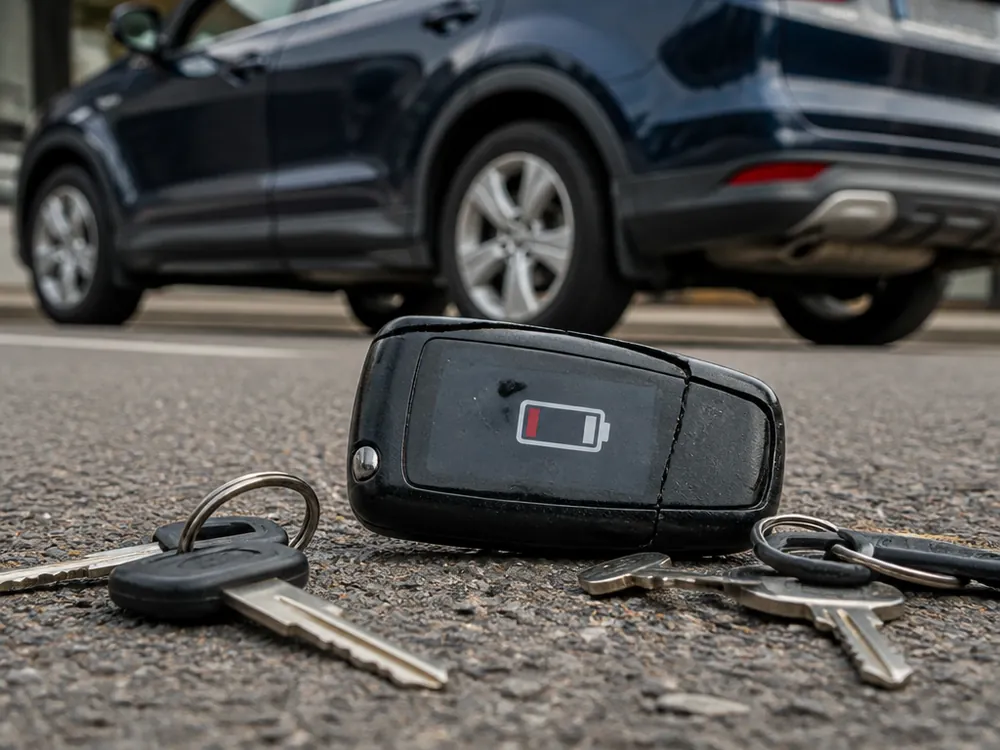
The most common reason for a call is a car that ran fine in the evening but in the morning doesn't respond to the key or the button. There aren't many causes, and most are identified in the first few minutes.
The first few minutes of checking
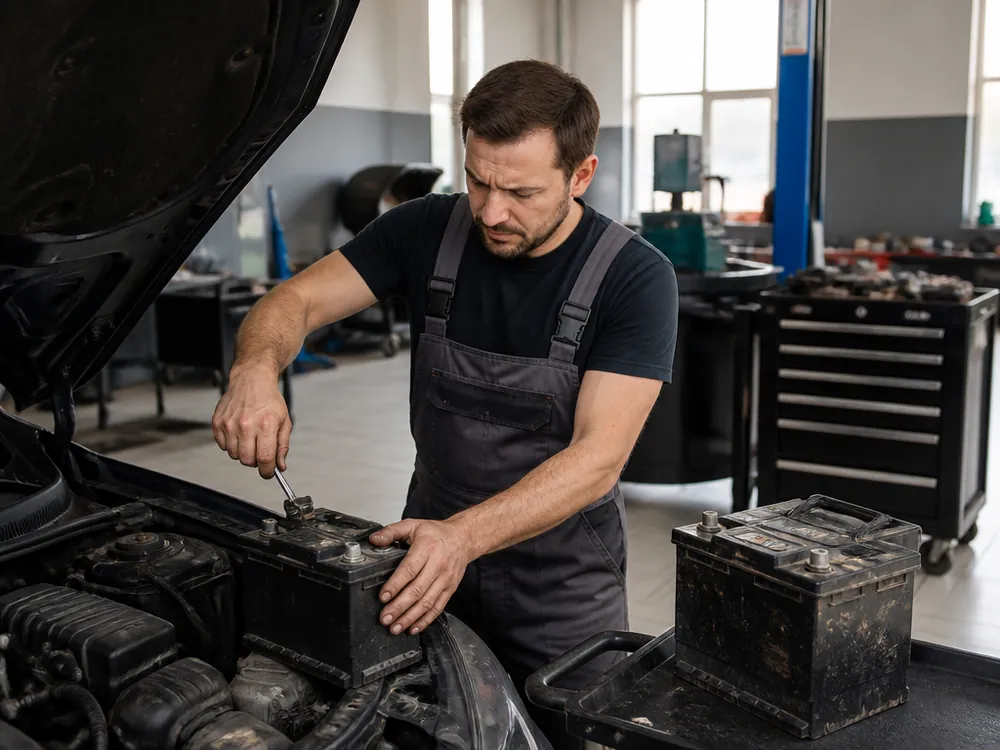
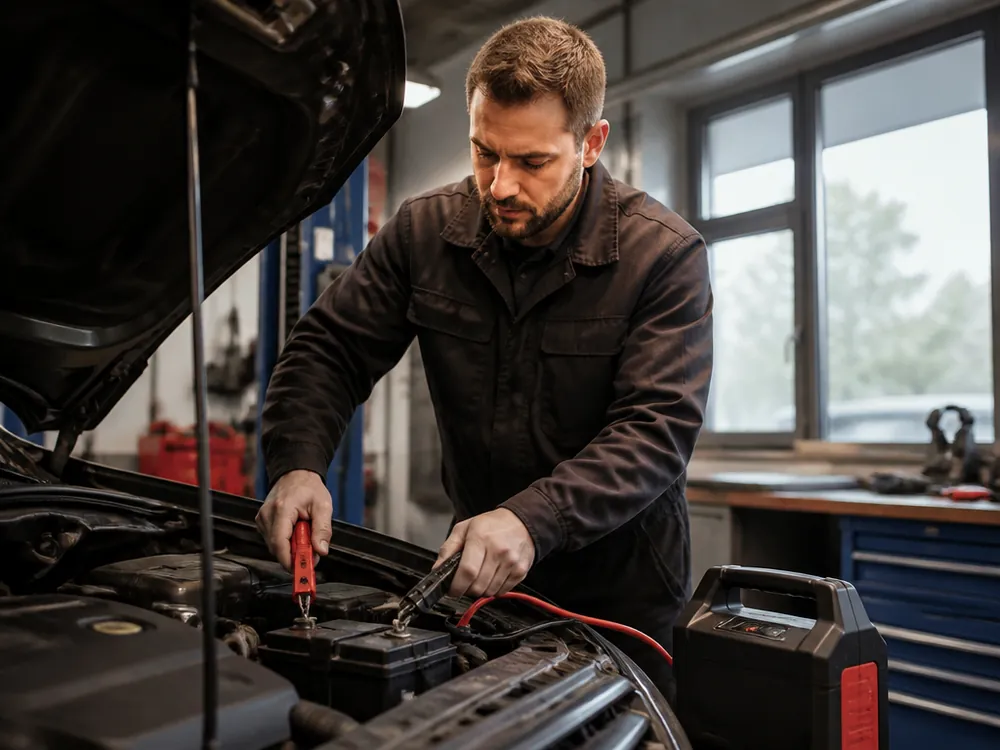
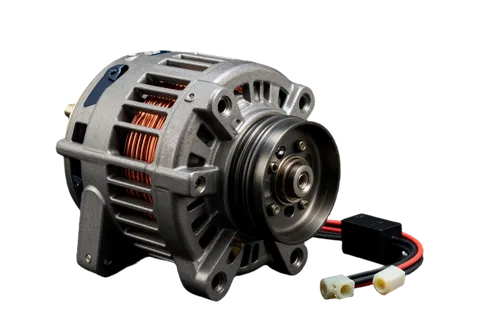
In this situation, a mobile auto electrician starts with measurements, not with a jump start. First, the technician separates a dead battery from a starter or immobilizer fault: checks the battery voltage, listens for a relay click, sees whether the dashboard lights up and whether the immobilizer indicator blinks. If the battery is flat, we don't rush to install a new one. Before replacing the battery, we measure the alternator voltage and the parasitic draw, because the battery could have died from a light left on, or from a faulty circuit that will drain a new one too. If the voltage is normal but the starter is silent, we look for the cause in the relay, the terminals, or the starter itself. If the starter cranks but the engine doesn't catch, we check the key, the immobilizer tag, and the connection to the control unit. Usually these minutes are enough to name the cause and the repair price, and then you decide whether to fix it on the spot right away or maybe later.
Why a jump start isn't a repair
- The cause remains: starting from an external source gets the car going again, but doesn't answer why the battery died overnight.
- Deep discharge damages the battery: after several full discharges, the battery loses capacity and stops holding a charge even in summer.
- The alternator may not keep up: if charging is weak, after a jump start the car will stall again within a few kilometers.
- The drain will come back: a circuit that doesn't go to sleep after the ignition is turned off will drain the battery by the next morning.
- Voltage spikes are dangerous: careless connection of jumper cables with reversed polarity damages fuses and control units.
Seasonal electrical failures
Sharp temperature and humidity swings hit the electrics in certain months, and calls for a technician come in waves. Knowing the seasonal weak spots, many failures can be prevented.
Frost and a weak battery
In winter, the battery delivers less current, while the starter needs more: thickened oil resists rotation, and starting requires noticeably more effort. So a battery that coped in autumn leaves the car stranded in the yard on the first frost. On a call, we check not only the charge but also the condition of the terminals, how tight they are, and the alternator's operation: an oxidized terminal in winter causes a voltage drop that no one noticed in summer. A mobile repair on a frosty morning most often comes down to charging or replacing the battery, cleaning the terminals, and checking the charging system. If the battery is new but the car still won't start, we look for a drain, then check the starter. Preparing the electrics for winter is easier in autumn: measuring the charge and checking the terminals takes a few minutes, and the battery's reserve becomes clear before the first cold snap.
Heat, dust, and moisture
- Overheating under the hood: in hot weather, relays and connectors near the engine suffer, contacts expand, and the circuit starts to fail on a warm engine.
- Dust and oxidation: dust combined with moisture forms a film on contacts, causing sensors and low-mounted headlights to fail.
- Engine washing: pressurized water gets into connectors and control units, after which errors and intermittent faults appear.
- Cooling fan: in summer it runs longer, and a worn motor or fan relay fails exactly in the heat.
- Air conditioning and load: the AC loads the alternator, and weak charging shows up as dim lights in traffic.
Mobile auto electrician or repair at the shop
Mobile service and the shop don't compete, they complement each other. The choice depends on what happened and whether the car can drive on its own. Sometimes it makes sense to combine both: find the cause on site and finish the repair in the bay.
Mobile service vs. shop comparison
working conditions for the technician at the car and in the bay| Parameter | Mobile service | Shop |
|---|
| Car can't drive | Suitable, no tow truck needed | Delivery or tow truck needed |
|---|
| Minor repair | Bulbs, terminals, fuses | Same, but with a trip to the shop |
|---|
| Components under the car | Limited access | Lift, full access |
|---|
| Control unit boards | Removal and transport of the unit | Repair on site |
|---|
| Owner's waiting | At home or at the office | In the waiting area |
|---|
Mobile connections are not temporary
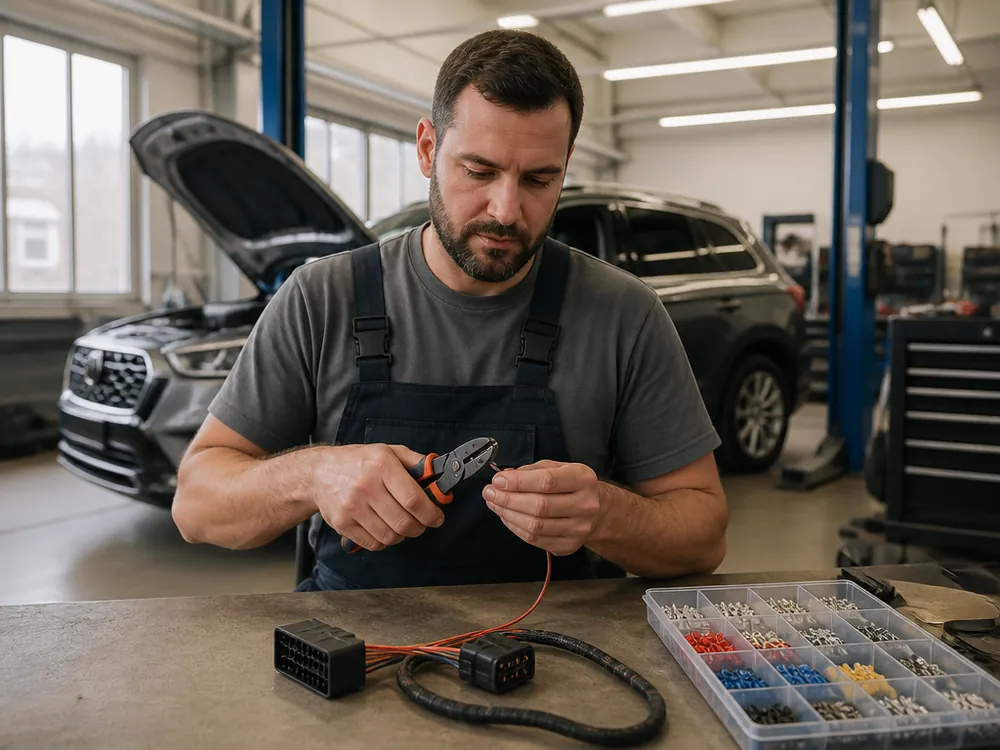
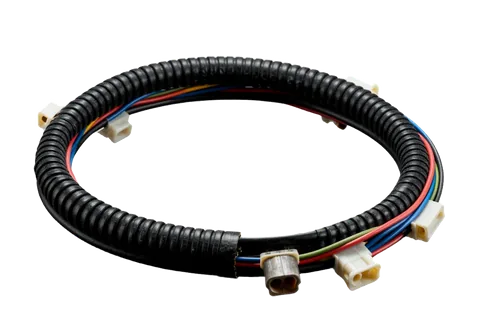
We solder wires on mobile calls too, so a repair at the car doesn't turn into a temporary fix until a shop visit. We join the repaired section by soldering and cover it with adhesive-lined heat shrink that keeps moisture out. We don't use twist connections or electrical tape: such joints oxidize and heat up, and after a few months cause an intermittent fault that takes longer to find than the original break. We trace short circuits by testing circuits against the diagram and by voltage drop, so we only open interior panels where there's actual damage. A simple fault like a bulb, fuse, or terminal is found and fixed by the technician in about half an hour. A more complex circuit takes longer and involves testing each section, but the result is no different from a repair in the bay.
Who comes and what they bring
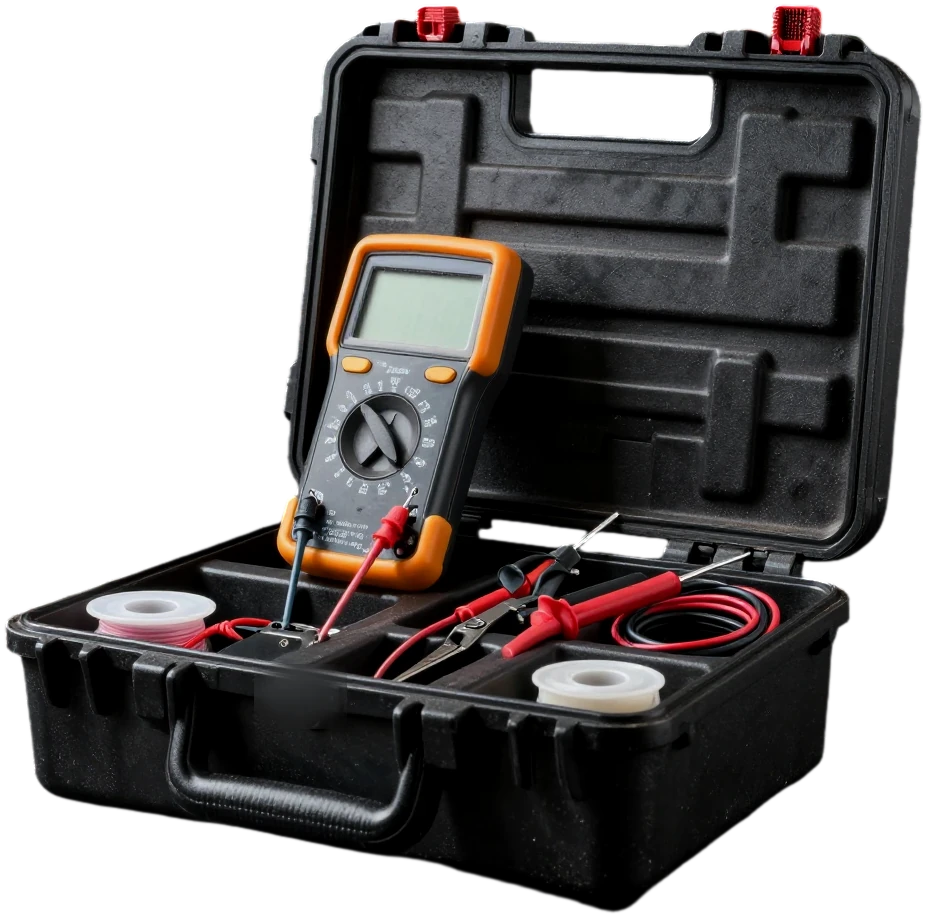
A dedicated electrical specialist comes out, not a general mechanic. He brings a scanner to read fault codes, a multimeter, tools, and common parts: bulbs, fuses, relays, terminals, and wire of various gauges. That's enough to handle most call-outs in a single visit. If a rare part is needed, the technician names it, the price, and the lead time, and then you decide whether to fit OEM, aftermarket, or your own part. We document the work the same way as in the shop: a work order listing the jobs and a 12-month warranty on the repair performed. Before leaving, the technician starts the engine, checks the repaired circuit under load, and shows you the old parts. If a second fault turns up along the way, it isn't fixed silently: the technician describes what he found and gets your approval, and if needed books the car into the shop for a convenient day.
Mobile auto electrician: what to expect
Mobile electrical repair handles most everyday failures right at the car, if you understand what it can and can't do. Below is a short checklist that will come in handy when the car won't start at home.
- What mobile service covers: bulbs, fuses, terminals, the battery, and sensors are replaced on site, while circuit boards and components underneath the car require the shop.
- Preparation: the make, year, a description of the symptoms, and a photo of the dashboard help the technician bring the right parts right away.
- Location: the hood must open fully, and it's best to keep the keys and fob within reach.
- Morning breakdown: first measure the battery, alternator, and parasitic draw, and only then decide on replacing the battery.
- Quality of connections: soldering and heat shrink on a call-out give the same reliable result as a repair in the bay.