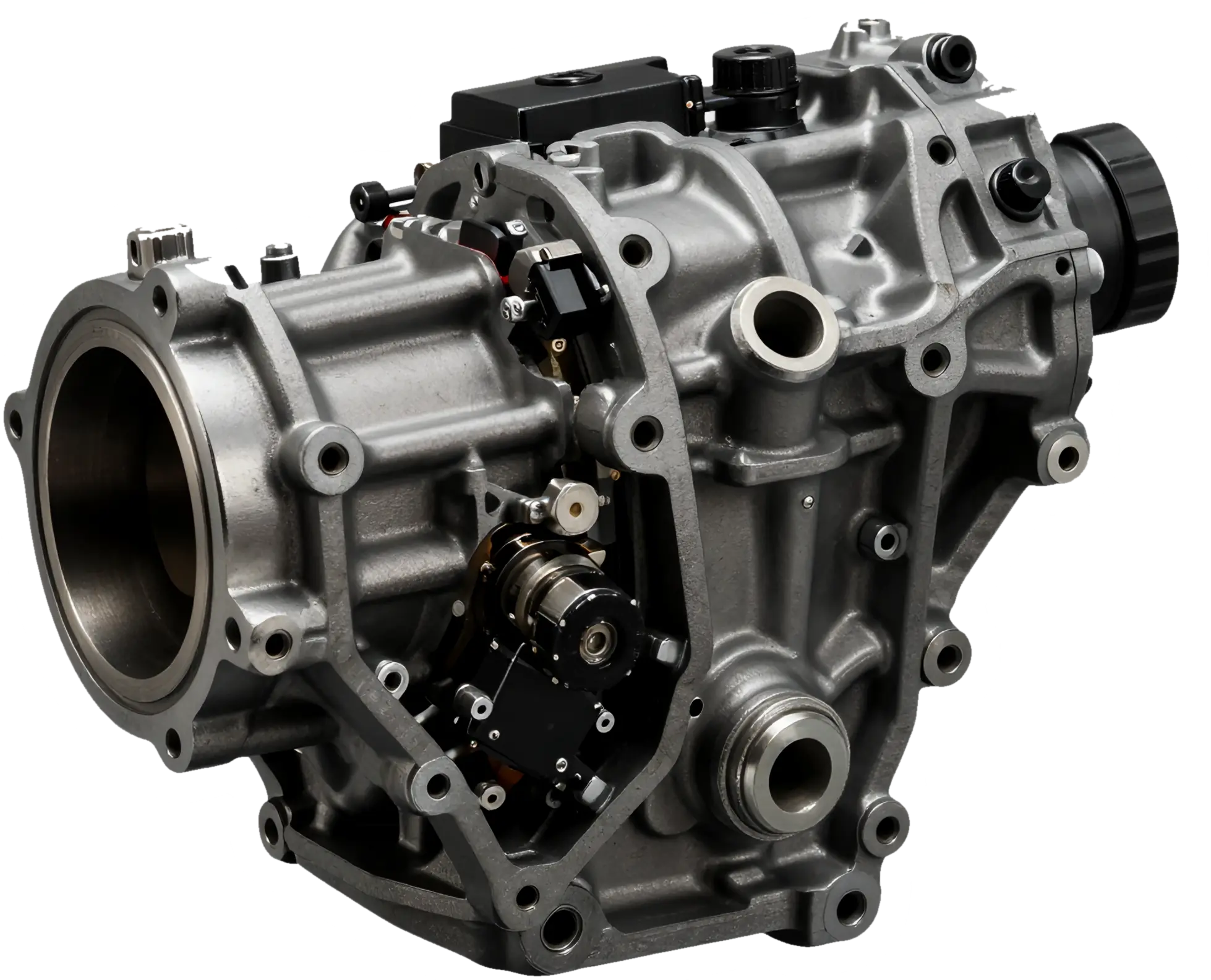
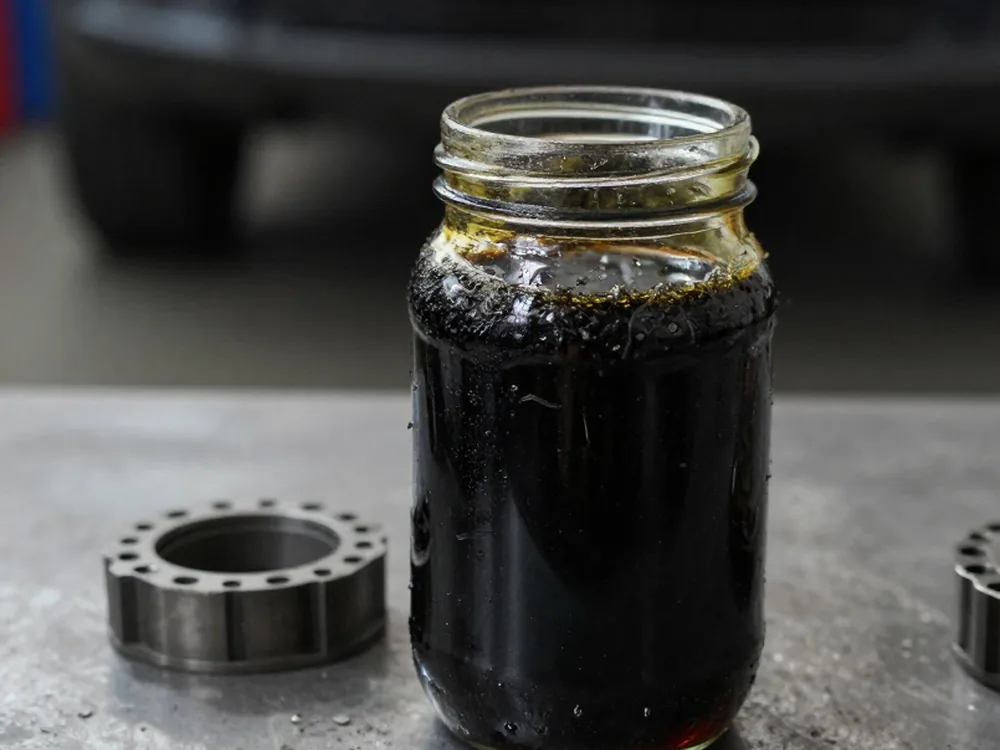
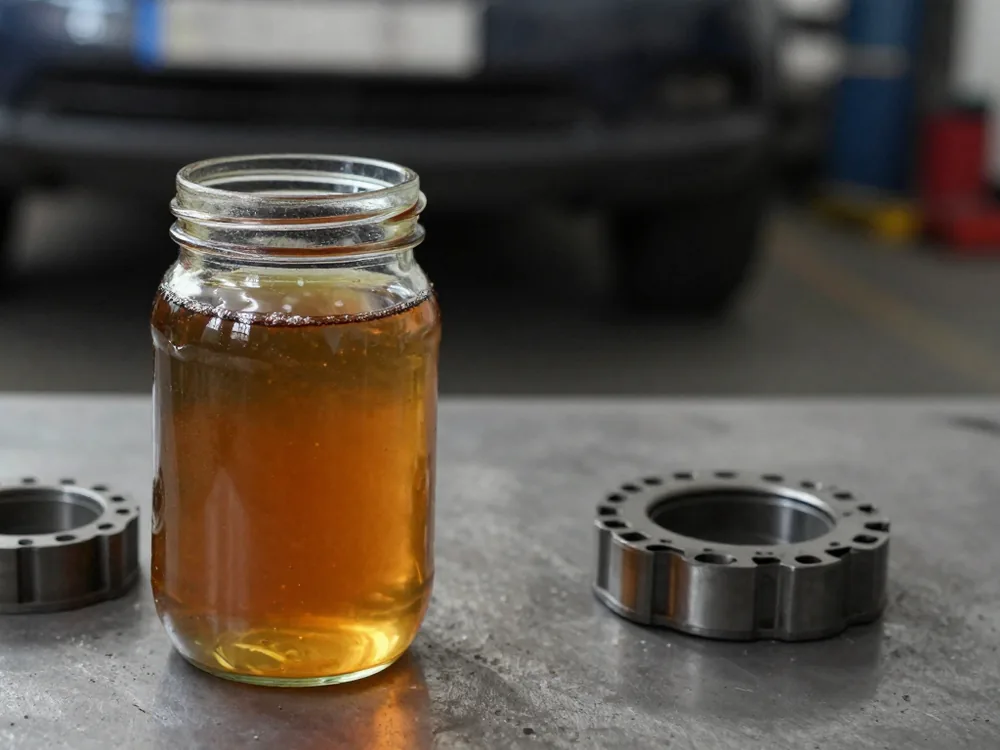
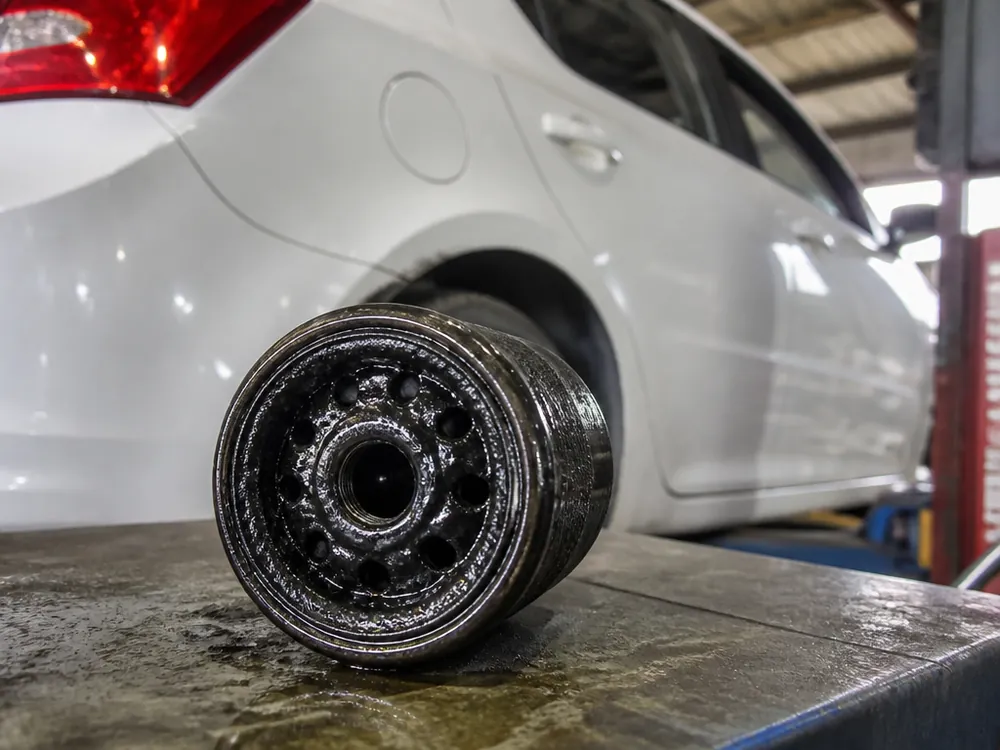
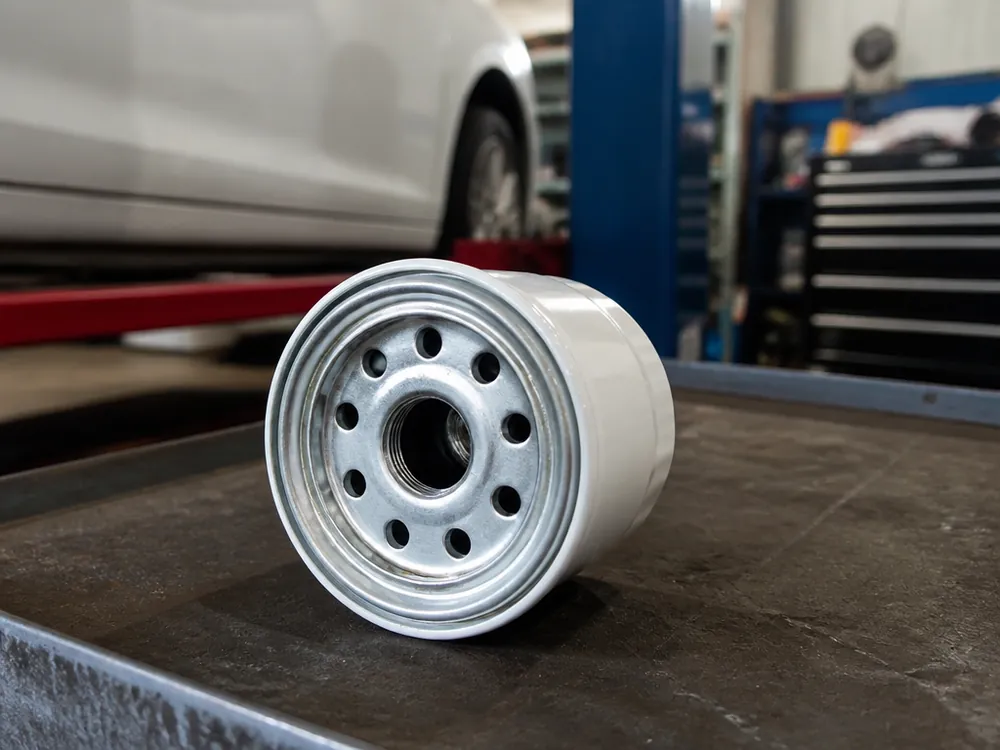
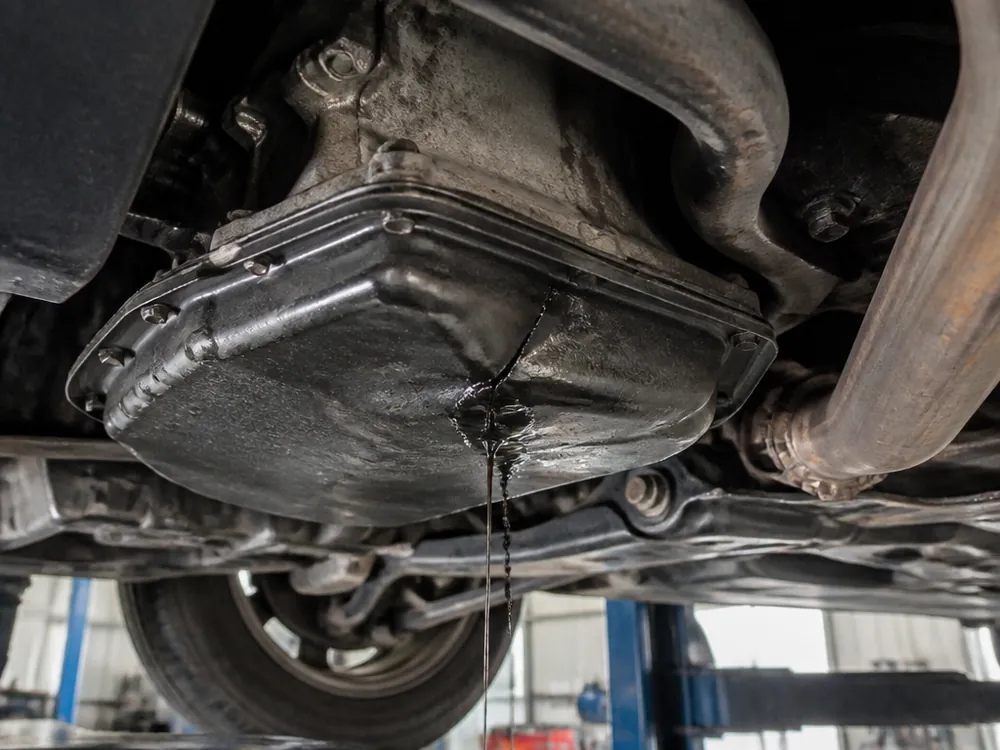
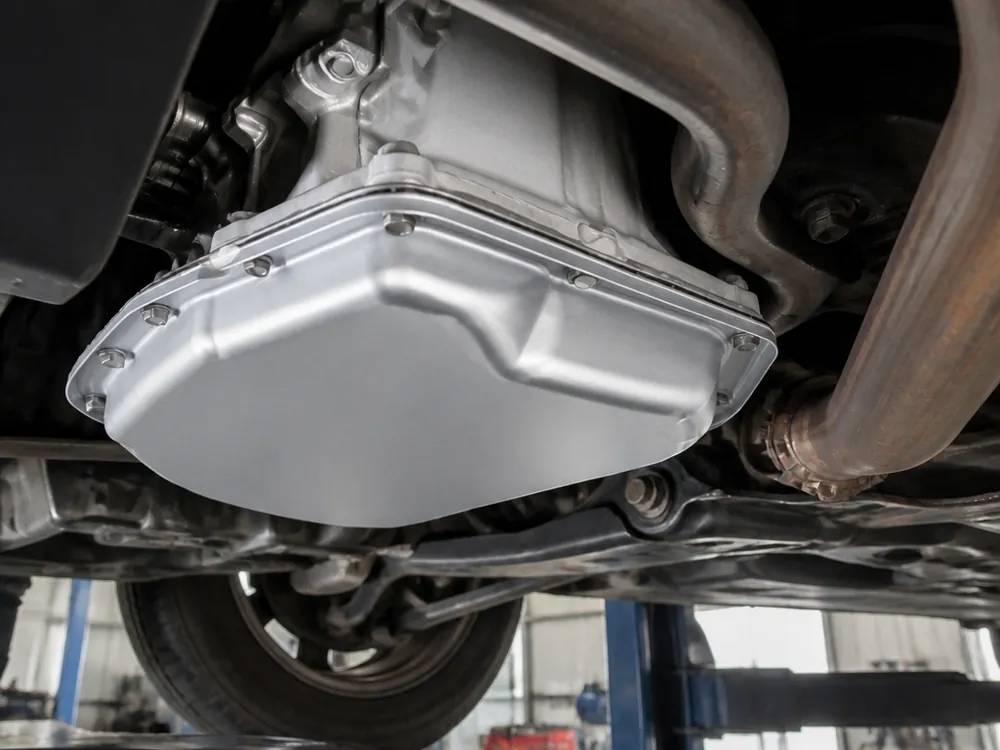
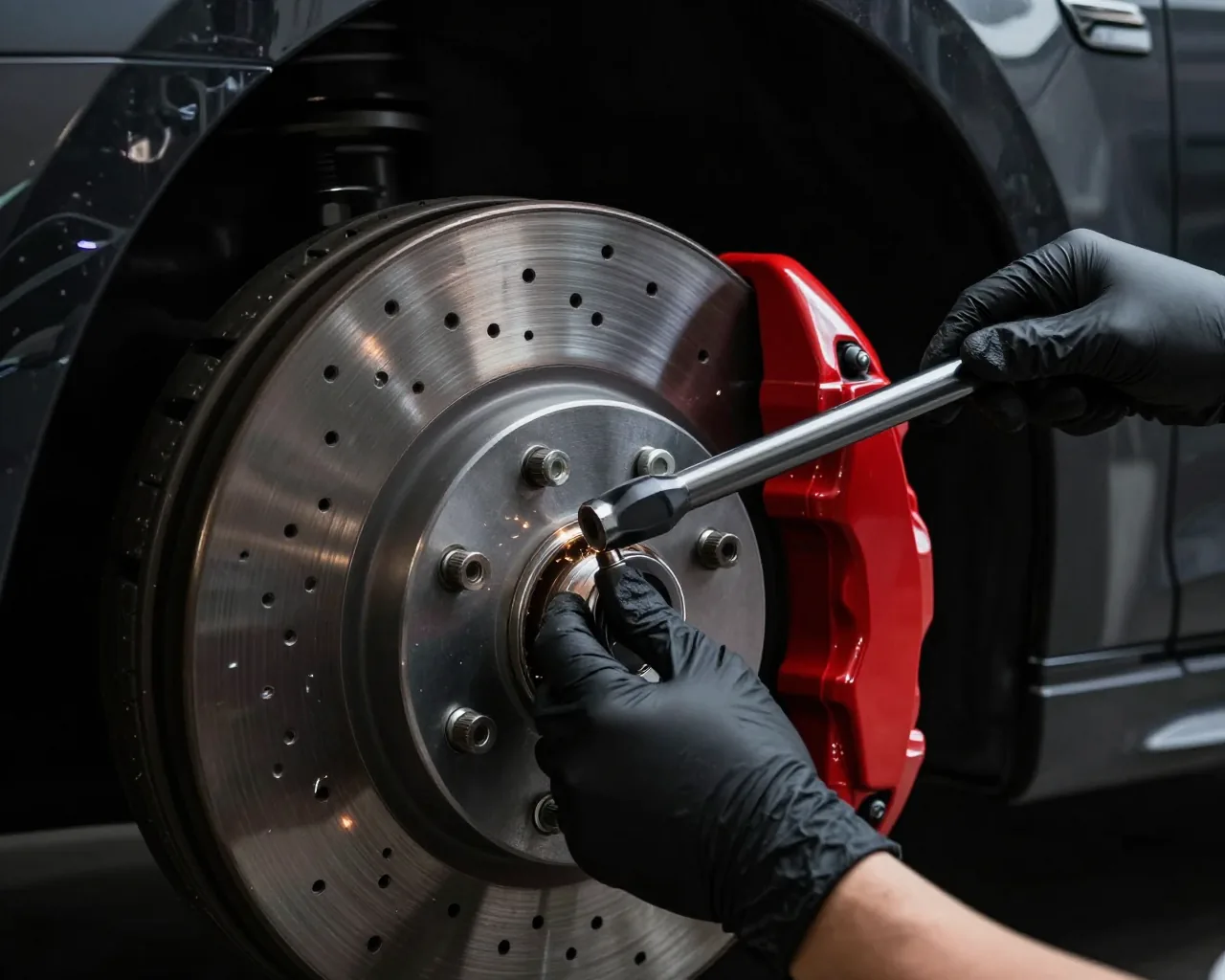
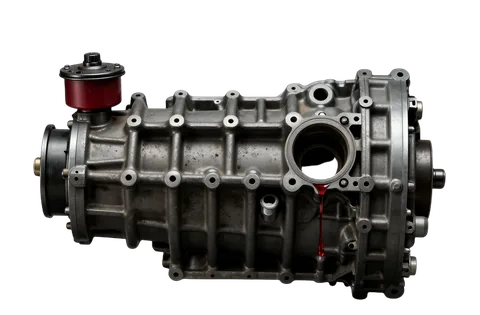
The DSG-7 robotic gearbox is sensitive to the quality and level of oil. We perform DSG-7 oil changes according to the manufacturer's regulations, using original or a verified analog of your choice. This extends the gearbox's lifespan and ensures smooth gear shifting. Warranty on work — 6 months.
The cost depends on the car model and type of oil. The exact price will be quoted after diagnostics.
Service
Duration
Warranty
Price
DSG-7 oil change without pan removal
1 hour
6 mo
from 15,000 ₸
DSG-7 oil change with pan removal
2 hours
6 mo
from 20,000 ₸
DSG-7 filter replacement
30 min
6 mo
from 5,000 ₸
DSG pan gasket
30 min
6 mo
from 4,000 ₸
DSG adaptation after replacement
30 min
6 mo
from 5,000 ₸
DSG diagnostics
30 min
6 mo
from 3,000 ₸
DSG pan flushing
30 min
6 mo
from 2,000 ₸
DSG oil change with flushing
2.5 hours
6 mo
from 25,000 ₸
DSG oil change with adaptation
2.5 hours
6 mo
from 22,000 ₸
DSG mechatronic oil change
3 hours
6 mo
from 12,000 ₸
DSG 7 oil change (complex repair)
from 1 day
6 mo
from 35,000 ₸
DSG oil change with seal replacement
3 hours
6 mo
from 18,000 ₸
The cost of oil and filter is not included in the price of work. The exact cost depends on the gearbox model and type of oil. Please check when booking. Warranty periods — see the page «Warranty»
06
Why choose DSG-7 oil change at CARGID
Warranty.
Every promise — backed by a number or a document: work order, photos, removed parts.
6MO
warranty on labor — the term is stated in the work order.
Original oil
6-month warranty
Fast booking
01
Pan without cracks and 2 mm sealant
We remove the pan, clean it, apply sealant in a 2 mm layer and install a new gasket. We do not overtighten the bolts — otherwise cracks and leaks.
02
Filter and magnets — always
We replace the DSG-7 filter and clean the pan magnets from metal shavings. Old shavings on the magnets kill the mechatronics, so we remove them completely.
03
Work in 3–4 hours
With filter replacement, magnet cleaning and adaptation, we complete within 3–4 hours. We do not rush: we let the sealant set and check the level.
04
6-month warranty
We provide a written 6-month warranty on work and tightness. If a leak or jerks appear after replacement — we will fix it for free.
07
How we change the oil in DSG-7
Steps.
We describe step by step what happens to your gearbox in our service.
01
Transmission diagnostics
You submit a request on the website or by phone, we find a convenient time and book you for an oil change. We check the oil level and condition, scan the control unit for errors to make sure the gearbox is in good condition before replacement.
request on WhatsApp
02
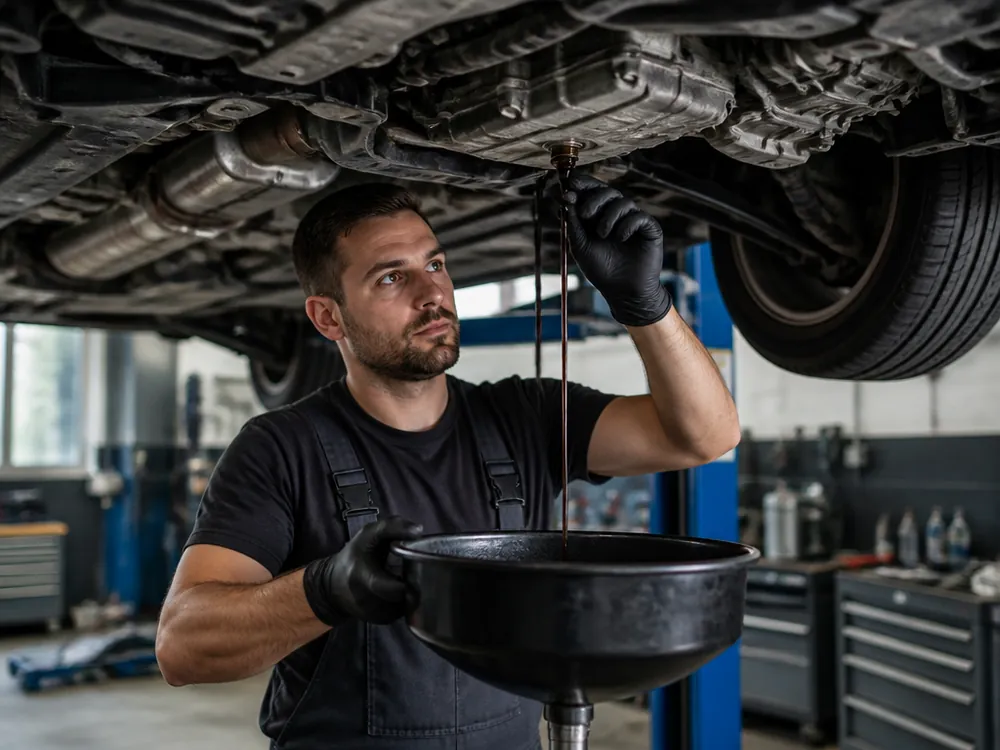
Draining used oil
We drain the old oil through the drain plug or pan, assess its color and smell for additional diagnostics.
inspection and diagnostics
03
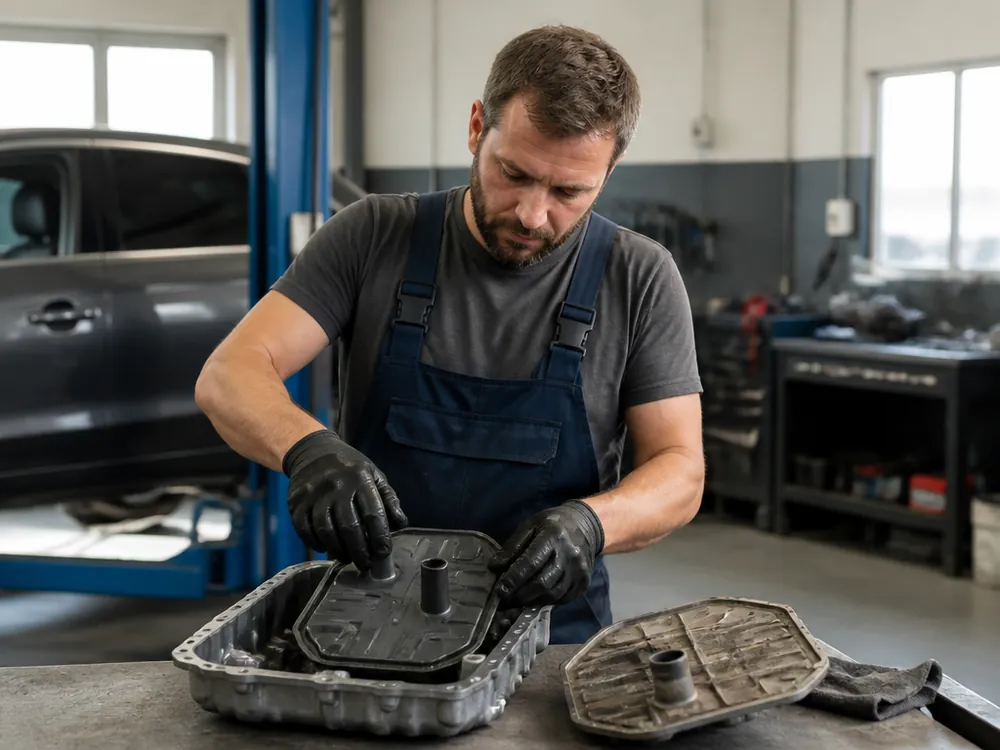
Pan removal
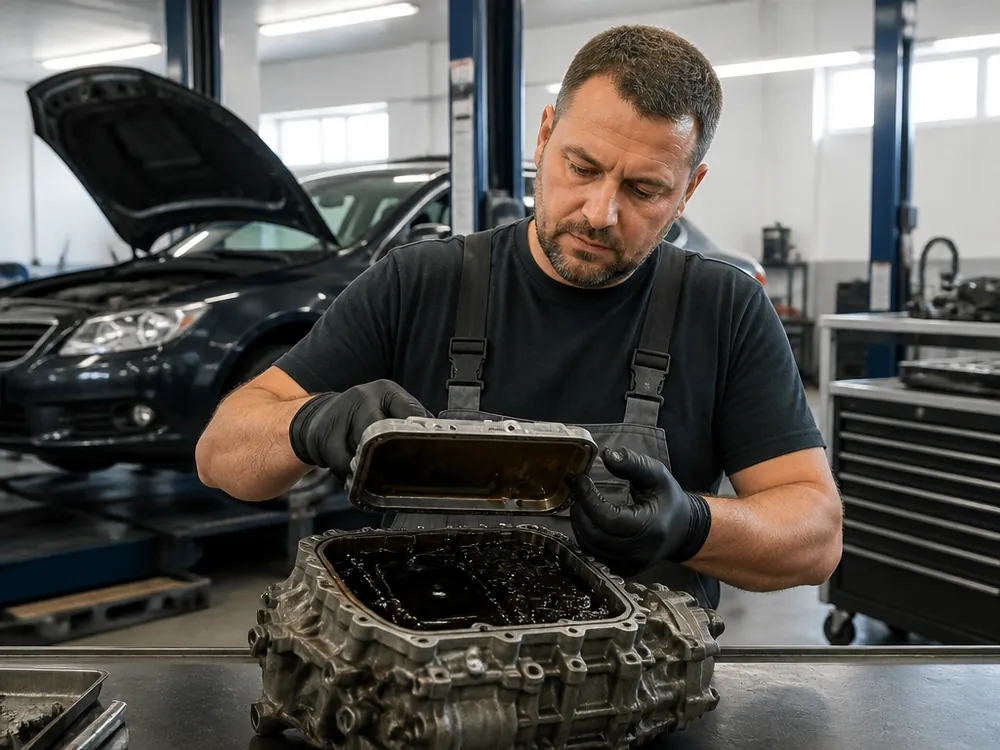
We remove the DSG pan, clean it from deposits and replace the filter, as well as the gasket.
estimate before work starts
04
Filter replacement
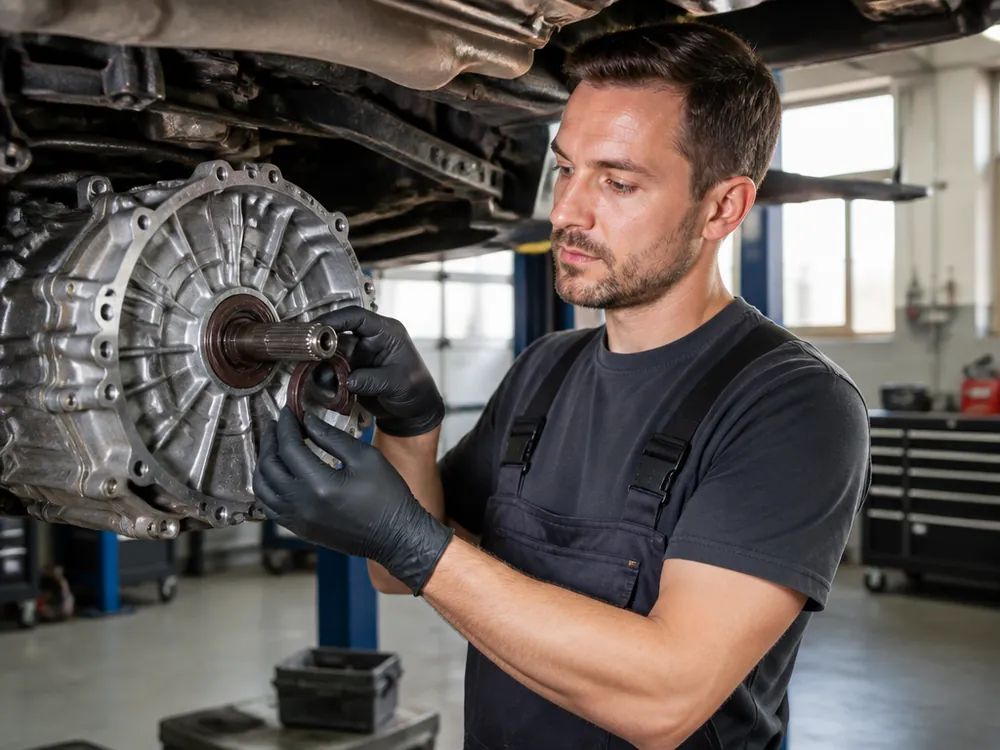
We install a new transmission filter and sealing elements to ensure oil cleanliness.
work to factory procedure
05
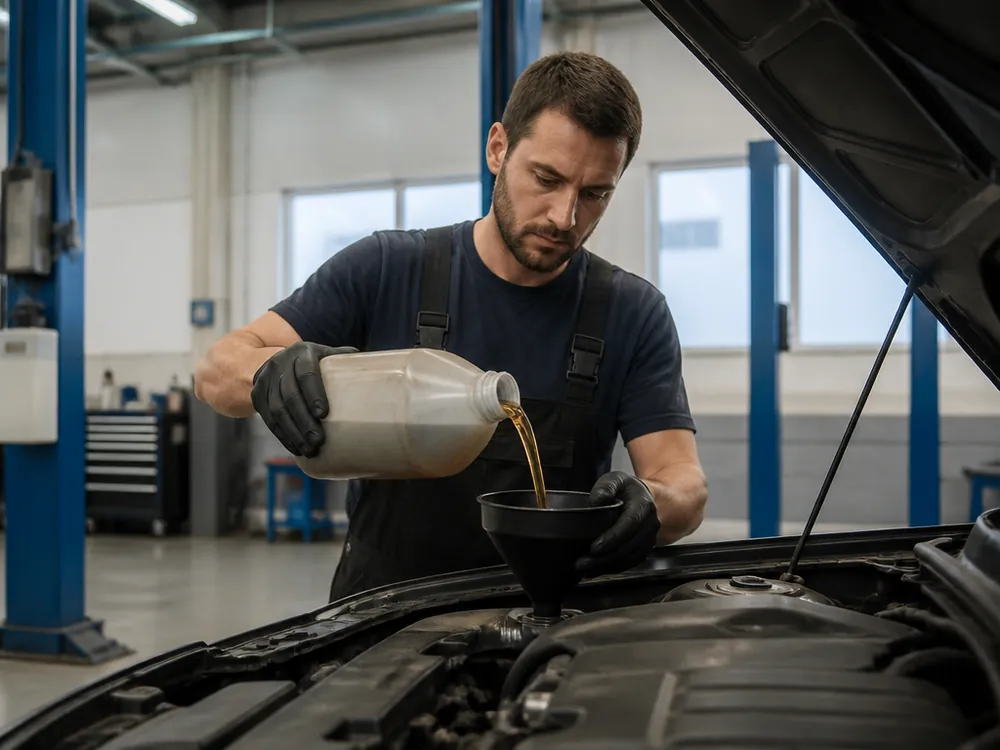
Filling new oil
We fill fresh oil recommended by the manufacturer, strictly observing the volume.
result check
06
Transmission adaptation
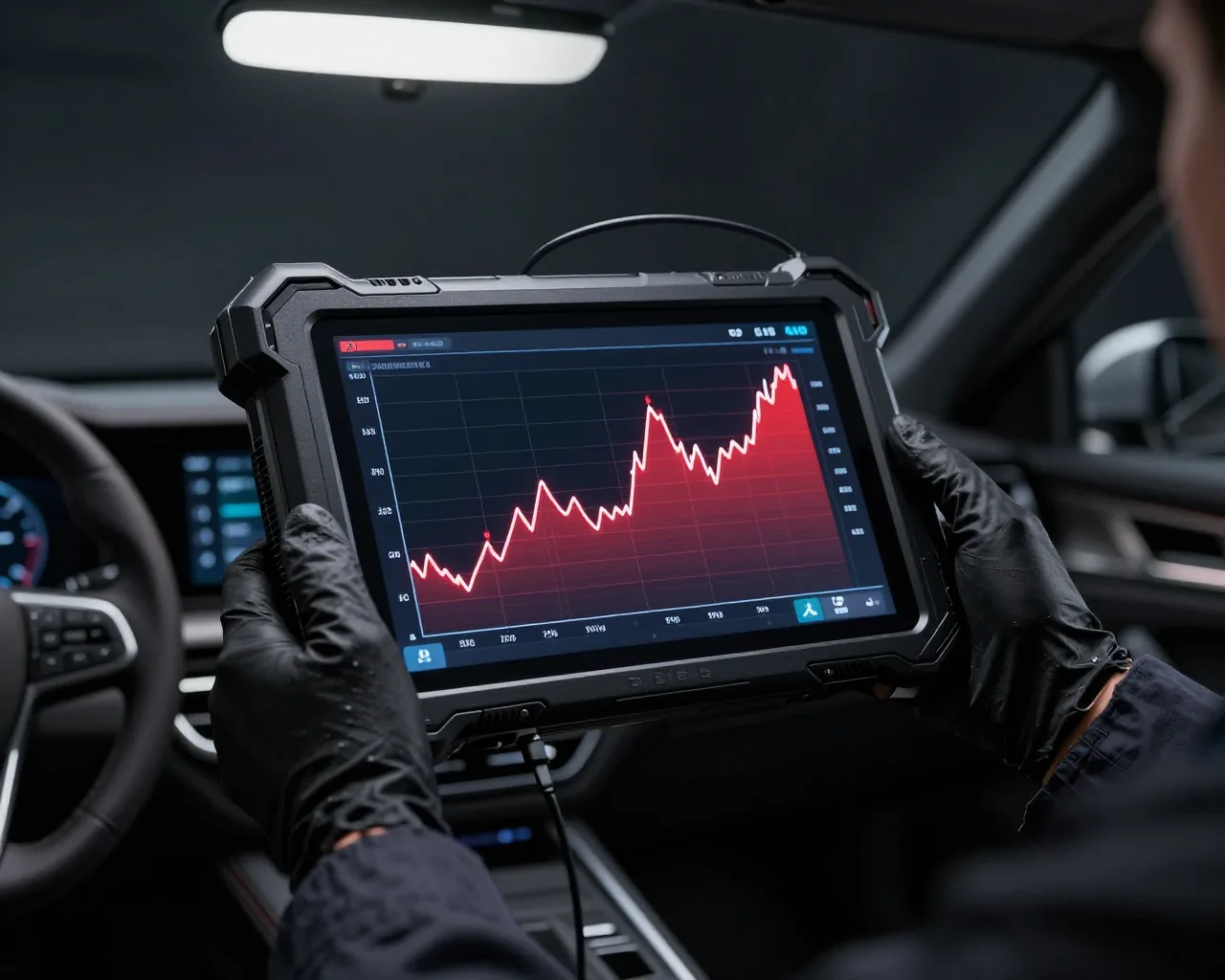
We connect a diagnostic scanner, perform basic settings and clutch adaptation for correct gearbox operation. We conduct a test drive, check gear shifting and smoothness, after which we hand over the car.
Car service in Almaty. We reply on WhatsApp and by phone.
15 000 ₸DSG-7 oil change without pan removal
10 · Useful
DSG-7 Oil Change in Almaty with Adaptation and Warranty
Author: Роман Вернерgeneral car repair technician, 13 years of experience
Published Updated
At CARGID we change the oil in DSG-7 gearboxes in Almaty with the pan removed, filter replaced, magnets cleaned, and scanner adaptation. The job takes 3–4 hours, and a 6-month warranty is recorded in the work order. We start with diagnostics and a written estimate, and begin work only after the client agrees.
When It's Time to Change the Oil in a DSG-7 and How Often to Do It
The fluid in a DSG-7 gearbox ages faster than the mileage suggests, and in city traffic the interval gets shorter. Here are the signs and the interval by gearbox type — point by point below.
Signs It's Time to Change the Gearbox Oil
Jerking from a stop: the car lurches even though you press the pedal smoothly — the fluid has lost viscosity and can't hold pressure in the circuit.
Shocks between gears: hits between gears, especially from first to second in city traffic, that weren't there before.
Burnt smell: a burnt smell in the cabin or at the dipstick — the used fluid overheated, oxidized, and lost its properties.
Dark drain: when you take a sample, the fluid is black with dirt and metal dust instead of an even amber color.
Slow shifts: the gearbox takes longer than usual to shift, the revs float, and acceleration feels sluggish.
Change Interval and Why It's Shorter in Almaty
At CARGID our guideline is to shorten the factory interval when driving in traffic: city driving puts more heat and wear on the lubricant than the highway. For the dry DQ200 and the wet DQ250 and DQ381, the manufacturer's guideline is a scheduled change with the filter; in traffic we advise shortening that interval and not putting off the visit. We select the oil for the dual-clutch gearbox to match the specific DSG-7 variant, so the fluid meets the manufacturer's approvals. The odometer is misleading in this kind of driving — engine hours pile up while kilometers barely accumulate, so watching the number on the dash isn't enough. Count the engine's operating hours and assess the used fluid at every drain: dark fluid with a burnt smell at half the scheduled mileage is a reason to check the gearbox early rather than wait for the scheduled mark. This approach saves money and lowers the risk of a sudden mechatronic repair.
How an Oil Change Differs Between Dry and Wet DSG-7
The DQ200 and the DQ250/DQ381 are built differently, so the procedure differs too. Below is exactly how, so it's clear what work your gearbox needs. The difference shows in the components and the volume.
Dry DQ200 and Wet DQ250/DQ381 in a Table
Difference between dry and wet gearbox procedures
Parameter
Dry DQ200
Wet DQ250/DQ381
What the oil washes
mechatronics and bearings
clutches and mechatronics
Pan and magnets
no pan with magnets
pan is removed, magnets are cleaned
Oil volume
less
more
Filter
separate element
replaced when the pan is removed
Typical procedure
fill to level
remove pan, gasket, filter
Which oil and VW approval fits
We select the fluid by VW approval for the specific gearbox code, not a "universal for all DSG." First we check the transmission code on the plate and with the scanner, then we look up the approval for the friction plates and mechatronics — DQ200 and wet DQ250/DQ381 have different ones. A DSG-7 oil change in Almaty often comes with someone else's can from a store where the label says DSG in big letters but the required approval is missing. The service advisor checks the code before lifting the car so we don't fill the wrong fluid. A universal fluid without the required approval changes how the friction plates behave — the gearbox may start jerking within the first kilometers, and that's not a warranty case. So when servicing a DSG, we record the approval in the work order and start any gearbox work only after that check. A DSG oil change without verifying the approval is the most common reason for a repeat visit.
How a DSG-7 oil change with pan removal and adaptation works
We show the process step by step: from removing the pan and cleaning the magnets to filling the oil and adapting with the scanner. We also explain where the oil change ends and mechatronics or clutch repair begins. We'll show the boundary step by step.
Step-by-step process from pan to adaptation
Removal: we remove the pan, drain the used fluid, and inspect the part for cracks and signs of overheating.
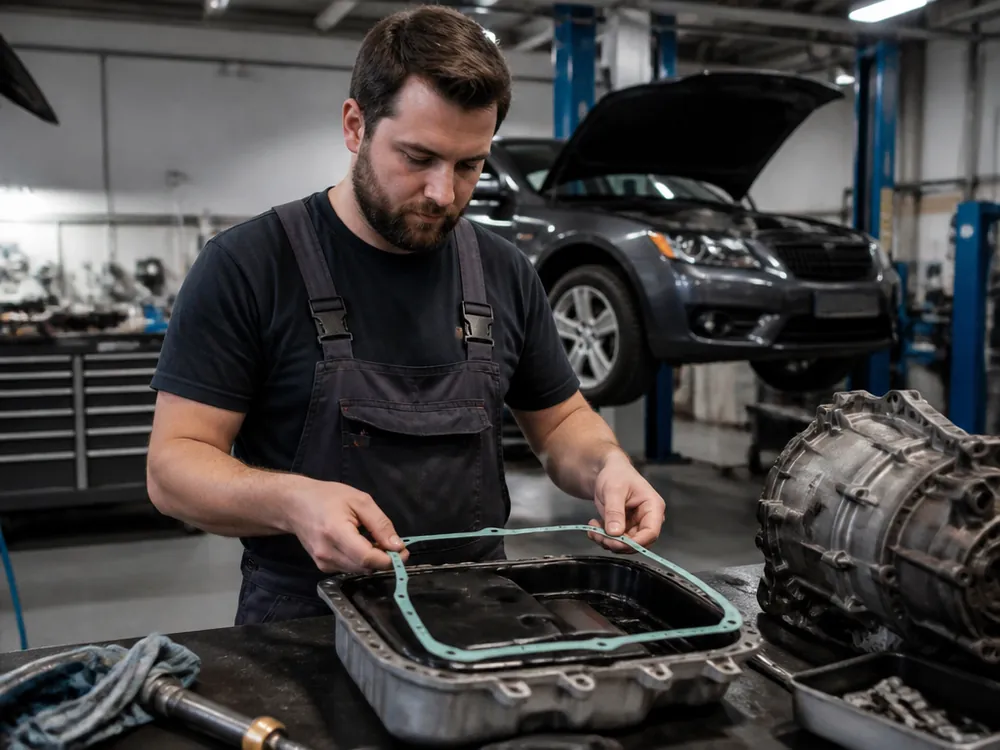
Cleaning and sealant: we treat the mating surface, apply a 2 mm layer of sealant, and install a new gasket.
DSG-7 filter: we replace the gearbox filter, show the old part, and give it to the client when the work is done.
Magnets and debris: we clean the magnets of metal debris — this protects the mechatronics from wear.
Fill to level: we fill the oil, warm up the gearbox, and set the level by overflow through the check plug.
Scanner adaptation: we teach the gearbox to work with the new oil and check operation on a test drive before handover.
Why adaptation is needed and what happens without it
Our scanner adaptation is included in the job — without it the gearbox doesn't recalculate the friction plate engagement points and may jerk. The scanner reads the current values and rewrites them for the fresh fluid: on a dry DQ200 and a wet DQ250 the procedure takes different amounts of time, but the logic is the same — the unit relearns the engagement points. A DSG oil change without adaptation leaves the gearbox with the old settings, so relearning for the new fluid is mandatory. Without adaptation, jerks are easy to mistake for clutch wear and come back to the shop. Adaptation is not clearing fault codes but teaching the gearbox for the fresh fluid; without it, the first kilometers come with jerks that are easy to mistake for a breakdown. Ask the technician for a printout of the values before and after — it shows how the relearning went. That way you can see how the relearning went, and it's our shared quality check.
Where the oil change ends and repair begins
Included in the oil change: draining the used fluid, removing the pan, new gasket, DSG-7 filter, cleaning the magnets, filling to level, and adaptation.
Separate job: mechatronics oil change — it's its own procedure with unit removal and its own fluid volume.
Separate job: replacing seals and gaskets when a leak is found on the gearbox housing.
Separate job: clutch repair or replacement — diagnosed by friction plate wear, not by oil condition.
Approval: we start any additional work only after the client agrees and a written estimate is provided.
What to do if the gearbox behaves differently after the oil change
Fresh oil changes how the unit behaves: for the first kilometers the transmission adjusts to the new viscosity. We explain where break-in is normal and when it's time to come back to us under warranty. Below are two scenarios.
What's normal during break-in after service
After the procedure with adaptation, the gearbox may shift a little differently for the first kilometers — that's break-in, not a breakdown. Fresh fluid changes the hydraulics: pressure in the mechatronics circuits stabilizes again, and the friction plates wear in to the new viscosity. Hence the slight variation — gears engage with a different effort than before the procedure, more noticeable when cold. On a dry DQ200, adaptation takes more cycles than on a wet DQ250, since the clutches there run without an oil bath. After a short break-in in city driving, the unit usually settles into smooth operation. Slight changes in shifting during break-in go away on their own as the friction plates learn; if the behavior hasn't stabilized after a few days, that's a reason to come in. Don't delay the visit.
When to come back and how the warranty works
Jerks and shocks: repeat on a warm transmission for more than a few days and don't smooth out as mileage increases.
Leak under the pan: oil spots on the asphalt or the smell of fluid on the hot housing after a drive.
Dashboard errors: gearbox indicator, limp mode, or mechatronics fault codes in the unit's memory.
6-month warranty: the term is recorded in the work order and the handover report; diagnostics for a warranty claim are free.
Your own oil, warranty, and scope of work
Owners often want to bring their own consumables and worry about losing the warranty. We explain how we handle parts selection and where the shop's responsibility ends. Details below.
Can I bring my own oil and what about the warranty
You can bring your own fluid and filter — choose OEM, aftermarket, or client-supplied parts, the decision is yours. The service advisor records the brought consumables in the work order before work begins. For dry and wet gearboxes we select consumables by VW approval, so you can compare options on site without driving around to stores. The warranty covers the work performed and our parts; client-supplied parts are not covered because we can't verify their origin and storage conditions. We accept fluid in factory-sealed packaging with a current approval marking — we won't pour an opened can without marking into the gearbox, and that protects both sides. The rule is simple: sealed factory packaging and a legible approval marking are mandatory, otherwise we won't take on the job with that fluid.
What the 6-month warranty covers
Oil change warranty: 6 months on the work itself; we record the term and conditions in the work order and the handover report when you pick up the car.
Work coverage: the operations performed and the parts we install — pan gasket, filter, seals.
Limits of liability: we don't cover accidents after the repair, third-party interference, or normal wear of consumables.
Warranty diagnostics: if the DSG 7 gearbox behaves differently after service, we check it under warranty free of charge.
Customer-supplied part: the warranty doesn't cover oil and filter you bring yourself, but the quality of the work itself stays under our control.
DSG-7 Oil Change Key Points
Here are the key points that determine the result of an oil change in a DSG-7 gearbox — from choosing the procedure to how the car behaves after the repair. Below is the main stuff.
Engine hours matter more than mileage: DSG-7 oil ages with time under load, so in city driving the interval is shortened compared to the schedule.
The gearbox code decides: a dry DQ200 and a wet DQ250 or DQ381 need a different procedure and a different oil volume — the car model matters more.
The full cycle is a must: removing the pan, cleaning the magnets, changing the filter and adaptation are steps without which the change gives no result.
Break-in and warranty: slight changes in shifting during break-in are normal, but persistent jerks and leaks are a reason to come back under the 6-month warranty.
Your own oil: you can bring it, but the warranty doesn't apply to a customer-supplied part — worth keeping in mind in advance.
11
Frequently asked questions about DSG-7 oil change in Almaty
Questions.
Price, timeframes, warranty, payment — 10 questions asked most often.
10
Didn't find an answer?
Message us on WhatsApp — a service advisor will reply within 5 minutes.
The cost of a DSG-7 oil change at our service starts from 18,000 tenge. This amount includes labor, oil, and filter. The exact price depends on the gearbox model (DQ200 or DQ250/DQ381), since different DSG-7 models require different amounts of oil (1.9 L or 6.9 L) and different filters. It also depends on which materials you choose: for example, oil for DQ200 is synthetic with VW TL 521 75 approval, and for DQ250 — with G 052 182 A2 approval. The price may be affected by the need to remove the underbody protection or additional work if a leak or wear is detected. We provide the exact cost after a free diagnostic.
The manufacturer's interval for DSG-7 is every 60,000 km, but we recommend shortening it to 40,000 km, especially if you often sit in Almaty traffic or enjoy spirited driving. The dry DSG-7 (DQ200) is less demanding — its oil goes into the hydraulic unit and the gearbox itself, only 1.9 L in total, but it still needs to be changed. On the wet DSG (DQ250/DQ381), the oil also serves as the torque converter's working fluid, so it overheats and gets contaminated faster. Regular changes extend gearbox life and prevent jerking and shocks when shifting.
On average, the procedure takes from 1 to 1.5 hours. This time includes: lifting the car, removing the protection, draining the old oil (for wet DSG, the pan must be removed to drain the remnants and replace the filter), cleaning the magnets and pan, installing a new oil filter, and filling fresh oil through the filler plug with temperature-controlled level check. If you have a dry DSG model, the process is faster — about 40 minutes, as there is less work. If additional diagnostics or leak repair is required, the time may increase — we warn about this in advance.
Yes, we recommend booking in advance so you don't have to wait for a free lift and technician. CARGID has several bays, but during peak hours (lunch and evening) it can be busy. You can call us or leave a request on the website — we will find a convenient time, usually within 1-2 days. If you come without an appointment, we will try to accept you, but there may be a queue. Booking does not require prepayment — just confirm the visit.
Yes, you can bring your own materials — we don't forbid it. But there's an important point: we only guarantee the quality of the materials we install ourselves, since they're bought from suppliers and meet your car manufacturer's specs. If you bring your own oil, we recommend checking that it has VW approval for your gearbox (for example, TL 521 75 for the DQ200). If non-OEM or unsuitable oil is used, we're not responsible for the consequences, but we'll help with advice. Either way, on your request we can check the oil's compatibility and offer an alternative if needed.
We provide a 6-month warranty for the performed work and installed materials. If after the oil change there are leaks or other problems directly related to our work, we will fix them free of charge during the warranty period. It is important that you follow the break-in recommendations (if any) and do not modify the gearbox design. The warranty does not cover damage caused by external factors (e.g., accidents) or natural wear of parts not related to the oil and filter.
The main difference is in the design: dry DSG-7 (DQ200) uses oil only for lubricating the mechanics and hydraulics, while in wet (DQ250/DQ381) the oil fills the entire clutch housing and is the working fluid that transmits torque. Therefore, the replacement process is different: for dry DSG, the oil volume is only 1.9 L, it is changed without removing the pan (in some cases, simple drain and fill). For wet DSG, 6.9 L of oil is required, the pan must be removed to replace the filter and clean the magnets from metal shavings. The cost of changing dry DSG is from 12,000 tenge, wet — from 25,000 tenge. We always clarify the gearbox type by the car's VIN.
We warn you right away: in 99% of cases, if the change is done correctly and suitable oil is used, the DSG operation improves. But it happens that the problem was not in the oil, but in another component (e.g., the mechatronics), and the change only revealed the symptom. If after the work you notice jerking, delays, errors on the panel — be sure to call us, we do not abandon clients. During the warranty, we will perform a free diagnostic. If it turns out that the cause is our poor installation or wrong oil, we will fix it for free. If the already worn mechatronics is to blame — we will offer repair, but that is already outside the warranty.
Main symptoms: delays or shocks during gear shifts, especially when cold; hum or howl coming from the gearbox; jerking during acceleration; increased fuel consumption; errors on the panel (e.g., "Gearbox: no reverse"). You should also be guided by mileage — 40-60 thousand kilometers. But it's better not to wait for symptoms, but to check the oil level and condition on a schedule. In dry DSG, the signs may be blurred, while in wet DSG they may appear earlier, as the oil works under high loads and gets contaminated with wear products.
You can pay in cash, by card, or via Kaspi transfer. We also accept bank transfer for legal entities. A 10% discount is available for new clients on the first service (including DSG-7 oil change) if you booked through the website. For regular clients — a cumulative bonus program: after the 3rd visit — 5% discount, after the 5th — 10%. Installments are not provided, but we always offer the optimal price and do not impose additional work without your consent. Prepayment is not required — you book an appointment and pay after the service.
12
Reviews of our DSG-7 oil change
Reviews.
We collect ratings on the website and on maps — we hide nothing.
4.8
872 reviews on the website 1 900+ ratings in total
Alexey
Toyota Camry
Came in with a Toyota Camry that had jerking during gear shifts. The technician said the DSG-7 oil was long overdue for a change. They did it in an hour, price 60,000 tenge. After the change, the gearbox works perfectly, no jerking. Thanks!
Dmitry
Changed the oil in a Volkswagen Tiguan. I really liked that they first did diagnostics and showed the oil condition. The change with filter and adaptation cost 65,000. Now the shifts are smooth, like in a new car. I recommend!
Marat
There are many places that change oil, but here they did it at a professional level. I had the oil changed on a Skoda Octavia, paid 58,000 tenge. The gearbox now works perfectly quietly. Thank you!
Sergey
I'm very satisfied. Changed the oil in an Audi A3, it was 72,000. They did everything quickly, showed the old shavings, explained the cause of vibration. Now the gearbox works perfectly. Thanks!
Elena
I came with a problem: the car was jerking during acceleration. Another service said the clutch needed replacing, but here it turned out that an oil change was enough. They did everything carefully, price 62,000. I'm satisfied, I will come again.
Viktor
Changed the oil in the DSG-7 on a Ford Focus. Got a promo, it cost 55,000. They told me in great detail about the filter condition, advised to change regularly in the future. The car drives smoother now. I recommend!
Nurlan
Sportage
Changed the oil in a Kia Sportage. I was pleased that the technicians know their job, explained why the gearbox could go into limp mode. They did the change with filter and adaptation for 78,000. After that, no errors, shifts are crisp.
Inna
I spent a long time choosing a service for changing the oil in the DSG-7 on a Volkswagen Polo. I liked everything here: clean, fast, transparent pricing. The change with filter cost 58,000. The car drives much smoother. Thanks!
Arman
Tucson
After a long standstill, the Hyundai Tucson started shifting poorly. Here they said the oil had oxidized. They replaced the oil with pan cleaning for 68,000. Now the gearbox works like new. The technicians are great!